






























26.1 C
Bangkok
Saturday, June 20, 2026
Home Blog Page 613

Small, Well-Built Chinese EV Called the Seagull Poses a Big Threat to the US Auto Industry

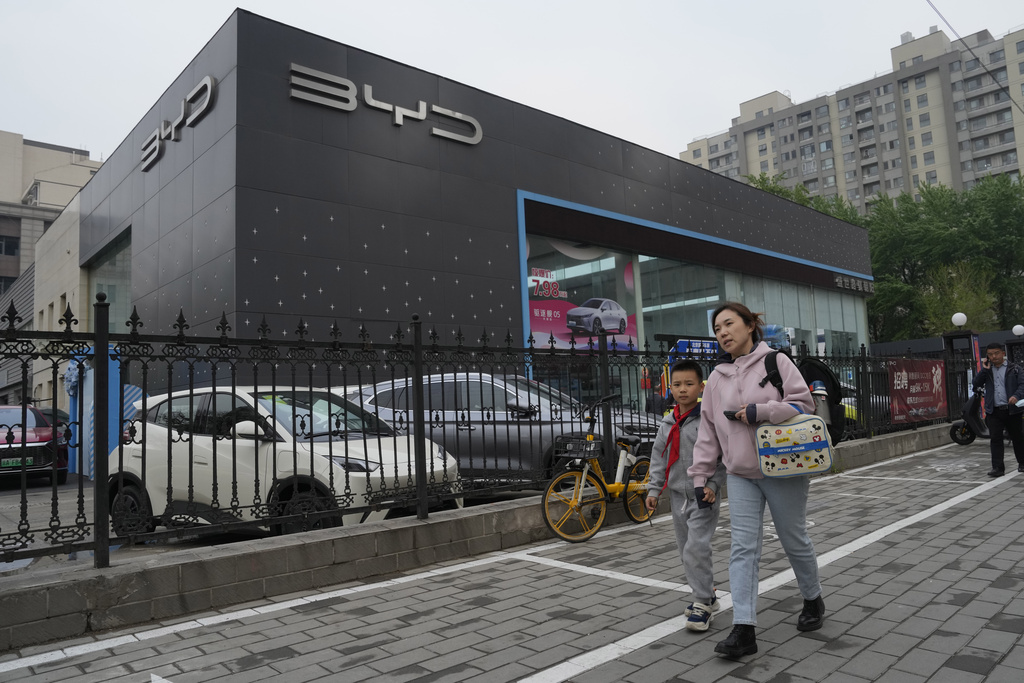
A Seagull electric vehicle from Chinese automaker BYD for test driving is parked outside a showroom in Beijing, Wednesday, April 10, 2024. The tiny, low-priced electric vehicle called the Seagull has American automakers and politicians trembling. The car, launched last year by Chinese automaker BYD, sells for around $12,000 in China. But it drives well and is put together with craftsmanship that rivals U.S.-made electric vehicles that cost three times as much. Tariffs on imported Chinese vehicles probably will keep the Seagull away from America’s shores for now.(AP Photo/Ng Han Guan)

LIVONIA, Mich. (AP) — A tiny, low-priced electric car called the Seagull has American automakers and politicians trembling.

The car, launched last year by Chinese automaker BYD, sells for around $12,000 in China, but drives well and is put together with craftsmanship that rivals U.S.-made electric vehicles that cost three times as much. A shorter-range version costs under $10,000.

Tariffs on imported Chinese vehicles probably will keep the Seagull away from America’s shores for now, and it likely would sell for more than 12 grand if imported.

But the rapid emergence of low-priced EVs from China could shake up the global auto industry in ways not seen since Japanese makers exploded on the scene during the oil crises of the 1970s. BYD, which stands for “Build Your Dreams,” could be a nightmare for the U.S. auto industry.

“Any car company that’s not paying attention to them as a competitor is going to be lost when they hit their market,” said Sam Fiorani, a vice president at AutoForecast Solutions near Philadelphia. “BYD’s entry into the U.S. market isn’t an if. It’s a when.”

U.S. politicians and manufacturers already see Chinese EVs as a serious threat. The Biden administration on Tuesday is expected to announce 100% tariffs on electric vehicles imported from China, saying they pose a threat to U.S. jobs and national security.

The Alliance for American Manufacturing says in a paper that government subsidized Chinese EVs “could end up being an extinction-level event for the U.S. auto sector.”

Earlier this year, Tesla CEO Elon Musk told industry analysts Chinese EVs are so good that without trade barriers, “they will pretty much demolish most other car companies in the world.”

Outside of China, EVs are often pricey, aimed at a higher-income niche market. But Chinese brands that are not yet global household names are offering affordable options that will appeal to the masses — just as the U.S., European and many other governments are encouraging a shift away from gasoline-powered vehicles to fight climate change.

“The Western markets did not democratize EVs. They gentrified EVs,” said Bill Russo, the founder of the Automobility Ltd. consultancy in Shanghai. “And when you gentrify, you limit the size of the market. China is all about democratizing EVs, and that’s what will ultimately lead Chinese companies to be successful as they go global.”

Inside a huge garage in an industrial area west of Detroit, a company called Caresoft Global tore apart and reassembled a bright green Seagull that its China office purchased and shipped to the U.S.

Company President Terry Woychowski, a former chief engineer on General Motors’ big pickup trucks, said the car is a “clarion call” for the U.S. auto industry, which is years behind China in designing low-cost EVs.

AP24102280837791
Sales staff stand near the Seagull electric vehicle from Chinese automaker BYD at a showroom in Beijing, Wednesday, April 10, 2024.  (AP Photo/Ng Han Guan)

After the teardown, Woychowski, who has been in the auto business for 45 years, said he was left wondering if U.S. automakers can adjust. “Things will have to change in some radical ways in order to be able to compete,” he said.

There’s no single miracle that explains how BYD can manufacture the Seagull for so little. Instead, Woychowski said the entire car, which can go 252 miles (405 kilometers) per charge, is “an exercise in efficiency.”

Higher U.S. labor costs are a part of the equation. BYD can keep costs down because of its expertise in making batteries — largely for consumer products — that use lithium iron phosphate chemistry. They cost less but have lower range than most current lithium-ion batteries.

Americans are still learning how to make cheaper batteries, Woychowski said. Ford is building a lithium iron phosphate battery factory, using technology from China’s CATL.

BYD makes many of its own parts, including electric motors, dashboards, bodies and even headlights. It also has the advantage of its huge scale — 3 million vehicles sold worldwide last year.

“By having that all in-house and vertically integrated, there’s an incredible advantage that they have,” Woychowski said.

BYD designs all aspects of its vehicles with cost and efficiency in mind. For instance, the Seagull has only one windshield wiper, eliminating one motor and one arm, saving on weight, cost and labor to install.

U.S. automakers don’t often design vehicles this way and incur excess engineering costs, Woychowski said. Hoses, for instance, have to meet longstanding requirements in combustion engines for strength and ability to carry fluid under high pressure, many of which aren’t needed for electric vehicles, he added.

The weight savings add up, allowing the Seagull to travel farther per charge on a smaller battery. For example, the Seagull that Caresoft tested weighs 2,734 pounds (1,240 kilograms), about 900 pounds less than a Chevrolet Bolt, a slightly larger electric vehicle made by GM.

So Detroit needs to quickly re-learn a lot of design and engineering to keep up while shedding practices from a century of building vehicles. The trick will be determining which procedures to keep for safety and quality, and which to jettison because they aren’t needed, he said.

“You’re going to have to come and be extremely serious about this, and you better park your paradigms at the door,” Woychowski said. “Because you’re going to have to do things differently.”

Even with its minimalist design, the Seagull still has a quality feel. The doors close solidly. The gray synthetic leather seats have stitching that matches the body color, a feature usually found in more expensive cars. The Seagull “Flying Edition” tested by Caresoft has six air bags, rear disc brakes and electronic stability control.

A brief drive through some connected parking lots by a reporter showed that it runs quietly and handles curves and bumps as well as more costly electric vehicles.

While the acceleration isn’t head-snapping like other EVs, the Seagull is peppy and would have no problems entering a freeway in heavy traffic. Woychowski says its top speed is limited to 81 mph, (130 kilometers per hour).
AP24102284318537
Residents past by a Seagull electric vehicle from Chinese automaker BYD parked at a showroom in Beijing, Wednesday, April 10, 2024.(AP Photo/Ng Han Guan)

BYD would have to modify its cars to meet U.S. safety standards, which are more stringent than in China. Woychowski says Caresoft hasn’t done crash tests, but he estimated that would add $2,000 to the Seagull’s cost.

BYD sells the Seagull, rebranded as the Dolphin Mini in some overseas markets, in four Latin American countries for about $21,000, twice what it costs at home. The higher price includes transportation costs, but also reflects the higher profits possible in less cutthroat markets than China.

In Europe, BYD offers larger models such as the Seal, which starts at 46,990 euros ($50,000), in France. The Chinese maker’s top two overseas markets were Thailand and Brazil in the first two months of this year, according to the China Passenger Car Association.

BYD builds electric buses in California and told the AP last year that it is “still in the process” of deciding whether to sell autos in the U.S. It is weighing sites for a factory in Mexico, but that would be for the Mexican market, two company executives said in media interviews earlier this year.

The company isn’t selling cars in the U.S., largely due to 27.5% tariffs on the sale price of Chinese vehicles when they arrive at ports. Donald Trump slapped on the bulk of the tariff, 25%, when he was president, and it was kept in place under Joe Biden. Trump contends that the rise of EVs backed by Biden will cost U.S. factory jobs, sending the work to China.

The Biden administration has backed legislation and policies to build a U.S. EV manufacturing base, and it hasn’t ruled out further tariffs to keep the Chinese out. The administration also is investigating cars made in China that can gather sensitive information.

Some members of Congress are urging Biden to ban imports of Chinese vehicles, while others have proposed even steeper tariffs. This includes vehicles made in Mexico by Chinese companies that now would come in largely without tariffs.

Ford CEO Jim Farley has seen Caresoft’s work on the Seagull and observed BYD’s rapid growth across the globe, especially in Europe, where he used to run Ford’s operations. He’s moving to change his company. A small “skunkworks” team is designing a new, small EV from the ground up to keep costs down and quality high, he told analysts earlier this year.

Chinese makers, Farley said, sold almost no EVs in Europe two years ago, but now they have 10% of the electric vehicle market. It’s likely they’ll export around the globe and possibly sell in the U.S.

Ford is preparing to counter that. “Don’t take anything for granted,” Farley said. “This CEO doesn’t.”

____

Advertisement

Koh Samui Welcomes Scoot Jet to Start One Flight Per Day

Koh Samui travel and tourism delegation welcomed 108 tourists and crew members of Scoot inaugural flight from Singapore at the Samui airport on May 13, 2024.

KOH SAMUI – Scoot, the low-cost subsidiary of Singapore Airlines, started the inaugural flight TR 642 flying directly from Singapore to Koh Samui, Surat Thani Province, at 11:15 a.m. on May 13.

The low-cost airline has operated flights from Singapore to six Southeast Asian destinations with its new fleet of Embraer E190-E2 planes.

Mr. Kampanat Klinsowakon, the district chief of Koh Samui, Ms. Kanokittika Kritayutthikorn, the director of the Tourism Authority of Thailand (TAT) Koh Samui Office, and a tourism delegation welcomed 108 tourists and crew members at the airport parking lot.


Among them were Mr. Ng Chee Keong, the Chief Operating Officer of Scoot, Mr. Kulpramote Wannalert, the director of the TAT Singapore and Philippines Office, and media representatives from Singapore. They traveled together to capture images of Koh Samui’s tourist attractions and impressive scenes to promote and market tourism in Singapore.

Scoot will commence daily flights on the Singapore-Samui route with one flight per day. There are plans to increase it to two flights per day in June.

scoot23
The Embraer E190-E2 jet of Scoot arrives at Koh Samui International airport on May 13, 2024.

After the first E190-E2 jet is delivered in April, it has been used on Scoot’s existing flights to Hat Yai and Krabi from May 7, increasing flight frequencies to both destinations from seven to 10 times every week.

The E190-E2 jet has a range of 5,278km, or six hours of flight time. As the smallest aircraft in Scoot’s fleet, it can seat up to 112 passengers.

Scoot currently offers 67 destinations for booking and presently encompasses 72 destinations across 15 countries and territories in Asia-Pacific, the Middle East and Europe.

____

Advertisement

B.Grimm Power and Greenergy (Thailand) Focus Solar Power on Industrial and Commercial Sectors

B.Grimm Power Public Company Limited announces a new collaboration with Greenergy (Thailand) Company Limited, having signed a Memorandum of Understanding (MOU) to jointly study and develop solar power plant projects of over 500 kilowatts. This initiative supports the renewable energy needs of the industrial and commercial sectors in Thailand.

image3 9

This collaboration marks another significant advancement in Thailand’s renewable energy sector. B.Grimm Power, a leading private electricity producer and distributor, focuses on generating electricity from renewable sources to reduce greenhouse gas and carbon dioxide emissions, aligning with its GreenLeap – Global and Green strategy. In partnership with Greenergy (Thailand) Company Limited, a leader in engineering, procurement, and construction (EPC), and operation and maintenance of solar power systems with more than 250 megawatts of experience across Thailand and expertise in energy innovation, including energy trading platforms, the two companies aim to collaborate on the study and development of various solar power plant projects with a target of 100-300 megawatts through Direct Power Purchase Agreements (PPA), both On-site and Off-site, catering to the industrial and commercial sectors. The plan also includes preparation for energy trading through the Third Party Access system as well as sales and leaseback arrangementss to support B.Grimm Power’s off-grid electricity needs, with the goal of providing high-quality and cost-effective clean energy.

image2 10

Under this MOU, both organizations will jointly explore feasibility, plan projects, conduct market research, and develop marketing strategies to maximize customer outreach. Greenergy (Thailand) Company Limited will be responsible for the design, engineering, procurement, and construction of the projects, ensuring that the projects adhere to the technical specifications and standards of B.Grimm Power for the highest quality and standard of development.

Advertisement

Operation Takedown Scammer Ep.2: Cyber Police Hunt for Thai-Chinese Family

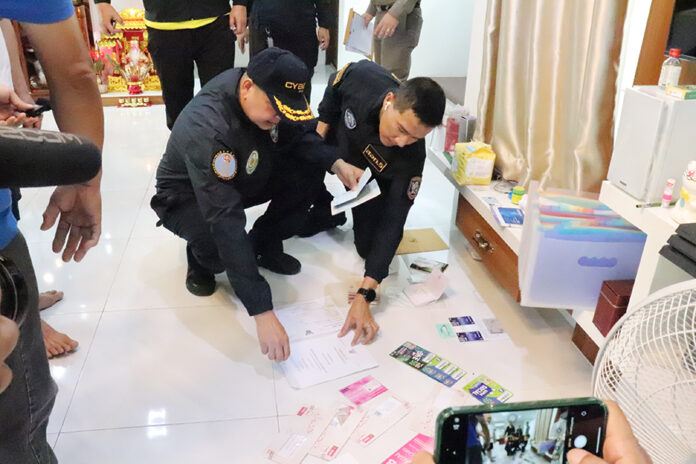
The police seized evidence for investigation in Chan Di Sub-District, Chawang District, Nakhon Si Thammarat Provinc

NAKHON SI THAMMARAT – Thai cyber police, in collaboration with prosecutors, raided seven locations in the districts of Chawang and Thung Song, Nakhon Si Thammarat province on Monday, as part of Operation Takedown Scammer Ep.2. The operation aimed to apprehend a cross-border call center network involving a local politician.

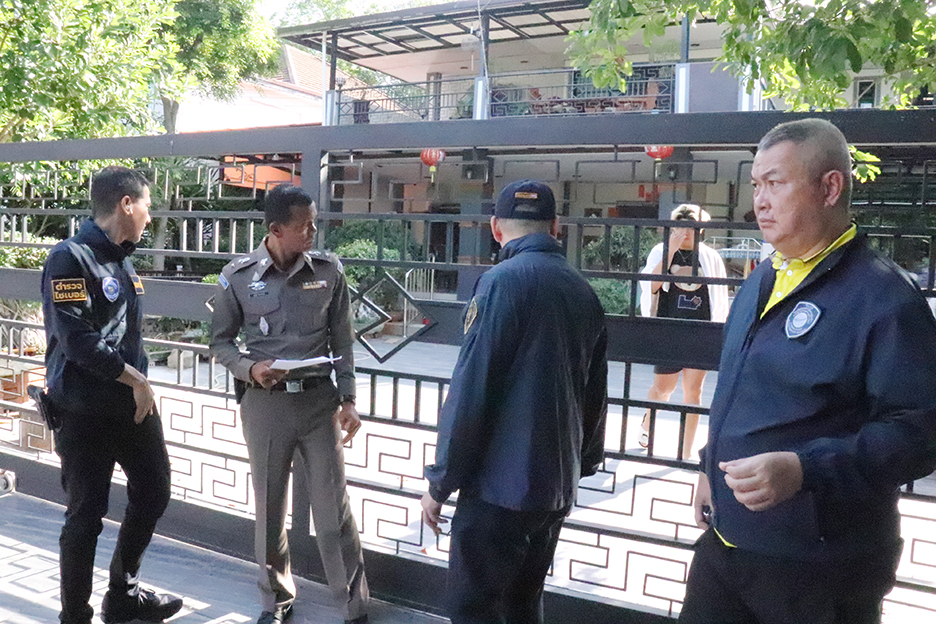
A key location was the residence of Ms. Rewadee, 51, also known as “Jea Lek,” the deputy mayor of Chandi Municipality, and her husband, Mr. Lin, or “Go Yang,” 62, located in Chandi Grand Villa Village, Chandi Subdistrict, Chawang District, Nakhon Si Thammarat Province.

However, the couple was not present at the time of the raid on May 13, and only caretakers were found. Officers seized company documents, land titles, bank account books, and bank statements for further investigation.

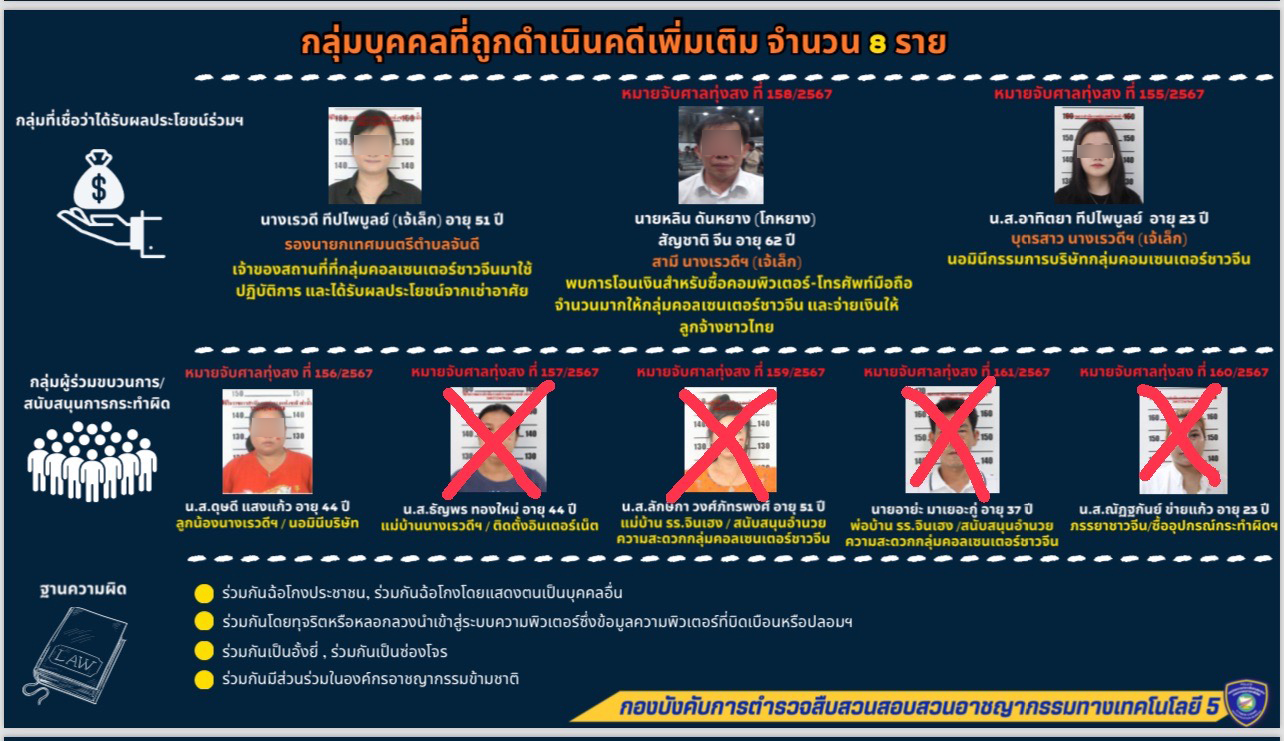
Arrest warrants have been issued for Ms. Rewadee and Mr. Lin on suspicion of public fraud, jointly entering false or distorted computer data into a computer system by fraudulent or corrupt means, jointly forming a secret society or gang, and jointly participating in a transnational criminal organization.

Takedown Scammer4
The chart shows the images of 8 suspected individuals who have been issued arrest warrants and are being prosecuted.

Another house that was searched was in the same village and belonged to Ms. Atthitaya , 23, the daughter of Ms. Rewadee. Ms. Atthitaya was also not at home, only Mr. Yang, a Chinese national and Ms. Atthita’s father-in-law. The officers confiscated documents and account books for verification.

The next location was the Jinheng Hotel in Chawang district, where officers arrested Mr. Ayue, 37, on a warrant from the Thung Song Provincial Court for the same offenses. They also confiscated desk phones, routers and other equipment.

The officers also arrested network suspects Ms. Thanyaporn, 44, and Ms. Laksika , 51, in Chawang district and Ms. Nattakan, 23, in Surat Thani province, who were all wanted on warrants for the same offenses. All suspects were taken to Thung Song police station for questioning.

Takedown Scammer2
The suspect’s house, where the police brought a search warrant to investigate, is located in Tambon Chan Di, Chawang District, Nakhon Si Thammarat Province.

Pol. Maj. Ge. Wiwat Kamchamnan, deputy commissioner of the Cyber Crime Investigation Bureau (CCIB), explained that Takedown Scammer Ep.2 was a continuation of Ep.1, which took place in late March. In this operation, cyber police together with DSI officers, detectives from Region 8, Immigration Police and NBTC officers, more than 100 people in total, conducted raids on four targets in Nakhon Si Thammarat province and dismantled a large Chinese call center gang operating illegally in Thailand and defrauding Thai, Chinese, Russian and Japanese citizens.

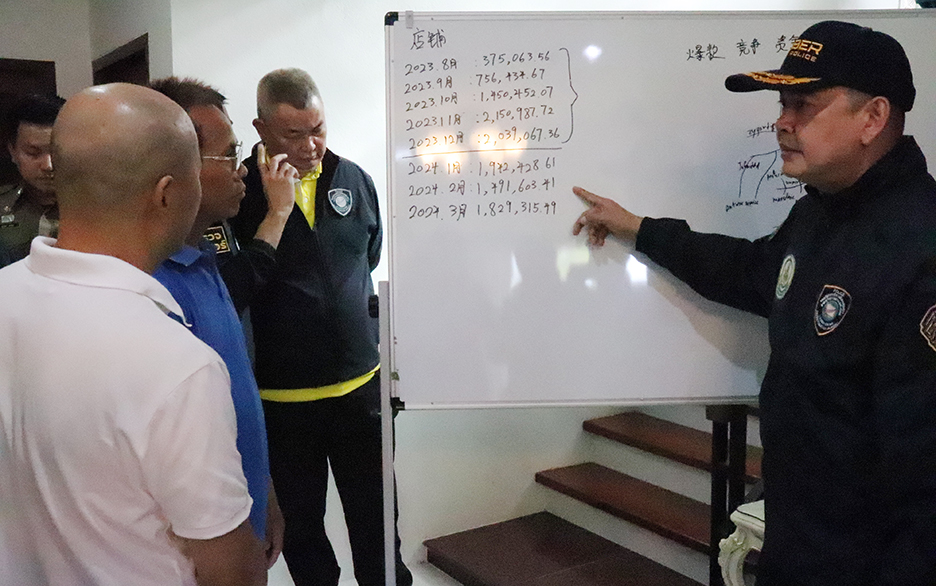
Ninety suspects, including Chinese nationals and Thai and foreign accomplices, were arrested and various items were seized, including 192 computers, 854 cell phones and SIM cards, 22 signal distribution routers and 342 bank accounts of couriers. The investigation revealed that the gang was linked to Ms. Rewadee, who owned the premises used by the Chinese call center and benefited from their rental payments.

Takedown Scammer3
Numbers representing the money in the accounts of the call center gang network and Chinese characters appear on the whiteboard.

It was also found that money was transferred from the bank accounts of Mr. Lin, Ms. Rewadee’s husband, for the purchase of computers and telephones for the Chinese call center and he also made payments to Thai employees. Ms. Atthita, Ms. Rewadee’s daughter, was a nominee and her name appeared in companies that served as fronts for the Chinese call center.

Four suspects are currently at large: Ms. Rewadee, her husband and daughter, and Ms. Dusadee, 44. Security officials have been ordered to tighten controls and arrest them along the border and natural crossings to bring them to justice.

____

Related article:

Thai Authorities Suppress a Large Chinese Call Center Gang

Advertisement

Thai Airways Finalizes Sale of All 18 Boeing 777 and A380 Aircraft

Boeing 777-200s

BANGKOK – Thai Airways International (THAI) announced the successful completion of the sale of its entire fleet of 18 retired aircraft, comprising six Boeing 777-200s, six Boeing 777-300s, and six Airbus A380s.

THAI CEO Chai Eamsiri confirmed on May 12 that sales agreements have been signed for all 18 aircraft. The airline has already completed the paperwork for six of the aircraft, with the remaining 12 expected to be finalized shortly.

The sale of the aircraft resulted in a non-cash impairment charge of 3.33 billion baht in THAI’s Q1 2024 financial results. This has significantly impacted the airline’s net profit for the quarter.

14250168261425016959l
A file photo of an Airbus A380 airplane operated by Thai Airways taking off at Suvarnabhumi Airport [photo provided by Thai Airways].
As of March 31, 2024, THAI’s active fleet stands at 73 aircraft, up from 70 at the end of 2023. This expansion has enabled the airline to increase frequencies on high-demand routes and is expected to contribute to further revenue growth in the coming quarters.

Chai Eamsiri
THAI CEO Chai Eamsiri

Despite the impairment charge, THAI reported a 10.7 percent increase in total revenue for Q1 2024, at 45.9 billion baht, compared to the same period in 2023. This growth was primarily driven by strong passenger traffic and higher yields, particularly on European, Australian, and Japanese routes.

Total expenses for the quarter were 34.88 billion baht, up 6.4 billion baht (22.5 percent) from the same period last year. This increase was driven by higher production and traffic volumes, increased number of flights and destinations, and higher passenger numbers. The depreciation of the baht, as well as higher ground handling fees and raw material prices, also contributed to the increase in expenses.

Specifically, the loss from foreign exchange rate fluctuations amounted to 5 billion baht, and the impairment of aircraft and right-of-use assets and revolving aviation equipment was over 3 billion baht. These two items totaled 9 billion baht, resulting in a net profit of only 2.42 billion baht, a decrease of 80.7 percent from the same period last year.

____

Related articles:

Advertisement

Putin Replaces Shoigu as Russia’s Defense Minister as He Starts His 5th Term

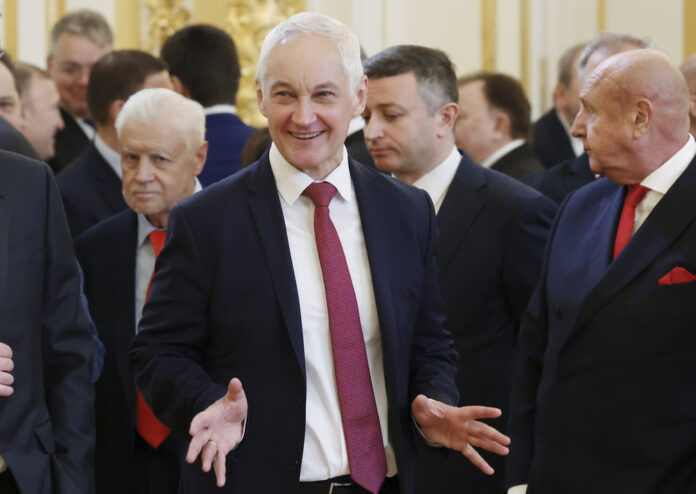
Russian Deputy Prime Minister Andrei Belousov, center, gestures as he waits to attend a ceremony inaugurating Vladimir Putin as President of Russia at the Kremlin in Moscow, Russia on Tuesday, May 7, 2024. Russian President Vladimir Putin has proposed removing Defense Minister Sergei Shoigu from his post. Putin nominated First Deputy Prime Minister Andrey Belousov for the role. His appointment must now be approved by Russian lawmakers. (Vyacheslav Prokofyev, Sputnik, Kremlin Pool Photo via AP)

Russian President Vladimir Putin on Sunday replaced Sergei Shoigu as defense minister in a Cabinet shakeup that comes as he begins his fifth term in office.

In line with Russian law, the entire Russian Cabinet resigned Tuesday following Putin’s glittering inauguration in the Kremlin, and most members have been widely expected to keep their jobs, while Shoigu’s fate had appeared uncertain.

Putin signed a decree on Sunday appointing Shoigu as secretary of Russia’s Security Council, the Kremlin said. The appointment was announced shortly after Putin proposed Andrei Belousov to become the country’s defense minister in place of Shoigu.

AP24133682488976
FILE – Russian President Vladimir Putin, left, and Russian Defense Minister Sergei Shoigu leave Red Square after the Victory Day military parade in Moscow, Russia, Thursday, May 9, 2024, marking the 79th anniversary of the end of World War II. (AP Photo/Alexander Zemlianichenko, File)

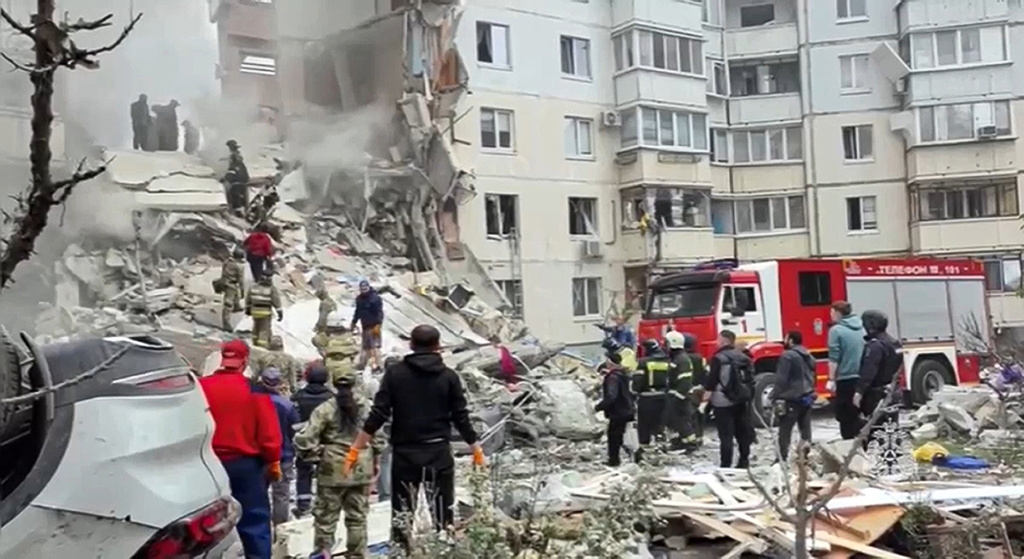
The announcement of Shoigu’s new role came as 13 people were reported dead and 20 more wounded in Russia’s border city of Belgorod, where a 10-story apartment building partially collapsed after what Russian officials said was Ukrainian shelling. Ukraine hasn’t commented on the incident.

Belousov’s candidacy will need to be approved by Russia’s upper house in parliament, the Federation Council. It reported Sunday that Putin introduced proposals for other Cabinet positions as well but Shoigu is the only minister on that list who is being replaced. Several other new candidates for federal ministers were proposed Saturday by Prime Minister Mikhail Mishustin, reappointed by Putin on Friday.

Shoigu’s deputy, Timur Ivanov, was arrested last month on bribery charges and was ordered to remain in custody pending an official investigation. The arrest of Ivanov was widely interpreted as an attack on Shoigu and a possible precursor of his dismissal, despite his close personal ties with Putin.

AP24133390895687
Russian emergency services work at the scene of a partially collapsed block of flats authorities said was hit during an attack by Ukrainian shelling, in Belgorod, Russia. (Russian Emergency Ministry Press Service via AP)

Kremlin spokesman Dmitry Peskov said Sunday that Putin had decided to give the defense minister role to a civilian because the ministry should be “open to innovation and cutting-edge ideas.” He also said the increasing defense budget “must fit into the country’s wider economy,” and Belousov, who until recently served as the first deputy prime minister, is the right fit for the job.

Belousov, 65, held leading positions in the finances and economic department of the prime minister’s office and the Ministry of Economic Development. In 2013, he was appointed an adviser to Putin and seven years later, in January 2020, he became first deputy prime minister.

Peskov assured that the reshuffle will not affect “the military aspect,” which “has always been the prerogative of the Chief of General Staff,” and Gen. Valery Gerasimov, who currently serves in this position, will continue his work.

Tatiana Stanovaya, a senior fellow at the Carnegie Russia Eurasia Center, said in an online commentary that Shoigu’s new appointment to Russia’s Security Council showed that the Russian leader viewed the institution as “a reservoir” for his “‘former’ key figures — people who he can’t in any way let go, but doesn’t have a place for.”

AP24133519103137
Khrystyna Pyimak, 11, hugs her mother Oksana Velychko, 42, after evacuation from Vovchansk, Ukraine, Sunday, May 12, 2024. (AP Photo/Evgeniy Maloletka)

Figures such as former Russian President Dmitry Medvedev have also been appointed to the security council. Medvedev has served as the body’s deputy chairman since 2020.

Shoigu was appointed to the Security Council instead of Nikolai Patrushev, Putin’s long-term ally. Peskov said Sunday that Patrushev is taking on another role, and promised to reveal details in the coming days.

Shoigu has been widely seen as a key figure in Putin’s decision to send Russian troops into Ukraine. Russia had expected the operation to quickly overwhelm Ukraine’s much smaller and less-equipped army and for Ukrainians to broadly welcome Russian troops.

Instead, the conflict galvanized Ukraine to mount an intense defense, dealing the Russian army humiliating blows, including the retreat from an attempt to take the capital, Kyiv, and a counteroffensive that drove Moscow’s forces out of the Kharkiv region.

Before he was named defense minister in 2012, Shoigu spent more than 20 years directing markedly different work: In 1991, he was appointed head of the Russian Rescue Corps disaster-response agency, which eventually became the Ministry of Emergency Situations. He became highly visible in the post. The job also allowed him to be named a general even though he had no military service behind him as the rescue corps absorbed the militarized Civil Defense Troops.

Shoigu does not wield the same kind of power as Patrushev, who has long been the country’s top security official. But the position he will take — the same position that Patrushev worked to transform from a minor bureaucratic role to a place of sizable influence — will still carry some authority, according to Mark Galeotti, head of the Mayak Intelligence consultancy.

High-level security materials intended for the president’s eyes will still pass through the Security Council Secretariat, even with changes at the top. “You can’t just institutionally turn around a bureaucracy and how it works overnight,” he said.

Thousands of civilians have fled Russia’s renewed ground offensive in Ukraine’s northeast that has targeted towns and villages with a barrage of artillery and mortar shelling, officials said Sunday.

The intense battles have forced at least one Ukrainian unit to withdraw in the Kharkiv region, capitulating more land to Russian forces across less defended settlements in the so-called contested gray zone along the Russian border.

By Sunday afternoon, the town of Vovchansk, among the largest in the northeast with a prewar population of 17,000, emerged as a focal point in the battle.

AP24133519395310
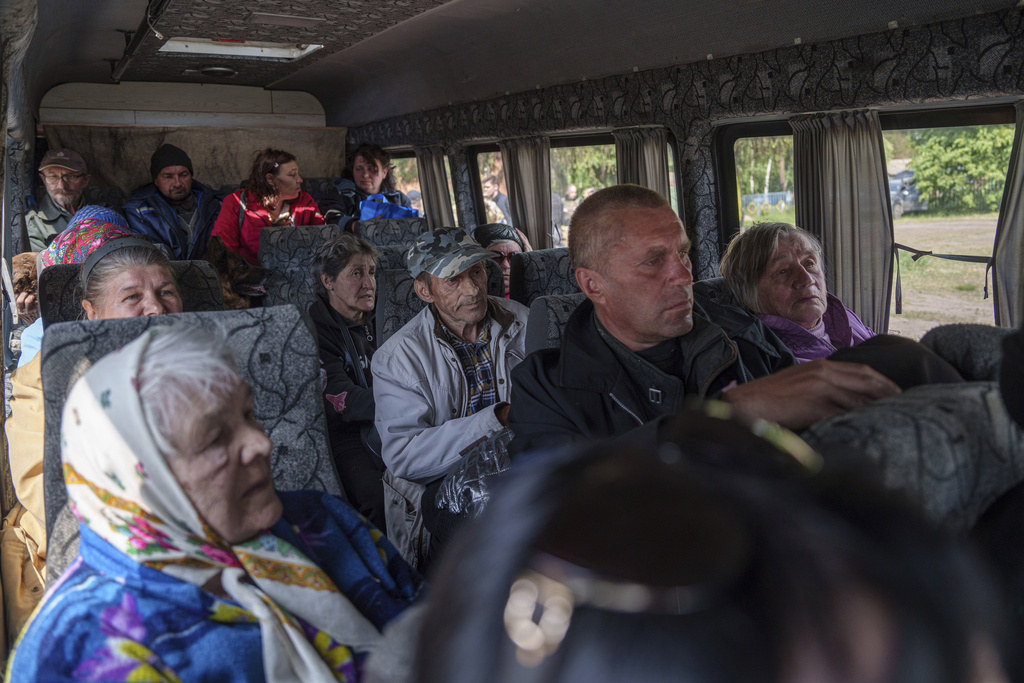
People sit in a bus after evacuation from Vovchansk, Ukraine, Sunday, May 12, 2024. (AP Photo/Evgeniy Maloletka)

Volodymyr Tymoshko, the head of the Kharkiv regional police, said that Russian forces were on the outskirts of the town and approaching from three directions.

An Associated Press team, positioned in a nearby village, saw plumes of smoke rising from the town as Russian forces hurled shells. Evacuation teams worked nonstop throughout the day to take residents, most of whom were older, out of harm’s way.

At least 4,000 civilians have fled the Kharkiv region since Friday, when Moscow’s forces launched the operation, Gov. Oleh Syniehubov said in a social media statement. Heavy fighting raged Sunday along the northeast front line, where Russian forces attacked 27 settlements in the past 24 hours, he said.

Analysts say the Russian push is designed to exploit ammunition shortages before promised Western supplies can reach the front line.

Ukrainian soldiers said the Kremlin is using the usual Russian tactic of launching a disproportionate amount of fire and infantry assaults to exhaust Ukrainian troops and firepower. By intensifying battles in what was previously a static patch of the front line, Russian forces threaten to pin down Ukrainian forces in the northeast, while carrying out intense battles farther south where Moscow is also gaining ground.

It comes after Russia stepped up attacks in March targeting energy infrastructure and settlements, which analysts predicted were a concerted effort to shape conditions for an offensive.

The Russian Defense Ministry said Sunday that its forces had captured four villages on the border along Ukraine’s Kharkiv region, in addition to five villages reported to have been seized on Saturday. These areas were likely poorly fortified because of the dynamic fighting and constant heavy shelling, easing a Russian advance.

Ukraine’s leadership hasn’t confirmed Moscow’s gains. But Tymoshko, the head of the Kharkiv regional police, said that Strilecha, Pylna and Borsivika were under Russian occupation, and it was from their direction they were bringing in infantry to stage attacks in other embattled villages of Hlyboke and Lukiantsi.

___

Advertisement

Switzerland’s Nemo Wins 68th Eurovision Song After Event Roiled by Protests Over War in Gaza

Nemo of Switzerland, who performed the song The Code, celebrates after winning the Grand Final of the Eurovision Song Contest in Malmo, Sweden, Sunday, May 12, 2024. (AP Photo/Martin Meissner)

MALMO, Sweden (AP) — Swiss singer Nemo won the 68th Eurovision Song Contest early Sunday with “The Code,” an operatic pop-rap ode to the singer’s journey toward embracing a nongender identity.

Switzerland’s contestant beat Croatian rocker Baby Lasagna to the title by winning the most points from a combination of national juries and viewers around the world. Nemo, 24, is the first nonbinary winner of the contest that has long been embraced as a safe haven by the LGBT community. Nemo is also the first Swiss winner since 1988, when Canadian chanteuse Celine Dion competed under the Swiss flag.

AP24133216245428
Supporters of singer Nemo, finalist of the 68th Eurovision Song Contest ESC, celebrate during a public viewing watching the broadcast of the ESC finals as Nemo is declared winner of the competition, in the early hours of Sunday, May 12, 2024, in Biel, Switzerland. Biel is Nemo’s hometown. (Adrian Reusser/Keystone via AP)

“Thank you so much,” Nemo said after the result from Saturday’s final was announced soon after midnight. “I hope this contest can live up to its promise and continue to stand for peace and dignity for every person.”

At a post-victory news conference, Nemo expressed pride in accepting the trophy for “people that are daring to be themselves and people that need to be heard and need to be understood. We need more compassion, we need more empathy.”

Nemo’s victory in the Swedish city of Malmo followed a turbulent year for the pan-continental pop contest that saw large street protests against the participation of Israel that tipped the feelgood musical celebration into a chaotic pressure cooker overshadowed by the war in Gaza.

AP24132694426365
Eden Golan of Israel enters the arena during the flag parade before the Grand Final of the Eurovision Song Contest in Malmo, Sweden, Saturday, May 11, 2024. (AP Photo/Martin Meissner)

Hours before the final, Dutch competitor Joost Klein was expelled from the contest over a backstage altercation that was being investigated by police.

Nemo — full name Nemo Mettler — bested finalists from 24 other countries, who all performed in front of a live audience of thousands and an estimated 180 million viewers around the world. Each contestant had three minutes to meld catchy tunes and eye-popping spectacle into performances capable of winning the hearts of viewers. Musical styles ranged across rock, disco, techno and rap — sometimes a mashup of more than one.

Israeli singer Eden Golan, who spent Eurovision week in Malmo under tight security, took the stage to a wall of sound — boos mixed with cheers — to perform the power ballad “Hurricane.” Golan shot up the odds table through the week, despite the protests that her appearance drew, and ended in fifth place behind Nemo, Baby Lasagna, Ukrainian duo alyona alyona & Jerry Heil, and French singer Slimane.

AP24132837539993
Nemo of Switzerland, who performed the song The Code, celebrates after winning the Grand Final of the Eurovision Song Contest in Malmo, Sweden, Saturday, May 11, 2024. (AP Photo/Martin Meissner)

Eurovision organizers ordered a change to the original title of her song, “October Rain” — an apparent reference to the Oct. 7 Hamas attack that killed about 1,200 people in Israel and triggered the war in Gaza.

The show was typically eclectic Eurovision fare, ranging from the pop-zombie folk hybrid of Estonia’s 5Miinust x Puuluup to the folk-inflected power pop of Greece’s Marina Satti and Armenia’s Ladaniva and the goofy 1990s nostalgia of Finland’s Windows95man, who emerged from a giant onstage egg wearing very little clothing.

Britain’s Olly Alexander offered upbeat dance track “Dizzy,” while Ireland’s gothic Bambie Thug summoned a demon onstage and brought a scream coach to Malmo, and Spain’s Nebulossa boldly reclaimed a term used as a slur on women in “Zorra.”

AP24132772850983
Nutsa Buzaladze of Georgia performs the song Firefighter during the Grand Final of the Eurovision Song Contest in Malmo, Sweden, Saturday, May 11, 2024. (AP Photo/Martin Meissner)

Nemo had been a favorite going into the contest, alongside Baby Lasagna, whose song “Rim Tim Tagi Dim” is a rollicking rock number that tackles the issue of young Croatians leaving the country in search of a better life.

The contest returned to Sweden, home of last year’s winner, Loreen, half a century after ABBA won Eurovision with “Waterloo” — Eurovision’s most iconic moment. ABBA did not appear in person in Malmo, though their digital “ABBA-tars” from the “ABBA Voyage” stage show did.

A trio of former Eurovision winners — Charlotte Perrelli, Carola and Conchita Wurst — performed “Waterloo” in tribute.

Though Eurovision’s motto is “united by music,” this year’s event has proven divisive. Protests and dissent overshadowed a competition that has become a campy celebration of Europe’s varied — and sometimes baffling — musical tastes and a forum for inclusiveness and diversity.

Thousands of pro-Palestinian demonstrators marched for the second time in a week on Saturday through Sweden’s third-largest city, which has a large Muslim population, to demand a boycott of Israel and a cease-fire in the seven-month Gaza war that has killed almost 35,000 Palestinians, according to the health ministry in the Hamas-run territory.

Several hundred gathered outside the Malmo Arena before the final, with some shouting “shame” at arriving music fans, and facing off with police blocking their path. Climate activist Greta Thunberg was among those escorted away by police.

Klein, the Dutch performer, was ejected from the competition after a female member of the production crew made a complaint, competition organizer the European Broadcasting Union said. The 26-year-old Dutch singer and rapper had been a favorite of both bookmakers and fans with his song “Europapa.”

Dutch broadcaster AVROTROS, one of dozens of public broadcasters that collectively fund and broadcast the contest, said that as Klein came offstage after Thursday’s semifinal, he was filmed without his consent and in turn made a “threatening movement” toward the camera.

The broadcaster said Klein didn’t touch the camera or the camera operator, and called his expulsion “disproportionate.”

Tensions and nerves were palpable in the hours before the final. Several artists were absent from the Olympics-style artists’ entrance at the start of the final dress rehearsal, though all appeared at the final.

AP24132819368228
Nemo of Switzerland performs the song The Code during the Grand Final of the Eurovision Song Contest in Malmo, Sweden, Saturday, May 11, 2024. (AP Photo/Martin Meissner)

Several competitors made reference to peace or love at the end of their performances, including France’s Slimane, who said: “United by music for love and peace.”

Nemo said the Eurovision experience had been “really intense and not just pleasant all the way.”

“There were a lot of things that didn’t seem like it was all about love and unity, and that made me really sad,” Nemo said. “I really hope that Eurovision continues and can continue to stand for peace and love in the future. I think that needs a lot of work still.”

___

Advertisement

TCP Legacy Museum Highlights the Creation of Kratingdaeng and Red Bull

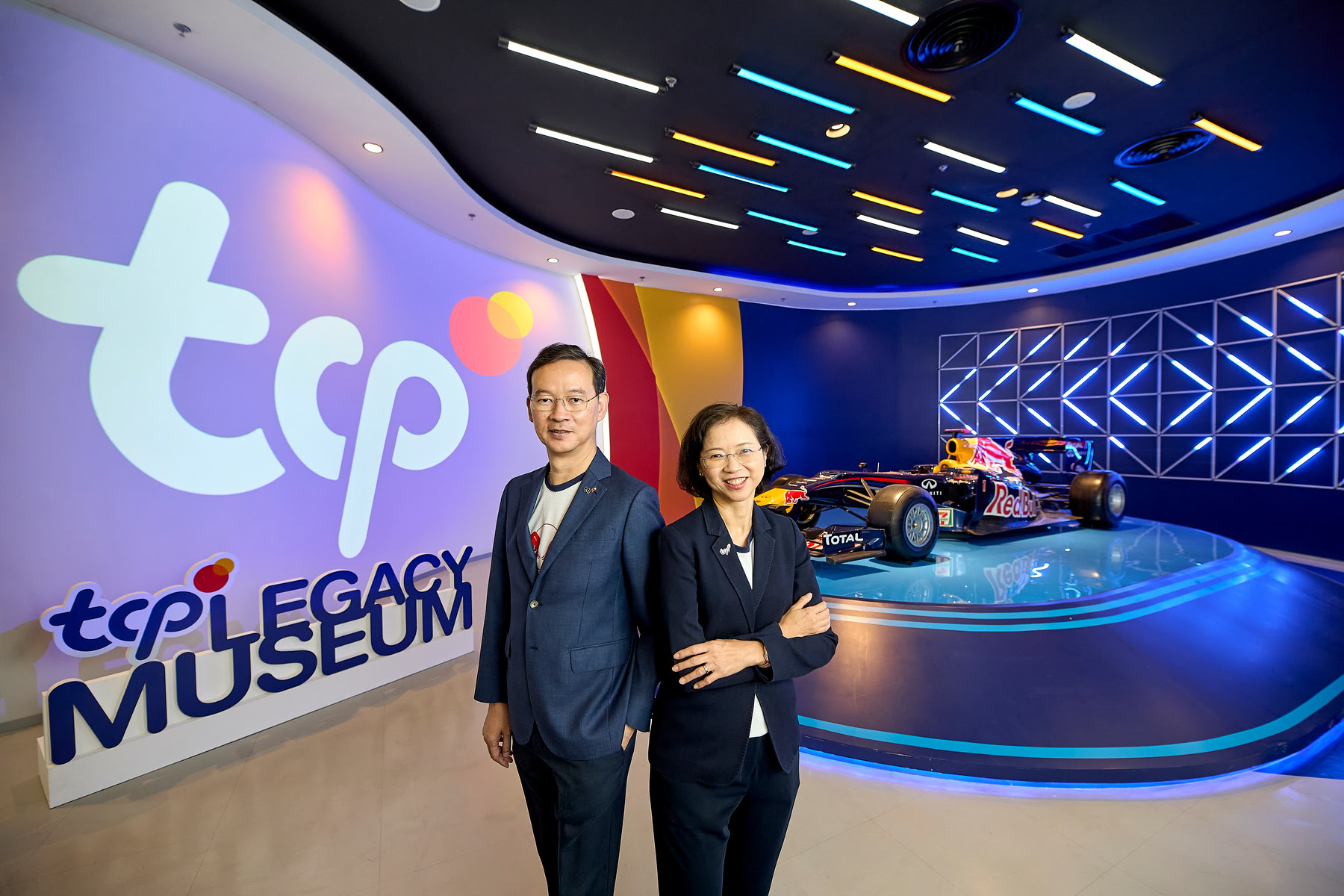
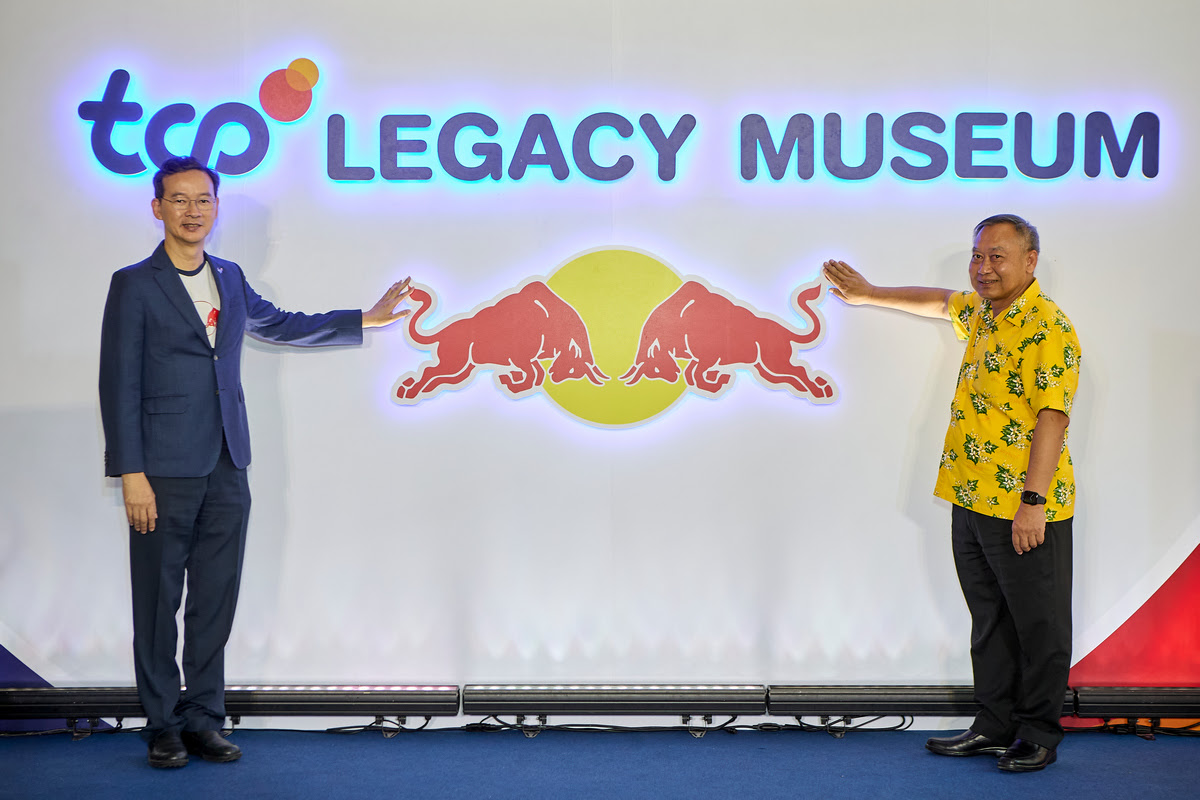
BANGKOK – TCP Group, the manufacturer and distributor of Kratingdaeng (Red Bull), Ready, Som Plus, Sponsor, Mansome, Hi!, Puriku, Sunsnack, and Warrior, is celebrating its 68th anniversary with the grand opening of the TCP Legacy Museum, a gateway to explore the historic success of the global energy drink and TCP Group’s legacy of pride.

Positioned as a must-visit destination, the opening ceremony was attended by the Governor of Prachin Buri Province, Mr. Ronnarong Nakornjinda, in Ban Sang District, Prachin Buri Province.

TCP5
Mr. Saravoot Yoovidhya, Chief Executive Officer, and Ms. Nucharee Yoovidhya, President of TCP Group.

Mr. Saravoot Yoovidhya, Chief Executive Officer of TCP Group, said that this museum highlights the creation of our iconic Kratingdaeng and Red Bull brands, which have captivated people worldwide, the development of high-quality products meeting international standards to become a House of Great Brands, and the establishment of an organizational foundation for sustainable growth.

It also reflects the vision and determination of Mr. Chaleo Yoovidhya, the founder of Kratingdeang (Red Bull) brand and TCP Group.

YoovidhyaTCP
Mr. Saravoot Yoovidhya, Chief Executive Officer, and Ms. Nucharee Yoovidhya, President of TCP Group.

“On the occasion of our 68th anniversary, we are thrilled to unveil the ‘TCP Legacy Museum,’ a source of pride, showcasing our history and experiences in the energy drink business. We hope that the TCP Legacy Museum will inspire students, tourists, and the general public, serving as a new landmark that supports the growth of tourism and the economy of Prachin Buri Province,” he said.

Entering its 69th year, TCP Group continues to focus on product excellence to reinforce its House of Great Brands, developing a range of innovative products to meet the unmet needs of consumers, promoting health and wellness, and adhering to the principles of good corporate governance and sustainability to ensure long-term growth and success.

“TCP Group has faced numerous challenges throughout its 68-year history, from its beginnings as a pharmaceutical partnership to its current position as a leading Thai food and beverage company that exports products worldwide. We are committed to advancing with strength and determination, driving our business to become a leader in F&B in Asia. Our mission is to energize, encourage, and refresh people worldwide contributing to a better world for all,” said Mr. Saravoot.

TCP2

TCP Legacy Museum: TCP Group’s pride from the present into the future

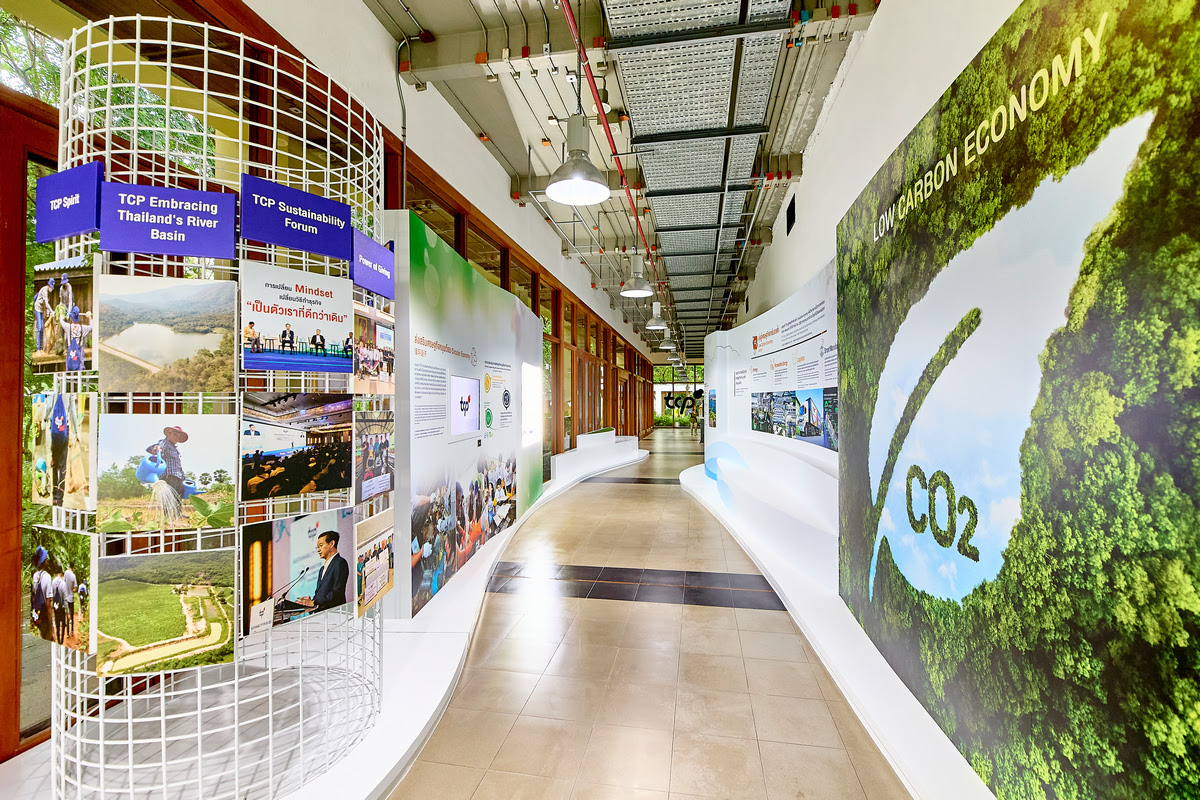
After undergoing renovations during the COVID-19 pandemic, the TCP Legacy Museum has officially reopened its doors to the public. The revamped museum features interactive exhibits across seven zones:

1. The Legacy: Step back in time to 1956 and relive the memorable journey that began when Mr. Chaleo Yoovidhya founded a pharmaceutical partnership and distributed medications under the “TC-MYCIN” brand. He then pioneered a new phenomenon, a Thai energy drink called “Kratingdaeng (Red Bull),” which has become a globally recognized brand. This groundbreaking effort paved the way for the expansion of the “TCP Group” today.

2. House of Great Brands: Showcasing the range of TCP Group’s products and innovations tailored to the unique lifestyles of today’s consumers. Enjoy an Augmented Reality (AR) experience, where visitors can take photos or record videos interacting with products from around the world.

TCP6

3. The Original: Discover the origins of the Kratingdaeng (Red Bull) beverage and the story behind this bottled energy drink through interactive exhibits engaging all your senses – sight, taste, smell, sound, and touch.  This zone offers a new perspective in the belief that consuming energy drinks affects health, providing factual information about energy drinks.

4. Factory in Focus: Explore the modern beverage production process and quality control system that meets international standards and is consistently kept up-to-date.

5. TCP Sustainability: Join in energizing a better world through the “TCP sustainability framework,” aimed at creating a positive impact, encompassing sustainable packaging development, carbon neutrality, and water sustainability.

TCP3

6. World Record: Experience the excitement of Ferrari Formula 1, with a historical exhibit of the Red Bull Formula 1 racing team demonstrating its driving performance on Ratchadamnoen Road, to honor His Majesty the Late King Bhumibol Adulyadej the Great  on the occasion of his 84th birthday in 2010.

7. Legacy Shop: Shop for unique souvenirs featuring Kratingdaeng (Red Bull) and other TCP Group brands.

The TCP Legacy Museum is located on the premises of T.C. Pharmaceutical Industries Co., Ltd., in Bang Tan Sub-district, Ban Sang District, Prachin Buri Province (Click to view the map.) The museum is open to the public free of charge every Tuesday, Thursday, and Saturday from 10:00 AM to 2:00 PM. Visitors can book their preferred date in advance at: https://tcp.com/about/tcp-legacy-museum/ For further inquiries, please contact: Tel. 037 239 239 ext. 0

For more details, please visit TCP Group’s website and TCP Group’s Facebook page


Advertisement

Pattaya Police Struggle to Arrest a Russian Man Who Locks Himself in Bathroom

Pattaya police took several minutes to control a Russian man who was in a state of delirium on May 11, 2024.

PATTAYA – Several patrol officers from Pattaya City Police Station had to exert effort for several minutes to control a Russian man who was in a state of frenzy, from his hotel room to the police station.

Eyewitnesses who recorded the video clip provided details that the incident occurred at 5:00 PM on May 11. The Russian man, aged around 30-35 years old, was in a state of delirium and ran to snatch a mobile phone from a passerby on Pattaya City Road, Moo 9, Nong Prue Sub-district, Bang Lamung District, Chonburi Province. Others helped to catch him and return the phone to its owner.

The owner of the mobile phone didn’t make a big deal out of it, thinking that the foreigner was probably drunk. But suddenly, the Russian man became crazed again, running into a hotel in Soi 7, Beach Road, before hiding in the bathroom and making loud noises.

russia pattaya31
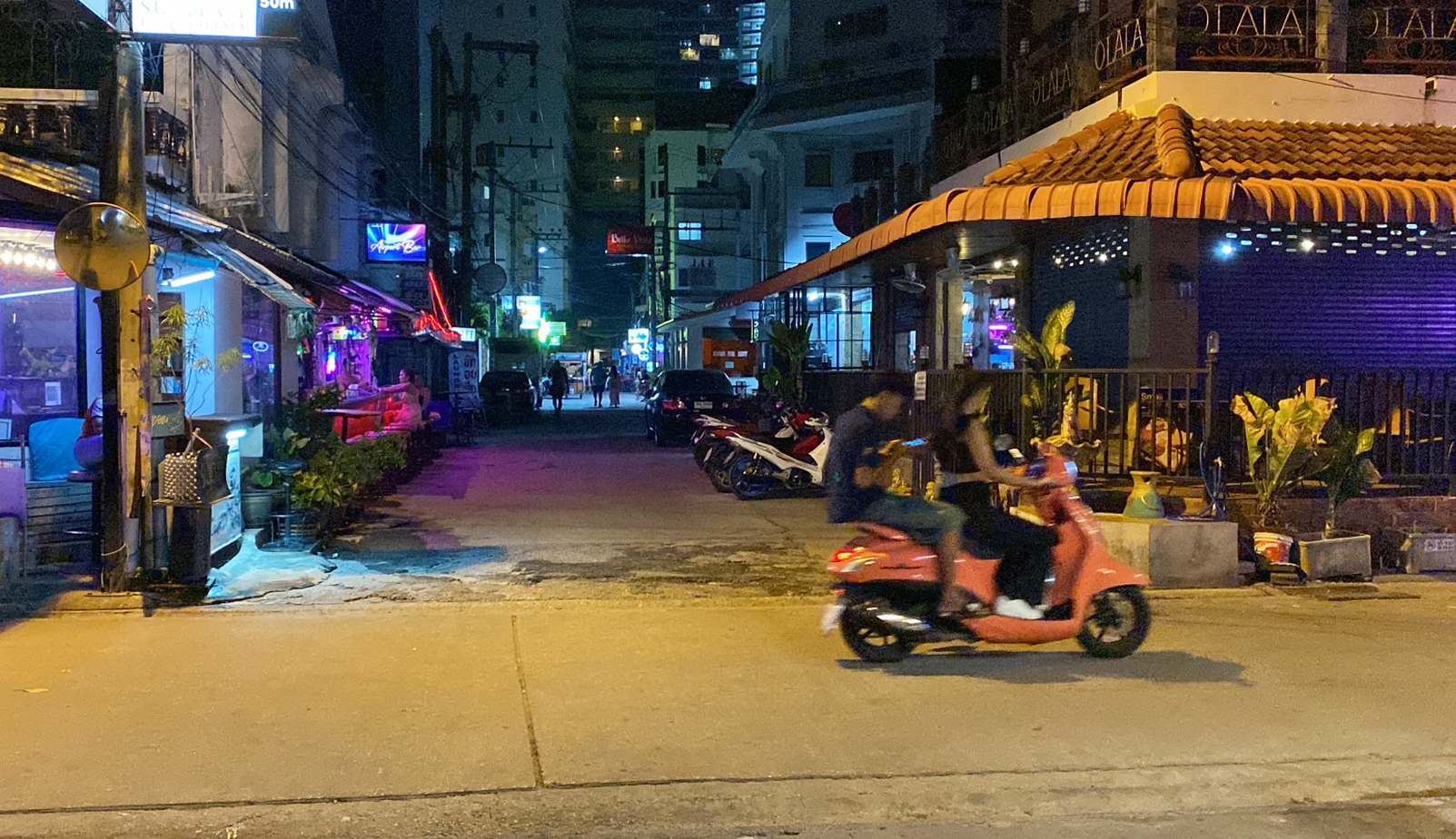
Soi 7, Beach Road, Pattaya
russia pattaya3
Pattaya Police sprayed pepper spray into the bathroom, forcing the Russian man to run out. Finally, the officers successfully apprehended him.

This time, witnesses called the police for assistance, concerned that locals and tourists would be disturbed.

Later, several police officers had to exert effort to arrest this Russian man by spraying pepper spray into the bathroom. Unable to bear it, the man ran out, and the police swarmed to control him, grappling with him for several minutes before successfully apprehending him.

The next morning, on May 12, reporters called Pattaya City Police Station for an update but didn’t get much information. The officer stated that the man was still in a frantic state and hard to communicate with. The police detained him in a holding cell and filed charges of disorderly conduct and causing public nuisance to prosecute him. They are waiting for him to calm down.

____

Advertisement

Opinion: How to Quickly Undermine the Reputation of Thai Rice

Deputy PM and Commerce Minister Phumtham Wechayachai shows a scoop of cooked 10-year-old rice during an inspection of a warehouse in Surin province, where the stock of rice originally brought in as part of PM Yingluck Shinawatra's controversial rice price mortgage program are kept, on May 6, 2024.

For the Srettha Thavisin’s government, which vows to promote Thai goods and Thai soft power abroad, the past week was a major setback, if not a disaster.

The news and debate as to whether the government’s 150,000 sacks of 10-year-old rice is still good, or even edible, took a very wrong turn this week. On Friday, after the government failed to convince some skeptics that it is edible, or should be eaten at all, Commerce Minister Phumtham Wechayachai tried to assay concerns of the Thai public by declaring it will be exported to Africa.

Days earlier saw both PM Srettha and Phumtham eating the 10-year-old rice in a PR stunt for the media to see in a bid to reassure the public that it is safe, edible, and even tasty. Some reporters were even invited to join this PR stunt by sampling the rice. The thing is, all these took place while we are still waiting for the results from the Department of Science Service to verify if the rice is still safe for human consumption and nutritious.

In a sane world, things should have started in the food science lab long before Srettha, Phumtham, or some journalists partake in the PR stunts in a bid to reassure the public that the rice is still safe. Once a food science clearance is obtained, then feel free to go on stage. The government approached it the other way around, however.

Without a scientific certification that these very vintage rice is safe, the PM, the Deputy PM (and even Defence Minister Suthin Klangsaeng, also a senior figure from the ruling Pheu Thai Party, who fed his soldiers with the same rice in a separate stunt) instead thought they could just convince the public through stunts – which backfired.

How wrong they were. Towards the end of this week, the Pheu Thai Party was literally pleading for an end to this very public dramatization of the rice which was originally brought in as part of the then-Pheu Thai administration under PM Yingluck Shinawatra’s controversial rice price mortgage program just before the 2014 coup.

The fiasco shows us that Thailand continues to be deeply divided politically, with those against the Pheu Thai party, which is unofficially presided over by former PM Thaksin Shinwatra, who is now on parole, having very low or no trust in the government. At this stage, the government might want to launch an effective damage control scheme by inviting “independent” food science experts, say from Kasetsart University, to test and determine whether the rice is still suitable for human consumption as well, for what is at stake is the reputation of Thai rice abroad.

Since Phumtham said all the old rice will be exported, via auction, to Africa, it is imperative that the Thai government leaves no doubt that the rice is still truly edible and nutritious. If not, they should turn it into animal feed, or biofuel if possible. In the worst-case scenario, publicly destroy them in an environmentally friendly way.

The reputation of Thai rice is much more precious than what the government might earn from selling this lot of rice. This despite the fact that Mr. Supachai Varopinyaporn, chairman of Tanasan Rice Company Limited, a major rice export firm, was quoted by the local media earlier this week as saying African consumers prefer old rice and it would not affect the confidence in Thai rice abroad. My question is how old is too old? Three, five or 10 years?

Yesterday, May 10, PM Srettha must have belatedly realized the gravity of the situation and told the media he will wait for the scientific results of the tests and would not be selling it if it is dangerous. This should have been how it started, not the disastrous rice-eating PR stunts.

Another question left unaddressed by the government is how on earth did the then dictatorial (and later semi-dictatorial) government of Gen. Prayut Chan-o-cha has failed to sell this lot of rice for the nine years when he was in power since the May 2014 military coup. Who should be held responsible? Given that the current government has no appetite for a conflict with the army, which is a state within a state, they would rather just keep quiet and eat the old rice.

Advertisement

Hot News

LATEST NEWS

Bangkok
overcast clouds
26.1 ° C
26.1 °
22.7 °
93 %
1.9kmh
100 %
Fri
25 °
Sat
33 °
Sun
35 °
Mon
37 °
Tue
37 °