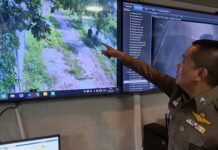
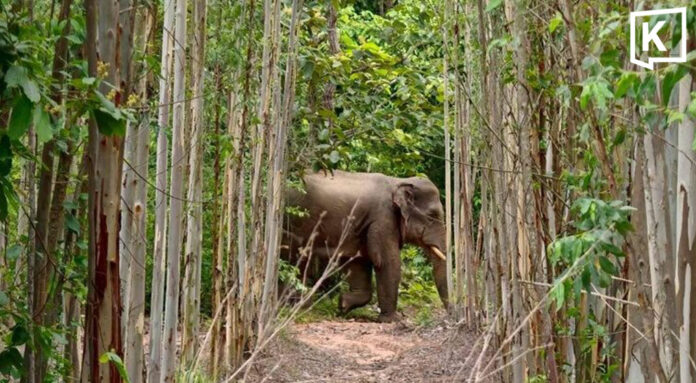
PRACHINBURI — 8 June 2026, National Park officials, along with local leaders and rescue volunteers, have urgently deployed drones on Saturday to safely guide a wild elephant that strayed from its herd back towards Thap Lan National Park, a World Heritage site, after it wandered across districts into a densely populated community in Kabin Buri district, Prachinburi province.
The wild elephant is a young male that became separated from a herd of about 60 elephants in the Thung Pho area of Na Di district, Prachinburi province before travelling more than 30 kilometres on foot across several subdistricts and crossing Highway 304, before approaching a village area in Mueang Kao subdistrict, Kabin Buri district.
At 17:45 on Sunday, a rescue volunteer with the Sajja Phutthatham Foundation of Thailand (Kabin Buri), Panuwat Pansai, revealed that residents reported sightings of the stray wild elephant entering Ban Muang, Moo 7, Moo 18, and Moo 21 of Mueang Kao subdistrict, Kabin Buri district, a heavily populated residential area. The animal was found sheltering in a bamboo grove near villagers’ homes. Meanwhile, Sanya Chanwaeo, headman of Mueang Kao subdistrict, said authorities first received reports of the elephant late the previous night. He subsequently coordinated with Thap Lan National Park officials, the Mueang Kao Subdistrict Administrative Organization and a wild elephant pushback volunteer team to monitor the situation and protect the lives and property of the residents, with the goal of driving the elephant back into the forest.
At 21:50, Prawatsat Chanthep, the chief of Thap Lan National Park, stated that records showed the same elephant had previously entered the area about two years ago, suggesting it might have remembered the migration route. Officials from Thap Lan National Park, Khao Yai National Park, and a special task force base deployed more than 50 personnel to control the situation and four drones to monitor and steer the elephant in a safe direction.
Prawatsat expressed concern that the elephant had become irritable due to lack of sleep and stress caused by crowds gathering to watch it, as well as people following it on motorcycles. The animal suffered minor injuries after walking into barbed-wire fencing. Initially, officials will gradually push the elephant along forest corridors towards Sam Phanta subdistrict in Na Di district, with public safety remaining the top priority. Residents were requested not to approach or follow the elephant at close range, as doing so could further stress the animal and increase the risk of injury.
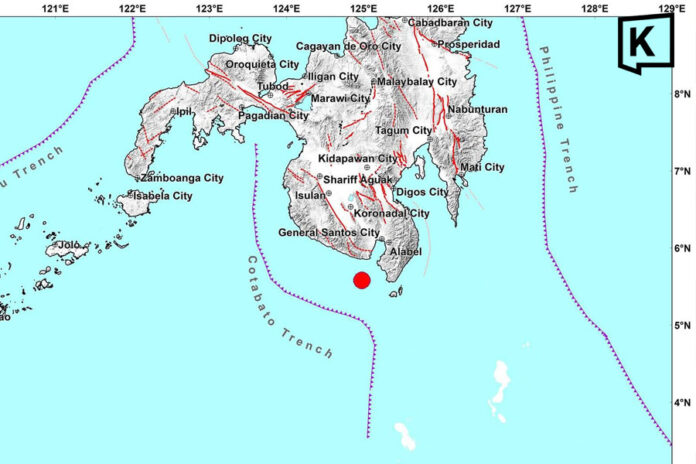
PHILIPPINES — 8 June 2026, A powerful magnitude 7.8 earthquake struck off the coast of Sarangani in the southern Philippines on Monday morning, causing building collapses, killing at least four people, injuring more than 200 others and triggering tsunami warnings across parts of Mindanao.
According to the Philippine Institute of Volcanology and Seismology (PHIVOLCS-DOST), the earthquake occurred at 07:37 local time. The epicentre was located off the coast of Sarangani Province and the quake was felt across a wide area of Mindanao.
Authorities confirmed significant structural damage in General Santos City, where several buildings collapsed during the earthquake. Emergency crews were deployed to assess damaged structures and assist affected residents.
Officials said at least four people were killed and more than 200 injured in the disaster. Many of the injuries occurred as people rushed to evacuate buildings during the strong shaking.
The earthquake triggered tsunami warnings for coastal communities across southern Philippines, prompting evacuations in vulnerable areas. Tsunami waves of up to 1 metre were later recorded along parts of the Sarangani and Sultan Kudarat coastline.
Although tsunami waves reached shore, the anticipated large-scale tsunami did not occur and the immediate threat has largely subsided. Authorities nevertheless urged residents to continue following official advisories and avoid unnecessary travel to affected coastal areas.
Power outages, infrastructure damage and transport disruptions were reported in several areas, while damage assessments continued across the region. Strong aftershocks were also recorded following the main quake.
The earthquake is believed to have originated along the Cotabato Trench, part of the tectonically active boundary where the Philippine Sea Plate subducts beneath the Eurasian Plate.
Rescue and recovery operations remain underway as authorities continue to assess the full extent of the damage.
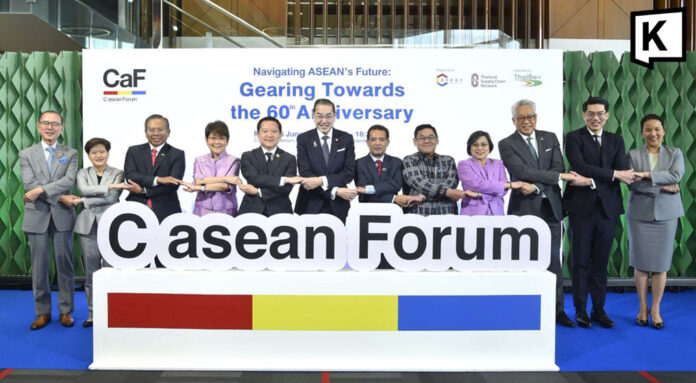
BANGKOK — 8 June 2026, As ASEAN approaches its 60th anniversary in 2027, regional leaders, diplomats and business executives gathered at the C asean Forum 2026 (CaF 2026), held on 5 June in Bangkok, to discuss how the bloc can navigate growing geopolitical uncertainty, technological disruption and economic transformation while maintaining resilience and competitiveness.
Organised by C asean under the theme “Navigating ASEAN’s Future: Gearing Towards the 60th Anniversary”, the forum was supported by Thai Beverage Plc as principal sponsor, together with the Thailand Supply Chain Network (TSCN).
Opening the forum, Mr. Thapana Sirivadhanabhakdi highlighted the growing complexity facing ASEAN, from geopolitical tensions and rapid technological change to climate challenges and evolving patterns of trade and investment.
“As ASEAN approaches its 60th anniversary in 2027, it is a great occasion for us to reflect on how far we have journeyed together and to renew our shared resolve to shape a future that is more peaceful, resilient and inclusive,” he said.
Thapana also reaffirmed C asean’s role as a regional platform connecting people, ideas and organisations across borders, a vision inspired by the late Dr. Surin Pitsuwan when the organisation was established in 2015.
Seven major disruptions
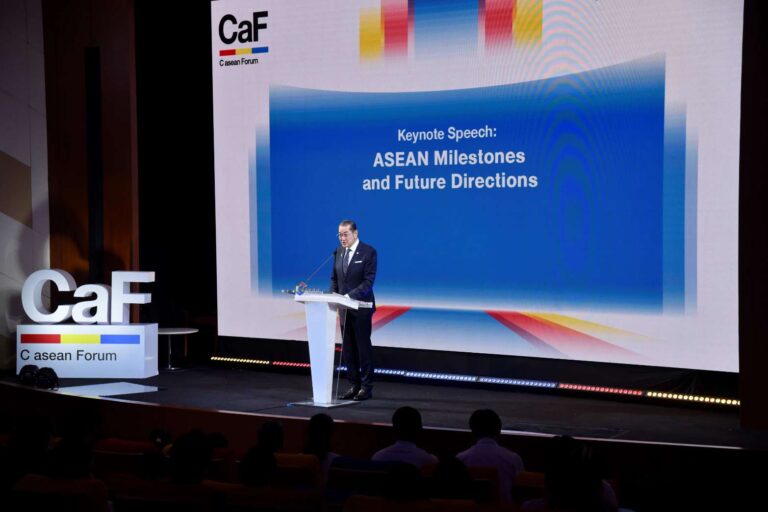
Former Deputy Prime Minister, former Foreign Minister and Chairman of the Asian Peace and Reconciliation Council Prof. Dr. Surakiart Sathirathai delivered the keynote address on “ASEAN Milestones and Future Directions”, warning that the region is confronting seven major and interconnected disruptions: artificial intelligence and technological change, demographic shifts, climate challenges, global financial volatility, education transformation, pandemic risks and energy transition.
Prof. Dr. Surakiart Sathirathai, Former Deputy Prime Minister, former Foreign Minister and Chairman of the Asian Peace and Reconciliation Council
On AI, Surakiart said ASEAN should focus not only on producing AI innovators but also on expanding the number of people capable of using the technology effectively across business, government and society. He also pointed to ageing populations across the region, a widening gap between lifespan and healthspan, and growing climate risks that the United Nations now describes as a “climate catastrophe”.
Surakiart also proposed a new principle of “ASEAN Affairs Come First”, arguing that member states should respond more rapidly and collectively to regional challenges.
“We have to change before we are forced to change,” he said.
He urged ASEAN to leverage its convening power to help shape a new regional energy and financial architecture while rebuilding the close personal relationships among leaders that have historically underpinned regional cooperation.
Ambassadors stress ASEAN centrality
A high-level ambassadorial dialogue, moderated by C asean Vice Chairman Pisanu Suvanajata, brought together representatives from Malaysia, the Philippines, Singapore and Timor-Leste to discuss ASEAN’s future resilience ahead of its 60th anniversary.
(From left to right) HE. Mr. Francisco Tilman Cepeda, Ambassador of the Democratic Republic of Timor-Leste to Thailand; H.E. Ms. Wong Siow Ping Catherine, Ambassador of the Republic of Singapore to Thailand; H.E. Mrs. Millicent Cruz Paredes, Ambassador of the Republic of the Philippines to Thailand; HE. Datuk Wan Zaidi Wan Abdullah, Ambassador of Malaysia to Thailand; and Mr.Pisanu Suvanajata, C asean Vice Chairman.
Despite representing countries at different stages of ASEAN’s development, the ambassadors agreed that the bloc’s greatest achievement over nearly six decades has been preserving peace and stability across one of the world’s most diverse regions. They also noted that ASEAN is on track to become the world’s fourth-largest economy by 2030.
Singapore’s ambassador identified maintaining ASEAN’s relevance amid intensifying competition between major powers as one of the organisation’s most pressing challenges, stressing that ASEAN should remain focused on its own interests rather than align with any particular geopolitical camp.
Malaysia’s ambassador called for a stronger articulation of shared ASEAN values to reinforce the bloc’s centrality, while the Philippine ambassador highlighted progress on initiatives including the ASEAN Semiconductor Roadmap, the ASEAN Digital Economy Framework Agreement and an ASEAN AI Summit scheduled for September 2026.
Singapore’s ambassador also said advancing the ASEAN Power Grid, aimed at connecting regional electricity systems and accelerating renewable energy adoption, would be a flagship priority during Singapore’s ASEAN chairmanship in 2027.
All four ambassadors agreed that strengthening ASEAN identity among younger generations remains a priority, with education, cultural exchange and intra-regional travel seen as key tools for fostering a greater sense of belonging. They also highlighted the role of the private sector and organisations such as C asean in helping build a stronger regional identity.
Business leaders focus on competitiveness
Ms. Helene Sara Kwek Hong Sin, president of the ASEAN CXO Association
The final session, “Advancing Regional Competitiveness Towards ASEAN at 60”, featured business leaders discussing digital trade, innovation and shifting consumer behaviour. Ms. Helene Sara Kwek Hong Sin, president of the ASEAN CXO Association, shared lessons from ASEAN’s digital trade ecosystem, while Ms. Jidanant Tanpithaksidh, Beauty & Wellbeing Marketing Demand Creation Lead at Unilever Thailand, outlined how fast-moving consumer goods companies are adapting to changing consumer demands.
Ms. Jidanant Tanpithaksidh, Beauty & Wellbeing Marketing Demand Creation Lead at Unilever Thailand
The discussions underscored a common view that ASEAN’s future competitiveness will depend on deeper regional integration, technological adaptation and investment in human capital as the bloc prepares to mark its 60th anniversary in 2027.
BANGKOK — 7 June 2026, Thailand’s universal healthcare scheme will begin covering gender-affirming hormone therapy this month, the government announced on Sunday, in a move timed to coincide with Pride Month.
Ploythale Laksamisangchan, deputy government spokeswoman, said the National Health Security Office (NHSO) has already procured the medications, with distribution to 50 service providers expected to begin no later than 10 June.
The benefit package covers eight hormone medications across four categories: oral and topical female hormones, injectable male hormones, oral anti-androgens, and central hormone-suppressing injections. Coverage also extends to health check-ups, mental health consultations, and laboratory tests including hormone levels, liver function, kidney function, and metabolic screening.
Ploythale said eligible service providers include civil society private clinics, Bangkok Metropolitan Administration public health centres, and selected government hospitals. She advised patients to follow announcements from the NHSO and relevant authorities for updates on participating facilities.
She also cautioned that hormone therapy carries physical and psychological side effects that may lead to future health complications, and stressed that patients must receive comprehensive consultation and ongoing care from specialists before beginning treatment.
The gender-affirming care package has been formally incorporated into the Gold Card universal coverage scheme.
PATHUM THANI — 7 June 2026, A German man was found dead at his home in Pathum Thani province on Sunday morning, his body discovered with a plastic bag over his head connected to a nitrogen tank, in circumstances police are investigating.
Frank Wolk, 59, was found by his wife sitting in a chair in a former servant’s room on the ground floor of their two-storey house in Mueang Ek village, Soi Ek Burapha 2, Lak Hok subdistrict, Mueang Pathum Thani district, at around 11:32.
A note found at the scene, translated by officers, read: “Whoever finds me — I do not want anyone to help me.”
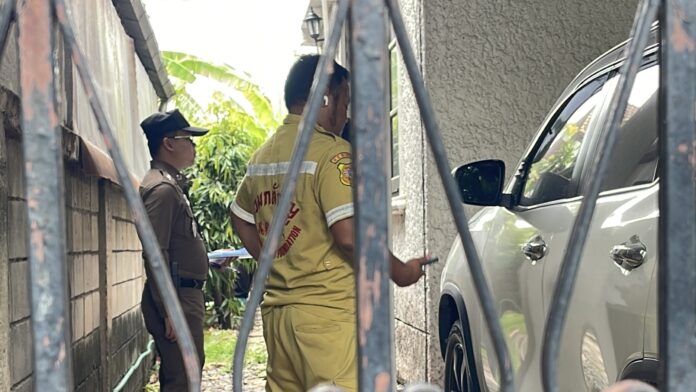
Pol. Maj. Namchok Duangsuwan, an investigator at Pak Khlong Rangsit Police Station, attended the scene along with forensic officials from the Ministry of Justice and volunteer rescue workers.
Wolk’s wife, Kanya Wolk, told police her husband had appeared normal that morning. Their daughter came downstairs to do laundry and could not find him, prompting a search of the house. She eventually checked the former servant’s room and found him unresponsive in the chair.
Kanya said her husband was a German programmer who had lived in Thailand for over ten years and worked from home. She described him as introverted, preferring to stay indoors. The day before his death, he made lengthy calls to family in Germany and a friend in Thailand. Neither reported any problems.
The body has been transferred to the Ministry of Justice’s forensic institute for a post-mortem examination to determine the official cause of death.
If you or someone you know is struggling, contact the Department of Mental Health hotline at 1323, available 24 hours.
NAKHON SI THAMMARAT — 6 June 2026, A six-year-old boy died after being mauled by a pet monkey belonging to his grandfather in Sichon district, Nakhon Si Thammarat province, on Saturday.
The boy, identified as Nathan Ekkarat Srichan, was attacked by the monkey at a home in Moo 4, Thepharat subdistrict. The animal bit him in the chest, with its fangs penetrating his lung, and also bit his leg. Relatives rushed him to Sichon Hospital, but doctors were unable to save him and he died there.
Pol. Lt. Montri Lenthat, deputy investigator at Plian Police Station, received the report and travelled to the scene with rescue personnel.
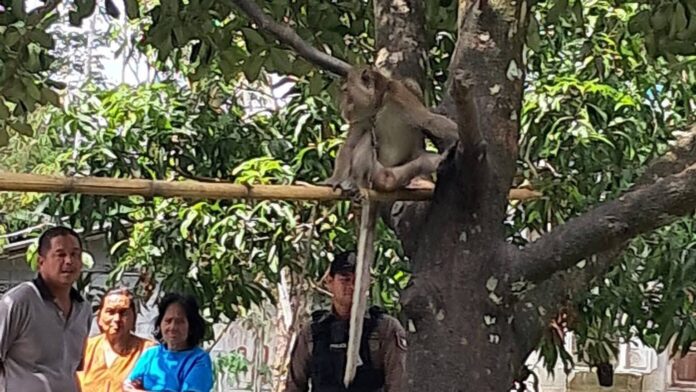
The monkey’s owner, Nathan’s grandfather Jaroon, had kept the animal since it was young, tethering it between two trees beside the house on a long enough rope to allow it to climb. Officers said Nathan likely did not realise the danger and wandered too close to the animal.
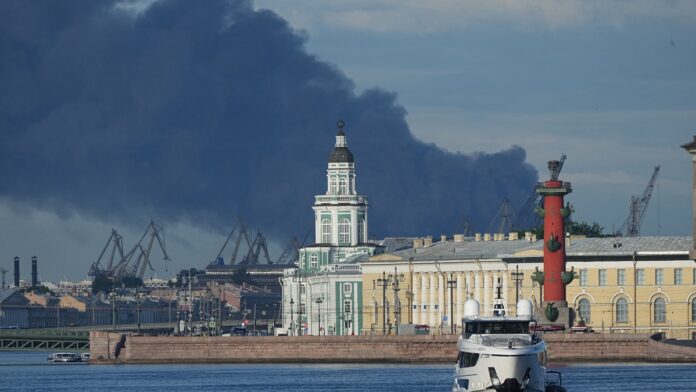
A plume of black smoke is seen over the port of St. Petersburg, Russia, Wednesday, June 3, 2026, after a Ukrainian drone attack. (AP Photo)
Residents of St. Petersburg were told not to leave their homes after a large-scale Ukrainian drone attack targeted Russia’s second-largest city Saturday morning, underscoring Kyiv’s growing ability to hit deep inside Russia.
The attack came a day after Russian President Vladimir Putin refused an offer to meet his Ukrainian counterpart.
St. Petersburg Gov. Alexander Beglov said three people sustained minor injuries in the attack. He advised residents not to go outside and warned of possible disruptions to mobile internet service, while regional Gov. Alexander Drozdenko said 141 drones were shot down over the surrounding Leningrad region in what he called an “unprecedented attack.”
Russia’s Defense Ministry said its air defenses shot down 376 Ukrainian drones.
“Last night, our drones covered a distance of about 1,000 kilometers to the St. Petersburg region — to the enemy navy’s arsenals and a base in Kronstadt,” Ukrainian President Volodymyr Zelenskyy wrote on X, adding that drones also hit an oil depot in Russia’s southern Krasnodar region.
The renewed attack on St. Petersburg is the latest embarrassing blow to Putin’s efforts to cast the conflict as a distant event that doesn’t affect Russian daily life.
A Ukrainian drone strike set ablaze an oil terminal in the city and hit a nearby naval base Wednesday, hours before the opening of the St. Petersburg International Economic Forum, Putin’s annual showcase for investment.
Russian President Vladimir Putin gestures during a meeting with representatives of international news agencies on the sidelines of the St. Petersburg International Economic Forum at the Constantine Palace in St. Petersburg, Russia, on Thursday, June 4, 2026. (Alexander Kazakov, Sputnik, Kremlin Pool Photo via AP)
Speaking at the forum, Putin said Thursday that Russia will strengthen its air defenses to counter recent Ukrainian drone attacks, which have reached deep inside his country and cast a cloud over the event in his hometown of St. Petersburg.
Putin on Friday rejected a proposal by Zelenskyy for a face-to-face meeting on the 4-year-old conflict, saying he sees “no point” in it. Thursday’s letter, the first public message Zelenskyy has written directly to Putin since Russia sent troops into Ukraine in 2022, was a sweeping critique of the Russian leader’s 26 years in power, as well as some taunts about his age.
Responding to Putin’s dismissal of the proposed meeting, Ukrainian Foreign Minister Andrii Sybiha said Saturday that things would “only get worse for Russia.”
“Failures will get more humiliating,” he wrote on X, warning that there are “no safe places in Russia that can be exempt” from Ukrainian long-range attacks, and that the intensity of attacks “will continue to grow.”
With the front line barely moving as swarms of drones hinder advances, both sides have sought an edge by launching long-range strikes.
In Ukraine, one person was killed and three wounded overnight into Saturday in the Dnipropetrovsk region, as Russian forces struck three districts nearly 30 times with drones and artillery, regional head Oleksandr Hanzha said.
In Zaporizhzhia, seven people sought medical care after a Russian drone strike started a fire at a parking lot, according to regional head Ivan Fedorov.
Russia targeted Ukraine overnight with 272 strike drones, and air defenses shot down 249 of them, the Ukrainian air force said Saturday.
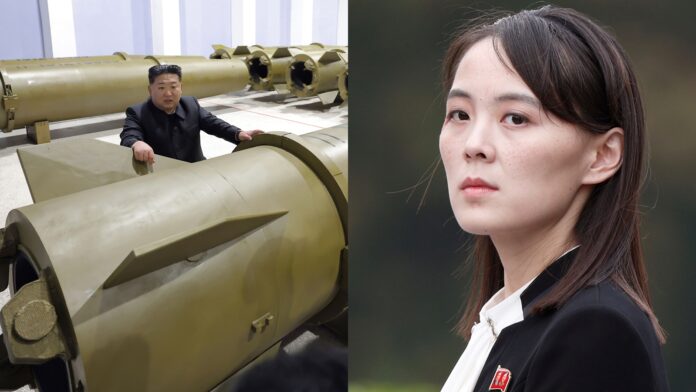
SEOUL, South Korea (AP) — The powerful sister of North Korean leader Kim Jong Un called a U.S. push for the denuclearization of North Korea an “anachronistic dream,” saying Sunday the North will steadily expand its nuclear arsenal in the face of U.S.-led threats.
The statement came a day before Chinese President Xi Jinping visits North Korea for talks with Kim Jong Un, in his first visit to the country in seven years.
“The U.S. assertion to backbite the status of the DPRK as a nuclear weapons state has no legally binding force and no one will be bound by the U.S. unilateral rhetoric,” said Kim’s sister and senior official, Kim Yo Jong, using the abbreviation for North Korea’s official name.
She dismissed as “false information” a U.S. announcement that President Donald Trump and Xi confirmed their shared goal to denuclearize North Korea in their summit in Beijing last month.
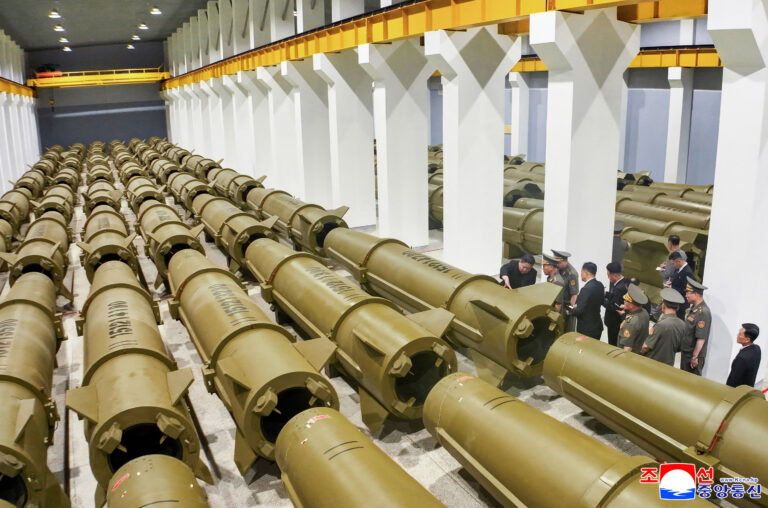
In this photo provided by the North Korean government, its leader Kim Jong Un, left, visits a weapons factory at an undisclosed place in North Korea Saturday, June 6, 2026. Independent journalists were not given access to cover the event depicted in this image distributed by the North Korean government. The content of this image is as provided and cannot be independently verified. Korean language watermark on image as provided by source reads: “KCNA” which is the abbreviation for Korean Central News Agency. (Korean Central News Agency/Korea News Service via AP)
“Some officials in the United States have failed to wake from their escapist and anachronistic dream,” Kim Yo Jong said.
North Korea has been focusing on enlarging its nuclear arsenal since Kim Jong Un’s high-stakes diplomacy with Trump collapsed in 2019. Experts say the North Korean leader wants an international recognition as a nuclear state so that he could demand lifting of international economic sanctions on North Korea.
During a visit to a new nuclear materials production plant last week, Kim Jong Un said North Korea would bolster the country’s nuclear forces “at an exponential rate.” On Sunday, North Korea’s state media reported Kim Jong Un visited a weapons factory the previous day and called for increasing the country’s missile production capacity 2.5 times under a five-year plan period.
In her statement, Kim Yo Jong accused the U.S. and South Korea of pushing for “ceaseless arms build-ups,” saying her brother’s push for “steadily beefing up the nuclear war deterrent for self-defense” is “an irreversible final conclusion to be carried out unconditionally.”
Analysts say Xi’s visit to North Korea is largely meant to reassert China’s influence over North Korea, whose foreign policy priority has shifted to Russia in recent years. They say Xi will likely refrain from directly raising the denuclearization issue and offer economic assistance programs during his meeting with Kim Jong Un.
North Korea has sent troops and conventional weapons to Russia to back its war efforts against Ukraine. South Korean and U.S. officials say North Korea has received economic and other assistance from Russia in return.
A Thai respiratory specialist who was critically injured in a hit-and-run by a foreign national on Ko Pha-ngan has died, nearly two weeks after the incident.
Assoc. Prof. Dr. Thirasak Kaewamatatwong, a pulmonologist and critical care specialist at Vimut Hospital in Bangkok, was struck by a motorcycle in the early hours of 23 May while on the island in Surat Thani province. The rider fled the scene.
The foreign national was later arrested and found to have been riding without a licence. A test found cocaine in his system. He has been charged in connection with the incident.
Dr. Thirasak, known affectionately as Ajarn Mor Ton, was transferred for urgent treatment at Ramathibodi Hospital following the crash. He died on 7 June.
Vimut Hospital announced his passing on its Facebook page, expressing deep condolences and praising his dedication throughout his medical career. “His contributions will be remembered and remain in our hearts forever,” the hospital wrote.
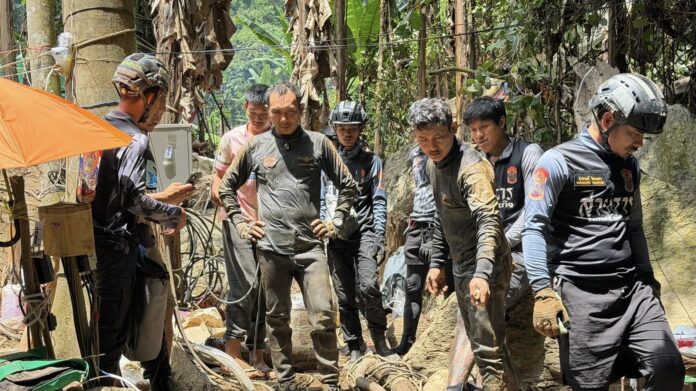
VIENTIANE, Laos — 7 June 2026, International rescue teams have called off the search for two Lao nationals still trapped inside a cave in Long Jaeng district, Xaisomboun province, Laos, after floodwaters and an earthquake made further operations impossible.
Five of the seven people trapped have been rescued. The remaining two were among a group of Lao nationals who entered the cave on 19 May to prospect for gold before heavy rain and flash floods cut off their exit.
Kengkaj Bongkavong, the rescue mission commander, said the operation became untenable due to uncontrollable natural conditions. The worksite sits between four mountains, causing floodwater to pour in from all directions faster than pumps could drain it. An earthquake centred 200 kilometres away also triggered a rockfall that blocked the cave entrance.
“Every person on the ground right now is heartbroken,” he said, adding that the goal had always been to bring everyone home, but the mission could not continue.
Before withdrawing, rescue teams left supplies and equipment at various points inside the cave in hopes the two survivors might find them. Pumping operations will continue to maintain oxygen levels inside the cave. Thai rescue teams began pulling out personnel and equipment on Sunday, but said they are ready to return immediately if conditions improve.
Rescue diver Manat Artmongkol wrote on social media that the tears shed by the team were not from weakness, but from having given everything they had. “We did not fail. We did not abandon anyone. We simply reached the furthest point any human being could go,” he wrote.
Fellow rescuer Jakkrits Tangtang, known as Pound, said the team had fought as hard as they could but could not overcome nature. He added that he had personally donated 30 million kip to each of the two missing persons’ families — totalling 60 million kip, equivalent to around 90,000 baht.