






























29.4 C
Bangkok
Sunday, June 14, 2026
Home Blog Page 6

Cambodia vowed to fire officials who failed to stop scam centres. Has anyone been held accountable?

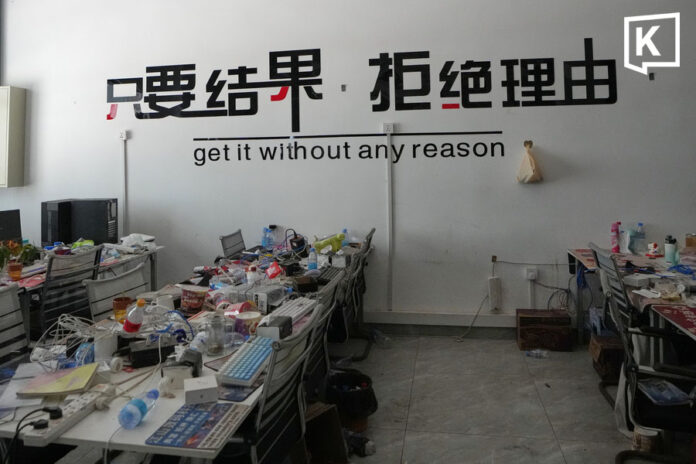
A view of a work station at the scam compound in O'Smach, Cambodia, Tuesday, 7 April 2026. (AP Photo/Sakchai Lalit)

When Cambodia launched its largest nationwide crackdown on online scam operations last July, Prime Minister Hun Manet’s government issued an unusually blunt warning to officials responsible for carrying it out.

Authorities who failed to follow the order, or refused to cooperate with the campaign, could face a performance review leading to reassignment or dismissal, according to the nine-point directive signed on 4 July 2025 and reported by Khmer Times on 16 July in the same year.

Nearly a year later, Cambodia is defending the results of that campaign after Amnesty International published a major new report alleging that most of the scam compounds identified by its researchers appear to have escaped the crackdown.

The dispute leaves a central question unresolved: who is being held accountable under the government’s own order?

Amnesty International said on Monday that it had identified 33 additional scamming compounds since its previous investigation in June 2025, bringing the total number of confirmed locations in its research to 86 as of the end of April.

The rights group said it found evidence of state intervention at only 24 of those compounds. It also documented mass escapes or releases at a further seven locations, with no police presence reported at the time.

Amnesty acknowledged that the absence of publicly available evidence does not necessarily prove that authorities failed to visit a particular location. However, the organisation said the lack of transparency surrounding the crackdown made government claims difficult to independently verify.

Its findings contrast sharply with Cambodia’s public account of the campaign.

In March, Senior Minister Chhay Sinarith, who heads the Commission for Combating Online Scams, told the Associated Press that authorities had targeted around 250 locations and shut down approximately 80 per cent of them, or about 200 sites. At the time, he said Cambodia hoped to close the remaining operations by the end of April.

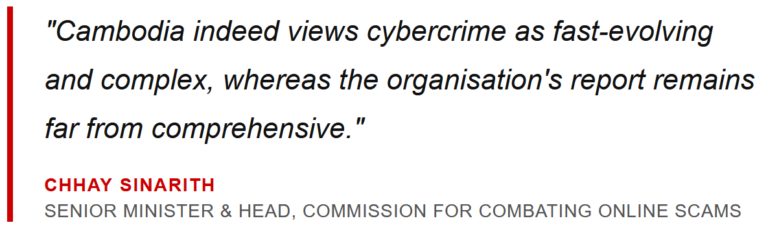
Responding to Amnesty’s latest report, Chhay Sinarith rejected the implication that Cambodia was failing to act against online scam operations.

In a statement reported by Reuters, he described Amnesty’s findings as “selective, one-sided, and lacking full understanding of the realities on the ground”, arguing that the report overlooked coordinated police operations, arrests, asset seizures and the dismantling of criminal compounds across several provinces.

In a separate written response to Bloomberg, he said the findings “do not reflect the significant efforts and concrete measures” taken by the government.
cchay web quote

Cambodia has cited significant enforcement figures. The government says it has revoked the licences of 25 casinos suspected of involvement in scams, charged nearly 1,500 suspects from 19 countries, deported almost 19,000 foreign nationals and recorded the voluntary departure of around 290,000 others.

Those figures suggest that the crackdown has had a substantial impact. Amnesty itself acknowledges that enforcement pressure likely contributed to the release or escape of thousands of people from scam compounds.

But the government’s response leaves a striking gap. While the minister dismissed Amnesty’s 178-page report as “far from comprehensive”, Cambodian authorities have not publicly produced a comparably detailed account of the crackdown, nor directly addressed the report’s central findings: that many compounds appeared to continue operating after the campaign began, that alleged perpetrators have often avoided accountability, and that survivors still face serious shortcomings in protection and support.

The dispute is therefore not over whether Cambodia has taken action. It is over whether that action has dismantled the networks behind the compounds — and whether the government has provided enough evidence to substantiate its claims of success.

A campaign built around official responsibility

The government’s nine-point order placed responsibility across several layers of the state, requiring coordinated action by provincial authorities, national police, border officials, the courts and Cambodia’s gambling regulator.

It also carried a warning directed at law enforcement and military personnel.

“not following this order, or not cooperating with this order, in any action, this is used as a form of performance review to either change your position or fire you from your position,”

That warning is now especially significant because Amnesty alleges that some interventions were reactive, ineffective or undermined by apparent collusion between police and compound managers.

In some cases, survivors told Amnesty that people held inside compounds were moved shortly before authorities arrived.

One survivor, identified by the pseudonym Winta, said managers at a compound in Chrey Thum told captives that police were on their way before relocating them across the country to a site near Poipet.

Amnesty said another survivor reported that a vehicle with military licence plates led the journey between the two locations. The organisation also cited accounts of vehicles with military plates entering and leaving the second compound.

Such allegations are not new. The US State Department’s 2024 human rights report said observers had reported that scam compounds often received advance warning of impending law-enforcement actions or were not investigated. Khaosod English reported in January that Thai authorities had identified a new compound deeper inside Cambodia, with officials warning that scam syndicates were relocating to escape regional crackdowns.

The Cambodian government has rejected Amnesty’s broader characterisation of its crackdown and has argued that transnational criminal networks are highly adaptive and deliberately designed to evade law enforcement.

That explanation may account for some of the difficulties authorities face. Online scam networks operate across borders, move workers between locations and frequently adapt their methods in response to police pressure.

However, it does not fully answer the accountability question raised by the government’s own order.

If compound operators received advance warning of police actions, were officials investigated? If compounds continued operating after state interventions, were local authorities asked to explain why? Have any officials been reassigned, suspended or dismissed under the performance-review mechanism announced last July?

The public responses issued following Amnesty’s report have emphasised the scale of enforcement activity. They have not explained whether the government has taken action against officials who may have failed to carry out the order or enabled compounds to remain operational.

Survivors treated as immigration offenders

Amnesty’s report also argues that Cambodia has failed to protect people escaping the compounds.

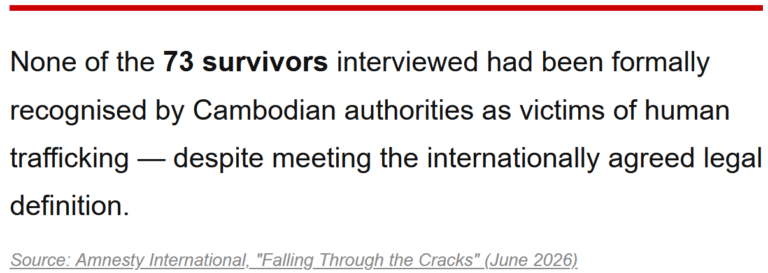
Its researchers interviewed 73 survivors from 16 countries who had been held across 20 sites during the crackdown period. The organisation said their testimony documented a consistent pattern of trafficking, forced labour, torture or other ill-treatment, and deprivation of liberty amounting in many cases to enslavement.

Six women described rape by, or at the direction of, compound managers or team leaders.
73 amnesty

Instead, the organisation said some people escaping or released from compounds were treated as irregular migrants, detained in substandard immigration facilities and charged visa-overstay fees. Some survivors reportedly had to borrow money to leave the country.

In at least six cases, Amnesty said police threatened victims with arrest or detained them without providing access to legal counsel.

The crackdown will be judged by what survives it

Cambodia’s scam industry presents an unusually complex challenge because it creates victims on both sides of the operation. People around the world lose money through fraudulent investments, romance scams and other schemes. At the same time, many of the workers carrying out those scams are themselves trafficked into prison-like compounds and forced to work under threat of violence.

Cambodia’s government says it is confronting a fast-moving criminal industry with extensive enforcement operations.

Amnesty’s report raises a more uncomfortable question: whether the raids are dismantling the industry, or merely creating the appearance of action while the networks behind it adapt, relocate and survive.

The answer may depend not only on the number of raids conducted or people deported, but on whether Cambodia enforces its own promise to hold officials accountable when scam compounds continue operating under their watch.


Advertisement

Two-year-old baby dies after alleged drink-driving crash

Two-year-old baby dies after alleged drink-driving crash

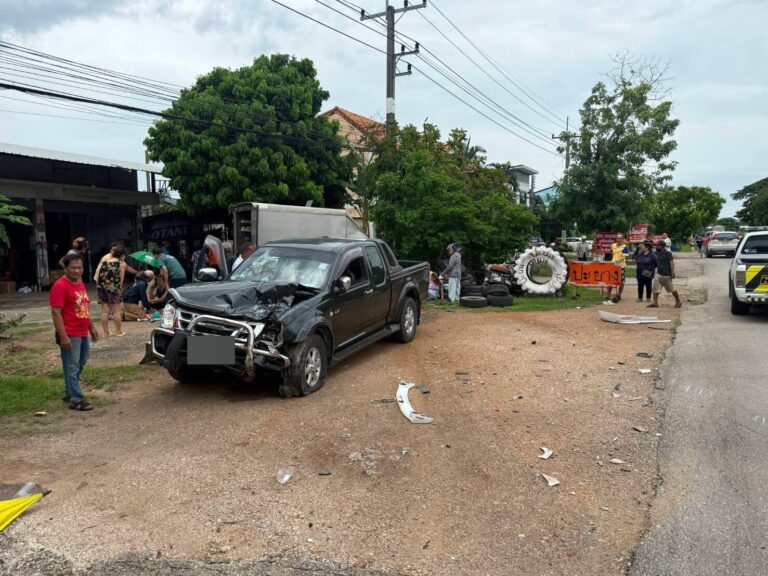
LAMPANG — 9 June 2026, A two-year-old baby “Nong Termfun,” who was tragic victim of former assistant village headman’s drink-driving, has died despite doctors’ efforts to save his life.

This follows an incident where a black Isuzu pickup truck with a Lampang license plate crashed into a parked car before ploughing into pedestrians walking along the roadside. The impact struck a family consisting of a father, a mother, and their 2-year-old son, who were walking along the side of the road. The force of the crash threw the 2-year-old boy, leaving him unconscious with life-threatening injuries at the scene. Rescue workers rushed to perform cardiopulmonary resuscitation (CPR) to save the boy’s life.

news138485 bSpAa14Cyy1780909360

The mother suffered serious injuries, including a broken leg and multiple wounds, and was taken to hospital for treatment. The father narrowly escaped being hit. The pickup driver was injured as well. The crash occurred on Monday along the Lampang-Ngao Road near Ban Pong Wang in Pichai subdistrict, Mueang district.

Preliminary investigations found that the driver, a former assistant village headman, was allegedly driving under the influence of alcohol when the crash occurred.

Most recently, at 02:25 on Tuesday, relatives of 2-year-old “Nong Termfun” announced that the child had passed away peacefully at Lampang Hospital. This came after the medical team fought with all their might to save his life, but due to the severity of his injuries, they were unable to pull him through, leaving his relatives in deep grief and mourning.

news138485 ay9p0JGyoU1780909360 0

Advertisement

Thai friends arrested with 796,000 meth pills in Udon Thani

Thai friends arrested with 796,000 meth pills in Udon Thani

UDON THANI — 8 June 2026, A man accused of helping smuggle nearly one million methamphetamine pills forgave the friend who allegedly lured him into the operation, saying he held no grudge because of the support he had received during difficult times. The two men broke down in tears and embraced before facing serious drug charges.

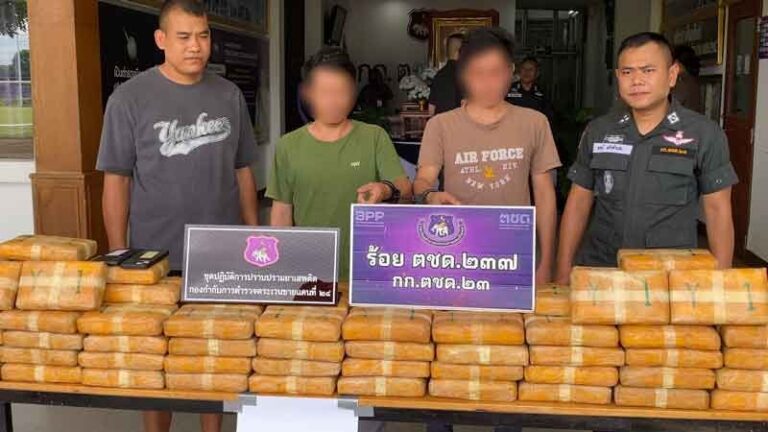
At 14:00 on Monday, at the Border Patrol Police Division 24 (Seni Ronnayut Military Camp) in Udon Thani province, the 2nd Border Patrol Police Bureau, the 23rd Border Patrol Police Division, and 237th Border Patrol Police Company, jointly held a press conference announcing the arrest of a drug network consisting of two suspects.

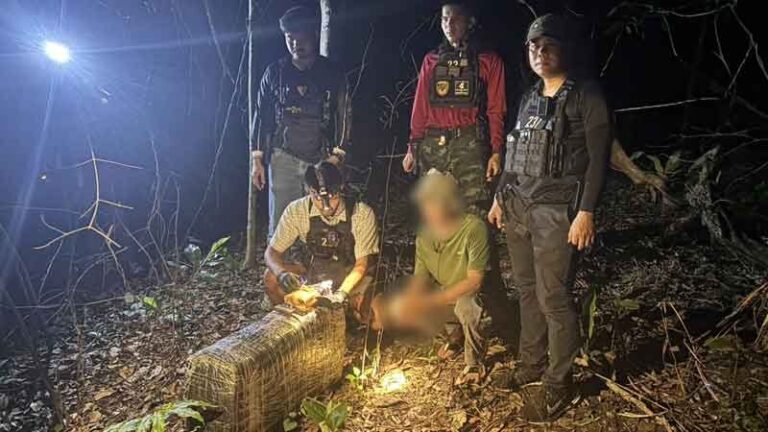
The suspects were identified as Khem, aged 38, and Dee, aged 36. Officers seized items included: 796,000 methamphetamine pills, a bronze-grey Suzuki Swift sedan bearing a Bangkok registration plate, and two mobile phones. The arrest took place in a rubber plantation forest in Ban Thap Kung, Thap Kung subdistrict, Nong Saeng district, Udon Thani province, at 03:00 AM on Sunday.

yabalovefriend7

Police revealed that this operation followed the arrests of Thewan Phinyo, who was hired to smuggle 2.8 million pills of narcotics from a border province in Wanon Niwat district, Sakon Nakhon province on 24 April. The suspect provided information regarding a network of hired smugglers who transport narcotics from border provinces into the northeastern and central regions. This information led police to monitor Khem, who was suspected of being involved in a wider drug-smuggling network operating between Thailand’s border provinces and central regions.

Khem was identified as one of the individuals on the drug trafficking network list. The drug suppression team of the 24th Border Patrol Police Division kept a close monitor on his behavior.

Authorities later received a report stating that the drug trafficking group had transported methamphetamine out of Nakhon Phanom Province and was heading toward Udon Thani Province, but the target vehicle managed to slip away from surveillance.

During Sunday late-night hours, Khem and Dee were spotted driving a bronze-grey Suzuki Swift sedan out of Ban Phasing, heading toward downtown Udon Thani, before driving back to Ban Phasing and heading toward Khem’s rubber plantation.

yabalovefriend6

Later at 03:00, police used their vehicles to block the road and intercept the Suzuki Swift sedan, finding Dee behind the wheel. No narcotics were found inside the vehicle. However, Dee confessed that Khem had already unloaded drugs from the car and hidden them at a hut in a rubber plantation in Ban Thap Kung, Thap Kung subdistrict, Nong Saeng district, Udon Thani province, which borders Ban Phasing. Police then detained Dee and had him lead them to the hut in the mountainous plantation, where they discovered 398 bundles of meth pills, totaling 796,000 pills, concealed in a rocky crevice.

Meanwhile, Khem managed to flee up the Phu Phan Noi mountain. Police then went to meet with Khem’s mother and had her call him to persuade him to come down and surrender, because an arrest warrant would be issued if he continued to run. Khem agreed to hand himself over. Police gave him a 20-minute window, stating they would not wait any longer than that.

Shortly after, Khem walked down and turned himself in while crying. Following that, police escorted both Khem and Dee, along with the seized methamphetamine, for interrogation.

yabalovefriend5

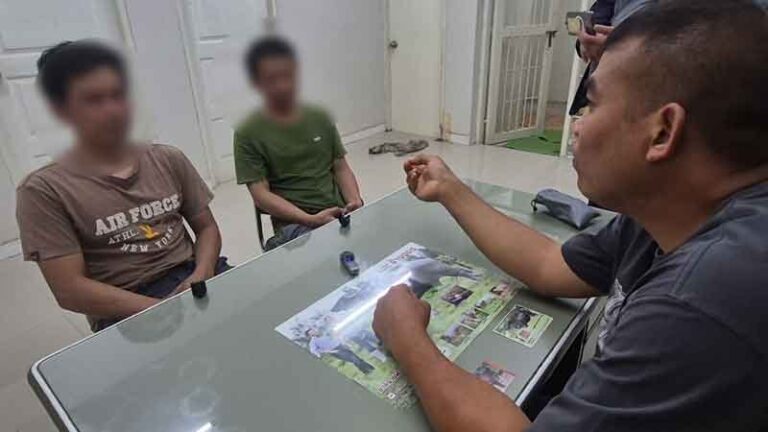
During questioning, Khem admitted that he works as a scaffolding installer and had indeed been hired to transport methamphetamine. He said he had previously served a prison sentence for attempted murder. After his release, he got married and now has a 5-year-old child. He became acquainted with members of a drug network while incarcerated.
He therefore entered this network, being hired by a Lao investor named Ace.

He expected to receive 20,000 baht for the job, and he intended to split the money evenly by giving 10,000 baht to Dee, but then they got caught. He has done this several times to make money to support his family and buy milk for his child, but now the police caught them. He feels terrible for dragging his friend to prison with him. Neither of them actually uses meth pills.

While Dee, Khem’s friend, stated that he had never known Khem was hired to transport meth pills before. Khem had simply asked him to drive, so he drove for his friend. When he later found out that his friend was involved in drug smuggling, he was arrested along with him, but he holds no grudge against his friend. This is because Khem has always been a loyal friend who would regularly drive his family members to the hospital to see a doctor whenever they were sick. This was the first time Khem had invited him along, and they ended up getting arrested. Following his words, both Khem and Dee wept and embraced each other out of deep gratitude and affection for their friendship.

yabalovefriend4

Initially, officials charged both suspects with “jointly distributing category 1 narcotics (methamphetamine pills) by possession for distribution, conducted for commercial purposes, causing illicit dispersal among the public, and impacting state security as well as public safety, in violation of the law,” before proceeding with further legal action.

yabalovefriend3

Advertisement

Couple’s Risqué Tuk-Tuk Performance Draws Backlash

Couple's Risqué Tuk-Tuk Performance Draws Backlash

PHUKET — 9 June 2026, A foreign tourist couple has sparked widespread criticism online after posting provocative content filmed on a tuk-tuk travelling through Phuket, according to a video shared on a Facebook page on 9 June.

The video showed the couple displaying affection on the vehicle while a friend travelling with them took turns filming the footage.

After the post was published, the page shared additional images in the comments section. The photographs appeared to show the foreign tourists engaging in suggestive behaviour aboard a moving tuk-tuk on a public road in Phuket province.

In the images, the woman was seen sitting astride the man while the pair touched each other and made gestures that many observers considered inappropriate, despite being in full view of other road users.

The incident triggered a strong reaction on social media, with many users condemning the behaviour as unsuitable for a public setting. Some also expressed concern that such actions could damage Phuket’s image as a tourist destination.

Advertisement

Khao Chet Yot trail closed after hiker death

Khao Chet Yot trail closed after hiker death

TRANG — 8 June 2026, Authorities have temporarily closed the popular Khao Chet Yot Nature Trail in southern Thailand during the rainy season following the death of a hiker on the route.

The Protected Areas Regional Office 6 in Songkhla announced the suspension on Sunday, directing trekking guides and tour operators to halt activities and refrain from submitting new permit applications for access to the trail.

Closure follows fatal accident

The decision follows an incident in which a tourist became lost and later died along the Khao Chet Yot Nature Trail in the Khao Banthat Wildlife Sanctuary in Palian district, Trang province.

Officials said the closure was imposed to ensure the safety of visitors during the rainy season, when trail conditions can become hazardous.

Existing permits also suspended

Authorities said that even previously submitted permit applications will not be approved and that all planned trips into the area must be suspended until further notice.

The regional office instructed trekking guides and tourism operators to cease organising visits to the trail while safety measures are reviewed.

Reopening depends on safety plan

The closure will remain in effect until Khao Banthat Wildlife Sanctuary holds consultations with trekking guides and tour operators to establish stricter safety protocols.

Officials said the sanctuary must report the outcome of those discussions to the regional office before clear guidelines can be issued regarding any future reopening of the trail.

Khao Chet Yot is a well-known hiking destination in southern Thailand, attracting trekkers seeking panoramic views and challenging wilderness routes. However, access to the area often becomes more dangerous during periods of heavy rain.

Advertisement

Laos secures FIFA World Cup 2026 Rights as Thailand waits

Laos secures FIFA World Cup 2026 Rights as Thailand waits

VIENTIANE, Laos — 8 June 2026, the Lao News Agency (KPL) reported that Laos has secured the broadcasting rights for the 2026 FIFA World Cup, allowing viewers across the country to watch all 104 matches free of charge, while negotiations over television rights in Thailand remain unresolved.

Telecommunications company Star Telecom, commonly known as Unitel, has reached an agreement with the International Federation of Association Football (FIFA) to secure the official broadcasting rights for the FIFA World Cup 2026, which will be jointly hosted by the United States, Mexico and Canada from 11 June to 19 July.

Every single match, totaling 104 matches, will be broadcast live free of charge with Lao-language commentary through the LaoTV platform.

In addition, Lao citizens will also have access to match replays of every single match and instant highlight clips anytime and anywhere via mobile devices and online services. At the same time, Unitel plans to invest in producing in-depth news coverage programs, as well as pre-match and post-match analysis and discussion shows.

Meanwhile, the company will also hold exclusive control over public screening rights across Laos, including fan zones, restaurants, pubs, bars, shopping centres and other public venues. Organisers wishing to stage public viewings must obtain permission from Unitel.

Therefore, Laos joins a growing list of Southeast Asian countries that have already secured the FIFA World Cup 2026 broadcasting rights, including Cambodia, Indonesia, Philippines, Singapore, Timor-Leste, Vietnam and Malaysia. The only ASEAN nations yet to secure the rights are Thailand, Myanmar and Brunei.

In Thailand, private sector representative like Jasmine International, commonly known as JAS, is currently engaging in late-stage negotiations with FIFA over the rights package. JAS is aiming for a price closer to the US$15 million fee paid by Vietnam, while FIFA has previously insisted an asking price of about US$40 million, or more than 1.3 billion baht, which prevented an agreement from being reached.

However, according to a report from a Thai football guru, Yingrak Raksuwan, he wrote posted on his Facebook page, BubbleYingrak, stating that Thai people would “definitely” be able to watch the 2026 World Cup, citing this confirmation from his inside sources. If this turns out wrong, He will be embarrassed. As a result, fans are keeping a suspenseful watch on whether Thai viewers will get to watch this tournament, and whether it will be free-to-air, pay-per-view, or distributed through some other model.

Advertisement

Turning lessons into action: Strengthening Thailand’s management of non-native species

Public awareness is equally important. A national campaign should communicate a simple message: do not release exotic fish into natural waters. Many people do not intend to cause harm but may release fish because they can no longer care for them, because the fish have outgrown their tanks, or because they do not know what else to do. The government should continuously communicate that exotic fish should not be released into rivers, canals, lakes, ponds, or the sea because they may become a problem for entire ecosystems. A return or surrender system for unwanted aquatic pets should also be established.

At the same time, the ornamental fish industry should not be treated as a problem in itself. Many operators comply with the law and possess significant technical expertise. The government should support responsible operators through certification systems such as green ornamental fish shops, farms free from prohibited species, traceability systems, biosecurity standards, and training for sellers and breeders. Such measures would give responsible businesses a competitive advantage while reducing the space for illegal markets.

For Thailand, the strategic direction should be to shift from reactive control after outbreaks occur to preventive governance before problems arise. This could include establishing a national surveillance center for non-native aquatic species, creating a national database of imported ornamental and exotic fish, implementing QR-based traceability for importers and shops, increasing penalties for illegal importation of prohibited aquatic species, developing DNA barcoding laboratories at key checkpoints, collaborating with online platforms, and building a reporting network involving citizens, anglers, farms, and academics.

In conclusion, illegal importation of ornamental and exotic fish, together with the broader cross-border movement of aquatic species, is a shared challenge faced by many countries, including the United States, Europe, Brazil, Australia, the Philippines, and Thailand. The core issue is not to prohibit the ornamental fish trade, but to ensure that trade is legal, transparent, traceable, and does not impose long-term costs on nature.

The blackchin tilapia case should therefore be used as a lesson to upgrade national biosecurity, traceability, and digital enforcement systems. If Thailand can build a strong and modern governance framework, it will be better able to balance the growth of the ornamental fish industry, the responsibility of operators, and the long-term protection of national biodiversity.

Advertisement

Chinese youth hockey player punches Thai referee

Chinese youth hockey player punches Thai referee

BANGKOK — 8 June 2026, Outrage grows as a foreign athlete has assaulted a Thai referee during the Bangkok Fly Ice Hockey Tournament 2026 at the Thailand International Ice Hockey Arena (TIIHA) on Rama 9 Road, Bangkok, on Friday at 23:00, during an Under-14 Division B match between Anesthetist and A/B Hockey.

The athlete who allegedly committed the act of violence against the referee is a 14-year-old Chinese national from Chengdu, China. The youth exhibited violent behavior toward the Thai referee, identified as “Coach Ang,” Sgt. Teerasak Rattanachot, a former member of Thailand’s men’s national ice hockey team and coach who was officiating the match.

In the final conclusion, the tournament’s organizing committee, led by “Coach Phung,” Nuchanart Ponglerkdee, Tournament Organiser of the Bangkok Fly Ice Hockey Tournament 2026, penalized the player by disqualifying the Anesthetist team from competing in its two remaining tournament matches. The team has since returned to China.

As for jersey number 77 of China’s Anesthetist team, the athlete was identified as Venom Liu, a 14-year-old forward born on January 16, 2012. Furthermore, Liu was also listed as the player for the Wuhan Dragons in the Under-14 A division, a higher competitive level.

80241 0 1024x515 0

According to a parent of a player from the Young Ducks Under-12 team, the incident occurred near the end of the match. At that moment, China’s player number 77 committed a foul and was dissatisfied with the referee’s call.

A parent revealed that the player then reacted by chest-bumping the referee, which resulted in his ejection from the game by the referee because it is against the rules. As he was leaving the ice, he allegedly shoved the referee again before taking an opening to punch him.

A parent further stated that in his view, the referee made the correct decision because it was clearly a foul. The player may have been frustrated because his team was scoring very few points and trailing far behind their opponents. Additionally, the 14-year-old athlete was the team’s key player and the only one scoring points.

80203 0 1024x577 0
A parent of a player from the Young Ducks Under-12 team, witness of the incident.

“In truth, ice hockey involves a certain amount of physical contact and friction. However, all players generally respect and obey the referee. If they are penalized for a foul and feel dissatisfied, they might question the referee, but once they get an explanation, they accept the punishment and go sit in the Penalty Box for two minutes. From all the ice hockey matches I have ever watched; I have never seen this kind of altercation or physical assault against a referee before. At most, players there might be question calls or some complains, but no one has ever dared to confront or physically assault the referee,” he said.

A parent continued that an inident like this should never happen in any sport, not just ice hockey. Children need to learn better emotional control. At 14 years old, he might be at an age where hormones are surging, but having been involved in ice hockey for a long time, he should already be able to control their emotions much better. Furthermore, the coaching staff should have done a better job of restraining the boy.

A parent also criticised, “During that match, the player’s parent even entered the playing area and pointed their finger in the referee’s face, which was inappropriate behavior. As for the organizing committee, this incident unfolded so rapidly that everyone was caught off guard; no one expected it to happen. However, they should have done more to prevent parents from entering the rink. An incident like this should not take place.”

80239 0 1024x587 0

Advertisement

Queen to join International Triathlon Event in Sattahip

Queen to join International Triathlon Event in Sattahip

CHONBURI — 8 June 2026, Her Majesty the Queen will graciously participate in the International Triathlon Tourism Festival 2026, to be held on 13-14 June at Dong Tan Bay within the Royal Thai Fleet headquarters in Sattahip district, Chonburi province. Competitors will vie for royal trophies bestowed by His Majesty the King and Her Majesty the Queen.

The event, Thailand Open Water Swimming Championships 2026 – Series 2, is being organised by Thailand Tri-League in cooperation with the Thailand Aquatics Association and local authorities in Chonburi province.

According to a statement posted by the official page of the Thailand Aquatics Association, Her Majesty Queen Suthida Bajrasudhabimalalakshana has graciously accepted an invitation to take part in the competition, titled the Amazing Race Festival Toyota Sattahip Triathlon 2026 Presented by MAMA.

Members of the public are cordially invited to welcome and offer their support to Her Majesty the Queen on Sunday, 14 June, between 06:00 and 10:00 at the Royal Thai Fleet, Dong Tan Bay, Sattahip district, Chonburi province.

Capt. Thamanat Prompow, President of Thailand Aquatics Association, expressed profound and boundless gratitude for Her Majesty’s gracious participation in the event on behalf of the organising committee, together with the Tourism Authority of Thailand, the Ministry of Tourism and Sports, Chonburi provincial authorities, the Royal Thai Navy, the Royal Thai Fleet, the Thailand Aquatics Association, and Thailand Tri-League.

The 2026 Thailand Open Water Swimming Championships, Series 2 features four race distances: 1 kilometre, 3 kilometres, 5 kilometres and 10 kilometres. The prestigious Royal Trophies will be awarded to the winners of the 10 kilometres race; the Men’s Overall Champion in the 10-kilometre race will receive a royal trophy from His Majesty the King, while the Women’s Overall Champion will be honored with a royal trophy from Her Majesty the Queen.

S 11771915 1024x683 1

Advertisement

World’s first mixed-sex elephant twins celebrate second birthday

World’s first mixed-sex elephant twins celebrate second birthday

AYUTTHAYA — 7 June 2026, Thailand’s mixed-sex twin elephants, widely regarded as the world’s first mixed-sex elephant twins, celebrated their second birthday on Sunday at a ceremony in Ayutthaya attended by fans, mahouts and supporters.

The celebration was held at the Ayutthaya Elephant Palace and Royal Kraal in Phra Nakhon Si Ayutthaya province for the twins, Plai Sapphalak Sophon and Phang Sakollak Sophit, who were born on 7 June 2024.

The event began at 09:00 with a birthday ceremony organised by elephant handlers and supporters of the twins. A large birthday cake decorated with images of the two elephants was unveiled as visitors gathered to mark the occasion in a festive atmosphere.

news138215 cviXGYNwUH1780811632 0

The twins have attracted widespread attention since birth because mixed-sex elephant twins are exceptionally rare. Fans who have followed the twins since their birth travelled from across Thailand and abroad to join the celebration.

Organisers said both elephants are in good health and continue to delight visitors with their playful behaviour.

The birthday activities also included a traditional merit-making ceremony. Laithongrian Meepan, owner of the Ayutthaya Elephant Palace and Royal Kraal, chairman of the Elephant Keepers Club and chairman of the Twin Elephants of the Kingdom Group, led participants in paying respects at the Pakam Shrine, a sacred site revered by elephant handlers.

news138215 4Jg8ZgCLGa1780811631 1 0

A merit-making offering was later presented to Phra Khru Kasem Chanthawimon, widely known as Phra Ajarn Daeng, abbot of Wat Pom Ramanya, who gave blessings for the twins’ continued health and wellbeing.

The highlight of the event came when guests sang “Happy Birthday” and gathered around the cake. Among those attending were former boxing champion Khaosai Galaxy, singer Tu Direk Amatayakul and performer Kao Krung Kao, who joined in offering birthday wishes to the elephants.

Riangthongbat Meepan, director of the Ayutthaya Elephant Palace and Royal Kraal and president of the Phra Nakhon Si Ayutthaya Tourism Business Association, said the celebration reflected the strong bond that has developed between the twin elephants and their supporters over the past two years.

He added that the venue would continue promoting tourism in Ayutthaya and showcasing the province’s cultural attractions to both Thai and international visitors.

news138215 uSZ3Ctqac01780811632 1024x768 1 0

Advertisement

Hot News

LATEST NEWS

Bangkok
overcast clouds
29.4 ° C
29.4 °
29.4 °
80 %
2.9kmh
94 %
Sat
29 °
Sun
36 °
Mon
35 °
Tue
35 °
Wed
31 °