27.7 C
Bangkok
Friday, June 26, 2026
Home Blog Page 70

Outrage as tourists expose themselves on Phuket tuk-tuk

Outrage as tourists expose themselves on Phuket tuk-tuk

PHUKET — 28 April 2026, A group of foreign tourists has drawn widespread criticism online after images showed them behaving inappropriately on a moving tuk-tuk in Phuket, authorities said.

Photos shared by the local Facebook page show several women on a tuk-tuk travelling along Patak Road in Karon subdistrict, Muang district, heading towards Karon Circle. In the images, the tourists appear to take turns removing their underwear and exposing themselves towards vehicles behind them, in full view of other road users and pedestrians.

The post quickly triggered a wave of reactions on social media, with many users condemning the behaviour and calling for authorities to take action, including fines or deportation.

Dashcam footage from a vehicle travelling behind the tuk-tuk reportedly captured the incident clearly. As of 28 April, there were no confirmed reports that officials had launched an investigation or identified those involved.

The incident has renewed calls for stricter enforcement measures to prevent inappropriate conduct in key tourist areas.

Advertisement

Cambodian police raid scammer centre in Poipet

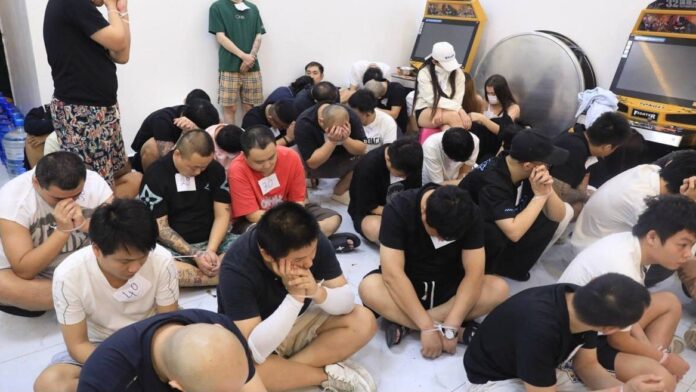
Cambodian police raided a suspected online scam operation in the border city of Poipet on Sunday, detaining multiple individuals as authorities face mounting international pressure to crack down on cybercrime networks.

The Cambodian National Police said the operation took place at 17:00 in Balelay 2 village, Poipet commune, in cooperation with Banteay Meanchey provincial police and the Poipet City Administration.

Officers searched the premises and arrested several suspects, including foreign nationals, while seizing evidence. Authorities said those detained remain under investigation, with legal proceedings pending.

The crackdown comes as Cambodia faces heightened scrutiny from the international community over its efforts to dismantle scam compounds operating within its borders.

During a recent visit, Chinese Foreign Minister Wang Yi raised concerns over online scam networks in talks with Cambodian leaders, urging stronger enforcement.

Meanwhile, the United States has imposed sanctions on a Cambodian senator accused of links to scam operations, adding further pressure on Phnom Penh to act.

Advertisement

Bangkok heat index hits ‘danger’ level, health alert

Bangkok heat index hits ‘danger’ level, health alert

BANGKOK — 28 April 2026, Bangkok authorities warned that the city’s heat index has reached a “dangerous” level, urging residents to monitor their health and take precautions, particularly for vulnerable groups.

In a Facebook post on Tuesday, the Bangkok Metropolitan Administration said the day’s maximum heat index had entered the danger category.

Health impacts from extreme heat can occur when temperatures exceed what the body can tolerate, leading to both direct and indirect effects. Symptoms may include fatigue, dizziness, rashes, swelling, heat cramps and heatstroke.

Authorities advised the general public to watch for symptoms, while those in at-risk groups should seek medical attention immediately if any abnormalities occur.

Vulnerable groups include children aged 0–5, people aged 60 and above, pregnant women, individuals with underlying health conditions, those with obesity, people who consume alcohol, outdoor workers, people exercising outdoors and tourists.

Residents can monitor air quality updates via the website airbkk.com or the AirBKK application. In emergencies, authorities advised calling 1669.

Advertisement

Thailand plans two-year Ta Kwai temple restoration

Thailand plans two-year Ta Kwai temple restoration

BANGKOK — 28 April 2026, Culture Minister Sabida Thaiseth said on 28 April that the restoration of Ta Kwai temple is expected to take about two years, with the project currently awaiting budget allocation.

Speaking at Government House at 9:40, Sabida said the Fine Arts Department has completed an initial survey, and the Culture Ministry is coordinating closely with military units in the area to clear the site. Officials are prepared to provide full support to facilitate the work, she added.

Asked whether the area is now safe and free of conflict, Sabida said she could not confirm, as the matter falls under security authorities. However, based on available information, she said officials would ensure safety and provide assistance for access to the site.

She said the restoration aims to return the temple as closely as possible to its original condition, using modern technology to replicate its former appearance. Some differences in colour may remain to distinguish original materials from new ones, but the overall structure will follow the original design.

Sabida added that the restoration process is not highly complex and that the Fine Arts Department has the expertise to carry out the work. Once completed, the site could be opened as a tourist attraction, although further improvements to the surrounding area and landscape may be required.

Advertisement

Thai army clears mines on border, finds 32 more

Thai army clears mines on border, finds 32 more

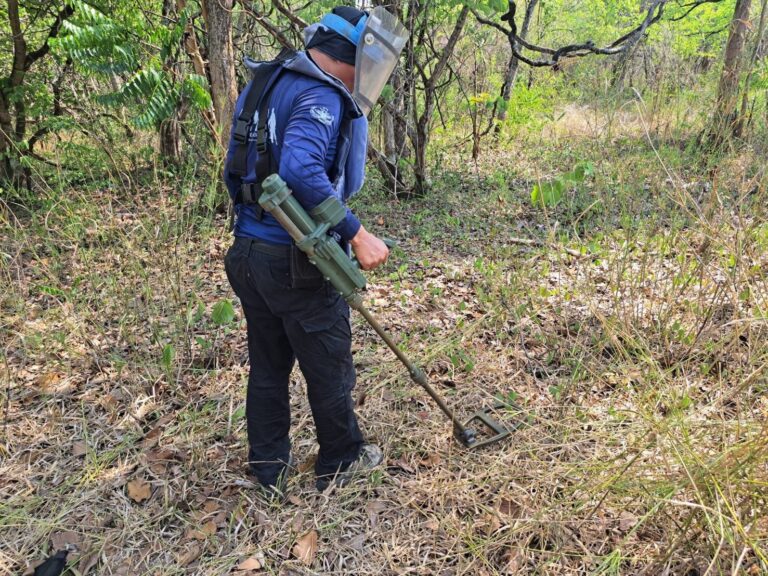
SA KAEO — 28 April 2026, Burapha Task Force, through its Humanitarian Mine Action Unit 1, is continuing efforts to clear landmines along the border at Ban Nong Chan in Non Mak Mun subdistrict, Khok Sung district, Sa Kaeo province, officials said.

In the latest operation on 25 April, personnel worked in a suspected hazardous area designated SHA 27-01/AD, covering 99,800 square metres. They cleared an additional 400 square metres, or 0.40% of the site, and discovered 32 landmines in a single day. These included 22 PMN anti-personnel mines and 10 MN79 mines.

Images released by officials showed the recovered mines bundled together for transport, underscoring the density of contamination in the area.

news128744 F5wU8oiyfC1777342838

Cumulative operations since 18 November have rendered 62,000 square metres safe, equivalent to 62.93% of the total area. About 37,000 square metres, or 37.07%, remain suspected of contamination.

In total, 189 explosive items have been found and cleared, including 122 PMN mines, 30 MN79 mines, two POMZ-2 mines, 34 PMD-6M mines and one item of unexploded ordnance (UXO).

Officials said large numbers of mines continue to be uncovered along the Thai-Cambodian border. The bundling of recovered mines, while done for safe transport and storage before disposal, is rarely seen and highlights the extent of the contamination.

Operations are ongoing as authorities work to restore safety for local communities in the border area.

news128744 OS4yGTqCnw1777342838

Advertisement

True Corporation partners with OYMotion to pioneer Neuro AI innovation

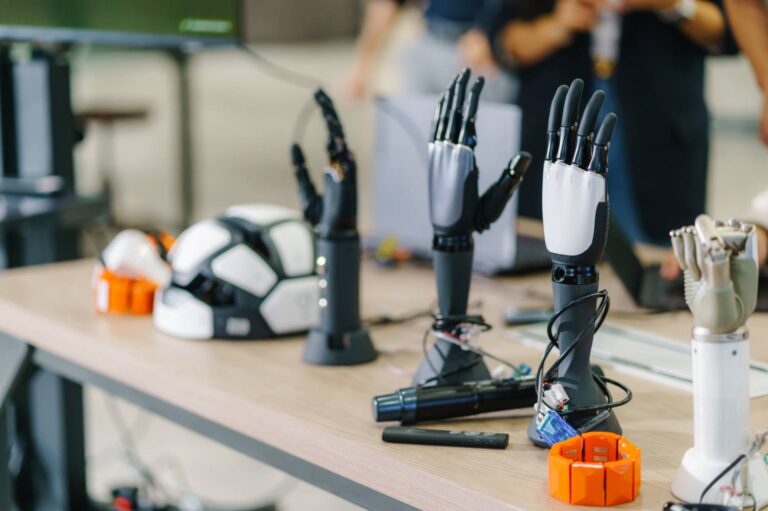
True Corporation has partnered with OYMotion to develop Neuro AI technology aimed at improving physical therapy and rehabilitation, the company said on Monday.

The collaboration, led by True’s Research and Innovation Center, integrates Brain-Computer Interface (BCI) technology with artificial intelligence and a data platform to enable patients to control smart devices or prosthetics through neural signals transmitted over True’s network.

71188 0

The system translates brain activity into commands, stimulating neural pathways to trigger muscle movement. The approach is designed to support cognitive retraining and accelerate recovery compared with conventional therapy, particularly for stroke patients and those with paralysis or mobility impairments.

True said the technology is being piloted with patients at leading hospitals in Thailand to validate clinical outcomes. If successful, it could be scaled across the public health system.

The initiative also aims to address shortages of specialised physical therapists and reduce long-term rehabilitation costs, which remain key barriers to continuous care.

According to True, the platform combines OYMotion’s neural sensing and signal decoding capabilities with its own digital ecosystem, enabling real-time transmission of brainwave and muscle data. This allows robotic devices or prosthetics to perform movements that closely mimic natural human motion.

71189 0

Ekaraj Panjavinin, head of Research and Innovation at True Corporation, said the partnership reflects the company’s strategy to develop technologies that improve quality of life.

“Combining Thai medical expertise with world-class NeuroTech will be the cornerstone for transforming Thailand’s rehabilitation healthcare system into a leading regional hub,” he said.

Ni Hualiang, founder and CEO of OYMotion, said the company focuses on affordable rehabilitation solutions using neural sensing and AI-driven signal recognition.

“Together, we aim to transform traditional physical therapy into a smarter, more seamless experience and set a new standard for rehabilitation,” he said.

71191 0

True said the technology is expected to benefit patients through faster recovery and greater independence, while enabling doctors to tailor treatment using brain function data. Hospitals could also expand access to rehabilitation services while maintaining care standards.

If widely adopted, the companies said the initiative could help position Thailand as a regional centre for NeuroTech innovation.

Advertisement

2 Chinese tourists arrested after gold shop robbery in Korat

Police have arrested two Chinese men accused of carrying out a brazen gold shop robbery in Nakhon Ratchasima on Sunday morning, stealing gold rings worth an estimated 300,000 baht before fleeing the scene.

The incident took place at around 10:11am on April 27 at a gold shop in Dan Kwian subdistrict, Chok Chai district, where two masked men entered the store while two female staff members were inside.

Police said the employees fled to the back of the shop after spotting the men, who were wearing black long-sleeve shirts, shorts, and masks covering their faces.

Unable to access gold necklaces due to protective grills, the men used a blunt object to smash a display cabinet containing gold rings before quickly grabbing items and fleeing the scene.

The entire robbery took approximately 30 seconds. The men then escaped in a white Toyota Yaris sedan with no visible licence plate, prompting police to issue a nationwide alert.

Authorities later confirmed the men were Chinese nationals identified as 27-year-old Zou Qintao from Guangdong province and 19-year-old Song Haolong from Sichuan province.

Police said the pair were arrested later the same day at a car rental shop in Prawet district, Bangkok, after investigators traced the vehicle used in the robbery back to the rental company.

Officers coordinated with immigration police and local units before locating the pair, who were found in possession of the stolen gold rings. No firearm was recovered, with the men allegedly claiming it had been discarded during their escape.

Police said initial investigations suggested the pair entered Thailand as tourists, and both were reported to have Thai girlfriends. Authorities added that they allegedly ran out of money before planning the robbery.

Investigators from Nakhon Ratchasima provincial police are en route to take custody of the pair for further questioning in the province, while evidence is being compiled for legal proceedings.

Advertisement

U.S. Attorney answers question on “Scambodia”

U.S. Attorney Jeanine Pirro

A senior U.S. prosecutor addressed questions on Cambodia’s role in cyber scam operations during a virtual press briefing on 24 April, while also responding to queries about alleged links between public officials and scam networks in the region.

Jeanine Ferris Pirro, United States Attorney for the District of Columbia, made the remarks during a briefing on U.S. enforcement actions targeting transnational cyber scam and forced-labour operations in Southeast Asia.

Responding to a question from Phnom Penh Post journalist Chheng Niem on the term “Scambodia” in relation to scam activity in Cambodia, Pirro said Cambodia remains “a source of focus”.

She added that public reporting suggests that 40 to 60 percent of Cambodia’s GDP is derived from scam revenue, while noting that Cambodian authorities have recently taken action against scam compounds. She said U.S. authorities are “waiting to see whether that will actually change the prevalence of scams in Cambodia.”

Read more

US sanctions Cambodian Senator Kok An over scam centres targeting Americans

WSJ stands by ‘Scambodia’ reference despite Cambodia protest

The briefing also included a separate question from BBC journalist Sen Nguyen, who asked about allegations involving Cambodian Senate President Hun Sen and his son, Prime Minister Hun Manet, as well as possible links to scam centres, and whether U.S. intelligence had detected any related activity in Vietnam.

Pirro responded that U.S. authorities could not comment on any particular investigation.

“We do, however, take seriously allegations that public officials are involved in or profiting from scam centers,” she said. “The strike force is focused on targets organizing and leading these compounds regardless of their political connections.”

The briefing focused on U.S. efforts against cyber-enabled investment fraud, commonly known as “pig butchering” scams, where victims are lured through fake job offers or online schemes before being defrauded.

Pirro said U.S. authorities have charged individuals linked to scam compounds in Myanmar and carried out enforcement actions against recruitment networks allegedly operating in the region, including Cambodia.

She added that hundreds of websites had been taken down and more than US$700 million in cryptocurrency linked to victims had been restrained as part of ongoing investigations.

The remarks come amid increased international scrutiny of cyber scam operations in Southeast Asia, where trafficking-linked fraud networks have expanded in recent years.


Advertisement

When Proposing Amendments to the Law Becomes a Legal Risk

The 10 prominent MPs from the main opposition People’s Party (PP) may have breathed a sigh of relief last Friday after the Supreme Court decided to accept a petition alleging serious ethical misconduct against them, but refrained from suspending them from their parliamentary duties. The petition stems from their proposed amendment to the royal defamation law.

​Their faces remained stern and stressed at the press conference, however. The court also instructed them not to speak publicly about the case regarding their attempt to amend the lese majeste law, also known as Section 112 of the Criminal Code. This gag order effectively renders them unable to defend themselves in the court of public opinion.

​The list of those facing the case includes PP leader Natthaphong Ruengpanyawut (who is soon to be appointed as the opposition leader), and deputy leaders Rangsiman Rome and Sirikanya Tansakul. In total, the case targets 44 former Move Forward Party MPs—the predecessor to the People’s Party—including former leader Pita Limjaroenrat.

​The fact that the petition was filed by the National Anti-Corruption Commission (NACC) and accepted by the Supreme Court raises serious concerns about the Thai justice system. A key duty of any Member of Parliament is to serve as a legislator—to propose, amend, and enact laws. Now, these 44 individuals face a potential life ban from politics for merely signing a petition to amend a law.

​Ironically, the bill was never even tabled in Parliament due to opposition from other MPs. The proposal sought only to reduce the heavy penalties of Section 112 and designate the Bureau of the Royal Household as the sole complainant to prevent the law from being abused by third parties.

​If a law cannot be amended, it ceases to be a legal instrument and becomes a belief system—or a cult. If the Supreme Court adjudicates that legislators cannot amend the lese majeste law, it enshrines the royal defamation law as a “special” law, standing above all others and immune to change. This is detrimental to the genuine democratization of Thailand. Furthermore, it is not beneficial to the monarchy itself, as it will deprive the monarchy institution of critical feedbacks from the press, the public and MPs. The persistence of such draconian laws, carrying maximum prison terms of 15 years, means that critical public feedback regarding the role of the monarchy in Thai society remains a very high-risk undertaking.

​For example, monarchy reform movement co-leader Arnon Nampa is currently serving 31 years of combined prison terms, mostly for critical remarks made on rally stages—remarks deemed by judges to be defamatory and/or insulting to the monarchy.
​The movement today is inactive, if not almost dead. While tens of thousands once listened to Arnon’s rousing speeches, current rallies calling for his right to bail—which has been denied 104 times over the past two years and seven months—struggle to gather more than 200 people. Arnon may eventually set a record for the number of bail denials. His Facebook page, managed by associates, remains active, selling merchandise to support political prisoners, including baseball caps emblazoned with the message “Make Arnon Free Again.”

​A key factor in the decline of the movement is the political animosity between the “Redshirt” Pheu Thai supporters and the “Orange-shirt” People’s Party supporters.

​Despite this breakdown between the two camps, the “elephant in the room” remains—and is growing. The circumstances are becoming increasingly absurd as the chilling effect on free and critical expression regarding the monarchy intensifies. Merely attempting to amend an anachronistic law that bars criticism has become a personal risk. One can end up like these MPs, or like Arnon in prison, or flee into exile abroad. The court is effectively, whether by intention or not, placing people’s desire to reform the monarchy outside democratic bounds by putting them at risk of criminal offence for merely suggesting it.

​Justice should be for all. Justice should be blind. Everyone should be equal under the law. That is what one expects in a just and democratic society. In an alternate Thai society, no eyebrow would even be raised by such a move.

That may not be the case for Thailand. By accepting this controversial petition and gagging these MPs, the court risks undermining the very foundation of the Thai justice system


Advertisement

Chinese influencer says she was lured to Cambodia with fake high-paying job

A Chinese social media influencer has alleged that she was lured to Cambodia with the promise of a high-paying job before being forced into a cyber scam operation, according to reports from South China Morning Post (SCMP) and Mothership.
The influencer, known online as “Umi”, is a livestream host from Fujian province with around 24,000 followers on Chinese platforms. She previously drew public attention after being found in a distressed condition in Cambodia and later returning to China in January.

In a recent livestream titled “The Turbulent Story of Cambodia”, Umi said she was deceived by a woman she knew who offered her an attractive job opportunity abroad. She claimed that upon arrival in Cambodia, her passport was confiscated and her movements were restricted.

She also alleged that she was forced into so-called “keyboard work”, a term commonly associated with online scam operations targeting victims in cyber fraud schemes, SCMP reported.

“I was deceived by that woman, and she still hasn’t been caught,” she said during the livestream, adding that she regretted her decision to travel.

The livestream was cut off abruptly after around 30 minutes, and her social media account was later banned, according to reports.

Chinese media cited by Mothership said Umi was previously found injured and in a weakened condition in Cambodia, with photos circulating online showing her holding an X-ray film. She was later located at a hospital by the Chinese embassy and brought back to China for medical treatment.

Doctors in China reportedly found she tested positive for drugs, and her leg condition was believed to be caused by nerve compression due to prolonged immobility.

Reports also said her father, a farmer in Fujian, had believed she was working in another province and had sent her money over time before losing contact.

Her case has drawn renewed attention to cyber scam networks in Southeast Asia, where victims are often lured by fake job offers and later forced into online fraud operations.

A United Nations report has estimated that hundreds of thousands of people from multiple countries have been trafficked into scam compounds across the region in recent years.

Advertisement

Hot News

LATEST NEWS

Bangkok
broken clouds
27.7 ° C
27.7 °
27.7 °
81 %
2.7kmh
67 %
Fri
36 °
Sat
36 °
Sun
37 °
Mon
36 °
Tue
35 °