



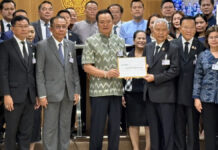
































The 10 prominent MPs from the main opposition People’s Party (PP) may have breathed a sigh of relief last Friday after the Supreme Court decided to accept a petition alleging serious ethical misconduct against them, but refrained from suspending them from their parliamentary duties. The petition stems from their proposed amendment to the royal defamation law.
Their faces remained stern and stressed at the press conference, however. The court also instructed them not to speak publicly about the case regarding their attempt to amend the lese majeste law, also known as Section 112 of the Criminal Code. This gag order effectively renders them unable to defend themselves in the court of public opinion.
The list of those facing the case includes PP leader Natthaphong Ruengpanyawut (who is soon to be appointed as the opposition leader), and deputy leaders Rangsiman Rome and Sirikanya Tansakul. In total, the case targets 44 former Move Forward Party MPs—the predecessor to the People’s Party—including former leader Pita Limjaroenrat.
The fact that the petition was filed by the National Anti-Corruption Commission (NACC) and accepted by the Supreme Court raises serious concerns about the Thai justice system. A key duty of any Member of Parliament is to serve as a legislator—to propose, amend, and enact laws. Now, these 44 individuals face a potential life ban from politics for merely signing a petition to amend a law.
Ironically, the bill was never even tabled in Parliament due to opposition from other MPs. The proposal sought only to reduce the heavy penalties of Section 112 and designate the Bureau of the Royal Household as the sole complainant to prevent the law from being abused by third parties.
If a law cannot be amended, it ceases to be a legal instrument and becomes a belief system—or a cult. If the Supreme Court adjudicates that legislators cannot amend the lese majeste law, it enshrines the royal defamation law as a “special” law, standing above all others and immune to change. This is detrimental to the genuine democratization of Thailand. Furthermore, it is not beneficial to the monarchy itself, as it will deprive the monarchy institution of critical feedbacks from the press, the public and MPs. The persistence of such draconian laws, carrying maximum prison terms of 15 years, means that critical public feedback regarding the role of the monarchy in Thai society remains a very high-risk undertaking.
For example, monarchy reform movement co-leader Arnon Nampa is currently serving 31 years of combined prison terms, mostly for critical remarks made on rally stages—remarks deemed by judges to be defamatory and/or insulting to the monarchy.
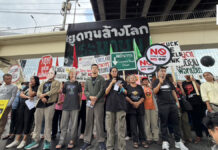
The movement today is inactive, if not almost dead. While tens of thousands once listened to Arnon’s rousing speeches, current rallies calling for his right to bail—which has been denied 104 times over the past two years and seven months—struggle to gather more than 200 people. Arnon may eventually set a record for the number of bail denials. His Facebook page, managed by associates, remains active, selling merchandise to support political prisoners, including baseball caps emblazoned with the message “Make Arnon Free Again.”
A key factor in the decline of the movement is the political animosity between the “Redshirt” Pheu Thai supporters and the “Orange-shirt” People’s Party supporters.
Despite this breakdown between the two camps, the “elephant in the room” remains—and is growing. The circumstances are becoming increasingly absurd as the chilling effect on free and critical expression regarding the monarchy intensifies. Merely attempting to amend an anachronistic law that bars criticism has become a personal risk. One can end up like these MPs, or like Arnon in prison, or flee into exile abroad. The court is effectively, whether by intention or not, placing people’s desire to reform the monarchy outside democratic bounds by putting them at risk of criminal offence for merely suggesting it.
Justice should be for all. Justice should be blind. Everyone should be equal under the law. That is what one expects in a just and democratic society. In an alternate Thai society, no eyebrow would even be raised by such a move.
That may not be the case for Thailand. By accepting this controversial petition and gagging these MPs, the court risks undermining the very foundation of the Thai justice system