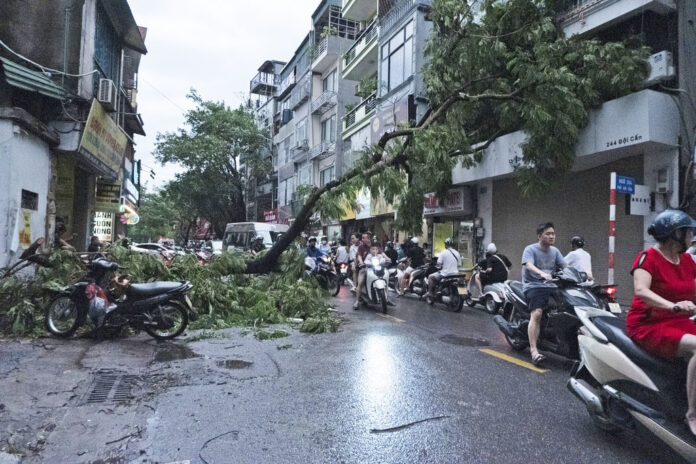
Traffic moves slowly past fallen trees on the roads of Hanoi, Vietnam, Sunday Sept. 8, 2024. (AP Photo/Aniruddha Ghosal)
HANOI, Vietnam (AP) — At least 14 people have died and 176 others injured in Vietnam after Typhoon Yagi slammed the country’s north, state media said Sunday, as officials warned of heavy downpours despite its waning power.
Described by Vietnamese officials as one of the most powerful typhoons to hit the region over the last decade, Yagi left more than 3 million people without electricity in northern Vietnam. It also damaged vital agricultural land, nearly 116,192 hectares where rice and fruits are mostly grown. Hundreds of flights were canceled after four airports were closed.
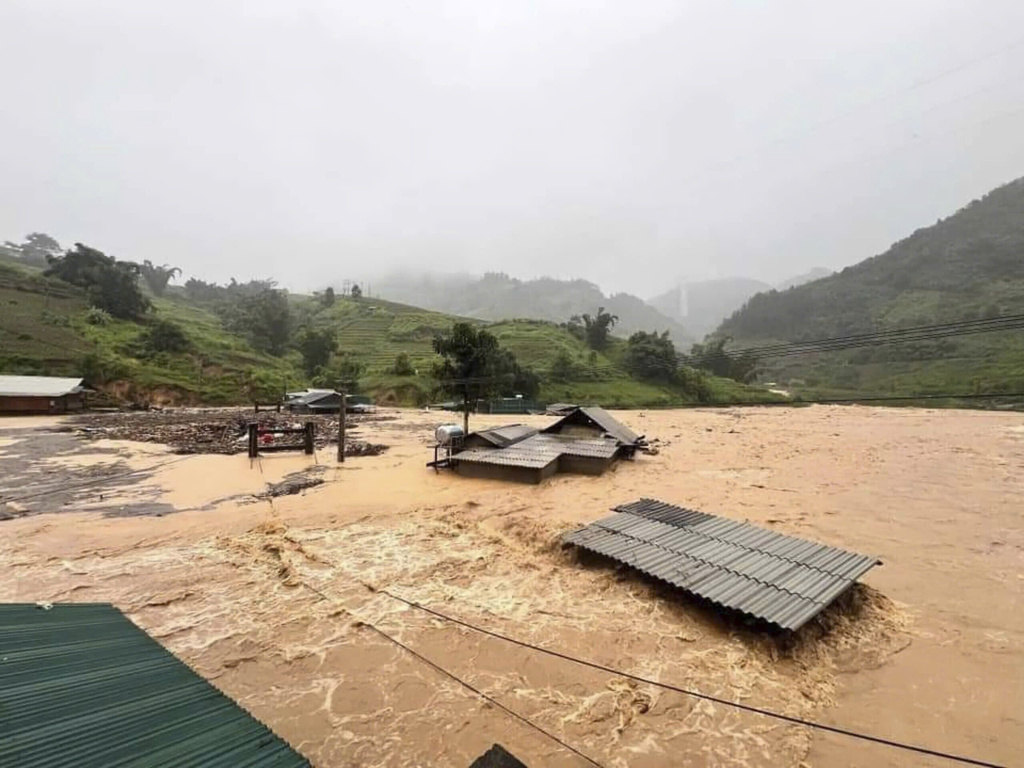
Houses are submerged in flood after typhoon Yagi hit Yen Bai province, northwestern Vietnam on Sunday, Sep. 8, 2024. (Do Tuan Anh/ VNA via AP)
The typhoon made landfall in Vietnam’s northern coastal provinces of Quang Ninh and Haiphong with wind speeds of up to 149 kilometers per hour (92 miles per hour) on Saturday afternoon. It raged for roughly 15 hours before gradually weakening into a tropical depression early Sunday morning. Vietnam’s meteorological department predicted heavy rain in northern and central provinces and warned of floods in low-lying areas, flash floods in streams and landslides on steep slopes.
Municipal workers along with army and police forces were busy in the capital, Hanoi, clearing uprooted trees, fallen billboards, toppled electricity poles and rooftops that were swept away, while assessing damaged buildings.
Yagi was still a storm when it blew out of the northwestern Philippines into the South China Sea on Wednesday, leaving at least 20 people dead and 26 others missing mostly in landslides and widespread flooding in the acrchipelago nation. It then made its way to China, killing three people and injuring nearly a hundred others, before landing in Vietnam.
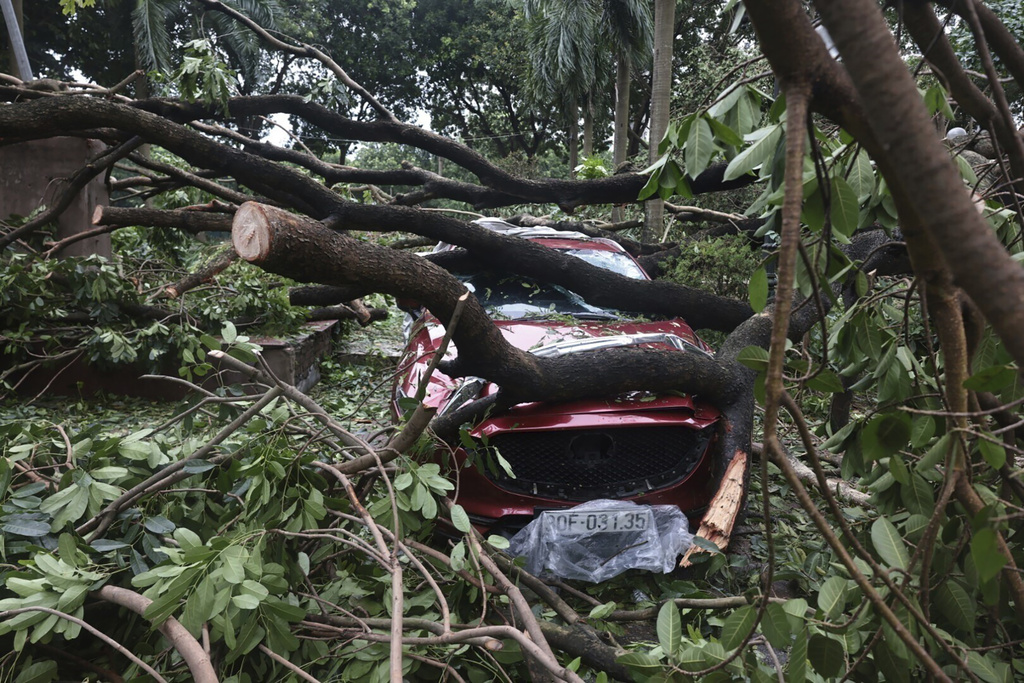
A car is crushed underneath a broken tree after typhoon Yagi hit the city in Hanoi, Vietnam on Sunday, Sept. 8, 2024. (Tran Quoc Viet/ VNA via AP)
Storms like Typhoon Yagi were “getting stronger due to climate change, primarily because warmer ocean waters provide more energy to fuel the storms, leading to increased wind speeds and heavier rainfall,” said Benjamin Horton, director of the Earth Observatory of Singapore.
Horton said that protecting natural systems ranging from reefs to rivers while building structures that were more resilient to strong winds and flying debris and improving existing infrastructure were all measures that could help countries better deal with strong typhoons.
On Friday afternoon, Yagi struck the Chinese city of Wenchang in Hainan province with wind speeds of up to about 245 kph (152 mph) near its center. Authorities said the typhoon left three people dead and nearly a hundred others injured in the province. It has affected over 1.2 million people as of noon Saturday, according to the local Global Times newspaper.
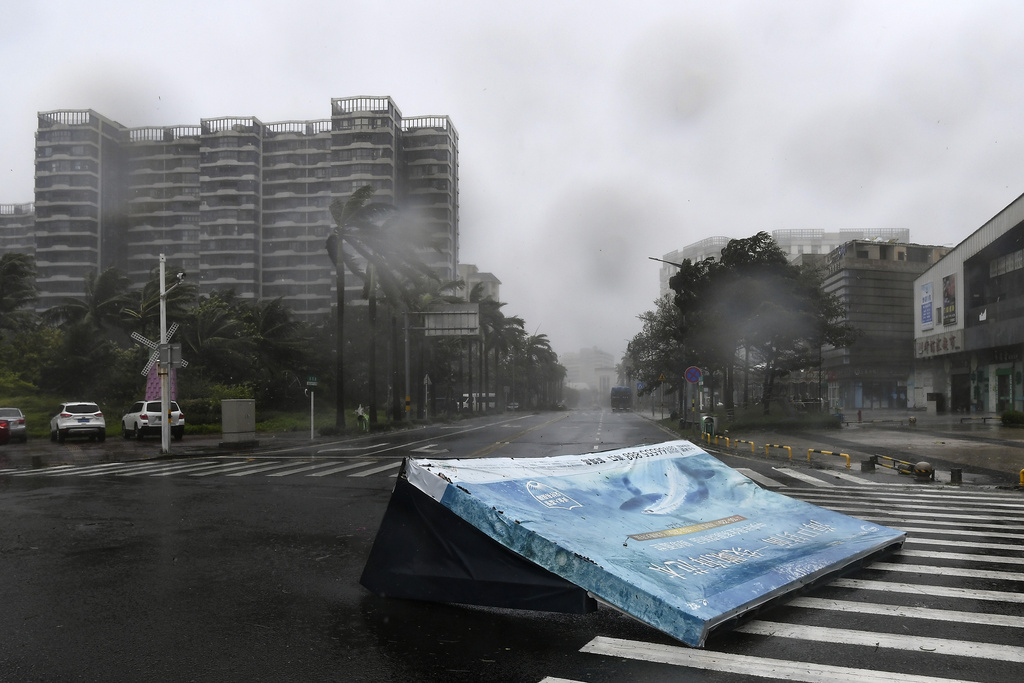
In this photo released by Xinhua News Agency, an advertisement billboard lands on a road following the landfall of typhoon Yagi in Haikou, south China’s Hainan Province, Friday, Sept. 6, 2024. (Yang Guanyu/Xinhua via AP)
Some 420,000 Hainan residents were relocated before the typhoon’s landfall. Another half a million people in Guangdong province were evacuated before Yagi made a second landfall in the province’s Xuwen County on Friday night.
Meanwhile, the meteorological observatory of the city of Haikou downgraded its typhoon signal from red to orange on Saturday, as it moved further away.
Before leaving Hong Kong, Yagi forced more than 270 people to seek refuge at temporary government shelters on Friday, and over 100 flights in the city were canceled due to the typhoon. Heavy rain and strong winds felled dozens of trees, and trading on the stock market, bank services and schools were halted.
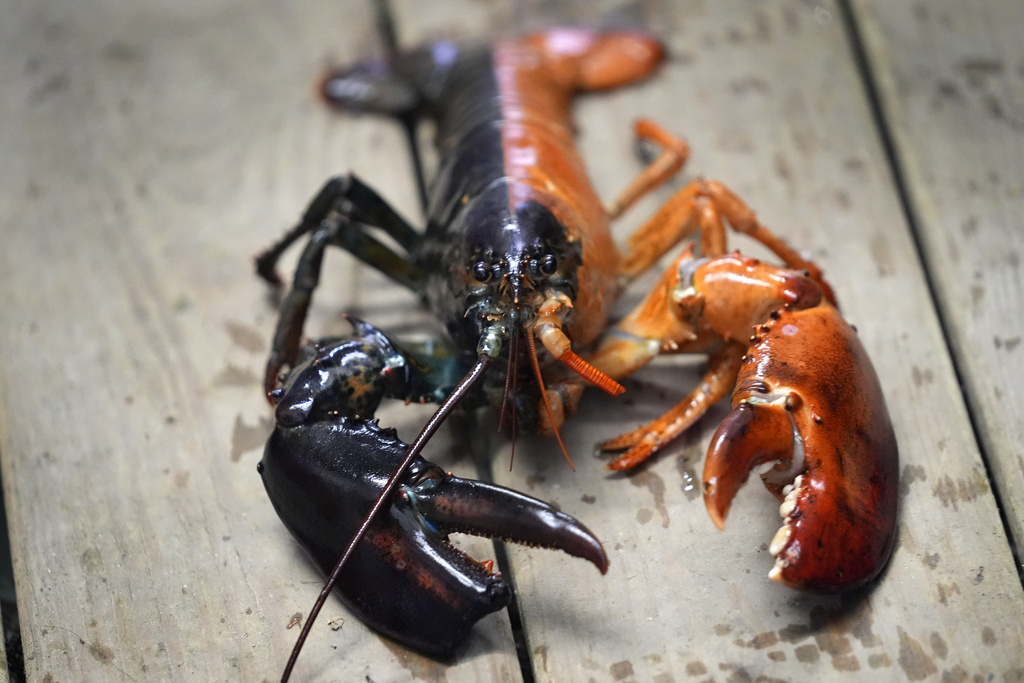
Blue and two-toned lobsters are seen in a marine sciences lab at the University of New England, Thursday, Sept. 5, 2024, in Biddeford, Maine. (AP Photo/Robert F. Bukaty)
BIDDEFORD, Maine (AP) — Orange, blue, calico, two-toned and … cotton-candy colored?
Those are all the hues of lobsters that have showed up in fishers’ traps, supermarket seafood tanks and scientists’ laboratories over the last year. The funky-colored crustaceans inspire headlines that trumpet their rarity, with particularly uncommon baby blue-tinted critters described by some as “cotton-candy colored” often estimated at 1 in 100 million.
A recent wave of these curious colored lobsters in Maine, New York, Colorado and beyond has scientists asking just how atypical the discolored arthropods really are. As is often the case in science, it’s complicated.
Lobsters’ color can vary due to genetic and dietary differences, and estimates about how rare certain colors are should be taken with a grain of salt, said Andrew Goode, lead administrative scientist for the American Lobster Settlement Index at the University of Maine. There is also no definitive source on the occurrence of lobster coloration abnormalities, scientists said.
“Anecdotally, they don’t taste any different either,” Goode said.
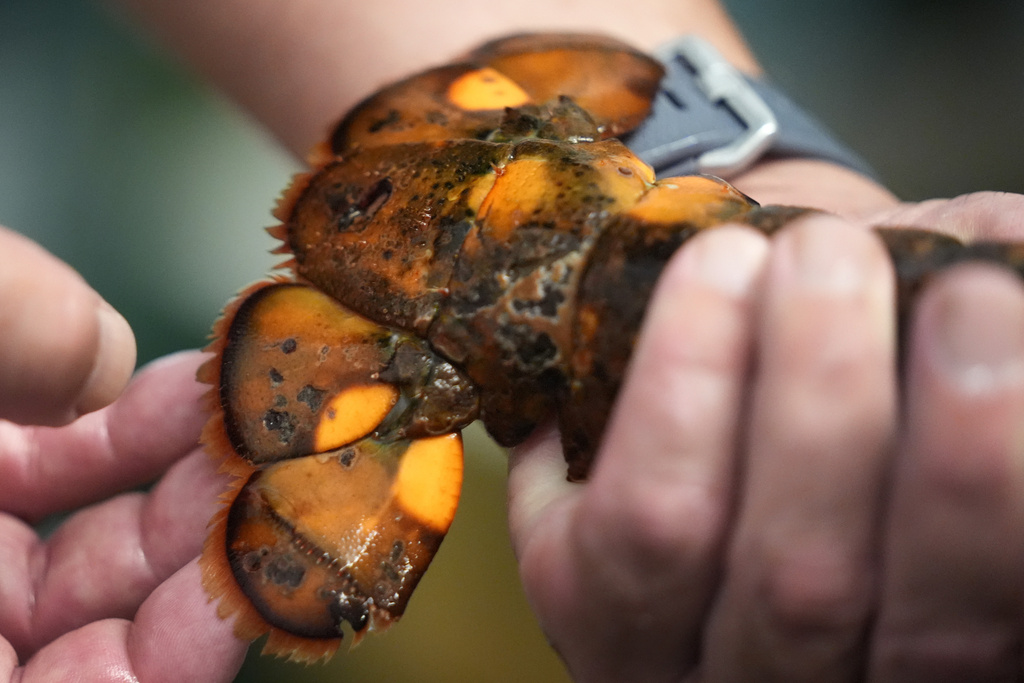
A two-toned lobster is seen in a marine sciences lab at the University of New England, Thursday, Sept. 5, 2024, in Biddeford, Maine. The rare color scheme is the result of two eggs fusing together to create a one-in-50 million lobster.(AP Photo/Robert F. Bukaty)
In the wild, lobsters typically have a mottled brown appearance, and they turn an orange-red color after they are boiled for eating. Lobsters can have color abnormalities due to mutation of genes that affect the proteins that bind to their shell pigments, Goode said.
The best available estimates about lobster coloration abnormalities are based on data from fisheries sources, said marine sciences professor Markus Frederich of the University of New England in Maine. However, he said, “no one really tracks them.”
Frederich and other scientists said that commonly cited estimates such as 1 in 1 million for blue lobsters and 1 in 30 million for orange lobsters should not be treated as rock-solid figures. However, he and his students are working to change that.
Frederich is working on noninvasive ways to extract genetic samples from lobsters to try to better understand the molecular basis for rare shell coloration. Frederich maintains a collection of strange-colored lobsters at the university’s labs and has been documenting the progress of the offspring of an orange lobster named Peaches who is housed at the university.
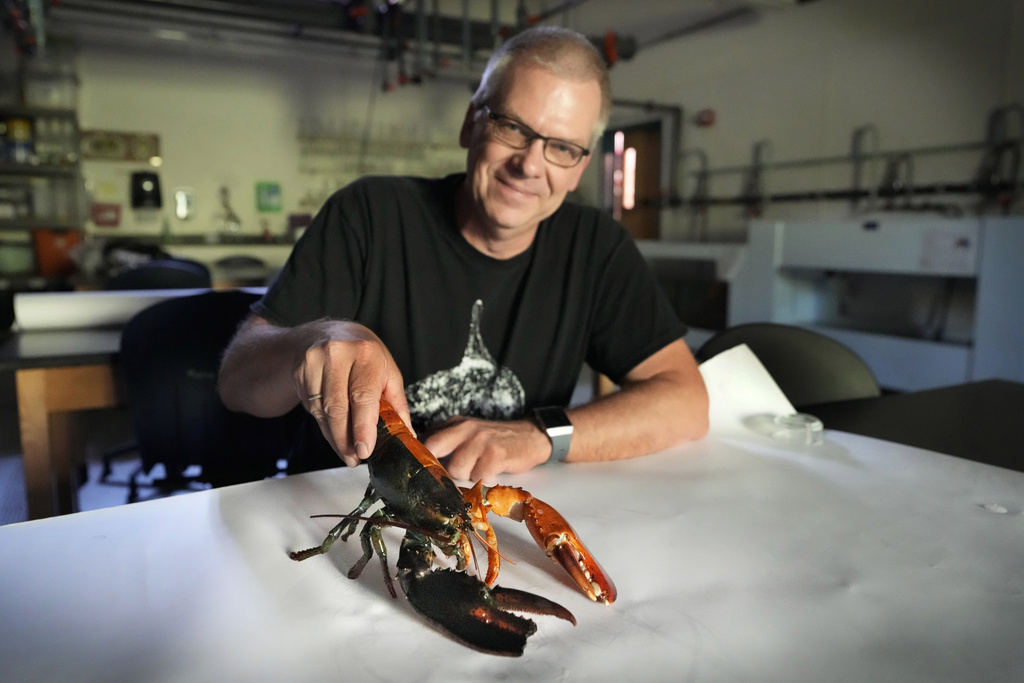
Marine sciences professor Markus Frederich holds Tamarind, a two-toned lobster he is studying at the University of New England, Thursday, Sept. 5, 2024, in Biddeford, Maine. (AP Photo/Robert F. Bukaty)
Peaches had thousands of offspring this year, which is typical for lobsters. About half were orange, which is not, Frederich said. Of the baby lobsters that survived, a slight majority were regular colored ones, Frederich said.
Studying the DNA of atypically colored lobsters will give scientists a better understanding of their underlying genetics, Frederich said.
“Lobsters are those iconic animals here in Maine, and I find them beautiful. Especially when you see those rare ones, which are just looking spectacular. And then the scientist in me simply says I want to know how that works. What’s the mechanism?” Frederich said.
He does eat lobster but “never any of those colorful ones,” he said.
The tail of a calico lobster is inspected the University of New England, Thursday, Sept. 5, 2024, in Biddeford, Maine. (AP Photo/Robert F. Bukaty)
One of Frederich’s lobsters, Tamarind, is the typical color on one side and orange on the other. That is because two lobster eggs fused and grew as one animal, Frederich said. He said that’s thought to be as rare as 1 in 50 million.
Rare lobsters have been in the news lately, with an orange lobster turning up in a Long Island, New York, Stop & Shop last month, and another appearing in a shipment being delivered to a Red Lobster in Colorado in July.
The odd-looking lobsters will likely continue to come to shore because of the size of the U.S. lobster fishery, said Richard Wahle, a longtime University of Maine lobster researcher who is now retired. U.S. fishers have brought more than 90 million pounds (40,820 metric tons) of lobster to the docks in every year since 2009 after only previously reaching that volume twice, according to federal records that go back to 1950.
“In an annual catch consisting of hundreds of millions of lobster, it shouldn’t be surprising that we see a few of the weird ones every year, even if they are 1 in a million or 1 in 30 million,” Wahle said.
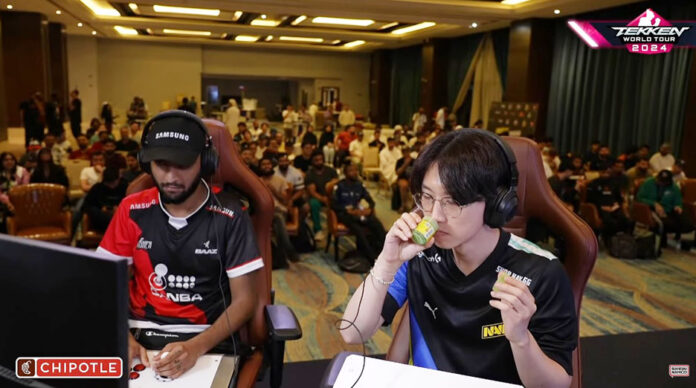
Kkokkoma, a South Korean esports athlete from team NAVI, inhales a Thai herbal inhaler brand Hong Thai during competition before winning the Tekken 8 championship.
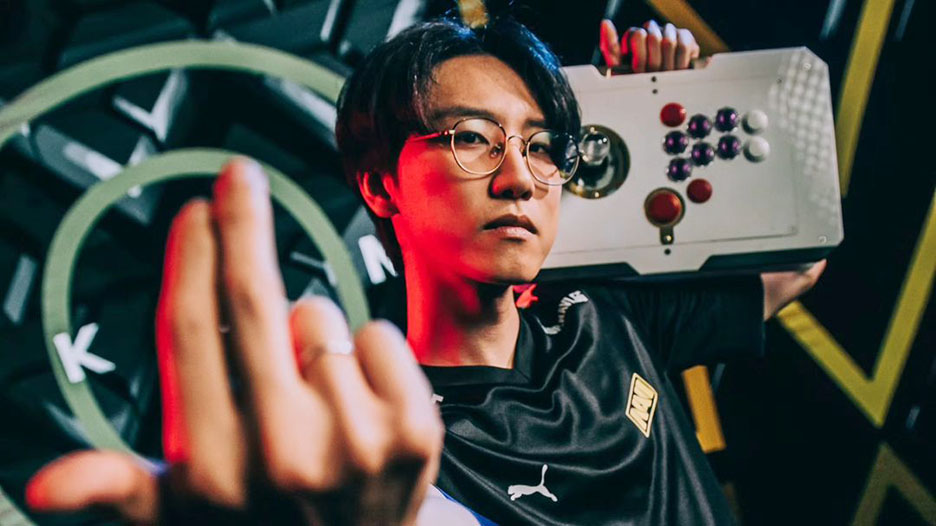
BANGKOK — Kim Moo-jong, also known as Kkokkoma, a South Korean esports athlete from team NaVi, has gone viral across Thailand after he was seen inhaling a Thai herbal inhaler brand Hong Thai before winning the Tekken 8 championship.
Kkokkoma recently won the Tekken 8 championship at the Emirates Showdown 2024 in Dubai, United Arab Emirates, in the grand finals on September 1, 2024.
What made him a widely discussed topic in Thailand was undoubtedly the moment when he picked up a Thai brand inhaler, Hong Thai, to boost his energy during the competition. This moment was so notable that separate clips of him using the inhaler were created and shared.
Previously, the Thai brand inhaler Hong Thai gained international fame when it was used by global superstars such as Lisa of Blackpink, Hollywood star Chris Hemsworth, and British rapper Central Cee. It has also become a source of relaxation for Thailand’s Olympic athletes in Paris 2024.
Khaosod Esports reported on an interview with Natus Vincere (NAVI) team and this South Korean player about the background of his fondness for the Hong Thai inhaler.
“I didn’t expect it would be a big issue in Thailand cause I’m using Hong Thai, haha,” Kkokkoma stated with a chuckle.
For him, the benefits of using Hong Thai during competitions are clear. “It makes my mind wake up,” he states, adding that “even the smell is super good.” This simple yet effective tool has become an integral part of his pre-game ritual, helping him maintain alertness and focus during intense matches.
Kkokkoma’s use of Hong Thai during tournaments has unexpectedly resonated with his Thai fans. This connection has further endeared him to the Thai gaming community, bridging cultures through a shared appreciation for both esports and local products.
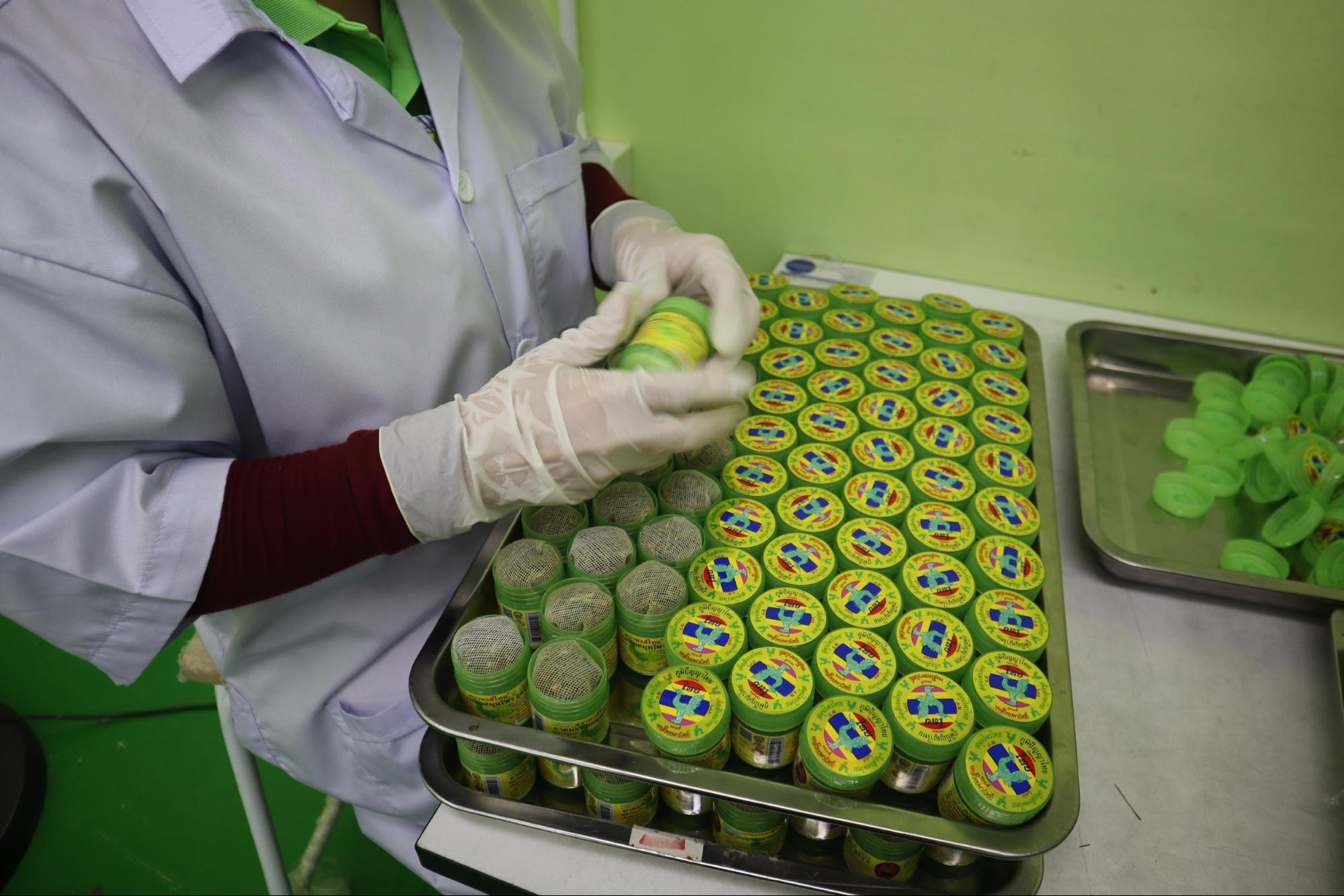
HONG THAI Traditional Aromatherapy Nasal InhalerKkokkoma, a South Korean esports athlete from team NAVI, will visit Thailand in October 2024.
His affection for Thailand extends beyond the gaming world. He expresses a particular fondness for Thai cuisine, reminiscing about a pork soup with dark-colored broth and noodles, though he struggles to recall its exact name. This appreciation for Thai food is part of his broader love for Asian cuisine, including Korean and Japanese.
Having competed against Thai players multiple times, Kkokkoma recognized the potential in the Thai gaming community. He believed that a larger community could foster stronger players, though he notes that currently, the scene seems limited. This observation highlights the importance of community support in developing competitive talent.
With an upcoming trip to Thailand in October, Kkokkoma is eager to explore more of what the country has to offer. “So… I need recommendations for good restaurants and drink places. Please let me know!!!!!” he said.
“Thanks to everyone who likes and cheers for me.” His playful addition that “Hong Thai sponsorship is always welcome for me and NAVI” not only shows his business acumen but also his genuine appreciation for the product that has become an unexpected part of his success story.
Prime Minister Paetongtarn Shinawatra raises her hand to shield her eyes from the sun while taking a group photo in front of the Government House on September 7, 2024. (Khaosod Photo/ Yingyos Akmanachai)
L
ess than 24 hours after the new Paetongtarn Shinawatra was sworn into office in front of the King, anti-government protesters decided to demonstrate in Bangkok yesterday. They vow to take to the street outside the PM’s office, the Government House, in less than 10 days from now, on Sept 17.
The key slogan this time is they are against the “Shinawatra Regime” a reference to the belief that the new government is not exactly run by the 38-year-old Paetongtarn, but ultimate by the head of the Shinawatra family, headed by ex-convict-cum-ex-premier Thaksin Shinawatra. They call it a “Family Cabinet”, a “Hereditary Cabinet” and seek to yet again, create chaos and pave a way for another military coup.
One can partly understand their frustrations, for it appears the most important qualification Paetongtarn possesses to secure the top job of the executive branch is the fact that she is a daughter of Thaksin, arguably the most influential de facto politician alive in Thailand today. Having your children or siblings running the political show on your behalf because you are somehow constrained by certain legal limitations makes people feel as if politics is not just a family business but a family monopoly. Paetongtarn is not the only one.
Just two or three days before the new Deputy Interior Minister was supposed to be sworn in, the name of Chada Thaised was dropped from the list of the new Cabinet lineup due to concerns that he may lack ethical qualifications to continue to become a Cabinet minister under the new government. Chada then announced to the public that he will relinquish his post to his daughter, Ms Sabeeda Thaised, 39, a political novice. Again, Sabeeda’s chief qualification is not her law degree but the fact that she’s daddy’s daughter and that daddy trusts her.
There’s more. Another blatant reminder that politics is a family business is the fact that former Agriculture Minister Thamanat Prompow’s younger brother was field in as new Deputy Agriculture Minister as Thamanat, being a former convicted heroin smuggler, conspiring to import heroin to Australia, was sentenced to 6 years in prison by an Australian Court back in 1994.
In light of PM Srettha Thavisin being removed in August by the Constitutional Court for having appointed Pichit Chuenban as PM Office Minister despite Pichit having been charged for attempted bribery of a court official, the Paetongtarn government is taking no chance. Thus Thamanat has become too risky post-Srettha ruling. Nevertheless, Thamanat, who insists he didn’t know who decided to appoint his younger brother, can now count on his younger bro, Akara Prompao to be his ears and eyes, and representative at the ministry.
These are just some of the legacy Cabinet members and heriditary politicians and the list will indeed be long if we continue. It’s understandable why some Thais, particularly those against the current administration, feel frustrated, if not furious. Many feel it’s an insult to their intelligence and become alienated by electoral politics. Some wish the army could again stage another military coup.
Such sentiment is egregious and will do even more harm to Thailand, however. Thailand has been making too many political detours as a result of one military coup after another. The nine decades of “parliamentary democracy” saw at least 13 “successful coups” which literally slowed down development if not grounded the kingdom into a halt.
Some Thais need to learn to be patient, and allow this imperfect system to correct itself and refrain from calling and supporting another military intervention which would amount to stalling Thailand, ensuring political and economic uncertainties, and regress in fundamental political rights.
Whether one likes the new Paetongtarn Shinawatra government, or Thaksin, or not, one should look at the bigger picture and recognize that military intervention is not the solution. Thailand has lost 9 years under junta leader Gen Prayut Chan-o-cha. As much as this writer may have many reservations about the Shinawatra government, another rogue general taking over the country is definitely not the answer.
Prime Minister Paetongtarn Shinawatra leads her cabinet members in making a mini heart hand gesture after the official group photo in front of the Government House on September 7, 2024.(Khaosod Photo/ Yingyos Akmanachai)
BANGKOK — The cabinet led by the 38-year-old Prime Minister and mother of two, Paetongtarn Shinawatra, held its first meeting on Saturday morning, September 7, following a group photo with 35 ministers in front of the Government House under the blazing sun.
During this photo session, the youngest Prime Minister in Thai history asked her cabinet members after the official shot, “Can we have a mini-heart photo?” to make a hand gesture symbolizing love, typical of young people.
This aligns with her response to media questions during last year’s campaign when asked what it would be like if Paetongtarn became Prime Minister. She replied, “It would probably be a colorful Prime Minister.”
Paetongtarn’s assumption of office, succeeding Srettha Thavisin as another candidate from the Pheu Thai Party, has received both congratulations from supporters and critical comments, ranging from sarcasm to contempt, due to her being the daughter of Thaksin Shinawatra, one of the most loved and hated former Prime Ministers.
Protest and Strong Words
The first anti-Shinawatra government protest took place on Saturday afternoon, just hours after the new government held a Cabinet meeting. Protesters at the Oct 14 Monument called for people to stop the Shinawatra family from controlling Thailand, with the slogan “Stop the Shinawatra Regime and Family Cabinet.”
Paetongtarn’s cabinet has been criticized as a “Family Cabinet” after at least two ministers from Srettha’s time had to withdraw and appoint their family members as ministers in Paetongtarn’s government. This was a consequence of Srettha having to leave the Prime Minister position due to appointing individuals with questionable backgrounds as ministers.
Prime Minister Paetongtarn Shinawatra leads her cabinet members for an official group photo in front of the Government House on September 7, 2024. (Khaosod Photo/ Yingyos Akmanachai)
Therefore, when Sabida Thaised, daughter of Chada, who is viewed as a person of local influence, became Deputy Minister of Interior, and Akkhara Prompao, brother of Thammanat who was previously convicted in a drug case in Australia, it further emphasized Paetongtarn’s rise to Prime Minister with the image of former PM Thaksin in the background.
Not only did anti-Thaksin groups who previously supported the coup attack Paetongtarn’s government with these words, but pro-People’s Party progressive groups also used even harsher sarcastic terms, calling this cabinet the “Hereditary Cabinet.”
The term ‘Hereditary’ used to describe the cabinet comes from the Thai drama series on Netflix called ‘Master of the House’, which tells the story of the dark side of members of a particular family.
Paetongtarn once responded to media questions about this nickname, saying, “Oh!, that’s strong words,” before calmly countering with the explanation that “Being a family or whatever is not a disadvantage. It’s more about motivation for each other. Seeing one person work for the country this way, another family member is also motivated.”
Prime Minister Paetongtarn Shinawatra holds a press conference after the special cabinet meeting on September 7, 2024. (Khaosod Photo/ Yingyos Akmanachai)
When the media asked about the “Thaksin regime” again on her first day of work, the female Prime Minister replied, “I will no longer answer questions about Mr. Thaksin because we must move forward. Good visions, regardless of who they come from or how old they are, are beneficial. So, that’s all I’ll say on this matter.”
She also commented on the anti-Thaksin movements, which have already indicated they will use legal means against her, saying, “Have some pity on the Prime Minister. My children are still young. Don’t file too many lawsuits. Sometimes, don’t give too much importance to small matters. My position as Prime Minister is not ready to oppress anyone, but ready to listen and ready to respect and honor each other.”
She stated that the first meeting was for the government to prepare explanations for questions about the policy statement to be delivered to Parliament on September 12-13. Most policies are a continuation of the Srettha Thavisin government, with major issues transformed into urgent policies, such as debt restructuring, assistance for SMEs, economic stimulation, and support for vulnerable groups.
Most Visible Challenge
Prab Boonpan, columnist for “Good Things Exist” in Matichon Weekly, considers what the biggest and most visible challenge for this government is.
Everyone would probably give similar answers that the biggest challenge for Paetongtarn’s government, continuing from Srettha Thavisin’s government, is to come in and work on rehabilitating Thailand, which has “stopped developing” or has been “frozen” for nearly a decade.
The bureaucratic system has expanded and become deeply rooted, but moves with difficulty. The economic sector is still struggling to find new ways forward or maintain its current state with the old production system. The education system is not developing people fast enough to keep up with technological changes and competition in the global community.
Meanwhile, politics lacks stability due to constitutional traps and the deeply entangled power mechanisms of independent organizations.
To put it bluntly, all sectors mentioned above (which are equally ill) are in dire need of major reforms across the board and cannot avoid change.
Thailand’s Prime Minister Paetongtarn Shinawatra arrives for a group photo at the government house before taking oath in front of Thailand’s King Maha Vajiralongkorn in Bangkok, Thailand, Friday, Sept. 6, 2024. (AP Photo/Sakchai Lalit)
The government and national leaders who must take on the responsibility of “leading” this country reform process must therefore be courageous, determined, intelligent, and highly knowledgeable.
If the first challenge of Paetongtarn’s government is related to the unclear future ahead, the second challenge may be related to the past way of life, which still influences the present to some extent.
As many people are well aware of the truth that “history” rarely repeats itself exactly, “history” is also a lesson – a reminder that helps us always avoid old “mistakes.”
Overcome the Vicious Cycle
The current cycle of political power in Thailand reminds many people of the situation after the 2006 coup, comparing the end of Srettha Thavisin’s term as Prime Minister to the case of Samak Sundaravej’s departure from office.
From this perspective, it’s worrying that PM Paetongtarn might face heavy, violent, and rapid karmic retribution, no less than former PM Somchai Wongsawat.
The first anti-Shinawatra government protest takes place at the Oct 14 Monument, just hours after the new government held its first Cabinet meeting on September 7, 2024. (Khaosod Photo/ Pattarayoot Phukpol)
However, there is a fairly reasonable counterargument that the context has changed significantly in recent years. At the very least, the network of military leaders who once played a crucial role in establishing a “civilian government in military camps” and were responsible for the crackdown on Red Shirts during 2009-2010 have mostly stepped down from power.
Those who refuse to step down have less credit, credibility, and power with each passing day.
Similarly, politicians who once had the image of being “good people on the democracy side” but chose to obstruct political parties that won elections by collaborating with powers outside the system, to the point of deciding to use violence against citizens in the capital, have all lost their dignity and prestige (both at national and local levels).
Meanwhile, the various colored-shirt masses have also weakened considerably and are left with only hardcore groups, in a situation where their political leaders have turned to reconciliation, reconciling, and overcoming conflicts together.
Nevertheless, apart from the changes in the surrounding characters, another force that will push “Paetongtarn Shinawatra’s government” to fully overcome the vicious cycle of Thai politics must inevitably be the “strong and firm will” that aims to change this country into a better society for the majority of citizens.
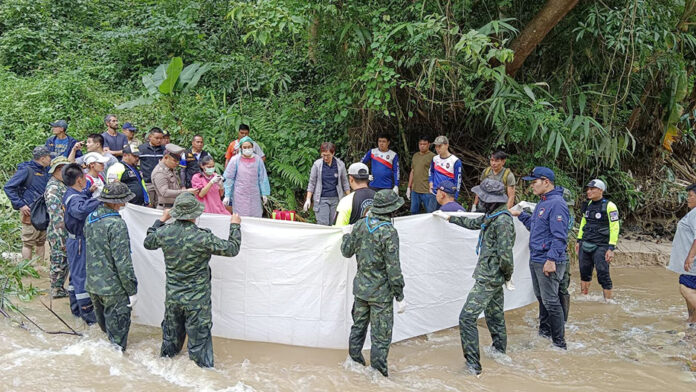
Officials cordon off the area where the body of a Belgian female tourist was found submerged in the overflow weir of Mae Yen Waterfall on September 7, 2024.
MAE HONG SON — The search for a missing 28-year-old Belgian woman ended tragically. Thai officials found her lifeless body submerged in the sandy bottom of a weir in Mae Yen Waterfall, Pai district, Mae Hong Son Province on Saturday.
Tourist police in Mae Hong Son Province and local officials in Pai district, including soldiers and volunteers, had formed a team to search for Ms. Cloe, a 28-year-old Belgian female tourist, who disappeared from her accommodation with her bicycle since Friday morning.
Her friend reported to the tourist police at 2:40 p.m. on September 6, concerned that Miss Cloe, who has a psychiatric condition, had gone missing from her accommodation and could not be contacted since 2:00 a.m.
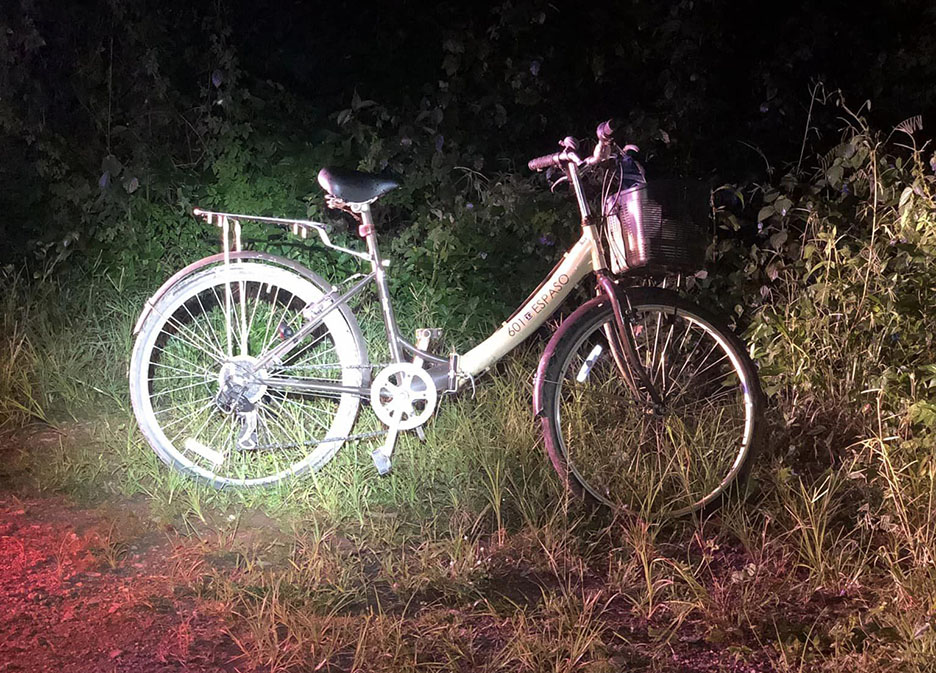
On Friday night, the search team only found the bicycle parked at the entrance to Mae Yen Waterfall, which had a notice posted stating that the area was closed due to it being the flood season and at risk of landslides.
The search team only found the bicycle parked at the entrance to Mae Yen Waterfall on Friday night, September 6, 2024.
They tried to search towards the waterfall amid heavy rain and flash floods, which have made it impossible for vehicles to pass through. At 10:15 p.m., the team had to suspend the search.
They continued the search again on Saturday, September 7, until around noon when they found her clothes placed next to the overflow weir of Mae Yen stream in Village No. 1, Mae Hi Subdistrict, Pai District. Officials then drained all the water from the weir, and at 12:40 p.m., they found her body submerged face-down in the sand. Officials retrieved the body and sent it for an autopsy at Pai Hospital.
The preliminary examination by Pai Police Station investigators and doctors from Pai Hospital found no signs of wounds on the deceased’s body. They believe that the Belgian woman likely came to play in the water at the scene alone before drowning, with no one witnessing the incident or being able to help in time.
Afterward, officials contacted the Belgian Embassy to inform Miss Cloe’s family and expressed their condolences for this loss.
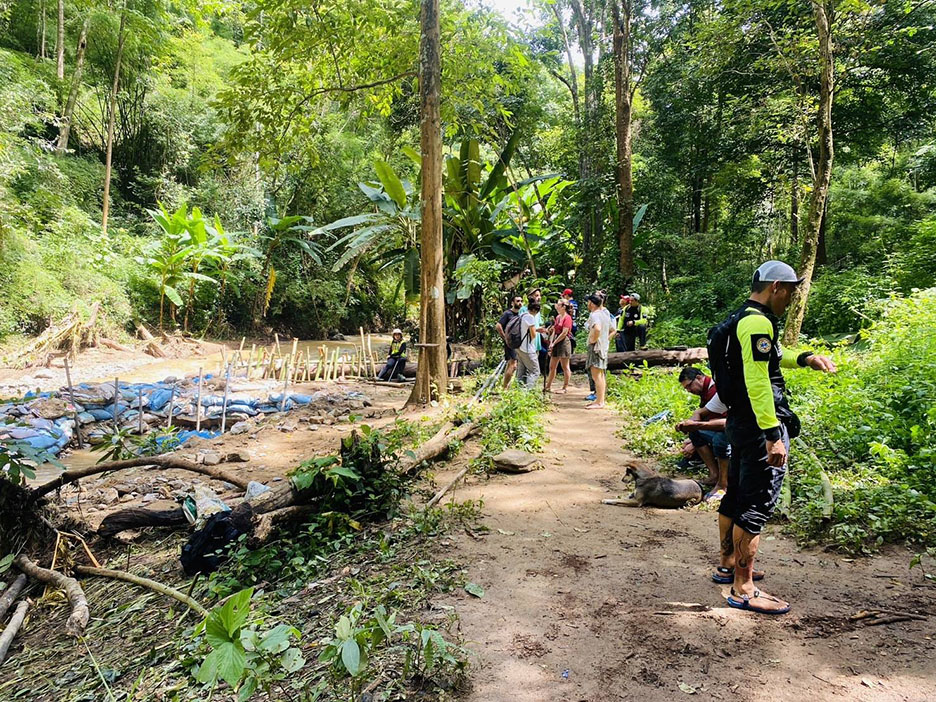
Friends of the Belgian woman join Thai officials in the search effort.
PHUKET — Tourism booms in the first half of 2024, driving hotel room prices up in Phuket, said a Thai real estate analyst.
Carlos Martinez, Director of Research and Advisory at Knight Frank Chartered (Thailand) Co, Ltd, a Thai real estate advisory firm, commented on the overall tourism industry in Phuket for the first half of 2024, stating that the industry has recovered strongly with a total of 4.3 million tourists, which is only 7 percent below pre-COVID-19 levels.
The number of foreign tourists increased by over 42 percent year-on-year to 2.6 million, close to pre-COVID figures. The improvement in air transportation capacity is expected to support further growth in international tourist numbers in the second half of the year.
The number of domestic tourists also increased and, at 1.7 million, was 6 percent higher than the previous year, but still 13 percent below the pre-pandemic level. The number of international flights increased by 34 percent compared to last year, but is still 14 percent below pre-pandemic levels.
Carlos Martinez
In the first quarter of 2024, Russia was the largest foreign tourist group, followed by China, despite China’s sluggish economy. There was also significant growth in tourists from India and Australia, as well as traditional short-haul markets such as Malaysia and Singapore.
The increase in international tourists has noticeably improved hotel performance, with an average occupancy rate of 84 percent, 3 percent more than last year and 2 percent more than before the pandemic. During the peak tourist season from January to February, the occupancy rate was over 90 percent, only to drop to 74-75 percent in May and June.
The average room rate (ARR) has continued to rise, reaching a new high of 6,837 baht ($200), 32 percent more than last year and 64 percent more than before the pandemic. This increase was driven by the growth of luxury and high-end hotels.
In terms of new hotel openings, one hotel was opened in Phuket in the first half of 2024, bringing the total number of rooms to 44,838. Five more hotels with 1,117 rooms are expected to open by the end of this year, an increase of 3.5 percent compared to last year, exceeding the average growth rate of 2.5 percent per year.
Carlos noted that the ongoing recovery in domestic demand, fueled by the weakened Thai baht which has made foreign travel more expensive for Thais, coupled with a strong upswing in foreign tourists, is expected to continue in the second half of the year.
The peak tourist season in the fourth quarter should benefit from favorable exchange rates, an almost fully restored air traffic capacity and a visa waiver policy that promotes growth.
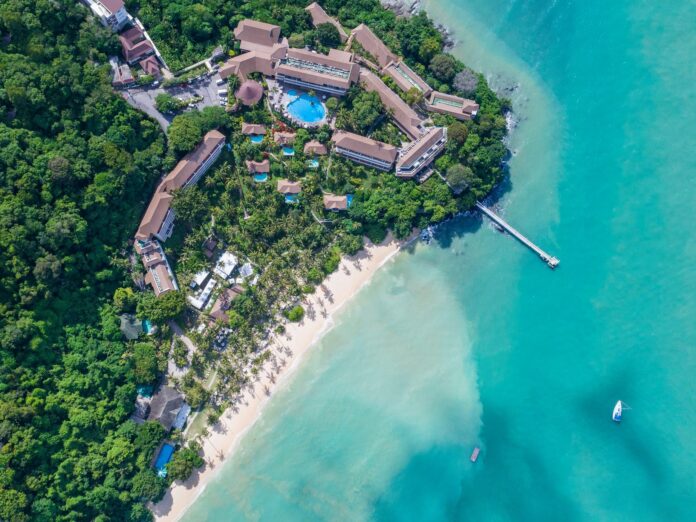
Phuket
However, geopolitical tensions, particularly the conflict between Russia and Ukraine, have led to an increase in Russian tourists seeking safer destinations, which has further boosted tourist numbers to Phuket.
Phuket hopes to welcome 2.5 to 2.7 million foreign tourists in the second half of the year. This influx is expected to have a positive impact on hotel occupancy rates, especially during the peak tourist season.
Nevertheless, prices are expected to gradually stabilize after the significant increase in average room rates in the second half of the year, supported by the weaker baht and favorable exchange rates.
At the same time, new hotel projects in Phuket may reach their limits due to rising land and financing costs caused by high interest rates and inflation. This could limit new supply and lead to higher occupancy rates in existing hotels.
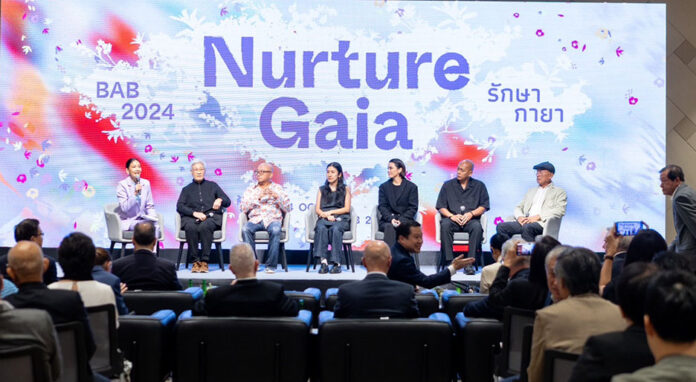
From left, MC, Kanya Charoensupkul, Choi Jeong Hwa, Pokchat Worasab, Mutmee Pimdao Panichsamai, Zul Mahmod, and Haritorn Akarapat
BANGKOK — Returning for its fourth edition this October, the Bangkok Art Biennale (BAB) announced on September 6 to add more 31 international artists and two more venues for the title Nurture Gaia. The expansion of artists and venues further enriches the city-wide event and continues to spotlight Southeast Asia’s vibrant art scene while also bringing diverse international perspectives to the continent.
The BAB is organised by the Bangkok Metropolitan Administration (BMA), in collaboration with The Fine Arts Department (FAD), Thailand Convention and Exhibition Bureau (TCEB), Tourism Authority of Thailand (TAT), Thai Beverage Public Company Limited (ThaiBev) and One Bangkok.
The various Biennale-host locations include ancient heritage sites such as the Temple of the Reclining Buddha and the Temple of Dawn, the Museum Siam, art galleries, and more.Running from October 24, 2024 to February 25, 2025. The Biennale will showcase 76 leading artists from 39 countries across 11 venues.
Nurture Gaiadraws its inspiration from the maternal figure of Mother Earth, symbolising her historical expressions as a nurturer and giver of life across cultures. Conceptually extending upon this, the Bangkok Art Biennale will explore vital contemporary themes such as anthropology, collectivism, ecology, feminism, and the politics of time and place.
The ‘Gaia Hypothesis’ proposes that the Earth functions like a living organism that supports life across organic and inorganic matter. Today, we face urgent issues such as climate change, pandemics, war, and environmental destruction caused by humans. There is a growing realisation that humanity, as an integral part of Earth, is facing critical challenges.
Agi Haines, Alter Terrestrial. In collaboration with Nicholas Tamás. Image courtesy of MU Hybrid Art House. Photo by Hanneke Wetzer
The Biennale will feature a constellation of artworks, many of which will be on display for the first time, including drawings, paintings, sculptures, videos, and installations from established and emerging artists and collectives.
The additional 31 participating artists include:
Busui Ajaw (Thailand)
Bruce Asbestos (UK)
Lena Bui (Vietnam)
Kanya Charoensupkul (Thailand)
Viriya Chotpanyavisut (Thailand)
Daniela Comani (Italy)
Tony Cragg (UK)
Rob Crosse (UK)
Lello Esposito (Italy)
Gimhongsok (South Korea)
Agi Haines (UK)
Mella Jaarsma (The Netherlands / Indonesia)
George K. (India)
Anish Kapoor (UK)
Chitti Kasemkitvatana (Thailand)
Cole Lu (Taiwan)
Maria Madeira (Timor-Leste)
Zul Mahmod (Singapore)
Nakrob Moonmanas (Thailand)
Sophirat Muangkham (Thailand)
Mutmee Pimdao Panichsamai (Thailand)
Deneth Piumakshi Veda Arachchige (Sri Lanka)
Moe Satt (Myanmar)
Thavika Savangwongsakul (Thailand)
Latai Taumoepeau (Australia)
Komkrit Thepthian (Thailand)
Tian Xiaolei (China)
Aleksandar Timotic (Serbia)
Jasmine Togo-Brisby (Australia)
Wang Xiyao (China)
Pokchat Worasab (Thailand)
Programme highlights include a variety of artworks, such as performance and costume installation:
Mella Jaarsma (The Netherlands / Indonesia) explores the urgency of disappearing knowledge and the tension between contemporary art and tradition
Pokchat Worasub (Thailand) explores ethnic identity and marginality through photography
Agi Haines (UK) offers a provocative glimpse into the future of human adaptation, exploring the profound implications of potential body modifications designed to tackle emerging challenges
Adel Abdessemed (Algeria / France) will showcase a large-scale installation exploring the interconnectedness of mother and child
Mutmee Pimdao Panichsamai (Thailand) creates a new video work exploring the human mind and society using movement, lighting, and theatricality
Gimhongsok (South Korea) presents a new body of work, that consists of sculptural installations addressing the subject of labour conditions
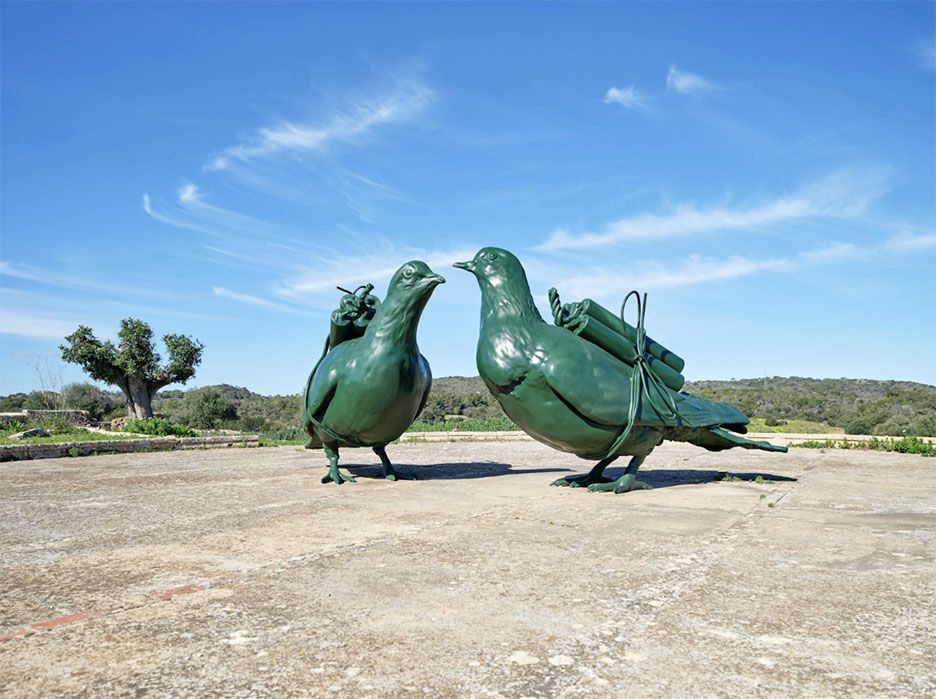
Anish Kapoor (UK) and Tony Cragg (UK) will display major sculptures at One Bangkok as a part of Bangkok Art Biennale 2024, and where they will remain permanently.
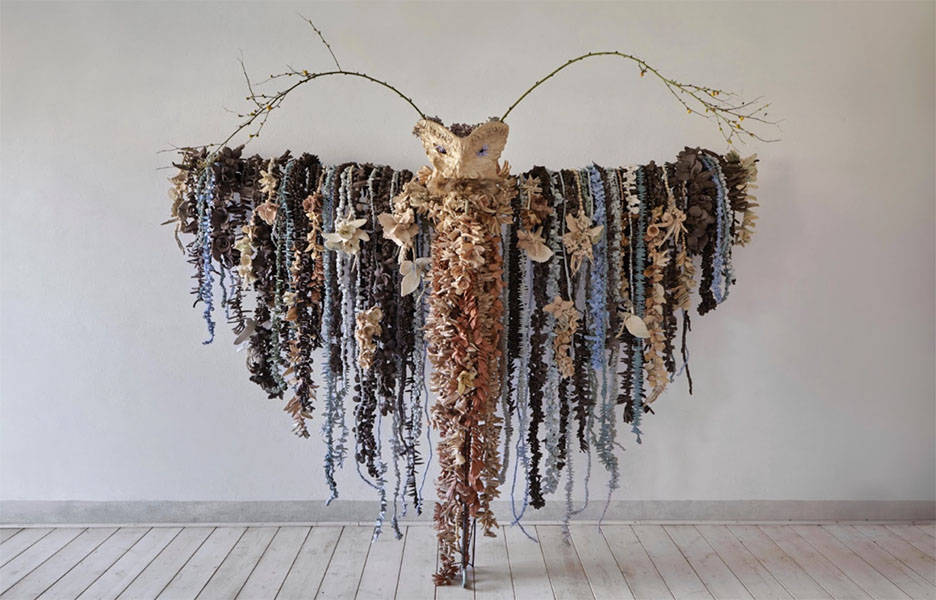
Chiara Camoni, Sister (Farfalla), 2023. Photo by Camilla Maria Santini. Courtesy the Artist and SpazioA, Pistoia
Our panel of esteemed advisors features seven prominent figures in the art world: Marina Abramović, world-renowned performance artist; Lito Camacho,Chairman, University of the Arts Singapore; Kim Camacho, art collector; Mami Kataoka, Director of Mori Art Museum; Jean-Hubert Martin, honorary director of the Musée National d’Art Moderne at the Centre Georges Pompidou; Qiu Zhijie, Artist, Curator, Writer, President of the Tianjin Academy of Fine Arts and Professor at Central Academy of Fine Arts; and Dr. Eugene Tan, Director of the National Gallery Singapore and the Singapore Art Museum.
Led by Prof. Dr. Apinan Poshyananda, Chief Executive and Artistic Director of Bangkok Art Biennale (BAB), the dedicated curatorial team for this year’s edition includes Pojai Akratanakul, curatorial section lead of BAB; Dr. Brian Curtin, art critic and educator; Akiko Miki, International Artistic Director of Benesse Art Site Naoshima and curator; and Dr. Paramaporn Sirikulchayanont, lecturer and former Director of the Art Centre of Silpakorn University, Bangkok.
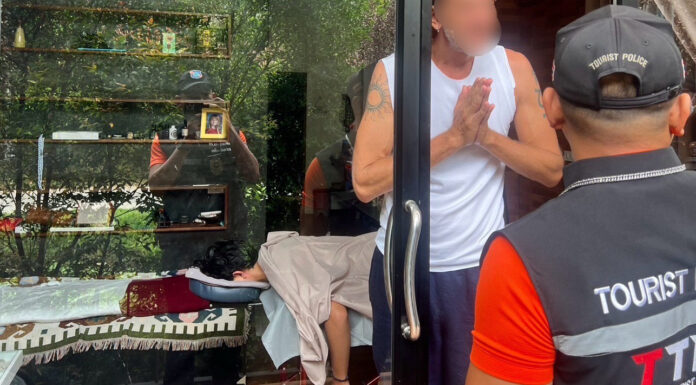
A 48-year-old Canadian national is arrested at Kissmoon Village, Moo 2, Koh Phangan Subdistrict, Koh Phangan District, Surat Thani Province. This followed a report that he was illegally offering massage courses to foreigners.
KOH PHANGAN — Thai authorities arrested a Canadian man for illegally running a massage teaching business, charging 3,000 baht ($90) per session. He spoke incoherently and confessed to drug use, leading to additional charges.
On September 6, officials on Koh Phangan, including tourist police, administrative officers, local police, and immigration police, arrested Kyle, a 48-year-old Canadian national, at Kissmoon Village, Moo 2, Koh Phangan Subdistrict, Koh Phangan District, Surat Thani Province. This followed a report that he was illegally offering massage courses to foreigners.
A screenshot shows customers booked the Canadian massage courses through WhatsApp.
He admitted to officials that he worked as a masseur and taught massage techniques to customers, charging 3,000 baht per course, paid in cash. Customers booked courses through WhatsApp, after which he would arrange massage and teaching sessions.
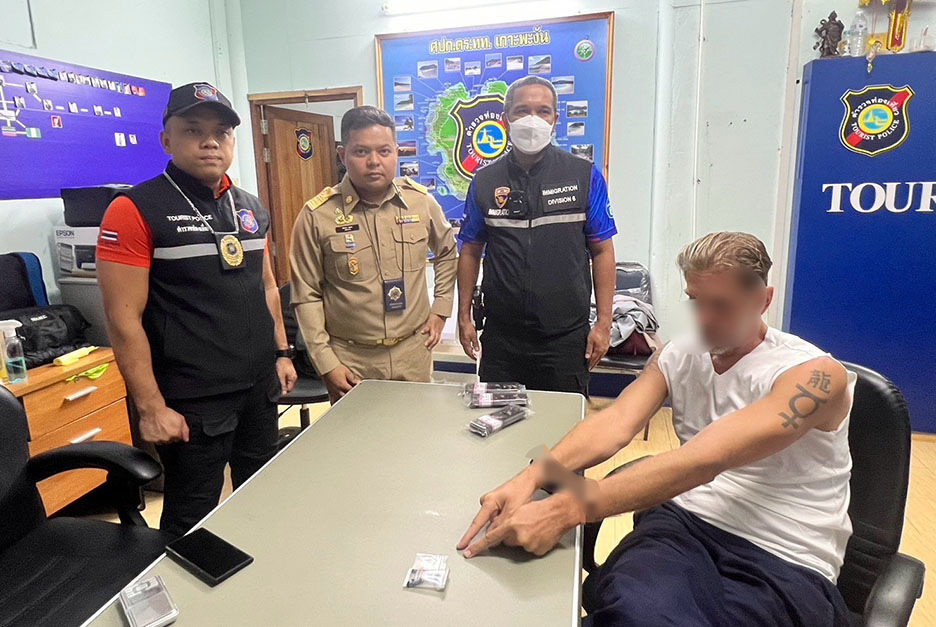
During questioning, Kyle appeared suspicious, sweating profusely, shaking, and speaking incoherently. Officials searched him and found Type 1 narcotics in the form of clear flakes in a plastic bag in his left pants pocket. He confessed that it was drugs he had received while partying with a friend.
The Canadian suspect confesses that he used Type 1 narcotics which police officers found in his left pants pocket.
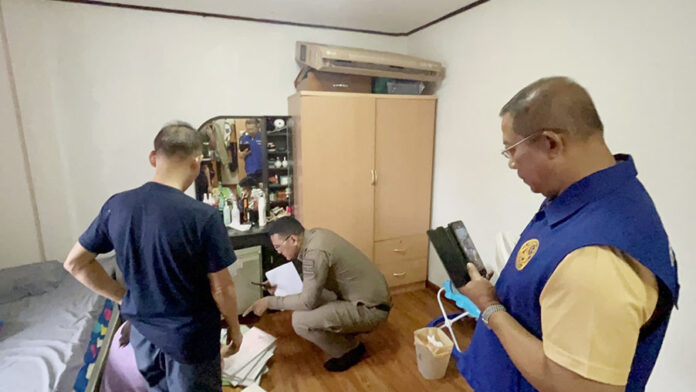
He was charged with “being an alien working beyond permitted rights (massage work)” and “illegally possessing Type 1 narcotics for consumption.” He was handed over to Koh Phangan Police Station investigators along with evidence, including the drugs and the massage bed used for customers.
Currently, Police Lieutenant General Saksira Phuek-am, the Commander of the Tourist Police Bureau, has instructed heads of tourist police stations in tourist areas and nearby regions to intensify efforts to eliminate all forms of criminal activities by foreigners who enter the country to commit crimes. They are to prosecute cases strictly without exception to build confidence among tourists during this high season.
Immigration police arrest 59-year-old Chinese man who had a criminal record for fraud in China, at his residence in the Huai Khwang area of Bangkok.
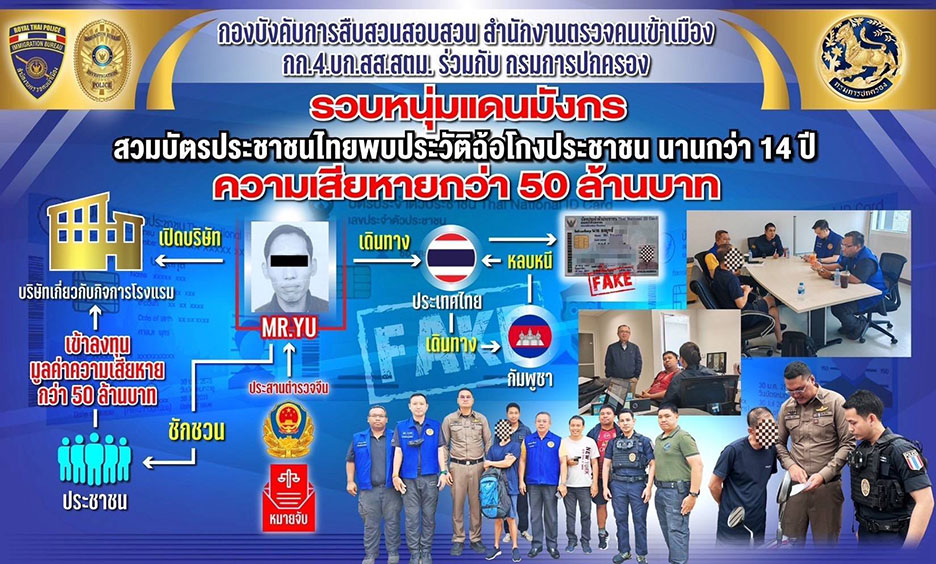
BANGKOK — A 59-year-old Chinese man, fleeing a fraud case in China involving over 50 million baht or 1.5 million dollars, has been living in Thailand for more than 14 years using a Thai ID card and a Thai name. However, he was discovered by immigration officers during an investigation.
Police Major General Phanthananutnart, Deputy Commissioner of the Immigration Bureau, stated that detectives from the 4th Division, Investigation Sub-Division, Immigration Bureau, discovered that Mr. Yu, a Chinese national, was using a Thai ID card under the name Yongyuth. They sent a letter to the Embassy of the People’s Republic of China in Thailand to inquire about Mr. Yu’s personal information, identity, and criminal history.
The immigration investigation team found that he had a criminal record for fraud in China 14 years ago. He had opened a hotel business and deceived victims into investing, causing damages worth over 50 million baht or 10.5 million yuan before fleeing to Thailand.
The officials then gathered information related to Mr. Yu and sent it to the Department of Provincial Administration for verification. It was found that ‘Yongyuth’ had been living in Thailand for more than 14 years.
The investigation team then obtained a search warrant from the North Bangkok District Court and arrested him at his residence in the Huai Khwang area of Bangkok.
Mr. Yu confessed that he had illegally entered Thailand through a natural border crossing and assumed a Thai identity card in 2010, living in Thailand ever since. The officials charged him with being a foreigner entering and staying in the Kingdom without permission and sent him to the investigating officers at the Immigration Bureau Investigation Division for legal proceedings.
Regarding the offenses of identity theft and using an illegally obtained ID card, the Department of Provincial Administration is considering legal action. At the same time, they have issued an order to remove the suspect’s name Yongyuth from the civil registration system.