36.1 C
Bangkok
Saturday, June 6, 2026
Home Blog Page 8

Over 500 Buddhists gather at Canada’s Parliament Hill for Vesak

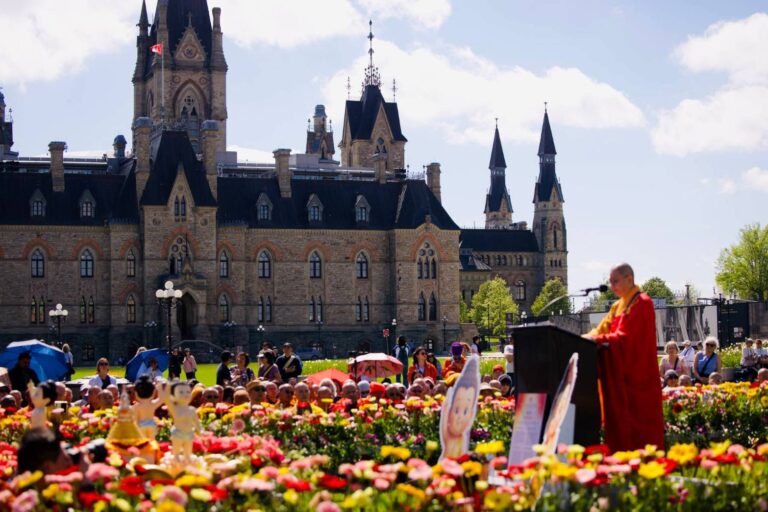
OTTAWA, Canada — Thai Buddhist monks were among more than 500 clergy and laypeople from 56 organisations across Canada who gathered at Parliament Hill in Ottawa to mark Vesak and advocate for official recognition of May as Canadian Buddhist Heritage Month.

The event, held as part of the Canadian Buddhist Heritage Month initiative, brought together representatives from Theravada, Mahayana, and Vajrayana traditions, with attendees from Thai, Sri Lankan, Chinese, Vietnamese, and Burmese communities.

news136111 HOoURTGLiW1779982563

Two Thai abbots represented the country at the ceremony: Phra Khru Suwannabhatharawithet, abbot of Bhavana Toronto Temple, and Phra Maha Suksanti Supaphaso, abbot of Wat Phra Dhammakaya Vancouver. Both participated in chanting ceremonies during the occasion.

Activities at Parliament Hill included a press conference highlighting Buddhism’s role in Canadian society through education, charity, and mindfulness promotion, a water-pouring ceremony at the Centennial Flame, and a National Peace Walk to promote goodwill in Canada’s multicultural society.

news136111 8sn1dkzIv71779982562

The gathering also aimed to push the federal government to formally declare May as Buddhist Heritage Month each year.

Phra Khru Samuh Sanitwong Wutthiwangso, assistant abbot of Wat Phra Dhammakaya in Pathumthani and director of the temple’s communications office, said the event reflected Buddhism’s continued role as a unifying force across cultures and nationalities.
Vesak is recognised by the United Nations as an international day of significance, commemorating the birth, enlightenment, and passing of the Buddha.

Advertisement

Scam ringleader “Soe Rose” nabbed for luring Thais to Cambodian scam compounds

Scam ringleader “Soe Rose” nabbed for luring Thais to Cambodian scam compounds

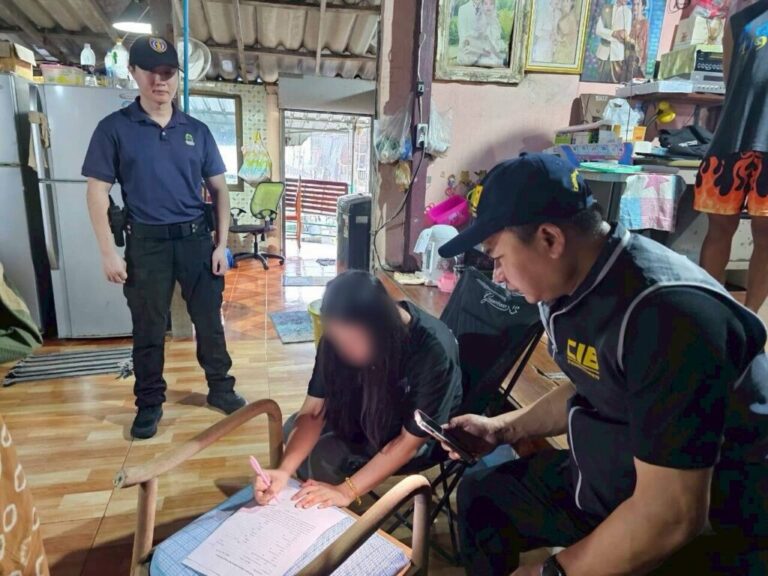
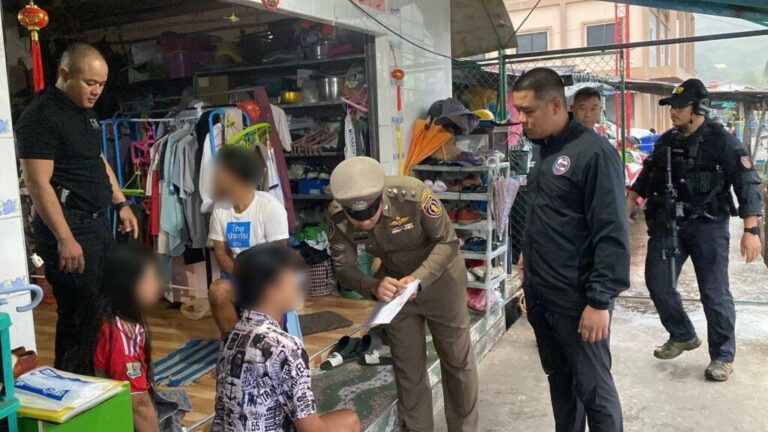
BANGKOK — 29 May 2026, The Anti-Trafficking in Persons Division (ATPD) has dismantled a transnational scammer gang, arresting an alleged Thai ringleader known as “Soe Rose” along with five accomplices, accused of recruiting Thai nationals to work in scam compounds in Cambodia with promises of high-paying jobs. The victims were subsequently detained, forced to work, tortured or shocked with electricity if they failed to meet scam quotas, and held for ransom from their families.

On Friday, Pol. Lt. Gen. Nattasak Chaowanasai, commissioner of the Central Investigation Bureau (CIB), and Pol. Maj. Gen. Withaya Sriprasertparp, commander of the ATPD, ordered Pol. Col. Korkiat Wuthijumnong, the superintendent of Sub-Division 1, along with Pol. Maj. Korkiat Kiattang, Inquiry Officer, and Pol. Maj. Female Sabainang Sirimonthree to execute a coordinated arrest operation.

Police arrested the suspect as 29-year-old Kittikorn, alias “Soe Rose,” 35-year-old Thanaphon, alias “Ah Sue,” 40-year-old Maythanee, 30-year-old Surapong, and 34-year-old Nonglek under warrants issued by the Criminal Court on charges including participation in a transnational criminal organisation, human trafficking for forced labour, unlawful detention, and coercion.
S 60751992 0 1024x768 0

The suspects were arrested at locations in Moo 7, Nong Pla Lai Sub-district, Bang Lamung District, Chonburi Province; a durian sorting facility in Phluang Sub-district, Khitchakut District, Chanthaburi Province; and a house in Hat Lek Sub-district, Khlong Yai District, Trat Province.

This operation follows the policies from the Royal Thai Police’s Anti-Online Cyber Scam Center (ACSC). The crackdown was conducted under the direction of Pol. Gen. Thana Chuwong, the deputy national police chief and head of the Anti-Cyber Scam Centre (ACSC), alongside Pol. Lt. Gen. Jirabhop Bhuridej, Assistant Commissioner-General of the Royal Thai Police, who ordered an accelerated investigation to track down and dismantle all forms of technological crime networks.

After Thailand’s Anti Online Scam Operation Centre (ACSC) received cooperation from Meta, which coordinated and shared data with police from ATPD Sub-division 1, this led to the discovery of the network that lured Thai job seekers into working in Cambodia. Victims were forced to defraud victims online, operating as a transnational cybercrime organisation, where tasks were systematically divided.

S 60751990 0 1024x577 0

According to the investigation, in late 2025, a Thai national named as “Soe Rose” allegedly worked as the Thai coordinator for a scam operation based in Tbong Khmum province, Cambodia. She lured low-income Thais to travel for work with promises of easy and high-paying jobs, only to trap and force them into scamming numerous Thai citizens through online chat after arrival.

At least five Thai victims have since returned to Thailand and filed complaints with ATPD Sub-division 1. One victim had been sold from another scam office and bought by a “Chinese boss” like merchandise. The remaining four said they had been induced by Soe Rose to work as online gambling chat admins, offering monthly salaries of 32,000 baht, along with free accommodation, meals, two days off per month, and fully paid travel expenses. This prompted them to travel from Suvarnabhumi Airport to Phnom Penh in October 2025.

Upon arriving in Cambodia, the victims were being transported by SUV to a “scam compound”, a fraudulent operations facility located in Tbong Khmum province, Cambodia. The compound was surrounded by high walls and barbed wire, and had just one exit. Guarded heavily by Chinese and Cambodian guards carrying guns, batons, and electric tasers prevented escape attempts.
S 60751989 0 1024x576 0

Victims were then forced to study scam scripts and operate as scammers. They were also allegedly trained to carry out “romance scam” schemes using fake social media accounts to entrap victims online. Within this operation, Thanaphon, also known as “Ah Sue”, acted as an interpreter for Chinese bosses and helped provide fake online accounts used in the scams.

The network also allegedly created counterfeit shopping websites imitating popular platforms including Kogan and Depop, tricking victims into fake investment and displaying fake profits. This shopping scheme swindled countless Thais out of their savings, generating between 7 million and 12 million baht per month.

In addition, workers who failed to meet targets were allegedly physically assaulted, shocked with electric batons, beaten with sticks, forced to detain, squat, or run laps as punishment. Unable to endure the torture, some victims had their relatives pay ransom money to secure their release and return to Thailand.

S 60751982 0 1024x577 0

Following the gathering of evidence, eight arrest warrants had been issued in total and launched search operations across three target locations, successfully arresting five key suspects.

Initially, investigations are expanding the investigation to track down remaining accomplices and identify additional victims of this network, with the aim of pursuing legal action and seizing assets under anti-money laundering laws.

Advertisement

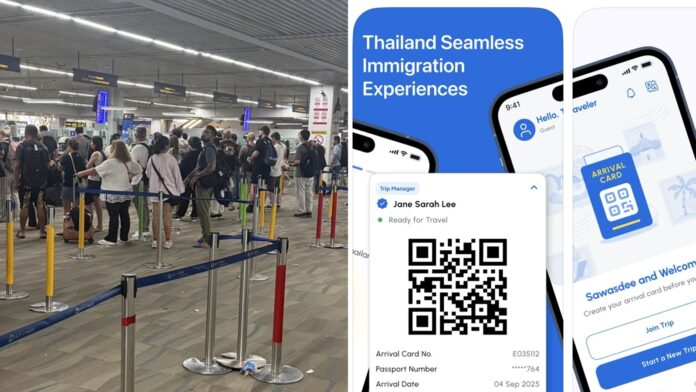
Thailand launches THIM app to speed up immigration process

BANGKOK — Thailand’s Immigration Bureau has launched a new mobile application that lets tourists pre-fill arrival forms before landing, with officials aiming to cut the time spent at the immigration counter to under 40 seconds per person.

The app, called THIM — Thailand Immigration Management System — was developed in partnership with Digital Identity Co. and built on Amazon Web Services cloud infrastructure. It is available for download on iOS and Android as part of a pilot programme, with hundreds of thousands of downloads already recorded.

Travellers can use the app to fill out immigration arrival forms in advance, with the process taking under three minutes for first-time users and under one minute for return visitors, as the system retains basic personal information between trips.

Pol. Maj. Gen. Pratchaya Prasansuk, deputy commissioner of the Immigration Bureau, said the shift from paper forms had been a long time coming.

“In the past, paper wasted both budget and time significantly,” he said, adding that a web-based system introduced last year drew more than 10 million users but still drew complaints over having to re-enter information each trip.

“We want to balance security with convenience. The goal is for everyone to use this application. The time spent at the immigration counter must not exceed 40 seconds per person,” Pratchaya said.

The app also addresses a scam problem, as fraudsters have previously created fake websites to collect fees from tourists — an issue that a verified app is designed to eliminate.

THIM currently supports four languages: English, Russian, Japanese, and Chinese. The bureau plans to expand to 15 languages by 1 October.

The app’s backend uses optical character recognition to read passport data, with AWS cloud infrastructure handling traffic spikes during peak travel periods. Data is protected with end-to-end encryption.

Future features planned for the app include 90-day address reporting for long-stay residents, electronic document certification, and exclusive promotions for app users — all at no cost.

Advertisement

Princess Sirivannavari appointed WIPO’s first fashion ambassador

Princess Sirivannavari appointed WIPO’s first fashion ambassador

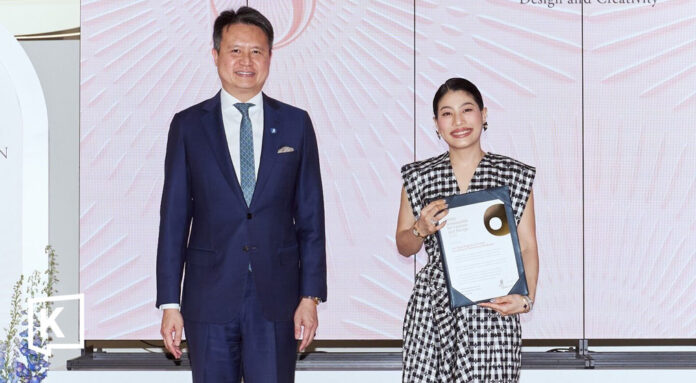
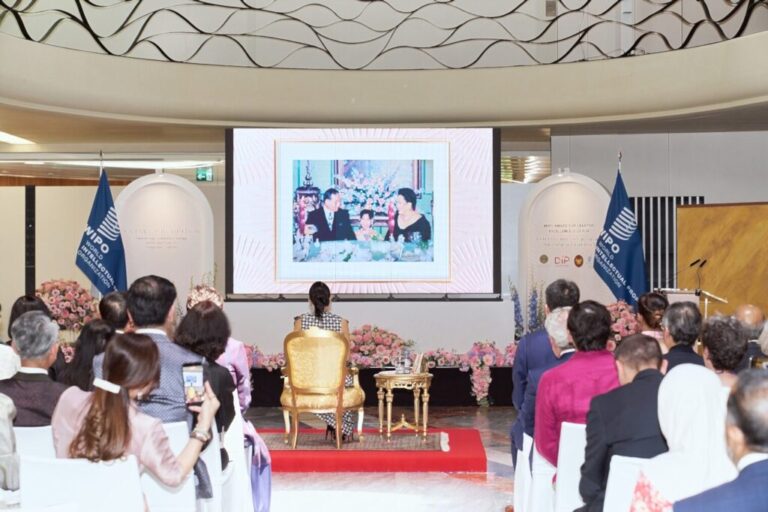
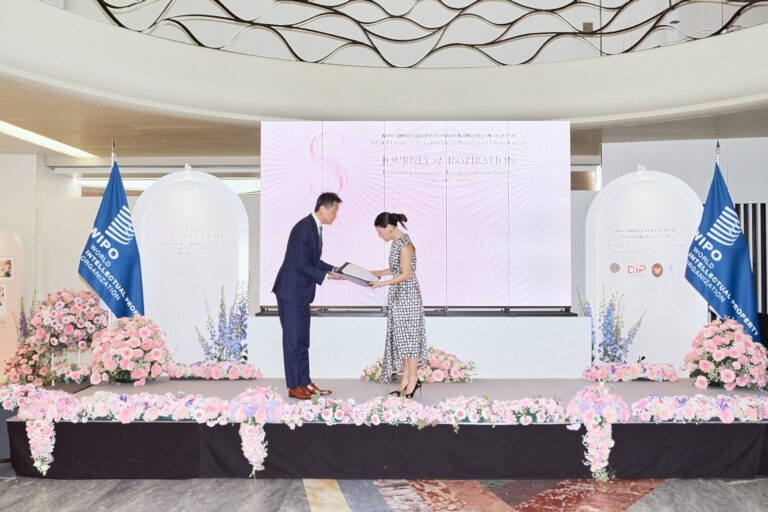
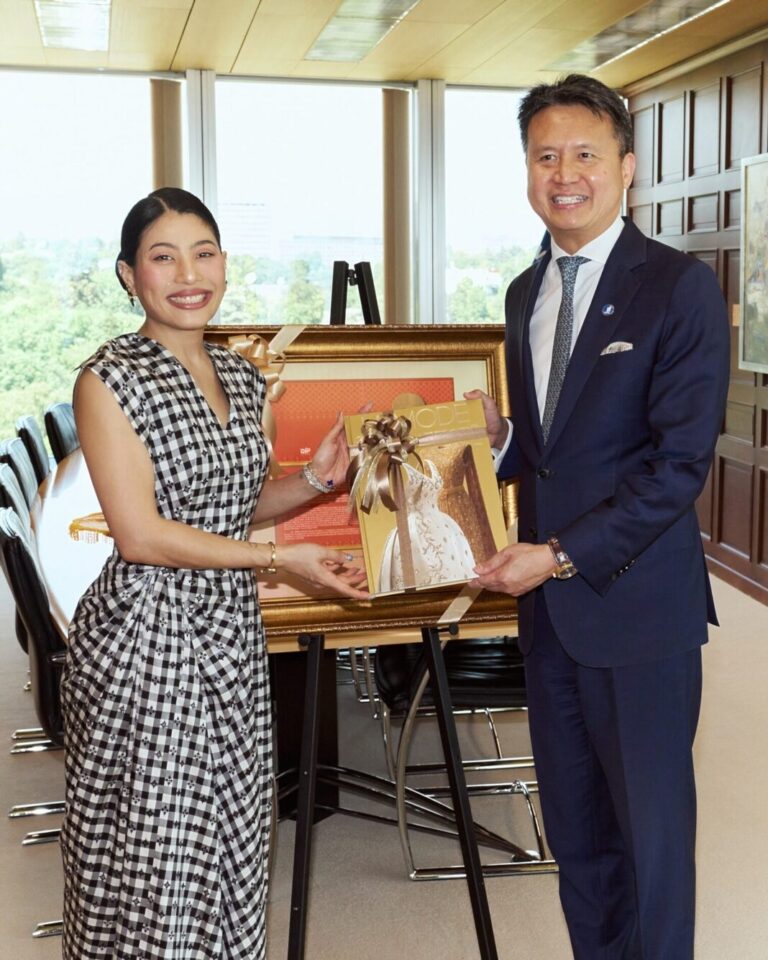
GENEVA — 28 May 2026, Thailand’s Princess Sirivannavari Nariratana Rajakanya has been conferred the title of Fashion and Design Ambassador of the World Intellectual Property Organization (WIPO), becoming the first person to hold the position, in recognition of her contributions to fashion, creativity and the promotion of intellectual property through Thai cultural heritage.

The ceremony took place at WIPO headquarters in Geneva, Switzerland, where WIPO Director General Daren Tang formally conferred the title upon the Thai princess.

Tang praised Princess Sirivannavari for combining fashion, creativity and intellectual property to promote sustainable cultural and economic development.

01 13 1 1024x682 0

“Part of what makes us uniquely human is our ability to invent, innovate and create,” Tang said during the ceremony. “WIPO’s mission is not only about intellectual property regulation, but also about using intellectual property to support innovators and creators.”

He described Thailand as one of WIPO’s important partners and highlighted the long-standing contributions of the Thai royal family to innovation and creativity.

Tang noted that Thailand’s late King Bhumibol Adulyadej received WIPO’s first Global Leader Award in 2009 in recognition of his inventions and contributions to intellectual property, while Princess Maha Chakri Sirindhorn later received the WIPO Award for Creative Excellence.

01 4 2 1024x682 0

“Today, we see this legacy continuing through a new generation of the Thai royal family,” Tang said.

WIPO said Princess Sirivannavari had demonstrated excellence across multiple fields, including sport, fashion and design.

A former national badminton player and accomplished equestrian athlete, the princess has also gained international recognition as a fashion designer known for integrating Thai craftsmanship and cultural heritage into contemporary haute couture collections.

01 8 1 0

Tang said the princess had made extensive use of the intellectual property system, with 541 intellectual property filings registered under her name across 34 countries, including industrial designs, copyrights and trademarks.

The filings cover fashion, jewellery, leather goods, home décor and related services, with her signature peacock motif and “SR” monogram recognised as valuable creative and commercial assets.

WIPO also praised the princess for working closely with Thai artisans and craft communities to help transform traditional cultural heritage into products suitable for international markets.

01 10 1 1024x682 0

Tang said her approach demonstrated how cultural identity and commercial opportunity could coexist through the strategic use of intellectual property.

The organisation said the new ambassadorial role would help expand her work internationally by encouraging creative communities in other countries to develop local traditions through design, branding and intellectual property.

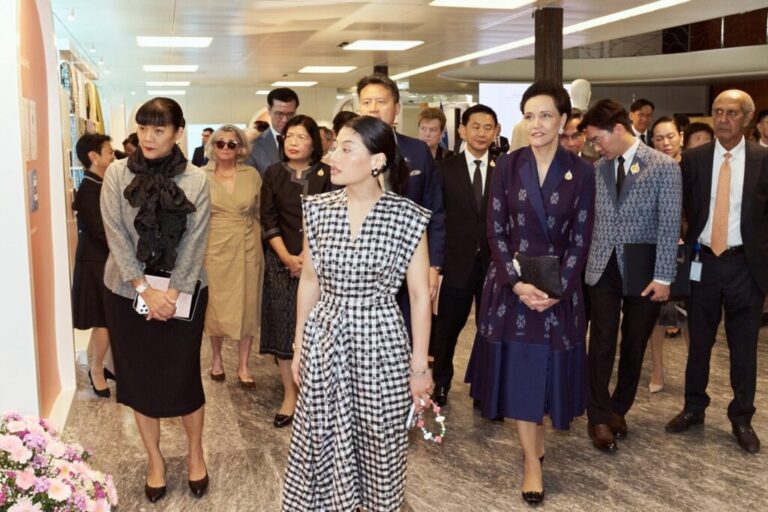
During the visit, Princess Sirivannavari also opened an exhibition jointly organised by Thailand’s Ministry of Commerce and WIPO under the theme “Journey of Inspiration: Empowering Community through Intellectual Property, Design and Creativity”.

01 14 2 1068x1335 1 0

The exhibition highlights her contributions to intellectual property, creativity and the preservation of Thai arts and culture as tools for economic development and community empowerment.

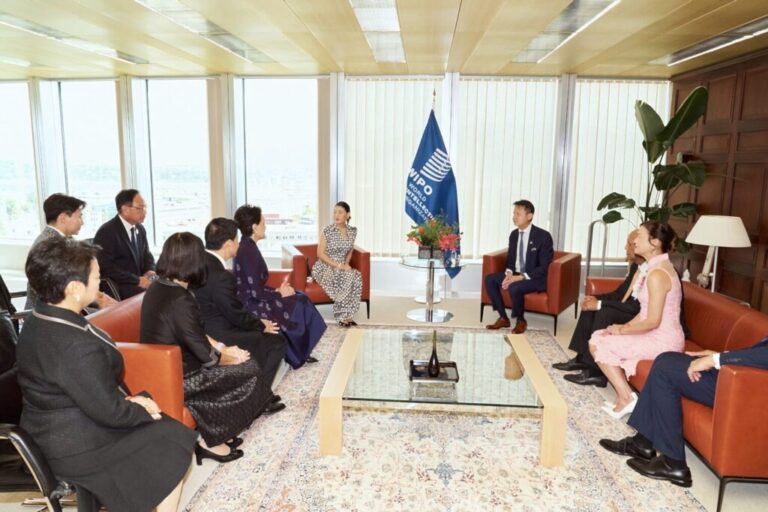
The princess also held discussions with Tang on her inspiration for developing intellectual property projects based on Thai local wisdom and cultural products to improve livelihoods and support local communities.

Advertisement

Thai police unit bans 6 postures in uniform, citing public trust

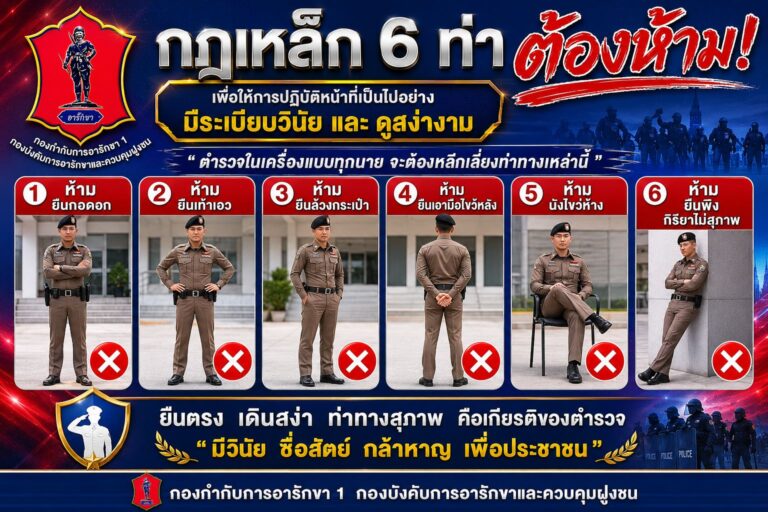
BANGKOK — Thailand’s Royal Protection Police Sub-Division 1 has issued a list of six body postures that uniformed officers are prohibited from adopting while on duty, saying physical appearance shapes how the public perceives law enforcement.

The unit published the rules on its official Facebook page, framing them as a standard for discipline and professional bearing.

The six banned postures are: crossing arms across the chest, standing with hands on hips, keeping hands in pockets, clasping hands behind the back, crossing legs while seated, and leaning against walls or objects.

The post explained that police officers are not merely individuals but representatives of the state and the law, meaning even minor gestures carry more weight than they would from an ordinary person.

709467604 1301977768777532 252656869035750544 n

Each prohibited stance was linked to a specific impression it risks creating. Crossed arms may appear closed-off or unwelcoming. Hands on hips can read as confrontational. Hands in pockets suggest a lack of alertness. Leaning or crossing legs signals excessive ease during duty hours.

“Confidence begins with appearance, posture, and conduct before any words are spoken,” the post read.

The unit said the guidelines are intended to make officers appear ready, approachable, and trustworthy — qualities it described as especially important in protection duties and public-facing roles.

The post acknowledged that officers may not intend to send negative signals, but stressed that public perception is what matters most.

Advertisement

Three foreigners held at Phuket airport with 38 phones

Three foreigners held at Phuket airport with 38 phones

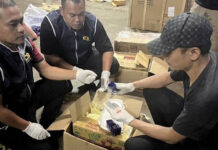
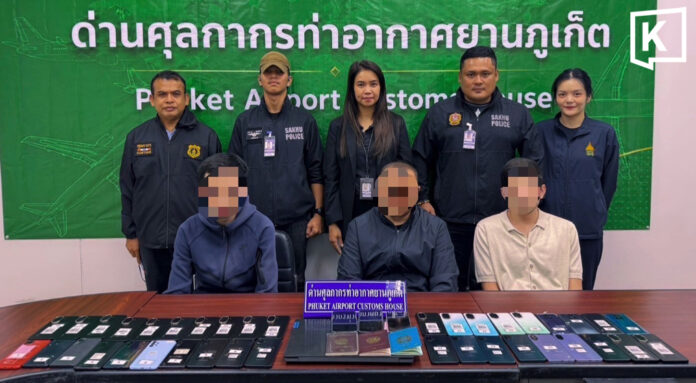
PHUKET — 28 May 2026, Thai customs officials arrested three foreign nationals at Phuket International Airport after they allegedly attempted to bring 38 undeclared smartphones into the country without paying import duties.

The arrests were made on 28 May inside the international arrivals terminal at Phuket International Airport in Mai Khao, Thalang district, customs officials said.

The suspects were identified as Uzbek nationals, 35 and 24, along with Kazakh national, 20.

Authorities seized 38 smartphones found in the group’s luggage.

According to customs officials, the three travellers were stopped at about 10:00 while passing through the “Nothing to Declare” green channel on the first floor of the international arrivals terminal.

Officers detected suspicious items inside their baggage and conducted a detailed inspection of three suitcases.

The search uncovered 38 imported smartphones, officials said.

The suspects acknowledged ownership of the luggage, according to authorities.

Officials charged the three with illegally importing goods that had not undergone proper customs procedures or had not been declared for tax payment before entry into Thailand.

The suspects and the seized phones were handed over to investigators at Sakhu Police Station for further legal proceedings.

Advertisement

Mortar shell drops from concrete truck, sending workers fleeing

AMNAT CHAROEN — 28 May 2026, Construction workers at a reservoir weir site fled for safety after a mortar shell reportedly fell from a ready-mix concrete truck during a concrete pour. Workers immediately alerted authorities, who were called in to defuse the explosive. It is believed the shell may have been mixed in with sand dredged from the Mekong River and later used in the ready-mix concrete production process.

On Thursday at Ban Khok Khai in Kai Kham Subdistrict, Mueang District, Amnat Charoen Province, officers from Mueang Amnat Charoen Police Station received reports that a suspicious object resembling a mortar shell had dropped from a concrete mixer truck while concrete was being poured for a water weir construction project.

news135983 uXDUClNtaY1779953323

Police informed their superiors and coordinated with the Amnat Charoen Explosive Ordnance Disposal (EOD) unit, which was dispatched to inspect the site.

At the scene, police officers and construction workers were waiting as EOD personnel carefully examined the object. Workers had already moved it away from the construction area and covered it with a vehicle tyre. Bomb disposal officers then carried out a cautious operation to render the object safe.

news135983 Ah7zTdWbMY1779953325

The operation was completed successfully, and the object was confirmed to be a mortar shell. EOD officers subsequently removed it for destruction.

A 69-year-old construction worker at the site, who had moved the explosive, said the object fell from the nearly empty mixer drum while workers were levelling freshly poured concrete. At first, they believed it was a bottle, but after picking it up, they realised it resembled a bomb.

The discovery triggered panic among the workers, who immediately ran from the area. The worker said he then carried the object away from the weir, covered it with a car tyre, and notified authorities.

He added that if the shell had exploded, many workers could have been injured or killed.

news135983 3ig496pnlv1779953328
news135983 YjmKtDeqOC1779953330

Advertisement

Thailand invites public to Bangkok Pride 2026, driving bid for World Pride 2030

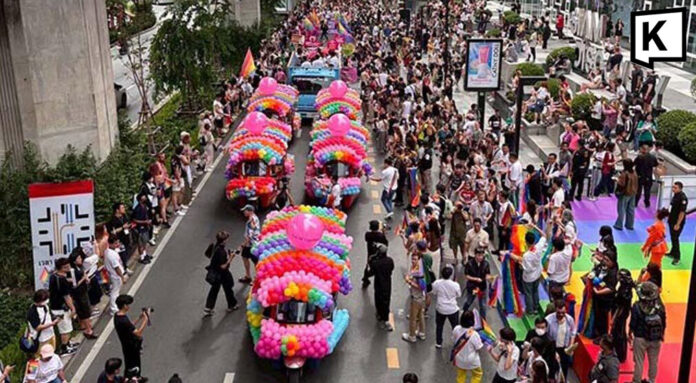
BANGKOK — 29 May 2026, This Sunday, the Thai government has invited the public to join “Bangkok Pride Festival 2026,” experiencing a grand 5-kilometer rainbow parade as Thailand steps up efforts to bid for hosting rights for World Pride 2030 and reaffirms support for the Marriage Equality Law.

Deputy Government Spokesperson, Capt. Patdarasm Thongsaluaykorn, said the festival will be held under the theme “Patch the World with Pride,” aiming to push Thailand forward to host the global celebration, “World Pride 2030.”

This year’s event will feature a nearly 5-kilometre spectacular rainbow parade route stretching from the Khlong Chong Nonsi Public Park through Silom Road to Rama I Road. The festival will also showcase traditional northeastern Thai folk culture. A major highlight will include a performance by legendary mor lam troupe, “Rabiab Wathasin,” on the Pride Stage at Thephasadin Stadium.

Patdarasm stated that the government prioritises human rights, gender diversity, and equality. Thanks to collaboration from all sectors, Thailand has successfully implemented same-sex marriage law.

She added that meanwhile, the Ministry of Social Development and Human Security (MSDHS), in cooperation with civil society networks, has supported gender equality campaigns and various activities through the Gender Equality Promotion Fund.

Furthermore, the ministry has also held a Memorandum of Understanding (MOU) signing ceremony with Bangkok Pride to drive a “Pride City Network” initiative across 58 pilot provinces in preparation and supporting for Thailand’s host candidacy for World Pride 2030.

The initiative is intended to demonstrate Thailand’s readiness on a structural level to welcome global visitors and LGBTQ+ communities nationwide, extending beyond Bangkok to local networks to create a long-term positive impact on both human rights and the country’s growing “rainbow economy.”

Advertisement

Is Shortening Thailand’s Visa-Free Stay More About Appearances Than Action?

​The Anutin Charnvirakul government’s decision last week to cancel the extended visa-free entry scheme, which allowed stays of up to 60 days instead of 30, was based on the belief that it would strengthen national security, combat transnational crime, and prevent foreigners from exploiting the policy to work illegally, engage in business without permits, or behave unruly.

The government cited reports of foreign nationals and criminal syndicates posing as tourists in order to work illegally, engage in drug-related activity, use illegal business ownership structures, and commit other crimes. Authorities could strengthen immigration controls and improve the tracking and screening of foreign visitors without shortening the visa-free stay. They simply need to work harder and smarter

In an increasingly competitive global tourism market, the Thai government has decided to undermine one of its key competitive advantages. It is as if the government believes that the longer foreigners stay in Thailand, the greater the likelihood they will commit crimes, rather than the greater the likelihood that police will apprehend them.

Tourism competitiveness vs populist policymaking
​While there is no solid evidence that these anti-crime objectives will be achieved, it is also premature to conclude that the move will not affect them. What is clear, however, is that the decision makes it more inconvenient for tourists wishing to stay longer than 30 days, as citizens of 93 eligible nationalities return to a 30-day limit.

This comes at a time when Thailand needs to maintain its tourism competitiveness and attract more foreign visitors amid global economic and political uncertainty and sluggish GDP growth. Last year, the Thai government also chose to shut down border trade with Cambodia during two disputes that could reasonably be described as avoidable, causing significant economic damage to both countries.

​The government cited a study showing that most tourists stay just over nine days. If so, why reduce the limit instead of maintaining it to encourage longer stays? Officials say they fear criminals posing as tourists, as if 30 days were not enough time to commit crimes.

It is unfortunate that the government chose a populist response to rising concern over crimes involving foreign visitors. Admittedly, the move was popular among many Thais who have a tendency to blame foreigners for many of the things that go wrong in the kingdom. Some expatriates are also relieved, believing complaints about foreigners in Thailand may decrease and will not unfairly tar them by association.

​The Role of Media and Stereotyping
​Beyond the tendency to blame “outsiders” while ignoring Thai accomplices in many of these crimes — such as Thais acting as legal proxies for foreign criminals — the Thai press has inadvertently reinforced perceptions of certain nationalities as crime-prone or unruly. This occurs when the Thai press highlights cases of unlawful activities by foreign visitors and expats as ‘exotic news’, while the public often forgets that such cases represent a tiny minority of the more than 30 million foreigners who visit Thailand annually.

The urge to stereotype foreigners, or ‘the other,’ so we do not have to examine ourselves is real and problematic. Because misconduct and criminal activity involving foreigners are often treated as newsworthy by the Thai press, more Thais may be susceptible to drawing sweeping conclusions about people from certain nationalities, even when such behaviour does not represent most visitors from those countries.

​We should refrain from being tempted to draw overly generalised views of the conducts of people from different nations, as much as we would detest any generalised views of Thais being bent on becoming illegal migrant workers in South Korea because tens of thousands of Thais are currently living illegally in South Korea.

​Thais would oppose anyone who thinks all Thais are bent on becoming illegal migrant workers in South Korea. For the very same reason, we should avoid drawing a stereotypical conclusion about tourists from certain nationalities in Thailand.

​A Call for Evidence-Based Policy
​It is regrettable that the Thai government has taken a lazy option in dealing with the growing illegal activities and/or unruly behaviour by foreign tourists in Thailand, particularly when there is no hard evidence to suggest that longer stays lead to more crimes committed.

​Steps to prevent people from misbehaving have been taken by at least one embassy in Thailand when the Israeli Embassy in Bangkok reminded its citizens to respect the laws of the countries they visit and reside in. Such an approach could be adopted by a few other embassies when more than a few of their citizens end up on the wrong side of the news.

“Please, for your own good, be sure to act according to the procedures and the laws of the place,” the Embassy of Israel wrote in the notice earlier this month with a focus on their nationals in Phuket after a series of incidents received media attention.

​And since the government should base its decisions on facts and evidence, we need to follow up on the number of crimes committed by foreigners and the number of tourist arrivals and see whether the former drops significantly while the latter does not decline sharply in the next three to six months. If there is little correlation between shorter stays and less crime, then it is hoped that the Anutin government would be sane enough to revisit the decisions they made this month and reverse them.

​According to the Tourism and Sports Ministry, Thailand welcomed more than 13.4 million foreign tourists between 1 January and 24 May, generating nearly 654 billion baht in tourism revenue.

​The top arrivals by nationality include:
China: 2.24 million visitors (largest group)
​Malaysia and India (with arrivals officially surpassing the one million mark this year)
​Russia, and ​South Korea.

​Now the police and the Ministry of Tourism will need to analyse the figures in the next three to six months from now and see whether the visa move was justified or not. If there’s not enough hard evidence, they should reinstate the 60-day visa-free entry scheme as soon as possible.

I do not want to be more pessimistic, but some see the move as an act of political performance — an attempt by the government to appear as though it is doing something about the situation. There is a Thai saying for this: ‘dumb but diligent’ — ngo tae khayan. I hope that is not the case.

Advertisement

Mae Sot-Myawaddy border crossing shut by Myanmar conflict reopens after 10 months

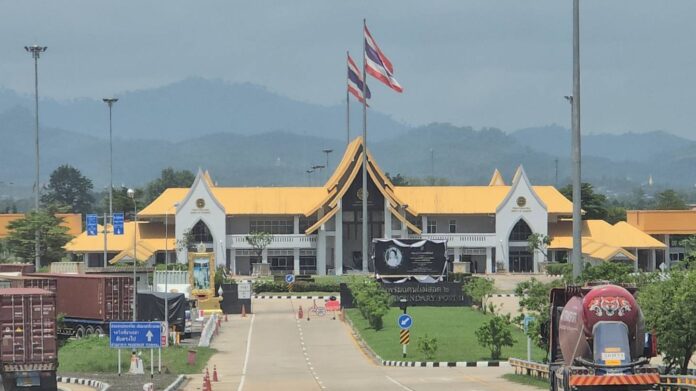
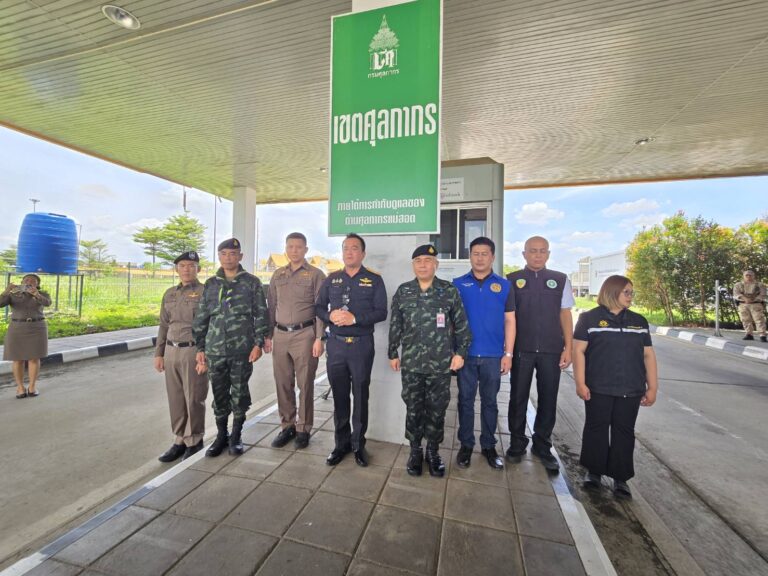
TAK — 28 May 2026, The second Thai-Myanmar Friendship Bridge and its permanent border checkpoint at Mae Sot reopened on Thursday for the first time in more than 10 months, as security officials from both sides cleared the way for trade to resume across one of Southeast Asia’s busiest land crossings.

news136002 qtl3JVa6WA1779955757

The checkpoint at Ban Wang Takhian Tai, Moo 7, Tha Sai Luat subdistrict, Mae Sot district, had been closed by Myanmar authorities since mid-2025 due to ongoing fighting in Myawaddy. The closure had dealt a heavy blow to border trade and investment in Tak province.

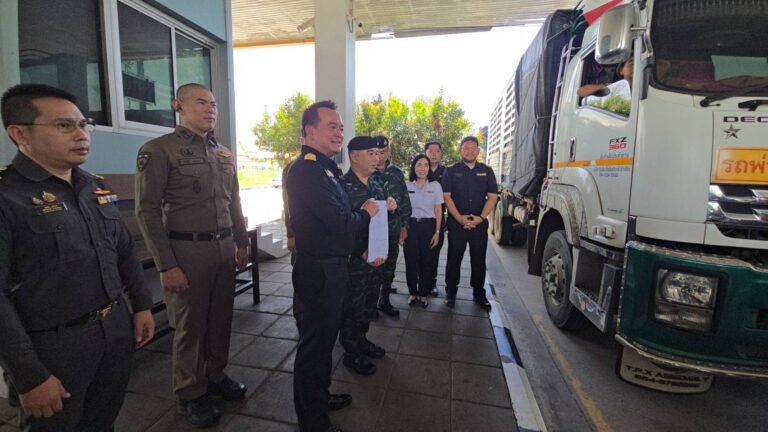
Officials from both sides met at the Myawaddy No. 2 checkpoint on the Myanmar side at midday, with talks described as going well. Shortly after, the first Thai cargo truck crossed the bridge into Myawaddy to unload goods, drawing smiles from traders and drivers who had been waiting months for the route to reopen.

news136002 tz6dLRjImH1779955758

Yotphon Wichayakul, chief of Mae Sot Customs, said Thai authorities were fully ready to process crossings across all departments. However, he noted the Myanmar side was still experiencing unstable electricity, as the Myawaddy checkpoint is currently running on solar power after Thailand cut its power supply. Myanmar officials have requested that Thailand restore electricity to the checkpoint so its systems can return to full operation.

Full operations are expected to resume within a month. Thursday’s reopening was described as a trial run to test both checkpoints’ systems and address remaining technical issues on the Myanmar side after the prolonged closure.

Yotphon said the reopening was expected to revive exports, imports, and logistics business in the area, and boost the broader border economy in Tak province.

Advertisement

Hot News

LATEST NEWS

Bangkok
overcast clouds
36.1 ° C
36.6 °
34.4 °
53 %
6kmh
100 %
Sat
35 °
Sun
36 °
Mon
35 °
Tue
35 °
Wed
33 °