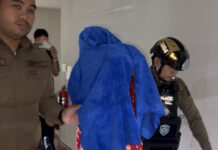
























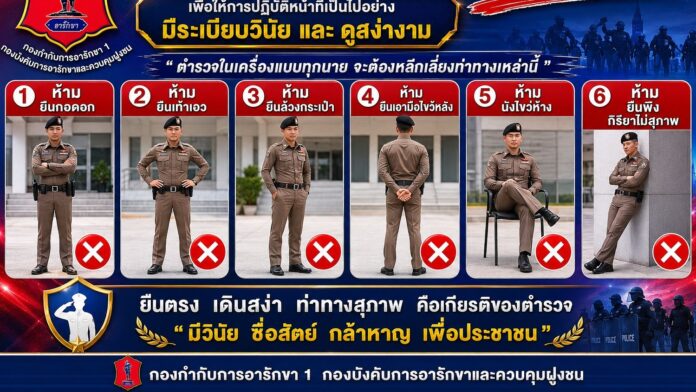
BANGKOK — Thailand’s Royal Protection Police Sub-Division 1 has issued a list of six body postures that uniformed officers are prohibited from adopting while on duty, saying physical appearance shapes how the public perceives law enforcement.
The unit published the rules on its official Facebook page, framing them as a standard for discipline and professional bearing.
The six banned postures are: crossing arms across the chest, standing with hands on hips, keeping hands in pockets, clasping hands behind the back, crossing legs while seated, and leaning against walls or objects.
The post explained that police officers are not merely individuals but representatives of the state and the law, meaning even minor gestures carry more weight than they would from an ordinary person.
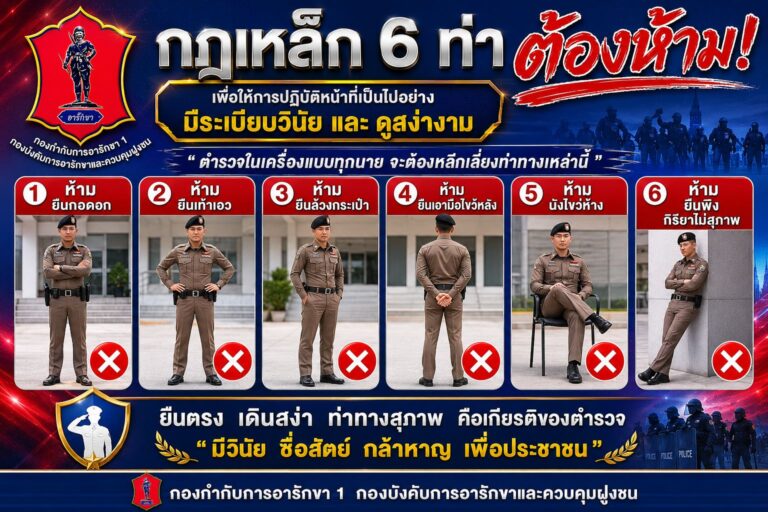
Each prohibited stance was linked to a specific impression it risks creating. Crossed arms may appear closed-off or unwelcoming. Hands on hips can read as confrontational. Hands in pockets suggest a lack of alertness. Leaning or crossing legs signals excessive ease during duty hours.
“Confidence begins with appearance, posture, and conduct before any words are spoken,” the post read.
The unit said the guidelines are intended to make officers appear ready, approachable, and trustworthy — qualities it described as especially important in protection duties and public-facing roles.
The post acknowledged that officers may not intend to send negative signals, but stressed that public perception is what matters most.