
















BANGKOK — 6 October 2026, Thammasat University held a series of memorial events on to mark the 50th anniversary of the 6 October 1976 violence, including a symbolic performance and the reading of the names of 42 people who died in the events.
The memorial, organized by civil society groups and the 6 October remembrance network, began at around 05:30 at the university’s Tha Phra Chan campus.
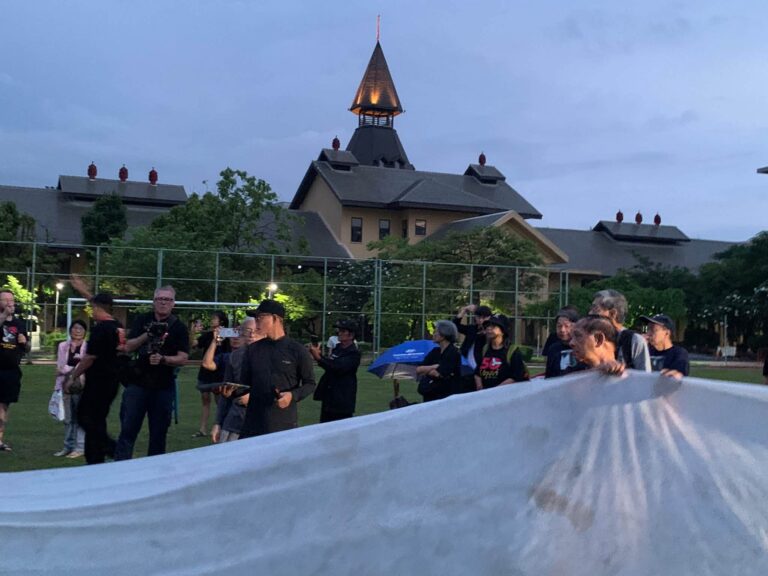
The opening performance, titled Nattakam Ramluek (Memorial Performance), began at Lan Pho before moving toward the football field. Performers marched to the beat of drums and used symbolic movements, while a large white cloth was spread across the grass.
Artist and Silapatorn Award recipient Teerawat Mulvilai, known as Kage, and Sriburapha Award winner Sinsawat Yodbangtoey led participants in singing Phuea Muan Chon (For the People), with the crowd joining in.
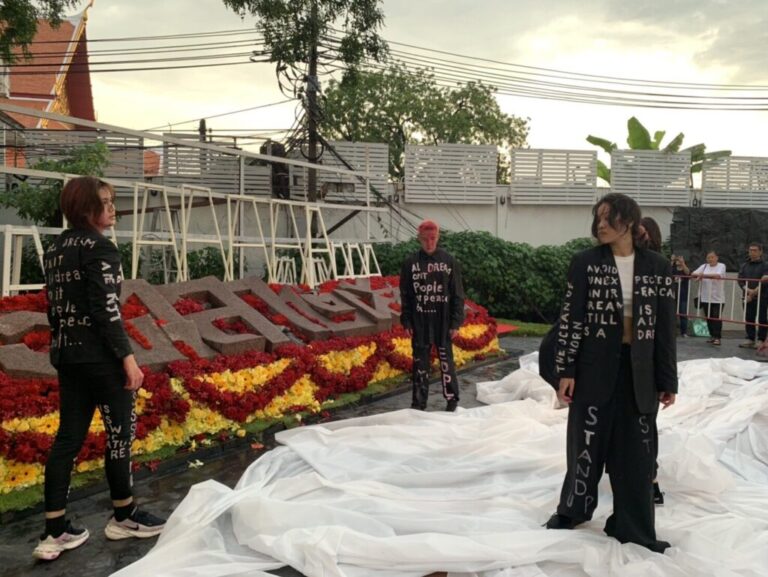
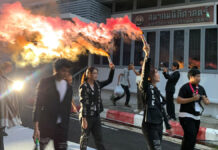
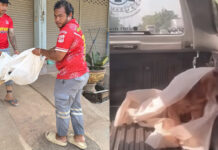
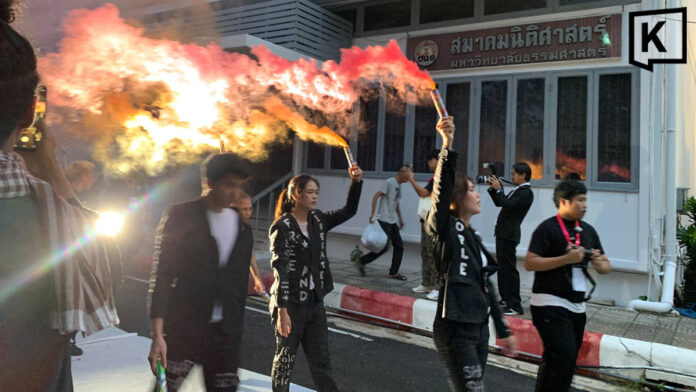
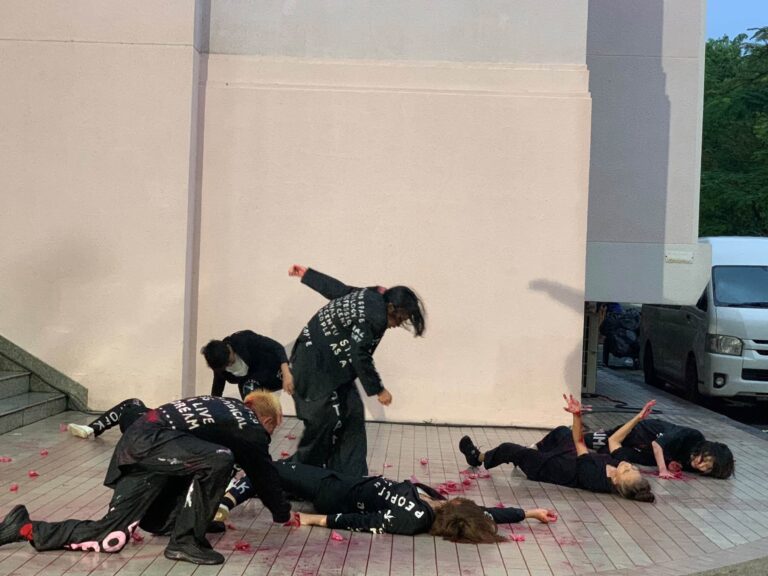
Colored smoke flares were then released as performers walked past the university’s main auditorium. Some performers lay on the ground beside bags containing red liquid, symbolically recreating scenes associated with locations where people were killed during the 1976 violence.
The procession later gathered in front of the memorial dedicated to Thammasat and the 6 October 1976 events, where participants sang Saeng Dao Haeng Sattha (The Light of the Stars of Faith), written by political thinker and poet Jit Phumisak, and laid flowers in remembrance.
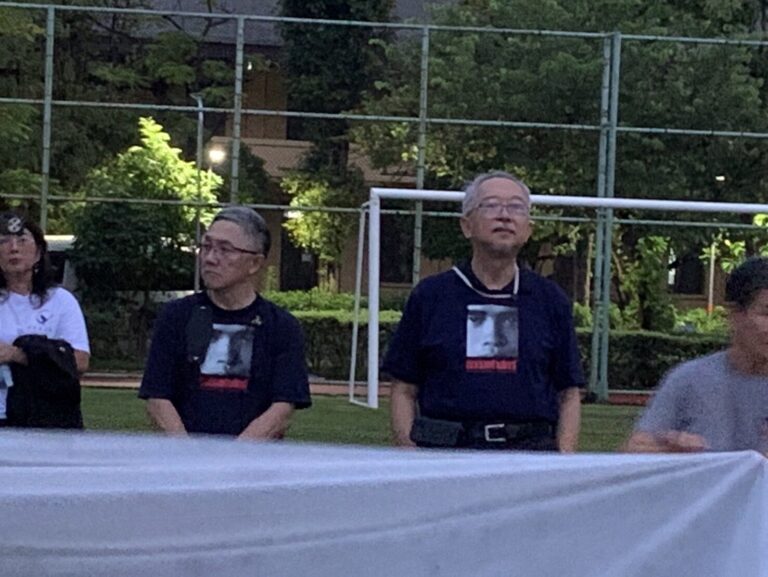
The names of 42 people who died in the events were then read aloud
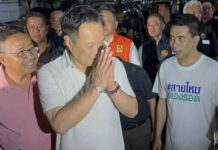
The event was attended by numerous academics, activists, former students and representatives of civil society, including Prof. Dr. Thongchai Winichakul, Department of History, University of Wisconsin-Madison, Prof. Dr. Tyrell Haberkorn, professor at the Department of Asian Languages and Cultures, University of Wisconsin-Madison, Suthep Suriyamongkol, chairman of the Dome Ruam Jai Club, Kritsadang Nutcharat, known as Lawyer Dang, a human rights lawyer, Thanee Jiriyasin, owner of “Fame Video” and a former Thammasat University student and friend of Charupong Thongsin, who died during the 6 October events, Natchanon Phairoj, People’s Network for Political Rights (Thumb Rights), and Tantawan Tuatulanon, a political activist.
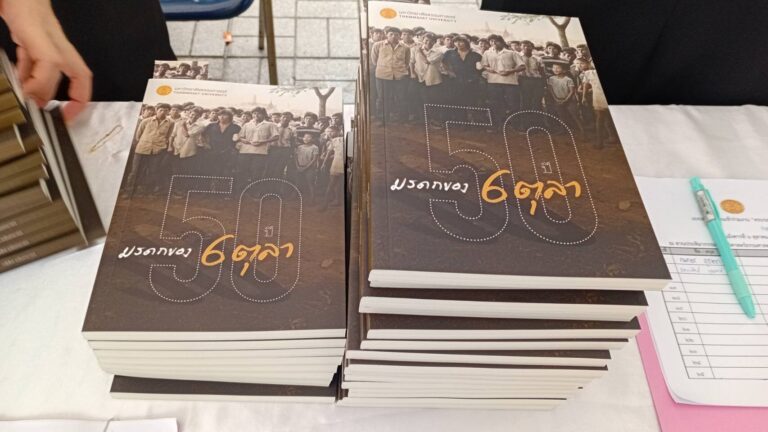
The organizers also distributed free copies of the book “50 Years: The Legacy of 6 October” to registered participants.
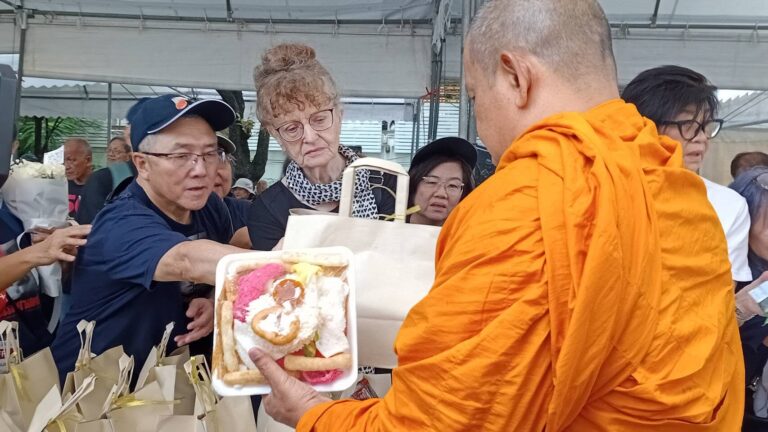
At around 07:30, participants took part in a merit-making ceremony with 19 monks from Wat Mahathat Yuwaratrangsarit, dedicating the merit to those who died in the events. During the ceremony, commemorative wreaths from individuals, organizations, agencies and political parties continued to arrive, including those from Anutin Charnvirakul, prime minister, the House of Representatives, Thai Lawyers for Human Rights, the Leader of the Opposition in the House of Representatives, Friends of Bung–Netiporn Network, Progressive Movement, People’s Party, Chaturon Chaisaeng, Pheu Thai Party, Democrat Party, Thai Liberal Party, United Thai Nation Party, Sachatham Party, Chaiwana Foundation, Friends of Ramkhamhaeng, Rural Reconstruction Student Group, Democracy Heroes Foundation 1992, Independent Political Satire Group, Sutham Saengprathum, Thida Thavornseth–Dr. Weng Tojirakarn, Thammasat University Student Organization, Lampang Campus, People’s Committee for Justice 1990, Pridi Banomyong Institute, History Perspectives Club, Triam Udom Suksa School, Thammasat University Student Council, Tha Phra Chan, Thammasat University Student Council, Central and Rangsit campuses, 14 October Foundation, Union for Civil Liberty, Foundation for the Promotion and Development of the Quality of Life of the Underprivileged, Hmong People’s Group from three provinces: Phetchabun, Phitsanulok and Loei, Vocational Students’ Alliance for the People, Friends of three provinces: Khao Kho, Rong Kla and Phu Khat, Ethnic and Indigenous Peoples Network for Democracy, May 1992 Foundation, Thammasat University Student Council, 50th Anniversary 6 October Remembrance Network, Surachai Sae Dan, Friends of Atsanee Phonjan, ‘19 Isan Tai Club, Chulalongkorn University Political Science Student Club, SPT, Thammasat University Faculty of Law, Tanao Si Comrades, Thammasat University, Thammasat University Faculty of Liberal Arts Student Committee, Chula Commoner Party, Chulalongkorn University, People for Freedom (KPO), Thalu Fah, Chulalongkorn University Student Club, and Community Potential Foundation – Ordinary People Human Rights Award.
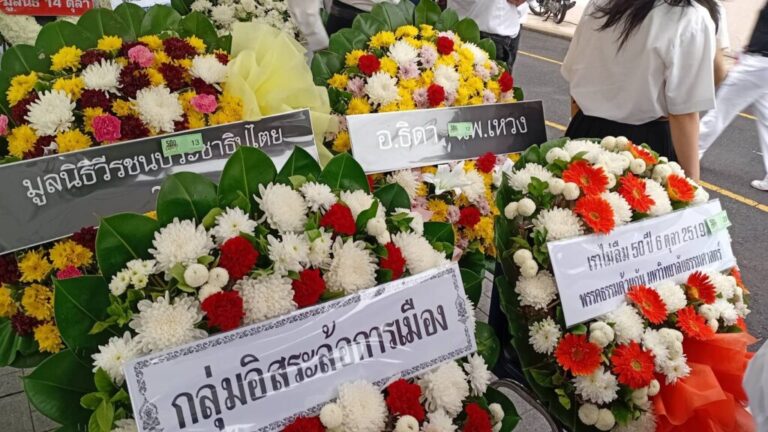
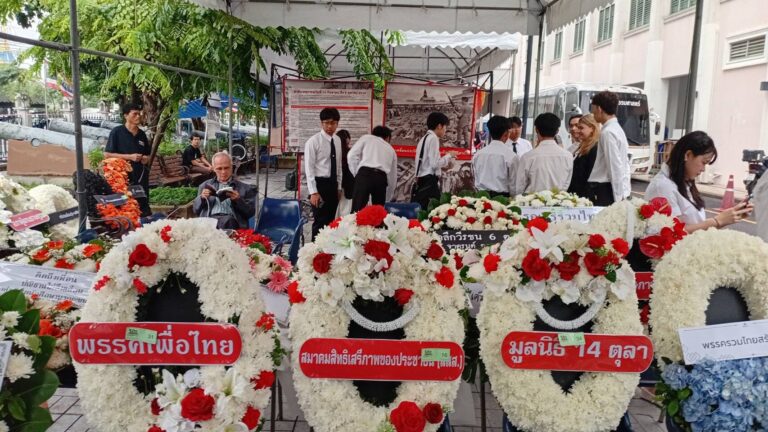
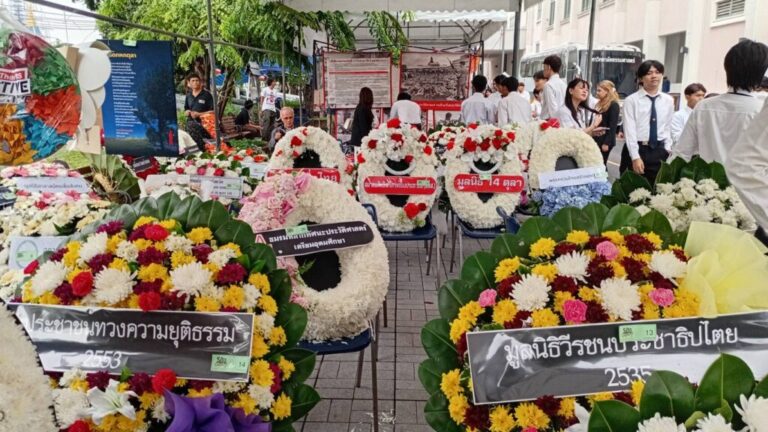
At around 08:20, members of the public and activists continued to arrive, including Amornrat Chokepamitkul, former party-list MP of the People’s Party, members of Thalu Fah, Chokdee Rompruek, known as Alek, an artist for the people, and Assoc. Prof. Dr. Pandit Chanrochanakit, lecturer at Chulalongkorn University’s Faculty of Political Science.
The Sentrang Pleng (Music Pathway) ensemble then performed live songs about the people’s struggle, while poetry commemorating the 50th anniversary of 6 October was also read during the event.
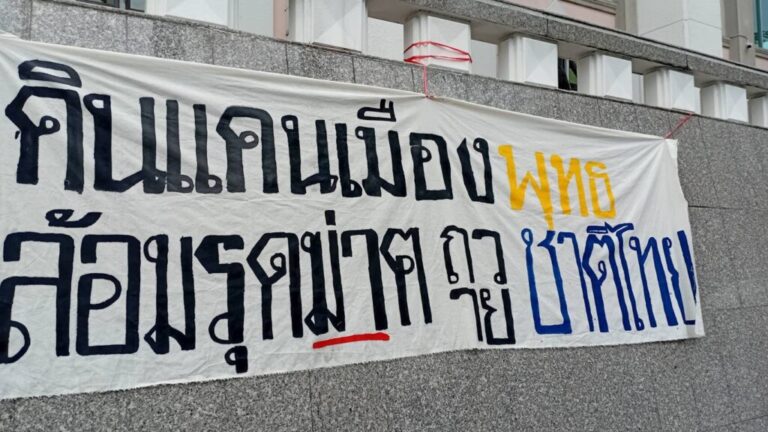
Three large fabric banners were displayed outside Thammasat University’s main auditorium, carrying the messages, “How many coups? We never remember. Your repeated pain? We never forget,” “50 years have passed since 6 October,” and “In the land of Buddhism, they surrounded and killed.”
What happened on 6 October 1976?
On 6 October 1976, one of the darkest days in modern Thai history unfolded at Thammasat University in Bangkok, where security forces and right-wing groups violently cracked down on students protesting against the return of military rule.
The events followed the 1973 student-led uprising that forced military dictator Field Marshal Thanom Kittikachorn from power. Thanom, along with Field Marshal Praphas Charusathien and Col. Narong Kittikachorn, left the country.
By mid-1975, however, there were growing signs that the former military establishment was seeking a return to power.
On 19 September 1976, Thanom returned to Thailand from exile in the United States, entering the country as a Buddhist novice. He said publicly that he had no intention of seeking political power and had returned to visit his dying father.
His return sparked protests. On 24 September, two Provincial Electricity Authority workers were found hanged after reportedly putting up anti-Thanom posters.
On 4 October, students staged a hanging scene during a protest to condemn the earlier killings and oppose attempts to restore authoritarian rule.
The following day, the right-wing newspaper Dao Siam accused the students involved in the performance of insulting the Crown Prince and plotting against the monarchy. Images of the performance were circulated and used to fuel anger among right-wing groups, including Village Scouts, who joined efforts to surround Thammasat University, where thousands of students were gathered.
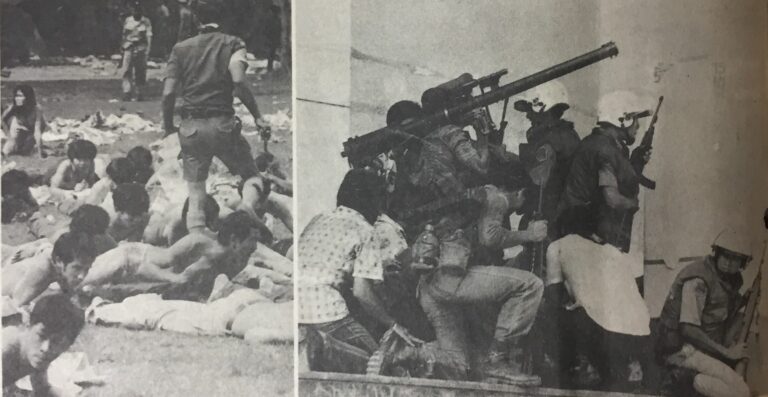
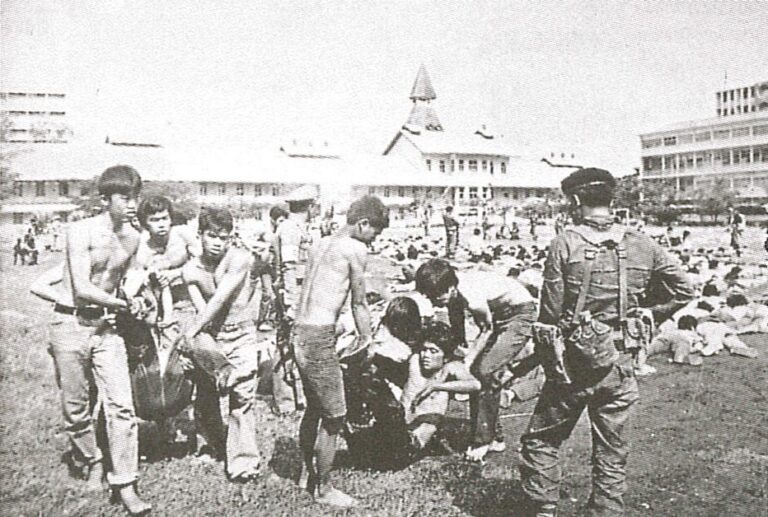
Early on 6 October, armed forces moved against the protesters. Police, Border Patrol Police and armed right-wing groups attacked the university, with students subjected to shootings and brutal violence.
At least 46 people were officially recorded as killed, although some accounts have cited a higher death toll. Hundreds more were injured or arrested.
Prime Minister Seni Pramoj denied ordering the killings, saying the government had instructed authorities to arrest those involved in the controversial performance, not to shoot students.
The violence was then followed by another military takeover
Admiral Sangad Chaloryu, then Supreme Commander, announced a coup and blamed politicians and what he described as the failures of democracy. He said the military would carry out reforms before eventually returning power to a civilian government.
The coup leaders appointed former judge Thanin Kraivichien as prime minister. His government subsequently prosecuted thousands of students arrested at Thammasat.
Eventually, the government of Gen. Kriangsak Chomanan replaced Thanin and granted an amnesty to those involved in the 6 October events, ending legal proceedings against the students.
The amnesty also meant that state officials and others involved in the violence faced no subsequent prosecution.