























33.8 C
Bangkok
Saturday, June 20, 2026
Home Blog Page 930

Iranian General Acknowledges Over 300 Dead in Unrest

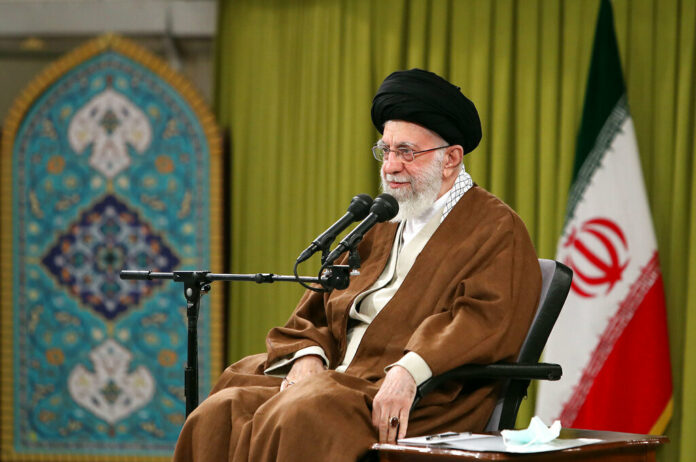
FILE - In this picture released by the official website of the office of the Iranian supreme leader, Supreme Leader Ayatollah Ali Khamenei speaks during a meeting with a group of Basij paramilitary force in Tehran, Iran, Nov. 26, 2022. Photo: Office of the Iranian Supreme Leader via AP File

DUBAI, United Arab Emirates (AP) — An Iranian general on Monday acknowledged that more than 300 people have been killed in the unrest surrounding nationwide protests, giving the first official word on casualties in two months.

That estimate is considerably lower than the toll reported by Human Rights Activists in Iran, a U.S.-based group that has been closely tracking the protests since they erupted after the Sept. 16 death of a young woman being held by the country’s morality police.

The activist group says 451 protesters and 60 security forces have been killed since the start of the unrest and that more than 18,000 people have been detained.

The protests were sparked by the death of 22-year-old Mahsa Amini, who was detained for allegedly violating the Islamic Republic’s strict dress code. They quickly escalated into calls for the overthrow of Iran’s theocracy and pose one of the most serious challenges to the ruling clerics since the 1979 revolution that brought them to power.

Gen. Amir Ali Hajizadeh, the commander of the aerospace division of the paramilitary Revolutionary Guard, was quoted by a website close to the Guard as saying that more than 300 people have been killed, including “martyrs,” an apparent reference to security forces. He also suggested that many of those killed were ordinary Iranians not involved in the protests.

He did not provide an exact figure or say where his estimate came from.

Authorities have heavily restricted media coverage of the protests. State-linked media have not reported an overall toll and have largely focused on attacks on security forces, which officials blame on shadowy militant and separatist groups.

Hajizadeh reiterated the official claim that the protests have been fomented by Iran’s enemies, including Western countries and Saudi Arabia, without providing evidence. The protesters say they are fed up after decades of social and political repression, and deny having any foreign agenda.

The protests have spread across the country and drawn support from artistsathletes and other public figures. The unrest has even cast a shadow over the World Cup, with some Iranians actively rooting against their own national team because they see it as being linked to the government.

The niece of Iran’s Supreme Leader Ayatollah Ali Khamenei recently called on people to pressure their governments to cut ties with Tehran over its violent suppression of the demonstrations.

In a video posted online by her France-based brother, Farideh Moradkhani urged “conscientious people of the world” to support Iranian protesters. The video was shared online this week after Moradkhani’s reported arrest on Nov. 23, according to the activist group.

Moradkhani is a long-time activist whose late father was an opposition figure married to Khamenei’s sister and is the closest member of the supreme leader’s family to be arrested. The branch of the family has opposed Khamenei for decades and Moradkhani has been imprisoned on previous occasions for her activism.

“I ask the conscientious people of the world to stand by us and ask their governments not to react with empty words and slogans but with real action and stop any dealings with this regime,” she said in her video statement.

The protests, now in their third month, have continued despite a brutal crackdown by Iranian security forces using live ammunition, rubber bullets and tear gas.

Iran refuses to cooperate with a fact-finding mission that the U.N. Human Rights Council recently voted to establish.

“The Islamic Republic of Iran will not engage in any cooperation, whatsoever, with the political committee,” Foreign Ministry spokesman Nasser Kanaani said Monday.

In a separate development, Iran released a 76-year-old dual Iranian-Austrian citizen from prison for health reasons, the Austria Press Agency reported.

APA quoted the Austrian Foreign Ministry confirming that Massud Mossaheb was given indefinite medical leave. The ministry said “intensive diplomatic efforts” had led to his release, which was first reported by Austrian daily Die Presse. There was no immediate comment from Iran.

Mossaheb was arrested on suspicion of espionage in early 2019 during a visit to the capital, Tehran, and later sentenced to 10 years in prison. He must remain in Iran and report to authorities every other week, APA reported.

Iran has detained several dual nationals in recent years on charges of threatening national security. Analysts and rights groups accuse hard-liners in Iran’s security agencies of using foreign detainees as bargaining chips in negotiations or prisoner swaps with the West, which Tehran denies.
Advertisement

China Lockdown Protests Pause as Police Flood City Streets

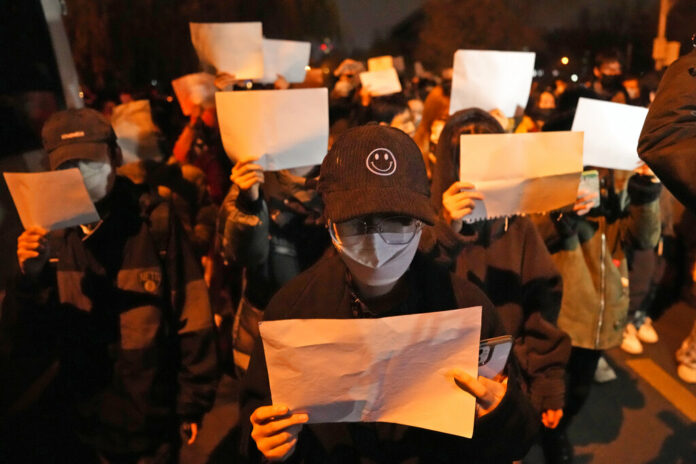
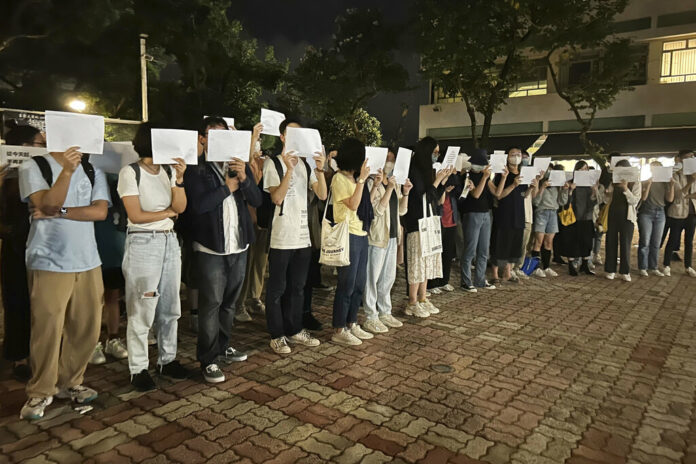
Protesters hold up blank white papers during a commemoration for victims of a recent Urumqi deadly fire at the Chinese University of Hong Kong in Hong Kong, Monday, Nov. 28, 2022. Photo: Kanis Leung / AP

HONG KONG (AP) — With police out in force, there was no word of additional protests against strict government anti-pandemic measures Tuesday in Beijing, as temperatures fell well below freezing. Shanghai, Nanjing and other cities where online calls to gather had been issued were also reportedly quiet.

Rallies against China’s unusually strict anti-virus measures spread to several cities over the weekend in the biggest show of opposition to the ruling Communist Party in decades. Authorities eased some regulations, apparently to try to quell public anger, but the government showed no sign of backing down on its larger coronavirus strategy, and analysts expect authorities to quickly silence the dissent.

Police were checking making random checks on phones at the People’s Square subway station in Shanghai Monday evening, an eyewitness said. The person declined to give his name out of fear of retribution, as he was en route to a planned protest near the station, which he did not find.

In Hong Kong Monday, about 50 students from mainland China sang at the Chinese University of Hong Kong and some lit candles in a show of support for those in mainland cities who demonstrated against restrictions that have confined millions to their homes. Hiding their faces to avoid official retaliation, the students chanted, “No PCR tests but freedom!” and “Oppose dictatorship, don’t be slaves!”

The gathering and a similar one elsewhere in Hong Kong were the biggest protests there in more than a year under rules imposed to crush a pro-democracy movement in the territory, which is Chinese but has a separate legal system from the mainland.

“I’ve wanted to speak up for a long time, but I did not get the chance to,” said James Cai, a 29-year-old from Shanghai who attended a Hong Kong protest and held up a piece of white paper, a symbol of defiance against the ruling party’s pervasive censorship. ”If people in the mainland can’t tolerate it anymore, then I cannot as well.”

It wasn’t clear how many people have been detained since the protests began in the mainland Friday, sparked by anger over the deaths of 10 people in a fire in the northwestern city of Urumqi. That prompted angry questions online about whether firefighters or victims trying to escape were blocked by locked doors or other anti-virus controls. Authorities denied that, but the incident became a target for public frustration about the controls.

Without mentioning the protests, the criticism of Xi or the fire, some local authorities eased restrictions Monday.

The city government of Beijing announced it would no longer set up gates to block access to apartment compounds where infections are found.

“Passages must remain clear for medical transportation, emergency escapes and rescues,” said Wang Daguang, a city official in charge of epidemic control, according to the official China News Service.

Guangzhou, a manufacturing and trade center that is the biggest hot spot in China’s latest wave of infections, announced some residents will no longer be required to undergo mass testing.

The U.S. Embassy advised citizens to prepare for all eventualities and said Ambassador Nicholas Burns and other American diplomats have “regularly raised our concerns on many of these issues directly.”

“We encourage all U.S. citizens to keep a 14-day supply of medications, bottled water, and food for yourself and any members of your household,” the Embassy said in a statement Monday.

In Washington, White House National Security Council spokesman John Kirby “obviously, there are people in China that — that have — have concerns about that,” referring to lockdowns.

“And they’re protesting that, and we believe they should be able to do that peacefully,” Kirby said at a Monday briefing.

Urumqi, where the fire occurred, and another city in the Xinjiang region in the northwest announced markets and other businesses in areas deemed at low risk of infection would reopen this week and public bus service would resume.

“Zero COVID,” which aims to isolate every infected person, has helped to keep China’s case numbers lower than those of the United States and other major countries. But tolerance for the measures has flagged as people in some areas have been confined at home for up to four months and say they lack reliable access to food and medical supplies.

The ruling party promised last month to reduce disruption by changing quarantine and other rules known as the “20 Guidelines.” But a spike in infections has prompted cities to tighten controls.

On Tuesday, the number of daily cases dipped slightly to 38,421 after setting new records over recent days. Of those, 34,860 were among people who showed no symptoms.

The ruling party newspaper People’s Daily called for its anti-virus strategy to be carried out effectively, indicating Xi’s government has no plans to change course.

“Facts have fully proved that each version of the prevention and control plan has withstood the test of practice,” a People’s Daily commentator wrote.

In Hong Kong, protesters at Chinese University put up posters that said, “Do Not Fear. Do Not Forget. Do Not Forgive,” and sang including “Do You Hear the People Sing?” from the musical “Les Miserables.” Most hid their faces behind blank white sheets of paper.

“I want to show my support,” said a 24-year-old mainland student who would identify herself only as G for fear of retaliation. “I care about things that I couldn’t get to know in the past.”

University security guards videotaped the event but there was no sign of police.

At an event in Central, a business district, about four dozen protesters held up blank sheets of paper and flowers in what they said was mourning for the fire victims in Urumqi and others who have died as a result of “zero COVID” policies.

Police cordoned off an area around protesters, who stood in small, separate groups to avoid violating pandemic rules that bar gatherings of more than 12 people. Police took identity details of participants but there were no arrests.

Hong Kong has tightened security controls and rolled back Western-style civil liberties since China launched a campaign in 2019 to crush a pro-democracy movement. The territory has its own anti-virus strategy that is separate from the mainland.

Hong Kong’s Chief Executive John Lee is a law-and-order hardliner who led the crackdown on protesters, including on university campuses.

Both the Hong Kong government and the State Council, China’s Cabinet, issued statements Monday pledging to uphold public order and the authority of the National Security Law, which gives authorities sweeping powers to charge demonstrators with crimes including sedition.

Protests also occurred over the weekend in Guangzhou near Hong Kong, Chengdu and Chongqing in the southwest, and Nanjing in the east, according to witnesses and video on social media. Guangzhou has seen earlier violent confrontations between police and residents protesting quarantines.

Most protesters have complained about excessive restrictions, but some turned their anger at Xi, China’s most powerful leader since at least the 1980s. In a video that was verified by The Associated Press, a crowd in Shanghai on Saturday chanted, “Xi Jinping! Step down! CCP! Step down!”

The British Broadcasting Corp. said one of its reporters was beaten, kicked, handcuffed and detained for several hours by Shanghai police but later released.

The BBC criticized what it said was Chinese authorities’ explanation that its reporter was detained to prevent him from contracting the coronavirus from the crowd. “We do not consider this a credible explanation,” the broadcaster said in a statement.

Chinese Ministry of Foreign Affairs spokesman Zhao Lijian said the BBC reporter failed to identify himself and “didn’t voluntarily present” his press credential.

“Foreign journalists need to consciously follow Chinese laws and regulations,” Zhao said.

Swiss broadcaster RTS said its correspondent and a cameraman were detained while doing a live broadcast but released a few minutes later. An AP journalist was detained but later released.

___

Story: Kanis Leung and Zen Soo. Associated Press writer Joe McDonald in Beijing contributed.

Advertisement

Riots in Belgium, Netherlands After Morocco Win at World Cup

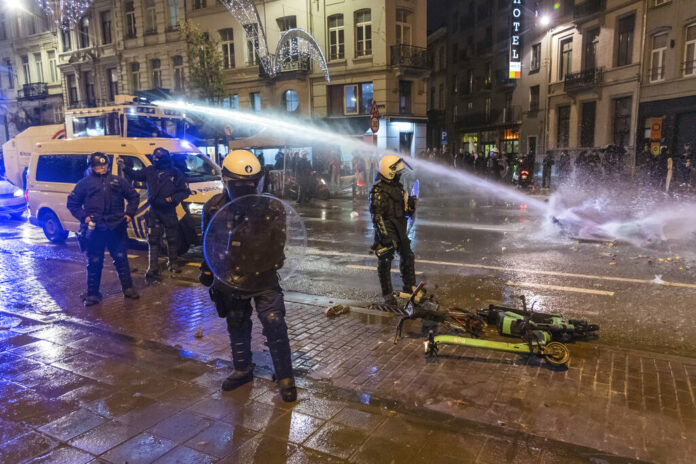
Riot police officers stand along a main boulevard in Brussels, Sunday, Nov. 27, 2022, as violence broke out during and after Morocco's 2-0 win over Belgium at the World Cup. Photo: Geert Vanden Wijngaert / AP

BRUSSELS (AP) — Riots broke out in several Belgian and Dutch cities after Morocco’s 2-0 upset win over Belgium at the World Cup Sunday.

Police detained about a dozen people after they deployed water cannons and fire tear gas to disperse crowds in Brussels and eight more in the Northern city of Antwerp. Two police officials were injured in the Dutch port city of Rotterdam. By late evening Sunday, an uneasy calm had returned to most of the cities involved.

Dozens of rioters overturned and torched cars, set electric scooters on fire and pelted cars with bricks. Police moved in after one person suffered facial injuries, said Brussels police spokeswoman Ilse Van de Keere.

Brussels mayor Philippe Close urged people to stay away from the city center and said authorities were doing their utmost to keep order in the streets. Even subway and tram traffic had to be interrupted on police orders.

“Those are not fans, they are rioters. Moroccan fans are there to celebrate,” Close said. There were also disturbances in the city of Antwerp and Liege.

“Sad to see how a few individuals abuse a situation to run amok,” said Interior Minister Annelies Verlinden.

Police in the neighboring Netherlands said violence erupted in the port city of Rotterdam, with riot officers attempting to break up a group of 500 soccer supporters who pelted police with fireworks and glass. Media reported unrest in the capital Amsterdam and The Hague.

Morocco’s victory was a major upset at the World Cup and was enthusiastically celebrated by fans with Moroccan immigrant roots in many Belgian and Dutch cities.

___

Story: Raf Casert.

Advertisement

Crowd Angered by Lockdowns Calls for China’s Xi to Step Down

Protesters hold up blank papers and chant slogans as they march in protest in Beijing, Sunday, Nov. 27, 2022. Photo: Ng Han Guan / AP

SHANGHAI (AP) — Protesters angered by strict anti-virus measures called for China’s powerful leader to resign, an unprecedented rebuke as authorities in at least eight cities struggled to suppress demonstrations Sunday that represent a rare direct challenge to the ruling Communist Party.

Police using pepper spray drove away demonstrators in Shanghai who called for Xi Jinping to step down and an end to one-party rule, but hours later people rallied again in the same spot. Police again broke up the demonstration, and a reporter saw protesters under arrest being driven away in a bus.

The protests — which began Friday and have spread to cities including the capital, Beijing, and dozens of university campuses — are the most widespread show of opposition to the ruling party in decades.

In a video of the protest in Shanghai verified by The Associated Press, chants against Xi, the most powerful leader since at least the 1980s, and the Chinese Communist Party sounded loud and clear: “Xi Jinping! Step down! CCP! Step down!”

Three years after the virus emerged, China is the only major country still trying to stop transmission of COVID-19. Its “zero COVID” strategy has suspended access to neighborhoods for weeks at a time. Some cities carry out daily virus tests on millions of residents.

That has kept China’s infection numbers lower than those the United States and other major countries, but public acceptance has worn thin. People who are quarantined at home in some areas say they lack food and medicine. The ruling party faced public anger following the deaths of two children whose parents said anti-virus controls hampered efforts to get medical help.

The current protests erupted after a fire broke out Thursday and killed at least 10 people in an apartment building in the city of Urumqi in the northwest, where some have been locked in their homes for four months. That prompted an outpouring of angry questions online about whether firefighters or people trying to escape were blocked by locked doors or other restrictions.

About 300 demonstrators gathered late Saturday in Shanghai, most of whose 25 million people were confined to their homes for almost two months starting in late March.

On a street named for Urumqi, one group of protesters brought candles, flowers and signs honoring those who died in the blaze. Another group, according to a protester who insisted on anonymity, was more active, shouting slogans and singing the national anthem.

That protester and another, who gave only his family name, Zhao, confirmed the chants against Xi, who has awarded himself a third five-year term as leader of the ruling party and who some expect to try to stay in power for life. Like others who spoke to the AP, the protesters didn’t want to be identified due to fear of arrest or retaliation.

The atmosphere of the protest encouraged people to speak about topics considered taboo, including the 1989 crackdown on the Tiananmen Square pro-democracy protests, the protester who insisted on anonymity said.

Some called for an official apology for the deaths in the fire in Urumqi in the Xinjiang region. One member of Xinjiang’s Uyghur ethnic group, which has been the target of a security crackdown that includes mass detentions, shared his experiences of discrimination and police violence.

“Everyone thinks that Chinese people are afraid to come out and protest, that they don’t have any courage,” said the protester, adding it was his first time demonstrating. “Actually in my heart, I also thought this way. But then when I went there, I found that the environment was such that everyone was very brave.”

The scene turned violent early Sunday. Hundreds of police broke up the more active group before they came for the second as they tried to move people off the main street. The protester said that he saw people being taken away, forced by police into vans, but could not identify them.

Zhao said one of his friends was beaten by police and two were pepper-sprayed. He lost his shoes and left barefoot.

He said protesters yelled slogans, including one that has become a rallying cry: “(We) do not want PCR (tests), but want freedom.”

On Sunday afternoon, crowds returned to the same spot and again railed against PCR tests. People stood and filmed as police shoved people.

Officers in surgical masks and yellow safety vests told the crowd of about 300 spectators to leave but appeared to be trying to avoid a confrontation. There was no sign of shields or other riot gear.

In Beijing, a group of about 200 people gathered in a park on the capital’s east side and held up blank sheets of paper, a symbol of defiance against the ruling party’s pervasive censorship.

“The lockdown policy is so strict,” said a protestor, who would give only his surname, Li. “You cannot compare it to any other country. We have to find a way out.”

Postings on social media said there were also demonstrations at 50 universities.

About 2,000 students at Xi’s alma mater, Tsinghua University in Beijing, gathered to demand an easing of anti-virus controls, according to social media posts. Students shouted “freedom of speech!” and sang the Internationale, the socialist anthem.

The protesters left after the university’s deputy Communist Party secretary promised to hold a school-wide discussion.

Videos on social media that said they were filmed in Nanjing in the east, Guangzhou in the south and at least six other cities showed protesters tussling with police in white protective suits or dismantling barricades used to seal off neighborhoods. The Associated Press could not verify that all those protests took place or where.

The human rights group Amnesty International appealed to Beijing to allow peaceful protest.

“The tragedy of the Urumqi fire has inspired remarkable bravery across China,” the group’s regional director, Hanna Young, said in a statement. “These unprecedented protests show that people are at the end of their tolerance for excessive COVID-19 restrictions.”

Urumqi and a smaller city in Xinjiang, Korla, eased some anti-virus controls in what appeared to be an attempt to mollify the public following Friday’s protests.

Markets and other businesses will reopen in areas deemed at low risk of virus transmission and bus, train and airline service will resume, state media reported. They gave no indication whether residents in higher-risk areas would be allowed out of their homes.

___

Story: Dake Kang and Huizhong Wu. Wu reported from Taipei, Taiwan.

Advertisement

Opinion: Time to Break the Cycle of Brutal Police Dispersal of Protesters

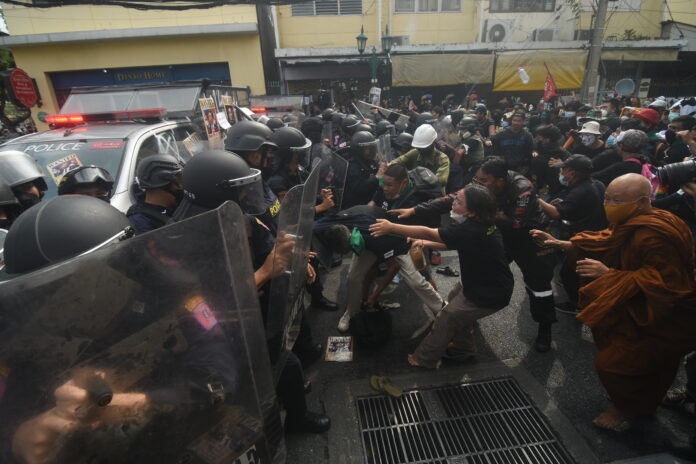
Protesters clash with riot police during a protest on Din Sor Road on Nov. 18, 2022.

In what has become a vicious cycle, riot police needlessly and heavy-handedly disperse protesters using rubber bullets and more, leading to serious injuries or even death, and this is followed by demand for accountability and transparency.

On Nov. 18, the dispersal of the anti-government-cum-anti-APEC protest, was just another such needless crackdown and injuries. One young key protester, Payu Dao Din, 28, was hit by a rubber bullet at his right eye, resulting in a severely ruptured eyeball and the chance of restoring the vision is very slim even after several operations.

The hospital where he is being treated is now providing him with psychological advice to assist the young protester to cope with the new reality that he may not be able to see with his right eye again. On top of that, a male journalist for one online Thai-language news agency was dragged away when the dispersal took place on Din Sor Road, just a stone’s throw away from Democracy Monument.

It was a needless dispersal because the protesters were seven kilometers away from the APEC Summit venue. Also, there were just around 200 unarmed protesters and police could have simply contained them at the site until the summit was over, or better still, allowed a handful of protest leaders to travel to the summit site to hand over the demands in writing.

Unfortunately, and tragically for Payu, riot police charged at the protesters to disperse them after protesters engaged in a Thai Voodoo ritual of burning of chili and salt to curse PM Gen. Prayut Chan-o-cha. Riot police could simply have extinguished the fire then just left the protesters where they were for the next 24 hours. But they did not.

Days after the dispersal, the protesters called the incident “bloody APEC” and demanded that police apologize, reveal the names of officers involved, and compensate for the damage incurred. Protesters gave police 15 days to respond, and a deputy police chief came out of the national police headquarters to accept the letter.

We do not know how the police will respond two weeks from now, but national police chief Pol. Gen. Damrongsak Kittiprapas already stated hours after the beating of a reporter that “the press must help themselves” because such situation involved many people and could led to a case of “mistaken” identity.

Damrongsak made no mention that in the video clip, we could hear one riot police relishing in the beating by telling the beaten journo, “This is the real stuff.” It apparently was not self-defense on the part of the police.

In order to avoid future such tragedies, Thailand needs a new standard in crowd handling, transparency, and accountability. A system must be in place where an independent committee is set up to look into the incident where serious injuries or death occurred, and the committee members must be composed of not just senior police officers, but outsiders including a representative of the protesters as well.

One cannot expect the police’s own inquiry to be fair or independent. A report then should be released to the public and if any misconduct occurred, those officers involved should be punished. Anything less than that would likely mean there will be more needless casualties like Payu in the future.

Advertisement

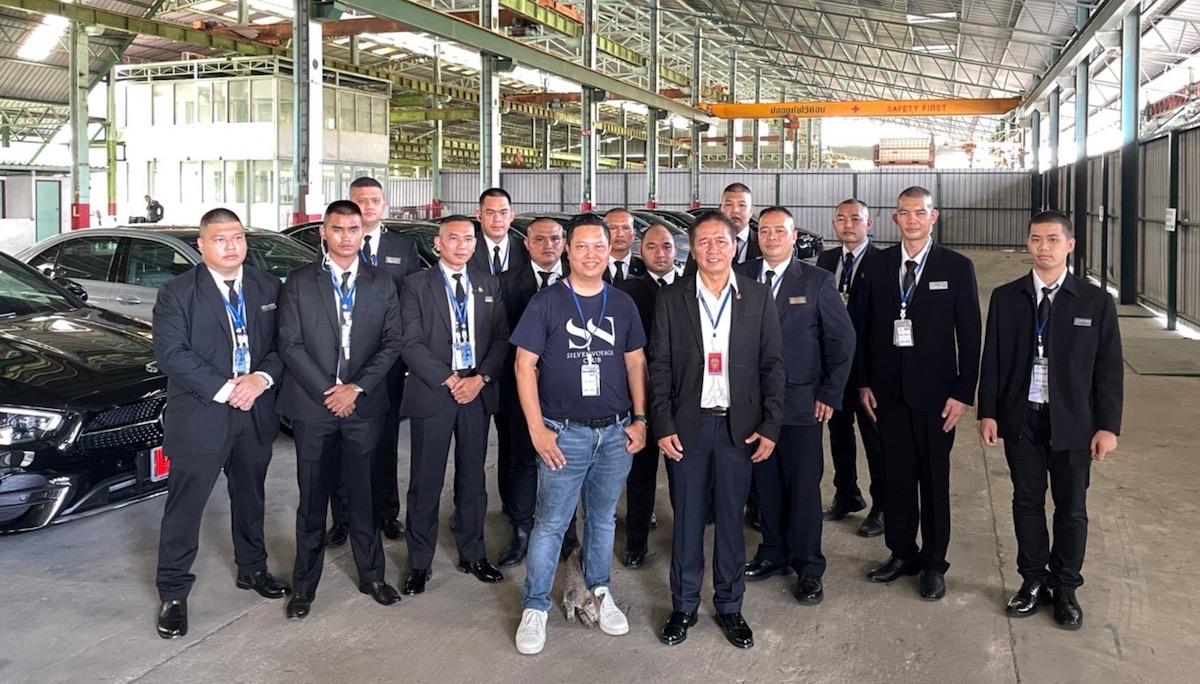
WRS Group provide luxury travel services to Saudi Crown Prince during APEC 2022.

WRS Group was appointed to provide luxury travel services to Saudi Crown Prince and the group on an occasion of the first official visit to Thailand and to APEC organised by the Royal Thai Government in Thailand during APEC week.

Saudi crown prince Mohammed bin Salmon was greeted on arrival by General Prayut Chan-o-cha, the Thai Prime Minister to join the Asia-Pacific Economic Cooperation (APEC) Summit 2022 in Bangkok on 18th November 2022.

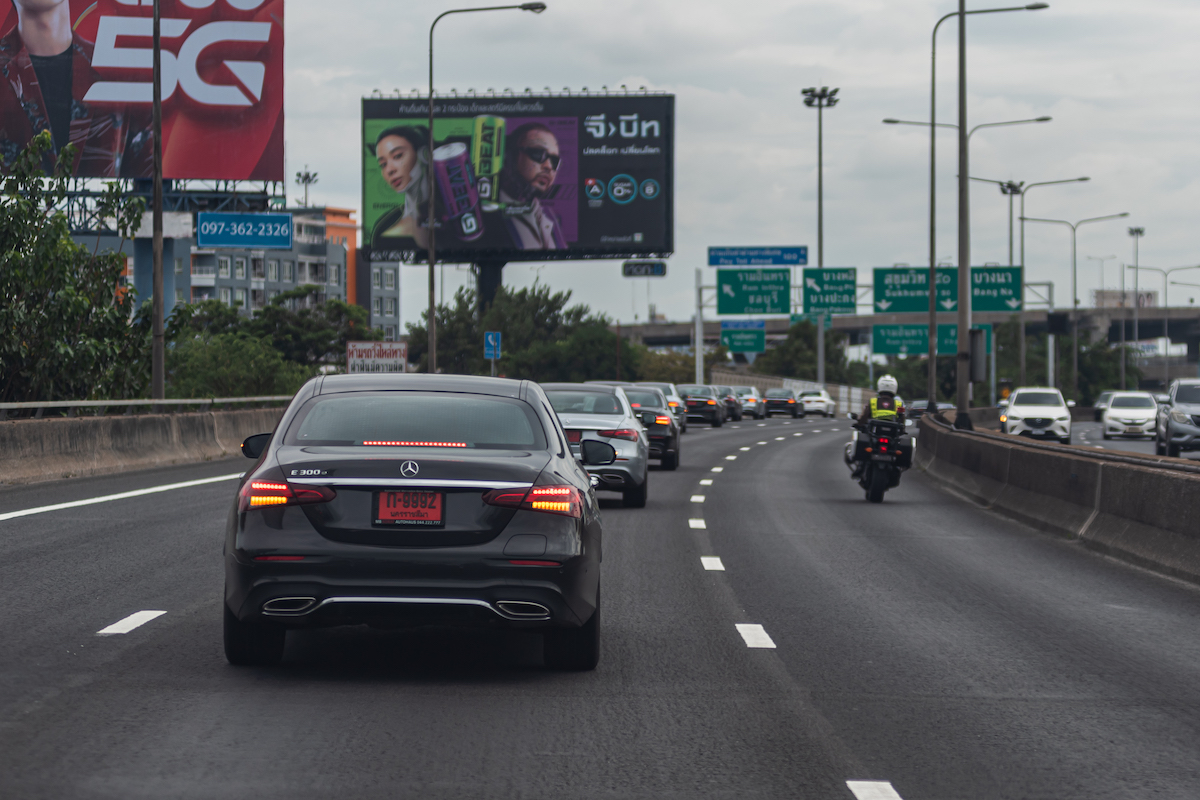
Mr. Jakkapan Rattanapet, CEO and Founder of WRS Group revealed as the leading one-stop luxury lifestyle service company in Asia, it’s his highest pleasure that WRS Group was appointed by Saudi Arabian Government to provide the royal motorcade for the crown prince’s trip during this official visit in total for more than 800 guests, the largest group of guests visiting during the APEC Summit 2022, including the Crown Prince.

DSCF0025

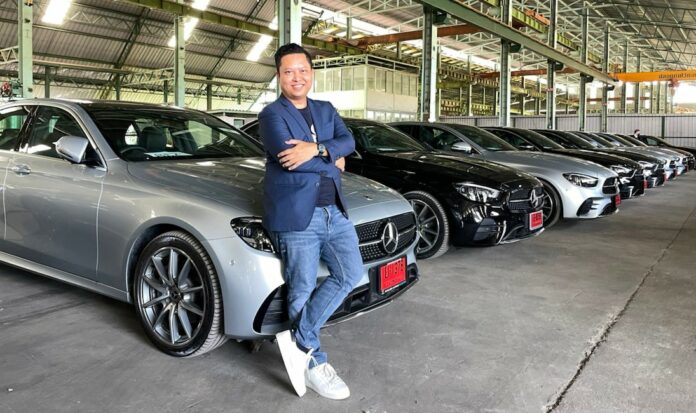
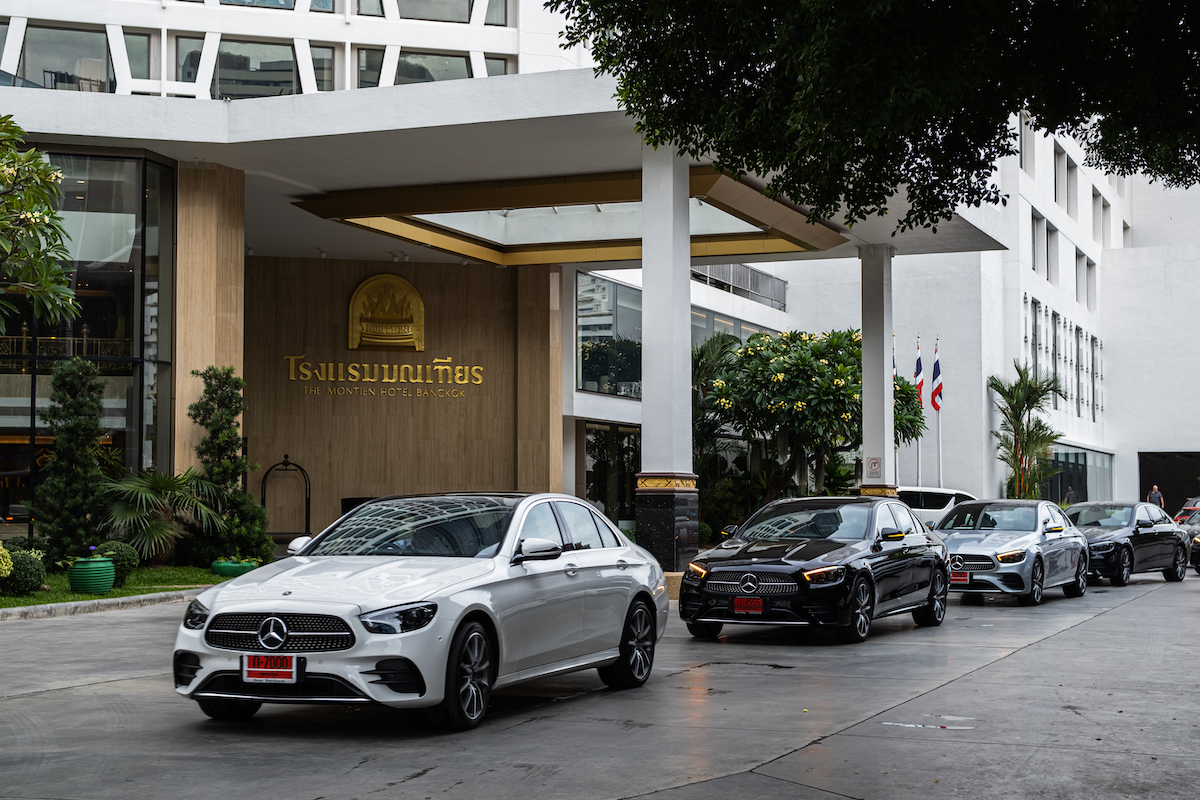
A total of 60 Mercedes Benz S-Class and E-Class supported by Mercedes Benz (Thailand) and the Mercedes’s dealers, and more than 250 other vehicles including Toyota Alphard, 10-wheel lorries, 6-wheel lorries, and several buses, were gathered and supported this Saudi crown prince’s state visit.

“Over the last fourteen days, WRS Group has put a team which consists of 250 of staff, concierge service, interpretors, and VIP drivers trained by Thailand’s Executive Protection Association to run this assignment. In addition, Food for Fighters came to support the team during this whole period. It was a very successful royal visit arrangement, working alongside with the Ministry of Foreign Affairs as well.” Said Mr. Rattanapet.

S 30884007

750 9678

WRS Group is a corporate group of businesses with expertise in luxury lifestyle services for affluent clients and world-class privilege sourcing and managing services for corporations for over 15 years.

The Group has four businesses under its wings : Firstly, World Reward Solutions, world-class privilege sourcing and managing services for corporate and governmental organizations, Secondly, WRX, an innovative developer of the online platform development services including applications and technologies, thirdly, White Glove Delivery and Services, a premium land-logistic service provider such as global and domestic limousine services and premium gift delivery services. And lastly, Silver Voyage Club is a concierge and luxury lifestyle service manager for affluent clients.

WRS Group has well-rounded experiences in taking care of High-net-worth-individuals and corporations in Thailand and Asia.

Advertisement

One Bangkok announces a strategic partnership with Leafy

Mr. Yupatat Yipintsoi, Managing Director of Leafy Co., Ltd. (left) and  Mr. Worawat Srisa-an, Deputy Chief Executive Officer, Frasers Property Holdings (Thailand) Company Limited, a Development Manager of One Bangkok (right)

One Bangkok announces a strategic partnership with Leafy, the sole distributor of world-class furniture brands B&B Italia and Boffi, setting a precedent for luxury residential developments in Thailand.

One Bangkok, the largest holistically integrated district in the heart of Bangkok, announced a partnership with Leafy Co., Ltd., the sole distributor of B&B Italia and Boffi furniture and retailer of Made-in-Italy luxury home furnishings, to offer high-end built-in furniture from B&B Italia and Boffi as standard interior décor in One Bangkok’s residential development, setting a new standard for luxury residences in Thailand as the first project to do so. 

Mr. Worawat Srisa-an, Deputy Chief Executive Officer, Frasers Property Holdings (Thailand) Company Limited, a Development Manager of One Bangkok said,
“One Bangkok will set new benchmarks in Thailand’s real estate industry by bringing global standards to all aspects of the development. Our commitment to enhancing
the quality of life for urbanists and our modern and progressive design principles are at work in both the interior and exterior spaces of the residential’s project. By forging a strong partnership with Leafy, we are able to offer the combined benefits of a prestigious residential address with built-in furniture by Italian design leaders B&B Italia and Boffi, setting the bar for the level of refinement prospective clients can expect from
One Bangkok.”

“Our partnership with Leafy is founded on shared values of quality and excellence.
Our goal was to find a partner who was ready to work hand-in-hand with our design team to bring an unrivalled living experience to One Bangkok. The singular identity of B&B Italia and Boffi, the highest quality luxury furniture brands guaranteed by international design awards and superlative heritage, is alive in all residences through iconic and timeless pieces of design furniture, all marked by their philosophy: comfort and versatility combined with technological innovation. At the same time, their shared vision of sustainability and environmental responsibility aligns perfectly with One Bangkok’s values.” added Worawat. 

Mr. Yupatat Yipintsoi, Managing Director of Leafy Co., Ltd., said, “Choosing the right partner to bring this first-in-Thailand concept to life was very important to us. One Bangkok shares our vision for environmental sustainability and excellence in design and quality. As for B&B Italia and Boffi, their technological innovations in production led them
to become certified furniture for projects seeking LEED and WELL certification.
With One Bangkok offering a level of quality as standard, we are making a statement in Thailand’s real estate market – a true game-changer when it comes to luxury living.”

“B&B Italia and Boffi are renowned for their continued development and research on
the inclusion of sustainable design principles in their production processes to minimise environmental impact. Boffi has obtained ISO 14001 certification, a benchmark for environmental management systems. Meanwhile, B&B Italia is committed to developing products characterised by superior recyclability and disassembly properties.
One Bangkok is the only project in Thailand where the standard interior design includes built-in furniture from the retail collections. The significance of the retail collection is that it allows residents to shop for fitting and styling their furniture without completely discarding the structure in the future. This offers unparalleled flexibility for prospective clients and demonstrates One Bangkok’s deep understanding of modern luxury living.”
added Yupatat

image3 20

image2 26

Advertisement

A Luxury House in Ekamai Ramintra

Photo credit https://www.crystalsolana.com/

A Luxury House in Ekamai Ramintra

If you are getting weary of living in the heart of Bangkok city with its gridlocked traffic jams and thick air pollution, why not consider the suburbs on the outskirts of Bangkok? If you consider the cleaner air and lack of depressing traffic jams, buying a luxury house in Ekamai Ramintra starts to become a very attractive option.

The larger expanse of space means you can literally find the house of your dreams when you start looking beyond the city center. Finding a large luxury house is fairly uncommon within the Bangkok city center, but just a few kilometers away, there are literally hundreds to choose from. 

Urban planners are starting to look towards the outskirts of Bangkok as the availability of space becomes more limited within the city center. Consumer behavior has also contributed to this trend as more people are looking for a quieter life in the suburbs. And with more people pushing this trend of larger living outside the city, many real estate companies are now focusing on producing more luxury house projects in the Ekamai Ramintra area. 

These large projects feature houses that are upwards of 1,000 square meters with all the trappings you would expect of a modern-day palace of your dreams.  

One such project is by K.E. Land Company Limited.  Named the Crystal Solana, the exclusive gated community is made up of 47 special residences with six unique residence designs that reflect the luxury and exclusivity of this luxury house located in Ekamai Ramintra. 

Emeralda

This four-story home is both imposing and welcoming in its towering presence and is one of the largest (in built-up area) in the development. The double-volume foyer will lead you up to an impressive Great Room that opens outdoors into a loggia and terrace. Situated close to the Great Room is the Gourmet Kitchen, a reading nook, and a dining room. All the rooms boast intricate design details that have been carved into the overall design of this stately luxurious home. It features four bedrooms, a large 57 Sq.m Living Room and a garage that will hold up to eight of your prized vehicles. The total built-up area measures a whopping 1,100 Sq.m. 

The Clubhouse

One of the highlights of this ultra-luxurious gated community is the clubhouse and its many amenities. It boasts of five-star level hospitality over its 2,000 Sq.m sprawling area dedicated to lifestyle, entertainment, and health amenities. It features design influences from the elegant beaux-art steel and bold forms reminiscent of Parisian public spaces. 

If you are looking for that next-level five-star luxury living, look no further than the Crystal Solana. The exclusive luxury house development in Ekamai Ramintra. 

Advertisement

Neymar Injured, Richarlison Scores for Brazil at World Cup

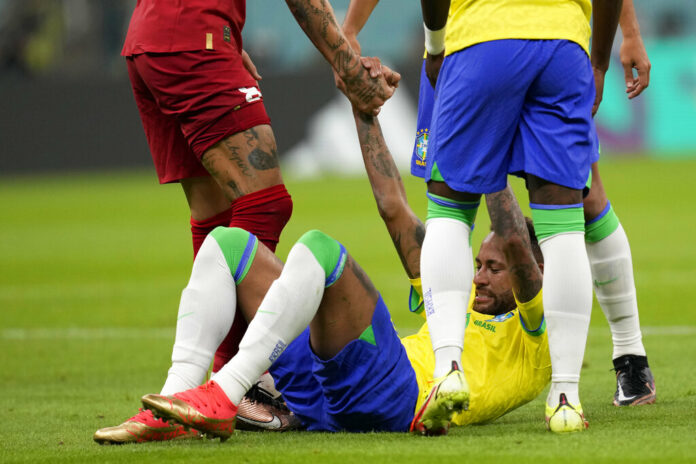
Brazil's Neymar is helped back on his feet during the World Cup group G soccer match between Brazil and Serbia, at the Lusail Stadium in Lusail, Qatar, Thursday, Nov. 24, 2022. Photo: Andre Penner / AP

LUSAIL, Qatar (AP) — With Neymar limping off the field with an ankle injury, Richarlison came through for the “Seleção.”

A spectacular acrobatic kick followed an easy tap-in from close range as Richarlison scored both goals in Brazil’s 2-0 victory over Serbia on Thursday at the World Cup.

After the match, the Tottenham striker learned of the extent of Neymar’s injury.

“The most important thing for us it to have him at 100% for the next match,” said Richarlison, whose first goal came after a buildup started by Neymar. “When I get to the hotel I’m going to go and see how he is doing.”

Brazil team doctor Rodrigo Lasmar said Neymar sprained his right ankle. He declined to speculate on whether he would be available to play in the team’s next match against Switzerland on Monday.

“We put ice on it while he was on the bench and then in physiotherapy,” Lasmar said. “There is no test scheduled for now but we will schedule it if needed. He will be under observation. We will know more tomorrow.”

Neymar was also injured at the 2014 World Cup. Playing at home in Brazil, his tournament ended with a back injury in the quarterfinals against Colombia when he had to be taken off the field on a stretcher. Brazil ended up losing to Germany 7-1 in the semifinals.

Neymar was fouled nine times in the match against Serbia, four more than any other player so far at this year’s World Cup. But while taking care of Neymar, the opposing defense couldn’t stop Richarlison.

He had his back to the goal when he used one touch to get the ball up in the air near the penalty spot, then spun around and leapt off the ground before knocking the ball into the net with his right foot in the 73rd minute.

“My childhood dream has come true,” said Richarlison, who is playing in his first World Cup. “We knew it was going to be difficult to get past them. I’m used to playing against defensive teams like this in England. I wanted to take advantage of the opportunities that I had and I did.”

Brazil had struggled to get past the Serbian defense until Richarlison scored from close range in the 62nd. Vinícius Júnior assisted on both goals.

Neymar, seeking his first major title with Brazil, stayed at 75 goals for the national team, two shy of Pelé’s scoring record.

He was tackled hard a few times and sprained his right ankle in the second half. He was crying on the bench after being substituted in the 79th and was limping as he left the stadium.

Brazil coach Tite started with an attack-minded squad that included four forwards — Neymar, Vinícius Júnior, Raphinha and Richarlison. Attacking midfielder Lucas Paquetá played alongside Casemiro, the lone defensive midfielder.

But Serbia had several players back and was able to keep Brazil from creating many significant opportunities. Neymar tried to control the pace but struggled to get free. He, Vinícius Júnior and Raphinha all squandered chances early on.

Brazil’s best chance before Richarlison’s opening goal had been a low long-range shot by Alex Sandro that hit the post in the 60th. Neymar had his best opportunities with a free kick in the 50th and a shot from near the penalty spot in the 55th.

Serbia had its own injury issues for the match.

“We have three key players who are injured — it’s too much for us,” Serbia coach Dragan Stojković said. “We are not Brazil with 200 million people. We are a very small country.”

The 30-year-old Neymar arrived to his third World Cup as Brazil’s main attraction. He helped the “Seleção” win the 2013 Confederations Cup and its first Olympic gold medal at the 2016 Rio de Janeiro Games, but has yet to win a major title with the national team.

Brazil, trying to win its first World Cup in two decades, is unbeaten in its last 20 opening games, with 17 victories. It has finished first in its group in the last 10 World Cups.

___

Story: Tales Azzoni.

Advertisement

Bombed, Not Beaten: Ukraine’s Capital Flips to Survival Mode

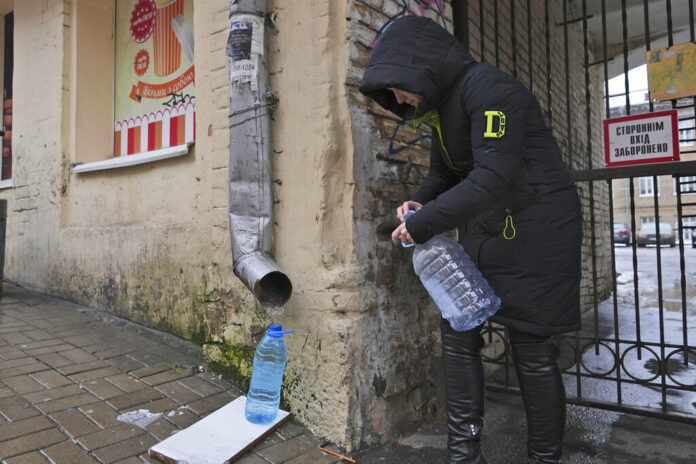
Kateryna Luchkina, a 31-year-old worker at Kyiv’s Department of Health, collects rainwater from a drainpipe in Kyiv, Ukraine, on Thursday. Nov. 24, 2022. Photo: John Leicester / AP

KYIV, Ukraine (AP) — Residents of Ukraine’s bombed capital clutched empty bottles in search of water and crowded into cafés for power and warmth Thursday, switching defiantly into survival mode after new Russian missile strikes a day earlier plunged the city and much of the country into the dark.

In scenes hard to believe in a sophisticated city of 3 million, some Kyiv residents resorted to collecting rainwater from drainpipes, as repair teams labored to reconnect supplies.

Friends and family members exchanged messages to find out who had electricity and water back. Some had one but not the other. The previous day’s aerial onslaught on Ukraine’s power grid left many with neither.

Cafés in Kyiv that by some small miracle had both quickly became oases of comfort on Thursday.

Oleksiy Rashchupkin, a 39-year-old investment banker, awoke to find that water had been reconnected to his third-floor flat but power had not. His freezer thawed in the blackout, leaving a puddle on his floor.

So he hopped into a cab and crossed the Dnieper River from left bank to right, to a café that he’d noticed had stayed open after previous Russian strikes. Sure enough, it was serving hot drinks, hot food and the music and Wi-Fi were on.

“I’m here because there is heating, coffee and light,” he said. “Here is life.”

Kyiv Mayor Vitali Klitschko said about 70% of the Ukrainian capital was still without power on Thursday morning.

As Kyiv and other cities picked themselves up, Kherson on Thursday came under its heaviest bombardment since Ukrainian forces recaptured the southern city two weeks ago. The barrage of missiles killed four people outside a coffee shop and a woman was also killed next to her house, witnesses said, speaking to Associated Press reporters.

In Kyiv, where cold rain fell on the remnants of previous snowfalls, the mood was grim but steely. The winter promises to be a long one. But Ukrainians say that if Russian President Vladimir Putin’s intention is to break them, he should think again.

“Nobody will compromise their will and principles just for electricity,” said Alina Dubeiko, 34. She, too, sought out the comfort of another, equally crowded, warm and lit café. Without electricity, heating and water at home, she was determined to keep up her work routine. Adapting to life shorn of its usual comforts, Dubeiko said she uses two glasses of water to wash, then catches her hair in a ponytail and is ready for her working day.

She said she’d rather be without power than live with the Russian invasion, which crossed the nine-month mark on Thursday.

“Without light or you? Without you,” she said, echoing remarks President Volodymyr Zelenskky made when Russia on Oct. 10 unleashed the first of what has now become a series of aerial attacks on key Ukrainian infrastructure.

Western leaders denounced the bombing campaign. “Strikes against civilian infrastructures are war crimes,” French President Emmanuel Macron tweeted.

Russian Defense Ministry spokesman Igor Konashenkov acknowledged Thursday that it targeted Ukrainian energy facilities. But he said they were linked to Ukraine’s military command and control system and that the aim was to disrupt flows of Ukrainian troops, weapons and ammunition to front lines. Authorities for Kyiv and the wider Kyiv region reported a total of 7 people killed and dozens of wounded.

Russian U.N. Ambassador Vassily Nebenzia said: “We are conducting strikes against infrastructure in response to the unbridled flow of weapons to Ukraine and the reckless appeals of Kyiv to defeat Russia.”

Kremlin spokesman Dmitry Peskov also sought to shift blame for civilian hardship on Ukraine’s government.

“Ukraine’s leadership has every opportunity to bring the situation back to normal, has every opportunity to resolve the situation in such a way as to meet the demands of the Russian side and, accordingly, end all possible suffering of the civilian population,” Peskov said.

In Kyiv, people lined up at public water points to fill plastic bottles. In a strange new war-time first for her, 31-year-old Health Department employee Kateryna Luchkina resorted to collecting rainwater from a drainpipe, so she could at least wash her hands at work, which had no water. She filled two plastic bottles, waiting patiently in the rain until they had water to the brim. A colleague followed behind her, doing the same.

“We Ukrainians are so resourceful, we will think of something. We do not lose our spirit,” Luchkina said. “We work, live in the rhythm of survival or something, as much as possible. We do not lose hope that everything will be fine.”

The city mayor said on Telegram that power engineers “are doing their best ” to restore electricity. Water repair teams were making progress, too. In the early afternoon, Klitschko announced that water supplies had been restored across the capital, with the caveat that “some consumers may still experience low water pressure.”

Power, heat and water were gradually coming back elsewhere, too. In Ukraine’s southeastern Dnipropetrovsk region, the governor announced that 3,000 miners trapped underground because of power blackouts had been rescued. Regional authorities posted messages on social media updating people on the progress of repairs but also saying they needed time.

Mindful of the hardships — both now and ahead, as winter progresses — authorities are opening thousands of so-called “points of invincibility” — heated and powered spaces offering hot meals, electricity and internet connections. More than 3,700 were open across the country of Thursday morning, said a senior official in the presidential office, Kyrylo Tymoshenko.

In Kherson, hospitals without power and water are also contending with the gruesome after-effects of intensifying Russian strikes. They hit residential and commercial buildings Thursday, setting some ablaze, blowing ash skyward and shattering glass across streets. Paramedics helped the injured.

Olena Zhura was carrying bread to her neighbors when a strike that destroyed half of her house wounded her husband, Victor. He writhed in pain as paramedics carried him away.

“I was shocked,” she said, welling with tears. “Then I heard (him) shouting: ‘Save me, save me.”

___

Story: John Leicester, Hanna Arhirova and Sam Mednick. Mednick reported from Kherson, Ukraine.

Advertisement

Hot News

LATEST NEWS

Bangkok
overcast clouds
33.8 ° C
34.4 °
32.2 °
65 %
3.4kmh
100 %
Sat
34 °
Sun
36 °
Mon
37 °
Tue
36 °
Wed
36 °