





























30.5 C
Bangkok
Wednesday, June 24, 2026
Home Blog Page 980

EU Leaders Agree to Ban 90% Of Russian Oil by Year-end

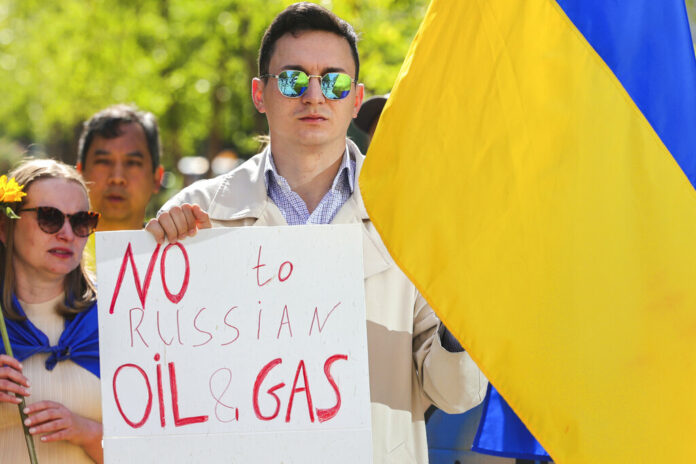
Ukrainian demonstrators demand an embargo on Russian oil during a protest in front of EU institutions prior to an extraordinary meeting of EU leaders to discuss Ukraine, energy and food security at the Europa building in Brussels, Monday, May 30, 2022. Photo: Olivier Matthys / AP

BRUSSELS (AP) — European Union leaders agreed Monday to embargo most Russian oil imports into the bloc by year-end as part of new sanctions on Moscow worked out at a summit focused on helping Ukraine with a long-delayed package of new financial support.

The embargo covers Russian oil brought in by sea, allowing a temporary exemption for imports delivered by pipeline, a move that was crucial to bring landlocked Hungary on board a decision that required consensus.

EU Council President Charles Michel said the agreement covers more than two-thirds of oil imports from Russia. Ursula Von der Leyen, the head of the EU’s executive branch, said the punitive move will “effectively cut around 90% of oil imports from Russia to the EU by the end of the year.”

Michel said leaders also agreed to provide Ukraine with a 9 billion-euro ($9.7 billion) tranche of assistance to support the war-torn country’s economy. It was unclear whether the money would come in grants or loans.

Mikhail Ulyanov, Russia’s permanent representative to international organizations in Vienna, responded to the EU’s decision on Twitter, saying: “As she rightly said yesterday, Russia will find other importers.”

The new package of sanctions will also include an asset freeze and travel ban on individuals, while Russia’s biggest bank, Sberbank, will be excluded from SWIFT, the major global system for financial transfers from which the EU previously banned several smaller Russian banks. Three big Russian state-owned broadcasters will be prevented from distributing their content in the EU.

“We want to stop Russia’s war machine,” Michel said, lauding what he called a “remarkable achievement.”

“More than ever it’s important to show that we are able to be strong, that we are able to be firm, that we are able to be tough,” he added.

Michel said the new sanctions, which needed the support of all 27 member countries, will be legally endorsed by Wednesday.

The EU had already imposed five previous rounds of sanctions on Russia over its war. It has targeted more than 1,000 people individually, including Russian President Vladimir Putin and top government officials as well as pro-Kremlin oligarchs, banks, the coal sector and more.

But the sixth package of measures announced May 4 had been held up by concerns over oil supplies.

The impasse embarrassed the bloc, which was forced to scale down its ambitions to break Hungary’s resistance. When European Commission President Ursula von der Leyen proposed the package, the initial aim was to phase out imports of crude oil within six months and refined products by the end of the year.

Both Michel and von der Leyen said leaders will soon return to the issue, seeking to guarantee that Russia’s pipeline oil exports to the EU are banned at a later date.

Hungarian Prime minister Viktor Orban had made clear he could support the new sanctions only if his country’s oil supply security was guaranteed. Hungary gets more than 60% of its oil from Russia and depends on crude that comes through the Soviet-era Druzhba pipeline.

Von der Leyen had played down the chances of a breakthrough at the summit. But leaders reached a compromise after Ukrainian President Volodymyr Zelenskyy urged them to end “internal arguments that only prompt Russia to put more and more pressure on the whole of Europe.”

The EU gets about 40% of its natural gas and 25% of its oil from Russia, and divisions over the issue exposed the limits of the 27-nation trading bloc’s ambitions.

In his 10-minute video address, Zelenskyy told leaders to end “internal arguments that only prompt Russia to put more and more pressure on the whole of Europe.”

He said the sanctions package must “be agreed on, it needs to be effective, including (on) oil,” so that Moscow “feels the price for what it is doing against Ukraine” and the rest of Europe. Only then, Zelenskyy said, will Russia be forced to “start seeking peace.”

It was not the first time he had demanded that the EU target Russia’s lucrative energy sector and deprive Moscow of billions of dollars each day in supply payments.

But Hungary led a group of EU countries worried over the impact of the oil ban on their economy, including Slovakia, the Czech Republic and Bulgaria. Hungary relies heavily on Russia for energy and can’t afford to turn off the pumps. In addition to its need for Russian oil, Hungary gets 85% of its natural gas from Russia.

Orban had been adamant on arriving at the summit in Brussels that a deal was not in sight, stressing that Hungary needed its energy supply secured.

Von der Leyen and Michel said the commitment by Germany and Poland to phase out Russian oil by the end of the year and to forgo oil from the northern part of the Druzhba pipeline will help cut 90% of Russian oil imports.

The issue of food security will be on the table Tuesday, with the leaders set to encourage their governments to speed up work on “solidarity lanes” to help Ukraine export grain and other produce.

___

Story: Samuel Petrequin and Lorne Cook. Karel Janicek contributed to this story from Prague.
Advertisement

Monkeypox Kills 9 in Congo; First Death in Nigeria in 2022

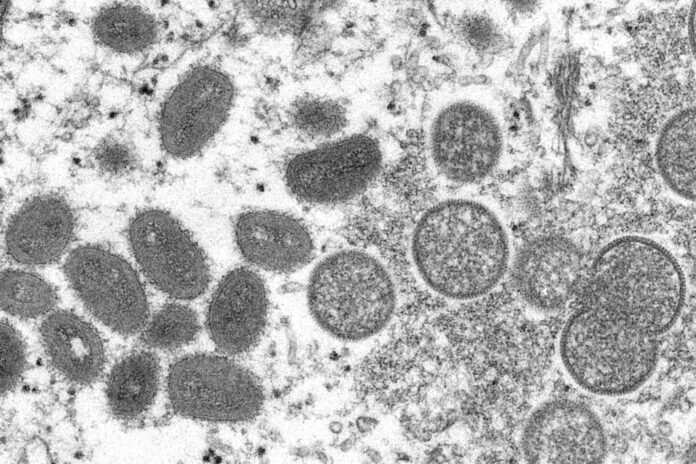
FILE - This 2003 electron microscope image made available by the Centers for Disease Control and Prevention shows mature, oval-shaped monkeypox virions, left, and spherical immature virions, right, obtained from a sample of human skin associated with the 2003 prairie dog outbreak. Photo: Cynthia S. Goldsmith, Russell Regner / CDC via AP File

ABUJA, Nigeria (AP) — Nine people have died of monkeypox in Congo in 2022 while Nigeria has recorded its first death from the disease this year, the countries’ health authorities said, even as at least 20 countries continue to grapple with sudden outbreaks not seen in years.

Dr. Aime Alongo, chief of the Sankuru health division in Congo, said Monday that 465 cases of the disease have been confirmed in the nation, making it one of the worst-hit in West and Central Africa, where the disease is endemic.

The persistence of the disease in Congo is due to the consumption of dead monkeys and rodents, Dr. Alongo said.

“The residents enter the forest, pick up the corpses of monkeys, bats and rodents which are the reservoirs of monkeypox,” the official added, urging those with monkeypox symptoms to visit a health center to isolate themselves.

Nigeria, meanwhile, recorded its first death from monkeypox this year in a patient with underlying medical conditions, the diseases control agency said Sunday.

The Nigeria Centre for Disease Control and Prevention announced that in 2022 it has confirmed 21 out of 66 suspected cases of the disease, which is usually endemic in Nigeria and other parts of West and Central Africa.

“The death was reported in a 40-year-old patient who had underlying co-morbidity and was on immunosuppressive medications,” the Nigeria CDC said.

Nigeria has not had an outbreak of monkeypox since September 2017 but it continues to report sporadic cases. At least 247 have been confirmed in 22 of its 36 states since then with 3.6% fatality rate, the disease control agency said.

A spike in monkeypox cases reported in Europe and the U.S. has generated concerns among those countries, many of whom have not recorded a single case of the disease in years. Over 250 cases of the disease have been reported in more than 20 countries not usually known to have outbreaks, the World Health Organization said.

Monkeypox has not previously triggered widespread outbreaks beyond Africa, where it is endemic.

One of the new cases in the U.K. was recorded in a man days after his arrival from Nigeria on May 4. Nigeria has recorded six confirmed cases of the disease the British citizen left the country.

Dr. Ifedayo Adetifa, head of the country’s Center for Disease Control, told The Associated Press nothing shows that the British citizen contracted the disease in Nigeria and the country remains prepared to respond to an outbreak of monkeypox.

“The biggest challenge that you have with a disease such as monkeypox is that it is uncommon and the perceived risk by the population about how dangerous this condition is has been very low … that is why … we have conducted awareness training and advocacy training to increase the level of awareness of health care workers,” Adetifa said.

___

Story: Chinedu Asadu and Jean-yves Kamale. Kamale reported from Kinshasa, Congo.

Advertisement

1B Meth Pills: East, SE Asia Drug Industry Hits Ominous Peak

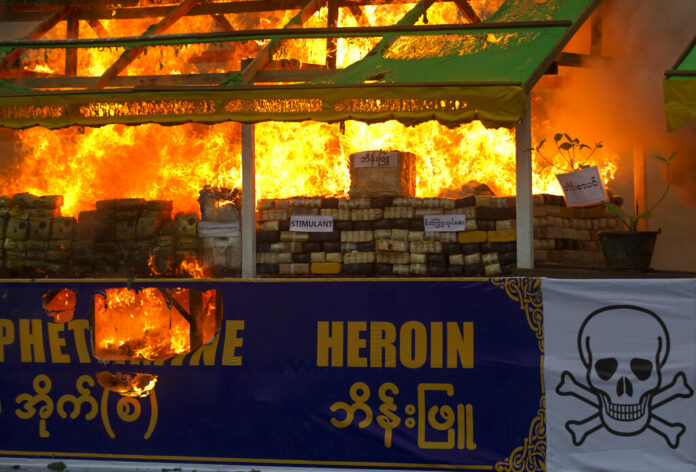
FILE - Smokes and flames billow from burning narcotic drugs during a destruction ceremony of seized narcotic drugs in outskirts of Yangon, Myanmar on June 26, 2018. Photo: Thein Zaw / AP File

BANGKOK (AP) — The number of methamphetamine tablets seized in East and Southeast Asia exceeded a billion last year for the first time, highlighting the scale of illegal drug production and trafficking in the region and the challenges of fighting it, the U.N. said Monday.

The 1.008 billion tablets was part of a regionwide haul of almost 172 tons of methamphetamine in all forms and was seven times higher than the amount seized 10 years earlier, the U.N. Office on Drugs and Crime said in a report.

The drugs are largely consumed in Southeast Asia but also exported to New Zealand and Australia, Hong Kong, Korea and Japan in East Asia, and increasingly to South Asia.

“Production and trafficking of methamphetamine jumped yet again as supply became super concentrated in the Mekong (River region) and in particular Thailand, Laos and Myanmar,” Jeremy Douglas, Southeast Asia regional representative for the U.N. agency, told The Associated Press in an email interview.

The increased production makes the drug cheaper and more accessible, creating greater risk to people and their communities, the report said.

Methamphetamine is easy to make and has supplanted opium and its derivative heroin to become the dominant illegal drug in Southeast Asia for both use and export.

The Golden Triangle area, where the borders of Myanmar, Laos and Thailand meet, was historically a major production area for opium and hosted many of the labs that converted it to heroin. Decades of political instability have made Myanmar’s frontier regions largely lawless, to be exploited by drug producers and traffickers.

Given the problem of limited governance and low attention to the issue, the UN. agency said organized crime syndicates have the means to continue to produce more meth and to sell it to a growing, young population with increased spending power.

The political landscape also has helped traffickers.

In Myanmar, the military seized power from an elected government last year and is now engaged in an armed struggle against foes of military rule. Drug production in Myanmar is often associated with armed ethnic minority groups that sometimes battle the government and each other.

“Every group denies involvement in drug production and trafficking and point at other groups as responsible, but the drug economy is arguably the largest part of the economy in most or many parts of Shan and border areas of Myanmar and there is plenty of intel connecting groups to labs and shipments,” Douglas said.

The report also called Laos one of the countries most impacted by methamphetamine trafficked out of Myanmar. One of Asia’s biggest-ever drug busts was made in Laos last October, with police there seizing more than 55.6 million methamphetamine pills in a single raid. They also seized 65 bags of crystal methamphetamine, also known as ice, state media reported.

The U.N. agency said it was concerned that criminal enterprises were targeting Cambodia as a drug production site. One clandestine laboratory dismantled there last year was an industrial-scale facility set up to produce ketamine and potentially other drugs, the report said.

Ketamine is used legitimately as an anesthetic, but its non-medical use and clandestine manufacture was concerning to the U.N. agency.

Many nations tried to halt meth production by choking supplies of precursors, usually ephedrine and pseudoephedrine, best known for being used in decongestant medicines. But the U.N. agency said some methamphetamine producers have clearly learned to make these precursors from non-controlled substances that can be freely and legally traded.

___

Story: Grant Peck.

Advertisement

Ukraine, Russia Battle in the East as Zelenskyy Visits Front

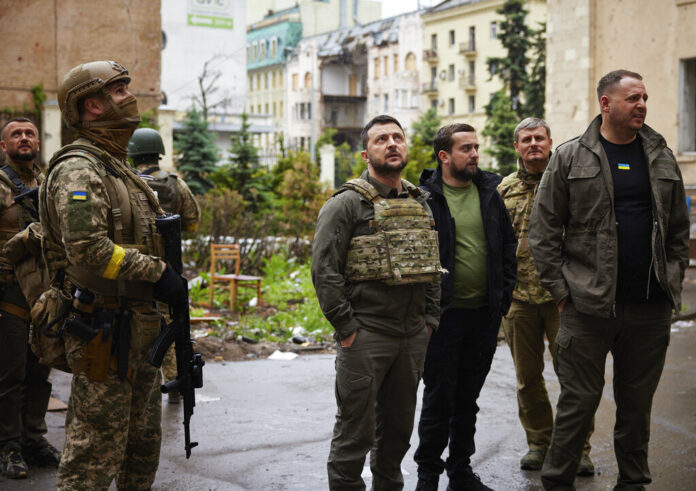
In this photo provided by the Ukrainian Presidential Press Office on Sunday, May 29, 2022, Ukrainian President Volodymyr Zelenskyy, centre, inspects damaged buildings, as he visits the war-hit Kharkiv region. Photo: Ukrainian Presidential Press Office via AP

POKROVSK, Ukraine (AP) — Russian and Ukrainian troops traded blows in fierce close-quarter combat Sunday in an eastern Ukrainian city as Moscow’s soldiers, supported by intense shelling, attempted to gain a strategic foothold to conquer the region. Ukraine’s leader also made a rare frontline visit to Kharkiv, the country’s second-largest city, to assess the strength of the national defense.

In the east, Russian forces stormed Sievierodonetsk after trying unsuccessfully to encircle the strategic city, Ukrainian officials said. Ukrainian President Volodymyr Zelenskyy described the situation there as “indescribably difficult,” with a relentless Russian artillery barrage destroying critical infrastructure and damaging 90% of the buildings.

“Capturing Sievierodonetsk is a principal task for the occupation force,” Zelensky said, adding that the Russians don’t care about casualties.

The city’s mayor said the fighting had knocked out power and cellphone service and forced a humanitarian relief center to shut down because of the dangers.

The deteriorating conditions raised fears that Sieverodonetsk could become the next Mariupol, a city on the Sea of Azov that spent nearly three months under Russian siege before the last Ukrainian fighters surrendered.

Sievierodonetsk, located 143 kilometers (89 miles) south of the Russian border, has emerged in recent days as the epicenter of Moscow’s quest to capture all of Ukraine’s eastern industrial Donbas region. Russia also stepped up its efforts to capture the nearby city of Lysychansk, where civilians rushed to escape persistent shelling.

The two eastern cities span the strategically important Siverskiy Donetsk River. They are the last major areas under Ukrainian control in Luhansk province, which makes up the Donbas together with the adjacent Donetsk region.

Zelenskyy, meanwhile, visited soldiers in Kharkiv, where Ukrainian fighters pushed Russian forces back from nearby positions several weeks ago.

“I feel boundless pride in our defenders. Every day, risking their lives, they fight for Ukraine’s freedom,” Zelenskyy wrote on the Telegram messaging app after the visit.

Russia has kept up its bombardment of the northeastern city from afar, and explosions could be heard shortly after Zelenskyy’s visit. Shelling and airstrikes have destroyed more than 2,000 apartment buildings in the city since Russia invaded Ukraine on Feb. 24, according to the regional governor, Oleh Syniehubov.

In a video address later Sunday, Zelenskyy praised Kharkiv regional officials but said he had fired the regional head of the country’s top security agency, the SBU, for his poor performance. In the wider Kharkiv region, Russian troops still held about one-third of the territory, Zelenskyy said.

After failing to seize Kyiv, the capital of Ukraine, Russia is focused on occupying parts of Donbas not already controlled by pro-Moscow separatists.

Russian Foreign Minister Sergey Lavrov told French TF1 television Sunday that Moscow’s “unconditional priority is the liberation of the Donetsk and Luhansk regions,” adding that Russia sees them as “independent states.”

He also suggested other regions of Ukraine should be able to establish close ties with Russia.

In Luhansk, constant Russian shelling has created what provincial governor Serhiy Haidai called a “severe situation.”

“There are fatalities and wounded people,” he wrote on Telegram. On Saturday, he said, one civilian died and four were injured after a Russian shell hit a high-rise apartment building.

But some Luhansk supply and evacuation routes functioned Sunday, he said. He claimed the Russians had retreated “with losses” around a village near Sievierodonetsk but conducted airstrikes on another nearby river village.

Civilians who reached the eastern city of Pokrovsk, 130 kilometers (80 miles) south of Lysychansk, said they held out as long as they could before fleeing the Russian advance.

Yana Skakova choked back tears as she described leaving with her 18-month and 4-year-old sons while her husband stayed behind to take care of their house and animals. The family was among 18 people who lived in a basement for the past 2 1/2 months until police told them Friday it was time to evacuate.

“None of us wanted to leave our native city,” she said. “But for the sake of these small children, we decided to leave.”

Oksana, 74, who was too afraid to give her surname, was evacuated from Lysychansk by a team of foreign volunteers along with her 86-year-old husband.

“I’m going somewhere, not knowing where,” she wept. “Now I am a beggar without happiness. Now I have to ask for charity. It would be better to kill me.”

Sievierodonetsk Mayor Oleksandr Striuk said there was fighting at the city’s bus station on Saturday. Residents remaining in the city, which had a prewar population of around 100,000, risked exposure to shelling just to get water from a half-dozen wells, and there was no electricity or cellphone service. Striuk estimates that 1,500 civilians in the city have died since the war began, from Russian attacks as well as from a lack of medicine or treatment.

The Institute for the Study of War, a think tank based in Washington, questioned the Kremlin’s strategy of assembling a huge military effort to take Sieverodonetsk, saying it was proving costly for Russia and would bring few returns.

“When the battle of Sieverodonetsk ends, regardless of which side holds the city, the Russian offensive at the operational and strategic levels will likely have culminated, giving Ukraine the chance to restart its operational-level counteroffensives to push Russian forces back,” the institute said late Saturday.

In Mariupol on Sunday, an aide to its Ukrainian mayor alleged that after Russia’s forces gained complete control of the city, they piled the bodies of dead people inside a supermarket. The aide, Petro Andryushchenko, posted a photo on the Telegram messaging app of what he described as a “corpse dump” in the occupied city. It showed bodies stacked alongside closed supermarket counters.

“Here, the Russians bring the bodies of the dead, which were washed out of their graves during attempts to restore the water supply, and partially exhumed. They just dump them like garbage,” he wrote.

It was not immediately possible to verify his claim.

Regions across Ukraine were pummeled overnight by renewed Russian airstrikes. On the ground in the eastern Donetsk region, fighters battled back and forth for control of villages and cities.

The Ukrainian army reported heavy fighting around Donetsk, the provincial capital, as well as Lyman to the north, a small city that serves as a key rail hub in the Donetsk region. Moscow claimed Saturday to have taken Lyman, but Ukrainian authorities said their fighters remained engaged in combat in parts of the city.

“The enemy is reinforcing its units,” the Ukrainian armed forces’ General Staff said. “It is trying to gain a foothold in the area.”

___

Story: Elena Becatoros and Ricardo Mazalan. Mazalan reported from Kyiv. Andrea Rosa in Kharkiv, Ukraine, Yuras Karmanau in Lviv, Ukraine, and AP journalists around the world contributed.

Advertisement

Opinion: Chadchart’s Victory Gives Hope to Not Just Bangkok But Thai Democracy

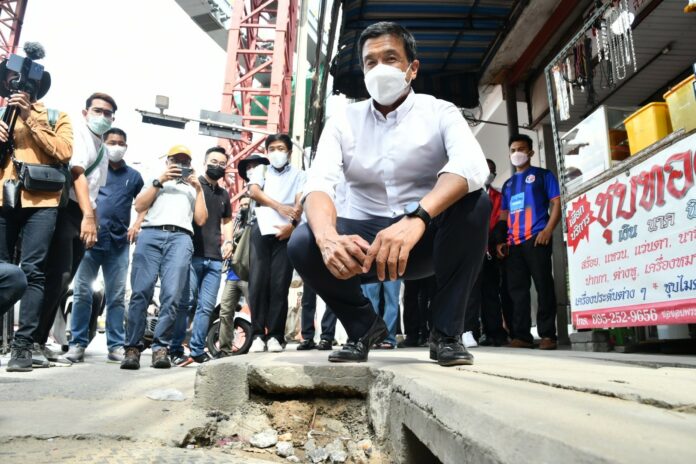
Bangkok Governor-elect Chadchart Sittipunt inspects damaged pavement at Bang Kapi's Lam Sali Intersection on May 25, 2022.

Eight years of pent-up aspiration for true democracy turned into Chadchart Sittipunt mania after the former Transport Minister was elected the new Bangkok governor last Sunday.

People, particularly the 1.3 million Bangkokians who voted for Chadchart, voted for change, a clear snub to his poor-performing rival, former junta-appointed Bangkok governor Asawin Kwanmuang who received only 204,089 votes and finished at fifth place.

While it is not Chadchart or the voters’ fault, the landslide victory also beckoned the conservative pro-junta camp to reconsider yet another military coup, particularly if it looks imminent that the national elections will go the way of the local Bangkok elections.

If Chadchart’s victory was not painful enough, the fact that the ruling Phalang Pracharath Party managed to gain only two out of 50 city council member seats speaks volume as to how Bangkokians have given thumbs down to Prime Minister Gen. Prayut Chan-o-cha, the man who staged the 2014 military coup eight years ago. (Nearly two third of the council seats went to the two opposition parties, Pheu Thai and Move Forward, respectively.)

It will be crucial for Chadchart to demonstrate that he can work with others across the aisle, heal the political divide which is toxic, in Bangkok and beyond. The hopes pinned on him thus reverberate far beyond local Bangkok politics and administration. Those who voted for him feel that now an elected politician, albeit local but very high profile, can put Thai politics on track toward a path less toxic and divisive with this huge mandate.

For Bangkokians who did not vote for Chadchart, your disappointment is understandable. The people have spoken, however, and Bangkok voters have overwhelmingly chosen Chadchart. The fact that his closest rival, Democrat Party candidate Suchatchavee Suwansawas received only 240,884, or less than a fifth of Chadchart’s votes, means we all should give Chadchart a chance to prove himself.

Voters who did not choose Chadchart will have to be a good sport, open minded, and give the new governor a chance to solve the numerous problems and make the capital city a better place for all. This is not a time to start undermining Chadchart, who has yet to even be officially certified by the Election Commission. (The commission said the process will take at least 30 days.)

This is a time for those who did not vote for Chadchart to give not just Bangkok, but national politics a chance – a chance to move away from toxic politics which culminated in the 2014 coup and has since paralyzed any meaningful cooperation among those of different political poles and deepened political hatred for a decade if not more.

Give Chadchart a year, then assess and judge him accordingly, give him the cooperation – for Bangkok is bigger than each of us and deserved to become a far greener, safer, and livable metropolis for all, rich and poor.

As for Chadchart, he must be acutely aware that there is so many expectations on his shoulders. With so many promises and expectations, Chadchart will have to prove that he is not just another PR man who delivered empty promises, or a proxy of the Pheu Thai Party or Thaksin Shinawatra as branded by his opponents.

He must introduce a new kind of politics not based on nepotism, but cooperation with all sides. (Asawin, appointed his son as City Hall spokesman, BTW.) On Friday, Chadchart met with the newly elected Democrat Party city council member for Samphanthawong district and that was a good sign.

A success by Chadchart in the months and years ahead will give hope to not just Bangkok but Thailand as a whole. If Chadchart fails in the months ahead to make Bangkok better and break the political divide, Bangkok and Thailand will sink even deeper into despair that democracy cannot deliver – at a rate quicker than the rate of land subsidence that Bangkok is experiencing.

Advertisement

Invest Safely in the S&P 500 

Invest in the S&P 500

Choosing a safe investment can be daunting when you’re new to investing. Everyone wants to have a share of Apple Computers or Disney, but owning shares in these companies can seem like an unreachable goal for a beginning investor with little investment capital. 

Still, there is a way you can own a piece of these blue-chip companies and a lot more. Simply invest in the S&P 500, and you’ll have a safe and solid investment that can serve you well for decades. 

The S&P 500 represent roughly 500 or so blue-chip companies that Standard & Poor tracks and invests in. This investment is then sold to smaller investors in smaller units. 

To reap the benefits of an investment in the S&P 500, you’ll have to be patient. The safety and security of the investment are due to the proven profitability of the companies you’ll own a piece of. And these companies are profitable partially because of their stability and longevity. They’ve attracted investors because of these qualities, and the investments have allowed them to grow and expand. 

Safe Investment in an Index Fund

By investing in the S&P 500, you’re investing in an index fund. An index fund has become one of the most popular ways to invest because you’re able to diversify your funds across a wide variety of industries by simply purchasing a share. 

A share in the S&P 500 or most index funds represents tiny slices of the most profitable blue-chip companies in the world that you’ve purchased with a single transaction. The sheer number of the companies represented in a share guarantee the safety of the investment. Even if one of these companies has a catastrophic year and goes bankrupt, the other hundreds of other companies that remain profitable offset the loss. 

By selecting the companies that make up the index fund across so many sectors and industries, S&P further guarantees the safety of the investment. 

Passive Investment

One of the reasons why the S&P 500 index fund is such a good investment for a beginner is because of its passive nature. Your investment doesn’t have to be constantly monitored and adjusted to deliver returns. Beginning investors are urged to use a simple buy-and-hold strategy to ensure they see a return on their investment.  

By being patient and taking a hands-off approach to your S&P 500 investment, you allow the power of compound interest to work its magic. 

However, a hands-off approach doesn’t mean ignoring your investment entirely. By investing in the S&P 500, you now have access to a compound interest mechanism backed by some of the world’s most profitable companies. You should continue to add to your investment as often as you can to reap all the benefits of compound interest.

Learn more about the benefits of investing in the S&P 500 by getting in touch with Investors Assurance SPC. We offer 10, 15, and 20-year regular contribution plans to the S&P 500 that provide safe and secure investments.

Advertisement

Mikimoto welcomes Pearl Month with the unique and flawless “Pearl Month” collection

Pearl is the jewel of the sea and gemstone of June, the birth month of Mikimoto, Japan’s high-end pearl jewelry brand. Mikimoto welcomes Pearl Month in June with the Pearl Month collection, constructed with precious gifts from nature, unparallel design and haute craftsmanship of Mikimoto. 

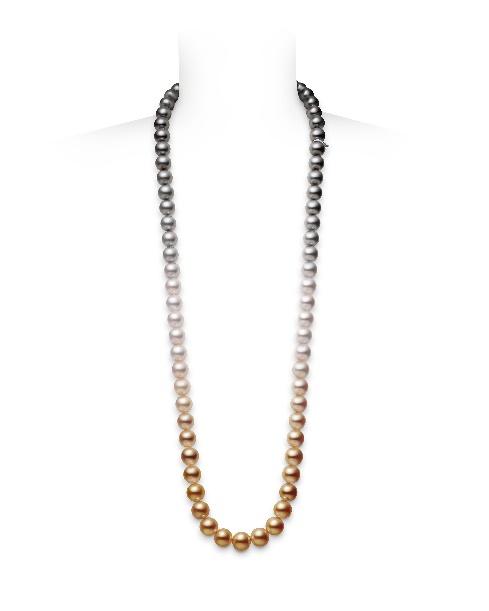
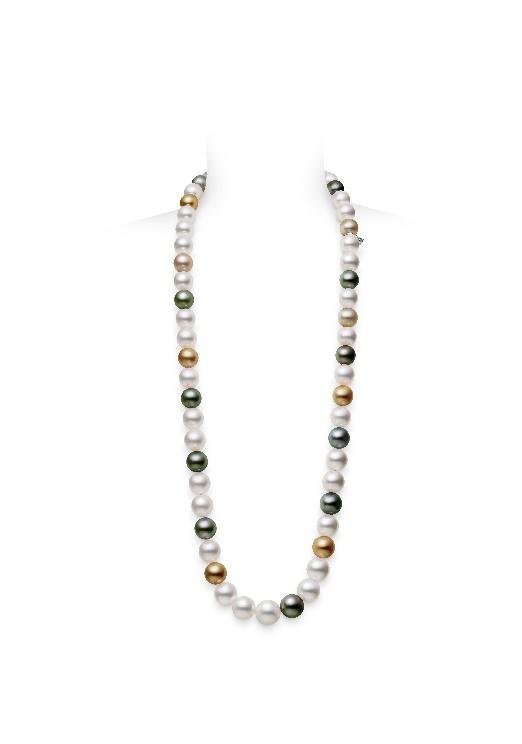
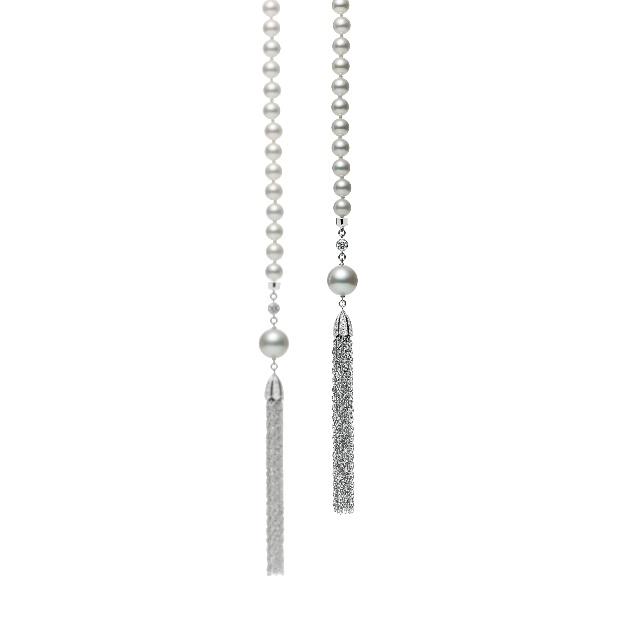
Mikimoto’s flawless beauty is bestowed upon every woman on every occasion. Each item in Mikimoto’s Pearl Month Collection is on par with highest standards and presented with timeless elegance. The collection comprises Golden South Sea, Black South Sea and White South Sea Pearl Necklace fuses pearls in three hues in intricate color play, a truly magnificent masterpiece that matches with every style. 

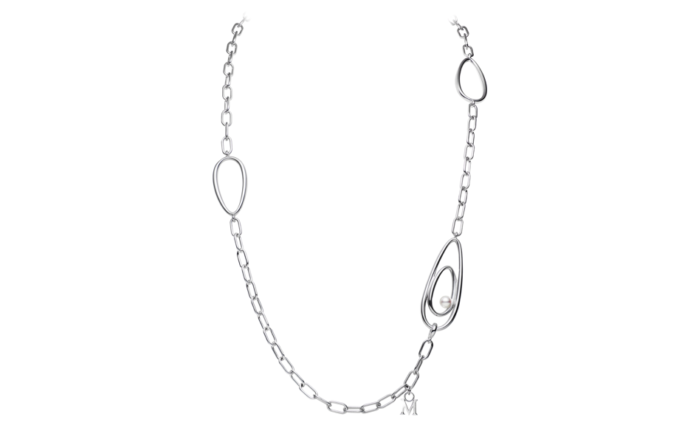
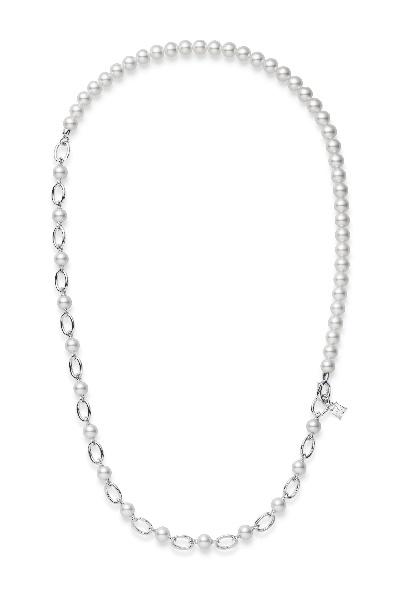
Akoya Pearl Necklace M Code Liberté that celebrates “liberty” where wearer can appreciate its unique design and enjoy wearing it in various arrangements and lengths.  Adding luxurious flair to the necklace is Akoya Pearl Pendant shaped like a moon dew whose soft form perfectly enhances the mysterious beauty of white pearl. 

image4 11

image3 17

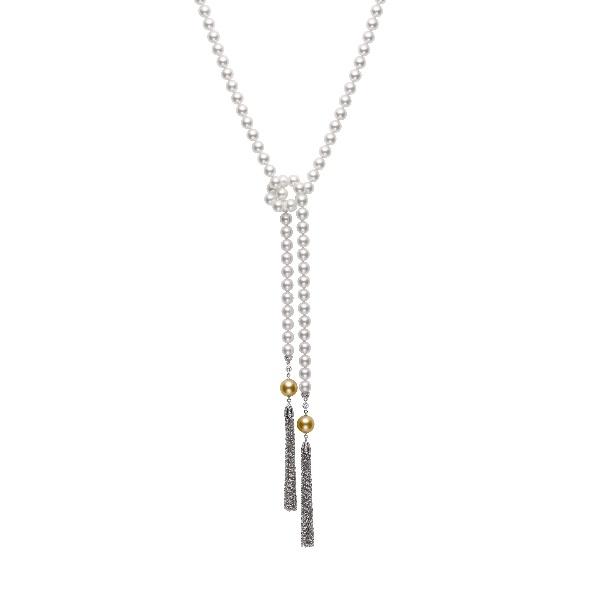
Mikimoto’s timeless aesthetic does not only charm ladies around the world, but its boundless design is also marvelous in its own right and comes second to none. Akoya Pearl Necklace with Diamond, Akoya Pearl and Golden South Sea Pearl Necklace with Diamond, and Akoya Pearl and White South Sea Pearl Necklace with Diamond are designed for multiple wearing styles and arrangements. The skipping rope is hookless, allowing for fun and versatile wear with tying method or shortener to create various different looks. 

To celebrate the Pearl Month, Mikimoto also presents Ginza Selection with matching sets of lustrous, round pearl necklace and earrings, presented in luxe red box for any special occasion.

Experience the pure beauty of pearl, the only gemstone in the world created by living creature, and meticulous craftsmanship with Pearl Month collection from Mikimoto at Boutique Mikimoto, Level M of Siam Paragon. For more information, call 0-2129-4444. 

image6 8

image5 9

image1 21

Advertisement

Siam Piwat and Dhipaya Insurance launch Thailand’s first smart insurance solutions “ InsurVerse Capsule BY DHIPAYA INSURANCE ,”for leveraged customer experience and optimized privileged offers  

Siam Piwat Co., Ltd., a leading property and retail developer – the owner of ONESIAM global retail destinations including Siam Paragon, Siam Center, Siam Discovery and a joint venture partner of ICONSIAM and Siam Premium Outlets Bangkok joins forces with insurance industry leader Dhipaya Insurance Public Company Limited towards a leveraged business ecosystem and shared values, fortifying Siam Piwat’s ‘Collaboration to Win’ business strategy.  The partnership also delivers integrated customer experience and provides easy and convenient access to insurance services for shopping center visitors and ONESIAM SuperApp users. A broad ranges of comprehensive insurance offerings are now accessible via Thailand’s first smart insurance solutions InsurVerse Capsule by DHIPAYA INSURANCE,  at ONESIAM shopping centers and ICONSAIM.

image3 16

Dr. Somporn Suebthawilkul, Chief Executive Officer of Dhipaya Group Holdings Public Co, Ltd and Managing Director of Dhipaya Insurance Public Co, Ltd said “Dhipaya Insurance is introducing innovative solutions that is conveniently accessible as well as services and privileges that go beyond just insurance products. We have continuously developed new partnerships with various industries to optimize integrated benefits for our customer.   

The latest Thailand’s first “InsurVerse Capsule BY DHIPAYA INSURANCE” is a smart solutions that offers a new form of customer experience and service. The well-designed kiosks are home to extensive choices of products and services, not only insurance but also lifestyle and entertainment options. Shoppers can browse trough varieties of insurance packages, recheck their existing policies and benefits, file a claim, as well as find a network of car repair garages and hospitals. The new solutions also provide convenient VDO Conference service through the camera installed in the TIP Kiosk for a real-time interaction with Dhipaya Insurance customer service staff for more information and consultation. Additionally, customers can also redeem their Tip Coin for wide selections of benefits and rewards and enjoy photo machine gimmick to get instant Digital Photos taken at the kiosk.

image2 15

TIP Kiosk now welcome shoppers to the new customer experience across 8 locations across Siam Paragon, Siam Center and ICONSIAM.

Dhipaya Insurance and Siam Piwat have also curated more interconnected campaigns in ONESIAM SuperApp for the maximized benefits of customers from both Dhipaya Insurance, ONESIAM and ICONSIAM.

Mrs Chadatip Chutrakul, CEO of Siam Piwat Co., Ltd. said “Siam Piwat’s has continuously leveraged our ‘Collaboration to Win’ strategy through multi-dimensional amplification of interconnected business ecosystem with our business partners. Our key focus is to deliver new customer experiences to fulfill ONESIAM and ICONSIAM customer needs, value and lifestyle. Today, customers prefer convenience and 24/7 access to their desired products and services. The partnership between Siam Piwat and Insurance industry leader Dhipaya Insurance is developed based on the comprehensive understanding of the changing lifestyle and behavior that shows an increasing focus and growing demand for safety and wellbeing, that corelated with an increasing spending on insurance to cover risk management.  These flourishing demands have developed an exponential growth for    the insurance industry. Siam Piwat has envisioned this growth and formed this integrated partnership to engage with our target customers and to offer them new customer experiences. This collaboration is also a great opportunities for  expanding and pooling our customer bases. 

The limitless potential of both industry leaders – Siam Piwat and Dhipaya Insurance will reinforce Siam Piwat’s ecosystem that has been developed together with various business partners. This collaboration crates shared values, fortifies the ecosystem, provides limitless opportunities, all towards the ultimate goal – optimized customer benefits.  

Advertisement

CP Foods unveils five food trends of the next decade at Thaifex-Anuga World of Food Asia 2022

Charoen Pokphand Foods Public Company Limited (CP Foods) has unveiled the new food trend of the next decade at Thailand’s top food exhibition, THAIFEX-ANUGA ASIA 2022. The event offers hybrid experience, showcasing the innovative products as both On Ground Trade Show and Virtual Trade Show from today until 28th May 2022.

image5 8

Anat Julintron, Executive VP – International Trade & Business Development, said that, CP Foods, as a Food Tech Company, is showing the products under “FOOD FOR THE NEXT DECADE” . The company and its state-of-the-art research and development facilities, has developed the food innovations with the ultimate goal to feed ten billion consumers with safe, nutritious and sustainable foods by 2050.

image4 10

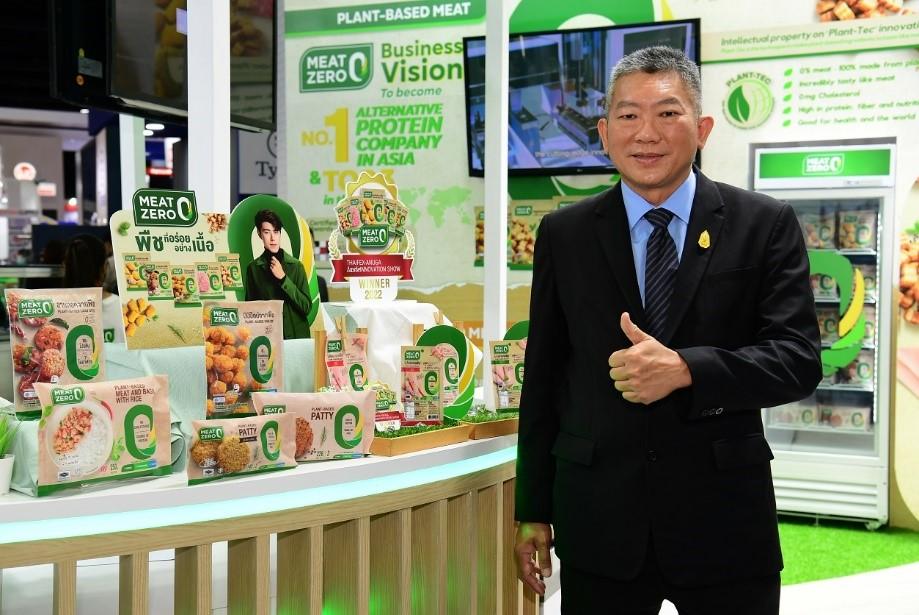
Mr, Anat said that CP Foods booth are separated into five sectors, showing the five future food trends for the next decade.  The first zone is for plant-based meat, “Meat Zero”, healthy and sustainable plant-based products. The second zone will exhibit fresh meat products with high food safety and high nutritional values, highlighting Benja Chicken and Cheeva Pork, award-winning U-FARM’s products from the superfood-fed animals raised with high animal welfare standards, making the best quality meats that are antibiotics-free and having high nutritional values. Moreover, “CP SELECTION” brand, high quality products from animals fed with probiotic will be included in this zone.   

image7 4

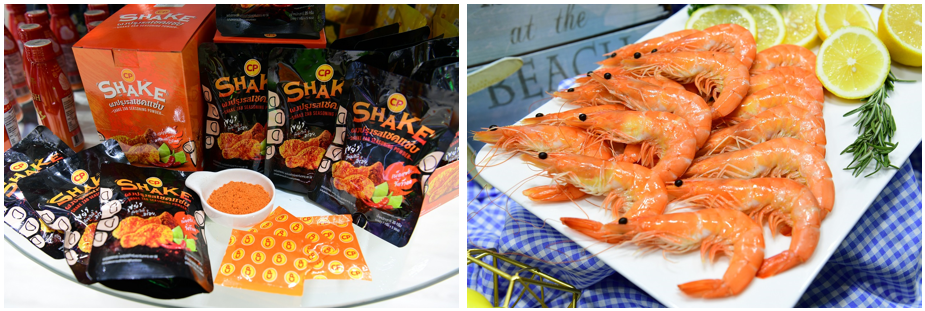
The third area displays ready-to-eat meals which showcases variety of delicious frozen menus, including chicken products, shrimp wonton, spaghetti, healthy high-fiber, low-calorie menus etc., The fourth part of exhibition displays healthy drinks brand INNOWENESS and Jelly BlackBit, a jelly mixed with herbs, white galingale, will be debuted at the event. The last zone is Cooking Helper products, such as soups, sauces, seasonings to help make cooking at home much easier.

image6 1

CP Foods also organizes daily cooking show from top chefs with live broadcast via its official Facebook Fan Page. Moreover, the company has set up virtual booth that can be register via https://cpfvirtualexpo.com/ 

image2 14

In addition to the hybrid food exhibition, CP Foods is Meat Zero is also among THAIFEX-ANUGA Taste Innovation Show 2022 winner. Mr. Anat said “Plant-based Meat Zero is the food of the future. The alternative meat that are as delicious as real meat. This innovative product serves the growing demands of vegan and flexitarian consumers in a variety of choices,” he said.

Mr. Anat added that Meat Zero is the best-selling plant-based meat brand in Thailand. Outside of its home country,  The product is also growing popular abroad, resulting in Meat Zero being chosen as the best food innovation of this event from more than 500 entries. Aside winning THAIFEX-ANUGA Taste Innovation Show 2022, it also won BEST PLANT-BASED BRANDING from Root, the Future Plant-Based Food Awards 2021 and The Asian Export Awards 2021 from Manufacturing Asia’s The Asian Export Awards 2021.

image1 19

Thaifex-Anuga World of Food Asia 2022 will be held between 24 and 28 May 2022 from 10.00-18.00 hrs. CP Foods pavilion will be located at the booth number U01 and U05 in the Challenger Hall 2, IMPACT Muang Thong Thani, Bangkok.

Advertisement

States Divided on Gun Controls, Even as Mass Shootings Rise

People hold signs during a protest at the Capitol in Austin, Texas, on Wednesday May 25, 2022, after a mass shooting at an elementary school in Uvalde. Photo: Jay Janner / Austin American-Statesman via AP

OLYMPIA, Wash. (AP) — Washington Gov. Jay Inslee was quick to react to this week’s carnage at a Texas elementary school, sending a tweet listing the gun control measures the Democratic-controlled state has taken. He finished with: “Your turn Congress.”

But gun control measures are likely going nowhere in Congress, and they also have become increasingly scarce in most states. Aside from several Democratic-controlled states, the majority have taken no action on gun control in recent years or have moved aggressively to expand gun rights.

That’s because they are either controlled politically by Republicans who oppose gun restrictions or are politically divided, leading to stalemate.

“Here I am in a position where I can do something, I can introduce legislation, and yet to know that it almost certainly is not going to go anywhere is a feeling of helplessness,” said state Sen. Greg Leding, a Democrat in the GOP-controlled Arkansas Legislature. He has pushed unsuccessfully for red flag laws that would allow authorities to remove firearms from those determined to be a danger to themselves or others.

After Tuesday’s massacre at Robb Elementary School in Uvalde, Texas, that left 19 students and two teachers dead, Democratic governors and lawmakers across the country issued impassioned pleas for Congress and their own legislatures to pass gun restrictions. Republicans have mostly called for more efforts to address mental health and to shore up protections at schools, such as adding security guards.

Among them is Texas Gov. Greg Abbott, who has repeatedly talked about mental health struggles among young people and said tougher gun laws in places like New York and California are ineffective. In Tennessee, GOP Rep. Jeremy Faison tweeted that the state needs to have security officers “in all of our schools,” but stopped short of promising to introduce legislation during next year’s legislative session: “Evil exists and we must protect the innocent from it,” Faison said.

Wisconsin Gov. Tony Evers has repeatedly clashed with the GOP-controlled Legislature over gun laws. He has called for passage of universal background checks and “red flag” laws, only to be ignored by Republicans. Earlier this year, the Democrat vetoed a Republican bill that would have allowed holders of concealed carry permits to have firearms in vehicles on school grounds and in churches located on the grounds of a private school.

“We cannot accept that gun violence just happens,” Evers said in a tweet. “We cannot accept that kids might go to school and never come home. We cannot accept the outright refusal of elected officials to act.”

On Wednesday, a day after the Texas shooting, legislative Democrats asked that the Wisconsin gun safety bills be taken up again, apparently to no avail. Republican Senate Majority Leader Devin LeMahieu and Assembly Speaker Robin Vos did not return messages seeking their response.

In Pennsylvania, an effort by Democratic lawmakers Wednesday in the GOP-controlled Legislature to ban owning, selling or making high-capacity, semi-automatic firearms failed, as House Republicans displayed their firm opposition to gun restrictions. The GOP-majority Legislature has rejected appeals by Democratic governors over the past two decades to tighten gun control laws, including taking steps such as expanding background checks or limiting the number of handgun purchases one person can make in a month.

The situation is similar in Michigan, which has a Democratic governor and Republican-controlled Legislature. On Wednesday, Democrats in the state Senate were thwarted in their efforts to advance a group of bills that would require gun owners to lock up their firearms and keep them away from minors.

“Every day we don’t take action, we are choosing guns over children,” said Democratic Sen. Rosemary Bayer, whose district includes a high school where a teen was charged in a shooting that killed four in November and whose parents are charged with involuntary manslaughter, accused of failing to lock up their gun. “Enough is enough. No more prayers, no more thoughts, no more inaction.”

Republican state Sen. Ken Horn responded by urging discussion about the other potential causes of gun violence.

“I would just point out that there are political solutions, but there are just as many spiritual solutions,” he said. “We don’t know what’s really happening in this world, what’s happening in this country, what’s happening to young men.”

Florida stands out as a Republican-controlled state that took action. The 2018 shooting at a high school in Parkland that left 14 students and three staff members dead prompted lawmakers there to pass a law with a red flag provision that lets law enforcement officers petition a court to have guns confiscated from a person considered a threat.

Democrats now want that expanded to allow family members or roommates to make the same request of the courts, but there has been little appetite among Republicans to amend the law. Instead, Republican Gov. Ron DeSantis said he wants lawmakers to allow people to carry handguns without a permit. The state currently requires a concealed weapons license.

While Republicans have supported red flag laws in some other states, most legislative action around gun control in recent years has been in states led by Democrats.

In Washington state, the governor earlier this year signed a package of bills related to firearm magazine limits, ghost guns and adding more locations where guns are prohibited, including ballot counting sites.

In California on Wednesday, Gov. Gavin Newsom and top Democratic legislative leaders vowed to fast-track gun legislation, identifying about a dozen bills they plan to pass this year. Newsom highlighted a bill that would let private citizens enforce a ban on assault weapons by filing lawsuits – similar to a law in Texas that bans most abortions through civil enforcement.

Oregon’s Democratically controlled Legislature has passed bills that require background checks, prohibit guns on public school grounds, allow firearms to be taken from those who pose a risk and ensure safe storage of firearms. On Wednesday, a group of six Democrats said more must be done after the mass shooting in Texas and the racially motivated massacre in Buffalo, New York. They pledged additional action next year.

“We ran for office to solve big problems and make life better for our constituents — and that includes taking on the gun lobby and politicians that place profits and political power over children’s lives,” they said in a joint statement.

But there are limits even in some Democratic-controlled states, underscoring the challenge of gaining consensus to combat the rising frequency of mass shootings in the U.S.

Rhode Island has passed restrictions in recent years that include measures to ban firearms from school grounds and close the “straw purchasing” loophole that had allowed people to buy guns for someone else. But bills that would ban high-capacity ammunition magazines and assault weapons have been bottled up in committee, in part because the overwhelmingly Democratic chamber includes many lawmakers who have opposed the measures, citing their support for the Second Amendment.

In Connecticut, gun violence legislation supported by both parties swiftly followed after 20 children and six staff members were shot and killed at Sandy Hook Elementary School in 2012. But additional gun control measures stalled this year in the Democratic-led General Assembly, in large part because of a short legislative session and threats by Republicans to hold up legislation through a filibuster.

Democratic Gov. Ned Lamont said Wednesday he’s uncertain whether he will call a special session on the bills. They would put limits on bulk purchases of firearms and require the registration of so-called ghost guns, untraceable firearms that can be assembled at home.

“I think it’s become an incredibly partisan argument right now in our society,” Lamont said. “It wasn’t that way, you know, 30, 40 years ago. So that is disturbing, even in a state like Connecticut, where after Sandy Hook we had strong bipartisan support.”

___

Story: Rachel la Corte and Andrew Demillo. DeMillo reported from Little Rock, Arkansas. Associated Press statehouse reporters from around the U.S. contributed to this report.

Advertisement

Hot News

LATEST NEWS

Bangkok
overcast clouds
30.5 ° C
30.5 °
30.5 °
79 %
4.1kmh
100 %
Wed
31 °
Thu
36 °
Fri
38 °
Sat
37 °
Sun
36 °