



































Whether you’re craving a change of scenery or planning a permanent relocation, Thailand continues to attract expats for its warmth—both in climate and hospitality. But once the dream meets reality, the question becomes: Where can you actually find a job?
Thailand’s Job Market for Expats
Thailand’s employment landscape for foreigners is a mixed bag. While some sectors remain strictly off-limits due to local labor laws, others actively welcome international talent—especially in education, tech, tourism, and digital marketing.
The Thai government limits certain professions to Thai nationals, but roles that require English fluency, niche technical skills, or cultural expertise from abroad are often open to foreign applicants. Work permits and visa requirements still apply, but many companies are familiar with the process and willing to sponsor the right candidate.

Best English-Language Job Sites in Thailand
If you’re searching in English, here are the most practical and well-known job platforms:
-
ThaiJob.com
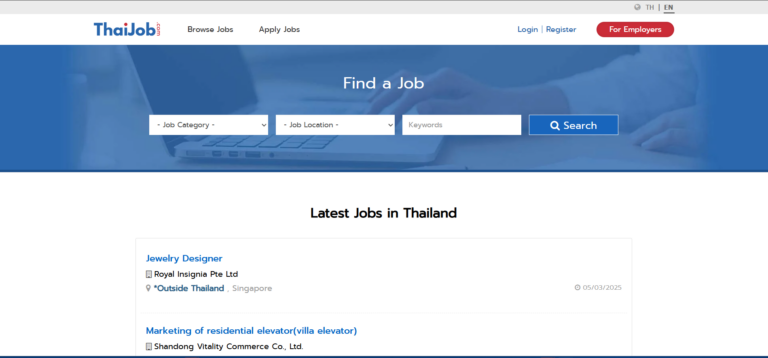
While mostly in Thai, ThaiJob.com occasionally lists positions in English—especially in multinational companies and hospitality. Use browser translation tools if needed, and don’t overlook local job boards—they often hide great opportunities for those searching for thai jobs.
2. JobsDB Thailand
A go-to site for professionals across Southeast Asia, JobsDB offers a bilingual interface. Use the English filter to find listings from international companies or local firms looking for foreign talent.
3. LinkedIn
Many Thai employers now list job openings on LinkedIn, and it’s often used to source candidates for roles in digital marketing, management, finance, and IT. Tip: Update your location to Thailand and start following local recruiters.

4. Ajarn.com
This long-standing site specializes in teaching English in Thailand, one of the most accessible fields for new arrivals. Listings include positions at private schools, international schools, and language centers.
5. The BigChilli & Bangkok Post Job Listings
Expats often find useful leads in the classifieds sections of English-language publications. The BigChilli (a lifestyle magazine for expats) and Bangkok Post regularly feature job ads and career fairs.
Remote Work: A Growing Option
Thailand is also a rising destination for digital nomads and remote workers. While the country doesn’t yet have an official digital nomad visa, many use the Smart Visa, Education Visa, or business visas to stay legally while working remotely. Cities like Chiang Mai, Bangkok, and Phuket have coworking spaces, fast internet, and thriving expat communities.
“Thailand is ideal for remote work, but know your visa boundaries,” says Greg Lawrence, an American tech consultant based in Chiang Mai. “Immigration rules are strict, so do your homework or talk to a relocation expert.”
Work Permits and Legal Basics

To legally work in Thailand, foreigners must secure a work permit and a non-immigrant visa. Some employers provide this; others may expect you to sort it first. It’s crucial to avoid working on a tourist visa, which is illegal and could result in blacklisting or deportation.
For up-to-date guidelines, consult the Thai Ministry of Labour or speak with immigration lawyers or relocation consultants in Thailand.
Final Tips Before You Apply
- Tailor your CV to international standards, but make it concise.
- Learn basic Thai phrases—it helps in interviews and daily life.
- Be aware of salary expectations. Wages vary greatly by industry and experience. Teaching jobs may pay less than tech or consulting roles but often include housing and bonuses.