

































Bangkok commuters may finally be getting closer to something they have wanted for years: multiple trains, one ticket, and cheaper transportaion.
Thailand’s Cabinet on Tuesday approved a cost-of-living measure to introduce a common fare system across urban rail transit lines, allowing passengers to travel for between 17 and 45 baht under a single-ticket scheme.
Deputy Prime Minister and Transport Minister Phiphat Ratchakitprakarn said on 23 June that the policy would cover all rail lines and colours, with passengers paying the entry fare only once when transferring between different networks.
The government aims to launch the system by 1 January 2027, framing it as a New Year’s gift to the public and part of a broader effort to reduce household expenses.
“Passengers will pay the entry fare only once,” Phiphat said. “We intend to have the system ready by the 2027 New Year.”
What changes for commuters?
At the moment, changing trains in Bangkok can feel less like one connected journey more like changing taxi cabs to pay a double fair.
Anyone who has lived or travelled in Bangkok has moved between lines operated by BTS, MRT, and other rail services. That means separate fare systems, separate payment methods and, most frustratingly, a new starting fare when transferring between networks.
The new common fare plan is trying to solve that problem.
Under the Cabinet-approved measure, passengers would pay within a 17–45 baht range when travelling across participating urban rail lines, instead of being charged a new entry fare each time they move between systems.
In simple terms, the government wants Bangkok’s rail network to behave more like one connected system, rather than several separate lines.
Why this matters: Bangkok has been waiting years for one ticket
The idea of a single ticket for Bangkok’s trains is not new. In fact, it has been one of the capital’s longest-running transport promises.
The best-known symbol of that promise is the Mangmoom card, or “spider card,” which was designed to connect different public transport systems into one payment network. The name itself suggested a web linking buses, boats and trains together.
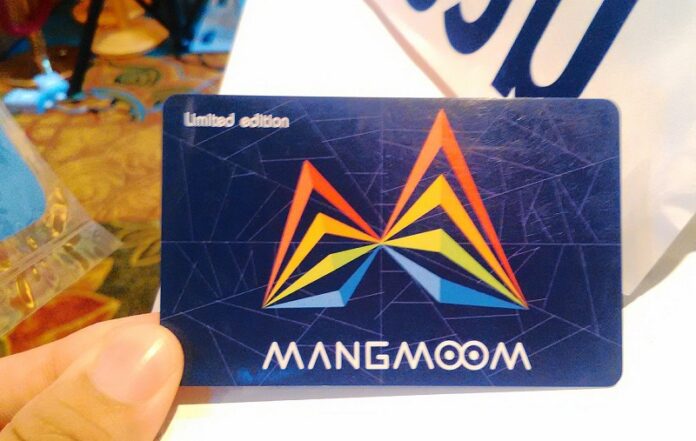
But for years, the dream was bigger than the reality.
The Mangmoom card was introduced in limited form, but it never became the seamless all-network solution many commuters had expected. Bangkok passengers continued using a patchwork of systems, including Rabbit cards for BTS, MRT cards or tokens, EMV contactless cards depending on the line used.
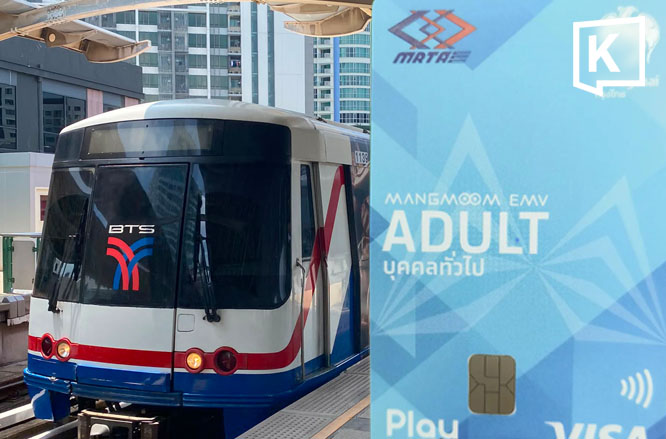
More recently, the Mass Rapid Transit Authority of Thailand and Krungthai Bank launched the Mangmoom EMV card for MRTA-supervised lines, including the MRT Blue, Purple, Yellow and Pink lines. MRTA has also moved ahead with wider EMV contactless payment upgrades across MRT services.
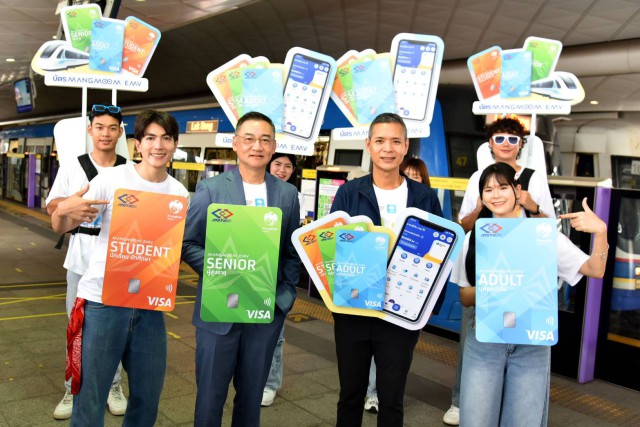
That has made payment easier on some parts of the network, but it has not fully solved the bigger problem: different operators, different fare structures and extra charges when transferring between systems.
That is why the Cabinet’s approval matters. It moves the long-discussed “one ticket” idea from a technology issue toward a fare policy issue. The point is not only how passengers tap in and out, but how much they pay when they cross from one network to another.
The hard part: who gets the money?
The next challenge is not just installing a card reader or updating a payment app. It is deciding how money is collected and divided.
Phiphat said the Transport Ministry will now hold discussions on establishing a clearing house system to manage fare collection and revenue distribution among rail operators.
That clearing house will be central to whether the policy works.
If passengers pay one common fare while travelling across multiple lines, the government and operators need a system to calculate how much each operator receives. That could involve distance travelled, lines used, passenger volumes, concession agreements and possible state subsidies.
This is where the policy becomes complicated.
Bangkok’s rail system includes lines run under different contracts and business models. Some are state-supervised, while others involve private operators or concession arrangements. A common fare may be simple for passengers, but it requires complex negotiations behind the scenes.
When will the 17–45 baht train fare start?
The government is targeting 1 January 2027.
That gives agencies about six months to work through the practical details, including the clearing house, operator agreements, payment systems and public communication.
Further details are expected after discussions between the Transport Ministry, relevant agencies and rail operators.
For now, the main promise is clear: passengers should not have to pay a fresh starting fare every time they transfer between participating rail systems.
Part of a wider cost-of-living push
The common fare plan is being presented as part of the government’s broader effort to ease living costs.
Transport costs are a daily burden for many people in Bangkok and surrounding provinces, especially those who rely on more than one rail line to reach work, school or home.
For occasional passengers, the difference may seem small. For daily commuters, repeated transfer costs add up quickly.
If the system is implemented as planned, the biggest benefit may be felt by people whose daily journeys currently cross several transport lines.
What to watch next
The Cabinet approval is a major step, but it does not mean the new fare scheme is guaranteed.
One Bangkok resident we interviewed expressed skepticism. “Mangmoom was promised 10 years ago. Until a 45 baht ticket from Asok to Lad Phrao is in my hand, I won’t believe it.”
The key questions now are how the clearing house will work, which lines will be included from the first day, whether all major operators will be ready by 1 January 2027, and whether the 17–45 baht range will apply smoothly across complex multi-line journeys.
After years of hearing about Mangmoom cards and integrated fares, the city may finally be moving closer to a rail system that is easier to use — and less punishing when passengers need to change trains.