


































MAE HONG SON — Health officials have begun urine testing for arsenic exposure among residents living along the Salween River in Mae Hong Son province after concerns over contamination in the waterway.
The health screening follows growing concern over arsenic contamination in the Salween River after researchers from Chiang Mai University reported in late 2025 that arsenic levels in parts of the river were as much as five times higher than Thai safety standards.
Authorities later expanded monitoring across Mae Hong Son province, with the Pollution Control Department finding arsenic contamination above standards at all 13 sampling points tested along the river.
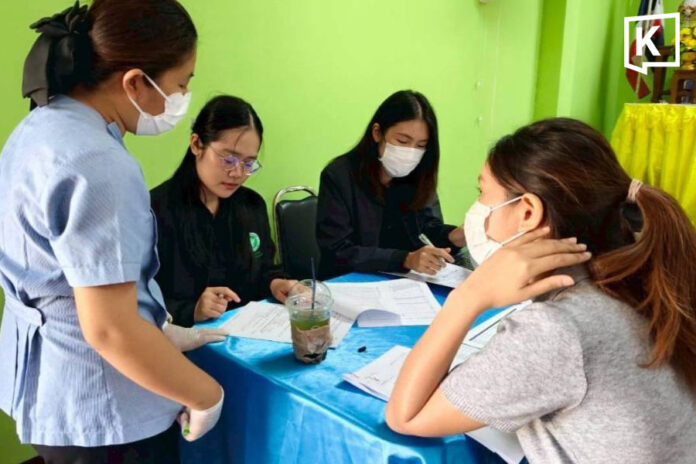
Officials from the Department of Disease Control, together with local public health offices and hospitals, conducted urine tests on residents of Sob Moei and Mae Sariang districts bordering the Salween River on 6 May to screen for potential health risks linked to arsenic contamination.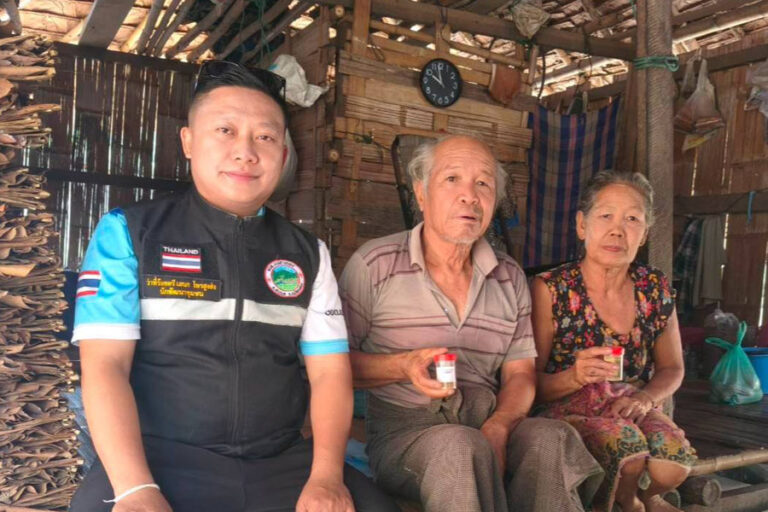
Mr. Phongphipat Meebenjamat, chief executive of the Mae Sam Laep Subdistrict Administrative Organisation in Sob Moei District, said agencies involved included the Office of Disease Prevention and Control Region 1 in Chiang Mai, the Department of Disease Control’s occupational and environmental disease divisions, Sob Moei Hospital, local health promotion hospitals, the Mae Sam Laep local administration, and Salween River monitoring volunteers.
The screening operation was carried out at the Salween Building of the Mae Sam Laep Subdistrict Administrative Organisation and focused on residents from Ban Tha Ta Fang, Ban Mae Sam Laep, and Ban Sob Moei villages.
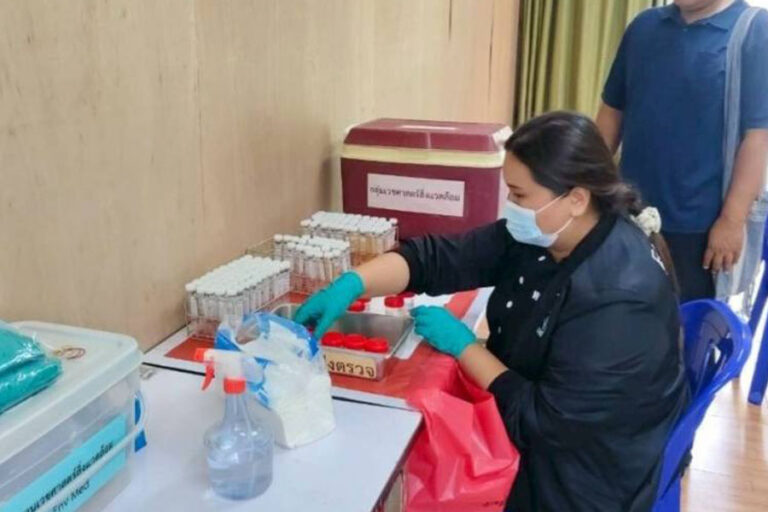
Officials collected medical histories and urine samples from 99 residents, which will be analysed in a laboratory. However, due to budget limitations and the high cost of testing, authorities said they were unable to screen all villagers in the affected communities.
Test results are expected within three months.
Mr. Phongphipat said residents in both Mae Sariang District and Sob Moei District, who have long relied on the Salween River for daily use and consumption, remain deeply concerned about contamination in the river and its psychological impact on local communities.
Environmental researchers have increasingly warned that unregulated mining activity in Myanmar’s border regions is affecting major river systems flowing into Thailand, raising concerns about long-term health risks for communities dependent on rivers for drinking water, fishing, and agriculture.