
































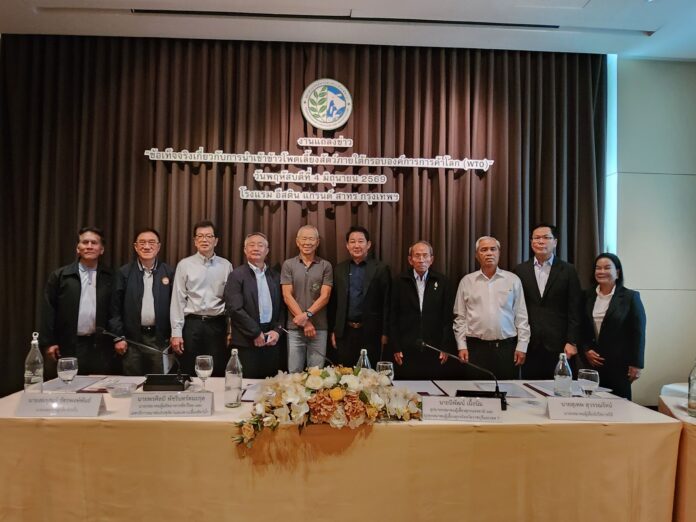
BANGKOK — 4 June 2026, Thailand’s livestock and aquaculture industries defended plans to import feed corn from the United States, arguing that the move would reduce production costs, ease environmental pressures and would not harm domestic corn farmers.
The Federation of Thai Livestock and Aquaculture, joined by four livestock industry associations, said imports were necessary to address a shortfall in Thailand’s feed grain supply and to support ongoing trade negotiations with the United States.
Pornsil Patcharintanakul, president of the Thai Feed Mill Association and secretary-general of the federation, said Thailand requires about 9 million tonnes of feed corn annually but produces only 5 million tonnes, leaving a deficit of 4 million tonnes.
Thailand currently imports around 3.2 million tonnes of feed ingredients, including 1.5 million tonnes of corn from neighbouring countries and 1.7 million tonnes of wheat, while a further 800,000 tonnes remain unmet, he said.
The industry groups said a proposal to allow imports of up to 1 million tonnes of US corn would not replace domestically grown corn because importers would still be required to purchase local corn under a 3-to-1 domestic purchasing ratio before importing. They said the imported corn would instead substitute for wheat already being imported.
Pornsil said domestic feed corn prices had risen above 13 baht per kilogramme, which he described as the highest level globally. He attributed the increase in part to tighter import controls, restrictions on corn linked to crop burning and delayed rainfall that affected planting schedules.
Industry representatives argued that alternative domestic feed ingredients such as rice, broken rice, rice bran and cassava were already being used but could not fully replace corn because of nutritional, technical and market limitations.
They said lower-cost US corn could help reduce feed expenses, benefiting livestock and aquaculture producers as well as consumers through more stable prices for meat, eggs and other protein products.
The groups also argued that increased imports could help reduce environmental problems, including PM2.5 air pollution and transboundary haze associated with agricultural burning.
Addressing concerns about genetically modified organisms (GMOs), the federation said GMO crops have been widely used around the world for decades and noted that Thailand has imported and used GMO soybeans in the food and animal feed sectors for more than 30 years without adverse health effects or export disruptions.
The statement reflected the position of 21 livestock, aquaculture and feed industry associations, which said they were seeking greater public understanding of feed policy and long-term food security issues.