
















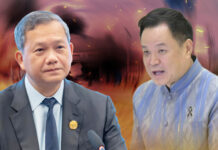







BANGKOK — Thailand’s Ministry of Foreign Affairs has accused Cambodia of using its position as host of the Francophonie Summit to spread unfounded allegations against Thailand over their border dispute, saying Thai representatives were denied the opportunity to respond during the meetings.
In a statement issued on Monday (16 November), the ministry expressed deep regret that Cambodia had repeatedly targeted Thailand throughout the 48th Ministerial Conference and 20th Summit of the Francophonie, held in Phnom Penh from 14 to 16 November.
Thailand attended the meetings as an observer, a status it has held in the International Organisation of La Francophonie (OIF) since 2008.
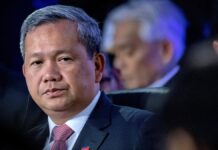
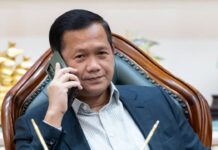
According to the ministry, allegations against Thailand were raised during Cambodian Prime Minister Hun Manet’s opening remarks, in the drafting of the summit’s outcome document, through photo exhibitions at the meeting venue and in art installations at the Francophonie Village.
Thailand said the Cambodian chair did not allow its representatives to respond during the meetings, leaving them only the option of submitting a written statement.
The ministry strongly rejected what it described as a “grossly biased, one-sided and inaccurate” account of the Thailand–Cambodia border situation, particularly allegations that Thailand had occupied Cambodian territory and prevented approximately 20,000 Cambodian nationals from returning to their homes.
It also expressed concern that these allegations had been amplified through Cambodian media outlets.
In response, the ministry explained that Thailand had provided temporary shelter to Cambodians fleeing conflict in their country during the late 1970s on humanitarian grounds.
Although conditions in Cambodia subsequently improved, some people remained in the border areas despite repeated protests from Thai authorities, resulting in what Thailand considers encroachment on its territory.
The ministry maintained that Thailand had handled the situation with the utmost care, taking into account the welfare of people on both sides of the border.
“Rather than addressing matters of benefit to the OIF, Cambodia chose to focus on making unfounded allegations against Thailand,” the statement said.
Thailand accused Cambodia of using the international gathering to advance its own narrative on bilateral issues for domestic political gain, arguing that such actions undermined the OIF’s objectives of promoting peace, dialogue and mutual understanding.
The ministry also criticised Cambodia for what it described as similar conduct at the ongoing 49th ASEAN Summit and Related Summits in Manila, the Philippines, where it said Cambodia had again presented one-sided and inaccurate accounts of bilateral matters.
Thailand argued that these actions contradicted confidence-building measures agreed during conciliation proceedings in October 2026, as well as understandings reached between the two prime ministers in Cebu during the 48th ASEAN Summit in May.
Despite the latest tensions, the ministry reaffirmed Thailand’s commitment to resolving differences with Cambodia peacefully through bilateral mechanisms and in accordance with international law.
It called on Cambodia to refrain from bringing bilateral disputes onto international platforms and to return to the confidence-building measures previously agreed between the two countries.
“Thailand expects Cambodia to demonstrate the same commitment to peace and stability in order to ultimately benefit their own people,” the statement concluded.