

































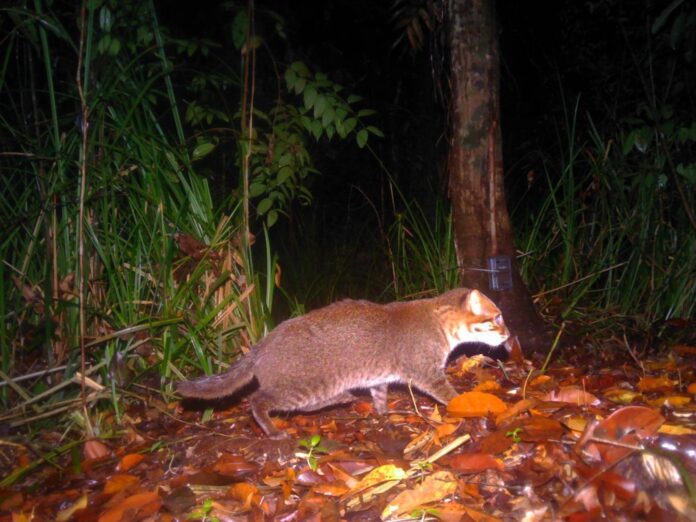
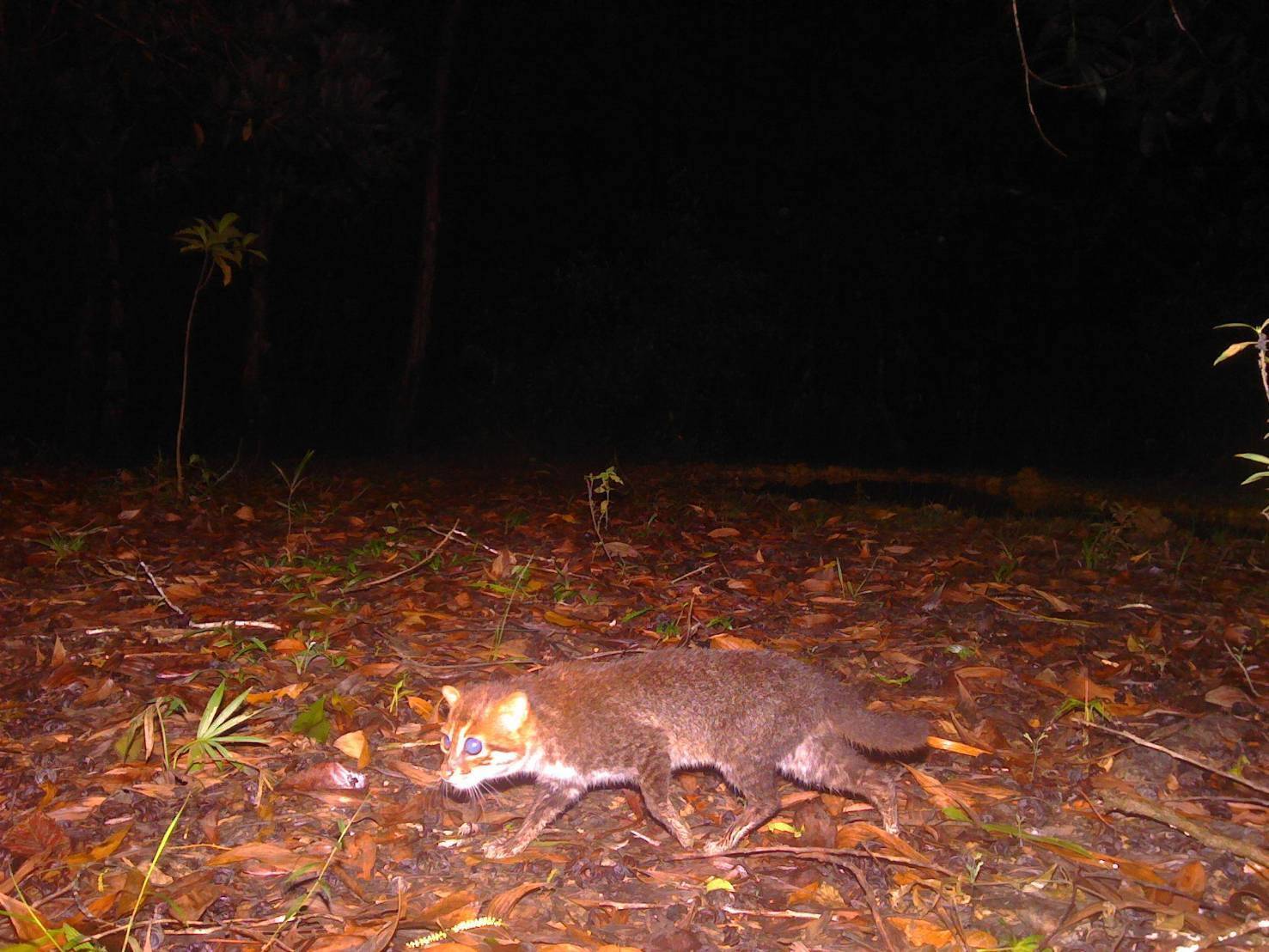
BANGKOK — Thailand’s Department of National Parks, Wildlife and Plant Conservation and conservation group Panthera Thailand announced Friday the confirmed presence of the flat-headed cat, one of the world’s rarest and most endangered wild cats, in a protected peat swamp forest in the country’s far south.
The discovery was made in the Chalerm Phrakiat Somdet Phra Thep Rattanarajsuda Siam Boromrajakumari Wildlife Sanctuary, also known as the To Daeng peat swamp forest, in Narathiwat province. It marks the first confirmed record of the species in Thailand in nearly three decades.
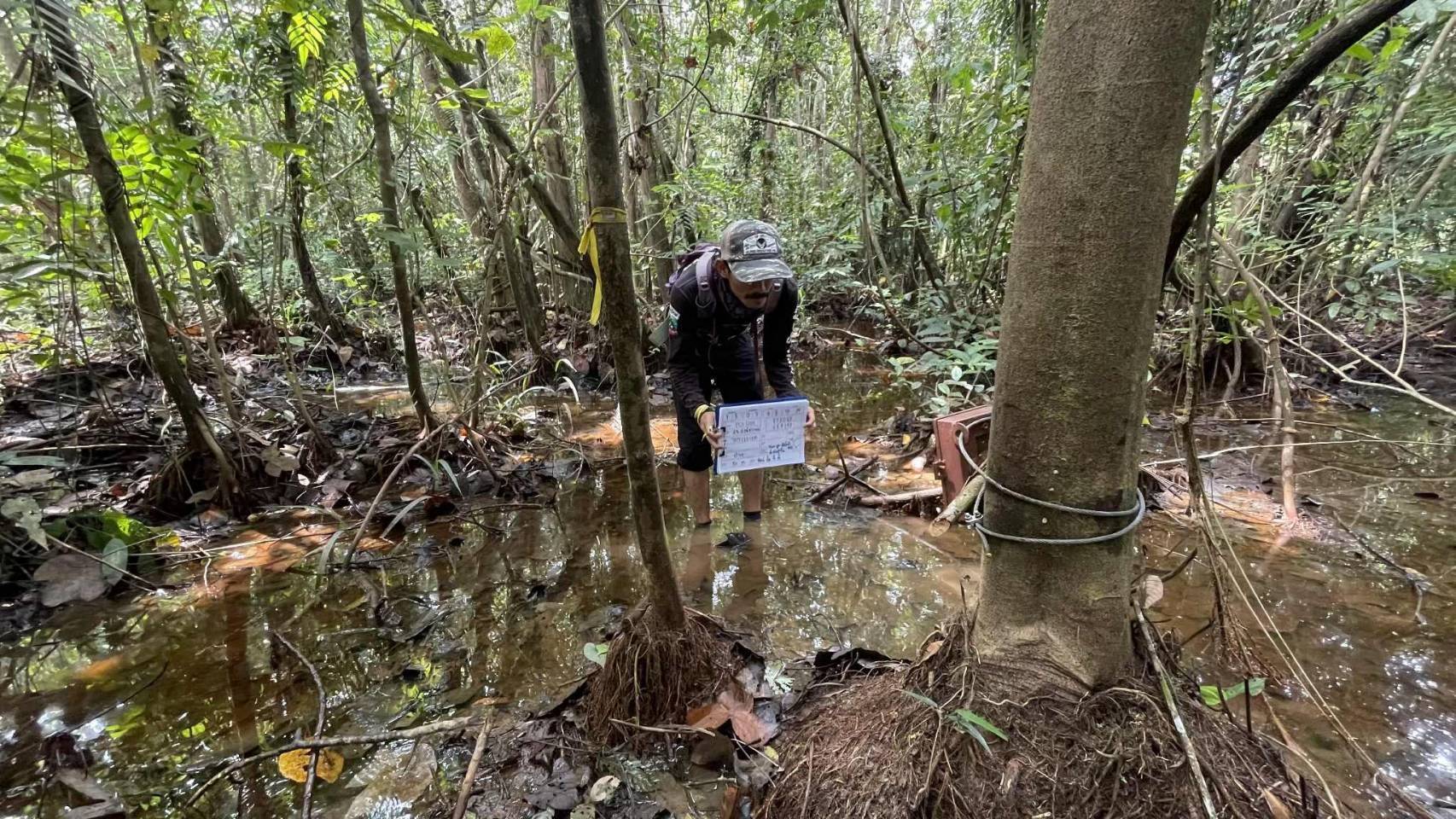
Camera trap surveys recorded 13 sightings in 2024 and 16 sightings in 2025, the highest frequency reported for the species anywhere within its known range, authorities said. Researchers also captured images of an adult cat accompanied by a kitten, confirming breeding activity in the area.
The flat-headed cat is listed as endangered on the International Union for Conservation of Nature Red List, with an estimated global population of about 2,500 individuals. In Thailand, the species had previously been classified as “possibly extinct.”
“After decades of habitat protection and surveys, confirming the flat-headed cat’s return to southern Thailand demonstrates the dedication of park rangers in safeguarding one of the country’s last remaining peat swamp forests,” said Attapol Charoenchansa, director-general of the Department of National Parks.
Kritsana Kaewplang, director of Panthera Thailand, said the finding shows effective habitat protection can deliver conservation results once thought impossible.
“After nearly 30 years without confirmed sightings, this discovery proves endangered species can recover when their habitats are effectively protected,” she said.
The flat-headed cat is among the smallest wild cats in Asia, distinguished by its elongated, flattened skull and partially webbed feet adapted for hunting aquatic prey. The nocturnal species inhabits wetlands and peat swamps but faces threats from habitat loss caused by agriculture, hunting and water pollution.
Thai authorities said the discovery will guide future conservation planning, including strengthened patrols, expanded use of SMART patrol systems and community-based intelligence networks to address threats.
____