Charoen Pokphand Foods Public Company Limited (CPF) has won the Ministry of Public Health’s praise for the successful implementation of the Bubble and Seal measure, in line with the government’s aim to safeguard industrial plants’ workers and neighboring communities against COVID-19 infections.
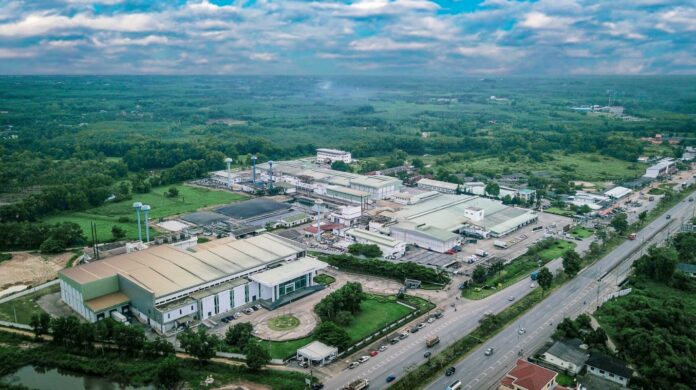
During his recent visit to CPF’s processing plant in Klaeng District, Rayong province, Dr. Sathit Pitutecha, Deputy Minister of Public Health, praised the Company for the correct implementation of public health measures that concern workers and workplace. CPF has exceeded standard measures at some points and is exemplary in situation management, particularly the speedy and efficient implementation of the Bubble and Seal measure, he said.
The Ministry of Public Health recently launched the Bubble and Seal measure following the new COVID-19 wave. It is designed specifically to contain the situation at industrial plants that house a large number of workers. Under the measure, while the infected receive medical treatment at field hospitals, other workers with negative test results are separated from risk groups.
In line with factory quarantine, workers with negative test results will be transported to provided accommodations, to reduce risks of infection during their travel. There will be no cross-group work and workers are prohibited from venturing out of the workplace or provided accommodations, to quickly control the infections and allow continuous operations. Bubble and Seal has won supports from various organizations, to ensure uninterrupted production.
Mr. Prasit Boondoungprasert, Chief Executive Officer of CPF, noted that the COVID-19 outbreak put grave pressure on people and the economy. Under the vision of “Kitchen of the World”, CPF takes it as a duty to keep business running to ensure food safety and food security.
“We have strictly followed the government’s measures to keep our workers safe and ensure no infections at our premises, under our goal to keep our supply chain safe from the disease so that we can continue producing safe food and continuously satisfying food demands no matter what,” he said.
For the safety of workers and all food products, all workers are 100% vaccinated.
At CPF’s processing plants, control measures have been exercised from the entrance. All workers are tested for COVID-19 prior to entering the workplace. At the production lines, proper cleaning and disinfection is carried out, along with other touch surfaces in line with Good Manufacturing Practice (GMP), as food safety has been the emphasis of Thailand’s health authorities.
Prior to starting their jobs, all workers must have their temperature measured. Anyone with temperature above 37.30C or having any symptom is immediately subjected to quarantine.
The plants establish continuous communications with workers about control measures and regularly review their understanding. The plants are regularly cleaned and disinfected in line with the Ministry of Public Health’s guidelines, under provincial health offices’ supervision. Swab tests are conducted on a weekly basis on all frequently-touched surfaces, to trace COVID-19. Other control measures have been strengthened to the maximum level.
Mr. Prasit added that stringent control measures are the only way to quickly ease the situation, as CPF is striving to uninterruptedly proceed with its safe food production duty for all consumers. Under the Bubble and Seal measure, all in the supply chain will be shielded from negative impacts and at the end it will help sail Thai society through this health crisis.
“We are doing everything to protect both our workers and nearby communities as well as all consumers,” Mr. Prasit concluded.
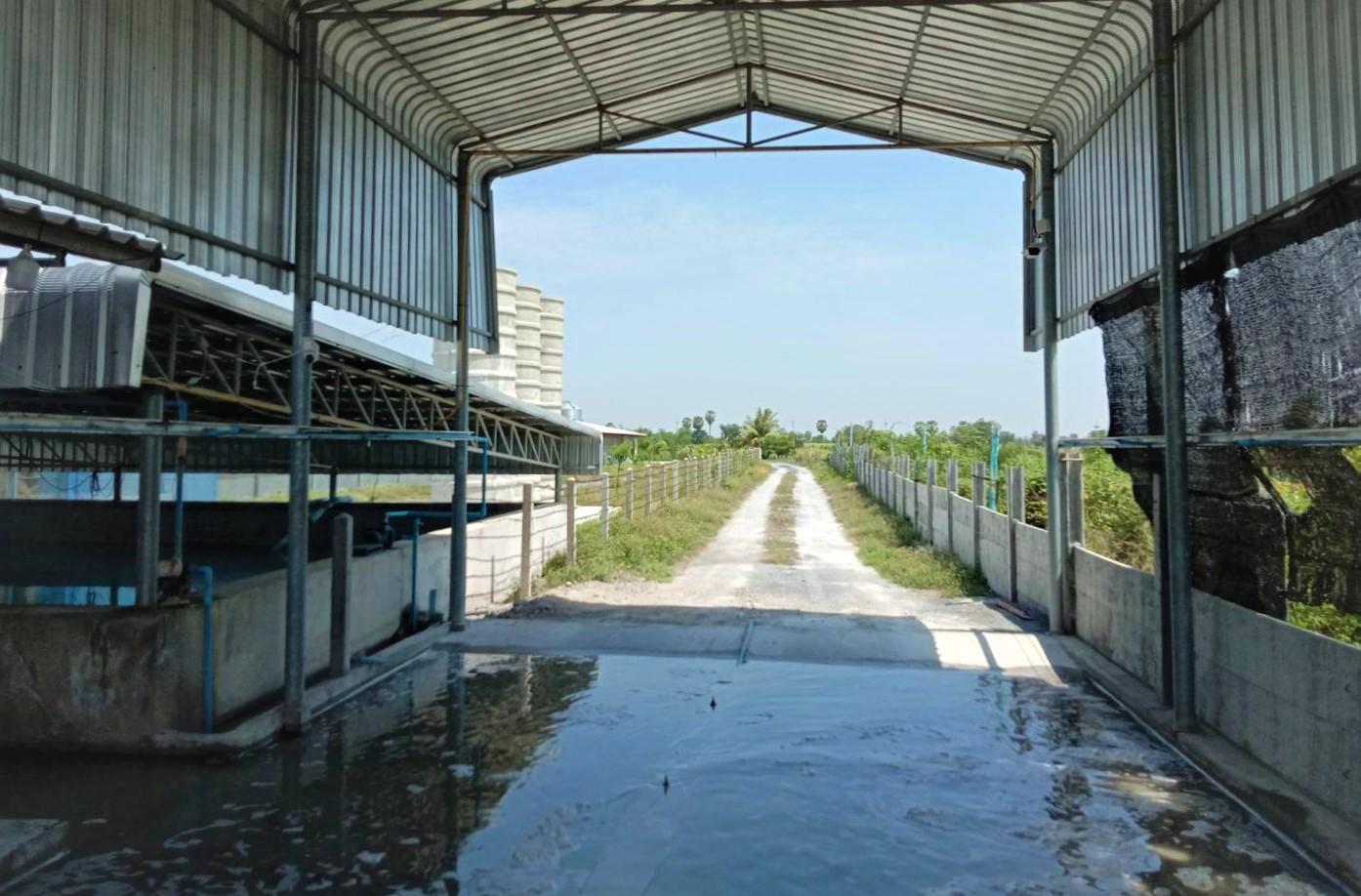
Charoen Pokphand Foods Public Company Limited (CP Foods) proceeds with animal farm “SEAL” along with other safety measures to safeguard workers and protect animals from significant diseases. The emphasis is placed on the sharing of knowledge to ensure food safety and food security.
Mr. Somporn Jermpong, executive vice president for swine business of CPF, said that CPF has been imposing strict disease monitoring and control measures at all animal farms. One of the measures is to seal the farms to prevent and control diseases. The control measures are even strengthened to the maximum level following the COVID-19 pandemic, to protect both animals and staff. These measures particularly concern the biosecurity system which is the focal point of such control, along with continuous training for staff and contract farmers.
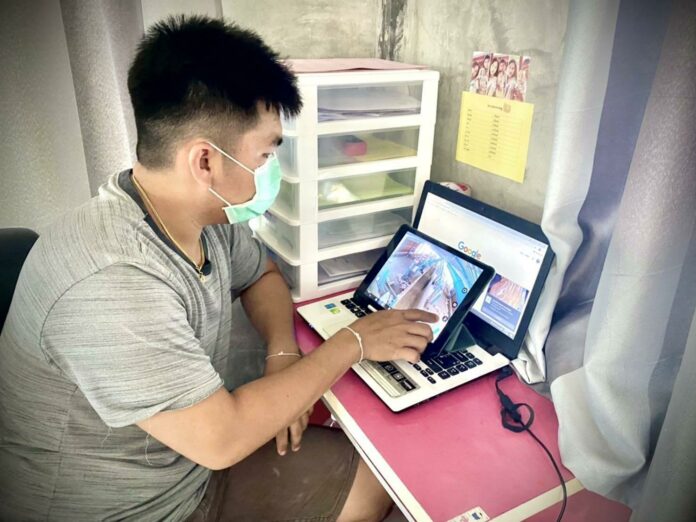
“CPF has continually shared our techniques, approaches and measures against diseases in pigs and COVID-19 with contract farmers. We have shared our knowledge, organized farm audit and hosted online training programs. Our goal is the farmers possess accurate knowledge and practices that can be applied with their farms to lessen business risks and keep their business going. The farmers are also encouraged to seal their farms, by arranging staff accommodations inside the premises and ensuring proper living conditions and food supply. Farmers should also make use of the closed circuit TV system that allows monitoring through cameras and less human visits to farm buildings. That will keep animals safe from diseases and ensure food safety as well as food security,” Mr. Somporn said.
Regarding the poultry business, Mr.Somkid Wannalukkhee, senior vice president of CP Foods, added that aside from strengthened biosecurity measures at all farms and restrictions on workers’ exit and visitors’ entry, the focus is placed on COVID-19 measures that highlight personal hygiene, social distancing, requirements for face masks and hand washing which have become the daily routines of all. Adjustments have been made to fit current circumstances: for example; preparations are arranged prior to activity dates; activities are organized outdoor; all workers keep distance and use personal utensils; only hot dishes are served; and frequently-touched areas are cleaned more frequently.
“CP Foods has strictly exercised maximum measures and properly applied control measures. We have launched a campaign to educate workers and contract farmers on disease control, to raise their awareness in the importance of control measures. Then, they will be ready for work and protect themselves against COVID-19. The food supply chain will then be saved, both in normal situations and times of crisis,” Mr. Somkid said./
Pope Francis delivers his blessing as he recites the Angelus noon prayer from the window of his studio overlooking St.Peter's Square, at the Vatican, Sunday, Aug. 15, 2021. Photo: Andrew Medichini / AP
VATICAN CITY — Pope Francis is adding his voice to a campaign to overcome vaccine skepticism, issuing a public service announcement insisting that vaccines are safe, effective and an “act of love.”
The video message released Wednesday is aimed at a global audience but directed particularly at the Americas. It features six cardinals and archbishops from North, Central and South America as well as the Argentine-born pope. It was produced by the Vatican and the Ad Council, which has produced a series of pro-vaccine ads in a bid to get more people vaccinated.
In his comments, Francis said: “Being vaccinated with vaccines authorized by the competent authorities is an act of love. And contributing to ensure the majority of people are vaccinated is an act of love.”
He added: “Vaccination is a simple but profound way of promoting the common good and caring for each other, especially the most vulnerable.”
Francis had emphasized at the start of the pandemic the need to ensure equal access to the vaccine, especially for the poor. But faced with increasing skepticism about vaccines especially among religious conservatives, the Vatican has vowed an all-out effort to overcome hesitancy and encourage widespread vaccination.
The Vatican has declared that it is morally acceptable for Catholics to receive COVID-19 vaccines, including those based on research that used cells derived from aborted fetuses.
In this Sept. 2, 2020 file photo, the TIPCO tower stands in Bangkok, Thailand. Photo: Gemunu Amarasinghe / AP
CLEVELAND (AP) — A major Thai asphalt company has been implicated for money laundering in a criminal complaint against a Miami businessman accused of violating U.S. sanctions for doing maintenance work on Venezuela’s fleet of Russian fighter jets.
Jorge Nobrega was arrested Sunday at Miami’s international airport, according to his attorney, Francisco Alfonso Marty, who said it was premature to comment further.
A criminal complaint and affidavit filed Monday in Miami federal court allege that Nobrega’s company, Achabal Technologies, sold to Venezuela’s military a suppressant foam to insulate fuel tanks on its Sukhoi combat aircraft from exploding under enemy gunfire.
In a recorded meeting with an unidentified informant, Nobrega allegedly bragged about meeting with Venezuelan Defense Minister Vladimir Padrino Lopez and likened the technique to a form of “dialysis” that would save Venezuela the expense of sending the fleet in Russia for servicing.
For his work, Nobrega’s Miami-based company allegedly was paid by Tipco Asphalt, a longtime client of Venezuela’s state oil company, PDVSA.
An Associated Press investigation last year revealed how Venezuela had been relying on the publicly traded Tipco to blunt the impact of U.S. sanctions. In exchange for deep discounts on crude shipments, Tipco would pay PDVSA’s obligations and deduct the amounts from what it owed the Venezuelan oil giant, according to records obtained by AP.
Tipco is not named as a defendant in the criminal complaint. But an investigator for the Department of Homeland Security, citing AP’s reporting, identified the Thai company as the “third-party money launderer” that the complaint says “collaborated” with PDVSA to move hundreds of millions of dollars on behalf of Venezuela’s socialist government.
U.S. sanctions against President Nicolas Maduro’s government make it illegal for U.S. firms — and those who assist them — from doing business with PDVSA except with a license from the U.S. Treasury Department. Additionally, any export of military equipment or services requires the approval of the State Department, which Achabal didn’t have.
Documents obtained by AP show that Achabal received three payments totaling more than $3.6 million via Tipco between February 2019 and March 2020. Two other U.S.- registered vendors not affiliated with Nobrega received an additional $4.1 million in the same manner, according to the same records.
The documents — invoices, contracts, shipping records, and wire receipts — were provided to AP by a former PDVSA consultant located outside Venezuela on the condition of anonymity for fear of retaliation.
Nobrega, a Venezuelan-American dual national, established Achabal in the 1990s. The company lists as its address on Florida corporate registry a small warehouse near Miami’s international airport identified by giant sign for another company. Several other businesses are also registered at the same address.
There is no indication Tipco knew what services Achabal was providing Venezuela even as it acted as a financial intermediary allowing the company to evade compliance with sanctions.
But investigators obtained documents that suggest Achabal tried to hide its dealings with Venezuela, at one point presenting purchase orders from an Australian vendor specializing in fuel handling equipment to justify more than $800,000 in two transfers to Achabal’s bank account in Portugal.
“Law enforcement is unaware whether these supporting documents reflect actual business dealings and are being reused by Nobrega to provide justification for the wire transfers, or whether they were completely fabricated,” the federal agent said in his affidavit.
Tipco did not immediately respond to a request for comment on the criminal complaint.
But CEO Chaiwat Srivalwat, in an email to AP last year, said that any payments to third parties at PDVSA’s request “strictly corresponded” to its oil purchases from Venezuela.
“Tipco is a PDVSA client, not the Venezuelan central bank,” Jean-Pierre Pastor, Tipco’s representative in Venezuela, wrote in bold and underlined text in an email to PDVSA in January 2020 complaining of the frequent requests for it to pay its vendors.
“Tipco tried as much as possible to assist you in this difficult period,” added Pastor, the brother of longtime Tipco board member Jacques Pastor, who has also served as the head of the Asia-Pacific office for Tipco’s top shareholder, French road builder Colas. “Let’s hope you will not forget it.”
Taliban spokesman Zabihullah Mujahid speaks at his first news conference, in Kabul, Afghanistan, Tuesday, Aug. 17, 2021. Photo: Rahmat Gul / AP
KABUL, Afghanistan (AP) — The Taliban vowed Tuesday to respect women’s rights, forgive those who fought them and ensure Afghanistan does not become a haven for terrorists as part of a publicity blitz aimed at reassuring world powers and a fearful population.
Following a lightning offensive across Afghanistan that saw many cities fall to the insurgents without a fight, the Taliban have sought to portray themselves as more moderate than when they imposed a strict form of Islamic rule in the late 1990s. But many Afghans remain skeptical — and thousands have raced to the airport, desperate to flee the country.
Older generations remember the Taliban’s previous rule, when they largely confined women to their homes, banned television and music, and held public executions. A U.S.-led invasion drove them from power months after the 9/11 attacks, which al-Qaida had orchestrated from Afghanistan while being sheltered by the Taliban.
Zabihullah Mujahid, the Taliban’s longtime spokesman, emerged from the shadows Tuesday in his first-ever public appearance to address those concerns at a news conference.
He promised the Taliban would honor women’s rights within the norms of Islamic law, without elaborating. The Taliban have encouraged women to return to work and have allowed girls to return to school, handing out Islamic headscarves at the door. A female news anchor interviewed a Taliban official Monday in a TV studio.
The treatment of women varies widely across the Muslim world and sometimes even within the same country, with rural areas tending to be far more conservative. Some Muslim countries, including neighboring Pakistan, have had female prime ministers, while ultraconservative Saudi Arabia only recently allowed women to drive.
Mujahid also said the Taliban would not allow Afghanistan to be used as a base for attacking other countries, as it was in the years before 9/11. That assurance was part of a 2020 peace deal reached between the Taliban and the Trump administration that paved the way for the American withdrawal.
The Pentagon said U.S. commanders are communicating with the Taliban as they work to evacuate thousands of people through Kabul’s international airport. It said the Taliban have taken no hostile actions there.
Mujahid reiterated that the Taliban have offered full amnesty to Afghans who worked for the U.S. and the Western-backed government, saying “nobody will go to their doors to ask why they helped.” He said private media should “remain independent” but that journalists “should not work against national values.”
Kabul, the capital, has remained calm as the Taliban patrol its streets. But many remain fearful after prisons and armories emptied out during the insurgents’ sweep across the country.
Kabul residents say groups of armed men have been going door-to-door seeking out individuals who worked with the ousted government and security forces, but it was unclear if the gunmen were Taliban or criminals posing as militants. Mujahid blamed the security breakdown on the former government, saying the Taliban only entered Kabul in order to restore law and order after the police melted away.
People hold a poster demanding the security of girls and other people in Afghanistan during a demonstration in Berlin, Germany, Tuesday, Aug. 17, 2021. Photo: Markus Schreiber / AP
A broadcaster in Afghanistan said she was hiding at a relative’s house, too frightened to return home much less go to work. She said she and other women do not believe the Taliban have changed their ways. She spoke on condition of anonymity because she feared for her safety.
A group of women wearing Islamic headscarves demonstrated briefly in Kabul, holding signs demanding the Taliban not “eliminate women” from public life.
U.S. national security adviser Jake Sullivan said the U.S. and other governments will not simply take the Taliban at their word when it comes to women’s rights.
“Like I’ve said all along, this is not about trust. This is about verify,” Sullivan said at a White House briefing. “And we’ll see what the Taliban end up doing in the days and weeks ahead, and when I say we, I mean the entire international community.”
Whatever their true intentions, the Taliban have an interest in projecting moderation to prevent the international community from isolating their government, as it did in the 1990s.
The European Union said it was suspending development assistance to Afghanistan until the political situation is more clear but that it would consider boosting humanitarian aid.
EU foreign policy chief Josep Borrell said the Taliban must respect U.N. Security Council resolutions and human rights to earn access to some 1.2 billion euros ($1.4 billion) in development funds earmarked through 2024.
Foreign Secretary Dominic Raab said Britain might provide up to 10% more humanitarian aid, but the the Taliban would not get any money previously earmarked for security.
On Tuesday, the Taliban entered the civilian half of the airport, firing into the air to drive out around 500 people there, said an Afghan official who spoke on condition of anonymity because he wasn’t authorized to brief journalists.
The Taliban appeared to be trying to control the crowd rather than prevent people from leaving. A video circulating online showed the Taliban supervising the orderly departure of dozens of foreigners.
The U.S. Embassy in Kabul, now operating from the military side of the airport, urged Americans to register online for evacuation but not to come to the airport before being contacted.
The German Foreign Ministry said a first German military transport plane landed in Kabul but took off with only seven people on board due to the chaos. Another left later with 125 people.
U.S. President Joe Biden has defended his decision to end America’s longest war, blaming the rapid Taliban takeover on Afghanistan’s Western-backed government and security forces. NATO Secretary-General Jens Stoltenberg echoed that assessment, while saying the alliance must investigate the flaws in its efforts to train the Afghan military.
Talks continued Tuesday between the Taliban and several Afghan politicians, including former President Hamid Karzai and Abdullah Abdullah, who once headed the country’s negotiating council. The Taliban have said they want to form an “inclusive, Islamic government.”
The talks focused on how a Taliban-dominated government would operate given the changes in Afghanistan over the last 20 years, rather than just dividing up ministries, officials with knowledge of the negotiations said on condition of anonymity to discuss the closed-door talks.
A top Taliban leader, Mullah Abdul Ghani Baradar, arrived in Kandahar on Tuesday night from Qatar, potentially signaling a deal is close at hand.
The vice president of the ousted government, meanwhile, tweeted that he was the country’s “legitimate” caretaker president. Amrullah Saleh said that under the constitution, he should be in charge because President Ashraf Ghani has fled the country.
___
Story: Ahmad Seir, Rahim Faiez, Kathy Gannon and Joseph Krauss/ Faiez reported from Istanbul, Gannon from Guelph, Canada, and Krauss from Jerusalem. Associated Press writers Tameem Akhgar in Istanbul, Jon Gambrell in Dubai, United Arab Emirates, Kirsten Grieshaber in Berlin, Jan M. Olsen in Copenhagen, Denmark, Pan Pylas in London, and Aya Batrawy in Dubai contributed to this report.
Fortinet helps organizations of all sizes reduce the level of risk and impact at global standards
Dr. Rattipong Putthacharoen Senior Manager, Systems Engineering Fortinet
17 August 2021
Organizations of all sizes in Thailand are moving towards digitalization and developing their own personal data protection systems to comply with the Personal Data Protection Act of 2019 (PDPA). The Cabinet approved postponing the full enforcement of the Thai Personal Data Protection Act (PDPA) for one further year due to the severe outbreak of COVID 19 in Thailand. Organizations then are looking for the robust, comprehensive, standard and easy to begin with solution.
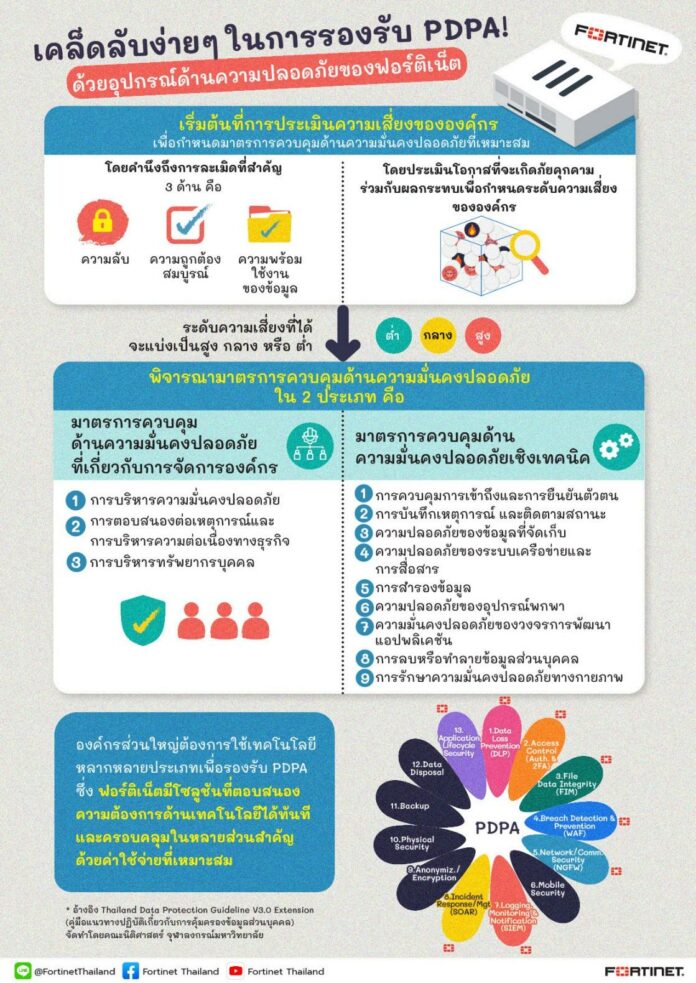
Referring to the Thailand Data Protection Guideline V3.0 Extension developed by the Faculty of Law at Chulalongkorn University guiding how organizations in Thailand can implement the granular personal data protection system, Fortinet recommends the organizations begin with Risk Assessment.
Risk assessment is an essential activity that helps the organizations to develop adequate measures in three aspects: confidentiality, integrity and high availability of the data. By assessing the threat occurrence probability together with the impact, the organization will obtain their risk level that can be high, medium or low. Such risk level then leads to the exercise to identify 3 strategic security pillars that are process, technology and human resources (people) appropriately for each area, to achieve the policy objectives determined by chief information security officer and security personnel.
Organizations should carefully evaluate suitable implementations that meet specific business requirements, compliance, and other related measure controls. The small and medium enterprises may consider designing additional granular security processes to technology and people pillars to help reduce the risk, such as establishing a clear definition of the right for high-privilege user accounts or least privilege access, and so on.
After security risk level assessment, the organizations will be able to define further appropriate organizational security measures and technical security measures. The organizational security measures shall include 3 strategic concerns, for instance. Firstly, security management covers the relevant policy and procedure guidance as well as roles and responsibilities, etc. definition. Secondly, the incident response and business continuity management are needed to handle the threat incidents and personal data breach events. Lastly, human resources management normally requires the organizations to provide their employees the regular information security training sessions and promoting secure environments, for example.
Technical measures can be defined as the measures and controls afforded to systems and any technological aspect of an organization, such as devices, networks and hardware. Protecting such aspects is crucial for the security of personal data and is the best line of defense against data breaches. Here are the most common technical measures the organizations should consider:
Access control and authentication – Prevent the unauthorized access to information systems processing the personal data, and strictly control access using two-factor authentication (2FA) etc., for high-risk organizations.
Logging and monitoring – Collect and monitor the user activities and files containing PII, to be used as evidence if any access, use, alteration, or modification occurs
Security of data at rest – Protect stored data in computers, servers and database systems by deploying data encryption, etc.
Network/communication security – Network security should be implemented regardless of the size and scope of your organisation. Firewalls, IPS, NAC as well as data encryption applications are cost effective and important.
Back-ups – Backing up is an activity that allows an organization to recover corrupted data. High-risk organizations should consider more frequent backups and solid encryption for data stored in the backup device, etc.
Mobile/portable devices – Prevent risks from mobile devices, smartphones or tablets by verifying your identity before using the device and encrypting personal data on mobile devices, as well as enforcing the security policies on mobiles.
Application lifestyle security – Consider security to be deployed in the application lifecycle development, such as penetration test on applications and related systems as well as patching test evaluation before installing the actual patch, etc.
Data deletion/disposal – Take measures to delete or destroy personal data to make it irrecoverable. It should be overwritten several times and destroy the storage device, for example.
Physical security – Implement robust measures for securing access to any office or building and ensure that all employees are aware of such controls, which can include CCTV, security lighting and alarms in the zone that requires high security.
A frequently asked question to Fortinet is what additional tools or technologies organizations need to purchase? The answer is it depends upon the organization’s own risk level. The higher the risk, the more tools organizations will need to help. The small and medium-sized organizations with limited budgets may opt to establish the processes and people policy to help reduce the risk. Organizations with less risk require less tools as a result. Good news is many Fortinet security devices such as FortiGate, FortiWeb, or FortiMail contain data protection capabilities. Therefore, the organizations currently deploying Fortinet’s security appliances in complying to Cybersecurity Act (2019) or NIST, ENISA, ISO27001 frameworks, can deploy them for data protection purpose immediately. This empowers organizations to reduce their level of security risks and budget in tools procurement.
For example, a customer who is currently using the FortiGate Next-Generation Firewall together with additional technology and people resource programs, can turn DLP, 2FA, Breach Prevention functions to immediately reduce risks until reaching the acceptable level.
On the other hand, the large enterprises with high risk shall need more tools to help reduce the time spent on identifying, responding to incidents, and on supporting the overburdened security personnel in the organization. In this case, Fortinet provides tools such as FortiSIEM, FortiSOAR to support the granular operations of large enterprises.
It is admitted the impact and damage to business and corporate reputation is invaluable. Although the Cabinet has extended the enforcement deadline of the PDPA Act, organizations still have to accelerate the completion of PDPA solutions. You need to do your best to ensure the security of personal data you handle and be able to prove it. Fortinet can bring its experience, expertise and industry-leading products and services to help organizations meet the personal data protection requirement of the businesses of all types.
The internet has changed life for the better. Ideas and technology are quickly shared, and household items have been improved because of the internet. But one of the household items you might be surprised to find improved by the internet is the water purifier machine.
These water purifier machines seemed to have reached the limits of their technology soon after they were invented. After all, the old water purifier machines were little more than a jug with a water filter attached. There really weren’t any improvements that could be made to them, other than possibly refining the water filters to trap more impurities.
But then, the internet came along with its ability to collect and store data as well as interconnect people and things. The latest generation of digital technology has even been referred to as the IoT, or the internet of things.
Next Generation Water Purifier Machines
With the connective capabilities of the internet, many product designers and creators started looking at different items from a completely new angle. They were looking for items that could be improved by the addition of connectivity and data collection. And they found that a lot of these household machines could benefit from the application of digital capabilities. One of the items with a long-lasting problem that could be solved through the use of connectivity and data collection was the water purifier machine.
The problem with these purifier machines was that the filter had to be changed several times a year. Depending on the make and model of the machine and the complexity of the filter, this could be expensive.
Manufacturers resorted to a standard of three or four months between filter changes, but this figure was regardless of how much use the machine was getting between filter changes. Product designers realised that with the connective and data collection capabilities of digital applications, they could solve the problem of filter changes and accurately predict exactly when it was time to change a filter.
Changing the Standards of Water Filter Use
They solved the problem of inaccurate filter changes by monitoring the machine remotely through the internet and transforming the volume of water flowing through the filter into measurable data.
Then, they measured the volume of water needed to utilise their filters fully, and this gave them a benchmark they could apply to everyone’s machines. And so, they were able to send a notification to each owner when the filters in their machines had reached the limits of their effectiveness and needed to be changed.
The data they collected and the connectivity they established through the internet further enabled them to expand the functions of these water purifier machines. They created an app the owner could install on their smartphones. The app could receive the filter change notification, but it could also be used to track the hydration levels of active kids by their parents or track the total amount of drinking water consumed for a month by the family, or award manufacturer’s points for hitting a goal in using the machine.
The digital age has meant a whole new era for these machines. Contact Snaptec today to find out what this new era of water purifier machines can mean for your family.
Managing a warehouse effectively requires maintaining an open mind to the continuous need for change. And micro racks provide a welcome amount of options and flexibility in helping you achieve the most efficient storage solution for your warehouse time and time again.
Micro racks offer warehouse managers dealing in products that are sold in small lots the ability to make the most of the space they have available. The quick set-up and dismantling features of the racks enable you to set them up on a temporary basis to solve some storage problems and then clear the space to receive a different type of racking system.
Increasing Efficiency
The flexibility and portability of micro racks allow you to set up trial order picking stations designed to see the most efficient way to fill orders. This continuous experimentation helps you make the most of your space when new products in different sizes than you’re used to threaten to slow down your work process.
The racks can be set up in a number of different configurations, so you can see, in real-time, which ones allow for the most efficient way to pick orders.
Light and Simple to Use
As the efficient use of space matters down to the centimetre, the light and easy to move micro racks allow minute adjustments that make a difference in how your available space can be used. Aisle space can play a large part in how fast orders can be filled in your warehouse.
Employees walking down aisles that are just a bit too narrow to negotiate when carrying a product can be detrimental to the speed of your operations. They can cause repeated damage and losses to your inventory of products.
By being able to easily change the distance between racks, you can alleviate any damage to your products, increase the speed of your order filling process and maximise the space available in your warehouse. This easy experimentation can help make your warehouse more efficient in filling orders than many of your competitors.
With speed being an important factor in making on-time deliveries to valued customers, ensuring your warehouse is operating as efficiently as possible is crucial to your operations.
Showroom Compatible
Micro racks can be coated in a number of different finishes, which makes them suitable for installation in a showroom as well as a warehouse. These racks are made of quality steel that can support substantial weights with bending and looking overloaded in the showroom where your brand’s image matters.
With the showroom and warehouse capabilities of the racks, they should be your go-to type of shelving for companies that deal in smaller products that fit the shelves of micro racks. The versatility they provide is a reason they’ve proven themselves with many name brand companies in Thailand.
To learn more about all the shelving products that Tellus offers, contact us today to make an appointment.
By Ron Beck, Senior Director Industry Marketing and Lawrence Ng, Vice President of Sales, Asia Pacific, and Japan, Aspen Technology Inc.
17 August 2021
According to the late American futurist Alvin Toffler, “change is not merely necessary to life – it is life.” Indeed, change is paramount, as the world works its way out of the current pandemic.
What does the new normal look like? No one knows for sure, but it is clear that to secure a leading position tomorrow, companies need to accelerate digitalization today and position themselves for unexpected twists tomorrow. It is necessary for businesses to achieve a high level of overall resilience and be more productive with increased agility. In the face of relentless global competition, process and capital-intensive companies need to be strategic and focused. Acceleration is good but not enough. It is mission-critical for businesses to concentrate on generating measurable value by deploying technology that improves the dual challenges of sustainability and profitability.
Industrial AI is a strategic business weapon, as it combines the power of analytics and AI machine learning with the crucial guard-rails of domain expertise, to extract value from industrial data. Industrial AI will help navigate increasingly complex supply chain options and decisions. Momentum from rapidly changing global carbon mitigation necessitates focus on energy transition across Asia, especially Korea, Japan, China, Indonesia, India. It is also necessary to focus on plastic waste concerns driving the circular economy – for all of which, Industrial AI is already generating value for users. Companies need to deploy embedded AI driven industrial solutions with crucial in-built domain expertise, augmenting those AI tools and data to unlock true value.
Visibility into the game plan
With virtual or hybrid working arrangements still in place, companies need to demonstrate their ability to operate and manage assets remotely. These businesses also need to increase the integrity and safety standards of their assets concurrently – via the use of analytics.
In a survey conducted jointly with Crystol Energy, most respondents from energy and chemical companies indicated that they were less well prepared digitally, when this pandemic arose. The most important factor for companies in asset-intensive sectors, is to ensure the safety of their workers and safe operation of assets. Providing a flexible working environment and accelerating digitalization via increased stakeholder transparency were factors that respondents agree upon. Skills shortage was also highlighted as a long-term risk to business sustainability, as economic volatility has led to early exit of the most experienced workers – now replaced by a workforce that needs training and organizations that are short of domain expertise. Access to global capital is increasingly being tied to sustainability performance, which increases the importance of related goals.
Even before this pandemic induced economic slowdown, employees, and customers expected the energy industry to operate clean, efficient businesses. However, the latest generation of workers and customers are demanding even greater levels of accountability around sustainability. In a new global industry survey of sustainability patterns, by AspenTech and consultant Dr. Robert Socolow, 48% of chemical industry respondents reports that customers are key drivers of their sustainability initiatives, and 65% say that a broad societal obligation is a key driver. Organisations know that if they want to protect their brand reputation and attract these people to work for and engage with them, they must build cleaner, safer, more sustainable businesses that allow them to contribute to creating a world fit for tomorrow.
Many energy players are also diversifying their energy mix, all of which, points to more projects in energy transition areas, such as the hydrogen economy, carbon capture, biofeedstock and renewable energy assets.
A new industry normal
Skills shortage will intensify beyond the next five years, as industry downsizing whittles down valuable domain expertise. With most data scientists still relatively new on the job, the use of digital tools and analytics looks to be on the rise, especially solutions that accelerate collaboration between the new wave of data scientists and technical domain experts. Cost and carbon footprint reduction will remain high on the agenda. A shift in refining production mix towards chemical feedstocks is expected, as growth in chemicals is expected to account for half of the near-term demand growth for oil in Asia.
As Asian economies and middle-class growth continue to work towards recovery, mega integrated plant projects are on track to address changing market demands efficiently. Industry trajectory shifting from oil to gas consumption continues, especially in areas of chemical feedstocks and power generation. Natural gas and renewables can address increasing demand for electricity, and the hydrogen economy is an emerging dimension. In Indonesia, geothermal will play an increasing role and present operational challenges.
As these new energy areas gain momentum, rapid and powerful early concept design is crucial for the techno-economic analysis to ensure a profitable asset lifecycle.
Hybrid models combining rigorous and AI-driven models are increasingly required to optimize complex operations, more accurately and autonomously, especially for energy transition technology options. For capital projects, estimation and project progress transparency can unlock value. To manage project risk efficiently, it is necessary to visualize, analyze, benchmark and share data to increase speed and certainty. The result is a more agile, collaborative, and informed asset design – with a seamless and more predictable execution process.
Long term trajectory on course
AspenTech’s vision for the Self-Optimizing Plant is a fully digitally enabled asset that is self-learning, self-adapting and self-sustaining. Customers want to build more agile organizations. At the enterprise level, companies need to stitch together increasingly intelligent assets into more agile and responsive value chains.
In terms of timeline, some aspects of operations will become autonomous in the relatively short term, while broader autonomy is a longer-term five to ten-year goal. Typically, oil and chemical assets are too complex to run completely autonomously, at least within the next five to ten years. Instead, we are driving towards enabling a self-sustaining plant with operators increasingly performing strategic oversight functions.
In closing, two iconic quotes from Alvin Toffler, “Knowledge is the most democratic source of power” and “The illiterate of the 21st century will not be those who cannot read and write, but those who cannot learn, unlearn, and relearn.” These quotes highlight the importance of digital technology and industrial AI in empowering workers to mobilize knowledge and learning from industrial data.
Indeed, the Self-Optimizing Plant capitalizes on data to generate knowledge and Industrial AI provide companies with the massive ability to learn, unlearn and relearn. Back to the future, Toffler is spot-on when it comes to process and capital-intensive companies embracing change and driving value with the unique power of Industrial AI right here, right now, in this new industry normal.
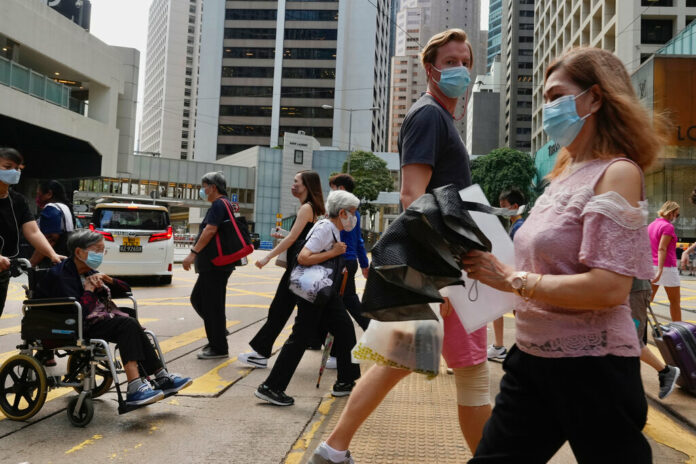
People wearing face masks to prevent the spread of coronavirus walk on a downtown street in Hong Kong, Tuesday, Aug. 17, 2021. Photo: Vincent Yu / AP
HONG KONG (AP) — Hong Kong will tighten entry restrictions for travelers arriving from the United States and 15 other countries beginning Friday, extending the quarantine period to 21 days.
Previously, the 15 countries, which also include Malaysia, Thailand, France and the Netherlands, were classified as medium-risk, with travelers able to serve only 7 days of quarantine if they were fully vaccinated and tested positive for antibodies prior to leaving for the city.
A resurgence of coronavirus cases in these countries due to the delta variant led the to be recategorized as high high-risk and stricter measures imposed, as the government sought to “uphold the local barrier against the importation of COVID-19,” it said in a statement.
The changes come after a domestic worker who had returned to Hong Kong from the U.S. earlier this month tested positive for the coronavirus, despite receiving two shots of vaccine and testing positive for antibodies.
Also Friday, the mandatory quarantine period was extended from 7 to 14 days for fully-vaccinated travelers with a positive antibody test arriving from Australia, now categorized as medium-risk. Quarantine requirements for New Zealand, which is the only country considered low-risk, remain at seven days for fully-vaccinated passengers.
Hong Kong’s “zero-Covid” strategy has seen authorities impose strict border restrictions and ban flights from extremely high-risk countries, in the hopes that no local community spread would allow it to re-open borders with mainland China.
The city had nearly two months of no cases within the local community, but its streak was broken earlier this month when a 43-year-old construction worker with no travel history was found to have antibodies in his blood despite not being vaccinated – indicating that he was probably infected some time ago.
Hong Kong has recorded a total of 12,037 coronavirus infections since the pandemic began, with 212 deaths.
In other developments in the Asia-Pacific region:
— Australia’s most populous state on Tuesday reported its third-highest number of daily infections of the pandemic, but the government leader said the spread of the delta variant in Sydney, the country’s largest city, had not yet peaked. There were 452 new infections recorded in New South Wales, down from 475 on Monday and 466 on Saturday. An unvaccinated woman aged in her 70s had died in a Sydney hospital on Monday, bringing the death toll from the outbreak discovered in mid-June to 53. New South Wales Premier Gladys Berejiklian said she expected daily infections counts to remain high. “We are assuming that case numbers will go up. Now, I say that only as a realist because when you have cumulative days of high case numbers, there is a tipping point where case numbers go up,” Berejiklian said. “But our challenge is to make sure that we keep vaccination rates up,” she added. About half of New South Wales’s population has had at least one injection of the two-shot Pfizer or AstraZeneca vaccine. The government wants 80% of the population fully vaccinated before it eases Sydney’s lockdown, which began on June 26.
— New Zealand has detected its first community case of the coronavirus in months, triggering urgent meetings among top lawmakers. Health officials say the positive case was found in Auckland on Tuesday afternoon and has no known link to the border. Prime Minister Jacinda Ardern is due to brief the nation within a few hours. She had promised a tough approach, including possible lockdowns, for any outbreaks of the delta variant as New Zealand continues to pursue a zero-tolerance approach toward the virus. The last community outbreak was in February and New Zealand has reported just 26 virus deaths among less than 3,000 cases since the pandemic began.