































31.1 C
Bangkok
Tuesday, June 9, 2026
Home Blog Page 1513

Saudi-Led Airstrikes Kill at Least 100 in Rebel-Run Prison

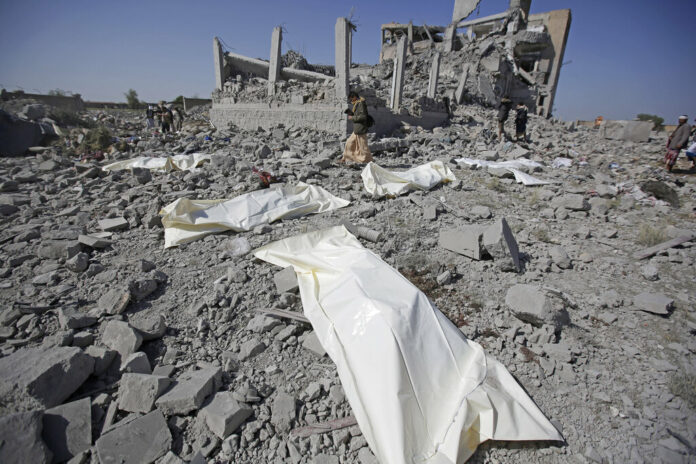
Bodies lie on the ground after being recovered from under the rubble of a Houthi detention center destroyed by Saudi-led airstrikes, that killed at least 60 people and wounding several dozen according to officials and the rebels' health ministry, in Dhamar province, southwestern Yemen, Sunday, Sept. 1, 2019. The officials said the airstrikes took place Sunday and targeted a college in the city of Dhamar, which the Houthi rebels use as a detention center. The Saudi-led coalition said it had hit a Houthi military facility used as storages for drones and missiles in Dhamar. Photo: Hani Mohammed / AP
Bodies lie on the ground after being recovered from under the rubble of a Houthi detention center destroyed by Saudi-led airstrikes, that killed at least 60 people and wounding several dozen according to officials and the rebels' health ministry, in Dhamar province, southwestern Yemen, Sunday, Sept. 1, 2019. The officials said the airstrikes took place Sunday and targeted a college in the city of Dhamar, which the Houthi rebels use as a detention center. The Saudi-led coalition said it had hit a Houthi military facility used as storages for drones and missiles in Dhamar. (AP Photo/Hani Mohammed)

SANAA, Yemen (AP) — The Saudi-led coalition fighting in Yemen staged multiple airstrikes on a detention center operated by the Houthi rebels in the southwestern province of Dhamar, killing at least 100 people and wounding dozens more Sunday, officials and the rebels’ health ministry said.

Franz Rauchenstein, the head of the Red Cross delegation in Yemen, suggested that the death toll could be higher after visiting the site of the attack, saying relatively few detainees survived. A Red Cross statement said the detention center held around 170 detainees. It said 40 of those were being treated for injuries and the rest were presumed dead.

“Witnessing this massive damage, seeing the bodies lying among the rubble, was a real shock. Anger and sadness were natural reactions,” Rauchenstein said.

The attack was the deadliest so far this year by the coalition, according to the Yemen Data Project, a database tracking the war. The coalition has faced international criticism for airstrikes that have hit schools, hospitals and wedding parties, killing thousands of Yemeni civilians.

Saudi Arabia intervened on behalf of the internationally recognized Yemini government in March 2015, after the Iran-backed Houthis took the capital. The conflict has claimed tens of thousands of lives, thrust millions to the brink of famine and spawned the world’s worst humanitarian crisis.

The attack comes as the Saudi-led coalition’s partners — chiefly the United Arab Emirates and an array of Yemeni militias — are increasingly at odds over the war’s aims. The past weeks have seen heavy fighting in Yemen’s south between Saudi-backed and Emirati-backed forces.

Yemeni officials said Sunday’s strikes targeted a college in the city of Dhamar, which the Houthi rebels were using as a detention center. The coalition denied it had struck a detention center, saying it had targeted a military site used by the rebels to restore drones and missiles.

“We were sleeping and around midnight, there were maybe three, or four, or six strikes. They were targeting the jail, I really don’t know the strike numbers,” wounded detainee Nazem Saleh said while on a stretcher in a local hospital. He said the Red Cross had visited the center two times before the airstrike.

A line of over a dozen white body bags were laid out in the rubble beside flattened buildings and crushed cars, while rescue workers dug through the debris.

“We have seen now under the ruble that there are still many, many dead bodies that its very, very difficult to extract,” said Rauchenstein.

The U.N. human rights office for Yemen said 52 detainees were among the dead, and at least 68 detainees were still missing.

The Red Cross, which inspects detention centers as part of its global mission, said it had visited detainees at the site in the past.

Former detainees said the Houthis had previously used the site to store and repair weapons.

Youssef al-Hadhri, a spokesman for the Houthi-run Health Ministry, said at least seven airstrikes hit three buildings in the complex overnight.

The rebels’ Health Ministry said in a statement that more than 60 people were killed in Sunday’s airstrikes and another 50 wounded. Later in the day, health officials said the death toll climbed to 65. The officials spoke on condition of anonymity because they were not authorized to brief media.

The Saudi-led coalition said it had hit a military facility “in accordance with international humanitarian law,” and that “all precautionary measures were taken to protect civilians.”

Col. Turki al-Maliki, a spokesman for the coalition, was quoted by the Saudi-owned Al Arabiya TV as denying the target was a prison.

Local residents said family members arrested for being critical of the Houthis were imprisoned in the detention center. They said at least seven airstrikes hit the area.

Omat al-Salam al-Haj, a mother of a detainee, said the center housed anti-Houthi political detainees who were rounded up over suspicions of cooperating with the coalition.

Former detainee Mansour al-Zelai said the Houthis were restoring weapons in and close to the detention center.

Houthi rebels have been using scores of sites as detention centers, including schools, mosques, and houses, filling them with thousands of political detainees to use later in prisoner-swap deals.

The Associated Press documented that many of these sites were rife with torture and abuses including Dhamar’s community college.

Former detainees recalled torture and abuses inside the detention center, which came under a series of airstrikes before.

Rights groups have also previously documented that Houthis place civilian detainees in detention centers as human shields by placing them next to army barracks, under constant threat of airstrikes.

In October 2016, an airstrike by the Saudi-led coalition hit a prison complex in the Red Sea port of Hodeida, killing at least 58 people, mostly prisoners. At the time, the coalition said the prison complex was used as a command center for Houthis.

On Sunday, Sweden’s foreign minister, Margot Wallstrom, met with Jordanian Foreign Minister Ayman al-Safadi in Amman to discuss her efforts to relaunch negotiations after years of stalemate between Yemen’s warring sides.

“Yemen has been at the center of my attention,” she said in a statement.

Wallstrom also met with Yemeni Prime Minister Maeen Abdulmalik Saeed and other government officials in Saudi Arabia’s capital, Riyadh, according the official Yemeni news agency SABA.

Airstrikes have also punctuated the infighting between erstwhile coalition allies in southern Yemen.

On Thursday, Emirati jets bombed convoys of Saudi-backed government forces, killing scores in series of airstrikes to prevent them from retaking the interim capital, Aden, from militias backed by the UAE.

The Emirati strikes sparked popular anger in Yemen against the UAE. Activists launched an online petition collecting signatures to “kick Emiratis out of Yemen” and members of the Yemeni government issued a statement demanding the president end the UAE’s role in Yemen.

On Sunday, UAE Minister of State for Foreign Affairs Anwar Gargash posted a reminder on Twitter that the coalition’s goal is to “confront the challenge of the Houthi coup.”

Story: Ahmed al-Haj and Samy Magdy. Maggie Michael in Cairo contributed to this report.
Advertisement

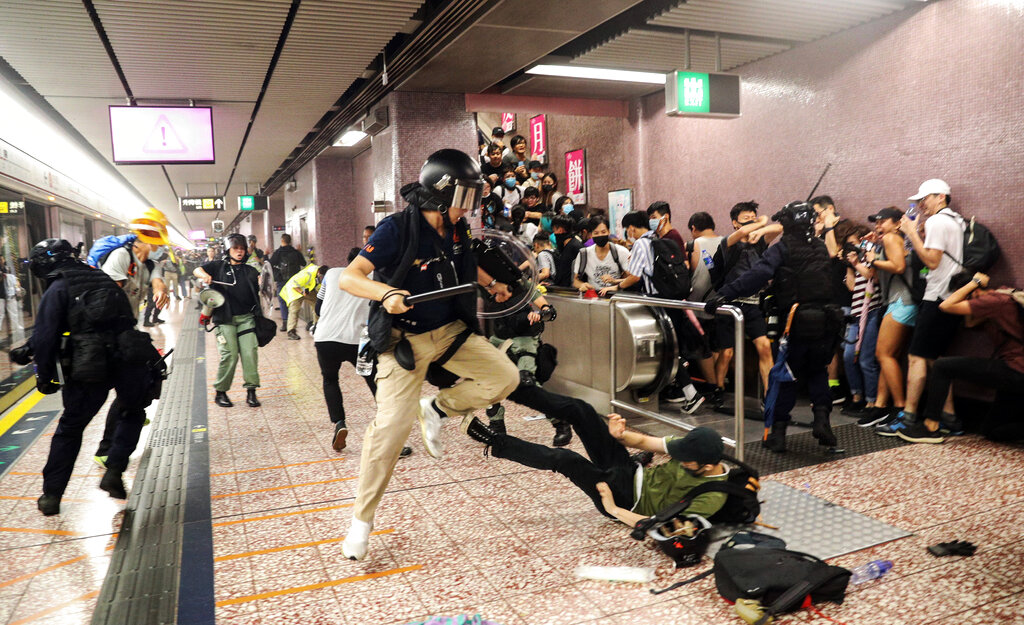
Hong Kong Police Storm Subway With Batons as Protests Rage

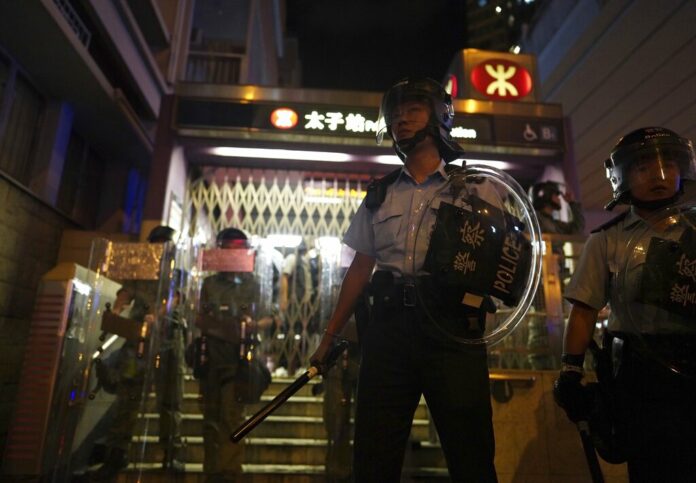
Police stand guard outside while police arrest protesters at Prince Edward MTR Station, Hong Kong, Saturday, Aug. 31, 2019. Hundreds of people are rallying in an athletic park in central Hong Kong as a 13th-straight weekend of pro-democracy protests gets underway. Photo: Vincent Yu / AP

HONG KONG (AP) — Protesters in Hong Kong threw gasoline bombs at government headquarters and set fires in the streets, while police stormed a subway car and hit passengers with batons and pepper spray in scenes that seem certain to inflame tensions further in a city riven by nearly three months of pro-democracy demonstrations.

Police had denied permission for a march Saturday to mark the fifth anniversary of a decision by China against fully democratic elections in Hong Kong, but protesters took to the streets anyway, as they have all summer. They provoked and obstructed police repeatedly but generally retreated once riot officers moved in, avoiding some of the direct clashes that characterized earlier protests.

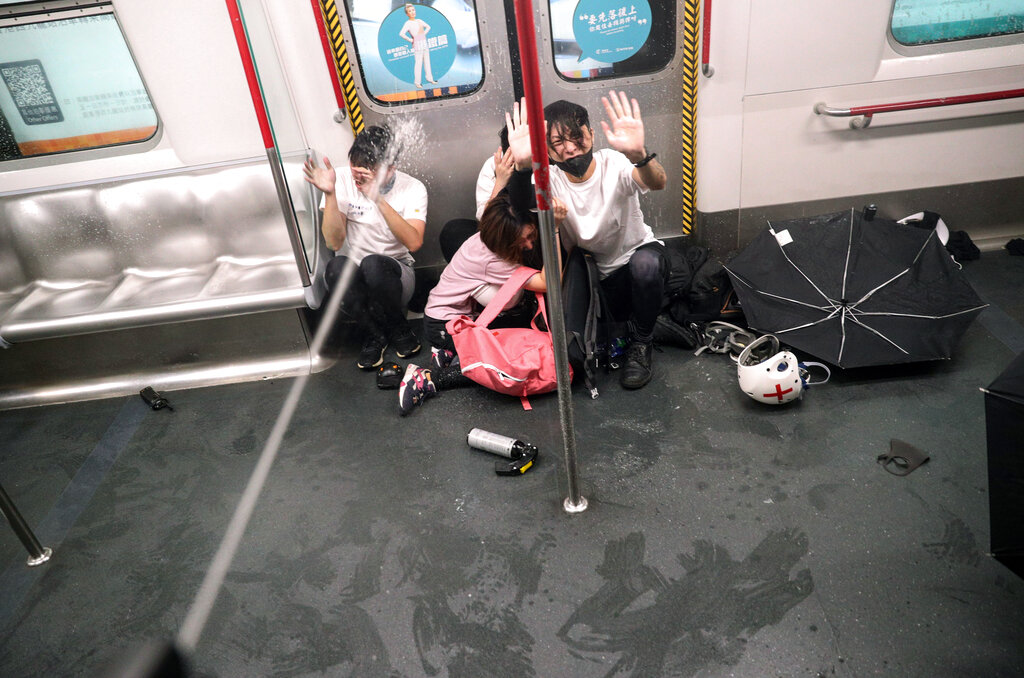
Late at night, though, video from Hong Kong broadcaster TVB showed police on the platform of Prince Edward subway station swinging batons at passengers who backed into one end of a train car behind umbrellas. The video also shows pepper spray being shot through an open door at a group seated on the floor while one man holds up his hands.

It wasn’t clear whether all the passengers were protesters. Police said they entered the station to make arrests after protesters assaulted others and damaged property inside. The TVB video was widely shared on social media as another example of police brutality during the protests. Angry crowds gathered outside Prince Edward and nearby Mong Kok station, where police said they made arrests after protesters vandalized the customer service center and damaged ticket machines.

Also Saturday, two police officers fired two warning shots into the air “to protect their own safety” after being surrounded by protesters near Victoria Park, the government announced. It was the second time police fired warning shots following an incident the previous weekend.

Protests erupted in early June in Hong Kong, a semi-autonomous Chinese territory of 7.4 million people. A now-shelved China extradition bill brought to the fore simmering concerns about what many in the city see as an erosion of the rights and freedoms that residents are supposed to have under a “one country, two systems” framework.

The mostly young, black-shirted protesters took over roads and major intersections in shopping districts on Saturday as they rallied and marched with no obvious destination in mind.

Authorities closed streets and a subway stop near the Chinese government office and parked water cannon trucks and erected additional barriers nearby, fearing protesters might target the building. The office would have been the endpoint of the march that police did not allow.

Instead, a group of hard-line protesters decided to take on police guarding government headquarters from behind large barriers that ring the building to keep demonstrators at bay.

While others marched back and forth nearby, a large crowd wearing helmets and gas masks gathered outside. They pointed laser beams at the officers’ heads and threw objects over the barriers and at them. Police responded with tear gas, and protesters threw gasoline bombs into the compound.

Then came the blue water. A water cannon truck fired regular water, followed by repeated bursts of colored water, staining protesters and nearby journalists and leaving blue puddles in the street.

The standoff continued for some time, but protesters started moving back as word spread that police were headed in their direction. A few front-line protesters hurled gasoline bombs at the officers in formation, but there were no major clashes as police cleared the area.

Protesters regrouped and blocked a major commercial street by piling up barricades and setting a large fire. Smoke billowed into the air as hundreds of protesters waited on the other side of the makeshift barrier, many pointing laser beams that streaked the night sky above them.

Firefighters made their way into the congested area on foot to put out the fire. Police in riot gear removed the barricades and moved in quickly. They could be seen detaining a few protesters, but by then, most had already left.

As police advanced east down Hennessey Road, protesters made another stand in the Causeway Bay shopping district. They threw gasoline bombs at police, who fired tear gas and water cannons.

Protesters built another fire, a smaller one, in front of Sogo department store. Police waited behind their riot shields while firefighters put out the smoldering fire with extinguishers. When police moved in, the protesters had again retreated.

Other groups crossed Hong Kong’s harbor to the Tsim Sha Tsui district, where police said they set fires and threw gasoline bombs on Nathan Road.

Democratic Party lawmaker Lam Cheuk-ting said Hong Kong citizens would keep fighting for their rights and freedoms despite the arrests of several prominent activists and lawmakers in the past two days, including activist Joshua Wong.

Protesters are demanding the full withdrawal of the extradition bill — which would have allowed Hong Kong residents to be sent to mainland China to stand trial — as well as democratic elections and an investigation into police use of force.

“I do believe the government deliberately arrested several leaders of the democratic camp to try to threaten Hong Kong people not to come out to fight against the evil law,” Lam said at what was advertised as a Christian march earlier Saturday.

About 1,000 people marched to a Methodist church and police headquarters. They alternated between singing hymns and chanting slogans of the pro-democracy movement. An online flyer for the demonstration called it a “prayer for sinners” and featured images of a Christian cross and embattled Hong Kong Chief Executive Carrie Lam, who had proposed the extradition bill.

The Civil Human Rights Front, the organizer of pro-democracy marches that have drawn upward of a million people this summer, canceled its march after failing to win police approval. Police said that while previous marches have started peacefully, they have increasingly degenerated into violence.

The standing committee of China’s legislature ruled on Aug. 31, 2014, that Hong Kong residents could elect their leader directly, but that the candidates would have to be approved by a nominating committee. The decision failed to satisfy democracy advocates in Hong Kong and led to the 79-day long Occupy Central protests that fall, in which demonstrators camped out on major streets in the financial district and other parts of the city.

Police attempt to arrest protesters at Prince Edward MTR Station, Hong Kong, Saturday, Aug. 31, 2019. Hundreds of people are rallying in an athletic park in central Hong Kong as a 13th-straight weekend of pro-democracy protests gets underway. Photo: Ring Yu / HK01 via AP
Police shoot pepper spray as they try to detain protesters inside a train at Prince Edward MTR Station, Hong Kong, Saturday, Aug. 31, 2019. Hundreds of people are rallying in an athletic park in central Hong Kong as a 13th-straight weekend of pro-democracy protests gets underway. Photo: Ring Yu / HK01 via AP

Story: Ken Moritsugu and Raf Wober. Alice Fung and Johnson Lai contributed to this report.
Advertisement

China Slams US Congressman’s Hong Kong Remark

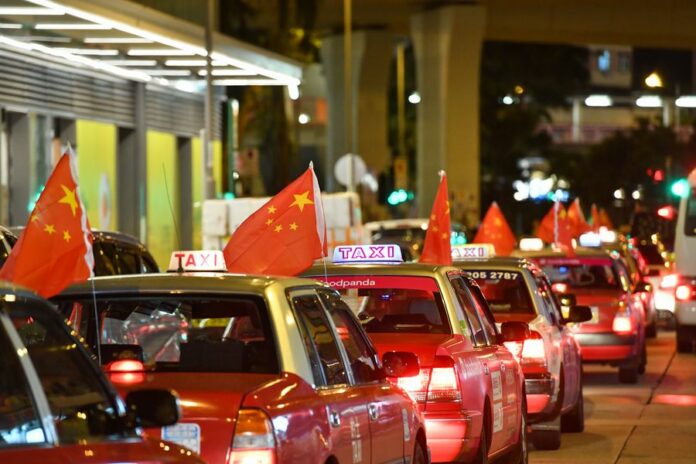
Taxis hanging China's national flags rally on the main streets of Hong Kong on Aug. 23, 2019. Photo: Liu Dawei / Xinhua

HONG KONG (Xinhua) — The Office of the Commissioner of the Chinese Foreign Ministry in the Hong Kong Special Administrative Region (HKSAR) on Sunday rejected some U.S. congressmen’s remarks on Hong Kong and strongly condemned their blatant interference in China’s internal affairs.

“We strongly condemn the concerned U.S. politicians’ blatant interference in the Hong Kong affairs, which are China’s internal affairs, by ignoring the facts and confounding black and white with a malicious intent,” a spokesperson of the commissioner’s office said in a statement released late Sunday.

The statement was in response to the recent remarks by Chairman of the U.S. House Committee on Foreign Affairs Eliot Engel and Congressman Michael McCaul on the violent radicals’ acts in Hong Kong, which slandered the Chinese central government’s policies for Hong Kong and pointed fingers at the law-based governance of the HKSAR government, the spokesperson said.

The egregious character of the ruthless acts by a small number of extreme rioters in Hong Kong is rare in the world, and the Hong Kong police had no choice but to use the minimum level of force to maintain social order and peace. It is not difficult for any unbiased person to identify the cause and effect, and distinguish between right and wrong, the spokesperson said.

However, some U.S. congressmen told lies unblinkingly, brazenly beautifying the rioters while nitpicking the policemen who have been enduring humiliation, the spokesperson pointed out.

“Do you really expect the police to stand aside with folded arms and let the rule of law in Hong Kong to degenerate? When similar violent acts happened in the U.S., you never hesitated to condemn verbally and in writing and strongly suppress them. Every righteous person will be indignant over and will despise this kind of hypocritical double standards and shameless logic of bandits,” said the spokesperson.

The extreme violence has lasted for more than two months in Hong Kong, causing serious damage to the economy, the society and people’s livelihood, the spokesperson said, but some U.S. politicians still applauded the extremists and rioters in a blatant display of their hope for a messier Hong Kong.

It’s very clear for the people to see they are the “black hands” behind the current chaos in Hong Kong, said the spokesperson.

Hong Kong is a part of China and the Hong Kong affairs are the pure internal affairs of China, the spokesperson said, urging those U.S. politicians to immediately stop interfering in Hong Kong affairs, otherwise they would end up lifting a rock only to drop it on their own feet.

Advertisement

Tourists Flock to China’s First VR Theme Park

An artist’s rendering shows the atrium of Lionsgate Entertainment World. Photo: Lionsgate

GUANGZHOU (Xinhua) — China’s first indoor VR theme park has become a popular destination for tourists since it started operation on July 31 in the Hengqin New Area in the city of Zhuhai, south China’s Guangdong Province.

Covering 22,000 square meters, the Lionsgate Entertainment World theme park offers about 30 interactive and immersive attractions to visitors, including a VR rollercoaster that instantly transports riders to ancient Egypt, and a world-first augmented reality motorbike experience themed around the Hollywood blockbuster “Twilight.” It is touted as “the world’s first movie-themed multi-sensory interactive center”.

The opening of the new park has given a boost to Hengqin’s push to become a prime tourist attraction in south China, just months after China’s State Council approved a proposal to turn Hengqin New Area into an island of international tourism.

The tourism-centered approach for the island is part of the much larger Guangdong-Hong Kong-Macao Greater Bay Area strategy and is aimed at the diversification of Macao’s current tourism offering, particularly by providing attractive alternatives to casinos and gaming.

Selena Magill, general manager of Lionsgate Entertainment World, is keenly aware of the opportunities brought on by the Hengqin New Area’s unique positioning, telling Xinhua that the park’s strategy is to increase the overall attractiveness of Hengqin to tap into the tourist market in Guangdong and the two adjacent SARs of Hong Kong and Macao.

Hengqin is already home to a major existing theme park, Chimelong Ocean Kingdom, which was the 10th most visited theme park in the world in 2018, attracting 10.83 million visits. Rather than viewing Chimelong as a competitor, Magill feels the two parks are complementary.

“Chimelong is already doing a wonderful job of bringing in millions of people each year, and we want to become part of that. I think that Hengqin will become one of the most-visited tourist destinations in China,” Magill said.

Rick Zeng, director of sales and marketing at Lionsgate Entertainment World, said that the park is echoing the central government’s call to develop the Greater Bay Area. In response, the local government has offered preferential support, including tax incentives and subsidies to the park’s developers, Hong Kong’s Lai Sun Group.

“We have received a lot of government support to meet the high expectation of building Hengqin into a tourism destination. When we imported all of the equipment from overseas, we received strong support from local customs and local authorities to clear the necessary procedures,” Zeng said.

According to Zeng, the park will also act as a platform for technological talent. Zeng said, “Apart from drawing in local and foreign tourists, the park will also serve as a career platform for young adults, especially technical talent, and will absorb some of the employment from the manufacturing sector that is becoming increasingly automated.”

As part of the 5.45 billion-yuan (761.8 million U.S. dollars) first phase of Novotown, a major development focused on non-gaming tourism, Lionsgate Entertainment World is banking its future on increased tourism demand in the region and a thirst for new-age experiences from Chinese consumers.

To cater to the local market, all audio-visual content is presented in Mandarin Chinese, despite their Hollywood roots. The park also houses an entire level themed around Macao, as depicted in the film, “Now You See Me 2.”

However, much of the park’s appeal stems from the high-tech attractions on offer, making use of the latest in VR and augmented reality technologies to combat skepticism that some hold toward VR technology in its current state.

“We have been able to take VR technology to an all-new level. Some people have a preconceived idea of what VR is and that it might be a bit limited. We have worked with a number of different vendors to make sure that we are delivering the latest and greatest technology,” Magill said.

Future-proofing the technology was an essential aspect of the design of the park, according to park operators, who expressed that the advantage of using VR technology is that it can be upgraded over time and can be adapted to new content.

Since its opening in late July, the park has welcomed thousands of visitors each day, but with the “Golden Week” of the National Day holiday approaching, the park’s focus now is on fine-tuning various elements to meet the tastes of domestic travelers and take a slice of the 2 million-plus visitors that have visited Zhuhai each year during the holiday since 2016.

A total of 18 billion yuan is expected to be invested in the Novotown project which houses Lionsgate Entertainment World, with a total of five phases planned. Executives at Lai Sun expect the project to propel Hengqin to become the “Orlando of China.”

Advertisement

Number of Chinese Online Readers Reaches 455 Millions

Villager Li Yongchang shows online shopping websites to his son in Liulin Village, Xingtai City of north China's Hebei Province. Photo: Liu Bin / Xinhua

BEIJING (Xinhua) — The number of Chinese online literature readers hit 455 million as of June 2019, increasing by nearly 23 million from December 2018 and accounting for 53 percent of the country’s total online population, according to the latest statistical report on China’s internet development.

Around 435 million people read works by online literary writers through mobile phones, registering an increase of 25 million from December 2018, said the report released by the China Internet Network Information Center.

With the advancement of procedure-based development of online literature, China has seen diversified business models for online literature, laying a sound foundation for the sector’s sustainable development, the report noted.

The influx of young authors, including many born in the 1990s, into the sector has provided new vitality for online literary writing, while the subjects of China’s online literary works are increasingly diverse, it said.

Meanwhile, the expanding overseas influence of Chinese online literature is providing new space for the sector’s revenue growth, the report added.

Advertisement

Flash Flood Kills 5 in North and Isaan

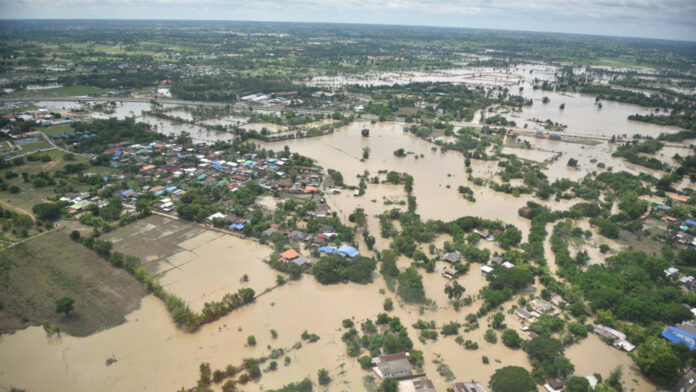
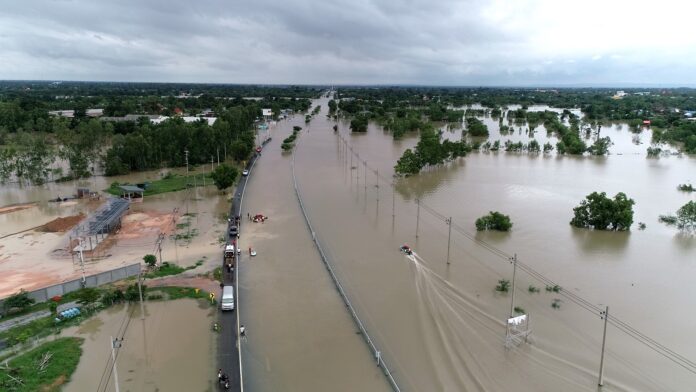
A bird's eye view of flooding Sept. 1 in Khon Kaen.

BANGKOK — Flash floods in the North and Isaan have killed a total of five people as the tropical storm Podul barrages through Thailand. 

Samorn Suekwan, 67, was swept away by a flash flood in Ubon Ratchathani’s Kut Khaopun district on Saturday. His body was found at a nearby stream where he had gone to catch insects.

Jamnong Buasaeng, 50, was killed by collapsing brick wall while he was sleeping in his house in Mueang Chaiyaphum district on Saturday.

Vieng Tongyoiyord, 58, was swept away by a flash flood in Phitsanulok’s Wang Thong’s district while he was trying to reach for a water storage jar on Saturday.

Sarawut Chanthopaeng, 20, was electrocuted while helping neighbors move their belongings away from floodwaters in Khon Kaen’s Ban Phai district on Saturday.

Chonthicha Archaroen, 18, was swept away by a flash flood in Mueang Roi Et district on Sunday. Her body was found three kilometers away from where she was reported missing.

As of Sunday, areas in 15 provinces are still inundated with floods: Phrae, Phetchabun, Phitsanulok, Uttaradit, Phichit, Chiang Mai, Amnat Charoen, Chaiyaphum, Mukdahan, Yasothon, Khon Kaen, Kalasin, Ubon Ratchathani, Roi Et, Maha Sarakham.

This is a developing story and may be updated without notice.

Related stories:

Flash Flooding Risk in 47 Provinces, Meteorological Dept. Warns

Tropical Storm ‘Podul’ to Shower Thailand

Advertisement

Flash Flooding Risk in 47 Provinces, Meteorological Dept. Warns

A section of Mittraphap Road in Khon Kaen was 1.5 meters under water on Aug. 31.

BANGKOK — Forty-seven provinces are at risk of flash floods and heavy rain due to tropical storm Podul, the Meteorological Department warned Saturday.

The warning comes as parts of Khon Kaen province have already been inundated by flash flooding. In some areas of Baan Pai district, the water level is reportedly as high as two meters and residents are being evacuated.

The Department said 80 percent of Bangkok and surrounding areas will experience rainfall and possible thunderstorms in the next 24 hours. Drivers are being told to be vigilant.

Northern provinces listed in the flood warning and heavy downpour forecast include Chiang Mai, Tak, Sukhothai, and Nan provinces. In the Northeastern region, Surin, Nakhon Ratchasima, Buriram, and Khon Kaen were listed.

Central provinces listed include Suphan Buri, Ratchaburi, and Nakhon Sawan.

In the South, Prachuab Khirikhan, the province of Hua Hin resort town, is listed along with other seaside areas such as Phuket, Krabi, and Trang.

Related stories:

Tropical Storm ‘Podul’ to Shower Thailand

Advertisement

Opinion: In Thailand, It’s Guilty Until Proven Innocent – After Death

Abdulloh Esomuso seen on a hospital bed shortly before his death.

Any justice-loving society would be outraged if a citizen was found unconscious while in military custody, before dying in hospital. But not in Thailand apparently, and particularly if that citizen is suspected of being a Malay-Muslim separatist insurgent.

Such was the fate of 34-year-old Abdulloh Esormusor, who died earlier this week on Sunday after spending a day under military custody. He had been taken to hospital unconscious, only to spend a month lying comatose until his death.

Though authorities have denied the involvement of torture, there were conveniently no CCTV records of his final hours as a conscious man. He spent his last hours detained in the deep south, a region that was once a proud and independent Islamic kingdom before being swallowed up as a part of today’s Thailand.

Innocent until proven guilty should be the rule in any justice-loving society. But a different story played in Thailand out this week.

There has been no independent investigation into Abdulloh’s death as of press time. By Tuesday, a key member of the National Human Rights Commission’s sub-committee overseeing the deep south, Anchana Heemmina, had resigned, citing her inability to work due to “limitations in accessing information”.

The family of the deceased has told the media they don’t trust the government to carry out an autopsy.

To add insult to injury, the family’s call for monetary compensation was met by Deputy Prime Minister Gen. Prawit Wongsuwan’s insistence on Wednesday that Abdulloh first be proven innocent.

Can a dead man talk? Can a dead man defend himself? Was Abdulloh not already innocent until proven guilty?

These questions may outrage some readers but other Thais don’t really care.

More news and attention over the past week went to the death of baby dugong Marium. “Can a dugong set a bomb?” replied Twitter user @FirefoxChorme to my observation that Marium’s death on Aug. 17 gathered more sympathy than Abdulloh’s.

Ironically, more clarity surrounds the conditions which led to Marium’s death (the ingesting of plastic waste) than that of Abdulloh’s.

It’s good that there’s a national outcry about Marium’s death, but we need a national outcry about Abdulloh’s death as well. We need demands for justice so deaths in custody don’t ‘mysteriously’ occur again.

For years, suspects in the deep south have been almost automatically demonized. They are often regarded by many Thais as guilty until proven otherwise. It’s no mystery why violence in the deep south is unlikely to end any time soon.

Advertisement

Gov’t Warns Public Not to Criticize Constitutional Court

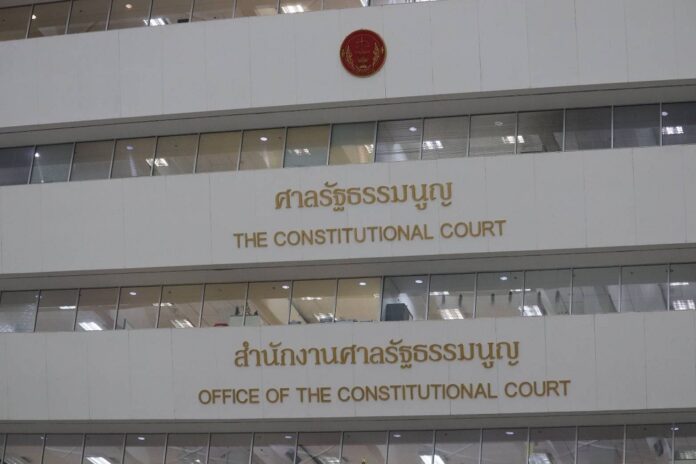
A file photo of the Constitutional Court's office in Bangkok.

BANGKOK — Deputy Prime Minister Wissanu Krea-ngam said criticism of a top court dealing with prominent political cases might result in prosecution of the critics themselves.

His warning came after the Constitutional Court summoned two academics for the comments they made about the very same court. Citing a new law implemented earlier this year, Wissanu said criticism of the court or its verdicts can be considered a contempt of the court.

“Everyone has to be careful when they express their opinion,” the deputy prime minister told reporters. “When it comes to contempt of court, the court may press charge by itself without anyone filing a complaint.”

Read: Ever-Expanding Contempt of Court Law Worries Lawyers

Academic and writer Sarinee Achavanuntakul received a summons from the Constitutional Court earlier this week after she wrote an opinion piece in Krungthep Turakit newspaper back in May.

In the article, Sarinee argued the judges might have acted too heavy-handed when they disqualified a Future Forward Party candidate from running the March election based on their “careless” interpretation of an election law.

As a result, the Constitutional Court summoned Sarinee for questioning in a contempt of court charge. The document also named an editor of Krungthep Turakit as a co-defendant. The newspaper has since deleted the article from its website.

Political scientist Kovit Wongsurawat also reported receiving a similar summons from the court, which is tasked with deliberating on legal debates that often involve national politics.

Kovit said the summons mentioned his Twitter post in which he called the court “shameless” for suspending the Future Forward Party leader but not government MPs who were accused of similar wrongdoing.

Contempt of court, once restricted to mostly disruptive acts in courtrooms and refusal to carry out judges’ orders, appears to have expanded to criticism of the judicial powers in recent years.

In a new organic law enacted in March, any “dishonest” criticism of the Constitutional Court can be regarded as contempt of court. Such charges are tried by the same court that issued them.

Speaking at a news conference today, Future Forward deputy leader Piyabutr Saengkanokkul said the court must be subject to scrutiny.

“Why can’t the owners of sovereign power criticize organizations who wield that power on their behalf?” said Piyabutr, a former law lecturer. “We can see people criticizing MPs, politicians, the Parliament, and the government. In the same way, they must be free to criticize the court.”

Advertisement

Immigration Says TM30 Fix Underway, Pleads for Understanding

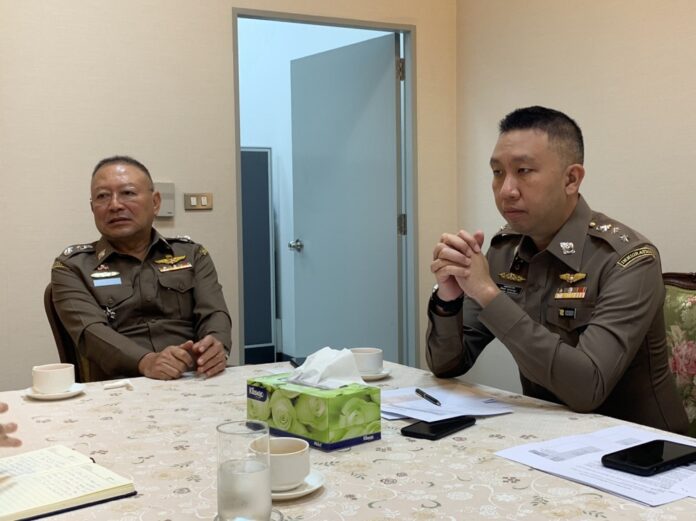
Maj. Gen. Patipat Suban na Ayudhaya, left, and Col. Thatchapong Sarawanangkul, speak to Khaosod English on Aug. 28, 2019, at Immigration Division 1 office in Bangkok.

BANGKOK — Bangkok’s immigration chief is no rookie. He’s been in the service for 35 years, but current immigration protocols have been in place even longer.

“Things were very different back then,” Maj. Gen. Patipat Suban na Ayudhaya said. “First, there weren’t so many foreign residents at the time. So the system we implemented didn’t have this many problems either.”

“When there weren’t many people, it was easy,” he said.

Patipat and his deputy Thatchapong Sarawanangkul spoke in an hour-long interview on Wednesday in response to growing confusion and complaints over the sudden enforcement of decades-old immigration rules. Regulations require expats to report to officials every time they leave the provinces of their registered address for over 24 hours – even for a vacation.

108498401 mediaitem108498400
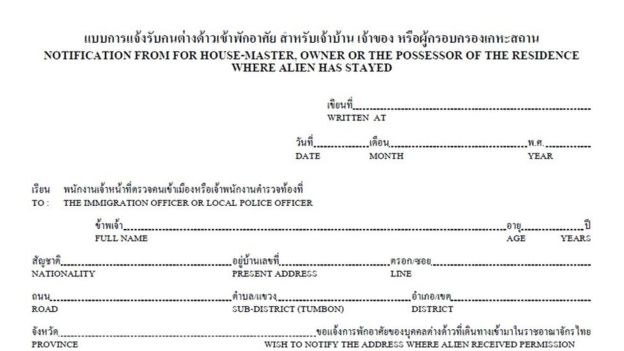
Example of a TM30 form.

The rules, enshrined in the 1979 immigration law which has not been revised or updated since, were long laxly enforced. Maj. Gen. Patipat said he understands that many are not happy with the law, but the police have no option but to follow it.

“Some of the rules may not be modern, but we are trying to be modern now. We will not always be million-year-old turtles,” Patipat said. “But in terms of the law, we have no power to change it. It’s not under our authority … if you want change, you have to change the law.”

A Faster System

Expats living in Thailand are subject to a dizzying array of regulations. The chief complaints are over TM30 forms, which must be submitted by foreign residents or their Thai landlords to local immigration bureaus every time they leave their residence for 24 hours (and when they return).

The forms must also be submitted alongside passports or ID cards, and either house registration books (in case of houses), or land deeds or proof of sales (in case of condominiums).

Although the form can be completed online, many foreigners complain it takes weeks, or even months, to request a username and password. Patipat said even his son had to wait two weeks when trying to report guests staying in his AirBnb (“He complained about it to me!”).

However, his deputy, superintendent Thatchapong, said a new system was put in place recently, which he claims will reduce waiting times to a week or so.

Thatchapong said the problems arise from missing information. Unlike online visa applications, no “red mark” alerts applicants when they fail to complete certain information or attach required documents. Immigration officials then have to make inquiries for more information.

“Someone even sent us a selfie of himself and his Thai wife, instead of a document,” Thatchapong said.

Both men also insist information filed by foreigners and their landlords is only stored at immigration and not forwarded to any other agency, be it tax auditors or hotel law regulators.

Asked to confirm if, say, unregistered Airbnb hosts could face repercussions after submitting TM30 information, Patipat replied, “Why would we arrest them? It’s not our job. We only want to take care of foreign visitors.”

Targeting Good Guys?

The immigration bureau’s mantra of “good guys in, bad guys out” hasn’t convinced everyone, if reactions from the audience at a recent panel discussion were any indicator (“We were pretty bruised,” Thatchapong said).

Why – a common question from many expats – force “good guys” to abide by a byzantine bureaucracy when the “bad guys” would never bother to file proper TM30 documents?

Patipat conceded that criminal elements like “call center” scammers rarely enter the process at all. But the rules might still force landlords and homeowners to check their residents’ credentials and submit them to the authorities to deter any wrongdoers.

108498401 mediaitem108498400 1
Krabi immigration police with two suspects on visa violations in October 2018.

“If everyone follows the rules, it would be hard for them to base their operations in Thailand,” the major general said. “But when the rules are lax, the criminals tell each other.”

Thatchapong also said the measures ensure the authorities know where foreigners are in case of emergency, and alleviate homeowners’ worries about the identities of their guests.

Both men admit the troubles lie in the reporting process.

“I think everyone understands our reasons,” Maj. Gen. Patipat said. “If we make it convenient to obey the law, then everyone will do it.”

Stretched Thin

But the bureau might simply be too overwhelmed to meet the needs of a rapidly expanding expat community and the complexity of modern-day travels.

There are about 5,000 immigration officers around Thailand, who welcome 35 million – and growing – visitors each year.

Roughly only 250 of those officers are staffed at immigration’s Division 1, which oversees the entire expat and tourist population of Bangkok, on top of migrant workers from the Kingdom’s neighboring countries.

S 9691173
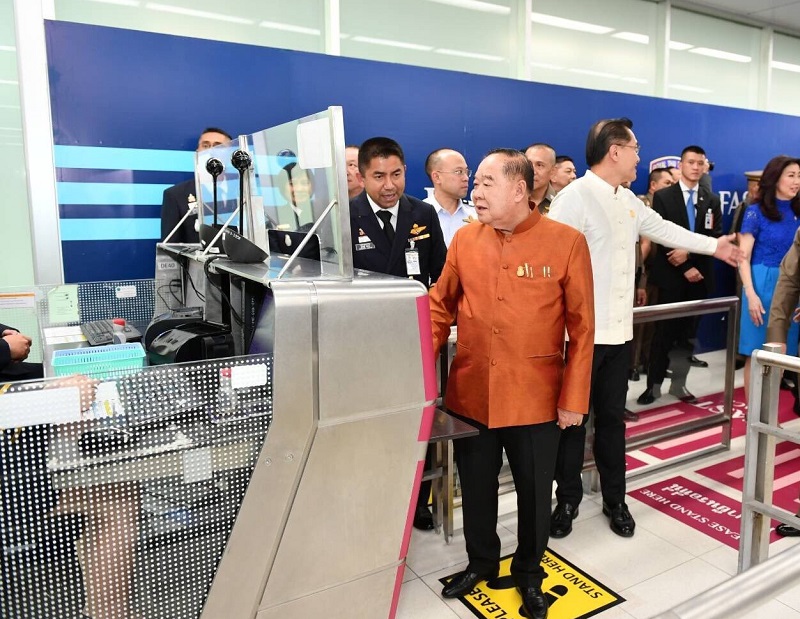
Government officials check out a new immigration counter.

Patipat believes there’s a jarring disparity between the government’s priority of bringing in more tourists, and the resources it allots to the people responsible for those visitors. For instance, airport authorities have not expanded the immigration channel at Suvarnabhumi Airport for years, despite a recent boom in arrivals.

“More people are using the airport, but they don’t give us more booths, so of course there are longer lines. And who gets the blame? Immigration,” Patipat said with emotion. He added that the new Suvarnabhumi terminal being built will likely befall similar problems.

“Immigration is always the last thing they think about,” he said. Asked what the government can do to help, Bangkok’s immigration commander said more stable infrastructure is needed for efficient and smooth service.

“That, and some understanding,” Patipat said.

Advertisement

Hot News

LATEST NEWS

Bangkok
overcast clouds
31.1 ° C
31.6 °
28.3 °
73 %
3.7kmh
100 %
Mon
29 °
Tue
35 °
Wed
34 °
Thu
34 °
Fri
28 °