32.2 C
Bangkok
Sunday, June 7, 2026
Home Blog Page 1543

Thai Airways To Charge Extra For More Legroom

File photo of cabin service abroad Thai Airways. Photo: Thai Airways.

BANGKOK — Thai Airways will begin charging extra for front row seats starting Monday, citing the need to “increase revenue.”

Seats in the cabin’s front row and in the emergency exit row, known as “preferred seats,” on the national carrier’s economy-class, international flights will incur extra fees due to the extra legroom and earlier onboard service, according to a press release.

Wiwat Piyawiroj, vice president of Thai Airways, said many full-service airlines charge such fees to meet passenger demands on long-haul flights.

“Twenty-five premium airlines in the Star Alliance already collect additional fees for front-row seats. We are the latest airline to introduce the scheme,” Wiwat said.

“Preferred seat” prices range from 480 to 3,195 baht, depending on the flight’s duration. A front row seat on a flight between Bangkok and Munich, for example, costs 3,195 baht.

In another new scheme, business-class passengers will now have the option to buy unsold first class seats aboard the carrier’s Boeing 747-400 flights at discounted rates.

According to safety requirements, passengers sitting in the emergency exit row must be physically fit and willing to cooperate with cabin crew in an emergency.

Thai Airways is experiencing a net loss of 11 billion baht, citing the rising costs of air fuel. Even so, the carrier is eyeing up a new fleet of 38 planes worth a total of 130 billion baht, which the airway’s parent agency, the Ministry of Transport, has said is necessary to replace inefficient older models.

Related stories:

Thai Airways Chides Flight Attendants for Thanathorn Selfies

Advertisement

Teen Climate Activist Gets Normandy’s First Freedom Prize

Swedish climate activist Greta Thunberg takes part in the school strike demonstration Fridays for future in Berlin, Germany, July 19, 2019. Photo: Paul Zinken / dpa via AP

PARIS — Swedish teen climate change activist Greta Thunberg has received the first Freedom Prize awarded by France’s Normandy region, which last month commemorated the 75th D-Day anniversary.

Thunberg, 16, received the award in Caen on Sunday, posing alongside D-Day veterans Charles Norman Shay and Léon Gautier.

Thunberg said that “I think the least we can do to honor them is to stop destroying that same world that Charles, Leon and their friends and colleagues fought so hard to save.”

She sent out a warning that “we are currently on track for a world that could displace billions of people from their homes, taking away even the most basic living conditions … making areas of the world uninhabitable for parts of the year.” But she added, “We can still fix this.”

Advertisement

Venezuela Capital in the Dark Again After Massive Blackout

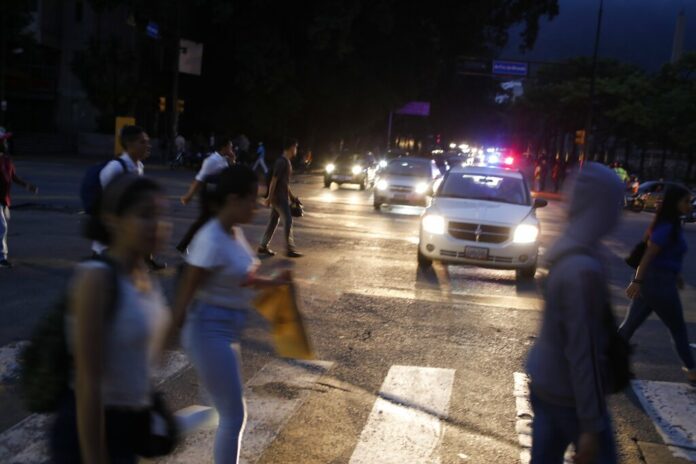
People cross a street during a blackout in Caracas, Venezuela, Monday, July 22, 2019. The lights went out across much of Venezuela Monday, reviving fears of the blackouts that plunged the country into chaos a few months ago as the government once again accused opponents of sabotaging the nation's hydroelectric power system. Photo: Ariana Cubillos / AP

CARACAS — The lights went out across much of Venezuela Monday, reviving fears of the blackouts that plunged the country into chaos a few months ago as the government once again accused opponents of sabotaging the nation’s hydroelectric power system.

The power in the capital went out after 4 p.m. (2000 GMT) and immediately backed up traffic as stop lights and the subway stopped working during rush hour.

“This is horrible, a disaster,” Reni Blanco, a 48-year-old teacher, said as she joined a crush of people who flooded into the streets of the capital trying to make it home before nightfall.

Almost three hours into the blackout authorities broke their silence and blamed an “electromagnetic attack” on a series of dams located in southern Venezuela — the same culprit it attributed an almost week-long outage in March that left millions of Venezuelans without water or the ability to communicate with loved ones.

“Those who’ve systematically attacked the noble people of Venezuela in all kinds of ways will once again be confronted with the mettle and courage that we, the children of our liberator Simón Bolívar, have demonstrated in the face of difficulties,” Communications Minister Jorge Rodríguez said in a statement read on state TV.

Rodíguez said authorities were working to restore electricity as quickly as possible. He said security forces had been deployed, and contingency plans activated, to guarantee basic medical services and keep streets safe.

But as night fell on Caracas many were wondering how long they would be left in the dark.

“Without light we have nothing,” said María Teresa González, fretting over the meat she had in her freezer if the outage wore on as she walked her dog in the last rays of the evening sun.

Reports on social media said that 19 of 24 Venezuelan states were also affected. Netblocks, a group monitoring internet activity, said network data showed most of Venezuela was knocked offline with national connectivity at just 6% after the latest cuts. Normally non-stop state TV, a key way for the government to keep people informed, was also off the air for a while, adding to frustrations.

President Nicolás Maduro blamed the March outage on a U.S.-sponsored attack against the nation’s biggest hydroelectric dam. More recently, as power service in the politically turbulent capital has improved amid widespread rationing in the interior, officials have even taken to downplaying the outages as similar to a nationwide blackout in Argentina and even one that knocked off the power for several thousand residents of Manhattan for a few hours amid the summer heat.

But his opponents said the outage laid bare years of underinvestment in the nation’s grid by corrupt officials who mismanaged an oil bonanza in the nation sitting atop the world’s largest crude reserves.

“They tried to hide the tragedy by rationing supplies across the country, but their failure is evident: they destroyed the system and they don’t have answers,” opposition leader Juan Guaidó said on Twitter.

Guaidó, who the U.S. and more than 50 other nations recognize as Venezuela’s rightful leader, reiterated an earlier call for nationwide protests on Tuesday.

“We Venezuelans won’t grow accustomed to this,” he said.

Much of the government’s focus since the March blackouts has been on repairing transmission lines near the Guri Dam, which provides about 80 percent of Venezuela’s electricity.

José Aguilar, a U.S.-based power expert who hails from Venezuela, said that alternative power plants running on diesel fuel and gas are unable to make up the difference.

He estimates that since the March outages the country has lost about 1,200 Megawatts of thermal power, or about 40% of its thermal generating capacity at the start of the year, as the government overburdens the fragile system in a desperate attempt to keep the lights on in Caracas and other cities.

“Even in the best-run grids equipment is going to fail,” Aguilar, who is an informal adviser to Guaidó on electricity issues, told The Associated Press. “But when you operate on a limb, outside of safe limits, you expose yourself to these types of domino events. It’s like Russian Roulette.”

Despite the risks of another extended collapse, some Venezuelans were taking the blackout in stride.

Cristian Sandoval, a 37-year-old owner of a motorcycle repair business, said he is more prepared for a prolonged outage having equipped his home with a water tank and a generator for his workshop. As Venezuela’s crisis deepens, the sale of electric generators is one of the few growth industries in a country ravaged by six-digit inflation and cratering public services.

“If the blackout continues we’ll have another round of dessert,” he chuckled while sharing a piece of chocolate cake with a friend at a cafeteria growing dark as the night began to fall.

“But it’s very difficult for the people,” he conceded. “This creates a lot of discomfort.”

Story: Fabiola Sánchez and Joshua Goodman. Christopher Torchia, Scott Smith and Christine Armario contributed to this report.

Advertisement

Duterte: Can’t Stop China in Disputed Seas, Won’t Risk Clash

Philippine President Rodrigo Duterte talks during his 4th State of the Nation Address at the House of Representatives in Quezon city, metropolitan Manila, Philippines Monday July 22, 2019. Photo: Aaron Favila / AP

MANILA — Philippine President Rodrigo Duterte said Monday there was no way to stop Chinese from fishing in his country’s exclusive economic zone and he would not risk losing Filipino forces in a clash in the disputed South China Sea.

“When Xi says ‘I will fish,’ who can prevent him?” Duterte said as he defended his nonconfrontational approach to China over the territorial disputes in his annual state of the nation address before a joint session of Congress. He was referring to Chinese President Xi Jinping.

“If I send my marines to drive away the Chinese fishermen, I guarantee you not one of them will come home alive,” Duterte said, adding that diplomatic talks with Beijing have allowed the return of Filipinos to disputed fishing grounds where Chinese forces previously shooed them away.

Critics have repeatedly criticized Duterte, who has nurtured friendly ties with Beijing, for not standing up to China’s aggressive behavior in the disputed waters and deciding not to immediately seek Chinese compliance with an international arbitration ruling that invalidated Beijing historic claims to virtually the entire sea. China has refused to recognize the 2016 ruling.

The decision also found that China had breached its duty to respect the traditional fishing rights of Filipinos when Chinese forces blocked them from the Scarborough Shoal off the northwestern Philippines in 2012. The Philippines, however, could also not deny Chinese fishermen access to Scarborough, according to the ruling. But the decision did not specify any traditional fishing areas within the Philippines’ exclusive zone where the Chinese could be allowed to fish.

An exclusive economic zone is a 200-nautical-mile (370-kilometer) stretch of water where a coastal state has exclusive rights to fish and exploit other resources as well as undersea gas and oil based on the 1982 U.N. Convention on the Law of the Sea.

On his battle against illegal drugs and corruption, Duterte asked Congress to reinstate the death penalty for drug-related heinous crimes and economic plunder. He said the drug menace, which he called a “social monster,” could not be crushed unless corruption is eliminated.

The Philippines’ long-simmering territorial rifts with China and Duterte’s centerpiece campaign against illegal drugs and corruption were spotlighted in his speech. But he also asked for Congress’s help in dealing with diverse social ills and governance issues ranging from slow internet services and delays in releases of government clearances to traffic jams.

Duterte outlined problems he had resolved, sometimes through scare tactics, like the easing of a water shortage last summer in Manila, the capital, after he threatened to fire officials.

Although the annual speech is traditionally replete in protocol and formality, he injected sexual jokes, curses and threats that have been the trademark of his often-rambling speeches. During the Manila water crisis, for example, he said he did not want to travel to the city. “What if my girlfriend will not be able to take a bath, she will smell like hell,” he said.

When he asked Congress to pass new tax reforms that would further raise excise taxes on tobacco and alcohol, Duterte asked if there were any smokers in the audience, which included foreign diplomats: “Who smokes here? They should be exterminated from the face of the earth.”

Duterte, 74, took office in June 2016 and has remained hugely popular in opinion polls despite drug war deaths that have sparked international alarm and other controversial policies.

More of his allies captured congressional seats in midterm elections in May, giving them a tighter grip on the legislature, especially in the 24-member Senate, which opposed some of his key legislative proposals last year, including reinstating the death penalty and amending the pro-democracy constitution.

More than 5,200 demonstrators rallied despite a downpour outside the House complex to call for Duterte’s removal, while a smaller number of pro-Duterte supporters protested separately. Left wing protesters burned a mock Chinese flag and a giant mural with images of Duterte, Chinese President Xi and U.S. President Donald Trump.

Military and police were placed on full alert and authorities declared a no-fly zone over the venue and outlying areas to ensure security.

“We have had enough of this government’s ‘kill, kill, kill’ policy,” said Danilo Ramos, a left wing leader of a farmers’ group. “The Duterte presidency is killing its constituents in so many ways.”

Story: Jim Gomez.

Advertisement

“Daikin” signs MOU with Department of Skill Development, Aiming to continuously upskill Thai AC mechanics

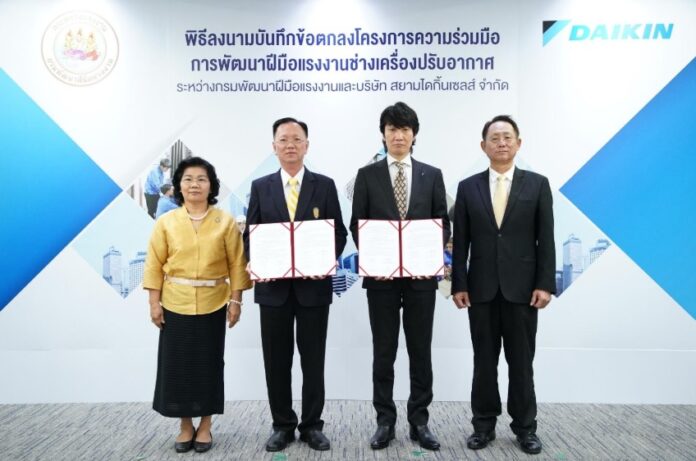
Siam Daikin Sales Co., Ltd., an innovation leader of Daikin’s air-conditioning system, with the Department of Skill Development, signed an MOU on the upskilling of Thai air-conditioning technicians to set an initiative for Thai AC mechanics to fully develop their capabilities and meet international standards, and carry on its purpose to create a skilled workforce and upskill professional air-conditioning technicians nationwide.

After continuously collaborating with the Department of Skill Development to upskill Thai air-conditioning technicians by hosting “Chang Air DD” (Talented AC Techs), a training program aiming to give nationwide AC mechanics opportunities to grow professionally and entrepreneurially, Siam Daikin Sales Co., Ltd. was ready to further the campaign by signing the MOU on the upskilling of Thai air-conditioning technicians with the Department of Skill Development in order to set up a clear direction for the skill development of Thai AC mechanics. The signing ceremony between Mr. Akihisa Yokoyama, President, and Mr. Bundit Srivallapanondh, Managing Director, of Siam Daikin Sales Co., Ltd. and Mr. Suchat Pornchaiwiseskul, Director-General of the Department of Skill Development, with witnesses from both parties, was recently held at Pakorn  Angsusingh Room, 10 Fl., DSD Building.

 Of this MOU signing ceremony, Mr. Bundit Srivallapanondh, Managing Director of Siam Daikin Sales Co., Ltd., said that “For better collaboration between Daikin and the Department of Skill Development regarding the upskilling of air-conditioning technicians, an MOU on the upskilling of air-conditioning technicians was signed. After this, we will join forces to continuously and seriously develop the labor skills of Thai air-conditioning technicians to meet international standards through free training courses that highlight both theoretical and practical knowledge for interested AC techs like we’ve been doing. The participants will also receive a certificate from the Department of Skill Development to guarantee their skills after completing the training. Moreover, we’re also planning to develop the curriculum to be broader and more in-depth, so that Thai air-conditioning mechanics will have well-rounded skills that can truly match with the needs of every type of customers”.

         After the signing ceremony of the MOU on the upskilling of air-conditioning technicians between Siam Daikin Sales Co., Ltd. and the Department of Skill Development is over, a certificate award ceremony was also held for 16 Daikin’s mechanics who have passed the Examination of the National Labor Standard in the field of households and small commerce’s air-conditioning technicians, level 1. This confirmed the standard of Daikin’s air-conditioning mechanics and guaranteed the efficiency of their skillful performances.

Advertisement

TCEB connects MICE business all over Thailand and increases trade opportunity with Thailand’s first E-MICE marketplace “Thai MICE Connect”

TCEB ventures on to drive MICE industry 4.0 in Thailand with the country’s first E-MICE marketplace to give more business opportunities to MICE entrepreneurs through the pioneer project “Thai MICE Connect” into 3 regions; the central, the south and the northeast regions of Thailand in 2019. 


Mr. Chiruit Isarangkun Na Ayuthaya, President of Thailand Convention & Exhibition Bureau (TCEB) states that MICE business is a vital platform that connects several different industries, from tourism to hotels and hospitality and logistics. As governmental organization, TCEB is tasked to promote MICE business under the vision of the government’s three main pillars: generation of income, distribution of income to different parts of Thailand and development of MICE industry with innovation, to further strengthen Thai MICE business with equality of opportunity and sustainability. 


TCEB values the importance of national MICE information development to distribute income to other parts of Thailand reduce inequality of opportunity in the MICE industry. TCEB recently launched Thailand’s central information system to benefit both the public and the private sectors, give more opportunity to MICE businesses all over Thailand to market their products, research and further improve MICE knowledge and know-how in macro scale. With collaboration with more than 10 public and private organizations, TCEB raises the bar of MICE industry in Thailand with information innovation that allows for systemized information collection from entrepreneurs in each region. Thai MICE Connect is to become the comprehensive gateway to access all information concerning MICE industry. With precision, comprehensiveness and extensive coverage, Thai MICE Connect is Thailand’s first complete-Marketplace for MICE businesses. 


Thai MICE Connect is divided into two phases. The first phase commences in the fiscal year of 2019 in central Thailand, the south and the northeast. The latter begins in the fiscal year 2020 in the north and the east of Thailand. 

 

To fully implement the platform, TCEB is hosting training sessions for businessowners on how to maximize the use of Thai MICE Connect and equip them with know-how to market their businesses on an e-marketplace. During the first phase, the training will be hosted in central Thailand in Bangkok, Ayutthaya, Kanchanaburi and in the south in Phuket, Songkhla, Surat Thani and Nakon Sri Thammarat. In the northeast, the training will take place at Khon Kaen, Udon Thani, Nakon Ratchasima and Ubon Ratchathani. The training will run from July 25 to September 9, 2019, and more than 5,000 participants are expected to attend. 


Thai MICE Connect systemizes the collection of information in E-MICE marketplace. For the first time in Thailand, all information concerning MICE industry as well as insights on its demand and supply chain is surveyed, analyzed and organized to be the national database. Presented in Thai and English, users can access information from Thailand and abroad and take advantage of the information pool of MICE products, services, sellers and producers in the Thai MICE industry anytime, anywhere. Thai MICE Connect maximizes the convenience and competency of Thai MICE industry and caters to the digital MICE trend, allowing MICE businesses to extend their clientele to international markets in one platform. 


Mr. Chiruit Isarangkun Na Ayuthaya, President of Thailand Convention & Exhibition Bureau (TCEB) continues that, “Thai MICE Connect will become the new, innovative platform for Thai MICE industry to compete in the new global market where entrepreneurs are required to constantly learn and improve their products and services to distinguish themselves in the market. Presented in E-MICE marketplace platform, Thai MICE Connect give stars to entrepreneurs that update their product and service information frequently, by means of images and promotion news. TCEB also aims to motivate MICE entrepreneurs to participate in the training session to further develop their business prospects with self-evaluation system. TCEB also offers workshops for information collection and digital marketing where participants can exchange their knowledge to further develop the tools that are most suitable for their businesses.” 


Thai MICE Connect: E-MICE Marketplace will be official and live launched on October 15 to become the first and most comprehensive e-market platform for MICE businesses all over Thailand and bridge the gap between all sizes of sellers and buyers domestically and internationally. For the first time in Thailand, the e-marketplace platform is to drive the Thai MICE industry to the global stage. In 2019, TCEB looks to build database of at least 10,000 MICE entrepreneurs in central Thailand, the south and the northeast, and expand to cover the north and the east in 2020 to full cover the MICE industry of Thailand. 

Advertisement

16-Year-Old Beaten to Death in SOTUS Hazing: Activists

Pantadon Boonklong’s coffin is lowered into his grave on July 22, 2019.

BANGKOK  — A teenager has died from a heart attack due to injuries sustained from hazing activities, an activist said Monday.

Pantadon Boonklong, 16, a Matthayom 4 construction technology student at Minburi Technical College, died early Saturday after being hazed by his upperclassmen. It’s the second death attributed to hazing culture in a single month.

“Throughout the entire week before he died, he asked his friends for Paracetamol every day but never told anyone about his pain,” Panuwat Songsawatchai from the anti-hazing group Anti Sotus said by phone Monday. “His dad is not ready to give more information about his son yet.”

Two suspects are currently under police investigation and have been charged with fatal assault, Police Col. Krissana Phattanacharoen said Monday.

Krissana sad that around 10 upperclassmen (roon p) came to Pantadon’s house in Khan Na Yao district late Friday night and told him, “Why aren’t you coming to classes? You won’t graduate if this keeps up, we’re warning you.”

Anti-Sotus activists say Pantadon had been skipping classes due to illness.

According to Krissana, the roon p then made Pantadon roll around on the ground in the nearby soi, before letting him shower. Krissana says they then intimidated him in a dark room before Pantadon agreed to another punishment, which was receiving kicks from two roon p. Pantadon collapsed, and the roon p sent him to Nopparat Hospital, where he died early Saturday soon after midnight.

Pantadon, who was a Muslim, was buried within 24 hours of his death according to Islamic funerary rites. The autopsy has already been completed but details have not been released by police, Panuwat said.

“However, we know there were a lot of bruises,” Panuwat said.

The hazing creed of SOTUS – Seniority, Order, Tradition, Unity, Spirit – have spread to high schools and often involve mentally and physically abusive practices that have resulted in fatalities. Pisit Kumniw, a Matthayom 3 student at Phra Pahtom Wittayalai School, died on Thursday after being kicked into a coma by his upperclassmen.

In July 2018, three upperclassmen were charged with grievous bodily harm for kicking a university freshman until his spleen burst. In 2014, Pokai Saengrojrat, a 16-year-old student, died from hazing activities that involved being kicked at the beach.

This is a developing story and may be updated without notice.

Related stories:

15-Year-Old Dies After Kicked into a Coma in SOTUS Hazing

Advertisement

Suspected Insurgent in Coma After Army Detention

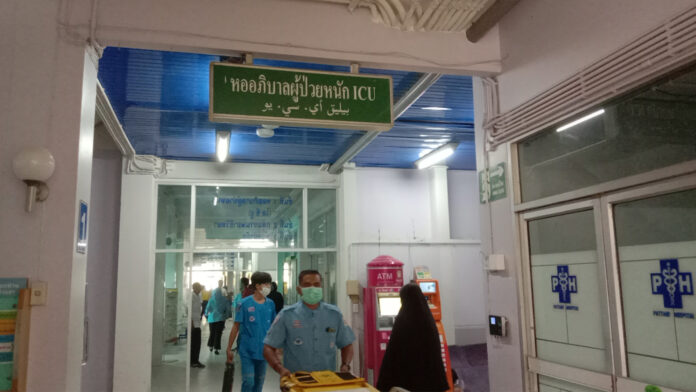
ICU Ward at Pattani Hospital.

PATTANI — A suspected insurgent has fallen into a coma after being taken to a military base for interrogation on Sunday.

Abdullah Isomuso, 32, was found unconscious on Sunday inside his holding cell in a Pattani military base called Fort Ingkhayut. He was arrested on Saturday for suspected involvement in a terror group.

Doctors found an accumulation of excess fluid inside his brain, suggesting he suffered from a prolonged shortage of oxygen. No sign of physical violence was found on his body.

His wife, Sumaiya Minka, said she was only informed of his condition when she went to Fort Ingkhayut to visit her husband on Sunday morning, at which she was told instead to go to a hospital’s ICU ward. She confirmed that her husband has no history of chronic disease and cooperated with the authorities when he was taken away.

Abdullah was arrested after being implicated in a statement given by a terror cell leader, according to a statement issued by the Internal Security Operations Command (ISOC) on Sunday. The statement also confirmed that Abdullah was healthy before being taken into custody.

Lt. Gen. Pornsak Poonsawat, the 4th Army Region commander, has promised to set up a committee to investigate the incident.

“I can confirm that no one is above the law. Everyone involved must be treated fairly and we are ready to scrutinize all actions of government officials,” Pornsak said after visiting Abdullah on Sunday.

Although Abdullah’s relatives have yet to issue a public statement on the incident, Prachachart Party leader Wan Muhamad took to his Facebook on Sunday to criticize the military.

“If the incident remains unexplained, the public will be wary of the government, which can become another obstacle to peace,” reads Wan’s post.

Abdullah is currently on life support and remains unconscious.

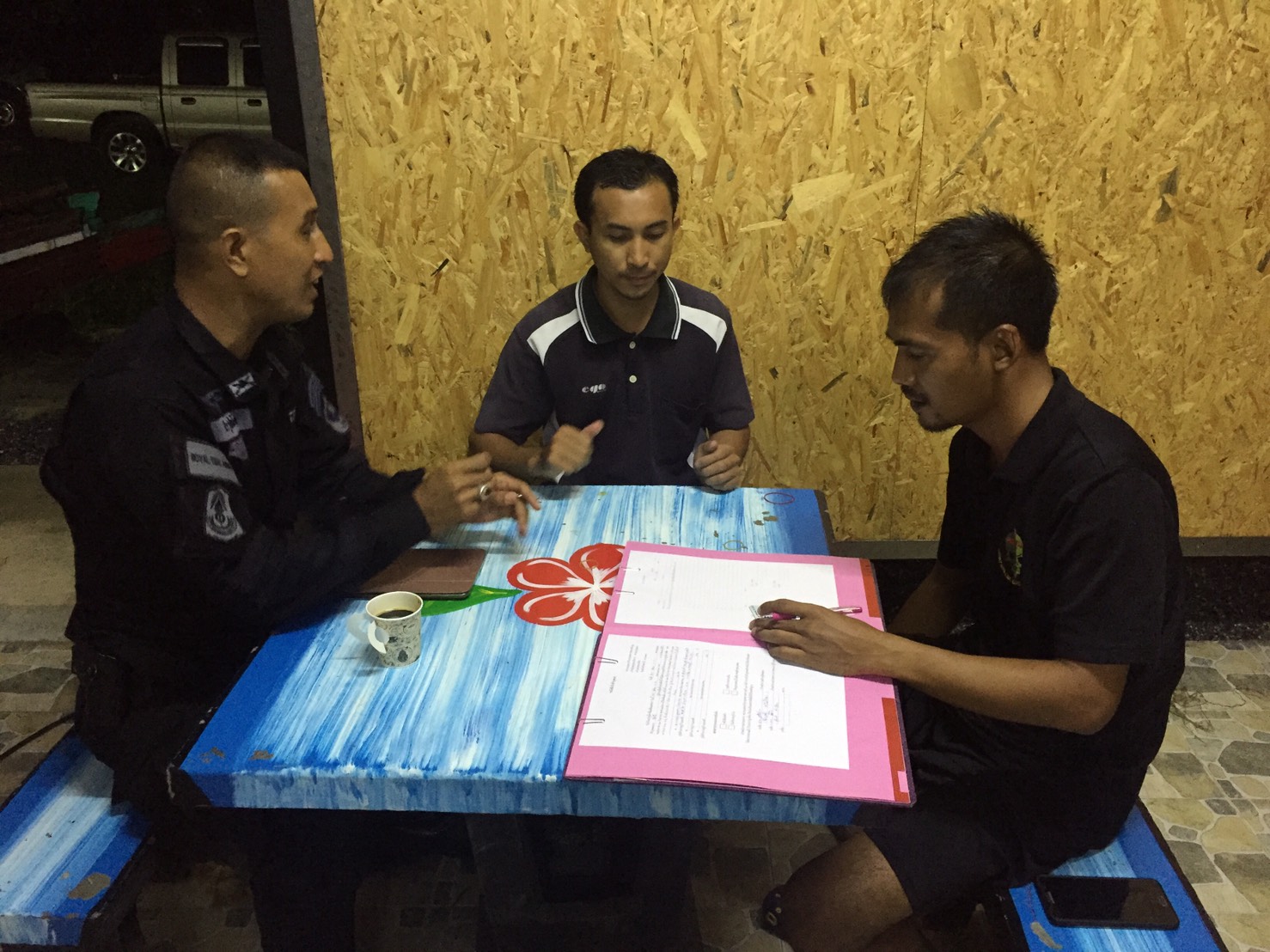
In this photo released by the ISOC, Abdullah Isomuso, center, is shown reading documents inside Fort Ingkhayut on July 20.
Advertisement

How Dry Is the Thai Drought This Year?

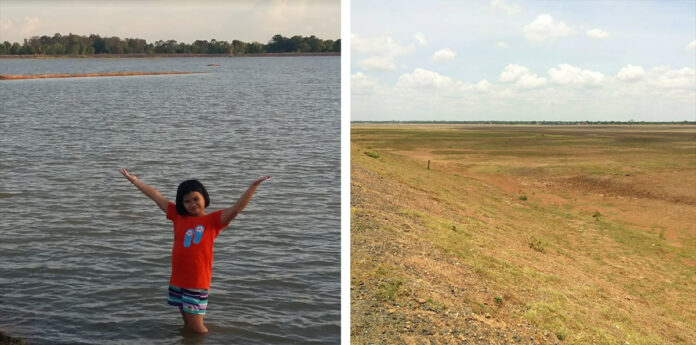
Left, a tourist at Bueng Kraton Lake in August 2017. Photo: P’ Oy Keedue / Google. Right, Bueng Kraton on July 21, 2019.
Right, a tourist at Bueng Kraton Lake in August 2017. Photo: P’ Oy Keedue / Google. Left, Bueng Kraton on July 21, 2019.

NAKHON RATCHASIMA — During past wet seasons, boat restaurants filled with tourists puttered along Bueng Kraton Lake, while holidayers took selfies by the water. But today, the lake has disappeared entirely, dried up by an ongoing drought. The boat restaurants are wedged in dried mud, and the visitors gone.

The 10,000 rai (1,600 hectares) of nearby farms, which depend on the lake for water, are struggling.

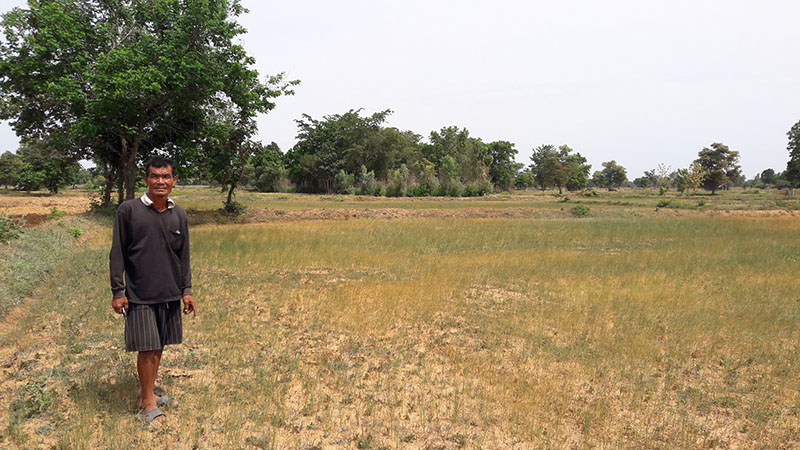
“This dry season is especially long. There’s no rain for the crops anymore, and the rice plants are dying where they stand,” Anukul Tongkam, 47, a local farmer said.

Anukul said he recalled Prime Minister Gen. Prayuth Chan-ocha’s promise to tackle the drought when he visited Bueng Kraton on Aug. 21, 2018.

On Saturday, agriculture deputy minister Capt. Thammanas Prompao visited Phayao, where July’s total rainfall numbered 193 millimeters, compared to 600 to 700 millimeters in previous years.

This year’s rainy season has seen about 30 percent less rain compared to the past, resulting in about a 50 to 70 percent drop in water levels in northeastern water basins, said Seree Supratid, director of the Climate Change and Disaster Center at Rangsit University.

Seree attributes the drought to two factors: less rain this year, and unregulated water usage in agriculture.

Tackling agricultural water use is more important than regulating water use in cities, Seree says, since agricultural use accounts for 70 percent of national water use.

“Too much water is being released for agricultural use. This water is also not being tracked,” Seree said.

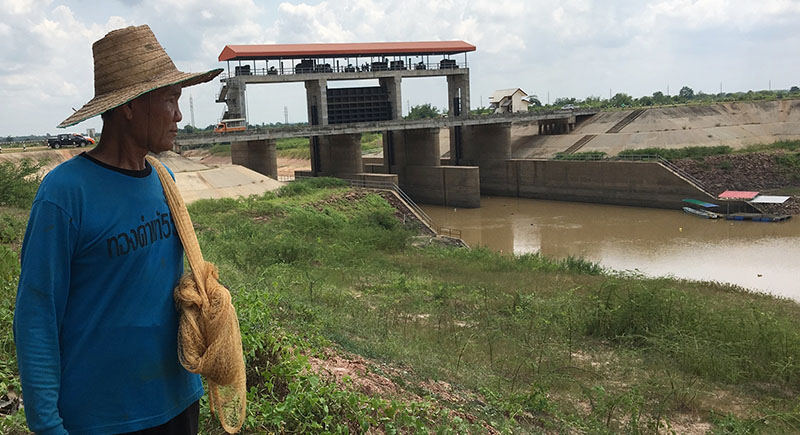
Locals say they haven’t seen the Mekhong so dry in five decades, with connected tributaries slowing to a trickle.

“I’ve never seen such a drought in 50 years. This is supposed to be the wet season,” said Kattaya Oon-klom, 54, a farmer of Nakhon Phanom who relies on the Songkhram River for farming.

By the Mekhong in Loei, fishermen are struggling to catch anything in the shrinking river.

“Normally in July the Mekhong would be brimming opaque,” Kamol Pongsri, a fisherman said. “But now it’s unusually dry. Everyday, I think it hovers between 50 centimeters to a meter. Our boats are grounded.”

A bulletin released by the Royal Irrigation Department on Monday recorded low water levels at Ping River in Chiang Mai, Wang River in Lampang, Yom River in Phrae, Nan River and the Chao Phraya River in Nakhon Sawan, Chao Phraya Dam in Chai Nat, Pa Sak River in Ayutthaya, Mun River in Ubon Ratchathani, and Chi River in Yasothon.

Local dams are being drained in dry areas like Buriram. Meanwhile in Ang Thong, Huai Phai and Sawaeng Ha subdistricts are alternating access to agricultural water, the bulletin said.

The 447 dams and reservoirs nationwide are about 48 percent full, the bulletin also noted.

“The effects will be the harshest in the northeast and north,” Seree said. “And if rain doesn’t fall by August and September, there will be worse repercussions since we won’t have any water supply squared away.”

Agricultural minister Thammanas has said that the government will try to stimulate rain through artificial rain-making.

As of Thursday, about 70 percent of the 16.21 million rai (2,593,600 hectares) of rice fields in the country have been sown with this season’s crops. A rainy spell early July provided much-needed water in some areas of Thailand.

Samit Thammasorot, president of the Foundation of National Disaster Warning Council, confirmed on July 15 that Thailand should brace for a shortage of rain from July through Sept., caused by a lack of cool air flowing from China. The drought will affect not only Thailand, but also India, Pakistan, and Myanmar.

Anukul Tongkam.
Anukul Tongkam.
Dead rice fields near Bueng Kraton Lake on July 21, 2019.


Bueng Kraton Lake as of Sunday.

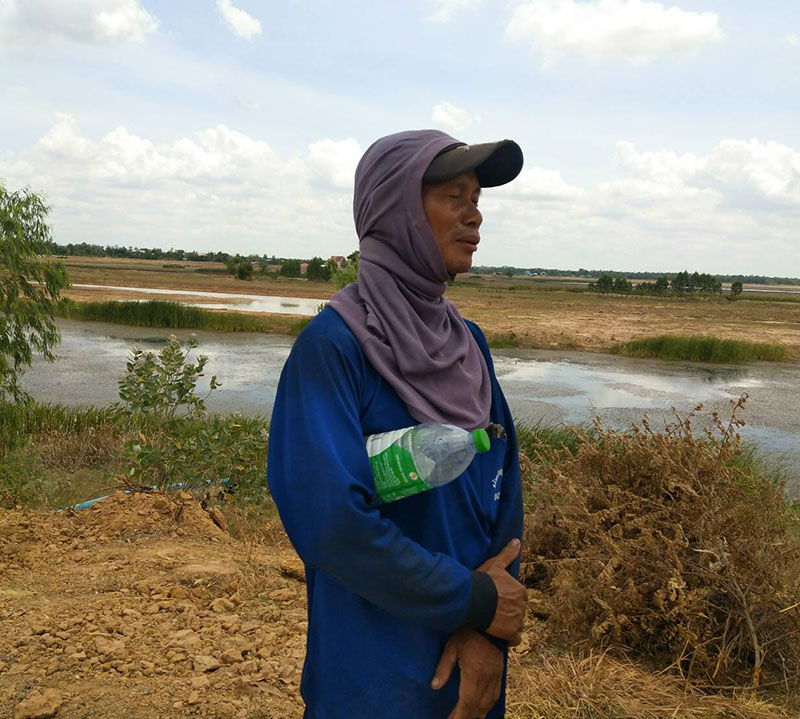
Kattaya Oon-klom, 54, a farmer of Nakhon Phanom on July 20, 2019.
Dried-up rice fields in Maha Sarakham on July 22, 2019.

Related stories:

Tropical Depression ‘Mun’ a Welcome Shower After Drought: Expert, Farmers

Advertisement

Not Just Nightlife: Pattaya to Host Bicycle Festival This November

A cyclist fist-pumps the air as he finishes a cycling tournament in Trat province in May 2019.

PATTAYA — Pattaya will host a cycling festival in November in a bid to prove there’s more to the city than nightlife.

The beachside city will host the third Bangkok Bank Cycle Fest on Nov. 23 and 24, said city mayor Sontaya Khunplome at a press conference in Bangkok on Monday.

“We welcome all types of tourists and offer all types of activities,” said Sontaya.

The festival will offer bike-rides where a portion of the proceeds will go to the Siriraj Foundation, which assists underprivileged patients at Siriraj Hospital. There will be a variety of tracks to suit different interests and ages, including a looped circuit, an off-road challenge and family-friendly ride. 

Last year saw 3,000 riders participate, said Thaweelap Rittapirom, director and executive vice president of Bangkok Bank.

The event, hosted at the Siam Country Club, will also feature live music and shopping opportunities.  

Mayor Sontaya said 2018 saw 10 million foreign tourists visit Pattaya, on top of 8 million Thai visitors, bringing in combined revenue of 240 billion baht.

Pattaya, which boasts 200,000 square metres of beaches, is a two-hour drive southeast of Bangkok.

To register for the festival, visit the Bangkok Bank Cycle Fest website.   

Advertisement

Hot News

LATEST NEWS

Bangkok
overcast clouds
32.2 ° C
32.2 °
29.4 °
60 %
4.1kmh
100 %
Sat
31 °
Sun
35 °
Mon
36 °
Tue
35 °
Wed
34 °