29.2 C
Bangkok
Monday, August 17, 2026
Home Blog Page 16

Thai Cabinet approves establishment of 5 new Catholic churches

BANGKOK — Thailand’s Cabinet has approved the establishment of five new Catholic churches and officially recognized one additional church under regulations governing Roman Catholic parishes, the government announced following its meeting on 5 August.

The decision, proposed by the Ministry of Culture, was made in accordance with the Prime Minister’s Office regulations on the establishment of Roman Catholic churches issued in 2021.

The five newly established churches are:

  • St. Matthias the Apostle Church in Bang Khun Thian district, Bangkok
  • Sts. Philip and James Church (Navanakorn) in Khlong Luang district, Pathum Thani
  • Resurrection of Jesus Church in Ban Non Sombun, Ban Haet district, Khon Kaen
  • St. James Church in Ban Phue district, Udon Thani
  • St. George Church in Soem Thung, Phon Phisai district, Nong Khai

The Cabinet also approved official recognition of Holy Family Church (Huai Bong) in Chai Prakan district, Chiang Mai, as a Roman Catholic church under the same regulations.

Advertisement

Facing the hard truths of the Patani conflict

​Seven security officers and two suspected insurgents have been killed recently in the deep south of Thailand. ​There are at least two ways for Thais to react to this violence.

​First, one can see the loss and violence as merely a continuation of protracted, long-running unrest by a small group of armed insurgents and retaliation by security personnel. You can just keep ranting about the immoral and evil ‘southern goons’ or ‘jone tai’ (โจรใต้) — as they are often referred to by ordinary Thais and the tabloid press — and move on to the next news item of the day, repeating the same knee-jerk reaction when another major attack occurs.

​The second reaction, or alternative, is to pause for a moment and face the uncomfortable reality of what we are dealing with.

​Let us start with a few very basic facts.

First, there are some Thai-Malay Muslims who do not consider themselves Thai and yearn for an independent Patani homeland (they spell it ‘Patani’, not ‘Pattani’ which is preferred by the Thai state), and see the use of force to fight for independence as ‘legitimate’ in their eyes.

​Let us face the fact that there are separatists or ‘freedom fighters’ who want to see an independent Patani state, whether Islamic in character or not.

​Stop using the term ‘southern goons’, for it only obfuscates the nature of what Thailand is confronting. Thai press should also stop referring to the majority of the people in the deep south as Thai Muslims and recognise their Malay identity and referring to them as Thai-Malay Muslims instead.

​As for the separatist movement, no one really knows how large it is, or how popular it is among the Thai-Malay population. There can be no official survey or poll, as under the Thai constitution, the kingdom is indivisible, and any movement to secede parts of Thailand is illegal.

​One personal anecdote comes from two decades ago, when this writer was covering the immediate aftermath of the Tak Bai massacre in October 2004. Eighty-five Thai-Malay Muslim male protesters died: seven were shot at the site, while 78 suffocated after being hurled into army trucks, stacked on top of one another with their hands tied behind their backs.

​A day after witnessing mass burials at sunset, I spoke to the Patani police chief and asked whether a locally elected governor in Patani and nearby provinces would make local Thai-Malay Muslims feel more in charge of their own destiny. The senior officer almost immediately replied that the day local governors are elected in the deep south would be the beginning of secession.

​Such is the deep distrust that makes any meaningful decentralisation or devolution almost impossible in the region. With the mother tongue of Thai-Malay Muslims being Malay, and not Thai, it is no surprise that they may feel partially alienated in their homeland, as governors appointed from Bangkok to rule over them are mostly non-Thai-Malay Muslims. The fact that the deep south has remained one of the poorest regions in Thailand makes the disparity in their livelihoods even more visible when compared with Malaysians across the border.

Then there is the fact that some Thais, as well as Thai-Malay Muslims, do not fully trust the Thai security forces. Some, including officials this writer has spoken to over the years, suspect that elements within the security apparatus may have little interest in seeing the conflict end, believing a prolonged crisis helps secure larger budgets and salaries.

The region also operates under three overlapping security laws: Martial Law (1914), the Emergency Decree (2005), and the Internal Security Act (2008). Martial Law and the Emergency Decree can allow authorities to detain people for up to 37 days without formal charge or judicial oversight. How can life be normal under such prolonged emergency rule?

There is also the BRN and the question of whether the Thai state is genuinely negotiating with the real representatives of the separatist movement. Perhaps there is more than one group, and the BRN — Barisan Revolusi Nasional, or National Revolutionary Front — is neither the sole representative nor actively in charge of the struggle for an Islamist Patani state on the ground.

​The mediator, Malaysia, is also viewed with suspicion, if not distrust, by many Thais who are not Malay Muslims. They suspect Malaysia may be partial to an eventual independent Patani homeland, separate from the Thai state, because of perceived ethnic, religious, and historical affinities with the rebels.

When the 22 July 2026 attack at the Bukeh Sami security checkpoint in Ra-ngae district of Narathiwat province killed five paramilitary rangers and injured six civilians, Army Chief of Staff General Chaiyapruek Duangprapat vowed a relentless cross-border manhunt, stating that any individual or nation offering refuge to the perpetrators would be endlessly pursued. That was a reference to Malaysia, the only country with which Thailand shares a border in the deep south.

All of these are key factors and challenges that help explain the limited progress, continuing killings, and the lack of light at the end of the tunnel.

According to conflict-monitoring organisation Deep South Watch, about 7,800 people have been killed on all sides in separatist-related violence in Thailand’s southernmost provinces since the conflict reignited in January 2004.

​Over 23,000 violent incidents have been recorded, alongside more than 14,000 injuries.
​And this will continue for as long as the majority of Thais remain in denial about what Thailand is actually facing.

Advertisement

Thai horror film ‘Inherit’ to premiere at Toronto International Film Festival

BANGKOK — Thai cinema has reached another international milestone as Inherit, the latest horror film from GDH, has been selected for its world premiere at the 51st Toronto International Film Festival (TIFF) in Canada, to be held from 10-20 September.

The film will screen in the festival’s Centrepiece section, which features 54 standout films from 50 countries, showcasing diverse perspectives and some of the year’s most anticipated films from around the world.

753032510 1605306914725977 5175408448731037341 n

Directed by Banjong Pisanthanakun, Inherit is a new adaptation of the legendary Thai horror novel Thayat Asun (The Devil’s Heir). The cast includes Davika Hoorne, Thitiya Jirapornsilp, Sinjai Plengpanich, Warattaya Nilkuha, Phakin Kuna-anuvit, Chayanon Phakphatin, and many others, in what is expected to be a new landmark in Thai horror cinema.

Advertisement

Yala official goes viral over bold makeup, says style reflects her confidence

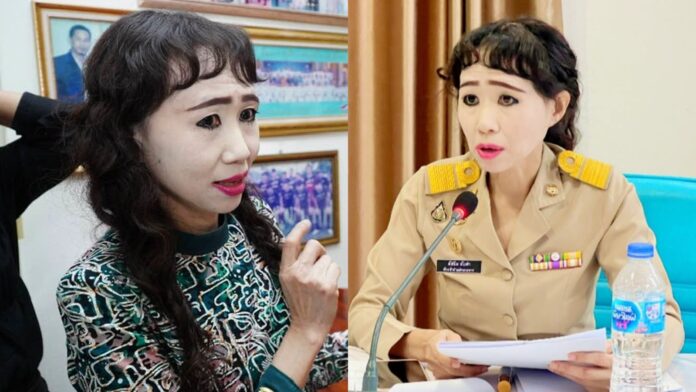
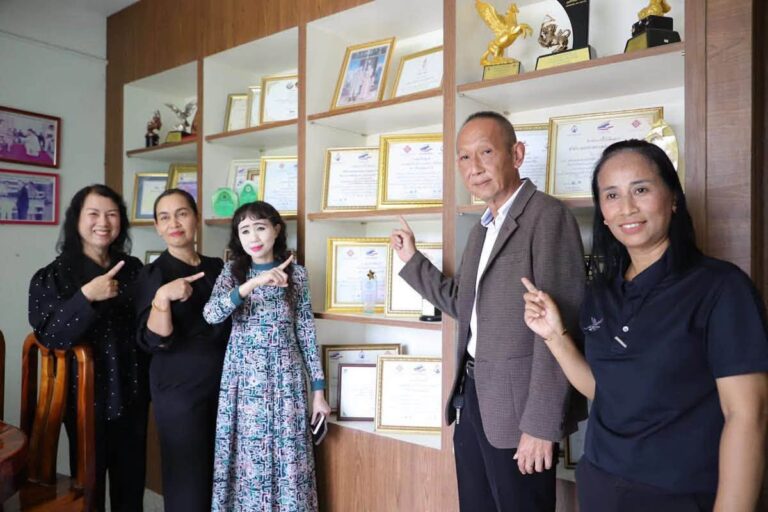
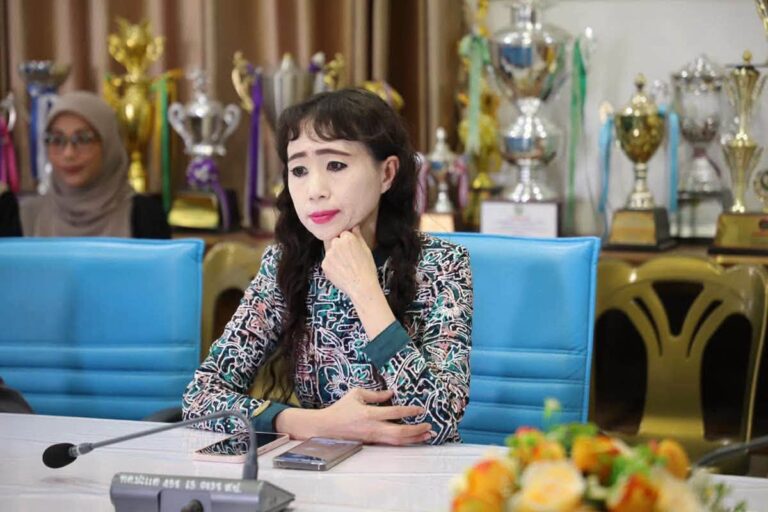
YALA — A municipal official in Yala has gone viral after a photo from an online budget meeting drew widespread attention over her colorful makeup style, with the official saying it reflects her personal confidence and has been part of her daily routine for more than 10 years.

The photo of Tassaneem Thapkham, head of the administrative division and acting head of the municipal office at Patae Subdistrict Municipality in Yaha district, was taken during a Zoom meeting on 3 August while officials were presenting the municipality’s 2027 budget to a parliamentary subcommittee.

news152360 NzlT9TPdVB1786001364

After the image was posted on the municipality’s Facebook page, it quickly spread online, receiving millions of views, shares and comments.

Tassaneem said she did not expect the reaction to become so large, with some users praising her while others criticized her appearance, particularly her eyebrows and eyelashes.

She said her makeup style is a personal preference that she has maintained for more than a decade, adding that it helps boost her confidence when working and meeting residents.

news152360 JZiv3KUR671786001364

“I want people to focus on my work, dedication and commitment to public service rather than appearance,” she said.

Patae Municipality officials said the viral attention has become an opportunity to promote the municipality’s work, with the post attracting more than 10 million views. They praised Tassaneem as a dedicated official and said her appearance has never affected her work performance.

Advertisement

Canada’s Carney says he has no confidence in FIFA’s Infantino

TORONTO (AP) — Canadian Prime Minister Mark Carney said Wednesday he no longer has confidence in FIFA President Gianni Infantino, adding to growing pressure on the soccer leader after his abandoned plan to sell stakes in the World Cup sparked a global backlash.

Carney said Infantino committed a “fatal” governance failure by not consulting senior advisers, including FIFA’s chief operating officer and board members.

“It should be fatal,” Carney said. “Certainly I don’t have confidence in Mr. Infantino.”

Canada co-hosted the 2026 World Cup with the United States and Mexico, and Carney appeared alongside Infantino at several tournament events.

Carney’s comments came days after Infantino abandoned the proposal following fierce opposition from the Union of European Football Associations, national soccer federations and senior FIFA advisers.

Infantino had proposed creating a $20 billion company to run the World Cup with private investors including the Kushner family, but drew backlash.

British Prime Minister Andy Burnham last Sunday called Infantino “the wrong man to lead” world soccer.

FIFA did not immediately respond to a request for comment.

UEFA’s 55 member associations had agreed to boycott the World Cup and other FIFA competitions if the plan moved forward, while the Confederation of North, Central America and Caribbean Association Football and the Asian Football Confederation also opposed it.

Advertisement

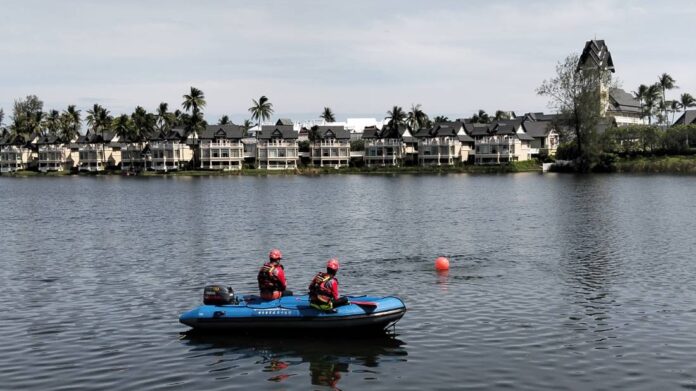
Irish man found dead in Phuket lagoon, police investigate cause

PHUKET — A 28-year-old Irish man was found dead floating in a lagoon in Phuket’s Cherng Talay area on Thursday morning, with police investigating the cause of death.

Police received a report at around 11:00 on 6 August that a foreign man’s body had been found in the Laguna water reservoir in Moo 6, Cherng Talay subdistrict, Thalang district.

Police from Cherng Talay Police Station, forensic officers, a medical examiner and rescuers from the Kusoldharm Phuket Foundation went to the scene to investigate.

Rescue workers recovered the body from the water for examination. The deceased was identified as Scott John Revie Little, 28, an Irish national.

Police conducted an initial examination of the body and assigned investigators to collect evidence, review CCTV footage and interview witnesses to determine the circumstances surrounding the death.

Authorities have contacted the Irish Embassy to notify the victim’s family and assist with procedures for repatriating the body.

The cause of death remains under investigation.

Advertisement

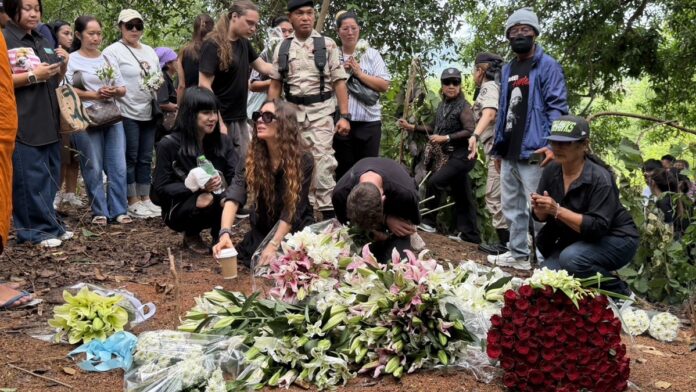
White flowers blanket murder scene as Chonburi holds final memorial for Russian siblings

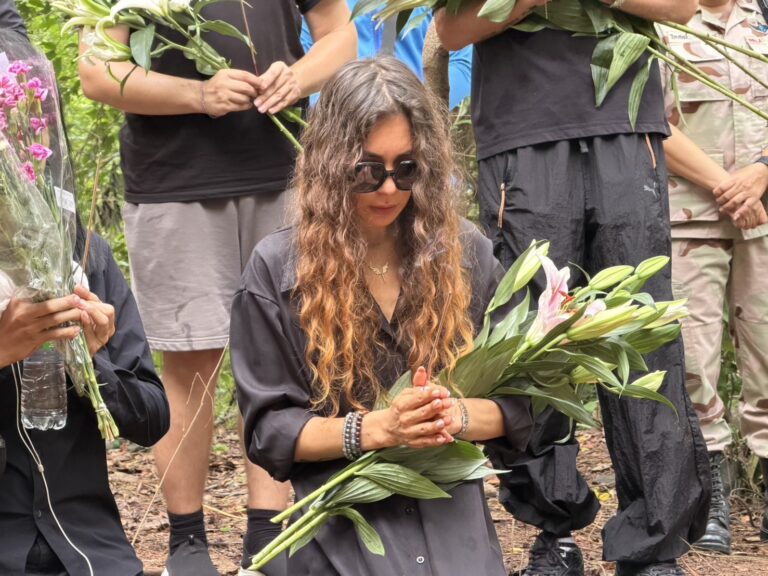
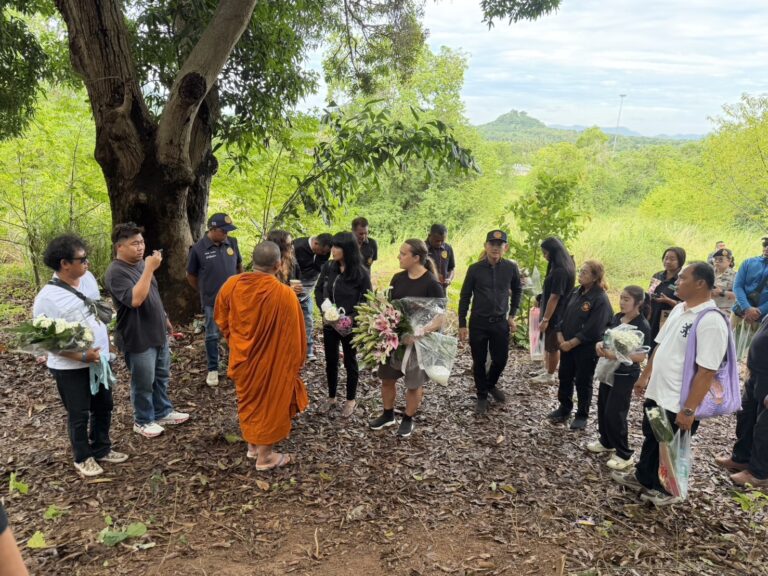
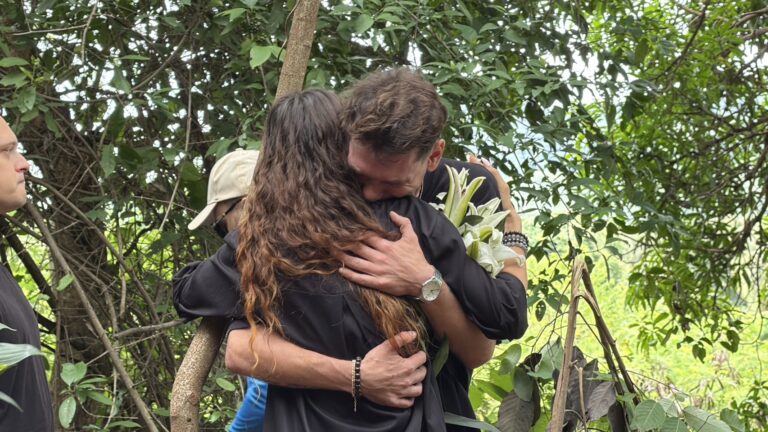
CHONBURI — White flowers covered the site where the bodies of Russian siblings Diana and Roman were found on 6 August as their family held a final memorial ceremony, joined by senior officials, Buddhist monks and members of the public paying their last respects.

The ceremony was led by the siblings’ mother, Sharina Nazimova, at the spot in Huai Yai subdistrict, Bang Lamung district, where the bodies were discovered. Prayers were also offered for the three Thai victims who were allegedly killed by the same suspect.

news152315 VscFihFME41785993982

The case shocked Thailand after police alleged that the suspect was responsible for the murders of Russian siblings Diana and Roman as well as three Thai nationals in separate incidents. Investigators say all five killings were carried out by the same suspect, who has been arrested and is facing prosecution on multiple counts of premeditated murder.

The religious ceremony was presided over by Phra Khru Kasem Kittisophon, abbot of Wat Samakkhibanphot in Sattahip district. Among those attending were Chonburi Governor Narit Niramaiwong, Chonburi Provincial Police commander Maj. Gen. Pongphan Wongmanithet, Bang Lamung District Chief Anusak Piriyamorn, Huai Yai police chief Pol. Col. Worawut Nittayawan, other government officials, and large numbers of Thai and foreign mourners.

The memorial was marked by scenes of grief as relatives and well-wishers laid white carnations, lilies and roses at the site where the siblings’ bodies were found. The white flowers symbolized purity, respect and a peaceful farewell.

news152315 BgYtcFCppi1785993982

The family also placed a cup of coffee — Diana’s favorite drink — at the memorial site in remembrance of her, a gesture that deeply moved those attending. Throughout the ceremony, Nazimova was overcome with emotion and wept as relatives, friends and mourners comforted her.

Speaking after the ceremony, Nazimova thanked the Thai people, government agencies, police officers and volunteers who had supported her family since the tragedy. She said the compassion and kindness shown by people in Thailand had given the family strength during one of the most difficult periods of their lives.

news152315 xHD3x640Oh1785993982

The memorial marked the family’s final farewell to Diana and Roman. Family members, friends and members of the public expressed hope that the judicial process would proceed swiftly and that the suspect would be held fully accountable for the deaths of all five victims.

The family, who are Buddhists, said Diana and Roman were raised solely by their mother.

Advertisement

Thai PM welcomes Myanmar’s Min Aung Hlaing amid criticism

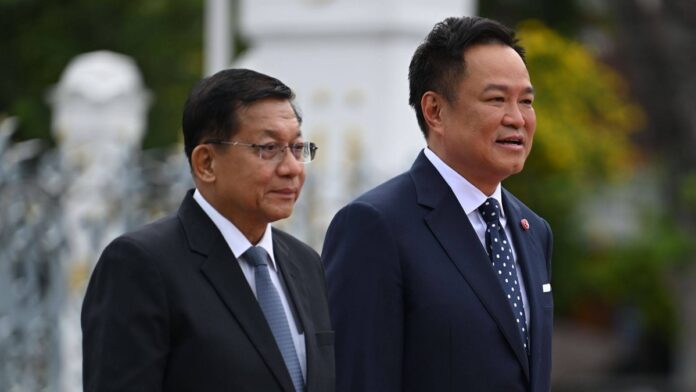
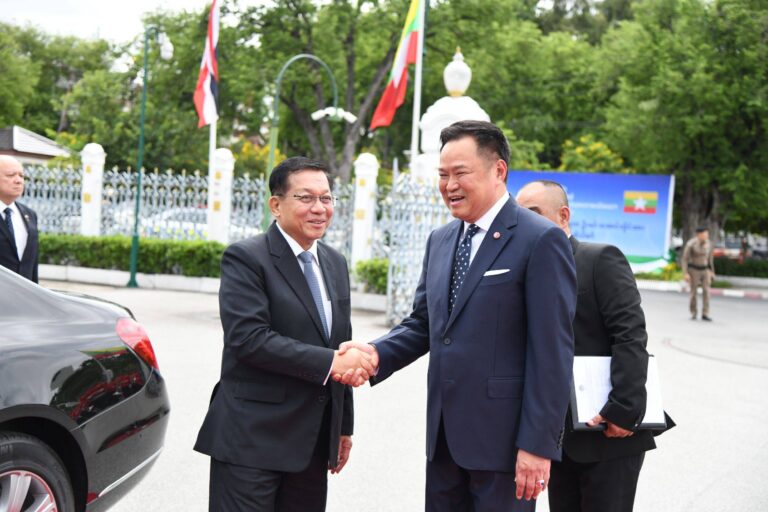
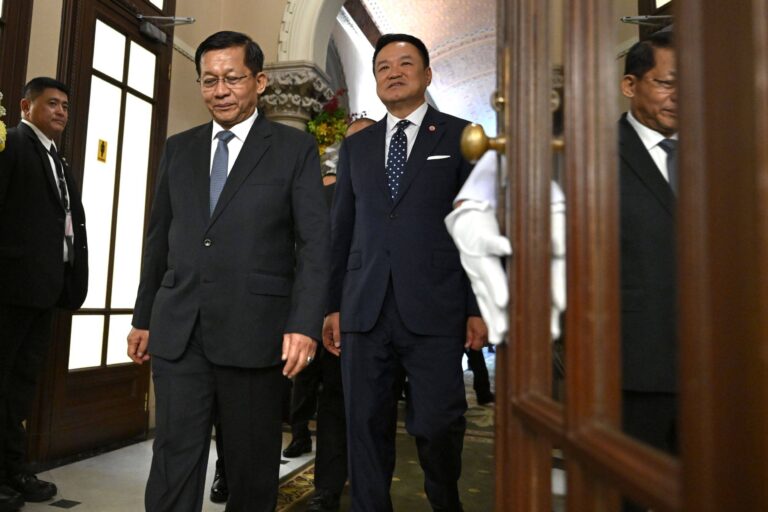
BANGKOK — Prime Minister Anutin Charnvirakul on 6 August officially welcomed Myanmar President Min Aung Hlaing to Government House for bilateral talks, as the Myanmar leader’s two-day visit to Thailand drew sharp criticism from civil society groups, democracy advocates and opposition politicians.

At 10:20, Anutin received Min Aung Hlaing on the lawn in front of the Thai Khu Fah Building at Government House. The Myanmar president is visiting Thailand as an official guest of the Thai government.

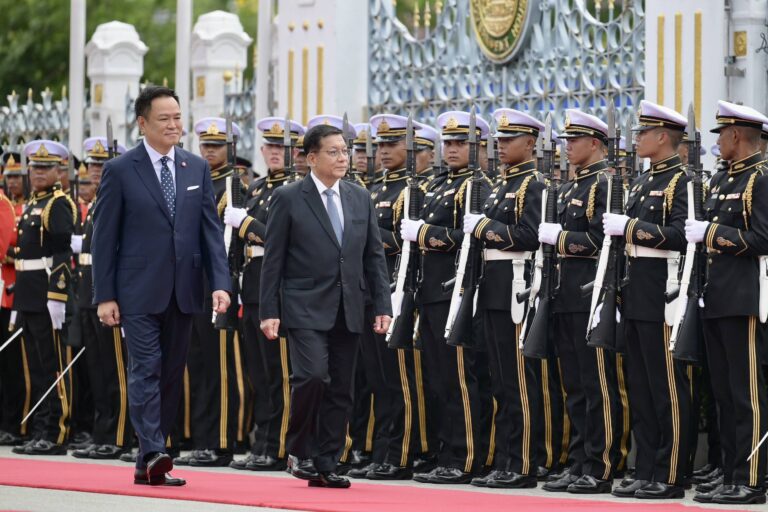
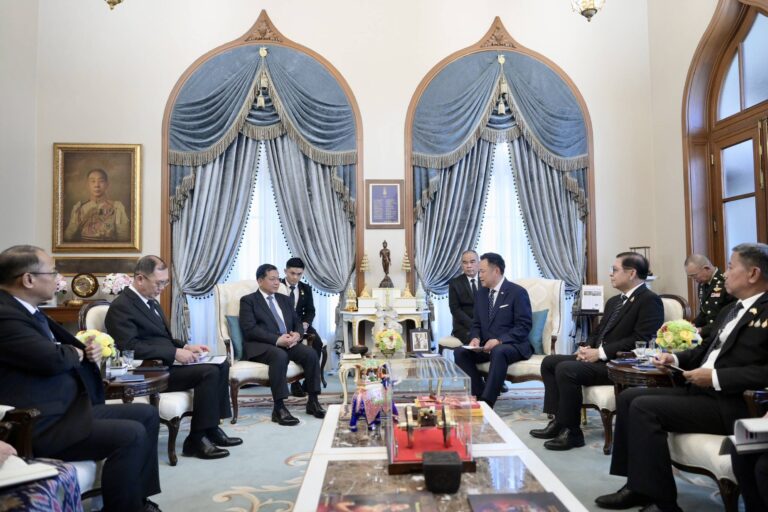
The leaders attended an official welcoming ceremony before reviewing an honor guard. They then held a restricted meeting on the second floor of the Thai Khu Fah Building to exchange views on strengthening bilateral cooperation.
20260806111344 6609

According to the Prime Minister’s Office, the discussions covered cross-border issues, energy cooperation, trade facilitation, and efforts to promote peace and stability along the Thai-Myanmar border before expanding into a plenary meeting in the Green Room.

Thailand backs ASEAN engagement

Ahead of the visit, Anutin defended Thailand’s approach toward Myanmar while speaking at the ASEAN Secretariat in Jakarta on 4 August.

He said ASEAN’s Five-Point Consensus remains the bloc’s principal framework for addressing the Myanmar crisis and reaffirmed Thailand’s support for a policy of “calibrated re-engagement.”

Anutin said the approach seeks to preserve channels of dialogue, create space for engagement, respond to realities on the ground and encourage tangible progress.

“A peaceful and stable Myanmar is not only in Thailand’s interest as a neighboring country, but is also vital to ASEAN unity and regional stability,” he said.

Civil society condemns visit

The visit, however, has been met with widespread criticism.

Sixteen Thai civil society organizations issued a joint statement opposing Min Aung Hlaing’s official visit, urging the Thai government to stop policies they say benefit Myanmar’s military administration and to refrain from legitimizing its leadership.
20260806111343 4868

The coalition, led by Solidarity Collective TH and the Spirit in Education Movement (SEM), said Min Aung Hlaing’s administration has been marked by widespread violence, systematic human rights abuses and alleged war crimes.

The groups argued that engagement with Myanmar’s military rulers would prolong the country’s conflict rather than contribute to regional peace.

They called on Thailand to review cooperation that benefits Myanmar’s military authorities, improve protections for Myanmar migrant workers, support independent humanitarian assistance that reaches civilians directly, reject the legitimacy of the military-led government and oppose its reintegration into ASEAN until violence ends and democratic rule is restored.

The coalition urged Bangkok to stand with the people of Myanmar rather than, in its words, “those responsible for violence and war crimes.”

Foundation accuses Thailand of legitimizing junta

The Thai-Myanmar Foundation also issued a statement on 6 August condemning Min Aung Hlaing’s visit, saying it reflects the Myanmar leader’s attempt to gain regional legitimacy after failing to secure broad international recognition.

The foundation argued that despite Myanmar’s recent election, real authority across much of the country remains outside the military’s control and in the hands of ethnic armed organizations.

It said the Thai government should recognize that Min Aung Hlaing seized power through the 2021 military coup, overthrowing an elected government and imprisoning former State Counsellor Aung San Suu Kyi and other democratic leaders.

The statement accused Myanmar’s military of arbitrary arrests, torture, forced conscription and attacks on civilians, including continued airstrikes on schools and hospitals even after the devastating earthquake earlier this year.
20260806111857 8213

Citing United Nations figures, the foundation said more than 5,000 people have been killed since the military takeover.

It also noted that Min Aung Hlaing is the subject of international legal proceedings, referring to an arrest warrant issued by an Argentine court under the principle of universal jurisdiction and to the International Criminal Court prosecutor’s request, submitted on 27 November 2024, seeking an arrest warrant against him for alleged crimes against humanity.

The foundation described Myanmar’s military chief as an illegitimate leader responsible for turning the country into a failed state through violence against civilians, and argued that last year’s election has not erased responsibility for alleged atrocities committed under military rule.

It warned that Thailand’s recognition of Min Aung Hlaing as head of state risks undermining moral principles, the rule of law, international law and human rights, while helping the Myanmar military maintain its grip on power.

The statement was endorsed by the Thai-Myanmar Foundation, the Campaign for Democracy in Burma, the Union for Civil Liberty, the Campaign Committee for Democracy, the World Peace Working Group, the Foundation for Asia Development and other Thai civil society organizations.

Opposition questions government’s approach

People’s Party deputy leader Rangsiman Rome also questioned the government’s decision to host Min Aung Hlaing.

Speaking to reporters, Rangsiman said discussions with Myanmar’s military authorities were unlikely to resolve the issue of toxic contamination in the Kok River because, according to testimony received by a parliamentary committee, the areas involved are controlled by the United Wa State Army rather than Myanmar’s military government.

“The real situation is known to everyone, but everyone is acting as if talking to the Myanmar military government will solve the problem,” he said.

He argued that Thailand should instead focus on how to deal with the Wa armed group, which he linked to transnational crimes affecting Thailand, including scam operations, drug trafficking, human trafficking and, most recently, toxic pollution.
20260806115203 4139

Rangsiman also warned that hosting Min Aung Hlaing risks conferring legitimacy on Myanmar’s military leadership while undermining ASEAN’s Five-Point Consensus.

He noted that one of the consensus’ key provisions is an immediate cessation of violence, but said Myanmar’s military government has made clear it does not intend to comply.

“If the Myanmar military government cannot deliver anything for Thailand, then the question is what position Thailand should take,” Rangsiman said. “Thailand should always put national interests first, but I am not convinced that what the government is doing now truly serves the country’s interests or brings any tangible benefit.”


Advertisement

China denies sending arms to support Cambodia, Thai Army says

China denies sending arms to support Cambodia, Thai Army says

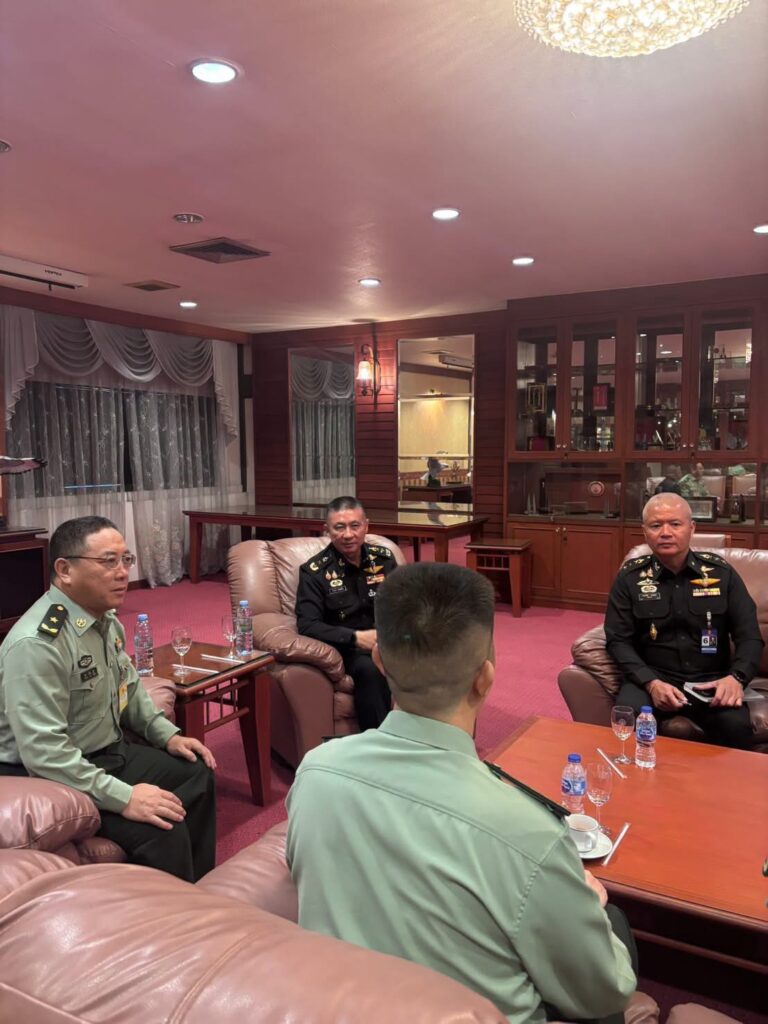
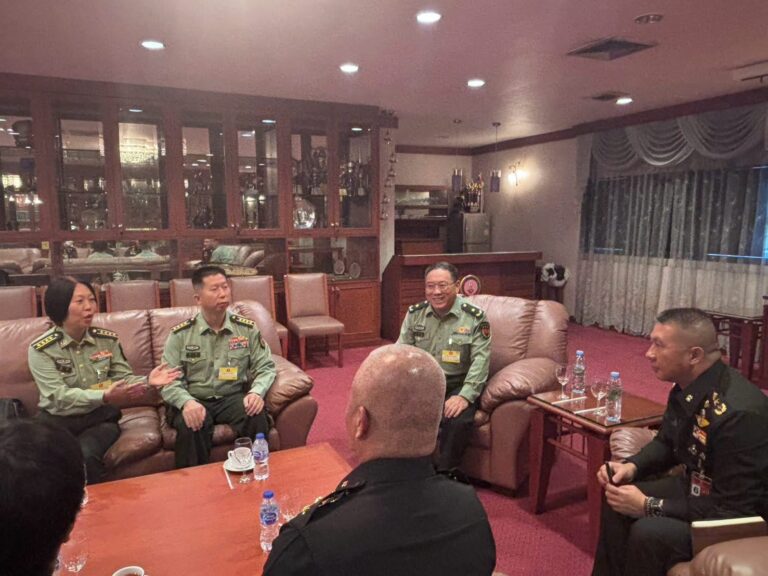
BANGKOK — 6 August 2026, China has denied supplying weapons to support Cambodia’s recent military operations and reaffirmed its close ties with Thailand, while urging a peaceful resolution to the Thai-Cambodian border dispute.

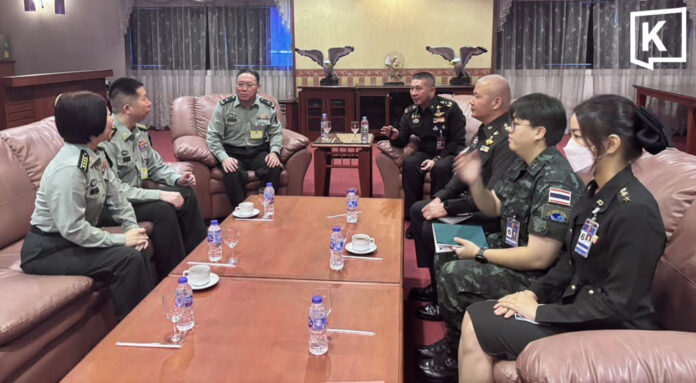
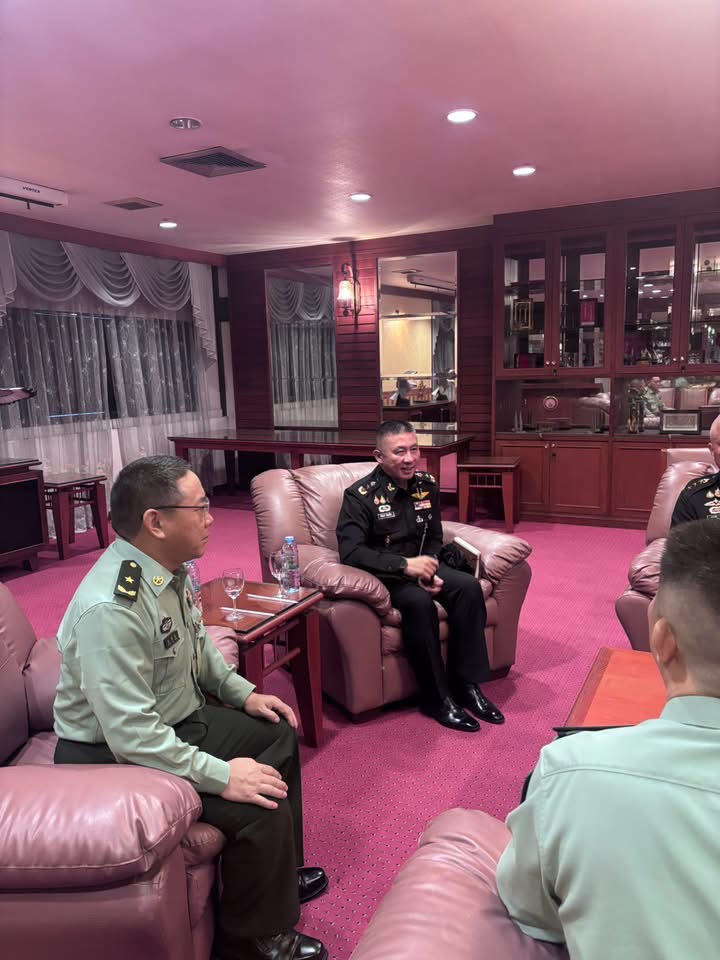
The Royal Thai Army’s Information Department released details of the meeting, saying the discussion took place on 4 August between Lt. Gen. Theeranan Nantakhwang, Director-General of the Army Information Department, and Maj. Gen. Zhang Linhong, Assistant Defence Attaché of the People’s Republic of China in Thailand, along with his delegation.

S 50053542 0

According to the Thai Army, Zhang expressed concern over the conflict between Thailand and Cambodia, saying the two countries had been neighbours for many years and should seek a peaceful solution through dialogue.

He also reaffirmed that Thailand and China enjoy a close partnership, adding that Beijing remains transparent and sincere in its relations with Bangkok.

S 50053527 0

The Chinese military representative stressed that China had no involvement in supplying weapons for Cambodia’s recent military operations, according to the Thai Army’s account of the meeting.

China also reaffirmed the importance it places on its relationship with Thailand and said it had instructed Cambodia that Chinese-made military equipment must not be used in areas along the Thai-Cambodian border, the Army said.

S 50053522 0

Advertisement

Inside FIFA’s failed $4.2bn World Cup rights plan: How Infantino’s biggest gamble became his biggest crisis

(AP Photo/Tony Gutierrez, File)

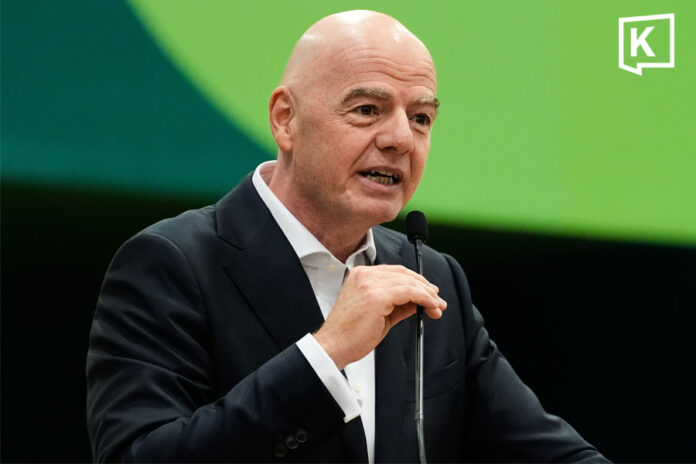
RABAT, Morocco — 6 August 2026, FIFA president Gianni Infantino has apologised to the organisation’s 211 member associations after a failed attempt to sell a stake in the commercial rights to the World Cup triggered the deepest governance crisis of his decade-long presidency, exposing divisions within world football and raising fresh questions about transparency, political influence, and the future direction of the sport.

The apology followed an emergency meeting in Rabat, Morocco, attended by Infantino, FIFA secretary-general Mattias Grafström, and members of FIFA’s management board, after days of mounting opposition from continental confederations, national associations, and senior figures inside the organisation. Despite the turmoil, FIFA said its management board reaffirmed its support for Infantino while acknowledging that the proposal had been mishandled.

In a letter jointly signed by Infantino and Grafström, FIFA admitted that “mistakes were made” and apologised for failing to properly consult member associations before unveiling the plan.

“It was certainly not the intention for the FIFA Council and FIFA Member Associations to feel excluded from the process and it should have been handled differently,” the letter said.

It added: “We sincerely apologise for these errors and commit to them not happening again.”
A $4.2 billion plan that unravelled

At the centre of the controversy was FIFA Forward Enterprise (FFE), a proposed commercial subsidiary that would have controlled the governing body’s most valuable assets, including the men’s and women’s World Cups and other FIFA competitions.

FIFA planned to sell roughly a 20% stake in the new entity for an estimated US$4.2 billion while retaining majority ownership, arguing that the structure would unlock new investment and create long-term commercial growth. The proposed company itself was valued at around US$20 billion.

Instead, the proposal collapsed within days.

UEFA condemned the plan, saying that “the soul and governance of football are not assets to trade” and declaring: “None of us are the owners of football. It is not FIFA’s to sell.” Europe’s 55 member associations unanimously backed plans to boycott FIFA competitions if the proposal proceeded. The Asian Football Confederation (AFC) and CONCACAF also criticised FIFA, saying they had not been consulted before the proposal went public.

The backlash ultimately forced Infantino to abandon the proposal before it could proceed further.

Political connections fuel scrutiny

Beyond governance concerns, the proposal attracted political attention because Thrive Eternal was expected to lead the proposed investor group, the investment firm founded by Joshua Kushner, whose brother Jared Kushner served as senior adviser and son-in-law to US president Donald Trump.

Reuters reported that Infantino personally met prospective investors before many senior football officials were informed of the proposal, intensifying criticism that normal consultation processes had been bypassed. While neither FIFA nor Reuters has alleged any wrongdoing by the prospective investors, the reported political connections amplified concerns over transparency and decision-making within the organisation.

The controversy also renewed scrutiny of Infantino’s close relationship with Trump, which had already attracted attention during the 2026 World Cup. The Kushner connection further intensified scrutiny of the proposed deal, even without evidence of improper conduct.

Allies distance themselves

Arsène Wenger, FIFA’s chief of global football development, said he was not involved in the proposal’s development after criticism intensified.

Carlos Cordeiro, the former president of US Soccer and one of Infantino’s senior advisers, resigned during the crisis, saying he could not “stand by while FIFA considers selling a stake in the World Cup”. His departure marked one of the highest-profile casualties of the controversy inside FIFA’s leadership.

Governments weigh in

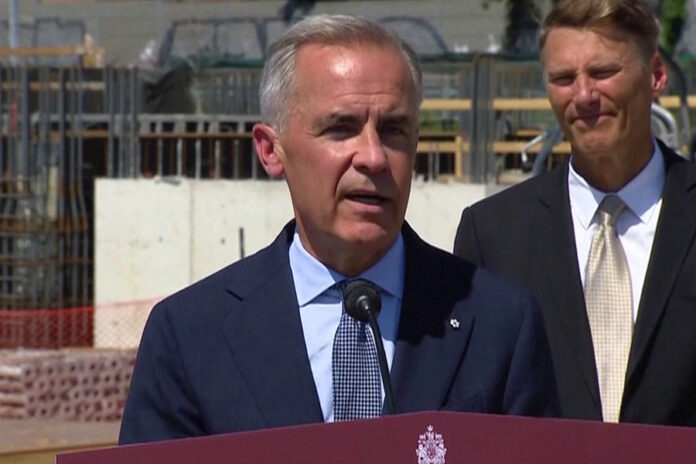
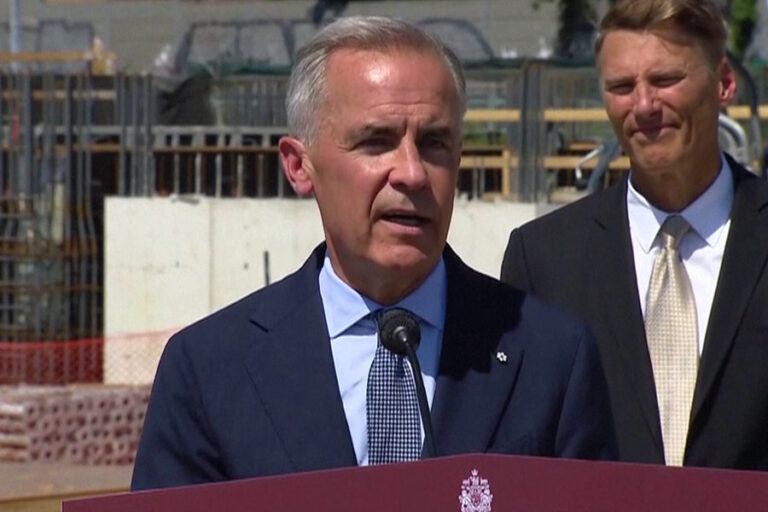
Canadian Prime Minister Mark Carney said he had lost confidence in Infantino’s leadership, describing the handling of the proposal as a serious governance failure after learning that senior FIFA officials had not been properly consulted.

2 carney
“I’ve run a few organizations in my time. The idea that proper governance is not to disclose to your closest advisors, your chief operating officer, your fellow board members something of consequence that you are even considering; let alone proposing; you know that is fatal, should be fatal and you lose confidence in that individual.” Toronto – 5 August 2026 |From CTV video via AP

Carney also praised CONCACAF president Victor Montagliani as someone who had demonstrated stronger leadership during the crisis, an unusually direct intervention by the leader of one of the 2026 World Cup’s co-host nations.

Renewed backing after Rabat

The emergency meeting in Rabat allowed FIFA to present a united front after days of internal criticism over the failed FIFA Forward Enterprise proposal.

In a joint letter to the organisation’s 211 member associations, Infantino and FIFA secretary-general Mattias Grafström acknowledged that the process had been mishandled, while FIFA said its management board had reaffirmed its “full support” for the president. The governing body confirmed that the FFE plan was now “off the table” and pledged to review how major commercial initiatives are developed and communicated in future.

The show of unity eased the immediate pressure on Infantino, but it did not erase the divisions exposed by the proposal. European football bodies have continued to question FIFA’s decision-making process, with the controversy highlighting a broader debate over transparency, governance, and the role of private investment in the commercial future of the World Cup.

Infantino’s toughest political test

FIFA’s next presidential election is scheduled for March 2027 in Rabat, with candidates required to submit their nominations by 18 November 2026. Infantino is widely expected to seek a fourth term.

Although Infantino continues to enjoy significant support among many member associations across Africa, Asia, Oceania, and other regions outside Europe, the abandoned FFE proposal has become the biggest challenge of his presidency since he took office in 2016.

Several European football associations have already withdrawn their support ahead of next year’s election, while UEFA is reportedly seeking an alternative candidate to challenge him. However, no formal challenger has yet emerged, leaving Infantino with a viable, though increasingly uncertain, path to a fourth term.

Under FIFA’s one-member, one-vote system, each of the organisation’s 211 member associations has equal voting power regardless of footballing stature. That structure has historically favoured incumbents with broad support beyond Europe, meaning Infantino remains well placed politically despite the controversy.

Whether the failed World Cup rights proposal proves to be a temporary setback or the beginning of a broader challenge to his leadership may become clearer once the nomination deadline passes in November. The failed FFE proposal may be gone, but the battle over who controls football’s future — and how those decisions are made — is only beginning.

3 web 5
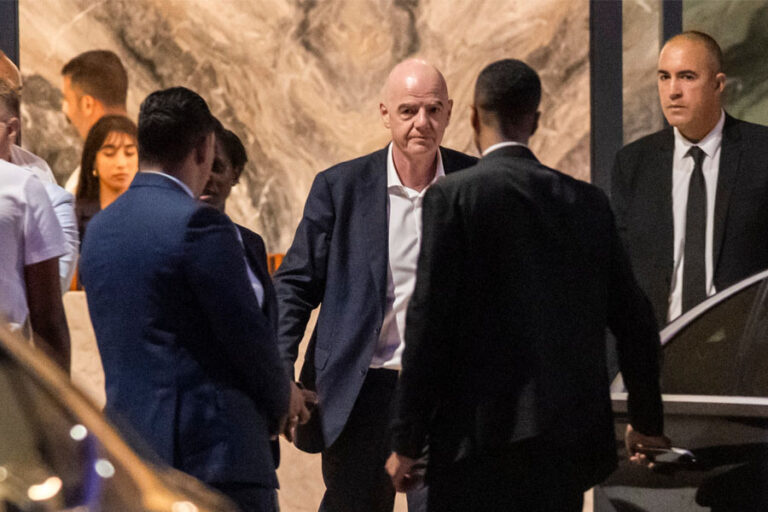
FIFA president Gianni Infantino leaves after attending a Women AFCON 2026 soccer match between Malawi and Zambia, in Rabat, Morocco, Wednesday, Aug. 5, 2026. (AP Photo)
Advertisement

Hot News

LATEST NEWS

Bangkok
light rain
29.2 ° C
29.2 °
29.2 °
83 %
2.2kmh
100 %
Mon
30 °
Tue
38 °
Wed
37 °
Thu
28 °
Fri
26 °