36.1 C
Bangkok
Saturday, June 27, 2026
Home Blog Page 1671

Where to Sacrifice Your Liver to St. Patrick in Bangkok

Photo: Scruffy Murphy’s Irish Pub / Courtesy
shittyclipart.leprechaun 1
This jolly clipart leprechaun from our friends at DepositPhotos.com is a St. Patrick’s Day tradition.

BANGKOK — Starting this Friday, Bangkok’s sois will be a little greener and wetter as revelers chug a pint or six to celebrate La Fheile Padraig – Saint Patrick’s Day.

Check out the following venues to honor of the patron saint of Ireland or just get loaded with your mates.

Don’t start too early: Due to early voting Sunday, a 24-hour ban on alcohol sales won’t end until 6pm.


Scruffy Murphy’s Irish Pub

QR1ZiXL1h7GvITYflqntL93fTaLpfbkBtbEtrPmNR3a5NcPGgtaD0l JCgza2t3 DTyWeziS0rU3dXcgvNNuR jj74oc a5zpod1OHbGJEFC sD6S3w2k99fp 54g0BIW80mYsla
Photo: Scruffy Murphy’s Irish Pub / Courtesy

Hear live music from four bands and eat Irish food specials such as Dublin coddle and Irish stew, not to mention bread and butter pudding when an Irish pub near Soi Cowboy throws a three-day party starting Friday.

A lunch barbecue goes down Saturday afternoon. Join the crowd Sunday to watch Ireland vs. Wales in the Six Nations rugby championship. Scruffy Murphy’s is in Soi Sukhumvit 23.

The Royal Oak Pub

yuCCYa2S1Oq8glwPeaZlhC pH8eWz7wNztwjTyjmSnKv8Lhed1ZZw8Iq1 BEJwjc3uLeiPjRqEODY 49Gkla RsBND5nzBnUOpsC5AY0kRUFeMDonXCIp9fehnMSr9eeLQXlc0Bg

Travel stories and cultural misunderstandings will be front and center when Irish stand-up comedian Darren Matthews brings his Whisky And Ginger Male tour to this wee British pub tucked up Soi Sukhumvit 33/1.

Tickets are 500 baht if purchased online or 700 baht at the door.

Bangkok Island

nry61FYCC3XDe7o zQXi7PHVH3lEEmcoJ62YtqTWWoMQUP47LZHcqBsQrtuYdEFJr4eo3fYrRbjpXfS16PXaPYGH8p12fY2 6G
Photo: Bangkok Island / Facebook

Carouse on the mighty Chao Phraya river when Bangkok Island hosts a St. Patrick’s Fest – Cruise and Concert. Seven bands will take the stage from several genres including folk, metal and indie. Highlights include a reunion of garage rockers The Sangsom Massacre.

The barge leaves the pier inside Wat Yannawa near BTS Saphan Taksin at 4pm Sunday. The party goes on until midnight. Tickets are limited to 250 people and are available online.

The Drunken Leprechaun

IDLRTipGIejgEPYstXSCsJXqLQF12FU Boo8FNnN9a527fGRQaEz 45SLxbi68ynxabnLVnrDtDzNYHXqp4H2zAuopWSVXMfYR1sIgaDfPv5YlcJm6BTT2CHjFBZsh8ZN WLy8IE
Photo: The Drunken Leprechaun / Facebook

For three days, Friday through Sunday, this laid-back Irish bar on Soi Sukhumvit 15 offers food and drink specials along with live performances and sports. Try your luck in a number of drinking games to win big prizes.

At 9:45pm on Saturday, the venue’s big screens will show Ireland vs. Wales live in the Six Nations rugby championship.

Hooters Silom

aRMKON s3URSbNpVFeWCYNVxQAroPDji5uxv9DTqZ8AQTe kSgTdWJx0lHvPLzphencg 7dmmukiwm5urU4xduRXuvxszMbdctb6Dwa2RlGLnYYavoo AEfGZ377FwjZOfsIZRw6
Photo: Midnight Ramblers / Facebook

The American chain’s Silom store will welcome a six-piece act making the bold claim to be “Asia’s best Rolling Stones cover band.” The Midnight Ramblers will perform an hour-long set starting at 8pm on Sunday.

The Stranger Bar

iS9YGpumTQpS4dZwZnSZRFYA2QNwO

Go for a stranger St. Paddy’s at Bangkok’s top drag destination in Soi Silom 4 when The Stranger hosts the Green and Proud St. Paddy’s Day. The queens will perform starting at 10pm on Sunday. Admission is free.

Sway

JUlaGMAvX0eaMQOhRrEbSMB6jNuuc9awHFfHSx GLbIhtSphgI1wuKtVMUH5yWMEWTBLWBmIbPqk0SLVM4O7ZWIl1TJdM5Sywk7jGD7p 9rBUOBd6c bCmpKbKbb
Photo: Sway / Facebook

Not much Irish here, but the deals here might appeal to your inner Scot. This Soi Thonglor 10 eatery’s St. Patrick’s Day Shakedown will offer buy-one-get-one draft beer and chicken wings starting at 10pm on Sunday. Sway’s resident DJs will play soul, funk, hip-hop and R&B.

Advertisement

Abhisit Rules Out Voting for Prayuth

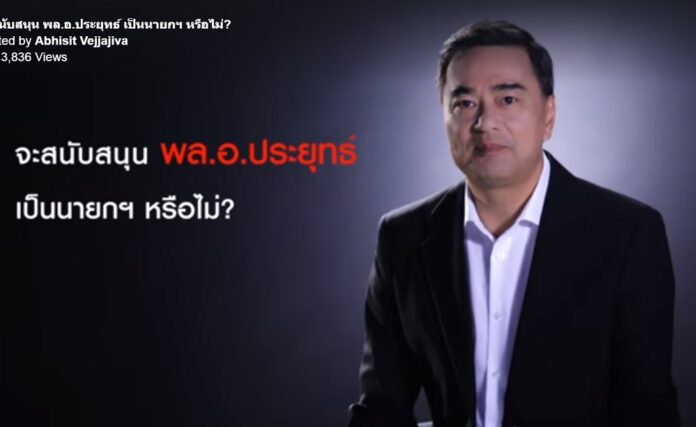
A screencap of a video posted Sunday by Democrat Party chairman Abhisit Vejjajiva.

BANGKOK — Hopping off the fence that divides the electorate, Democrat Party chairman Abhisit Vejjajiva said Sunday he will not support junta leader Prayuth Chan-ocha’s bid for another term in office.

The announcement marked the first time Abhisit, whose party has garnered the second largest placed second in recent elections – unequivocally opposed Gen. Prayuth’s attempt to hold onto power. His pledge was immediately met with praise, skepticism and even outrage from former allies.

“I’ll speak it clearly: I definitely will not support Gen. Prayuth Chan-ocha to be the next prime minister,” Abhisit said in the video announcement. As if anticipating skepticism, a video title then asks “Is that clear enough?” before replaying his message.

Explaining his decision, which may greatly imperil Prayuth’s chances of another term, Abhisit accused the junta leader of trying to maintain a grip on power, which he said runs against his party’s principles of upholding democratic norms.

He repeated the same stance during a Sunday debate.

“I won’t let him hold on to his power and bring in an undemocratic regime,” Abhisit said during the debate organized by online news site The Standard. His archrival, Pheu Thai Party candidate Sudarat Keyuraphan, could be seen smiling upon hearing Abhisit’s remark.

But Abhisit added that while he wouldn’t back the pro-junta Phalang Pracharat Party’s nominee, he also wouldn’t join hands with Pheu Thai or any party allied with former premier Thaksin Shinawatra either.

“We will refuse both the prime minister candidates from the Pheu Thai and Phalang Pracharat parties,” said the 54-year-old politician, who served as PM from 2008 to 2011.

Up until yesterday, the Democrat Party had refused to commit to a stance on Prayuth’s candidacy. Many Democrat supporters, who supported street protests five years ago which led to the coup, remain loyal to Prayuth,  who they believe is a necessary ally against Thaksin’s influence.

Though 76 parties are competing for votes on March 24, the election is by and large a mandate on the military’s rule. Abhisit’s declaration now aligns the Democrats with parties like Pheu Thai, Future Forward and Seri Ruam Thai who opposed Prayuth’s bid for another term.

However, when Future Forward Party leader Thanathorn Juangroongruangkit challenged Abhisit to clarify whether he might still join a coalition with Phalang Pracharat, the Democrat leader refused to dismiss the possibility.

The Democrats will consider many factors to decide who to ally with in the parliament, Abhisit said.

His dubious answer led Chadchart Sittipunt, another Pheu Thai PM candidate, to urge Abhisit to make clear whether he’s still willing to work with Phalang Pracharat.

“I think the heart of the issue here isn’t Gen. Prayuth, but it’s about principles,” Chadchart told reporters while campaigning today in Bangkok. “In truth, is Abhisit siding with Phalang Pracharat or not? It’s not about any individual. It’s about what the party’s principles really are.”

Some Democrats support Abhisit’s pledge and believe he’s doing the right thing by forging his own way.

“If Khun Abhisit and the Democrat Party are independent and walk the right path, there is still hope in this country,” user Boyd Suphakit wrote in reply to Abhisit’s video. “I believe many people want to give him a chance. In fact, Khun Abhisit could be a world-class leader if he is independent and faithful to democracy.”

“If Democrats join hands with Pheu Thai, Future Forward and Seri Ruam Thai, and then help develop the country together without engaging in corruption, it will bring true reconciliation,” Thanawat Chaiprasert wrote. “Phalang Pracharat and Uncle Tuu can rot away.”

Others chastised Abhisit for turning his back on the junta chairman.

“I have been supporting Democrats all my life. I have never voted for anyone else,” Waiyaporn Sanpa-ngern wrote. “But today I have to make my own decision because you will cooperate with those who are ‘Scum of the Earth.’”

“All my family has been voting for Democrats, but now we have made a decision: We will certainly vote for Phalang Pracharat,” Sutthapong Nopsri wrote. “Because Mark is too weak. I don’t want the Redshirts to burn down my country again!”

52934112 10156642610676144 6706632801828995072 o
Image: Abhisit Vejjajiva / Facebook.

But the harshest criticism felt by Abhisit seemed to come from his former deputy and longtime ally, Suthep Thaugsuban, who now campaigns on behalf of another pro-junta party.

Speaking at an Action Coalition for Thailand Party rally in Phang Nga province yesterday, Suthep said Abhisit owed him gratitude for securing the premiership in 2008.

“If it weren’t because of me, I don’t know if he would have ever become prime minister, even in his next life!” Suthep, who joined the Democrats nearly 40 years ago, thundered in the southern dialect to a crowd of several hundred.

He also accused Abhisit of the worst crime imaginable to many Democrat supporters: conspiring with archnemesis Thaksin.

“Is he now fully standing on the same side with Thaksin?” Suthep said. “If Thaksin’s faction offers votes for Abhisit to become the prime minister, will he accept them immediately?”

Advertisement

Police Tight-Lipped After Bombs Rip Through South

Aftermath of a bomb attack at a parking lot of a police station in Satun province.

BANGKOK — Police said an investigation is underway to find those responsible for a bombing spree that struck the southern region Sunday but declined to identify any suspects.

Seventeen explosives were either detonated or discovered in the two provinces of Phatthalung and Satun, but no injuries or deaths were reported. Police spokesman Krissana Pattanacharoen said Monday that investigators were ordered to track down the suspects “in the speediest way.”

“We cannot disclose any details because it’s an ongoing investigation,” Col. Krissana said. “Let them work first.”

A spokesman for a counter-insurgency agency also said the authorities have not discarded any motives.

The explosives went off at a variety of locations, including in a train station garden, outside a grocery shop and next to a police station.

The two provinces targeted by the bombs have been relatively safe from the secessionist violence that has plagued their neighboring border provinces for the last 12 years. Consistent with previous bombings that have struck the region, no group has claimed responsibility for the attacks.

Advertisement

China Grounds Boeing 737 Max 8 Planes After 2nd Crash

A new SilkAir Boeing 737 Max 8 parked Oct. 4, 2017, on the tarmac of Singapore's Changi International Airport. Photo: Wong Maye-E / Associated Press

BEIJING — China’s civilian aviation authority ordered all Chinese airlines to temporarily ground their Boeing 737 Max 8 planes Monday after one of the aircraft crashed in Ethiopia.

The Civil Aviation Administration of China said the order was issued at 9am (0100 GMT) on Monday and would last nine hours.

It said the order was “taken in line with the management principle of zero tolerance for security risks,” because the crash was the second after another of the planes fell into the ocean off the coast of Indonesia in similar circumstances on Oct. 29, killing all aboard.

Further notice would be issued after consultation with the U.S. Federal Aviation Administration and Boeing, the administration said.

Eight Chinese nationals were among the 157 people aboard the Boeing 737 Max 8 operated by Ethiopian Airlines when it went down shortly after takeoff from the Ethiopian capital of Addis Ababa Sunday, leaving no survivors.

The crash in Ethiopia could renew safety questions about the newest version of Boeing’s popular 737 airliner since the plane was new and the weather was clear at the time. Finding something wrong, the pilots tried to return to the airport but never made it.

In those circumstances, the accident is eerily similar to the October crash in which a 737 Max 8 flown by Indonesia’s Lion Air plunged into the Java Sea minutes after takeoff, killing all 189 people on the plane. But safety experts cautioned against quickly drawing too many parallels between the two crashes.

William Waldock, an aviation-safety professor at Embry-Riddle Aeronautical University, said suspicion will be raised because the same type of plane appeared to crash the same way — a fatal nosedive that left wreckage in tiny pieces.

“Investigators are not big believers in coincidence,” he said.

Waldock said Boeing will look more closely at the flight-management system and automation on the Max. But he noted that it is very early, and more will be known after investigators find and analyze the Ethiopian plane’s black boxes.

Alan Diehl, a former National Transportation Safety Board investigator, said the similarities included both crews encountering a problem shortly after takeoff, and reports of large variations in vertical speed during ascent, “clearly suggesting a potential controllability problem” with the Ethiopian jetliner.

But there are many possible explanations, Diehl said, including engine problems, pilot error, weight load, sabotage or bird strikes. He said Ethiopian has a good reputation, but investigators will look into the plane’s maintenance, especially since that may have been an issue in the Lion Air investigation.

By contrast, the Ethiopian Airlines CEO told reporters that a maintenance check-up did not find any problems with the plane before Sunday’s flight, “so it is hard to see any parallels with the Lion Air crash yet,” said Harro Ranter, founder of the Aviation Safety Network, which compiles information about accidents worldwide.

“I do hope though that people will wait for the first results of the investigation instead of jumping to conclusions based on the very little facts that we know so far,” he said.

Boeing representatives did not immediately respond for comment. The company tweeted that it was “deeply saddened to learn of the passing of the passengers and crew” on the Ethiopian Airlines Max airplane.

The Chicago-based company said it would send a technical team to the crash site to help Ethiopian and U.S. investigators.

A spokesman for the NTSB said the U.S. agency was sending a team of four to assist Ethiopian authorities. Boeing and the U.S. investigative agency are also involved in the Lion Air probe.

Indonesian investigators have not stated a cause for the Lion Air crash, but they are examining whether faulty readings from a sensor might have triggered an automatic nose-down command to the plane, which the Lion Air pilots fought unsuccessfully to overcome. The automated system kicks in if sensors indicate that a plane is about to lose lift, or go into an aerodynamic stall. Gaining speed by diving can prevent a stall.

The Lion Air plane’s flight data recorder showed problems with an airspeed indicator on four flights, although the airline initially said the problem was fixed.

Days after the Oct. 29 accident, Boeing sent a notice to airlines that faulty information from a sensor could cause the plane to automatically point the nose down. The notice reminded pilots of the procedure for handling such a situation, which is to disable the system causing the automatic nose-down movements.

Pilots at some airlines, however, including American and Southwest, protested that they were not fully informed about the new system. Boeing Chairman and CEO Dennis Muilenburg said in December that the Max is a safe plane, and that Boeing did not withhold operating details from airlines and pilots.

Diehl, the former NTSB investigator, said the Ethiopian Airlines pilots should have been aware of that issue from press coverage of the Lion Air crash.

The 737 is the best-selling airliner in history, and the Max is the newest version of it, with more fuel-efficient engines. The Max is a central part of Boeing’s strategy to compete with European rival Airbus.

Boeing has delivered about 350 737 Max planes and has orders for more than 5,000. It is already in use by many airlines including American, United and Southwest.

The Lion Air incident does not seem to have harmed Boeing’s ability to sell the Max. Boeing’s stock fell nearly 7 percent on the day of the Lion Air crash. Since then it has soared 26 percent higher, compared with a 4 percent gain in the Standard & Poor’s 500 index.

Story: Christopher Bodeen

Advertisement

Indonesian Woman Freed 2 Years After Kim Jong Nam’s VX Death

Indonesian Siti Aisyah, center, is escorted by police Monday as she arrives at Shah Alam High Court in Shah Alam, Malaysia. Photo: Yam G-Jun / Associated Press

SHAH ALAM, Malaysia — An Indonesian woman held two years on suspicion of killing the North Korean leader’s half brother was freed from custody Monday after prosecutors unexpectedly dropped the murder charge against her.

Siti Aisyah cried and hugged her co-defendant, Doan Thi Huong from Vietnam, before leaving the courtroom. She told reporters she had only learned that morning that she would be freed. “I am surprised and very happy. I didn’t expect it.”

The two young women were accused of smearing VX nerve agent on Kim Jong Nam’s face in an airport terminal in Kuala Lumpur on Feb. 13, 2017. They have said they thought they were taking part in a prank for a TV show. They had been the only suspects in custody after four North Korean suspects fled the country the same morning Kim was killed.

The High Court judge discharged Aisyah without an acquittal after prosecutors said they wanted to withdraw the murder charge against her. They did not give a reason.

Prosecutor Iskandar Ahmad said the discharge not amounting to acquittal means Aisyah can be recharged but there are no such plans for now.

Aisyah was quickly ushered out of the court building in an embassy car. Her lawyers said she is heading to the Indonesian Embassy and expected to fly to Jakarta soon.

Huong’s murder trial was put on hold after the surprise development. She was to have begun giving her defense in Monday’s court session, after months of delay.

“I am in shock. My mind is blank,” a distraught Huong told reporters through a translator after Aisyah left.

Indonesian Ambassador Rusdi Kirana said he was thankful to the Malaysian government. “We believe she is not guilty,” he said.

Huong’s Lawyer, Hisyam Teh Poh Teik, said they will seek to postpone the trial. He said Huong was distraught and felt Aisyah’s discharge was unfair to her as the judge last year had found sufficient evidence to continue the murder trial against them.

A High Court judge last August had found there was enough evidence to infer Aisyah, Huong and the four missing North Koreans had engaged in a “well-planned conspiracy” to kill Kim Jong Nam. The defense phase of the trial had been scheduled to start in January but was delayed until Monday.

Salim Bashir, a lawyer for Huong, said previously she was prepared to testify under oath for her defense.

“She is confident and ready to give her version of the story. It is completely different from what the prosecutors had painted. She was filming a prank and had no intention to kill or injure anyone,” he told the AP.

Lawyers for the women have previously said they were pawns in a political assassination with clear links to the North Korean Embassy in Kuala Lumpur, and that the prosecution failed to show the women had any intention to kill. Intent to kill is crucial to a murder charge under Malaysian law.

Malaysian officials have never officially accused North Korea and have made it clear they don’t want the trial politicized.

Kim Jong Nam was the eldest son in the current generation of North Korea’s ruling family. He had been living abroad for years but could have been seen as a threat to North Korean leader Kim Jong Un’s rule

Story: Eileen Ng

Advertisement

Mexico’s Leftist President Creates New Style of Government

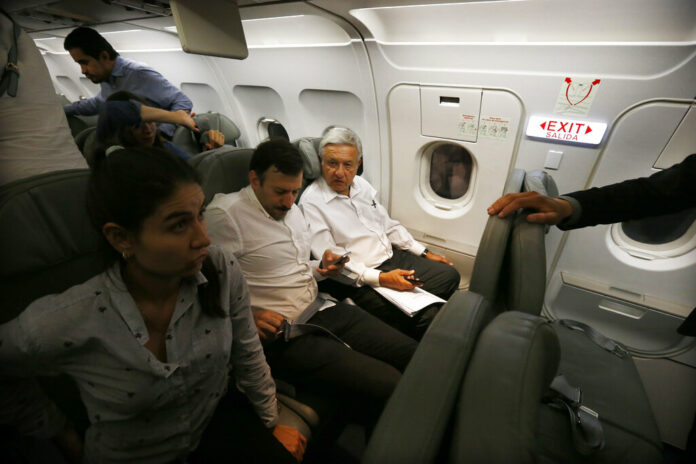
Mexican President Andres Manuel Lopez Obrador, center right, talks with members of his staff as he travels in economy class aboard a commercial flight from Guadalajara to Mexico City, Saturday, March 9, 2019. In his first 100 days in office, Lopez Obrador has answered more questions from the press, flown in more economy-class flights, posed for more selfies with admiring citizens and visited more genuinely risky areas with little or no security than several combined decades of his predecessors. (AP Photo/Marco Ugarte)

MEXICO CITY — Mexican President Andres Manuel Lopez Obrador’s first 100 days in office have combined a compulsive shedding of presidential trappings with a dizzying array of policy initiatives, and a series of missteps haven’t even dented his soaring approval ratings.

Lopez Obrador has answered more questions from the press, flown in more economy-class flights, posed for more selfies with admiring citizens and visited more genuinely risky areas with little or no security than several combined decades of his predecessors. He’s also surprised many by maintaining a cordial relationship with U.S. President Donald Trump, helping contain Central American migrant caravans while resisting U.S. efforts to oust the leftist government of Venezuela.

The folksy perennial candidate took office Dec. 1 and by the end of his first month in office, Lopez Obrador’s approval rating surpassed 80 percent. He has taken full advantage of that mandate to move quickly on many fronts — perhaps too many.
“Every week he announces at least one or two things,” said Ivonne Acuna Murillo, a professor of political science at the Iberoamerican University in Mexico City.

“Sometimes the speed of the issues he is putting on the agenda is such that an issue they put out in the morning is displaced by another in the afternoon.”

Before Lopez Obrador had even taken office he held a referendum on the partially constructed USD$13 billion Mexico City airport. He used the resulting vote as a green light to cancel a project he had campaigned against.

During his first month in office, Lopez Obrador launched a military assault on the country’s fuel theft gangs, dividing the security of Mexico’s critical pipelines and refineries between the army and the navy.

The hastily planned offensive created gas shortages across the country, but somehow didn’t dampen his popularity.
This month, he overrode complaints by human rights campaigners and got the Congress and state legislatures to approve constitutional reforms creating a heavily militarized National Guard that he touts as the key to getting control of Mexico’s runaway violence.

A typical day starts with his 6 a.m. Cabinet meeting, focusing on security, where he gets the daily crime report. At 7 a.m., he steps on the dais at the centuries-old National Palace to start a free-wheeling, open-ended press conference that often goes for 1 ½ hours.

From there he might hold a meeting on the initiative of the day, and then around noon he flies off — tourist class, fielding hugs and taking selfies with fellow passengers — to some provincial city, where he’ll meet with local leaders, eat at some modest local cafeteria, then hold another open-air rally and take some more hugs. Then he’ll catch another tourist-class flight to Mexico City. (He says he gets to bed early).

The part of the day he most clearly enjoys? Pressing the flesh and handing out time-tested one-liners at rallies in provincial towns — essentially, the same thing he has been doing for the last 20 years on the campaign trail as a three-time presidential contender.

“He is a bit messianic, meaning evangelical. He’s out there preaching all the time,” said Federico Estevez, a political science professor at the Autonomous Technological Institute of Mexico. “He’s Bernie Sanders with power.”

“I’m not sure if this a good governance model, but it’s an exceptionally good political one,” Estevez said.

It’s easy to lose sight of how different this all is, unless you’ve lived through decades of Mexico’s distant, imperial presidency, in which the president seldom appeared beyond orchestrated speeches, or as a motorcade of luxury vehicles speeded to the president’s personal airplane hangar for flights aboard the presidential jet to carefully guarded events.

Gone are the motorcades, gone is the jet, gone is the security, gone is the official presidential residence. You’re more likely to see Lopez Obrador buying himself a $1 styrofoam cup of coffee at a convenience store or eating beans at a roadside restaurant, than to see him rubbing elbows with foreign dignitaries.

Lopez Obrador rode a wave of popular discontent with corruption in Mexico, and has attracted a near-unquestioning devotion because of his own honest, rumpled style.

“The advantage that Andres Manuel has as leader is that he arrived with a backing that no president has had in Mexico,” said Benjamin Arditi, a political science professor at the National Autonomous University of Mexico.

Lopez Obrador has already had spats with NGOs, regulators, environmentalists, outside experts and ratings agencies. His campaign against crime and violence has yielded few results. He chafes at those who ask for feasibility or environmental impact studies for his pet projects.But hardly anyone notices.

“There is a devotion, something almost religious,” said Jose Antonio Crespo, a political analyst at Mexico’s Center for Economic Research and Training. “It makes people believe only what he says, against everything that experts or ratings agencies or international organizations say. They don’t matter, it only matters what he says.”

At least two ratings agencies have downgraded their outlook on Mexico’s debt to ‘negative’ since he took office. His decisions — like the one to cancel the airport project, “don’t generate the slightest bit of confidence,” Crespo said, “and that is going to have a cost, is having a cost, in terms of capital leaving, or money not being invested.”

For Lopez Obrador, Mexico’s foreign policy boils down to simply non-intervention, and he leaves the field to his top diplomat, Marcelo Ebrard.

But some critics say Mexico is doing Trump’s bidding by accepting the U.S. “remain in Mexico” program and by restricting the movement of caravans of Central American migrants. “Remain in Mexico” makes Central American asylum applicants await resolution of their cases from the Mexican side of the border.

“It is a U.S. policy that once again subordinates Mexico’s immigration policy,” said Oscar Misael Hernandez, an immigration researcher at the College of the Northern Border in Matamoros.

Others saw it as a pragmatic calculation that U.S. courts will soon put a halt to the program. Allowing it in the meantime helps U.S. relations and helped Mexico win a $10.6 billion U.S. commitment for regional development, meant to create jobs in Central America and southern Mexico so fewer people feel compelled to leave.

With growing signs of anti-migrant sentiment in Mexico, containing migration costs Lopez Obrador little in political terms, and is balanced by his push to grant work visas for migrants.

The new administration’s most widely criticized misstep was Lopez Obrador’s decision to axe funds for nonprofits working on issues ranging from promoting art and culture to providing domestic abuse shelters, arguing the “intermediaries” were too often used to siphon away government funds. Lopez Obrador wants to give the money directly to the people who needed it, but experts say that won’t work for complex social services like day care and shelters for battered women.

Mariana Banos, whose Fundacion Origen offers support services to women — often through partnerships with other organizations and local governments — said many groups will have to shut down because they depend entirely on government funding.

She scoffed at the corruption allegations and urged the government to reconsider.
“You have to work hand-in-hand, not create a divide, not stigmatize,” she said.
Despite the frictions there are lighter moments to “The 4-T,” a play on Lopez Obrador’s description of his administration as the “fourth transformation” of Mexico.

Lopez Obrador sometimes laughs at his own jokes. He posts Facebook videos from roadside restaurants, with impromptu lectures on the health benefits of coconuts or local fruits. And Mexicans crack up at his frequent, folksy catch phrases like “Me canso ganso,” equivalent to “I’ll be a monkey’s uncle.”

Enterprising designers have come up with a web app that allows people to make resolutions and receive a text message from an AMLO-bot saying “Monica, you’ll lose weight this year, or I’ll be a monkey’s uncle.”

Story: Christopher Sherman, Mark Stevenson

Advertisement

Town by Town, Local US Journalism is Dying in Plain Sight

In this Feb. 19, 2019 photo, the old Daily Guide office stands for sale in St. Robert, Mo. With the shutdown of the newspaper in September 2018, this area in central Missouri's Ozark hills joined more than 1,400 other cities across the United States to lose a newspaper over the past 15 years, according to an Associated Press analysis of data compiled by the University North Carolina. (AP Photo/Orlin Wagner)

WAYNESVILLE, Missouri — Five minutes late, Darrell Todd Maurina sweeps into a meeting room and plugs in his laptop computer. He places a Wi-Fi hotspot on the table and turns on a digital recorder. The earplug in his left ear is attached to a police scanner in his pants pocket.

He wears a tie; Maurina insists upon professionalism.

He is the press – in its entirety.

Maurina, who posts his work to Facebook, is the only person who has come to the Pulaski County courthouse to tell residents what their commissioners are up to, the only one who will report on their deliberations – specifically, their discussions about how to satisfy the Federal Emergency Management Agency so it will pay to repair a road inundated during a 2013 flood.

Last September, Waynesville became a statistic. With the shutdown of its newspaper, the Daily Guide, this town of 5,200 people in central Missouri’s Ozark hills joined more than 1,400 other cities and towns across the U.S. to lose a newspaper over the past 15 years, according to an Associated Press analysis of data compiled by the University of North Carolina.

Blame revenue siphoned by online competition, cost-cutting ownership, a death spiral in quality, sheer disinterest among readers or reasons peculiar to given locales for that development. While national outlets worry about a president who calls the press an enemy of the people, many Americans no longer have someone watching the city council for them, chronicling the soccer exploits of their children or reporting on the kindly neighbor who died of cancer.

Local journalism is dying in plain sight.

A rock outcropping painted by a local tattoo artist to resemble a frog greets visitors who follow the old Route 66 into Waynesville. Along with its sister city St. Robert, the military towns are dominated by the nearby Fort Leonard Wood, which has kept the county’s population steadily around 50,000 for the past decade.

Five of Waynesville’s eight city council members are former military, and Mayor Luge Hardman says the meetings run efficiently as a result.

“This is a small town where you can be from somewhere else and not feel like an outsider,” said Kevin Hillman, Pulaski County prosecuting attorney.

The Daily Guide, which traces to 1962, was a family owned paper into the 1980s before it was sold to a series of corporate owners that culminated with GateHouse Media Inc., the nation’s largest newspaper company. Five of the 10 largest media companies are owned by hedge funds or other investors with several unrelated holdings, and GateHouse is among them.

GateHouse and another company, Digital First Media, follow a strategy of aggressive cost-cutting without making significant investments in newsrooms, said Penelope Muse Abernathy, a University of North Carolina professor who studies news industry trends. But all newspaper owners face a brutal reality that calls into question whether it’s an economically sustainable model anymore unless, like the Jeff Bezos-owned Washington Post, the boss is the world’s richest man.

That’s especially true in smaller communities.

“They’re getting eaten away at every level,” said Ken Doctor, a news industry analyst at Harvard’s Nieman Lab.

Newspaper circulation in the U.S. has declined every year for three decades, while advertising revenue has nosedived since 2006, according to the Pew Research Center. Staffing at newspapers large and small has followed that grim trendline: Pew says the number of reporters, editors, photographers and other newsroom employees in the industry fell by 45 percent nationwide between 2004 and 2017.

In the mid-1990s, when former Daily Guide publisher Tim Berrier was replaced, the newspaper had a news editor, sports editor, photographer and two reporters on staff. Along with traditional community news, the Daily Guide covered the Army’s decision to move its chemical warfare training facility to Fort Leonard Wood in the 1990s, and a flood that swept a mother and son to their deaths in 2013.

As recently as 2010, the Daily Guide had four full-time news people, along with a page designer and three ad salespeople.

But people left and weren’t replaced. Last spring, the Daily Guide was cut from five to three days a week. In June, the last newsroom staffer, editor Natalie Sanders, quit – she was burned out, she said. She made a bet with the only other full-time employee, ad sales person Tiffany Baker, over when the newspaper would close. Sanders said three years; Baker said one.

The last edition was published three months later, on Sept. 7.

“It felt like an old friend died,” Sanders said. “I sat and I cried, I really did. Because being the editor of the Daily Guide was all I wanted for a really long time.”

The death of the Daily Guide raises questions not easily answered, the same ones asked at newspapers big and small across the country.

Did GateHouse stop investing because people were less interested in reading the paper? Berrier said about 3,600 copies of the Daily Guide were printed in the mid-1990s. At the end, GateHouse was printing 675 copies a day.

Or did people lose interest because the lack of investment made it a less satisfying read?

“As the paper declined and got smaller and smaller, I felt that there wasn’t as much information that really made it worthwhile, so I did eventually stop” subscribing, said Keith Carnahan, senior pastor at Maranatha Baptist Church in St. Robert.

Berrier blames GateHouse, who he said “set the Daily Guide up to fail.” Others are less sure. Sanders, the former editor, and Joel Goodridge, another former publisher, blame both GateHouse and the community for not supporting the paper.

Goodridge said some businesses found they could advertise much more cheaply in free circulars dumped at local stores. He now works at a college in the nearby town of Rolla. His job at the Daily Guide was eliminated during the relentless downturn.

“When I first got into the newspaper business, it was intriguing, rewarding and I felt like I was doing something more than generating profits,” Goodridge said. “I felt like I was doing something for the community. As the years went by, it changed.”

GateHouse said the Daily Guide, like many smaller newspapers across the country, was hurt by a dwindling advertising market among national retailers. The paper supplemented its income through outside printing jobs, but those dried up, too, said Bernie Szachara, president of U.S. newspaper operations for GateHouse.

Given an unforgiving marketplace, there’s no guarantee additional investment in the paper would have paid off, he said. Szachara said the decision was made to include some news about Waynesville in a weekly advertising circular distributed around Pulaski County.

“We were trying not to create a ghost town,” he said.

Residents of Waynesville are coming to grips with what is missing in their lives.

“Losing a newspaper,” said Keith Pritchard, 63, chairman of the board at the Security Bank of Pulaski County and a lifelong resident, “is like losing the heartbeat of a town.”

Pritchard has scrapbooks of news clippings about his three daughters; Katie was a basketball player of some renown at Drury University. He wonders: How will young families collect such memories?

The local state representative, Steve Lynch, would routinely cut out a story about people recognized in the paper, add a personal note, laminate it and send it to them – a savvy goodwill exercise.

Historians worry about what is lost to future generations. Many of the displays in a small museum of local history in St. Robert are stories retrieved from newspapers.

Residents talk with dismay about church picnics or school plays they might have attended but only learn of through Facebook postings after the fact.

“I miss the newspaper, the chance to sit down over a cup of coffee and a bagel or a doughnut … and find out what’s going on in the community,” said Bill Slabaugh, a retiree. Now he talks to friends and “candidly, for the most part, I’m ignorant.”

Slabaugh acknowledges some complicity in the Daily Guide’s demise. He said he angrily stopped buying the paper when it wrote about a drag show at a local community center.

Beyond the emotions are practical concerns about the loss of an information source. The bank routinely checked the Daily Guide’s obituaries to protect against fraud; Pritchard said you’d be surprised by family members who try to clean out the accounts of a recently-deceased relative.

At a time when journalists and police are often at odds, it’s somewhat startling to hear local law enforcement unanimously express dismay at the loss of a newspaper.

Like many communities, Waynesville is struggling with a drug problem. The nearby interstate is an easy supply line for opioids and meth, police say. The four murders in Waynesville last year were the most in memory, and all were drug-related.

For painful, personal reasons, Pulaski County Sheriff Jimmy Bench wishes the Daily Guide was there to report on the December death of his 31-year-old son, Ryan, due to a heroin overdose. It would have been better than dealing with whispers and Twitter.

“Social media is so cruel sometimes,” Bench said.

Without a newspaper’s reporting, Police Chief Dan Cordova said many in the community are unaware of the extent of the problem. Useful information, like a spate of robberies in one section of town, goes unreported. Social media is a resource, but Cordova is concerned about not reaching everyone.

Local authorities still write news releases and, in the final days of the Daily Guide, the overworked staff often printed them verbatim – even giving front-page bylines to the marketing director for the Waynesville School District.

“I thought it was great,” said Waynesville School Superintendent Brian Henry, later adding: “Nobody’s really stepped in and filled exactly what we had with our newspaper.”

Posting press releases to official Facebook pages isn’t quite the same. County coroner Nick Pappas said readers are more suspicious of news releases than they would be of a fully reported news story.

“I’m not going to put out anything critical of myself out there,” said Hillman, the prosecuting attorney who just started his third term in the elective office. “I mean, that’s the truth. What politician is?”

This isn’t a hopeless story.

Dotted across the country are exceptions to the brutal new rule, newspapers that are surviving with creative business plans. In North Carolina’s Moore County, owners support the 100-year-old Pilot with revenue raised by side businesses – lifestyle magazines, electronic newsletters, telephone directories, a video production company and a bookstore.

Philanthropy is supporting other efforts to fill gaps created by journalism’s business struggles. Report for America, which sees itself as a Peace Corps for journalists, has sent young reporters into communities in Mississippi, Texas and elsewhere. It has relationships with newsrooms across the country, including The Associated Press. The American Journalism Project is raising money to fund local news, and recently announced USD$42 million in pledges.

What this effort means for Waynesville, and many small towns like it, remains to be seen.

It briefly had an alternative after the Daily Guide folded. A local businessman, Louie Keen, bankrolled a newspaper, the Uranus Examiner, that was delivered for free. The paper had some journalistic spunk, revealing that the Waynesville mayor had blocked some residents from seeing her postings on the city’s Facebook site. Mayor Hardman said it was inadvertent and quickly corrected.

The paper lasted five issues. Named for the tourist complex Keen owns, he said the Uranus Examiner was shunned by local advertisers because he used to own a strip club and uses sophomoric jokes to promote his businesses.

So Waynesville and St. Robert are left with Darrell Todd Maurina’s Facebook site, which he calls the Pulaski County Daily News.

A former Army civilian public affairs officer who worked at the Daily Guide in the 2000s, Maurina posts live from community meetings, reports on accidents on the nearby interstate and publishes obituaries. It’s meat-and-potatoes local news.

When he’s not at meetings, he works from a windowless office in the basement of his home. Court documents and papers are piled on the floor and coffee table near a police radio scanner, fax machine and television. On his desk are a well-worn Bible, small American flag and a signed photograph of President Gerald Ford thanking Maurina’s father for his support.

Maurina typically is awake before 5 a.m. to check the local radio station, if the scanner hasn’t roused him earlier.

“I really believe that as large newspaper chains cut staff of small newspapers, and small newspapers wither and die, that’s going to cause major problems in communities,” he said. “Somebody needs to pick up the slack and, at least in this community, I’m able to do that.”

Maurina’s efforts have some support, even from the city councilman who said he once threatened to throw Maurina out a window over a disagreement about a story.

“He’s an equal opportunity agitator,” said Ed Conley, another council member. “He tries to be fair, and to be honest about it, he does a good job, but he’s just one person and he’s limited by social media.”

Maurina declines to share many details about the finances for his online site. He also acknowledges some holes in his coverage, especially of sports.

For local athletics, some people turn instead to a Facebook site run by Allen Hilliard, a former Daily Guide stringer and school bus driver who has been posting photos, videos and newsletters about local youth and high school teams. Hilliard isn’t making much money from his time-consuming hobby, but like Maurina, he takes pride in providing a community service.

“If I quit doing it, then essentially there would be no (sports) coverage of anyone,” he said.

Maurina says he knows journalists need to go back to the basics to survive – or revive – in small-town America.

“We need to go back to what was done in the late 1800s – being everywhere at every event, telling everyone what the sirens were about last night,” he said.

Good idea. Who’s going to pay for it?

Advertisement

Bill Shine Resigns From White House Communications Post

US President Donald Trump attends a round table discussion on border security with local leaders in January in the Cabinet Room of the White House. Photo: Jacquelyn Martin / Associated Press

WASHINGTON — Bill Shine, a former Fox News executive who took over as President Donald Trump’s communications director last summer, exited the White House on Friday, the latest person to step away from a job that has become a revolving door within the turbulent West Wing.

Shine will join the president’s Republican re-election campaign, the White House said in a laudatory statement that quoted Trump and other top White House officials.

When Shine joined the administration, he was viewed as an experienced hand whose television experience could help shape Trump’s message. But like others before him, Shine was forced to grapple with a president who preferred to run his own communications strategy via tweet. In recent weeks, Trump had expressed frustration that Shine had not done more to improve his press coverage, said two people close to the president who were not authorized to speak publicly and spoke to The Associated Press on condition of anonymity.

The announcement took many in the West Wing by surprise, though there were signs of unrest lately. Shine did not join Trump on his high-stakes trip to Vietnam for a summit with North Korea’s Kim Jong Un.

Still, Trump said in a statement: “We will miss him in the White House, but look forward to working together on the 2020 Presidential Campaign, where he will be totally involved.”

Shine was Sean Hannity’s top producer for several years at Fox News Channel, rising to network leadership when founding chief executive Roger Ailes was forced out following sexual misconduct allegations. Shine wasn’t accused of such misdeeds, but he was named in lawsuits as someone who tried to keep a lid on allegations of bad workplace behavior instead of trying to root it out.

He was known as Ailes’ operations man and enforcer, the one who tried to put his boss’ directives into action.

Shine’s work at Fox, and the close relationship the network has with the Trump White House, was given new attention this week through a lengthy story in The New Yorker magazine. That article led to the Democratic National Committee saying it would not partner with Fox on any debates involving 2020 presidential contenders.

Shine called his eight-month stint in the White House “the most rewarding experience of my entire life.”

Shine succeeded Hope Hicks as communications director. Others who served in that role were Anthony Scaramucci, who lasted just 11 days, Sean Spicer and Mike Dubke.

Story: Keving Freking

Advertisement

Opinion: Future Forward Now a Bigger Political Target

Thanathorn Juangroongruangkit, Future Forward Party leader, takes a selfie with supporters at a campaign rally Wednesday in Bangkok’s Siam Square.

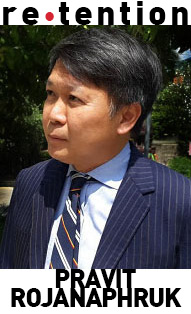
Re•tention: Pravit Rojanaphruk

The dissolution of Thai Raksa Chart Party on Thursday for having nominated Princess Ubolratana as a candidate for prime minister – dragging the royal institution into politics – has left many supporters wondering which party they should they vote for in two weeks time.

With its “sister” Pheu Thai Party not filling all constituencies with candidates in what was perceived as a move to leave a space for Thai Raksa Chart to compete with other parties, the situation has become complicated in the aftermath of the verdict.

For example, Pheu Thai only has candidates competing in 22 out of 30 constituencies in Bangkok and only 250 out of 350 nationwide constituency seats. This move, which has now backfired, was meant to not compete with the now-dissolved pro-Thaksin Thai Raksa Chart Party. Both parties have denied colluding in an unspoken alliance but many, including this writer, are convinced otherwise.

The newly-formed Future Forward Party meanwhile, with its strong anti-junta policies – such as drafting a new charter to replace the current junta-sponsored constitution, or cutting down military budget – looks likely to become the major beneficiary, as it has candidates filled in all districts nationwide.

Future Forward, led by billionaire Thanathorn Juangroongruangkit, has become a major threat to the pro-junta pro-monarchy camp.

Thanathorn – a former board member of Matichon Group, the parent company of Khaosod English – has been accused of being an anti-monarchist due to his support and association with Same Sky Books, a radical left-wing publication obsessed with critical issues about the monarchy, however.

The magazine was formed two decades ago by Thanathorn’s Thammasat University friends, who are now assisting the party’s campaign.

Although Future Forward  made a strategic decision not to have any policy on the controversial and draconian lese majeste law – no matter what the party insists – ultra-royalist voters will definitely not vote for them due to its perceived critical stance on the institution.

The party is perhaps aiming at a different sector of voters anyhow. Young first-timers are a new block of voters that the party is trying hard to attract, and it has become successful in getting the attention of the near seven-million new voters.

Twitter hashtags involving Thanathorn have dominated Thailand’s Twitterdom for weeks and the @Thanathorn_FWP Twitter account has 200,000 followers.

Two months ago, Thanathorn had fewer than 40,000 followers on Twitter, but it’s yet to be seen if his astronomical rise on Twitter and social media in general will translate into votes come March 24.

What’s more, Thanathorn faces possible indictment by the state prosecutors on March 26 – two days after the general elections – as he was accused of falsely claiming that the junta is poaching former MPs to increase the chance of junta leader Gen. Prayuth Chan-ocha’s return as prime minister after the polls take place.

Also, for five months, the party’s website wrongly listed Thanathorn as president of the Federation of Thai Industries, while in fact he was only a provincial-level president. Now, the party – or at least the webmaster – is being accused of deceiving voters and violating the Computer Crimes Act.

Even one of the party’s deputies, Lt. Gen. Phongsakon Rotchomphu, recently came under fire after criticizing deputy junta leader Gen. Prawit Wongsuwan for spending 12,000 baht on a cup of coffee paid by taxpayers’ money – a claim made in a news article that was later proved to be false. He could be prosecuted for violating the Computer Crimes Act.

More attempted character assassination, be it against Thanathorn as an anti-monarchist or his university friend party secretary general Piyabutr Saengkanokkul – who until entering politics was a staunch opponents of the lese majeste law and an influential critic of the monarchy – will continue.

In the end, Future Forward – despite being a new political party composed almost exclusively of political greenhorns – will still benefit from the fact that this elections will be about a pro-versus-anti-junta showdown.

The pro-versus-anti-junta, pro-versus-anti-monarchy environments will likely push voters who couldn’t vote for Thai Raksa Chart to vote for Future Forward nonetheless, as switching camp between the two is simply inconceivable.

Advertisement

400 Senator Candidates Shortlisted for Prayuth

Junta chairman Prayuth Chan-ocha picks vegetables at a market in Rayong province on Feb. 27.

BANGKOK — A junta-led committee has selected a group of shortlisted candidates for the junta to appoint as unelected senators, a deputy prime minister said Friday.

Only 194 of the 400 candidates will be selected as Thailand’s next senators, who will have the authority to vote for the next prime minister and block any laws brought forward by the lower house, Wissanu Krea-ngam said, without naming any of the candidates.

The selection committee was led by deputy junta chairman Prawit Wongsuwan. The candidates will be selected in the final round by Prawit’s superior, junta leader Prayuth Chan-ocha.

Fifty other senators will be chosen directly by the junta, while the rest of the seats go to commanders of the armed forces. The full names of the senators will be announced three days after the general election, set for March 24, and the list will then be submitted to His Majesty the King for approval, Wissanu said.

Though the names were not announced, some media reports say the candidate pool is stacked with army men close to Gen. Prayuth.

Speaking at a Saturday campaign rally, Pheu Thai PM candidate Sudarat Keyuraphan slammed the process as a blatant effort by the junta to choose its own yes-men. On the contrary, Democrat Party leader Abhisit Vejjajiva said he doesn’t care about who selects the senators as much as what they will do.

“They should respect the will of the people,” Abhisit said. “Whichever party has more than 250 MP seats should be the one forming the government.”

Under the current charter, 500 MPs and 250 senators will vote for the next prime minister together. Critics of the junta fear the upper house will simply vote for Prayuth, who appointed them to power in the first place.

If their accusation is proven correct, Prayuth – nominated as the next premier by Phalang Pracharat Party – will only need 126 MPs on his side to continue his rule.

Advertisement

Hot News

LATEST NEWS

Bangkok
overcast clouds
36.1 ° C
36.6 °
35 °
61 %
3.6kmh
100 %
Sat
37 °
Sun
36 °
Mon
35 °
Tue
33 °
Wed
32 °