27.7 C
Bangkok
Tuesday, June 30, 2026
Home Blog Page 1671

Woman Accused of Swindling Millions From Royal Charity

Pins sold by Ananda Mahidol Foundation for charity

BANGKOK — The Anti-Money Laundering Office said Tuesday said it has seized assets from a woman who allegedly embezzled 56 million baht from a royal charity.

In a statement released last night, the agency said Nichapat Noommuang forged signatures of His Majesty the King’s personal advisers on cheques and withdrew millions of bahts from the Ananda Mahidol Foundation, a charity dedicated to the late King Rama VIII that gives out annual scholarships in the fields of science and medicine.

Nichapat, who worked in the royal treasury, allegedly swindled up to 56 million baht from 2010 to 2018 and distributed the money among family and friends, according to the agency.

She is now charged with forgery, embezzlement and other related offenses, the statement said, though it was not mentioned if she also faces a charge of royal insult, as have been laid in previous cases of fraud involving the monarchy.

The Anti-Money Laundering Office also said it had confiscated 14 properties, land plots, cars and motorcycles from those involved. The combined assets seized were said to be worth about 18 million baht.

Agency director Preecha Jaroensahayanon could not be reached for comment as of publication time.

Nichapat is identified online as being one of several suspects linked in 2018 to a fraudulent skincare operation called Magic Skin. Health officials said four people died after using the supplements.

Advertisement

Jet That Crashed in Ethiopia Grounded Across World

A Boeing 737 MAX 8 airplane being built for TUI Group sits at Boeing Co.'s Renton Assembly Plant on March 11 in Renton, Washington. Photo: Ted S. Warren / Associated Press

HEJERE, Ethiopia — Much of the world, including the entire European Union, grounded the Boeing jetliner involved in the Ethiopian Airlines crash or banned it from their airspace, leaving the United States on Tuesday as one of the few remaining operators of the plane involved in two deadly accidents in just five months.

The European Aviation Safety Agency took steps to keep the Boeing 737 Max 8 out of the air, joining Asian and Middle Eastern governments and carriers that also gave in to safety concerns in the aftermath of Sunday’s crash, which killed all 157 people on board.

Referring to the Lion Air crash in Indonesia that killed 189 people last year, European regulators said that “similar causes may have contributed to both events.”

British regulators indicated possible trouble with a reportedly damaged flight data recorder, saying they based their decision on the fact that they did not have “sufficient information” from the recorder.

Turkish Airlines, Oman Air, Norwegian Air Shuttle, Icelandair and South Korean airline Eastar Jet were among the latest carriers to halt use of the Boeing model. The United Arab Emirates, Malaysia, Australia, New Zealand, Fiji and Singapore also suspended all flights into or out of their cities.

A Turkish Airlines official said two Britain-bound planes returned to Istanbul after British airspace was closed to the aircraft. The official spoke on condition of anonymity because he was not authorized to speak publicly.

U.S.-based Boeing has said it has no reason to pull the popular aircraft from the skies and does not intend to issue new recommendations about the aircraft to customers. Boeing’s CEO Dennis Muilenburg also spoke with President Donald Trump and reiterated that the 737 Max 8 is safe, the company said. Its technical team, meanwhile, joined American, Israeli, Kenyan and other aviation experts in the investigation led by Ethiopian authorities.

The Federal Aviation Administration also backed the jet’s airworthiness and said it was reviewing all available data. It said it expects Boeing will soon complete improvements to an automated anti-stall system suspected of contributing to the deadly crash of another new Boeing 737 Max 8 in October.

“Thus far, our review shows no systemic performance issues and provides no basis to order grounding the aircraft,” acting FAA Administrator Daniel K. Elwell said in a statement. “Nor have other civil aviation authorities provided data to us that would warrant action.”

Some U.S. airlines expressed support for the Boeing model, and American Airlines and Southwest continued flying them. A vice president for American, the world’s biggest carrier, which has 24 Max 8s, said they had “full confidence in the aircraft.”

Safety experts cautioned against drawing too many comparisons too soon with the Lion Air crash in October. But others in the U.S. began pressing for action.

The Association of Professional Flight Attendants, which represents more than 26,000 flight attendants at American Airlines, called on CEO Doug Parker to “strongly consider grounding these planes until an investigation can be performed.”

Consumer Reports called on airlines and the FAA to ground the jets until a thorough safety investigation is complete.

Even Trump weighed in, tweeting that additional “complexity creates danger” in modern aircraft and hinders pilots from making “split second decisions” to ensure passengers’ safety.

He did not specifically mention the crashes but said, “I don’t know about you, but I don’t want Albert Einstein to be my pilot.”

The Ethiopian Airlines plane crashed six minutes after taking off for Nairobi, killing people from 35 countries.

A pilot who saw the crash site minutes after the disaster told the AP that the plane appeared to have “slid directly into the ground.” Capt. Solomon Gizaw was among the first people dispatched to find the plane. The wreckage was discovered by Ethiopia’s air force.

“There was nothing to see,” he said. “It looked like the earth had swallowed the aircraft. … We were surprised!” He said it explained why rescue officials quickly sent bulldozers to begin digging out large pieces of debris.

Ethiopian Airlines, widely seen as Africa’s best-managed airline, grounded its remaining four 737 Max 8s until further notice. The carrier had been using five of the planes and was awaiting delivery of 25 more.

As night fell, the airline offered no new updates on the investigation. An airline spokesman said victims’ remains should be identified in about five days.

Some insights into the disaster and its cause could take months, aviation experts said.

“The conclusions that will come out of its probe will be beneficial to the rest of the world,” Ethiopian Prime Minister Abiy Ahmed said Tuesday at a news conference with visiting French President Emmanuel Macron. “These types of accidents break everyone’s heart. I hope we will learn from this crash.”

On Tuesday a group of officials from China, which also grounded planes, paused in their work at the scene to reflect with an offering of incense, fruit, bread rolls and a plastic container of the Ethiopian flatbread injera.

As the global team searched for answers, a woman stood near the crash site, wailing. Kebebew Legess said she was the mother of a young Ethiopian Airlines crew member among the dead.

“She would have been 25 years old but God would not allow her,” she wept. “My daughter, my little one.”

The British ambassador to Ethiopia, Alastair McPhail, visited the scene where at least nine of his countrymen died. “We owe it to the families to understand what happened,” he said.

Advertisement

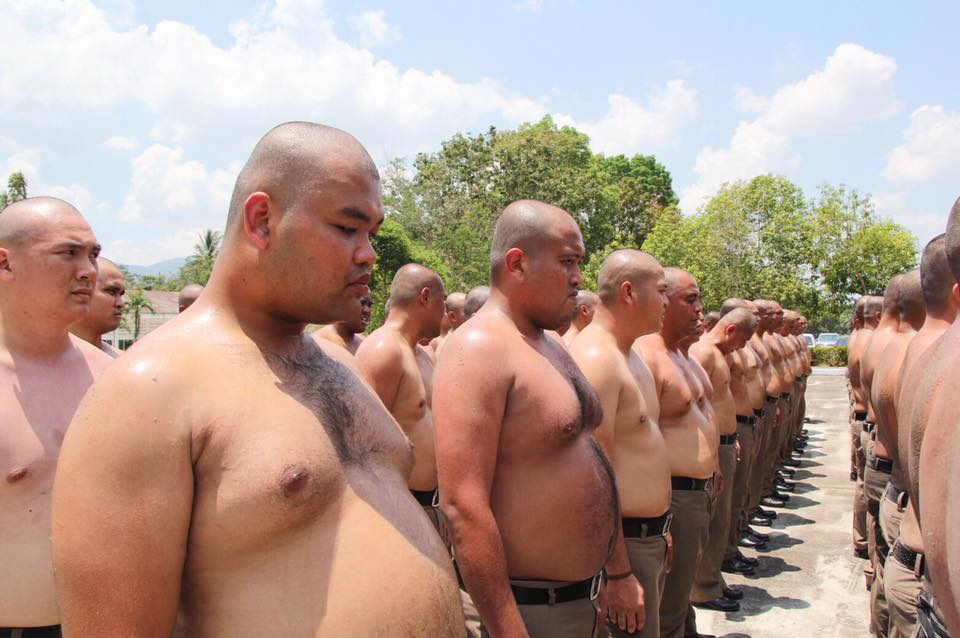
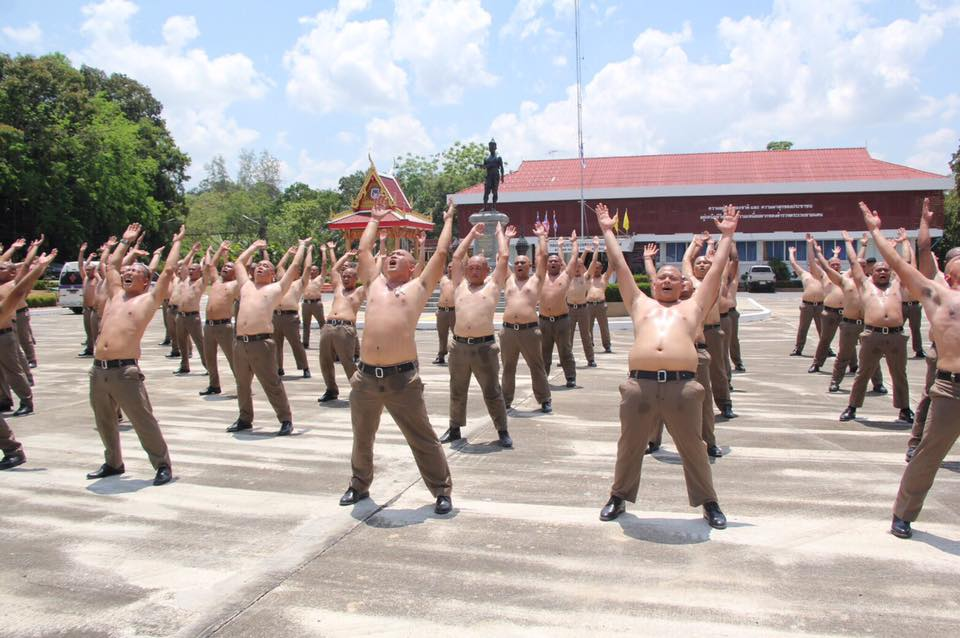
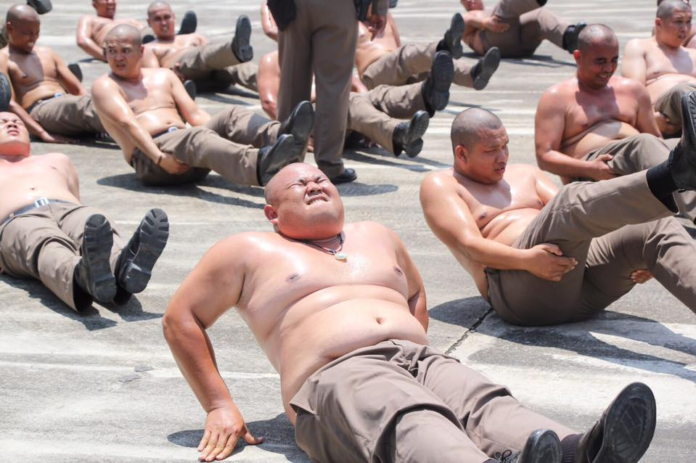
Obese Cops Sent to Fat Boot Camp for ‘Belly Destruction’

Photo: Love Police / Facebook

NAKHON RATCHASIMA — Porky policemen will be forced to work off their accumulated stores of bubble tea and durian at a special belly-adjustment camp after the program was declared a success, a police trainer said Tuesday.

Overweight cops nationwide will periodically be sent to the Central Police Training Center in the central city of Pak Chong for two weeks of intense diet and exercise as part of a program to slim down the nation’s gendarmes.

“There are so many problems if you’re a fat cop. You work slow and move slow as you go tumbling about. That’s unacceptable if you’re an officer tasked with arresting criminals, since you have to be deft and go quickly,” said Senior Sgt. Maj. Sornpetch Chantarak, a dietary enforcer in the new program.

About 200 policemen participated in a two-week pilot of the “Belly Destruction” program that ended earlier this month. Sornpetch said some cops weighing 80 kilograms got down to 60, while others weighing in at 200 shed upward of 60 kilos of chub.

Police stations nationwide will nominate two to three of their fattest cops to participate in the program at a time.

Sornpetch said most fat policemen are otherwise consigned to doing paperwork.

Photo: Love Police / Facebook

“Mostly they’re in charge of filing records. They also don’t exercise, or eat too richly and too much,” he said, laughing.

Excessively fat and salty foods as well as increasingly sedentary lifestyles have been blamed for the rise in obesity among children, adults and monks.

Sornpetch said officers have to exercise every day in the camp and join activities such as biking and working out while eating filling, protein-heavy foods. They even have ID cards that record their weights before and after, he said.

Although the camp started a month ago, word spread online Tuesday, with images posted on the Love Police Facebook page greeted by amused netizens.

“It’s good you’re losing some. I always see cops chugging beer while patrolling. How are you supposed to catch criminals like that?” wrote user Attakorn Elle.

Sornpetch sounded visibly excited that camp photos went viral. He said he’s looking forward to the next batch of corpulent cops.

“They call me Senior Sgt. Maj. Petch,” he said. “And I’ll train them myself!”

Photo: Love Police / Facebook

Related stories:

1 in 10 Thai Children Overweight: HealthMin

New Labels and Tax Take on Thailand’s Junk Food Problem

Please Don’t Feed Junk to Chunky Monks: HealthMin

Advertisement

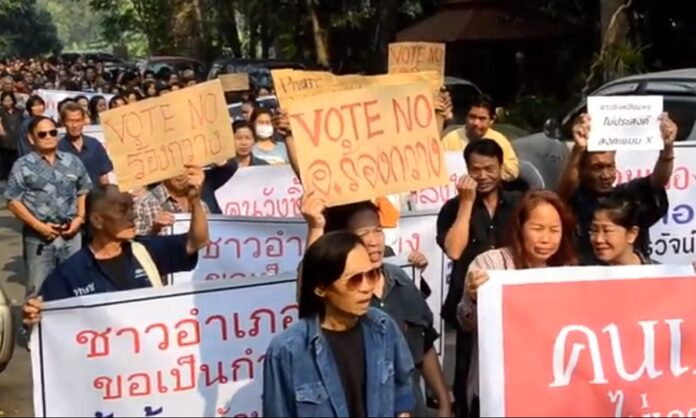
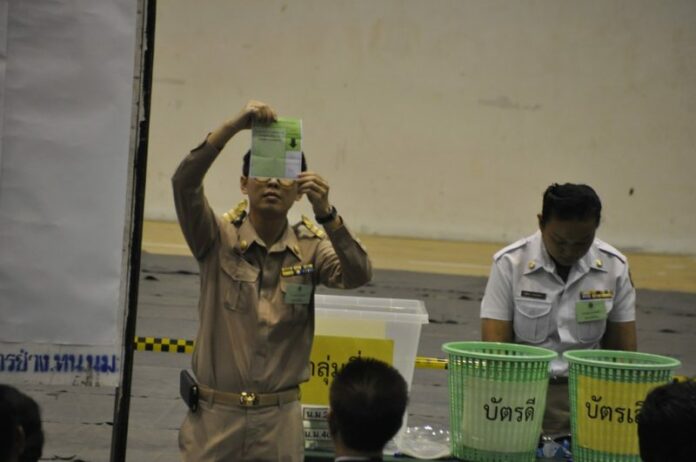
Thai Raksa Chart Diehards Gamble on ‘Vote None’

Hundreds of Thai Raksa Chart supporters march for "None Vote" in Phrae province on Tuesday. Image: Phrae News.

BANGKOK — Thai Raksa Chart Party and its candidates may be out of the race, but it doesn’t mean its supporters are giving up.

Fans of the now-defunct party in the northern province of Phrae on Tuesday campaigned for an unconventional ballot strategy: Vote “None of the Above” so a new election has to be organized.

Woravat Auapinyakul, who had been Thai Raksa Chart’s candidate for the province, expressed his gratitude to supporters in an online post today.

“Seeing every brother and sister that is standing up and taking on a fight like this, I’m so touched and impressed that I cannot find words,” Woravat wrote. “No matter what happens, whether we will win or lose, this memory will always stay with me.”

Woravat is among more than 200 candidates disqualified from the race when their party was disbanded Thursday for nominating an elder sister of King Rama X to run for prime minister. The Constitutional Court ruled that violated a ban on involving the monarchy in politics.

Under current voting law, if more people vote for “none” than they do for any candidate in a constituency, a new election must be held. Candidates who already ran on the ballot would be disqualified from the by-election, former Election Commissioner Somchai Srisuthiyakorn said in an interview.

“In theory, a Thai Raksa Chart candidate could run on another party’s ticket,” said Somchai, who helped draft current election law.

The mechanism is a novel one. Ballots have routinely allowed voters to select “none” from a list of candidates, but doing so was afforded no significance under previous election regulations.

Thais Overseas Kiss Their Thai Raksa Chart Votes Goodbye

Though the party was rumored to be behind the vote-none campaign, a Thai Raksa Chart leader said today they were not involved in Woravut’s attempt to run again by exploiting the loophole.

“As far as I know, it was Woravat’s campaign director who suggested the tactics to him,” party sec-gen Vim Rungwattanachinda said in an interview. “He doesn’t consult us at all … I don’t even know if that’s really a thing.”

Former Thai Raksa Chart adviser Chaturon Chaisang, who has formed his own political advocacy group after disbandment, urged supporters to vote for a candidate running on similar policies instead of abstaining.

“If you do that, votes will be truly wasted,” he wrote online.

Current Election Commission sec-gen Jarungvith Phumma would not comment beyond saying his office was aware of the campaign.

“We are making inquiries about it,” he said by phone.

Although 13 executives of Thai Raksa Chart were barred from politics for 10 years by the court, all of its candidates could swap parties and run in the election, given they registered with a party 90 days before voting takes place. To comply with that rule, Woravat is now a registered member of party ally Pheu Thai.

So in theory, Woravat could run in a by-election taking place within 90 days from now, Somchai the former election official said.

Media reports say two other major candidates in Woravat’s constituency are neophytes from the Democrat and Phalang Pracharat parties – an advantage that could help tip the balance to Woravat, a veteran politician who has headed four ministries since entering public life in 1990.

But former commissioner Somchai said that, even were everything to go according to Woravat’s plan, it still might be too late for him. Election laws state that voting must be held by May 9, and the results formally confirmed by May 24 – both milestones less than 90 days from now. By-elections typically take place before final outcomes are confirmed.

“It will be very difficult for him in practice,” Somchai said.

Advertisement

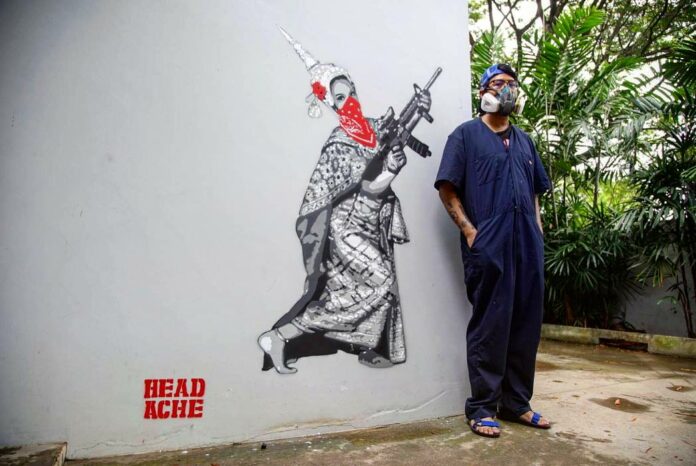
‘Thailand’s Banksy’ to Bring Sex, Drugs, Stencils to Patpong

Photo: Headache Stencil / Facebook

BANGKOK — After turning a gallery into a casino with sculptures of Prime Minister Gen. Prayuth Chan-ocha and his ousted archrival Thaksin Shinawatra facing off over a poker table, the artist known as “Thailand’s Banksy” is ready for his third exhibit.

Setting aside politics for the less freighted subjects of prostitution and drugs, the exhibition will open in a new gallery in the famed red-light district of Soi Patpong, street artist Headache Stencil announced Tuesday afternoon.

More than his usual stencil work, the exhibition will feature an installation and more when it opens at 8pm March 29 and runs until May 1 at Candle Light Studio. The newly opened gallery is located on the third floor of the Barbar Fetish Club in Soi Patpong 2. It’s a short walk from BTS Sala Daeng.

Headache Stencil rose to fame early last year when he painted the deputy junta leader’s face on an alarm clock over Sukhumvit Road. He was subsequently hunted by authorities before re-emerging with more work addressing the country’s hot-button issues, which he recently discussed with Khaosod English.

53580510 1146773552168064 3505142326596993024 n

Related stories:

Dangerous Art: Fame is Peril For Anonymous Artist Headache Stencil

Advertisement

Asian Stocks Follow Wall Street Higher Ahead of Brexit Vote

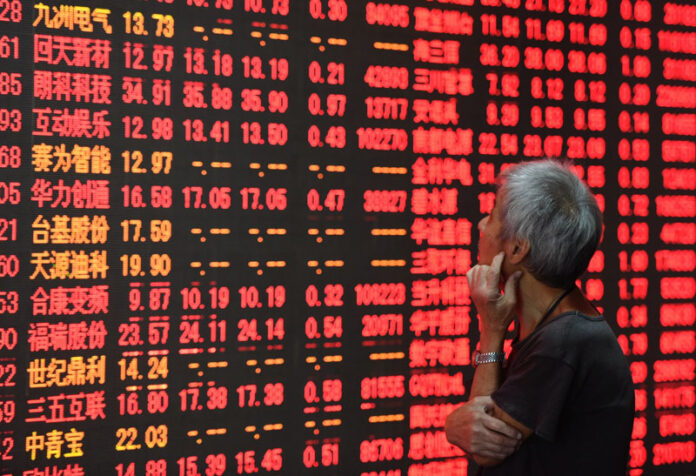
An investor stares at a stock price board at a stock trading hall in 2016 in Hangzhou, capital of east China's Zhejiang Province. Photo: Long Wei / Associated Press

BEIJING — Asian stocks followed Wall Street higher on Tuesday as investors awaited Britain’s vote on a plan to leave the European Union.

Thailand’s SET gained marginally, trading at 1,627.59 on Tuesday afternoon. The Shanghai Composite Index rose 0.6 percent to 3,043.53 points and Tokyo’s Nikkei 225 gained 1.1 percent to 21,503.69. Hong Kong’s Hang Seng added 1.1 percent to 28,821.14 and Seoul’s Kospi surged 1.0 percent higher at 2,158.88.

Sydney’s S&P-ASX 200 slipped 0.1 percent to 6,174.80, while markets in New Zealand, Taiwan and Southeast Asia were higher.

Overnight, gains in tech stocks drove the benchmark Standard & Poor’s 500 index to its biggest daily gain since January, snapping a five-day losing streak for the S&P, which was coming off its worst weekly stumble this year.

The S&P 500 gained 1.5 percent to 2,783.30. The Dow Jones industrial average rose 0.8 percent to 25,650.88. The Nasdaq composite jumped 2 percent to 7,558.06.

Nvidia rose after agreeing to buy chipmaker Mellanox. Apple benefited from an analyst upgrade.

Boeing Co.’s stock slumped 5.3 percent after the second fatal crash involving the newest version of its popular 737 jetliner. An Ethiopian Airlines jetliner went down Sunday, killing 157 people. That followed the crash of another 737 Max 8 crashed in Indonesia on Oct. 29 that killed 189 people.

Authorities in Ethiopia, China, Singapore and Indonesia have grounded all Boeing 737 Max 8 aircraft. At one point Monday, Boeing shares slid more than 13 percent.

British lawmakers were due to vote Tuesday on a plan to leave the European Union following negotiations in Strasbourg over details including Britain’s border with the Irish Republic.

Britain is due to pull out of the EU in less than three weeks, on March 29, but Prime Minister Theresa May’s government has not been able to win parliamentary approval for its agreement. The impasse has raised fears of a chaotic “no-deal” Brexit that could disrupt businesses in Britain and the 27 remaining EU countries. May said the latest changes should overcome lawmakers’ qualms about a mechanism to keep an open border between Britain’s Northern Ireland and EU member Ireland.

“Investors will likely favor risk-taking on positive Brexit news and a strong showing on Wall Street overnight,” Nicholas Mapa and Prakash Sakpal of ING said in a report. “Technology and energy shares are seen to drive the rally in Asia but market players remain wary ahead of China retail sales data later in the week.”


Energy

Benchmark U.S. crude rose 14 cents to USD$56.93 per barrel in electronic trading on the New York Mercantile Exchange. The contract jumped 72 cents on Monday to close at $56.79. Brent crude, used to price international oils, added 7 cents to $66.65 per barrel in London. It gained 84 cents the previous session to $66.58.


Currency

The dollar gained to 111.31 yen from Monday’s 111.21 yen. The euro advanced to $1.1254 from $1.1245.

Story: Joe McDonald

Advertisement

US Withdrawing Last of Its Embassy Personnel From Venezuela

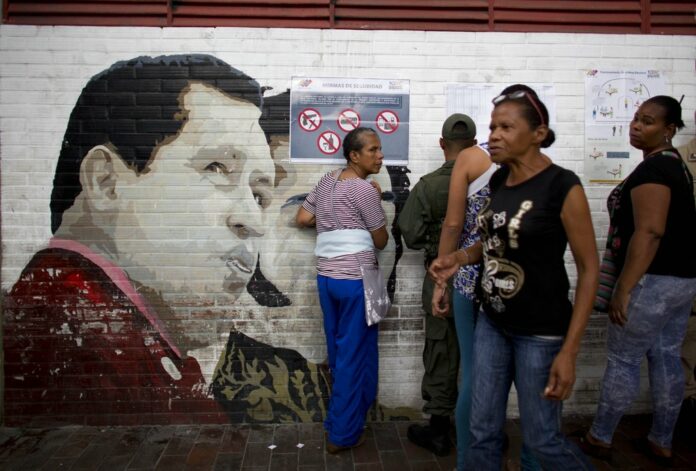
People search for their names on voter lists for mayoral elections by a mural of Venezuela's late President Hugo Chavez at a school serving as a polling station in 2017 in Caracas, Venezuela. Photo: Ariana Cubillos / Associated Press

CARACAS, Venezuela — The United States announced late Monday that it is pulling the remaining staff from its embassy in Venezuela, citing the deteriorating situation in the South American nation.

Secretary of State Mike Pompeo announced the decision as Venezuela struggles to restore electricity following four days of blackouts around the country and a deepening political crisis.

The U.S. has led an international effort to oust socialist President Nicolas Maduro and replace him with opposition leader Juan Guaido, who vows to hold a new presidential election. Guaido is backed by some 50 countries, while Maduro maintains support from countries such as China, Russia and Cuba.

Maduro had ordered all U.S. diplomats to leave Venezuela in late January because of its support from Guaido, but he retreated and allowed them to stay. The U.S. still withdrew dependents of embassy personnel as well as some of the staff. Pompeo said the remaining diplomats would be out of Venezuela by the end of the week.

The move came after another day of chaos as power outages that began Thursday evening continued to cause problems for Venezuelans, leaving them with little power, water and communications.

People converged on a polluted river to fill water bottles in Caracas, and scattered protests erupted in several cities

A 3-year-old girl with a brain tumor languished in a Caracas hospital, awaiting treatment after doctors started surgery but then suspended the operation when nationwide power outages first hit on Thursday, said the girl’s fearful mother, who only gave her first name, Yalimar.

“The doctors told me that there are no miracles,” said Yalimar, who hopes her daughter can be transferred Tuesday to one of the few hospitals in Venezuela that would be able to finish the complex procedure.

The girl’s story highlighted an unfolding horror in Venezuela, where years of hardship got abruptly worse after the power grid collapsed. On Monday, schools and businesses were closed, long lines of cars waited at the few gasoline stations with electricity and hospitals cared for many patients without power. Generators have alleviated conditions for some of the critically ill.

President Nicolas Maduro said on national television Monday night that progress had been made in restoring power in Venezuela. He also said two people who were allegedly trying to sabotage power facilities were captured and were providing information to authorities, though he gave no details.

Guaido, who heads the opposition-controlled congress, and the United States say Maduro’s claims that the U.S. sabotaged the power grid with a “cyberattack” are an attempt to divert attention from the government’s own failings.

There have been acts of kindness during Venezuela’s crisis: People whose food would rot in refrigerators without power donated it to a restaurant, which cooked it for distribution to charities and hospitals.

The blackouts also have hit the oil industry. The country hasn’t shipped $358 million in oil since the power failures started, and “the whole system is grinding to a halt,” said Russ Dallen, a Miami-based partner at the brokerage firm Caracas Capital Markets.

Two large tankers are sitting empty at the Jose offshore oil-loading dock, and at least 19 other ships are waiting their turns there, Dallen said.

Engineers have restored power in some parts of Venezuela, but it often goes out again. There have been a few protests in Caracas and reports of similar anti-government anger elsewhere. Guaido tweeted about reports of looting in some cities, but details were difficult to confirm.

Security forces in the city of Maracaibo dispersed “criminals” trying to take advantage of the power cuts, Mayor Willy Casanova told local media. However, numerous videos posted on social media that purported to be from Maracaibo showed crowds roaming the streets and people running from looted, damaged buildings with no police in sight.

In Caracas, some people reported more sightings of “colectivos,” a term for armed groups allegedly operating on behalf of the state to intimidate opponents.

The mood in Caracas was desperate.

Marian Morales, a nurse working for a Catholic youth group, and several colleagues handed out diapers and food from a car parked near a hospital. Police and men in civilian clothing ordered them to leave, saying they didn’t have permission.

Morales said the needy are cautious about approaching to collect the handouts because of the presence of security forces.

Early Monday, an explosion rocked a power station in the Baruta area of Caracas. Residents gathered to look at the charred, smoldering equipment.

Guaido said three of four electricity transformers servicing the area were knocked out. He has blamed the blackouts on government corruption and mismanagement.

Winston Cabas, the head of Venezuela’s electrical engineers union, which opposes the government, disputed government allegations that the country’s main hydroelectric dam was sabotaged last week. He blamed a lack of maintenance as well as the departure of skilled workers from the troubled country over the years.

“The system is vulnerable, fragile and unstable,” he said.

Spain’s airline pilots union asked for Spanish airline Air Europa to stop flying to Venezuela after one of its crews was attacked at gunpoint in Caracas. The Sepla union said two pilots and eight more crew members of a flight from Madrid were assaulted on Saturday while going from the airport to their hotel in the Venezuelan capital. None of the crew members was injured.

Air Europa responded by ordering the crews of flights to Venezuela to not spend the night in the country, according to the union.

The administration of U.S. President Donald Trump imposed sanctions on a Moscow-based bank jointly owned by Russian and Venezuelan state-owned companies, alleging it tried to circumvent U.S. sanctions on the South American country. The U.S. said it is targeting Evrofinance Mosnarbank for supporting Petroleos de Venezuela SA, the state oil company previously targeted by sanctions in January.

Evrofinance said it was carrying out its activities normally despite the announcement and pledged to “meet its obligations to the clients and partners in full.”

The U.S. and the other governments that recognize Guaido as Venezuela’s interim president say Maduro wasn’t legitimately re-elected last year because opposition candidates weren’t permitted to run. Maduro says he is the target of a U.S. coup plot.

Story: Fabiola Sanchez, Scott Smith

Advertisement

Gov’t Petitioned to Reveal 400 Senate Nominees

Selection of Senate candidates in Korat on Dec. 22, 2018.

BANGKOK — A legal advocacy group wants the junta to reveal the names of the 400 people short-listed to eventually be appointed senators.

Peerapat Meesang of the Internet Law Reform Dialogue, or iLaw, submitted a letter to junta leader Gen. Prayuth Chan-ocha on Monday at the Government House asking for the disclosure of those candidates, who will be key to selecting the next prime minister.

That happened only after the straightforward request got the runaround for the better part of the day. Peerapat first went to the Election Commission before noon, where he was told the junta was in charge of the matter. Over at army headquarters, he was told to go to the Government House because deputy junta leader Prawit Wongsuwan was in charge of short-listing the candidates.

According to information reportedly leaked last week from an insider, many of the candidates are friends and contacts of Gen. Prawit, who also serves as deputy prime minister and is no stranger to controversy.

The petition cited public information laws to compel the release of “documents related to the selection of members of the senate.”

The junta has insisted it won’t reveal the names for now. iLaw’s Yingcheep Atchanont said transparency is needed as the senators will play an important role after the election by voting to select the next prime minister.

Prior to the 2017 constitution, the senate’s 76 members had no say in selecting the prime minister. Those who say the new charter rewrote the rules to perpetuate military rule cite its expansion of the upper house to 250 junta-appointed members empowered to vote for the next prime minister.

Under the law, all senators must be appointed no later than May 26.

Yingcheep said Tuesday that the Information Act gives the state 15 days to either disclose the information or justify its reason for not doing so.

Advertisement

Algeria’s President Abandons Bid for 5th Term Amid Protests

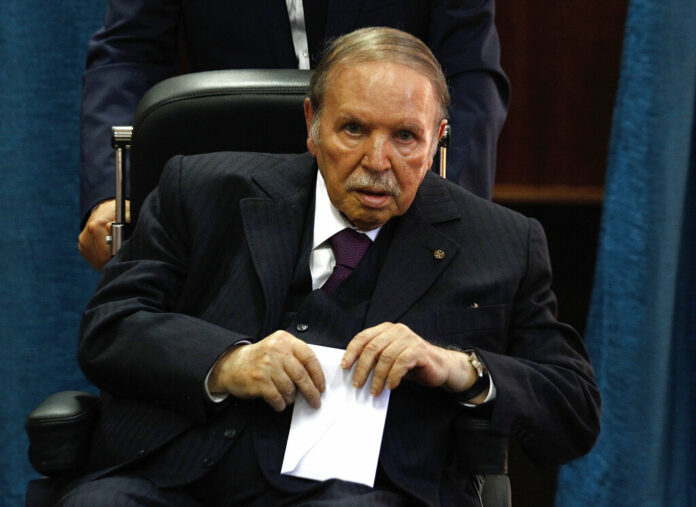
Algerian President Abdelaziz Bouteflika prepares to vote in 2017 in Algiers, Algeria. Photo: Sidali Djarboub / Associated Press

ALGIERS, Algeria — Algeria’s president of two decades abandoned his bid for a fifth term Monday following unprecedented protests over his fitness for office, but his simultaneous postponement of an election set for next month had critics worried he intends to hold on to power.

President Abdelaziz Bouteflika, who has rarely been seen in public since he had a stroke in 2013 and just returned from two weeks in a Geneva hospital, promised to establish a panel to plan a rescheduled vote and to put an interim government in place.

In a letter to the nation released by state news agency APS on Monday, Bouteflika, 82, stressed the importance of including Algeria’s disillusioned youth in the reform process and putting the country “in the hands of new generations.”

But for many of the protesters – students, lawyers and even judges among them – the most important sentence in the president’s letter read, “There will be no fifth term.”

Celebrations popped up instead of protests on the streets of the capital, Algiers, at the news. Car horns rang out while people waved flags, jumped up and down, and sang the national anthem. Several thanked Bouteflika. One described the development as a “real ray of sunshine.

Others were more cautious, calling their longtime leader’s pledge to step aside just a first step. Bouteflika did not give a date or timeline for the delayed election.

He said in his Monday letter that the “national conference” he would task with planning the vote also would be responsible for drafting a new constitution for Algeria.

He said he would name an interim government as well. The changes were put in motion within hours.

Noureddine Bedoui, a Bouteflika loyalist and the current interior minister, was made prime minister and charged with forming the new administration, according to Algerian state news agency APS.

Critics said they fear the moves could pave the way for the president to install a hand-picked successor. Others saw his decision to postpone the election indefinitely as a threat to democracy in Algeria.

A wily political survivor, Bouteflika fought in Algeria’s independence war against French forces and has played a role in Algeria’s major developments for the past half-century.
He became president in 1999 and reconciled a nation riven by a deadly Islamic insurgency, but questions swirl over whether he is really running the country today.

The recent protests surprised Algeria’s opaque leadership and freed the country’s people, long fearful of a watchful security apparatus, to openly criticize the president.

Algerians also expressed anger over corruption that put their country’s oil and gas riches in the hands of a few while millions of young people struggle to find jobs.

The unprecedented citizens’ revolt drew millions into the streets of cities across the country to demand that Bouteflika abandon his candidacy.

On Monday, Algerian state television aired the first images of Bouteflika since the protests started. Bouteflika, who has used a wheelchair since his stroke, appeared weak and moved with slow gestures. No sound accompanied the images.

While the tense nation waited to see if he would make any concessions now that he was back from his hospital stay, teenagers and lawyers held protests, and workers held scattered walkouts,

Security was high in Algiers, where some businesses were shuttered by a second day of strikes. Lawyers in black robes gathered in front of courthouses to join calls for Bouteflika to withdraw from the election.

Some judges joined the lawyers protesting in the city of Bedjaia. Judges normally are prohibited from publicly demonstrating, as are police officers and soldiers.

Story: Aomar Ouali

Advertisement

US House Speaker: Impeaching Trump ‘Just Not Worth It’

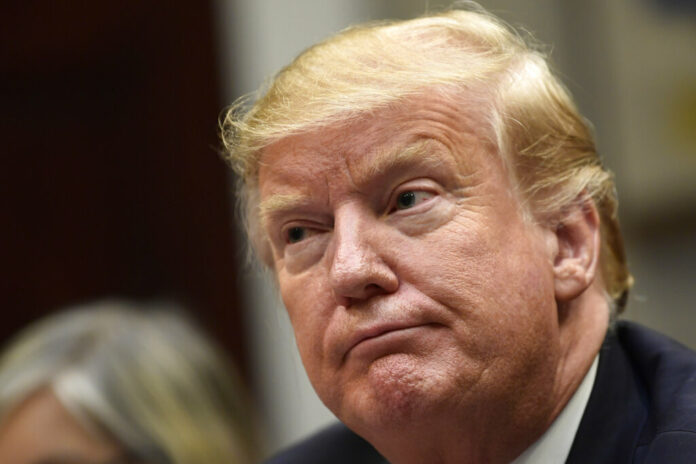
US President Donald Trump listens during a meeting with Hispanic pastors Friday in the Roosevelt Room of the White House. Photo: Susan Walsh / Associated Press

WASHINGTON — House Speaker Nancy Pelosi is setting a high bar for impeachment of President Donald Trump, saying he is “just not worth it” even as some on her left flank clamor to start proceedings.

Pelosi said in an interview with The Washington Post that “I’m not for impeachment” of Trump.

“Unless there’s something so compelling and overwhelming and bipartisan, I don’t think we should go down that path, because it divides the country,” she said.

While she has made similar comments before, Pelosi is making clear to her caucus and to voters that Democrats will not move forward quickly with trying to remove Trump from office. And it’s a departure from her previous comments that Democrats are waiting on special counsel Robert Mueller to lay out findings from his Russia investigation before considering impeachment.

That thinking among Democrats has shifted, slightly, in part because of the possibility that Mueller’s report will not be decisive and because his investigation is more narrowly focused. Instead, House Democrats are pursuing their own broad, high-profile investigations that will keep the focus on Trump’s business dealings and relationship with Russia, exerting congressional oversight without having to broach the I-word.

Oversight and Reform Committee Chairman Elijah Cummings, one of the lawmakers leading those investigations, said he agrees with Pelosi and Congress needs “to do our homework.” He said impeachment “has to be a bipartisan effort, and right now it’s not there.”

“I get the impression this matter will only be resolved at the polls,” Cummings said.

Still, Pelosi’s comments are certain to stoke a stubborn tension with those who believe impeachment proceedings should have begun on day one of the new Congress. Some new freshman Democrats who hail from solidly liberal districts haven’t shied away from the subject – Michigan Rep. Rashida Tlaib used a vulgarity in calling for Trump’s impeachment the day she was sworn in.

Billionaire activist Tom Steyer, who is bankrolling a campaign pushing for Trump’s impeachment, shot back at Pelosi on Monday: “Speaker Pelosi thinks ‘he’s just not worth it?’ Well, is defending our legal system ‘worth it?’ Is holding the president accountable for his crimes and cover-ups ‘worth it?’ Is doing what’s right ‘worth it?’ Or shall America just stop fighting for our principles and do what’s politically convenient.”

Neil Sroka of the liberal advocacy group Democracy for America said Pelosi’s comments were “a little like an oncologist taking chemotherapy off the table before she’s even got your test results back.”

Other lawmakers who have called for impeachment looked at Pelosi’s comments more practically. Rep. Brad Sherman, D-Calif., who filed articles of impeachment against Trump on the first day of the new Congress in January, acknowledged that there is not yet public support for impeachment, but noted that Pelosi “didn’t say ‘I am against it if the public is clamoring for it.'”

Sherman said that the multiple Democratic investigations of Trump might be a substitute for impeachment, “it’s also possible it will be a prelude.”

Republicans alternately praised Pelosi and were skeptical. White House press secretary Sarah Sanders said “I agree” in response to Pelosi’s words.

Sanders added of impeachment, “I don’t think it should have ever been on the table.”

House Republican Leader Kevin McCarthy said it was a “smart thing for her to say,” but Georgia Rep. Doug Collins, the top Republican on the Judiciary Committee, said he doesn’t think it’s “going to fly” with some of Pelosi’s members.

“I do believe what Speaker Pelosi understands is that what they’re wanting to do is going to require far more than what they have now, so I think they are hedging their bet on it,” Collins said.

Pelosi has long resisted calls to impeach the president, saying it’s a “divisive” issue that should only be broached with “great care.”

She refused calls when she first held the speaker’s gavel, in 2007, to start impeachment proceedings against George W. Bush. Having been a member of Congress during President Bill Clinton’s impeachment, she saw the way the public turned on Republicans and helped Clinton win a second term. Heading into the midterm elections, she discouraged candidates from talking up impeachment, preferring to stick to the kitchen table issues that she believes most resonate with voters.

Pelosi has often said the House should not pursue impeachment for political reasons, but it shouldn’t hold back for political reasons, either. Rather, she says, the investigations need to take their course and impeachment, if warranted, will be clear.

Freshman Democrats who are from more moderate districts and will have to win re-election again in two years have been fully supportive of Pelosi’s caution.

“When we have something that’s very concrete, and we have something that is compelling enough to get a strong majority of Americans, then we’ll do it,” said Rep. Katie Hill, D-Calif. “But if it’s going to be a political disaster for us, then we’re not going to do it.”

Story: Mary Clare Jalonick, Lisa Mascaro

Advertisement

Hot News

LATEST NEWS

Bangkok
overcast clouds
27.7 ° C
27.7 °
27.7 °
78 %
4kmh
100 %
Mon
27 °
Tue
33 °
Wed
32 °
Thu
32 °
Fri
32 °