





























37.2 C
Bangkok
Thursday, June 25, 2026
Home Blog Page 1727

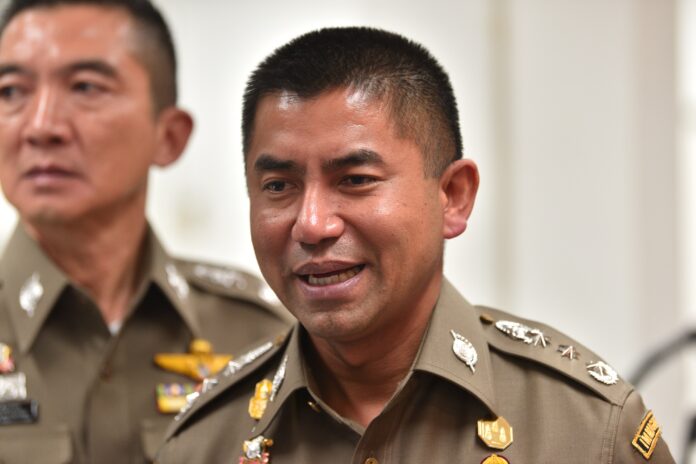
Superstar Cop ‘Big Joke’ on His Rise and Plans for Expats, Visas

BANGKOK — The announcement that Thailand’s best-known police officer had arrived sent gasps of shock across a news conference at Royal Thai Police headquarters.

“Whoa, he’s not late this time?” one reporter cried aloud, to the laughter of those familiar with his inhuman schedule.

But before Lt. Gen. Surachate Hakparn could enter the room earlier this week, a phone call stopped him. It was a Pattani police official briefing him on the latest insurgent attack to leave an officer dead.

It would be an understatement to say that Surachate’s a busy man. Last week his handling of a Saudi runaway turned global derision into praise before he was back in the streets busting more foreigners. He only found time to sit down for a Monday interview with Khaosod English after appearing at two news conferences – one in the Pathum Thani outskirts – about four cases ranging from child rape to online scams. Soon after the interview began, aides started laying a fraud case out across the table for his attention.

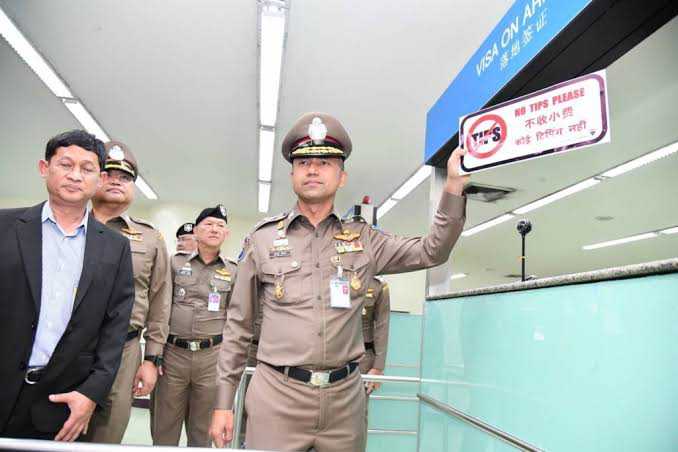
Such cases fall under a much broader domain than his official role as immigration bureau chief, a job he was awarded in October after becoming the public face of weekly crackdowns on foreigners.
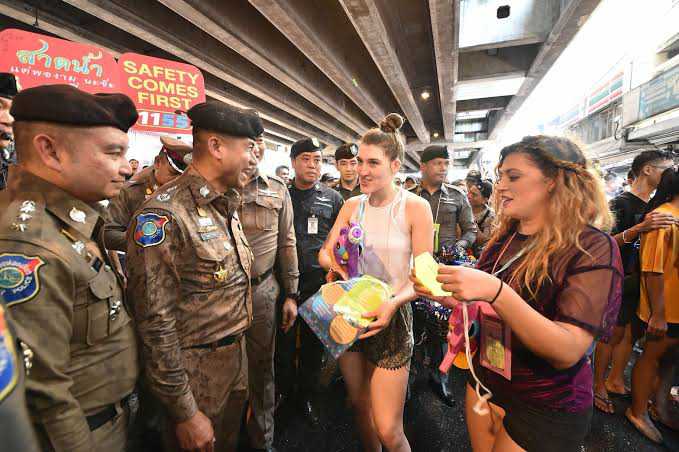
In this undated photo, Lt. Gen. Surachate Hakparn, left, talks to foreigners in Bangkok during the Songkran festivities.

“My goal is to make visitors to our country, whether here for tourism or business, feel safe,” said Surachate, who goes by a nickname that makes English readers chuckle: Big Joke.

If that weren’t enough, he also helps lead the police cybercrime unit, where he has taken credit for busting scammers.

At Monday’s news conference, one reporter whispered that Big Joke oversaw so many cases because their investigating officers wanted him to get the fame in return for expected favors, but Surachate himself said it’s more about efficiency.

“We work with every unit,” Surachate said. “Online world and technology are present in every aspect of our lives … so we have to integrate our efforts in suppressing crimes that come with it.”


A New Playbook

A political scientist familiar with police affairs said Surachate’s meteoric rise cannot be explained solely by his connections – the usual lubricant of bureaucratic advancement.

“Big Joke revolutionized the police organization by adopting the management style of the army,” said Wanwichit Boonprong, who teaches at Rangsit University. “In the police, underlings take care of their superiors. In the army, superiors take care of their underlings.”

He added that Surachate’s filial loyalty to those responsible for his successes – such as annual donations to his high school – helped convince the puu yai to back him for key positions.

Surachate was born in 1970 in Songkhla. His father, also a policeman, based his son’s nickname on his favorite playing card: the joker. Surachate quickly rose through the ranks to command a local police station and later move to Bangkok to head the 191 task force.

From there he sprang to the tourist police before landing the top post at the immigration bureau last year.
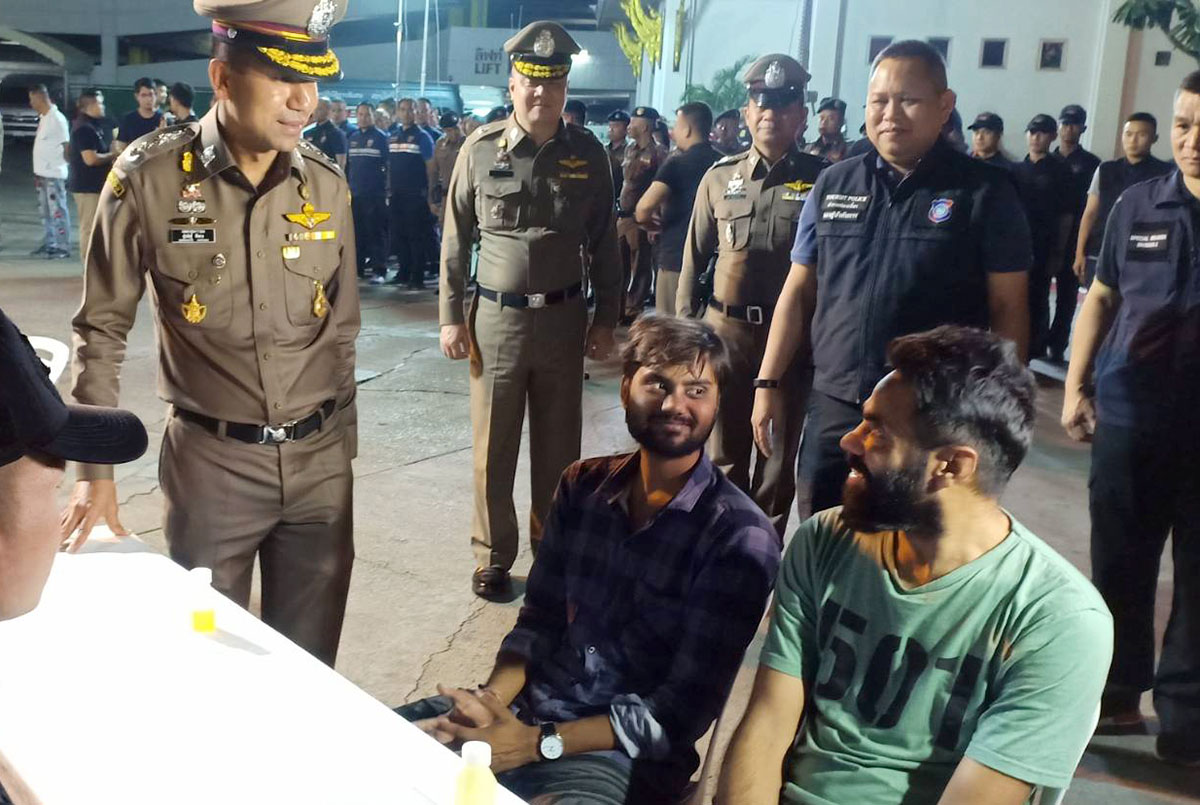
Two foreigners react as Lt. Gen. Surachate Hakparn looks on Friday morning at Bangkok’s Montien Riverside Hotel.

Connections cannot be totally discounted, Wanwichit the lecturer said. Surachate’s father is a close friend of both deputy junta chairman Prawit Wongsuwan and Pheu Thai MP Sanoh Thienthong.

At the age of 42, Surachate was promoted to the rank of police major general – the first among his year’s academy graduates to do so – earning him the additional nickname big, a media moniker for major generals and up.

Because he has more than a decade left before mandatory retirement – and now just one rank shy of police general – many observers consider him a likely future police commissioner. Surachate does not deny such ambitions.

“I think everyone wants to be police commissioner,” Big Joke said. “Whether I can become one is a matter of karma and destiny, but as of today, I want to live with the present and perform my duties to my best.”

Where some police brass would wince at the suggestion they stage publicity stunts to advance their careers, Surachate suggested that’s just how things work.

“If I’m a police commissioner but no one knows me or has trust in me, what’s the point?” he said. “There’s no use. So I want to do my duty and build my cases so the people can see them and have faith in me.”

Unlike many higher-ups, his audience doesn’t seem limited to impressing his superiors.

Outside the chain of command, Big Joke has won public notice for taking the kind of principled stands – or at least voicing them – rarely expressed by top brass.
images 9

Last week, he responded to the crucible of pressure by reversing a deportation order against Rahaf Alqunun, insisting he would not “send someone to their death.” In a surprising break from protocol, she was allowed to enter the kingdom and obtain refugee status from the UNHCR.

In October, as legal threats mounted against underground rap artists over a video slamming military rule, he came out to say they not only had a constitutional right to free speech, but that senior officials should listen.

Wanwichit said Big Joke has one advantage his older peers don’t: He can afford to bide his time

“Even if the next government doesn’t like him and moves him to [an obscure post] he can simply wait for a government that likes him to be in power and promote him to commissioner,” Wanwichit said.

Were he not a lifelong policeman, what other job would Surachate imagine doing?

“I would want a career dedicated to helping society, like the police do,” Surachate said. “I would be in an NGO.”


Good Guys, Bad Guys

Surachate’s rise has put him into close contact with issues involving foreigners in Thailand. He oversaw investigations into alleged Chinese-run boiler room scams and so-called zero dollar tours.

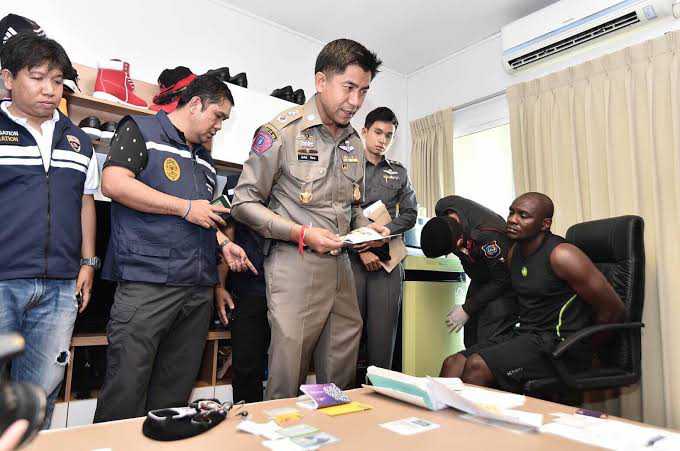
But many know him best for the dozens of raids on foreigners suspected of working without authorization – an operation initially called Black Eagle but later renamed X-Ray Outlaw Foreigner.

Under his command, the bureau whose slogan proclaims “Good Guys In, Bad Guys Out,” will undergo several changes. Surachate said he’s drafting suggested amendments to the 1979 immigration law to make things smoother for expats seeking to reside, retire or work in the kingdom.
images 7

“I can guarantee it will be easy to apply and live here,” Surachate said. “[But] bad people will have a hard time.”

Proposed changes include abolishing 90-day reports and introducing 10-year visas for foreign retirees, Surachate said. A data link between the immigration and Thailand’s consular affairs around the world was recently established. Experts will also be consulted to see what restricted professions should be open to foreigners.

“The amendment process will take probably about two or three months,” Surachate said – an optimistic assessment when at least half a year is usually needed to pass legislation.

At the same time, he said the immigration is working with the Anti-Money Laundering Office to inspect past tax records of expats living in Thailand in order to weed out those with suspicious activities.

“I’d like to remind all foreigners that their stays and businesses in this country have to be legal,” Surachate said. “We’re watching you.”
Advertisement

All Gunmen Killed at Hotel Complex: Kenyan President

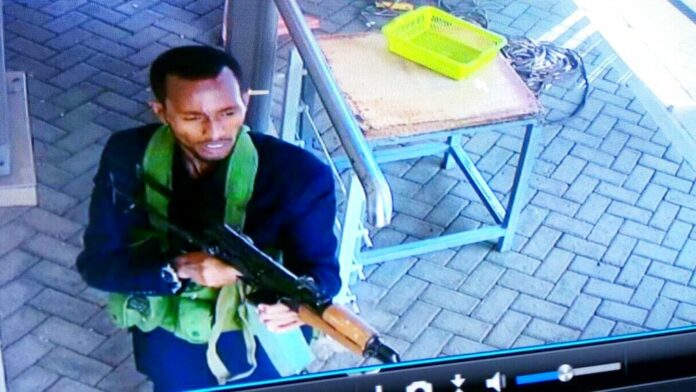
In this grab taken from security camera footage released to the local media, an armed attacker walks in the compound of a hotel, in Nairobi, Kenya on Tuesday. Photo: Security Camera Footage via Associated Press

NAIROBI — Kenya’s security forces have killed the Islamic extremist gunmen whose assault on a luxury hotel and shopping complex took 14 “innocent lives,” the country’s president said Wednesday.

“All the terrorists have been eliminated,” President Uhuru Kenyatta said in announcing an end to the operation to secure the complex in the capital, Nairobi.

In a televised address, he did not say how many attackers were involved. He said more than 700 people were evacuated during the security operation and urged Kenyans to “go back to work without fear,” saying the East African country is safe.

In the hours before Kenyatta spoke, sporadic gunfire could be heard from the scene after scores of people were rescued at daybreak during what police called a “mopping-up” exercise.

Surveillance video showed the attack involved at least four armed men.

Al-Shabab — the extremist group allied to al-Qaida and based in neighboring Somalia — claimed responsibility for the carnage at the DusitD2 hotel complex, which includes bars, restaurants, offices and banks and is in Nairobi’s well-to-do Westlands neighborhood with many foreign expatriates. Al-Shabab carried out the 2013 attack at the nearby Westgate Mall in Nairobi that killed 67 people.

The U.S. State Department confirmed that an American citizen was among those killed, but did not release the victim’s identity. The British high commissioner in Kenya said at least one British national had been killed, without giving details.

Authorities sent special forces into the hotel to flush out the gunmen. At dawn, another explosion and gunfire were heard. Scores of people were rushed to safety in the early morning hours.

“To God be the Glory. We have been rescued. Over 50 people in my group. No injuries,” tweeted a Kenyan businesswoman, Aggie Asiimwe Konde.

Describing the ordeal, Lucy Wanjiru said she had been trying to flee when she saw a woman on the ground floor get shot. She ended up in a washroom with several other scared people. Her friend Cynthia Kibe stayed in contact with her by phone overnight.

“I think I panicked when she told me that the gunshots are next to her,” Kibe said. “I had to keep telling her ‘Just wait, help is on the way, they are almost there, they are almost there.’ And then at one point she was like, ‘Please tell me I am getting out of here alive’ and then it was just like my breaking point.”

Mourning families and friends gathered at a nearby mortuary.

“I am a Muslim and I am Somali, I am Kenyan living here, and in that way I can assure you if al-Shabab found me today they call us what they call ‘Mortad’ (apostates), that is, someone who works against them and they wouldn’t differentiate me from yourself,” said Mohamed Yasin Jama, a friend of two work colleagues killed in the attack.

The coordinated assault began with an explosion that targeted three vehicles outside a bank, and a suicide bombing in the hotel lobby that severely wounded a number of guests, said Kenya’s national police chief, Joseph Boinnet.

Kenyan hospitals appealed for blood donations even as the number of wounded remained unclear.

Associated Press video from inside the hotel showed Kenyan security officers searching the building and scared workers emerging from hiding while gunfire could be heard. Some climbed out a window by ladder. One man got up from the floor where he appeared to be trying to hide under a piece of wood paneling, then showed his ID.

Like the attack at the Westgate Mall, this one appeared aimed at wealthy Kenyans and foreigners. It came a day after a magistrate ruled that three men must stand trial in connection with the Westgate Mall siege.

Al-Shabab has vowed retribution against Kenya for sending troops to Somalia to fight it since 2011. Tuesday’s violence came three years to the day after al-Shabab extremists attacked a Kenyan military base in Somalia, killing scores of people.

The group has killed hundreds of people in Kenya. In the deadliest attack, al-Shabab claimed responsibility for an assault on Kenya’s Garissa University in 2015 that killed 147 people, mostly students.

The latest carnage demonstrated al-Shabab’s continued ability to carry out spectacular acts of bloodshed despite a dramatic increase in U.S. airstrikes against it under President Donald Trump.

Advertisement

World Shares Advance but Britain Slips on Brexit Limbo

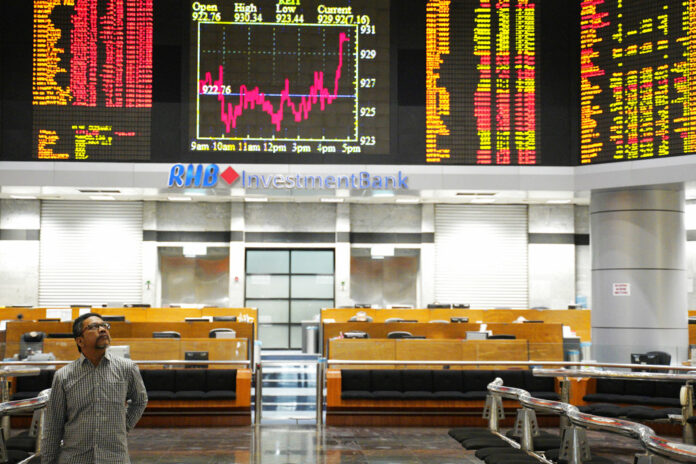
An investor walks in front of private stock trading boards in November at a private stock market gallery in Kuala Lumpur, Malaysia. Photo: Yam G-Jun / Associated Press

SINGAPORE — World shares were mostly higher Wednesday as investors shrugged off the parliamentary defeat of British Prime Minister Theresa May’s plan for leaving the European Union.


Keeping Score

Thailand’s SET traded at 1,577.41 on Wednesday afternoon. In Europe, Germany’s DAX rose 0.1 percent to 10,899.16 and France’s CAC 40 added 0.3 percent to 4,802.02. Britain’s FTSE 100 sank 0.4 percent to 6,869.00. Wall Street was positioned for gains, with Dow futures up 0.3 percent at 24,064.00 and broader S&P 500 futures gaining 0.3 percent to 2,614.10.


Brexit Vote

British Prime Minister Theresa May suffered a major setback Tuesday when lawmakers rejected a Brexit deal by 432 votes to 202. She was expected to lose despite last-minute campaigning for the widely unpopular deal she had brokered with the EU. Britain is set to leave the bloc on March 29. World markets were largely unaffected and the British pound tumbled before the vote but bounced back afterward. May faces a no-confidence vote later Wednesday that could trigger a general election but she is expected to survive it.


Analyst’s Take

“The parliament’s vote came as no surprise because everybody predicted it will be overwhelmingly rejected,” said Francis Lun, a stock analyst in Hong Kong. “Actually what it does is really remove uncertainty that Britain will leave the EU. I think we are on firmer ground now that eventually Britain will stay in the EU.”


Japan Economy

On Wednesday, Japan said its core machinery orders were flat in November at 863.1 billion yen, compared with October’s 7.6 percent rise. This was also lower than analysts’ expectations of a 3 percent increase. There was a sharp drop in orders from the manufacturing sector, although overseas orders climbed. The data suggests Japanese companies may be less confident in making big-ticket purchases in the face of global risks.


Asia’s Day

Japan’s Nikkei 225 index, weighed down by weak machinery orders in December, slipped 0.6 percent to 20,442.75. South Korea’s Kospi added 0.4 percent to 2,106.10 and Hong Kong’s Hang Seng rose 0.3 percent to 26,902.10. Australia’s S&P ASX 200 added 0.4 percent to 5,835.20 while Shanghai’s Composite index was flat at 2,570.42. Shares fell in Taiwan and Indonesia but rose in Malaysia and Singapore.


Energy

Benchmark U.S. crude oil picked up 19 cents to USD$52.30 per barrel in electronic trading on the New York Mercantile Exchange. The contract added $1.60 to settle at $52.11 per barrel on Tuesday. Brent crude, the international standard, rose 30 cents to $60.94. It gained $1.65 to $60.64 a barrel in London.


Currencies

The dollar slipped to 108.59 yen from 108.69 late Tuesday. The euro rose $1.1418 from $1.1413, while the British pound rose to $1.2892 from $1.2859.

Story: Annabelle Liang

Advertisement

2 Cambodian Opposition Politicians Get Bans Dropped

Konh Korm of Cambodia's Sam Rainsy Party in photo posted last month. Photo: Kong Korm / Facebook

PHNON PENH — A veteran Cambodian politician and his son on Wednesday became the first among 118 opposition members banned from politics for five years to have the restriction lifted.

Kong Korm and his son, Kong Bora, had their bans lifted when Cambodian King Norodom Sihamoni signed a royal decree approving their application for restoration of political rights.

The two were among the members of the Cambodia National Rescue Party who were banned from politics when the group was dissolved by court order in November 2017 on a contrived charge of conspiring with the United States to overthrow Prime Minister Hun Sen’s government.

The move against the opposition was seen as the government’s effort to ensure it won last July’s general election. It swept all 125 National Assembly seats.

However, the successful move to keep power – Hun Sen on Monday marked 34 years in power – raised criticism that the polls were neither free nor fair. Western nations already disturbed by Hun Sen’s authoritarian ways have imposed diplomatic sanctions and are threatening to apply economic sanctions, a move that Hun Sen has warned recently would end up hurting the opposition.

Allowing politicians to apply to have their bans lifted is part of a government effort to mollify its critics, especially in the international community. However, members of the dissolved Cambodia National Rescue Party are split over whether to apply, with many opposing playing by Hun Sen’s rules and hoping the international community will step up pressure on Hun Sen.

The split in the opposition is also fueled by rivalries between factions loyal to the party’s two former leaders, and there is widespread belief that Hun Sen – one of the region’s wiliest political players – is encouraging the factionalism.

The 77-year-old Kong Korm and his son had been members of the Cambodia National Rescue Party but in recent months have been publicly expressing differences with their colleagues.

Speaking by telephone to The Associated Press on Wednesday, Kong Korm said he was delighted to have his ban lifted, and would continue in politics by joining the Khmer Will Party, which was formed last year before the election by another of his sons. He described the party as representing new hope for Cambodians, espousing moderation rather than the “extremist” policies he attributed to the dissolved Cambodia National Recue Party.

“Starting from today, my ban has been lifted and my past worrying that I could no longer be engaged in politics has been resolved,” Kong Korm said. “In short, I am delighted to be back in Cambodia’s political arena again.”

Story: Sopheng Cheang

Advertisement

Malaysia Says It Won’t Host Any More Events Involving Israel

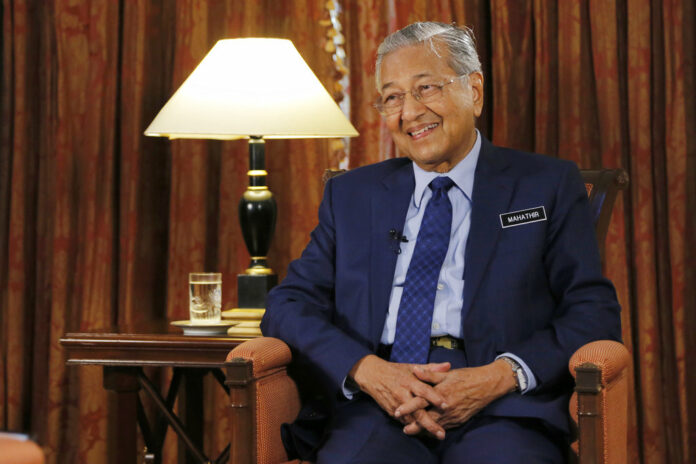
Malaysia's Prime Minister Mahathir Mohamad is interviewed in Putrajaya, Malaysia, Monday, Aug. 13, 2018. Photo: Yam G-Jun/ Associated Press

PUTRAJAYA, Malaysia — Malaysia’s foreign minister said Wednesday that the government will not budge over a ban on Israeli athletes in a para swimming competition and has decided that the country will not host any events in the future involving Israel.

Malaysia, a strong supporter of the Palestinian cause, is among the predominantly Muslim countries that do not have diplomatic relations with Israel. The government has said Israeli swimmers cannot join the competition in eastern Sarawak state in July, which serves as a qualifying event for the 2020 Tokyo Paralympics.

Foreign Minister Saifuddin Abdullah said the Cabinet affirmed last week that no Israeli delegates can enter Malaysia for sporting or other events in solidarity with the Palestinians.

“The Cabinet has also decided that Malaysia will not host any more events involving Israel or its representatives. This is to me, a decision to reflect the government’s firm stance over the Israeli issue,” Saifuddin said after meeting a coalition of Muslim groups. The groups submitted a memorandum urging the government to stick to the ban and not to repeat mistakes in the past of allowing Israel delegates into the country.

Saifuddin said the Palestinian cause was not just a religious issue but also a human right violation.

“It’s about fighting on behalf of the oppressed,” he said.

Israel’s Paralympic Committee did not immediately reply to an email requesting comment on Malaysia’s move.

Prime Minister Mahathir Mohamad has said the International Paralympic Committee can withdraw Malaysia’s right to host the July 29-Aug 4 championship involving athletes from some 70 countries if they wish to do so. The committee has said it was disappointed with Mahathir’s comments but hopes to find a solution to the issue.

This isn’t the first time Malaysia has stopped Israeli athletes from competing in a sports event. In 2015, two Israeli windsurfers had to withdraw from a competition on the resort island of Langkawi after they were refused visas to enter. The following year, Malaysia decided not to host a 2017 conference of the world football governing body FIFA because an Israeli delegation was scheduled to participate.

But earlier this year, the government allowed a high-level Israeli delegation to attend a U.N. conference in Kuala Lumpur, sparking widespread anger among Muslim groups.

Some 60 percent of Malaysia’s 32 million people are ethnic Malay Muslims. Many have taken to the streets in the past to support the Palestinian cause.

Advertisement

Celebs, Athletes Give ‘Dragon Ball’ Pop Culture Super Status

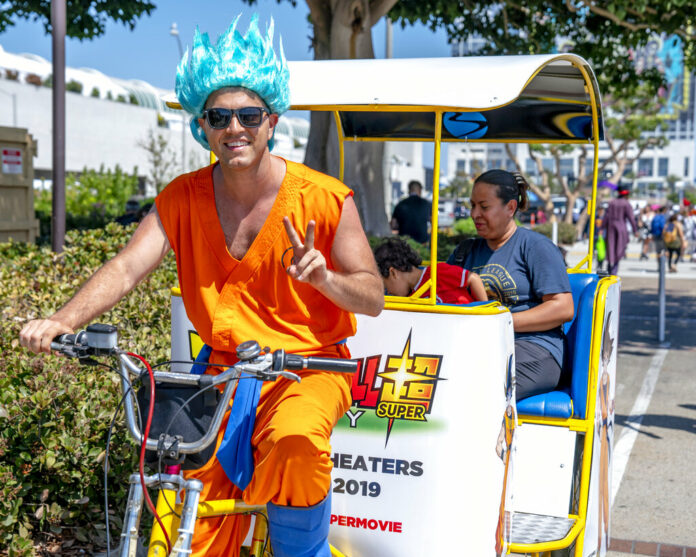
FILE - In this July 20, 2018 file photo, a pedicab driver dressed as a character from the anime franchise "Dragon Ball" gestures as he carries passengers during Comic-Con International in San Diego. Photo: Christy Radecic / Invision / Associated Press

LOS ANGELES — “Dragon Ball” may be a Japanese-born anime, but the series has become a major pop culture influencer for years. Rappers sprinkle references in their rhymes, athletes channel the character’s super powers when making big plays and the franchise’s star even made a towering appearance at November’s Macy’s Thanksgiving Day Parade.

That influence stateside is likely to grow Wednesday with the theatrical release of “Dragon Ball Super: Broly,” the 20th film in the “Dragon Ball” franchise that spans video games, six animated spinoffs and more than 500 television episodes. It all started in 1984 when Akira Toriyama created the best-selling comic book series, known as a manga in Japan.

“‘I’ve been a fan for so long, and I know a lot of others are too. It’s like a cult following,” said De’Aaron Fox, the 21-year-old Sacramento Kings guard who owns a pair of Dragon Ball Z-themed basketball shoes. Chicago Bulls forward Lauri Markkanen and Golden State Warriors player Jordan Bell are also fans of the anime who have worn custom Dragon Ball-themed shoes in games.

The franchise stars Goku, an alien who lands on Earth as a child and trains in martial arts through his adulthood, venturing across the globe to find seven orbs, known as Dragon Balls. He and other human-looking aliens, known as Saiyans, occasionally transform into Super Saiyans with enormous power that unleashes a glowing aura and random arcs of electricity around them. The transformation turns their black SPIKEY hair blonde.

“‘Dragon Ball’ really made an imprint on the world, particularly in entertainment,” Fox said. “You hear so many references in songs, mostly from hip-hop and rap. Athletes are coming out as fans as well. Like People are saying they want to become like Goku. It’s a big deal.”

AP19015643630742
FILE – In this April 5, 2015 file photo, participants at Anime Boston, Threa Srey, of Lowell, Mass., left, dressed as Bulma from the Japanese animated series “Dragon Ball Z,” stands with Linda Thach, also of Lowell, in character as Vegeta from “Dragon Ball Z” at the annual three-day Japanese animation convention in Boston. Photo: Steven Senne / Associated Press

Its crossover appeal was evident during the Macy’s Thanksgiving parade , when a 56-foot-tall, 70-foot-long Goku balloon floated above Manhattan, making the front page of The New York Times.

Many have followed “Dragon Ball” since they were kids, and the more famous fans incorporated it into their work, too.

Chris Brown posted an image on social media of a Dragon Ball tattooed on his leg and Goku’s face painted on a red Lamborghini. Chance the Rapper has mentioned the anime in two songs. Before a wrestling match, Ronda Rousey wore a shirt with her favorite character and “cartoon crush” Vegeta, the prince of the Saiyans who is an ally of Goku.

The Super Saiyan form is popular in the hip-hop community. Los Angeles Lakers guard Lonzo Ball along with Big Sean, Lil Uzi Vert, The Weeknd and Childish Gambino has rapped about achieving Super Saiyan status in their songs.

After Cleveland Browns tight end Darren Fells scored a touchdown against the Oakland Raiders this season, he and David Njoku performed the fusion dance . In the anime, the fusion dance merges two or more bodies together to form a powerful entity.

The self-professed “Dragon Ball” experts practiced the dance during training camp on HBO’s “Hard Knocks.”

AP19009701037086 e1547627506411
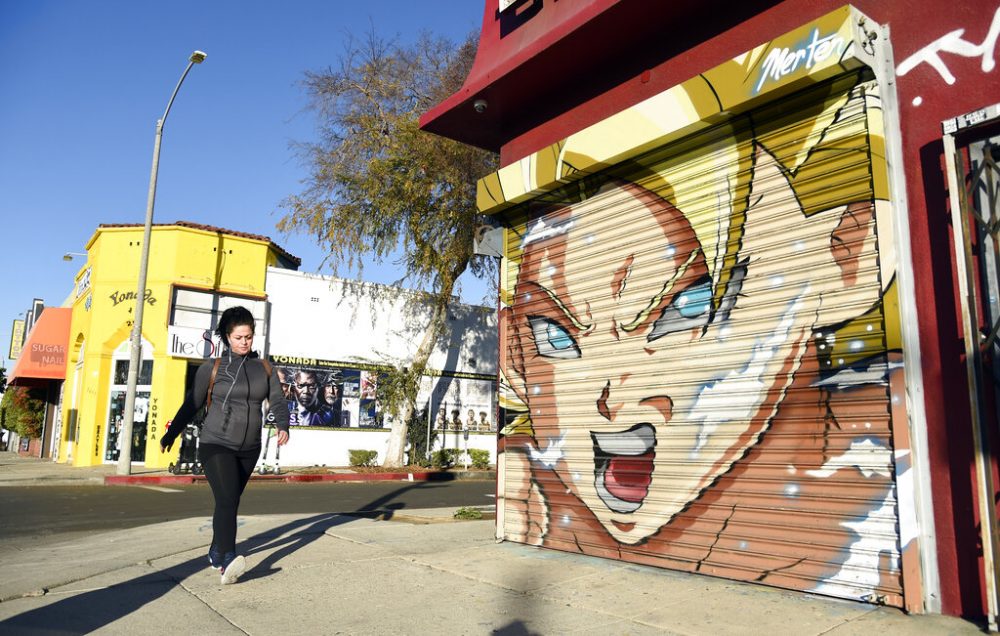
This Jan. 9, 2019 photo shows a pedestrian walking past a mural depicting “Caulifla” by artist Jake Merten inspired by the “Dragon Ball” anime series in Los Angeles. Photo: Chris Pizzello / Associated Press

“We worked on it in camp and we do it here and there in practice,” Njoku said. “If I score or he scores, we’ll do it. We put it all together in the Raiders game.”

When Fox reaches a higher level on the basketball court, he uses the phrase to compliment himself.

“When I’m ballin’ like crazy on the court, they say I’m going Super Saiyan,” he said.

Artist Jake Merten has created several murals dedicated to “Dragon Ball” characters in several cities including Los Angeles, Chicago, Kansas City and Denver and plans to create a new one to celebrate “Dragon Ball: Broly” this week in LA.

“As a kid, I liked the good-versus-evil story, but I was drawn in through the different aesthetics that were used,” said Merten, 30. “It was completely different than American cartoons. Even as a child, I appreciated the art direction and the way the TV show took on a different form than other cartoons, animes or movies.”

The “Dragon Ball” franchise has been criticized for sometimes having flawed animations and story inconsistencies between its anime and manga.

But Sean Schemmel, who has voiced Goku in the English version since 1999, said “Dragon Ball” will stack up better than other anime. Other popular ones include “One Piece,” ”Naruto,” ”Case Closed” and “Golgo 13.”

“I believe a hundred years from now, there will be no anime bigger than ‘Dragon Ball,'” Schemmel said. “There’s a bunch of anime coming out of Japan, and we work on a lot of them. But in terms of the epic scope, and the crossover mass appeal, it’s going to be hard to beat ‘Dragon Ball.’ It’s a special show that inspires those who don’t have a voice.”

Story: Jonathan Landrum Jr.

Advertisement

Drug Trafficker Tells of Bribe to Ex-President of Mexico

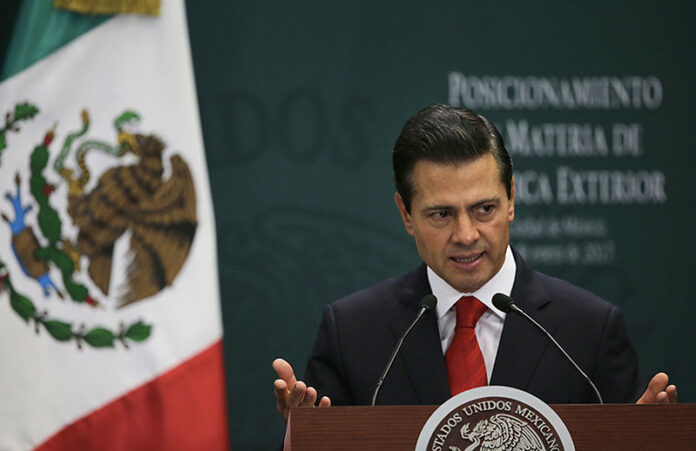
Mexico's then President Enrique Pena Nieto speaks in 2017 at Los Pinos presidential residence in Mexico City. Photo: Marco Ugarte / Associated Press

NEW YORK — A Colombian drug trafficker testified Tuesday that Mexican cartel leader Joaquin “El Chapo” Guzman boasted about paying a USD$100 million bribe to the former president of Mexico to call off a manhunt for the notorious kingpin.

Alex Cifuentes spoke about the alleged bribe to former President Enrique Pena Nieto while being cross-examined at Guzman’s murder and drug conspiracy trial in New York.

A spokesman for Pena Nieto, who left office last year, called the bribery claim “false and defamatory” when it first came up earlier in the trial. Pena Nieto was still president when Guzman was captured in 2016 and extradited to the U.S. in 2017.

Attempts to contact Pena Nieto and his representatives were unsuccessful Tuesday.

Cifuentes acknowledged that he first spoke with prosecutors about the bribery allegation when he began cooperating with U.S. authorities in 2016. After expressing confusion about the details, he acknowledged that he had told prosecutors that he was informed by Guzman that someone named “Comadre Maria” delivered money in Mexico City in October 2012, at a point when Pena Nieto had been elected president but before he took office.

Guzman’s lawyer, Jeffrey Lichtman, also confronted Cifuentes with his prior statements about another debriefing last year where Cifuentes questioned his own memory about the circumstance of the bribe.

“By 2018, suddenly the numbers became fuzzy?” Lichtman asked.

“Yes, sir,” the witness responded.

Guzman is on trial in New York on charges that could put him in a U.S. prison for the rest of his life. The trial has featured numerous allegations of bribes or attempts to bribe high-level officials in Mexico and Columbia, including police commanders and other officials in charge of fighting the drug cartels.

The defense strategy for eliciting testimony about Guzman making bribes wasn’t immediately clear. At the start of the trial, Lichtman indicated that jurors would hear testimony about bribes paid to both Pena Nieto and another former Mexican President, Felipe Calderon, and suggested Guzman was the victim of a conspiracy by government officials and his narco-rivals to railroad him. At the time, Calderon dismissed the allegations as “absolutely false and reckless.”

The judge in the case, U.S. District Judge Brian Cogan, admonished Lichtman after his opening statement to the jury, saying some of it included “inadmissible hearsay” about corruption.

“Your opening statement handed out a promissory note that your case is not going to cash,” the judge said at the time.

Story: Tom Hays

Advertisement

‘McJesus’ Sparks Outrage, Violence by Israeli Christians

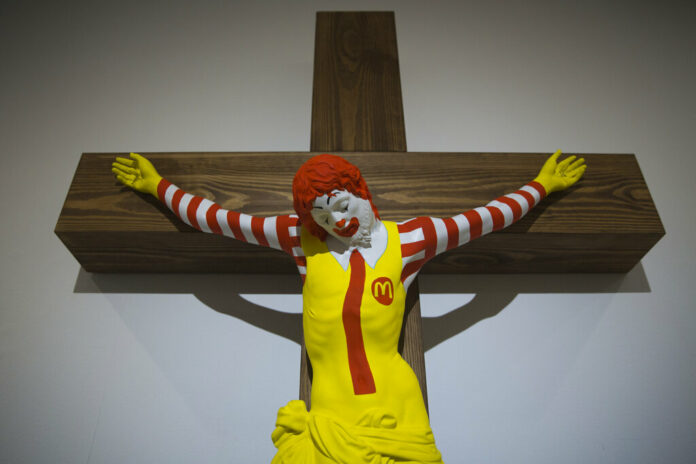
A sculpture called 'McJesus' by Finnish artist Jani Leinonen, which depicts a crucified Ronald McDonald, is seen on display Monday as part of the Haifa museum's 'Sacred Goods' exhibit, in Haifa, Israel. Photo: Oded Balilty / Associated Press

HAIFA, Israel — An art exhibit in Israel featuring a crucified Ronald McDonald has sparked protests by the country’s Arab Christian minority.

Hundreds of Christians calling for the removal of the sculpture, entitled “McJesus,” demonstrated at the museum in the northern city of Haifa last week.

Israeli police say rioters hurled a firebomb at the museum and threw stones that wounded three police officers. Authorities dispersed the crowds with tear gas and stun grenades.

Church representatives brought their grievances to the district court Monday, demanding it order the removal of the exhibit’s most offensive items, including Barbie doll renditions of a bloodied Jesus and the Virgin Mary.

Museum director Nissim Tal said that he was shocked at the sudden uproar, especially because the exhibit — intended to criticize what many view as society’s cult-like worship of capitalism — had been on display for months. It has also been shown in other countries without incident.

The protests appear to have been sparked by visitors sharing photos of the exhibit on social media.

Christians make up a tiny percentage of Israel’s Arab minority and say they face unique challenges.

“We need to understand that freedom of expression is interpreted in different ways in different societies,” said Wadie Abu Nassar, an adviser to church leaders. “If this work was directed against non-Christians, the world would be turned upside down.”

Israeli Culture Minister Miri Regev, who has been accused of censorship for pushing legislation mandating national “loyalty” in art, also called for the removal of the “disrespectful” artwork.

The museum has refused to remove the artwork, saying that doing so would infringe on freedom of expression. But following the protests it hung a curtain over the entrance to the exhibit and posted a sign saying the art was not intended to offend.

“This is the maximum that we can do,” Tal said. “If we take the art down, the next day we’ll have politicians demanding we take other things down and we’ll end up only with colorful pictures of flowers in the museum.”

But that did little to placate those who want the artwork removed. A protester remained camped out in a tent at the museum on Monday with a sign reading “Respect religions.” Police watched closely as local Christians complained to reporters in front of street signs spray-painted with crosses and windows still shattered from last week’s clashes.

“This is very offensive and I cannot consider this art,” Haifa artist and devout Christian Amir Ballan said. “We will continue through peaceful rallies and candle vigils… We won’t be quiet until we reach a solution.”

Jani Leinonen, the Finnish artist behind “McJesus,” has also asked that it be taken down — but for a different reason.

He says he supports Boycott, Divestment, Sanctions, or BDS, a Palestinian-led movement aimed at pressuring Israel to change its policies toward the Palestinians. The group has made significant gains in recent years, persuading a number of foreign artists to cancel performances in Israel.

Tal said the museum won’t bow to religious or political pressure.

“We will be defending freedom of speech, freedom of art, and freedom of culture, and will not take it down,” he said.

Advertisement

Bangkok Pollution Has Always Been Bad – So Have the Solutions: Experts

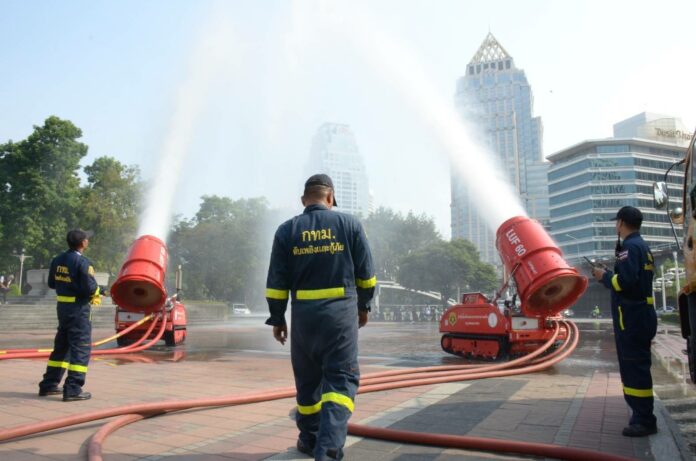
City workers use fire-fighting equipment to spray water into the air Dec. 23 at Lumphini Park. Photo: Bangkok Metropolitan Administration

BANGKOK — The capital’s heavy smog has been a chronic problem for years, and the government is still not doing enough to combat it despite the sudden swell of public concern, experts said Tuesday.

Current pollution levels aren’t much worse compared to those of the past few years, a former head of the Pollution Control Department said, adding that measures launched by the authorities such as spraying water and seeding clouds have been tried before without effect.

“The measures implemented last year were the same as this year, and still the smog returned to about the same level,” Supat Wangwongwatana said. “They weren’t a solution, just temporary relief of the situation’s severity.”

Bangkok’s smog is normally heaviest December to January, and Supat said this year only appears much worse because of better data collection and wider scrutiny by traditional and social media.

“The reason we didn’t feel it was this bad in the past was due to the lack of information,” he said, as officials didn’t have enough means to measure the pollution and channels to inform people about it.

However, he said the government must do better than offer a routine response that’s not going to solve the problem, he said.

Following public alarm, City Hall and the government announced several steps to combat the smog that has risen to unhealthy to hazardous levels across the capital since this past weekend. They include hosing down streets, spraying water into the air, dumping water from planes and chemically seeding clouds to create rain.

“It’s like we have the flu and take pills to ease the pain and fever, but the real cause of the problem is still inside our body,” said Supat, who also teaches public health at Thammasat University.

There is a number of policy steps for lasting effects if “the government dares to do it,” he said, such as reducing the number of cars on the roads by rationing their use through an “even and odd” system, better regulating vehicle emissions and stricter control of open burning.

Not a New Problem

The density of ultrafine particles in Bangkok has been about the same since 2014, according to data from the Pollution Control Department. From 2014 to 2017, they peaked on average between 60 micrograms and 95 micrograms per cubic meter. This month, they have registered between 40 micrograms and 90 micrograms. A maximum of 50 micrograms is considered acceptable.

Sirima Panyametheekul, who teaches environmental engineering at Chulalongkorn University, said in a panel discussion at the university yesterday that the smog isn’t new, but it’s aggravated this time of the year due to weather conditions.

Supat, a former pollution control official, agreed with the official diagnosis that diesel emissions are one of the major pollution sources, but said there are many other contributing factors such as open-air burning in the metropolitan area, as well as dust from the many construction projects for everything from large buildings to new rail lines.

And the more we build, the worse it gets, Supat added.

“Bangkok was quite flat and didn’t have that many skyscrapers in the past, so the air from the central area could circulate to the outer areas better,” he said. “Now there are skyscrapers lining up like walls and blocking the air from flowing away.”

Masks quickly became increasingly scarce after pictures of heavy smog were shared widely by the media and on the internet, especially the N95 masks, the type able to filter most of the ultrafine PM2.5 particles considered the smallest and most harmful.

Health officials on Tuesday however urged people in good health not to panic if they can’t find such masks as the particles will cause health problems only after prolonged, repeated and intense exposures over a long period of time.

“Exposure to PM2.5 will not immediately cause acute health problems, but will increase risk [of illness],” said Supakit Sirilak, a top health official. “The idea is to reduce the exposure.”

He said many people still don’t know how to properly use the N95 masks, which aren’t an absolute necessity nor the only means of protection.

“N95 masks can filter over 90 percent of PM2.5, but only when you wear them correctly,” he said. “And even you wear it correctly, you still can’t keep it on for long. After about 20 minutes of wearing one, you won’t be able to breathe comfortably.”

He said people who don’t have health issues or must remain in very smoggy areas for long periods of time, it’s adequate to wear a normal mask, which can filter about half of the particles. Remaining indoors is another way to reduce exposure.

Advertisement

2 Killed After Car Plunges off Loei Mountain

A file photo of Phu Tok in Loei’s Chiang Khan province.

LOEI — Two passengers were killed after a truck plummeted from a cliff on the Phu Tok mountain in Loei’s Chiang Khan district.

Nitat Raweewonganotai, 39, and Sasiwimol Prom-ngam, 26, died after a pickup shuttling people up the mountain slid off a cliff while they were on the way down Tuesday afternoon. The vehicle fell 50 meters.

The driver, 45-year-old Suriya Boopa, was still being treated at a hospital as of Wednesday morning.

Police are investigating the cause of the accident. Chaiwat Chuenkosum, the provincial governor, ordered additional, unspecified safety measures at all tourist attractions.

Phu Tok is a small mountain popular with tourists for offering views of a “sea of fog” and the Mekong River. No personal vehicles are allowed up to the mountain’s peak, only vehicles regulated by officials.

Advertisement

Hot News

LATEST NEWS

Bangkok
broken clouds
37.2 ° C
37.2 °
35 °
58 %
4kmh
77 %
Thu
37 °
Fri
37 °
Sat
36 °
Sun
36 °
Mon
37 °