32.7 C
Bangkok
Friday, June 19, 2026
Home Blog Page 1785

Cambodia Accuses 11 Pregnant Women of Breaking Surrogacy Law

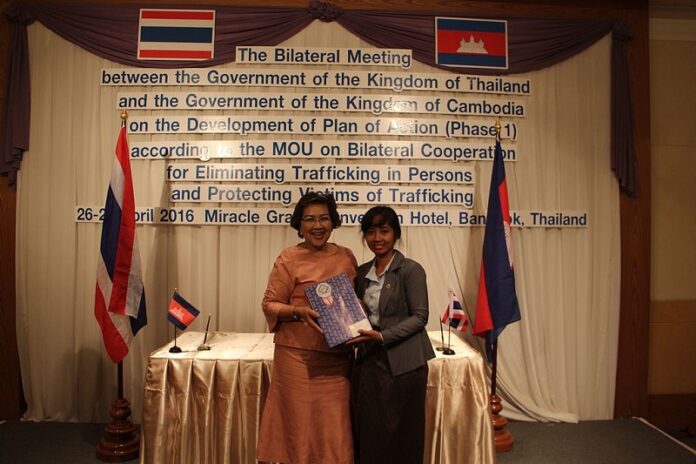
A bilaterial meeting between Thai and Cambodian officials on the Development of Plan of Action according to the MOU on Cooperation for Eliminating Trafficking in Persons held in 2016 in Bangkok. Photo: Inmean / Wikimedia Commons

PHNOM PENH — A Cambodian court on Tuesday charged 18 people, including 11 pregnant women, with violating laws against surrogate births.

Phnom Penh Municipal Court spokesman Ly Sophana said the 11 women and four other people were charged with surrogacy and human trafficking. Three more people were charged with conspiracy but did not appear.

The suspects were arrested last week in a police raid and charged under a law that specifically targets surrogacy, which was outlawed in 2016 after Cambodia became a popular destination for foreigners seeking women to give birth to their children.

Acting as an intermediary between an adoptive parent and a pregnant woman carries a penalty of one to six months in prison. The human trafficking offense is punishable by seven to 15 years’ imprisonment.

Developing countries are popular for surrogacy because costs are much lower than in countries such as the United States and Australia, where surrogate services can cost about USD$150,000. The surrogacy business boomed in Cambodia after it was put under tight restrictions in neighboring Thailand. There also were crackdowns in India and Nepal. After Cambodia’s crackdown, the trade shifted to neighboring Laos.

In early July, 33 pregnant Cambodian women hired to act as surrogate mothers were formally charged with surrogacy and human trafficking offenses, as were a Chinese man and four Cambodian women accused of managing the business.

In July last year, a Cambodian court sentenced an Australian woman and two Cambodian associates to 1 1/2 years in prison for providing commercial surrogacy services.

Advertisement

CIA Considered Potential Truth Serum for Terror Suspects

CIA nominee Gina Haspel testifies during a confirmation hearing of the Senate Intelligence Committee on May 9 on Capitol Hill in Washington. Photo: Alex Brandon / Associated Press

WASHINGTON — Shortly after 9/11, the CIA considered using a drug it thought might work like a truth serum and force terror suspects to give up information about potential attacks.

After months of research, the agency decided that a drug called Versed, a sedative often prescribed to reduce anxiety, was “possibly worth a try.” But in the end, the CIA decided not to ask government lawyers to approve its use.

The existence of the drug research program – dubbed “Project Medication” – is disclosed in a once-classified report that was provided to the American Civil Liberties Union under a judge’s order and was released by the organization Tuesday.

The 90-page CIA report, which was provided in advance to The Associated Press, is a window into the internal struggle that medical personnel working in the agency’s detention and harsh interrogation program faced in reconciling their professional ethics with the chance to save lives by preventing future attacks.

“This document tells an essential part of the story of how it was that the CIA came to torture prisoners against the law and helps prevent it from happening again,” said ACLU attorney Dror Ladin.

Between 2002 and 2007, CIA doctors, psychologists, physician assistants and nurses were directly involved in the interrogation program, the report said. They evaluated, monitored and cared for 97 detainees in 10 secret CIA facilities abroad and accompanied detainees on more than 100 flights.

The CIA ultimately decided against asking the Justice Department to approve drug-assisted interrogations, sparing CIA doctors “some significant ethical concerns,” the report said. It had taken months for the Justice Department to sign off on brutal interrogation tactics, including sleep deprivation, confinement in small spaces and the simulated drowning technique known as waterboarding. The CIA’s counterterrorism team “did not want to raise another issue with the Department of Justice,” the report said.

Before settling on Versed, the report said researchers studied records of old Soviet drug experiments as well as the CIA’s discredited MK-Ultra program from the 1950s and 1960s that involved human experimentation with LSD and other mind-altering drugs on unwitting individuals as part of a long search for some form of truth serum. These experiments were widely criticized and, even today, some experts doubt an effective substance exists.

“But decades later, the agency was considering experimenting on humans again to test pseudo-scientific theories of learned helplessness on its prisoners,” Ladin said.

Versed is a brand name for the sedative midazolam, used since the late 1970s and today sold commonly as a generic. It causes drowsiness and relieves anxiety and agitation. It also can temporarily impair memory, and often is used for minor surgery or medical procedures such as colonoscopies that require sedation but not full-blown anesthesia.

It’s in a class of anti-anxiety medications known as benzodiazepines that work by affecting a brain chemical that calms the activity of nerve cells.

“Versed was considered possibly worth a trial if unequivocal legal sanction first were obtained,” the report said. “There were at least two legal obstacles: a prohibition against medical experimentation on prisoners and a ban on interrogational use of ‘mind-altering drugs’ or those which ‘profoundly altered the senses.'”

Those questions became moot after the CIA decided against asking the Justice Department to give it a green light. “At the beginning of 2003, the Office of Medical Services’ review, informally termed ‘Project Medication’ was shelved, never to be reactivated,” the report said.

The CIA had no comment on the report’s release, but government lawyers emphasized in a court filing in the case early last year that the report, expressly marked “draft,” was just one agency officer’s impressions of the detention and interrogation program.

The document is not the CIA’s or the Office of Medical Service’s “final official history, or assessment, of the program,” the lawyers wrote.

The ACLU spent more than two years in court trying to get the report released. In September 2017, a federal judge in New York ordered the CIA to release it. Government lawyers tried three more times to keep information contained in the report under wraps, but the ACLU received the bulk of the report in August.

The government is still fighting to keep portions secret. They are to file briefs in a federal appeals court in New York on Wednesday, arguing that the judge ordered too much released.

While the CIA’s harsh interrogation program ended in 2007, the ACLU believes it’s important to continue seeking the release of documents about it, especially since President Donald Trump declared during his campaign that he would approve interrogating terror suspects with waterboarding, which is now banned by U.S. law, and a “hell of a lot worse.”

CIA Director Gina Haspel, who was involved in supervising a secret CIA detention site in Thailand where detainees were waterboarded, told the Senate during her confirmation hearing that she does “not support use of enhanced interrogation techniques for any purpose.”

The report cites many instances where medical personal expressed concern or protected the health of the detainees. Those who were thrown up against walls – a practice called “walling” – had their necks protected from whiplash by rolled towels around their necks, the report said.

When one detainee, who had been wounded during capture, was confined to a box, care was taken not to force his legs into a position that “would compromise wound healing.”

Physician assistants overruled using duct tape over the mouths of detainees during flights because air sickness could lead to vomiting and possible aspiration.

“That doesn’t mean that the doctors were sadistic or anything like that,” Ladin said. “But it means they were complicit because this pseudo-scientific torture could not have happened without the doctors’ participation.”

At the same time, the medical office’s report said waterboarding was not “intrinsically painful.” It said there was “physical discomfort from the occasional associated retching,” but that two detainees who endured the most extensive waterboarding sessions complained only “of the pain of the restraining straps.”

That contrasts with the Senate’s 2014 report on the CIA’s interrogation program, which stated that a prisoner known as Abu Zubaydah, a suspected al-Qaida operative who was waterboarded more than 80 times, “cried, begged, pleaded, vomited, and required medical resuscitation after being waterboarded.”

Some CIA medical personnel called waterboarding “little more than an amateurish experiment” and others worried that the practice would trigger spasms of the vocal cords, which could, at least temporarily, make it hard to speak or breathe.

At the same time, other medical personnel contended waterboarding actually “provided periodic relief” to a prisoner because it was a break from being forced to stand for long periods of time. The agency medical personnel also said the harsh interrogation program was “reassuringly free of enduring physical or psychological effects.”

Dr. Sondra Crosby, who has treated victims of torture, including two who were held at CIA secret sites, disagreed.

“The enduring pain and suffering experienced by the survivors of the CIA program is immense, and includes severe, complex post-traumatic stress disorder, depression, physical ailments, and psychosocial dysfunction,” said Crosby, of Boston University’s School of Medicine and Public Health. “At least one detainee was tortured to death. Their physical and psychological scars will last a lifetime.”

Story: Deb Riechmann

Advertisement

10 Indonesian Fishermen Accused of Shark Fin Smuggling
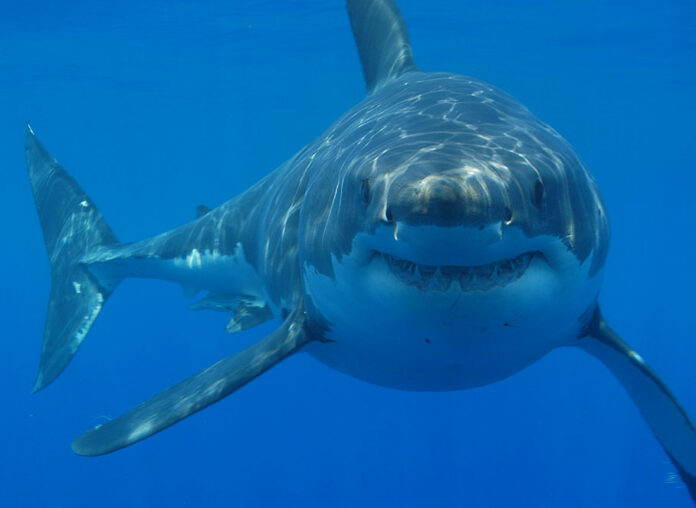
A great white shark in 2009 off the coast of South Africa. Photo: Hermanus Backpackers / Wikimedia Commons

HONOLULU — Ten Indonesian fishermen arrested in Hawaii are accused of trying to smuggle nearly 1,000 shark fins from the U.S. to Indonesia.

They had been working on a Japanese-flagged boat and were headed home via Honolulu when airport security workers found shark fins in their luggage last week, according to court documents.

At least 962 shark finds were founded in 13 pieces of luggage. Some were from oceanic whitetip sharks, authorities said.

It’s against U.S law to engage in international trade of a protected species without a permit. It’s also illegal to possess, sell or distribute shark fins in Hawaii, which was the first state in the nation to ban the pricey delicacy often used in soups.

The luggage included cardboard boxes, backpacks and suitcases.

“Fins were bundled together, and some were wrapped in foil. Some fins were sealed into clear and opaque bags, such as empty bags of rice, that obscured the contents, and those bags were, in turn, sealed within other opaque bags, apparently to contain odor or otherwise obscure the contents,” a complaint filed in court said.

During questioning, one of the fishermen told authorities that while at sea, they cut fins off live sharks and threw the bodies back. Another fisherman said he ate sharks on the boat and cut off the fins, according to court documents, and that he didn’t want dead sharks to go to waste.

Authorities estimate that the 190 pounds (89 kilograms) of seized shark fins have a street value of between USD$6,695 and $57,850.

A U.S. judge allowed them to be released on $10,000 unsecured bonds, each. Through an Indonesian interpreter, U.S. Magistrate Judge Kevin Chang explained to them they won’t have to pay any of the $10,000 if they stay out of trouble.

They were expected to be released from U.S. custody Tuesday and then taken to a Honolulu hotel.

The fishermen can’t leave the island of Oahu without court permission, Chang said, and they can’t discuss the case with each other.

Story: Jennifer Sinco Kelleher

Advertisement

Asian Leaders Push for Progress on South China Sea Pact

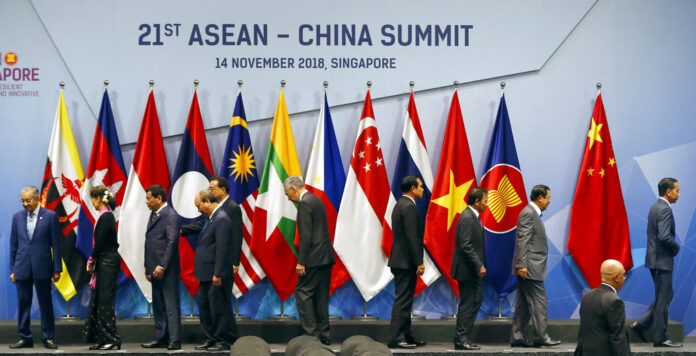
Chinese Premier Li Keqiang, fifth from left, and ASEAN leaders leave the stage following a brief group photo at the start of the ASEAN Plus China Summit in the ongoing 33rd ASEAN Summit and Related Summits Wednesday, Nov. 14, 2018 in Singapore. Photo: Bullit Marquez / Associated Press

SINGAPORE — Southeast Asian leaders and China are touting progress in keeping peace in the contentious South China Sea as they work toward a “code of conduct” to govern navigation routes and other activities in the region.

Speaking at the annual summit of the Association of Southeast Asian Nations in Singapore, Chinese Premier Li Keqiang cited the region’s management of territorial disputes as an example and said the trend was toward greater stability.

Philippine President Rodrigo Duterte said he wanted at “all cost” to set the rules governing behavior in those seas to avoid trouble.

Duterte told reporters that relations between China and its Southeast Asian neighbors were “excellent” and that friction was between Western nations and China. He said a code of conduct was needed to avoid dangerous miscalculations.

Advertisement

Pilots Say Boeing Didn’t Disclose Jet’s New Control Feature

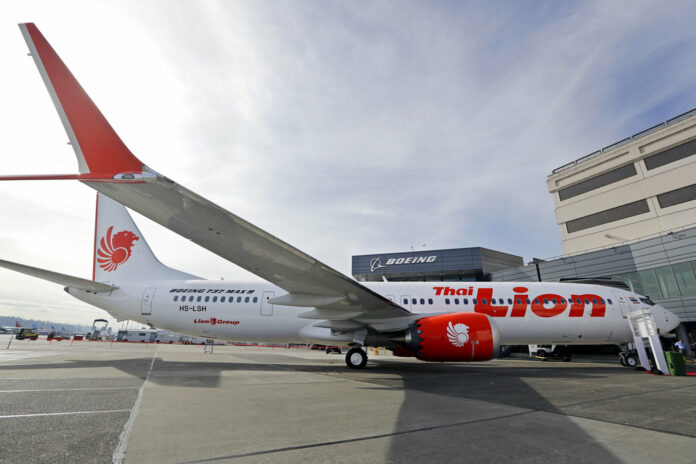
Boeing's first 737 MAX 9 jet at the company's delivery center before a ceremony transferring ownership to Thai Lion Air in Seattle in a March 2018 file photo. Photo: Elaine Thompson / Associated Press

Boeing didn’t tell airline pilots about features of a new flight-control system in its 737 MAX that reportedly is a focus of the investigation into last month’s deadly crash in Indonesia, according to pilots who fly the jet in the U.S.

Pilots say they were not trained in new features of an anti-stall system in the aircraft that differ from previous models of the popular 737.

The automated system is designed to help pilots avoid raising the plane’s nose too high, which can cause the plane to stall, or lose the aerodynamic lift needed to keep flying. The system automatically pushes the nose of the plane down.

But if that nose-down command is triggered by faulty sensor readings — as suspected in the Lion Air crash — pilots can struggle to control the plane, which can go into a dive and perhaps crash, according to a Boeing safety bulletin and safety regulators.

The bulletin included new details on how to stop a runaway series of events from leading to a crash, pilots say.

“It is something we did not have before in any of our training. It wasn’t in our books. American didn’t have it,” said Dennis Tajer, a 737 pilot and spokesman for the pilots union at American Airlines. “Now I have to wonder what else is there?”

Jon Weaks, a 737 captain and president of the pilots union at Southwest, said he couldn’t recall a similar omission in a Boeing operating manual.

“I was not pleased. How could something like this happen? We want to be given the information to keep our pilots, our passengers and our families safe,” he said.

Weaks said he is satisfied that “we have been given, finally, the correct information.”

The MAX is the newest version of the twin-engine Boeing 737. More than 200 have been delivered to airlines worldwide, including American, Southwest and United.

Boeing Chairman and CEO Dennis Muilenburg said Tuesday that the Chicago-based company remains confident the MAX is a safe airplane. He said Boeing did not withhold operating details from airlines and flight crews.

“We ensure that we provide all of the information that is needed to safely fly our airplanes,” Muilenburg told Fox Business Network. He said Boeing bulletins to airlines and pilots “point them back to existing flight procedures” to handle the kind of sensor problem suspected in last month’s crash.

A Southwest spokeswoman said the new automated maneuvering system was not included in the operating manual for MAX models. An American spokesman said the airline was unaware of some new automated functions in the MAX but hasn’t experienced nose-direction errors. A United spokesman said Boeing and the FAA do not believe additional pilot training is needed.

The Federal Aviation Administration issued an emergency directive last week to airlines, telling them to update cockpit manuals to include instructions for how pilots can adjust flight controls under certain conditions.

“The FAA will take further action if findings from the accident investigation warrant,” the agency said in a statement Tuesday.

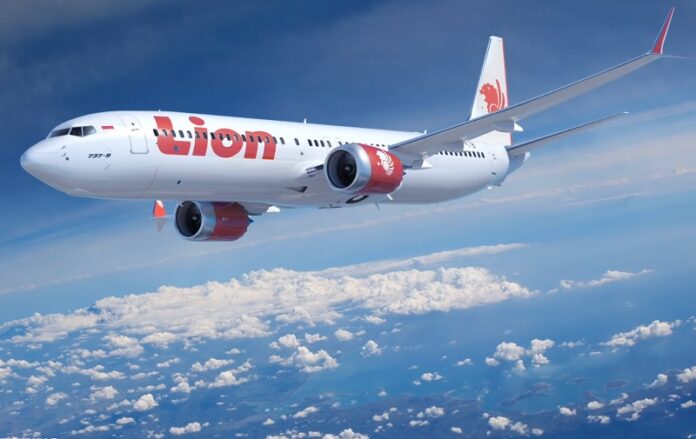
On Oct. 29, Lion Air Flight 610 plunged into the Java Sea shortly after takeoff from Jakarta. All 189 people on board were killed.

John Cox, a former 737 pilot and now a safety consultant to airlines, said Boeing’s steps since the crash “have been exactly correct. They have increased pilot awareness, they have reminded them of the proper procedure to disable (the automatic nose-down action), which stops the problem.”

Indonesian investigators say that the Lion Air Boeing 737 MAX 8 experienced malfunctions with sensors that indicate the angle of the nose on four recent flights, including the fatal one.

The Wall Street Journal reported that U.S. and Indonesian investigators are increasingly focusing on the way that the plane’s automated control systems interact. They are also questioning whether the FAA and Boeing adequately analyzed potential hazards if the systems malfunction and send faulty data to the plane’s computers, according to the newspaper.

Shares of Boeing Co. ended Tuesday down $7.52, or 2.1 percent, at $349.51 after falling to $342.04 earlier in the day.

Advertisement

Rules Eyed After Child Dies Boxing

Photo: Matichon
Photo: Matichon

BANGKOK — The tourism and sports minister said Tuesday that the ministry would consider proposing stronger restrictions on minor boxing after a 13-year-old boy died following a knock-out during a weekend Muay Thai match.

Veerasak Kowsurat said the ministry would consider supporting the amendment of the 1999 Boxing Act that would set a minimum age for boxing matches, adding that it would push the matter to the cabinet as soon as possible.

The boy was knocked unconscious Saturday during the third round of a match, causing a brain hemorrhage from which he didn’t recover. He remained unconscious until he died Monday.

The boy and his 14-year-old rival wore no protective headgear. The match, held in Samut Prakan province, southeast of Bangkok, was an anti-drug charity bout with trophies supported by junta deputy leader Gen. Prawit Wongsuwan.

This incident led to renewed calls on restrictions to be imposed after research by Mahidol University showed last month that children boxers scored lower on IQ tests after receiving blows to the head. Those in the boxing circles were raising funds Tuesday to donate to the boy’s family by auctioning boxing shorts among others.

Pro-boxing Facebook Page Muay Thai Krobwongchorn, or Full-Circle Thai Boxing, expressed its condolences to the boy’s family in a Monday night post with a photo of the boxer in hospital breathing through a ventilator.

One comment on the post questioned why the referee did not stop the fight when it became clear that the boy could not take further blows.

On Monday, the same day the boy died, hundreds from the boxing business – including well-known boxers – held a gathering and a hearing critical of the proposed amendment made by the junta-appointed National Legislative Assembly.

Sukrit Praekrithawej, chairman of Lawyers for Boxers Club, said the proposed amendment is contrary to the “long-held tradition” and the reality of the boxing environment. The amendment seeks to ban competitive boxing for children below 12 and to require that 15 years olds wear protective gear and seek permission from authorities before each match.

Sukrit said such move limits the rights of sports personnel to develop their body, deprives people from their profession and prevents 300,000 children from earning extra income.

In Thailand, it is common for boys from poor rural backgrounds to start boxing from early on, with many beginning aged as young as five.

The news on the boy’s death came the same day a young muay Thai boxer – an 11-year-old girl – made headlines for her filial piety, fighting in the ring to earn 300 baht to 500 baht a bout to help support her poor family. The sixth grader from Ratchaburi province reportedly earns extra cash by collecting rubbish and taking neighbor’s dogs and cats to see the veterinarian.

The child said she has been fighting for money for two years because her family is poor and her parents must pay for her other siblings, adding that she thought she is doing good.

Her father, Krittapas Pawutinand, said he used to be a chauffeur but had been unemployed for five years because nobody wants to hire drivers over 35.

“Sometimes I pity my daughter because opponents are physically bigger. She is often 3 to 5 kilograms lighter. Sometimes she can fight, other times she can’t, but her heart is a fighting one and she has twice knocked down larger opponents,” Krittapas said.


Related stories:

Brain-Damaged Kid Muay Thai Fighters Prompt Call For Ban

Advertisement

Travelers Can Find Tools to Weigh Safety of Foreign Airlines

Image: Dj's Aviation / YouTube

International air travel has become remarkably safe in recent years, with deadly accidents like last month’s Lion Air crash in Indonesia becoming more rare.

Statistics aside, the accident is making travelers wary of flying in some countries or on certain foreign airlines. The safety of Indonesia’s airlines had been questioned long before the Lion Air accident.

“There has been a lot more trepidation about flying smaller airlines that Americans have never heard of” since the Oct. 29 Lion Air crash, said Blake Fleetwood, president of Cook Travel in New York. “It is pushing people to the bigger airlines. People are scared.”

Before plunking down big money to book international flights, nervous flyers can tap into resources that can provide red-flag warnings if there are doubts about a carrier’s safety.

— The Federal Aviation Administration determines whether countries meet international safety standards set by the United Nations’ aviation agency. Five currently do not – Thailand, Bangladesh, Ghana, Curacao and Sint Maarten. Airlines from those countries can’t launch new flights to the U.S. Indonesia got off the blacklist in 2016.

— Europe bans 120 airlines from its skies. Most are smaller carriers from developing countries in Africa and parts of Asia. Lion Air was banned for nearly a decade until 2016; other blackballed Indonesian carriers only got off the list in June.

— Aviation Safety Network has an accident database that can be searched by airline or country.

— Websites like AirlineRatings.com rank carriers based on crash records and other data. That site gave Lion Air a rating of one star out of seven in 2016 but six out of seven last year, after U.S. and European regulators upgraded Indonesia’s aviation regulatory regime.

Such ratings have their critics. Skytrax, a UK company that does research for airlines and surveys travelers on airline quality, says there is no objective way to rank airlines on safety due to uneven reporting of incidents by airlines and regulators around the world.

— And there are companies such as Argus International that will provide reports on charter airlines. Since they charge a fee, typically USD$50 to $150, such services are mostly used by corporate travel departments.

Fatal airline accidents have been declining for about two decades. By some accounts, 2017 was the safest year yet. The Aviation Safety Network and To70 , an aviation consultant in the Netherlands, said there were no fatal crashes involving commercial passenger airlines last year. The reports excluded cargo planes, military aircraft, and flights on planes certified to carry fewer than 14 people.

“Aviation safety has become much better even in places that were notoriously unsafe at one time,” said Alberto Riva, managing editor of The Points Guy, a website for frequent flyers.

Within a country, Riva said, some airlines have better safety records than others. He said he would not worry about flying on Garuda Indonesia, the national carrier, “but if I could find a way to circumvent Lion Air, I would do that.”

Fleetwood, the travel agent, said, “I would steer clear of any airline that is not certified to fly to the European Union.”

Matt Kepnes, who wrote “How to Travel the World on $50 a Day,” said he follows the news closely enough to have a sense of which airlines have good safety records. “I don’t do much digging beyond that unless it is an airline I haven’t heard of, especially one that doesn’t fly to the U.S. or (European Union), as they have tight airline regulations. Then I look.”

Kepnes said airlines that fly to many countries tend to have a better safety record. He is more cautious about smaller airlines and domestic carriers in countries where he doesn’t trust the safety standards.

“I won’t fly a Russian carrier … they have a history of poor safety and the planes are quite old,” he said. “Indonesia has a spotty safety record, so I don’t like flying their domestic airlines. The same for India.”

Jay Johnson, president of Coastline Travel Advisors in Garden Grove, California, said clients frequently ask about personal safety, but are less likely to ask if transportation is risky.

“Because there is so much attention placed on dangerous countries or regions, travelers tend to ask questions of safety on the ground rather than how they get there,” he said. He said air travel in the U.S. is so safe that when people ask about a specific airline, it’s usually about creature comforts and not safety records.

“It’s almost as if travelers assume they will arrive safely, but does the airline have lay-flat beds?” he said.

Travel agents frequently recommend buying travel insurance for overseas itineraries in case you are unable to make the trip. However, if you try to cancel because the airline on which you are scheduled to fly has an accident, insurance is unlikely to reimburse you. Cancellations are covered only if the reason is specifically listed in the policy – such as terrorism, a weather event, or illness – said Jenna Hummer of Squaremouth.com, a travel insurance-comparison site.

The exception is for people who buy a “cancel for any reason” policy. However, such policies generally must be bought when you book the trip or soon after, and they typically cost about 40 percent more than standard trip-cancellation insurance, Hummer said.

Story: David Koenig

Advertisement

Medical Weed Law Clears Thai Cabinet

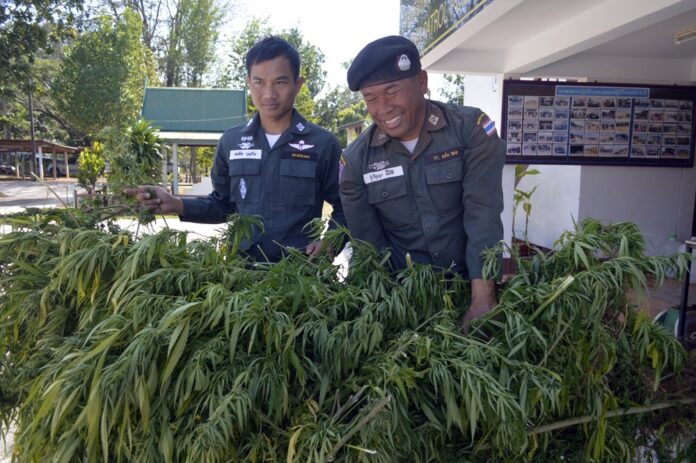
Border patrol police show off their haul of confiscated marijuana Jan. 23, 2017, in Nakhon Phanom province.

BANGKOK — Legalization of medical cannabis is on track to become law after the cabinet signed off Tuesday on legislation that would allow limited uses of it and other Category 5 drugs.

In a major step toward making Thailand the first Asian nation to reverse course in the war on drugs, government spokesman Puttipong Punnakanta said the draft law approved by the interim cabinet would allow marijuana and kratom to be used for medical and research purposes. Cultivation and experimentation will be overseen by the Narcotics Control Board.

Read: Thailand Rushes Law Allowing Medical Use of All Class 5 Drugs

The law now goes back to the National Legislative Assembly with cabinet suggestions. Puttipong said the law would be under the legal purview of the Health Ministry for five years.

Somchai Sawangkarn, one of the law’s proponents, today said the body is ready to proceed but issues remain over patent and intellectual property rights.

It recently came to light that foreign pharmaceutical companies have filed a number of requests to patent cannabis-based treatments.

Under current law, such patents are illegal.

The Intellectual Property Department responded to criticism that it was indulging pharma by saying it only accepted the applications and was reviewing them.

“According to the law, you still can’t patent the drugs, even accepting the applications isn’t allowed,” Somchai said. “Their explanation isn’t solid.”

Representatives from the Intellectual Property Department are scheduled to clarify the issue with the assembly next Tuesday, he said.

Advertisement

Husband Says ‘Love’ Motivated Him to Murder Wife WIth Acid

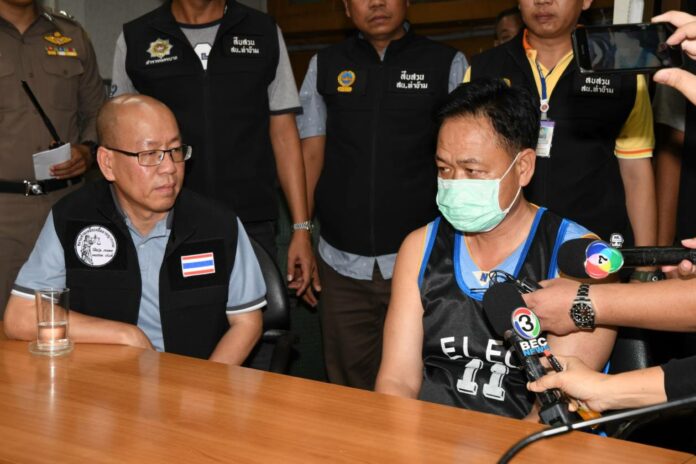
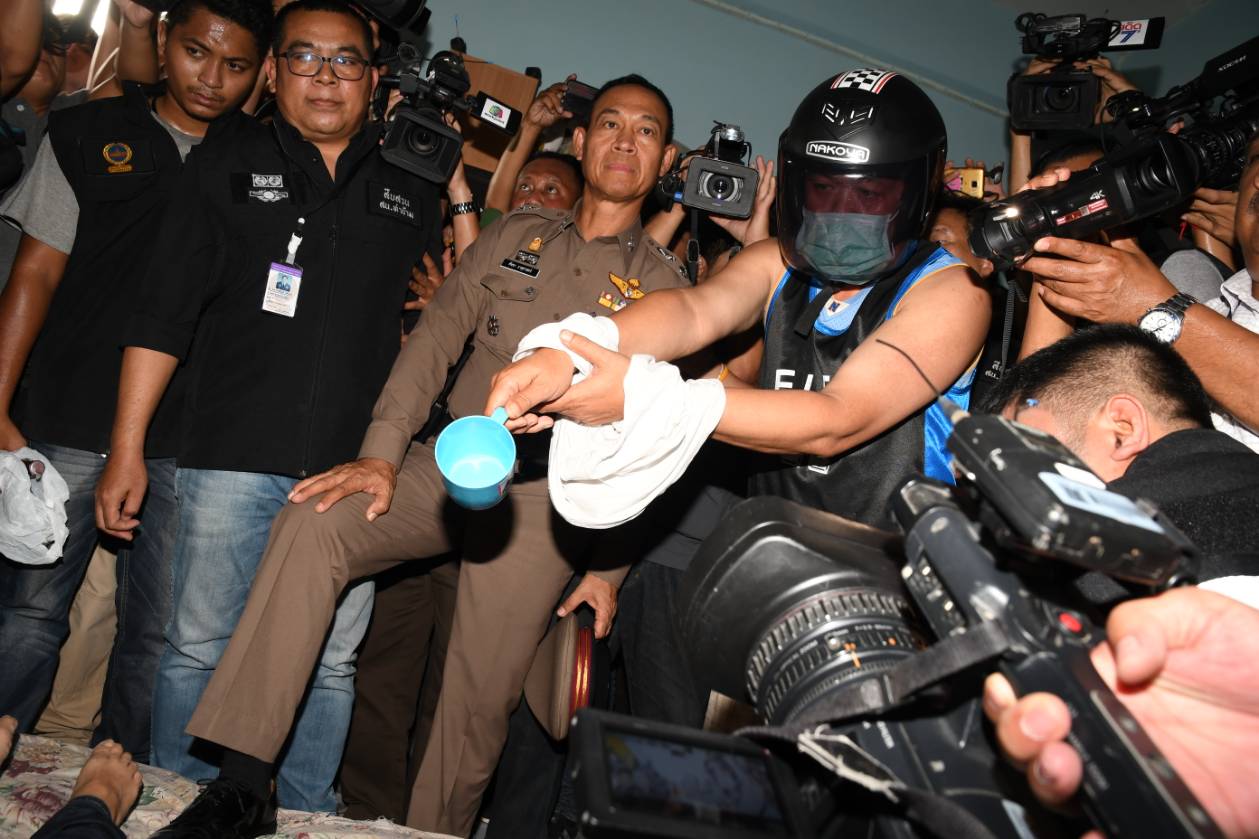
Kamtan Singhanat with police Monday.

BANGKOK — When police escorted a man accused of killing his wife by splashing and forcing her to drink acid to the local court, one of his neighbors showed up to vouch for his character.

“I really pity him. He’s a good man. He took care of his family, But he had to see an image that pierced his heart, of the one he loved sleeping with other men. That’s why he did it,” the unidentified neighbor said. “Otherwise, all of us neighbors would have cursed him when he came to do the crime reenactment yesterday.”

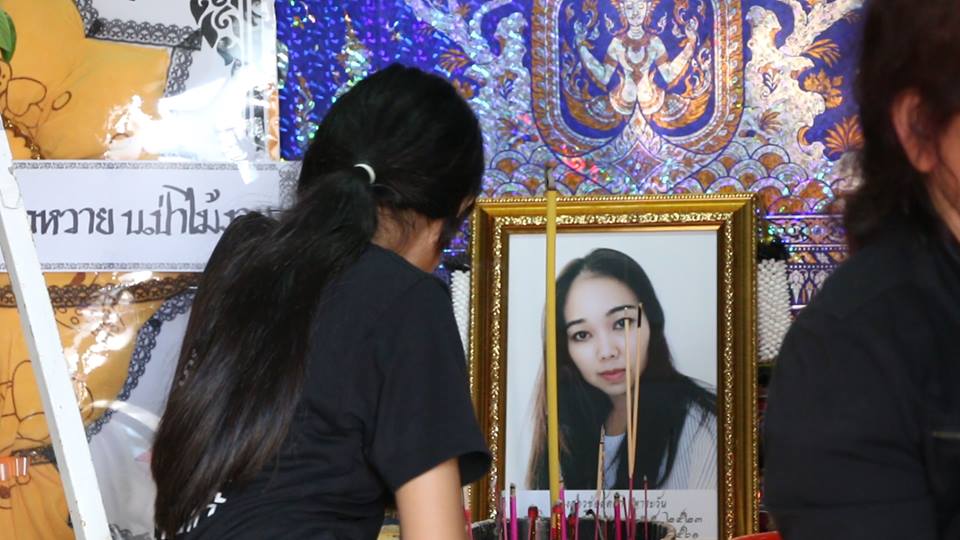
Chorladda Tarawan’s death Saturday has captured national headlines for its full-blend cocktail of horror. A woman was burned with and forced to drink soldering acid by her jealous husband, Kamtan Singhanat. A young daughter’s desperate bid to save her mother’s life, only to be turned away from the emergency room. Her mother, out of time, dying after being shipped off to another hospital.

Read: Hospital Says Acid-Burn Victim Only Scalded With Hot Water

But instead of pity for the victim, her alleged attacker – police say he’s confessed – began feeling out the familiar rationalization of wounded men who harm women.

“I did it out of jealousy. I was jealous because I loved her,” Kamtan told reporters Monday.

Kamtan, 50, said that Chorladda had been having an affair with two other men since April, which led to frequent marital quarrels. Police Lt. Gen. Sutthiwong Wongpin said that he believed Kamtan had been planning to attack Chorladda since then, bought the soldering liquid from a fellow taxi driver and hid it in his room before pouring a “Coke can’s worth” of it onto her.

57501
Police lead Kamtan Singhanat through a ‘re-enactment’ Monday of the alleged murder of his wife by pouring soldering acid from a coffee cup onto her face in Bangkok.

“I’m sorry for what happened. It was my fault. I didn’t mean for my wife to die,” Kamtan said Tuesday morning when he was trotted out before reporters again to be taken to a courtroom where he’ll be charged with murder. He was arrested Sunday night in the central province of Nakhon Sawan, where he had fled after killing Chorladda.

However, much like the neighbor, many other men weighed in – especially online – to justify Chorladda’s murder.

Read: Cult of Misogyny Flourishes Online

“If you never experienced seeing it yourself, you wouldn’t know how it feels. Finding your wife with another man, or your husband with another woman. I’d really like to know, how would you react?” Somsak Pananto wrote in a comment on a news story.

Facebook user Jonathan Livingstons found criticism of the confessed murder to be unfair:

“It’s strange that when women harm men, people cheer her for giving him what he deserves. But when men hurt women, everyone curses him. So why are you asking for gender equality?”

Chorlada’s family mourns Tuesday at her home in Khon Kaen.
Chorladda’s family mourns Tuesday at her home in Khon Kaen.

Police are investigating the full nature of what Kamtan did, and whether he just splashed Chorladda with acid or also forced her to drink it. One police investigator said the lawyer and victims’ rights advocate representing the family examined Chorladda’s body and found her digestive tract also ravaged by acid.

“This suggests that Kamtan lied about only splashing her face with it,” Lt. Col. Apirat Poomkumarn said.

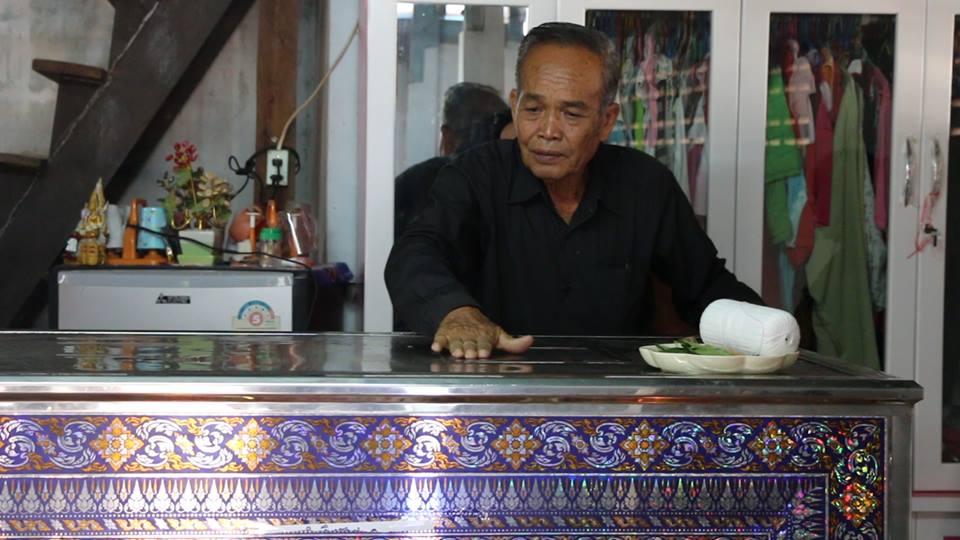
Chorladda’s family is currently in mourning at her home in Khon Kaen province, where her coffin awaits a funeral set for tomorrow.

“I want to ask him why he had to kill my child. I can’t forgive him. It’s too much,”
Tong-ard Tarawan, Chorladda’s mother, said. She said she’d previously begged Kamtan to refrain from domestic violence.

“I asked them to love each other. He promised he wouldn’t harm her anymore. He even prostrated. Don’t fight, it makes me suffer too. Don’t kill, don’t hit her,” Tong-ard said she told him.

Chorlada’s family mourns Tuesday at her home in Khon Kaen.
Chorladda’s family mourns Tuesday at her home in Khon Kaen.

Still, the most reactions suggested people were not indulging Kamtan’s portrayal of himself as the aggrieved victim.

“You said you didn’t mean to? Then how did you get the acid? Did it fly into your hands magically from the air? You bastard! If she survived, she still would have to have lived with a disfigured, ghost-like face; it would be like being dead while alive,” wrote Paiboon Phichphimok. “I’m a man, but I hate it when men do this. I can’t find the the right words to yell at you. In conclusion: You’re an evil bastard!”

Yanesa Jaisangad wrote, “What is your heart made of? If she doesn’t love you, just break up with her. There’s so many people in the world. Why did you have to hurt her?”

“This loser couldn’t get a woman to love him. He had such low self-confidence and nothing good in him to keep anyone to stay with him. You old, ugly thing couldn’t take it if you got dumped, so you decided to hurt a woman instead?” Nisa Naksri wrote.

Related stories:

Hospital Says Acid-Burn Victim Only Scalded With Hot Water

Hospital That Refused Acid-Burned Woman Denies it Was Emergency

Woman Dies After Hospital Refuses to Treat Acid Attack by Husband

Cult of Misogyny Flourishes Online

Advertisement

Chiang Mai Cancels Flights so Sky Lanterns Don’t Hit Planes

People release sky lanterns during the 2012 Yi Peng festival in Chiang Mai. Photo: John Shedrick / Flickr

CHIANG MAI — It’s that time of the year when Thai airspace becomes contested by the launching of thousands of traditional lanterns.

Chiang Mai International Airport announced Tuesday that more than 100 domestic and international flights will be canceled or rescheduled to avoid accidents during the sky lantern festival there later this month.

The airport vice president said safety measures will be stepped up to avoid collisions while a total of 148 flights will be affected Nov. 21 to 23, which is when the province holds the popular Yi Peng event to mark Loy Krathong.

Flight officer Thananrat Prasertsri said 44 domestic flights and 16 international flights will be canceled, while those rescheduled are 69 domestic and 19 international.

He added the airport will patrol the runways 10 times daily to clean up lanterns that fall into the area, and surveillance and security measures inside and around the airport will also be stepped up.

According to regulations, sky lanterns can only be released 7pm to 1am. Flights during the three-day festival are rescheduled to land before 6pm, Thananrat said.

He said the airport found 108 lanterns flew into the area last year, but said the campaign to raise safety awareness has proven effective, as the number fell significantly from the 1,425 found in 2013.

Advertisement

Hot News

LATEST NEWS

Bangkok
overcast clouds
32.7 ° C
35 °
32.7 °
68 %
4kmh
99 %
Fri
30 °
Sat
31 °
Sun
35 °
Mon
36 °
Tue
37 °