27.6 C
Bangkok
Thursday, July 16, 2026
Home Blog Page 1823

Vietnam, US Complete Cleanup of Toxic Chemical From Airport

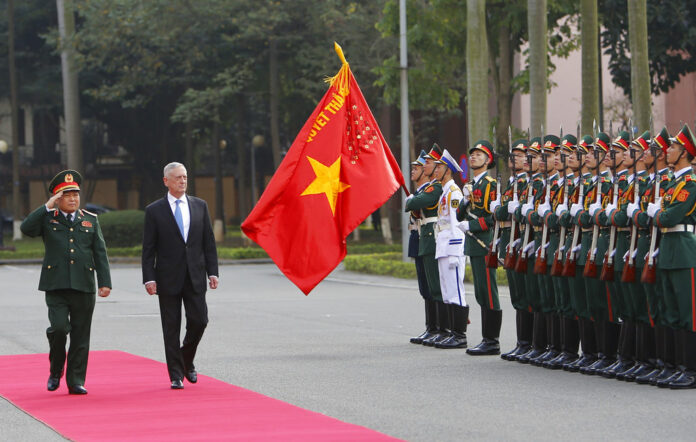
U.S. Defense Secretary Jim Mattis and his Vietnamese counterpart Ngo Xuan Lich, left, review an honor guard in January in Hanoi, Vietnam. Photo: Tran Van Minh / Associated Press

HANOI — Vietnam and the United States have finished the cleanup of dioxin contamination at Danang airport caused by the transport and storage of the herbicide Agent Orange during the Vietnam War.

The 30 hectares (74 acres) of land cleansed of the toxic chemical were handed over to Vietnam at a ceremony Wednesday where Vice Defense Minister Nguyen Chi Vinh praised the U.S. government’s involvement in the cleanup.

“It is proof that we are opening a future of good cooperation between the governments of Vietnam and the United States,” Vinh said. “Today marks the day that Danang airport is no longer known as a dioxin hotspot, the day that Danang people can be assured that their health will not be destroyed by chemicals left over from the war.”

Large amounts of Agent Orange, which contains dioxin, were stored at Danang airport during the war and sprayed by U.S. forces to defoliate the countryside and deny communist fighters jungle cover. Vietnamese still suffer from the effects of the spraying.

U.S. Ambassador Daniel Kritenbrink called the joint cleanup a significant milestone in the expanding partnership between the two countries.

“This project truly is a hallmark of our countries’ shared vision to be honest about the past, deal responsibly with remaining legacy issues and turn a point of contention into one of collaboration,” he said.

Kritenbrink said working together on the issues of the past “builds strategic trust and enables us to further strengthen our forward-looking partnership that advances shared interests and strong people-to-people ties.”

Between 1962 and 1971, the U.S. military sprayed roughly 11 million gallons of Agent Orange across large swaths of southern Vietnam. Dioxin stays in the soil and in the sediment at the bottom of lakes and rivers for generations. It can enter the food supply through the fat of fish and other animals.

Vietnam says as many as 4 million of its citizens were exposed to the herbicide and as many as 3 million have suffered illnesses caused by it – including the children of people who were exposed during the war.

The U.S. government says the actual number of people affected is much lower and that Vietnamese are too quick to blame Agent Orange for birth defects that can be caused by malnutrition or other factors.

Last month, U.S. Defense Secretary Jim Mattis visited Bien Hoa air base north of Ho Chi Minh City, the former Saigon, another dioxin hotspot.

The U.S. Agency for International Development will soon begin a soil restoration project at the base that is estimated to take several years and cost USD$390 million.

Advertisement

UN Rights Resolution Would Condemn Abuses Against Rohingyas

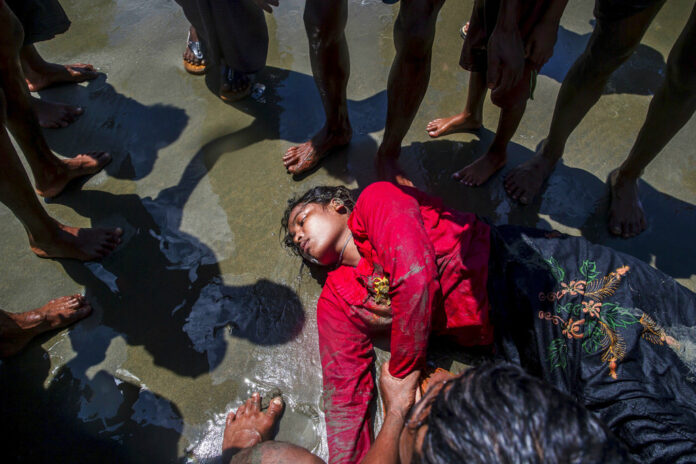
A Rohingya Muslim woman, who crossed over from Myanmar into Bangladesh, lies unconscious on the shore of the Bay of Bangal in 2017 after the boat she was traveling in capsized at Shah Porir Dwip, Bangladesh. Photo: Dar Yasin / Associated Press

UNITED NATIONS — A draft U.N. resolution would strongly condemn the continuing “gross human rights violations and abuses” against Rohingya Muslims and urgently call on Myanmar’s government to end discrimination and provide a path to citizenship for the embattled minority.

The draft resolution, sponsored by the 57-nation Organization of Islamic Cooperation, more than 25 European countries and Canada, was officially circulated Wednesday. The General Assembly’s human rights committee is expected to vote on the measure on Nov. 15.

The draft expresses deep concern that violence against the Rohingya has forced over 723,000 people to flee to Bangladesh since August 2017.

The Rohingya have long been treated as outsiders in Buddhist-majority Myanmar, even though their families have lived in the country for generations. Nearly all have been denied citizenship since 1982, effectively rendering them stateless, and they are also denied freedom of movement and other basic rights.

The latest crisis began with attacks by an underground Rohingya insurgent group on Myanmar security personnel in August 2017 in northern Rakhine State. Myanmar’s military responded with a brutal campaign and is accused of mass rape, killings and setting fire to thousands of homes.

The draft resolution reiterates “deep distress” at reports that unarmed Rohingyas are still being subjected to excessive use of force and rights violations by Myanmar’s military and security forces including killings and rapes. And it expresses “deep concern” at the continuing departure of the remaining Rohingya population as well as members of other minorities.

The proposed resolution expresses “grave concern” at the findings of the U.N. fact-finding mission on Myanmar, which concluded that some top Myanmar military leaders should be prosecuted for war crimes, crimes against humanity and genocide against the Rohingya.

It strongly condemns all rights abuses set out in the commission’s report and calls for “a full and independent investigation” of human rights abuses against the Rohingya and other minorities.

The draft notes Myanmar’s establishment of an independent commission to investigate alleged violations, but stresses that it must work “with independence, impartiality, transparency and objectivity in a credible way in line with international standards” — unlike its previous national investigations. And it encouraged the government commission “to seek support and expertise from the United Nations and the international community.”

The proposed resolution would also reiterate an urgent call on Myanmar’s government to take measures “to address the spread of discrimination and prejudice and to combat the incitement of hatred against Rohingya Muslims and other persons belonging to minorities, including Kachin and Shan.”

And the government should “expedite efforts to eliminate statelessness and the systematic and institutionalized discrimination against members of ethnic and religious minorities,” the draft says.

The draft resolution also addresses the military’s control over much of Myanmar’s government.

“To sustain the democratic transition of Myanmar by bringing all national institutions, including the military, under the democratically elected civilian government,” it says.

Advertisement

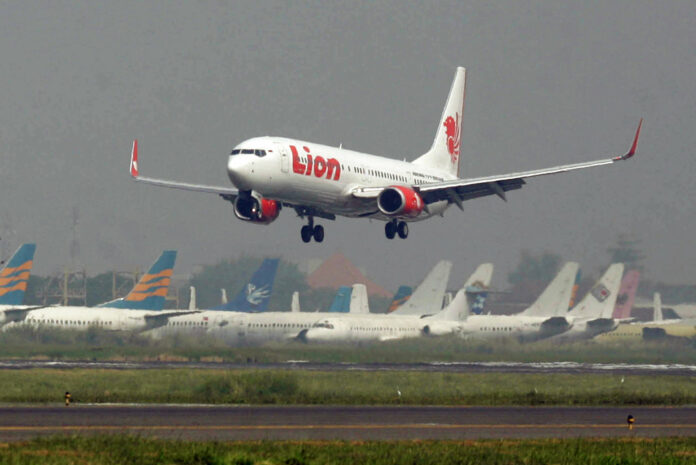
Boeing Plane Crashed in Indonesia After Key Sensor Replaced

Image: Dj's Aviation / YouTube

JAKARTA — A crucial sensor was replaced on a Lion Air jet the day before it plunged into the Java Sea, and that sensor replacement may have exacerbated other problems with the plane, Indonesian investigators said Wednesday.

That sensor, known as the “angle of attack” sensor, keeps track of the angle of the aircraft nose to help prevent the plane from stalling and diving.

Earlier this week, Indonesian officials hinted that airspeed indicators played a role in the deadly Oct. 29 crash that killed all 189 people on board.

Read: Boeing Warns 737 Max May Plunge Due to Error After Lion Air Crash

The jet’s airspeed indicator malfunctioned on its last four flights, and that problem was related to the sensor issue, said Soerjanto Tjahjono, chairman of Indonesia’s National Transportation Safety Committee, on Wednesday.

Lion Air’s first two attempts to address the airspeed indicator problem didn’t work, and for the Boeing 737 MAX 8 plane’s second-to-last flight on Oct. 28, the angle of attack sensors were replaced, Tjahjono said.

On the Oct. 28 flight, from Bali to Jakarta, the pilot’s and copilot’s sensors disagreed. The 2-month-old plane went into a sudden dive minutes after takeoff, which the pilots were able to recover from. They decided to fly on to Jakarta at a lower-than-normal altitude.

The next day, during the deadly crash, the plane hit the water at very high speed just 13 minutes after takeoff from Jakarta. Its flight crew had requested permission to return to the airport several minutes after taking off.

“The point is that after the AOA (sensor) is replaced, the problem is not solved but the problem might even increase. Is this fatal? NTSC (National Transportation Safety Committee) wants to explore this,” he said.

Even if an angle of attack sensor on a jet is faulty, there’s generally a backup system in place for the critical component, and pilots are trained to handle a plane safely if those sensors fail, airline safety experts said.

There are audio signals and physical warnings that can alert the pilot to malfunctioning equipment or other dangers, said Todd Curtis, director of the Airsafe.com Foundation.

“They should have been completely engaged in what was going on inside that cockpit, and any kind of warning that came up, they would have been wise to pay attention to it,” Curtis said.

Investigators are likely focused on how a single sensor’s failure resulted in a faulty command that didn’t take into account information from a second sensor, said John Cox, CEO of Safety Operating Systems.

“We don’t know what the crew knew and didn’t know yet,” Cox said. “We will.”

Boeing, which manufactured the Lion Air plane, issues safety-related bulletins, and had previously circulated instructions about what flight crews should do if sensors fail.

Indonesia’s National Transportation Safety Committee said it had agreed with Boeing on procedures that the airplane manufacturer should distribute globally on how flight crews can deal with “angle of attack” sensor problems.

But a Boeing statement said a safety bulletin, sent to airlines on Tuesday, directs flight crews to existing guidelines on how they should respond to erroneous “angle of attack” data. It wasn’t immediately clear if it plans an update, though comments from Indonesian officials indicate they expect one.

Indonesian investigators said their flight procedure recommendations to Boeing were based on how the flight crew responded to problems on the Bali-to-Jakarta flight.

“The draft of what will be conveyed by Boeing this morning has been presented to us,” said air accident investigator Nurcahyo Utomo.

“There are some things that we ask for explanation and some that we ask to be removed, and there has been an agreement between the NTSC and Boeing to release a new procedure to all Boeing 737 MAX users in the world,” he said.

Indonesia’s search and rescue agency on Wednesday extended the search effort for a second time, saying it will continue until Sunday. Body parts are still being recovered and searchers continue to hunt for the cockpit voice recorder.

The Lion Air crash is the worst airline disaster in Indonesia since 1997, when 234 people died on a Garuda flight near Medan. In December 2014, an AirAsia flight from Surabaya to Singapore plunged into the sea, killing all 162 on board.

Lion Air is one of Indonesia’s youngest airlines but has grown rapidly, flying to dozens of domestic and international destinations. It has been expanding aggressively in Southeast Asia, a fast-growing region of more than 600 million people.

Story: Niniek Karmini, Andi Jatmiko

Advertisement

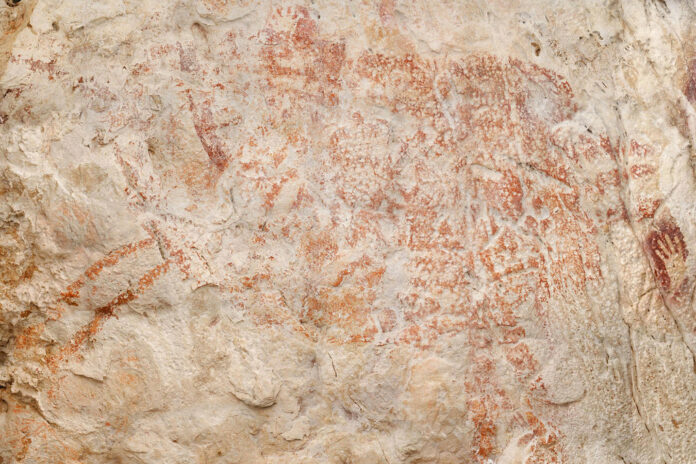
Red Bull Drawn in Indonesian Cave Dated to 40,000 Years Ago

This composite image from the book
This composite image from the book "Borneo, Memory of the Caves" shows the world's oldest figurative artwork dated to a minimum of 40,000 years, in a limestone cave in the Indonesian part of the island of Borneo. Photo: Luc-Henri / Associated Press

WASHINGTON — Scientists have found the oldest known example of an animal drawing: a red silhouette of a bull-like beast on the wall of an Indonesian cave.

The sketch is at least 40,000 years old, slightly older than similar animal paintings found in famous caves in France and Spain. Until a few years ago, experts believed Europe was where our ancestors started drawing animals and other figures.

But the age of the drawing reported Wednesday in the journal Nature, along with previous discoveries in Southeast Asia, suggest that figurative drawing appeared in both continents about the same time.

The new findings fuel discussions about whether historical or evolutionary events prompted this near-simultaneous “burst of human creativity,” said lead author Maxime Aubert, an archaeologist and geochemist at Griffith University in Australia.

The remote limestones caves on Borneo have been known to contain prehistoric drawings since the 1990s. To reach them, Aubert and his team used machetes to hack through thick jungle in a verdant corner of the island.

Strapping on miners’ helmets to illuminate the darkness, they walked and crawled through miles of caves decorated with hundreds of ancient designs, looking for artwork that could be dated. They needed to find specific mineral deposits on the drawings to determine their age with technology that measures decay of the element uranium.

“Most of the paintings we actually can’t sample,” said Aubert.

Aubert and his fellow researchers reported in 2014 on cave art from the neighboring Indonesian island of Sulawesi. They dated hand stencils, created by blowing red dye through a tube to capture the outline of a hand pressed against rock, to almost 40,000 years ago.

Now, with the Borneo cave art, the scientists are able to construct a rough timeline of how art developed in the area. In addition to the bull, which is about 5 feet (1.5 meters) wide, they dated red- and purple-colored hand stencils and cave paintings of human scenes.

After large animal drawings and stencils, “It seems the focus shifted to showing the human world,” Aubert said.

Around 14,000 years ago, the cave-dwellers began to regularly sketch human figures doing things like dancing and hunting, often wearing large headdresses. A similar transition in rock art subjects happened in the caves of Europe.

“That’s very cool, from a human point of view,” said Peter Veth, an archaeologist at the University of Western Australia, who was not involved in the study. “People adopted similar strategies in different environments as they became more modern.”

The island of Borneo was still connected to mainland Southeast Asia when the first figurative drawings were made about 40,000 years ago – which is also about the time that the first modern humans arrived in Europe. The earliest drawings of animals in the French cave of Chauvet have been dated to about 33,500 to 37,000 years ago.

Whether new waves of people migrating from Africa brought the skills of figurative cave painting with them, or whether these arts emerged later, remains unclear. Scientists have only a partial record of global rock art. The earliest cave etchings have been found in Africa and include abstract designs, like crosshatches, dating to around 73,000 years ago.

The next stage of research in Indonesia will include excavations to learn more about the people who made these paintings. A few sites have already been identified, containing human bones, prehistoric jewelry and remains of small animals.

As for the red bull, its meaning remains a mystery.

“We think it wasn’t just food for them – it meant something special,” said Aubert.

Story: Christina Larson

Advertisement

Jeff Sessions Resigns After a Year of Attacks From Trump

Attorney General-designate, Sen. Jeff Sessions, R-Ala., testifies in January on Capitol Hill in Washington. Photo: Alex Brandon / Associated Press

WASHINGTON — United States Attorney General Jeff Sessions was pushed out Wednesday after enduring more than a year of blistering and personal attacks from President Donald Trump, who inserted in his place a Republican Party loyalist with authority to oversee the remainder of the special counsel’s Russia investigation.

The move has potentially ominous implications for special counsel Robert Mueller’s probe given that the new acting attorney general, Matthew Whitaker, until now Sessions’ chief of staff, has questioned the inquiry’s scope and spoke publicly before joining the Justice Department about ways an attorney general could theoretically stymie the investigation.

Congressional Democrats, concerned about protecting Mueller, called on Whitaker to recuse himself from overseeing the investigation in its final but potentially explosive stages.

That duty has belonged to Deputy Attorney General Rod Rosenstein, who appointed Mueller and closely monitors his work.

The resignation, in a one-page letter to Trump, came one day after Republicans lost control of the House of Representatives and was the first of several expected post-midterms Cabinet and White House departures. Though Sessions was an early and prominent campaign backer of Trump, his departure letter lacked effusive praise for the president and made clear the resignation came “at your request.”

“Since the day I was honored to be sworn in as attorney general of the United States, I came to work at the Department of Justice every day determined to do my duty and serve my country,” Sessions wrote.

The departure was the culmination of a toxic relationship that frayed just weeks into Sessions’ tenure, when he stepped aside from the Russia investigation because of his campaign advocacy and following the revelation that he had met twice in 2016 with the Russian ambassador to the U.S.

Trump blamed the recusal for the appointment of Mueller, who took over the Russia investigation two months later and began examining whether Trump’s hectoring of Sessions was part of a broader effort to obstruct the probe.

The investigation has so far produced 32 criminal charges and guilty pleas from four former Trump aides. But the work is not done and critical decisions await that could shape the remainder of Trump’s presidency.

Mueller’s grand jury, for instance, has heard testimony for months about Trump confidant Roger Stone and what advance knowledge he may have had about Russian hacking of Democratic emails. Mueller’s team has also been pressing for an interview with Trump. And the department is expected at some point to receive a confidential report of Mueller’s findings, though it’s unclear how much will be public.

Separately, Justice Department prosecutors in New York secured a guilty plea from Trump’s former personal lawyer, Michael Cohen, who said the president directed him to arrange hush-money payments before the 2016 election to two women who said they had sex with Trump.

Trump had repeatedly been talked out of firing Sessions until after the midterms, but he told confidants in recent weeks that he wanted Sessions out as soon as possible after the elections, according to a Republican close to the White House who was not authorized to publicly discuss private conversations.

The president deflected questions about Sessions’ expected departure at a White House news conference Wednesday. He did not mention that White House chief of staff John Kelly had called Sessions beforehand to ask for his resignation. The undated letter was then sent to the White House.

The Justice Department did not directly answer whether Whitaker would assume control of Mueller’s investigation, with spokeswoman Sarah Isgur Flores saying he would be “in charge of all matters under the purview of the Department of Justice.”

Rosenstein remains at the department and could still be involved in oversight. He has previously said that he saw no basis for firing Mueller. Trump said Wednesday that he did not plan to stop the investigation.

Without Sessions’ campaign or Russia entanglements, there’s no legal reason Whitaker couldn’t immediately oversee the probe. And since Sessions technically resigned instead of forcing the White House to fire him, he opened the door under federal law to allowing the president to choose his successor instead of simply elevating Rosenstein, said University of Texas law professor Stephen Vladeck.

“Sessions did not do the thing he could have done to better protect Rosenstein, and through Rosenstein, the Mueller investigation,” Vladeck said.

That left Whitaker in charge, at least for now, though Democrats, including Rep. Nancy Pelosi and Sen. Chuck Schumer, said he should recuse himself because of his comments on the probe. Rep. Jerry Nadler, the top Democrat on the House Judiciary Committee, said he wants “answers immediately” and “we will hold people accountable.”

Whitaker, a former U.S. attorney from Iowa who twice ran unsuccessfully for statewide office and founded a law firm with other Republican Party activists, once opined about a scenario in which Trump could fire Sessions and then appoint an acting attorney general who could stifle the funding of Mueller’s probe.

In that scenario, Mueller’s budget could be reduced “so low that his investigation grinds to almost a halt,” Whitaker said during an interview with CNN in July 2017 before he joined the Justice Department.

In a CNN op-ed last year, Whitaker wrote, “Mueller has come up to a red line in the Russia 2016 election-meddling investigation that he is dangerously close to crossing.”

Trump’s relentless attacks on Sessions came even though the Alabama Republican was the first U.S. senator to endorse Trump and despite the fact his crime-fighting agenda and priorities, particularly his hawkish immigration enforcement policies, largely mirrored the president’s.

He found satisfaction in being able to reverse Obama-era policies that conservatives say flouted the will of Congress, encouraging prosecutors to pursue the most serious charges they could and promoting more aggressive enforcement of federal marijuana law.

He also announced media leak crackdowns and tougher policies against opioids, and his Justice Department defended a since-abandoned administration policy that resulted in migrant parents being separated from their children at the border.

But the relationship was irreparably damaged in March 2017 when Sessions, acknowledging previously undisclosed meetings with the Russian ambassador and citing his work as a campaign aide, recused himself from the Russia investigation.

Trump repeatedly lamented that he would have never selected Sessions if he had known the attorney general would recuse himself. The recusal left the investigation in the hands of Rosenstein, who appointed Mueller two months later after Trump fired then-FBI Director James Comey.

In piercing attacks, Trump called Sessions weak and beleaguered, complained that he wasn’t more aggressively pursuing allegations of corruption against Democratic rival Hillary Clinton and called it “disgraceful” that Sessions wasn’t more serious in scrutinizing the origins of the Russia investigation for possible law enforcement bias – even though the attorney general did ask the Justice Department’s inspector general to examine those claims.

The broadsides escalated in recent months, with Trump telling an interviewer that Sessions “never had control” of the Justice Department.

Sessions endured most of the name-calling in silence, though he did issue two public statements defending the department, including one in which he said he would serve “with integrity and honor” for as long as he was in the job.

Sessions, who likely suspected his ouster was imminent, was spotted by reporters giving some of his grandchildren a tour of the White House over the weekend. He did not respond when asked why he was there.

Story: Eric Tucker, Michael Balsamo

Advertisement

Boeing Warns 737 Max May Plunge Due to Error After Lion Air Crash

A Lion Air passenger jet takes off from Juanda International Airport in Surabaya, Indonesia, in a 2012 file photo. Photo: Trisnadi

JAKARTA — Boeing Co. says it has issued a safety bulletin that reiterates guidelines on how pilots should respond to erroneous data from an “angle of attack” sensor following last week’s crash of a Boeing plane in Indonesia that killed 189 people.

The airplane manufacturer said in a statement Wednesday that Indonesia’s National Transportation Safety Committee has indicated the crashed Boeing 737 MAX 8 plane had “erroneous input from one of its AOA sensors.”

The angle of attack sensor keeps track of the angle of the aircraft nose relative to oncoming air to prevent the plane from stalling and diving.

Boeing said it is continuing to work with the Indonesian investigation into the Oct. 29 crash.

Indonesian investigators on Monday said an airspeed indicator had malfunctioned on the plane’s last four flights.

Advertisement

Asian Shares Closed Mixed After US Midterm Elections

Specialist Meric Greenbaum, center, works with traders at his post in May on the floor of the New York Stock Exchange. Photo: Richard Drew / Associated Press

NEW YORK — Share prices have closed mixed in Asia with several major regional benchmarks giving up early gains.

The retreat Wednesday followed results from U.S. midterm elections that were no surprise but raised the prospect for greater uncertainty as the opposition Democrats regained a majority in the House of Representatives.

Japan’s Nikkei 225 index lost 0.3 percent to 22,085.80 while Hong Kong’s Hang Seng index yoyo’d back into positive territory, adding 0.1 percent to 26,147.69. The Kospi in South Korea lost 0.5 percent to 2,078.69 and the Shanghai Composite index skidded 0.7 percent to 2,641.34. Australia’s S&P ASX 200 added 0.4 percent to 5,896.90 and shares also rose in Taiwan, Singapore and Indonesia.

Shares in Thailand traded at 1,675.33, a 0.4 percent gain.

Advertisement

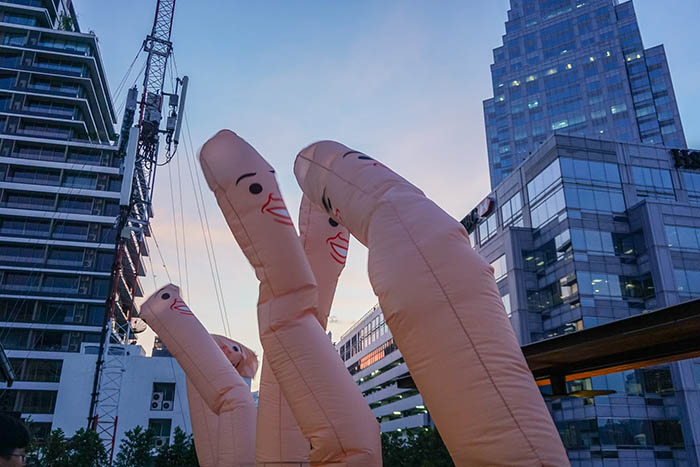
Thailand’s Ironies Churn in Joan Cornella’s Bangkok Return

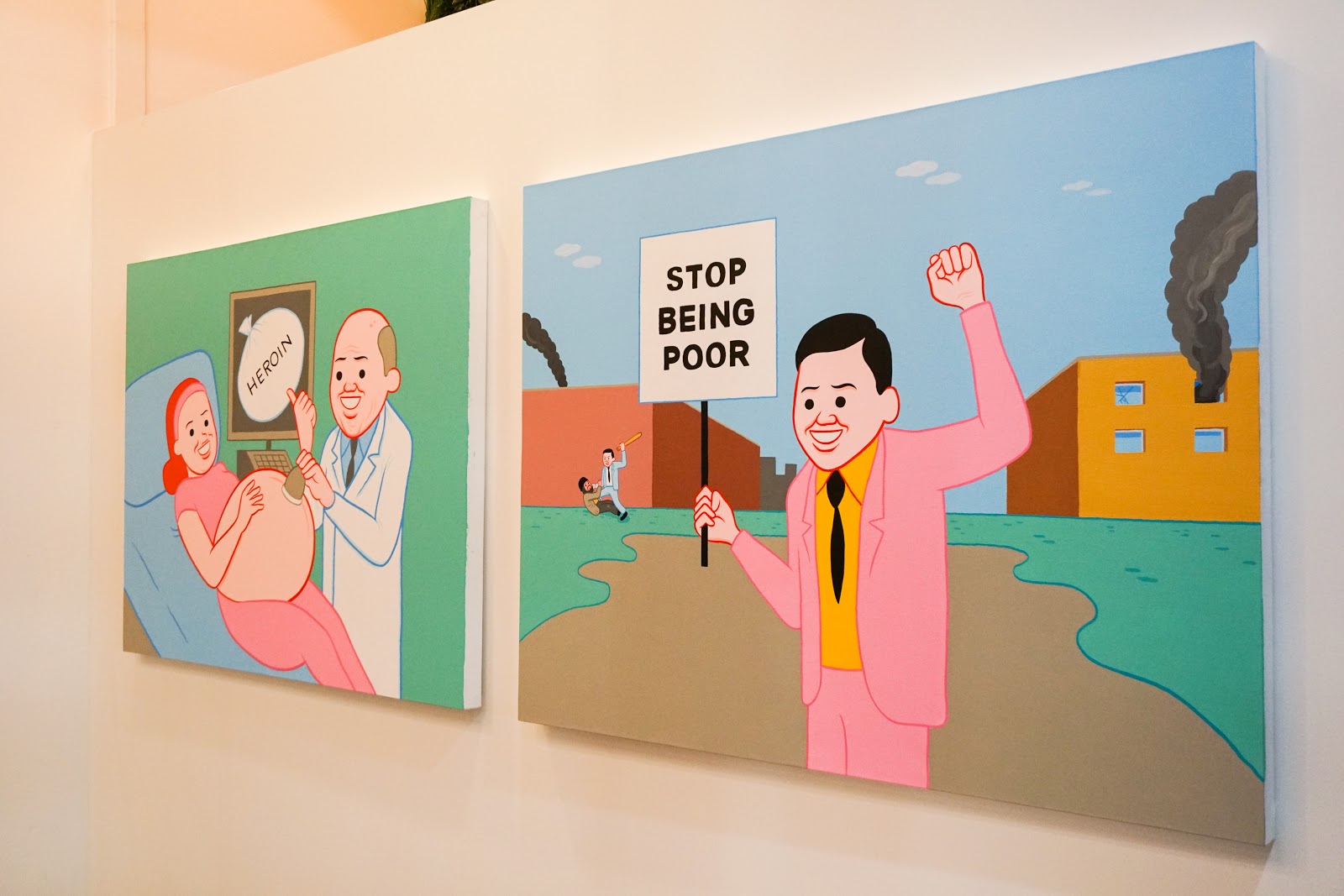
BANGKOK — Rather than help, a voyeur uses a camera app to put a floppy tongue and dog ears on a dying man’s face. Behind him, smoke belches from the green-and-yellow taxi that may have hit him.

That Bangkok’s unique ironies have entered the vocabulary of illustrator Joan Cornella is evident. Having spent months now in what’s become a favorite city, the Spanish cartoonist includes that gruesome scene among others from his dark imagination in an exhibition opening here Thursday.

It’s his second Bangkok show in as many years.

Known for tackling every taboo and human foible; from cannibalism, suicide and drug use to terrorism; the Barcelonian is back for his second solo exhibition under the name Happy Endings.

Read: ‘Happy Endings’ Take a Grim Turn When Joan Cornella Returns

Courtesy Joan Cornella

Having spent several months in Thailand since last year, the 37-year-old artist said he has learned to speak Thai nid noi while discovering his favorite capital city haunts for distracting him from work (though he won’t name them).

After preparing the show on the rooftop of the Woof Pack Building on Soi Sala Daeng 1, Cornella talked to Khaosod English about his work and life behind the canvas. The lightly edited conversation follows.

Chayanit Itthipongmaetee: How was your first solo exhibition in Bangkok last year?

Joan Cornella: It was really crowded. Pretty, pretty packed all the time. I didn’t expect that amount of people. I constantly have feedback from my audience. I have to say in Asia, the reception of my work is really good. [The audience] is more enthusiastic, more keen, comparing to those in Western countries. Most of my fan base is in Hong Kong. I tell that all the time. I don’t know why. I guess I’ll find out some day.

Chayanit: What have you learned about Bangkok?

corn6Cornella: Last year I was in Bangkok three months. First I came and worked for awhile, for like one month, then the exhibition started, and I decided to stay longer.

You know, compared to many other capital cities, I think Bangkok is a lot more relaxing. Usually when I travel, I go to capital cities … they’re pretty crowded and congested. Even when Bangkok can be like that, it’s also chill. It’s good.

For this year, I’ve been here one month. (So you can speak some Thai?) Sabai dee mai krub! Nid noi. I think I’m lazy. I speak English, and it’s convenient enough.

As far as I know, Thailand is a pretty unstable country in terms of politics. Most of my friends are from Catalonia, so the news I get is mostly from where I come from. But yeah, the more time I live here, the more things I know. Last year, I actually didn’t know about the coup d’etat, about Thailand having a dictator in charge. I didn’t know the situation was pretty unstable.

Thailand is usually known as a country where people go to the beach and have fun. In the beginning it was like that. And then I knew about the muslims in the south. I even knew about the ethnic group in the north; I hear that they are not considered Thais. I didn’t spend much time, but people start to tell you. I went up to Chiang Mai, they say it’s supposed to be related to the arts. In a historic way, I guess that’s true, as far as I saw. I think to know a place, to be aware of a place, you need time. For me, I don’t want to be a tourist. I prefer to spend more time there.

Chayanit: What about the exhibition, ‘Happy Endings’?

Cornella: I came up with this name with the help of [event organizer] Farm Group. I mean my works are somehow related to the happy endings from Hollywood, because the actors are always happy with their smiles and so on. For some people, it’s really positive. But some others, they just despite that.

cornella3I did like 40 new works made in Thailand, but it doesn’t mean all of them are directly related to Thailand. I prefer that my work has a meaning that can be understood wherever you go, but it’s true also that if you show something that is related to the place … it makes more sense. I think I could work on that more. It’s not just because people can have more fun – they can feel related to their lives or their experiences – but also because you try to do something related to the place, trying to understand how the place works. It’s like a political activism, you know. I prefer to do it gradually, not radically.



Chayanit: What have you seen in Bangkok that has influenced your work?

cornella2

Cornella: Maybe I try to find a connection between my work and what I see. I work mostly with fictions. I try to put a few ingredients from what I saw into my work, but not the opposite way. When I went to China, people told me there were many news that can be related to my work somehow, in a sense that people are getting more cynical. And you can find that in many aspects all around the planet. In Thailand, you have the same thing. Lots of people lost their sensitivities, their human side … they care less about politics and many other things. In Thailand you see specific things that you cannot find in any other places, but at the end it’s more or less the same almost everywhere. We have this resilience related to internet and so on, our lives are going faster and faster, we don’t care about our lives somehow. We just live without thinking what we’re doing is right or wrong.

Chayanit: Do you have to be careful when producing work?

Cornella: It depends on the moment. For some people, they just have this approach which is literal, sometimes they just don’t even know what irony is. There comes a problem, they say, “You’re being racist” or “You’re transphobic” or whatever shit they think about. And they decide that you shouldn’t talk about that. They censor you or they try to censor you.

I would say, now, I don’t care what people say or think, more or less. Sometimes, you get some feedback and that’s a pressure. One day I posted a comic strip related to suicide, and this guy happened to kill himself. I don’t remember his name. And people went like, “Oh what’s going on? You should wait.” “You should show respect.” I didn’t even know. And what if I knew? This is my voice here.

cornellahed2


cornella4cornshow

Happy Endings’ runs Thursday through Dec. 3 at Woof Pack in Soi Sala Daeng 1. Tickets are 200 baht and can be booked online. Woof Pack is open from 10am to 11pm daily. The gallery is a 10-minute walk from MRT Silom and Lumphini or BTS Sala Daeng.

Advertisement

Hanoi Announces Formula One Street Race Starting 2020

Mercedes driver Valtteri Bottas of Finland steers his car during the Malaysian Formula One Grand Prix at the Sepang International Circuit Sunday in Sepang, Malaysia. Photo: Vincent Thian / Associated Press

HANOI — Formula One and Hanoi officials say a street race in the Vietnamese capital will be added to the F1 calendar starting with the 2020 season.

In a statement Wednesday, F1 officials said the race is planned for a 5.565-kilometer street circuit. The race in Vietnam will join other stops in the Asia-Pacific region that include Japan, China, Singapore, and Australia.

The statement gave few details about the race, nor where it would fit on the calendar. It said Hanoi promoter Vingroup had signed a multi-year deal, but gave no specifics about the deal or the level of government support.

Formula One has 21 races listed on a tentative calendar for 2019.

The 2018 season has two races to go, in Sao Paulo and Abu Dhabi.

Advertisement

Facebook Blocks 115 Accounts Ahead of US Midterm Elections

Mark Zuckerberg speaks during a keynote address in 2008. Photo: Brian Solis / Flickr

Facebook said it blocked 115 accounts for suspected “coordinated inauthentic behavior” linked to foreign groups attempting to interfere in Tuesday’s U.S. midterm elections.

The social media company shut down 30 Facebook accounts and 85 Instagram accounts and is investigating them in more detail, it said in a blog post late Monday.

Facebook acted after being tipped off Sunday by U.S. law enforcement officials. Authorities notified the company about recently discovered online activity “they believe may be linked to foreign entities,” Facebook’s head of cybersecurity policy, Nathaniel Gleicher, wrote in the post.

U.S. tech companies have stepped up their work against disinformation campaigns, aiming to stymie online troublemakers’ efforts to divide voters and discredit democracy. Facebook’s purge is part of countermeasures to prevent abuses like those used by Russian groups two years ago to sway public opinion ahead of the 2016 U.S. presidential election.

The company based in Menlo Park, California, has been somewhat regularly disclosing such purges in recent months, most recently in October. More are likely going forward since, even as its systems get better at detecting and removing malicious accounts, the bad actors are sharpening their attacks, too.

Gleicher said Facebook will provide an update once it learns more, including whether the blocked accounts are linked to the Russia-based Internet Research Agency, or other foreign entities.

Almost all of the Facebook pages associated with the blocked accounts appeared to be in French or Russian. The Instagram accounts were mostly in English and were focused either on celebrities or political debate. No further details were given about the accounts or suspicious activity.

Also on Monday, Facebook acknowledged that it didn’t do enough to prevent its services from being used to incite violence and spread hate in Myanmar. Alex Warofka, a product policy manager, said in a blog post that Facebook “can and should do more” to protect human rights and ensure it isn’t used to foment division and spread offline violence in the country.

Last month, Facebook removed 82 pages, accounts and groups tied to Iran and aimed at stirring up strife in the U.S. and the U.K. It carried out an even broader sweep in August, removing 652 pages, groups and accounts linked to Russia and Iran.

Twitter, meanwhile, has said it has identified more than 4,600 accounts and 10 million tweets, mostly affiliated with the Internet Research Agency, which was linked to foreign meddling in U.S. elections, including the presidential vote of 2016. The agency, a Russian troll farm, has been indicted by U.S. Special Counsel Robert Mueller for its actions during the 2016 vote.

Facebook, Twitter and other companies have been fighting misinformation and election meddling on their services for the past two years. There are signs they’re making headway, although they’re still a very long way from winning the war.

Facebook, in particular, has reversed its stance of late 2016, when CEO Mark Zuckerberg dismissed as “pretty crazy” the notion that fake news on his service could have swayed the presidential election.

In July, for instance, the company said that its spending on security and content moderation, coupled with other business shifts, would hinder its growth and profitability. Investors expressed their displeasure by knocking $119 billion off Facebook’s market value.

One problem is that it’s not just agents from Russia and other nations who are intent on sharing misinformation and propaganda. There is plenty of homegrown fake news too, whether in the U.S. or elsewhere.

Still, Facebook is seeing some payoff, and not just with the accounts it has been able to find and take down. A recent research collaboration between New York University and Stanford found that user “interactions” with fake news stories on Facebook, which rose substantially in 2016 during the presidential campaign, fell significantly between the end of 2016 and July 2018. On Twitter, however, the sharing of such stories continued to rise over the past two years.

Story: Kelvin Chan, Barbara Ortutay

Advertisement

Hot News

LATEST NEWS

Bangkok
overcast clouds
27.6 ° C
27.6 °
27.6 °
71 %
4.6kmh
100 %
Thu
27 °
Fri
32 °
Sat
34 °
Sun
36 °
Mon
36 °