31.6 C
Bangkok
Friday, June 5, 2026
Home Blog Page 2101

2 Las Vegas Security Guards Fatally Shot in Hotel-Casino

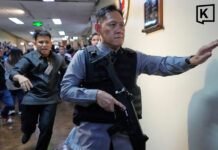
Metropolitan Police Department officers were called sometime after 6:30 a.m. Saturday, Dec. 30, 2017, to investigate reports of a shooting at Arizona Charlie's casino-hotel in Las Vegas. Police in Las Vegas say two security guards are dead after being shot in a room at a hotel-casino. Photo: Rio Lacanlale / AP

LAS VEGAS — Two Las Vegas security guards were fatally shot Saturday while investigating a disturbance in a room at a hotel-casino and the suspected shooter is facing critical injuries after turning the gun on himself, police said.

The gunman’s motive wasn’t known but investigators believe it was an isolated incident.

“I want you to know right now that this has nothing to do with terrorism,” Capt. Robert Plummer told reporters outside the scene of the shooting.

The shooting happened before 7 a.m. at Arizona Charlie’s Decatur, which is located west of the Las Vegas Strip. According to police, the suspect, Christopher Olague, ran from the hotel-casino after the shooting and into a nearby neighborhood where he tried to enter two homes but the residents were able to keep him out.

Police found him in a laundry room accessible through a garage of the second home after he appeared to have shot himself in the head, Lt. Dan McGrath said.

According to McGrath, Olague tried to enter the first home with the intention of stealing a car and also tried to take a vehicle on the street.

Police described Olague’s condition as a “non-survivable wound.”

The victims’ identities were not released. Police said the uniformed security guards were a man and a woman in their 40s and that one was armed. Their identities and their causes of death will be released by Clark County Coroner’s Office.

McGrath said the circumstances of what happened in the hotel room still unclear.

The hotel-casino’s office did not immediately return a message seeking comment.

The shooting comes a day before law enforcement officers expect tens of thousands of New Year’s Eve revelers on the Strip and three months after the city dealt with the deadliest mass shooting in modern U.S. history.

Officials have been trying to reassure residents and visitors that the city is safe, especially in the wake of the Oct. 1 shooting. A high-stakes gambler killed 58 people and injured hundreds more after he shattered the windows of his suite on the 32nd floor of the Mandalay Bay hotel-casino on the Strip and unleashed gunfire on a country music festival below. He then killed himself.

Advertisement

In Strife-Torn Myanmar, Love Trumps Hate for Rare Couple

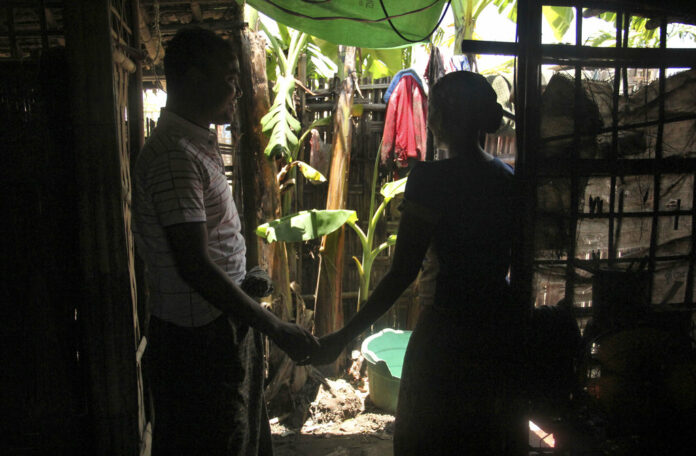
In this July 16, 2017, photo, Setara, right, holds her husband Mohammad's hand in Thetkabyin village camp, near Sittwe, Myanmar. Photo: Esther Htusan / Associated Press

THETKABYIN, Myanmar — In her dreams, Setara walks hand in hand with her Muslim husband through the streets of the seaside Myanmar town they grew up in. They visit old friends, share a meal with family, dip their toes into the warm surf of the Bay of Bengal.

But in the hate-filled reality of the world they live in, Setara can only do these things alone — when she takes off her Islamic veil and crosses through a pair of checkpoints into the predominantly Buddhist state capital, where her government will not allow the love of her life to set foot.

That’s because Setara’s husband is an ethnic Rohingya Muslim, a group the United Nations has called one of the most persecuted on the planet. Setara, meanwhile, was born a Buddhist and part of the ethnic Rakhine, who despise the Rohingya and see them as foreign invaders from Bangladesh.

Marriage between the two communities is extraordinarily rare. It’s also risky in a nation where security forces have driven more than 730,000 Rohingya into exile since 2016, carried out large-scale massacres and burned hundreds of villages in a campaign the U.N. and human rights groups have described as “ethnic cleansing.”

In Sittwe, Setara tells no one she is married to a Rohingya. Because “if they knew, they would kill me right away. So I’m always careful.”

The 24-year-old’s fears are not exaggerated. Even Rohingya who have ventured into Sittwe on rare trips escorted by police in recent months have been attacked by mobs and killed. Hard-line Buddhists regularly march through the city’s crumbling streets, past ruined mosques that have been closed since June 2012, when the Rakhine burned most Rohingya homes and drove more than 120,000 into camps for the displaced.

Setara, then a widow, met her husband, Mohammad, about eight months later at a market on the edge of a Rohingya village where she had come to sell vegetables. Rakhine traders, who can travel freely, regularly sell goods to Rohingya at marked-up prices.

They exchanged phone numbers and she began visiting him at a pharmacy he ran nearby. Mohammad, 32, bought her small gifts, teased her to make her laugh and took her for rides on his motorbike. He was amazed to meet a Rakhine woman who didn’t treat a Rohingya any differently than her own. He told her he loved her.

Setara felt the same way. She thought he was the kindest man she had ever known.

But when she told her family — after much reluctance — that she was dating a Rohingya man, they became enraged. Her brother beat her severely. They told her she could not go back. Then, her family kicked her out.

The move pushed her closer to Mohammad. In late 2013, she converted to Islam and they married in a small Islamic ceremony held before local religious leaders. No one from Setara’s family attended.

In the years since, Setara has reconciled with her three sisters. But she has never been able to return home. Her parents passed away when she was young, and the brother who helped raise them all still refuses to speak to her. Residents of her old neighborhood have also made clear she is no longer welcome; they call her a “Kalar’s wife.” Kalar is a derogatory word for Muslims that is frequently used in Myanmar.

Mohammad characterizes their relationship in much the same way his wife does. “She sees me as a human being and I see her as a human being, and it’s that simple,” he said, when asked how they had overcome the huge societal obstacles to marry.

Mohammad is a quiet man with a calm manner; Setara is more outspoken. They are a couple clearly in love, glancing at each other and smiling as they talk. The AP is identifying them by their first names only for their protection.

They live in a Rohingya village adjacent to a network of Muslim displaced camps, with Setara’s 2-year-old niece and her 9-year-old daughter from her first marriage. Setara says the Rohingya have welcomed her warmly, as one of their own. But she misses her old friends and her old life.

While Mohammad, like all Rohingya, is not permitted by the government to travel, Setara makes regular trips to Sittwe, about half an hour away, to buy supplies for the small pharmacy and shop they run beside their home.

Before going, though, she smears a pale cosmetic paste on her cheeks called “thanaka,” which is commonly used by Buddhists in Myanmar. She takes off her veil and puts on a blouse. And she never forgets to bring her national identification card, which includes a critical line indicating she is Buddhist. Without it, she could never cross the checkpoints — one manned by police, the other by soldiers — to town.

The contrast between the two worlds is startling. The Rohingya side is dry and dusty, devoid of trees and filled with despair, with little to do. The Buddhist side is lush, with schools and a university, paved roads, a karaoke bar and restaurants that serve wine by the sea.

In Sittwe’s main market, Setara visits friends and sometimes her sisters. But she also overhears Rakhine gossiping about the latest news, and cursing the Rohingya.

Sometimes she goes to the beach, where teens hang out at seaside cafes on plastic chairs, and watches the sun go down. But when she thinks about her husband — the fact that he cannot be there — her thoughts turn dark, and she wonders “if our lives will just end like this.”

“I always wish I could go out with my husband and go to the fun places in town … especially when I see other couples going around,” Setara said. “I just want to cry sometimes.”

Mohammad imagines the same, impossible trips. But he also worries each time she goes. “I worry something might happen, that someone might find out she’s a Muslim, that she’s married to me,” he said.

Both said they want children of their own because they love each other. But they know it would not be easy for a child, who would be half Rohingya and not recognized as a Burmese citizen.

The marriage has given Setara a profound insight into life in the camps for the Rohingya displaced.

“It’s just like hell,” she said. “They have no hope. They have no medical treatment. People are more and more scared.”

Since Rohingya insurgents staged dozens of attacks in the northern half of Rakhine state that triggered a major backlash by security forces in late August, life in the south, where Setara and her husband live, has stayed calm but only gotten harder.

International aid for displaced camps has been held up by authorities, and humanitarian workers have been forced to scale back visits. Hussein said the government has also stopped Rohingya from fishing, a critical source of income, until they accept “national verification cards” which identify them as “Bengalis.” Many have resisted because they insist on being identified as Rohingya, a term the government does not recognize.

In her despair, Setara sometimes tells her husband she is going to leave. When he begs her to “stop saying that,” she tells him she doesn’t mean it.

“It doesn’t mean that I don’t love him. I just don’t like the way we have to live here,” she said. “I keep telling myself every day that I need to be strong …. but sometimes I just want to fly away.”

Still, she says, that is something she will never do. “The future for the Rohingya is bad,” she said. “But I will never leave … it is my destiny to be here, to be with my husband.”

Story: Todd Pitman, Esther Htusan

Advertisement

Extreme Cold to Test New York New Year’s Revelers

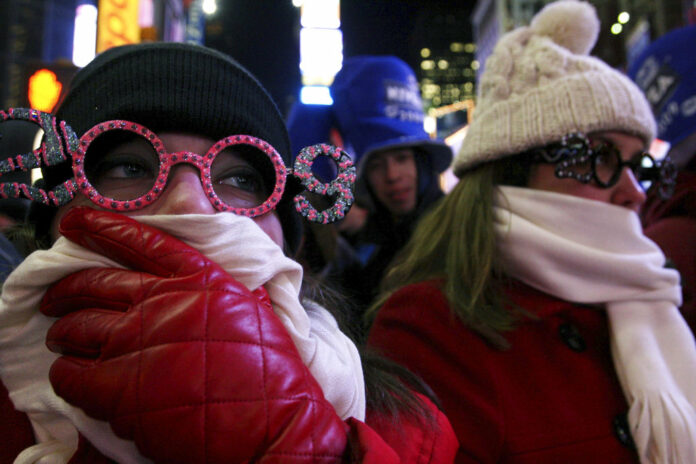
Allison Smith, at left, tries to keep warm as she and others take part in the New Year's Eve festivities in 2008 om New York's Times Square. Photo: Tina Fineberg / Associated Press

NEW YORK — Dress in layers, lay off the booze and bring some hand warmers.

Those are some of the tips offered for the huge crowd of revelers expected in Times Square for what could be one of the coldest New Year’s Eve ball drops on record. Brutal weather has iced plans for scores of events in the Northeast from New Year’s Eve through New Year’s Day, but not in New York City, where people will start gathering in Times Square up to nine hours before the famous ball drop.

“Hundreds of thousands have withstood very cold weather over the years for a once-in-a-lifetime experience, and we expect this year to be no different,” said Tim Tompkins, president of the Times Square Alliance which puts on the event.

The coldest New Year’s Eve in Times Square came in 1917, when it was 1 degree at midnight. This year, the forecast is for 11 degrees with a wind chill around zero, which would tie for second with 1962.

City and state health officials are advising people to cover all exposed skin, and wear a hat, scarf and gloves. Drinking alcohol is discouraged because it causes the body to lose heat faster.

Extra New York Fire Department personnel are going to be on hand to provide medical support and a National Weather Service meteorologist will be on site with the city’s emergency management officials to monitor weather conditions.

In other areas gripped by the cold, some events are being canceled or reconsidered. The annual Lobster Dip at Old Orchard Beach in Maine has been rescheduled for the first time in 30 years.

Organizers of the Penguin Plunge in Narragansett, Rhode Island, say it’s still on for New Year’s Day but advised the thousands of expected participants to “use their good judgment” and avoid taking the plunge if they have a medical condition or have been sick.

With temperatures only expected to reach 9 degrees in Springfield, Illinois, on Sunday, organizers of its annual New Year’s Eve fireworks display have decided to cancel this year’s show. Officials say they plan to reschedule it for a warmer date.

In Ohio where some communities saw digit temperatures on Saturday, fireworks have been canceled and events moved inside in Miami Township and the New Year’s Eve ball drop and other activities in New Carlisle have been reduced to an hour.

Despite the drawn-out deep freeze across Pennsylvania, officials said Saturday the annual New Year’s Day Mummers Parade will still be held. The event features thousands of performers in colorful costumes adorned with sequins and feathers strutting through Philadelphia’s streets.

The village of Orchard Park near Buffalo, New York, has canceled its New Year’s Eve event because subzero temperatures have been forecast. “With frigid weather, the chance of a water line break is higher, and I’d rather have my public works crew fixing it than hoisting a ball up to drop,” said Mayor Jo Ann Litwin Clinton.

At Long Lake in the heart of New York state’s Adirondack Park, intrepid souls in swimsuits or funny costumes will jump into frigid water through a hole cut by the fire department for the fifth annual Polar Plunge, a fundraiser for High Peaks Hospice. With temperatures expected to top out around 13 degrees, the rescue squad will be checking participants’ blood pressure and buses will provide warm shelter, said Alexandra Roalsvig, the town’s director of recreation and tourism.

“People get excited about the cold here; we grew up with it,” Roalsvig said. “We’re counting on a good cold winter and snow because we’re so reliant on snowmobiling for the winter economy.”

Story: Mary Esch

Advertisement

Voranai: Do You Know Who My Daddy Is?

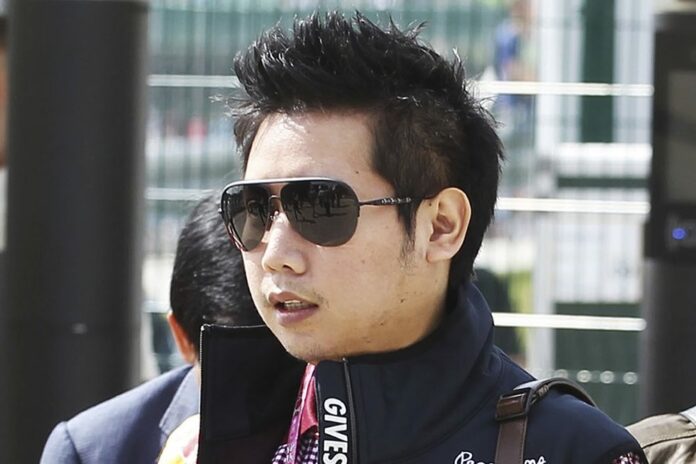
Vorayuth 'Boss' Yoovidhya, who has evaded justice for years in the death of a Thonglor police officer, spotted in 2013 at the British Formula 1 Grand Prix in Silverstone, England, in a photo provided by XPB Images. Photo: XPB Images / AP

Voranai VanijakaIn the United States, when a citizen comes into conflict with a police officer, the citizen would likely throw out this phrase: “I know my rights!”

In Thailand, a citizen would instead make an implied threat with a simple rhetorical question: “Do you know who my daddy is?” or something else that would imply he or she has connections in high places.

While Americans have no love for the police officer, they still, in general, have some faith in the legal system, and more importantly in the constitution that clearly spells out their rights as citizens. Similarly, the Thai citizen has no love for the police officer, but he also has absolutely no faith in the legal system and doesn’t even know which version of over-complicated and ever-changing constitutions are in effect right now. So instead, he relies on personal relationships. This cultural difference didn’t just magically happen. A society is the sum of its history, and divergent pasts mean different present realities.

Western culture looks to Athen’s democracy as the starting point of its democratic ideals. It looks to Rome’s legal system for the foundation for its social structures. Emerging from a thousand years of the so-called Dark Ages, feudal Western society evolved through a Renaissance that brought about liberalization in the arts, culture and science. The Age of Discovery opened doors to the world. The Age of Reason gave logic and rationality. The Age of Enlightenment argued for humanism and the principles of human rights. The Industrial Revolution introduced modern technology, the capitalist market system and also the middle class.

Meanwhile, during those times, Western colonialists raped, pillaged, plundered and committed genocide across the globe to reap the world’s wealth and resources to build modern Western civilization. It’s good to win; it sucks to lose, that’s just the fact of life – and there’s nothing “politically correct” about it. So here we are today.

Modern democracy is based on the principles of human rights founded through reason, liberalism and the notion that all men are created equal. Hence we have the ideals of justice, liberty and equality. For there to be justice, there must be a legal system that is objective, balanced and transparent. For there to be liberty, there must be freedom of speech and expression, usually coupled with freedom from authoritarianism and tyranny. For there to be equality, all men and women must be treated equally under the law.

(Note: Ideals and reality never match perfectly; therefore, justice, liberty and equality struggle even in Western democracies plagued by social upheaval.)

Obviously modern Thai society does not identify with Greek democracy or Roman laws. With a rote and ineffective education system, we barely even study them. Thailand went straight from feudalism and into democracy, bypassing periods of liberalization, reason and enlightenment that are the logical steps to arrive at humanistic democratic ideals.

We live all our lives as the dust under feet in a Hindu-Buddhist religio-political feudalistic system, as it has been for some 800 years since the time of the Sukhotai Era. Then one day in 1932, we woke up and, “Voila, democracy!” We have since spent the ensuing 80-plus years bouncing like a ping-pong ball between quasi-democracy and military dictatorship. All the while, we are still considered mere dust under feet.

It stands to reason then that we are quite confused. And when we feel uncertain and threatened, it is human nature to reach for safety. That safety isn’t found in a just legal system or constitution that guarantees our rights as citizens of the kingdom of Thailand. That safety is found in a feudal network of connections headed by some powerful patron who can help us out by pulling strings, hence: “Do you know who my daddy is?”

The entire system is based on inequality and arbitrary use of power; hence, corruption.

A court’s verdict cannot be questioned, summary execution by police is common, and suspects are assumed guilty before proven innocent. Arbitrary detention is the norm, laws such as lese majeste are used as political tools to terrorize citizens and the opposition. These are the circumstances even under so-called democratic rule, nevermind the junta.

Democracy isn’t just about having elections. It is a belief system that must be culturally ingrained and instilled in the hearts and minds of the people. Democracy isn’t just a word that one preaches, it involves the principles of human rights that one must live by.

The way forward for Thailand is to replace feudal values with ideals of justice, liberty and equality under the law. For the people to put trust and faith in these values.

But of course, that’s not the present reality of who we are and how we live as a people. The past dictates the present, unfortunately. But we can use the present to dictate the future, which can either be fortunate or unfortunate. that’s entirely up to us.

Thailand doesn’t have the benefit of centuries of historical and cultural evolution that brought us to democratic and humanist ideals. Re-engineering a culture, from how we think to what we believe, is no easy task. But that doesn’t mean it can’t be done – and it can be done while preserving respect for tradition.

Advertisement

Craft Beer, BNK48 and Bitcoin: Top Thai Trends of 2017

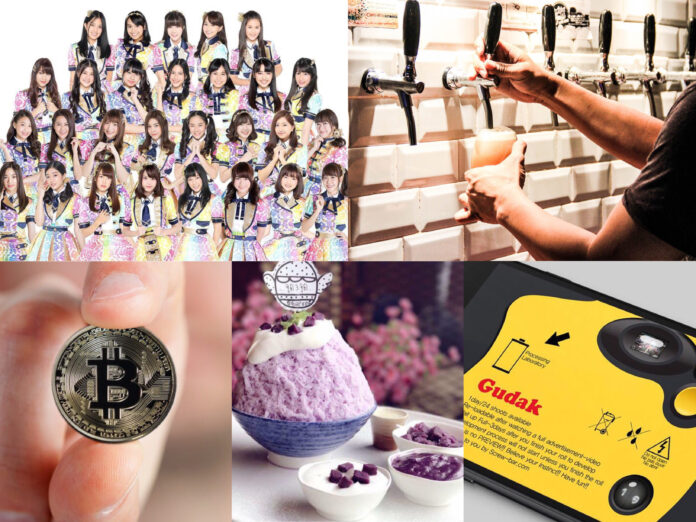
Could so much have happened in one year? Tonight we bid farewell to 2017’s curiosities and crazes to cleanse our palates for those of next year. But first a look back at the craft beer, purple edibles, cryptocurrency and Thai idol girls that seized our imaginations.

Craft Beer Bars

milkcraftbeerphoto

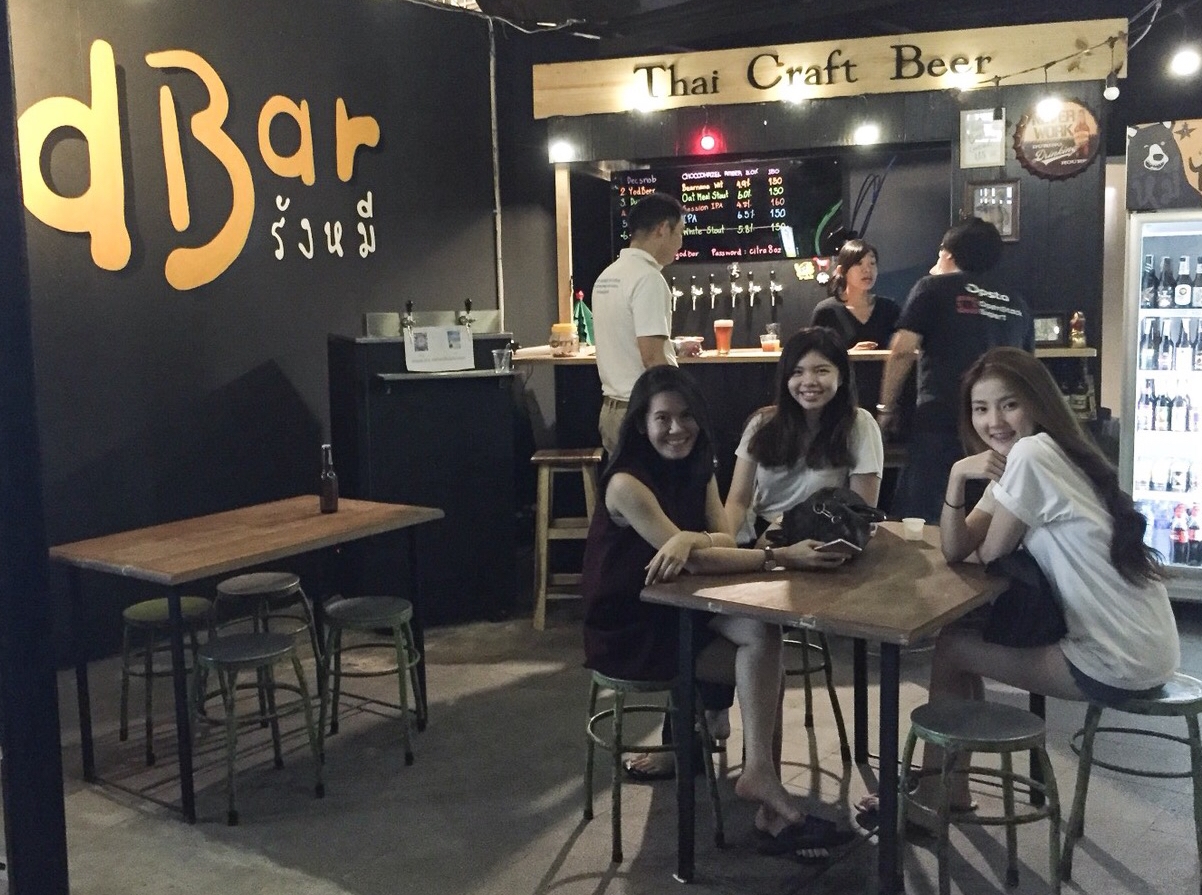
Many people say they’d love something other than Chang, Singha and Leo, even if it’s more expensive. While craft beer became a fad several years ago, Thai-made brew really hit its stride this year. A lot of my friends this year for the first time asked me what craft beer is, where they could find it and which one I would recommend. I didn’t mind introducing them to small bars near MRT and BTS stations so they could try easy-to-drink, fruity beer.

Higher demand resulted in more supply. Bangkokians have seen craft beer bars pop up here and there around the city from Bad Taste Cafe, Dok Kaew House Bar, Yolo, Feat Lab and Alt+Tap. The number continues to rise.

Purple Food

AKART
Photo: Akart Bistro & Bar / Facebook

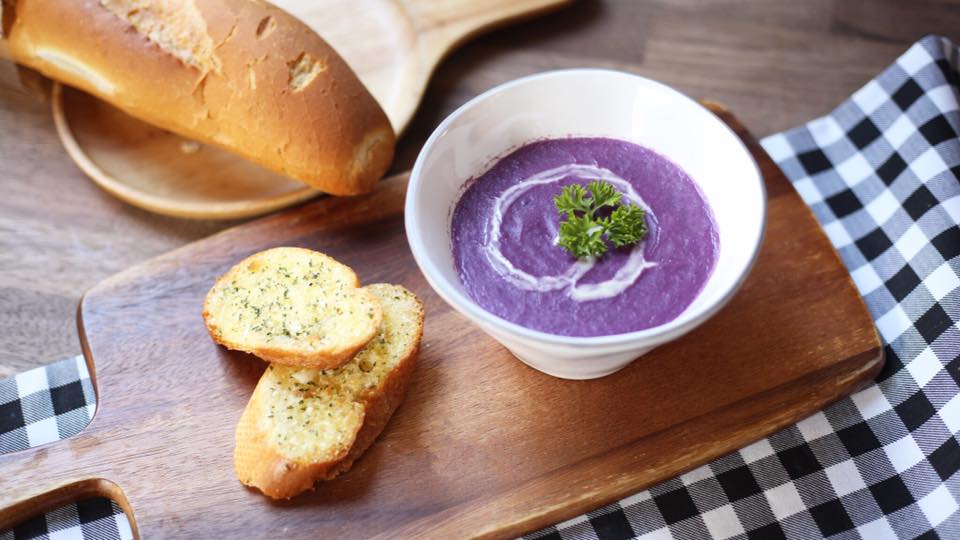
Whether it’s ice-cream, cheesecake, tea, or bua loy rice balls, people this year would eat it all, so long as it came in purple. While other fad foods included laxative rose tea, laughing juice and butterfly pea flower drinks, I had to give the purple sweet potato, or man muang, the crown.

Purple fare became big competition. Purple Sweet Potato Lattes crept onto the menus of many cafes while people queued at Lawson or Family Mart convenience stores for cones of purple soft serve.

Not limited to dessert, the purple craze showed up in cuisine with unlikely combos such as striped snakehead fish with purple sweet potato rice and massaman chicken curry with man muangto crispy deep-fried duck with Panang curry and purple sweet potato.

Gudak Cam

FON e1514364422985
Photo: Fon Sananthachat Thanapatpisal (Fanclub) / Facebook

What’s this? Yet another where-to-eat app (gu dak being “I eat” in Thai)?

Think again. Gudak, a play on Kodak and Korean word gudagdali (outdated) is a Korean app built around the nostalgic concept of removing all the convenience of the digital age.

The app lets users shoot 24 frames per virtual roll of “film” per hour without any preview. Then it makes them wait a full three days to “develop” the photos, like in the long-long ago time of dropping rolls off at photo shops.

Designed for the hipster niche market, it quickly developed (hah!) mass appeal with Instagrammers and selfie enthusiasts. Since July you may have seen #Gudak running wild on social media. Through a tiny viewfinder, Gudak Cam users love the app for images with that vintage grainy look.

gudak.


Bitcoin

bitcoinhed2

Cryptocurrency fever finally arrived in Thailand. From time to time I would see my friends swipe their phones to check on their investments, but it took me awhile to get educated on what exactly Bitcoin is (thank you, internet FAQs and simple articles!). Then my parents started mentioning Bitcoin, and I knew it had totally become a thing.

Read: Bitcoin’s Going Nucking Futs, Here’s How to Buy From Thailand

BNK48

BNK48 header e1487169469505
Girl group BNK48. Photo: BNK48 / Facebook

Though I hate to include this, I must accept that it became a thing thanks to the legions of Thai otaku. BNK48 is a 28-member group of young girls inspired by Japanese J-pop ensemble AKB48. In August they released their single “Koisuru Fortune Cookie” which climbed to the top of the music charts, followed by video clips of the song’s dance cover.

Apart from hardcore supporters who follow the group to “handshake events” and performances, BNK48 drew the notice of music fans and rockers at Cat Expo music festival last month when they were among nearly 100 groups of artists to perform on stage.

But their success was also met with criticism. Some fans of the Japanese original weren’t happy with the substandard products and management of this Thai knock-off.

Advertisement

Update: Police Seek Trigger-Happy Sek Loso on Gun Charge

Image: SEK LOSO / Facebook

Update: Sek Loso was released after he was granted 150,000 baht bail Wednesday afternoon

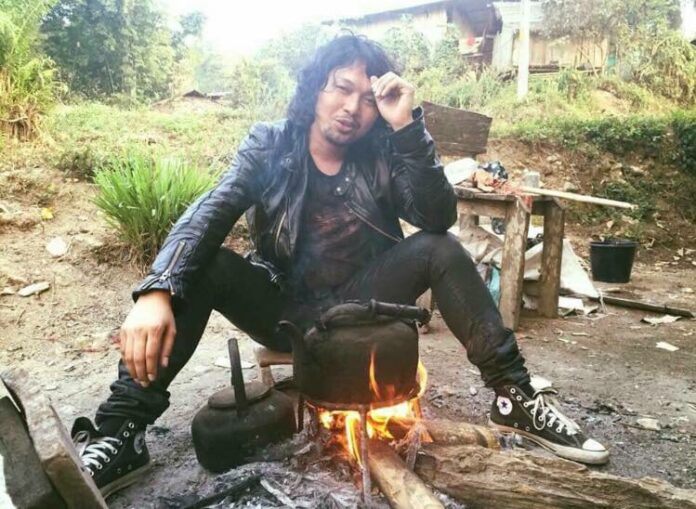
NAKHON SI THAMMARAT — Police were seeking the arrest Saturday of rocker Sek Loso after he fired a handgun into the air at a temple.

Sek Loso, whose real name is Seksan Sukpimai, posted a live video of himself praying to Buddha figures Thursday at a temple in Nakhon Si Thammarat province at which point he shot nine rounds into the night sky. Police say they have charged him with a firearms violation.

“We are applying for an arrest warrant,” provincial police commander Wanchai Ekpornpitch said. “The warrant should be out today. There shouldn’t be any problem.”

In the video posted on his official Facebook account at about 1am Thursday, the 43-year-old rock star is seen walking around the temple and praying to several Buddha statues. He is also seen carrying a handgun.

After he lit incense sticks at the last altar, he walked to an open area in the temple and, without a word, fired nine shots into the air and one into the ground. He then told the cameraman, “Come on, let’s go home.” The video ended soon after.

Some comments rightly predicted Sek would face a backlash for the video.

“I’m waiting to see drama about you tomorrow,” user Peerasak Rinsan said on Facebook.

Maj. Gen. Wanchai said Sek has been charged with discharging firearm in a residential area. Police will also check whether the gun was properly registered, and whether he had a permit to carry it.

Neither the musician nor his managers have contacted police so far, Wanchai added.

In response to the criticism online, Sek wrote on Friday that the media only publishes news of the bad things he has done and ignored the good.

“When I posted about me helping flood [victims], orphans, disabled kids, elderly people at Bang Khae, or when I played in concerts to help soldiers, police in three southern provinces and elephants, when I donated to help dogs and Red Cross, when I gave things to hill tribe children etc, what has no one written news about them?” Sek vented out.

Known for his erratic behavior and frequent scandals, Sek often lived up to his bad boy image with run-ins with law enforcement.

In 2011, Sek was ordered by police to seek therapy after images of him taking drugs emerged. In 2016, a court sentenced him to a year in jail for beating up his sister-in-law and her friend. The jail term was suspended.

Advertisement

Finding New Year’s Hope in Juntaland

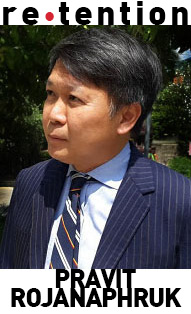
Re•tention: Pravit RojanaphrukWhy does hope often accompany the New Year?

Is it because of the chance of a clean slate? More often than not, a clean slate is not possible in life or society, and we carry our individual or collective pasts with us.

Some say it’s the festive holiday season that imbues us with hope. This may actually be a result of the excessive drinking and merriment releasing undue quantities of endorphin.

No matter what you may think, hope is what keeps us alive, or at least, free of depression.

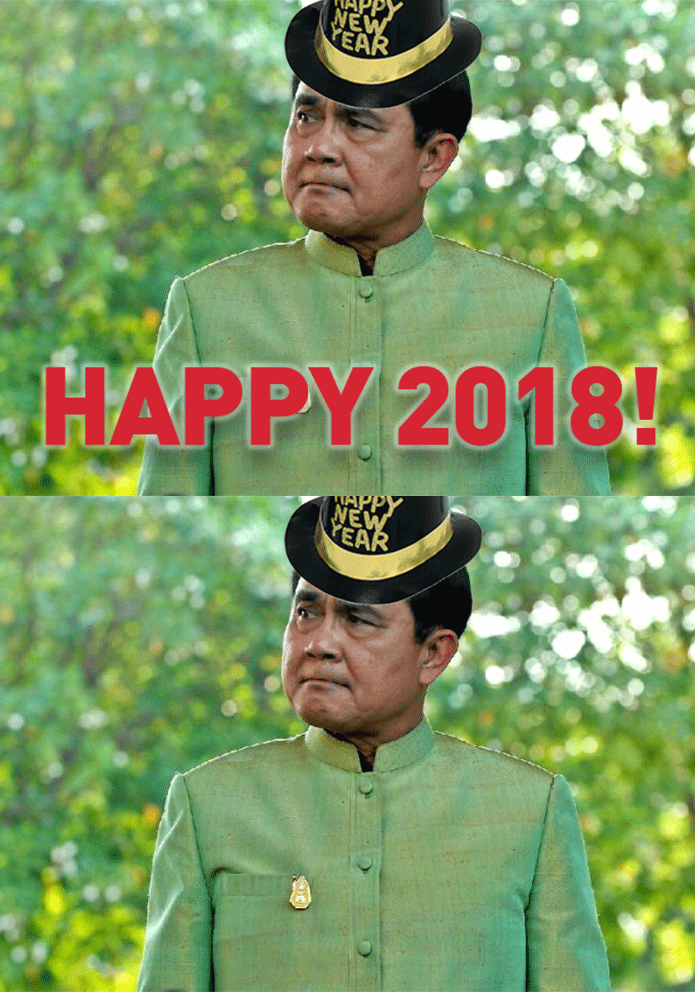
Some may say there’s not much to hope for when it comes to Thai politics and its prospects. We are moving closer toward year four under a military dictatorship, and it’s far from conclusive as to how much longer Prayuth and his armed men in uniforms will occupy the government.

Even if Prayuth were to keep his promise this time about holding elections next year, the Upper House will still be virtually all handpicked by the dictator.

So what’s there to be hopeful, New Year or not? Isn’t the battle, if not the war, lost?

In the name of hope, I would like to draw our dear readers’ attentions to the following points:

First, the fact that three and a half years on, the military junta must maintain its ban on political gatherings and activities means it has not won the hearts and minds of a good number of Thai citizens.

This whole appearance of normalcy and acceptance of military rule is largely based on repression and threats of prosecution, if not persecution, of its opponents.

Lately, members of the Democrat Party, long-perceived by its critics as cannon fodder for the 2014 coup, are finally waking up to the reality that the military regime is trying to undermine its political base. This is welcome news and a source for hope.

Second, is for us to recognize that the current dismal state of Thai politics and society is only a short span of time, considering the evolution of society will outlast all of us.

Many cathedrals took centuries to build. The construction of Germany’s superlative Gothic Cologne Cathedral for example, commenced in 1248. By 1473 – two centuries later – it was halted and left unfinished. Construction only resumed in the 19th century and was completed 1880.

Thailand’s democratic development has halted, stagnated and even been on retreat several times over the past eight and a half decades since the revolt which ended absolute monarchy in 1932.

We must have faith that the future can be brighter, not with or without Prayuth, but just without dictator Prayuth. Our task as Thai citizens is to ensure that Thailand doesn’t sink deeper into the dictatorial abyss.

I don’t really know if I, or we, shall ever see a full-fledged democracy in Thailand as many have become more accustomed to living in Juntaland. That doesn’t mean we should just throw in the towel and reduce ourselves to subjects of one erratic dictator after another. (Prayuth promised Tuesday to be less grumpy next year, btw.)

I hope that together we can hold our ground and defend the little freedom we have left. By May, the junta will have usurped the sovereign power of the people for a full four years, a full term an elected government could ever hope to achieve before mandatory fresh elections would have to be organized.

To say the junta has overstayed its welcome is inaccurate, for many never welcomed them from the start in 2014.

I still have hope that together we can revive and strengthen our nascent democratic culture and norms.

In the worst-case scenario, it is still possible that even without a properly functioning democracy – free of the meddling of rogue generals, money politics, megalomaniac politicians – whatever effort we put into constructing democracy will be appreciated and built on by those who follow.

As we embark upon yet another new year, let us be realistic while maintaining our optimism.

May the new year be better not just for Thailand but the world! May the world be freed of repression and war. May we leave hatred and bigotry behind. May we regard those who offend or repress us not as enemies but as fellow human beings that need to be convinced otherwise.

Advertisement

Yingluck Spotted in London: Report

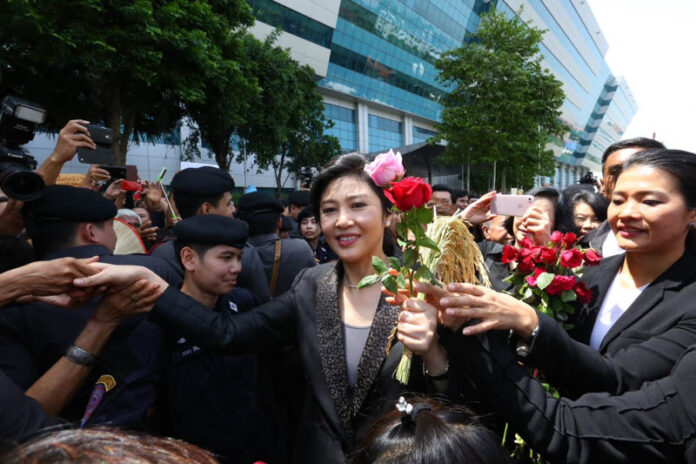
Yingluck Shinawatra greets her supporters in front of the court on Aug. 1.

BANGKOK — Neither police nor Pheu Thai Party would confirm that fugitive former prime minister Yingluck Shinawatra was in London despite a sighting reported by a news agency.

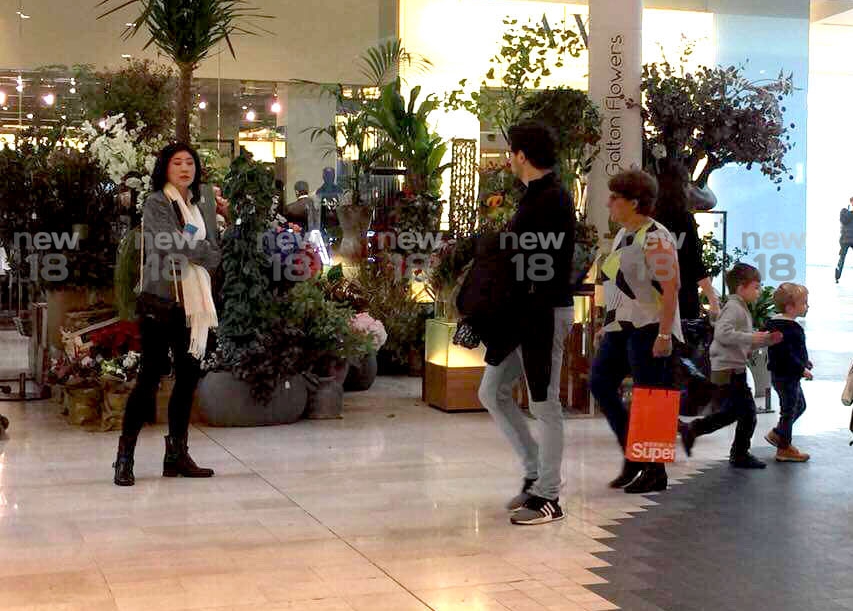
A Friday report by New TV said Yingluck, who’s on the run from a corruption conviction, was seen at a Westfield shopping mall in western London. The report included two photographs as evidence, but the police commander in charge of bringing the former leader to justice said he couldn’t verify their authenticity.

“We cannot make any guess. It’s hard to analyze something from photos,” deputy police commissioner Srivara Ransibrahmanakul told reporters Friday. “Photos can be doctored. Don’t analyze them without evidence.”

Srivara also said there’s yet no confirmation from the Interpol or the United Kingdom government that Yingluck is in London.

“We asked [Interpol] just today, and they said they couldn’t confirm. The British government also couldn’t confirm,” the police general said.

ct 20171229103916863
Image: New TV

In its report, New TV published two photographs said to show Yingluck at Westfield London, a mall in Shepherd’s Bush on Tuesday.

Messages to the TV station were not answered as of press time. A message at a telephone number for the said they were closed today.

Pheu Thai Party executive Phongthep Thepkanjana denied knowledge of Yingluck’s whereabouts.

“I really have no information about this,” Phongthep said Saturday. “I really don’t know.”

Yingluck has remained silent since fleeing the country on the eve of the Aug. 25 verdict being delivered in her trial for official malfeasance. She was convicted in absentia and sentenced to five years in prison on charges her supporters say were politically motivated.

Rumors have placed her in London since October, where she was said to be seeking asylum.

Advertisement

In Strife-Torn Myanmar, Love Trumps Hate for a Rare Couple

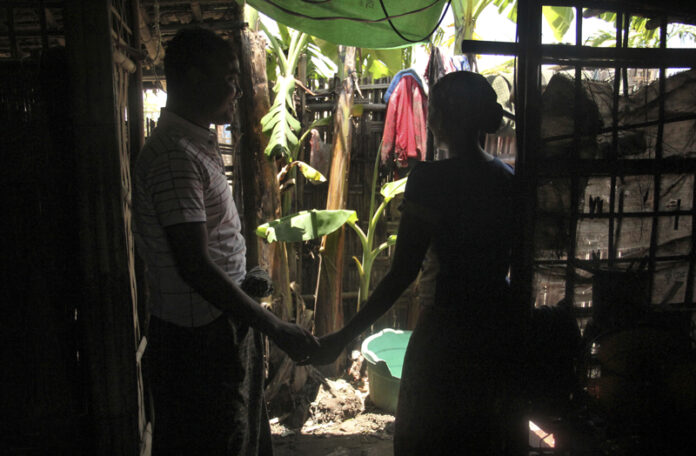
In this July 16, 2017, photo, Setara, right, holds her husband Mohammad's hand in Thetkabyin village camp, near Sittwe, Myanmar. The love story between Setara and Mohammad is extraordinarily rare in Myanmar. She was born an ethnic Rakhine Buddhist, and he a Rohingya Muslim. The Rakhine Buddhists despise the Rohingya Muslim minority in their country, and the United Nations has called the Rohingya one of the most persecuted people in the world. In Sittwe, the predominantly Buddhist state capital of the region, Setara tells nobody that she is married to a Rohingya. Photo: Esther Htusan / AP
THETKABYIN, Myanmar — In her dreams, Setara walks hand in hand with her Muslim husband through the streets of the seaside Myanmar town they grew up in. They visit old friends, share a meal with family, dip their toes into the warm surf of the Bay of Bengal.

But in the hate-filled reality of the world they live in, Setara can only do these things alone — when she takes off her Islamic veil and crosses through a pair of checkpoints into the predominantly Buddhist state capital, where her government will not allow the love of her life to set foot.

That’s because Setara’s husband is an ethnic Rohingya Muslim, a group the United Nations has called one of the most persecuted on the planet. Setara, meanwhile, was born a Buddhist and part of the ethnic Rakhine, who despise the Rohingya and see them as foreign invaders from Bangladesh.

Marriage between the two communities is extraordinarily rare. It’s also risky in a nation where security forces have driven more than 730,000 Rohingya into exile since 2016, carried out large-scale massacres and burned hundreds of villages in a campaign the U.N. and human rights groups have described as “ethnic cleansing.”

In Sittwe, Setara tells no one she is married to a Rohingya. Because “if they knew, they would kill me right away. So I’m always careful.”

The 24-year-old’s fears are not exaggerated. Even Rohingya who have ventured into Sittwe on rare trips escorted by police in recent months have been attacked by mobs and killed. Hard-line Buddhists regularly march through the city’s crumbling streets, past ruined mosques that have been closed since June 2012, when the Rakhine burned most Rohingya homes and drove more than 120,000 into camps for the displaced.

Setara, then a widow, met her husband, Mohammad, about eight months later at a market on the edge of a Rohingya village where she had come to sell vegetables. Rakhine traders, who can travel freely, regularly sell goods to Rohingya at marked-up prices.

They exchanged phone numbers and she began visiting him at a pharmacy he ran nearby. Mohammad, 32, bought her small gifts, teased her to make her laugh and took her for rides on his motorbike. He was amazed to meet a Rakhine woman who didn’t treat a Rohingya any differently than her own. He told her he loved her.

Setara felt the same way. She thought he was the kindest man she had ever known.

But when she told her family — after much reluctance — that she was dating a Rohingya man, they became enraged. Her brother beat her severely. They told her she could not go back. Then, her family kicked her out.

The move pushed her closer to Mohammad. In late 2013, she converted to Islam and they married in a small Islamic ceremony held before local religious leaders. No one from Setara’s family attended.

In the years since, Setara has reconciled with her three sisters. But she has never been able to return home. Her parents passed away when she was young, and the brother who helped raise them all still refuses to speak to her. Residents of her old neighborhood have also made clear she is no longer welcome; they call her a “Kalar’s wife.” Kalar is a derogatory word for Muslims that is frequently used in Myanmar.

Mohammad characterizes their relationship in much the same way his wife does. “She sees me as a human being and I see her as a human being, and it’s that simple,” he said, when asked how they had overcome the huge societal obstacles to marry.

Mohammad is a quiet man with a calm manner; Setara is more outspoken. They are a couple clearly in love, glancing at each other and smiling as they talk. The AP is identifying them by their first names only for their protection.

They live in a Rohingya village adjacent to a network of Muslim displaced camps, with Setara’s 2-year-old niece and her 9-year-old daughter from her first marriage. Setara says the Rohingya have welcomed her warmly, as one of their own. But she misses her old friends and her old life.

While Mohammad, like all Rohingya, is not permitted by the government to travel, Setara makes regular trips to Sittwe, about half an hour away, to buy supplies for the small pharmacy and shop they run beside their home.

Before going, though, she smears a pale cosmetic paste on her cheeks called “thanaka,” which is commonly used by Buddhists in Myanmar. She takes off her veil and puts on a blouse. And she never forgets to bring her national identification card, which includes a critical line indicating she is Buddhist. Without it, she could never cross the checkpoints — one manned by police, the other by soldiers — to town.

The contrast between the two worlds is startling. The Rohingya side is dry and dusty, devoid of trees and filled with despair, with little to do. The Buddhist side is lush, with schools and a university, paved roads, a karaoke bar and restaurants that serve wine by the sea.

In Sittwe’s main market, Setara visits friends and sometimes her sisters. But she also overhears Rakhine gossiping about the latest news, and cursing the Rohingya.

Sometimes she goes to the beach, where teens hang out at seaside cafes on plastic chairs, and watches the sun go down. But when she thinks about her husband — the fact that he cannot be there — her thoughts turn dark, and she wonders “if our lives will just end like this.”

“I always wish I could go out with my husband and go to the fun places in town … especially when I see other couples going around,” Setara said. “I just want to cry sometimes.”

Mohammad imagines the same, impossible trips. But he also worries each time she goes. “I worry something might happen, that someone might find out she’s a Muslim, that she’s married to me,” he said.

Both said they want children of their own because they love each other. But they know it would not be easy for a child, who would be half Rohingya and not recognized as a Burmese citizen.

The marriage has given Setara a profound insight into life in the camps for the Rohingya displaced.

“It’s just like hell,” she said. “They have no hope. They have no medical treatment. People are more and more scared.”

Since Rohingya insurgents staged dozens of attacks in the northern half of Rakhine state that triggered a major backlash by security forces in late August, life in the south, where Setara and her husband live, has stayed calm but only gotten harder.

International aid for displaced camps has been held up by authorities, and humanitarian workers have been forced to scale back visits. Hussein said the government has also stopped Rohingya from fishing, a critical source of income, until they accept “national verification cards” which identify them as “Bengalis.” Many have resisted because they insist on being identified as Rohingya, a term the government does not recognize.

In her despair, Setara sometimes tells her husband she is going to leave. When he begs her to “stop saying that,” she tells him she doesn’t mean it.

“It doesn’t mean that I don’t love him. I just don’t like the way we have to live here,” she said. “I keep telling myself every day that I need to be strong …. but sometimes I just want to fly away.”

Still, she says, that is something she will never do. “The future for the Rohingya is bad,” she said. “But I will never leave … it is my destiny to be here, to be with my husband.”

Story: Todd Pitman and Esther Htusan

Advertisement

2 Dead, 1 Hurt in Shooting at California Office

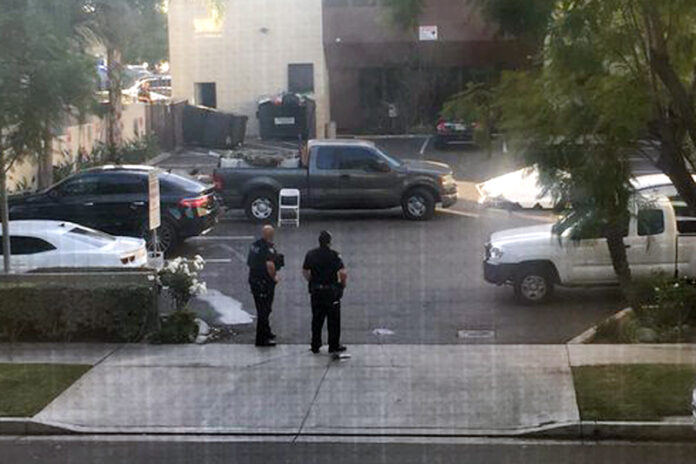
This photo provided by Basileus Zeno shows police at the scene of an active shooting in Long Beach, Calif. Friday, Dec. 29, 2017. Police say there are multiple victims at the scene but nothing about the number or their conditions. Photo: Basileus Zeno / AP

LONG BEACH, California — The Latest on a shooting in a business in Southern California (all times local):

5:30 p.m.

Authorities say a man walked into the Southern California law firm where he worked and shot two men before turning the gun on himself.

Long Beach police Sgt. Brad Johnson says officers found the gunman and one victim dead when they arrived on Friday.

They learned that a third victim had already driven himself to a hospital. There was no further word on his condition.

Johnson says police didn’t fire any shots. A SWAT team searched the rest of the building and no other victims were found.

___

4:50 p.m.

The mayor of the California city of Long Beach says a shooting that killed one victim and the gunman also left another person wounded.

Mayor Robert Garcia tweeted that the third person who was shot in a law office Friday is hospitalized in stable condition. He says the shooter and a victim are dead in what appears to be a workplace killing.

Police say they received reports of a shooter at 2:25 p.m.

Video showed people running from an unmarked building shouting about a shooting inside.

___

4:40 p.m.

Police say a shooting at a business in Southern California has left at least two people dead, including the gunman.

Long Beach police on Friday called the shooting “workplace violence.” They said on Twitter that it has become a murder investigation, and that the suspect is also dead at the scene.

It wasn’t immediately clear if there were any more victims.

Police say they received reports of a shooter at 2:25 p.m.

Video showed people running from an unmarked building shouting about a shooting inside.

The two-story building is home to several law offices, but police didn’t specify what kind of business it is.

___

4:15 p.m.

Police say multiple people have been shot at a business in Southern California.

Long Beach police say the incident is now over but didn’t elaborate. They received reports of a shooter around 2:25 p.m. Friday.

Police say there are multiple victims at the scene but nothing about the number or their conditions.

Video showed people running from an unmarked building shouting about a shooting inside.

The two-story building is home to several law offices, but police did not specify what kind of business it is.

Dozens of police officers, including members of a SWAT team, surrounded the building.

It is about 20 miles south of downtown Los Angeles in Long Beach, a city of about 460,000 people on the southern tip of LA County.

Advertisement

Hot News

LATEST NEWS

Bangkok
overcast clouds
31.6 ° C
31.6 °
29.4 °
58 %
5.7kmh
100 %
Fri
35 °
Sat
37 °
Sun
35 °
Mon
35 °
Tue
35 °