
































27.2 C
Bangkok
Tuesday, June 30, 2026
Home Blog Page 2198

Where Were You? Thais, Expats Recall the Death of a King

Bhumibol Adulyadej reigned as king for 25,694 days, which is roughly equal to the average human life span in Thailand. Three hundred and sixty-five days ago, the man who had been a constant thread through everyone’s lives, who had returned from abroad to restore the monarchy to a position above all else, died at 88.

He’d been ill for years. Anyone of university age or younger is unlikely to remember the king’s active years, before he spent much of the past decade hospitalized. He was not only the only king most had ever known, but a figure elevated to national patriarch. The very topic of his demise was unbroached taboo, leaving people unprepared to process his death. 

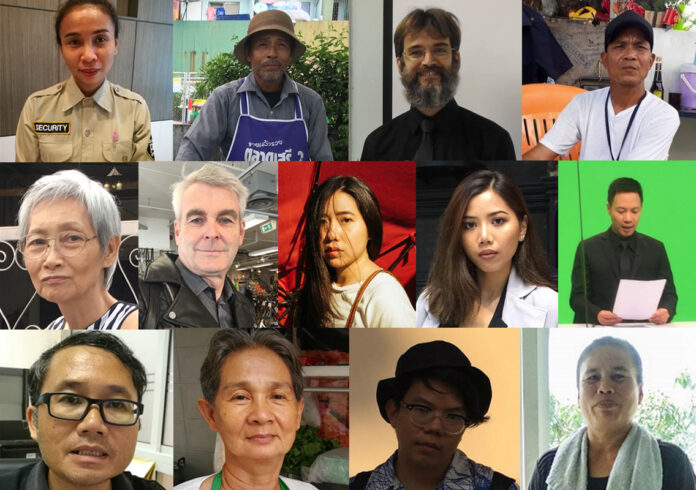
We asked regular folks, students, Thais abroad, expats in Thailand and the man who delivered the news to the world to revisit their experience of Oct. 13, 2016.

Reporting and writing: Asaree Thaitrakulpanich, Chayanit Itthipongmaetee, Lobsang Dundup Sherpa Subirana, Pravit Rojanaphruk, Sasiwan Mokkhasen, Todd Ruiz.

 

asamaponn e1507827513558
Asamaponn Meesaeng

Asamaponn Meesaeng recalls it was a cloudier and gloomier day than usual in London when she first heard the rumors. The 24-year-old beauty adviser, now back in Bangkok, was in a manicuring class when she heard the rumors. She tried to keep calm, but when she learned they were true, tears flooded her eyes.

“It didn’t take long before an English friend of mine who had visited Thailand approached me to say, ‘I’m sorry for your loss.’ I didn’t know what to say at the time. I was baffled. When I rode the Underground, streams of tears flew from my eyes. I had never cried in public before. It’s hard to describe the feeling.”

“[King Bhumibol] was the center of love. No matter where Thai people are, they can always feel his love. Even though he can rest in peace now, every life has to move on. I miss him as he was my king. I won’t disappoint him, and I will try to live my life as though he’s still alive.”


darylallanholst.mind e1507827650599
Daryl Allan Holst

Daryl Allan Holst, an American high school teacher who’s lived in the kingdom 21 years, was at home with his wife and children when the announcement came.

“I wondered how Thailand would go on without her guiding father,” the 45-year-old science teacher at Bangkok’s International Community School said. He hadn’t heard any of the rumors swirling in the days before.

“I only knew that the king had ongoing health issues for quite some time,” Daryl recalled.


supanee.mind e1507827696896
Supanee Monyakul

Supanee Monyakul was eating shabu-shabu at The Mall Ngamwongwan when she first heard the murmurs.

“One of my friend’s grandkids is a soldier, so she called me and told me. At first, I didn’t believe it. No one did – but still everyone was panicking,” the 66-year-old retiree said. “I could only wait until the official announcement on TV.”

She struggled to describe how she felt at hearing the news. “Ohooo,” she said with a tsk, shaking her head.

Saithong.milk e1507827794421
Saithong Kapuapan

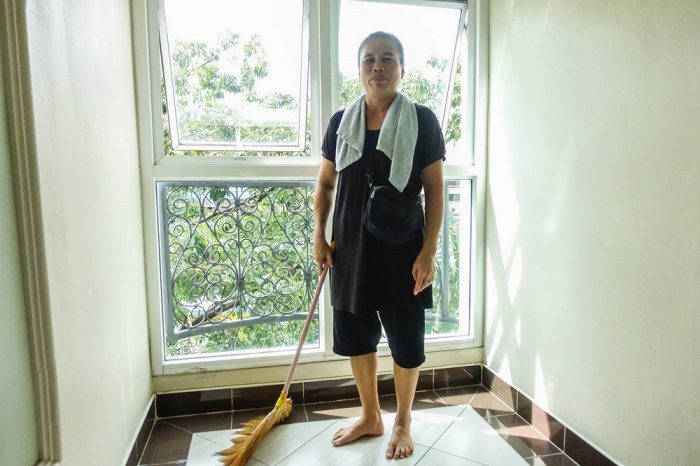
Saithong Kapuapan, a housemaid, had just finished her work. It was that time of day when she hunkers down in front of the television with her cat on one side and husband, a guard at the same apartment building, on the other. When Saithong switched on the tube, she didn’t see her usual soap opera but instead a seated figure with a reserved demeanor. Saithong didn’t expect the next thing she would hear would make her world stop.

“I felt like my heart was crushed and blown away,” she said. “The neighborhood was suddenly quiet; I could feel it.”


veerasak.am e1507827819208
Veerasak Khobkhet

For Saithong, or those like Supanee who waited, the official word came on the evening of Oct. 13, 2016, from Veerasak Khobkhet – purely by chance. He had been scheduled to read the 10pm news for the National Broadcasting Service. He arrived to the station shortly after 6pm. Half an hour later, the news director abruptly told him that he would need to go on standby to announce “bad news” to the nation – on live television.

The seasoned news anchor had been reading royal news for more than six years. But, that night, he did not have time to prepare. He said the first time he saw the script was when he was already sitting at the desk, about to go live. He meditated and asked His Late Majesty to help him get through the broadcast without making a mistake. Fifteen minutes later, he became the messenger of what to millions was the nation’s saddest news.

“I tried to gulp down my saliva and open my eyes very wide,” he described as his technique to calm himself through the live broadcast. “We, as anchors, have been taught not to express our emotions while reading. I can’t show my sorrow on duty.”

He made it through the announcement. But an image of Veerasak breaking down in tears on the set after finishing the announcement soon went viral online. He said it was the toughest job of his life.

Sompong
Sompong Akrawut

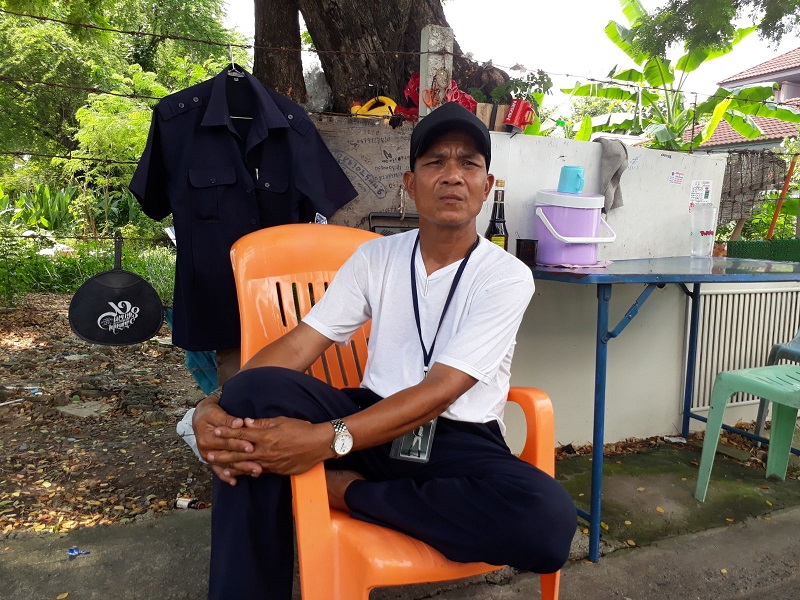
Sompong Akrawut was starting his night shift at the condominium where he works as security guard. He had been following the news throughout the day and on his way into work. He hadn’t taken his station for long when the news programming was preempted by Gen. Prayuth Chan-ocha’s announcement. King Bhumibol was dead.

“I was at my post listening to the radio. As soon as it was announced I saw people in the building and the vicinity beginning to cry and calling relatives on the phone.”


peter.mind e1507827858953
Peter Runegrund

Peter Runegrund, a Swedish man usually found in Chiang Mai for most of his 27 years in Thailand, has traveled to virtually every corner of the kingdom. He speaks fluent Thai and Isaan and says he has a “Thai heart but a Western face.”

The 59-year-old was visiting his 93-year-old mother in Sweden when he heard the news.

“I followed news about the king for many years, and I knew that it could be soon. Death never comes when you expect it to, but it comes sooner or later,” Runegrund said. “It was a sad day.”

“When you have been in Thailand for such a long time, you build a relationship not only to Thai individuals but also to Thai society,” said the man who knows the kingdom well and raised his Swedish children here. “For me personally, ever since the first day I was here, I have always had a great respect for the king.”


nakrob.am e1507827892748
Nakrob Moonmanas

Ten years ago, Nakrob Moonmanas won an episode of “Fan Pan Tae” (Die-Hard Fan) thanks to his encyclopedic knowledge of the palace.

Oct. 13 was a gloomy day at a book fair when rumors of bad news began flooding Line chats and Facebook, creating an atmosphere of uncertainty. He chose to withhold believing until an official announcement was made.

“I was with writer Veeraporn Nitiprapha, who had just launched a new book. A photographer from news website The Momentum was taking her photo when suddenly he said he had to leave right away,” he recalled. “He said there was news that the king had already passed away, and he had to go straight to shoot at Siriraj Hospital.”

He felt like the famous royalist character Mae Ploy at the death of Rama V, the second longest-reigning king.

“We wondered how our lives would continue now, how it would affect the country and our daily routine,” he said. “Parents and teachers prevented us from imagining this when we were young, but it finally had to happen.”

Asked if what ensued was consistent with his knowledge and expectations, the palace history geek said there was only one notable difference:

“I’m not sure it didn’t happen or went unrecorded in history. But I never saw stories about people intentionally attacking those who did not appear to share sorrow, whether they were misunderstood or truly had a different thought.”

chaoguay.mind e1507827927622
Sanit Ngamsai

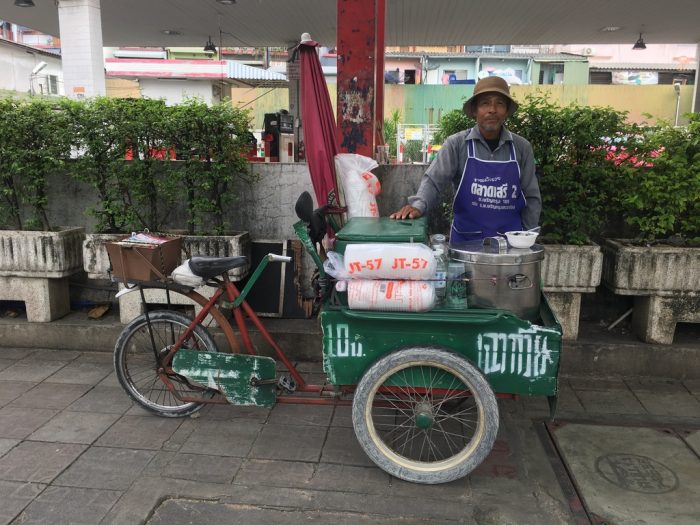
Chao guay seller Sanit Ngamsai has worn a ribbon on his crisp, long-sleeved shirt for nearly 365 days. Some students were handing them out after Rama IX died.

Unlike those who heard the news on social media or from the television, Sanit heard it the old-fashioned way: word of mouth on the street.

“I was pushing my cart around, and I heard people on the street saying he had passed. I believed somewhat, didn’t believe somewhat,” the grass jelly vendor who plies Bangkok’s Yan Nawa district said. “This was in the early evening, even before the TV announcement.”

Sanit doesn’t watch much TV, so confirmation didn’t come until the next morning when he was back out on the street. He shook his head slowly. “The next morning everyone was so sad. I was sad too. Without a king, the country will suffer much more.”


manasawee.pravit
Manasawee Ngern-dorn

A year ago, before Manasawee Ngern-dorn became a security guard, the Nakhon Ratchasima native was a clerk in a Chinatown fabric store.

The news came to her via Facebook. She didn’t want to believe it at first.

“I was really saddened and didn’t want to believe until I saw the news,” she said.

chainarong.pravit
Chainarong Boonkit

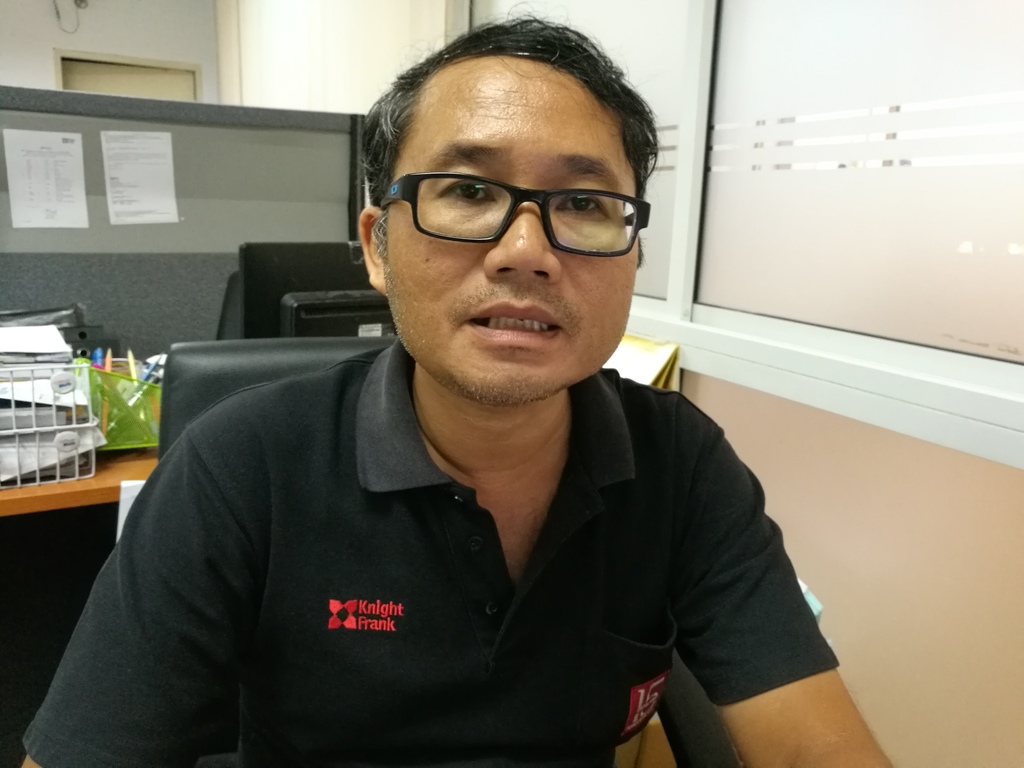
Oct. 13, 2016, was a substitute holiday for Chainarong Boonkit, a 46-year-old financial officer with Knight Frank.

He was at home watching television.

“At first I thought it couldn’t be real. I didn’t think it would happen so soon,” he recalled.

kamolwan.pravit e1507828146564
Kamolwan Utsaha

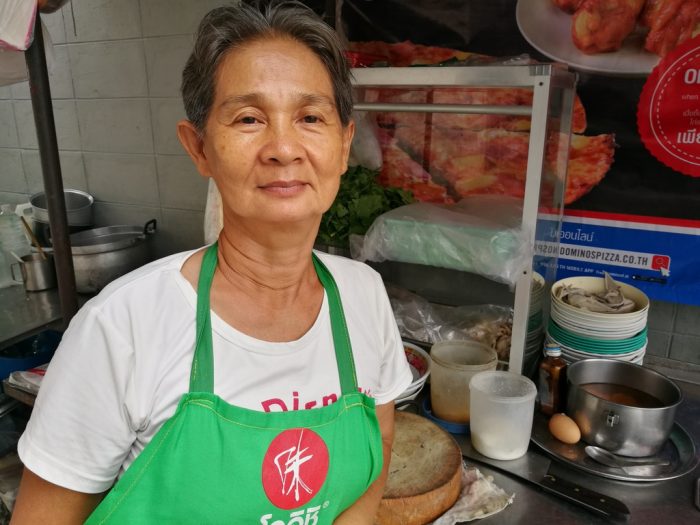
Kamolwan Utsaha, 60, was working at her Bangkok street food stall. “I was selling my food when one customer after another kept telling me what had just happened. I knew the king hadn’t been well for a long time, so I wasn’t surprised.”


jutarat.am e1507828172869
Jutharat Pinyodoonyachet

Jutharat Pinyodoonyachet woke up in the morning to another day in her life as a student in New York City. While she was sleeping, her homeland had lost its king. She asked another Thai friend to meet up on campus. They did nothing more than just sit together.

“It felt bad. I wanted to physically be with a Thai,” she said. “I tried calling the embassy to ask if there would be any gathering, but there was nothing.”

Her foreign classmates offered their condolences as they saw she was crying, but they could not understand what it meant to lose a monarch.

“I think it was better that I was in New York, because except for us, things went on as usual,” she said. “If I had been in Thailand, I might have felt down because everyone was sad; the television was black and white. Everything would make me feel downhearted.”

Advertisement

Next American Withdrawal: UNESCO

A famous sculpted Buddha head is entwined by the roots of a tree at Wat Mahathat in Ayutthaya province, a UNESCO World Heritage site. Photo: Fry_theonly / Flickr

PARIS — The United States is pulling out of UNESCO because of what Washington sees as its anti-Israel bias and a need for “fundamental reform” of the U.N. cultural agency.

While the Trump administration had been preparing for a likely withdrawal for months, the announcement by the State Department on Thursday rocked UNESCO’s Paris headquarters, where a heated election to choose a new director is under way.

The outgoing UNESCO chief expressed her “profound regret” at the decision and tried to defend the reputation of the U.N. Educational, Scientific and Cultural Organization, best known for its World Heritage program to protect cultural sites and traditions.

The U.S. stopped funding UNESCO after it voted to include Palestine as a member in 2011, but the State Department has maintained a UNESCO office and sought to weigh on policy behind the scenes. The U.S. now owes about USD$550 million (18.2 billion baht) in back payments.

In a statement, the State Department said the decision will take effect Dec. 31, 2018, and that the U.S. will seek a “permanent observer” status instead. It cited U.S. belief in “the need for fundamental reform in the organization.”

Several diplomats who were to have been posted to the mission this summer were told that their positions were on hold and advised to seek other jobs. In addition, the Trump administration’s proposed budget for the next fiscal year contains no provision for the possibility that UNESCO funding restrictions might be lifted.

The lack of staffing and funding plans for UNESCO by the U.S. have been accompanied by repeated denunciations of UNESCO by senior U.S. officials, including U.S. Ambassador to the United Nations Nikki Haley.

U.S. officials said Secretary of State Rex Tillerson made the decision and that it was not discussed with other countries but was the result of an internal U.S. government deliberation.

The officials, who were not authorized to be publicly named discussing the issue, said the U.S. is notably angry over UNESCO resolutions denying Jewish connections to holy sites and references to Israel as an occupying power.

Many saw the 2011 UNESCO vote to include Palestine as evidence of long-running, ingrained anti-Israel bias within the United Nations, where Israel and its allies are far outnumbered by Arab countries and their supporters.

UNESCO’s outgoing director-general, Irina Bokova of Bulgaria, called the U.S. departure a loss for “the United Nations family” and for multilateralism. She said the U.S. and UNESCO matter to each other more than ever now to better fight “the rise of violent extremism and terrorism.”

She defended UNESCO’s reputation, noting its efforts to support Holocaust education and train teachers to fight anti-Semitism — and that that the Statue of Liberty is among the many World Heritage sites protected by the U.N. agency. UNESCO also works to improve education for girls in poor countries and in scientific fields and to defend media freedom, among other activities.

Other UNESCO members did not immediately comment on the U.S. departure.

It’s not the first time the U.S. pulled out of UNESCO: Washington did the same thing in the 1980s because it viewed the agency as mismanaged, corrupt and used to advance Soviet interests. The U.S. rejoined in 2003.

Advertisement

430 Homes in North Bangkok Risk Flooding, Governor Says

Photo: Matichon

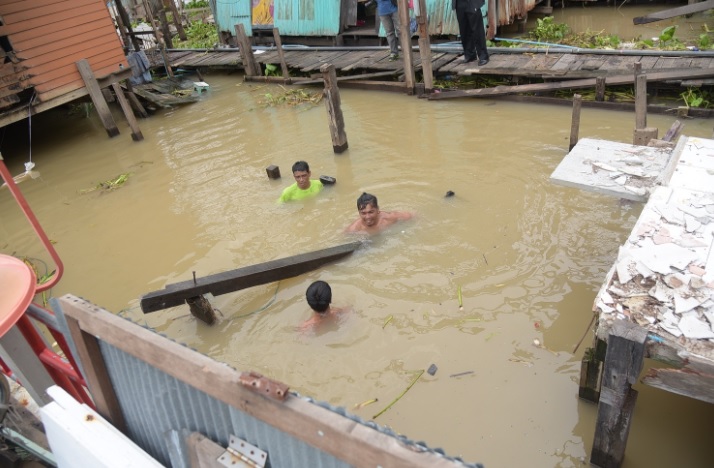
BANGKOK — Sandbags were placed Thursday along the northern side of both banks of the Chao Phraya River in Bangkok, in an effort to prevent possible floods.

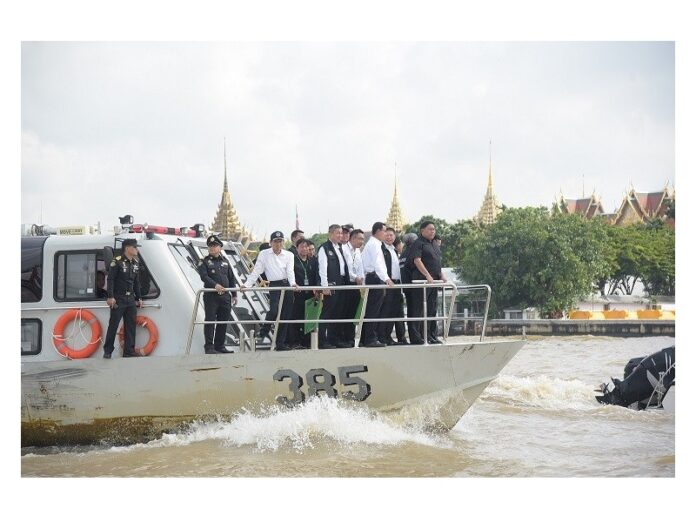
Bangkok Governor Police Gen. Asawin Kwanmuang boarded a boat on Thursday to survey areas along the river in the capital and warned that 430 Bangkok homes in 18 communities outside the dyke may soon be affected by the rising water level flowing down the river from upper provinces.

The governor instructed Bangkok Metropolitan Administration, or BMA, officers to keep a close eyes on the situation along both banks and look after vulnerable homes. Asawin said the Department of Irrigation had informed them that it will have to release more water from its dams, which will eventually flow down the river through Ayutthaya province in the days ahead.

“Today, the BMA has warned people [along both banks in the northern parts of Bangkok] to move stuff to higher ground and water has begun entering some houses,” said the governor, adding that MBA mobile medical units will be visiting the areas where people may develop water-born diseases.

According to the Meteorological Department, from Saturday to Tuesday, Bangkok will see more rainfall.

Asawin said the BMA will try to drain away water as quickly as possible if there are flash floods in parts of Bangkok, particular from Sanam Luang, the site of the royal cremation of King Bhumibol.

adasf
Photo: Matichon
Advertisement

8 Years Since Last Thai Execution, Future of Death Penalty Uncertain

Thai actress Panadda Wongphudee campaigns for using the death penalty against rapists in 2014 at a school in Nakhon Si Thammarat province.

BANGKOK — Those campaigning for the abolition of the death penalty may take solace in the fact that no one has been executed for eight years. There have been no actual executions, but a senior government official said it’s simply impossible to predict when capital punishment will be abolished in Thailand.

Pitikan Sitthidej, Director General of the Department of Rights and Liberties said it’s impossible to pin down when Thailand will do away with death penalty despite having observed a de facto moratorium since 2009.

“I can’t say when it will end but in practice it will soon be 10 years since no execution has taken place,” Pitikan said. “We don’t know when death penalty will be abolished.”

Pitikan was vague on whether it would be.

At present there are 63 crimes that merit death sentence under Thai law, ranging from people found guilty of the rape and murder of girls under 15 or their parents to big time drug dealers and extremists. Pitikan pointed out that under the Thai penal code, any criminal sentenced to death will automatically be required to apply for a royal pardon to the king in hope of having the sentence commuted to life imprisonment.

According to a document of the justice ministry, there were 444 inmates sentenced to death at various stages of the judiciary system as of April 2017. The document also states that during the 65th UN General Assembly in 2010, Thailand no longer voted to oppose a move to end the death penalty but had decided to abstain from voting.

However, according to the same paper, the ministry conducted a survey on the possible abolition of the death penalty on 1,073 people in all the four regions of the country as well as in Bangkok and discovered that 73 percent of respondents still supported death penalty.

Campaign groups such as Amnesty International Thailand took the opportunity on the World Day Against the Death Penalty on Tuesday to renew its call for the abolition of capital punishment in Thailand.

Knowing that it is still far from being realized, the organization’s director Piyanut Kotsan said she wanted to see the Thai government announce a formal moratorium on capital punishment and decrease the number of crimes punishable by death.

“We’re quietly lobbying and maintain the trend for the end of death penalty,” said Piyanut on Tuesday.

Pitikan said there will be no formal announcement of moratorium as in reality Thailand is also a de facto moratorium state on the matter.

“What announcement? I am confused. How do we make such announcement?” said Pitakan, adding that the Third National Human Rights Plan, covering 2014 to 2018, clearly stated that the state shall conduct studies on the possible abolition of the death penalty. When asked about a campaign to educate the public about the negative repercussion of death penalty such as the violation of the right to life, Pitikan said the department lacks funding to engage in such campaign as it has only 300 million baht budget per annum.

In the end, said the director general, whether Thailand will abolish capital punishment or not depends not on international organizations such as Amnesty International or the government but on the society’s consensus itself.

“We must consider the direction of our society as well,” Pitikan said.

While it’s still common for some Thais on social media to keep calling for some criminals – particularly those who have committed rape and murder – to be executed, the anti-death penalty argument is slowly becoming known.

Pitikan for example stressed that a wrongful death penalty means those executed can no longer be brought back to life.

“It’s against the basic human rights principle of the right to life. Most of those [sentenced] tend to be poor and underprivileged.”

Chamnan Chanruang, a prominent campaigner for the end of death penalty said ending the death penalty is not about not punishing the wrongdoers while death penalty is vindictive and about revenge.

“What should be done is not to eliminate these people but to find out the root cause and eliminate it. If we hate what they did we shouldn’t commit the same things which is to become criminals by allowing acting as executioners on our behalf,” said Chamnan.

Advertisement

King Rama X Thanks Thais For Dedication to Late Father

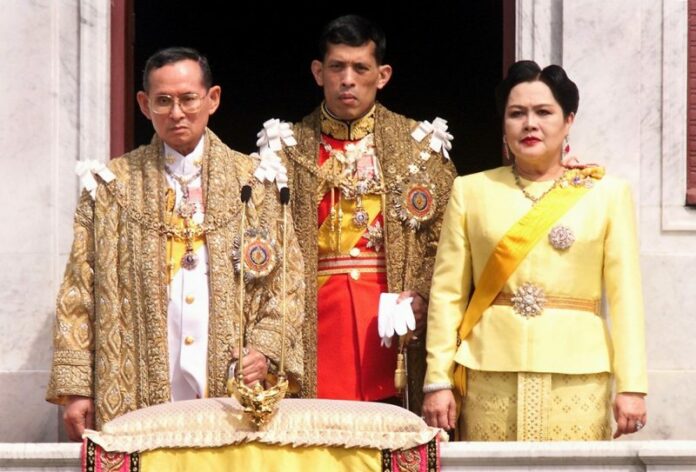
From left to right, King Bhumibol Adulyadej, then Crown Prince Vajiralongkorn, and Queen Sirikit appear at a balcony of Anantasamakom Throne Hall in Bangkok in 1999. Photo: Pornchai Kittiwongsakul / AFP

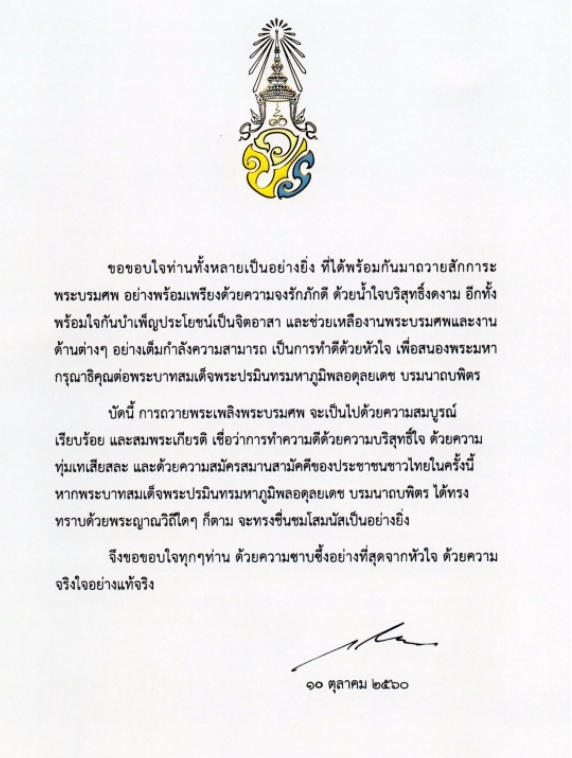
BANGKOK — His Majesty the King issued a letter released to the public Wednesday morning thanking all those who helped make the year-long mourning period of King Bhumibol a success.

In a letter written in Thai and dated Oct. 10, King Vajiralongkorn remarked that the cremation of King Bhumibol would be “orderly and perfect,” befitting the honor of his late father.

“I believe that the act of good deeds with a pure heart, with dedication, sacrifice and with unity by Thai people this time […] would make King Bhumibol deeply happy if somehow he could know about it,” the letter said. “Thus I thank everyone with the deepest appreciation from my heart and genuine sincerity.”

The cremation will take place Oct. 26 at Sanam Luang.

Untitled
The letter by King Rama X published Wednesday.
Advertisement

UN: Myanmar Violence Meant to Expel Rohingya

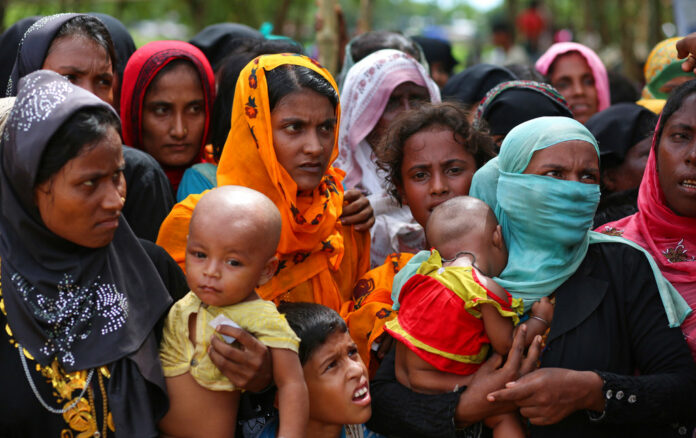
Rohingya women carry children and wait for food handouts in 2017 at Thangkhali refugee camp in Cox's Bazar, Bangladesh. Photo: Zakir Hossain Chowdhury / Associated Press

GENEVA — A report by the U.N. human rights office says attacks against Rohingya Muslims in Myanmar point to a strategy to instill “widespread fear and trauma” and prevent them from ever returning to their homes.

The report released Wednesday is based on 65 interviews conducted in mid-September with Rohingya, individually and in groups, as more the half a million people from the ethnic group fled into Bangladesh during a violent crackdown in Myanmar.

The attacks against Rohingya in Myanmar’s northern Rakhine state by security forces and Buddhist mobs were “coordinated and systematic,” with the intent of not only driving the population out of Myanmar but preventing them from returning, the report said.

Some of those interviewed said that before and during attacks, megaphones were used to announce: “You do not belong here — go to Bangladesh. If you do not leave, we will torch your houses and kill you.”

According to the U.N. researchers, measures against the minority group began almost a month before the Aug. 25 attacks on police posts by Muslim militants that served as a pretext for what Myanmar’s military called “clearance operations” in Rakhine.

“Information we have received indicates that days and up to a month before the 25th of August, that the Myanmar security forces imposed further restrictions on access to markets, medical clinics, schools and religious sites,” Karin Friedrich, who was part of the U.N. mission to Bangladesh, said at a news conference. “Rohingya men aged 15 to 40 were reportedly arrested by the Myanmar police” and detained without any charges, she said.

U.N. human rights chief Zeid Ra’ad al-Hussein said the Myanmar government’s denial of rights, including citizenship, to the Rohingya appeared to be part of “a cynical ploy to forcibly transfer large numbers of people without possibility of return.” He has also described the systematic attacks and widespread burning of villages as “textbook ethnic cleansing.”

The report said efforts were made to “effectively erase signs of memorable landmarks” in Rohingya areas to make the landscape unrecognizable.

Myanmar’s Buddhist majority denies that Rohingya Muslims are a separate ethnic group and regards them as illegal immigrants.

Advertisement

Catalonia Closely Watched From Thailand, Philippines to Indonesia

A new pro Catalan independence mural on the Falls Road on Wednesday in Belfast, Northern Ireland. Photo: Niall Carson / Associated Press

LONDON — When Catalans voted for independence 10 days ago, Scottish independence activist Math Campbell-Sturgess traveled to Spain to observe the voting process, which was marred by thuggish attacks by police trying to shut down the disputed referendum.

Campbell-Sturgess said the struggle in Catalonia may heighten interest in independence for Scotland, where a movement to split from Britain narrowly lost in a 2014 referendum.

“I do think it will push the idea of independence for Scotland further up the agenda a little more and put it in the forefront of more people’s minds,” he said. “People in Scotland are watching what is happening in Catalonia with interest.”

The unpredictable events in Catalonia  where independence from Spain has been declared but put on hold  are watched closely in other parts of the world where secessionist movements seek to challenge long-established national boundaries.

A look at some independence movements worldwide:


Scotland

Fervor for independence has cooled since the referendum defeat in 2014, but First Minister Nicola Sturgeon and her Scottish National Party say they remain committed to the cause.

Sturgeon had called for a second independence referendum to be held by early 2019, but she put that on hold in June after her party lost a substantial number of seats in Parliament in the national election.

Gordon McIntyre Kemp, leader of the pro-independence group Business for Scotland, said events in Catalonia and Scotland are part of a global movement toward the decentralization of power.

He believes the rapid growth of information technology has spurred the trend, making it much easier for people to exchange views and influence the democratic process.

“There’s about 100 independence movements around the world,” he said. “It’s part of an overall global trend of people wanting to take control of their communities and their lives at a more local level. Scotland and Catalonia are ahead of the curve.”


France

In France, some fear the Catalan declaration of independence could trigger similar claims from leaders of the Corsican separatist movement, who have long wanted to cut ties between their Mediterranean island and mainland France.

But Jean-Guy Talamoni, head of Corsica’s local assembly, said the island is far behind Catalonia on the road to self-determination. Corsica doesn’t enjoy the high degree of autonomy or flourishing economy that Catalonia already boasts, he said. He believed Corsican independence will not be on the agenda for at least another decade.

For the French government, the more pressing separatist danger comes from the Pacific island of New Caledonia, a French territory set to take part in an independence referendum by the end of 2018, despite fears that the vote could strengthen divisions between the indigenous “Kanaks” and the “Caldoches”, the descendants of French settlers.

The territory east of Australia has been listed for decolonization by the United Nations and has enjoyed strong autonomy for many years, with a legislative assembly and a local government with executive powers.

French President Emmanuel Macron said before he won the recent election that he would prefer the island to remain “within the national community” but that France would respect the voters’ decision  giving the planned referendum the legitimacy that Catalans have sought in vain.


The Kurdish Region

The standoff in Catalonia bears some resemblance to the unfolding situation in Iraq’s Kurdish region, which voted for independence in a non-binding referendum one week earlier. The result, while hardly surprising, jolted Iraqi politics, and the aftershocks are still being felt in Baghdad, the Kurdish capital Irbil and in neighboring Turkey and Iran.

The central government in Baghdad immediately demanded the Kurdish regional government disavow the results.

It has so far refused, while Baghdad is steadily escalating the cost of intransigence. First the federal government prohibited international flights to and from Kurdish airports. Then it demanded Kurdish-based network providers relocate their headquarters to Baghdad. And on Tuesday it ordered the restoration of an offline oil pipeline to ship oil from the disputed city of Kirkuk directly to Turkey, bypassing the Kurdish region.

Turkey and Iran, normally boasting of their friendly ties with Iraq’s Kurdish region, have both threatened to invade if the Kurds declare independence. They are clearly afraid independence will fuel Kurdish separatist movements inside their own borders.

Turkey has threatened to halt its oil imports, a form of economic retaliation that could jeopardize a key source of revenue for the landlocked Kurdish region.

The Kurdish region’s position is tenuous. Its neighbors are aligned against it, and Kurdish President Masoud Barzani has yet to indicate he will declare independence  he seems intent on taking the result to Baghdad to demand a better deal for his region. But he may not have anticipated the scope of the backlash the movement has provoked.


Southeast Asia

In Southeast Asia, notable separatist movements have been able to force governments to the negotiating table and secure significant autonomy for their regions by waging relentless armed insurgencies.

The Acehnese in Indonesia battled state security forces for decades  former fighters now occupy leading positions in their region’s government, holding sway over all areas except defense and foreign affairs.

Rebels in Muslim-majority provinces in the southern Philippines secured a peace agreement with the central government in 2014, and gained greater autonomy following decades of rebellion, though the arrangement is still to be ratified by the country’s Senate.

The international attention generated by Catalonia’s independence movement is widely envied by those yearning for autonomy in other simmering but low-profile separatist movements in Southeast Asia, including the ethnic Muslim Malays in southern Thailand, and indigenous Melanesians in Indonesia’s easternmost provinces of West Papua and Papua.

Story: Gregory Katz

Advertisement

Women Share Challenges, Successes on #DayoftheGirl #วันเด็กหญิงสากล

A Facebook graphic that appeared atop Facebook timelines Wednesday to recognize International Day of the Girl.

BANGKOK — Women and girls took to social media channels Wednesday to talk about the challenges they still face in society on International Day of the Girl.

People shared photos of their daughters along with stories of how they were discouraged from pursuing their dreams in posts using hashtags in English and Thai.

“I studied archeology, but I wanted to continue my studies in maritime archaeology. Everyone told me the work was too hard, that carrying the oxygen tanks and equipment was a man’s work. They said the stuff weighed more than me,” wrote user Jo Tadpoleeleven in a Facebook thread. “Today, I’m the first female underwater archaeologist.”

Phetsirithorn Songwiphon told her story of wanting to become an aircraft mechanic:

“They said no one would hire me, especially if I wasn’t really good. Everyone’s looking down on me, thinking I can’t handle it. #discouraged.”

Bow Boo said someone in her family questioned why she should study at all.

“I study engineering,” she wrote. “My relative asked me why I was pursuing higher education, when my husband could take care of me.”

User Lilly Luna said she was discouraged from studying or doing things like traveling overseas, driving or construction work. Instead she was encouraged to wash dishes.

“They said, ‘What do you know about anything?’”

Other netizens posted photos of themselves as girls or their daughters or students with the hashtag #DayoftheGirl in Thai.

“She’s very healthy and gets sick only twice a year. She’s pouty, loves to eat and loves to go out,” wrote user Khun Mae Nong Yai Mai. “She loves to take photos, loves to dance…#PapaandMamaLoveYou #OurHearts #HappyInternationalDayoftheGirl.”

“This child has a bright future,” wrote Punnawat Amnardprasert with a photo of his daughter.

Not all women said they were without support.

“Since I was little, I have never been discriminated because I was a girl,” Pin Kunthinee Karunratanakul wrote. “I was surrounded by successful women, so much so that I felt that men and women being equal was a normal thing.”

The International Day of the Girl has been recognized by the United Nations on Oct. 11 since 2012 to raise awareness of social issues affecting girls, such as education and their legal rights.

22365700 1527849263943604 7892829944808799042 n

The Thai-language version of Facebook’s International Day of the Girl post that appeared on Facebook feeds Wednesday morning:

Today’s Girls, Tomorrow’s Leaders

On the International Day of the Girl, we celebrate the potential of every young woman to be a powerful voice in her community. We hope you’ll join us in wishing every girl a bright future.”

Advertisement

Thai MMA Leaves Underground For the Living Room

I’ve been involved in Mixed Martial Arts for almost two decades, starting as a pro fighter back in the early ‘oughts and more recently as a referee for promotions all over Asia.

For as long as I have been in Thailand, a major player has been Full Metal Dojo, which under the creative direction of CEO Jon Nutt has put on some of the more exciting combat sports events I’ve seen. While there have been some amateur fights on Full Metal Dojo cards, the amateur scene had been relegated to smaller grass roots shows held in parking garages and parks.

This is why I was surprised to hear of the OneShin Cup, which took amateur fighters out of the underground and into a production studio in a made-for-television event more likely to appeal to a Thai rather than expat audience.

“Many events tend to portray the look and feel of an underground fight club style image which are probably ideal for the foreign audience and expats, but in order to break into the wider Thai market, the imagery of the competition needs to look polished and more like TV event,” said Jitinat “Plai” Asdamongkol, who promoted and produced the OneShin Cup.

The event and was co-promoted by Thai MMA power couple Shannon “OneShin” Wiratchai and Rika “Tiny Doll” Ishige. They live in Bangkok and are signed to Singapore-based ONE Championship.

And while Shannon and Rika were the faces of the event, it was Plai who made it happen. Plai isn’t new to MMA, he has been involved in the sport for at least 10 years since he met Shannon in a Jiu Jitsu class while they were training at Bangkok’s EMAC Gym. He’s now the president ot the Thai Mixed Martial Arts Federation, which is the domestic chapter of the International Mixed Martial Arts Federation.

Making the event more polished and focusing on TV was the only way, from Plais perspective.

“Thai people don’t tend to buy tickets to see fight events especially if they are not Muay Thai gambling fans or to see concerts within an event”.

But just knowing the consumer behavior of the intended audience isn’t always enough. Putting on an MMA show in Thailand has other challenges, both from the government and the well established Muay Thai industry.

“MMA isn’t yet recognized as an official sport, which is not a surprise for us since there are still some irrational fear and ill-informed concerns about the sport threatening Thai values or the Muay Thai industry which is simply not true at all,” Plai said when asked about the issues with the Ministry of Sport not recognizing MMA. “But we are hopeful that the road ahead will eventually be cleared and MMA will become a nationally-accepted sport one day.”

While that official acceptance hasn’t stopped shows from being held in Thailand, it always looms as a cloud over the sport.

While MMA is a sport on the rise, in Thailand Muay Thai still reigns supreme, and anyone involved in the sport has heard the stories of MMA promoters being threatened by influential people in the Muay Thai community.

But according to Plai it seems those days may have passed. When asked directly about any potential conflict with the local Muay Thai community in Bangkok, he said they “didn’t face much tension or hostility from the Muay Thai community or fans at all.”

Not facing much isn’t the same as none, but it’s a far cry from some of the stories I heard just a year ago.

The one issue Plai did face had more to do with a Muay Thai fighter not getting permission to fight on his card, Plai explained it like this.

“We had one super fight in our event where we pit a Muay Thai pro champion vs a pro boxing champion in amateur rules format, that caused a little after-effect with a local Muay Thai camp and promoter when it was revealed that the Thai boxer didn’t get approval from the camp owner,” he said.

In a single show, Plai put the rest of Thai MMA promotions on notice. He has arrived with a newer style that is ready for Thai audiences. I’ll personally be a bit upset if most MMA shows move away from clubs to television studios because it’s a far different atmosphere, but that level of production and viewability for television will go a long way to help the sport grow – and that’s a good thing if you’re a fan.

Advertisement

Krabi Shopkeepers Make Exotic Friend and Customer

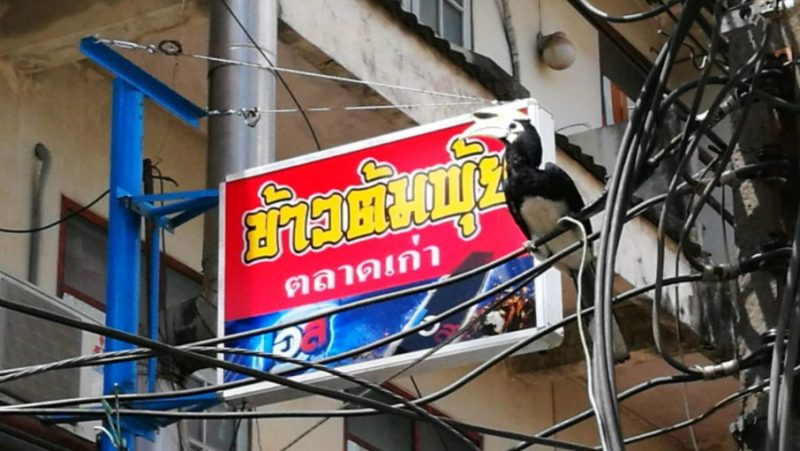
The local friendly hornbill Wednesday in Krabi City.

KRABI — Wanida Rodmin, the 52-year-old owner of a made-to-order eatery near Krabi City’s Talad Kao Intersection has an unusual regular: a hornbill bird.

Wanida said she first served the impressively beaked diner in July, when he flew in and perched on her shop’s roof. She threw some food to the bird, who ate it and has since returned every day for breakfast.

“The bird trusts me and doesn’t fly away when I give him food,” Wanida said Wednesday. “He perches on the metal railing next to my shop now.”

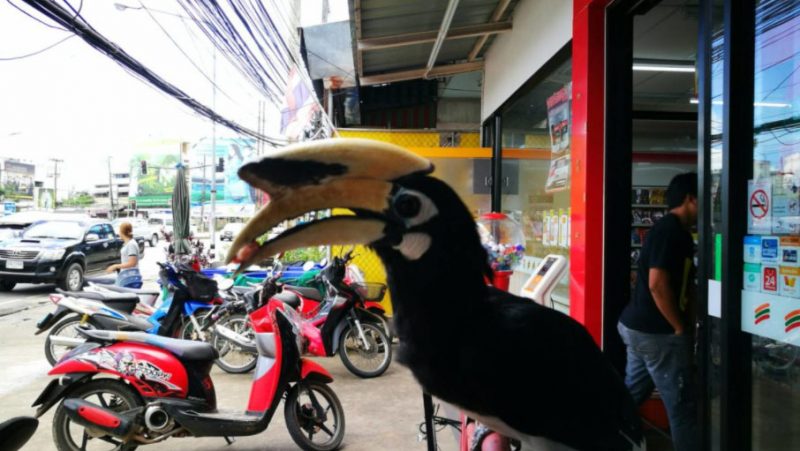
The hornbill has become a familiar face to local shopkeepers.

The hornbill wasn’t always a freeloader, Wanida said. A local resident tried to keep the bird as a pet but had to free it because it is a legally protected species. Wanida suspects the 1- to 2-year-old hornbill’s familiarity with humans caused him to fly into the city center rather than out into the wild.

“If you see him, please don’t shoot or harm him,” she said.

1 e1507707734226
The hornbill perches on electrical lines Wednesday in Krabi City.
2 1 e1507707746554
The hornbill eats fruit outside of a 7-Eleven.
3 e1507707755121
Wanida Rodmin, 52, chats with her hornbill friend.
Advertisement

Hot News

LATEST NEWS

Bangkok
overcast clouds
27.2 ° C
27.2 °
27.2 °
78 %
3.5kmh
100 %
Tue
33 °
Wed
32 °
Thu
34 °
Fri
31 °
Sat
26 °