29.4 C
Bangkok
Thursday, June 18, 2026
Home Blog Page 224

Thai Navy Rescues Four Russian Tourists Stranded on Maiton Island

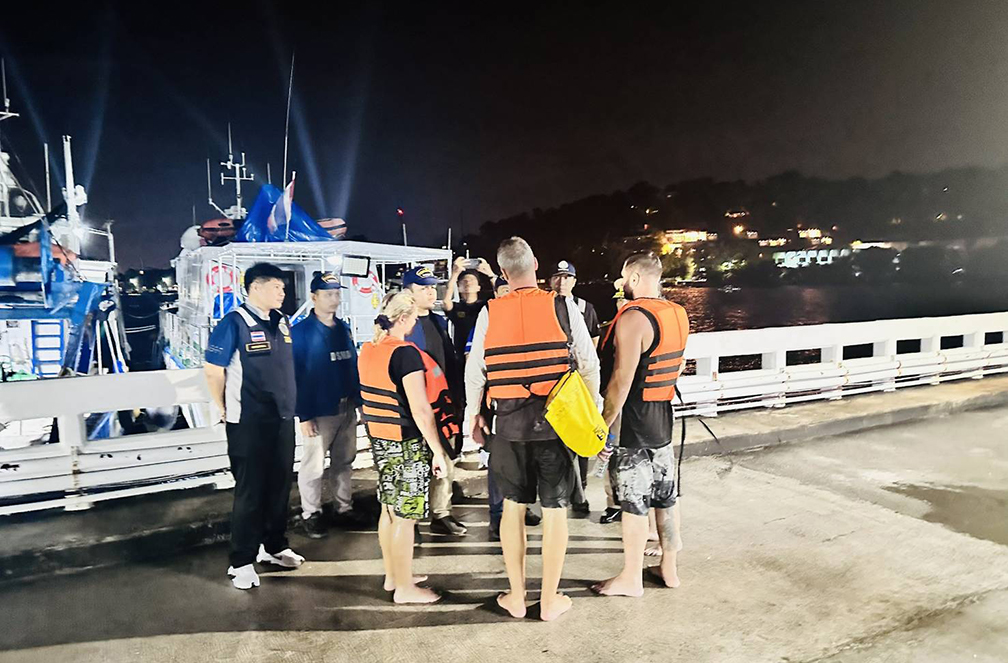
Four Russian tourists are safely brought aboard a Royal Thai Navy vessel after being rescued from a rocky area behind Maiton Island, off Phuket, on Nov. 6, 2025.

PHUKET  — The Royal Thai Navy’s Third Area Command rescued four foreign tourists stranded on a cliff area of Maiton Island late Thursday night after their speedboat ran aground on rocks.

Vice Adm. Weerudom Muangjin, commander of the Third Naval Area and director of the Maritime Enforcement Command Center Region 3, ordered an immediate rescue operation after receiving a distress call around 6:45 p.m. from a Russian man, who reported that his companion had grounded their speedboat behind Maiton Island, about 4.6 nautical miles southeast of the navy pier in Phuket.

The four tourists, all Russian nationals, had reached the island safely but were trapped on a steep rocky slope, and their speedboat was unable to move.


At 7:30 p.m. on November 6, patrol boat Tor 272 departed from the naval pier with a rescue team from the Navy’s Marine Security Division. Upon arrival, rescuers found the tourists safe but unable to be reached due to strong waves and hazardous rocks. The team instructed them to remain calm and wait for further assistance.

The vessel then returned to base to pick up a special operations team equipped with inflatable rafts, ropes, life vests, lights, food, and drinking water. The team set out again and reached the island around 10:50 p.m.

Working in darkness and rough seas, the rescue team paddled inflatable boats to reach the tourists and successfully brought all four aboard Tor 272 safely. They were provided with food and water during the return trip.

strand phuet2
The four rescued foreign tourists arrive safely at the Royal Thai Navy pier in Phuket early Nov. 7, 2025, after being brought ashore from Maiton Island.

The navy coordinated with medical personnel, police, and tourism assistance officials to receive the tourists at the naval pier. Rear Adm. Sataporn Wajaratrat, chief of staff of the Third Naval Area, and related agencies met them upon arrival at 12:10 a.m. Friday.

All four tourists, Ms. Elena, Ms. Kristina, Mr. Alexie, and Mr. Vsevolod, were reported safe, though slightly fatigued. One female tourist was treated for shock. No navy personnel were injured, and no government equipment was damaged during the operation.

________

Advertisement

Continuing to Advance Chinese Modernization and Jointly Creating New Prospects for Common Development

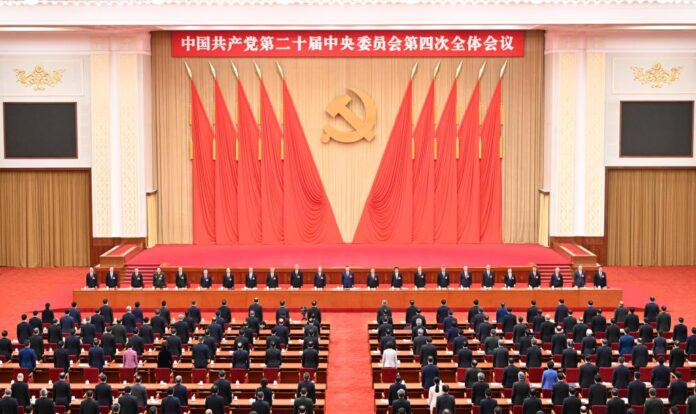
In this photo released by Xinhua News Agency on Thursday, Oct 23, 2025, the 20th Central Committee of the Communist Party of China (CPC) convenes its fourth plenary session in Beijing. (Li Xiang/Xinhua)

Continuing to Advance Chinese Modernization and Jointly Creating New Prospects for Common Development

by Chinese Ambassador Zhang Jianwei

From October 20 to 23, 2025, the Fourth Plenary Session of the 20th Central Committee of the Communist Party of China was held in Beijing. The session deliberated over and adopted the Recommendations of the Central Committee of the Communist Party of China for Formulating the 15th Five-Year Plan for Economic and Social Development, making top-level design and strategic plans for China’s development in the next five years.

It demonstrated China’s firm resolve to build on past achievements and continue to advance Chinese modernization. As changes unseen in a century unfold rapidly across the world, the future of humanity will be deeply shaped by the choices we make today. As the world’s second largest economy, China’s development plan for the next five years and its approach to addressing the volatile and intertwined international situation have been a subject of great interest to the world.

During the 14th Five-Year Plan (2021-2025) period, China effectively responded to the severe impact of the COVID-19 pandemic and a range of major risks and challenges, elevating its economic strength to a new level. In the first four years, the country’s average annual GDP growth reached 5.5 percent, and the economic aggregate in 2025 is estimated to reach about 140 trillion yuan, with its contribution to global economic growth remaining stable at around 30 percent.

Continuous improvement was made in public well-being, with the average annual growth of per capita disposable income of residents reaching 5.5 percent in real terms, keeping pace with economic growth. China has established the world’s largest systems of healthcare, education and social security. China has put in place the world’s largest and fastest-growing renewable energy system and new energy industrial chain, and become one of the countries with the fastest reduction in energy consumption intensity.

China’s economic and technological strength and composite national strength have reached a new level, and Chinese modernization has taken solid new steps.

As China’s 14th Five-Year Plan gets close to its accomplishment, China’s development is standing at a new starting point where Chinese modernization is about to embark on a new journey. The time has arrived and the conditions are in place.

Continuing the Journey: Anchoring the Goal of Chinese Modernization

The scientific formulation and consistent implementation of five-year plans constitute important experience in the approach of the Communist Party of China to governing the country and a significant political strength of socialism with Chinese characteristics.

The development history of the People’s Republic of China is marked by the chapters of 14 consecutive Five-Year Plans, all united by the consistent theme of building China into a modern socialist country.

As the 14th Five-Year Plan concludes this year, the recent Plenary Session outlined the major objectives for economic and social development during the 15th Five-Year Plan period (2026-2030): significant advancements in high-quality development, substantial improvements in scientific and technological self-reliance and strength, fresh breakthroughs in further deepening reform comprehensively, notable cultural and ethical progress across society, further improvements in quality of life, major new strides in advancing the Beautiful China Initiative, and further advances in strengthening the national security shield.

Building on this, China will work hard for a further five years to see that by the year 2035, China’s economic strength, scientific and technological capabilities, national defense capabilities, composite national strength, and international influence will all be markedly stronger, that its per capita GDP will be on a par with that of a med-level developed country, that its people will live better and happier lives, and that socialist modernization will be basically realized.

China will persist in writing new chapters of the two miracles of rapid economic development and long-term social stability, making new contributions to safeguarding regional peace, stability, and prosperity.

Advancing High-Quality Development and Accelerating Self-Reliance in Science and Technology

High-quality development is the paramount task in building a modern socialist country in all respects. Carrying on the legacy of the 14th Five-Year Plan, the 15th Five-Year Plan continues to identify advancing high-quality development as the theme of economic and social development. It adheres to the central task of economic development and is guided by the new development philosophy, aiming to promote sustained and healthy economic growth and all-round social progress.

The most crucial aspect of advancing high-quality development is to accelerate self-reliance in science and technology, thereby guiding the development of new quality productive forces. The vitality of scientific and technological achievements lies in application. China will comprehensively promote the transformation and upgrading of traditional industries, actively develop emerging industries, and proactively plan for future industries.

It will accelerate the building of a modernized industrial system, forging a new path where technological innovation guides industrial innovation, and industrial upgrading, in turn, fosters technological iteration.

China is refreshing the heights of science and technology at an unprecedented pace, gathering momentum for innovation, and forming an innovation ecosystem, injecting more vitality and momentum into its own development and the world economy. A more advanced, confident, and open “Innovative China” will also build more bridges of development and progress for the region and countries around the world.

Putting People First and Making Solid Progress in Common Prosperity

Ensuring that the people enjoy a happy life is a fundamental tenet of the nation and the ultimate goal of all endeavors undertaken by the Communist Party of China in uniting and leading the people of all ethnic groups across the country. It also serves as the overarching guideline for China’s development during the 15th Five-Year Plan period. Since the 18th CPC National Congress, China has taken robust measures to safeguard and improve people’s livelihoods, winning the largest battle against poverty in human history, and completing the building of a moderately prosperous society in all respects, thereby creating favorable conditions for promoting common prosperity. China will continue to steadfastly pursue the goal of common prosperity, making deployments in areas such as promoting high-quality and full employment, running education to the satisfaction of the people, accelerating the building of a Healthy China, and steadily advancing the equalization of basic public services. This will result in a suite of balanced and highly accessible policy measures, painting the development of the 15th Five-Year Plan period with a tone that warms the people’s hearts.

Adhering to Opening-Up and Promoting Mutual Benefit and Win-Win Cooperation

High-standard opening up is a powerful impetus for China’s own development and for benefiting the world. China is a major trading partner for over 150 countries and regions. Over the past five years, China has ranked first globally in trade in goods and second in trade in services. Its outbound investment has grown at an average annual rate of over 5 percent, generating substantial employment locally and vigorously, as well as promoting mutual industrialization and modernization processes.

China has continuously expanded its unilateral visa-waiver policies, steadily widened its autonomous and unilateral opening-up measures, and 22 pilot free trade zones have actively aligned with international high-standard economic and trade rules. China’s door of opening-up to the world will not close; it will only open wider.

China boasts the world’s most promising mega-market and is becoming a testing ground for global win-win cooperation, a profit field for shared benefits, and an application field for innovative practices. China is willing to work with countries around the world to create opportunities, promote open development, and achieve mutual benefit and win-win outcomes.

At the end of October, China and ASEAN signed the protocol to upgrade the China-ASEAN Free Trade Area to Version 3.0. The protocol includes, for the first time, new chapters on supply chain connectivity and the green economy, achieving a new breakthrough in the FTA practices between the two sides.

It also establishes, for the first time, a systematic framework and institutional arrangements for “at-the-border” trade facilitation measures and “behind-the-border” cooperation in emerging areas such as digital and green economy, and supply chains, representing the highest level of commitments in the respective FTA practices of China and ASEAN.

China and Thailand are good neighbors, good friends, good relatives, and good partners. The friendship between our two countries nurtured over a millennium and continues to grow with renewed vitality, embodying the enduring spirit of “China and Thailand are as close as one family.”

The historic visit of President Xi Jinping to Thailand in 2022 elevated bilateral relations to a new stage of building a community with a shared future, solidifying the foundation of our friendship and strengthening the momentum of our cooperation. China has been Thailand’s largest trading partner for 12 consecutive years. In 2024, the bilateral trade volume reached $134 billion, a 36% increase compared to that of five years ago.

China is Thailand’s second-largest export market, absorbing over 40% of Thailand’s exported agricultural products. According to Thai statistics, durians exported to China now account for 97% of Thailand’s total durian exports. China is also the primary source of foreign investment for Thailand in recent years, and Thailand hosts the largest overseas production capacity for Chinese new energy vehicles.

Leading Thai companies have consistently participated in the China International Import Expo, with intended transaction volumes consistently ranking among the top in ASEAN. The China-Thailand railway cooperation project is boosting Thailand’s economic development and enhancing its connectivity.

The industrial and supply chains of our two countries are deeply integrated, and cooperation in digital economy and green transformation is flourishing.

Looking ahead to the next five years, China will continue to advance Chinese modernization, unswervingly expand high-standard opening up, pioneer new prospects for win-win cooperation, and promote the building of a community with a shared future for mankind.

These plans and deployments highly align with Thailand’s development strategy, creating even broader prospects for bilateral cooperation. Both sides will encounter more opportunities for collaboration in areas such as trade, new energy, digital economy, and modern agriculture.

China is willing to work with Thailand to deepen and solidify the building of a China-Thailand community with a shared future, support the respective modernization processes of both countries, and make greater contributions to regional peace, stability, development and prosperity.

________

Advertisement

AOT Expected to Accept King Power’s Terms to Avoid Contract Fallout

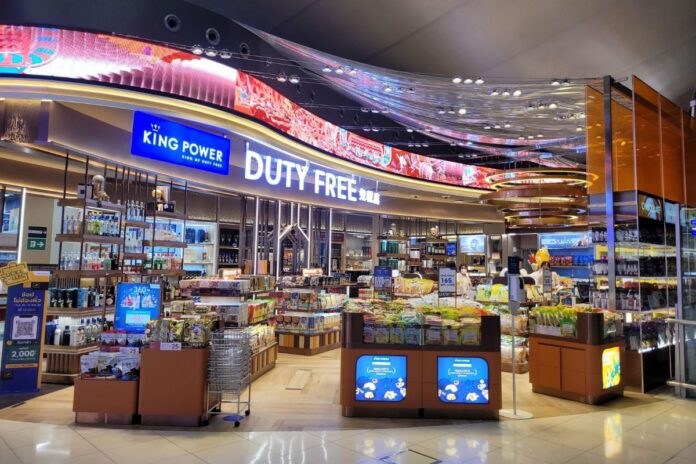
Duty-free shops at Suvarnabhumi Airport

BANGKOK — Airports of Thailand PCL (AOT) is expected to proceed with King Power Group’s proposed terms in ongoing negotiations over duty-free concession contracts, aiming to avoid a costly termination that could disrupt operations at the country’s major airports.

King Power, Thailand’s largest duty-free operator, sent a letter to AOT in May seeking to terminate its contracts to manage duty-free operations at Suvarnabhumi, Phuket, Chiang Mai and Hat Yai airports. The contracts, held by Power Duty Free Co., Ltd., are valid through March 31, 2033.

At its October 29 meeting, the AOT board authorized management to negotiate with King Power to prevent termination, following studies by Mahidol University and King Mongkut’s Institute of Technology Ladkrabang that assessed the potential impact of both options. The studies concluded that renegotiation would offer greater benefits to AOT.

King Power CEO Nitinai Sirismatthakarn told Prachachat that AOT likely has already reviewed the company’s seven key proposals and is expected to initiate talks this week.

“King Power hopes AOT will treat our proposals with fairness and consider the new economic context rather than past figures,” Nitinai said. “The main issue is ensuring that future numbers do not fall further.”

aot suvarnabhumi
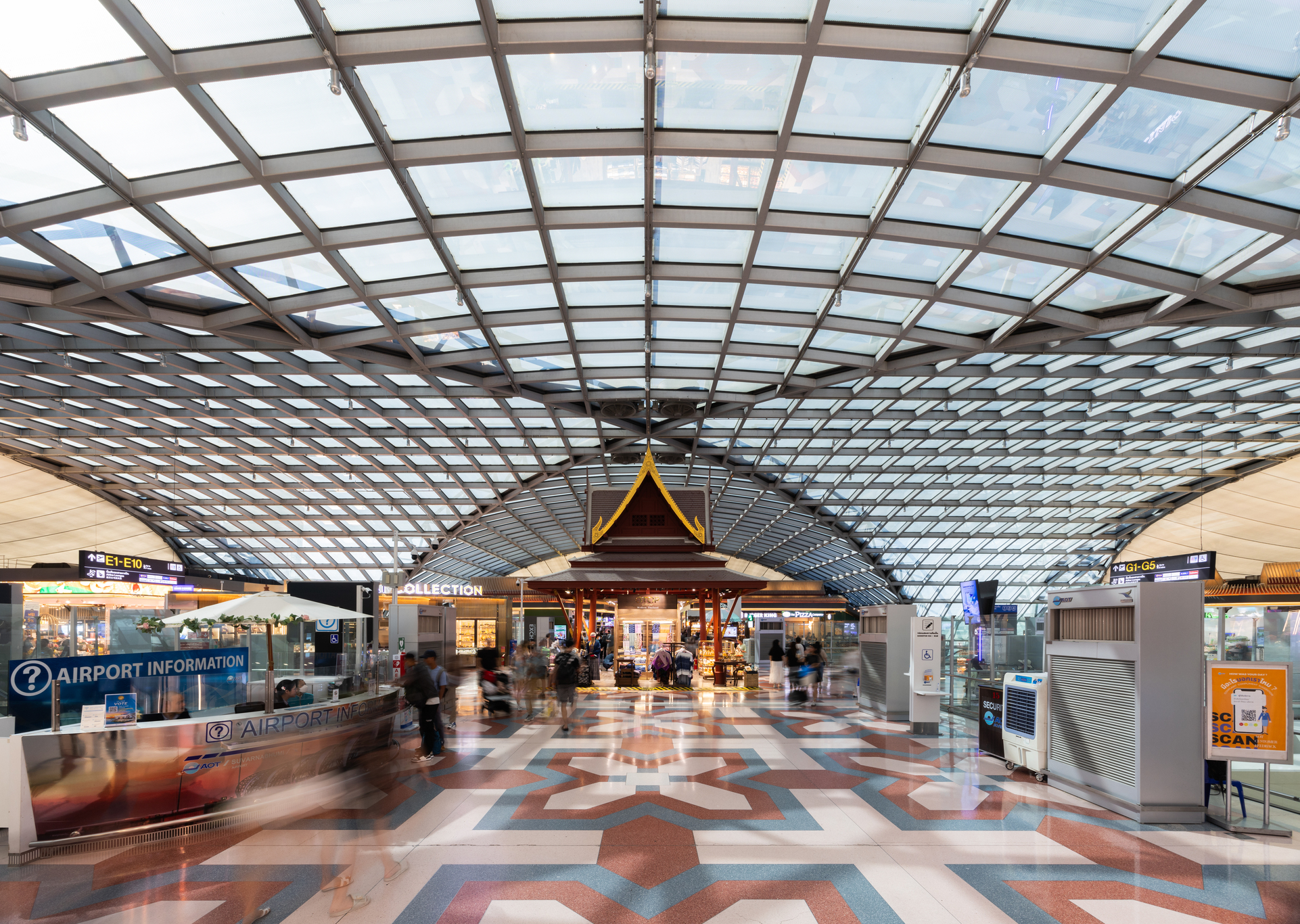
Suvarnabhumi Airport (Photo: AOT)

He explained that duty-free operators are typically required to maintain a six-month bank guarantee, and when rent remains unpaid for several months, negotiations or termination decisions must follow promptly.

Nitinai said King Power hopes to reach a conclusion by the end of November. “If the current terms leave us earning less than our expenses, losses will continue,” he said. “But if revenue can at least cover costs, we can continue operating. AOT’s decision to negotiate shows its intention to help concessionaires move forward.”

Concessions Worth $735 million Annually

King Power won three duty-free concession contracts in 2019, with a total minimum annual guarantee valued at 23.55 billion baht ($735 million) in the first year, according to Prachachat Business.

  • Suvarnabhumi Airport Duty-Free: 10 years and 6 months (Sept. 28, 2020–Mar. 31, 2031), valued at 15.42 billion baht ($482 million).

  • Phuket, Chiang Mai, and Hat Yai Duty-Free: 10 years and 6 months (Sept. 28, 2020–Mar. 31, 2034), valued at 2.33 billion baht ($73 million).

  • Suvarnabhumi Terminal Commercial Activities: 10 years and 6 months (Sept. 28, 2020–Mar. 31, 2031), valued at 5.8 billion baht ($181 million).

AOT reported 18 billion baht ($563 million) in earnings from King Power in 2024, accounting for about 27% of its total revenue.

A retail industry source told Prachachat Business that AOT is expected to accept King Power’s conditions. Terminating the agreements would cost AOT roughly 20 billion baht ($610 million) in annual revenue, and a new tender process could take up to two years — potentially leaving Thailand’s main airports without duty-free shops or restaurants.

Such a scenario would be unprecedented worldwide and could hurt both the tourism industry and the broader Thai economy, the source said.

_________

Advertisement

China Commissions New Aircraft Carrier As It Seeks to Extend Power

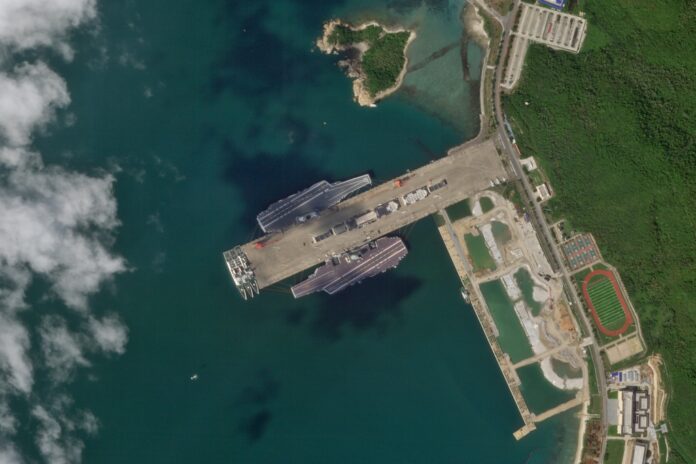
In this Oct. 8, 2025, satellite photo from Planet Labs PBC, the Chinese aircraft carriers Shandong and Fujian are seen at the Yulin Naval Base near Sanya, China. (Planet Labs PBC via AP)

BANGKOK (AP) — China has commissioned its latest aircraft carrier after extensive sea trials, state media reported Friday, adding a ship that experts say will help what is already the world’s largest navy expand its power farther beyond its own waters.

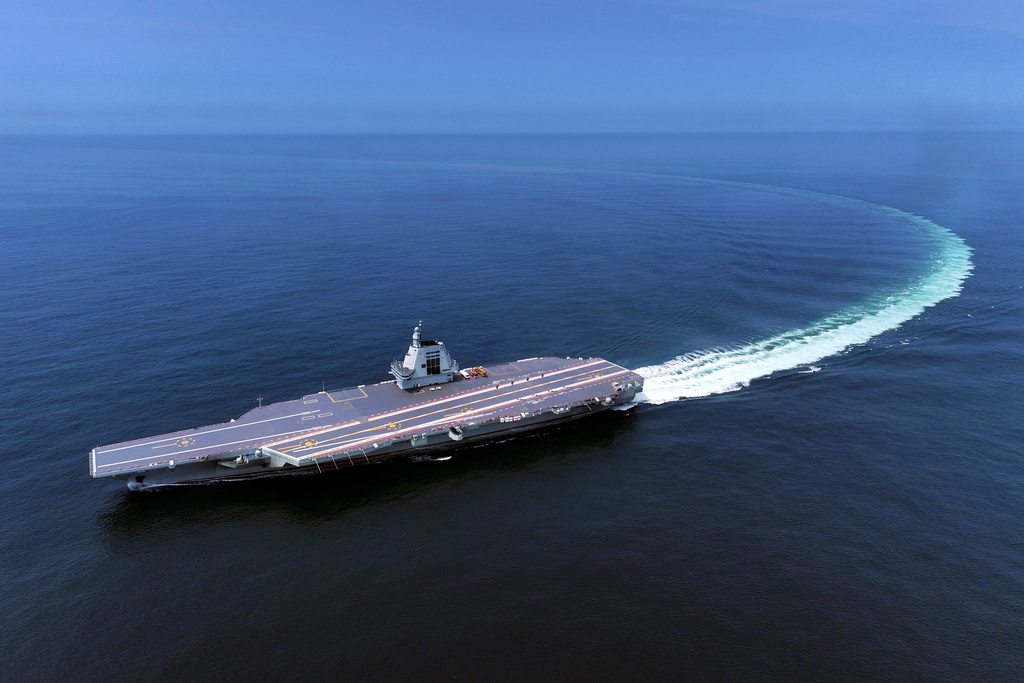
The official Xinhua news agency said the Fujian had been commissioned Wednesday at a naval base on southern China’s Hainan island in a ceremony attended by top leader Xi Jinping.

The Fujian is China’s third carrier and the first that it both designed and built itself. It is perhaps the most visible example so far of Xi’s massive military overhaul and expansion that aims to have a modernized force by 2035 and one that is “world class” by mid century — which most take to mean capable of going toe-to-toe with the United States.

With it, Beijing takes another step toward closing the gap with the U.S. Navy and its carrier fleet and network of bases that allow it to maintain a presence around the world.

“Carriers are key to Chinese leadership’s vision of China as a great power with a blue-water navy,” or one that can project power far from its coastal waters, said Greg Poling, director of the Asia Maritime Transparency Initiative at the Center for Strategic and International Studies.

China wants to contest waters as far as Guam

For China’s navy, one goal is to dominate the near waters of the South China Sea, East China Sea and Yellow Sea around the so-called First Island Chain, which runs south through Japan, Taiwan and the Philippines. But deeper into the Pacific, it also wants to be able to contest control of the Second Island Chain, where the U.S. has important military facilities on Guam and elsewhere, Poling said.

AP25290395763542
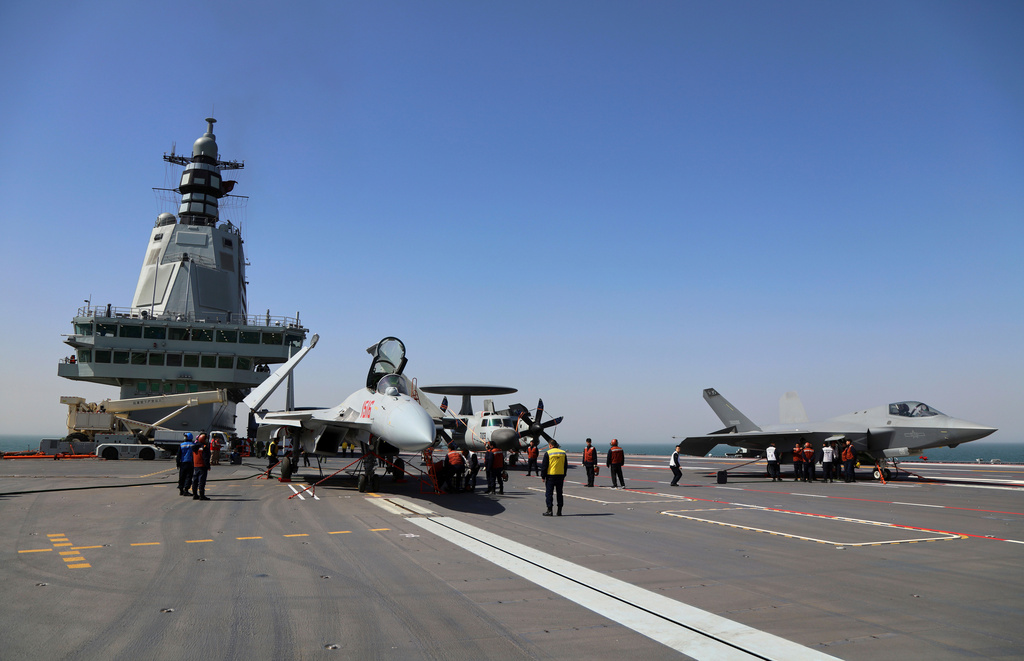
In this undated file photo released by Xinhua News Agency, crew members work on carrier-based aircraft from left, J-15T jet fighter, KJ-600 AWACS and J-35 stealth fighter jet on the flight deck of China’s third conventionally powered aircraft carrier, the Fujian as they conduct the electromagnetic catapult-assisted takeoff and arrested landing trainings on the aircraft carrier during a maiden sea trial. (Li Tang/Xinhua via AP, file)

“A carrier doesn’t really help you in the First Island Chain, but it’s key to that contest, if you want one, with the Americans in the wider Indo-Pacific,” Poling said.

China’s “increasingly capable military” and ability to “project power globally” is one of the reasons the Pentagon in its latest report to Congress continued to call it “the only competitor to the United States with the intent and, increasingly, the capacity to reshape the international order.”

At the same time, it is Beijing’s right to “transform its navy into a blue-water strategic navy commensurate with China’s national strength,” said Song Zhongping, a Hong Kong-based military affairs expert.

“China’s carriers cannot just operate near home, they must operate in the distant oceans and far seas to carry out various training and support missions,” Song said. “China is a great power and our overseas interests span the globe; we need to be globally present.”

The Fujian is a step in that direction.

One possibility that raises concerns in foreign capitals is a possible blockade or invasion of the democratically self-governed island of Taiwan, which China claims as its own territory and which leader Xi Jinping has not ruled out taking by force.

Though the island sits right off of China’s coast, if China had the ability to position an aircraft carrier group or groups around the Second Island Chain — between Taiwan and the U.S. Pacific Fleet headquarters in Hawaii — that could delay possible American military assistance in the event of a Chinese attack.

“They want those aircraft carriers to play a part in kind of extending the strategic perimeter farther out from China, and one of the important things that an aircraft carrier can do is extend the range of China’s domain awareness to keep an eye on activities in the air, on the sea, and below the sea,” said Brian Hart, deputy director of CSIS’s China Power Project

With the Fujian, China’s warplanes can deploy far from its shores

China’s first aircraft carrier, the Liaoning, was Soviet made and its second, the Shandong, was built in China but based on the Soviet model. Both use older-style ski-jump type systems to help planes take flight.

The Fujian skips past the steam catapult technology used on most American carriers to employ an electromagnetic launch system found only on the latest U.S. Navy Ford-class carriers.

The system causes less stress to the aircraft and the ship, allows for more precise control over speed and can launch a wider range of aircraft than the steam system. Compared to the ski-jump system, it gives China the ability to launch heavier aircraft, with full fuel loads, like the KJ-600 early warning and control plane, which it successfully tested during its sea trials.

Its latest J-35 stealth fighter and J-15T heavy fighter were also launched from the Fujian, giving the new carrier “full-deck operation capability” according to the Chinese navy.

The ability to carry its own reconnaissance aircraft means unlike its first two carriers, it won’t be operating blind when out of the range of land-based support, giving it the ability to operate its most advanced aircraft far afield including the Second Island Chain.

“The Fujian carrier is a big leapfrog for China in terms of the capabilities of its aircraft carriers compared to the first two,” Hart said .

China’s carriers aren’t nuclear powered, limiting their range

Still, Hart noted, China’s navy lags behind the U.S. in several significant ways.

Numerically it only has three carriers compared to the U.S. Navy’s 11, and while China’s carriers are all conventionally powered, the U.S.’s are all nuclear powered which means they can operate almost indefinitely without being refueled – dramatically increasing their range. The Ford-class carrier, of which only one is currently in service but more are being built, is also larger, can carry more aircraft on its flight deck, and has a third elevator that means it can move more aircraft from lower deck hangars in less time.

China also lags behind the U.S. in guided missile cruisers and destroyers, which are critical in providing air and submarine defense and support for larger naval groups, as well as nuclear-powered submarines.

The U.S. is also ahead in vertical launching system cells – basically the systems for holding and launching missiles from ships – which is a measure of how much firepower vessels can carry, though China is increasing that capacity, Hart said.

AP25290395784024
FILE – In this photo released by Xinhua News Agency, China’s third conventionally powered aircraft carrier, the Fujian, conducts a maiden sea trial on May 7, 2024. (Ding Ziyu/Xinhua via AP, File)

Beyond just equipment, China lacks the network of overseas bases that the U.S. has, which are critical for resupplying carriers and also providing alternative runways should aircraft not be able to return safely to the carrier.

China is working on expanding its foreign bases, however, and has a nuclear propulsion system for a carrier in development.

There’s also evidence that China is already building another carrier. Chinese shipyards have the capabilities to build more than one at once and have also been churning out other new vessels at a pace the U.S. can’t currently come close to matching.

“Really across the board, China’s closing the gap,” Hart said.

“They’re fielding and building more aircraft carriers, they’re fielding more nuclear-powered subs, they are fielding more, larger destroyers and other vessels that carry a larger number of missiles. So they’re really catching up.”

The Fujian is just one of China’s latest military assets

China has happily shown off its new military assets, releasing video of the KJ-600, J-35 and J-15T test flights from the Fujian.

A World War II Victory Day parade at the start of September showcased all three aircraft along with hypersonic glide vehicles — whose high-speed, maneuverability and other attributes make them more difficult to intercept than traditional ballistic missiles — aerial and underwater drones and electronic warfare systems.

Sophisticated new equipment does not necessarily translate to military readiness, however, said Singapore-based analyst Tang Meng Kit, who noted that China hasn’t fought a war since 1979 and that the carefully choreographed parade was good at “amplifying perceptions of strength.”

“It is possible that China’s capabilities are overstated, as real-world operational readiness lags behind its showcased arsenal,” he told the AP.

He also cautioned in a recent analysis for the S. Rajaratnam School of International Studies in Singapore that it would be a mistake to see China’s military modernization as simply geared toward a possible Taiwan invasion, which he said is only one part of a “larger mosaic.”

The parade “signaled China’s broader strategic intent, which is to deter major powers, pressure regional actors, expand its global influence, and reinforce its domestic legitimacy,” he said.

___________

Advertisement

American Man and His Son Die After Suffering Stings From a Swarm of Wasps in Laos

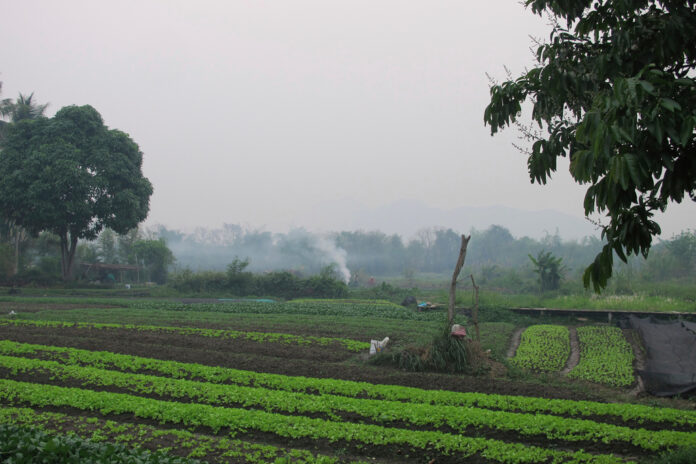
FILE - Farmers burn crop waste from a field outside the Laos UNESCO heritage site of Luang Prabang, Saturday, April 6, 2024. (AP Photo/Elaine Kurtenbach, File)

BANGKOK (AP) — An American man and his teenage son died last month after they were swarmed by wasps while ziplining at an adventure camp in Laos and stung many dozens of times, a hospital official said Thursday.

Dan Owen, the director of an international school in neighboring Vietnam, and his son Cooper were attacked by the insects on Oct. 15 at the Green Jungle Park, as they were descending from a tree at the end of the zip line.

The camp is located outside the city of Luang Prabang, a popular tourist site in the Southeast Asian nation that was named a UNESCO World Heritage Site in 1995.

The two were taken to a local clinic and then transported to Luang Prabang Provincial Hospital where they arrived in critical condition, said Jorvue Yianouchongteng, the emergency room physician who received them.

“The son was unconscious and passed away after half an hour, while the father was conscious and passed away about three hours later,” he told The Associated Press. “We tried our best to save them but we couldn’t.”

The doctor said both had suffered from severe anaphylactic shock after being stung more than 100 times across their bodies, but that exact cause of death had not been determined.

The Asian giant hornet, known as the “murder hornet” due to its aggressive behavior toward other insects, is found in Laos but so are several other species of wasps. It was not clear which type had stung the two.

The local clinic where the two were first treated refused to comment and the Green Jungle Park did not respond to a query from the AP. The Laos Foreign Ministry also did not respond to a request for comment.

The U.S. State Department said it could confirm the deaths of two U.S. citizens in Luang Prabang but would not comment further “out of respect for the privacy of the family and loved ones.”

In a Facebook post, Owen’s employer, Quality Schools International, praised him as “touching countless lives” during 18 years with the chain, which operates 35 schools around the world. It said he had worked at five of its schools and was director of the QSI International School of Haiphong in Vietnam at the time of his death.

“He was deeply loved across our community and will be profoundly missed,” the school said. “Our sincere condolences go our to the Owen family and all who knew and loved them.”

_________

Advertisement

Tourists Face Long Queues, Hours-Long Waits for Koh Lanta Ferry

koh lanta
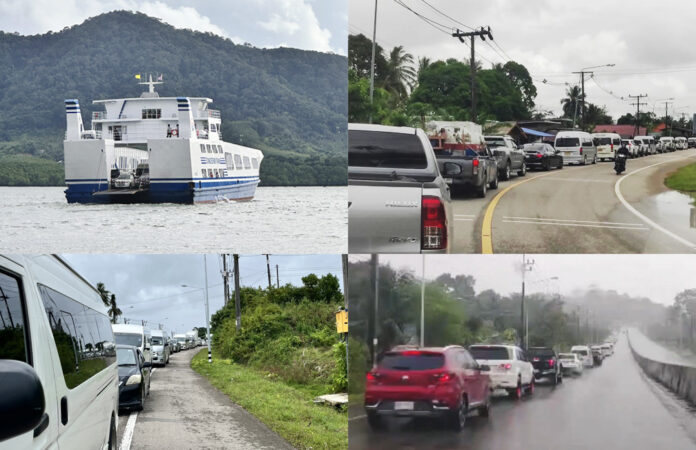
A combination photo showing a ferry departing for Koh Lanta in Krabi province (left above), while long lines of vehicles wait for hours to board amid heavy tourist traffic during the high season.

KRABI — Tourists traveling to Koh Lanta in Krabi province have complained through media outlets about having to endure long queues with traffic jams stretching several kilometers and waiting for several hours before receiving ferry services to cross to and from the island.

The complaints come as the area enters the high tourism season, with visitors expressing frustration that ferry services have not been adjusted to accommodate the increased demand. The situation is expected to worsen during December and January, when tourist volumes are projected to increase even further.

Travelers reported that both inbound and outbound ferry crossings are affected by the lengthy delays, with vehicle queues backing up for kilometers as tourists wait their turn to board the limited ferry services available.


The issue highlights a growing concern about infrastructure readiness as Thailand’s popular tourist destinations prepare for peak season, with visitors calling for authorities to increase ferry capacity and improve services to handle the surge in travelers visiting Koh Lanta during the busy tourism months ahead.

The issue highlights a growing concern about infrastructure readiness as Thailand’s popular tourist destinations prepare for peak season, with visitors calling for authorities to increase ferry capacity and improve services to handle the surge in travelers visiting Koh Lanta during the busy tourism months ahead.

Bridge Project to Provide Long-term Solution

Previously, during Prime Minister Anutin Charnvirakul’s visit to Krabi province on October 24, he stated that the current government would continue good policies from the previous government in developing Krabi.

lanta5
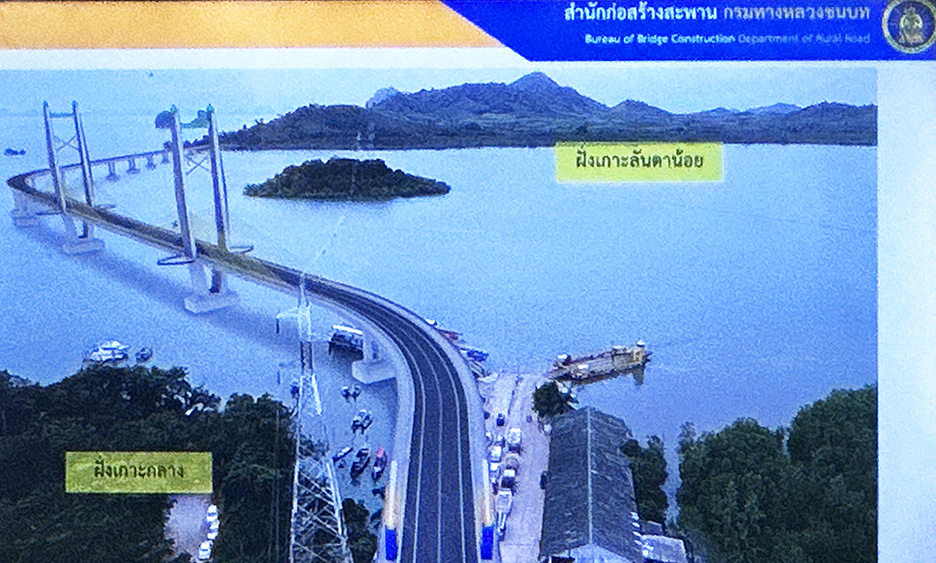
A construction plan for the new bridge connecting Koh Lanta in Krabi province, designed to boost tourism and investment.

He noted that the province has potential to become a health hub and medical tourism center, which the government is ready to support, adding that it could develop even more than Phuket since there is a minister based in the area.

The Prime Minister ordered Minister of Transport Pipat Ratchakitprakarn to expedite the construction of a bridge connecting Koh Lanta to stimulate tourism and investment. The second Koh Lanta bridge project, if it proceeds according to plan, will span over 2 kilometers with an investment of 1.8 billion baht.

Pile driving is scheduled to begin in 2026, with completion and opening expected in 2029. The bridge will provide convenient travel access and is expected to have a positive impact on Koh Lanta’s tourism industry.

____________

Advertisement

French Man Jumps into Chao Phraya River to Save Thai Woman

David, a 52-year-old French expatriate from Marseille, speaks to reporters after helping rescue a Thai woman from the Chao Phraya River in Chainat on November 5, 2025.

CHAINAT — A 52-year-old French man and a Thai delivery rider rescued a Thai woman from the fast-flowing Chao Phraya River in Chainat province, central Thailand, after she jumped into the dangerous waters.

CCTV footage captured the dramatic rescue on November 5, showing a woman in her 30s walking along Phrom Prasert Road in Mueang district, near the provincial natural resources office, before climbing over a fence and leaping into the river.

Witnesses shouted for help and called police, but strong currents from upstream made bystanders hesitant to jump in. Moments later, the French man — identified as David, 52, from Marseille — plunged into the water, followed by a young delivery rider who happened to be passing by.


The pair managed to pull the woman to safety. Relatives later took her to a hospital for treatment, officials said.

David told reporters he acted instinctively after hearing cries for help outside his home. “I saw the woman floating but she looked exhausted and was starting to sink, so I immediately jumped in,” he said.

french rescue3
David, a 52-year-old French expatriate from Marseille, speaks to reporters on November 6, 2025 after helping rescue a Thai woman from the Chao Phraya River in Chainat. He raises two fingers to emphasize that he was not the only one who jumped in — a Thai delivery rider also helped in the rescue.

When asked why he was such a strong swimmer, David said he grew up in Marseille, a port city in southern France on the Mediterranean coast near the mouth of the Rhône River. He explained that his hometown is surrounded by water, similar to Chainat, and that many people from Marseille are skilled swimmers and excel at water sports such as water polo.

He emphasized that the rescue was a team effort. “Another Thai man jumped in with me, and others ran to grab a life buoy and threw it down to help,” he said.

Authorities praised the quick action and bravery of the rescuers, calling it a testament to the cooperation between local residents and foreigners in times of crisis.

___________

Advertisement

Thai King and Queen to Make a Historic State Visit to China Nov 13-17

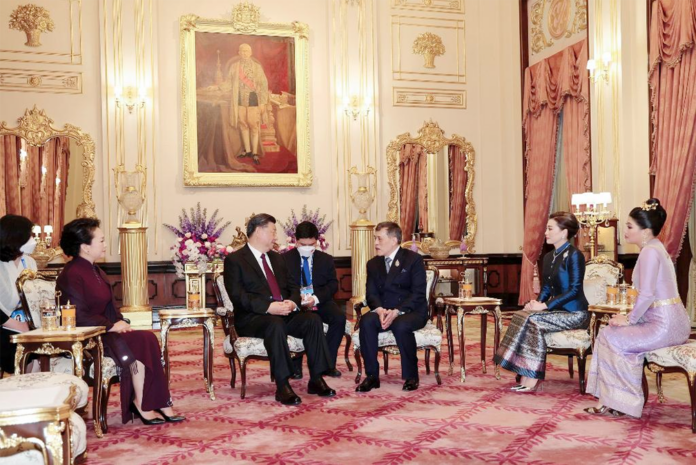
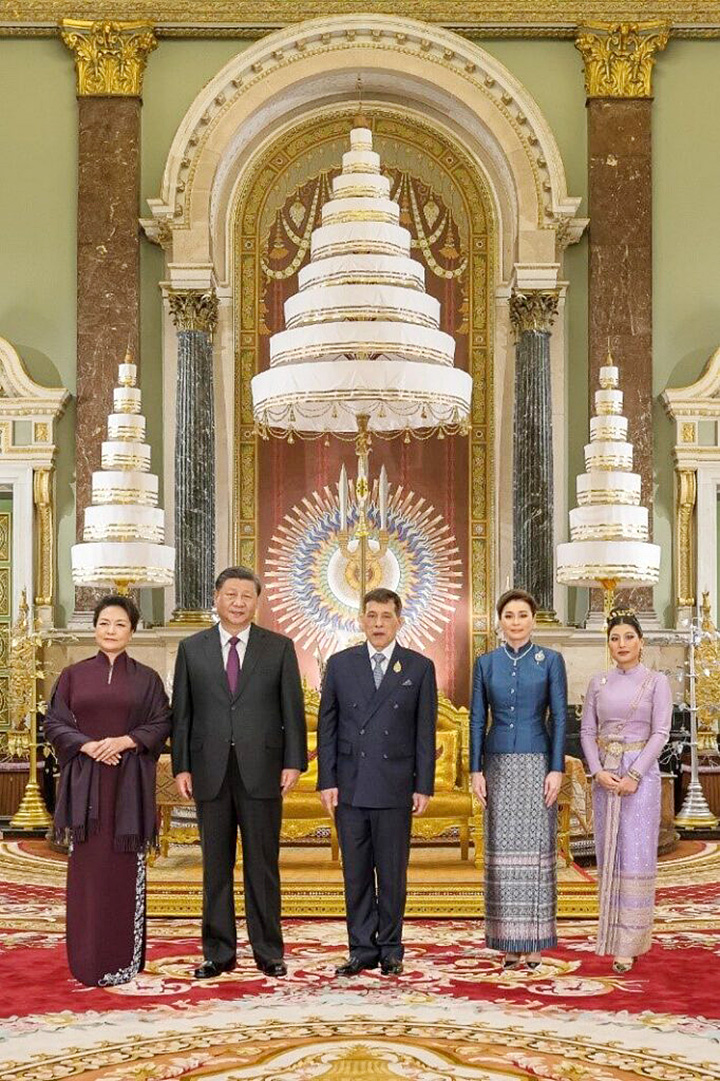
His Majesty the King and Her Majesty the Queen, accompanied by Her Royal Highness Princess Sirivannavari Nariratana Rajakanya, receive in audience His Excellency Mr. Xi Jinping, President of the People's Republic of China, and his spouse at the Chakri Maha Prasat Throne Hall, Bangkok, on 18 November 2022. (Photo: Royal Palace Office)

BANGKOK – Thailand’s Ministry of Foreign Affairs announced on November 6, 2025, that His Majesty King Maha Vajiralongkorn Phra Vajiraklaochaoyuhua and Her Majesty Queen Suthida Bajrasudhabimalalakshana will make a historic State Visit to the People’s Republic of China from November 13-17, 2025.

The visit comes at the invitation of Chinese President Xi Jinping and marks the 50th Anniversary of the Establishment of Thailand-China Diplomatic Relations. According to the ministry’s press release, this will be the first visit by a Thai monarch to the People’s Republic of China.

During the five-day State Visit, Their Majesties will participate in a series of official engagements beginning with an Official Welcome Ceremony at the Great Hall of the People, where they will meet with President Xi Jinping and his spouse.

The royal couple will also be received in audience by Premier Li Qiang of the State Council of the People’s Republic of China. A State Banquet will be hosted in their honor at the Great Hall of the People.

thai king visit china2
His Majesty the King and Her Majesty the Queen, accompanied by Her Royal Highness Princess Sirivannavari Nariratana Rajakanya, receive in audience His Excellency Mr. Xi Jinping, President of the People’s Republic of China, and his spouse at the Chakri Maha Prasat Throne Hall, Bangkok, on 18 November 2022. (Photo: Royal Palace Office)

The itinerary includes visits to significant cultural and religious sites, with Their Majesties scheduled to pay homage to the Sacred Tooth Relic of the Buddha at Lingguang Temple in Beijing.

The King and Queen will also tour institutions showcasing China’s national development in science, technology, innovation, and education, including the Beijing Aerospace City, the Center for Educational Technology and Resource Development, and the Innovation Center of Humanoid Robotics in Beijing.

Before departing for Thailand, Their Majesties will visit a special exhibition at the Palace Museum in Beijing titled “Golden Friendship, Shared Brilliance: A Special Exhibition Celebrating the 50th Anniversary of Thai-Chinese Diplomatic Relations.”

50th Anniversary of Thai Chinese
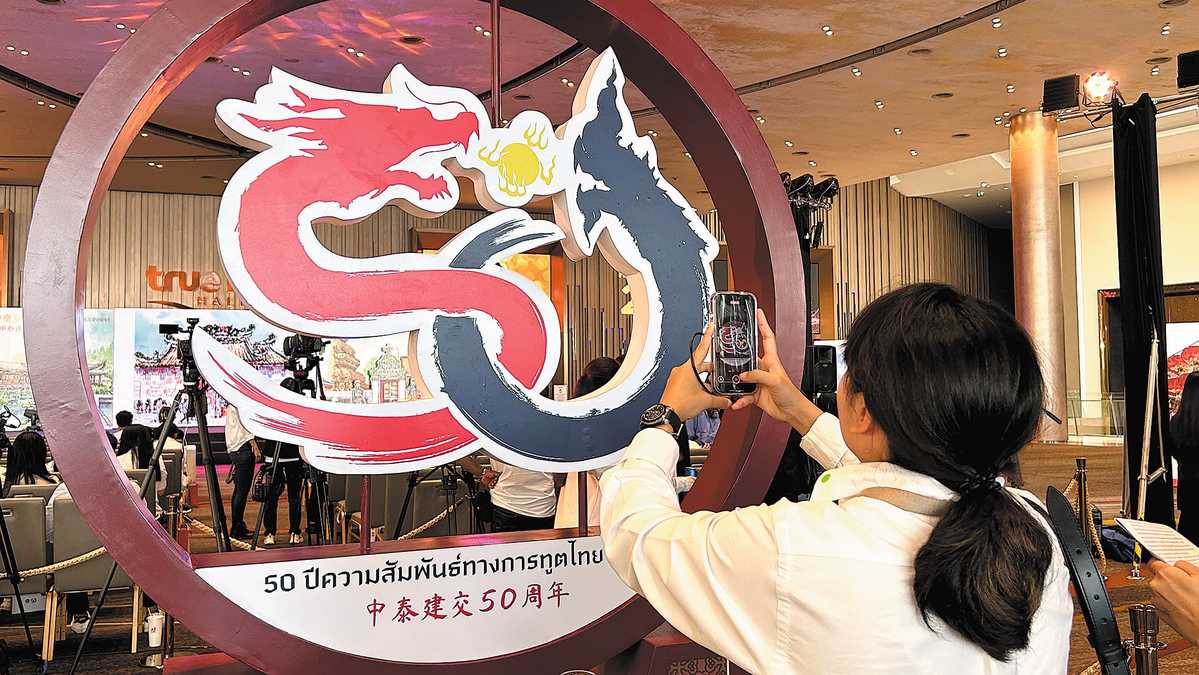
A person takes a photo of the official logo that marks 2025 as “the Golden Jubilee for Thai-China Friendship”, on Nov 19, 2024, in Thailand. (YANG WANLI / CHINA DAILY)

The 50th anniversary of Thailand-China diplomatic relations in 2025 has been designated as the “Golden Year of Friendship” between the two nations. The Ministry of Foreign Affairs stated that this historic State Visit reflects the deep-rooted friendship and mutual understanding shared between the two countries at all levels.

“The State Visit will further strengthen Thailand-China bilateral relations for years to come, bringing lasting benefits to the peoples of both countries,” the ministry said in its statement.

The announcement emphasizes the significance of the visit in reinforcing the existing friendship and cordial relations between Thailand and China as both nations celebrate half a century of diplomatic ties.

His Majesty the King and Her Majesty the Queen, previously received President Xi Jinping and his spouse in audience at the Chakri Maha Prasat Throne Hall in Bangkok on November 18, 2022, when Thailand hosted the Asia-Pacific Economic Cooperation (APEC) summit.

__________

Related article:

Thai King and Queen to Visit China for 50th Diplomatic Anniversary

Advertisement

Fugitive Russian Arrested on Koh Samui After Fleeing Phuket Drug Ad

Thai Immigration police track and detain the Russian suspect on Koh Samui on November 6, 2025. He was wanted in Phuket for allegedly advertising narcotics via a dark market network, ending his short time as a fugitive.

KOH SAMUI — Thai Immigration police have arrested a Russian man who was wanted in Phuket for allegedly advertising online drug sales, a scheme that used QR codes on public stickers to direct tourists to an illegal narcotics network.

Semion (27), a Russian national, was apprehended on Koh Samui after fleeing an arrest warrant issued by the Phuket Provincial Court. Authorities had tracked him to a hotel on the island where he was staying after November 4.

The investigation was initiated after social media posts alerted police to stickers promoting an online drug network named “THAIHUB.” The stickers, which were allegedly posted on utility poles and in tourist areas of Phuket, featured a QR code and an image of a woman holding a bag of white powder, resembling cocaine, used to advertise the sale of various narcotics.

russian kokc1
Stickers and materials used to advertise the online drug network, featuring QR codes for direct sales, found in the suspect’s possession. (Hod Jang Facebook page)

The Arrest and Investigation

Immigration Police in Surat Thani, collaborating with Region 8 Provincial Police and anti-narcotics agents, located Semion at a hotel. Upon seeing the police, he reportedly fled out the back of the property but was quickly pursued and detained.

A search of his hotel room yielded a large number of the advertising stickers in a drawer. Authorities also recovered photographs on his mobile phone that showed him placing the stickers in public areas, which he allegedly used to report his work to an employer.

During questioning, Semion claimed he was recruited through a Telegram dark market chat group, popular within the Russian community. He alleged the group’s administrators sent him the advertising stickers via private courier for him to distribute.


Semion stated he was paid $1 (USDT) per sticker placed, with funds transferred directly to his cryptocurrency wallet. He claimed to have carried out the advertising work for three days, earning a total of $300 (USDT).

Arresting officers expressed skepticism regarding the suspect’s claims and plan to broaden the investigation into the full extent of the online drug trafficking network. Semion has been initially charged with advertising narcotics without permission and was handed over to investigators at Cherng Talay Police Station in Phuket for legal proceedings.

______

Advertisement

Thai Bubble Tea ChaKaimuk Pursues Global Growth Amid Price War

Thai bubble tea franchiser ChaKaimuk.com is shifting its focus to aggressive international expansion, primarily across Southeast Asian Nations.

BANGKOK — Thai bubble tea franchiser ChaKaimuk.com is shifting its focus to aggressive international expansion, primarily across the Southeast Asian Nations, as an intense domestic price war erodes profitability in Thailand.

The company, which currently operates over 3,000 branches domestically, plans to add 1,000 new international branches over the next three to five years to sustain growth, according to Somchai Charoenthangeakwong, founder of parent company TEA Corporation Co., Ltd.

Intensifying Competition: Charoenthangeakwong expects competition in Thailand’s bubble tea market to peak in 2025. Franchise fees and beverage prices have reportedly fallen to a low of approximately 19 baht ($0.52) per cup, leading to a challenging environment for domestic expansion and an increase in investor hesitation.

ChaKaimuk3
Somchai Charoenthangeakwong, founder of parent company TEA Corporation Co., Ltd.

ASEAN Focus: To counter the domestic saturation and price pressure, ChaKaimuk.com is pivoting to overseas markets where it sees growing demand from both potential franchise partners and ingredient distributors. The company currently has distributors in countries like Cambodia and franchise locations in Myanmar, Laos, and Indonesia.

Value and Adaptability: While expanding globally, the company is also implementing strategies to enhance value and attract investors. New services for franchisees include free shipping on ingredient orders and complimentary supplies like menu boards and aprons. For consumers, the company is maintaining stable drink prices while increasing per-cup value through more topping options.

Charoenthangeakwong emphasized the company’s history of rapid adaptation, citing its shift to online franchisee training, multi-channel ordering, and the introduction of low-sugar menus during the COVID-19 pandemic as examples of its key success factors.

ChaKaimuk1
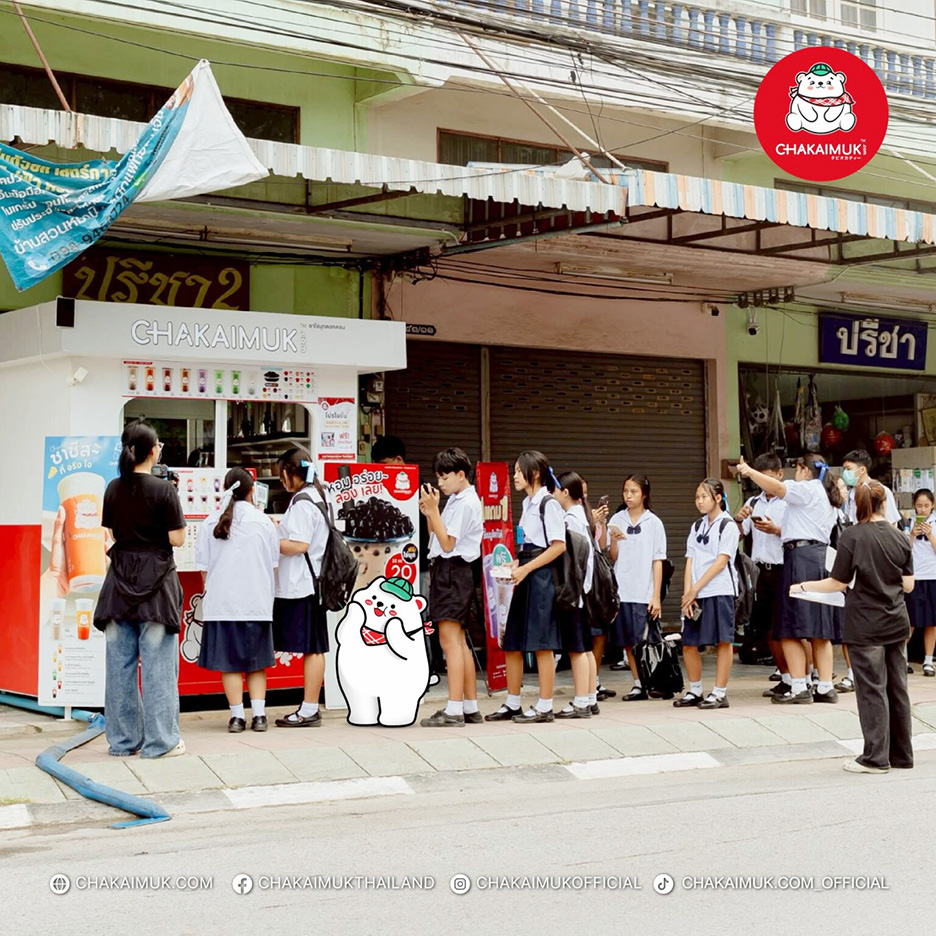
Thai students queuing up in a long line for their fix at the ChaKaimuk.com booth.

Infrastructure and Cost Management

The company is also addressing operational challenges and preparing for future growth:

Sourcing and Costs: ChaKaimuk.com plans to manage rising raw material costs, particularly for green tea, by diversifying sourcing and balancing overall expenses to maintain stable pricing for its products.

Factory Expansion: To support its planned domestic and international expansion, the company intends to invest in infrastructure, including new warehouses and an expansion of its factory in the Sukhaphiban 5 area over the next five years.

Menu Development: The company is accelerating its menu development cycle, moving away from quarterly releases to launch new products immediately as consumer trends emerge.

________

Advertisement

Hot News

LATEST NEWS

Bangkok
overcast clouds
29.4 ° C
31.1 °
29.4 °
76 %
2.9kmh
97 %
Thu
35 °
Fri
36 °
Sat
37 °
Sun
35 °
Mon
36 °