31.6 C
Bangkok
Tuesday, June 9, 2026
Home Blog Page 2320

Tumor-Free ‘Uncle Fatty’ Put On Strict Diet (Photos)

Uncle Fatty rests his oversized belly. Photo: Supakarn Keawchot

BANGKOK — A macaque who gained fame for a body that is half belly does not have cancer as vets suspected, but will be placed on a strict diet until he can be rehabilitated into the wild, wildlife officials said Friday.

Uncle Fatty, who weighs 26 kilograms, was brought in from the streets of Bangkok’s Bang Khun Tian district last month to be tested for communicable diseases and whether tumors were responsible for his enormous belly. Doctors found he had neither, and was just extremely obese from all the handouts.

Read: Famous Fat Macaque May Not be Fat After All: Vets

“We humans caused this. We gave him food that monkeys shouldn’t eat, and this was totally preventable,” Supakarn Kaewchot, a government wildlife veterinarian, said Friday.

According to Supakarn, residents in the area fed Uncle Fatty and his monkey friends “human food” such as crunchy snacks, fruit high in sugar and soft drinks.

Uncle Fatty is now at the national parks department’s offices in Bangkok where he is on a strict diet of green vegetables, low-sugar fruits such as papayas and bananas and lean protein.

“We also set up logs for Uncle Fatty in his cage and we encourage him to exercise,” Supakarn, who part of Uncle Fatty’s care team, said.

118953
Uncle Fatty eats vegetables in his cage at the Department of National Parks. Photo: Supakarn Keawchot

Uncle Fatty’s fat is not expected to disappear overnight.

“As of now, he’s only lost a few grams, and this will take some time. Like people, if monkeys get very fat they need time to lose weight. Weight loss will decrease Uncle Fatty’s risk of diabetes and heart disease,” the veterinarian said.

Suparkarn said her team hopes to rehabilitate Uncle Fatty into the wild one day, when his weight is suitable. In the meantime, she’s concerned about future fat monkeys to come.

“We have to educate the people in the area about suitable food to feed to monkeys. Other monkeys in the area are eating similar food, but Uncle Fatty is the fattest of them,” she said.

118957 e1495184628307
Uncle Fatty’s diet food of vegetables, low-sugar fruit and lean protein. Photo: Supakarn Keawchot
118952 e1495184653190
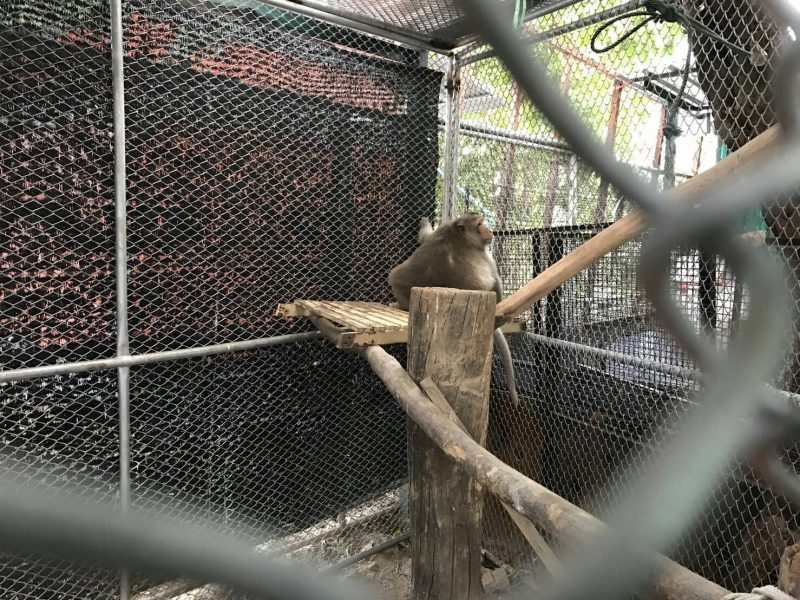
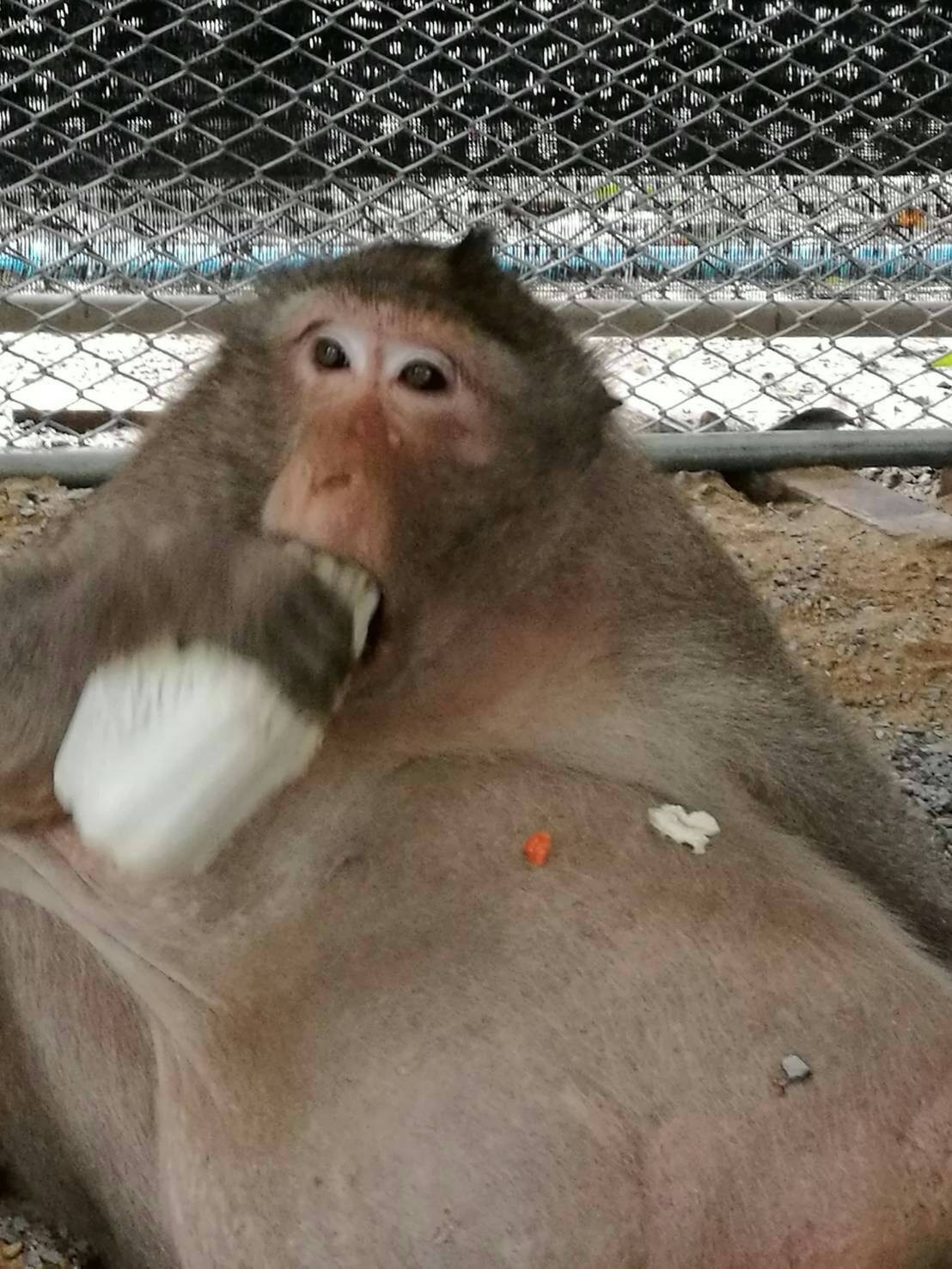
Uncle Fatty peers through the fence from a shelf in his cage at the Department of National Parks. Photo: Supakarn Keawchot
118956 e1495184691128
Uncle Fatty’s dish of vegetables, low-sugar fruit and lean protein. Photo: Supakarn Keawchot
Advertisement

Burning Man Tries to Enter Iranian Embassy on Election Day

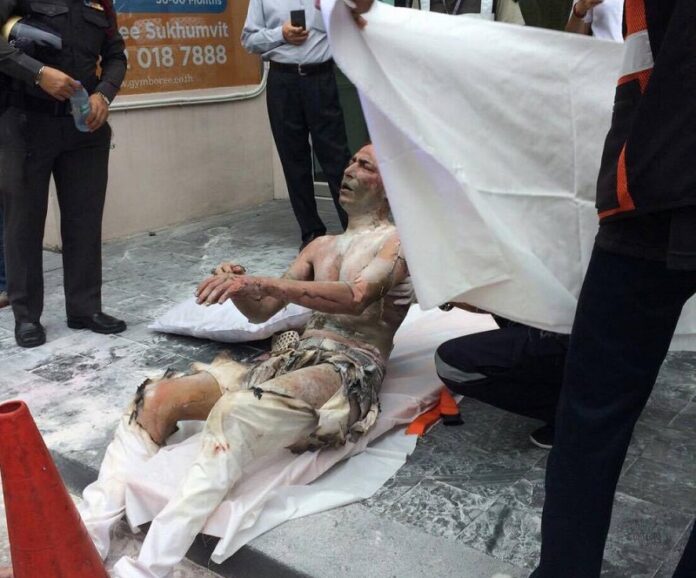
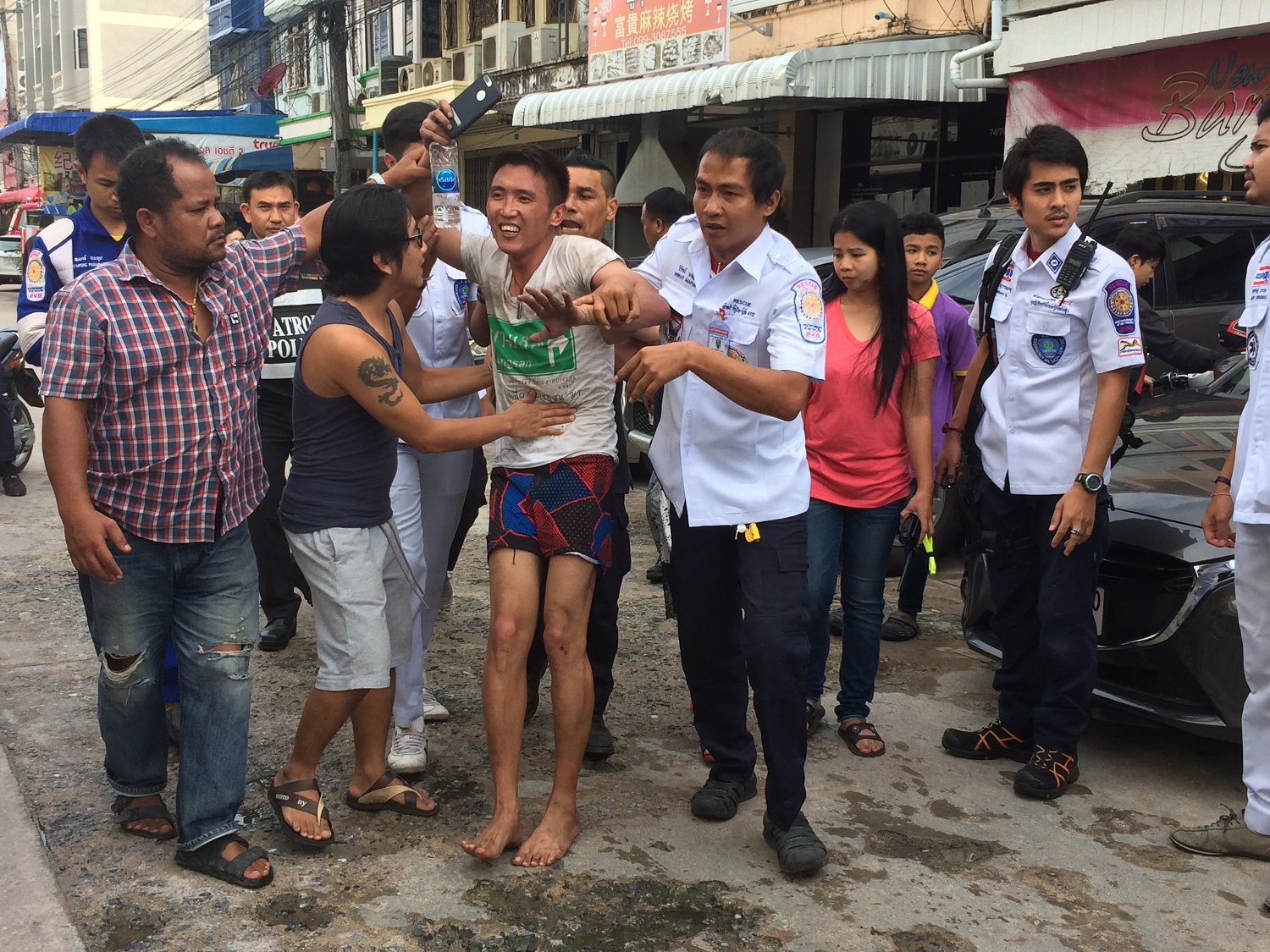
A badly burned man sits on the sidewalk Friday afternoon in front of the Iranian Embassy in Bangkok.

BANGKOK— A man set himself on fire and tried to charge into the Iranian Embassy on Friday afternoon as voting was underway inside for that nation’s presidential election.

The man lit himself on fire with the contents of a plastic bottle and lighter at about 1pm in front of the embassy on Soi Sukhumvit 49/6. A fire extinguisher was used to put out the flames. The badly burned man, who police have yet to identify, was taken to the Police General Hospital.

“He still refuses to talk,” said police Lt.Col. Jirakrit Jaruphat of Thonglor police station.

The polling station opened inside the embassy this morning, and police said there were not many people inside the embassy at the time of the incident.

Police Sen. Sgt. Maj. Anek Permsomboon, who was stationed at the embassy today, told Matichon he saw the man walking toward the embassy with a sign reading “Don’t voted Iris” in English and another three words in Arabic.

Today’s Iranian election is seen as a contest between hard-line cleric Ebrahim Raisi and moderate incumbent President Hassan Rouhani.

The man shouted something in a language the officer believed to be Farsi before pouring the gasoline over his body and igniting it with a lighter. Anek said the man tried to enter the Iranian Embassy but could not get inside, so he ran back to the front of the building.

Anek said he brought the fire extinguisher to help save him.

Advertisement

Police Set Up Barriers at Ratchaprasong on 7th Anniversary of Crackdown

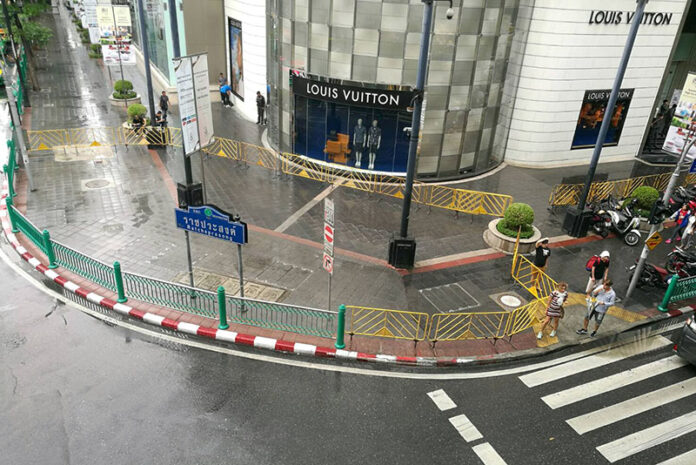
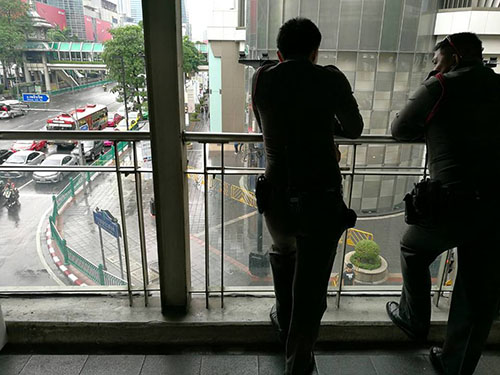
Public areas are cordoned off around Ratchaprasong Intersection on Friday afternoon.

BANGKOK — Police cordoned off public spaces at Ratchaprasong Intersection on Friday, the seventh anniversary of a crackdown which ended two months of street unrest that left nearly 100 head, mostly civilians.

No public observance was planned for Friday, and the barriers seemed erected to prevent any public memorial or protest at the site, which served as the rallying point for protests organized by the United Front of Democracy Against Dictatorship, a Redshirt umbrella organization also known as the UDD, against appointed Prime Minister Abhisit Vejjajiva’s government.

After attempts to clear protesters from Ratchadamnoen Avenue left 24 dead in clashes between the army and a paramilitary force on April 10, 2010, protesters, many of whom traveled from the rice basket provinces, relocated to occupy streets in the commercial heart of the capital.

On May 19, 2010, Abhisit ordered then-army chief Gen. Anupong Paochinda to clear out remaining protesters. Forty-one more civilians died that day, and one soldier was killed by friendly fire.

Four years later on May 22, 2014, his successor, Prayuth Chan-ocha staged a coup to seize power from the elected government and installed himself as prime minister.

may19.02

Advertisement

Voting, Governance and Clerical Power in Iran

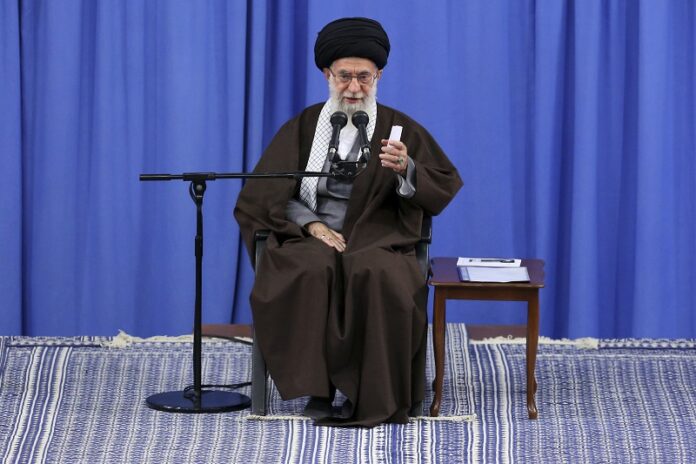
Supreme Leader Ayatollah Ali Khamenei addresses a group of teachers in 2016 in Tehran, Iran. Photo: Associated Press

DUBAI, United Arab Emirates — Iranians vote Friday for the next president of the Islamic Republic, but how does that elected leader fit into the country’s clerically managed government that approves candidates ultimately overseen by its supreme leader?


The Supreme Leader’s Powers

At the heart of Iran’s complex power-sharing government created after its 1979 Islamic Revolution is the supreme leader, a position now held by Ayatollah Ali Khamenei. The supreme leader also serves as the country’s commander in chief over its military and the powerful Revolutionary Guard, a paramilitary force involved in the war in Syria and the battle against the Islamic State group militants in Iraq that also has vast economic holdings across Iran. An 88-member elected clerical panel called the Assembly of Experts appoints the supreme leader and can remove one as well, though that’s never happened.


The President’s Powers

Iranian presidents serve four-year terms. Iran’s president is subordinate to the supreme leader but still powerful with considerable influence over both domestic policy and foreign affairs. In Rouhani’s case, his administration negotiated the 2015 nuclear deal with world powers, which saw Iran limit its enrichment of uranium in exchange for the lifting of economic sanctions. That accord was done with Khamenei’s blessing.


Narrowing the Field of Candidates

An initial field of over 1,600 hopefuls registered to run in the election. Iran’s Guardian Council, a 12-member panel half selected by the supreme leader and half nominated by the judiciary and approved by parliament, vetted the candidates and narrowed the field to six, including Rouhani. The council has never allowed a woman to run for president and routinely rejects candidates calling for dramatic reform, stifling change while ensuring the continuation of Iran’s Shiite Islamic governance. Of the six candidates approved, two have since dropped out.


Rouhani’s Campaign

Rouhani, a cleric, says his moderate administration needs to continue its work to implement the nuclear deal. In campaign stops and debates, he’s struck an increasingly more-forceful line against the Revolutionary Guard and hard-liners for ballistic missile launches and arbitrary arrests, something he largely avoided doing so far in his time in office. Rouhani remains the favorite of analysts as every Iranian president since Khamenei himself took the presidency in 1981 has won re-election. However, Iran’s sluggish economy and poverty remain the top issues for average Iranians who have yet to see the benefits of the atomic accord.


Rouhani’s Main Opponent

Hard-line cleric and former judge Ebrahim Raisi appears to be Rouhani’s main challenger. Raisi is perceived to be close to Khamenei as the supreme leader put him in charge of Astan Quds Razavi, a vast charitable foundation encompassing businesses and endowments that oversees the holy Shiite shrine of Imam Reza in Mashhad. He also has received the endorsement of two major clerical organizations that declined to endorse Rouhani in his 2013 campaign. Raisi has said he won’t seek to tear up the nuclear deal. Raisi also has offered populist promises, including monthly cash payments to Iran’s poor. However, his candidacy has revived the controversy surrounding the 1988 mass execution of thousands in Iran. Raisi allegedly served on a panel involved in sentencing the prisoners to death.


What Subject Widely Hasn’t Been Discussed in the Race?

Surprisingly, Islam. “Candidates have seemingly concluded that Islamic ideology has lost its power as a driving factor among voters and is therefore not worth addressing,” wrote Mehdi Khalaji, an analyst at the Washington Institute for Near East Policy who is Shiite theologian by training.


How Iranians Vote

Any Iranian 18 or older can vote in Friday’s election. To cast a ballot, they must go to one of 63,500 polling centers set up around the country in mosques, schools and other public buildings. A voter must show their national ID card and fill out a form. They dip one of their index fingers in ink, making a print on the form, while officials stamp their ID so they can’t vote twice. The voter then writes down the name and the numerical code of the candidate they want to elect on the secret ballot and drop it into a ballot box. Voting lasts from 8 a.m. until 6 p.m., though authorities routinely keep polls open at least several hours later.


A Look at Election Oversight

Iranian elections are run by the country’s Interior Ministry, which oversees the nation’s police forces. The Guardian Council must sign off any final election results. Iran bars domestic and international observers from the elections, bucking a widely accepted principle around the world that international watchdogs warn can allow for fraud. Allegations of voter fraud marred the country’s 2009 election, which saw hard-line President Mahmoud Ahmadinejad secure a second term amid widespread unrest. The Guardian Council rejected Ahmadinejad’s bid to run again in Friday’s election, likely to avoid any similar conflict.


So is Iran a Democracy?

Iran describes itself as an Islamic Republic. It holds elections and has elected representatives passing laws and governing on behalf of its people. However, the supreme leader has the final say on all state matters and the Guardian Council must approve all laws passed by the parliament. Those who led Iran’s Green Movement after Ahmadinejad’s disputed 2009 re-election remain under house arrest. Security forces answering only to the supreme leader also routinely arrest dual nationals and foreigners, using them as pawns in international negotiations.

Story: Jon Gambrell

Advertisement

Organizer Gives Up, Cancels Samet Music Fest

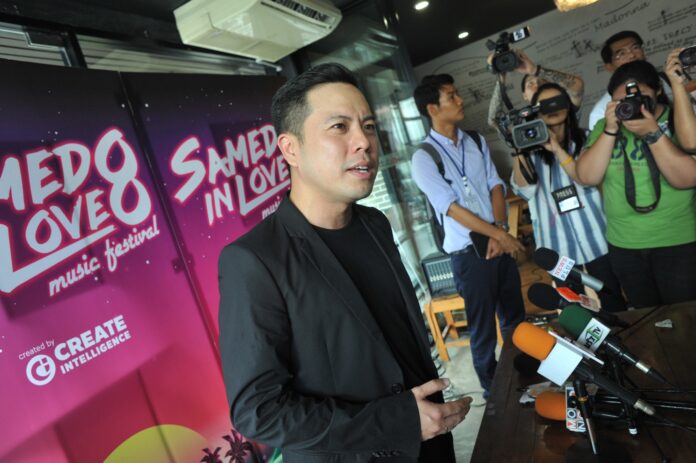
Yannakorn Apirajkamol, managing director of festival organizer Create Intelligence speaks at a Thursday press conference.

RAYONG — Two weeks before an annual music festival on Koh Samet was to be held, its organizer finally announced Thursday it would not happen, two weeks after the authorities said as much.

After authorities axed the Samed in Love festival earlier this month, organizer Create Intelligence put off notifying its fans as it sought to find a way to hold the event as planned on June 3. Yesterday afternoon they were forced to announce its cancelation at a bistro on Vibhavadi Rangsit Road.

“I regret to inform you that I have to cancel the eighth edition of Samed in Love,” said Yannakorn Apirajkamol, managing director of organizer Create Intelligence. “If we move to another venue, we wouldn’t be able to prepare a quality event in time.”

Yannakorn said his team followed procedure in February when it sought permission for the June 3 festival from Rayong city and the Khao Laem Ya–Mu Ko Samet National Park, which Koh Samet is part of. He believed everything was set when they began selling tickets April 8.

“It’s strange that why the problem rose just a month before the event and, until now, we still had no written letter from the government saying we couldn’t arrange the music fest,” he said, adding that he only learned the authorities denied the request through media reports.

Payoon Pongphan, who heads the national park in which Samet is located, said May 3 that the festival couldn’t be held under national park law and due to the mourning period for the Late King Bhumibol, who died in October.

That came after island residents protested against the festival on April 26, saying it was a nuisance that did not benefit the island.

Reached for comment Friday, Payoon said Create Intelligence only contacted the national park after a decision had been made.

“The organizer didn’t submit any letter to the national park, so how could we reply to them in written form?” Payoon said. He said the organizer’s letter seeking permission went to Rayong City Hall and the park had already responded in the negative by the time it was contacted.

Ticket refunds can be requested online until 6pm on May 31, and the money will be transferred by June 21.

Dissatisfied comments flooded the organizer’s announcement on Facebook, where many complained they had booked expensive accommodation that would not provide a refund.


Related stories:

Authorities Axe Music Fest on Ko Samet

Samet Residents Complain Island Music Fest an Unwelcome Mess

Advertisement

Uber-Hunting Pattaya Taxis Face Backlash, Charges (Video)

At left, a taxi driver stands in front of Uber driver Surasak Khookam’s car to block him. At right, foreign passengers are ordered out of his car.

PATTAYA — An Uber driver filed charges of extortion Thursday against four taxi drivers who blocked his way and forced his passengers out of his car after using the app to hunt down drivers.

The four drivers allegedly followed the white Toyota driven by Surasak Khookam, 29, who was picking up foreign passengers Wednesday in Pattaya. Though the passengers already put their luggage inside the trunk, the drivers blocked the car and told them to wait while they called police.

“In Thailand cannot Uber, Police takes,” a taxi driver is heard telling the foreign passengers in a video of the incident. “You wait here just moment.”

Read: Pattaya Taxis Terrorize Woman They Mistake for Uber Driver

The four taxi drivers blocked the way in front of Surasak’s car and told him to wait until police arrived. They also asked the passengers to show the phone screen with the Uber application running.

“I’m sorry. You’re making a living illegally,” a taxi driver said to Surasak.

https://www.youtube.com/watch?v=aPIdBKK5PBg

Surasak was fined 1,000 baht for misuse of a vehicle.

Surasak later decided to filed a charge of illegal detention against the four.

Both sides confronted each other Thursday when the four were brought in to hear the charges.

One of the taxi drivers, 42-year-old Krit Sangsuwan, said he knew Surasak was on his way to pick up a fare because they were using the Uber application to track its drivers by GPS. He complained that Pattaya taxi drivers have been negatively affected by the service.

Uber and other alternative transport services are considered illegal in Thailand, as the law only allows properly registered vehicles displaying yellow license plates to pick up passengers.

Competing videos, one filmed by a taxi driver and one by the Uber driver, went viral online, where they were met with harsh criticism of the Pattaya taxi drivers.

“Such good samaritans,” wrote Facebook user Aran Wittayasithi Mtutd. “When you have free time, please film the moment when you refused to use the meter when you were called in the Pattaya area.”

“If taxi drivers have the authority to track, check and detain like this, I support the Uber driver to get revenge,” wrote user Ekachai Rodnapho. “Pretending to be a customer and get in a taxi with a camera. 100 out of 100 times, they never use the meter.”

Related stories:

Pattaya Taxis Terrorize Woman They Mistake for Uber Driver

28 Uber Drivers Busted, Now Official Floats Article 44 Ban

Advertisement

Photo Phriday: Floods and Falls

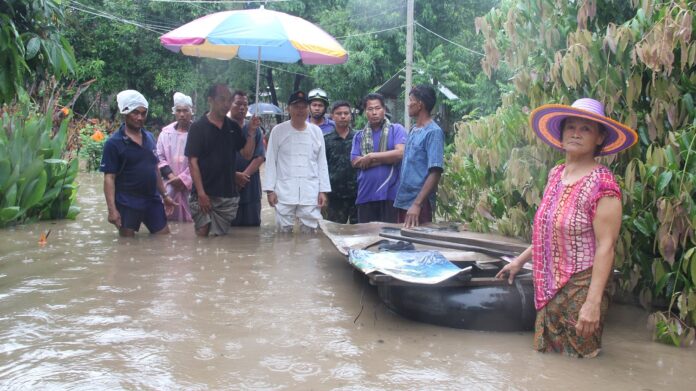
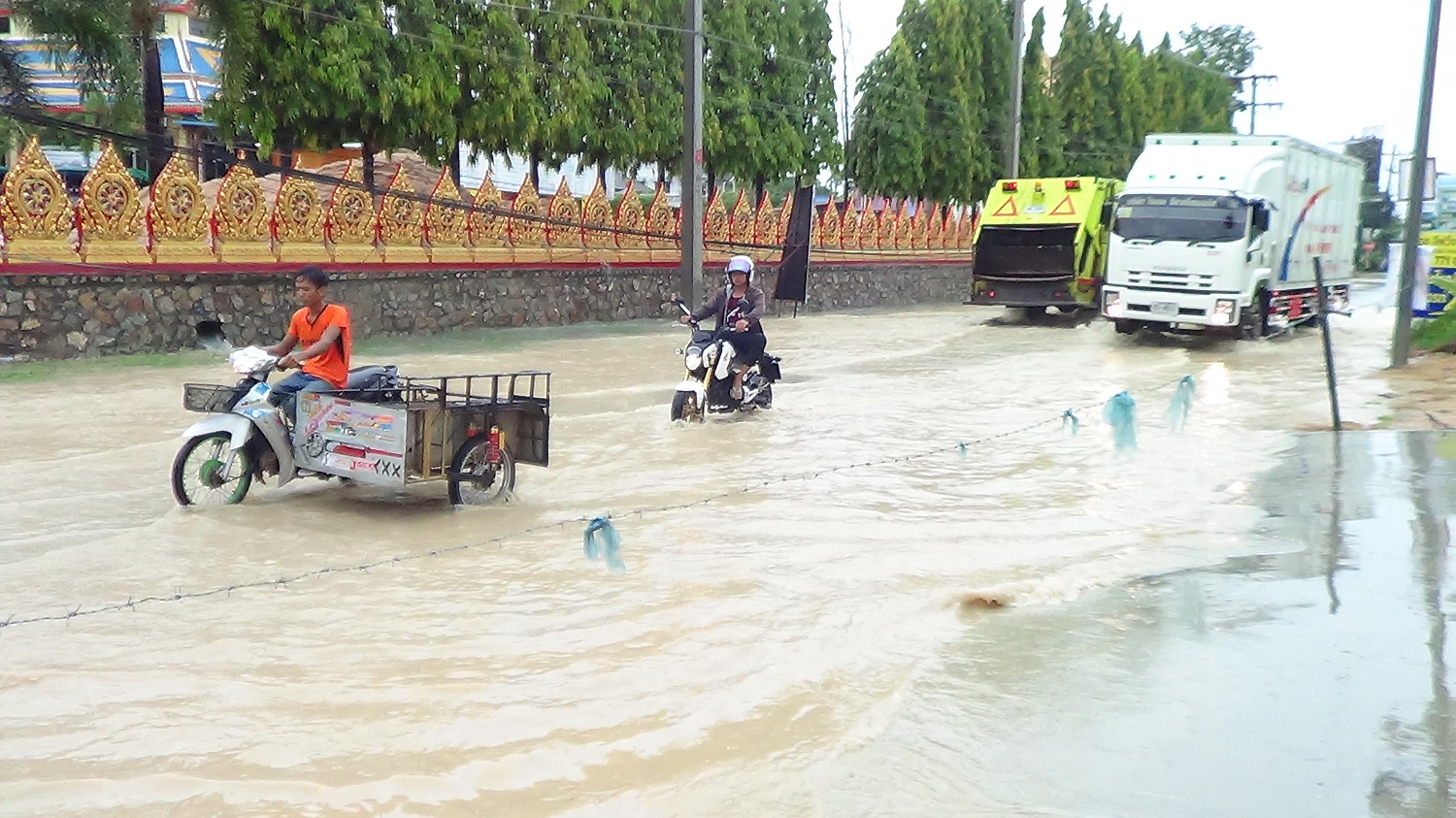
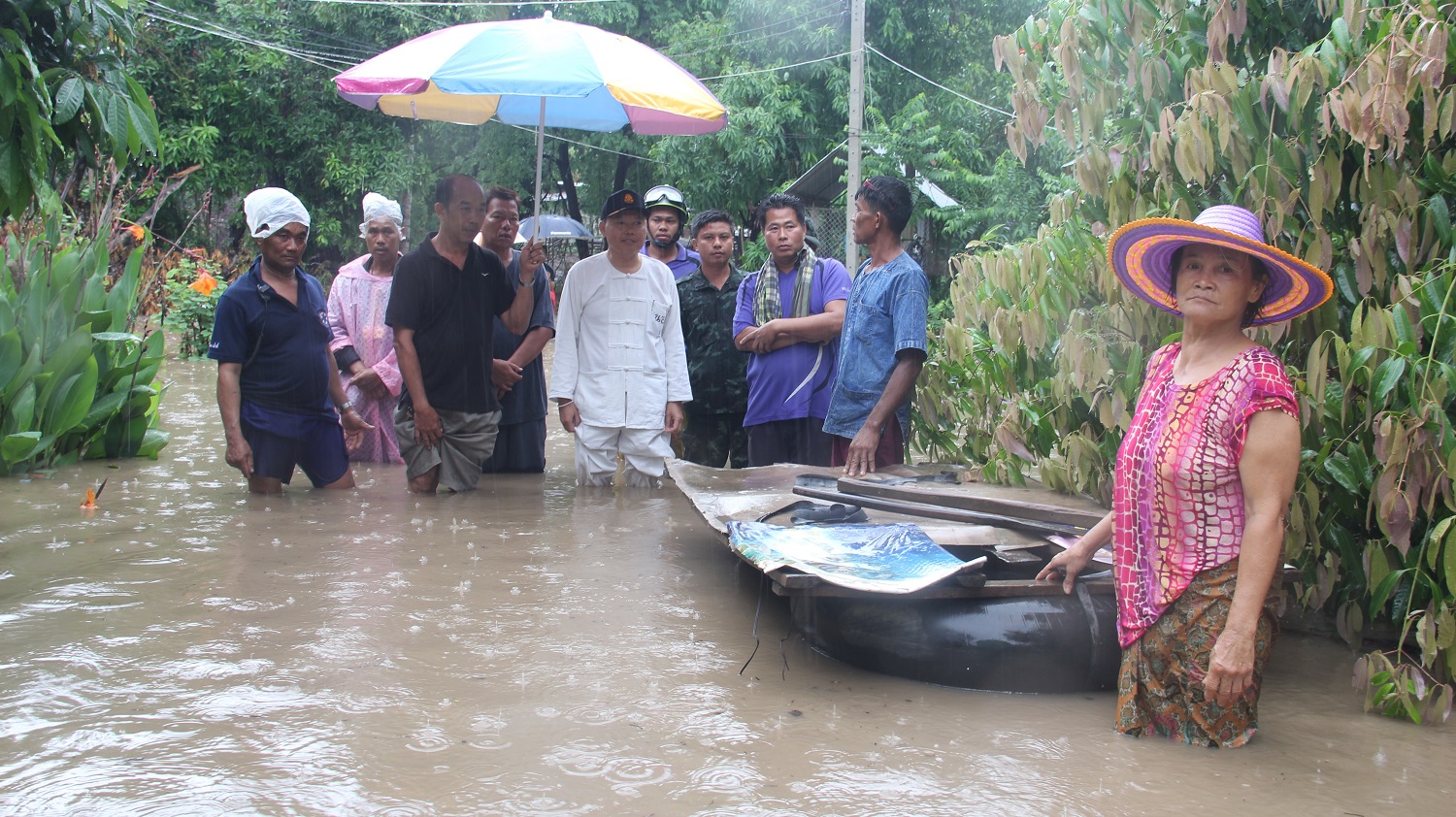
Residents wade in thigh-high floodwaters Wednesday in Uttaradit province.

Top: Residents wade in thigh-high floodwaters Wednesday in Uttaradit province.

Here’s how Thailand looked this week, as floodwaters rose and gravity felled ceilings, trees and even people. Find more on our Facebook, Twitter, YouTube and Instagram.

107050
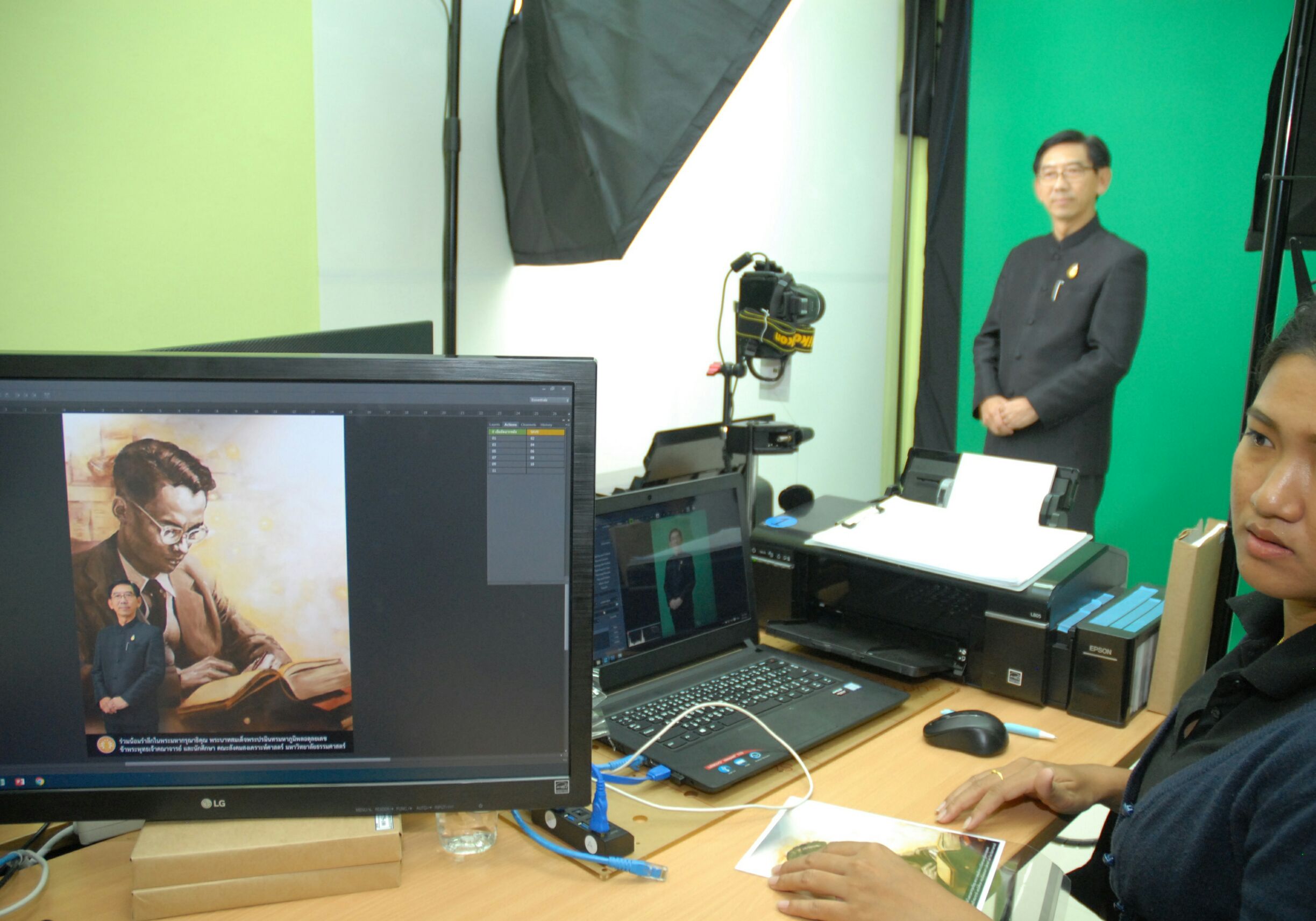
People take commemorative photos with a background of Rama IX on Thursday at the Faculty of Social Administration at Tha Prachan campus of Thammasat University. Photos can be taken there free of charge from 9am until 4pm, Friday through Oct. 19.


IMG 2274
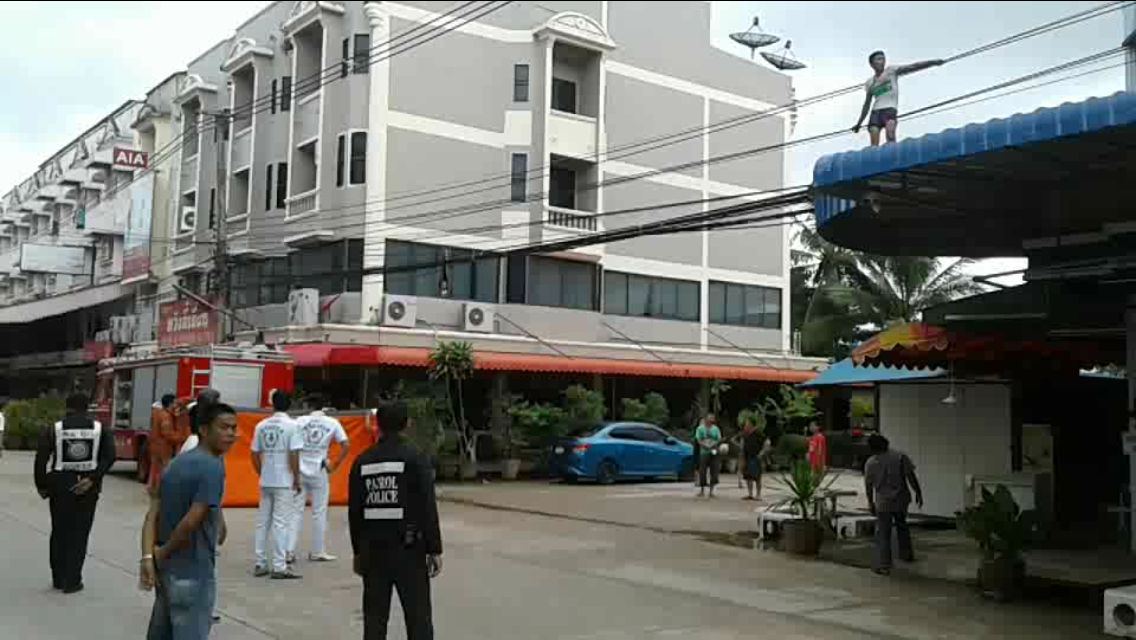
Decha Sae-yong, 32, climbs up on electricity wires Friday morning in Phuket before rescue officials coaxed him down from jumping.


18489690 1521763194509274 6693948685532276961 o
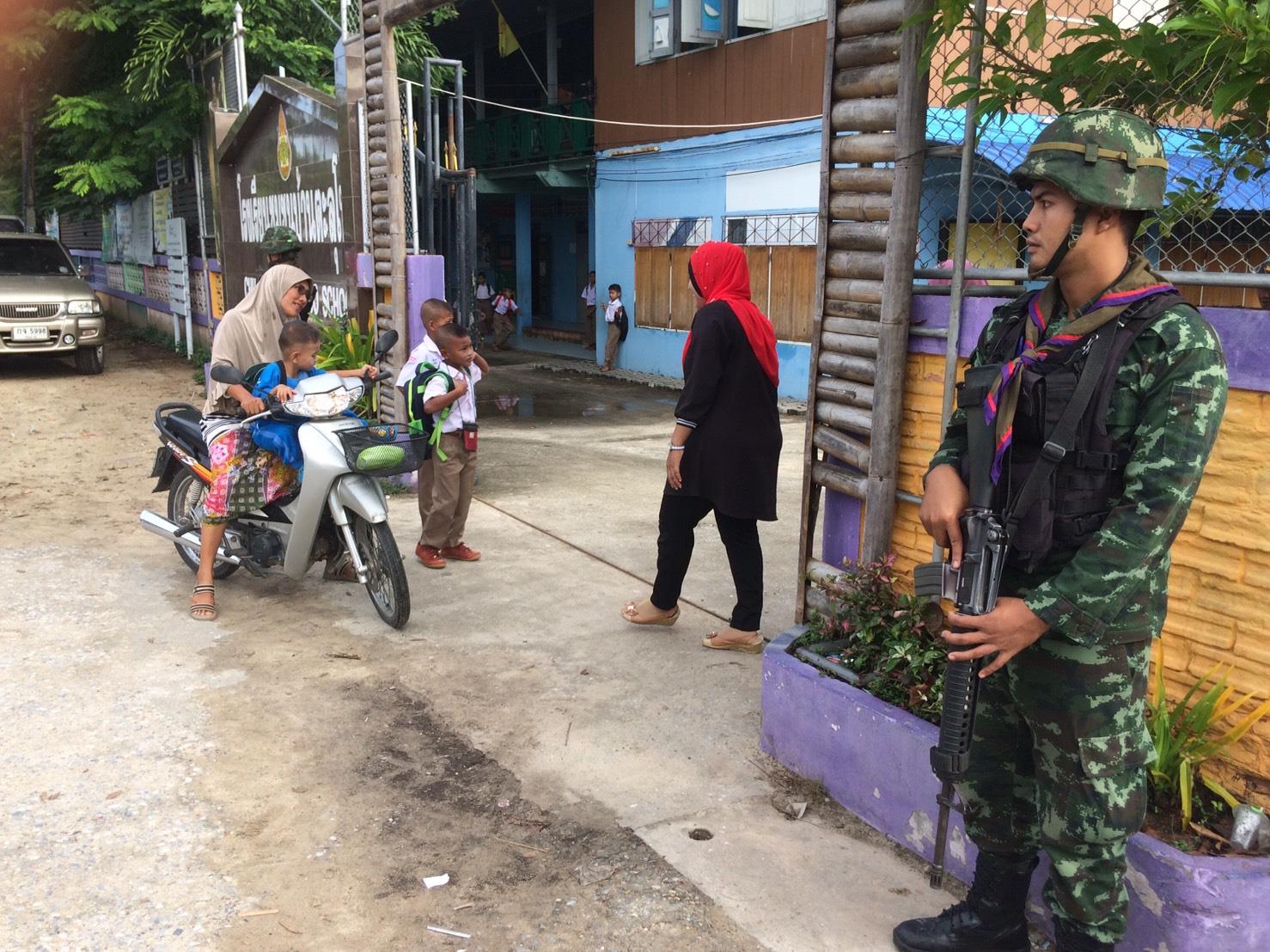
Soldiers guard a school Tuesday in Pattani province, the first day of classes for many schools in the Deep South.


g4
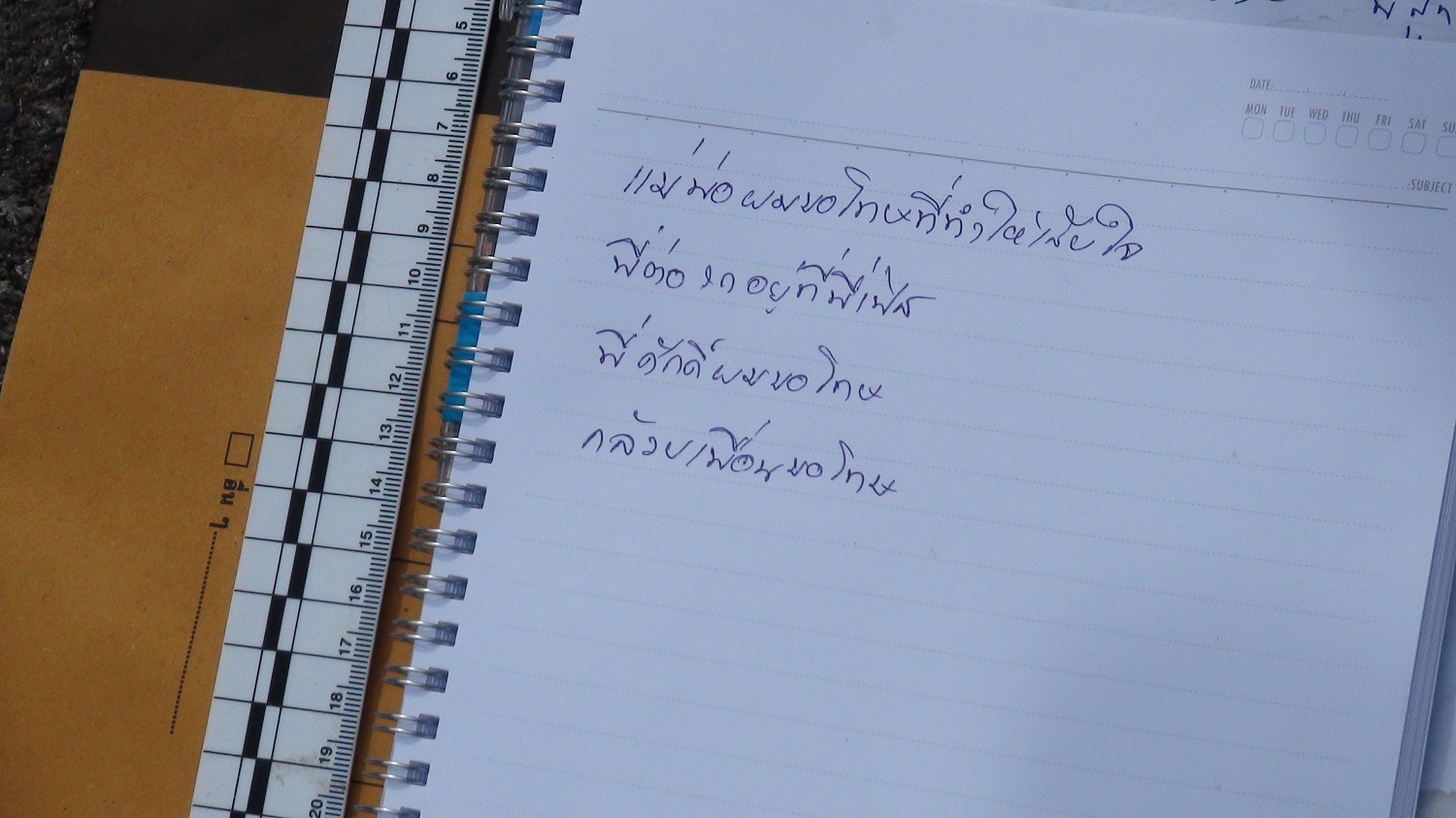
The suicide note of Santi Koomhoikan, 35, a contractor from Nakhon Si Thammarat. Santi shot himself in his car and was found Friday morning. According to police investigations, relatives said Santi suffered from severe depression. “I’m sorry for making you sad, mom and dad. P’Tor, the car is with P’First. P’Sak, sorry. Kluay, buddy, I’m sorry,” reads the note.


18449602 1521018214583772 2231895827907811009 o
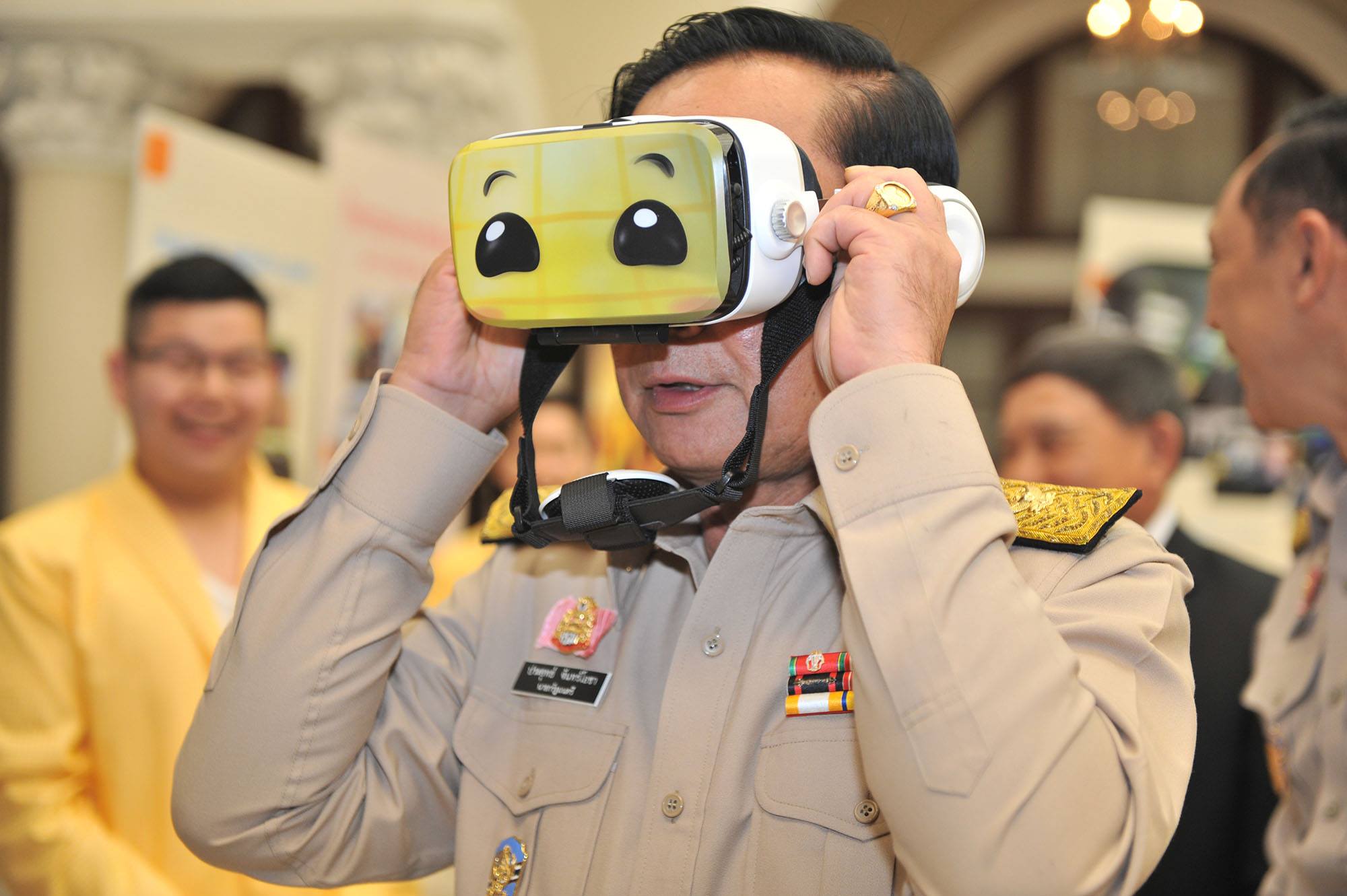
Junta chairman Prayuth Chan-ocha tries a VR headset Monday at Government House.


S 11731035
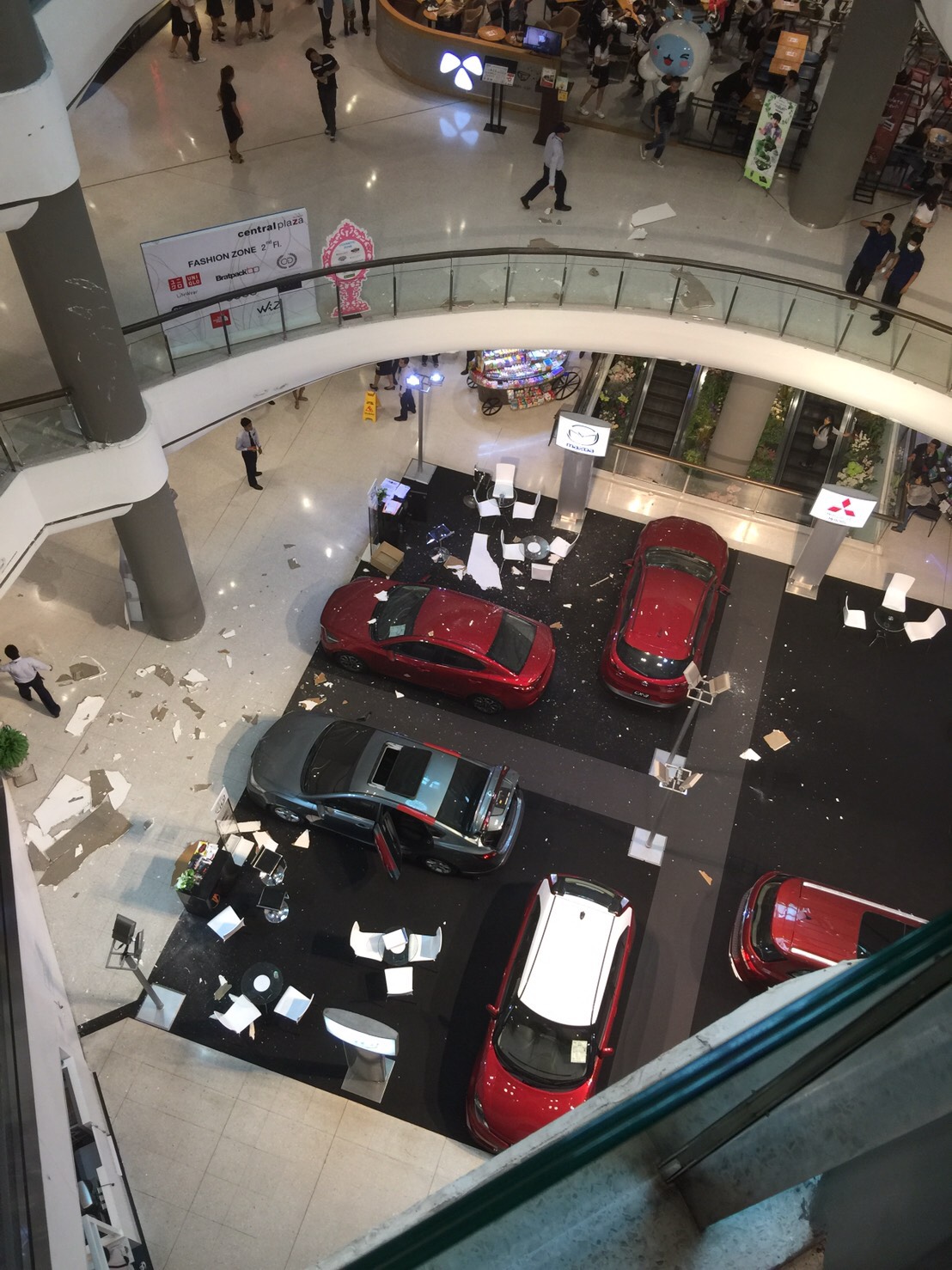
Pieces of fallen ceiling on Wednesday afternoon lie scattered across the ground floor of CentralPlaza Pinklao, where the the ceiling fell and injured three people. Read: Police Weigh Charges After Falling Ceiling at Central Pinklao Injures 3


ปลอม2
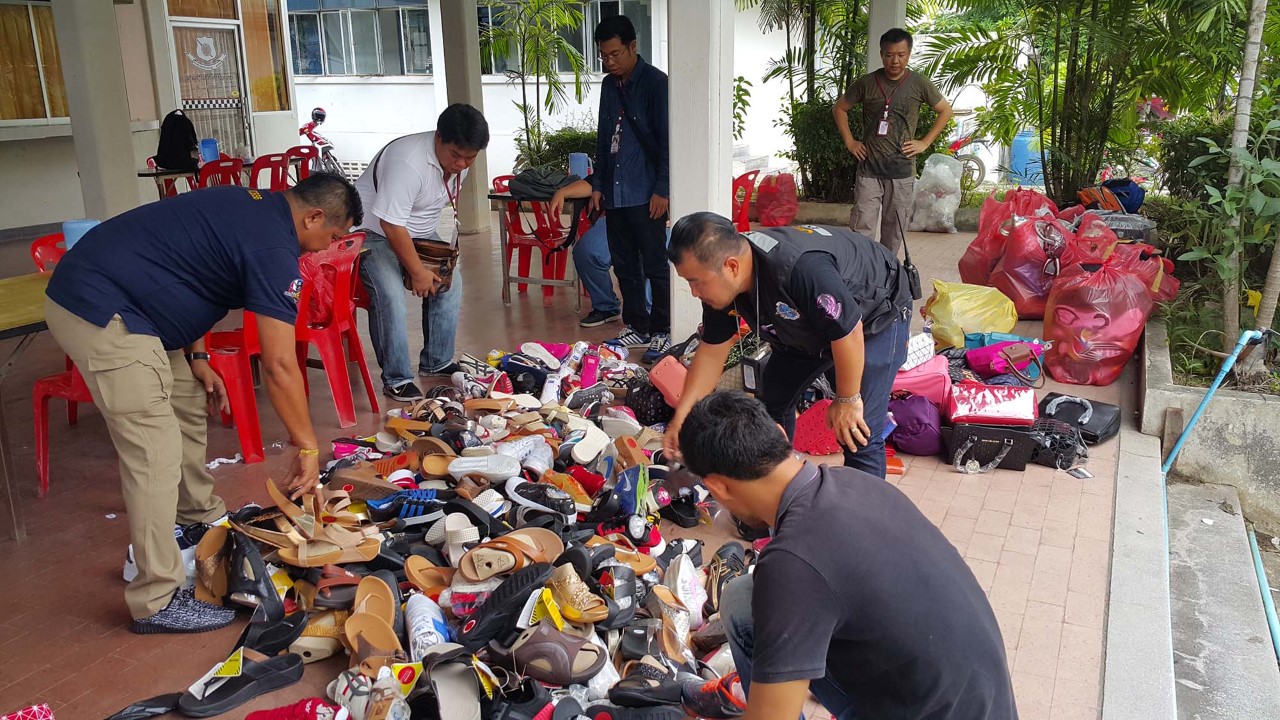
Officials inspect a pile of counterfeit products Thursday in Songkhla.


1494987262060
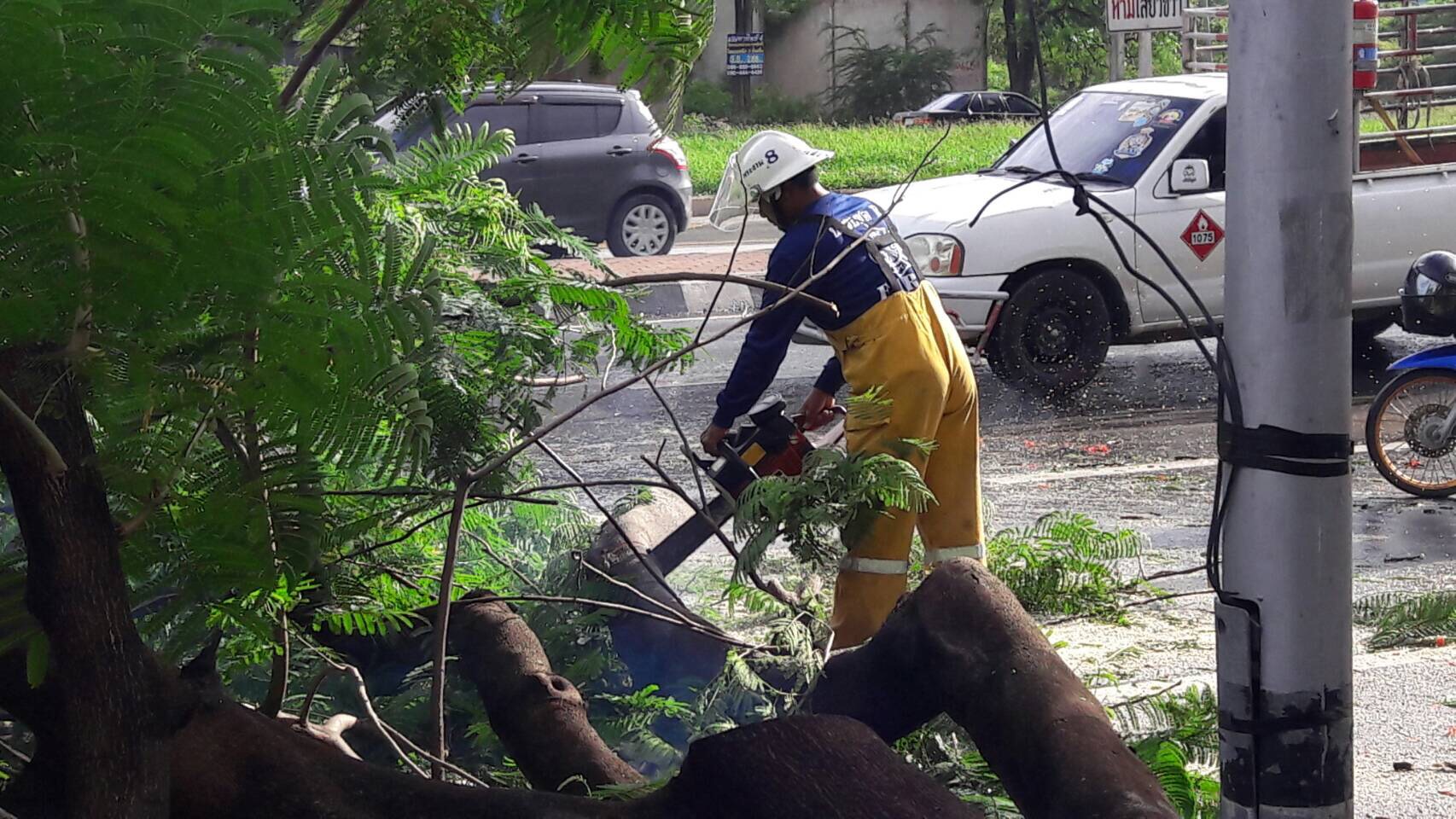
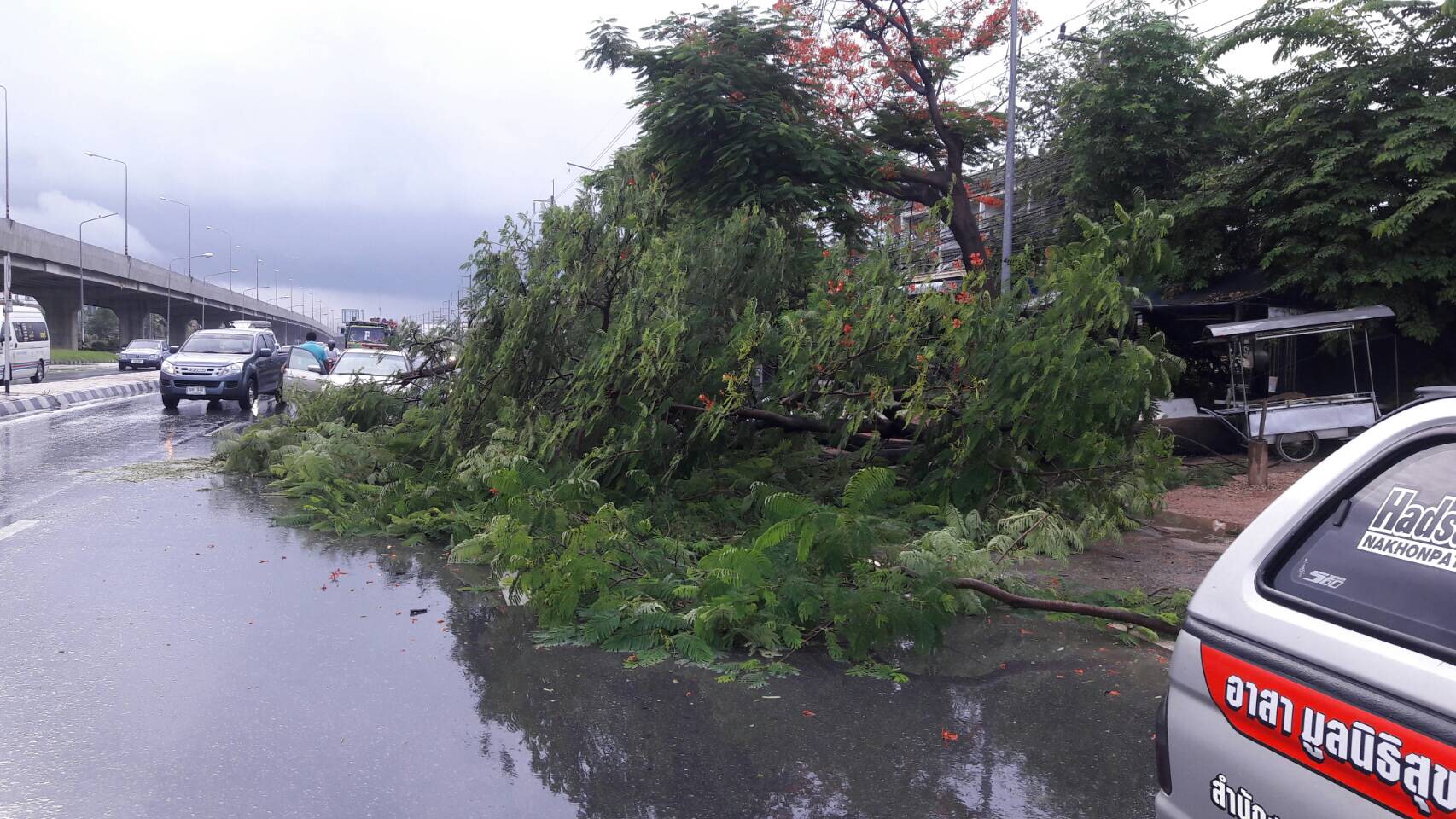
An official removes a fallen tree Wednesday near Wat Lat Pla Khao in Nakhon Pathom province. The tree fell and injured a 13-year-old girl waiting for the bus nearby.


DSC09778
Flooded streets Tuesday in Chonburi province.


IMG 6754
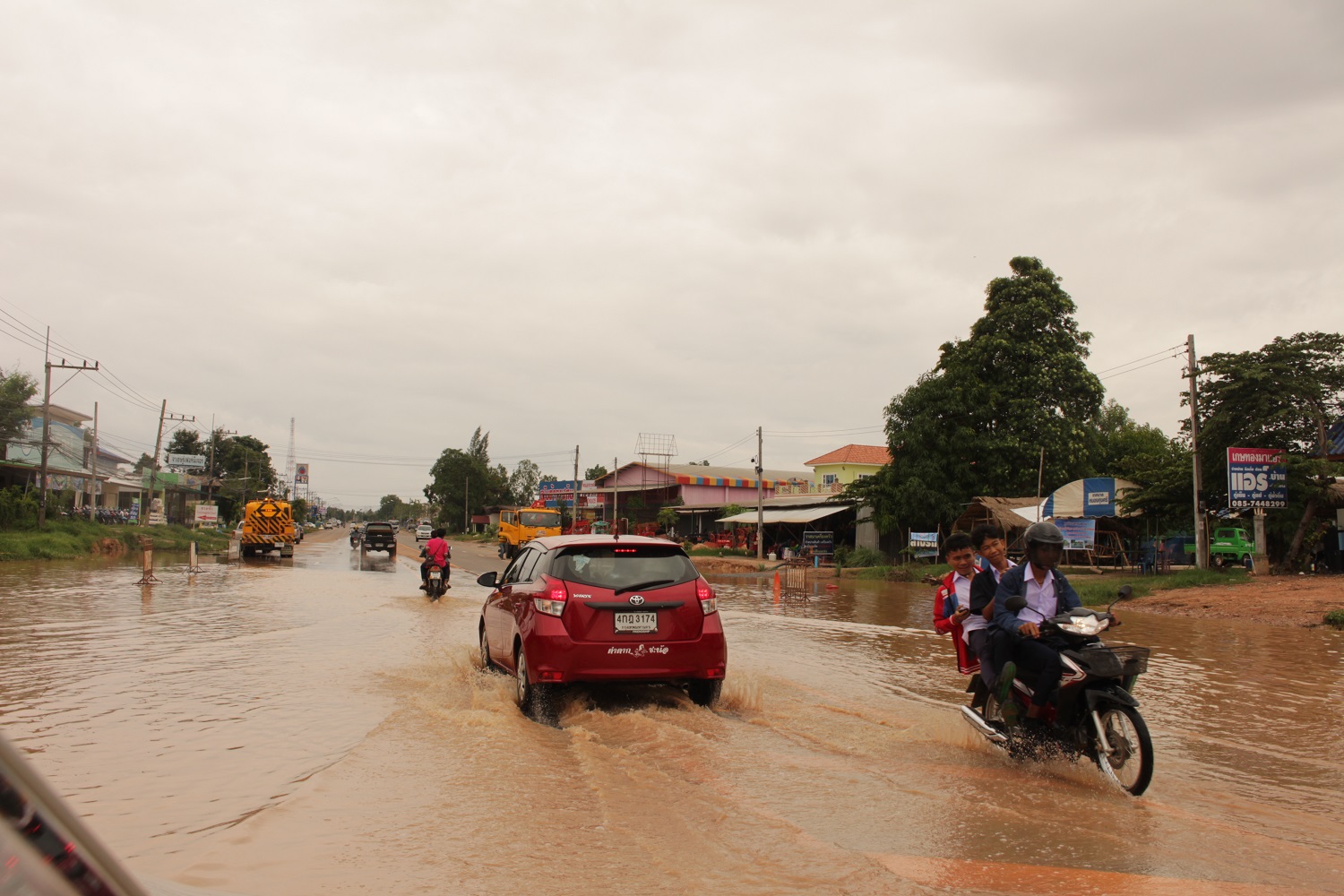
Cars and motorcycles drive through floodwaters Friday in Kalasin province.


Related stories:

Photo Phriday: Monsoon So Soon

Advertisement

Polls Open in First Iran Presidential Vote Since Atomic Deal

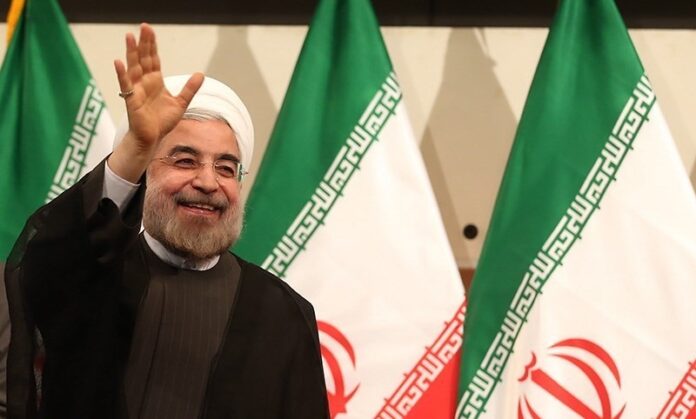
Iranian President Hassan Rouhani seen here in 2013 at the Marble Palace in Tehran, Iran. Meghdad Madadi / Wikimedia Commons

TEHRAN, Iran — Iranians began voting Friday in the country’s first presidential election since its nuclear deal with world powers, as incumbent Hassan Rouhani faced a staunch challenge from a hard-line opponent over his outreach to the wider world.

The election is largely viewed as a referendum on the 68-year-old cleric’s more moderate policies, which paved the way for the nuclear accord despite opposition from hard-liners.

Economic issues also will be on the minds of Iran’s over 56 million eligible voters as they head to more than 63,000 polling places across the country. The average Iranian has yet to see the benefits of the deal, which saw Iran limit its contested nuclear program in exchange for the lifting of some sanctions.

Supreme Leader Ayatollah Ali Khamenei, the most powerful man in Iran, symbolically cast the election’s first vote and called on Iranians to turn out in huge numbers for the poll.

“Elections are very important and the fate of the country is in the hands of all people,” he said.

In the election, Rouhani has history on his side. No incumbent president has failed to win re-election since 1981, when Khamenei became president himself.

That doesn’t mean it will be easy, however. Rouhani faces three challengers, the strongest among them hard-line cleric Ebrahim Raisi, 56.

Raisi, a law professor and former prosecutor who heads an influential religious charitable foundation with vast business holdings, is seen by many as close to Khamenei. Raisi has even been discussed as a possible successor to him, though Khamenei has stopped short of endorsing anyone.

Raisi won the support of two major clerical bodies and promised to boost welfare payments to the poor. His populist posture, anti-corruption rhetoric and get-tough reputation  bolstered by his alleged role condemning inmates to death during Iran’s 1988 mass execution of thousands of political prisoners  are likely to energize conservative rural and working-class voters.

Mostafa Hashemitaba, a pro-reform figure who previously ran for president in 2001, and Mostafa Mirsalim, a former culture minister, also remain in the race.

The race has heated emotions and pushed public discourse in Iran into areas typically untouched in the tightly controlled state media. That includes Rouhani openly criticizing hard-liners and Iran’s powerful Revolutionary Guard, a paramilitary force now involved in the war in Syria and the fight against Islamic State militants in neighboring Iraq. Rouhani also found himself surrounded by angry coal miners who beat and threw rocks at his armored SUV during a visit to a northern mine struck by an explosion earlier this month that killed at least 42 people.

But authorities worry about tempers rising too high, especially after the 2009 disputed re-election of former hard-line President Mahmoud Ahmadinejad that saw unrest, mass arrests and killings. Authorities barred Ahmadinejad from running in Friday’s election, and Khamenei days ago warned anyone fomenting unrest “will definitely be slapped in the face.”

That hasn’t stopped those at Rouhani rallies from shouting for the house-arrested leaders of the 2009’s Green Movement. Opposition websites have said Green Movement leaders Mir Hossein Mousavi and Mahdi Karroubi both have endorsed Rouhani against Raisi. Rouhani promised in his 2013 campaign to free the men, but that pledge so far remains unfulfilled.

Mohammad Khatami, another reformist who served as Iran’s president from 1997 to 2005, also has endorsed Rouhani.

Voting is scheduled to run until 6 p.m., though Iran routinely extends voting for several hours in elections. Iranian authorities say they believe the vote will exceed a 70 percent turnout.

Story: Adam Schreck, Amir Vahdat

Advertisement

Lauded Rocker Chris Cornell Killed Himself by Hanging

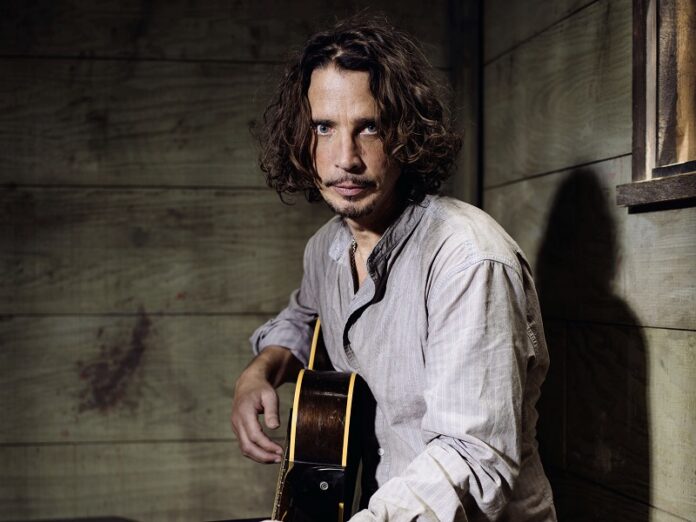
Chris Cornell plays guitar during a portrait session at The Paramount Ranch in 2015 in Agoura Hills, California. Photo: Casey Curry / Associated Press

DETROIT — Chris Cornell, one of the most lauded and respected contemporary lead singers in rock music with his bands Soundgarden and Audioslave, hanged himself Wednesday in a Detroit hotel room, according to the city’s medical examiner. He was 52.

The Wayne County Medical Examiner’s Office said Thursday it completed the preliminary autopsy on Cornell, but that “a full autopsy report has not yet been completed.” A police spokesman told two Detroit newspapers that the singer was found with a band around his neck.

Cornell’s death stunned his family and his die-hard fans, who Cornell just performed for hours earlier at a show in Detroit. Soundgarden’s current tour kicked off in late April and was planned to run through May 27. He was found dead at the MGM Grand Detroit hotel by a family friend who went to his room after Cornell’s wife asked him to check on the singer, police said.

Cornell was a leader of the grunge movement with Seattle-based Soundgarden  with whom he gained critical and commercial acclaim  but also found success outside the band with other projects, including Audioslave, Temple of the Dog as well as solo albums. He was widely respected in the music industry: He reached success in every band lineup he was part of it, his voice was memorable and powerful, and he was a skilled songwriter, even collaborating on a number of film soundtracks, including the James Bond theme song for 2006’s “Casino Royale” and “The Keeper” from the film “Machine Gun Preacher,” which earned Cornell a Golden Globe nomination.

“To create the intimacy of an acoustic performance there needed to be real stories. They need to be kind of real and they need to have a beginning, middle and an end,” Cornell said of songwriting in a 2015 interview with The Associated Press. “That’s always a challenge in three in a half or four minutes  to be able to do that, to be able to do it directly.”

Cornell, who grew up in Seattle, said he started using drugs at age 13 and was kicked out of school at 15.

“I went from being a daily drug user at 13 to having bad drug experiences and quitting drugs by the time I was 14 and then not having any friends until the time I was 16,” he told Rolling Stone in 1994. “There was about two years where I was more or less agoraphobic and didn’t deal with anybody, didn’t talk to anybody, didn’t have any friends at all. All the friends that I had were still (messed) up with drugs and were people that I didn’t really have anything in common with.”

But at 16 he grew serious about music, learning to play the drums while also working as a busboy and dishwasher.

“That was the toughest time in my life,” he told Rolling Stone.

He eventually became a Grammy winner with Soundgarden, formed in 1984 and coming out of the rapidly growing Seattle music scene, which included Nirvana, Pearl Jam and Alice in Chains.

“There’s something about Seattle, it’s always been a hard rock town, too. I didn’t realize growing up as kid that Seattle had much more of a hard rock focus and a guitar rock focus than other cities did,” Cornell told the AP in 2011. “It was like a Detroit, only northwest kind of. There’s no reason that I would think I know how to define it, but it’s always been there.”

The band, which had released hit songs and found success, marked a mainstream breakthrough with “Superunknown,” its 1994 album that won them two Grammys, sold more than five million units in the U.S., and launched five hits, including “Black Hole Sun,” one of the most popular alternative rock songs from the 1990s.

The group, formed with guitarist Kim Thayil and bassist Hiro Yamamoto, broke up in 1997.

In 2001, Cornell joined Audioslave, a supergroup that included former Rage Against the Machine members Tom Morello, Brad Wilk and Tim Commerford. The band released three albums in six years and also performed at a concert billed as Cuba’s first outdoor rock concert by an American band, though some Cuban artists have disputed that claim.

Audioslave disbanded in 2007, but Cornell and Soundgarden reunited in 2010 and released the band’s sixth studio album, “King Animal” in 2012.

Cornell also collaborated with members of what would become Pearl Jam to form Temple of the Dog, which produced a self-titled album in 1991 in tribute to friend Andrew Wood, former frontman of Mother Love Bone. In 2011, Cornell was ranked ninth on Rolling Stone list of the best lead singers of all-time, selected by its readers.

He also released solo albums, and Nielsen Music said as a band member and solo act, the singer sold almost 15 million albums and 8.8 million digital songs in the U.S.

His first solo album, 1999’s “Euphoria Morning,” was a dark album that was initially supposed to be titled “Euphoria Mourning.”

“It was a pretty dark album lyrically and pretty depressing, and I was going through a really difficult time in my life  my band wasn’t together anymore, my marriage was falling apart and I was dealing with it by drinking way too much, and that has its own problems, particularly with depression,” he told Rolling Stone in 2015.

Cornell referenced death  and suicide  in 2007 interview with the AP when discussing his single, “No Such Thing.” It appeared on his second solo album, “Carry On.”

“The ‘no such thing as nothing’ line comes from the concepts that humans don’t really have a flat line until we’re dead. If we are not leading a happy productive life, we are leading probably an unhappy non-productive life. If a person doesn’t have enough food, they actually are hungry. If they don’t have enough money it’s not that they have no money, they actually have something and it’s called poverty. There’s no just kind of flat lining coasting. You’re either going in one direction or in another direction. All that came out of me trying to imagine why somebody would be, for example, a suicide bomber.”

The music industry mourned his sudden death online. Elton John tweeted, “Shocked and saddened by the sudden death of @chriscornell. A great singer, songwriter and the loveliest man.”

KEXP, Seattle’s popular independent radio station, paid tribute to Cornell throughout Thursday morning. The station played non-stop songs from Soundgarden and Cornell’s other bands and solo work, as well as artists who covered Cornell’s material and those who were influenced by him.

“Seattle’s son, Chris Cornell, has passed away,” DJ John Richards told listeners.

Story: Mesfin Fekadu, Corey Williams

Advertisement

Roger Ailes, Media Guru and Political Strategist, 77

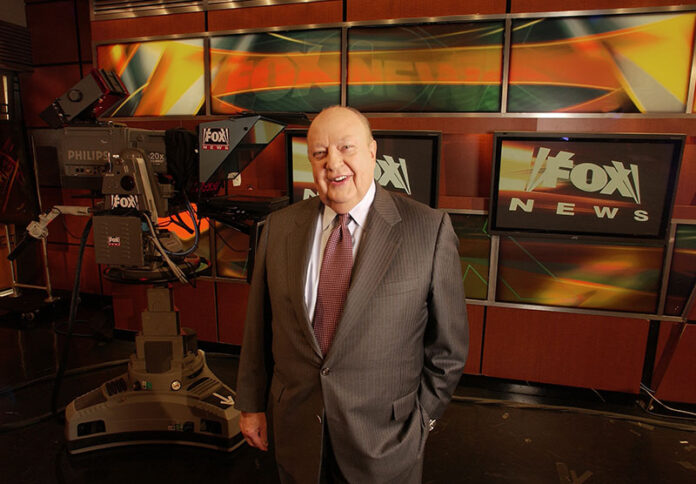
In this Sept. 29, 2006 file photo, Fox News CEO Roger Ailes poses at Fox News in New York. Photo: Jim Cooper / Associated Press

NEW YORK — Roger Ailes, the communications maestro who transformed television news and America’s political conversation by creating and ruling Fox News Channel for two decades before being ousted last year for alleged sexual harassment, died Thursday, according to his wife, Elizabeth Ailes. He was 77.

A former GOP operative to candidates including Richard Nixon, Ronald Reagan and George H.W. Bush and a one-time adviser to President Donald Trump, Ailes displayed a mastery of modern messaging early in his career. Then he changed the face of 24-hour news when, in 1996, he accepted a challenge from media titan Rupert Murdoch to build a news network from scratch to compete with CNN and other TV outlets they deemed left-leaning.

That October, Ailes flipped the switch on Fox News Channel, which within a few years became the audience leader in cable news. Ailes branded the network “Fair and Balanced” and declared he had left the political world behind, but conservative viewers found a home and lifted prime-time commentators Bill O’Reilly and Sean Hannity to the top of the news ratings.

“He has dramatically and forever changed the political and the media landscape singlehandedly for the better,” Hannity tweeted on Thursday.

Fox News and 21st Century Fox executive chairman Rupert Murdoch called Ailes “a brilliant broadcaster (who) played a huge role in shaping America’s media over the last thirty years” in a statement.

“He will be remembered by the many people on both sides of the camera that he discovered, nurtured and promoted,” Murdoch said. “Roger and I shared a big idea which he executed in a way no one else could have. In addition, Roger was a great patriot who never ceased fighting for his beliefs.”

Others laid the nation’s political dysfunction and inability to find common ground at his feet, creating the atmosphere for Trump to succeed.

“It’s a very complicated story,” said Gabriel Sherman, author of the Ailes biography, “The Loudest Voice in the Room.” ”He is in some ways a genius and in some ways tragic. His quest for power consumed him.”

By mid-2016 Ailes still ruled supreme as he prepared to celebrate Fox News’ 20th anniversary.

But in little more than two weeks, both his legacy and job unraveled following allegations by a former anchor that he had forced her out of Fox News after she spurned his sexual advances. The lawsuit filed on July 6 by Gretchen Carlson quickly triggered accounts from more than 20 women with similar stories of alleged harassment by Ailes either against themselves or someone they knew.

Reportedly, a key witness was Megyn Kelly, the network’s superstar personality, whose voice was conspicuously missing in the chorus of women and men at Fox News who spoke up on behalf of Ailes. Their defense did little to staunch the widening scandal. Despite Ailes’ staunch denials, 21st Century Fox corporate head Rupert Murdoch and his sons, James and Lachlan, determined that Ailes had to go. The announcement was made on July 21.

The allegations went beyond just Ailes: In April, reports that the network had settled lawsuits with five women who alleged sexual harassment against network star Bill O’Reilly led to his firing. Three other executives also lost their jobs.

Rumors of sexual improprieties at Fox News and by Ailes in particular weren’t new. Sherman’s 2014 biography reported numerous unflattering anecdotes, including an allegation (denied by Ailes) that he offered one female employee extra money if she would have sex with him.

Before Carlson’s bombshell legal action, Fox’s roaring success and enormous earnings (with some estimates that it accounted for nearly a quarter of the parent company’s profits) insulated Ailes from any suspicion as well as from his past scrapes with the Murdoch sons over who he would report to.

His dismissal was a headspinning downfall and a breathtaking defeat for Ailes, a man who all his life seemed to be spoiling for a fight and was used to winning them.

Ailes was a brawler. And even when he was on the winning side of a battle, he positioned himself as the defiant outsider going toe-to-toe with his bullying nemeses. Brash, heavyset and bombastic, he was renowned for never giving in, for being ever confrontational with a chip on his shoulder and a blistering outburst at the ready.

When he founded Fox News Network, Ailes’ stated mission was to correct for the sins of a media universe that was overwhelmingly liberal. Pledging fairness from his employees shortly before the network launched, he was typically tough talking: “Will they hit it every time? Hell, no. Will they try? Hell, yes. Will we be criticized? Hell, yes. Do I care? Hell, no.”

As usual, he had defined the enemy (in this case, his media critics and other presumed foes) before they could define themselves. It was his crowning principle.

This attack-dog style served him well when, at 27, Ailes wrangled a job with Nixon, then vying for a political comeback in the 1968 presidential race.

“Mr. Nixon, you need a media adviser,” Ailes declared (according to Sherman’s biography).

“What’s a media adviser?” asked Nixon.

“I am,” replied Ailes, having fashioned the job on the spot.

Nixon, whose run for the White House had been dealt a blow eight years earlier in a televised debate against his camera-ready rival John F. Kennedy, was a challenge Ailes eagerly accepted at a moment when, as he realized better than most, TV could make or break a candidate. Concluding that viewers would never warm to Nixon, nor would the media establishment, Ailes struck a winning formula by packaging him in comfortably staged TV town-hall meetings as a man whose intelligence the audience would respect.

The remainder of Ailes’ career would draw on various blends of showmanship, ruthless politics and an unmatched skill for recognizing TV’s raw communication power before his opponents did, and harnessing it better.

Born in Warren, Ohio, on May 15, 1940, Roger Eugene Ailes described his working-class upbringing with three words: “God, country, family.”

Afflicted with hemophilia, he spent much of his early years housebound in front of, and fascinated with, television, and after graduation from Ohio University landed an entry-level position at a TV station in Cleveland that had just started a local talk and entertainment program starring a has-been former big-band singer named Mike Douglas.

Ailes went to work as a production assistant on “The Mike Douglas Show” and rose in its ranks (at 26, he was named its executive producer) along with its rising fortunes as it went into national syndication and moved to Philadelphia.

It was there in 1967 that he and Nixon crossed paths in a meeting that changed both their lives.

After jumping ship from the “Douglas” show to help steer Nixon to the White House, Ailes spent more than a decade as a communications consultant to corporations and Republican candidates. And as a sign of his versatility, he also became a theater producer, with a hit off-Broadway musical, “The Hot L Baltimore,” in the early 1970s, and a network boss, helping start Television News Incorporated, a short-lived right-wing TV service funded by conservative brewing magnate Joseph Coors, that seemed to presage Fox News by a quarter-century.

Ailes returned to presidential politics in 1984 by helping President Reagan recover from his disastrous opening debate with Democratic opponent Walter Mondale.

And in 1988, he orchestrated the media campaign for Vice President George H.W. Bush’s presidential bid. It was a campaign widely seen as being no less nasty than it was successful.

One indelibly comic image that led to Bush’s victory was a commercial that appropriated footage of opponent Michael Dukakis riding in a military tank looking foolish in a bulbous helmet. Even more explosive anti-Dukakis commercials featured a black felon, Willie Horton. Designed to play on voter fears of Democrats’ supposedly soft-on-crime policies, those commercials, while effective, were widely condemned as racist. Ailes denied responsibility for them, though many of his critics were loath to believe him.

Within a few more years, he claimed he had sworn off politics.

In 1993, he joined NBC to run its cable business network, CNBC. He was credited with boosting CNBC’s ratings and putting that troubled NBC subsidiary in the black. Meanwhile, he created another network, the talk-and-advice-oriented America’s Talking.

“I’ve gotten over all the cynicism of politics,” Ailes told The Associated Press in 1995, although, during that same period, Ailes moonlighted as executive producer of the syndicated TV show that starred right-wing radio sensation Rush Limbaugh.

Then, in January 1996, Ailes resigned from NBC after America’s Talking was sacrificed to free up channel capacity for the company’s cable-news venture, MSNBC.

Within weeks, Ailes had jumped to what was then known as News Corp., and by fall he launched Fox News Channel against a pair of seemingly indomitable rivals: three-month-old MSNBC, the network with which his former employers replaced his America’s Talking channel, and cable-news pioneer CNN.

Even so, by 2002, Fox News had sealed the deal as ratings leader, dominating cable-news competition and tying his rivals in knots in both daytime as well as prime time, where he deployed a murderers’ row of hosts led by Bill O’Reilly and Sean Hannity.

Ailes helped make a hot property out of Glenn Beck, and signed a virtual salon of former-and-future GOP big names who found a welcoming platform for party talking points.

Other hires included Gretchen Carlson, who came to Fox News from CBS News in 2005 and was dismissed when her contract expired on June 23, 2016, and Megyn Kelly, an attorney-turned-TV-journalist who joined the network in 2004 and a decade later was arguably the network’s biggest marquee name.

From the start, Ailes steadfastly denied any political bias or agenda on the part of his network, whether in its message or its personnel. Politics, schmolitics: “I hired Sarah Palin because she was hot and got ratings,” he told The AP in 2011.

Propelled by Ailes’ “fair and balanced” branding, Fox News successfully targeted viewers who believed the other cable-news networks, and maybe the media overall, displayed a liberal tilt from which Fox News and Fox Business Channel (which he launched in 2006 against his former business network, CNBC) delivered its audience with unvarnished truth. Thus did he leverage the public’s distrust for the media while positioning his networks as the anti-media news-media alternative — and he their upright overlord.

“My first qualification is I didn’t go to Columbia Journalism School,” he boasted to The New York Times in January 2010, and added, “There are no parties in this town that I want to go to.”

Though ratings continued to soar, in later years Ailes’ power was challenged. He seemed incapable of stopping Donald Trump’s rise as the GOP’s top contender for the 2016 election. In an early televised debate, Fox network moderators, notably Kelly, besieged Trump with sharp interrogation about his experience, his policies and past comments about women. But the real estate mogul’s candidacy was undamaged as he lobbed insults at Kelly and her network for what he labeled unfair treatment.

By summer 2016, Ailes and Trump had seemingly reached detente, with Fox News climbing on the Trump bandwagon and vice versa. It was ironic, then, that Ailes was ousted only hours before Trump accepted the GOP nomination for which Fox had helped pave the way.

With Ailes’ sacking, Rupert Murdoch, the parent company’s executive chairman, became interim boss of Fox News and Fox Business Network until a successor could be found. But Ailes had been so identified with the brand since its inception that many, both insiders and audience members, were left hard-pressed to envision Fox News without him.

In the meantime, the network’s talent lineup took a hit as Kelly left for NBC News and O’Reilly was fired.

Ailes is survived by his third wife, Elizabeth, who had worked for him at CNBC as vice president of programming, and their son, Zachary.

Story: Frazier Moore

Advertisement

Hot News

LATEST NEWS

Bangkok
overcast clouds
31.6 ° C
31.6 °
29.4 °
68 %
3.1kmh
100 %
Tue
35 °
Wed
34 °
Thu
34 °
Fri
28 °
Sat
31 °