26.6 C
Bangkok
Friday, June 19, 2026
Home Blog Page 243

Blind German Man Unaware of Thai Wife’s Death Inside Their Home

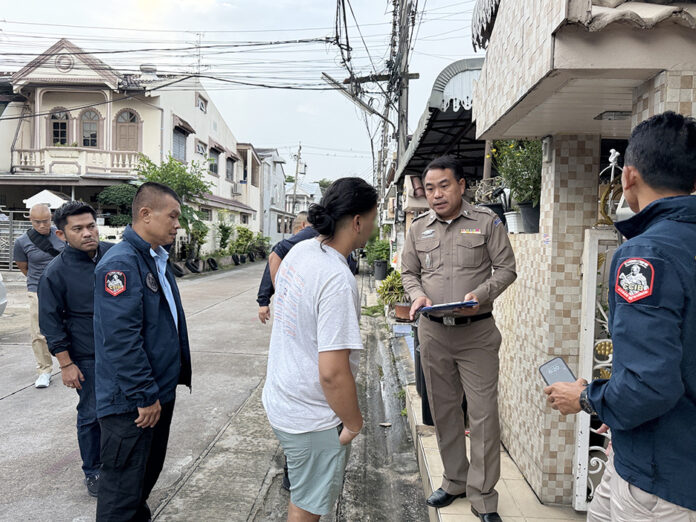
Police and rescue workers investigate the scene at a rented house in Pruksa 36 Village, Chachoengsao, where a 53-year-old Thai woman was found dead on October 14, 2025. Her blind German husband had been waiting outside for hours, unaware of the tragedy inside their home.

CHACHOENGSAO — A 69-year-old blind German man sat waiting outside his home for hours on Tuesday evening, unaware that his Thai wife had taken her own life inside.

Police from Mueang Chachoengsao Station were notified of the death at a rented house in Pruksa 36 Village, Soi 14, Khlong Udom Chonlachon subdistrict at 6.30 p.m. on October 14. Officers coordinated with forensic physicians and rescue volunteers to investigate.

Mr. Dick, the German national, had been sitting at a table outside the house calling for his wife since evening. When she didn’t respond, he asked neighbors for assistance. Upon entering and turning on the lights, neighbors discovered 53-year-old Nisara had died, with a rope around her neck attached to the staircase railing.

Background

A 48-year-old neighbor said the couple had rented the house for over a year. Nisara worked as a taxi driver in Bangkok, returning home every few days. Before leaving for work, she would prepare sandwiches for her husband and store them in the refrigerator.

german blind2
A blind German man waits outside his house for hours, unaware of the tragedy inside their home where his Thai wife took her own life, on October 14, 2025.

Ms. Nee, 54, a neighbor who speaks German, explained that Mr. Dick came from Germany to retire in Thailand and began a relationship with Nisara. After moving to Chachoengsao together, Mr. Dick suffered an accident that gradually left him completely blind several years ago, making Nisara the sole breadwinner.

The Incident

Earlier on Tuesday, Nisara had returned home by taxi, telling neighbors she had been involved in a traffic accident while driving. The other party was demanding 40,000 baht ($1,200) in compensation, which she did not have. She said she had come home to wait and negotiate a solution.

Neighbors believe the financial pressure from the accident, combined with exhaustion from being the family’s sole provider, led to her tragic decision.

Police have transported the body for autopsy and are continuing their investigation.

__________

Advertisement

UNFPA Thailand Joins Organon Thailand to Empower Women to Shape Their Own Future

Koen C. Kruijtbosch, Managing Director of Organon Thailand

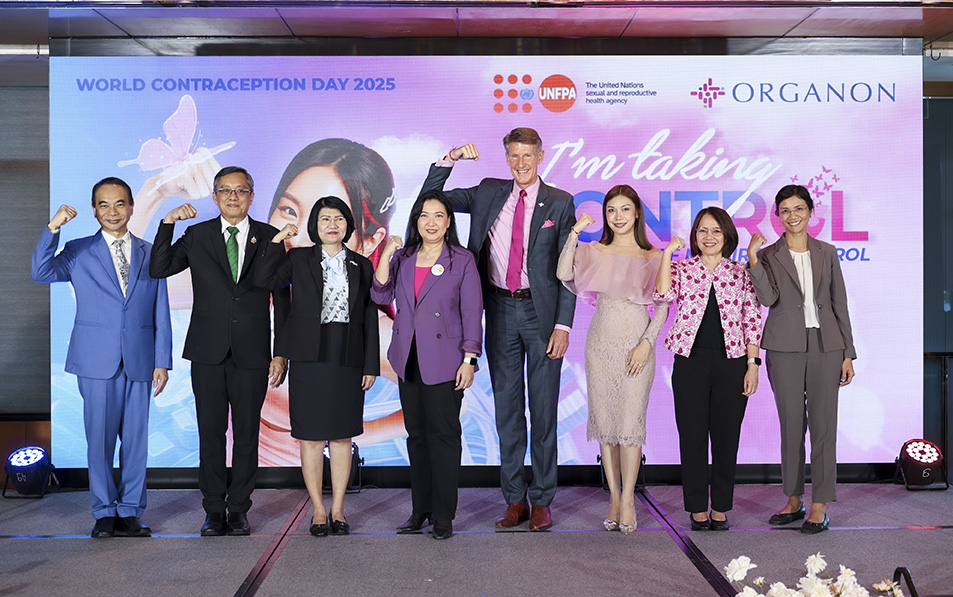
BANGKOK –  To mark World Contraception Day, the United Nations Population Fund (UNFPA) Thailand, the UN’s sexual and reproductive health agency,  is collaborating with Organon to launch the  “I am taking Control of My Birth Control” campaign.

This  campaign seeks to inspire women across the region to take a proactive approach in their reproductive health by highlighting the importance of making informed decisions to build a healthier future for women and their communities.

As well as raising awareness about contraception, World Contraception Day also serves as a reminder of the  need to address barriers to accessing contraception and promotes education to reduce the incidence of unintended pregnancies. Despite progress, the Asia-Pacific region still faces significant gaps in access to sexual and reproductive health rights.

According to the Guttmacher Institute, 132 million women in Asia who wish to avoid pregnancy are not using modern contraception, and among adolescents aged 15-19, the unmet need is even more alarming at 51%, compared to 21% among all women aged 15-49. Unintended pregnancies can limit educational and career opportunities, increase health risks for women, and create additional burdens for families, communities, and healthcare systems.

unfpa4

The “I am taking Control of My Birth Control” campaign was launched by UNFPA and Orgnaon Thailand on World Contraception Day, and was attended by Bureau of Reproductive Health, The Department of Health, Ministry of Public Health, Department of Women’s Affairs and Family Development, and representatives from all departments under the Ministry of Social Development and Human Security (MSDHS), Ministry of Interior,  Ministry of Foreign Affairs, Bangkok Metropolitan Administration, The Planned Parenthood Association of Thailand (PPAT), The Children and Youth Council of Thailand,  and The Thai Lifestyle Medicine and Well-being Association (TLWA).   

Siriluck Chiengwong, Head of UNFPA Thailand, stated during the opening ceremony that UNFPA is committed to ensuring that everyone, especially women, girls, youth and people of all genders, can access comprehensive, equitable, and safe information and services related to sexual and reproductive health and rights.

“We believe that collaborating with our partners is key to connecting people with accurate information and appropriate family planning and contraception. Every woman should have the right and choice to decide when to start a family. This mission aligns with the Sustainable Development Goals, particularly Goal 3 on good health and well-being and Goal 5 on gender equality”.

unfpa2
Siriluck Chiengwong, Head of UNFPA Thailand

Koen C. Kruijtbosch, Managing Director of Organon Thailand, added “World Contraception Day is not just a moment; it’s a movement that helps empower every woman to have the right to choose whether and when to start a family. Access to family planning and contraception is not merely a matter of personal freedom but a critical public health and economic necessity that helps women and girls complete their education and fully participate in the workforce”.


A Joint Campaing to Empower:

The “I am taking Control of My Birth Control” campaign asks healthcare professionals and consumers: “Do you believe that women should have the freedom to take control of their reproductive health?” This powerful statement symbolizes ownership over one’s body, choices, and future, and invites people to make a personal pledge for women’s health. For every pledge made on on the website https://wcd.womenhealthfact.com, Organon will donate USD $1 to support vulnerable women in Thailand through the UNFPA.

How It Works:

  • Make a pledge and place a pin on the interactive map.
  • Organon converts each pledge into a donation.
  • Donations will be distributed via UNFPA to markets in need in Thailand.

unfpa3

About UNFPA Thailand

UNFPA is the United Nations sexual and reproductive health agency. It works to uphold the rights and choices of population of all age and gender especially vulnerable population including women, girls, persons with disabilities and young people in over 150 countries. UNFPA works to ensure that every pregnancy is wanted, every childbirth is safe, and every young person potential is fullfiled. Through life-cycle approach, gender equality and leave no one behind principles, UNFPA supports Thailand to achieve SDGs focusing in four key priorities as follows.

      End the unmet need for family planning: Ensure that everyone has access to family planning services, preventing issues like unplanned pregnancies or adolescent pregnancies. This is foundational to realizing sexual and reproductive health and rights.

      End preventable maternal deaths: Ensure women and girls survive and thrive before, during, and after pregnancy and childbirth.

      End gender-based violence (GBV): Eliminate GBV through prevention and responses, so that all individuals can live free from violence, coercion, and discrimination. This is achieved by working to transform harmful gender and social norms to promote gender equality in families, communities, and institutions.

      Population and Development, including demographic resilience: Use data and evidence-based and rights-based advocacy to help the country adapt to demographic changes. This approach is about empowering people and building a resilient society for both current and future generations as well as strenghtening intergenerational solidarity.

For more information, please visit our website at https://thailand.unfpa.org/.

About Organon 

Organon is an independent global healthcare company with a mission to help improve the health of women throughout their lives. Organon’s diverse portfolio offers over 70 medicines and products in women’s health, biosimilars, and a large franchise of established medicines across a range of therapeutic areas. In addition to Organon’s current products, the company invests in innovative solutions and research to drive future growth opportunities in women’s health and biosimilars.

Organon is also pursuing opportunities to collaborate with biopharmaceutical partners and innovators who look to commercialize their products by leveraging Organon’s scale and agile presence in fast growing international markets.  

Organon has geographic scope with significant reach, world-class commercial capabilities, and approximately 10,000 employees with headquarters located in Jersey City, New Jersey.  

You can view the Asia Pacific commitment on Heatmap here: ORGANON HEATMAP.

For more information, visit http://www.organon.com and connect with us on LinkedIn. 

Advertisement

One-China Principle Unshakable, UNGA Resolution 2758 Unchallengable

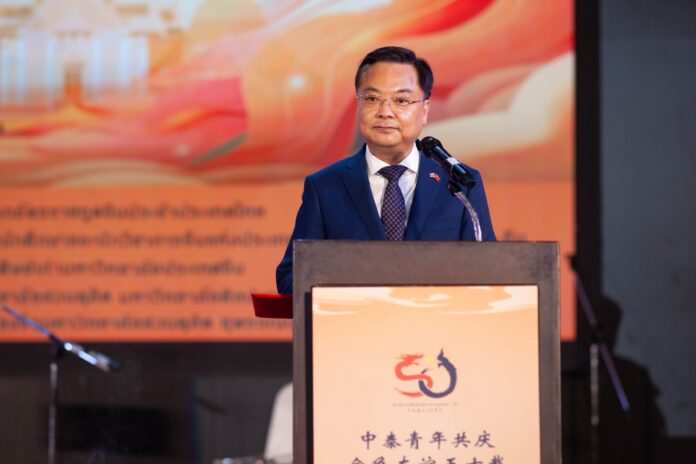
Zhang Jianwei Ambassador Extraordinary and Plenipotentiary of the People's Republic of China to the Kingdom of Thailand

One-China Principle Unshakable
UNGA Resolution 2758 Unchallengable

Zhang Jianwei
Ambassador Extraordinary and Plenipotentiary of the People’s Republic of China to the Kingdom of Thailand

This year marks the 80th anniversary of the victory in the Chinese People’s War of Resistance Against Japanese Aggression and the victory of the World Anti-Fascist War, as well as the founding of the United Nations (UN). Taiwan’s restoration to China is a victorious outcome of World War II (WWII) and an integral part of the post-WWII international order.

On October 25, 1971, the 26th session of United Nations General Assembly (UNGA) adopted Resolution 2758 with an overwhelming majority, restored all lawful rights of the People’s Republic of China in the UN. The resolution resolved once and for all the question of the representation of the whole of China, including Taiwan, in the U.N., as a political, legal and procedural issue.

Recently, some external forces have colluded with the Taiwan Democratic Progressive Party authorities, deliberately distorted UNGA Resolution 2758, spread the fallacy that Taiwan’s status “undetermined” and openly challenged the authority of the U.N.and the post-WWII international order, posing serious threat to regional peace and stability . I would like to review the history,explain the ins and outs of the Taiwan question and uphold the one-China principle.

I One-China principle and UNGA Resolution 2758

The core meaning of the one-China principle includes three aspects: there is but one China in the world, the Taiwan region is an inalienable part of China’s territory, and the Government of the People’s Republic of China is the sole legal government representing the whole of China.

UNGA Resolution 2758 decides to restore all its rights to the People’s Republic of China and to recognize the representatives of its Government as the only legitimate representatives of China to the United Nations, and to expel forthwith the representatives of Chiang Kai-shek from the place where they unlawfully occupy at the United Nations and in all the organizations related to it.

The one-China principle is the premise and foundation for UNGA Resolution 2758, while the resolution solemnly confirms and fully embodies the one-China principle. The resolution makes it clear that there is but one China in the world and the Government of the People’s Republic of China is the only legitimate representative of the whole of China, including the Taiwan region. There is no such thing as “two Chinas” or “one China, one Taiwan.”

II UNGA Resolution 2758 brooks no challenge to its legitimacy, validity, and authority

UNGA Resolution 2758 carries extensive and authoritative legal force, and serves as the authoritative basis for the U.N. and organizations related to it to properly handle the Taiwan question. After the adoption of UNGA Resolution 2758, all official U.N. documents referred to Taiwan as “Taiwan, Province of China.”

It was clearly stated in the official legal opinions of the Office of Legal Affairs of the U.N. Secretariat that “the United Nations considers ‘Taiwan’ as a province of China with no separate status” and the “‘authorities’ in ‘Taipei’ are not considered to … enjoy any form of government status.” This has been the consistent position of the U.N. and is clearly documented.

The whole process leading to the adoption of Resolution 2758 speaks volume for the irreversible trend of the international community to uphold the one-China principle. This is not only a victory of the Chinese people, but also a victory of people around the world against hegemonism and power politics.The adoption of Resolution 2758 had a wide-reaching and profound political impact on the practice of international relations.

It effectively made the one-China principle a basic norm of international relations and a prevailing consensus in the international community. To date, 183 countries, including Thailand,have established and developed diplomatic relations with China on the basis of the one-China principle.

III One-China principle is the political foundation of China-Thailand relations.

The People’s Republic of China and the Kingdom of Thailand signed the Joint Communique on the Establishment of Diplomatic Relations on July 1st ,1975. The Joint Communique stated that the Government of the Kingdom of Thailand recognizes the Government of the People’s Republic of China as the sole legal government of China, acknowledges the position of the Chinese Government that there is but one China and that Taiwan is an integral part of Chinese territory, and decides to remove all its official representations from Taiwan within one month from the date of signature of this communique.

The Government of the People’s Republic of China recognizes the Government of the Kingdom of Thailand and agrees to respect the independence, sovereignty and territorial integrity of Thailand.

The Government of the Kingdom of Thailand and the Government of the People’s Republic of China also share the conviction that, in spite of the differences in the political, economic and social systems of the Kingdom of Thailand and the People’s Republic of China, there should be no obstacle to the development of peaceful and friendly relations between the two countries and peoples in accordance with the principles of mutual respect for sovereignty and territorial integrity, mutual non-aggression, non-interference in each other’s internal affairs, equality and mutual benefit, and peaceful coexistence.

Since the establishment of diplomatic relations half a century ago, the two countries have adhered to mutual respect, equality, sincerity, mutual trust and mutual assistance, and have always firmly supported each other in safeguarding national sovereignty, security and development interests. Under the strategic guidance of the leaders of both countries, China-Thailand relations maintain healthy and stable development momentum with fruitful cooperation across various fields.The sentiment of “China and Thailand as close as one family” has gained greater popularity.

The Government of the People’s Republic of China and the Government of the Kingdom of Thailand published the Joint Statement on Advancing the Comprehensive Strategic Cooperative Partnership and Building a China-Thailand Community with a Shared Future for Enhanced Stability, Prosperity, and Sustainability through a Forward-looking and People-centered Vision in 2025, in which Thailand reiterated firmly upholding the One-China Policy, recognizing the Government of the People’s Republic of China as the sole legal government representing the whole of China and Taiwan as an inalienable part of China, and will not support any call for the independence of Taiwan. Thailand also supports China’s “One Country, Two Systems” policy.

China highly appreciates Thailand’s consistent and firm adherence to the one-China principle. As being a new historical starting point of the 50th anniversary of the establishment of diplomatic relations between China and Thailand and the “Golden Jubilee 50 Years of China-Thailand Friendship”, China is willing to further consolidate political mutual trust, firmly support issues involving each other’s core interests and major concerns, and jointly safeguard the purposes and principles of the UN Charter, the international system with the U.N. at its core, and the international order underpinned by international law.

China is devoted for promotion of a China-Thailand community with a shared future with more achievements and benefits for the two countries and the world.

___________

Advertisement

Thai-Indian Duo Arrested for $59K Gold-Buying Scam Targeting American

Cyber Police arrest Mr. Gurdeep, 29, an Indian national, at a residence in Taling Chan, Bangkok, on October 13, 2025.

BANGKOK — Thai cybercrime police have arrested an Indian man and a Thai woman for operating a transnational fraud scheme that tricked an American citizen into transferring $59,350, which was then used to purchase gold in Thailand.

Pol. Maj. Gen. Chatchapandakarn Khlaikhlueang, deputy commissioner of the Cyber Crime Investigation Bureau (CCIB), announced the arrests at a press conference on October 14.

The victim, residing in Denver, Colorado, received an email purporting to be from PayPal demanding $451.99 for a Bitcoin transaction. The email included a U.S. phone number. After calling, the victim was persuaded to transfer $54,350 from his bank account to a corporate account in Thailand—approximately 2 million baht. Scammers then demanded an additional $5,000, threatening consequences if refused. The victim complied, bringing the total to $59,350.

He grew suspicious after noticing the Texas phone number was answered by someone with an East Asian accent. U.S. police traced the funds to Thailand and coordinated with Thai authorities.

indian scam gold2
Pol. Maj. Gen. Chatchapandakarn Khlaikhlueang briefs media about the arrest of a Thai-Indian duo who used a shell company to defraud an American victim, at the CCIB office on October 14, 2025.

Investigation Leads to Arrests

Pol. Col. Torsak Panklinphut, commander of Sub-division 4, CCIB 2, said investigators traced the funds to a Thai limited partnership called Farm LA, registered at Soi Rat Burana 10 with 2 million baht capital for real estate brokerage. Ms. Wandee was listed as director.

The company had been registered for only one month and never conducted business. Police tracked the money as it was transferred to an Indian man’s account, then withdrawn to purchase gold bars at a shop in Bangkok’s Wangburapha district.

Authorities arrested Mr. Gurdeep, 29, an Indian national, at a residence in ฺBangkok’s Taling Chan, and Ms. Wandee, 41, at her home in Roi Et Province.

Charges and Confessions

Police charged both suspects with multiple offenses including transnational organized crime, fraud, introducing false data into computer systems, allowing bank account misuse for technology crimes, and money laundering.


Officers seized documents, money transfer slips, and 200,000 baht in cash. Wandee told police she was hired to open the corporate account for 10,000 baht and would transfer incoming funds to the other suspect for gold purchases.

Gurdeep admitted to the scheme, explaining that gold prices in India are higher. He claimed he told gold shops the money came from Indian customers wanting to buy Thai gold, requesting it be converted from bars to ornaments for easier transport to India.

Broader Criminal Network

Pol. Maj. Gen. Chatchapandakarn said the operation involved approximately 20 victims from Africa and America, with roughly 20 million baht ($610,600) circulating through the scheme.

Authorities will coordinate with relevant agencies to encourage victims to file complaints and will investigate the growing use of corporate shell accounts by scammers, who increasingly prefer them over individual accounts.

______________

Advertisement

AIS Recycles 1.2 Million Pieces of E-Waste in Sustainability Campaign

AIS, as Thailand’s HUB of E-Waste and a leader in electronic waste management, continues to reaffirm its commitment as a Digital for Sustainability organization.

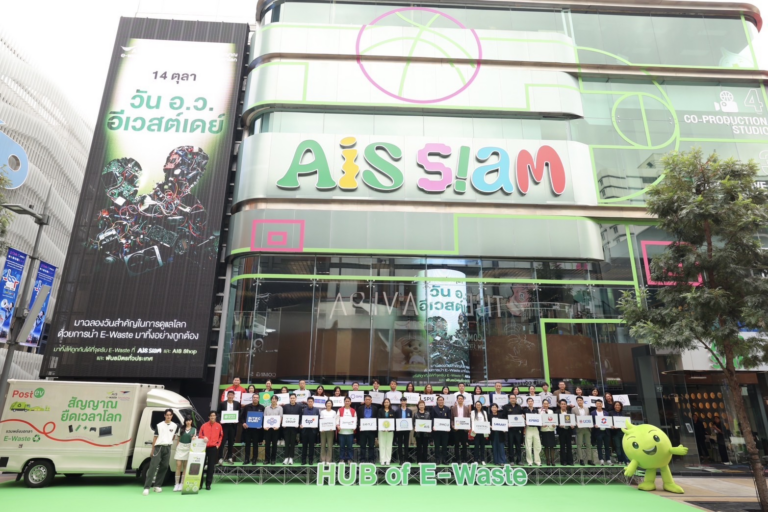
On the occasion of International E-Waste Day, October 14, AIS spearheaded a major collaborative effort, uniting partners across the public sector, private organizations, and educational institutions nationwide under the activity “Aor Wor E-Waste Day”, themed “Signal of Sustainable Future”

The initiative aims to inspire Thais to listen to the “signals from the Earth” and take part in collective action to “extend the Earth’s time”—ensuring a healthier, more livable planet for generations to come.

To date, AIS and its partners have successfully collected and properly managed over 1,212,272 pieces of electronic waste, reducing greenhouse gas emissions by 556,573 kilograms of CO equivalent—the same impact as planting 46,380 trees.

This achievement stands as concrete proof of Thailand’s collaborative power in driving sustainability, recognized at the international level.

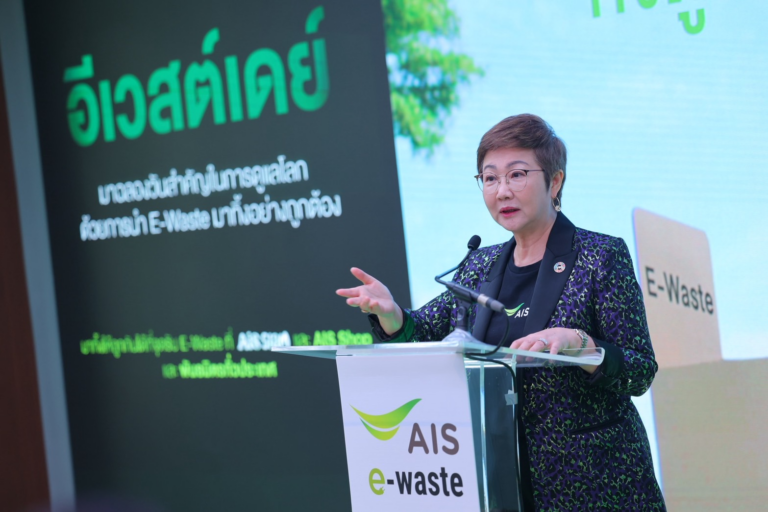
image3 2

Saichon Submakudom, Head of Corporate Communication and Public Affairs Business Unit of AIS, said: “AIS is committed to advancing our sustainable business strategy under the concept of creating shared growth between people and the environment in the digital world.’ We continue to drive forward as Thailand’s HUB of E-Waste, collaborating with over 250 partners across government, private, and academic sectors to propel the ‘Thais Say No to E-Waste’ mission.

As the world sends urgent signals warning us of the growing e-waste crisis, we must strengthen our collaboration to ensure that every piece of discarded electronic waste enters the proper recycling process and transforms into the power that extends the life of our planet.

AIS has also joined hands with our regional partners within the Singtel Group across multiple countries to further this mission through the regional campaign ‘Signals of Sustainable Future.’ This initiative promotes sustainable e-waste management while inspiring greater awareness, reaching more than 1.9 billion people worldwide to recognize the importance of collective responsibility in addressing the e-waste challenge.”

image2 4

To mark International E-Waste Day, AIS proudly announced its achievement in collecting and properly managing a total of 1,212,272 pieces of electronic waste, contributing to the effort to “extend the Earth’s time” by reducing over 556,573 kilograms of carbon dioxide equivalent (COe) in greenhouse gas emissions.

This milestone reflects the strong potential and cross-sector collaboration that Thailand has built in addressing global sustainability challenges. Moving forward, AIS remains steadfast in its mission to drive smart and sustainable electronic waste management for the long term.

The event featured a key highlight activity inviting AIS SIAM customers and partner organizations to join the “Let’s Recycle E-Waste” campaign, aimed at raising public awareness of the importance of proper electronic waste disposal.

Supporting this effort, Thailand Post provided a special service to collect E-Waste directly from participants’ locations and deliver it for proper recycling under the “Zero E-Waste to Landfill” process.

AIS expressed its hope that this initiative will help drive Thailand toward a more concrete and sustainable E-Waste management system, fostering meaningful behavioral change among citizens and encouraging society to adopt effective recycling practices that reduce environmental impact and improve overall quality of life.

Follow the mission to extend the planet’s lifespan and help inspire collective action in protecting our world together at https://www.facebook.com/ais.sustainability/?locale=th_TH

Advertisement

US and Malaysia Work to Expand Thailand-Cambodia Ceasefire in Advance of ASEAN Summit

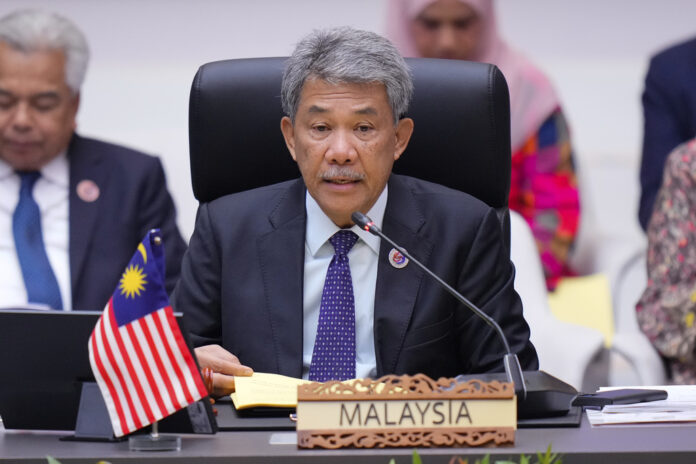
Malaysia's Foreign Minister Mohamad Hasan delivers an opening speech at the opening ceremony of the 46th Association of Southeast Asian Nations (ASEAN) Foreign Ministers' Meeting in Kuala Lumpur, Malaysia, Sunday, May 25, 2025.(AP Photo/Vincent Thian)

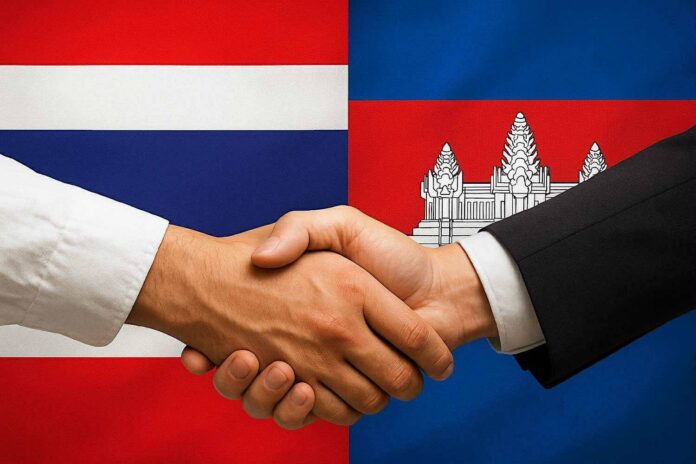
KUALA LUMPUR, Malaysia (AP) — Malaysia and the U.S. are facilitating efforts to secure an expanded ceasefire agreement between Thailand and Cambodia that they hope will be signed during a Southeast Asian summit later month, Malaysia Foreign Minister Mohamad Hasan said Tuesday.

Thailand and Cambodia engaged in five days of combat in late July that killed dozens of people and displaced more than 260,000. They agreed to a ceasefire only after mediation by Malaysia’s Prime Minister Anwar Ibrahim and pressure from U.S. President Donald Trump, who threatened to withhold trade privileges unless they agreed on a truce.

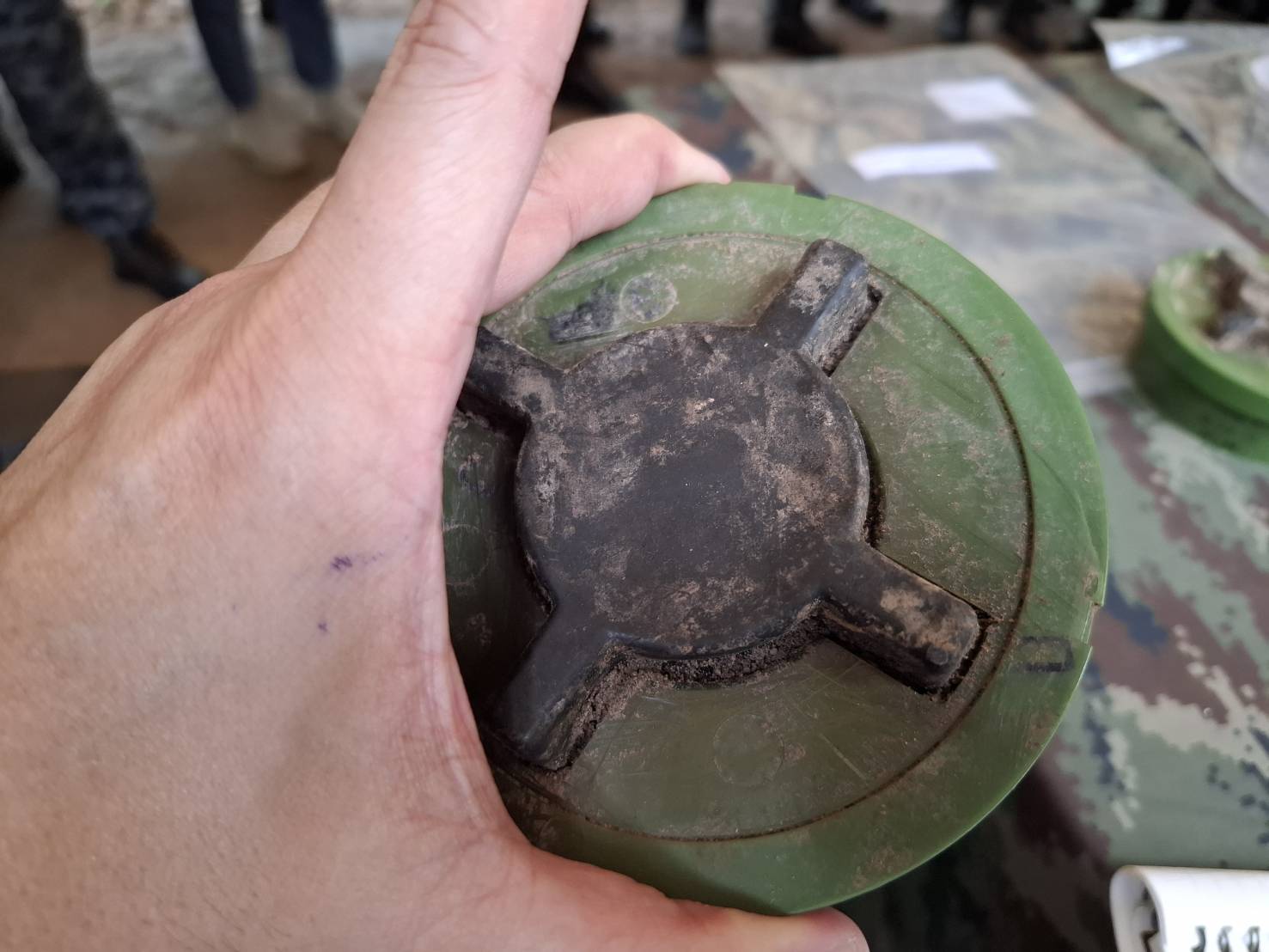
Tensions have remained high since the truce, particularly after Thai soldiers were injured by land mines in August while patrolling a buffer zone between the countries. Thailand accused Cambodia of laying new mines in violation of the ceasefire, which the government in Phnom Penh has strongly denied.

landmine cambodia
Royal Thai Army presents evidence of Cambodian landmines recovered by Thai forces to international observers and press in Surin province, August 20, 2025.

Thailand Prime Minister Anutin Charnvirakul has said Phnom Penh must accept four conditions. They include removal of heavy weapons from the border, land mine clearance, assistance to curb cross-border crime and managment of sensitive border zones to avoid further conflicts.

Mohamad said ongoing negotiations aim to broaden the ceasefire to include land mine clearance and withdrawal of heavy weapons. He expressed optimism that an agreement could be signed during the Association of Southeast Asian Nations summit Oct. 26-28, which is expected to draw some two dozen global leaders.

Trump is scheduled to attend the conference in Malaysia’s capital, Kuala Lumpur, on Oct. 26 and hopes to witness the signing of the Kuala Lumpur Accord between Thailand and Cambodia, Mohamad said.

ASEAN includes Brunei, Cambodia, Laos, Indonesia, Malaysia, Myanmar, the Philippines, Thailand, Vietnam and Singapore.

_____

Advertisement

Thai Authorities Target Nominee Businesses on Koh Samui and Koh Phangan

One of the luxury villas on Koh Samui's steep hillside that authorities found in violation of building regulations during the July 24, 2025 raid.

SURAT THANI — Thai authorities have launched an investigation into nominee businesses—companies where Thai nationals hold assets on behalf of foreign owners—on Koh Samui and Koh Phangan in Surat Thani province, following concerns from local residents about rapidly expanding illegal foreign ownership.

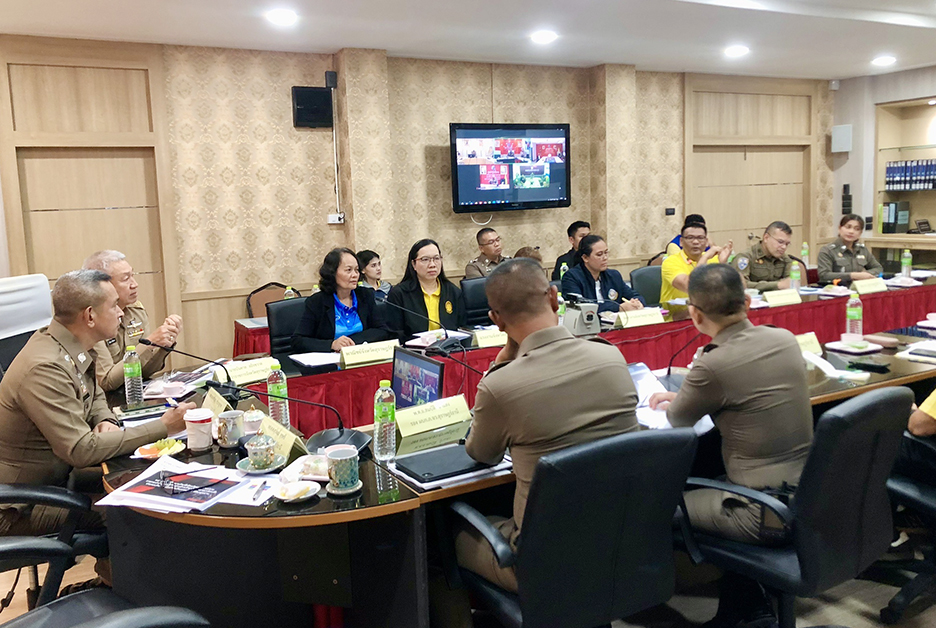
Pol. Maj. Gen. Saranyu Chamnanrach, deputy commissioner of Provincial Police Region 8, and Pol. Maj. Gen. Suwat Suksri, Surat Thani provincial police chief, convened an inter-agency task force meeting on October 13 to plan coordinated inspections targeting foreigners suspected of illegally conducting business activities on the two islands.

The task force includes Bundarn Sathirachawan, deputy governor of Surat Thani and chair of the provincial committee on land and building ownership by foreigners, along with representatives from multiple agencies including the provincial commerce office, Department of Business Development, and provincial land office.

surat nominee1
Officials from Surat Thani Provincial Police and government agencies convene on October 13, 2025 to plan enforcement operations against nominee businesses involving illegal foreign land and property ownership.

The investigation will examine land ownership and property rights held by foreigners or Thai nationals acting as nominees. Authorities will also investigate potential illegal use of state land, review construction permits, and verify building compliance.

Verification Process

Bundarn said the provincial committee, chaired by Governor Theerut Supaviboonphon, had already made significant progress. Officials are checking foreigners’ travel records, visa categories, and passport renewals to distinguish legitimate tourists from those staying long-term to run businesses.

Data from the Department of Business Development will be cross-checked with land office records to verify company landholdings. Investigators will scrutinize shareholder lists, investment fund sources, and corporate financial status.

“Our investigation is not limited to Israeli nationals,” Bundarn said. “We will look into all foreigners residing long-term in the province. Both personal and corporate checks will be carried out in parallel because the data are interconnected.”

samui nacc2
A luxury villa under investigation by the National Anti-Corruption Commission (NACC) for allegedly encroaching on no-construction zones or red zones on Koh Samui on September 24, 2025.

Two-Stage Enforcement

Pol. Maj. Gen. Saranyu explained that police investigation and intelligence divisions have combined their data analysis to guide enforcement actions. Operations will begin in two stages:

Immediate action: Foreigners working without permits, engaging in occupations reserved for Thais, or overstaying visas will face arrest and prosecution on the spot.

Evidence-based inspections: Corporate structures, land ownership, tax payments, hotel operations, and construction activities will be investigated, with cases referred to relevant authorities for formal complaints.

Pol. Maj. Gen. Saranyu added that this integrated approach marks the beginning of a broader crackdown on illegal foreign business activities across Region 8, which includes major tourist destinations such as Phuket, Krabi, Phang Nga, and Surat Thani. The Surat Thani model will serve as a blueprint for similar efforts in other provinces.

german myanmar3
Tourist police arrest a 33-year-old German national for operating an unlicensed tourism business on Koh Phangan, September 22, 2025.

Current Cases

Surat Thani Provincial Police recorded 2,001 foreign-related offenses between October 2024 and September 2025, primarily traffic violations, illegal entry, and drug crimes. Among these were 18 nominee cases: eight handled by Koh Phangan Police, eight by Bo Phut Police, and two by Koh Samui Police.

The 18 cases under investigation involve real estate, hotel, and villa operations (10 cases), construction firms (2), computer services (2), and single cases each for car rental, café, visa services, and cleaning companies.

Authorities said the probe will also target Thai nationals who helped conceal foreign ownership and any government officials involved in the violations.

____________

Advertisement

B.Grimm Technologies Launches Integrated Fire Safety and Security Solutions

B.Grimm Technologies Company Limited, a leader in engineering and energy-efficient solutions, has announced its expansion into Thailand’s safety and security market by launching a comprehensive suite of Integrated Fire Safety and Security Solutions. This new offering, unveiled at the TEMCA M&E 2025 exhibition, is the result of a new partnership with Honeywell, a global leader in connected buildings and safety technology.

image3 17

Under this new agreement, B.Grimm Technologies has been appointed as a Value Added Reseller (VAR) for LENELS2, Honeywell’s electronic security systems. This partnership goes beyond simple product distribution, allowing B.Grimm to provide a complete “one-stop service” that includes system design, installation, maintenance, and comprehensive after-sales support. B.Grimm Technologies also offers an integration of safety and security systems with building management systems through its advanced Building Automation System (BAS), providing a single comprehensive view for effective monitoring and control.

image2 13

The new integrated solution suite covers four key areas of building safety and security: Fire Safety Systems,Fire Pump Systems, Electronic Security Systems and Integrated Manager Platforms.

Advertisement

Israeli Soldiers Face Drug Charges After Noisy Cease-Fire Party on Koh Phangan

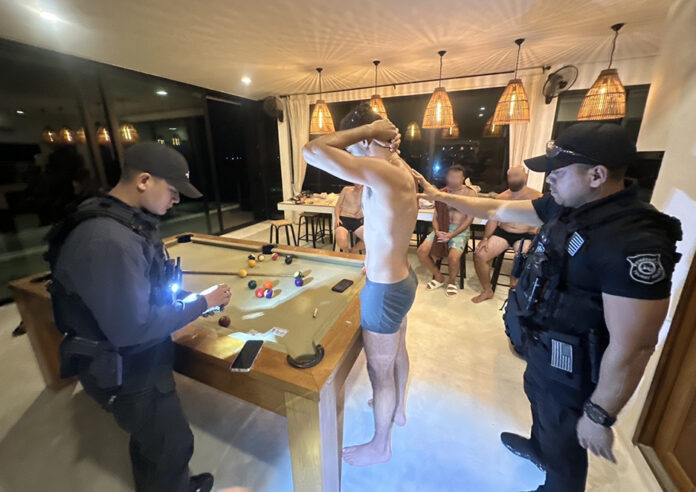
Tourist police inspect a villa on Koh Phangan where four Israeli soldiers were arrested for drug possession and consumption on October 14, 2025.

KOH PHANGAN — Four Israeli soldiers were arrested early Tuesday morning after hosting a drug-fueled party on Koh Phangan that disturbed neighboring tourists.

Tourist police raided a villa at 2:40 a.m. on October 14 following complaints via the 1155 hotline from a French national about loud music and noise continuing past 2 a.m. despite warnings.

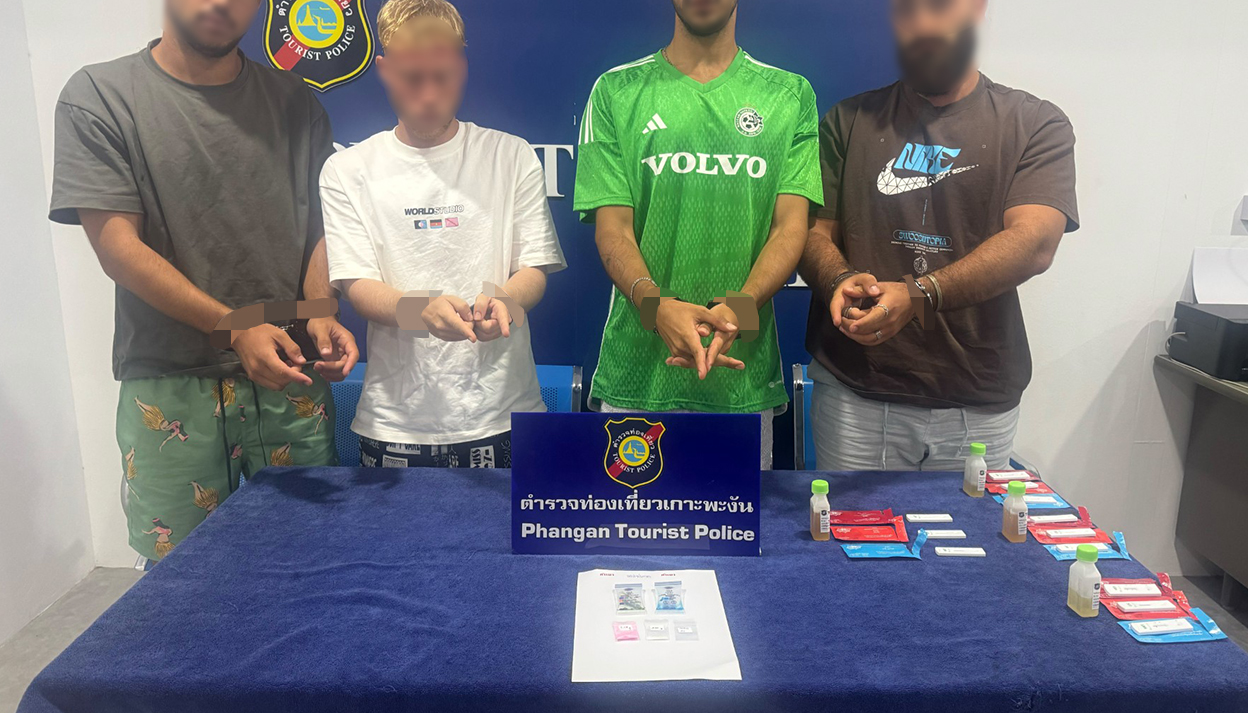
Officers found four Israeli men aged 26-27—identified as Daneel, David,  Kefer, and Guy—along with 0.59 grams of cocaine and 1.37 grams of MDMA on the dining table.


The suspects, who identified themselves as soldiers on leave, told police they purchased the drugs from an Israeli friend to celebrate a cease-fire declaration. They said 10-15 Israelis had attended the party, with most leaving after the initial noise complaint.

Urine tests showed Daneel and Kefer positive for methamphetamine and cocaine, while  David and Guy tested positive for cocaine. All four were charged with possession of Category 1 (MDMA) and Category 2 (cocaine) narcotics, as well as drug consumption. They were handed over to Koh Phangan Police Station for legal proceedings.

israel drugs phangan2
Four Israeli soldiers arrested by Koh Phangan Tourist Police display seized drugs and evidence following a raid on October 14, 2025.

The incident comes amid growing tensions on the island, with multiple online posts and articles by influencers and independent media, including a “Save Koh Phangan” page, expressing frustrations that the island is following the path of Pai in Mae Hong Son Province, which saw an influx of Israeli tourists, some allegedly displaying behavior disrespectful toward locals and other tourists.

However, authorities confirmed they are monitoring illegal activities by tourists overall, not specifically targeting Israeli nationals.

____________

Related article:

Thai Officers Probe Israeli Visitor Concerns on Koh Phangan

Advertisement

Reopening Hearts and Borders: A Path Toward Thai–Cambodian Reconciliation

By Pravit Rojanaphruk and Leang Delux

Thailand’s new Prime Minister, Anutin Charnvirakul, might have seemed to side with the ultranationalists when, on October 3, he declared: “Whoever wants to open the border crossing, raise your hand.” Only to conclude after the absence of raised hands by saying that, “You’ll get beaten up and die!” But in Thai politics, little is ever as straightforward as it appears.

Behind the blunt warning lies a message aimed not at neighbors, but possibly at the ultranationalists whose narrow rhetoric has kept Thailand and Cambodia locked in a cycle of hostility. His statement, stripped of its surface heat, can in fact be read as a rebuke — an appeal for reason amid rising extremism that threatens to blind many to the true costs of conflict that is mounting on both Thailand and Cambodia.

How long, he seemed to indicate behind the rhetoric, can Thailand afford to endure the long-term harm this standoff inflicts on its cross-border economy, on the fragile fabric of Thai–Cambodian relations, and on ASEAN’s credibility as a force for regional stability?

Across the border that same day, Cambodia’s Deputy Prime Minister Hun Many offered words of humility and hope. “We have been hurt. We have been shamed. But we need to move forward to start reconciliation, and to move forward with coexistence for the benefit of future generations,” he said.

It was a message not of surrender, but of moral courage — a call to rise above humiliation and restore dignity through dialogue.

The sense of urgency behind these appeals is impossible to overstate. On July 24, 2025, Thailand and Cambodia plunged into open conflict over their long-disputed frontier. For five harrowing days, the two sides exchanged gunfire and airstrikes — the deadliest clashes in more than a decade. By July 28, under the mediation of Malaysian Prime Minister Anwar Ibrahim, as ASEAN chair, and with support from the United States and China, both countries signed a ceasefire in Kuala Lumpur, halting the bloodshed.

An Artery of Life Becomes a Ghost Town

But peace on paper has not yet reached the people living along the border. The ceasefire is still fragile and border checkpoints remain closed for about three months now.

The guns may have fallen silent, but the closure of the border has inflicted its own quiet devastation. In places like Ban Khlong Luek Border Market, once a symbol of cross-border harmony and trade, the stalls stand empty. Thai fruit vendors who once sold mangosteens and durians to Cambodian traders now sit behind unsold baskets. On the Cambodian side, women who crossed daily to buy rice and cooking oil find themselves stranded, their family savings evaporating with each passing day.

This market — an artery of life that fed both economies — has become a ghost town. Families who once earned just enough to send their children to school are now trapped in a cycle of debt and hunger.

Mothers have begun pawning jewelry to buy food; some have sent their children to distant relatives to escape the uncertainty. These are not isolated tragedies. They are the unseen casualties of a political dispute that has closed not just gates, but futures for many in both nations, particularly those living and working along the border.

The closure has hit women and children hardest. In border communities from Sa Kaeo to Banteay Meanchey, it is women who form the backbone of trade. They are the stall owners, the carriers, the currency exchangers, the ones who make daily cross-border journeys to keep families afloat.

With the crossings sealed, their work — often informal, unprotected, and already precarious — has vanished. Without income, some have been forced to turn to unsafe or exploitative labor, while children, pulled from schools, now help their families search for food instead of learning in classrooms.

Such suffering cannot be measured by GDP loss or trade statistics from multilateral agencies. It is measured in the hunger pangs of children, in the silence of once-bustling markets, and in the anxiety of families separated by checkpoints that should never have become barriers to begin with. When national policies artificially sever human connections, both countries lose far more than trade; they lose trust.

An Opportunity to Change Course

As the 47th ASEAN Summit in Kuala Lumpur approaches on October 26, both Bangkok and Phnom Penh have an opportunity — and a responsibility — to change course. The ceasefire of July 28 was only the first step; reconciliation requires something deeper: the will to rebuild not just diplomatic relations, but the human relationships that conflict has torn apart.

The most immediate and symbolic step would be to reopen the border crossings, beginning with Ban Khlong Luek and its Cambodian counterpart at Poipet. A phased reopening under joint security management and ASEAN observation would allow traders to return safely and restore a vital flow of goods, people, and hope.

Reopening the gates would do more than revive the local economy — it would tell border communities that their lives matter, that their struggles have been seen, and that peace has a tangible presence in their daily existence.

Thailand could reinforce this spirit of goodwill by releasing the 18 Cambodian soldiers still held in Thai custody since the July clashes. Their return would carry immense symbolic weight, a gesture that affirms humanity over hostility. Cambodia, in turn, could recommit to maintaining the ceasefire and addressing border security concerns through structured dialogue. These are small but meaningful acts that could reopen a path to mutual trust.

To ensure peace holds, the two countries should also establish regular communication mechanisms between their military commands and local authorities. The ceasefire agreement brokered by Malaysia offers a starting point. Expanding it into a broader confidence-building framework — with ASEAN observers facilitating dialogue and early-warning systems to forestall disputes — would help prevent future escalation.

At the same time, ASEAN itself must step into its role as a mediator and guarantor of regional peace. The Thai–Cambodian conflict has tested the bloc’s principle of centrality — the idea that ASEAN should lead in managing its own affairs.

A successful reconciliation would reaffirm this principle at a time when geopolitical rivalries are increasingly shaping Southeast Asia’s fate. The Summit in Kuala Lumpur must therefore serve not only as a forum for diplomacy but as a moment of collective resolve — to prove that ASEAN unity is built not on slogans, but on action.

But while the language of diplomacy is necessary, it is the language of empathy that must guide reconciliation. Peace will only endure when people on both sides begin to see each other not as enemies but as neighbors bound by shared hopes, struggles and future.

Real peace will come when Thais and Cambodians themselves reclaim what politics has taken from them — their trust in one another. It will take humility to listen to old grievances, courage to forgive, and patience to begin again. But these are qualities the people already possess, proven in the quiet resilience with which they have endured hardship and loss.

Borders and politics may divide nations, but they cannot divide shared humanity. When ordinary people on both sides choose empathy over anger and compassion over pride, they become the true architects of reconciliation — showing that peace is not dictated from above, but grown from the ground up.

Cultural and educational exchanges, cross-border youth dialogues, and joint tourism initiatives can help heal these wounds — not irresponsible ultranationalist ranting of social media that triggered our basest of emotions. Shared efforts to protect the environment along the Dangrek Mountains and the Mekong River could transform zones of past conflict into symbols of cooperation.

A joint Thai–Cambodian peace park or cross-border heritage route instead of disputed border filled with landmines, for example, would not only attract visitors but also remind both peoples of their intertwined history — a story older and stronger than any modern dispute.

The border demarcation process, long a source of tension, should also return to the diplomatic table. With transparency, international legal guidance, and goodwill, both sides can reach fair and lasting agreements that remove ambiguity. The goal should not be to redraw maps, but to redraw mindsets — to see the border not as a wall, but as a bridge.

Those who have not been consumed by ultranationalist fervor must refuse to let their country be dragged further into the abyss of extremism. This joint article is a small step toward building bridges across the border—but many more Thais and Cambodians must join in that effort.

Better to Have a Friend Next Door Than an Enemy

Let us not only ask what is wrong with the other country, but also reflect on how our own nations have failed—both ourselves and our neighbors—in resolving conflict with calm minds and peaceful intent. We must resist the easy assumption that our side is always right.

We are neighbors, not enemies. It is far better for the people of both nations to have a friend next door than an enemy cursing us across the fence. The longer we allow relations between our two countries to spiral into mutual hatred, the harder it will be to heal old wounds, rebuild trust, and restore genuine peace.

As we write these words, short-sighted ultranationalists on both sides are flooding social media with hateful posts, as if competing to see who can display the greatest cruelty—mocking others’ misfortunes and stripping away their humanity. It has become a race to the bottom, a contest in who can lose more decency and compassion.

Those who have not yet succumbed to the fever of ultranationalism face a choice: either remain silent as Thais and Cambodians alike drag both our nations further into bitterness, or speak out—to say clearly that these voices of hate do not represent us, and that we reject their base instincts.

Peace is never born from victory; it is born from understanding. The events of July 2025 left wounds that cannot be healed by pride, prejudice or blame. But they also opened a door — one that both nations can walk through together if they choose dialogue over division.

At the ASEAN Summit in Kuala Lumpur, Thailand and Cambodia can transform that door into a gateway for a new beginning: reopening border crossings, restoring trade, reuniting families, and reaffirming that the strength of nations lies not in their weapons, but in their willingness to make peace and coexist in harmony.

The border may divide two countries, but peace — once rebuilt — can unite an entire region.

Pravit Rojanaphruk is senior writer at the Bangkok-based Khaosod English News. Leang Delux is news publisher at the Phnom Penh-based Thmey Thmey Media.

____

Advertisement

Hot News

LATEST NEWS

Bangkok
overcast clouds
26.6 ° C
31.1 °
26.6 °
89 %
1.3kmh
99 %
Thu
26 °
Fri
36 °
Sat
36 °
Sun
36 °
Mon
37 °