






























27.7 C
Bangkok
Wednesday, June 24, 2026
Home Blog Page 2483

Tearful, Obama Says Goodbye in Emotional Speech

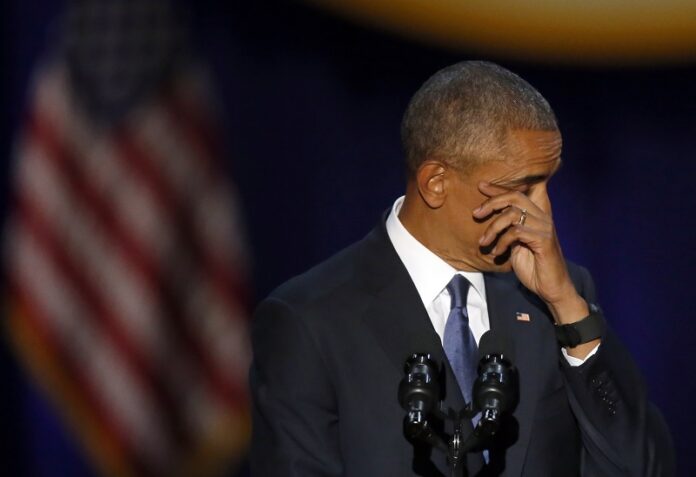
President Barack Obama wipes his tears as he speaks Tuesday at McCormick Place in Chicago. Photo: Charles Rex Arbogast / Associated Press

CHICAGO — Conceding disappointments during his presidency yet offering vigorous encouragement for the nation’s future, Barack Obama issued an emotional defense Tuesday night of his vision to Americans facing a moment of anxiety and a dramatic change in leadership.

Obama’s valedictory speech in his hometown of Chicago was a public meditation on the trials and triumphs, promises kept and promises broken that made up his eight years in the White House. Arguing his faith in America had been confirmed, Obama said he ends his tenure inspired by America’s “boundless capacity” for reinvention, and he declared: “The future should be ours.”

His delivery was forceful for most of his speech, but by the end he was wiping away tears as the crowd embraced him one last time.

Reflecting on the corrosive recent political campaign, he said, “That potential will be realized only if our democracy works. Only if our politics reflects the decency of our people. Only if all of us, regardless of our party affiliation or particular interest, help restore the sense of common purpose that we so badly need right now.”

He made no mention of Republican Donald Trump, who will replace him in just 10 days. But when he noted the imminence of that change and the crowd began booing, he responded, “No, no, no, no, no.” One of the nation’s great strengths, he said, “is the peaceful transfer of power from one president to the next.”

Earlier, as the crowd of thousands chanted, “Four more years,” he simply smiled and said, “I can’t do that.”

Soon Obama and his family will exit the national stage, to be replaced by Trump, a man Obama had stridently argued poses a dire threat to the nation’s future. His near-apocalyptic warnings throughout the campaign have cast a continuing shadow over his post-election efforts to reassure Americans anxious about the future.

Indeed, much of what Obama accomplished over the past eight years  from health care overhaul and environmental regulations to his nuclear deal with Iran  could potentially be upended by Trump. So even as Obama seeks to define what his presidency meant for America, his legacy remains in question.

Even as Obama said farewell to the nation  in a televised speech of just under an hour  the anxiety felt by many Americans about the future was palpable, and not only in the Chicago convention center where he stood in front of a giant presidential seal. The political world was reeling from new revelations about an unsubstantiated report that Russia had compromising personal and financial information about Trump.

Steeped in nostalgia, Obama’s return to Chicago was less a triumphant homecoming and more a bittersweet reunion bringing together Obama loyalists and loyal staffers, many of whom have long since left Obama’s service, moved on to new careers and started families. They came from across the country  some on Air Force One, others on their own  to be present for the last major moment of Obama’s presidency.

Seeking inspiration, Obama’s speechwriters spent weeks poring over Obama’s other momentous speeches, including his 2004 keynote at the Democratic National Convention and his 2008 speech after losing the New Hampshire primary to Hillary Clinton. They also revisited his 2015 address in Selma, Alabama, that both honored America’s exceptionalism and acknowledged its painful history on civil rights.

After returning to Washington, Obama will have less than two weeks before he accompanies Trump in the presidential limousine to the Capitol for the new president’s swearing-in. After nearly a decade in the spotlight, Obama will become a private citizen, an elder statesman at 55. He plans to take some time off, write a book  and immerse himself in a Democratic redistricting campaign.

Story: Josh Lederman, Darlene Superville
Advertisement

US Names Indonesian Group as Terrorist Organization

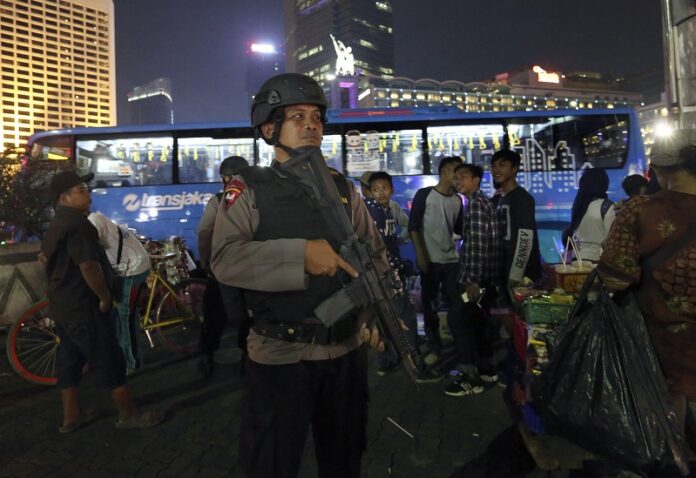
An Indonesian police officer stands guard prior to the New Year's celebration at the main business district in December in Jakarta, Indonesia. Photo: Tatan Syuflana / Associated Press

JAKARTA — The United States has designated an Indonesian radical network behind an attack in Jakarta as a terrorist group and announced sanctions on four militants in an effort to disrupt Islamic State group operations and recruitment in Australia and Southeast Asia.

The announcements by the Department of State and Treasury Department come after Australian and Indonesian police foiled IS-inspired attacks planned for the holiday season.

The State Department said Tuesday it has designated the IS-affiliated Jamaah Ansharut Daulah as a terrorist group. Its militants are believed responsible for a January 2016 attack in the Indonesian capital that killed eight people including the attackers.

Treasury announced financial sanctions against two Australians, both previously believed killed in the Middle East, and two Indonesians, one of whom is in prison in Indonesia.

Advertisement

UAE Ambassador Wounded in Afghanistan Bomb Attack

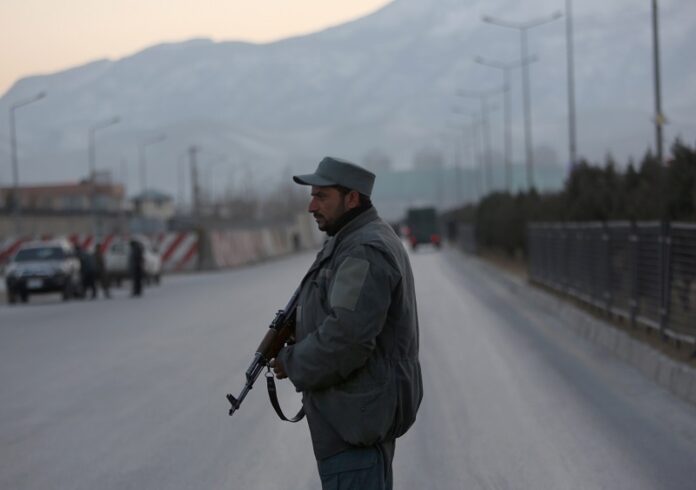
A member of the Afghan security forces stands guard Tuesday near the site of two blasts in Kabul, Afghanistan. Photo: Rahmat Gul / Associated Press

KANDAHAR, Afghanistan — The United Arab Emirates says an attack on a guesthouse belonging to the governor of Afghanistan’s Kandahar province wounded its ambassador and “a number of Emirati diplomats.”

The UAE’s Foreign Ministry made the statement Tuesday night, describing the attack as “heinous.”

It identified the wounded ambassador as Juma Mohammed Abdullah al-Kaabi. Al-Kaabi first presented his credentials to Afghan authorities in June.

The statement did not say how many Emirati diplomats were wounded. It said they were there as part of a humanitarian mission.

Emirati combat troops deployed to Afghanistan after the 2001 U.S.-led invasion that toppled the Taliban.

Afghan officials say two explosions inside the governor’s compound killed five people and wounded 12.

Advertisement

Clare Hollingworth, Journalist who Broke News of WWII, 105

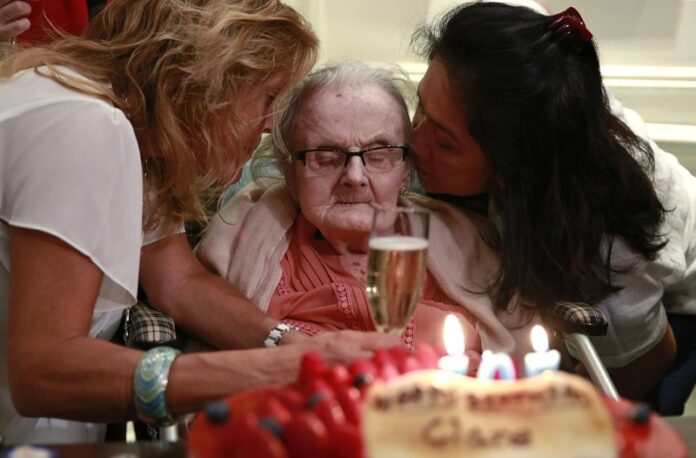
Clare Hollingworth, center, a British former longtime foreign correspondent, is surrounded in October by friends and admirers at her birthday party at Hong Kong's Foreign Correspondents' Club. Photo: Kin Cheung / Associated Press

HONG KONG — Clare Hollingworth, a British war correspondent who was the first to report the Nazi invasion of Poland that marked the beginning of World War II, died in Hong Kong on Tuesday. She was 105.

The Foreign Correspondents’ Club of Hong Kong announced her death, calling her a beloved member with a remarkable career including “the scoop of the century.”

A determined journalist who defied gender barriers and narrowly escaped death several times, Hollingworth spent much of her career on the front lines of major conflicts, including in the Middle East, North Africa and Vietnam, working for British newspapers. She lived her final four decades in Hong Kong after being one of the few Western journalists stationed in China in the 1970s.

She won major British journalism awards including a “What The Papers Say” lifetime achievement award and was made an Officer of the Order of the British Empire by Queen Elizabeth II. Former British Prime Minister Ted Heath and former Hong Kong Gov. Chris Patten were fans of Hollingworth, while various British generals wrote about her fondly.

The scoop that launched her career came in late August 1939, when she was a 27-year-old rookie reporter in southern Poland, barely a week into her job with Britain’s Daily Telegraph.

The border was closed to all but diplomatic vehicles, so she borrowed a British consulate official’s car to drive into German-occupied territory. She saw tanks, armored cars and artillery massing.

She recounted in her autobiography that burlap screens beside the road, “constructed to hide the military vehicles, blew in the wind, thus I saw the battle deployment.”

“I guessed that the German Command was preparing to strike to the north of Katowice and its fortified lines and this, in fact, was exactly how they launched their invasion in the south.”

Returning to Poland, she filed her story, but her name was not on the byline – a common practice for newspapers in those days.

She scored another scoop when the Nazis launched their invasion three days later on Sept. 1.

Her first call was to the British Embassy in Warsaw, but the official she talked to didn’t believe her.

“‘Listen!’ I held the telephone out my bedroom window. The growing roar of tanks encircling Katowice was clearly audible,” she recounted in her autobiography. “‘Can’t you hear it?'”

She then called the Telegraph’s Warsaw correspondent, who dictated her story to London.

As the Nazis moved into Germany, Hollingworth scrambled to get out of Poland, sometimes sleeping in cars, eventually making her way to Romania.

Hollingworth was born Oct. 10, 1911, to a middle-class family in the village of Knighton in Leicestershire, England. Her father ran a boot factory founded by her grandfather. She took brief courses in Croatian at Zagreb University, international relations in Switzerland and Slavonic studies in London. She worked as a secretary and then at a British refugee charity in Poland while writing occasional articles about the looming war in Europe. Friends influenced her decision to focus on journalism rather than politics.

The Daily Telegraph’s editor gave her a job as a stringer and sent her to Poland, partly because of her work with refugees in that country, according to her great-nephew, Patrick Garrett.

During her five months with the charity, Hollingworth played an important role in helping an estimated 2,000-3,000 refugees who were trying to escape the Nazis flee to Britain by arranging visas for them, a fact that Garrett unearthed in research for his 2016 biography of his great-aunt, “Of Fortunes and War.”

Though she carved out a career in what was then a male-dominated field, Garrett said she looked back on her achievements matter-of-factly.

“She would never regard herself as a feminist,” said Garrett. She hated when women were given special treatment because it made women a “hassle,” which made it harder for other female journalists trying to cover wars, Garrett said.

“She thought that everyone should be treated the same. She hated it when women wasted time on makeup or getting their hair done,” Garrett said.

After the Polish invasion, Hollingworth covered the Romanian Revolution and hostilities in North Africa. When Allied forces captured Tripoli in 1943, British Field Marshall Bernard Montgomery ordered her back to Cairo because he didn’t want women around. So she instead got herself accredited with U.S. forces in Algeria.

Later she reported on the fall of the Balkan states to communism, and on Cold War espionage, including the case of Kim Philby, a British journalist and Soviet double agent.

Hollingworth wrote for many publications in her career, including The Economist, the Manchester Guardian and the Daily Express.

Hollingworth was close to danger for decades. In 1946, she was standing 300 yards (meters) from the King David Hotel in Jerusalem when it was destroyed by a bomb planted by militant Zionists that killed nearly 100 people.

While covering the Algerian war for independence in 1962, Hollingworth defied members of a French far-right group who rounded up foreign journalists and threatened some of them with execution.

“I was extremely annoyed at this treatment and I told their commander in French, ‘Go away at once, monsieur, or I will have to hit you over the head with my shoe, which is all I have.”

The commander pushed her aside, grabbed another British journalist and dragged him out the front door of their hotel. Hollingworth led the other reporters outside in pursuit of their colleague, who was thrown to the ground. The gunmen released the safety catches on their guns and the reporters dove for cover, but they drove off without shooting.

Covering the Vietnam War, Hollingworth flew aboard U.S. military aircraft on supply runs and bombing missions.

Hollingworth became the Telegraph’s first resident China correspondent when the newspaper sent her to the capital then known as Peking in 1973, a year after U.S. President Richard Nixon’s landmark visit that eventually led to formal ties between the U.S. and China.

She moved to Hong Kong in 1981. She had intended to stay temporarily as she wrote a book about Mao Zedong, but decided to stay to watch the negotiations over Britain’s return of Hong Kong to China in 1997 and never left.

Hollingworth wrote articles for the International Herald Tribune and Asian Wall Street Journal well into her old age. She was known for visiting the Foreign Correspondents’ Club every day, where her domestic helpers read newspapers to her because of her failing eyesight, and where friends and admirers helped her celebrate her 105th birthday with cake.

Story: Kelvin Chan

Advertisement

Goodbye Yahoo, Hello ‘Altaba?’

Yahoo and Verizon logos in a July 2016 file photo. Photo: Elise Amendola / Associated Press

SAN FRANCISCO — Yahoo will adopt a new corporate identity and slash the size of its board if the proposed USD$4.8 billion (170.9 billion baht) sale of its digital services to Verizon Communications goes through.

The company plans to change its name to Altaba Inc. after it turns over its email, websites, mobile apps and advertising tools to Verizon. The new name is meant to reflect Yahoo’s transformation into a holding company for investments in China’s e-commerce leader, Alibaba Group, and Yahoo Japan that are worth about more than $40 billion combined.

Yahoo CEO Marissa Mayer, co-founder David Filo and four other directors currently on the company’s 11-member board will resign after the planned sale to Verizon closes. Verizon is expected to retain Yahoo’s brand under its ownership.

But the Verizon deal has been jeopardized by Yahoo’s recent discovery of two computer hacking attacks that stole personal information from more than 1 billion user accounts during two different intrusions that occurred in 2013 and 2014.

Verizon is reassessing whether it should renegotiate the sales price or perhaps cancel the deal light of hacking revelations that could trigger a backlash among Yahoo users upset about sensitive personal details being stolen. Yahoo is fighting to keep the deal intact.

In the only change that took effect Monday, Yahoo director Eric Brandt became the company’s chairman. He replaces Maynard Webb, who becomes chairman emeritus until the Verizon deal closes.

Brandt, the former chief financial officer of chipmaker Broadcom, joined Yahoo’s board 10 months ago. Webb had been Yahoo’s chairman for nearly four years. If the Verizon deal closes, Webb will leave the board along with Mayer, Filo and Eddy Hartenstein, Richard Hill and Jane Shaw.

Advertisement

Court Grants Redshirt Leader Jatuporn Bail Due to Illness

An April 23, 2015, file photo of Jatuporn Prompan, chairman of the United Front of Democracy Against Dictatorship (UDD).

BANGKOK — The court released Redshirt leader Jatuporn Prompan from prison on a bail Tuesday so he could seek medical treatment.

Although Jatuporn recently recovered from a kidney infection, the 51-year-old former politician is said to be suffering other health conditions including a prostate infection, said fellow Redshirt activist Thida Thavornseth. Jatuporn had been held in prison since October after the court revoked his bail on terrorism charges.

“He was mostly treated well in prison. The prison hospital was also good, but it’s better for him to seek full treatment outside prison,” Thida said.

Read: Jailed Redshirt Leader Recovering From Kidney Infection

Jatuporn’s lawyer Winyat Chartmontri said the court cited three reasons for his release: illness, his need to care for his family and his “repentance” for violating bail conditions. Winyat said he posted a bond of 600,000 baht for Jatuporn.

He was freed from Bangkok Remand Prison on Tuesday afternoon.

Jatuporn is the chairman of the United Front of Democracy Against Dictatorship, a movement loyal to fugitive former Prime Minister Thaksin Shinawatra and his political dynasty.

He’s currently on trial for terrorism charges, which were filed over six years ago by the government of Abhisit Vejjajiva in response to street protests Jatuporn helped organize in 2010. The protests, which called for a fresh election, ended in a bloody military crackdown and acts of arson by some protesters.

In October the court ruled Jatuporn violated the conditions of his bail by appearing on television and making speeches that “incite unrest” in the country.

Advertisement

FIFA World Cup to Feature 48 Teams Starting 2026

The Spanish national team celebrate after their World Cup win in 2010 in Johannesburg, South Africa. Photo: Anthony Stanley / Flickr

ZURICH — FIFA says it will expand the World Cup to 48 teams, adding 16 extra nations to the 2026 tournament.

President Gianni Infantino’s favored plan  for 16 three-team groups with the top two advancing to a round of 32  was unanimously approved by the FIFA Council.

It meets Infantino’s election pledge of a bigger World Cup, and should help fund promised raises for FIFA’s 211 members.

With 80 matches instead of 64, FIFA forecasts $1 billion extra income from broadcasting and sponsor deals, plus ticket sales, compared to $5.5 billion forecast for the 2018 World Cup in Russia.

FIFA’s six continents should find out by May how many extra places they will get.

UEFA wants 16 European teams in the tournament, which will likely be held in North America.

Advertisement

Sexy Kittens Partner With Babes for Charity Calendar Out Saturday

BANGKOK — Cat slaves who recently gathered to pose with their little masters for a sexy charity calendar will show their whiskers and tails Saturday at a launch party.

To help support homeless cats, six models donated their time for a black-and-white photo shoot to show how sexy cat adoption is and introduce some gorgeous homeless kitties ready for snuggling.

Proceeds from calendar sales will go to PAWS Bangkok, a nonprofit organization that works to reduce the soi cat population and is overwhelmed with lovely furballs that need homes.

The calendars will be sold for “about 500 baht” at the event, which will feature music by DJ Pageant and activities for party-goers and cat lovers alike. They will later be sold online.

Dress code is simple: cat!

The party starts at 7pm on Saturday at Whiteline, Silom Soi 8. It can be by taxi or moto from BTS Sala Daeng or Surasak.


Photo: Siamese Kitty Cats / Facebook

Advertisement

Go to Battle With Class-Action Lawsuit Startup ‘FongDi’

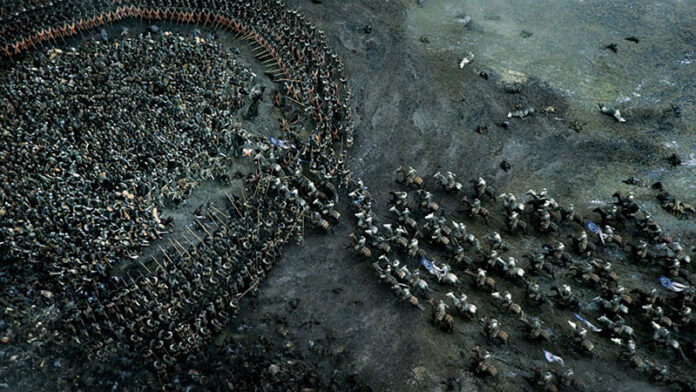
A pivotal battle scene from HBO's 'Game of Thrones.' Image: HBO

BANGKOK — For dropping a bomb on its customers by announcing they could no longer get HBO and its affiliates on short notice, TrueVisions could be the first company to face a class-action lawsuit brought through recently launched legal startup FongDi.

Winter came ahead of season for Thailand’s “Game of Thrones” fans Jan. 1 when the satellite television operator replaced its 6 HBO channels with Warner TV, Paramount Channel HD, Celestial Classic Movies, Food Network, Fox Action Movies HD, Sony Channel and True Film HD 2 after it failed to renegotiate its licensing deals.

The news was broken Dec. 26 by the National Broadcasting and Telecommunications, which gave TrueVisions the green light despite the fact it violated regulations by not giving 30 days notice.

Enter FongDi.com, which literally means “suable.”

“Unlike Office of the Consumer Protection Board or Change.org, FongDi.com allows people to take concrete action,” said Peerapat Foithong, lawyer and co-founder. “If people are affected from the same case, they can sue as a group through our site.”

Meant to increase consumer protections by providing a platform for people to come together for class-action suits, FongDi has made TrueVisions its first case.

There, subscribers unsatisfied with TrueVision’s service can put their names toward suing the company. More than 1,000 people have signed on so far.

Peerapat was to attend a meeting today between TrueVisions and the commission to request fee deductions of 200 baht to 500 baht per month for subscribers. They want the company to compensate those who canceled their subscriptions with money, not “True rewards” points.

Depending on how that goes, a lawyer may be hired to take the case to court.

“Class action lawsuits will save a lot of time and procedures in court, in cases where there are many people affected, such as this,” Peerapat said. “Plus, we provide the service free of charge.”

Although class action lawsuits were made possible in 2015, not a single case has been taken to court so far. Peerapat said he wants the case to increase awareness of their legal rights.

FongDi.com is a startup began by two lawyers, a programmer and marketing pro.

Inspired by Peerapat’s master’s thesis and his experience once suing an auto company, FongDi is meant to help people fight for their rights and increase their knowledge about the law. On the site users will find information and illustrations featuring “Buddy” a dog in black suit.

FongDi said the TrueVisions case has generated a lot of interest, and it is developing an English version of the page for all the expats who have been visiting the site looking to participate. Meanwhile, feel free to contact them via Facebook.

Clarification: An earlier version of this story said Peerapat worked on a case involving a lawsuit against and auto company. He was a plaintiff in the case.

Related story:

TrueVisions Will Stop Showing HBO, Cinemax Channels in 6 Days

Advertisement

Roman Herzog, Ex-German President, 82

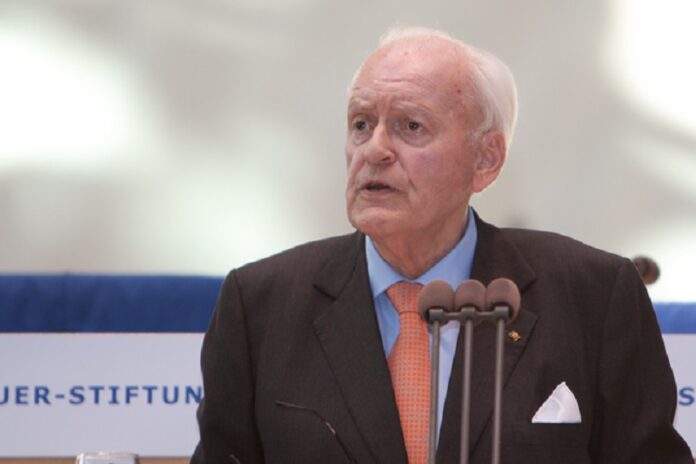
A photo of Roman Herzog in 2012 in Germany. Photo KASonline / Flickr

BERLIN — Roman Herzog, who as president pressed Germany to embrace economic reform in the 1990s and also stressed the importance of remembering the Nazi Holocaust, has died. He was 82.

Current President Joachim Gauck paid tribute Tuesday to Herzog, whom he described as “a distinctive personality.”

Herzog served as the chief justice of Germany’s highest court before winning the presidency in 1994, four years after reunification.

He was one of the first leaders to address Germany’s resistance to reform and its growing economic stagnation at a time when Chancellor Helmut Kohl’s 16-year tenure was coming to a close. Germany was struggling with double-digit unemployment, amid worries that its labor market was too inflexible.

This is a developing story and will be updated without notice.

Advertisement

Hot News

LATEST NEWS

Bangkok
few clouds
27.7 ° C
27.7 °
27.7 °
76 %
3.5kmh
17 %
Wed
38 °
Thu
39 °
Fri
37 °
Sat
37 °
Sun
37 °