37.8 C
Bangkok
Friday, June 26, 2026
Home Blog Page 2556

Mexican Peso Falls Sharply Against US Dollar

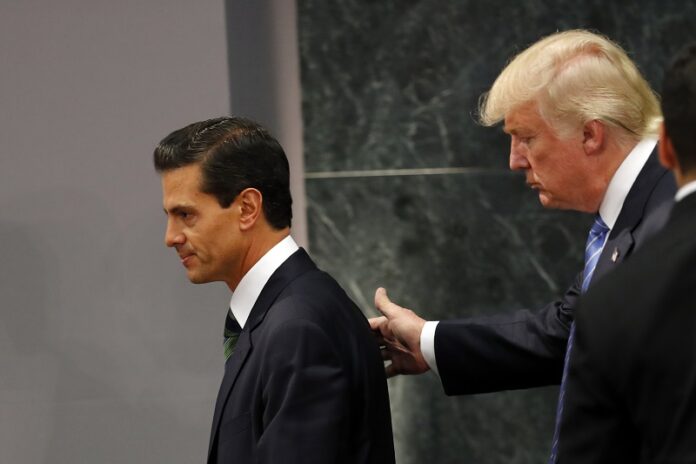
Republican presidential nominee Donald Trump walks with Mexico's President Enrique Pena Nieto in August at the end of their joint statement at Los Pinos, the presidential official residence, in Mexico City. Photo: Dario Lopez-Mills / Associated Press

MEXICO CITY — The Mexican peso has fallen sharply against the U.S. dollar as early returns show a tight race for the White House.

Financial research firm FactSet says the currency is currently trading at 20.45 to the dollar. The Bank of Mexico’s interbank rate stood at 18.42 at the end of Tuesday’s trading day.

The peso has closely tracked the U.S. presidential race during the campaign, hardening when Clinton’s chances are seen as bullish and weakening when Donald Trump is seen as rising.

Financial analyst Gabriela Siller of Banco BASE issued a forecast Tuesday that a Trump victory could cause the peso to fall to 24 to the dollar next year and lead to a 3 percent economic contraction in Mexico.

Trump has threatened to renegotiate the North American Free Trade Agreement and vows to build a wall along the United States’ southern border and force Mexico to pay for it.

Advertisement

Gunman is Dead After Fatal Attack in California

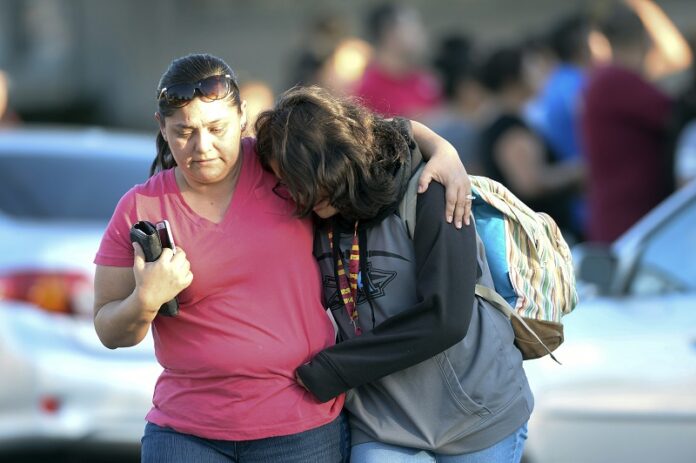
A parent picks up her daughter at Slauson Middle School that was on lockdown as Azusa police and other agencies respond to a shooting Tuesday near Fourth Street and Orange Avenue in Azusa, California. Photo: Keith Durflinger / Associated Press

AZUSA, California — Authorities in California say a gunman is dead after killing a man and critically wounding two women not far from two polling places that were closed as a result.

They say the assault rifle attack in the Los Angeles suburb of Azusa wasn’t election-related.

The two polling sites were shut down for several hours Tuesday while officers surrounded a home where the gunman’s body was found. One later reopened.

Authorities called to the scene got into a gun battle and police say it’s unclear whether they fatally wounded the gunman or he killed himself. No officers were hurt.

The shooting took place not far from several schools, including one that was serving as a polling place, and across the street from a park that also had a polling site.

Police don’t have a specific motive for the shootings.

The names of the gunman and the dead man haven’t been released. The wounded victims are described as two women in their mid-50s.

Advertisement

Markets: Asian Shares Tumble as Trump Gains

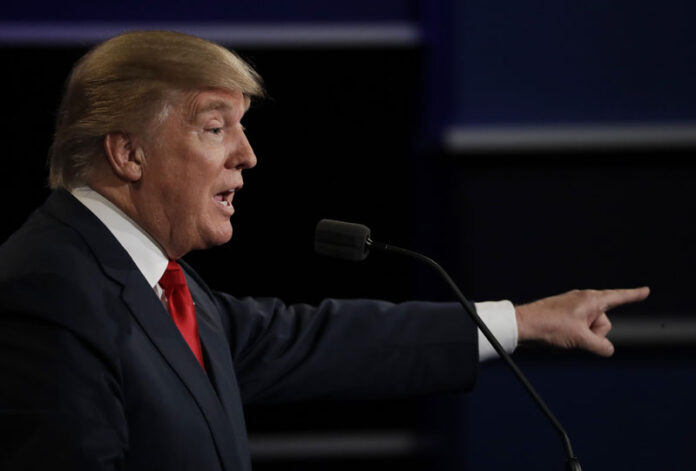
Republican presidential nominee Donald Trump points to Democratic presidential nominee Hillary Clinton during the third presidential debate in October in Las Vegas, Nevada. Photo: Patrick Semansky / Associated Press

HONG KONG — Share benchmarks are tumbling across Asia after Donald Trump gained the lead in electoral votes, with 123 to Hillary Clinton’s 97 as of 9 p.m. EST (0200 GMT). Markets had opened solidly higher but quickly shed those gains, reflecting investor concern over what a Trump presidency might mean for the economy and trade.

Japan’s Nikkei 225 index dropped 2.4 percent to 16,777.85 as the U.S. dollar sank against the Japanese yen, a trend that would be unfavorable to exporters. Hong Kong’s Hang Seng plunged 1.7 percent to 22,514.70.

South Korea’s Kospi index fell 1.4 percent to 1,976.49 and Australia’s S&P ASX/200 lost 1.2 percent to 5,196.70.

Earlier, investors had appeared convinced that Hillary Clinton would win the presidency. Clinton is viewed as a more stable option who might maintain current policies.

In currency trading, the U.S. dollar was trading at 102.60 yen down from a high earlier in the session of 105.46. The euro was at USD $1.1142, up from its previous close of USD $1.1020.

Advertisement

Bangkok-Born Duckworth Wins Illinois Senate Seat

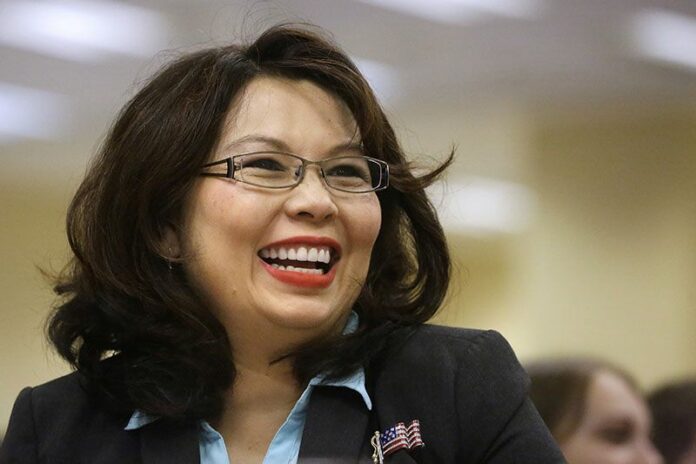
U.S. Representative Tammy Duckworth, D-Ill., appears at a brunch in Springfield, Illinois. Duckworth is now a Democratic candidate for the U.S. Senate in the November 2016 general election. Photo: Seth Perlman / Associated Press

CHICAGO — Democratic U.S. Rep. Tammy Duckworth unseated Republican U.S. Sen. Mark Kirk on Tuesday, delivering a win that her party is banking on as it attempts to retake control of the Senate and becoming the second woman to represent Illinois in the chamber.

The two-term congresswoman from Hoffman Estates entered the race a heavy favorite, as Illinois has long backed Democrats for statewide office, especially in presidential election years.

Kirk told supporters that he called Duckworth to congratulate her and invited her to a join him for a beer at Chicago’s Billy Goat Tavern.

Read: Duckworth Opponent Apologizes for Mocking Her Family’s Military History

“This beer summit will show kids across Illinois that opponents can peacefully bury the hatchet after a tough election, and that what unites us as Americans is much stronger than what divides us,” Kirk said.

Kirk worked for months to convince voters that he’s independent of his party by criticizing GOP presidential nominee Donald Trump as “racist” and “delusional” and talking up his record of breaking from Republicans on issues such as gun control and gay marriage.

Kirk also hurt his own campaign with a series of controversial statements. He had to apologize to Duckworth last month after mocking her immigrant background — she was born in Bangkok to a Chinese-Thai mother and American father — and her family’s military history during a debate. Two organizations withdrew their endorsements, calling the remarks racist.

That was enough to persuade Charles Hawley, a psychiatrist from the central Illinois town of Mahomet, to cast his ballot for Duckworth instead of Kirk.

“It just sort of stuck with me,” the 49-year-old said just after voting at Lake of the Woods County Park in Mahomet, about 10 miles west of Champaign. “It was hard to get past.”

Kirk also had apologized for referring to South Carolina U.S. Sen. Lindsey Graham, who’s unmarried, as a “bro with no ho,” and was criticized for saying President Barack Obama was acting like “the drug dealer in chief” when his administration delivered $400 million cash to Iran contingent on the release of American prisoners.

Duckworth will be the second woman to serve Illinois in the U.S. Senate. Carol Moseley Braun, elected in 1992, was the first.

Duckworth campaigned on a pledge to help middle- and working-class families, often sharing her own compelling personal story. The daughter of an immigrant, she said her family struggled to get by and had to use food stamps after her father lost his job. In 2004 she lost both legs when the helicopter she was co-piloting was shot down in Iraq while she was deployed with the Illinois National Guard.

She served as director of the Illinois Department of Veterans Affairs after losing her first bid for Congress in 2006. In 2009, Obama appointed her to a leadership post at the federal VA.

Kirk, whose 2010 election made him only the second Republican to represent Illinois in the U.S. Senate in more than three decades, tried to ding Duckworth over the VA scandal, airing campaign ads that said there was abuse and mismanagement under her watch. Duckworth called the ads false.

Kirk also battled questions about his health following his 2012 stroke. He released a letter from his physician saying he had made a full cognitive recovery, but the issue of whether he was still capable of doing the job hung over the race.

Mike Jobson, 61, of Mahomet, backed Kirk based on one reason: “Government is too big. We want to get the power back in our hands.”

He said the vote for Kirk is one he can feel good about, because “I think he has his heart in the right place.”

Democrats were so confident in Duckworth’s odds they pulled back on planned TV airtime in the final weeks of the campaign to invest in states where the polls were tighter.

Advertisement

Trump, Clinton Fight Into Night for Florida, North Carolina, Ohio

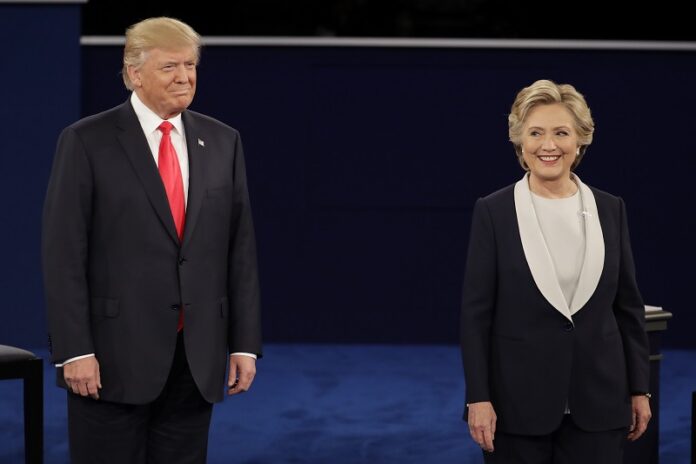
Republican presidential nominee Donald Trump and Democratic presidential nominee Hillary Clinton during the second presidential debate in October at Washington University in St. Louis, Missouri. Photo: Julio Cortez / Associated Press

WASHINGTON — America’s ugly and unpredictable presidential election barreled toward the finish Tuesday night, with Hillary Clinton and Donald Trump fighting fiercely for Florida, North Carolina and Ohio, three of the nation’s most competitive states.

Clinton, a fixture in American politics for decades, was hoping to become the first woman to serve as commander in chief. She faced stiff competition from Trump, the billionaire businessman who tapped into a searing strain of economic populism.

Trump picked up a number of reliably Republican states, while Clinton won in Democratic territory. But the race was to be determined by fewer than a dozen competitive states where the candidates spent millions of dollars and much of the fall wooing voters.

The race in Florida, a perennial battleground and the biggest prize among swing states, was exceptionally close. The race was also tight in North Carolina and Virginia, though votes were still being counted in major urban areas where Clinton was banking on high turnout.

Exit polls underscored the deep divisions that have defined the 2016 contest. Women nationwide supported Clinton by a double-digit margin, while men were significantly more likely to back Trump. More than half of white voters backed the Republican, while nearly 9 in 10 blacks and two-thirds of Hispanics voted for the Democrat.

Control of the Senate was also at stake, with Democrats needing to net four states if Clinton wins the White House. In Illinois, Democratic Rep. Tammy Duckworth defeated the Republican incumbent, but in neighboring Indiana, GOP Rep. Todd Young snatched away a prime pickup opportunity for Democrats.

The 45th president will inherit an anxious nation, deeply divided by economic and educational opportunities, race and culture. The economy has rebounded from the depths of recession, though many Americans have yet to benefit. New terror threats from home and abroad have raised security fears.

Clinton asked voters to keep the White House in her party’s hands for a third straight term. She cast herself as heir to President Barack Obama’s legacy and pledged to make good on his unfinished agenda, including passing immigration legislation, tightening restrictions on guns and tweaking his signature health care law.

“I know how much responsibility goes with this,” Clinton said after voting Tuesday at her local polling station in Chappaqua, New York, with her husband, former President Bill Clinton, at her side. “So many people are counting on the outcome of this election, what it means for our country, and I will do the very best I can if I’m fortunate enough to win today.”

Trump, the New York real estate developer who lives in a gold-plated Manhattan penthouse, forged a striking connection with white, working-class Americans who feel left behind in the changing economy and diversifying country. He cast immigration, both from Latin America and the Middle East, as the root of many problems plaguing the nation and called for building a wall along the U.S.-Mexico border.

“I see so many hopes and so many dreams out there that didn’t happen, that could have happened, with leadership, with proper leadership,” he said by telephone on Fox News before casting his own ballot in Manhattan. “And people are hurt so badly.”

Seven in 10 Americans who went to the polls Tuesday said immigrants now in the country illegally should be allowed to stay, while just a quarter said they should be deported. More than half oppose building a border wall, according to the exit polls, which were conducted for The Associated Press and television networks by Edison Research.

The Republican Party’s tortured relationship with its nominee was evident right up to the end. Former President George W. Bush and wife Laura Bush declined to back Trump, instead selecting “none of the above” when they voted for president, according to spokesman Freddy Ford.

Trump set both parties on edge when he refused to say in the third and final debate whether he would accept the election’s results, citing with no evidence the possibility of a rigged outcome. His statement threatened to undermine a fundamental pillar of American democracy and raised the prospect that his fervent supporters would not view Clinton as a legitimate president if she won.

Asked Tuesday in an interview with Fox News if he would accept the election results, Trump continued to demur, saying “We’re going to see how things play out.”

Most problems that did pop up at polling places Tuesday appeared to be routine — the kinds of snags that come every four years, including long lines, machines not working properly and issues with ballots or voter rolls.

Even before Tuesday, almost 45 million people had cast ballots for president. Many expressed relief the end was in sight after an election season in which personal attacks often drowned out the issues.

Clinton has denounced Trump for calling Mexican immigrants “rapists” and promoting a ban on Muslims entering the U.S., and for his long line of remarks about women that culminated in an audio in which he bragged about grabbing their genitals. Her campaign was hoping high turnout among Hispanics push her over the top in states like Florida and Nevada.

“I grew up in a Hispanic family, and the way that Donald Trump has referred to illegal immigrants — being from illegal immigrants, I took that to heart,” said Angel Salazar, a 22-year-old sanitation associate from Oklahoma City. “I don’t like anything that he said. I don’t like his views. So I voted for Hillary Clinton because she supports us.”

Trump called his opponent “Crooked Hillary” for her use of a private email server as secretary of state and her complicated ties to the family’s Clinton Foundation.

Story: Julie Pace, Robert Furlow

Advertisement

US Elections: A Night of Decision After Venomous Campaign

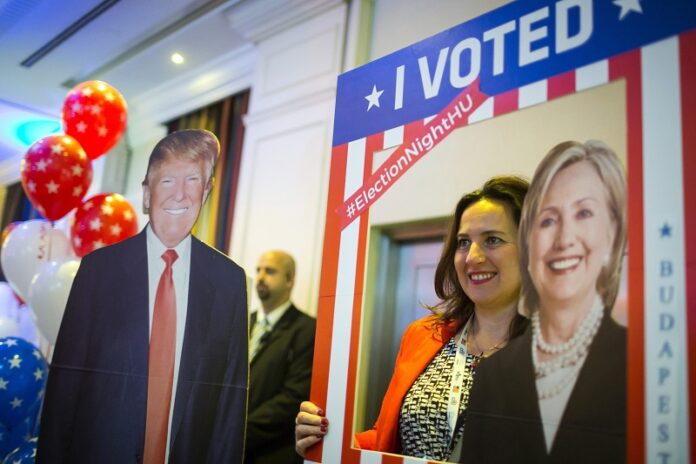
A woman poses for a photograph next to the cardboard figures of Hillary Clinton Democratic presidential candidate, right, and Donald Trump the Republican presidential candidate, Tuesday during the Election Night Party at the US Embassy in Budapest, Hungary. Photo: Balazs Mohai / Associated Press

WASHINGTON — Americans bid goodbye with their ballots Tuesday to a presidential campaign of venom, audacity and history, choosing between Hillary Clinton and Donald Trump in a contest that divided the nation like none other in recent times.

In early results, Trump the Republican and Clinton the Democrat scored in their expected strongholds, fought fiercely in Florida and left the contours of the night to be shaped by battlegrounds to come.

Clinton appeared to have more paths to the prize as she sought to become the first woman elected president; Trump appeared to tighten the race in the campaign’s final days. Both left multitudes of Americans dissatisfied with their choices.

The struggle over whom to support was voiced by two voters in Independence, Missouri, after casting their ballots.

“I had such a hard time, harder than I’ve ever had,” said Joyce Dayhill, 59, a school bus driver who “reluctantly” voted for Trump. “I just prayed on it as hard as I could and felt this was the right decision.”

Said Clinton voter Richard Clevenger, 58: “I think Trump’s not stable. But I can’t say there was really anything Hillary’s shown me that made me feel like voting for her. But Trump just doesn’t know what the hell he’s doing, and he’s surrounded by the Mickey Mouse Club.”

The first states to be decided Tuesday night produced expected results: Kentucky, Indiana, Oklahoma, West Virginia, South Carolina and Tennessee went for Trump; Vermont, Massachusetts, Maryland, New Jersey, Delaware and the District of Columbia for Clinton. Closer races shaped up in Florida and several other battlegrounds. Virginia defied an early call.

In a later wave, Trump added Texas, Kansas and more to his column while Clinton took New York and Illinois, each reaping significant gains in the contest for 270 electoral votes but shy of a tipping-point victory, with plenty of states ahead.

Control of the Senate also hung in the balance on a night that was reshaping the political calculus in Washington, a dozen governors’ offices and statehouses.

Voters Say…

In preliminary surveys of voters leaving polling places, about 4 in 10 said the top quality they’re looking for in a candidate is change. That outranks good judgment, the right experience and caring about people like you as the preferred qualities in a president.

Just over half approve of the job President Barack Obama is doing. But a majority is still upset with the way the government is working.


Clinton Vs. Trump

The two New Yorkers pounded each other relentlessly, each preaching that the other is wholly unqualified, as the race tightened in the final days after a persistent if elastic lead for Clinton, the Democrat, in preference polling. Those who dreamed of Bernie Sanders for the Democratic ticket or anyone but Trump for Republicans face their time of reckoning. Will they come home to their party or just stay home?

Clinton, inheritor of Obama’s vaunted campaign apparatus and a skillful (and well-financed) organizer in her own right, fielded an impressive professional and volunteer operation. She had big names on the stage, loads of people tracking down supporters and getting them to early-voting places, committed and well-heeled interest groups behind her and lots of money for sustained advertising.

Trump’s effort paled in comparison, seeming as unpolished and improvised as the candidate himself. What he had that she didn’t were the pulse and the passion of huge crowds, day after day.

To those in Trump country, no boastful, stomach-turning video about women, no “lock-her-up” insult from the stage, no toxic tweet in the wee hours, could peel them away from the man whose crudities only made him more authentic in their eyes. To many of the Republicans who didn’t come to the rallies — and to some of the lawmakers who faced the prospect of working with him in Washington — he was a disaster, a Republican Titanic sailing alongside Clinton’s Democratic Lusitania. To the country at large, and much of the world, he polarized, repelled, entertained, shocked and fascinated.

Did that make Clinton less of a divisive figure?

Not to the Republicans who are already itching to impeach her if she wins.

Story: Calvin Woodward

Advertisement

Senate Control Up for Grabs as Democrats Pick Up Illinois

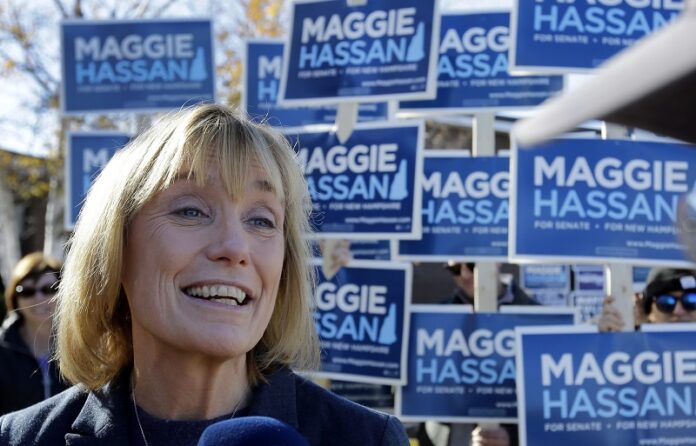
New Hampshire Democratic Senate candidate, Gov. Maggie Hassan speaks to reporters, Tuesday outside a polling place in Portsmouth, New Hampshire. Photo: Elise Amendola / Associated Press

WASHINGTON — Democrats grabbed a Republican-held seat in Illinois on Tuesday as they fought to retake control of the Senate from the GOP. But Republicans held onto seats in Indiana and Florida, and several other key races were too close to call.

In Illinois, GOP Sen. Mark Kirk had long been considered the most endangered Republican incumbent, as he faced a strong challenger in a state that favors Democrats in presidential election years. His opponent, Democratic Rep. Tammy Duckworth, is a double-amputee Iraq war veteran with a compelling personal story.

In Indiana, GOP Rep. Todd Young beat former Democratic senator and governor Evan Bayh, who mounted a much-ballyhooed comeback bid, but wilted under scrutiny.

And in Florida, GOP Sen. Marco Rubio beat Democratic Rep. Patrick Murphy, giving Rubio a platform from which he could mount another bid for president in 2020. The outcome was not unexpected since Murphy had been abandoned by his own party in the final weeks of the campaign, but polls had tightened heading into Election Day.

But with several other races too close to call, control of the Senate depended on outcomes in North Carolina, Missouri, New Hampshire and elsewhere as the night wore on.

In New York, meanwhile, Sen. Chuck Schumer, the Democrats’ leader-in-waiting for a new Congress, easily won re-election. Results elsewhere would tell if Schumer leads a Democratic majority in the Senate next year, or a minority when he replaces retiring Nevada Sen. Harry Reid in the leader’s role.

The outcomes came as GOP incumbents around the country faced energized Democratic challengers trying to oust them in costly and caustic battles shadowed every step of the way by the polarizing presidential race between Republican Donald Trump and Democrat Hillary Clinton.

In GOP-held North Carolina, Missouri and New Hampshire, it looked like it could go either way as voting progressed. The races were also close in Pennsylvania and Nevada, the one Democratic-held seat that was hotly contested this election.

Republicans hold a 54-46 majority in the Senate, including two independent senators who caucus with the Democrats. That means Democrats need to pick up just four seats to take the majority if Clinton wins the White House and can send her vice president to cast tie-breaking votes in a 50-50 Senate. Democrats would need to pick up five seats if Trump wins.

The GOP retook the majority just two years ago. And even though control of the Senate is likely to be razor-thin whichever party ends up on top, the advantages of being in the majority are significant. The controlling party holds the committee chairmanships, sets the legislative agenda and runs investigations. First up is likely to be a nominee to fill the vacancy on the Supreme Court.

Democrats were counting on two likely pick-ups in Wisconsin and Illinois, though in Wisconsin polls tightened in recent weeks in favor of GOP Sen. Ron Johnson.

Reid was retiring after five terms and trying to engineer a Democratic successor. Democrats were optimistic that a strong Latino vote, and Republican hopeful Rep. Joe Heck’s stumbles with Trump, would keep Nevada in their column.

North Carolina and Missouri, on the other hand, were two GOP-friendly states that turned unexpectedly competitive as incumbent Republican Sens. Richard Burr and Roy Blunt seemed caught unawares by the nation’s restless mood.

Throughout the campaign the Senate races provided moments of drama, not least as GOP candidates grappled with sharing a ticket with Trump. That tripped up Sen. Kelly Ayotte in New Hampshire after she asserted at one point that Trump could “absolutely” be a role model for the nation’s youth.

In Nevada, Heck un-endorsed Trump to boos after the groping audio, but later seemed to backtrack. He ended the campaign refusing to say whether or not he’d vote for Trump. Pennsylvania GOP Sen. Pat Toomey, too, kept voters in suspense until the 11th hour before disclosing late Tuesday that he voted for Trump.

There were poignant moments, too.

Arizona GOP Sen. John McCain, at age 80, was seeking his sixth term in quite possibly his final campaign. The 2008 GOP presidential nominee, expected to be re-elected without much difficulty despite early predictions of a competitive race, struck a reflective note in a final pre-election rally.

“While as Yogi Berra said, ‘I hate to make predictions, especially about the future,’ I’m not sure how many more I have in me,” McCain said.

Democratic Sen. Patrick Leahy of Vermont, the longest-serving sitting senator, was re-elected easily to an eighth term. Democrats held onto an open seat in Maryland, where Democratic Rep. Chris Van Hollen will replace the longest-serving female senator, Democrat Barbara Mikulski, who retired.

Story: Erica Werner

Advertisement

1 Killed in Shooting Near California Polls

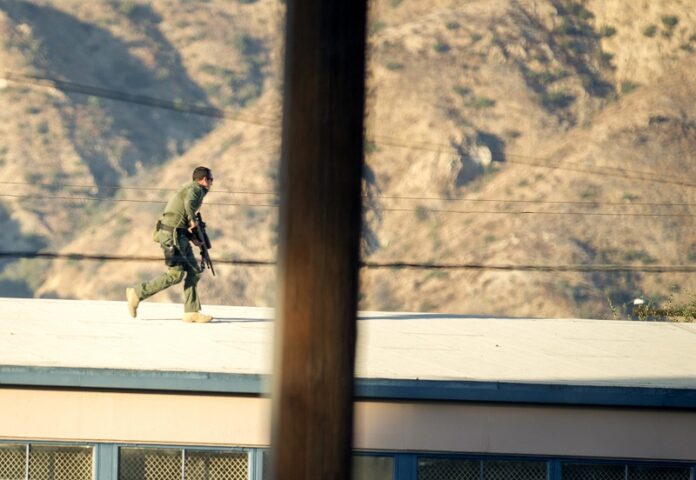
A SWAT team sniper moves on top of the Memorial Park gymnasium to cover a barricaded suspect Tuesday on Fourth Street east of Orange Avenue after several people were shot at that location Avenue in Azusa, California. Photo: Leo Jarzomb / Associated Press

AZUSA, California — Police say a person with an assault rifle killed one person and wounded two others near two Southern California polling sites that were locked down.

Azusa police Chief Steve Hunt says the suspect began firing Tuesday at arriving officers who returned fire before they took cover near a park.

Hunt says a person is down at the front door of a home but couldn’t immediately say whether that person was the shooter.

Elections officials say one of the polling sites has reopened. Voters were being urged to seek nearby polling places.

The motive of the shooting was unknown and it was unclear if it had anything to do with the election.

No officers were hurt.

Advertisement

Long Lines, Machine Snags – But Major Voting Problems Scant in US Elections

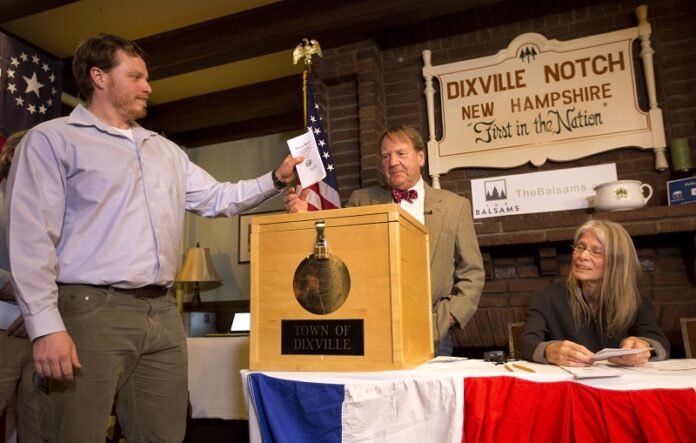
Dixville Notch's first voter Clay Smith drops his ballot into the box as moderator Tom Tillotson watches Tuesday in Dixville Notch, New Hampshire. Photo: Jim Cole / Associated Press

WASHINGTON — Voters around the country faced long lines, occasional broken machines and some hot tempers Tuesday, but as the polls began closing from east to west, there were no signs of the large-scale fraud, intimidation or hacking some had feared in the run-up to the presidential election.

The scattered reports of problems mostly involved the sort that arise in every election, including discrepancies in the voter rolls, with no immediate indication of a snag big enough to meaningfully alter the overall vote count.

“The biggest surprise is how uneventful things have been with this large a turnout,” said Illinois State Board of Electionsspokesman Jim Tenuto. “Everyone was expecting more problems than this — and nothing.”

In Texas, a computer malfunctioned at a polling place in suburban Houston, and voters were briefly sent to another site more than two miles away. In key battleground North Carolina, a computer problem in the Democratic stronghold of Durham County triggered long lines when election officials had to rely on a paper check-in process. Several precincts there extended their closing times up to an hour.

Colorado’s voter registration system was down for nearly 30 minutes, though the state said there was no evidence it was hit by hackers. Outside a Florida polling place, a woman campaigning for Donald Trump pepper-sprayed a Hillary Clinton voter.

Some people in North Carolina and Virginia complained they were not on the rolls despite registering through the motor vehicle departments.

The absence of widespread trouble was notable given that the voting unfolded amid repeated but unsubstantiated claims from Republican Donald Trump that the election would somehow be rigged. His exhortations to followers to watch for fraud at the polls gave rise to fears of vigilantism and harassment. There was also anxiety that hackers might attack voting systems.

“Overall, the story that everyone was expecting — mass reports of voter intimidation — hasn’t happened,” said Wendy Weiser, head of the democracy program at the Brennan Center for Justice at NYU’s Law School. “I’ve definitely seen an uptick in it … but it’s not the overriding story of the election, which certainly ought to be a relief to many.”

Despite little evidence to support his claims, Trump again suggested that the election might not be on the up-and-up. His campaign announced that it was seeking an investigation in the battleground state of Nevada over reports that some early voting locations had allowed people to get in line after poll closing times.

In an interview on Fox News, Trump would not commit to accepting the outcome of the election.

“We’re going to see how things play out today and hopefully they will play out well and hopefully we won’t have to worry about it,” he said. Later in the interview, he said, “It’s largely a rigged system.”

Fears of voter intimidation and fraud led to a flurry of lawsuits in the run-up to Election Day, and new voter regulations in more than a dozen states also held the potential to sow confusion at polling places.

In Philadelphia, one of the places Trump had suggested were ripe for fraud, District Attorney Seth Williams said that as of the afternoon, there were no substantiated reports of voter fraud or intimidation, and “no walking apocalypse of zombies voting around town.”

Meanwhile, state election officials were guarding against any attempt to breach their computer systems.

Forty-eight states accepted “cyberhygiene” help from the Homeland Security Department to patch their networks and make them more difficult for hackers to penetrate, and the remaining two states had contracted such services, officials said.

Cybersecurity experts said it was highly unlikely the official vote counts would be affected by hackers.

Story: Christina A. Cassidy, Eric Tucker. Additional reporting Diana Heidgerd, Ron Todt, Desmond O. Butler and Stephen Braun.

Advertisement

Royal Anthem Fever Flies Sky High, Hits Sour Note

BANGKOK — A famed conductor was semi-apologetic for leading a sing-along of the royal anthem Tuesday on a Nok Air flight to the annoyance of some passengers and crew but said his intentions were good – and he’d gladly do it again.

Composer Somtow Sucharitkul, who last month led a crowd said to be in the hundreds of thousands in singing the anthem at the Sanam Luang, decided to lead a special edition aboard a Nok Air flight from Bangkok to Hat Yai.

“What happened was spontaneous,” Somtow said, adding that it began when some passengers told him how they missed participating in the mass singing on Oct. 22.

Read: Sea of Voices Rise in Tribute for Late King

But after a 92-second video clip posted by his mother spread across Facebook earlier Tuesday and sparked fierce debate, Somtow said they decided to remove it due to the controversy it caused.

“I didn’t think it would turn into something negative,” said the Cambridge-educated Somtow, reached Tuesday night for comment. Somtow said he hid the post because he received a barrage of criticism from people saying it was inappropriate, while others simply resorted to using foul language against him.

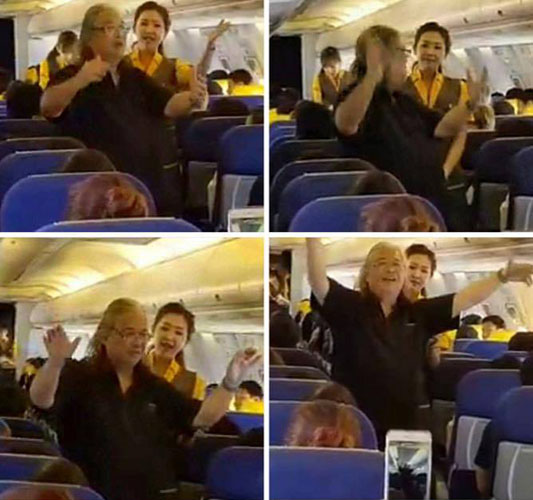
In the slightly shaky video, Somtow, in mourning black, stands and conducts while some but not all passengers sing along. With members of the cabin crew stuck behind him, an announcement is made about halfway through the song: The plane is facing turbulence and passengers should return to their seats. A flight attendant can be seen in vain trying to escort Somtow back to his seat.

somtow 1
Conductor Somtow Sucharitkul leads passengers aboard a Hat Yai-bound Nok Air flight in singing the royal anthem on Tuesday. Photos: Thaithow Sucharitkul

Somtow insisted all passengers were singing and said he would have stopped were any upset.

When told that the video clearly showed some passengers not singing and at least one man wearing earphones looking visibly annoyed, Somtow said that no one was forced to participate.

The maestro, a staunch royalist, disputed there was any turbulence as announced. He singled out a single flight attendant for blame, saying she overreacted. He acknowledged that the air hostess informed him some passengers were annoyed by the mid-flight performance.

“You can ask anyone who was there. I regret because I did this with my heart. I didn’t know the matter will blow up this far,” he said.
In the original post on Facebook, now hidden, Facebook user Techa Tabthong wrote that even as a royalist who reveres the royal institution above his own life, he found it inappropriate and only suited to a private chartered flight.
“It also disturbs other passengers … and it was clear that the crew made an announcement for passengers to return to their seats and to fasten their seat belts,” Techa wrote.
Somtow’s mother Thaitow Sucharitkul responded by saying there were people who love the king who wanted to participate.

“It wasn’t a show or an act,” she wrote. “Please do not misunderstand.”

Nok Air CEO Patee Sarasin even jumped into the fray, writing in reply that Somtow should have arranged something with the budget carrier in advance. Patee could not be reached for comment Tuesday night.

Somtow insisted it was the single flight attendant who overreacted due to her lack of experience.

“It’s such a small thing. Just 90 seconds,” said the maestro. “If anyone had complained, I would have stopped. But royal anthem is hard to stop. But if I disturbed anyone, then I am really sorry, and I would like to apologize.”

In the post made earlier Tuesday, Somtow was considerably less contrite.

“What could have been a profound and moving moment was screwed up by a couple of ignorant people,” he wrote.

In the end, he said he’d gladly conduct another round of in-flight singing of the anthem – but only if requested by an airline.

As for the video which has since gone viral, the long-haired Somtow said Nok Air is free to use it, as he is happy to surrender copyright to the airline for possible promotional use.

Earlier Tuesday, junta leader Prayuth Chan-ocha approved use of the footage from the mass performance Somtow led for a 10-minute version of the anthem played before movies and other performances.

Related stories:

10-Minute Royal Anthem Coming to Cinemas

Advertisement

Hot News

LATEST NEWS

Bangkok
broken clouds
37.8 ° C
37.8 °
36.6 °
54 %
3.7kmh
71 %
Fri
38 °
Sat
36 °
Sun
37 °
Mon
37 °
Tue
36 °