


































31.1 C
Bangkok
Tuesday, June 9, 2026
Home Blog Page 2582

What is PromptPay? A Guide for Noobs.

Kasikorn Bank promotes people to register for PromptPay on July 1.

Use an ATM or banking app and you’ve probably been nagged to register for a service called PromptPay. Maybe you’ve even gone ahead and done so without any idea what it is.

What is It?

In simple terms – and setting aside its criticisms – PromptPay lets people transfer money between bank accounts using only their phone number or national ID number. Reading off bank account numbers over the phone or typing them into a Line message will no longer be necessary to buy things online or pay back debts to friends.

At least that will be the case when it goes live Oct. 31, aka Halloween.

How Does it Work?

For example, let’s say you didn’t have cash for that surprise sushi lunch with friends. Someone spotted your share. If she registered with PromptPay, you could use the usual platforms – banking app, website or ATM – to enter her phone number and instantly send that 300 baht (or 30 baht or whatever).

And instead of being hit with 25 baht fees every time you transfer to someone who banks elsewhere, transactions under 5,000 baht will be free. Sending 5,000 baht to 30,000 baht will cost no more than 2 baht. From there it’s 5 baht for transactions up to 100,000 baht and 10 baht for greater amounts.

Are There Any Risks?

Behind it all is the central bank, or Bank of Thailand, and that’s what has critics saying with the convenience comes greater risk of government intrusion into your private finances – not to mention vulnerability, given the state’s track record with IT security. It certainly gives the taxman convenient access to your taxable transactions.

But that also means it can be used by government agencies to expedite their services.

PromptPay users won’t need to wait for checks to land in their mailboxes for tax refunds, pensions or other benefits. Link your national ID card to your bank account and get them deposited directly – and theoretically more quickly.

Grandma instantly gets her pension in one of the many slick marketing efforts promoting PromptPay.

How to Sign Up?

This is the easy part, as all financial institutions seem to be aggressively pressuring their customers to register. If somehow you have missed this, register for PromptPay in person at a bank branch office, via its smartphone app, web-based banking service or ATM.

Only one bank can be linked to your phone or ID number. But like registering, there is no charge to make changes or cancel the service.

Bangkok Bank, Siam Commercial Bank and Kasikorn Bank have English-language guides for PromptPay on their websites.
Advertisement

For Departing Veteran Correspondent, Big Events Matched by Small Moments

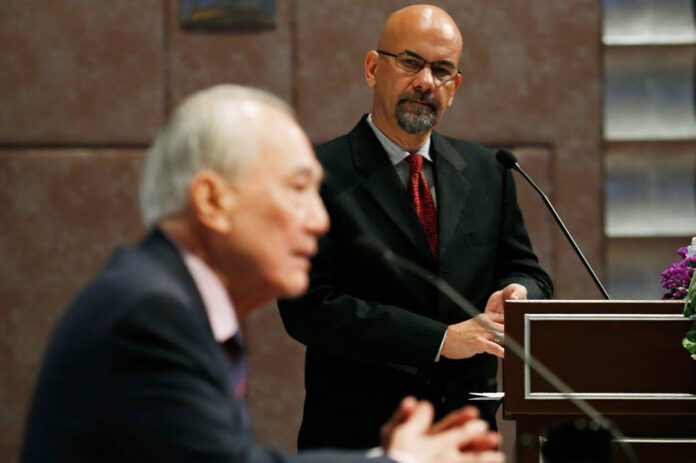
Nirmal Ghosh, as president of the Foreign Correspondents Club of Thailand, looks on during a keynote address by former Prime Minister Anand Panyarachun on March 23 at the InterContinental Bangkok. Photo: Nirmal Ghosh / Courtesy

BANGKOK — Thirteen years of reporting has led him throughout Thailand, from tsunami tragedy to political upheaval and beyond. But now Nirmal Ghosh, a doyen of the Foreign Correspondents’ Club of Thailand, is leaving the kingdom.

The Southeast Asia Bureau chief for The Straits Times of Singapore and two-time club president is heading west to Washington D.C. to lead the paper’s bureau there.

Recognizable for his clear-cut dome and Luciferian goatee, 56-year-old Ghosh reported from Manila and India prior to making his way to Thailand in 2003. During that time he’s fielded a preternatural calm to witness and report on two prime ministers named Shinawatra, one of the world’s deadliest natural disasters, cycles of street unrest and two coups.

Before he moves on, we posed a few questions for him to reflect upon.

Ed. Note: Responses lightly edited for publication.

Pravit Rojanaphruk: Tell us a bit about your time here and your most memorable experiences.

Nirmal Ghosh: As a journalist in Thailand, the most memorable experience was possibly the 2004 Asian Tsunami. One could not fail to be affected – shocked and deeply saddened really – at the scale of the death and devastation. Also memorable were the political dramas: The People’s Alliance for Democracy takeover of Suvarnabhumi Airport in 2008, the drama at the Asean Summit in Pattaya in 2009, and the violence in Bangkok in 2009 and 2010. The 2011 flood was extraordinary. Covering the Deep South, especially in 2004 and 2005 was also memorable.

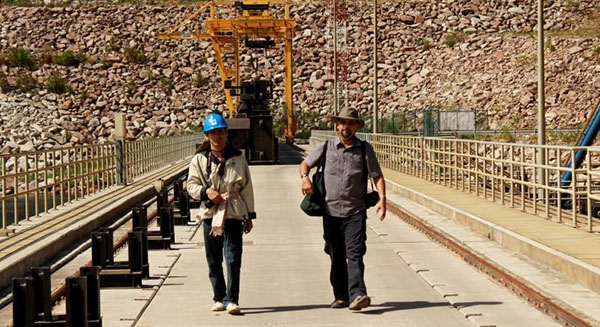
Ghosh tours the Nam Theun 2 Dam in Laos in an undated photo. Photo: Nirmal Ghosh / Courtesy

But some of my most memorable experiences have not been work-related. They are sights and sounds at particular moments in time. Driving down next to the sea on the Hat-Yai-Pattani highway; the road to Tak Bai; the picturesque roads of the north and drinking fresh roasted coffee at Doi Inthanon; sitting on an empty beach one night at Khao Sam Roi Yot National Park; a wild elephant checking me out at close range at the Salakpra Wildlife Sanctuary.

PR:How has Thailand change over the years? Good and bad?

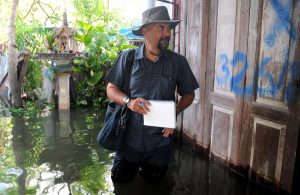
Ghosh in the field reporting on severe flooding in Thailand in 2011. Photo: Nirmal Ghosh / Courtesy

NG: The most obvious change is the way Thais have gone online and very actively embrace social media, which has led to a wide range of expression and opinion, including political. It is easy to see the negative aspects of this – fake news and propaganda, political partisanship, even hate – but there have been so many positive aspects as well. Issues surface, grab public attention and are debated. Social media was a key driver of the general public’s response during the 2011 flood disaster.

PR: Were you surprised by the 2014 coup? What is your view on the future of Thai politics?

NG: I was not surprised. Essentially, I was surprised by the 2006 coup, but in light of that coup and subsequent events, the 2014 coup was not surprising. The space for compromise was steadily getting narrower. When martial law was announced it seemed clearly to be stage one, so to speak. When Gen. Prayuth Chan-ocha summoned all the key players to the conference at the Royal Thai Army Club, it was obvious Thailand was within a hair’s breadth of a coup d’etat.

Thailand’s political future is, I believe, an old norm of politics and elections and probably weak civilian governments within red lines defined by the military.

PR: Some are worried about the future of foreign correspondents and the FCCT under the military regime. Do you share the sentiment?

Ghosh, a dedicated conservationist, at the Khao Sam Roi Yot National Park in Prachuap Khiri Khan province. Photo: Nirmal Ghosh / Courtesy

NG: I am not worried as such, but I am concerned. Antipathy toward foreign media, if it grows, only creates dissonance and clouds a country’s reputation for openness – and Thailand, at least until recently, had a reputation for relative openness. As for the FCCT, I trust the club is valued for what it is. It is the oldest and most attractive media club in mainland Southeast Asia, with a firm belief in a balanced approach to political issues despite an often fraught and combative environment. Former foreign minister Kasit Piromya once visited the FCCT and called it a “voice of conscience.” I thought that was well put.

PR: What about Thai journalists. How do they compare to foreign correspondents?

NG: It would be presumptuous of me to offer general comment on Thai colleagues!

PR: Any parting words for Thais, correspondents, politicians or the junta leader?

NG: For foreign correspondents, so many of whom I am lucky to have as friends, I will miss them and look forward to seeing their reporting on Thailand in the years ahead. It is not my place really, to offer any words to politicians or Prime Minister Prayuth Chan-ocha.

Advertisement

Teacher Accused of Kicking Handcuffed Student in Ribs

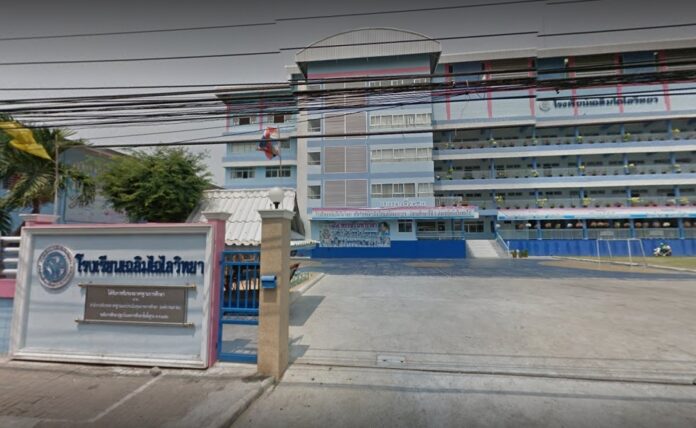
Chalermchailai Witthaya School in Samut Prakan province. Image: Google

SAMUT PRAKAN — A 14-year-old student told police Thursday he was handcuffed and kicked in the ribs by a teacher at his school in Samut Prakan province.

In the latest case of alleged classroom abuse, the boy’s family said a teacher at the Chalermchailai Witthaya School assaulted the student for damaging his classmates’ mobile phones, even though he had already financially compensated them.

Teacher Faces Slap on Wrist for Disfiguring Student

“Next week we will summon both the teacher and the boy’s family for talks,” said Col. Preecha Iam-nui, Samut Prakan City police chief. “We have to talk to both sides to find out whether the incident really happened as claimed.”

Col. Preecha identified the teacher as Thaichaya Samuna, a physical education teacher at the school. Thaichaya was on leave and had not talked to police, Preecha added.

The boy’s grandmother, Wachareena Shinsri, came forward Thursday and told reporters at the police station that Thaichaya confronted the student in the classroom on Sept. 22 and berated him for throwing the mobiles of two fellow classmates out of the windows several days earlier.

The student, who was not named, admitted he had fought with two female students and had already paid 5,500 baht in damages to them, Wachareena said. But the teacher nonetheless punished the boy by putting him in handcuffs and then kicking him in the ribs several times, according to Wachareena.

Someone who answered the phone at Chalermchailai Witthaya School said the school’s director was not ready to comment on the matter.

No charge has been filed so far, Col. Preecha said.

The alleged incident comes on the heels of a string of classroom abuse reports. A teacher in Nakhon Ratchasima has been charged with physical assault after he threw a coffee mug that struck a schoolgirl in the face. Another teacher in Chonburi province is also under investigation for beating a student with a baton.

Advertisement

Duterte Happy to Slaughter Addicts Like Hitler Massacred Jews

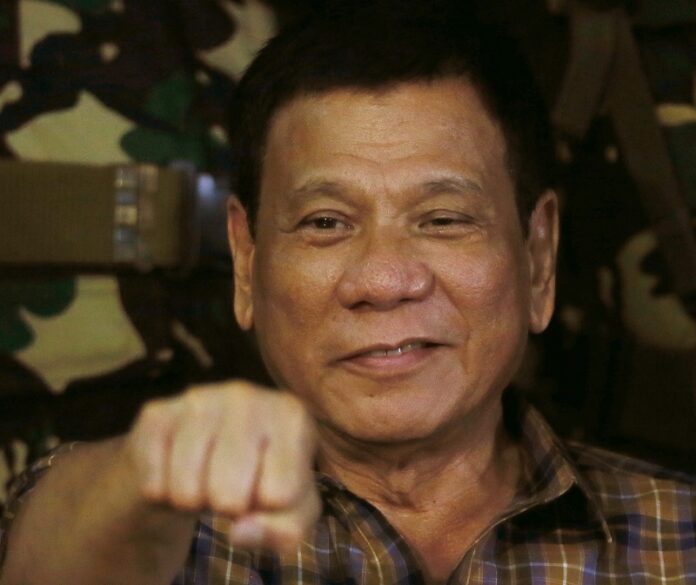
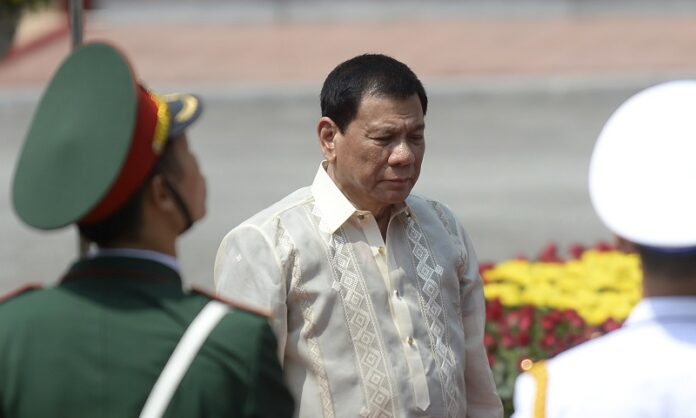
Philippine President Rodrigo Duterte gestures with a fist bump during his visit to the Philippine Army's Camp Mateo Capinpin at Tanay township in August in Manila, Philippines. Photo: Bullit Marquez / Associated Press

MANILA — Philippine President Rodrigo Duterte raised the rhetoric over his bloody anti-crime war to a new level Friday, comparing it to Hitler and the Holocaust and saying he would be “happy to slaughter” 3 million addicts.

Duterte issued his latest threat against drug dealers and users early Friday on returning to his home in southern Davao city after visiting Vietnam, where he discussed his anti-drug campaign with Vietnamese leaders and compared notes on battling the problem.

“Hitler massacred 3 million Jews … there’s 3 million drug addicts. There are. I’d be happy to slaughter them,” Duterte said, referring to a Philippine government estimate of the number of drug addicts in the country. Historians say that 6 million Jews were killed by the Nazis under Hitler before and during World War II.

Duterte has said that his public death threats against drug suspects are designed to scare them into stop selling illegal drugs and to discourage would-be users. Such scare tactics, he has said, are legal. But his remarks Friday took that crime-busting approach to a different level.

During the presidential election campaign earlier this year and during the three months he had held office, the tough-talking Duterte has threatened to drown drug suspects to fatten the fish in Manila Bay. He also threatened to execute drug traffickers by hanging — because he didn’t want to waste electricity on them — until their heads were severed from their bodies.

While Hitler victims were innocent people, Duterte said his targets are “all criminals” and that getting rid of them would “finish the (drug) problem of my country.”

Advertisement

Catch Cackling Cock, City tells Citizen

Rowdy running rooster. Photo: Gulcinb / Flickr

PITTSBURGH, Pennsylvania — A Pittsburgh man has 30 days to figure out how to catch a noisy rooster or the city will penalize him.

The Pittsburgh Post-Gazette reports (http://bit.ly/2duCZRN ) the rooster’s piercing calls have plagued residents for years. Because it appears to live on Henry Gaston’s property, it has put him in violation of the city’s ban against roosters.

But Gaston told a judge Wednesday he’s tried to catch the animal and has failed. He says he called animal control and the zoo, but he still hasn’t come up with the rooster.

Assistant City Solicitor Adam Rosenthal says he would agree to give Gaston 30 days if he puts out food and tries to catch it with a net.

The judge says he’d like the rooster caught and transferred to a farm.

Advertisement

US Issues Travel Advisory for 11 Southeast Asian Nations

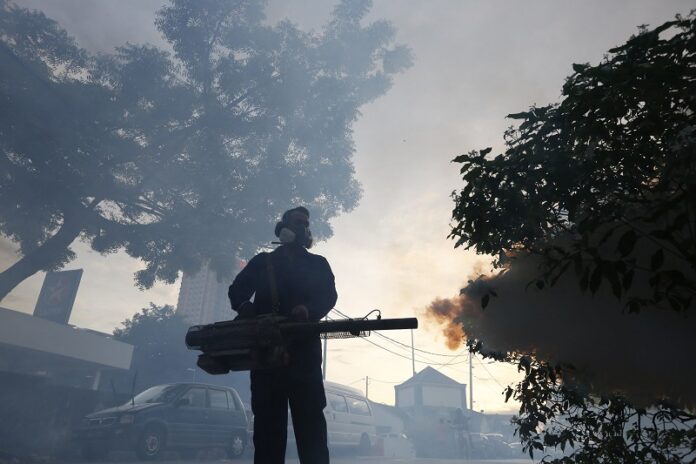
A worker from the Ministry of Health sprays mosquito insecticide fog on Sept. 14 in Kuala Lumpur, Malaysia, a day after two new Zika virus infection cases were detected in the country. Photo: Joshua Paul / Associated Press

NEW YORK — U.S. health officials are advising pregnant women to postpone travel to 11 countries in Southeast Asia because of Zika outbreaks in the region.

The advisory issued Thursday targets travel to Brunei, Cambodia, East Timor, Indonesia, Laos, Malaysia, the Maldives, Myanmar, the Philippines, Thailand and Vietnam.

The Centers for Disease Control and Prevention said Zika has been in some areas of Southeast Asia for years, and some residents may be immune. But a number of U.S. travelers have become infected there in the last year, so there is a danger to visitors.

Most infected people suffer a mild and temporary illness, at worst. But infection during pregnancy can causes severe brain-related birth defects. The virus is spread primarily by bites from infected mosquitoes.

Story: Mike Strobbe

Advertisement

US-Philippines Alliance Ironclad, Defense Chief Says

Philippine President Rodrigo Duterte reviews an honor guard with his Vietnamese counterpart Tran Dai Quang during a welcome ceremony Thursday at the presidential palace in Hanoi, Vietnam. Photo: Hoang Dinh Nam / Associated Press

HANOI — U.S. Defense Secretary Ash Carter has described the U.S.-Philippines alliance as ironclad, one day after the Philippine president said joint military exercises with the U.S. would end.

“As it has been for decades, our alliance with the Philippines is ironclad,” Carter said Thursday in a speech in San Diego, en route to a meeting in Hawaii with defense ministers from Southeast Asia, including the Philippines.

Philippine President Rodrigo Duterte said Wednesday that joint exercises of Filipino and American troops next week would be the last, although his foreign secretary quickly said the decision was not final.

Duterte made the comments while addressing Filipino community members in Hanoi during a two-day visit to Vietnam. He noted that the Philippines will maintain its military alliance with the U.S. because they share a 65-year-old mutual defense treaty.

U.S. Navy Cmdr. Gary Ross, a Pentagon spokesman, acknowledged reports of Duterte’s statements, but did not comment directly on them.

“Our relationship with the Philippines is broad and our alliance is one of our most enduring and important relationships in the Asia-Pacific region,” he said in an emailed statement, adding that the U.S. would continue to work with the Philippines on counterterrorism and other areas of mutual interest.

Duterte said he wants to establish new trade and commercial alliances with China and Russia, and that Beijing doesn’t want the war games.

“I would serve notice to you now that this will be the last military exercise,” he said. “Jointly, Philippines-U.S., the last one.”

State Department spokesman John Kirby said Wednesday said they have not received any official communication from the Philippine government on the matter.

About 1,400 U.S. troops based in Okinawa, Japan, and 500 Filipino counterparts plan to participate in the Philippines Amphibious Landing Exercise from Oct. 4 to Oct. 12 in multiple locations, including Palawan, the westernmost province nearest to disputed islands in the South China Sea, officials said.

The two militaries have routinely held bilateral exercises aimed at improving cooperation between the forces. Cancellation would end the annual 10-day Balikatan, or shoulder to shoulder, exercise which this year drew more than 8,000 troops, among others.

Philippine Secretary of Foreign Affairs Perfecto Yasay Jr., however, contradicted Duterte, saying joint military drills approved by the previous administration will continue until 2017, when they would evaluate whether there’s a need for them to go on.

“He was just simply saying for now, taking into account the political reality, he does not want the joint military exercises to continue,” Yasay said.

Duterte has had an uneasy relationship with the U.S., his country’s long-standing ally and former colonial power, since he won a presidential election in May.

More than 3,000 suspected drug pushers and users have been killed since July 1 under Duterte’s war on drugs. Human rights advocates and Philippine allies including the United States have deplored the killings.

Earlier this month, Duterte cursed President Barack Obama and said he would not allow joint patrols of disputed waters near the South China Sea with foreign powers, apparently scrapping a deal his predecessor reached with the U.S. military.

Duterte has also said he is considering acquiring military equipment from Russia and China.

Yasay said the Philippines is pursuing an independent foreign policy that serves its national interests. This would involve strengthening relations with China while not alienating traditional friendships with the U.S. and other allies, he said.

On Wednesday, Duterte also said he’s not inclined to go to war, or see Filipino soldiers massacred, in trying to enforce an international tribunal’s ruling in July that supported his country’s claims that China is overreaching in its territorial claims the South China Sea.

There will be “a time of reckoning,” Duterte said, and when that time comes he said he would tell China: “This is ours. I will talk to you but I will not go out of the four corners of this (arbitration) paper.”

Former Philippines Foreign Secretary Albert del Rosario, who spearheaded the case, questioned Duterte’s foreign policy, saying it should not be a “zero-sum game.”

He also warned the Philippines stands to lose billions of dollars in development assistance, including $140 million in foreign military financing from the U.S. for 2016, if the country is seen as violating human rights  a U.S. Congress conditionality in approving such funds.

Story: Tran Van Minh

Advertisement

Thailand Suspends Seahorse Trade

A customs official shows confiscated seahorses at a 2007 press conference in Bangkok. Photo: Sakchai Lalit / Associated Press

JOHANNESBURG — Seahorses, traded by the millions annually as an ingredient in traditional medicine in parts of Asia, are getting a reprieve from Thailand, the world’s biggest exporter of the animal.

A marine biologist who works closely with Thailand on seahorse conservation welcomed the government’s decision to suspend seahorse trade because of concern about threats to its wild population.

“It’s a way station to getting serious management in place,” Amanda Vincent of The University of British Columbia said Thursday. Vincent is director of Project Seahorse, a marine conservation group whose partner is the Zoological Society of London.

The Thailand decision was announced at a meeting in South Africa of the Convention on International Trade in Endangered Species of Wild Fauna and Flora, or CITES. The U.N. meeting, which regulates trade in more than 35,000 species of animals and plants, ends Oct. 5.

Seahorses are mainly used in dried form for traditional medicine in mainland China, Hong Kong and Taiwan. They are also popular as curios, and there is a trade in live seahorses for display in home aquariums, including in Europe and North America.

CITES requires some controls on trade in the dozens of types of seahorse, designed to ensure the survival of the species.

But Thailand, responsible for three-quarters of the world’s documented exports of seahorses, could not meet its obligations and stopped issuing export permits at the beginning of the year, according to Vincent.

Thailand’s goal, she said, is to make seahorse exports “sustainable.”

CITES has suspended the seahorse trade with three other big exporters — Vietnam, Senegal and Guinea — after they failed to meet requirements for the trade in the animal, Vincent said.

Story: Christopher Torchia

Advertisement

Train Plows Into New Jersey Station; 100-Plus Hurt

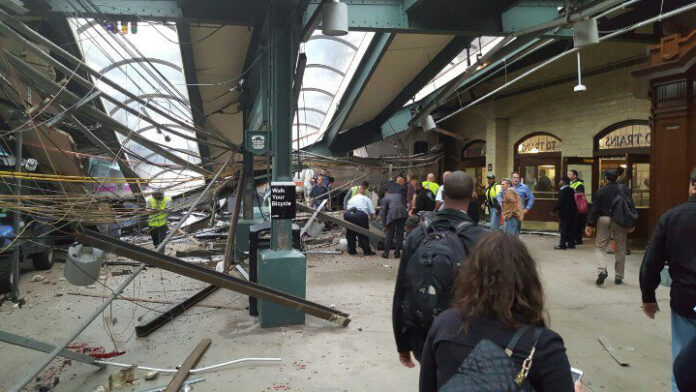
The scene of a train crash in Hoboken, New Jersey, on Thursday. Photo: Cephster / Twitter

HOBOKEN, New Jersey — A commuter train plowed into the bustling Hoboken rail station during the morning rush hour Thursday, killing at least one person and injuring more than 100 others, some critically, in a tangle of broken concrete, twisted metal and dangling cables, authorities said.

Witnesses reported seeing one woman trapped under concrete and many people bleeding after the arriving New Jersey Transit train crashed through a barrier at the end of the track. The train came to a halt in a covered area between the station’s indoor waiting area and the platform, collapsing a section of the metal shed roof.

Nancy Bido, a passenger on the train, told WNBC-TV in New York that the train didn’t slow as it pulled into the station. “It just never stopped. It was going really fast, and the terminal was basically the brake for the train,” she said.

The cause of the crash wasn’t immediately known. The National Transportation Safety Board said it was sending investigators.

Hoboken, which is NJ Transit’s fifth-busiest station with 15,000 boardings per weekday, is situated just across the Hudson River from New York City. It is the final stop for several train lines and a transfer point for many commuters on their way to New York City. Many passengers get off at Hoboken and take ferries or a PATH commuter train to New York.

Democratic Assemblyman Raj Mukherji, who represents Hoboken, said transit officials told him one person has died and two were critically injured. He didn’t know whether the fatality and critical injuries were on the train or platform.

Jennifer Nelson, a spokeswoman for NJ Transit, said earlier, “We have multiple injuries, multiple critical injuries right now.” Rail service was suspended in and out of Hoboken.

She said she doesn’t know yet how fast the train was going when it crashed through the bumper. TV footage and photos from the scene showed the rail car was mangled.

Ross Bauer, an IT specialist who was heading to his Manhattan job from his home in Hackensack, was sitting in the third or fourth car when the train crashed.

“All of a sudden, there was an abrupt stop and a big jolt that threw people out of their seats. The lights went out, and we heard a loud crashing noise — like an explosion — that turned out to be the roof of the terminal,” he said. “I heard panicked screams, and everyone was stunned.”

Passenger Bhagyesh Shah said the train was crowded, particularly the first two cars, because they make for an easy exit into the Hoboken station. Passengers in the second car broke the emergency windows to get out.

“I saw a woman pinned under concrete,” Shah told WNBC-TV in New York. “A lot of people were bleeding; one guy was crying.”

Brian Klein, whose train arrived at the station after the crash, told the Wall Street Journal that transit police ushered everyone aboard his train into a waiting room, “then quickly started yelling, ‘Just get out! We don’t know if the building is going to hold.'”

The train had left Spring Valley, New York, at 7:23 a.m. and crashed at 8:45 a.m., said NJ Transit spokeswoman Nancy Snyder.

“It simply did not stop,” WFAN anchor John Minko, who witnessed the crash, told 1010 WINS. “It went right through the barriers and into the reception area.”

NJ Transit provides more than 200 million passenger trips annually on bus, rail and light rail lines. More than 100,000 people use NJ Transit trains to commute from New Jersey into New York City daily.

A crash at the same station on a different train line injured more than 30 people in 2011. The PATH commuter train crashed into bumpers at the end of the tracks on a Sunday morning.

Story: David Porter. Additional reporting Karen Matthews, Deepti Hajela, Verena Dobnik

Advertisement

Foreign Ministry Says Govt Must Verify Torture Report

BANGKOK — The Foreign Ministry on Thursday defended the military government’s blocking of an Amnesty International discussion of alleged torture under the military government since the coup by casting doubt on its accuracy.

One day after officers shut down a panel discussion of an Amnesty report with a novel method – threatening to arrest foreign speakers for not having work permits – the ministry said in a statement today the government would welcome the information if it could verify it.

“The Royal Thai Government welcomes all information on this matter, as it would help the work of the government in the area of human rights and in ensuring transparency, fairness and justice through our judicial process,” it read. “However, the information contained in the report is yet to be verified, especially for cases in which the alleged victims remain anonymous.”

Read: Security Forces Muzzle Torture Discussion With Arrest Threats

It said the “relevant authorities” were examining the accuracy of the report.

The Amnesty report detailed 74 cases of torture between 2014 and 2015 inflicted on migrants, insurgents, political opponents and more. It alleged in graphic detail abuses including waterboarding, electric shock and more.

Laurent Meillan, acting regional rep for the UN Human Rights Office in Southeast Asia and one of the panelists threatened into not speaking was unconvinced. He said blocking the panel Wednesday at the Four Wings Hotel raised doubts about the ability of international organisations to stage public events on issues that the government views as controversial or sensitive.

“Every year, several public reports are released in Thailand by international organizations, which involve the participation of non-resident international experts,” Meillan said.

“I think what happened was very unfortunate, as the clarification issued by [the ministry] today shows the government made a commitment to tackle the question of torture,” Meillan said.

Amnesty International did not reply to inquires Thursday on how it would go about further disseminating its report.

Meillan said his office acknowledges the state has taken a number of concrete steps, such as banning torture and enforced disappearance, which was constructive and helped the government better respond to the problem.

He said it has also turned up the heat on those who report it.

“Since the [2014] coup, we have however observed a pattern of harassment against human rights defenders reporting torture cases. … “Documenting human rights abuses is not a crime,” he said.

He said governments are obligated “to promptly and carefully investigate these serious human rights allegations instead of prosecuting those who speak out for the victims.”

The Foreign Ministry said that any victim of torture can step forward and seek compensation under a 2001 victim compensation law.

“Moreover, the Ministry of Justice is currently exploring the possibility of setting up the system of remedy with a holistic approach that covers physical and psychological rehabilitation, restitution, satisfaction and guarantee of non-repetition,” the statement read.

Update: An image originally included with this story with the permission of its creator was removed at their request.

Advertisement

Hot News

LATEST NEWS

Bangkok
overcast clouds
31.1 ° C
31.6 °
28.3 °
73 %
3.7kmh
100 %
Mon
29 °
Tue
35 °
Wed
34 °
Thu
34 °
Fri
28 °