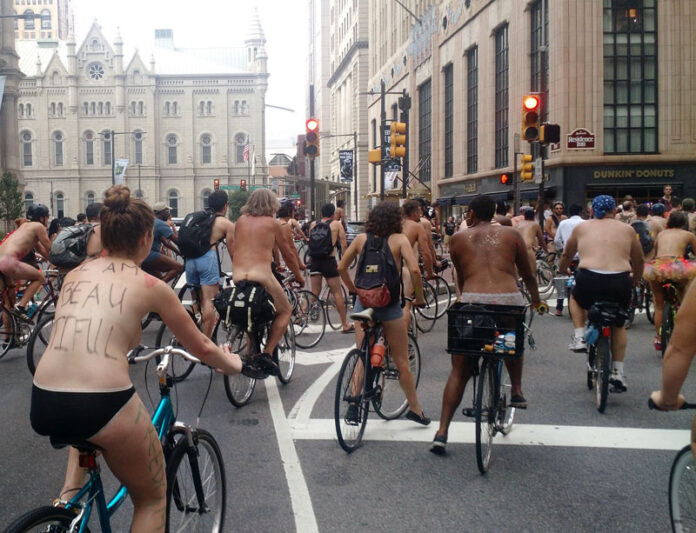
Cyclists in the 2015 Philly Naked Bike Ride. Photo: Rashaad Jorden / Flickr
PHILADELPHIA — Thousands of bicyclists dared to be bare for the city’s annual nude ride promoting positive body image, cycling advocacy and fuel conservation.
About 3,000 people gathered Saturday for the eighth annual Philly Naked Bike Ride through the city’s streets. They set off from a park near the Philadelphia Museum of Art, where Sylvester Stallone ran up the steps in the “Rocky” movies.
The annual ride featured people sporting underwear, body paint, glitter or nothing at all. Some riders concerned about being recognized by their parents or co-workers wore masks while others wore just their shoes.
“It’s a really open and fun way of destigmatizing nudity,” said Oren Eisenberg, who was riding nude for the fifth time.
The 12-mile ride through the City of Brotherly Love is among many related to the World Naked Bike Ride movement. The riders pedal through the City of Brotherly Love past popular spots such as Independence Hall and Rittenhouse Square, where crowds cheer them on.
The Philly Naked Bike Ride, or PNBR, is a clothing optional bare-as-you-dare event, meaning participants can wear as much or as little as they want. Organizers say it’s an invitation to be naked but they want people to be comfortable and have fun no matter how much skin they expose.
Lots of the riders sprayed or splashed on body paint or let artists, led by Matt Deifer, do it for them. Deifer said he painted hundreds of them in Wildfire Visible Luminescent Paint colors including brilliant yellow, bright orange and deep blue.
Some riders held signs with slogans promoting their causes — or painted them on their breasts and backs.
“Nude not crude! Born this way,” was the message on Ben Heidari’s back.
PNBR volunteer Magda Esposito, a former chef and librarian, posed au naturel for fliers and videos promoting the event, went on test rides to help design this year’s route and vetted photographers seeking access to the pre-ride bodypainting area. She said she donated her time because she was inspired by the ride’s causes.
“Positive body image is something we all need a little more of,” she said, “and this is a fun and positive way to bring attention to it.”
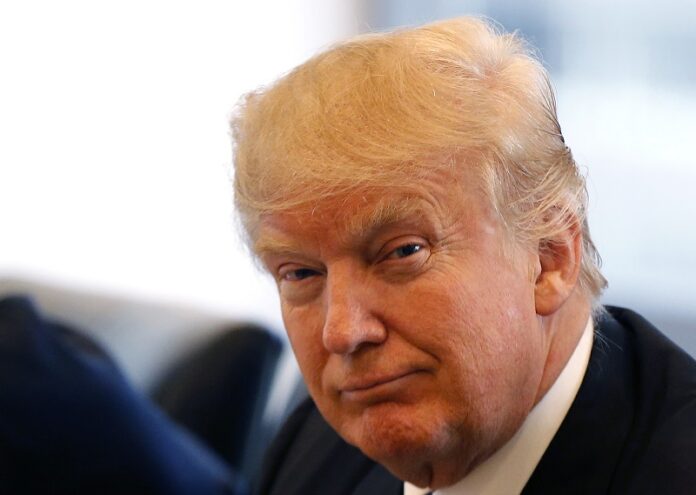
Republican presidential candidate Donald Trump smiles as he participates in an August roundtable discussion on national security in his offices in Trump Tower in New York. Photo: Gerald Herbert / Associated Press
CAMBRIDGE, Massachusetts – Last month, 50 former national security officials who had served at high levels in Republican administrations from Richard Nixon to George W. Bush published a letter saying they would not vote for their party’s presidential nominee, Donald Trump. In their words, “a President must be disciplined, control emotions, and act only after reflection and careful deliberation.” Simply put, “Trump lacks the temperament to be President.”
In the terminology of modern leadership theory, Trump is deficient in emotional intelligence – the self-mastery, discipline, and empathic capacity that allows leaders to channel their personal passions and attract others. Contrary to the view that feelings interfere with thinking, emotional intelligence – which includes two major components, mastery of the self and outreach to others – suggests that the ability to understand and regulate emotions can make overall thinking more effective.
While the concept is modern, the idea is not new. Practical people have long understood its importance in leadership. In the 1930s, former Supreme Court Justice Oliver Wendell Holmes, a crusty old veteran of the American Civil War, was taken to meet Franklin D. Roosevelt, a fellow Harvard graduate but one who had not been a distinguished student. Asked later about his impressions of the new president, Holmes famously quipped: “second-class intellect; first-class temperament.” Most historians would agree that Roosevelt’s success as a leader rested more on his emotional than his analytical IQ.
Psychologists have tried to measure intelligence for more than a century. General IQ tests measure such dimensions of intelligence as verbal comprehension and perceptual reasoning, but IQ scores predict only about 10-20% of variation in life success. The 80% that remains unexplained is the product of hundreds of factors playing out over time. Emotional intelligence is one of them.
Some experts argue that emotional intelligence is twice as important as technical or cognitive skills. Others suggest it plays a more modest role. Moreover, psychologists differ about how the two dimensions of emotional intelligence – self-control and empathy – relate to each other. Bill Clinton, for example, scored low on the first but high on the second. Nonetheless, they agree that emotional intelligence is an important component of leadership. Richard Nixon probably had a higher IQ than Roosevelt, but much lower emotional intelligence.
Leaders use emotional intelligence to manage their “charisma” or personal magnetism across changing contexts. We all present ourselves to others in a variety of ways in order to manage the impressions we make: for example, we “dress for success.” Politicians, too, “dress” differently for different audiences. Ronald Reagan’s staff was famous for its effectiveness in managing impressions. Even a tough general like George Patton used to practice his scowl in front of a mirror.
Successful management of personal impressions requires some of the same emotional discipline and skill possessed by good actors. Acting and leadership have a great deal in common. Both combine self-control with the ability to project. Reagan’s prior experience as a Hollywood actor served him well in this regard, and Roosevelt was a consummate actor as well. Despite his pain and difficulty in moving on his polio-crippled legs, FDR maintained a smiling exterior, and was careful to avoid being photographed in the wheelchair he used.
Humans, like other primate groups, focus their attention on the leader. Whether CEOs and presidents realize it or not, the signals they convey are always closely watched. Emotional intelligence involves awareness and control of such signals, and the self-discipline that prevents personal psychological needs from distorting policy. Nixon, for example, could strategize effectively on foreign policy; but he was less able to manage the personal insecurities that caused him to create an “enemies list” and eventually led to his downfall.
Trump has some of the skills of emotional intelligence. He is an actor whose experience hosting a reality-television show enabled him to dominate the crowded Republican primary field and attract considerable media attention. Dressing for the occasion in his signature red baseball cap with the slogan “Make America Great Again,” he appeared to have gamed the system with a winning strategy of using “politically incorrect” statements to focus attention on himself and gain enormous free publicity.
But Trump has proven deficient in terms of self-control, leaving him unable to move toward the center for the general election. Likewise, he has failed to display the discipline needed to master the details of foreign policy, with the result that, unlike Nixon, he comes across as naive about world affairs.
Trump has a reputation as a bully in interactions with peers, but that is not bad per se. As the Stanford psychologist Roderick Kramer has pointed out, President Lyndon Johnson was a bully, and many Silicon Valley entrepreneurs have a bullying style. But Kramer calls such figures bullies with a vision that inspires others to want to follow them.
And Trump’s narcissism has led him to overreact, often counter-productively, to criticism and affronts. For example, he became embroiled in a dispute with an American Muslim couple whose son, a US soldier, was killed in Iraq, and in a petty feud with Paul Ryan, the Speaker of the House of Representatives, after Trump felt slighted. In such cases, Trump stepped on his own message.
It is this deficiency in his emotional intelligence that has cost Trump the support of some of the most distinguished foreign policy experts in his party and in the country. In their words, “he is unable or unwilling to separate truth from falsehood. He does not encourage conflicting views. He lacks self-control and acts impetuously. He cannot tolerate criticism.” Or, as Holmes might say, Trump has been disqualified by his second-class temperament.
Joseph S. Nye, Jr. teaches at Harvard and is the author of Is the American Century Over?
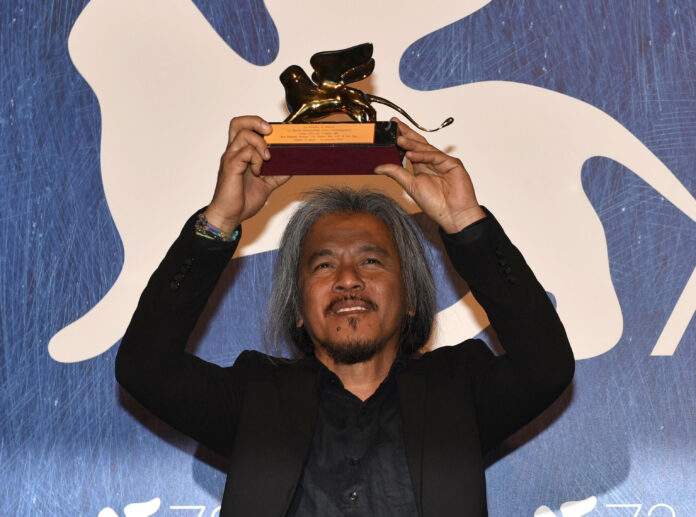
Filipino film maker Lav Diaz holds the Golden Lion award for his movie " Ang Babaeng Humayo " (The woman who left) during the awards ceremony of the 73rd Venice International Film Festival. Photo: M. Angeles Salvador / Associate Press
VENICE, Italy — The black-and-white revenge tale “The Woman Who Left” by Filipino director Lav Diaz won the Golden Lion prize for best picture Saturday at the Venice Film Festival.
Andre Konchalovsky and Amat Escalante shared this year’s Silver Lion for best direction for their respective films: “Paradise” from Russia and Germany and “The Untamed” from Mexico.
Tom Ford’s noir thriller “Nocturnal Animals” from the U.S. won the grand jury prize.
Argentine actor Oscar Martinez of “The Distinguished Citizen” and American actress Emma Stone of “La La Land” were honored with the acting trophies.
Noah Oppenheimer won best screenplay for “Jackie,” which centers on Jackie Kennedy at the time of John F. Kennedy’s assassination.
A jury led by British director Sam Mendes chose winners from among 20 movies competing at the 73rd annual festival.
The world’s oldest film festival wrapped up Saturday after 11 days that brought stars including Natalie Portman, Chris Pratt and Denzel Washington to the canal-crossed Italian city.
The complete list of winners:
— Golden Lion: Lav Diaz, “The Woman Who Left”; Philippines.
— Silver Lion director (tie): Andre Konchalovsky, “Paradise”; Russia, Germany.
— Silver Lion director (tie): Amat Escalante, “The Untamed”; Mexico.
— Jury grand prize: “Nocturnal Animals,” Tom Ford; U.S.
— Special jury prize: “The Bad Batch,” Ana Lily Amirpour; U.S.
— Actor: Oscar Martinez, “The Distinguished Citizen”; Argentina, Spain.
— Actress: Emma Stone, “La La Land”; U.S.
— Screenplay: Noah Oppenheim, “Jackie”; U.S.
— Marcello Mastroianni Price for Young Performer: Paula Beer, “Frantz”; France.
— Luigi De Laurentiis Lion of the Future: “The Last of Us,” Ala Eddine Slim; Tunisia.
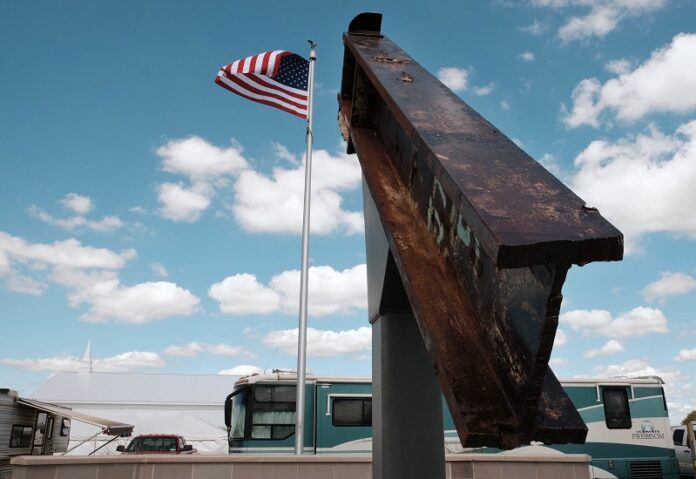
A beam from the destroyed World Trade Center buildings, part of the 9/11 Memorial this past Sept. 3 near the Veterans' Pavilion at the Fulton County Fair, in Wauseon, Ohio. Photo: Jetta Fraser / Associated Press
NEW YORK — Behind the barbed wire, the white minivan’s busted windows and crumpled roof hint at its story. But forklifted to this windblown spot on the John F. Kennedy International Airport tarmac, between a decommissioned 727 and an aircraft hangar, it’s doubtful passing drivers notice it at all.
In the long struggle with the searing memories of 9/11, though, the van’s solitary presence here marks a small but significant transition point.
Tons of wreckage – twisted steel beams weighing up to 40,000 pounds, chunks of concrete smelling of smoke, a crushed fire engine, a dust-covered airline slipper – were salvaged from the World Trade Center site for preservation in the weeks after the 2001 terrorist attacks. Now, 15 years later, this van, part of a government agency motor pool likely sheltered from the impact in the parking garage beneath the complex, is the very last artifact without a resting place.
When the van is claimed, as soon as a few weeks from now, it will fulfill a pledge that, to move beyond 9/11 without losing sight of it, New York would share relics of that terror, along with the tales of sacrifice and fear that come with them.
The decision by officials to give away pieces of Trade Center wreckage has been praised and criticized over the years. But its impact is undeniable.
More than 2,600 artifacts have gone to 1,585 fire and police departments, schools and museums, and other nonprofit organizations in every state and at least eight other countries. Each recipient has pledged to use them in memorials or exhibits honoring those killed on 9/11. While some have not followed through, the many that have mean it is now possible to touch a piece of September 11 during a Roman Catholic Mass in Port St. Lucie, Florida, while standing in the shadows of Colorado’s San Juan mountains, or in a park honoring animals in Meaford, Ontario.
“They are the relics of the destruction and they have the same power in the same way as medieval relics that have the power of the saints,” said Harriet Senie, a professor of art history at the City University of New York and author of “Memorials to Shattered Myths: Vietnam to 9/11.”
“History is a vague concept, but if you have this tangible object that was a part of this historical event, it makes it very difficult to deny and it also makes it possible to experience it in a very visceral way.”
In the days immediately after the attacks, it wasn’t at all clear what would happen to the wreckage of the Trade Center. It’s not as if anyone had confronted questions of that scale before. There was no certainty about exactly which artifacts, if any, should be saved.
The Port Authority of New York & New Jersey, which owned the Trade Center, dispatched an architect to comb through the site and cull pieces that seemed distinctive. Investigators carted away others. Most of the wreckage from the site was scrapped or recycled. But the agency saved about half of 1 percent of the total.
It all had to go somewhere. That ended up being JFK’s Hangar 17, an 80,000-square-foot cavern of sheet metal left empty when tenant Tower Air went out of business in 2000.
Officials were uncertain what to do with so much material, given the emotions intertwined with it. A judge determined the artifacts were not evidentiary or personal, and approved donations to those who promised to care for them. But where to begin?
“It was piles and piles, probably my height or higher, of steel beams,” says Amy Passiak, the archivist hired to catalog the artifacts and manage their distribution, recalling the first time she walked into the hangar in 2010. Passiak, a high school senior in Michigan at the time of the attacks, had been working as an intern at New York’s 9/11 museum, but says she was still unprepared for the scene.
“I remember going home that day and just being exhausted, just from being there a few hours, just being emotionally exhausted and not being able to comprehend the amount of work that was going to go into the process. It was like, maybe a year, maybe two years. And here I am, six years later.”
Passiak built a database of every item, cataloging its size and approximate weight, with descriptive notes. As word spread that the Port Authority was giving the material away, requests poured in. Through August, the Port Authority had distributed 2,629 artifacts.
Many went to fire departments, local governments and organizations in the New York area with direct ties to the first responders and workers who perished when the towers fell.
“When those buildings came down, everybody and everything in its path was either pulverized or vaporized off the face of the earth,” said John Hodge of the Stephen Siller Tunnels to Towers Foundation, named for his cousin, a New York firefighter killed on 9/11. In late July, the foundation marked the looming closure of Hangar 17 with a ceremony outside before hauling away an elevator motor from the Trade Center, a piece of the parking structure, and a portion of a broadcast antenna that crowned the complex.
“That’s where the DNA is. Neither my cousin or anybody else from Squad 1 was ever found, but it’s in that steel,” Hodge said.
But for many of the people and groups that adopted artifacts from the Trade Center, the loss was more abstract. At least it started off that way.
Heath Satow, a sculptor in southern California hired to design a 9/11 memorial for the plaza fronting Rosemead’s city offices, recalls awkwardly scanning a digital catalog showing beams available from the Trade Center. But hundreds of hours creating the memorial – a 10-foot beam cradled by hands of chrome, the palms and fingers formed from 2,976 interlocking birds representing individual victims – left a deep impression.
“Every individual was attended to,” said Satow, his voice breaking five years later, as he described making the sculpture. “I just was totally unprepared for it. But when you spend all that time seeing it as individuals it will just wreck you.”
Satow said he purposely positioned the beam at about eye level, so people could see, touch and feel it. Others who adopted Trade Center artifacts used them to similar effect.
Firefighters in Pagosa Springs, Colorado, created a memorial in front of their station around a small piece of donated I-beam. Many people in the town, surrounded by the San Juan mountains and the Southern Ute Reservation, will never get to New York or Washington D.C., said David Hartman, who worked to obtain the artifact. But September 11 was his generation’s Pearl Harbor, and being able to see and touch the wreckage enables residents to reflect on its lessons, he said.
A van damaged in the Sept. 11, 2001 terrorist attacks on the World Trade Center, outside Hangar 17 at the JFK airport in August in New York. Photo: Amy Passiak / Associated Press
At Flour Bluff Junior High School in Corpus Christi, Texas, a piece of Trade Center steel – one of three received by the school district – is housed in a case near the entrance to the cafeteria. In September, it is taken out and students from the school’s officer training program stand guard. Bruce Chaney, the naval science instructor who applied for the artifacts, brings another, smaller piece to his classes.
The artifact is “twisted and somewhat burned. It’s not pretty. I’m hoping it will make them think as they’re growing up, that they have to pay attention to their past,” Chaney said.
Most Flour Bluff students hadn’t yet been born in 2001, so the relics are the closest most will ever get to experiencing that day.
But the desire to touch and own history, however distant, has been around since long before this generation, said Erika Doss, a professor of American studies at the University of Notre Dame and author of “Memorial Mania: Public Feeling in America.”
She notes that after Abraham Lincoln was assassinated, millions of Americans gathered alongside the tracks as a train carrying his body made its way to Illinois. People wore mourning bands on their arms. They hung Lincoln’s portrait in their homes. They flocked to see death masks cast from his face. They wanted to see and touch Lincoln.
Artifacts let people grapple with pained memories. But 15 years after September 11, the dispersal of artifacts from the Trade Center has not resolved the public’s conflicted feelings about those events, now set against continued fears of terrorism.
“We just don’t know where the events of 9/11 have led us,” said Rick Sluder, fire chief in Wauseon, Ohio, which obtained a Trade Center beam and, together with neighboring departments built a memorial at the nearby Fulton County Fairgrounds.
“A lot of people are looking at this as, is this the point of downfall or the point at which we rose above the rest, the point of resiliency?” Sluder said. “I don’t think that’s been determined yet.”
There’s little questioning, though, the emotions people invest in the artifacts. During the six years Passiak spent archiving the relics, the people seeking them would often tell her stories of the losses in their own communities – of firefighters, or soldiers or others – that connected them, however tangentially, to 9/11.
In the first years, there were so many artifacts that she could easily match them with requesters. So when a girl at Cracker Trail Elementary School in Sebring, Florida, wrote that she wanted to help her fellow students learn about 9/11, Passiak set aside a children’s alarm clock recovered from a store in the Trade Center’s concourse, a burned notebook, and small piece of steel, 6 inches square.
“I felt like that allowed a full story to be told,” she said.
As the piles of material winnowed, though, it became more difficult. Most of the groups seeking artifacts wanted pieces they could build a narrative around. The biggest artifacts were unwieldy. By early this year, there was little left except rails from the commuter train line that ran under the complex. Items like police cruisers, whose purpose that day were clear, found takers. But unmarked vehicles, anonymous but for their place in the wreckage, were initially passed over.
When the Port Authority shuttered the artifact program in August and padlocked Hangar 17, officials moved the only remaining artifact – a Dodge Caravan with a ripped out red interior – to the tarmac, uncertain of its fate. It, too, is likely to go soon, to a group officials will not identify until its application has been approved. Hangar 17, itself, may eventually be torn down.
Passiak moved back to Michigan to start a job at an art museum this month. But many of the people whose groups received donations of Trade Center artifacts have stayed in touch with her, extending invitations to visit their memorials, from California to Germany.
Someday, the archivist said, she’d like to take a road trip, stopping in cities and towns along the way to see where the artifacts she once cared for have found homes. She imagines she’ll recognize some of them, and remember their stories. It will not matter that the steel, concrete and other relics are at rest far from lower Manhattan. The memories they hold, she is certain, will not soon fade.
BANGKOK — Everyone is lawyering up in a burning dispute between a flight attendant and the woman she groveled before earlier this month – a topic of national obsession which has begun to spin lawsuits and threats of more.
A lawyer for Jumpoon Chavasiri, the passenger whose complaints over an AirAsia flight attendant kicked off the whole thing late last month filed legal complaints Friday against the internet, namely Facebook group Black Hat, for allegedly defamatory things posted there. Meanwhile, a legal adviser to the flight attendant said Saturday she is weighing lawsuits against the airline and Jumpoon.
Attorney Chatchai Chookaew said Saturday that all indications point to the fact his client, a senior flight attendant for Thai Air Asia identified only as Mai Awatsara, was forced by her management to kowtow on the floor before an infuriated passenger earlier this month. The airline has denied this.
“From the evidence gathered, there are many indicators showing that my client was being forced before she kowtowed to the passenger,” Chatchai said. He said evidence included things posted online and the passenger’s own prolific public postings about what happened.
Jumpool had complained that Awatsara disrespected her developmentally disabled daughter.
AirAsia CEO Tony Fernandes flew to Thailand on Thursday to affirm the #AirGraab incident was being investigated. The airline said in a statement the same day that despite the “highly sensitive and emotional” incident, the airline “never obligated our staff to perform an act of prostration.”
Whether forced or voluntary, Awatsara met with the Jumpoon on Sept. 2 to graab, an act of utmost humility in which she knelt on the floor in apology.
Social media is still seething, where many accuse the airline of misrepresenting what happened.
Fernandes said he also flew down to visit Awatsara’s family who reportedly refused to meet with him.
Chatchai, 46, said that a lawsuit could be filed against Jumpoon who complained that Awatsara disrespected her developmentally disabled daughter, on the grounds of libel or violating the Computer Crime Act for things she has written online. As for her superiors at the airline, he believes a criminal complaint could be filed.
The lawyer said his client has been traumatized by the affair and the inordinate interest it has generated.
“After the incident, my client has cried almost every day and shut herself off from social media during her days off. She doesn’t want to commit any offense against anyone,” he said.
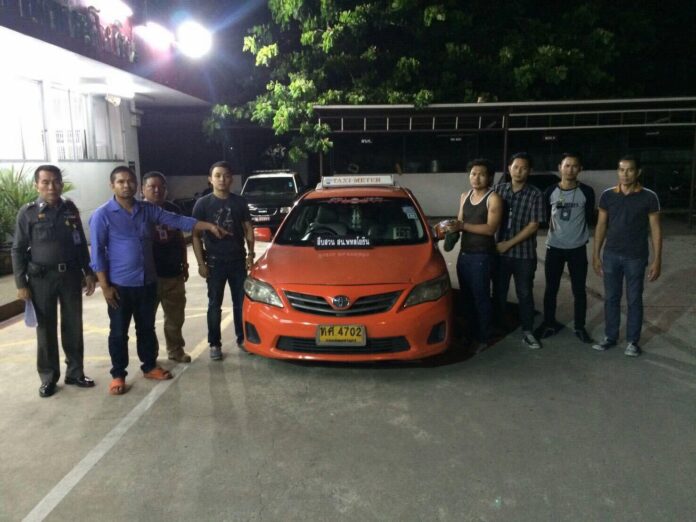
Yodchai Meepong, fourth from right, poses with police next to the taxi he is accused of stealing Saturday morning in Bangkok.
BANGKOK — Phaholyothin police officers arrested a man Saturday morning who claimed to have robbed a taxi because of “orders inside his head.”
Phaholyothin police officers were reported the robbery of an orange taxi at 1:30am on Saturday. Theppitak Taptong, the 31-year-old driver, told officers that he picked up a passenger from Ngamwongwan Road to Vibhavadi Hospital. However, the man refused to leave the vehicle upon reaching the destination and threaten the driver to continue driving after making his way to the front seat. Theppitak, afraid of the consequences, jumped out of the vehicle and called 191.
“The robber yelled ‘Yo, drive! Don’t stop, don’t cut off the engine,’ and the taxi driver sensed that the man had a knife with him. That is why he decided to flee from the vehicle,” Phaholyothin police chief Col. Narush Moolasartsathron said.
Thanks to the vehicle’s GPS, police officers tracked down the taxi until they reached the suspected car thief’s apartment in Soi Ram Inthra 21. Yodchai Meepong, 29, was subsequently arrested. He was unarmed.
Police said Yodchai confessed and claimed to have heard a voice in his head commanding him to commit the robbery, adding that the voice ceased after he stole the taxi.
Police said they charged Yodchai with theft.
Correction: An earlier version of this story misstated the rank of Phaholyothin police chief Narush Moolasartsathron. He is a colonel in the force and not a general.
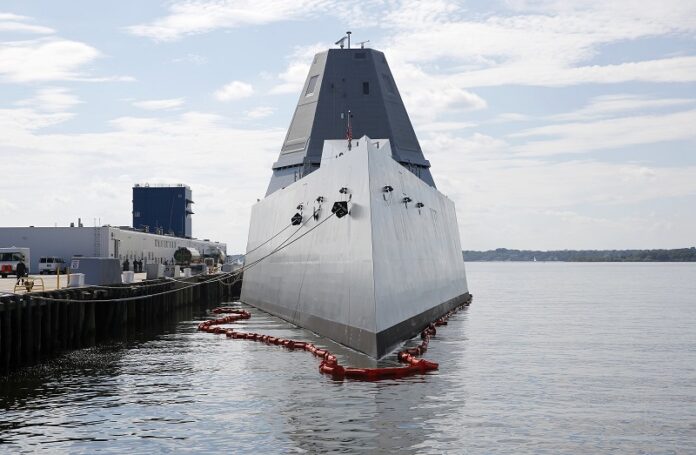
The USS Zumwalt sits at dock on Friday at the naval station in Newport, United States. Photo: Michael Dwyer / Associated Press
NEWPORT, United States — The Navy gave a first look inside the stealthy and futuristic Zumwalt destroyer on Friday during the ship’s first port stop at a Rhode Island naval station.
The 610-foot-long warship has an angular shape to minimize its radar signature and cost more than $4.4 billion. It’s the most expensive destroyer built for the Navy.
It’s headed from Naval Station Newport to Baltimore, where it will be commissioned in October before going to its homeport in San Diego. It was built at Bath Iron Works in Maine.
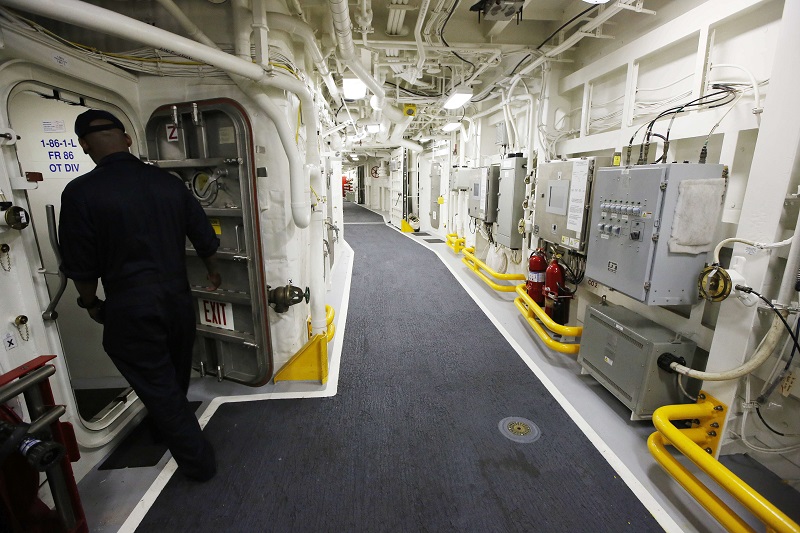
During a tour, the Navy showed off the ship’s bridge, weaponry and mission center.
In the bridge, there are 180-degree windows and chairs for the ship’s captain and executive officer to command the vessel. They overlook two gun mounts that resemble cannon barrels. The Zumwalt’s powerful new gun system can unload 600 rocket-powered projectiles on targets more than 70 miles away.
In the mission center, about two dozen people can sit at consoles with multiple computer screens to plan missions, ranging from land attack and air defense to anti-submarine and anti-surface warfare and support for special operations forces. There’s a large flight deck and two small boats on board in a bay that special operation forces can use.
It looks like a much smaller vessel on radar and it’s quieter than other ships, which makes it hard to detect, track and attack.
Vice Adm. Tom Rowden mans, trains and equips the surface ships of the Pacific fleet, which will include the Zumwalt. He said Friday the Zumwalt will make a significant difference.
Its advanced technology and capabilities allow it to do a range of defensive and offensive missions, and project power, wherever it is needed, and that’s generating tremendous excitement within the Navy, Rowden said. He said the Zumwalt will be a “very stabilizing” sight for allies and partners, and perhaps a “menacing” sight for potential enemies.
And, the Zumwalt’s unique and significant capability to generate power could be used in ways perhaps not even envisioned yet, such as in the testing and use of laser and directed-energy weapons systems, Rowden said.
A sailor enters a doorway on the USS Zumwalt while at dock Friday at the naval station in Newport, United States. Photo: Michael Dwyer / Associated Press
“We have the embodiment of the spirit of technological breakthroughs and the future of our Navy. I think we have the embodiment of Adm. Bud Zumwalt,” Rowden said. “And I think as you combine those, and many other things together, what you really see is, tremendous, tremendous opportunity.”
The ship is named after the late Adm. Elmo “Bud” Zumwalt, who earned the Bronze Star in World War II and commanded small boats that patrolled the Mekong Delta in Vietnam. He became the youngest chief of naval operations and earned a reputation as a reformer, who fought racism and sexism.
Capt. James Kirk, the ship’s commanding officer, has pictures of Zumwalt and books about him in his office. Kirk said that the ship’s commissioning will bring the admiral’s legacy as a reformer back into the fleet.
Kirk said the Zumwalt’s crew of 147 officers and sailors possess a high level of technical expertise, great teamwork and mental and physical toughness.
When asked about the inevitable comparisons of the Zumwalt to Star Trek’s Starship Enterprise and the skipper to the fictional Captain Kirk, the real Capt. Kirk said it does come up “every now and again,” but noted that he was named after his grandfather and his parents weren’t Trekkies.
“But the first day I showed up at the Naval Academy, someone said, ‘I can’t wait till you’re a captain,'” he said with a smile.
Additional equipment will be installed on the ship in San Diego, systems will be tested and the crew will train. Rowden said training and testing will last through 2017 and into 2018. He didn’t speculate when the first deployment will happen.
U.S. Sen. Jack Reed, a Rhode Island Democrat, visited the Zumwalt on Friday, and he and Rowden said technologies aboard will likely be added to other classes of Navy ships moving forward.
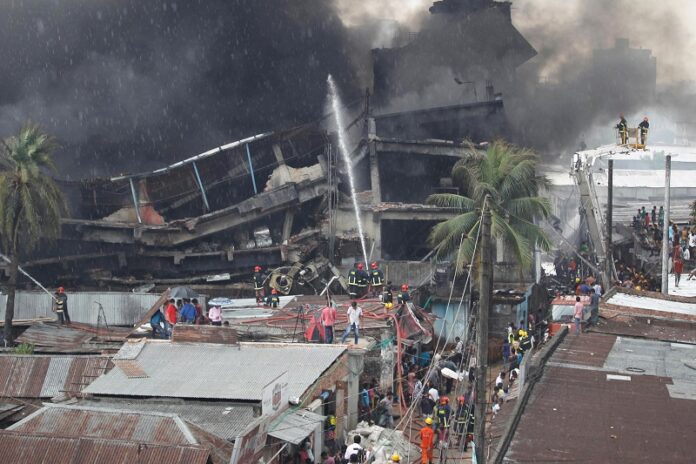
Firefighters and local people work together to put out the fire on Saturday at a packaging factory in Tongi industy area outside Dhaka, Bangladesh. Photo: A. M. Ahad / Associated Press
NEW DELHI, India — A boiler exploded and triggered a fire at a packaging factory near Bangladesh’s capital, leaving at least 12 people dead and 16 others injured on Saturday, officials said.
Several bodies were recovered from the five-story Tampaco Foils Ltd. factory in the Tongi industrial area outside Dhaka, fire official Mohammed Rafiquzzaman said. A doctor on duty at the Tongi Hospital said nine bodies were in the mortuary as officials waited for family members to identify them.
Nineteen people were brought to the state-run Dhaka Medical College Hospital, where three of them succumbed to burn injuries, said police official Mohammed Bacchu Mia.
Local TV stations said about 50 people were injured, indicating that the death toll could be higher.
Factory safety is a major concern in Bangladesh, which has thousands of garment and packaging factories that supply products to global clothing chains like America’s Wal-Mart and Sweden’s H&M.
In 2012, a devastating fire at a garment factory killed 112 workers. A year later, a multi-storied commercial complex housing five garment factories and offices collapsed, killing 1,135 people, mostly garment workers near Dhaka.
Rafiquzzman said the upper three floors of the factory were damaged because of the huge impact of the explosion and subsequent fire.
The accident took place as Bangladesh was preparing for a weeklong holiday for the Islamic festival of Eid al-Adha that falls on Tuesday. Most of the factory workers, who are from rural Bangladesh, usually go on leave to celebrate the festival with families.
The major accidents prompted Bangladesh’s government, global brands and the United Nations to work together for improving safety standards in the South Asian country’s factories.
Several major retailers, including some from North America and Europe, say Bangladesh’s factories have improved their safety conditions significantly over the last few years following the 2013 Rana Plaza building collapse, the country’s worst industrial disaster.
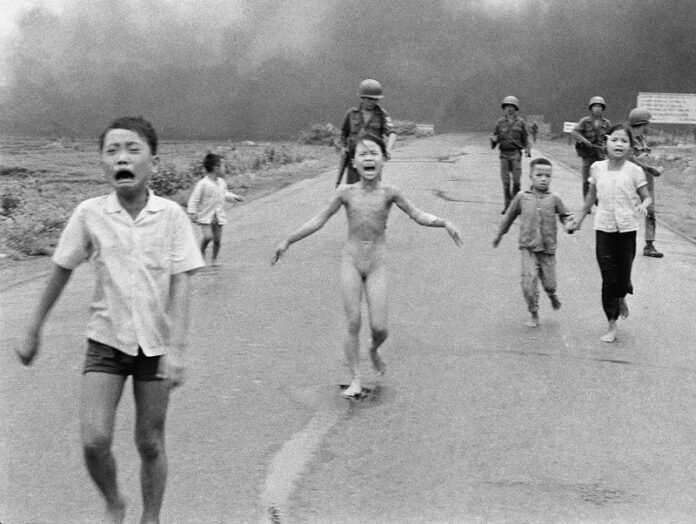
'Napalm Girl', the Pulitzer Prize-winning image by Associated Press photographer Nick Ut, is at the center of a heated debate about freedom of speech in Norway after Facebook deleted it from a Norwegian author’s page last month. Photo: Nick Ut / Associated Press
COPENHAGEN, Denmark — Facebook on Friday reversed its decision to remove postings of an iconic 1972 image of a naked, screaming girl running from a napalm attack in Vietnam, after a Norwegian revolt against the tech giant.
Protests in Norway started last month after Facebook deleted the Pulitzer Prize-winning image by Associated Press photographer Nick Ut from a Norwegian author’s page, saying it violated its rules on nudity.
The revolt escalated on Friday when Norwegian Prime Minister Erna Solberg posted the image on her profile and Facebook deleted that too. The brouhaha is the latest instance in which Facebook’s often opaque process for deciding what stays and what goes on its network has spurred controversy.
“It’s an interesting dilemma because you’ve got a newsworthy historical image that has been published by traditional news media that was effectively censored by a social network,” said Steve Jones, University of Illinois at Chicago communications professor.
Initially, Facebook stood by the decision, saying it was difficult to create a distinction between allowing a photograph of a nude child in one instance and not others. But late Friday it said it would allow sharing of the photo.
“In this case, we recognize the history and global importance of this image in documenting a particular moment in time,” Facebook said in a statement. “Because of its status as an iconic image of historical importance, the value of permitting sharing outweighs the value of protecting the community by removal, so we have decided to reinstate the image on Facebook where we are aware it has been removed.”
… there is nothing about this picture that is prurient. How can we not publish this picture? It captures the horrors of war. It captures the terrible situation of innocents caught in the crossfire of the war.”
Politicians of all stripes, journalists and regular Norwegians had backed Solberg’s decision to share the image.
The prime minister told Norwegian broadcaster NRK she was pleased with Facebook’s change of heart and that it shows social media users’ opinions matter.
“To speak up and say we want change, it matters and it works. And that makes me happy,” she said.
The image shows screaming children running from a burning Vietnamese village. The little girl in in the center of the frame, Kim Phuc, is naked and crying as the napalm melts away layers of her skin.
“Today, pictures are such an important element in making an impression, that if you edit past events or people, you change history and you change reality,” Solberg told the AP earlier Friday, adding it was the first time one of her Facebook posts was deleted.
Solberg later reposted the image with a black box covering the girl from the thighs up. She also posted other iconic photos of historic events, such as the man standing in front of a tank in Beijing’s Tiananmen Square in 1989, with black boxes covering the protagonists.
Like its Scandinavian neighbors, Norway takes pride in its freedom of speech. It’s also a largely secular nation with relaxed attitudes about nudity.
Several members of the Norwegian government followed Solberg’s lead and posted the photo on their Facebook pages. One of them, Education Minister Torbjorn Roe Isaksen, said it was “an iconic photo, part of our history.”
Many of the posts were deleted but Isaksen’s was still up Friday afternoon. The photo was also left untouched on a number of Facebook accounts, including the AP’s.
It would be physically impossible for the company to comb through the hundreds of millions of photos posted each day, so it relies on user reports and algorithms to weed out pictures that go against its terms of service.
Photos are often automatically removed if enough people report them. Facebook usually does not proactively remove photos, with some exceptions, such as child pornography.
Because of this, what photos aren’t always treated consistently, and sometimes Facebook reinstates reported photos after removing them.
It can also adjust its standards depending on the response. Breastfeeding and mastectomy photos used to be deleted, but after much outcry the company adjusted its policy on nude photos to allow most of such photos. In another case, a court ruled Facebook could be sued after a man’s account was suspended after he posted “The Origin of the World,” by Gustave Courbet, an 1866 French painting of a nude model exposing her genitalia.
“illegal content should vanish from the Internet, not photos that move the whole world.”
The issue in Norway “points out there’s very little transparency,” Jones said. “We really don’t know how these decisions are made so there’s not a lot of accountability either necessarily.”
Norwegian newspaper Aftenposten published the Vietnam photo on its front page Friday and also wrote an open letter to Facebook founder Mark Zuckerberg in which chief editor Espen Egil Hansen accused the social media giant of abusing its power.
Hansen said he was “upset, disappointed – well, in fact even afraid – of what you are about to do to a mainstay of our democratic society.”
The uproar also spread outside of Norway, with the head of Denmark’s journalism union urging people to share Hansen’s open letter. Germany’s Justice Minister Heiko Maas, who has previously clashed with Facebook over its failure to remove hate speech deemed illegal in Germany, also weighed in, saying “illegal content should vanish from the Internet, not photos that move the whole world.”
Facebook’s statement said it will adjust its review mechanisms to permit sharing of the image going forward.
“We are always looking to improve our policies to make sure they both promote free expression and keep our community safe, and we will be engaging with publishers and other members of our global community on these important questions going forward,” it said.
Paul Colford, AP vice president and director of media relations, said: “The Associated Press is proud of Nick Ut’s photo and recognizes its historical impact. In addition, we reserve our rights to this powerful image.”
Before it was published 44 years ago, AP also had a discussion about the image because it violated the news agency’s policy on full-frontal nudity.
Hal Buell, then AP’s executive news photo editor in New York, said he received a message from Saigon photo editor Horst Faas saying a “controversial picture” was coming up.
“Maybe we discussed it on the desk for 10-15 minutes,” said Buell, who is now retired. “But there is nothing about this picture that is prurient. How can we not publish this picture? It captures the horrors of war. It captures the terrible situation of innocents caught in the crossfire of the war.”
AP published the image and media worldwide used it, though some chose not to, Buell said.
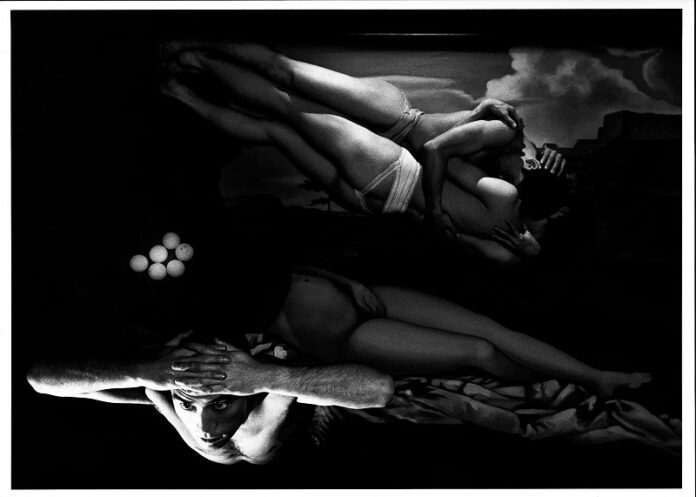
‘Barakei: Ordeal by Roses’ taken in 1961 by Eikoh Hosoe. Photo: The Japan Foundation / Courtesy
BANGKOK — Japan’s World War II aftermathwill be on display for a month in a rarely seen exposition of 123 monochromatic photographs in Bangkok.
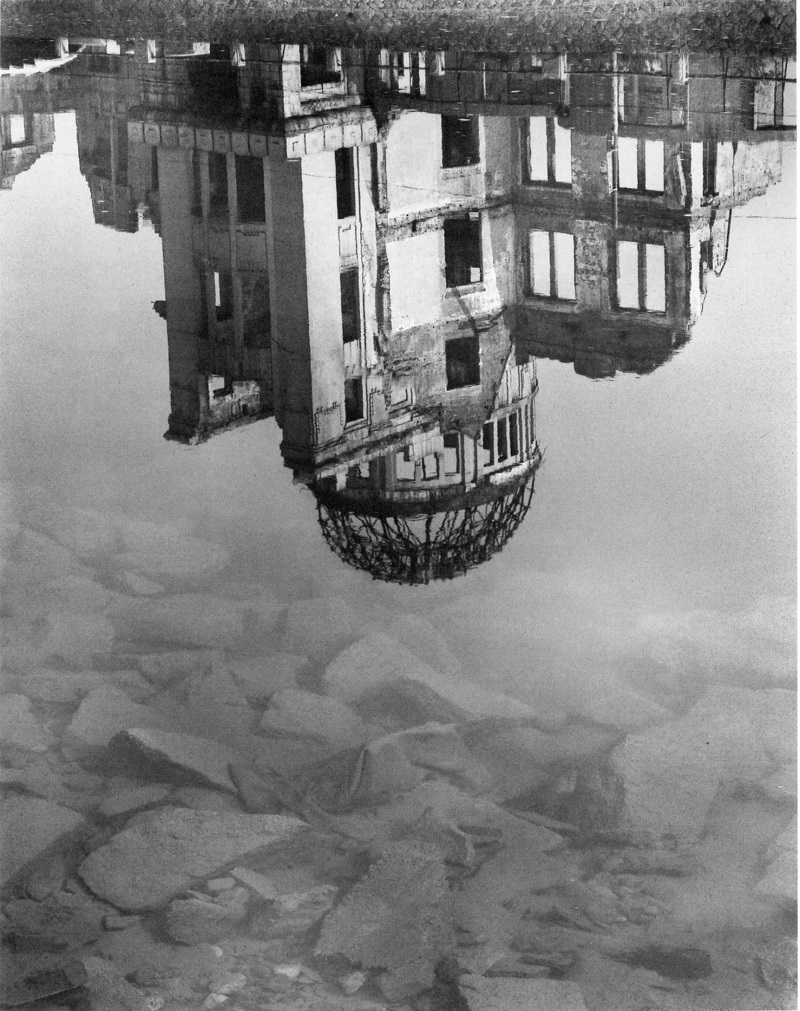
“Metamorphosis of Japan After the War” features 123 images of postwar Japan from 1945 to 1964, in the period between the nuclear massacres of Hiroshima and Nagasaki, and the year of the Tokyo Olympic Games, the first of their kind in Asia.
The exhibition is divided into three sections: Aftermath of War, Between Tradition and Modernity and Towards a New Japan. All selected images were taken by 11 Japanese photographers.
The exhibition will take place Sept. 17 to Oct. 14 at the Ratchadamnoen Contemporary Art Center.
Admission is free. The museum on Ratchadamnoen Road opens from 10am to 7pm, Tuesday through Sunday.
The Hiroshima Peace Memorial, commonly known as Atomic Bomb Dome, and Ohta River taken by Kikuji Kawada. Photo: The Japan Foundation / Courtesy