30.5 C
Bangkok
Friday, July 3, 2026
Home Blog Page 2738

Pledge to Probe People Pinned to Panama Papers

A screenshot from the data trove in the "Panama Papers."

BANGKOK — Authorities today said they will investigate whether any resident in Thailand named in a recent massive leak of information about offshore assets has broken any laws.

Police Col. Seehanart Prayoonrat, head of the Anti-Money Laundering Office, or AMLO, said Wednesday his agency counts 637 names in the leaked documents from Panamanian law firm Mossack Fonseca, which was made public in its entirety on Tuesday.


Panama Papers: Massive Leak Exposes Where World Leaders Hide Money


Known as the Panama Papers, the massive leak contains client information from the firm, which helps the global moneyed elite set up offshore accounts in order to hide money for reasons which can include dodging taxes, laundering and avoiding sanctions.

There are also legally acceptable grounds for using offshore companies and trusts, as the journalist organization behind the leak makes clear in its own disclaimer, a fact acknowledged by Seehanart. 

“AMLO will not check the money of all of the 637 names in the list, but we will investigate if any person [broke the law],” Seehanart said. “There’s already procedures to investigate this, and we believe that it will take us some time.”

The Panama Papers listed 1,413 holders of addresses in Thailand that are linked to offshore shell companies, containing both Thai and foreign names.

“If there’s any involvement to wrongdoing, we will take action in accordance with anti-money laundering laws,” Seehanart said.

Notable businesspeople and conglomerates named in the documents included: 

Chartsiri Sophonpanich, chairman of Bangkok Bank, the largest commercial bank in Thailand

Tos Chirathivat, CEO of Central Group, which owns numerous shopping malls across the country 

Archawin Asavabhokhin, an executive of housing developer giant Land and House

Chutinant Bhirombhakdi, executive vice president of Singha Corp.

Bhanapot Damapong, brother-in-law of former Prime Minister Thaksin Shinawatra.


Advertisement

Hindu Group in India Asks Gods to Help Trump Win Election

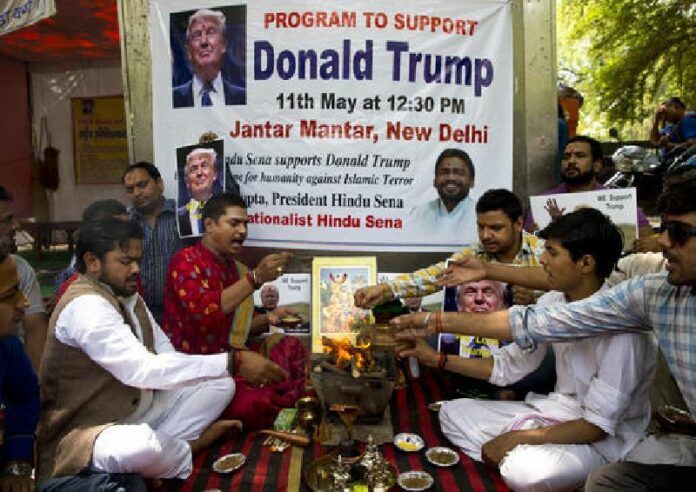
Activists of right-wing Hindu Sena or Hindu Army make offerings to the fire god while conducting Hindu rituals to ensure a win for U.S. presidential candidate Donald Trump in New Delhi, India, Wednesday, May 11, 2016. Photo: Saurabh Das / Associated Press

NEW DELHI — Around a dozen members of a right-wing Hindu group have lit a ritual fire and chanted mantras asking the Hindu gods to help Donald Trump win this year's U.S. presidential election.

While Trump has dominated the Republican primary race to decide the party's candidate for the November election, his calls for temporarily banning Muslims from America and cracking down on terrorist groups abroad have earned him some fans in faraway India.

On Wednesday, members of the Hindu Sena nationalist group gathered on a blanket spread out in a New Delhi protest park along with a collection of statues depicting gods including Shiva and Hanuman — as well as color photos of a shouting Trump.

The group chanted Sanskrit prayers asking the gods to favor Trump in the election.

"The whole world is screaming against Islamic terrorism, and even India is not safe from it," said Vishnu Gupta, founder of the Hindu Sena nationalist group. "Only Donald Trump can save humanity."

Members of the group gathered on a blanket spread out in a New Delhi protest park along with a collection of statues depicting gods including Shiva and Hanuman — as well as photos of a smiling Trump.

Above them hung a banner declaring support for Trump "because he is hope for humanity against Islamic terror."

The group chanted Sanskrit prayers asking the gods to favor Trump in the election, and threw offerings such as seeds, grass and ghee — or clarified butter — into a small ritual fire.

\

 Photo: Saurabh Das / Associated Press


Story: Associated Press


Advertisement

Paradise of the Blind: Prohibited Prints Under Assault at ‘Reading Room’

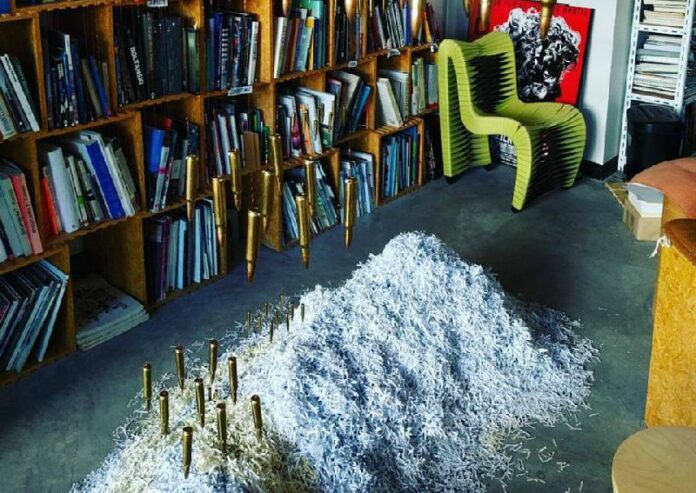
Paradise of the Blind art installation on May 6 at The Reading Room. Photo: Klaikong Vaidhyakarn / Facebook

BANGKOK — For its gay penguin parents, Singapore limited access to “And Tango Makes Three.” Chinese censors originally banned Lewis Carroll’s masterwork “Alice’s Adventure in Wonderland” for representing human-animal equality

Those are among hundreds of censored books from around the world to be reinterpreted and displayed for one month at an art installation in Bangkok.

Named for a novel banned in Vietnam due to its politics, Paradise of the Blind is the title of an exhibition of censored works artist Sutthirat Supaparinya has studied since October.

Sutthirat Supaparinya, who believes that forbidding people to read something is akin to blinding them, flew from her home in Chiang Mai to Bangkok, where she spent nearly a week changing the fourth-floor library into a literary crime scene of books, shredded papers, rifle bullets and more.

“I expect many questions from audiences to ask themselves about the limitations of their right to read and access information,” Sutthirat wrote in reply to a reporter’s inquiries. Hopefully then, she said, audiences will question how things that seem harmless are banned and push against their own limitations and boundaries.

Paradise of the Blind is also the first in a series of “Sleepover” projects at The Reading Room on lower Silom Road, in which six artists take over the space for one month each to create a cultural, critical art project.

The exhibition has already gotten the attention of the military, who dispatched two soldiers to its opening last week.

Reading Room founder Narawan Pathomvat said the officers stuck around for five or six hours, asking many questions.

She believes they were there over “The Real Face of Thai Feudalism,” a book by late Thai historian Chit Phumisak, which was briefly banned for its critical take on Thai class hierarchy.

Books in the exhibition also include Pramoedya Ananta Toer’s “All That Is Gone” (banned in Indonesia) and Noam Chomsky’s “Year 501: The Conquest Continues” (blacklisted by the South Korean military).

Steal-This-Book-s.jpg
A picture from Sutthirat Supaparinya’s solo exhibition Steal This Book late last year in Wellington, New Zealand. Photo: Sutthirat Supaparinya / Courtesy

Paradise of the Blind runs through May 29 at The Reading Room.

Following Sutthirat’s project, the space will be transformed for the month of June by a group of Southeast Asian art historians into Southeast of Now. Events from July through October will feature writer-illustrator Teepagorn Wutipitayamongkol, writer-director Prabda Yoon, and a coordination between the Thai Netizen Network, Social Technology Institute and Boonmee Lab.

The Sleepover project will close out with world-renowned indie film director Apichatpong Weerasethakul in October.

The Reading Room is located on Soi Silom 19. Home to more than 1,000 books, it is open from 1pm to 7pm, Wednesday through Sunday.

Sleep-Over-1.jpeg
A promotional poster for The Reading Room’s Sleepover project. Photo: The Reading Room / Facebook

Advertisement

2 Injured When Bomb Explodes at Hua Lamphong Station: Police

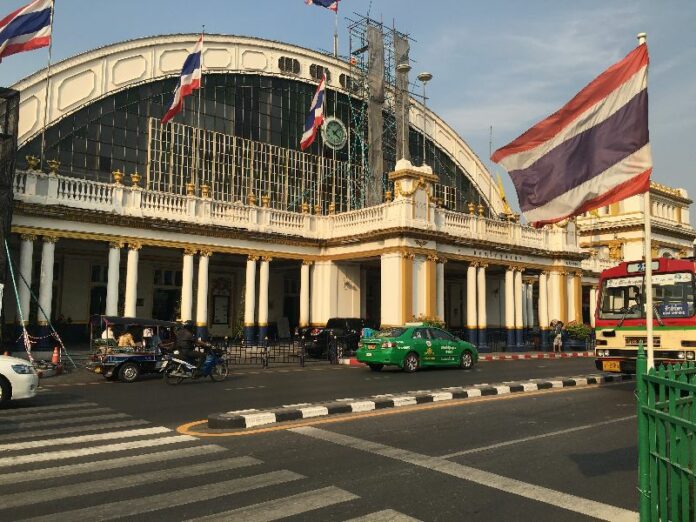
File photo of Bangkok Railway Station Hua Lamphong.

BANGKOK — Two men from Udon Thani province were injured when they stubbed a cigarette out on an abandoned explosive device at the Bangkok Railway Station this afternoon, a police officer said.

Thanong Maisao, 25, and his 30-year-old uncle Lamai Uamsap-ngam were sent to nearby General Hospital for treatment, according to Lt. Sa-ngad Saengsawang of the railway police. The group, including Thangong's mother, were about to board a train bound for the south of Thailand.

The explosion happened when the two men were smoking and one of them put a cigarette out on a glass bottle. Kamthorn Oui-charoen, commander of Bangkok's bomb disposal unit, said the glass bottle was actually an improvised explosive device packed with gunpowder known colloquially as a ping pong bomb.

"We don't know who left it there," Col. Kamthorn said.

Sa-ngad said police were notified around noon. The two men were not carrying the bomb as initially reported by police.

The explosion was captured by a security camera and posted to social media, along with photos of at least two men with blood on their bodies.

Police are investigating.


Advertisement

Unwitting Photo Captures Secrecy Shrouding 112 Proceedings

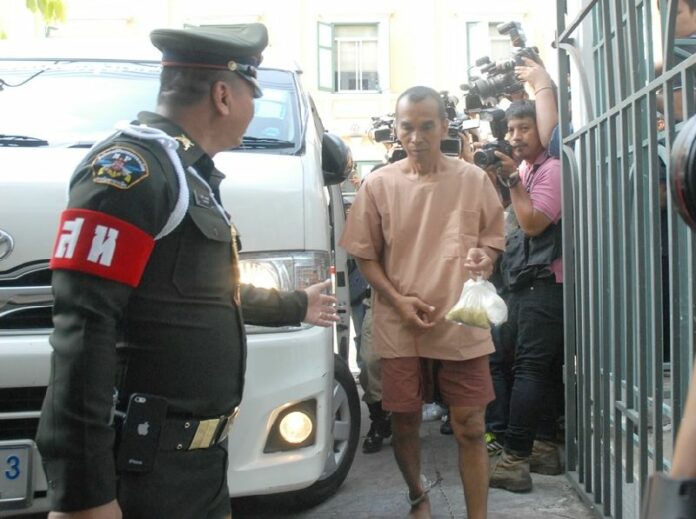
A man later identified as lese majeste suspect ‘Ruecha’ is paraded before the media Tuesday outside a Bangkok military court.

BANGKOK — Told that eight Facebookers accused of insulting the military government would be brought to a military court yesterday for a hearing, the media lined up for the perp walk. And then they saw nine.

As the so-called Facebook 8 filed out of a police vehicle, only the more sharp-eyed observers noticed a ninth suspect trailing behind the other suspects. Even Khaosod English initially assumed him to be one of the online dissidents in the news since late last month.

So who was this unknown detainee?

Civil rights activists said Wednesday they believe him to be a 62-year-old former army sergeant known only as Ruecha. He’s accused of insulting the monarchy, a crime punishable by up to 15 years in jail and will be tried by the martial court, despite word he may be suffering from schizophrenia. He has no lawyer.

“When there’s a case of a mentally-ill suspect [arrested], police usually phone us to let us know. There are many cases like that,” said Yaowalak Anuphan of Thai Lawyers for Human Rights. “But in this case, neither the military nor police contacted us.”

The man’s case, only inadvertently made public, underscores the secrecy that has overtaken lese majeste proceedings under the military. According to iLaw, a legal advocacy group that tracks political cases, 20 soldiers without a warrant took Ruecha away from his Rayong province home March 29. He was taken to an army base where he was interrogated and charged with insulting the Royal Family.

Read: Lese Majeste Criminal, Not Political: Thai Govt

Ruecha was previously diagnosed by psychiatrists of suffering from a mental disorder, according to iLaw’s online case summary. It indicates Ruecha suffered various delusions consistent with schizophrenic behavior.

Ruecha has been held in Bangkok Remand Prison since his arrest. Yaowalak said Ruecha had requested a lawyer provided by Pheu Thai Party to represent him, but she discovered yesterday that no lawyer visited him in prison so far.

“We will try to visit him in prison this week,” Yaowalak said. “If he seems to be really mentally ill, we will request that he be formally diagnosed at a hospital.”

She said they will offer to represent him.

“We will provide help for this issue,” she said. “But supposing he still prefers a Pheu Thai lawyer, we will coordinate one for him.”

According to iLaw report, Ruecha stands accused of insulting the Queen and the Crown Prince on his Facebook. The soldiers who arrested him at his home also seized his computer, mobile phone and tablet as evidence for the upcoming trial.


Related stories:

Record Sentences Today For Facebook Lese Majeste Offenses

Man Gets Five Years for Destroying Thai King Portrait

Mentally Ill Woman Jailed for Kicking King’s Portrait

Writer Gets Suspended Sentence For Lese Majeste

Advertisement

US Sticking with Calling Myanmar Minority 'Rohingya'

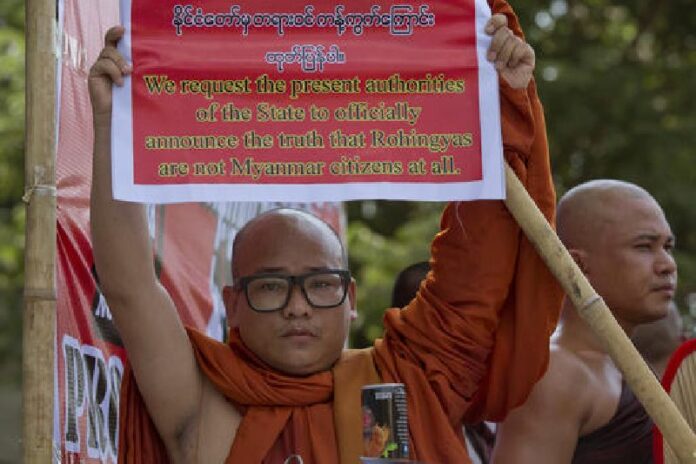
A nationalist Buddhist monk displays a placard during a protest outside the U.S. Embassy in Yangon, Myanmar against the embassy's April 20 statement with the word 'Rohingya' Thursday, April 28, 2016. Photo: Gemunu Amarasinghe / Associated Press

YANGON — Myanmar and the United States appeared to agree to disagree Tuesday on what to call the Southeast Asian nation's beleaguered Muslim minority that Washington and most of the world know as Rohingya.

Many Buddhists inside Myanmar prefer to call them "Bengalis," arguing that the 1 million or so members of the minority are mostly illegal immigrants and not a native ethnic group. In fact, the families of many Rohingya have lived in Myanmar for generations.

U.S. Ambassador Scot Marciel said the U.S. calls communities by the name they themselves prefer.

"The normal U.S. practice and the normal international practice is that communities anywhere have the right, or have the ability to decide what they are going to be called. And normally when that happens, we would call them what they asked to be called. It's not a political decision, it's just a normal practice."

\

U.S. Ambassador to Myanmar Scot Marciel listens to a question from the audience after giving his first speech as the ambassador in Yangon, Myanmar, Tuesday, May 10, 2016. Photo: Gemunu Amarasinghe / Associated Press

Because Myanmar does not officially recognize the Rohingya as an ethnic group, it denies most of them citizenship and basic rights. Conflict over land and resources in the western state of Rakhine, where most of the estimated 1 million Rohingya live, caused deadly violence between Buddhists and Muslims which later spread to other parts of the country. More than 100,000 Rohingya were forced to flee their homes and now live in poor conditions in decrepit camps.

Marciel declined to say whether, as reported, the country's foreign minister and de facto leader Aung San Suu Kyi had personally asked him not to use the term. "I prefer not to publicly talk about private diplomatic conversations," he said.

Suu Kyi, who won international admiration and a Nobel Peace Prize for her non-violent struggle for democracy duringMyanmar's years of military rule, has in recent years disappointed many former fans by failing to speak on behalf of the Rohingya. Despite international expressions of concern, Myanmar's previous military-backed government, which handed over power this year to Suu Kyi's National League for Democracy party, did nothing to ease the Rohingya's plight.

Myanmar foreign ministry official Aye Aye Soe acknowledged Tuesday that her office had asked Marciel not to use the term "Rohingya." She said Marciel has the right to call the minority whatever he likes, but calling them Rohingya could enflame communal tensions.

"Yes, it is true that we told Ambassador Scot Marciel when he came to (Myanmar's capital) Naypyitaw not to use the term 'Rohingya' because it is not supportive in solving the problem that is happening in Rakhine state," said Aye Aye Soe, deputy director general of the ministry's political department . "And it can even worsen the situation there."

"This is his right to say or call whatever he wants, but this is not leading to a solution of the problems," she said. "People are just fighting over this term instead of solving the problem. This can make things difficult for the two communities in Rakhine to gain trust again."

A nationalist movement spearheaded by Buddhist monks has gained political influence by stirring up prejudice against Rohingya and Muslims in general.

Last month Buddhist monks joined several hundred protesters outside the U.S. Embassy in Myanmar to demand it stop using the term "Rohingya." The embassy had used the word earlier in a statement of concern about their situation after dozens died when a boat they were on capsized.

\

Police officers try to direct traffic as members of a Buddhist nationalist group protesting outside the U.S. Embassy in Yangon, Myanmar against the embassy's April 20, 2016 statement with the word "Rohingya" Thursday, April 28, 2016.  Photo: Gemunu Amarasinghe / Associated Press


To reach us about this article or another matter, please contact us by e-mail at: [email protected].

Follow Khaosod English on Facebook and Twitter for news, politics and more from Thailand.

Follow @KhaosodEnglish

\

Advertisement

Award-Winning Films From Canada and the Philippines to Screen in Bangkok

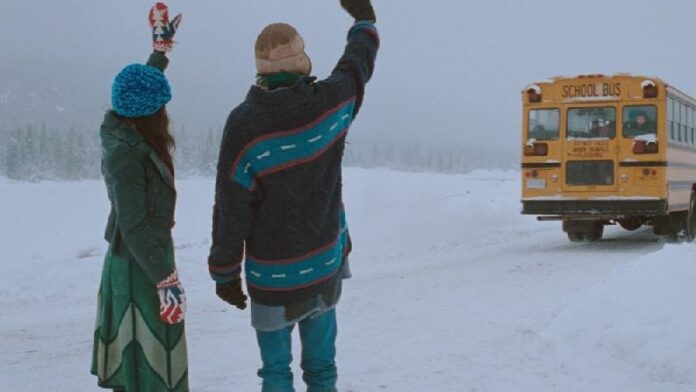
A scene from “The Sweet Hereafter” (1997)


BANGKOK — Tragedy, justice and community intersect uneasily in a drama described as one of Canada’s best films which will screen Monday at the Foreign Correspondents’ Club of Thailand.

May’s entries in the club’s Contemporary World Film Series, “The Sweet Hereafter” (1997) will be followed May 30 with “Thy Womb,” a 2012 drama from the Philippines.

In “Sweet Hereafter” a righteous lawyer played by Ian Holm rides into a small Canadian town to represent the grief-stricken families of 14 children killed in a school bus accident, but it’s unclear anyone wants him there.

The film won three awards at Cannes in 1997 and Oscar nods for director Atom Egoyan and its adaptation.

Shot in a remote part of the Philippines, “Thy Womb” centers on the search by an infertile midwife and her husband for a surrogate mother on Tawi Tawi island in the south. The drama, directed by Brillante Mendoza, has shown at a number of festivals including Busan, Toronto and Venice.

Nora Aunor, a superstar in the Philippines, won a string of awards for her portrayal of the aging midwife Shaleha, including best actress at the 2012 Venice Film Festival.

“The Sweet Hereafter” will show at 7pm on Monday with Canadian Ambassador Phil Calvert in the audience.

“Thy Womb” can be seen at 7pm on May 30 at the same venue with Philippine Ambassador Mary Jo A. Bernardo-Aragon in attendance.

Admission is 150 baht and free for members.


Chayanit Itthipongmaetee can be reached at [email protected] and @chayaniti92.

Follow Khaosod English on Facebook and Twitter for news, politics and more from Thailand. To reach Khaosod English about this article or another matter, please contact us by e-mail at [email protected].


Follow
@KhaosodEnglish

\

Advertisement

Junta Orders All Gold Mines Shut Down

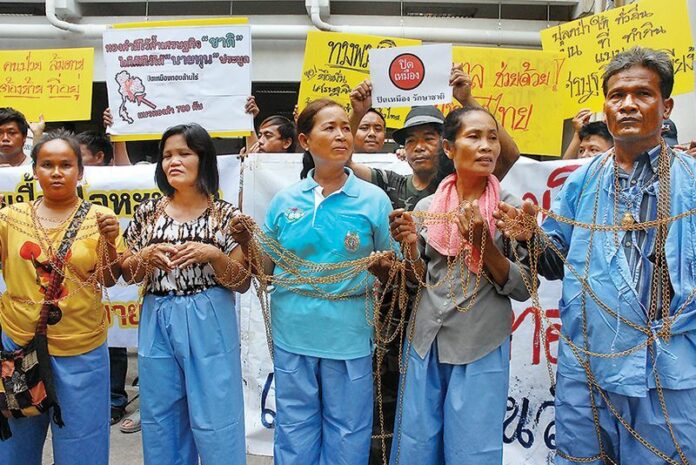
Representatives from 12 provinces across the country protest Sept. 22, 2016 at Government House in Bangkok, where they filed a complaint urging the junta chief to shut down all of Thailand’s gold mines.

BANGKOK — The military government yesterday ordered every gold mine in the country to shut down by the end of this year.

Communities in northern Thailand were celebrating victory Tuesday after they appeared to prevail in a long-running struggle with mine operators after the interim cabinet said it will revoke approval for gold mining and gold prospecting in the kingdom by the end of 2016.

“We consider the policy of developing gold mining in Thailand not necessary at the moment,” industry minister Atchaka Sibunruang said Tuesday.

The order covers all operators including the largest, Akara Resources PCL, which operates mines  in Phichit, Phitsanulok and Phetchabun. Residents of those communities have complained of harmful effects on the environment and public health.

Although government studies could not firmly link the adverse effects to mining operations, Atchara said, related ministries proposed shutting them down to relieve the conflict.

The strife began not long after the mines began operating. Akara, the largest and partly Australian owned, received its license to mine in the three provinces in 2001. For over a decade now, communities have complained of pollution and toxic contamination caused by the mines. Several tests found people living nearby had unsafe levels of heavy metals.

Atchara cited a 2014 order from junta leader Gen. Prayuth Chan-ocha ordering that gold mine operations must be transparent, environmentally friendly and not opposed by the community.

It also may not make economic sense to continue operations. Industry estimates put the rate and cost of gold domestic gold extraction as unfavorable to what can be imported; therefore, it was deemed not worth the investment.

Akara, which employs more than 1,000 workers, will be allowed to continue refining gold ore until the end of 2016, Atchara said, to reduce the impact on its workforce.

In a statement issued after the cabinet’s decision, Akara said it was surprised and would fight it in the courts.

“We currently have not received any official notice from the government,” the statement said, adding that its mining license was approved through 2028.

Minister Atchara said the cabinet is unconcerned, as it was executing the policy set forth by the ruling junta.


Advertisement

Eager to Heal Old Wounds, Obama to Visit Hiroshima

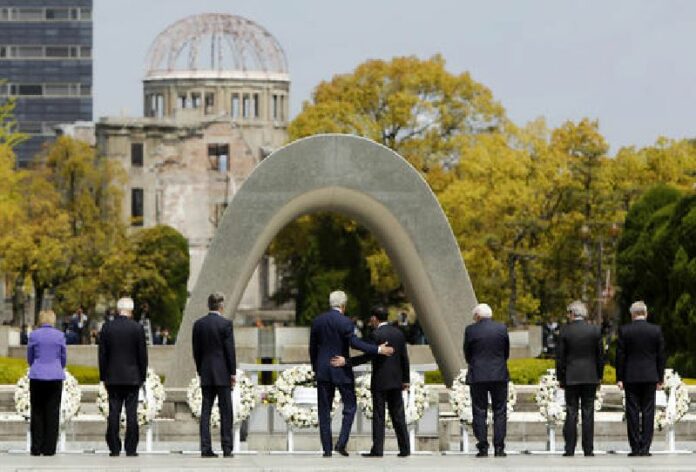
In this April 11, 2016, file photo, U.S. Secretary of State John Kerry, fourth from left, puts his arm around Japanese Foreign Minister Fumio Kishida after they and fellow G7 foreign ministers laid wreaths at the cenotaph at Hiroshima Peace Memorial Park in Hiroshima, western Japan. Photo: Jonathan Ernst / Associated Press

WASHINGTON — Eager to heal old wounds and galvanize new generations, President Barack Obama this month will become the first sitting American president to visit Hiroshima, where seven decades ago the U.S. dropped the devastating atomic bomb that ushered in the nuclear age.

By visiting the peace park near the epicenter of the 1945 attack, the president hopes to reinvigorate efforts worldwide to eliminate nuclear weapons. But in a sign of the extraordinary political sensitivities attached to the gesture, the White House is going out of its way to stress Obama will not come bearing an apology.

Deputy national security adviser Ben Rhodes said flatly: "He will not revisit the decision to use the atomic bomb at the end of World War II." Instead, Rhodes said in a statement, Obama will spotlight the toll of war and offer a "forward-looking vision" of a non-nuclear world.

Japanese Prime Minister Shinzo Abe, who will accompany Obama on the visit, said no apology is expected — or necessary.

"The prime minister of the world's only nation to have suffered atomic attacks, and the leader of the world's only nation to have used the atomic weapons at war will together pay respects for the victims," Abe told reporters. "I believe that would be a way to respond to the victims of the atomic bombings and the survivors who are still in pain."

The U.S. attack on Hiroshima on Aug. 6, 1945, killed 140,000 people. A second bomb, dropped on Nagasaki three days later, killed 70,000. The bombings scarred generations of Japanese, both physically and mentally, but many Americans believe they hastened the end of World War II and saved countless other lives. Japan announced it would surrender on Aug. 15.

As for Obama's visit, the Japanese people are ready for this moment, seven decades in the making.

In a NHK television poll this month, 70 percent of Japanese respondents said they wanted Obama to visit, compared to 2 percent against it.

Survivors, especially, have long been waiting. The number of survivors who are recognized as "hibakusha" and entitled to medical assistance from the Japanese government was more than 183,000 as of March. Their average age is now over 80.

"The day has finally come," said 91-year-old Sunao Tsuboi, a survivor of the bombing and head of a survivors group in the western Japanese city.

"We are not asking for an apology," Tsuboi told NHK. "All we want is to see him lay flowers at the peace park and lower his head in silence. This would be a first step toward abolishing nuclear weapons."

The president's visit, at the end of a previously announced trip to Japan and Vietnam, has been widely anticipated since Secretary of State John Kerry went to the Hiroshima memorial in April.

\

In this March 31, 2016, file photo, U.S. President Barack Obama speaks with Japanese Prime Minister Shinzo Abe during their meeting at the Nuclear Security Summit in Washington. Photo: Jacquelyn Martin / Associated Press

Hiroshima Mayor Kazumi Matsui praised Obama's plan as a "bold decision based on conscience and rationality" and said he hopes the president will listen to survivors' stories. Nagasaki Mayor Tomihisa Taue said the president would "send a powerful message, in his own words, toward achieving a world without nuclear weapons."

Obama's call for a nuclear-free world echoes the message delivered by former President Jimmy Carter when he visited Hiroshima in 1984 and pledged to work as a private citizen "to eliminate nuclear weapons from the face of the earth."

White House Press Secretary Josh Earnest said it was "entirely legitimate" for historians and the American public to debate whether President Harry Truman's decision to drop the bomb was the right thing to do.

"But that's not what President Obama will do when he visits Hiroshima," Earnest said. "What President Obama will do is make note of the fact that the relationship between the United States and Japan has emerged stronger than anybody could have imagined back in 1945."

For all of the symbolism associated with Obama's visit, anti-nuclear groups said a powerful presidential message was not enough: The president who delivered a stirring call for a nuclear-free world in a Prague address during the first year of his presidency needs to use his last year to take more specific steps, they said.

The president should "use the opportunity to map out concrete actions the United States and other countries can and will pursue to move closer to a world free of nuclear weapons," said Daryl Kimball, executive director of the non-partisan Arms Control Association.

Kevin Martin, president of Peace Action, a U.S.-based group, added that Obama "will look insincere if his words espouse ridding the world of nuclear weapons while at the same time his administration continues its plan to spend a trillion dollars over 30 years to upgrade nuclear weapons."

The Congressional Budget Office estimated in January 2015 that the administration's plans for nuclear forces would cost USD$348 billion over the next decade. Others have said it could approach USD$1 trillion over three decades.

Obama's visit comes as the nuclear debate has been percolating in the 2016 campaign to select his successor, with GOP presumptive nominee Donald Trump floating the idea of allowing South Korea and Japan to acquire nuclear weapons.

Story: Nancy Benac / Associated Press


Advertisement

Treasure-Hunt a Trove of Bikes Shipped from Japan and Rebuilt in This Shophouse

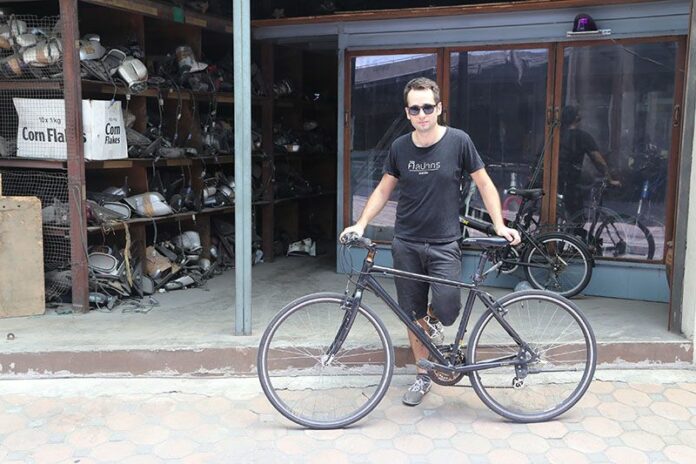
Gabriel Camelin, an instructor at Silpakorn University, shows off his find at Non See, a Bangkok shop which imports disassembled bicycles by the container from Japan.

BANGKOK — Gabriel Camelin needed to get from an evening meeting downtown to King Mongkut’s University of Technology Thonburi late last month, so he locked up his Doppelganger DG832 Shadow under BTS Ratchathewi.

When he returned later to find it stolen, the 32-year-old digital communication design professor knew exactly where to find a replacement. Several months prior, he was wandering by an otherwise unassuming shophouse on Rama III Road when he noticed a nice bike with a price scribbled on a sheet of paper taped to its handlebars.he9eW8ncsoVN1pL5ABzTk6ZSoA FIDZqPhMZHlcLnwDiYqZRTcywbz

When he returned April 30, four days after his bicycle was stolen, Camelin inquired about the bikes on display at Non See. That’s when its owners, an older Thai man and his daughter, brought him inside to a workshop where hundreds of bikes are assembled, repaired, and cleaned up. He scored a Momentum bicycle in great condition for a very fair price of about 4,500 baht.

\
All of the shop’s stock of bicycles come in semi-regular shipping containers from Japan. The bikes are broken down in Japan, wrapped in newspaper, and strategically piled into a container. When it reaches Bangkok, they are transported to this shophouse in the capital’s Khlong Toei district, where customers come and take dibs.

Some, like Camelin, just want a bike to get from point A to point B. Others are collectors, sifting through the mass of metal and rubber in hope of finding a lugged steel Nagasawa track bike, or vintage Kalavinka frame.
On a visit this past Thursday, Camelin had returned to pick up a mud flap in for his rear tire in preparation for the rainy season. He scored one on the cheap.

Just a few days earlier the latest shipping container had been unloaded. The ground was still littered with the discarded Japanese newspaper pages used to wrap the bicycles, shredded and left by the frenzy of collectors who storm the shophouse in search of bicycles with heritage and history whenever a new container arrives.

Modern bicycles from the mid-2000s also turn up in the lot, like American Cannondale mountain bikes and Italian Bianchis. Prices range from 1,000 baht for early ‘90s heavy steel junkers that need lots of work, all the way to 15,000 baht for like-new mountain bikes from premier manufacturers.

\
Hok, the employee who moderates the throngs of bicycle enthusiasts picking through the lot, told us the containers come every two months, but their arrival is getting more and more unpredictable. It takes a long time to unpack and reassemble all the bicycles, so there is a steady supply of stock. Prices are negotiable, and there are some true diamonds in the rough.

A lot of the bikes will require a little retooling and tuning, but the staff on hand make sure they all function well before leaving the shop.

Selling bicycles out of a dimly lit shophouse in Khlong Toei may sound fishy, but Hok told us they never buy bicycles from Thailand for resale for fear they might be stolen. All bicycles sold here are strictly from Japan.

Looking for a new bike or just curious? The shophouse can be accessed on Rama III Road, or by heading down Soi Rama III 79. Set your NavCom to this location. It’s got phone numbers listed as 0-2671-0206-10 and 0-2249-4749-50. A website which customers say will announce when the next container is due, www.non-see.com, appears to be down.

\

\

\

\

\

\

Advertisement

Hot News

LATEST NEWS

Bangkok
overcast clouds
30.5 ° C
30.5 °
30 °
71 %
4.7kmh
100 %
Fri
31 °
Sat
31 °
Sun
30 °
Mon
28 °
Tue
32 °