28.3 C
Bangkok
Thursday, July 2, 2026
Home Blog Page 2760

Dog Shooting Inspector Charged with Animal Abuse

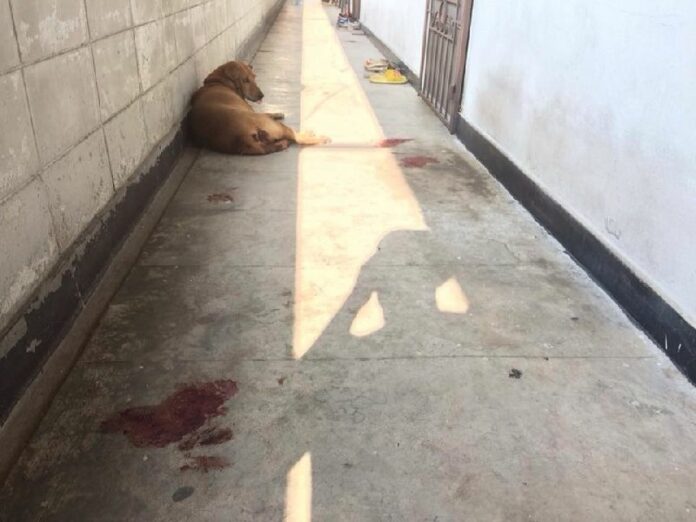
An injured dog on Saturday morning at a police apartment building in Lat Yao district. Photo: Watchdog Thailand / Facebook

BANGKOK — A police inspector turned himself in Monday morning at Phaholyothin Police Station for allegedly shooting two dogs on Friday night, killing one and injuring another.

The suspected dog shooter is identified as Maj. Wasawat Sukthai, an inspector from the Royal Thai Police’s Research Division. Wasawat told police that he shot the dogs to protect his family.

32-year-old Wasawat said he felt guilty after knowing that one dog died from bullets fired by him. On Friday night, Wasawat claims that as he and his pregnant wife arrived at the building where they live they were surrounded by a pack of stray dogs.  

Afraid that the dogs would attack his wife, he shot them with a pistol, Wasawat said.

The Friday night dog shooting at a police flat at Lat Yao subdistrict prompted outrage among netizens over the weekend. A complaint was filed by animal activist group Watchdog Thailand on Sunday.

National police deputy commander Gen. Pongsapat Pongcharoen said that Wasawat was charged with animal abuse and illegal discharge of a firearm in public.

The injured dog is now being treated at a hospital and will be adopted by a volunteer, Pongsapat said.
 

ยิงหมา3

Pol.Maj. Wasawat Sukthai (at left) Monday morning at Phaholyothin Police Station
 

12987084_768919936556554_4771093589424871392_n.jpg

An injured dog shot at from behind  was found on Saturday morning at a police flat apartment building in Lat Yao district.  Photo: Watchdog Thailand / Facebook


Related stories:

Man Seeks Karmic Justice for Dead Dogs

Drive-By Dog Shooter Gets Suspended Sentence

Pheu Thai Politico Insists He Shot Dog in Self-Defense


Advertisement

Forget the Drought, National Water Fight is on

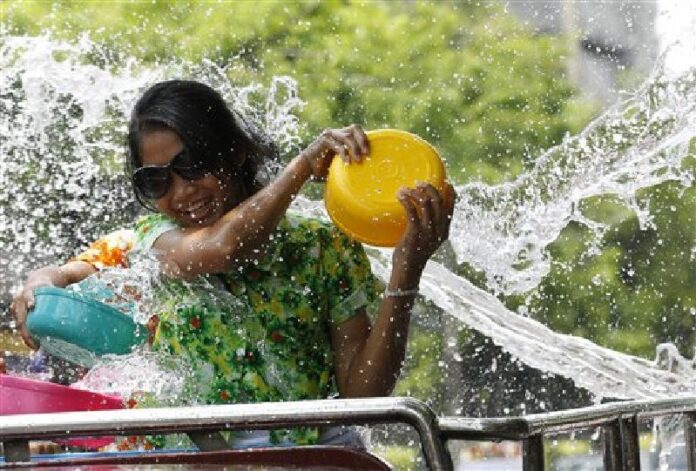
In this April 13, 2015 file photo, a woman splashes water on people from the back of a truck during the Songkran water festival in Bangkok. Photo: Sakchai Lalit / Associated Press

BANGKOK — Drought? What drought? Bring out the water guns!

Thailand may be going through its driest period in 20 years. But the country's military government wants visitors from around the globe to know that the biggest water fight in the world is still on.

So, get your buckets, hoses and other gear ready for the three-day nationwide street party that begins Wednesday to mark the Thai New Year.

"We can still use water for the new year festival. It's not that dry," said a government spokesman, Sansern Kaewkamnerd. The government has instructed the Tourism Ministry to make sure foreign tourists don't misunderstand the severity of the drought and cancel holiday plans out of concerns the water supply will be cut off, he said.

After all, there are millions of dollars at stake.

The Tourism Authority of Thailand expects this year's holiday will generate more than 15 billion baht (USD$427 million) for the tourism sector and attract half a million visitors in a span of five days.

Songkran is a major tourist attraction. Revelers line the streets, or prowl the roads in pickup trucks, armed with water guns and plastic bowls and douse anyone in sight. Some areas are closed to traffic for wet and wild street parties with loud music, booze and dancing.

\

In this April 13, 2014 file photo, a foreign tourist holds a water gun as she takes part in a water fight during traditional Thai New Year celebrations or Songkran festival in Chiang Mai province, northern Thailand. Photo: Apichart Weerawong / Associated Press

Rare controversy has preceded this year's water fight, with environmentalists and other critics calling for festivities to be curtailed.

"Instead of mindlessly wasting water, New Year revelers should be mindful of the crushing drought," a local newspaper said in an editorial last week calling for "a dry Songkran" to show solidarity with the country's farmers.

Twenty seven of Thailand's 77 provinces have been declared drought zones with the lowest level of rainfall in more than two decades. Farmers have been ordered to curtail their water use and scale back planting. Tap-water rationing is in effect in certain provinces.

And yet Thailand's military government is playing down the dry spell and says it is powerless to crimp such a popular national holiday.

"As the prime minister has said, Songkran brings happiness to the Thai people, and canceling it would be too difficult," Sansern said.

A ban would also be hugely unpopular both with Thais and tourists.

In past promotions, the tourism authority has played up the party scene, urging tourists "to get wet and wild" and "be part of the largest street water fight the world has to offer." In 2011, TAT used the holiday to organize a Guinness World Record attempt for the world's largest water pistol fight, drawing more than 3,400 people to a 10-minute shootout in central Bangkok.

The prime minister, a former general who has dictatorial powers after toppling a civilian government in 2014, has bristled at the notion of canceling Songkran.

"I will not ban water throwing, that's impossible," Prayuth Chan-ocha, the prime minister, said in response to a proposal for government controls on holiday water use. He added dismissively, "Parents should teach their children to use less water and not splash it around for three days and three nights."

Prayuth is calling for strict measures this year during the festivities, but not related to water rationing. The junta is putting a damper on dancing and indecent attire, saying specifically that women and trans-genders who show too much skin will face arrest.

"I have told officials, police and soldiers that there should be no women — or transgender women — dressed provocatively or dancing on the backs of trucks," Prayuth said. "If they do, they will be arrested."

Environmentalists say the government should get its priorities straight.

"The government should tell people the truth that the drought is bad. They should not try to cover up the truth," said Smith Thammasaroj, chairman of the Foundation of National Disaster Warning Council. "If people keep thinking we have enough water, it could badly hurt agriculture and farmers."

"They shouldn't worry about clothing and covering up the body," he said. "They should worry about the drought."

Some cities, including Bangkok, have taken it upon themselves to dilute this year's festivities.

Bangkok city hall has ordered a 9 p.m. curfew on water fights and is trying to keep the festival to three days, excluding the weekend — measures that it says will save 5 billion liters of water.

Chief adviser to the Bangkok governor, Wanlop Suwandee, made a highly publicized proposal that party goers put down their guns and instead use handheld spray bottles, the kind that one uses on indoor plants to make leaves wet.

\

In this April 10, 2016 photo, vendors stand near water pistols as they wait for customers in Bangkok. Photo: Sakchai Lalit / Associated Press

The idea struck many as laughable in a city where water guns are not mere pistols, but large pump machine guns often with water storage tanks worn as backpacks.

A 22-year old university student, Krit Pongchaiassawin, said he has no plan to enter into battle firing a gentle mist.

"Are you kidding me?" said Krit, while shopping for a water gun at a Bangkok outdoor market. "I would get laughed off the street if I had a spray bottle. People would see that and just dump more water on me."

Story: Jocelyn Gecker / Associated Press 


Related stories:

‘Sexist’ Songkran Safety Posters Removed by Police

Women Will Be Arrested For Indecency During Songkran, Prayuth Says

Thaksin Tells Junta to Mind the Drought, Not His New Year Gifts

Chinese Dams Blamed for Exacerbating Southeast Asian Drought 

Songkran Will Go On Despite Drought: Tourism Authority 


To reach us about this article or another matter, please contact us by e-mail at: [email protected].

Follow Khaosod English on and Twitter for news, politics and more from Thailand.

\

Advertisement

Forget the Drought, National Water Fight is on

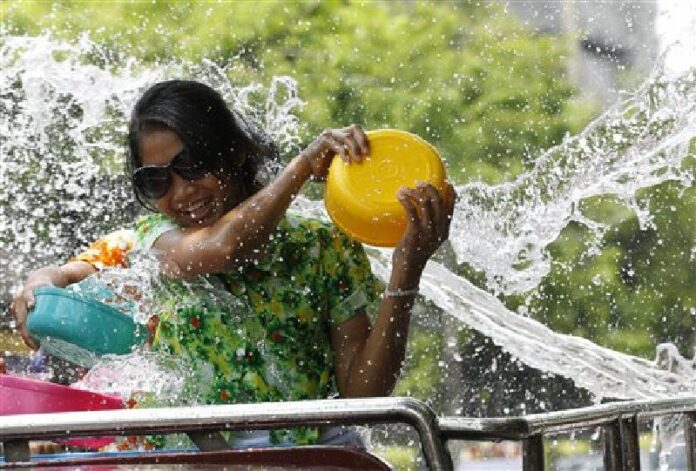
In this April 13, 2015 file photo, a woman splashes water on people from the back of a truck during the Songkran water festival in Bangkok. Photo: Sakchai Lalit / Associated Press

BANGKOK — Drought? What drought? Bring out the water guns!

Thailand may be going through its driest period in 20 years. But the country's military government wants visitors from around the globe to know that the biggest water fight in the world is still on.

So, get your buckets, hoses and other gear ready for the three-day nationwide street party that begins Wednesday to mark the Thai New Year.

"We can still use water for the new year festival. It's not that dry," said a government spokesman, Sansern Kaewkamnerd. The government has instructed the Tourism Ministry to make sure foreign tourists don't misunderstand the severity of the drought and cancel holiday plans out of concerns the water supply will be cut off, he said.

After all, there are millions of dollars at stake.

The Tourism Authority of Thailand expects this year's holiday will generate more than 15 billion baht (USD$427 million) for the tourism sector and attract half a million visitors in a span of five days.

Songkran is a major tourist attraction. Revelers line the streets, or prowl the roads in pickup trucks, armed with water guns and plastic bowls and douse anyone in sight. Some areas are closed to traffic for wet and wild street parties with loud music, booze and dancing.

\

In this April 13, 2014 file photo, a foreign tourist holds a water gun as she takes part in a water fight during traditional Thai New Year celebrations or Songkran festival in Chiang Mai province, northern Thailand. Photo: Apichart Weerawong / Associated Press

Rare controversy has preceded this year's water fight, with environmentalists and other critics calling for festivities to be curtailed.

"Instead of mindlessly wasting water, New Year revelers should be mindful of the crushing drought," a local newspaper said in an editorial last week calling for "a dry Songkran" to show solidarity with the country's farmers.

Twenty seven of Thailand's 77 provinces have been declared drought zones with the lowest level of rainfall in more than two decades. Farmers have been ordered to curtail their water use and scale back planting. Tap-water rationing is in effect in certain provinces.

And yet Thailand's military government is playing down the dry spell and says it is powerless to crimp such a popular national holiday.

"As the prime minister has said, Songkran brings happiness to the Thai people, and canceling it would be too difficult," Sansern said.

A ban would also be hugely unpopular both with Thais and tourists.

In past promotions, the tourism authority has played up the party scene, urging tourists "to get wet and wild" and "be part of the largest street water fight the world has to offer." In 2011, TAT used the holiday to organize a Guinness World Record attempt for the world's largest water pistol fight, drawing more than 3,400 people to a 10-minute shootout in central Bangkok.

The prime minister, a former general who has dictatorial powers after toppling a civilian government in 2014, has bristled at the notion of canceling Songkran.

"I will not ban water throwing, that's impossible," Prayuth Chan-ocha, the prime minister, said in response to a proposal for government controls on holiday water use. He added dismissively, "Parents should teach their children to use less water and not splash it around for three days and three nights."

Prayuth is calling for strict measures this year during the festivities, but not related to water rationing. The junta is putting a damper on dancing and indecent attire, saying specifically that women and trans-genders who show too much skin will face arrest.

"I have told officials, police and soldiers that there should be no women — or transgender women — dressed provocatively or dancing on the backs of trucks," Prayuth said. "If they do, they will be arrested."

Environmentalists say the government should get its priorities straight.

"The government should tell people the truth that the drought is bad. They should not try to cover up the truth," said Smith Thammasaroj, chairman of the Foundation of National Disaster Warning Council. "If people keep thinking we have enough water, it could badly hurt agriculture and farmers."

"They shouldn't worry about clothing and covering up the body," he said. "They should worry about the drought."

Some cities, including Bangkok, have taken it upon themselves to dilute this year's festivities.

Bangkok city hall has ordered a 9 p.m. curfew on water fights and is trying to keep the festival to three days, excluding the weekend — measures that it says will save 5 billion liters of water.

Chief adviser to the Bangkok governor, Wanlop Suwandee, made a highly publicized proposal that party goers put down their guns and instead use handheld spray bottles, the kind that one uses on indoor plants to make leaves wet.

\

In this April 10, 2016 photo, vendors stand near water pistols as they wait for customers in Bangkok. Photo: Sakchai Lalit / Associated Press

The idea struck many as laughable in a city where water guns are not mere pistols, but large pump machine guns often with water storage tanks worn as backpacks.

A 22-year old university student, Krit Pongchaiassawin, said he has no plan to enter into battle firing a gentle mist.

"Are you kidding me?" said Krit, while shopping for a water gun at a Bangkok outdoor market. "I would get laughed off the street if I had a spray bottle. People would see that and just dump more water on me."

Story: Jocelyn Gecker / Associated Press 


Related stories:

‘Sexist’ Songkran Safety Posters Removed by Police

Women Will Be Arrested For Indecency During Songkran, Prayuth Says

Thaksin Tells Junta to Mind the Drought, Not His New Year Gifts

Chinese Dams Blamed for Exacerbating Southeast Asian Drought 

Songkran Will Go On Despite Drought: Tourism Authority 


Advertisement

‘Sexist’ Songkran Safety Posters Removed by Police

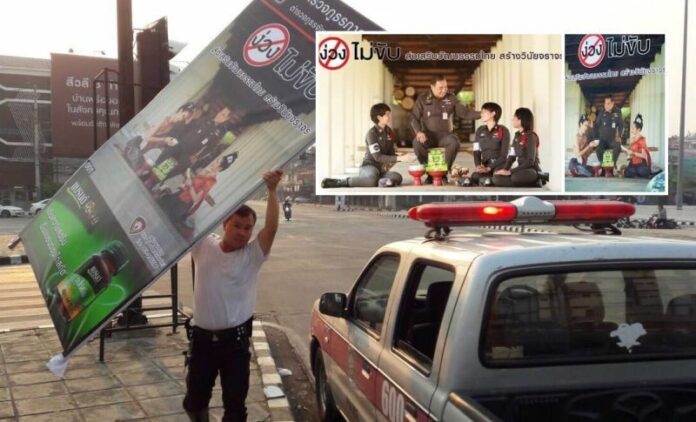
A controversial poster being taken away by a police officer on Sunday in Chiang Mai city

CHIANG MAI — Posters campaigning for safe driving during the Songkran holidays issued by Chiang Mai police were taken away on Sunday after receiving criticism for being sexist.

Posters put up around Chiang Mai city since Friday to promote road safety during Songkran were removed after they were criticized by netizens and gender activists.

The two sets of billboards feature the chief of Police Region 5 in Chiang Mai city Lt.Gen. Thanitsak Theerasawat. In one poster Thanitsak is sitting on a bench with two women clad in traditional Thai costumes sitting at his feet. Another poster features the same police chief with three woman police officers kneeling beside him.

Both billboard campaigns read “No drowsy driving. Promote Thai culture and traffic discipline” and show Thanitsak touching the women while receiving a blessing from them.

“It obviously shows gender inequality. Plus, the billboards didn’t convey any messages,” gender rights activist Wipa Daomanee said by phone Monday morning.

“Why do the younger people have to be only women? If they want to promote a respect for seniority in Thai culture, they could’ve portrayed grandparents with their grandchildren,” the independent scholar said.
 

559000003794801.JPEG
 

Chiang Mai Traffic Police apologized online on Sunday for the ‘inappropriate’ depictions while Chiang Mai Provincial Police explained on their Facebook page on the same day that the signs were full with good intentions. The provincial police threatened those who have criticized the signboards.

“[We] intended to campaign to reduce road accidents and preserve revered Thai culture — respecting seniority. However, the signs have been posted and shared online which caused a lot of misunderstanding towards our objective,” the post reads. “[We’re] asking those to ‘stop doing such behavior’ because some comments were found distorting our intention and violating the Computer Crime Act and Criminal Code.”
 

559000003794803.JPEG
 

Related stories

Breaking the Brass Ceiling: First Women Tapped to Top Police Posts


Advertisement

Court Reinstates Anti-Junta Thammasat Historian Somsak

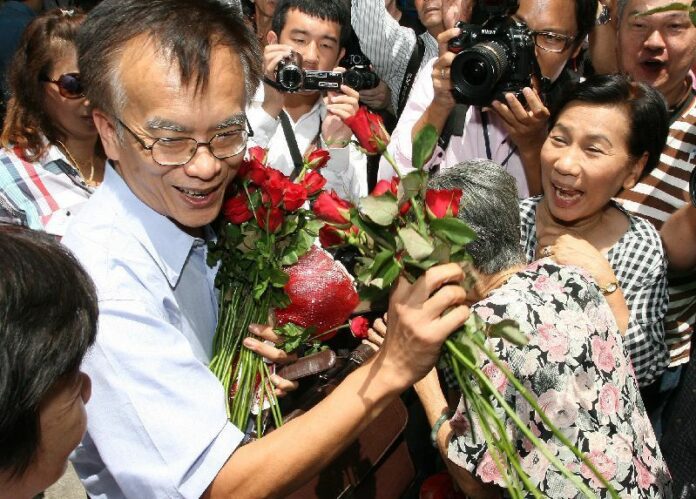
Somsak Jeamteerasakul receives flowers from crowds of supporters after he reported to the police for the lese majeste complaint filed against him by the Thai army, 11 May 2011.

By Pravit Rojanaphruk
Senior Staff Writer

BANGKOK — The Central Administrative Court today ruled that the dismissal of exiled Thammasat University history professor Somsak Jeamteerasakul by his employer was unlawful, thus reinstating Somsak’s status as a lecturer at Thammasat.

The court ruled that Somsak, 57,  had no intention to abandon his duties, therefore his dismissal was unlawful.

Somsak, known for his anti-junta and critical stance on the monarchy, fled to France in the aftermath of the May 2014 coup. He maintains a large following on Facebook. His lawyer, Pawinee Chumsri of Thai Lawyers for Human Rights Group told Khaosod English that it’s unlikely he would return to Thailand anytime soon, however.

“Somsak has received asylum seeker status [in France] as his life [in Thailand] is in danger,” said Pawinee, referring to a threat against Somsak’s life before the coup. Somsak’s refusal to report himself to the National Council for Peace and Order (NCPO) soon after the coup carries a two-year maximum prison term and there is also a lese majeste case against him for a 2013 television interview that’s still sitting at the Office of the Attorney General.

Pawinee, said the best Somsak can hope for is that the university to accepts his resignation, a move that would offer Somsak some financial benefit. Somsak submitted a resignation letter to Thammasat on 19 December 2014 but the university claimed that by then he was already being investigated for his failure to report to work after the coup and they resolved to fire him.

To be valid under university regulations any resignation letter must have been filed 15 days prior to his departure.

It’s unclear if the university would lodge an appeal to the Supreme Administrative Court, said Pawinee. Pawinee said unfortunately, the court’s ruling today did not take Somsak’s precarious situation into consideration as a factor for Somsak not being able to return to Thailand to teach.

Somsak could not be reached for comment at the time of publication owing to the time difference between France and Thailand.  

Related stories:

Ruling in Somsak Jeam v. Thammasat Shelved Indefinitely

Thammasat Dismissed Somsak Jeam Unfairly, Judge Agrees

Monarchy Critic Faces Charge for 2013 Interview


Pravit Rojanaphruk can be reached at [email protected] and @PravitR.


\

Advertisement

Court Reinstates Anti-Junta Thammasat Historian Somsak

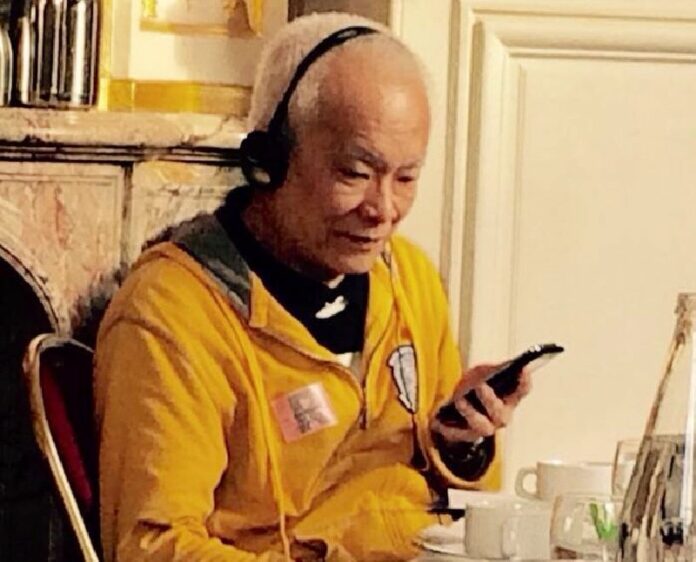
Somsak Jeamteerasakul April 5, 2016, at the French Senate, Paris, France. Photo: Pavin Chachavalpongpun / Facebook

By Pravit Rojanaphruk
Senior Staff Writer

BANGKOK — The Central Administrative Court today ruled that the dismissal of exiled Thammasat University history professor Somsak Jeamteerasakul by his employer was unlawful, thus reinstating Somsak’s status as a lecturer at Thammasat.

The court ruled that Somsak, 57,  had no intention to abandon his duties, therefore his dismissal was unlawful.

Somsak, known for his anti-junta and critical stance on the monarchy, fled to France in the aftermath of the May 2014 coup. He maintains a large following on Facebook. His lawyer, Pawinee Chumsri of Thai Lawyers for Human Rights Group told Khaosod English that it’s unlikely he would return to Thailand anytime soon, however.

“Somsak has received asylum seeker status [in France] as his life [in Thailand] is in danger,” said Pawinee, referring to a threat against Somsak’s life before the coup. Somsak’s refusal to report himself to the National Council for Peace and Order (NCPO) soon after the coup carries a two-year maximum prison term and there is also a lese majeste case against him for a 2013 television interview that’s still sitting at the Office of the Attorney General.

Pawinee, said the best Somsak can hope for is that the university to accepts his resignation, a move that would offer Somsak some financial benefit. Somsak submitted a resignation letter to Thammasat on 19 December 2014 but the university claimed that by then he was already being investigated for his failure to report to work after the coup and they resolved to fire him.

To be valid under university regulations any resignation letter must have been filed 15 days prior to his departure.

It’s unclear if the university would lodge an appeal to the Supreme Administrative Court, said Pawinee. Pawinee said unfortunately, the court’s ruling today did not take Somsak’s precarious situation into consideration as a factor for Somsak not being able to return to Thailand to teach.

Somsak could not be reached for comment at the time of publication owing to the time difference between France and Thailand.  

Related stories:

Ruling in Somsak Jeam v. Thammasat Shelved Indefinitely

Thammasat Dismissed Somsak Jeam Unfairly, Judge Agrees

Monarchy Critic Faces Charge for 2013 Interview


Advertisement

World's Wild Tiger Count Rising for First Time Since 1900

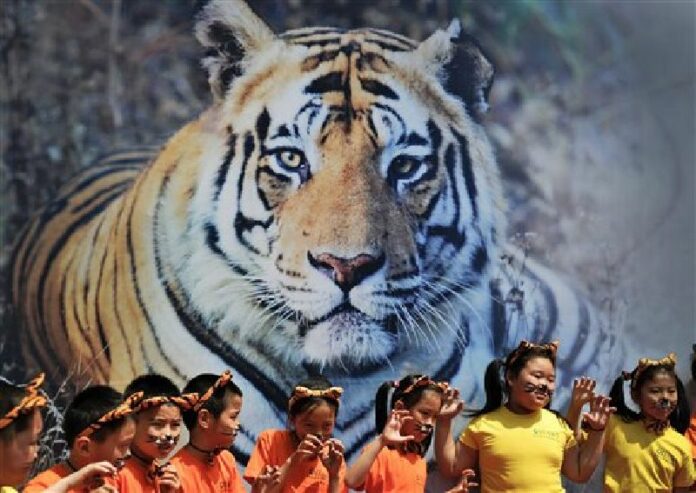
In this May 29, 2010, file photo, school children with tiger's ears headband gesture in front of a tiger poster during an event to encourage people to protect the endangered wild tiger species around Asia countries held at the National Animal Museum in Beijing, China. Photo: Andy Wong / Associated Press

NEW DELHI — The world's count of wild tigers roaming forests from Russia to Vietnam has gone up for the first time in more than a century, with 3,890 counted by conservation groups and national governments in the latest global census, wildlife conservation groups said Monday.

The tally marks a turnaround from the last worldwide estimate in 2010, when the number of tigers in the wild hit an all-time low of about 3,200, according to the World Wildlife Fund and the Global Tiger Forum.

India alone holds more than half of the world's tigers, with 2,226 tigers roaming reserves across the country, from the southern tip of Kerala state to the eastern swamps in West Bengal, according to its last count in 2014.

But while experts said the news was cause for celebration, they stopped short of saying the number of tigers itself was actually rising. In other words, it may just be that experts are aware of more tigers, thanks to better survey methods and more areas being surveyed.

Still, this is the first time tiger counts are increasing since 1900, when there were more than 100,000 tigers in the wild.
"More important than the absolute numbers is the trend, and we're seeing the trend going in the right direction," said Ginette Hemley, senior vice president of wildlife conservation at WWF.

The global census, compiled from national tiger surveys as well as the International Union for Conservation of Nature, was released a day before ministers from 13 countries meet for three days in New Delhi.

\

In this photo provided by the Cincinnati Zoo & Botanical Garden, a captive tiger that is being protected under a rule issued by Fish and Wildlife Service. Photo: Michael W. Dulaney / Cincinnati Zoo & Botanical Garden / Associated Press

The countries teamed up with conservation groups after the disappointing count in 2010, and pledged to double wild tiger numbers by 2022. Hollywood actor Leonardo DiCaprio joined the effort.

"Tigers are some of the most vital and beloved animals on Earth," DiCaprio said in a statement. "I am so proud that our collective efforts have begun to make progress toward our goal, but there is still so much to be done."

Not all nations are yet seeing progress. While Russia, India, Bhutan and Nepal all counted more tigers in their latest surveys, Southeast Asian countries have struggled. They are also behind the others in conservation measures, and do not yet conduct a tiger census on their own.

"When you have high-level political commitments, it can make all the difference," Hemley said. "When you have well protected habitat and you control the poaching, tigers will recover. That's a pretty simple formula. We know it works."

Cambodia is looking at reintroducing tigers after recently declaring them functionally extinct within its borders, meaning there are no longer any breeding tigers in the wild. Indonesia has also seen a rapid decline, thanks to having the world's highest rate of forest destruction to meet growing demand for producing palm oil as well as pulp and paper.

Tigers are considered endangered species, under constant threat from habitat loss and poachers seeking their body parts for sale on the black market. They are also seeing their habitats rapidly shrinking as countries develop.

The global tiger count is based on data from 2014. Here is the tally broken down by country:

Bangladesh, 106; Bhutan, 103; Cambodia, 0; China, more than 7; India, 2,226; Indonesia, 371; Laos, 2; Malaysia, 250; Myanmar, no data available; Nepal, 198; Russia, 433; Thailand, 189; Vietnam, fewer than 5.

The experts said the Myanmar government count of 85 tigers in 2010 was not included because the data was considered out of date.

Story: Katy Daigle / Associated Press


Related stories: 

Cambodia to Repopulate Forests With Tigers From Abroad 

5 More Big Cats Removed from ‘Tiger Temple’


Advertisement

Burj Khalifa Builder Plans Taller Tower

A model of the Tower Project at Dubai Creek Harbour Development designed by Spanish-Swiss architect Santiago Calatrava Valls, in Dubai, United Arab Emirates, Sunday, April 10, 2016. Photo: Kamran Jebreili

DUBAI, United Arab Emirates — Dubai is reaching for the sky once again, with the developer of the world's tallest building vowing Sunday to build an even taller tower bedecked with rotating balconies and elevated landscaping inspired by the mythical hanging gardens of Babylon.

The government-backed company behind the project, Emaar Properties, hopes the new tower will entice a fresh wave of view-seeking homeowners even as it raises numerous other promised skyscrapers and repairs a prominent one gutted by fire on New Year's Eve.

Company Chairman Mohamed Alabbar said the new observation tower would be "a notch" taller than the 828-meter Burj Khalifa. Just how much taller he wouldn't say.

Unlike the Burj Khalifa, the new USD$1 billion tower will not be a traditional skyscraper but more of a cable-supported spire containing "garden" observation decks graced with trees and other greenery. Emaar says it will also contain a boutique hotel, restaurants and glass balconies that rotate outside the wall of the tower.

The structure's design means it is unlikely to be widely recognized as a taller "building" than the Burj Khalifa even if it surpasses it in height.

The Chicago-based Council on Tall Buildings and Urban Habitat, for example, says at least 50 percent of a structure's height must contain usable floor area for it to be considered in its ranking of the world's tallest buildings. That typically disqualifies telecommunications and observation towers that have only a small number of floors.

It and the Burj Khalifa could also be surpassed by a skyscraper being built in Jiddah, Saudi Arabia, that promises to rise more than 1 kilometer high.

The new Dubai tower will be the centerpiece of a new 6 square-kilometer development on the edge of the Dubai Creek, near a protected wildlife sanctuary that regularly attracts flamingoes and other water birds.

Alabbar likened the structure, designed by Spanish-Swiss architect Santiago Calatrava Valls, to a 21st-century Eiffel Tower that can act as a magnet not just for tourists but also for property buyers willing to pay a premium for nearby apartments with a view. It is due to open by the time Dubai hosts the World Expo in 2020.

"Many … of our customers would like to have that view. And if you ask me what is the financial model, that is the financial model," he said.

Emaar followed a similar strategy when it raised the Burj Khalifa, which opened in 2010. The silvery skyscraper is flanked by fancy low and high-rise apartment complexes, some of which are still being built, as well as hotels, restaurants and one of the world's biggest shopping malls.

The area is also home to The Address Downtown, a 63-story luxury hotel built by Emaar that went up in flames on New Year's Eve.

Dubai police have blamed exposed wiring for sparking the blaze. Outside experts say the type of cladding used to sheath the building was likely a factor in fueling that fire and several others that have engulfed skyscrapers in the United Arab Emirates.

Emirati authorities have ordered a nationwide safety survey of existing buildings and promised to tighten regulations in the wake of the fire.

Asked about fire risks Sunday, Alabbar said it was important to learn from the accidents but suggested there are limits to how much builders can do.

"Safety rules are good, but can you really eliminate all risk? I don't think human beings are able to eliminate all risk," he told reporters. "Risks are there as long as we are progressing … These things do happen, and you have to go and fix them and make sure if they happen, they happen to a minimum."

Story: Adam Schrek / Associated Press


Related stories: 

Thai Flag to Fly the Highest Atop Record-Shattering Pole


Advertisement

Swedes Invite World to Call 'Random' Citizens on New Hotline

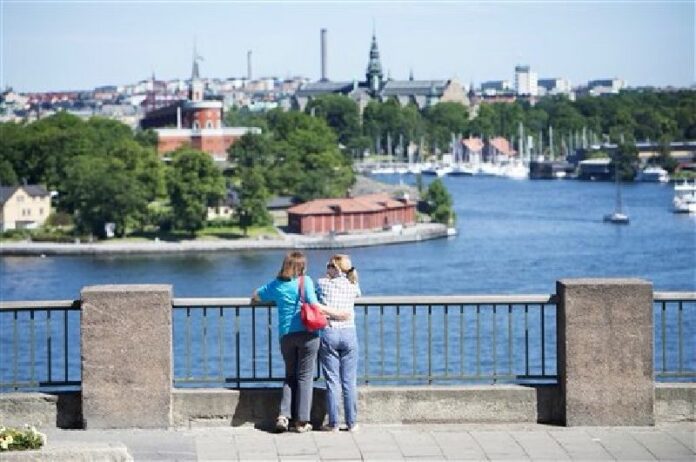
In this July 2, 2015 file photo, tourists looking at a view of Stockholm. Photo: Jessica  Gow / Associated Press

STOCKHOLM — Ever felt like calling up a complete stranger in Sweden?

Now is your chance.

The Swedish Tourist Association has set up a hotline that lets callers worldwide "get connected to a random Swede."

On its website, the nonprofit group says the idea is "to spark people's curiosity about Sweden — our culture, nature and mindset. To help us do this, we have the people of Sweden."

It's not completely random. The Swedes who take the calls have volunteered by downloading an app. But they are not vetted or given any instructions about what to say.

"It's like when Swedes travel the world. You don't know who they're going to talk to and what they're going to say," said Magnus Ling, the head of the Swedish Tourist Association.

About 3,000 people had dialed the "Swedish Number" by midday Thursday, a day after it was launched, and roughly the same number of Swedes had signed up to answer calls, Ling said.

The website says the initiative honors the 250th anniversary of Sweden's 1766 Freedom of the Press Act, believed to be the world's first law supporting the freedom of expression.

Ling admitted there was another motive: recruiting members to the tourism association, which is funded through membership fees. Swedes who sign up to receive calls will receive an email inviting them to join the group, he said.

The calls are not monitored but they are recorded, "so that if someone says I was threatened or harassed we can go back and see who it was and even block that number," Ling said.

The website didn't say that calls are recorded when AP checked it Thursday. Ling said it was listed in the user terms, which those answering the calls — but not those making them — must agree to. He later called back saying the information would be added to the FAQ section of the website.

The biggest number of incoming calls has come from Turkey. Ling said he didn't know why, but thought it had to do with the initiative getting attention there both in traditional media and social media.

After signing up to test the service, this Stockholm-based AP reporter received four calls, about one an hour. The first was a woman from Turkey with limited English skills. The second hung up. The third was an engineering student from Britain. And the fourth was another journalist: Tim Nudd, creative editor at Adweek in New York.

"I just wanted to call and see how this whole thing works," said Nudd.

He, too, was writing an article about it.

The hotline follows a similar initiative on Twitter by the Swedish Institute, the government's own PR agency. Since 2011 it lets a different Swedish citizen manage its official @Sweden account every week.

Ling said the feedback he had received on the hotline was almost all positive, though he said a small number of callers were just trying to hook up with Swedish women.

"I've heard of just one or two such calls," Ling said.

Story: Karl Ritter / Associated Press

Advertisement

Charter Vote a Time Bomb in the Making

The symbolic representation of democracy and the Thai Constitution, which sits atop the Democracy Monument in Bangkok

By Pravit Rojanaphruk
Senior Staff Writer

\

If not handled fairly, the referendum on the junta-sponsored draft charter could light the fuse of a political time bomb rather than be the solution some hope it will prove.

In truth, the vote now planned for Aug. 7 looks increasingly to also be a de facto referendum on the junta, aka the National Council for Peace and Order, itself.

\For its part, the junta through its subordinates has harassed and prevented Anurak Jeantawanich from freely campaigning against the charter, stifled debate by refusing to relax its ban of political gatherings, forbade a bookshop from discussing it, and more.

Such actions curb space for critical voices and fair debate on what will be the foundation of law in the land, therefore ensuring the referendum cannot be considered free and fair.

With just under four months to go before the promised vote, it will be too late come August unless immediate steps are taken to permit open and fair debate on its merits by allowing those calling for its rejection to campaign and deliberate.

Seeing charter supporters campaign freely, often with support from the military regime, while its opponents are silenced only makes a mockery of the referendum.

The climate of fear has reached the point where a veteran Thai election observation confided that he and his peers are still deliberating whether to express any concern about the process.

I told him the public vote has no chance of being free and fair if they wait until the last few weeks to speak out. If there are no voices pressuring the junta to allow free deliberation on the topic while there’s an ongoing crackdown, many may decide against holding such public discussions before trying, particularly those in rural areas, far from the spotlight and with no connections to save their skin.

At least a group of ambassadors and senior diplomats from 18 E.U. member states sent a clear message Thursday when they met Panyarak Poolthup, a deputy permanent secretary at the Foreign Ministry.

“E.U. Ambassadors called upon the Thai Government to uphold principles of freedom of expression and opinion, and allow all voices to be heard. This is of utmost importance for the referendum in order to be considered the result of a free and fair expression of the will of all people of Thailand and to be accepted,” it read.

Another equally troubling factor is that the junta still won’t show its cards regarding what the Thai people will get if they reject the draft charter, already denounced as undemocratic by many groups including the well-known Nitirat group of law lecturers.

To make matters worse, the junta-appointed National Legislative Assembly resolved Thursday to push for a second question to be put to voters in the referendum. They want to ask voters whether members of the Senate, which will be largely and indirectly picked by the junta, to join the house of representatives in selecting the prime minister.

The military dictatorship is forcing people to choose between a charter of its own indirect concoction and an unknown drink which could be more hemlock than elixir of democracy. That they don’t bother laying out the choice fairly and squarely says a lot about their sincerity and honesty toward the Thai people. It’s no surprise that some, like poet Wad Ravi, are now calling this a phony referendum.

Why even bother holding a referendum if they are bent on ensuring it will not become free and fair?

It’s about legitimacy, or barring that, the perception of legitimacy, something the junta did not attain through the coup it staged in May 2014.

The rationale is that if the draft charter is endorsed by the electorate, it will give the impression of a mandate for the junta to share power with a post-election government comprised of elected MPs and those politicians in the Senate, which will be largely and indirectly appointed by the junta itself.

Even if the draft charter is shot down, junta leader Gen. Prayuth Chan-ocha still reserves the right to revive or combine different past charters and use his absolute (and illegitimate) power under Article 44 of the interim military charter to impose a Franken-constitution that could even be worse for everyone.

The current situation is more than a Catch-22 – it’s nothing short of a ticking time bomb that would be more likely to prolong and deepen the crisis already facing Thailand for another decade.

Thais, particularly the millions opposed to the coup, are virtually held hostage by the regime.

Instead of offering a real light at the end of the tunnel, the public is more likely to get a sham vote on a bogus ballot.

Advertisement

Hot News

LATEST NEWS

Bangkok
overcast clouds
28.3 ° C
31.6 °
28.3 °
77 %
4.2kmh
100 %
Wed
28 °
Thu
37 °
Fri
37 °
Sat
29 °
Sun
30 °