






























31.6 C
Bangkok
Monday, June 22, 2026
Home Blog Page 2951

Living With the Iran Nuclear Deal

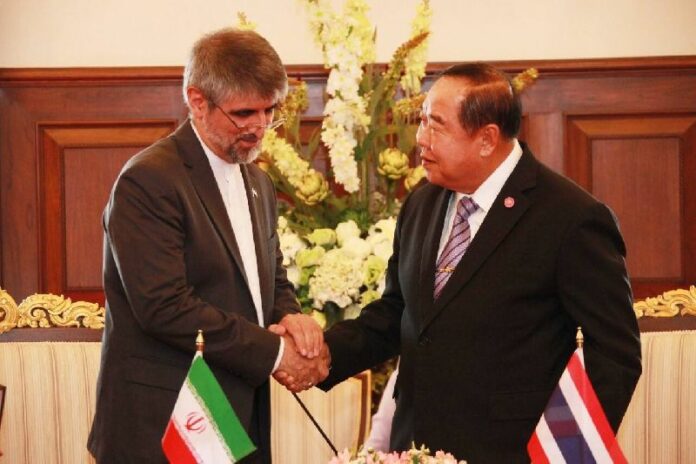
Iranian ambassador Hossein Kamalian meets with Thai Defense Minister Prawit Wongsuwan at the Government House in Bangkok, 14 May 2015.

By Richard N. Haass

NEW YORK – It is probable that after 60 days of intense debate in Washington, DC, and conceivably Tehran, the “Joint Comprehensive Plan of Action,” signed on July 14 by Iran and the UN Security Council’s five permanent members plus Germany (the P5+1), will enter into force. But no one should confuse this outcome with a solution to the problem of Iran’s nuclear ambitions or its contributions to the ongoing turmoil in the Middle East. On the contrary, depending on how it is implemented and enforced, the agreement could make matters worse.

This is not to suggest the JCPOA makes no contribution. It places a ceiling for the next decade on the quantity and quality of centrifuges Iran is allowed to operate and allows the country to possess only a small amount of low-enriched uranium for the next 15 years. The agreement also establishes, in US President Barack Obama’s words, a “where necessary, when necessary” inspections mechanism that has the potential to verify whether Iran is meeting these and other commitments.

The net result is that the accord should lengthen the period it would take Iran to produce one or more nuclear weapons from several months to as much as a year, making it more likely that such an effort would be discovered in time. The prospect that the JCPOA could keep Iran without nuclear weapons for 15 years is its main attraction. Sanctions alone could not have accomplished this, and using military force would have entailed considerable risk with uncertain results.

On the other hand (there always is another hand in diplomacy), the agreement permits Iran to keep far more nuclear-related capacity than it would need if it were interested only in civil research and in demonstrating a symbolic ability to enrich uranium. The agreement also provides Iran with extensive relief from economic sanctions, which will fuel the regime’s ability to support dangerous proxies throughout the Middle East, back a sectarian government in Baghdad, and prop up Syrian President Bashar al-Assad’s regime.

Moreover, the accord does not rule out all nuclear-related research and does not constrain work on missiles. Sales of ballistic missiles and missile parts to Iran are banned for no more than eight years. Sales of conventional arms to Iran are prohibited for no more than five years.

There is also the danger that Iran will fail to comply with parts of the agreement and undertake prohibited work. Given Iran’s record, this has understandably been the focus of much concern and criticism regarding the pact. What matters is that non-compliance be met with renewed sanctions and, if needed, military force.

A bigger problem has received much less attention: the risk of what will happen if Iran does comply with the agreement. Even without violating the accord, Iran can position itself to break out of nuclear constraints when the agreement’s critical provisions expire. At that point, there will be little to hold it back except the Nuclear Nonproliferation Treaty, a voluntary agreement that does not include penalties for non-compliance.

It is important that the United States (ideally, joined by other countries) let Iran know that any action to put itself in a position to field nuclear weapons after 15 years, though not explicitly precluded by the accord, will not be tolerated. Harsh sanctions should be reintroduced at the first sign that Iran is preparing a post-JCPOA breakout; this, too, is not precluded by the accord.

Iran should likewise be informed that the US and its allies would undertake a preventive military strike if it appeared to be attempting to present the world with a fait accompli. The world erred in allowing North Korea to pass the nuclear-weapons threshold; it should not make the same mistake again.

In the meantime, a major effort must be launched to assuage the concerns of Iran’s neighbors, several of which will be tempted to hedge their bets against Iran’s potential breakout in 15 years by pursuing nuclear programs of their own. The Middle East is already nightmarish enough without the added risks posed by a number of would-be nuclear powers. Obama’s claim that the agreement has “stopped the spread of nuclear weapons in this region” is premature, at best.

It will also be essential to rebuild strategic trust between the US and Israel; indeed, this will need to be a high priority for Obama’s successor. And the US should push back as warranted against Iran’s foreign policy or treatment of its own people.

None of this rules out selective cooperation with Iran, be it in Afghanistan, Syria, or Iraq, if interests overlap. But here, too, realism should prevail. The notion that the nuclear agreement will lead Iran to moderate its radicalism and rein in its strategic ambitions should not be anyone’s baseline scenario. In fact, the emergence of an ever more capable Iran, not a transformed one, is likely to be one of the main challenges confronting the Middle East, if not the world, in the coming years.

Richard N. Haass is President of the Council on Foreign Relations. 

Copyright: Project Syndicate, 2015.
www.project-syndicate.org
Advertisement

Journalists Sued by Thai Navy Optimistic After First Day of Trial

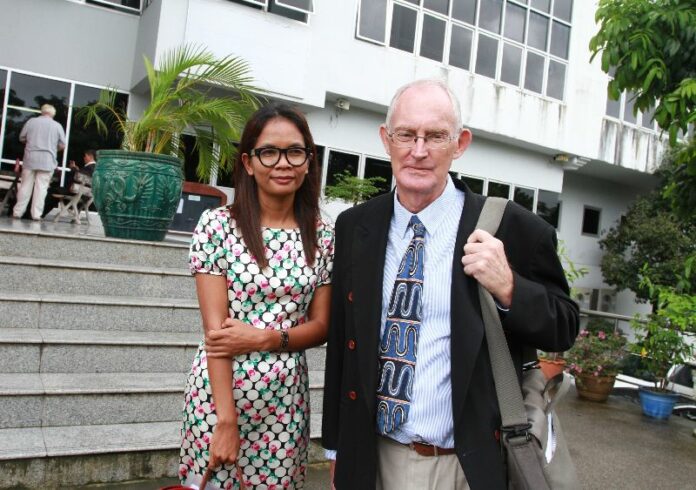
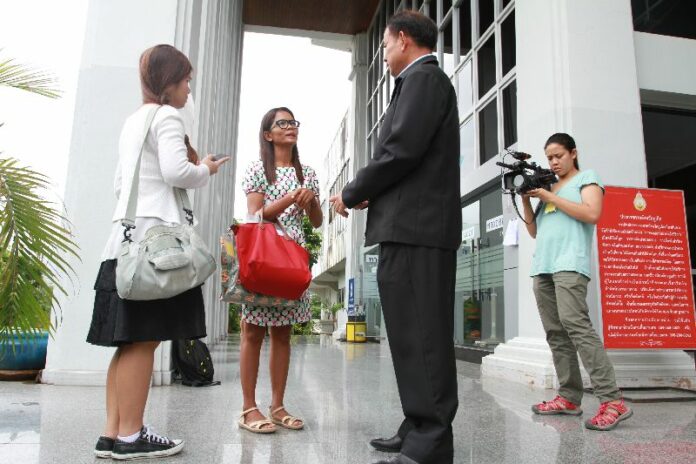
Phuketwan journalist Chutima Sidasathian (center) speaking to reporters outside of Phuket's provincial court on 14 July 2015.

BANGKOK – The two journalists facing a defamation lawsuit filed by the Royal Thai Navy said they were hopeful after the first day of their trial concluded on Tuesday.

Naval officers sued Thai reporter Chutima Sidasathian and her Australian colleague, Alan Morison, over an article the pair published in July 2013 on the local news website Phuketwan. The article carried excerpts from a Reuters report that accused "Thai naval forces" of accepting bribes in exchange for protecting human traffickers who smuggled Rohingya Muslims from Myanmar into southern Thailand.

The journalists are facing up to seven years in prison for charges of libel and violating Thailand’s Computer Crime Act.

In the lawsuit, the navy said the two Phuket-based journalists defamed the navy by publishing the following paragraph from the Reuters report:

"'The Thai naval forces usually earn about 2000 baht per Rohingya for spotting a boat or turning a blind eye, said the smuggler, who works in the southern Thai region of Phang Nga [north of Phuket] and deals directly with the navy and police."

Chutima said her lawyer cross-examined a high-ranking navy officer in court today, and pointed out that the paragraph did not explicitly refer to the Thai Navy.

According to Chutima, the navy officer admitted that the phrase "naval forces" could be used to describe other security agencies that use maritime vessels, such as the Internal Security Operation Command or other local bodies.

"I have hope that we will be acquitted," Chutima told Khaosod English after the court hearing concluded. "It was clear that the paragraph does not directly refer to the Royal Thai Navy." 

Chutima and Morison are scheduled to return to court tomorrow and take the stand as defendants. They will call witnesses to testify in their defense on 16 July.

One of the witnesses due to testify in court is a former lawmaker who helped draft Computer Crime Act, which outlaws entering any information into a computer system that is false, affects national security, causes panic, or destroys the "good morality of the people."

"The witness will tell the court that the purpose of the Computer Crime Act is not to be used as a libel law," Chutima explained. "We want to show that the law has been abused to silence people. Today we are not only defending ourselves as the defendants in the court. We are doing it on behalf of all media agencies and all people in Thailand. It's an awful law. Whenever someone is displeased by someone else, they use Computer Crime Act alongside libel law against their opponents." 

Passed by an interim parliament under the rule of a military government in 2007, the Computer Crime Act’s broad and vague language has been criticized by rights activists for restricting free speech. The law is often used in tandem with Section 112 of the Criminal Code, which punishes criticizing the monarchy with up to 15 years in prison.

In the weeks leading up to the trial, a number of human rights organizations have petitioned junta chairman and Prime Minister Prayuth Chan-ocha, who seized power from an elected government last May, to ask the navy to drop the charges against Morison and Chutima.

In a statement, the deputy director of Human Rights Watch's Asia division, Phil Robertson, described the lawsuit as an effort to intimidate journalists. 

"The real message of this trial to Thailand's journalists is report at your own risk because big brother in Bangkok is watching," Robertson said. "But fortunately, when they went after Alan and Chutima, the Navy and the ruling military junta came up against two courageous journalists who are not afraid to fight for their principles.  They deserve the international community's unstinting support. They certainly have Human Rights Watch's support." 

The verdict is expected to be handed down within the next 30 days. 


For comments, or corrections to this article please contact: [email protected]

You can also find Khaosod English on Twitter and Facebook
http://twitter.com/KhaosodEnglish
http://www.facebook.com/KhaosodEnglish

Advertisement

Journalists Sued by Thai Navy Optimistic After First Day of Trial

Phuketwan journalists Chutima Sidasathian and Alan Morrison at Phuket's provincial court on 14 July 2015.

BANGKOK – The two journalists facing a defamation lawsuit filed by the Royal Thai Navy said they were hopeful after the first day of their trial concluded on Tuesday.

Naval officers sued Thai reporter Chutima Sidasathian and her Australian colleague, Alan Morison, over an article the pair published in July 2013 on the local news website Phuketwan. The article carried excerpts from a Reuters report that accused "Thai naval forces" of accepting bribes in exchange for protecting human traffickers who smuggled Rohingya Muslims from Myanmar into southern Thailand.

The journalists are facing up to seven years in prison for charges of libel and violating Thailand’s Computer Crime Act.

In the lawsuit, the navy said the two Phuket-based journalists defamed the navy by publishing the following paragraph from the Reuters report:

"'The Thai naval forces usually earn about 2000 baht per Rohingya for spotting a boat or turning a blind eye, said the smuggler, who works in the southern Thai region of Phang Nga [north of Phuket] and deals directly with the navy and police."

Chutima said her lawyer cross-examined a high-ranking navy officer in court today, and pointed out that the paragraph did not explicitly refer to the Thai Navy.

According to Chutima, the navy officer admitted that the phrase "naval forces" could be used to describe other security agencies that use maritime vessels, such as the Internal Security Operation Command or other local bodies.

"I have hope that we will be acquitted," Chutima told Khaosod English after the court hearing concluded. "It was clear that the paragraph does not directly refer to the Royal Thai Navy." 

Chutima and Morison are scheduled to return to court tomorrow and take the stand as defendants. They will call witnesses to testify in their defense on 16 July.

One of the witnesses due to testify in court is a former lawmaker who helped draft Computer Crime Act, which outlaws entering any information into a computer system that is false, affects national security, causes panic, or destroys the "good morality of the people."

"The witness will tell the court that the purpose of the Computer Crime Act is not to be used as a libel law," Chutima explained. "We want to show that the law has been abused to silence people. Today we are not only defending ourselves as the defendants in the court. We are doing it on behalf of all media agencies and all people in Thailand. It's an awful law. Whenever someone is displeased by someone else, they use Computer Crime Act alongside libel law against their opponents." 

Passed by an interim parliament under the rule of a military government in 2007, the Computer Crime Act’s broad and vague language has been criticized by rights activists for restricting free speech. The law is often used in tandem with Section 112 of the Criminal Code, which punishes criticizing the monarchy with up to 15 years in prison.

In the weeks leading up to the trial, a number of human rights organizations have petitioned junta chairman and Prime Minister Prayuth Chan-ocha, who seized power from an elected government last May, to ask the navy to drop the charges against Morison and Chutima.

In a statement, the deputy director of Human Rights Watch's Asia division, Phil Robertson, described the lawsuit as an effort to intimidate journalists. 

"The real message of this trial to Thailand's journalists is report at your own risk because big brother in Bangkok is watching," Robertson said. "But fortunately, when they went after Alan and Chutima, the Navy and the ruling military junta came up against two courageous journalists who are not afraid to fight for their principles.  They deserve the international community's unstinting support. They certainly have Human Rights Watch's support." 

The verdict is expected to be handed down within the next 30 days. 


For comments, or corrections to this article please contact: [email protected]

You can also find Khaosod English on Twitter and Facebook
http://twitter.com/KhaosodEnglish
http://www.facebook.com/KhaosodEnglish

Advertisement

Man Gets One Year in Jail for Anarchist Graffiti

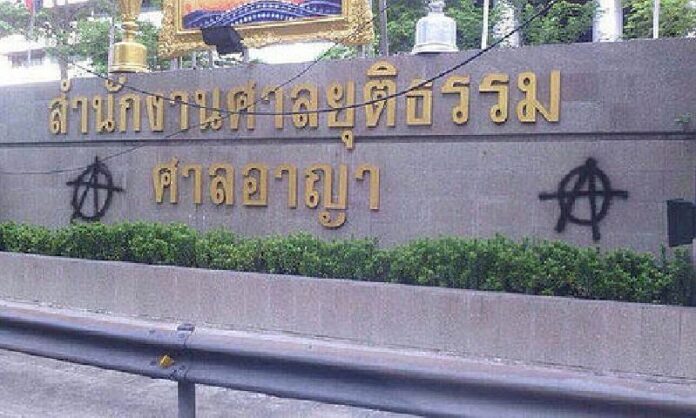
The anarchist symbol Nattapon Kemngoen confessed to spraying on the criminal court's entrance sign in Bangkok.

(Prachatai English)

BANGKOK – A Thai criminal court sentenced a 22-year-old to one year in prison for spray-painting an anarchist symbol on the court’s entrance sign in Bangkok.

Nattapon Kemngoen plead not guilty in court and was convicted this morning of destroying public property and violating the Public Cleanliness Act.

Read more here

Note: Khaosod English is not responsible for content on other websites.

Advertisement

Udon Thani Police Fine Models for Topless Pool Party

An advertisement for the pool party in Udon Thani province where 3 models were later fined for taking of their tops.

UDON THANI — Three models have been fined for taking off their tops at a pool party in northeastern Thailand.

Photos of the topless models were widely shared on social media this week, prompting police to investigate the incident.

Today the three women seen in the photos and the event’s organizer were summoned to Mueang Udon Thani Police Station to hear their charges. The women, who are in their early 20s, have been charged with indecent exposure, while the party’s organizer has been charged with selling alcohol without permission. 

The models confessed to stripping in front of the guests during the party at Milin Water Park and Restaurant on 27 March. They were fined 2,500 baht each by the police.

The organizer, Chaiya Saenboon, said he hired seven models from Bangkok to wear swim suits and entertain guests at the party, but did not order the models to take off their bathing suits. 

"The organizers did not tell them to show their breasts," Chaiya said at the police station. "I think it may be drunkenness that drove them to do that. Or they may have wanted tips." 

One of the models, who calls herself 'Guitar,' told police officers that she and her two colleagues were urged by the guests to expose themselves in exchange for tip money. She added that they were intoxicated at the time. 

"Everyone of us accepts the fault for our inappropriate action," said Guitar. "We would like to apologize."


For comments, or corrections to this article please contact: [email protected]

You can also find Khaosod English on Twitter and Facebook
http://twitter.com/KhaosodEnglish
http://www.facebook.com/KhaosodEnglish

Advertisement

Deep South Bombing Spree Continues, Killing One Ranger

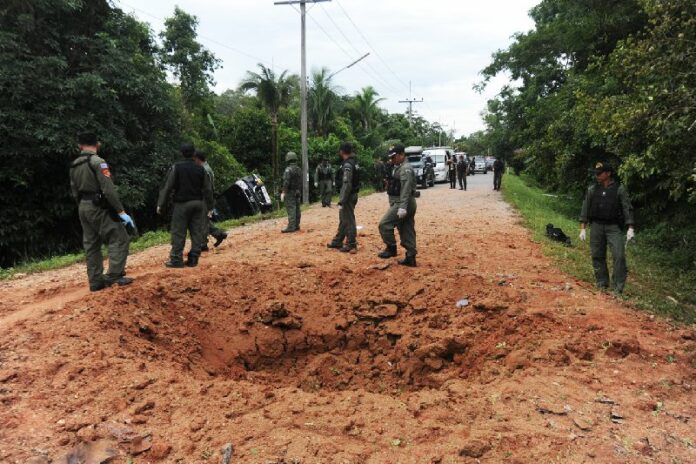
The crater caused by a roadside bomb in Narathiwat that killed one ranger and injured six others, 14 July 2015.

NARATHIWAT — A paramilitary ranger was killed and six more rangers were severely injured by a bomb in southern Thailand’s today, the latest in a spate of attacks that claimed six lives over the weekend.

Police said the rangers were traveling in Narathiwat province when a bomb exploded near their vehicle at around 8.50am. The explosive – made from 50 kg gas canister – destroyed the rangers’ pick-up truck and created a four-meter-wide crater in the road, police said. One ranger died and six others were severely injured.

According to police, the rangers were returning to their base after escorting a group of teachers to school, another frequent target of Muslim insurgents in the region. 

A police officer blamed the attack on "terrorists," referring to the separatists who have been waging a bloody campaign to secede Narathiwat and its neighboring provinces of Pattani and Yala from Thai authorities for the past decade. The secessionist violence also occasionally spills to the nearby province Songkhla – a popular destination for Thai and Malaysian tourists. 

Today's attack followed bombings in Songkhla, Narathiwat, and Yala over the weekend, targeting banks, restaurants, and hotels. The attacks killed six people, officials said. Police believe the bombings were organized by the insurgent network, though no arrest warrants have been issued. 

Yesterday two smaller bomb attacks also targeted security officers in Pattani province, wounding two soldiers and two rangers. A 47-year-old man was later shot and killed on the same day on Pattani-Narathiwat Road. Police said the assassination may be related to the insurgency, but more investigation is needed. 

\
Police inspect the scene of a bombing in Narathiwat city center, 14 July 2015.

More than 6,000 people have been killed since the latest wave of separatist violence broke out in the Muslim-majority region – known as the Deep South – in January 2004. The militants are have been fighting to revive the sultanate of Patani, which was annexed by Thailand in the early 20th century. 

Speaking to reporters yesterday, junta chairman and Prime Minister Prayuth Chan-ocha said that "80 percent" of people in the Deep South sympathize with the government, despite the recent uptick in violence. 

"It's normal that the other side refuses to stop," said Gen. Prayuth, who came to power by staging a coup in May 2014. "That side has many factions and groups. They have political and military factions, young generation and old generation factions. The older generation has been fighting us for a long time. They must be feeling exhausted. Some of them have entered a peace dialogue [with the government]. But the younger generation has been implanted with a chip of [violent struggle]. We have to reach understanding with them and reduce their violence." 

Gen. Prayuth also told reporters that his government will continue peace talks with the insurgents.

"We are talking with the leadership and coordinator level of different groups. Right now, many have joined the discussion. Even people who join it don't agree with each other. There's not much unity on their side … You cannot hope to finish this tomorrow or the day after tomorrow. The more we press them, the more they will pressure us with violence, because it's us who wants it to be over."

In a message for those behind the bombings, Gen. Prayuth added, "I am telling you today, the country has to stick together. If you have a problem, fix it through the legal process and the justice system. If you keep fighting, it will damage all of us." 

The elected government toppled by Gen. Prayuth in the May 2014 coup carried out several ground-breaking peace dialogues with one of the militant groups in 2013, but the process was derailed after six months of protests debilitated the central government, culminating in the military takeover. 


For comments, or corrections to this article please contact: [email protected]

You can also find Khaosod English on Twitter and Facebook
http://twitter.com/KhaosodEnglish
http://www.facebook.com/KhaosodEnglish

Advertisement

Deep South Bombing Spree Continues, Killing One Ranger

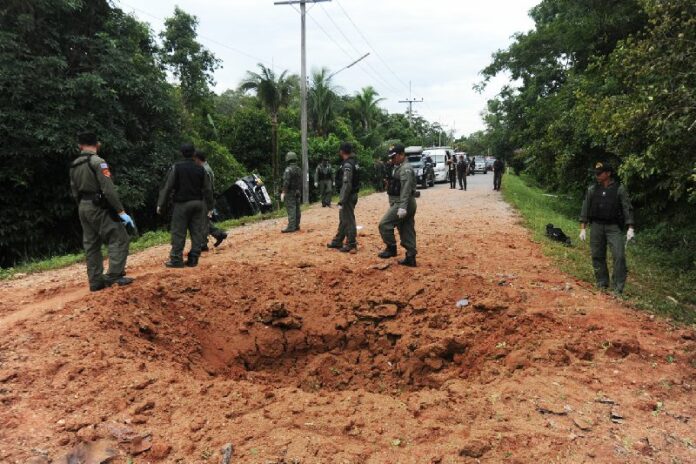
The crater caused by a roadside bomb in Narathiwat that killed one ranger and injured six others, 14 July 2015.

NARATHIWAT — A paramilitary ranger was killed and six more rangers were severely injured by a bomb in southern Thailand’s today, the latest in a spate of attacks that claimed six lives over the weekend.

Police said the rangers were traveling in Narathiwat province when the bomb exploded near their vehicle at around 8.50am. The explosive – made from 50 kg gas canister – destroyed the rangers’ pick-up truck and created a four-meter-wide crater in the road, police said. One ranger died and six others were severely injured.

According to police, the rangers were returning to their base after escorting a group of teachers to school, another frequent target of Muslim insurgents in the region. 

A police officer blamed the attack on "terrorists," referring to the separatists who have been waging a bloody campaign to secede Narathiwat and its neighboring provinces of Pattani and Yala from Thai authorities for the past decade. The secessionist violence also occasionally spills to the nearby province Songkhla – a popular destination for Thai and Malaysian tourists. 

Today's attack followed bombings in Songkhla, Narathiwat, and Yala over the weekend, targeting banks, restaurants, and hotels. The attacks killed six people, officials said. Police believe the bombings were organized by the insurgent network, though no arrest warrants have been issued. 

Yesterday two smaller bomb attacks also targeted security officers in Pattani province, wounding two soldiers and two rangers. A 47-year-old man was later shot and killed on the same day on Pattani-Narathiwat Road. Police said the assassination may be related to the insurgency, but more investigation is needed. 

\
Police inspect the scene of a bombing in Narathiwat city center, 14 July 2015.

More than 6,000 people have been killed since the latest wave of separatist violence broke out in the Muslim-majority region – known as the Deep South – in January 2004. The militants are have been fighting to revive the sultanate of Patani, which was annexed by Thailand in the early 20th century. 

Speaking to reporters yesterday, junta chairman and Prime Minister Prayuth Chan-ocha said that "80 percent" of people in the Deep South sympathize with the government, despite the recent uptick in violence. 

"It's normal that the other side refuses to stop," said Gen. Prayuth, who came to power by staging a coup in May 2014. "That side has many factions and groups. They have political and military factions, young generation and old generation factions. The older generation has been fighting us for a long time. They must be feeling exhausted. Some of them have entered a peace dialogue [with the government]. But the younger generation has been implanted with a chip of [violent struggle]. We have to reach understanding with them and reduce their violence." 

Gen. Prayuth also told reporters that his government will continue peace talks with the insurgents.

"We are talking with the leadership and coordinator level of different groups. Right now, many have joined the discussion. Even people who join it don't agree with each other. There's not much unity on their side … You cannot hope to finish this tomorrow or the day after tomorrow. The more we press them, the more they will pressure us with violence, because it's us who wants it to be over."

In a message for those behind the bombings, Gen. Prayuth added, "I am telling you today, the country has to stick together. If you have a problem, fix it through the legal process and the justice system. If you keep fighting, it will damage all of us." 

The elected government toppled by Gen. Prayuth in the May 2014 coup carried out several ground-breaking peace dialogues with one of the militant groups in 2013, but the process was derailed after six months of protests debilitated the central government, culminating in the military takeover. 


For comments, or corrections to this article please contact: [email protected]

You can also find Khaosod English on Twitter and Facebook
http://twitter.com/KhaosodEnglish
http://www.facebook.com/KhaosodEnglish

Advertisement

10 Jailed for Running Anti-Monarchy Broadcasting Network

Police announce the arrest of Hasadin Uraipraiwan, aka Banpodj, in February 2015.

BANGKOK — A martial court in Bangkok has handed down jail terms to ten alleged members of an anti-monarchy network that produced nearly 400 online video clips criticizing Thailand's royal family.

Police cracked down on the group, known collectively as the "Banpodj Network," in February and arrested a total of 14 suspects.

The 64-year-old man accused of leading of the network, Hasadin Uraipraiwan, aka Banpodj, was arrested at a hotel in Bangkok on 9 February. 

The group was sent to face trial in military court on charges of violating Section 112 of the Thai Criminal Codes, which outlaws criticizing the monarch and carries a maximum penalty of 15 years in prison, and violating the Computer Crime Act, which bans circulating defamatory content and is punishable by up to 5 years in prison.  

Hasadin and seven others were sentenced to five years in prison today, while his wife and a motorcycle taxi driver were sentenced to three years in jail for "providing assistance" to the network. The judge said their jail terms were halved from the original 10-year and 6-year sentences because the defendants plead guilty. 

Four other suspects have decided to contest their charges in martial court. They are Ngernkhoon Udomkunakorn, Sivaporn Panya, Thara Wanichpongpan, and Anchan Preelert. 

According to the court briefing, the Banpodj Network had produced nearly 400 video and audio clips since 2009 that defame the Thai monarchy. The segments were published on the internet, mostly through Youtube.

Banpodj was well known among a radical wing of the Redshirt movement for constructing complex conspiracy theories about the Royal Family. 


For comments, or corrections to this article please contact: [email protected]

You can also find Khaosod English on Twitter and Facebook
http://twitter.com/KhaosodEnglish
http://www.facebook.com/KhaosodEnglish

Advertisement

Thai Minister Asks French Diplomat to Extradite Lese Majeste Suspects

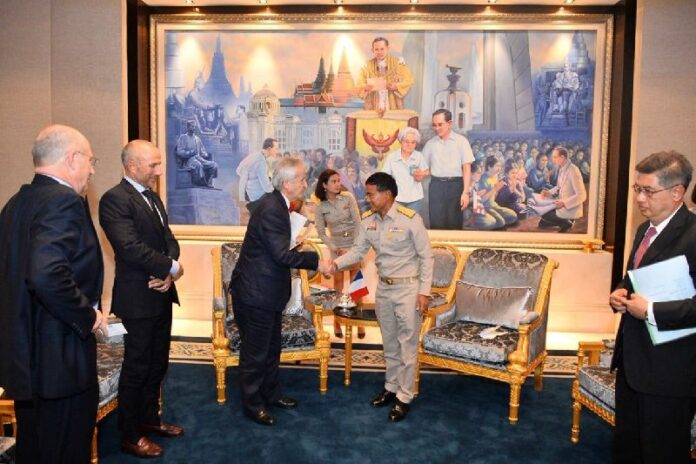
Thai Justice Minister Gen. Paiboon Khumchaya (R) with France's Ambassador to Thailand, Thierry Viteau (L), 13 July 2015.

BANGKOK — Thailand's Minister of Justice said he has asked the French ambassador to help extradite Thais charged with insulting the monarchy, a crime punishable by up to 15 years in prison.

Gen. Paiboon Khumchaya met with the ambassador, Thierry Viteau, at the Ministry of Justice yesterday. 

Speaking to reporters after the meeting, Gen. Paiboon said he told Viteau about three Thais who fled to France and are facing charges of lese majeste (defaming the monarchy).

Gen. Paiboon said he asked Viteau to "understand" the nature of the wrongdoing and help facilitate the suspects’ extradition to Thailand. 

"I have explained and created understanding with Mr. Thierry about the cases that affect national security and the Thai monarchy," Gen. Paiboon said. "I have explained to him in detail about how each individual is related to the security of the monarchy, and to political security."

Gen. Paiboon continued, "We want the French government to acknowledge this, and proceed with the legal procedure." 

The general did not say how the French ambassador responded to the request, though Thailand’s military government has never successfully extradited a lese majeste suspect living abroad. The government says 31 people charged with lese majeste are currently living in exile, with 14 of them residing in neighboring Laos. 

Gen. Paiboon also told reporters that he will chair a meeting between the Ministry of Justice and the Division of Special Investigation (DSI) about developing measures to further deter lese majeste violations in Thailand. 

Although Gen. Paiboon did not identify the three fugitives by name, three well-known critics of the Thai monarchy are currently residing in France. They include Saran Chuichai, Jaran Ditapichai, and Somsak Jeamteerasakul. 

Saran, aka Aum Neko, is an LGBT activist who has harshly criticized the Thai Royal Family on social media, Jaran is a former national human rights commissioner and Redshirt leader, and Somsak is a former history lecturer and prolific writer on the Thai monarchy. 

The three are believed to have fled Thailand shortly after the military staged a coup d'etat against an elected government in May 2014. 

Last month, Saran told the BBC that she, Somsak, and Jaran have all been granted political asylum by French authorities.

Since the military takeover, Thailand’s ruling junta has clamped down on civil rights – banning protests and censoring the media, among other measures – and stepped up the enforcement of the Kingdom’s draconian lese majeste law. 

In the past year, nearly 50 people have been charged with lese majeste, and more than half of them have been denied bail while they await trial, according to iLaw, a watchdog group that tracks legal cases in Thailand. 

The junta has also granted military courts jurisdiction over lese majeste cases, citing the crime’s “threat to national security.”

Today a martial court sentenced eight people to five years in prison for allegedly producing a series of videos on Youtube that slander the monarchy, Prachatai reported. Two more people were also sentenced to three years in prison for "assisting" the group. 

Death penalty concerns

According to Gen. Paiboon, the French ambassador also urged the Thai government to abolish the death penalty, which Gen. Paiboon said is not possible at this time. 

"I explained the attitude of Thai people and the context of Thai society," Gen. Paiboon said. "I raised the example of the rape and murder of a school child on a train. It prompted people to campaign for the death penalty [for rape convicts]. The death penalty is deeply-rooted in the mind and attitude of Thai people, so we cannot abolish it yet."

He added, "However, the attitude of Thai government does not reject or oppose human rights and other international obligations. It's just that we are waiting for Thai people's attitude to be more prepared and understanding [about abolition of death penalty]. And Mr. Thierry understands this issue." 


For comments, or corrections to this article please contact: [email protected]

You can also find Khaosod English on Twitter and Facebook
http://twitter.com/KhaosodEnglish
http://www.facebook.com/KhaosodEnglish

Advertisement

Police: Former BKK Top Cop to be Banned From Japan

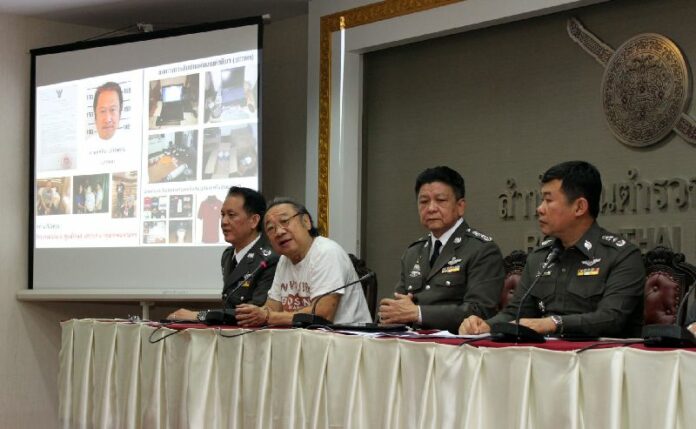
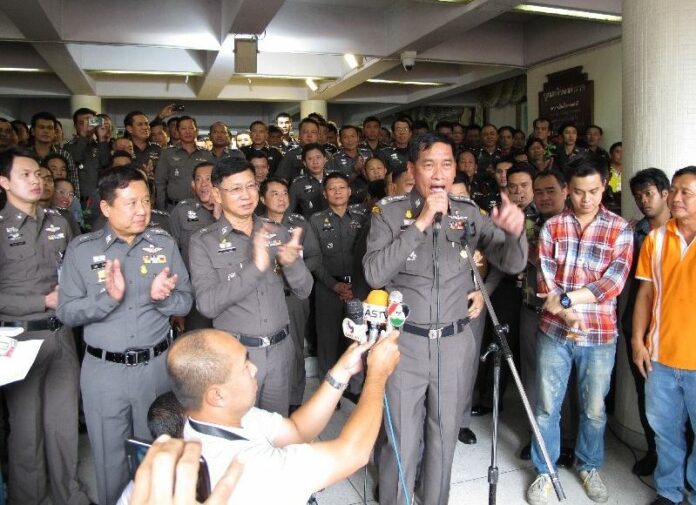
Pol.Lt.Gen. Kamronwit Thoopkrachang addressing a crowd of policemen at Bangkok Metropolitan Bureau on 7 September 2012 [Matichon]

BANGKOK — The former commander of the Bangkok police force will not stand trial in Japan for carrying a loaded gun into a Tokyo airport last month, but is expected to be barred from entering the country for at least one year, according to a Thai police spokesperson.

Pol.Lt.Gen. Kamronwit Thoopkrachang, who led Bangkok's police force from 2012 to 2014, has been detained in Japanese prison since he was arrested on 22 June for carrying a loaded revolver in his suitcase at Narita Airport.

He was released from prison today after Japanese prosecutors decided not to take up the case, said Pol.Lt.Gen. Prawuth Thawornsiri, spokesperson of the Royal Thai Police.

Kamronwit was immediately transferred into the custody of Japan’s immigration police, where he will be processed for overstaying his 15-day visa, Pol.Lt.Gen. Prawuth said.

"It was an overstay that occurred during his detention while his case was being deliberated," Pol.Lt.Gen. Prawuth said at the press conference. "Afterward, he will be processed for a return to Thailand in accordance with the immigration laws." 

Pol.Lt.Gen. Prawuth said he was informed that Kamronwit will be barred from entering Japan for at least one year because of the visa violation.

"The lightest condition would be a normal send-back. In that case, he would banned from Japan for one year," Pol.Lt.Gen Prawuth explained. "If he is deported, the ban will extend to two or three years, depending on the judgment of the Japanese authorities. But I can say that within the next year, he will certainly not be able to return to Japan." 

He added that Thai officials have not been able to meet with Kamronwit since he was released from the Japanese prison, but will question him upon his return.

Pol.Lt.Gen. Prawuth also dismissed reports in some Thai media agencies that Kamronwit's relatives have already booked a plane ticket back to Bangkok for the former Bangkok police chief.

"As for the news about Pol.Lt.Gen. Kamronwit's return to Thailand, we have no clear information to confirm it," he said. "We have to wait for the procedure of the Japanese immigration police. Thai police will be directly coordinating with Japanese police, because his relatives have not been granted permission to meet with Pol.Lt.Gen. Kamronwit, which may have led to a misunderstanding." 

Kamronwit is considered a close ally to former Prime Minister Thaksin Shinawatra, who was deposed in a military coup in 2006 but still retains considerable influence over a powerful political dynasty in Thailand. Kamronwit retired from the Royal Thai Police in October 2014, five months after the ruling military staged a coup d'etat against a government led by Thaksin’s sister.


For comments, or corrections to this article please contact: [email protected]

You can also find Khaosod English on Twitter and Facebook
http://twitter.com/KhaosodEnglish
http://www.facebook.com/KhaosodEnglish

Advertisement

Hot News

LATEST NEWS

Bangkok
overcast clouds
31.6 ° C
34.4 °
31.6 °
74 %
2.8kmh
100 %
Mon
31 °
Tue
36 °
Wed
38 °
Thu
36 °
Fri
36 °