32.7 C
Bangkok
Wednesday, June 24, 2026
Home Blog Page 2994

Indonesian Fishermen Told Not to Help Migrant Boats

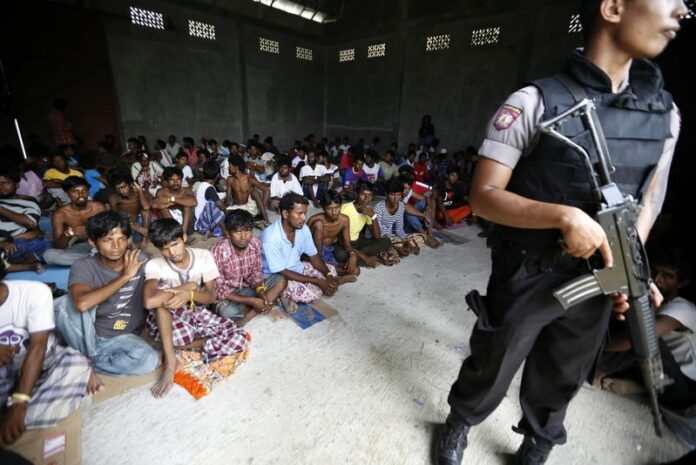
A Police officer stands guard in front of migrants at a temporary shelter in Kuala Langsa, Aceh, Indonesia, 17 May 2015. As thousands of Rohingya continue to board unsafe boats for Thailand, Malaysia and Indonesia, residents in those countries have their own perspectives on the crisis. EPA/HOTLI SIMANJUNTAK

JAKARTA (DPA) — The Indonesian military told local fishermen not to help boats carrying migrants and refugees land unless they were sinking, a spokesman said Tuesday, adding that passengers may have been deliberately thrown overboard to attract attention.

Thousands of migrants from Myanmar's Rohingya ethnic minority and Bangladesh are said to be stranded on boats in South-East Asian waters.

The military has deployed four warships and an aircraft to patrol the sea to prevent refugee boats from entering Indonesian territory, military spokesman Fuad Basya said.  

Indonesian fishing boats and marine police rescued nearly 800 people late last week from a sinking vessel near the coast.

"Intelligence indicates that they deliberately threw people overboard so that they would be saved by fishermen," Fuad said. 

"So we advise fishermen not to take the refugees unless they are drowning or the boats stall," he said. 

He said the military would turn undocumented migrants away unless the Foreign Ministry advised otherwise.  

Thousands of migrants are believed to be still at sea, possibly with little food after their boats were turned away by Thailand, Malaysia and Indonesia. In some cases, the crew had abandoned the vessels.   


For comments, or corrections to this article please contact: [email protected]

You can also find Khaosod English on Twitter and Facebook
http://twitter.com/KhaosodEnglish
http://www.facebook.com/KhaosodEnglish

Advertisement

Junta Approves Charter Referendum, Leaving Details for Later

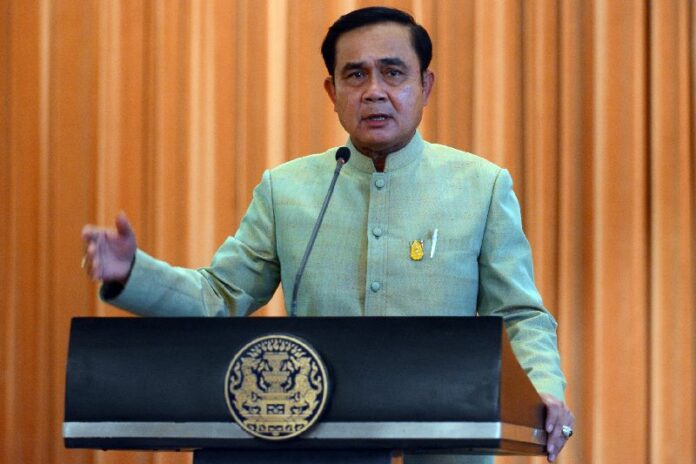
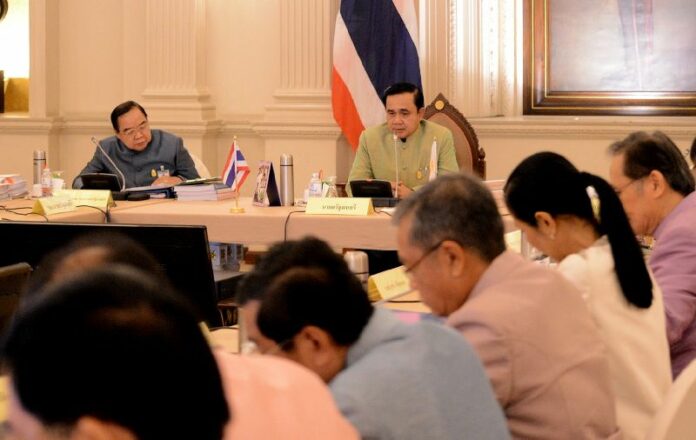
Gen. Prayuth Chan-ocha chairs a meeting between the junta and Cabinet at the Government House in Bangkok, 19 May 2015.

BANGKOK — Thailand's military junta has agreed to hold a referendum on the draft of its new post-coup charter, without specifying what options the ballot will offer.

The decision, which was reached in a joint meeting between the junta and the Cabinet today, came after pro-democracy activists, politicians from Thailand's major parties, and even officials in the military government had voiced support for the measure.

\
Gen. Prayuth Chan-ocha at the Government House in Bangkok, 19 May 2015.

Gen. Prayuth Chan-ocha, who chairs both the junta and the Cabinet, said his government will ask the interim parliament he appointed to amend the current constitution to allow for a referendum, which is not mentioned in the charter's present form. 

"Once the constitutional amendment is done, we will immediately proceed with the referendum," Gen. Prayuth told reporters today. "Our duty is to make the law that allows for the procedure. As for the procedures themselves, they will be left to relevant agencies. The referendum will be the duty of the Election Commission." 

Gen. Prayuth said he could not comment on what choices the referendum will offer voters who reject the charter.

In the referendum for the post-coup 2007 charter, which was also drafted by a junta-appointed council, voters were only permitted to accept or decline the document. Critics say that many voters reluctantly approved the junta’s charter out of fear that the undisclosed alternative would be worse.

The current junta, known officially as the National Council for Peace and Order, dissolved the 2007 constitution after seizing power from an elected government last May. Gen. Prayuth then appointed a committee to draft a new "permanent" constitution, which will be Thailand’s 20th since democracy was established in 1932.

Surachai Liengboonlertchai, deputy chairperson of the National Legislative Assembly, said amending the junta’s interim charter will take approximately 15 days. He added that the amendment may include more details about the referendum. 

"In the amendment, I think there should be conditions of the referendum, for example, what will happen in the event that the people do not approve the constitution draft," Surachai said. 

Asked whether the junta will relax its ban on political activities to allow the public to voice opinions on the constitution draft, Surachai replied, "I think that should be the case, because the Organic Act on Referendum clearly states that there has to be forums where people can express their opinions freely, in order to promote understanding of the constitution draft." 

The referendum is expected to postpone the timeline for elections, which are currently scheduled for early 2016, by three months.

Critics say the current draft of the junta's charter establishes an uneven balance of power that cripples elected politicians and favors appointed "independent" agencies, whose members are historically allied with the traditional elite. The charter’s most controversial features include the establishment of a mostly-appointed Senate and the option for an unelected Prime Minister.

Some pro-democracy activists and politicians have proposed the junta organize a referendum that would allow voters to choose between the junta’s charter and the 1997 constitution, which was written by an elected assembly and is known as the "People’s Constitution" for its egalitarian nature.

Other activists in Thailand have campaigned for a referendum that would give Thais the chance to elect a fresh assembly of drafters to pen a new charter altogether.

For comments, or corrections to this article please contact: [email protected]

You can also find Khaosod English on Twitter and Facebook
http://twitter.com/KhaosodEnglish
http://www.facebook.com/KhaosodEnglish

Advertisement

Junta Approves Charter Referendum, Leaving Details for Later

Thai junta chairman Gen. Prayuth Chan-ocha speaking at the Government House in Bangkok on 19 May 2015.

BANGKOK — Thailand's military junta has agreed to hold a referendum on the draft of its new post-coup charter, without specifying what options the ballot will offer.

The decision, which was reached in a joint meeting between the junta and the Cabinet today, came after pro-democracy activists, politicians from Thailand's major parties, and even officials in the military government had voiced support for the measure.

\
Gen. Prayuth Chan-ocha chairs a meeting between the junta and Cabinet at the Government House in Bangkok, 19 May 2015.

Gen. Prayuth Chan-ocha, who chairs both the junta and the Cabinet, said his government will ask the interim parliament he appointed to amend the current constitution to allow for a referendum, which is not mentioned in the charter's present form. 

"Once the constitutional amendment is done, we will immediately proceed with the referendum," Gen. Prayuth told reporters today. "Our duty is to make the law that allows for the procedure. As for the procedures themselves, they will be left to relevant agencies. The referendum will be the duty of the Election Commission." 

Gen. Prayuth declined to comment on what choices the referendum will offer to voters who reject the charter.

In the referendum for the post-coup 2007 charter, which was also drafted by a junta-appointed council, voters were only permitted to accept or decline the document. Critics say that many voters reluctantly approved the junta’s charter out of fear that the undisclosed alternative would be worse.

The current junta, known officially as the National Council for Peace and Order, dissolved the 2007 constitution after seizing power from an elected government last May. Gen. Prayuth then appointed a committee to draft a new "permanent" constitution, which will be Thailand’s 20th since democracy was established in 1932.

Surachai Liengboonlertchai, deputy chairperson of the National Legislative Assembly, said amending the junta’s interim charter will take approximately 15 days. He added that the amendment may include more details about the referendum. 

"In the amendment, I think there should be conditions of the referendum, for example, what will happen in the event that the people do not approve the constitution draft," Surachai said. 

Asked whether the junta will relax its ban on political activities to allow the public to voice opinions on the constitution draft, Surachai replied, "I think that should be the case, because the Organic Act on Referendum clearly states that there has to be forums where people can express their opinions freely, in order to promote understanding of the constitution draft." 

The referendum is expected to postpone the timeline for elections, which are currently scheduled for early 2016, by three months.

Critics say the current draft of the junta's charter establishes an uneven balance of power that cripples elected politicians and favors appointed "independent" agencies, whose members are historically allied with the traditional elite. The charter’s most controversial features include the establishment of a mostly-appointed Senate and the option for an unelected Prime Minister.

Some pro-democracy activists and politicians have proposed the junta organize a referendum that would allow voters to choose between the junta’s charter and the 1997 constitution, which was written by an elected assembly and is known as the "People’s Constitution" for its egalitarian nature.

Other activists in Thailand have campaigned for a referendum that would give Thais the chance to elect a fresh assembly of drafters to pen a new charter altogether.

For comments, or corrections to this article please contact: [email protected]

You can also find Khaosod English on Twitter and Facebook
http://twitter.com/KhaosodEnglish
http://www.facebook.com/KhaosodEnglish
Advertisement

Eight Separatist Banners Taunt 'Thai Colonizers' in Deep South

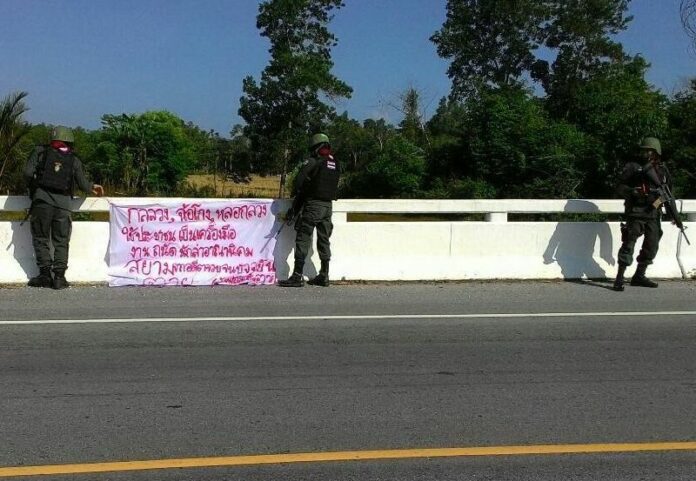
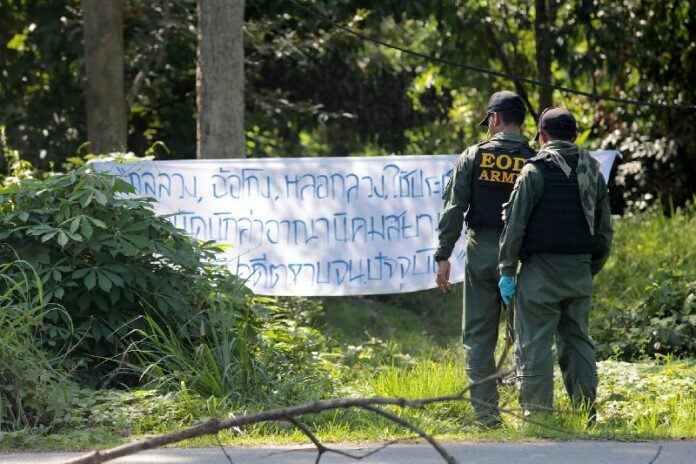
Soldiers remove a separatist banner in Yala province on 18 May 2015.

YALA — Eight roadside banners which appeared to be written by local separatists were found in the southern border region of Thailand today, following a three-day bombing spate that wounded more than 20 people.

Five of the banners were hung on the side of roads in Yala province, and three more were found in the neighboring province of Narathiwat. 

\
Soldiers remove a separatist banner in Yala province on 18 May 2015.

The text on the banners read: "Trickery, fraud, lies, using people as their tools: [these are the] professions of the Siamese colonizers from the past to the present. Die! If you remove [this banner], you die!"

Police believe the banners were hung by local Muslim militants who are seeking to revive the Islamic state of Pattani, which was annexed by Thailand – then known as Siam – in the early 20th century. 

A bomb exploded while security officers were dismantling one of the banners in Yala's Bannang Sata district, though no one was injured by the blast. No other bombs were found near the other banners.

The banners were found several days after nearly 40 bombsrocked Yala's town center over the weekend, injuring at least 22 people. 

The bloody separatist campaign as claimed the lives of more than 6,200 people, mostly civilians, since early 2004. 

Experts say the insurgency is mostly fueled by ethnic and religious differences. While the vast majority of Thailand is Buddhist, the southern provinces of Yala, Narathiwat, and Pattani are mostly populated by Muslims who speak a Malay dialect.  

Although most of the casualties have died in attacks staged by insurgent groups, Thai authorities have also been criticized for using excessive violence and violating human rights in their effort to combat the movement. 

For comments, or corrections to this article please contact: [email protected]

You can also find Khaosod English on Twitter and Facebook
http://twitter.com/KhaosodEnglish
http://www.facebook.com/KhaosodEnglish

Advertisement

Eight Separatist Banners Taunt 'Thai Colonizers' in Deep South

Soldiers remove a separatist banner in Yala province on 18 May 2015.

YALA — Eight roadside banners which appeared to be written by local separatists were found in the southern border region of Thailand today, following a three-day bombing spate that wounded more than 20 people.

Five of the banners were hung on the side of roads in Yala province, and three more were found in the neighboring province of Narathiwat. 

\
Soldiers remove a separatist banner in Yala province on 18 May 2015.

The text on the banners read: "Trickery, fraud, lies, using people as their tools: [these are the] professions of the Siamese colonizers from the past to the present. Die! If you remove [this banner], you die!"

Police believe the banners were hung by local Muslim militants who are seeking to revive the Islamic state of Pattani, which was annexed by Thailand – then known as Siam – in the early 20th century. 

A bomb exploded while security officers were dismantling one of the banners in Yala's Bannang Sata district, though no one was injured by the blast. No other bombs were found near the other banners.

The banners were found several days after nearly 40 bombs rocked Yala's town center over the weekend, injuring at least 22 people. 

The bloody separatist campaign as claimed the lives of more than 6,200 people, mostly civilians, since early 2004. 

Experts say the insurgency is mostly fueled by ethnic and religious differences. While the vast majority of Thailand is Buddhist, the southern provinces of Yala, Narathiwat, and Pattani are mostly populated by Muslims who speak a Malay dialect.  

Although most of the casualties have died in attacks staged by insurgent groups, Thai authorities have also been criticized for using excessive violence and violating human rights in their effort to combat the movement. 

For comments, or corrections to this article please contact: [email protected]

You can also find Khaosod English on Twitter and Facebook
http://twitter.com/KhaosodEnglish
http://www.facebook.com/KhaosodEnglish
Advertisement

Yingluck Banned From Leaving Thailand During Graft Trial

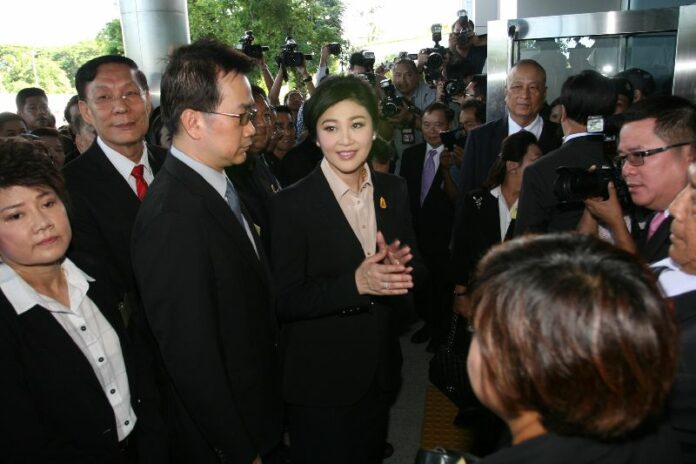
Former PM Yingluck Shinawatra arrived at the Supreme Court on 19 May 2015 to stand trial for alleged corruption in her government's rice program.

BANGKOK — Thailand's Supreme Court has barred former Prime Minister Yingluck Shinawatra from traveling overseas during a corruption trial that could land her 10 years in prison.

Yingluck is facing ‘dereliction of duty’ charges in the Supreme Court's Division of Political Office Holders for allegedly failing to stop corruption in her government’s rice-subsidy program. She was retroactively impeached by the junta’s government on the same charge earlier this year.

According to the National Anti-Corruption Commission (NACC), which filed the criminal lawsuit, her negligence cost the state more than 500 billion baht in damages.

Yingluck plead not guilty to the charges in court today and was granted bail after posting 30 million baht and agreeing not to travel overseas.

Speaking to reporters and a swarm of supporters outside the courthouse this morning, Yingluck insisted on her innocence.

"I am here today as scheduled by the court to fight my case in accordance with the justice system," she said.  "I am confident in my innocence. I am willing to cooperate with the court. And please do not criticize or speculate on the case, because the case is now being deliberated by the court." 

She is scheduled to submit a written testimony to the court on 3 July, and will return for another court session on 21 July. 

Yingluck, the younger sister of influential former PM Thaksin Shinawatra, came to power after winning a national election in July 2011. Her landslide victory was made possible by Thaksin’s enduring popularity among the Redshirts, a political faction that hails mostly from rural Thailand and has determined the winner of every national election for the past decade.

Yingluck's rice-pledging program, which involved purchasing rice from farmers at above-market prices, was popular among her supporters, but slammed by critics as poorly managed and rife with corruption. 

Anti-government protests against Yingluck broke out in November 2013, after her government attempted to pass a bill that would have dissolved a corruption conviction against Thaksin, who currently lives in self-imposed exile and is reviled by Bangkok's elite establishment. 

In May 2014, at the height of the anti-government protests, Thailand’s Constitutional Court found Yingluck guilty of transferring an official without due process and removed her from the premiership. The military staged a coup d'etat against her caretaker government two weeks later. 

Since the military takeover, the NACC has pursued several legal case against Yingluck and other members of her government, leading critics to accuse the agency of pursuing a political "witch-hunt" in an effort to cripple the powerful Shinawatra clan. 

In January, the NACC successfully lobbied for Yingluck’s retroactive impeachment over the rice-pledging scheme, which came with a five-year ban from politics. In May, the NACC also saw the impeachment of three more officials from Yingluck's government for their alleged role in the rice corruption.


For comments, or corrections to this article please contact: [email protected]

You can also find Khaosod English on Twitter and Facebook
http://twitter.com/KhaosodEnglish
http://www.facebook.com/KhaosodEnglish
Advertisement

Myanmar's Lady Remains Silent on the Plight of the Rohingya

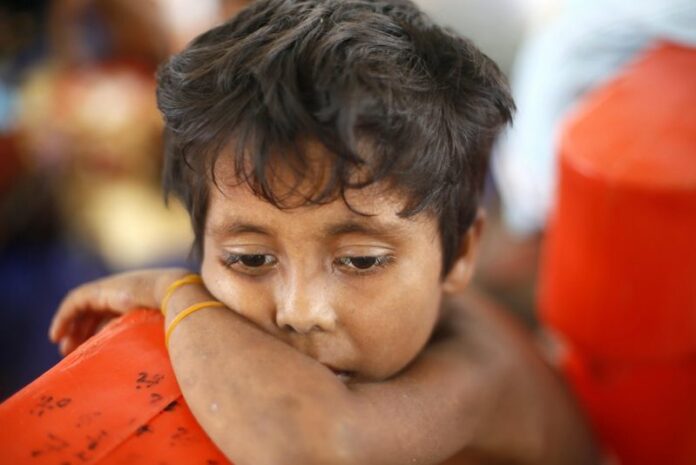
A Rohingya boy looks on at a temporary shelter in Kuala Langsa, Aceh, Indonesia, 17 May 2015.EPA/HOTLI SIMANJUNTAK​

BANGKOK (DPA) — The crisis over thousands of Rohingya people stranded on boats in South-East Asian waters has come during a watershed year for Myanmar, the departure point of most of the migrants.

The country is preparing for general elections in which the opposition will compete for the first time since 1990 with Aung San Suu Kyi — Myanmar's pro-democracy champion and best-known politician  at its head.

\
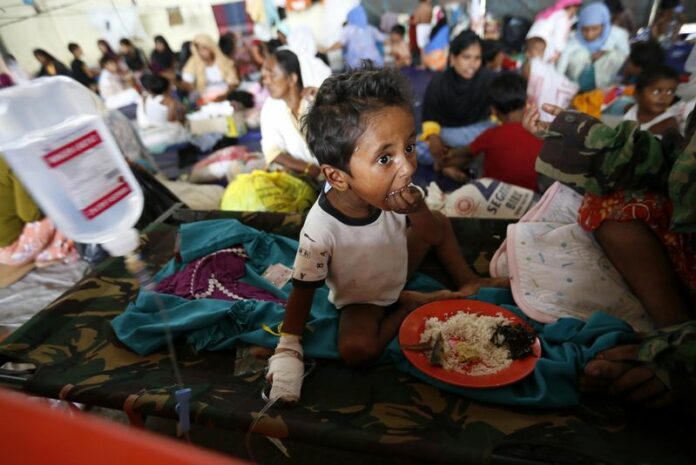
A Rohingya child eats breakfast as he is given medical treatment at a temporary shelter in Kuala Langsa, Aceh, Indonesia, 17 May 2015. EPA/HOTLI SIMANJUNTAK

With the political stakes so high, and repeated calls for Myanmar to examine its role as the source of most of the refugees, the refusal of both the government and opposition to tackle the crisis is, for many observers, glaring.

The government has resisted pressure to, in its words, "internationalize" the issue, for example by refusing to attend a regional conference this week.

But it is Suu Kyi, widely known in Myanmar as the Lady, and her opposition National League for Democracy (NLD) in particular that have been in the firing line.

Many expected Suu Kyi, who won the Nobel Peace Prize in 1991 for her pro-democracy struggle under the military regime, to provide leadership on the Rohingya issue.

"Aung San Suu Kyi's silence is conspicuous in this period because the international spotlight is fully shone the plight of the Rohinyas," said Thitinan Pongsudhirak, director of the Institute for Security and International Studies in Bangkok. 

When asked about the treatment of Rohingya since her release in 2010, Suu Kyi has skirted the issue, instead referring to the need to respect "the rule of law," and saying Rohingya are not the only group to suffer prejudice.

"Suu Kyi has a lot of political capital within the country," said a senior analyst at an international think-tank in Yangon who wished to remain unnamed.

"She has taken up other unpopular causes in the past in the name of what is right, but this is an election year and she can't change her stance now." 

When asked for comment, the NLD told our reporter that Suu Kyi was travelling and unavailable for comment.

In keeping with the government's line, the NLD spokesman added that the party does not accept the term Rohingya but considers the more than 1-million strong population to be ethnic Bengalis, illegal immigrants from neighbouring Bangladesh.

The party also needs to take into account public sentiment in Myanmar, the spokesman said, alluding to the tensions between the mostly Buddhist ethnic Burmese and the mostly Muslim Rohingya.

Suu Kyi and her party will need to rely on votes from the Buddhist majority in order to win elections slated for November, even if she herself is barred by the constitution from becoming president.

"[Suu Kyi's] hedging position on the issue is understandable," said Thitinan.

"In view of Myanmar people's deep dislike, [Suu Kyi] can hardly afford to speak up for the Rohingyas in an election year when she has shown ambitions for the highest office."

US-based rights group Human Rights Watch say such political strategizing could bring disaster for the migrants.

"It's time for Aung San Suu Kyi to end her silence on the plight of the Rohingya," the group's deputy Asia director, Phil Robertson, said.

Although many hundreds of Rohingya on boats from Myanmar have been taken ashore in the past week in Malaysia and Indonesia, there are thought to be thousands more at sea.

"To them it is better to die at sea than living in a land full of discrimination," said a Rohingya elder in the Maungdaw township in western Myanmar.

As pressure builds on Myanmar to resolve the Rohingya crisis, it may not be possible for the country's most celebrated leader to maintain her silence indefinitely.


For comments, or corrections to this article please contact: [email protected]

You can also find Khaosod English on Twitter and Facebook
http://twitter.com/KhaosodEnglish
http://www.facebook.com/KhaosodEnglish

Advertisement

Myanmar's Lady Remains Silent on the Plight of the Rohingya

A Rohingya child eats breakfast as he is given medical treatment at a temporary shelter in Kuala Langsa, Aceh, Indonesia, 17 May 2015. As thousands of Rohingya continue to board unsafe boats for Thailand, Malaysia and Indonesia, residents in those countries have their own perspectives on the crisis. EPA/HOTLI SIMANJUNTAK

BANGKOK (DPA) — The crisis over thousands of Rohingya people stranded on boats in South-East Asian waters has come during a watershed year for Myanmar, the departure point of most of the migrants.

The country is preparing for general elections in which the opposition will compete for the first time since 1990 with Aung San Suu Kyi — Myanmar's pro-democracy champion and best-known politician  at its head.

\
A Rohingya boy looks on at a temporary shelter in Kuala Langsa, Aceh, Indonesia, 17 May 2015.EPA/HOTLI SIMANJUNTAK​

With the political stakes so high, and repeated calls for Myanmar to examine its role as the source of most of the refugees, the refusal of both the government and opposition to tackle the crisis is, for many observers, glaring.

The government has resisted pressure to, in its words, "internationalize" the issue, for example by refusing to attend a regional conference this week.

But it is Suu Kyi, widely known in Myanmar as the Lady, and her opposition National League for Democracy (NLD) in particular that have been in the firing line.

Many expected Suu Kyi, who won the Nobel Peace Prize in 1991 for her pro-democracy struggle under the military regime, to provide leadership on the Rohingya issue.

"Aung San Suu Kyi's silence is conspicuous in this period because the international spotlight is fully shone the plight of the Rohinyas," said Thitinan Pongsudhirak, director of the Institute for Security and International Studies in Bangkok. 

When asked about the treatment of Rohingya since her release in 2010, Suu Kyi has skirted the issue, instead referring to the need to respect "the rule of law," and saying Rohingya are not the only group to suffer prejudice.

"Suu Kyi has a lot of political capital within the country," said a senior analyst at an international think-tank in Yangon who wished to remain unnamed.

"She has taken up other unpopular causes in the past in the name of what is right, but this is an election year and she can't change her stance now." 

When asked for comment, the NLD told our reporter that Suu Kyi was travelling and unavailable for comment.

In keeping with the government's line, the NLD spokesman added that the party does not accept the term Rohingya but considers the more than 1-million strong population to be ethnic Bengalis, illegal immigrants from neighbouring Bangladesh.

The party also needs to take into account public sentiment in Myanmar, the spokesman said, alluding to the tensions between the mostly Buddhist ethnic Burmese and the mostly Muslim Rohingya.

Suu Kyi and her party will need to rely on votes from the Buddhist majority in order to win elections slated for November, even if she herself is barred by the constitution from becoming president.

"[Suu Kyi's] hedging position on the issue is understandable," said Thitinan.

"In view of Myanmar people's deep dislike, [Suu Kyi] can hardly afford to speak up for the Rohingyas in an election year when she has shown ambitions for the highest office."

US-based rights group Human Rights Watch say such political strategizing could bring disaster for the migrants.

"It's time for Aung San Suu Kyi to end her silence on the plight of the Rohingya," the group's deputy Asia director, Phil Robertson, said.

Although many hundreds of Rohingya on boats from Myanmar have been taken ashore in the past week in Malaysia and Indonesia, there are thought to be thousands more at sea.

"To them it is better to die at sea than living in a land full of discrimination," said a Rohingya elder in the Maungdaw township in western Myanmar.

As pressure builds on Myanmar to resolve the Rohingya crisis, it may not be possible for the country's most celebrated leader to maintain her silence indefinitely.


For comments, or corrections to this article please contact: [email protected]

You can also find Khaosod English on Twitter and Facebook
http://twitter.com/KhaosodEnglish
http://www.facebook.com/KhaosodEnglish

Advertisement

Yingluck Banned From Leaving Thailand During Graft Trial

Former prime minister Yingluck Shinawatra arrives for a hearing on criminal charges stemming from her government's;s rice price subsidy, at the Supreme Court's Criminal Division for Holders of Political Positions in Bangkok, Thailand, 19 May 2015. [EPA]

BANGKOK — Thailand's Supreme Court has barred former Prime Minister Yingluck Shinawatra from traveling overseas during a corruption trial that could land her 10 years in prison.

Yingluck is facing ‘dereliction of duty’ charges in the Supreme Court's Division of Political Office Holders for allegedly failing to stop corruption in her government’s rice-subsidy program. She was retroactively impeached by the junta’s government on the same charge earlier this year.

According to the National Anti-Corruption Commission (NACC), which filed the criminal lawsuit, her negligence cost the state more than 500 billion baht in damages.

Yingluck plead not guilty to the charges in court today and was granted bail after posting 30 million baht and agreeing not to travel overseas.

Speaking to reporters and a swarm of supporters outside the courthouse this morning, Yingluck insisted on her innocence.

"I am here today as scheduled by the court to fight my case in accordance with the justice system," she said.  "I am confident in my innocence. I am willing to cooperate with the court. And please do not criticize or speculate on the case, because the case is now being deliberated by the court." 

She is scheduled to submit a written testimony to the court on 3 July, and will return for another court session on 21 July. 

Yingluck, the younger sister of influential former PM Thaksin Shinawatra, came to power after winning a national election in July 2011. Her landslide victory was made possible by Thaksin’s enduring popularity among the Redshirts, a political faction that hails mostly from rural Thailand and has determined the winner of every national election for the past decade.

Yingluck's rice-pledging program, which involved purchasing rice from farmers at above-market prices, was popular among her supporters, but slammed by critics as poorly managed and rife with corruption. 

Anti-government protests against Yingluck broke out in November 2013, after her government attempted to pass a bill that would have dissolved a corruption conviction against Thaksin, who currently lives in self-imposed exile and is reviled by Bangkok's elite establishment. 

In May 2014, at the height of the anti-government protests, Thailand’s Constitutional Court found Yingluck guilty of transferring an official without due process and removed her from the premiership. The military staged a coup d'etat against her caretaker government two weeks later. 

Since the military takeover, the NACC has pursued several legal case against Yingluck and other members of her government, leading critics to accuse the agency of pursuing a political "witch-hunt" in an effort to cripple the powerful Shinawatra clan. 

In January, the NACC successfully lobbied for Yingluck’s retroactive impeachment over the rice-pledging scheme, which came with a five-year ban from politics. In May, the NACC also saw the impeachment of three more officials from Yingluck's government for their alleged role in the rice corruption.


For comments, or corrections to this article please contact: [email protected]

You can also find Khaosod English on Twitter and Facebook
http://twitter.com/KhaosodEnglish
http://www.facebook.com/KhaosodEnglish
 

Advertisement

Japan to Pledge 100-Billion-Dollar Aid for Asia Infrastructure

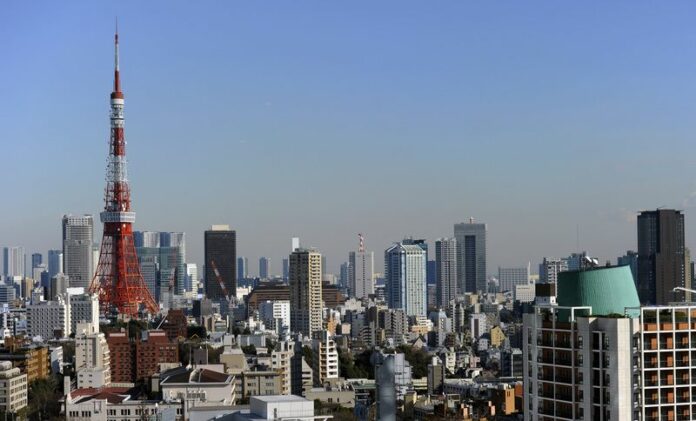
A file photo shows the skyline of Tokyo, Japan. Japan is to invest billions into infrastructure around Asia over the next five years, apparently to counter the recently announced China-led investment bank. Photo: Hannibal Hanschke

TOKYO (DPA) — Japan is to invest billions into infrastructure around Asia over the next five years, apparently to counter the recently announced China-led investment bank, a news report said Tuesday.

Around 100 billion dollars were to be made available in public-private assistance to boost infrastructure investments and loans for Asian countries, Jiji Press reported, citing unnamed sources.

Prime Minister Shinzo Abe was to unveil the plan on Thursday.

The amount would match the planned capital of the China-led Asian Infrastructure Investment Bank (AIIB), which has 57 founding members, Jiji reported. Many major economic powers, although neither Japan nor the United States, have decided to join the bank.

Japan's new programme is to demonstrate the country's commitment to helping build up high-quality infrastructure in Asia through human resource development and technological transfers, and to distinguish it from the AIIB, the report said.

Japan will extend yen loans to Asian countries through the Japan International Cooperation Agency, and lend through the state-backed Japan Bank for International Cooperation.

The world's third-largest economy is also considering greater financial assistance by the Asian Development Bank, to which it is the largest contributor, Jiji said.

The AIIB was initially proposed by Chinese President Xi Jinping with a mission to invest in roads, ports, airports, energy provision and telecommunications in developing counties in Asia.


For comments, or corrections to this article please contact: [email protected]

You can also find Khaosod English on Twitter and Facebook
http://twitter.com/KhaosodEnglish
http://www.facebook.com/KhaosodEnglish

Advertisement

Hot News

LATEST NEWS

Bangkok
few clouds
32.7 ° C
32.7 °
32.7 °
61 %
4.1kmh
13 %
Wed
37 °
Thu
39 °
Fri
37 °
Sat
37 °
Sun
37 °