





















37.8 C
Bangkok
Friday, June 26, 2026
Home Blog Page 3011

Death of Anti-Election Protester in 2013 Unresolved: Court

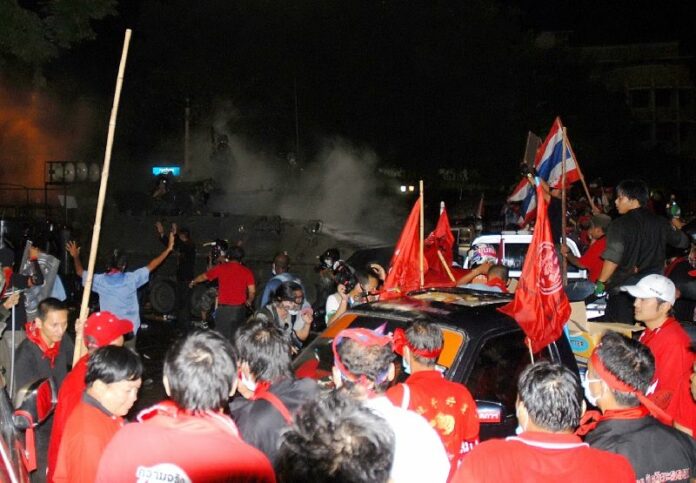
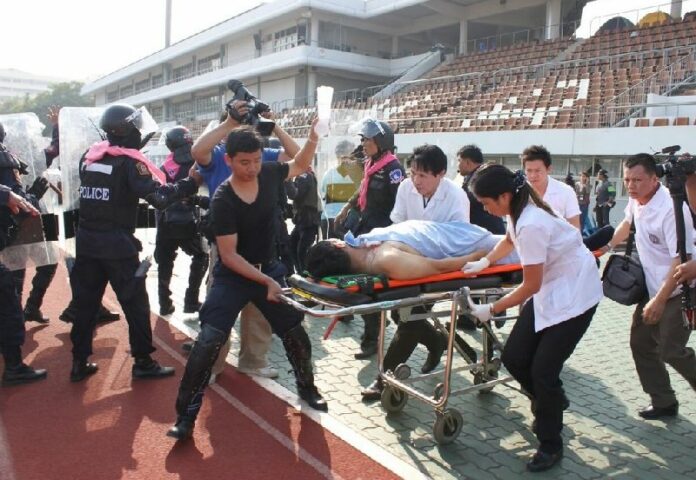
Rescue workers evacuate an injured police officer from clashes at Thai - Japan Stadium in Bangkok, 26 December 2013

BANGKOK — There was not enough evidence to determine whether police were responsible for the death of a demonstrator who joined an anti-election protest in Bangkok last December, a criminal court in Thailand said today.

Wasu Suchanthabutr, 30, was shot during clashes between police and anti-government protesters on 26 December 2013. The protesters, led by the People's Committee for Absolute Democracy With the King As Head of State (PCAD), were besieging a sports stadium in Bangkok's Din Dang district in an effort to disrupt election registration procedures that were taking place inside. 

\
Wasu’s mother, Thipapha Suchantabutr, speaking to reporters outside of the court house on 3o April 2015.

Wasu was shot in the stomach and died in a hospital the next day. PCAD supporters accused police of using shooting Wasu, but police say officers were only carrying tear gas, rubber bullets, and batons with them on that day. A police officer was also shot and killed during the clash.

Today the Ratchadapisek Criminal Court in Bangkok said there was not enough evidence to determine who is responsible for Wasu's death.

Wasu’s mother, Thipapha Suchantabutr, told reporters that she respected the court’s decision, but urged police to continue investigating the incident.

"If anyone has a clue that leads to arrest of the perpetrator, my family will hand that person one million baht as a reward," Thipapha said. 

The PCAD was the latest reincarnation of the Yellowshirts, a movement opposed to former Prime Minister Thaksin Shinawatra and his political allies. Thaksin was ousted in a coup following Yellowshirt protests in 2006, and has lived in self-imposed exile to avoid a corruption conviction.

The PCAD was formed in 2013 after the government led by Thaksin’s sister, Yingluck Shinawatra, attempted to pass an amnesty bill that would have allowed for Thaksin’s return to Thailand.

The Yellowshirts, who largely consist of urban Bangkokians and conservatives, view Thaksin as a corrupt politician who has courted Thailand’s rural masses strictly for personal gain.

Yingluck responded to the PCAD's street protests by dissolving the House and organizing a snap election in February 2014. However, protesters boycotted the poll and demanded the government be replaced by an unelected "people's council" to implement national reforms before a new election.

The Constitutional Court later nullified the February 2014 election because the poll did not take place on the same day throughout the Kingdom after the PCAD successfully disrupted voting in some southern provinces and parts of Bangkok. 

The protests continued until the military staged a coup d'etat against the government on 22 May 2014. 

In a separate court inquest announced today, another court in Bangkok also ruled that there was insufficient evidence to determine who killed one foreign journalist and two Redshirt demonstrators during a military crackdown on protesters in 2010. 

 
For comments, or corrections to this article please contact: [email protected]

You can also find Khaosod English on Twitter and Facebook
http://twitter.com/KhaosodEnglish
http://www.facebook.com/KhaosodEnglish
Advertisement

Redshirts Urge Prayuth to Overturn TV Blackout Order

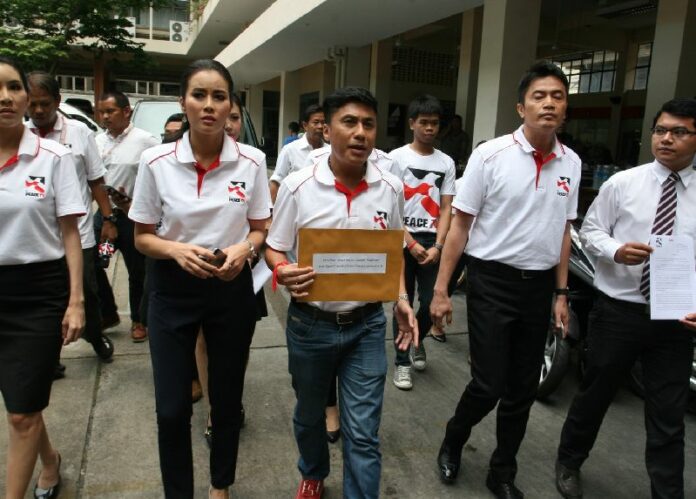
UDD spokesperson Thanawut Wichaidith (center) and other Redshirt activists carry a letter of complaint to the government house in Bangkok, 30 April 2015.

BANGKOK — Redshirt activists have asked junta chairman Prayuth Chan-ocha to overturn a state agency’s decision to revoke the license of a Redshirt-operated TV channel.

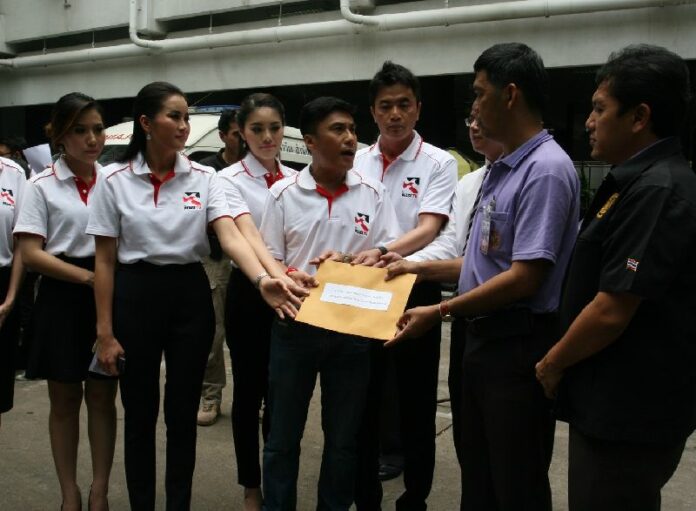
Thanawut Wichaidith, spokesperson of the Redshirts' official organization, the United Front of Democracy Against Dictatorship (UDD), led a group of activists to submit the letter to Gen. Prayuth, who is also Prime Minister, at the government’s complaint center this morning. An official received the letter on Gen. Prayuth's behalf.

\
Redshirt activists submit a letter of complaint to a government official in Bangkok, 30 April 2015.

The letter was protesting the National Broadcasting Telecommunication Commission’s (NBTC) decision earlier this week to revoke the license of Peace TV, a channel operated by the UDD.

Officials said the station violated junta orders that forbid the media from inciting unrest, causing "divisions in the Kingdom," or mobilizing an opposition movement. The NBTC has not publicly commented on what specific content aired on Peace TV violated these orders.

The agency has also yet to formally deliver the order requiring Peace TV to cease operations. 

Speaking to reporters today, Thanawut said Gen. Prayuth should use his power to convince the NBTC to reverse the ruling.

"On 29 April, the Prime Minister said during a conference with Thai diplomats from around the world that he will stick to democratic principles. But if Thai people are still being blindfolded like this, I don't think it is democracy."

Arunothai Siributr, an anchorwoman at Peace TV, said the station is one of few outlets that airs pro-democracy views. Since seizing power, the junta has severely curbed freedom of expression in an effort to silence critics of its reform process. 

Critics say the junta is particularly bent on curbing the influence of the Redshirt movement, which supported the government toppled in the coup. 

"Right now, Thailand is moving toward reconciliation, and Peace TV is one of the channels for democracy fighters to air their opinions, and say what they think about the constitution," Arunothai said, referring to the new charter being drafted by a junta-appointed committeee. "We want our channel to reflect opinions in a constructive way."

Last night, soldiers and police officers stormed the headquarters of Peace TV in Bangkok and ordered technicians to stop broadcasting a videotaped interview with former Prime Minister Chavalit Yongchaiyudh. Chavalit, a retired military commander, is considered an ally of former PM Thaksin Shinawatra, the de facto leader of the Redshirt movement. 

Gen. Udomdet Sitabutr, chief of the Royal Thai Army, said he ordered the raid to prevent a potential violation of the laws. He said the military did not find any wrongdoing during the visit. 

Asked whether Gen. Chavalit will be summoned for attitude adjustment, Gen. Udomdet replied, "I think we understand each other already. I listened to his interview, and I think he will not do anything [wrong]. Furthermore, he's also a former commander in the armed forces. Everyone respects him and treats him with dignity. I don't think there will be any problem."

Both of Thailand’s Redshirt and Yellowshirt movements operate their own TV and radio channels featuring news programs and live broadcasts of political rallies. Media agencies affiliated with the two groups played significant roles in the pro- and anti-government rallies last year that culminated in the May 2014 coup.

Two days before seizing power, Gen. Prayuth unilaterally imposed martial law and ordered all partisan media agencies to shut down. The news outlets, which included both Redshirt and Yellowshirt stations, were later allowed to resume operations under conditions that they change the names of their stations and adhere to the junta's guidelines. 

For comments, or corrections to this article please contact: [email protected]

You can also find Khaosod English on Twitter and Facebook
http://twitter.com/KhaosodEnglish
http://www.facebook.com/KhaosodEnglish

Advertisement

Redshirts Urge Prayuth to Overturn TV Blackout Order

Redshirt activists deliver a letter of complaint at the government house in Bangkok, 30 April 2015.

BANGKOK — Redshirt activists have asked junta chairman Prayuth Chan-ocha to overturn a state agency’s decision to revoke the license of a Redshirt-operated TV channel.

Thanawut Wichaidith, spokesperson of the Redshirts' official organization, the United Front of Democracy Against Dictatorship (UDD), led a group of activists to submit the letter to Gen. Prayuth, who is also Prime Minister, at the government’s complaint center this morning. An official received the letter on Gen. Prayuth's behalf.

\
UDD spokesperson Thanawut Wichaidith (center) and other Redshirt activists carry a letter of complaint to the government house in Bangkok, 30 April 2015.

The letter was protesting the National Broadcasting Telecommunication Commission’s (NBTC) decision earlier this week to revoke the license of Peace TV, a channel operated by the UDD.

Officials said the station violated junta orders that forbid the media from inciting unrest, causing "divisions in the Kingdom," or mobilizing an opposition movement. The NBTC has not publicly commented on what specific content aired on Peace TV violated these orders.

The agency has also yet to formally deliver the order requiring Peace TV to cease operations. 

Speaking to reporters today, Thanawut said Gen. Prayuth should use his power to convince the NBTC to reverse the ruling.

"On 29 April, the Prime Minister said during a conference with Thai diplomats from around the world that he will stick to democratic principles. But if Thai people are still being blindfolded like this, I don't think it is democracy."

Arunothai Siributr, an anchorwoman at Peace TV, said the station is one of few outlets that airs pro-democracy views. Since seizing power, the junta has severely curbed freedom of expression in an effort to silence critics of its reform process. 

Critics say the junta is particularly bent on curbing the influence of the Redshirt movement, which supported the government toppled in the coup. 

"Right now, Thailand is moving toward reconciliation, and Peace TV is one of the channels for democracy fighters to air their opinions, and say what they think about the constitution," Arunothai said, referring to the new charter being drafted by a junta-appointed committeee. "We want our channel to reflect opinions in a constructive way."

Last night, soldiers and police officers stormed the headquarters of Peace TV in Bangkok and ordered technicians to stop broadcasting a videotaped interview with former Prime Minister Chavalit Yongchaiyudh. Chavalit, a retired military commander, is considered an ally of former PM Thaksin Shinawatra, the de facto leader of the Redshirt movement. 

Gen. Udomdet Sitabutr, chief of the Royal Thai Army, said he ordered the raid to prevent a potential violation of the laws. He said the military did not find any wrongdoing during the visit. 

Asked whether Gen. Chavalit will be summoned for attitude adjustment, Gen. Udomdet replied, "I think we understand each other already. I listened to his interview, and I think he will not do anything [wrong]. Furthermore, he's also a former commander in the armed forces. Everyone respects him and treats him with dignity. I don't think there will be any problem."

Both of Thailand’s Redshirt and Yellowshirt movements operate their own TV and radio channels featuring news programs and live broadcasts of political rallies. Media agencies affiliated with the two groups played significant roles in the pro- and anti-government rallies last year that culminated in the May 2014 coup.

Two days before seizing power, Gen. Prayuth unilaterally imposed martial law and ordered all partisan media agencies to shut down. The news outlets, which included both Redshirt and Yellowshirt stations, were later allowed to resume operations under conditions that they change the names of their stations and adhere to the junta's guidelines. 


For comments, or corrections to this article please contact: [email protected]

You can also find Khaosod English on Twitter and Facebook
http://twitter.com/KhaosodEnglish
http://www.facebook.com/KhaosodEnglish
Advertisement

DNA Evidence to be Verified in Thailand's Koh Tao Beach Murder Trial

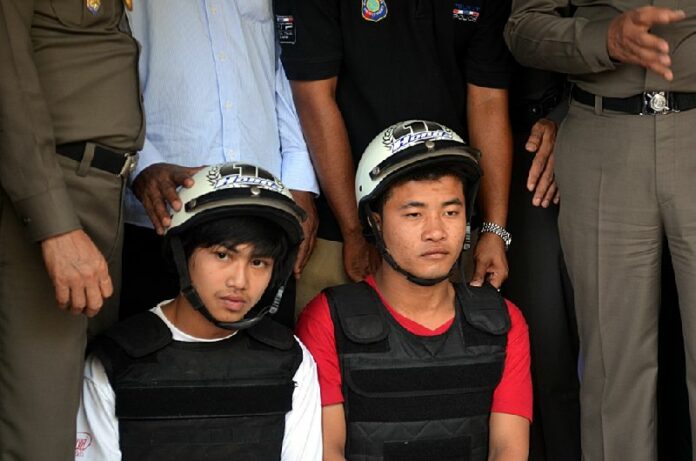
Zaw Lin and Wai Phyo during police conference on 10 October 2014.

BANGKOK (DPA) — A Thai court has allowed independent verification of the DNA evidence against two suspects in the beach murder of two British holidaymakers last year, officials said Thursday.

The defence team for Zaw Lin and Wai Phyo, the Myanmar migrant workers accused of the murders, earlier petitioned the court to have the DNA evidence reexamined.

The judge heard the argument that it was necessary to prevent a "miscarriage of justice," officials at the Samui Provincial Court said.

The badly beaten bodies of David Miller, 24, and Hannah Witheridge, 23, were found on September 15 on a beach on Koh Tao, 350 kilometres south of Bangkok.

Zaw Lin and Wai Phyo were arrested in October and confessed to the crimes, but later withdrew their statements saying they were tortured.

British and Myanmar envoys have raised concerns about the Thai investigation, with London sending a police team as observers.

The National Human Rights Commission of Thailand has also expressed concern about the alleged forced confessions. Thai police have denied the accusations of torture or misconduct.


For comments, or corrections to this article please contact: [email protected]

You can also find Khaosod English on Twitter and Facebook
http://twitter.com/KhaosodEnglish
http://www.facebook.com/KhaosodEnglish

Advertisement

DNA Evidence to be Verified in Thailand's Koh Tao Beach Murder Trial

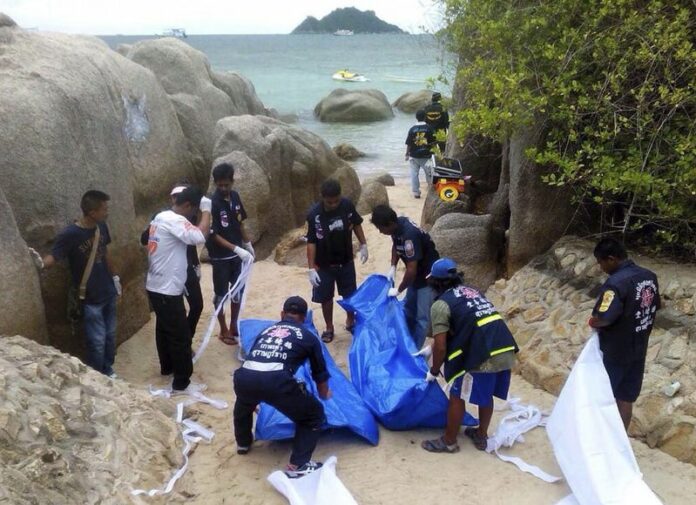
Thai rescue workers wrap the bodies of two British tourists who were found dead on a beach of Koh Tao island, Surat Thani province, southern Thailand. A Thai court has allowed independent verification of the DNA evidence against two suspects in the beach murder of two British holidaymakers last year. EPA/STR THAILAND OUT

BANGKOK (DPA) — A Thai court has allowed independent verification of the DNA evidence against two suspects in the beach murder of two British holidaymakers last year, officials said Thursday.

The defence team for Zaw Lin and Wai Phyo, the Myanmar migrant workers accused of the murders, earlier petitioned the court to have the DNA evidence reexamined.

The judge heard the argument that it was necessary to prevent a "miscarriage of justice," officials at the Samui Provincial Court said.

The badly beaten bodies of David Miller, 24, and Hannah Witheridge, 23, were found on September 15 on a beach on Koh Tao, 350 kilometres south of Bangkok.

Zaw Lin and Wai Phyo were arrested in October and confessed to the crimes, but later withdrew their statements saying they were tortured.

British and Myanmar envoys have raised concerns about the Thai investigation, with London sending a police team as observers.

The National Human Rights Commission of Thailand has also expressed concern about the alleged forced confessions. Thai police have denied the accusations of torture or misconduct.


For comments, or corrections to this article please contact: [email protected]

You can also find Khaosod English on Twitter and Facebook
http://twitter.com/KhaosodEnglish
http://www.facebook.com/KhaosodEnglish
Advertisement

Court Sheds No Light on Japanese Reporter's Death in 2010

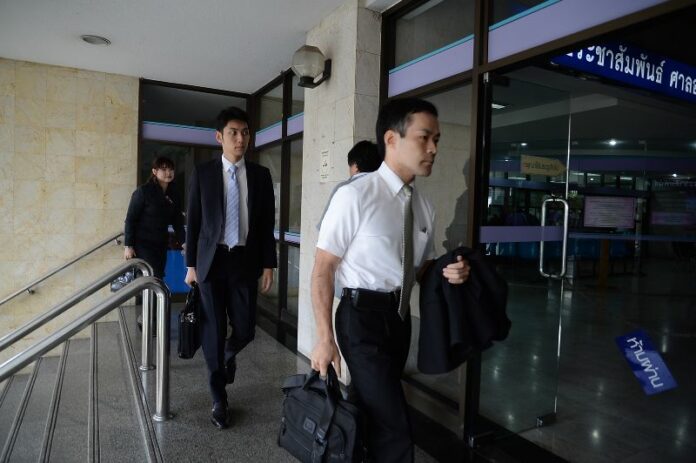
Taishi Akimoto, first secretary of the Japanese embassy in Bangkok, arrives at the Criminal Court on 30 April 2015.

BANGKOK — A Thai court said today it lacked sufficient evidence to determine who killed a Japanese reporter and two demonstrators during the military crackdown on Redshirt protesters in 2010.

Hiroyuki Muramoto, a 43-year-old cameraman working for Reuters news agency, and two Redshirt protesters, Wasan Phuthong and Tossachai Mek-ngamfah, were shot dead close to Democracy Monument during clashes between soldiers and Redshirt protesters on the night of 10 April 2010. 

\
Soldiers clash with Redshirt protesters at Democracy Monument on 10 April 2010

Thai authorities asked the court in late 2010 to identify those responsible for deaths of the three victims, who were among 20 other civilians killed that night. Five soldiers also died in the clashes, including the field commander of the operation.  

A judge read the inquest’s findings this morning at South Bangkok Criminal Court. 

"[The court] does not know who committed the acts, and does not know the direction of the gunfire," he said.

According to witnessess, Hiroyuki was filming the skirmishes between security officers and protesters around Democracy Monument when two grenades hit a group of soldiers at around 8 pm. After the explosions, soldiers retreated from their initial position in front of Satriwitthaya school to Wan Chart Bridge, while Hiroyuki, Wasan, Tossachai, and number of other protesters briefly pursued the soldiers. Gunshots then rang out, and the three victims were killed.

Although the judge acknowledged that "reliable" witnesses testified hearing gunshots from the military position, he said that none of them clearly saw who fired the bullets or the moment the three victims were shot. 

In addition, no bullets were found in the bodies of the three men, so the court was unable to determine the type of ammunition or direction of the gunfire, the judge said.

He also noted that at least 108 bullets were also fired from the military position, citing forensic evidence collected from the crime scene, but that there was insufficient evidence to determine whether any of the bullets hit and killed Hiroyuki, Wasan, and Tossachai. 

Previous inquests point to soldiers

In total, more than 90 people, mostly civilians, were killed in the 2010 crackdown, which lasted from 10 April to 19 May. The operation was ordered by then-Prime Minister Abhisit Vejjajiva in response to the tens of thousands of Redshirt protesters who were occupying parts of Bangkok to demand a fresh election. 

Previous court inquests have blamed the military for 18 deaths in the 2010 crackdown. The other nine cases were deemed inconclusive because of insufficient evidence. 

According to the court inquest issued on 30 September 2013, two other protests in the same vicinity as Hiroyuki were killed by gunfire that came from the military’s position.

Government officials have conceded that soldiers used live ammunition in the clashes, but say security officers only used firearms to defend themselves against the Redshirt-allied militants.

\
Taishi Akimoto, first secretary of the Japanese embassy in Bangkok, arrives at the Criminal Court on 30 April 2015.

Today's long-delayed inquest was the second delivered since the military seized power from a Redshirt-backed government on 22 May 2014. The coup was staged by Gen. Prayuth Chan-ocha, one of the commanders in the 2010 crackdown. 

In July 2014, a court inquest ruled that the first protester to die on 10 April 2010 was killed by gunfire from a military position.

Last month, Gen. Prayuth ordered seven retired military officers to join the investigation teams that oversee inquest files of the 2010 crackdown victims. 

'Disappointed and puzzled'

Thida Thawornseth, a core leader of the Redshirt's official organization, told reporters today that she was disappointed and puzzled by the inquest’s findings.

"I am disappointed. In previous inquests, the court ruled that protesters in the same area were killed by soldiers’ [gunfire]," Thida said. She also expressed disbelief that any armed militants would have been able to infiltrate the ranks of soldiers who blocked Wan Chart Bridge and fire at the protesters.

"I respect the court's decision, but it also left me puzzled," she said.

\
Thida Thawornseth, a core leader of the Redshirt movement, at the Criminal Court in Bangkok on 30 April 2015.

Klin Tianyim, brother-in-law of Wasan, said he respects the court's authority, but added that he found the inquest's findings difficult to belief.

"I was very close to Wasan. I saw soldiers with my own eyes. Who else could have been there?" said Klin, who joined the protests on 10 April 2010 with his brother-in-law. 

He told reporters that he will consult with his lawyer about any further possibility of "seeking justice" in the case. 

Human rights groups have criticized the impunity granted to Thai authorities, who have never been held legally accountable for the 2010 crackdown and many other abuses.

Abhisit and his deputy, Suthep Thaugsuban, were initially charged with murder over the deadly military operation, but the case wasdropped by the Criminal Court last August.  The pair is currently being investigated for "abuse of power" charges by Thailand's anti-graft agency, which could lead to their retroactive impeachment and five year ban from politics. 

For comments, or corrections to this article please contact: [email protected]

You can also find Khaosod English on Twitter and Facebook
http://twitter.com/KhaosodEnglish
http://www.facebook.com/KhaosodEnglish
Advertisement

Court Sheds No Light on Japanese Reporter's Death in 2010

Soldiers clash with Redshirt protesters at Democracy Monument on 10 April 2010.

BANGKOK — A Thai court said today it lacked sufficient evidence to determine who killed a Japanese reporter and two demonstrators during the military crackdown on Redshirt protesters in 2010.

Hiroyuki Muramoto, a 43-year-old cameraman working for Reuters news agency, and two Redshirt protesters, Wasan Phuthong and Tossachai Mek-ngamfah, were shot dead close to Democracy Monument during clashes between soldiers and Redshirt protesters on the night of 10 April 2010. 

\
A Redshirt protester carried a fellow demonstrator injured in the clashes to safety on 10 April 2010.

Thai authorities asked the court in late 2010 to identify those responsible for deaths of the three victims, who were among 20 other civilians killed that night. Five soldiers also died in the clashes, including the field commander of the operation.

A judge read the inquest’s findings this morning at South Bangkok Criminal Court. 

"[The court] does not know who committed the acts, and does not know the direction of the gunfire," he said.

According to witnessess, Hiroyuki was filming the skirmishes between security officers and protesters around Democracy Monument when two grenades hit a group of soldiers at around 8 pm. After the explosions, soldiers retreated from their initial position in front of Satriwitthaya school to Wan Chart Bridge, while Hiroyuki, Wasan, Tossachai, and number of other protesters briefly pursued the soldiers. Gunshots then rang out, and the three victims were killed.

Although the judge acknowledged that "reliable" witnesses testified hearing gunshots from the military position, he said that none of them clearly saw who fired the bullets or the moment the three victims were shot. 

In addition, no bullets were found in the bodies of the three men, so the court was unable to determine the type of ammunition or direction of the gunfire, the judge said.

He also noted that at least 108 bullets were also fired from the military position, citing forensic evidence collected from the crime scene, but that there was insufficient evidence to determine whether any of the bullets hit and killed Hiroyuki, Wasan, and Tossachai. 

Previous inquests point to soldiers

In total, more than 90 people, mostly civilians, were killed in the 2010 crackdown, which lasted from 10 April to 19 May. The operation was ordered by then-Prime Minister Abhisit Vejjajiva in response to the tens of thousands of Redshirt protesters who were occupying parts of Bangkok to demand a fresh election. 

Previous court inquests have blamed the military for 18 deaths in the 2010 crackdown. The other nine cases were deemed inconclusive because of insufficient evidence. 

According to the court inquest issued on 30 September 2013, two other protests in the same vicinity as Hiroyuki were killed by gunfire that came from the military’s position.

Government officials have conceded that soldiers used live ammunition in the clashes, but say security officers only used firearms to defend themselves against the Redshirt-allied militants.

\
Taishi Akimoto, first secretary of the Japanese embassy in Bangkok, arrives at the Criminal Court on 30 April 2015.

Today's long-delayed inquest was the second delivered since the military seized power from a Redshirt-backed government on 22 May 2014. The coup was staged by Gen. Prayuth Chan-ocha, one of the commanders in the 2010 crackdown. 

In July 2014, a court inquest ruled that the first protester to die on 10 April 2010 was killed by gunfire from a military position.

Last month, Gen. Prayuth ordered seven retired military officers to join the investigation teams that oversee inquest files of the 2010 crackdown victims. 

'Disappointed and puzzled'

Thida Thawornseth, a core leader of the Redshirt's official organization, told reporters today that she was disappointed and puzzled by the inquest’s findings.

"I am disappointed. In previous inquests, the court ruled that protesters in the same area were killed by soldiers’ [gunfire]," Thida said. She also expressed disbelief that any armed militants would have been able to infiltrate the ranks of soldiers who blocked Wan Chart Bridge and fire at the protesters.

"I respect the court's decision, but it also left me puzzled," she said.

\
Thida Thawornseth, a core leader of the Redshirt movement, at the Criminal Court in Bangkok on 30 April 2015.

Klin Tianyim, brother-in-law of Wasan, said he respects the court's authority, but added that he found the inquest's findings difficult to belief.

"I was very close to Wasan. I saw soldiers with my own eyes. Who else could have been there?" said Klin, who joined the protests on 10 April 2010 with his brother-in-law. 

He told reporters that he will consult with his lawyer about any further possibility of "seeking justice" in the case. 

Human rights groups have criticized the impunity granted to Thai authorities, who have never been held legally accountable for the 2010 crackdown and many other abuses.

Abhisit and his deputy, Suthep Thaugsuban, were initially charged with murder over the deadly military operation, but the case was dropped by the Criminal Court last August.  The pair is currently being investigated for "abuse of power" charges by Thailand's anti-graft agency, which could lead to their retroactive impeachment and five year ban from politics. 

For comments, or corrections to this article please contact: [email protected]

You can also find Khaosod English on Twitter and Facebook
http://twitter.com/KhaosodEnglish
http://www.facebook.com/KhaosodEnglish
Advertisement

Reports: North Korea Executes 15 Top Officials This Year

North Korean leader Kim Jong Un arriving at the Kumsusan Palace of the Sun in Pyongyang. South Korean intelligence officials said Wednesday that Kim's ruthless style of leadership was a factor in his regime's execution of 15 high-ranking government officials this year. EPA/RODONG SINMUN

SEOUL (DPA) – North Korea has executed 15 high-ranking government officials since the beginning of the year, South Korean intelligence officials said Wednesday.

The condemned had criticized the regime, the Yonhap News Agency and television channels reported, citing members of the National Assembly who were briefed by intelligence officials.

Among those put to death was the deputy forestry minister in January after he found fault with North Korea's forestation plans, the lawmakers were quoted as saying.

The intelligence officials told the lawmakers in a closed-door session that the public executions were evidence of the "ruthless leadership style" of Kim Jong Un, who became leader of North Korea at the end of 2011 when his father, Kim Jong Il, died.

In 2013, Kim Jong Un executed his uncle Jang Song Thaek, who had been considered the second most powerful person in North Korea. Jang was accused of treason.

North Korea has been criticized for human rights violations under all three leaders of the Kim dynasty.

Reporting by Dirk Godder

 
For comments, or corrections to this article please contact: [email protected]

You can also find Khaosod English on Twitter and Facebook
http://twitter.com/KhaosodEnglish
http://www.facebook.com/KhaosodEnglish

Advertisement

Redshirt Leader May Petition King Over TV Channel Shutdown

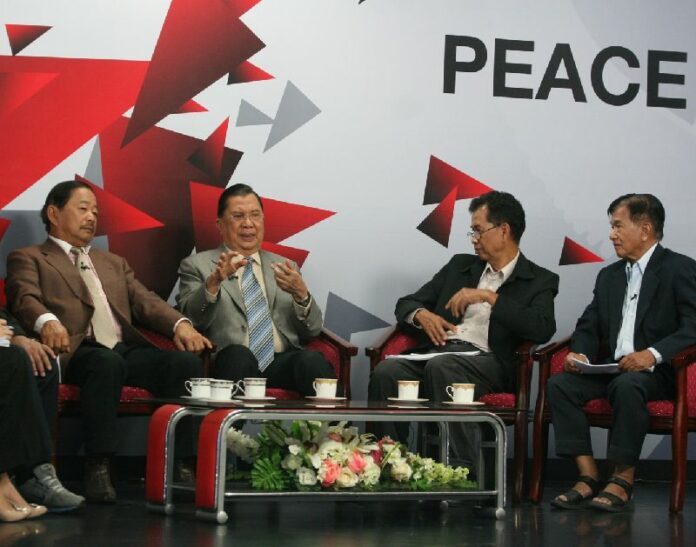
Jatuporn Prompan (right) welcomes former PM Chavalit Yongchaiyudh (center) to a talk show session at Peace TV station in Bangkok on 29 April 2015.

BANGKOK — A core leader of the Redshirt movement said he may submit a royal petition to the Thai King as a last resort to protest the shutdown of a Redshirt-operated TV station.

Thailand's National Broadcasting Telecommunication Commission (NBTC) ruled to revoke the license of Peace TV on 27 April. According to NBTC member Natee Sukonrat, the channel's news coverage violated the junta's Order No. 97, which forbids media from fomenting violence or causing "divisions in the Kingdom." 

Peace TV, which is operated by the largely anti-coup Redshirt movement, often featured core Redshirt leaders like Jatuporn Prompan, Nattawut Saikua, and Thida Thawornseth.

Jatuporn told reporters today that he will submit a letter to junta chairman Gen. Prayuth Chan-ocha tomorrow, urging him to overrule the NBTC's order.

If all efforts fail, Jatuporn said he will write a royal petition to His Majesty the King to ask for fairness in the case. "It will be the last thing we will do," the Redshirt leader said, adding that he will also seek legal action against the NBTC.

All petitions submitted to King Bhumibol are screened by the Royal Household Bureau. His Majesty is not obliged to respond to every petition the palace receives. 

Since staging a coup against a Redshirt-backed government on 22 May 2014, Gen. Prayuth has repeatedly cautioned the media against criticizing his administration. Asked to comment on the shutdown of Peace TV yesterday, he said, "Go ask NBTC. I don't know. I have assigned them to look into it."

"I have said already, if you don't cooperate, you will be in trouble," he continued. "So, blame your own boss. The editors, the publishing house owners. Don't blame me."

Speaking to reporters today, Jatuporn warned that a continued suppression of media freedom may lead to further political conflicts. 

"I think it's unfair. The NBTC has wrongly analyzed the contents [of our channel]," Jatuporn said, "It will not benefit the situation of the country. Whoever plotted this plan is drawing a new round of war to our country. It will lead to problems." 

Both of Thailand’s Redshirt and Yellowshirt movements operate their own TV and radio channels featuring news programs and live broadcasts of their political rallies. Media agencies affiliated with the two groups played significant roles in the pro- and anti-government rallies last year that culminated in the May 2014 coup.

On 20 May 2014, then-army chief Gen. Prayuth unilaterally imposed martial law and ordered all partisan media agencies to shut down. The media outlets were later allowed to resume operations under the conditions that they change the names of their stations and adhere to the junta's guidelines. 

Critics say the junta is particularly bent on curbing the influence of the Redshirt movement, which has commanded the polls and elected majorities in congress in every national election for the past decade. 

Yesterday, Supan Rakchuea, director of rights and freedom department of the Thai Broadcast Journalists Association (TBJA), urged the NBTC to revise its ruling and consider other options for punishing Peace TV.

"The NBTC should strictly stick to its procedures, otherwise NBTC may be questioned whether it is being selective," Supan said in a statement. "As for Peace TV station, they must also bear in mind that although media has freedom, but that freedom must come with responsibility, especially in the time that Thailand needs understanding that will lead to reforms and reconciliation."

For comments, or corrections to this article please contact: [email protected]

You can also find Khaosod English on Twitter and Facebook
http://twitter.com/KhaosodEnglish
http://www.facebook.com/KhaosodEnglish

Advertisement

Provincial Court Accepts Appeal to Find Missing Karen Activist

(Prachatai English)

BANGKOK – Phetchaburi Provincial Court accepted an appeal to hold an emergency trial to find a missing a Karen human rights activist who disappeared in April 2014.

The Provincial Court on Tuesday accepted the appeal to hold an emergency trial under Article 90 of the Criminal Procedure Code to investigate the alleged unlawful detention of Porlajee Rakchongcharoen, aka Billy, a ethnic Karen and community rights activist.

The appeal request was submitted by Phinnapha Phrueksaphan, Billy’s wife.

Read more here.

Note: Khaosod English is not responsible for content on other websites.

Advertisement

Hot News

LATEST NEWS

Bangkok
broken clouds
37.8 ° C
37.8 °
36.6 °
54 %
3.7kmh
71 %
Fri
38 °
Sat
36 °
Sun
37 °
Mon
37 °
Tue
36 °