30 C
Bangkok
Friday, June 26, 2026
Home Blog Page 3017

Nepali Man Sets Off to Reclaim Everest Crown

A file photo dated 14 September 2013 shows 8,848 m (29,028 feet) high Mount Everest, seen from an aircraft over Nepal. One year after an avalanche killed 16 Sherpas on Mount Everest and ended the climbing season, mountaineers are scrambling toward the world's highest peak once again. EPA/NARENDRA SHRESTHA

KATHMANDU (DPA) — ​ A former Nepalese Gurkha soldier set off Friday for Mount Everest in a renewed attempt to be the oldest person to summit the world's highest mountain, authorities said.

Min Bahadur Sherchan, 83, left from Kathmandu on the country's national day to attempt to reclaim his previous record, broken in 2013 by Japanese citizen Yuichiro Miura, then aged 80, according to the Nepal Tourism Board.

\
In this handout picture taken on 22 May 2010, Nepalese mountaineer Apa Sherpa stands in front of Hillary step atop Mount Everest in Nepal, while breaking his own record. EPA/COURTESY APA SHERPA 

Sherchan tried to reclaim his title later that season, but was forced to abandon the attempt due to breathing problems and bad weather.

"I want to make an attempt again, to prove to the world the courage of the Nepalese Gurkha sldiers," Sherchan, an ex-serviceman of the British Gurkha Army, told a press conference on Wednesday in Kathmandu.

Sherchan's attempt was being supported by the Non-Resident Nepalese Association in Britain.

A number of other climbers were attempting records on Everest this season.

Nepali HIV patient Gopal Shrestha is attempting to be the first person with the virus to scale the mountain.

Another Nepali, Leela Bahadur Basnet, is to try and set a new record by completing the trip from the capital to the top of Everest and back again within 10 days.

Climbers usually spend several weeks acclimatizing at the Everest Base Camp before they begin the climb to the top, whose altitude is estimated at around 8,840 metres.

Kathmandu is around 1,400 metres above sea level.

Nearly 400 people had arrived at the Everest Base Camp by late April, a year after all expeditions were abandoned for the season after an avalanche killed 16.


For comments, or corrections to this article please contact: [email protected]

You can also find Khaosod English on Twitter and Facebook
http://twitter.com/KhaosodEnglish
http://www.facebook.com/KhaosodEnglish

Advertisement

Suspected Revenge Attack on Soldiers for Deadly Deep South Raid

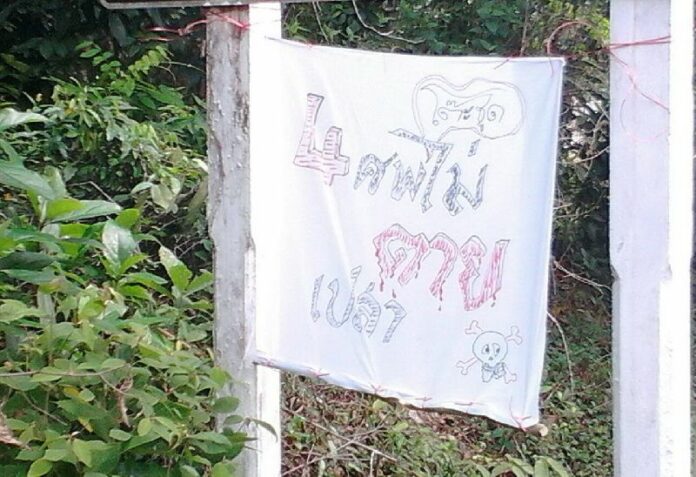
A sign hung by the entrace of To Chud village, found by police on 24 April 2015.

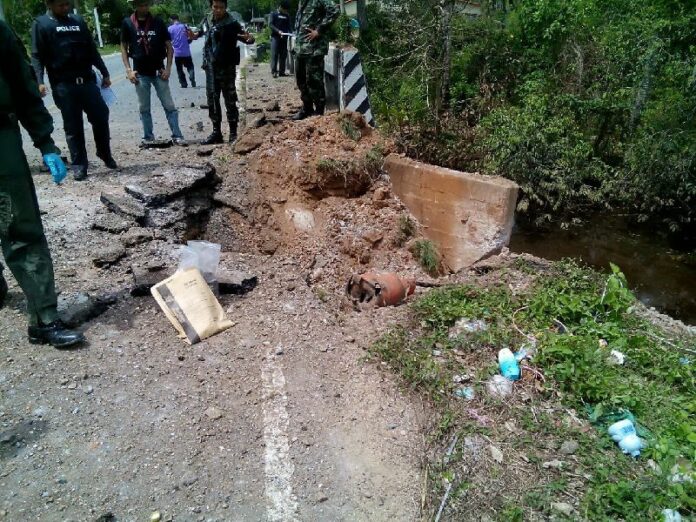
PATTANI — Four security officers in Pattani province were injured by a bomb that appeared to be planted in revenge for the the military raid that killed four civilians last month.

The explosive detonated on the side of Mayor – Thung Yang Daeng Road when a military vehicle drove by this morning, slightly injuring two soldiers and two paramilitary rangers who were riding in the truck. Two more unexploded IEDs were found near the site, police say.

\
The site of a roadside bombing on 
Mayor – Thung Yang Daeng Road in Pattani, 24 April 2015.

The blast took place less than 30 minutes after police found a banner in nearby To Chud village that vowed to avenge the killing of four men by security officers in the village on 25 March.

The banner, hung near the village's entrance, read: "The four dead of To Chud will not die in vain."

The four men, in their early twenties and thirties, were shot dead by security officers during a raid that the military said was an attempt to arrest insurgents who were planning to stage attacks against the authorities in the region. The military initially told the media the four victims were armed militants who opened fire on security officers, prompting the officers to shoot back.

However, an independent committee ruled on 6 April that the four men were not related to the ongoing Islamic insurgency in the region, or armed when the raid took place, citing forensic evidence and witnesses' testimonies. 

Lt.Gen. Prakarn Chollayuth, the army commander who oversees Pattani and its neighboring provinces, accepted the committee's finding and publicly apologized for the incident the following day. 

The bloody secessionist movement is waged by a shadowy network of Islamic insurgents and has gripped Thailand’s southern border provinces of Pattani, Yala, and Narathiwat for the past decade, claiming the lives of more than 6,000 people.

Although most have died in bomb attacks and shootings staged by insurgent groups, Thai authorities have also been criticized for using excessive violence and violating human rights in their effort to combat the secessionist movement.

At least two other violent incidents took place in the region this morning, police say. Four civilians were injured by a roadside bomb in Narathiwat province, and two gunmen on a motorcycle fired at least 16 shots with an assault rifle at the residence of a deputy village chief in Songkhla province, police say. The shots broke the house's windows and damaged a car, but no one was injured.

Police believe both incidents are related to the southern insurgency.

Raid commander transferred 

Yesterday, Col. Pramote Prom-in, spokesperson of a counter-insurgency unit, said the director of 41st Ranger Regiment and his deputy have been transferred because of their roles in the deadly raid on To Chud, which was led by 41st Ranger Regiment and supported by soldiers and police officers.

Four soldiers and three police officers have also been charged with murder for the incident, the commander of the Southern Border Provinces Police Operation Center said yesterday, contradicting initial reports that all seven of the officers charged in connection with the raid were soldiers.

According to Pol.Maj.Gen. Anurut Kritsanakaraket, three soldiers and three police officers reported to the police on 20 April and were formally charged with murder, which carries a maximum penalty of execution. 

The six suspects, who Pol.Maj.Gen. Anurut declined to identify by name, were released after they heard their charges.

Human rights activists have criticized the impunity granted to most security officers responsible for violence in the southern border-provinces, a region known as the Deep South. 

 
For comments, or corrections to this article please contact: [email protected]

You can also find Khaosod English on Twitter and Facebook
http://twitter.com/KhaosodEnglish
http://www.facebook.com/KhaosodEnglish

Advertisement

Suspected Revenge Attack on Soldiers for Deadly Deep South Raid

The blast site of a roadside bombing in Pattani province, 24 April 2015.

PATTANI — Four security officers in Pattani province were injured by a bomb that appeared to be planted in revenge for the the military raid that killed four civilians last month.

The explosive detonated on the side of Mayor – Thung Yang Daeng Road when a military vehicle drove by this morning, slightly injuring two soldiers and two paramilitary rangers who were riding in the truck. Two more unexploded IEDs were found near the site, police say.

\
A sign hung by the entrace of To Chud village, found by police on 24 April 2015.

The blast took place less than 30 minutes after police found a banner in nearby To Chud village that vowed to avenge the killing of four men by security officers in the village on 25 March.

The banner, hung near the village's entrance, read: "The four dead of To Chud will not die in vain."

The four men, in their early twenties and thirties, were shot dead by security officers during a raid that the military said was an attempt to arrest insurgents who were planning to stage attacks against the authorities in the region. The military initially told the media the four victims were armed militants who opened fire on security officers, prompting the officers to shoot back.

However, an independent committee ruled on 6 April that the four men were not related to the ongoing Islamic insurgency in the region, or armed when the raid took place, citing forensic evidence and witnesses' testimonies. 

Lt.Gen. Prakarn Chollayuth, the army commander who oversees Pattani and its neighboring provinces, accepted the committee's finding and publicly apologized for the incident the following day. 

The bloody secessionist movement is waged by a shadowy network of Islamic insurgents and has gripped Thailand’s southern border provinces of Pattani, Yala, and Narathiwat for the past decade, claiming the lives of more than 6,000 people.

Although most have died in bomb attacks and shootings staged by insurgent groups, Thai authorities have also been criticized for using excessive violence and violating human rights in their effort to combat the secessionist movement.

At least two other violent incidents took place in the region this morning, police say. Four civilians were injured by a roadside bomb in Narathiwat province, and two gunmen on a motorcycle fired at least 16 shots with an assault rifle at the residence of a deputy village chief in Songkhla province, police say. The shots broke the house's windows and damaged a car, but no one was injured.

Police believe both incidents are related to the southern insurgency.

Raid commander transferred 

Yesterday, Col. Pramote Prom-in, spokesperson of a counter-insurgency unit, said the director of 41st Ranger Regiment and his deputy have been transferred because of their roles in the deadly raid on To Chud, which was led by 41st Ranger Regiment and supported by soldiers and police officers.

Four soldiers and three police officers have also been charged with murder for the incident, the commander of the Southern Border Provinces Police Operation Center said yesterday, contradicting initial reports that all seven of the officers charged in connection with the raid were soldiers.

According to Pol.Maj.Gen. Anurut Kritsanakaraket, three soldiers and three police officers reported to the police on 20 April and were formally charged with murder, which carries a maximum penalty of execution. 

The six suspects, who Pol.Maj.Gen. Anurut declined to identify by name, were released after they heard their charges.

Human rights activists have criticized the impunity granted to most security officers responsible for violence in the southern border-provinces, a region known as the Deep South. 

 
For comments, or corrections to this article please contact: [email protected]

You can also find Khaosod English on Twitter and Facebook
http://twitter.com/KhaosodEnglish
http://www.facebook.com/KhaosodEnglish

Advertisement

Iranian Girl's Case Stirs New Debate Over Australia Asylum Seekers

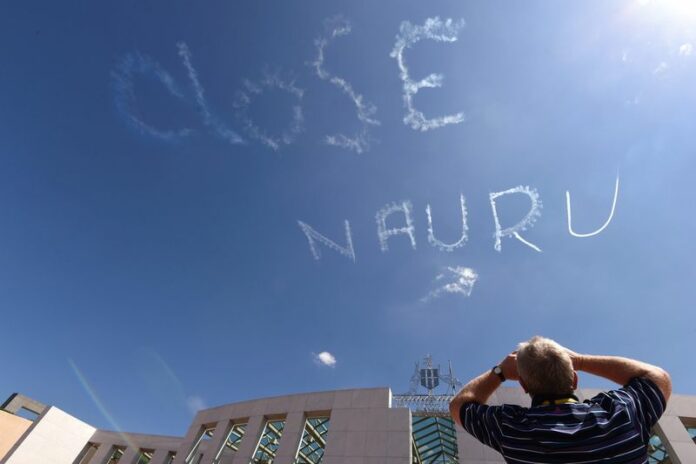
A file photo shows the words 'CLOSE NAURU' in the sky above Parliament House in Canberra, Australia, 17 February 2015. More than 100 Australian organizations including churches, human rights and community groups appealed to the government not to transfer asylum seekers to overseas detention centres. EPA/MICK TSIKAS AUSTRALIA AND NEW ZEALAND OUT

SYDNEY (DPA) — More than 100 Australian organizations including churches, human rights and community groups appealed to the government Friday not to transfer asylum seekers to overseas detention centres.

At the centre of the appeal is a five-year-old Iranian girl who was brought from the Nauru detention centre to Australia with her father, who was seeking medical treatment. The government plans to send her back to Nauru after the treatment is over.

Paul Power, chief executive of the Refugee Council of Australia, said the girl had attempted suicide because she fears being sent back.

"This young girl … is obviously profoundly and negatively impacted by the Australian Government's policy of detaining children in extremely harsh environments, is indicative of the inability of the inadequacy of this current policy," Power said in a statement.

The public appeal by the 100 organizations said conditions at the Nauru and Papua New Guinea's Manus Island detention centres were leading to inmates suffering mental distress and post-traumatic stress disorder.

"Returning those people, including children, to the place of their suffering and even to the place where they may have experienced sexual abuse, amounts to cruel, inhumane and degrading treatment," the organizations said in their joint statement.

The organizations making the appeal included refugee support groups, churches of all demoninations, Jewish groups, unions, UNICEF, Oxfam, and lawyers.

There was no immediate reaction from the government.

Greens Senator Sarah Hanson-Young yesterday accused Immigration Minister Peter Dutton of torturing the girl by not removing her from detention as psychiatrists advised.

Dutton said her comments were "repugnant" but the family could leave Nauru by accepting the government's offer to all detainees to start a new life in Cambodia.

Dutton said some refugees held at the overseas detention centres had accepted the offer and will shortly travel to Cambodia. He is warning the detainees that unless they accept the offer soon the cash assistance to resettle will be reduced.

 
For comments, or corrections to this article please contact: [email protected]

You can also find Khaosod English on Twitter and Facebook
http://twitter.com/KhaosodEnglish
http://www.facebook.com/KhaosodEnglish

Advertisement

Prayuth to Use Executive Powers for Under-Fire Fishing Industry

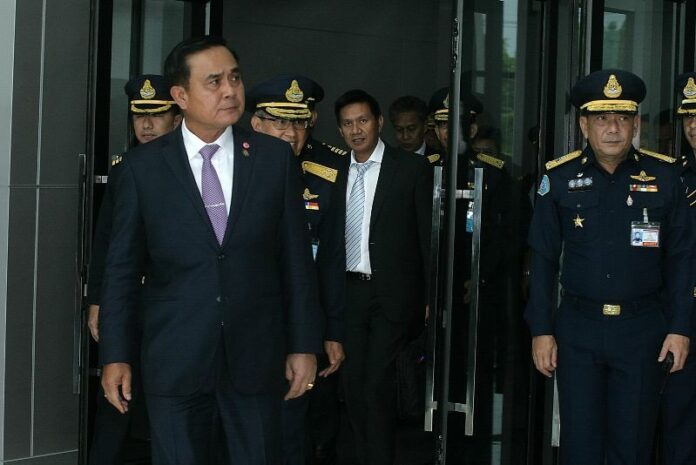
Thai Prime Minister and junta leader Gen. Prayuth Chan-ocha at the Royal Thai Air Force base, 23 April 2015.

BANGKOK (DPA) — Thai Prime Minister Prayuth Chan-ocha will use his sweeping executive powers to tackle illegal fishing and human trafficking in the country's fishing industry, a cabinet source said Friday.

Such practices have harmed the reputation of Thailand's fishing industry, and brought warnings from the country's main trade partners.

The head of the military government will use section 44 of the interim constitution, which grants him power to issue executive orders, to tackle the problem, a source inside the cabinet told dpa.

The US House of Representatives heard on Thursday that human trafficking issues persist in Thailand's fishing industry.

"The problem is so egregious that the US Department of Labor has officially highlighted Thai seafood as a tainted commodity" said Mark Lagon, President of Freedom House, to the House Committee on Global Human Rights.

On Tuesday, the European Union issued a "yellow card" for Thailand's fishing industry over illegal fishing.

The "yellow card" means that Thailand has six months to address the problems of illegal fishing or face sanctions.

"I do not know when the EU will withdraw the [yellow card] but we have made these [issues] a priority on the national agenda," Prayuth said to reporters on Thursday.

About 15 per cent of world fish catches are thought to be illegal, unreported or unregulated, accounting annually for up to 26 million tons of fish worth 10 billion euros (10.8 billion dollars).

Thailand is the world's third-largest exporter of fishery products. It was downgraded from a Tier 2 country to a Tier 3 country by the US State Department last year, placing it among the worst countries for human trafficking.

 
For comments, or corrections to this article please contact: [email protected]

You can also find Khaosod English on Twitter and Facebook
http://twitter.com/KhaosodEnglish
http://www.facebook.com/KhaosodEnglish

Advertisement

Thai Premier to Use Executive Powers for Under-Fire Fishing Industry

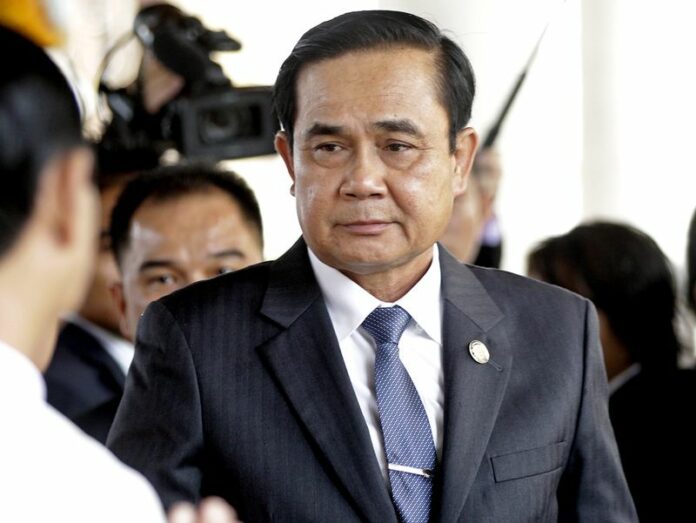
A file photo shows Thai Prime Minister Prayuth Chan-ocha at the Shwedagon Pagoda, Yangon, Myanmar, 10 October 2014. Chan-ocha will use his sweeping executive powers to tackle illegal fishing and human trafficking in the country's fishing industry. Photo: EPA/NYEIN CHAN NAING

BANGKOK (DPA) — Thai Prime Minister Prayuth Chan-ocha will use his sweeping executive powers to tackle illegal fishing and human trafficking in the country's fishing industry, a cabinet source said Friday.

Such practices have harmed the reputation of Thailand's fishing industry, and brought warnings from the country's main trade partners.

The head of the military government will use section 44 of the interim constitution, which grants him power to issue executive orders, to tackle the problem, a source inside the cabinet told dpa.

The US House of Representatives heard on Thursday that human trafficking issues persist in Thailand's fishing industry.

"The problem is so egregious that the US Department of Labor has officially highlighted Thai seafood as a tainted commodity" said Mark Lagon, President of Freedom House, to the House Committee on Global Human Rights.

On Tuesday, the European Union issued a "yellow card" for Thailand's fishing industry over illegal fishing.

The "yellow card" means that Thailand has six months to address the problems of illegal fishing or face sanctions.

"I do not know when the EU will withdraw the [yellow card] but we have made these [issues] a priority on the national agenda," Prayuth said to reporters on Thursday.

About 15 per cent of world fish catches are thought to be illegal, unreported or unregulated, accounting annually for up to 26 million tons of fish worth 10 billion euros (10.8 billion dollars).

Thailand is the world's third-largest exporter of fishery products. It was downgraded from a Tier 2 country to a Tier 3 country by the US State Department last year, placing it among the worst countries for human trafficking.


For comments, or corrections to this article please contact: [email protected]

You can also find Khaosod English on Twitter and Facebook
http://twitter.com/KhaosodEnglish
http://www.facebook.com/KhaosodEnglish

Advertisement

Police Forced to Give Up ‘Naga Body’ After Protests

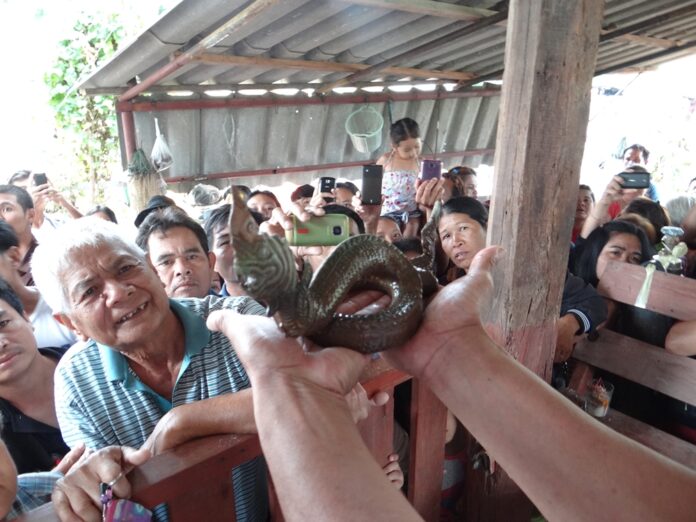
Crowds worship the ‘Naga body’ found in Roi Et province, 23 April 2015.

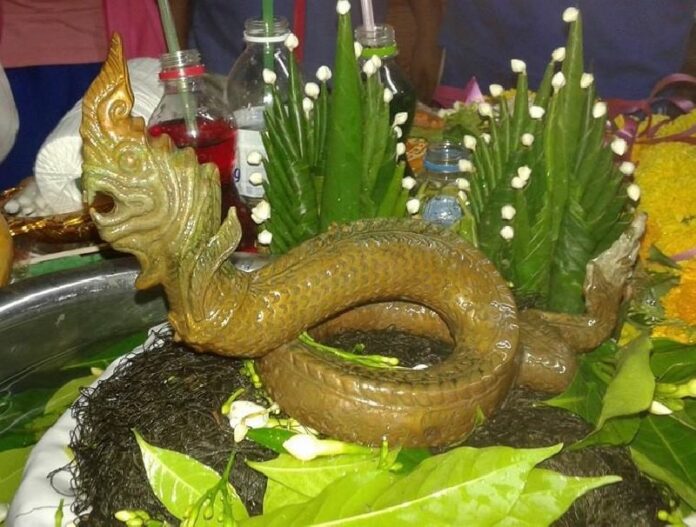
ROI ET — A protest flared up northeastern Thailand today after police confiscated a figurine that locals believed was a genuine corpse of the mythical beast known as the Naga.

Hundreds of pilgrims gathered in Roi Et’s Baan Kan Sai village today to pray to what they believe is a dead body of the Naga, a snake-like dragon featured in Buddhist cosmology.

Sayan Chomkamsingha, the 41-year-old owner of the house where the alleged Naga body was being enshrined, told police he found the object while he was fishing in a nearby pond three days ago. Sayan said the Naga’s body was moving and slimy when he first encountered it, but turned into bronze the moment it touched the air.

14297960881429796127l
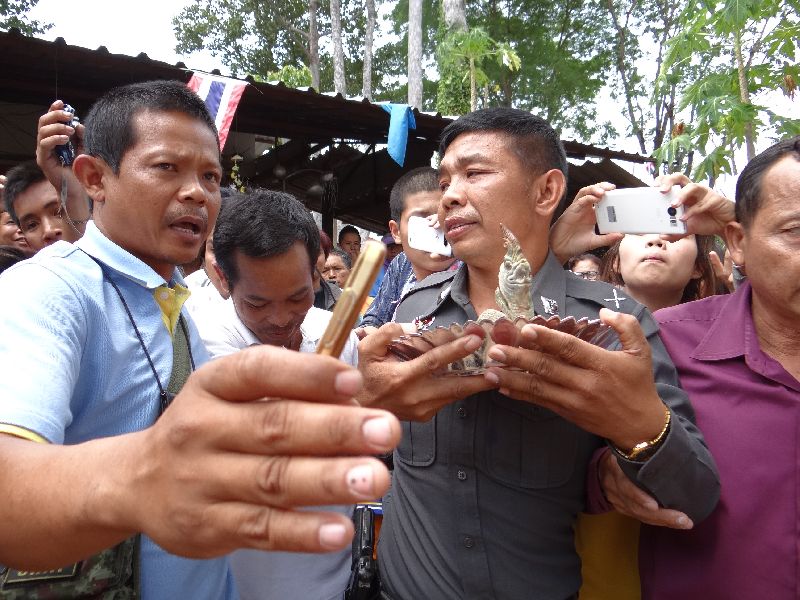
Police struggle against the crowd to bring the Naga statue to a police van, Roi Et, 23 April 2015.

Police arrived at Sayan’s house today to take the figurine to a local office of the Department of Fine Arts, where officials would determine whether it was an archaeological object and therefore a national treasure. Upon hearing the news, more than 300 pilgrims in the community began booing the officers and formed a mob, preventing them from taking the figurine.

\
Police struggle against the crowd to bring the Naga statue to a police van, Roi Et, 23 April 2015.

Teerasit Parkrit, the village chief of Baan Kan Sai, eventually convinced the crowd to back down, allowing the police to bring the object to their van. However, some enraged pilgrims ran after the police van and tried to break the vehicle’s window, leading to another round of negotiations.

The object was eventually taken to the Department of Fine Arts, where archaeologists ruled that it was made of metal and less than 30 year old, said Pol.Col. Weerawat Srabua, superintendent of Roi Et Police Station.

\
Locals surround the police van carrying the Naga statue, Roi Et, 23 April 2015.

Upon deciding that the object as not an archaeological national treasure, officials sent it back to the police.

More than 100 people soon gathered in front of Roi Et Police Station and demanded the police return the statue. Fearing an escalation, police sent the object back to Sayan and the protesters dispersed peacefully.

Some officers suspected Sayan was defrauding the hundreds of pilgrims who were donating money to the Naga’s shrine, police said.

Speaking to the media, Sayan insisted the Naga was genuine, and said he had no intention to exploit anyone.

“I am very saddened to hear that the police accused me of fraud,” he said.

\
Sayan pointing the pond where he found the Naga object, Roi Et, 23 April 2015.

His wife, Tiamchan Chomkamsingha, said she believes the figurine was the same Naga she spotted in the pond several months ago.

“When I was selling food next to Manao Pond, almost every day I saw the Naga reaching up to the surface and playing with water,” Tiamchan told reporters. “It’s a miracle.”

Alleged sightings of the Naga are common in northeastern Thailand. Every November, thousands of Thais gather on the banks of the Mekong river in Nong Khai province to watch the Naga shoot mysterious “fireballs” into the sky. The event also brings annual heated debates over the source of the fireballs, which skeptics says are incendiary bullets fired from rifles on the other side of the river.

Related coverage:

Paleontologists to Investigate ‘Naga Fossil

Advertisement

Police Forced to Give Up 'Naga Body' After Protests

The Naga statue found in a pond in Roi Et province, 23 April 2015.

ROI ET — A protest flared up northeastern Thailand today after police confiscated a figurine that locals believed was a genuine corpse of the mythical beast known as the Naga.

Hundreds of pilgrims gathered in Roi Et's Baan Kan Sai village today to pray to what they believe is a dead body of the Naga, a snake-like dragon featured in Buddhist cosmology. 

\
Crowds worship the 'Naga body' found in Roi Et province, 23 April 2015.

Sayan Chomkamsingha, the 41-year-old owner of the house where the alleged Naga body was being enshrined, told police he found the object while he was fishing in a nearby pond three days ago. Sayan said the Naga's body was moving and slimy when he first encountered it, but turned into bronze the moment it touched the air. 

Police arrived at Sayan’s house today to take the figurine to a local office of the Department of Fine Arts, where officials would determine whether it was an archaeological object and therefore a national treasure. Upon hearing the news, more than 300 pilgrims in the community began booing the officers and formed a mob, preventing them from taking the figurine. 

\
Police struggle against the crowd to bring the Naga statue to a police van, Roi Et, 23 April 2015.

Teerasit Parkrit, the village chief of Baan Kan Sai, eventually convinced the crowd to back down, allowing the police to bring the object to their van. However, some enraged pilgrims ran after the police van and tried to break the vehicle's window, leading to another round of negotiations.

The object was eventually taken to the Department of Fine Arts, where archaeologists ruled that it was made of metal and less than 30 year old, said Pol.Col. Weerawat Srabua, superintendent of Roi Et Police Station.

\
Locals surround the police van carrying the Naga statue, Roi Et, 23 April 2015.

Upon deciding that the object as not an archaeological national treasure, officials sent it back to the police.

More than 100 people soon gathered in front of Roi Et Police Station and demanded the police return the statue. Fearing an escalation, police sent the object back to Sayan and the protesters dispersed peacefully.

Some officers suspected Sayan was defrauding the hundreds of pilgrims who were donating money to the Naga’s shrine, police said.

Speaking to the media, Sayan insisted the Naga was genuine, and said he had no intention to exploit anyone.

"I am very saddened to hear that the police accused me of fraud," he said.

\
Sayan pointing the pond where he found the Naga object, Roi Et, 23 April 2015.

His wife, Tiamchan Chomkamsingha, said she believes the figurine was the same Naga she spotted in the pond several months ago. 

"When I was selling food next to Manao Pond, almost every day I saw the Naga reaching up to the surface and playing with water," Tiamchan told reporters. "It's a miracle."

Alleged sightings of the Naga are common in northeastern Thailand. Every November, thousands of Thais gather on the banks of the Mekong river in Nong Khai province to watch the Naga shoot mysterious "fireballs" into the sky. The event also brings annual heated debates over the source of the fireballs, which skeptics says are incendiary bullets fired from rifles on the other side of the river.

Related coverage:
Paleontologists to Investigate 'Naga Fossil'


For comments, or corrections to this article please contact: [email protected]

You can also find Khaosod English on Twitter and Facebook
http://twitter.com/KhaosodEnglish
http://www.facebook.com/KhaosodEnglish

Advertisement

Anti-Coup Thinkers Released from Junta's Reform Forum

Payao Akhard at the Army club in Bangkok on 22 April, 2015.

BANGKOK — Several dozen anti-coup activists, politicians, and academics have been released from a junta-organized forum on reform and reconciliation today.

Most of the people invited to the forum are well-known critics of the military junta, which came to power in the military coup eleven months ago.

One exception was Abhisit Vejjajiva, the leader of the Democrat Party, which initially welcomed the coup but has since criticized the junta’s reform process.

Today’s forum was organized by the junta-appointed Center for Reconciliation and Reform (CRR) at the Army Club in Bangkok. Reporters were not allowed inside the venue, and all of the invitees were asked to leave their mobile phones at the door. 

\
Ekachai Chainuvati showing the extra clothes he brought to the Army Club meeting, 23 April 2015.

Some of the attendees, who were invited through hand-delivered letters last night, expressed relief at being released. Ekachai Chainuvati, a law professor at Siam University, showed reporters the pajamas he brought to the meeting, just in case the military decided to detain him an others at army camps.

In the wake of the military coup, the junta summoned and detained hundreds of political figures in army camps for up to seven days of "attitude adjustment."

The first to leave the venue was Natchacha Kongudom, a pro-democracy student activist from Bangkok University. She emerged from Army Club at around 1:40 pm and said she told military officers she had another appointment to attend.

According to Natchacha, the meeting was chaired by army officers who told her and other attendees that the government wanted to hear their opinions to promote reconciliation between Thailand’s divided political factions, which were both staging mass demonstrations in Bangkok prior to the coup. The officers asked the invitees not to tell the media what was discussed at the forum because "they didn't want the issues to lead to conflicts," she said.

Since seizing power, the junta has banned political gatherings and censored the media in order with the stated aim of decreasing political tensions. 

Natchaha said she stressed the importance of justice and freedom of expression during the talk.

\
Soldiers outside of the Army club in Bangkok on 23 April 2015.

Speaking to reporters later in the afternoon, former Pheu Thai Party MP Worachai Hema said both Pheu Thai and Democrat representatives agreed during the conference that the new constitution should "promote reconciliation and reduce conflicts." He also urged the junta-appointed Constitution Drafting Committee to take its time and ensure that the charter will establish a democratic regime.

"Today the conflict is not only about Democrat, Pheu Thai, UDD [Redshirts], and PCAD [Yellowshirts]," Worachai said, naming the rival groups that have been locked in a power struggle for much of the past decade. "The conflict is between conservatives and people who love democracy. We need to find a way for the two groups to walk together. Today, all sides should join hands to solve conflicts in the country. If the NCPO is serious about solving problems, it must submit these opinions to the Constitution Drafting Committee. Otherwise it's useless." 

Nattawut Saikua, a core leader of the Redshirt movement, told reporters he spoke about how Thailand’s recent political disputes have been constantly waged by "conservatives and liberals" since democracy was first established in 1932. 

"If the same, old problems are not solved, it will keep breeding new combatants. Today, what society needs, and what will lead to reconciliation, is a balance of power so that everyone will be equal under the highest law that is of democratic nature, and is enforced fairly," Nattawut said.

He said he also submitted several other suggestions to the forum, such as providing amnesty and compensation to protesters who were killed, injured, or arrested by security forces in the past decade; a fair, democratic constitution that is accepted by all sides; a fair and transparent election; and resignation of all of the current heads of unelected "watchdog" agencies.

"The security officers promise they will pass my suggestions along to their superior officers," Nattawut said. 

\
Piyarat Chongthep, Thammasat University student and critic of the coup, at the Army club on 23 April 2015.

Payao Akhard, the mother of volunteer nurse killed by soldiers during the military crackdown on Redshirt protests in 2010, was disappointed with the forum, which she felt was focused on a issues concerning politicians and the NCPO. 

"They barely touched on issues that matter to the common people," Payao said. "If I had known that it was only for reconciliation between politicians and NCPO, I wouldn't have wasted my time attending the forum."

Payao said she spoke about how both the protest leaders and the military were guilty for the clashes in 2010, which left more than 90 people dead, including her daughter, Kamolkate Akhard. Although most of the casualties were civilians believed to have been killed by security officers, a number of soldiers were also slain by armed militants allied to the Redshirt protesters.  

"To build reconciliation, they should look to the people first. The army and all the protest leaders should have a conscience and apologize to the people first. But in the past, it seems that the army didn't care about this at all. So, to conclude, the forum today didn't have anything that satisfied me at all. I was even wondering, how can there be a reconciliation, when all I sat through was politicians talking to each other?" Payao said. 

The junta has promised to hold elections early next year after a new constitution has been finalized, provided that the political situation is deemed "stable." 

For comments, or corrections to this article please contact: [email protected]

You can also find Khaosod English on Twitter and Facebook
http://twitter.com/KhaosodEnglish
http://www.facebook.com/KhaosodEnglish

Advertisement

Anti-Coup Thinkers Released from Junta's Reform Forum

Piyarat Chongthep, Thammasat University student and critic of the coup, at the Army club on 22 April 2015.

BANGKOK — Several dozen anti-coup activists, politicians, and academics have been released from a junta-organized forum on reform and reconciliation today.

Most of the people invited to the forum are well-known critics of the military junta, which came to power in the military coup eleven months ago.

One exception was Abhisit Vejjajiva, the leader of the Democrat Party, which initially welcomed the coup but has since criticized the junta’s reform process.

Today’s forum was organized by the junta-appointed Center for Reconciliation and Reform (CRR) at the Army Club in Bangkok. Reporters were not allowed inside the venue, and all of the invitees were asked to leave their mobile phones at the door. 

\
Ekachai Chainuvati showing the extra clothes he brought to the Army Club meeting, 23 April 2015.

Some of the attendees, who were invited through hand-delivered letters last night, expressed relief at being released. Ekachai Chainuvati, a law professor at Siam University, showed reporters the pajamas he brought to the meeting, just in case the military decided to detain him and others at army camps.

In the wake of the military coup, the junta summoned and detained hundreds of political figures in army camps for up to seven days of "attitude adjustment."

The first to leave the venue was Natchacha Kongudom, a pro-democracy student activist from Bangkok University. She emerged from Army Club at around 1:40 pm and said she told military officers she had another appointment to attend.

According to Natchacha, the meeting was chaired by army officers who told her and other attendees that the government wanted to hear their opinions to promote reconciliation between Thailand’s divided political factions, which were both staging mass demonstrations in Bangkok prior to the coup. The officers asked the invitees not to tell the media what was discussed at the forum because "they didn't want the issues to lead to conflicts," she said.

Since seizing power, the junta has banned political gatherings and censored the media in order with the stated aim of decreasing political tensions. 

Natchaha said she stressed the importance of justice and freedom of expression during the talk.

\
Soldiers outside of the Army club in Bangkok on 23 April 2015.

Speaking to reporters later in the afternoon, former Pheu Thai Party MP Worachai Hema said both Pheu Thai and Democrat representatives agreed during the conference that the new constitution should "promote reconciliation and reduce conflicts." He also urged the junta-appointed Constitution Drafting Committee to take its time and ensure that the charter will establish a democratic regime.

"Today the conflict is not only about Democrat, Pheu Thai, UDD [Redshirts], and PCAD [Yellowshirts]," Worachai said, naming the rival groups that have been locked in a power struggle for much of the past decade. "The conflict is between conservatives and people who love democracy. We need to find a way for the two groups to walk together. Today, all sides should join hands to solve conflicts in the country. If the NCPO is serious about solving problems, it must submit these opinions to the Constitution Drafting Committee. Otherwise it's useless." 

Nattawut Saikua, a core leader of the Redshirt movement, told reporters he spoke about how Thailand’s recent political disputes have been constantly waged by "conservatives and liberals" since democracy was first established in 1932. 

"If the same, old problems are not solved, it will keep breeding new combatants. Today, what society needs, and what will lead to reconciliation, is a balance of power so that everyone will be equal under the highest law that is of democratic nature, and is enforced fairly," Nattawut said.

He said he also submitted several other suggestions to the forum, such as providing amnesty and compensation to protesters who were killed, injured, or arrested by security forces in the past decade; a fair, democratic constitution that is accepted by all sides; a fair and transparent election; and resignation of all of the current heads of unelected "watchdog" agencies.

"The security officers promise they will pass my suggestions along to their superior officers," Nattawut said. 

\
Payao Akhard at the Army club in Bangkok on 23 April, 2015.

Payao Akhard, the mother of volunteer nurse killed by soldiers during the military crackdown on Redshirt protests in 2010, was disappointed with the forum, which she felt was focused on a issues concerning politicians and the NCPO. 

"They barely touched on issues that matter to the common people," Payao said. "If I had known that it was only for reconciliation between politicians and NCPO, I wouldn't have wasted my time attending the forum."

Payao said she spoke about how both the protest leaders and the military were guilty for the clashes in 2010, which left more than 90 people dead, including her daughter, Kamolkate Akhard. Although most of the casualties were civilians believed to have been killed by security officers, a number of soldiers were also slain by armed militants allied to the Redshirt protesters.  

"To build reconciliation, they should look to the people first. The army and all the protest leaders should have a conscience and apologize to the people first. But in the past, it seems that the army didn't care about this at all. So, to conclude, the forum today didn't have anything that satisfied me at all. I was even wondering, how can there be a reconciliation, when all I sat through was politicians talking to each other?" Payao said. 

The junta has promised to hold elections early next year after a new constitution has been finalized, provided that the political situation is deemed "stable." 

For comments, or corrections to this article please contact: [email protected]

You can also find Khaosod English on Twitter and Facebook
http://twitter.com/KhaosodEnglish
http://www.facebook.com/KhaosodEnglish

Advertisement

Hot News

LATEST NEWS

Bangkok
scattered clouds
30 ° C
32.2 °
30 °
80 %
2kmh
48 %
Fri
31 °
Sat
36 °
Sun
36 °
Mon
36 °
Tue
34 °