30 C
Bangkok
Saturday, June 27, 2026
Home Blog Page 3018

Thai Navy Petitions Govt to Buy Submarines

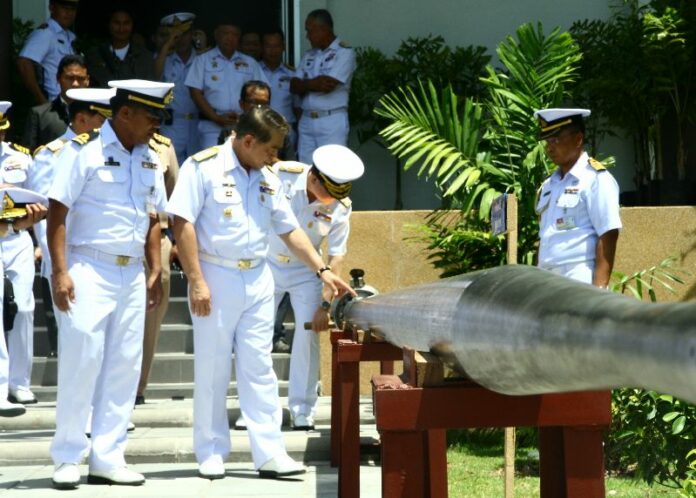
Admiral Narong Pipattanasai, then-Navy chief, observes the remains of Thailand's last submarine during a visit to the headquarters of the Navy's submarine division on 7 July 2014 [Photo: Thai Navy website]

BANGKOK — The Royal Thai Navy has formally submitted a request to the government to buy submarines for its submarine division, which has lacked a single vessel for the last 64 years.

Admiral Kraisorn Chansuvanich, commander of the Thai navy, said he hopes the cabinet will deliberate on the request soon, because submarines are needed to bolster Thailand’s armed forces.

\
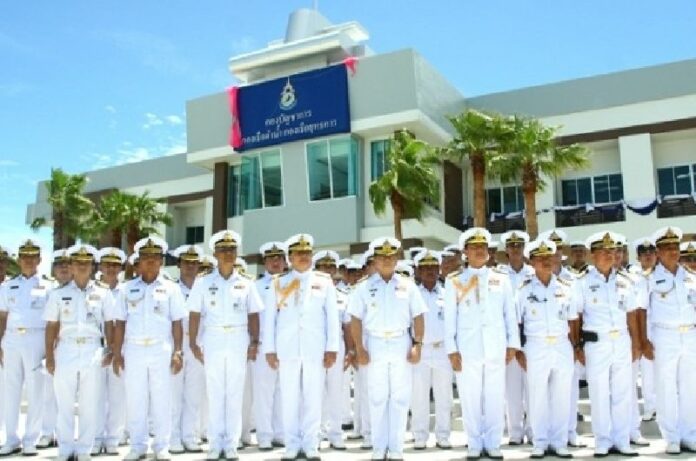
The headquarters of the Royal Thai Navy's submarine division in Chonburi province [Photo: Thai Navy wesbite].

"Neighboring countries like Vietnam, Malaysia, Indonesia, and Singapore have had submarines in their arsenals for many years," ADM Kraisorn said. "Now that I am here, I think it is a part of the strategy to improve our armed forces. It's my duty to submit the request to the government for consideration. Whether the government will approve it or not is up to them."

He added that the navy does not have any preference for where the submarines are manufactured, as long as they fit Thailand's needs. ADM Kraisorn also urged the government to approve the submarine purchases soon, as acquiring the ships will be a lengthy process.

"Even if the government approved the purchase today, we won’t be able to acquire them instantly, because time will be needed to build the ships and send our personnel to receive training and improve their expertise for one to two years. So, it will take at least five or six years before submarines can enter our service. If we do not start now, we have to wait for a long time," ADM Kraisorn explained. 

\
Then-Navy chief Admiral Narong Pipattanasai observes the remains of Thailand's last submarine during a visit to the headquarters of the Navy's submarine division on 7 July 2014 [Photo: Thai Navy website]

According to ADM Kraisorn, a number of countries are willing to sell submarines to Thailand, such as South Korea, China, Russia, Germany, and Sweden. 

The last of Thai Navy's submarines were decommissioned in 1951 following an attempted coup d'etat launched by Navy officers that year. The Navy had similarly tried and failed to overthrow the government two years earlier. 

Following the failed coup d'etat of 1951, the government moved to dismantle the Navy's influence in the armed force, stripping it of submarines, a marine force, and war planes. The Navy headquarters in Bangkok were also shut down for several years. The Navy's marine force was restored in 1955 on the advice of the United States military, who trained the corps. 

 
For comments, or corrections to this article please contact[email protected]

You can also find Khaosod English on Twitter and Facebook
http://twitter.com/KhaosodEnglish
http://www.facebook.com/KhaosodEnglish

Advertisement

Thai Navy Petitions Govt to Buy Submarines

The headquarters of the Royal Thai Navy's submarine division in Chonburi province [Photo: Thai Navy wesbite].

BANGKOK — The Royal Thai Navy has formally submitted a request to the government to buy submarines for its submarine division, which has lacked a single vessel for the last 64 years.

Admiral Kraisorn Chansuvanich, commander of the Thai navy, said he hopes the cabinet will deliberate on the request soon, because submarines are needed to bolster Thailand’s armed forces.

"Neighboring countries like Vietnam, Malaysia, Indonesia, and Singapore have had submarines in their arsenals for many years," ADM Kraisorn said. "Now that I am here, I think it is a part of the strategy to improve our armed forces. It's my duty to submit the request to the government for consideration. Whether the government will approve it or not is up to them."

He added that the navy does not have any preference for where the submarines are manufactured, as long as they fit Thailand's needs. ADM Kraisorn also urged the government to approve the submarine purchases soon, as acquiring the ships will be a lengthy process.

"Even if the government approved the purchase today, we won’t be able to acquire them instantly, because time will be needed to build the ships and send our personnel to receive training and improve their expertise for one to two years. So, it will take at least five or six years before submarines can enter our service. If we do not start now, we have to wait for a long time," ADM Kraisorn explained. 

According to ADM Kraisorn, a number of countries are willing to sell submarines to Thailand, such as South Korea, China, Russia, Germany, and Sweden. 

\
Then-Navy chief Admiral Narong Pipattanasai observes the remains of Thailand's last submarine during a visit to the headquarters of the Navy's submarine division on 7 July 2014 [Photo: Thai Navy website]

The last of Thai Navy's submarines were decommissioned in 1951 following an attempted coup d'etat launched by Navy officers that year. The Navy had similarly tried and failed to overthrow the government two years earlier. 

Following the failed coup d'etat of 1951, the government moved to dismantle the Navy's influence in the armed force, stripping it of submarines, a marine force, and war planes. The Navy headquarters in Bangkok were also shut down for several years. The Navy's marine force was restored in 1955 on the advice of the United States military, who trained the corps. 

 
For comments, or corrections to this article please contact[email protected]

You can also find Khaosod English on Twitter and Facebook
http://twitter.com/KhaosodEnglish
http://www.facebook.com/KhaosodEnglish

Advertisement

Koh Samui Bombing: 6 Suspects in Army Custody

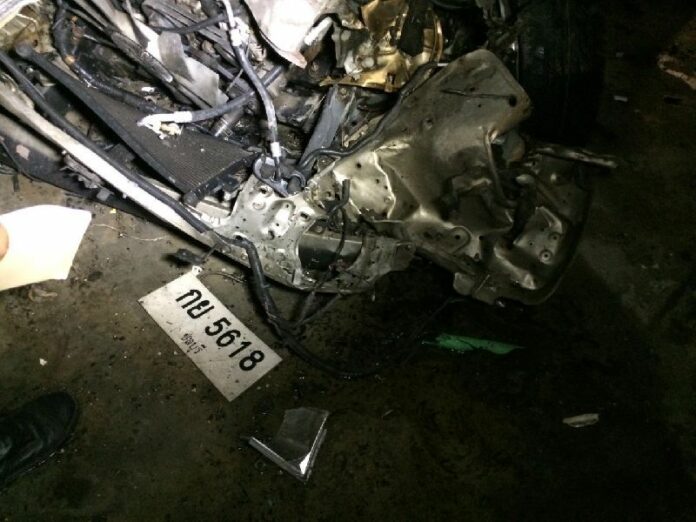
Wreckage from the car bomb that exploded in  Central Festival Samui shopping mall on 10 April, 2015.

SURAT THANI — The military has detained six suspects in connection with the car bomb that exploded in a shopping mall on the southern island of Koh Samui last month, a high-ranking military officer said.

Col. Pramote Prom-in, a spokesperson of the counter-insurgency Internal Security Operations Command (ISOC), said today that four of the suspects were detained under martial law, which grants the military sweeping powers to conduct arrests and searches without court warrants. Martial law has been imposed over the southern provinces of Pattani, Yala, and Narathiwat for the past nine years to combat the Islamic separatist violence that broke out in the region in early 2004. 

\
Wreckage from the car bomb that exploded in  
Central Festival Samui shopping mall on 10 April, 2015.

Col. Pramote said the six suspects, who are residents of Yala, are being interrogated for their suspected connection to the car bomb that was planted in Central Festival Samui shopping mall on 10 April. The car used in the attack was also from Yala, officers say, which is around 500km south of Koh Samui, a popular tourist island.

The blast injured seven civilians, including a 12-year-old Italian girl.

Almost simultaneously, a fire broke out at Surat Thani Cooperative Store on the mainland, though no one was injured. Police say the store belongs to Suthep Thaugsuban, former deputy chairman of the Democrat Party and the leader of the street protests that sought to topple the government overthrown in the May 2014 coup. 

Col. Pramote did not disclose where the suspects are being held. Under martial law, soldiers may detain individuals without charges for up to seven days. A report about the investigation into the bombing will be released to the public soon, he said.

"It is the duty of law enforcement officials to investigate the case," Col. Pramote said at the press conference, "They will explain about the case to the public in the future."

The officer also told reporters authorities have not yet determined the motive behind the twin attacks, saying "We have not ruled out any factor." 

\
The entrace to a roadside restaurant in Surat Thani where men driving the car used in the bombing reportedly stopped for lunch on 10 April 2015.

A waiter at a roadside restaurant in Surat Thani told police today that he recognized the vehicle used in the bomb attack because the drivers stopped at his restaurant several hours prior to the blast. 

According to police, the waiter at the restaurant, which sells halal food, said three men in their 20s and 30s spent approximately 40 minutes eating lunch at around 1:30 pm on 10 April, before heading north toward Koh Samui. The waiter reportedly police that the three men had "goatee beards" and did not conceal their faces. 

Police say they are working on sketches of the suspects based on the waiter's account. 

Car bombs are common in Muslim-dominated Yala and its neighboring provinces, where insurgents have been battling Thai authorities for the past decade. To date, no violence north of Songkhla province has been definitively traced to the secessionist movement.

 
For comments, or corrections to this article please contact[email protected]

You can also find Khaosod English on Twitter and Facebook
http://twitter.com/KhaosodEnglish
http://www.facebook.com/KhaosodEnglish

Advertisement

Koh Samui Bombing: 6 Suspects in Army Custody

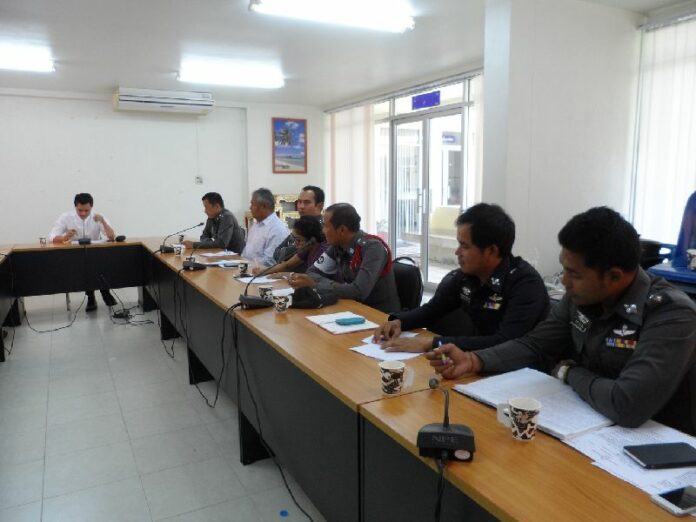
Police meet to discuss the 10 April car bomb on Koh Samui in Surat Thani, 21 April 2015.

SURAT THANI — The military has detained six suspects in connection with the car bomb that exploded in a shopping mall on the southern island of Koh Samui last month, a high-ranking military officer said.

Col. Pramote Prom-in, a spokesperson of the counter-insurgency Internal Security Operations Command (ISOC), said today that four of the suspects were detained under martial law, which grants the military sweeping powers to conduct arrests and searches without court warrants. Martial law has been imposed over the southern provinces of Pattani, Yala, and Narathiwat for the past nine years to combat the Islamic separatist violence that broke out in the region in early 2004. 

\
Wreckage from the car bomb that exploded in  
Central Festival Samui shopping mall on 10 April, 2015.

Col. Pramote said the six suspects, who are residents of Yala, are being interrogated for their suspected connection to the car bomb that was planted in Central Festival Samui shopping mall on 10 April. The car used in the attack was also from Yala, officers say, which is around 500km south of Koh Samui, a popular tourist island.

The blast injured seven civilians, including a 12-year-old Italian girl.

Almost simultaneously, a fire broke out at Surat Thani Cooperative Store on the mainland, though no one was injured. Police say the store belongs to Suthep Thaugsuban, former deputy chairman of the Democrat Party and the leader of the street protests that sought to topple the government overthrown in the May 2014 coup. 

Col. Pramote did not disclose where the suspects are being held. Under martial law, soldiers may detain individuals without charges for up to seven days. A report about the investigation into the bombing will be released to the public soon, he said.

"It is the duty of law enforcement officials to investigate the case," Col. Pramote said at the press conference, "They will explain about the case to the public in the future."

The officer also told reporters authorities have not yet determined the motive behind the twin attacks, saying "We have not ruled out any factor." 

\
The entrace to a roadside restaurant in Surat Thani where men driving the car used in the bombing reportedly stopped for lunch on 10 April 2015.

A waiter at a roadside restaurant in Surat Thani told police today that he recognized the vehicle used in the bomb attack because the drivers stopped at his restaurant several hours prior to the blast. 

According to police, the waiter at the restaurant, which sells halal food, said three men in their 20s and 30s spent approximately 40 minutes eating lunch at around 1:30 pm on 10 April, before heading north toward Koh Samui. The waiter reportedly police that the three men had "goatee beards" and did not conceal their faces. 

Police say they are working on sketches of the suspects based on the waiter's account. 

Car bombs are common in Muslim-dominated Yala and its neighboring provinces, where insurgents have been battling Thai authorities for the past decade. To date, no violence north of Songkhla province has been definitively traced to the secessionist movement.

 
For comments, or corrections to this article please contact[email protected]

You can also find Khaosod English on Twitter and Facebook
http://twitter.com/KhaosodEnglish
http://www.facebook.com/KhaosodEnglish

Advertisement

Anti-Coup Academics, Activists 'Invited' to Junta's Reform Talk

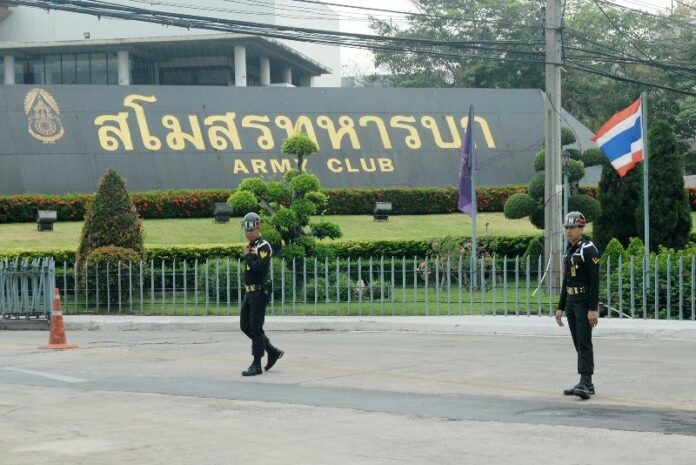
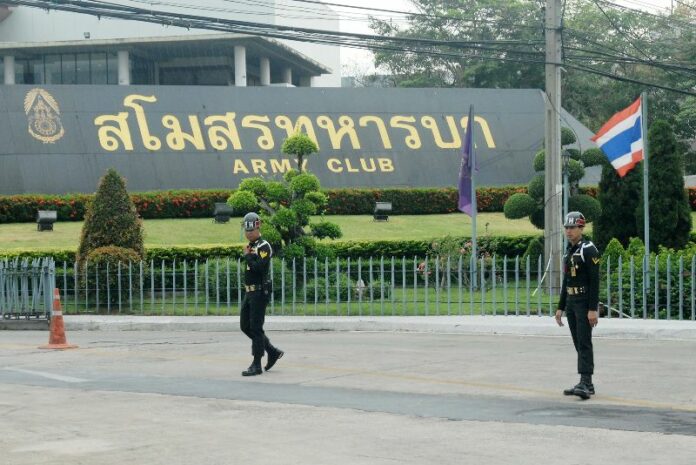
Soldiers at the Army club on 23 April 2015.

BANGKOK — Thailand's military junta has invited dozens of mostly anti-coup academics, activists, and politicians to a state-sanctioned forum on national reform today.

Yaowalak Anupan, a lawyer and co-founder of Thai Lawyer for Human Rights (TLHR)The forum was organized by the Center for Reconciliation and Reform (CRR), which was established by the junta following the military coup on 22 May 2014. 

Military officers personally visited some of the invitees by delivering letters to their homes last night. 

Those invited to today's forum include the following, among others:

  • Phumtham Wechayachai, secretary-general of Pheu Thai Party
  • Anusorn Eiamsa-ard, spokesperson of Pheu Thai Party
  • Chaturon Chaisaeng, former Education Minister and critic of the coup
  • Jatuporn Prompan, leader of the Redshirts' umbrella organization, the United Front of Democracy Against Dictatorship (UDD)
  • Nattawut Saikua, core UDD activist
  • Thida Thawornseth, core UDD activist
  • Abhisit Vejjajiva, leader of Democrat Party 
  • Pichit Likitkijsomboon, Thammasat University professor and critic of the coup
  • Piyabutr Saengkanokkul, Thammasat University professor, co-founder of Enlightened Jurists group, and critic of the coup
  • Pongkwan Sawasdipakdi, Thammasat University professor and critic of the coup 
  • Kengkij Kitirianglarp, academic and critic of the coup
  • Ekachai Chainuvati, Siam University professor and critic of the coup 
  • Arnon Nampha, lawyer and co-founder of anti-coup group Resistant Citizens
  • Piyarat Chongthep, Thammasat University student and critic of the coup
  • Winyat Chartmontri, lawyer who has represented many anti-coup activists 
  • Payao Akhard, mother of volunteer nurse killed by soldiers during the military crackdown on Redshirt protests in 2010
  • Natchacha Kongudom, a pro-democracy student activist from Bangkok University
  • Yaowalak Anupan, a lawyer and coup critic who co-founded the Thai Lawyer for Human Rights (TLHR)​
  • Atukkit Sawangsuk, columnist for Khaosod newspaper and critic of the coup 
  • Yodpol Thepsithar, Naresuan University professor and critic of the coup 

The invitations said the forum was a part of the CRR's mission to "collect information from people of all sides and groups to conclude, analyze, and determine the road map to solve conflicts, promote unity and reconciliation, and return happiness to the Thai people."

"The Center for Reconciliation and Reform (CRR) has determined that you are a person with knowledge and understanding of the situation that is taking place in Thailand, and an influential thinker in society," the letters read. 

After toppling an elected government that was beleaguered by street protests last May, the junta appointed councils to write a new constitution and implement a wide range of national reforms in the name of reconciling Thailand's bitterly divided political factions. The military government has also severely restricted freedom of expression by banning public protests and censoring the media in an effort to silence critics.  Earlier this year, a US official was reproached for encouraging the junta to lead a more inclusive reform process. 

The forum was held today at the Army Club on Viphavadi Road, where then-army chief Gen. Prayuth Chan-ocha staged a coup d'etat 11 months ago after after detaining rival politicians and protest leaders who had been invited for a "peace dialogue" at the venue. 

"I hope the soldiers will have honor and keep their words that they won't just arrest me there," Ekkachai wrote on his Facebook post last night. "I have to return to take care of my three sons."

Some of the invitees declined to attend the forum. Reporters were not allowed inside the venue, and the attendants were asked to leave their mobile phones at the door.

Speaking to reporters outside the building, UDD leader Jatuporn said he is willing to cooperate with the junta to promote national reconciliation. Winyat, a lawyer who has represented many anti-coup activists, said he was looking forward to providing his opinions on the junta’s reform efforts.

"I am a Thai who wants to see reconciliation. Now that the NCPO wants my opinion, I am ready to give it," Winyat said, using an acronym for the junta's formal name, the National Council for Peace and Order. "How the NCPO is exercising its power right now, I want them to end it as quickly as possible, because it affects [people's rights]. They say they are here to solve conflicts in the country, so I give them my support."

Piyabutr, an anti-coup Thammasat professor, wrote on his Facebook that he could not attend the forum because he had to teach a class today, and was only notified of the event yesterday.  He also questioned why the military visited him at home instead of mailing a letter.

"Heh, why didn't they send an invitation to my office? Usually, when state agencies invite me to attend a lecture or forum, they send letters or phone me. It's simple," Piyabutr wrote. "That way, they [soldiers] wouldn't have to burden themselves with driving around and trying to find my home for a long time."

For some anti-coup activists, the invitation was reminiscent of the summons orders issued by the junta in the wake of the May 2014 coup. In the weeks following the takeover, more than 300 academics, politicians and activists were publicly summoned to report to army camps, where they were detained for up to seven days of “attitude adjustment.” Most detainees were later forced to sign documents pledging not to engage in political activities as a condition of their release. 

Somsak Jeamteerasakul, a former Thammasat professor and a staunch critic of the coup who is currently living in exile, wrote on his Facebook that he believes last night’s invitations were an attempt to "send a signal" to activists and academics opposed to the military regime.

"It's to send a signal that 'We know who you are. We didn't summon you last night, but don't think we don't know you or don't know what you have been doing for much of the past year,'" wrote Somsak, who defied the junta's summons orders by fleeing the country last year.

The historian observed that many of the invitations were sent to the "new generation" of academics and activists who were not summoned last year. Somsak noted that the "older generation" of anti-coup critics like Worachet Pakeerut and Sombat Boonngarm-anong were not invited to the forum.

"There is no longer a need to summon the first group, because they have been already warned, controlled, and prosecuted," Somsak wrote.


 

For comments, or corrections to this article please contact: [email protected]

You can also find Khaosod English on Twitter and Facebook
http://twitter.com/KhaosodEnglish
http://www.facebook.com/KhaosodEnglish

Advertisement

Anti-Coup Academics, Activists 'Invited' to Junta's Reform Talk

Soldiers at the Army club in Bangkok on 23 April 2015.

BANGKOK — Thailand's military junta has invited dozens of mostly anti-coup academics, activists, and politicians to a state-sanctioned forum on national reform today.

The forum was organized by the Center for Reconciliation and Reform (CRR), which was established by the junta following the military coup on 22 May 2014. 

Military officers personally visited some of the invitees by delivering letters to their homes last night. 

Those invited to today's forum include the following, among others:

  • Phumtham Wechayachai, secretary-general of Pheu Thai Party
  • Anusorn Eiamsa-ard, spokesperson of Pheu Thai Party
  • Chaturon Chaisaeng, former Education Minister and critic of the coup
  • Jatuporn Prompan, leader of the Redshirts' umbrella organization, the United Front of Democracy Against Dictatorship (UDD)
  • Nattawut Saikua, core UDD activist
  • Thida Thawornseth, core UDD activist
  • Abhisit Vejjajiva, leader of Democrat Party 
  • Pichit Likitkijsomboon, Thammasat University professor and critic of the coup
  • Piyabutr Saengkanokkul, Thammasat University professor, co-founder of Enlightened Jurists group, and critic of the coup
  • Pongkwan Sawasdipakdi, Thammasat University professor and critic of the coup 
  • Kengkij Kitirianglarp, academic and critic of the coup
  • Ekachai Chainuvati, Siam University professor and critic of the coup 
  • Arnon Nampha, lawyer and co-founder of anti-coup group Resistant Citizens
  • Piyarat Chongthep, Thammasat University student and critic of the coup
  • Winyat Chartmontri, lawyer who has represented many anti-coup activists 
  • Payao Akhard, mother of volunteer nurse killed by soldiers during the military crackdown on Redshirt protests in 2010
  • Natchacha Kongudom, a pro-democracy student activist from Bangkok University
  • Yaowalak Anupan, a lawyer and coup critic who co-founded the Thai Lawyer for Human Rights (TLHR)​
  • Atukkit Sawangsuk, columnist for Khaosod newspaper and critic of the coup 
  • Yodpol Thepsithar, Naresuan University professor and critic of the coup 

The invitations said the forum was a part of the CRR's mission to "collect information from people of all sides and groups to conclude, analyze, and determine the road map to solve conflicts, promote unity and reconciliation, and return happiness to the Thai people."

"The Center for Reconciliation and Reform (CRR) has determined that you are a person with knowledge and understanding of the situation that is taking place in Thailand, and an influential thinker in society," the letters read. 

After toppling an elected government that was beleaguered by street protests last May, the junta appointed councils to write a new constitution and implement a wide range of national reforms in the name of reconciling Thailand's bitterly divided political factions. The military government has also severely restricted freedom of expression by banning public protests and censoring the media in an effort to silence critics. Earlier this year, a US official was reproached for encouraging the junta to lead a more inclusive reform process. 

Today's forum was held at the Army Club on Viphavadi Road, where then-army chief Gen. Prayuth Chan-ocha staged a coup d'etat 11 months ago after after detaining rival politicians and protest leaders who had been invited for a "peace dialogue" at the venue. 

"I hope the soldiers will have honor and keep their words that they won't just arrest me there," Ekkachai wrote on his Facebook post last night. "I have to return to take care of my three sons."

Some of the invitees declined to attend the forum. Reporters were not allowed inside the venue, and the attendants were asked to leave their mobile phones at the door.

Speaking to reporters outside the building, UDD leader Jatuporn said he is willing to cooperate with the junta to promote national reconciliation. Winyat, a lawyer who has represented many anti-coup activists, said he was looking forward to providing his opinions on the junta’s reform efforts.

"I am a Thai who wants to see reconciliation. Now that the NCPO wants my opinion, I am ready to give it," Winyat said, using an acronym for the junta's formal name, the National Council for Peace and Order. "How the NCPO is exercising its power right now, I want them to end it as quickly as possible, because it affects [people's rights]. They say they are here to solve conflicts in the country, so I give them my support."

Piyabutr, an anti-coup Thammasat professor, wrote on his Facebook that he could not attend the forum because he had to teach a class today, and was only notified of the event yesterday.  He also questioned why the military visited him at home instead of mailing a letter.

"Heh, why didn't they send an invitation to my office? Usually, when state agencies invite me to attend a lecture or forum, they send letters or phone me. It's simple," Piyabutr wrote. "That way, they [soldiers] wouldn't have to burden themselves with driving around and trying to find my home for a long time."

For some anti-coup activists, the invitation was reminiscent of the summons orders issued by the junta in the wake of the May 2014 coup. In the weeks following the takeover, more than 300 academics, politicians and activists were publicly summoned to report to army camps, where they were detained for up to seven days of “attitude adjustment.” Most detainees were later forced to sign documents pledging not to engage in political activities as a condition of their release. 

Somsak Jeamteerasakul, a former Thammasat professor and a staunch critic of the coup who is currently living in exile, wrote on his Facebook that he believes last night’s invitations were an attempt to "send a signal" to activists and academics opposed to the military regime.

"It's to send a signal that 'We know who you are. We didn't summon you last night, but don't think we don't know you or don't know what you have been doing for much of the past year,'" wrote Somsak, who defied the junta's summons orders by fleeing the country last year.

The historian observed that many of the invitations were sent to the "new generation" of academics and activists who were not summoned last year. Somsak noted that the "older generation" of anti-coup critics like Worachet Pakeerut and Sombat Boonngarm-anong were not invited to the forum.

"There is no longer a need to summon the first group, because they have been already warned, controlled, and prosecuted," Somsak wrote.

 

For comments, or corrections to this article please contact: [email protected]

You can also find Khaosod English on Twitter and Facebook
http://twitter.com/KhaosodEnglish
http://www.facebook.com/KhaosodEnglish

Advertisement

Hong Kong Embraces Beijing's Plan on Electoral Reform

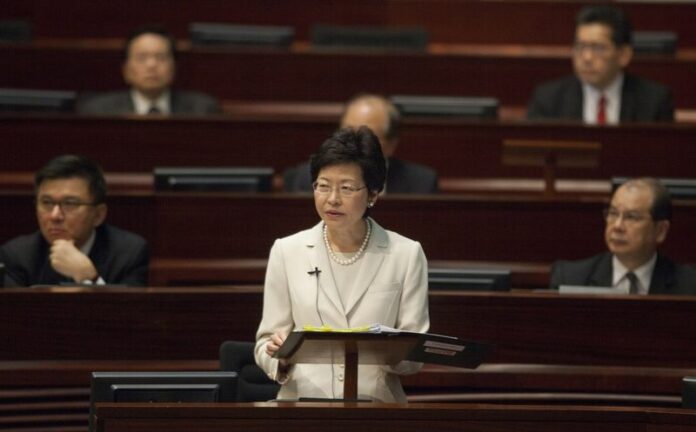
Hong Kong Chief Secretary Carrie Lam announces support for the government's political reform package in the city's Legislative Council. The government proposed that the nomination threshold for potential election candidates in a 1,200-member nomination committee be reduced from 150 to 120 votes. EPA/ALEX HOFFORD

HONG KONG (DPA) — The Hong Kong government backed a controversial electoral reform proposal on Wednesday that keeps the candidate selection process for its 2017 elections in the hands of a pro-business, pro-Beijing committee.

The proposal, which would add seats and sectors to an existing 1200-member nominating committee that filters election candidates, has been promoted by Hong Kong's government as a step toward full democracy.

\
Supporters of the Hong Kong government's electoral reform package wave Chinese national and Hong Kong regional flags and confront protesters waving yellow umbrellas and banners in Hong Kong. EPA/ALEX HOFFORD

Secretary for Constitutional and Mainland Affairs Raymond Tam said that Hong Kong would be able to continue negotiations for a public runoff for candidates and election, but opposition legislators call the proposal a sham.

"The chances of my winning the Mark Six (Hong Kong lottery) tomorrow is higher than the chances of Beijing wanting to perfect the system," said local legislator Alan Leong. "They will not want to be bothered to do this once we've pocketed this proposal."

The process would serve to legitimise a leader who may not have the best interests of Hong Kong residents in mind, Leong said.

"They're treating us like voting machines, we've no say in the process," he added.

Beijing's decision last August to rule out the possibility of direct nominations in Hong Kong's 2017 elections sparked protests that saw tens of thousands of people take to the streets over the course of nearly three months.

In recent weeks, a group of die-hard protestors have slowly begun a small-scale occupation of the pavement outside the city's legislative complex.

"There could be a large-scale occupation if some pan-democrats change their mind and vote in support of the package," said student protest leader Joshua Wong, according to a report in the South China Morning Post.

Despite the possibility of more protests and occupation, Hong Kong Chief Secretary Carrie Lam made clear in her address to legislators Wednesday that there would be "no compromise" on the matter.

She urged pro-democratic legislators not to veto the bill, saying the latest polls had shown support from more than 50 per cent of the population for the current proposal, and that Chinese University polls showing less than 50 per cent support were now seeing an upward trend of increasing support.

Should the proposal pass, five million people will be eligible to vote.

If not, the current electoral system, which sees a similar 1,200-person committee directly elect the chief executive, will stay in place.

Britain negotiated a "one country, two systems" principle as part of the 1997 handover of Hong Kong to Chinese rule. It grants freedoms to Hong Kong residents that are not given to Chinese citizens on the mainland, and allows Hong Kong relative autonomy until 2047.

Beijing's proposal:

– Step 1: A 1,200-member committee, composed of representatives from the industrial, commercial, financial, labour, social services and religious sectors will vote first to nominate from 5 to 10 preliminary candidates.

Each candidate will need to secure 120 votes for a nomination.

– Step 2: These preliminary candidates will be put forward and a second vote taken by the committee, where each person has two votes.

The candidates who have more than 600 votes each will then stand for public election.

Reporting by Christy Choi, dpa


For comments, or corrections to this article please contact: [email protected]

You can also find Khaosod English on Twitter and Facebook
http://twitter.com/KhaosodEnglish
http://www.facebook.com/KhaosodEnglish

Advertisement

Indonesian President Calls for Reformed UN, New Economic Order

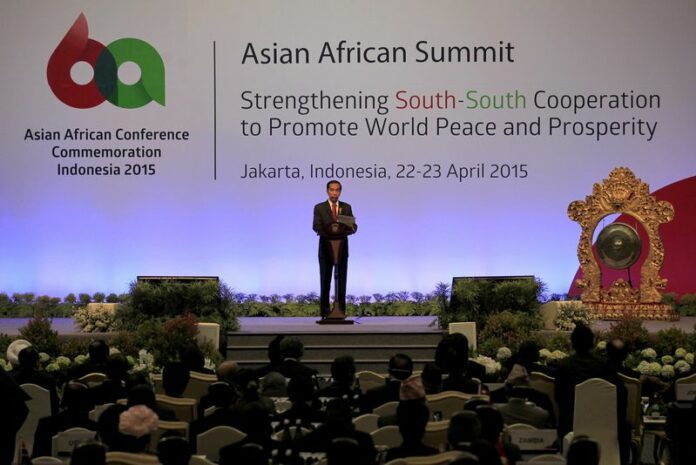
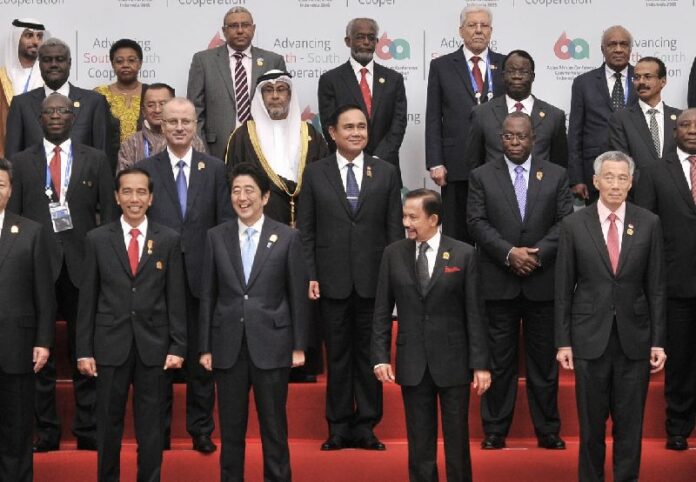
Indonesian President Joko Widodo gives a speech during the opening ceremony of the Asian African Conference on Wednesday in Jakarta. EPA/BAGUS INDAHONO

JAKARTA (DPA) — Indonesian President Joko Widodo called Wednesday for a new economic order in the world and reforms to the United Nations.

Opening the Asian-African Conference, which was observing its 60th anniversary, Widodo in a brief speech said that global imbalance has led to destruction, while the UN has seemed incapable of addressing global problems. Violent act carried out without UN mandate showed disregard for the organization, he said.

"Therefore, the Asian-African countries urge the reform of the United Nations so that it would function as an international organization that push for justice to all nations," Widodo said.

The meeting included 92 countries from the two continents and 30 world leaders, including chairman of the Presidium of the Supreme People's Assembly of North Korea Kim Jong-nam.

Widodo said the view that global economic problems can only be solved through the World Bank, the International Monetary Fund and the Asian Development Bank is obsolete.

"I am of the opinion that global economy should not depend on the three global institutions. We have to create a new world economic order," Widodo said.

"We urge the reform of a new economic order to eschew other country's domination. The world now needs a new collective global leadership that should be carried out responsibly."

He reiterated his campaign promise to make Palestine independence a reality and called for participating countries to support the goal.

"We have to support the birth of an independent Palestine," Widodo said.

The conference will end Saturday with leaders recreating the historical walk their predecessors took in 1955 in Bandung, West Java, where the first Asian-African Conference was held.


For comments, or corrections to this article please contact: [email protected]

You can also find Khaosod English on Twitter and Facebook
http://twitter.com/KhaosodEnglish
http://www.facebook.com/KhaosodEnglish

Advertisement

Thai Junta Leader Pledges Assistance to Palestine

Thai junta chairman Prayuth Chan-ocha at a summit for leaders of Asian and African nations in Indonesia 22 April 2015.

BANGKOK — Thai junta chairman Gen. Prayuth Chan-ocha pledged to assist Palestine during a bilateral talk with the Palestinian Prime Minister in Indonesia today.

Gen. Prayuth, who came to power through a coup last year and installed himself as Prime Minister in August, spoke with Rami Hamdallah during a five-day conference of leaders from Asian and African nation in Jakarta today.

According to a government spokesperson, Gen. Prayuth vowed to help Palestine develop its natural and human resources, and advance its infrastructure, tourism, and agricultural sectors.

"As for the peace process in the Middle East, Thailand recognizes that the United Nations must solve the problems in peaceful way," said Yongyuth Mayalarp, a spokesperson for the Office of Prime Minister. "Thailand hopes that all sides return to direct peace dialogues once again."

Despite its friendly ties with Israel and strong alliance with the US, Thailand recognized the state of Palestine in 2012 during Palestine’s push for full membership in the United Nations.

Later that year, the UN passed a motion altering Palestine's status from an "entity" to a "non-member observer state."

Currently, 135 UN member states officially recognise Palestine as an independent nation, and 50 countries, including the United States and many western European nations, do not.

More than 30 heads of state attended this year's Asian-African summit, which marked the 60th anniversary of the historic conference in Bandung, Indonesia that sought to strengthen alliances between the two regions and oppose colonialism in any form.


For comments, or corrections to this article please contact: [email protected]

You can also find Khaosod English on Twitter and Facebook
http://twitter.com/KhaosodEnglish
http://www.facebook.com/KhaosodEnglish

Advertisement

Phuket Officials Seize 34 Items From Bang Tao Beach

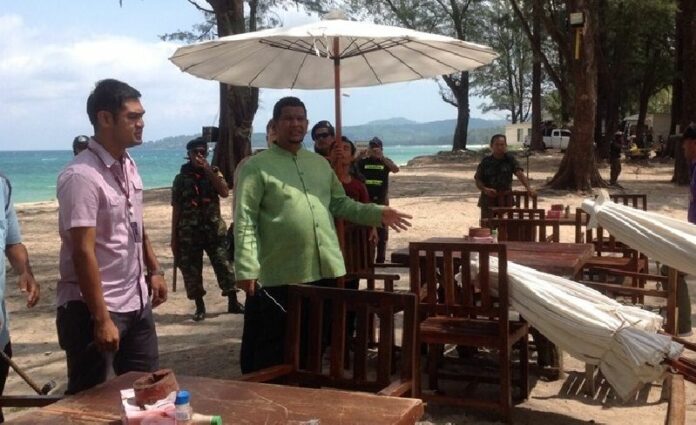
Officials seize the 34 items from Bang Tao Beach on 21 April [Photo: The Phuket News].

(The Phuket News)

PHUKET –  Police and local district officials seized 34 items including chairs, tables and umbrellas from Bang Tao Beach yesterday. The owner of the items is currently being saught by officials.

At 11am, under the command of Thalang District Chief, Veera Kerdsirimongkul and Cherng Talay OrBorTor Chief, Ma'an Samran, twenty volunteers and police swept Bang Tao Beach for any remaining signs of beach encroachment.

During the swoop, officials found six tables, 18 chairs and 10 umbrellas placed on a prohibited zone.
Read more here.

Note: Khaosod English is not responsible for content on other websites.
Advertisement

Hot News

LATEST NEWS

Bangkok
scattered clouds
30 ° C
31.6 °
30 °
81 %
2.4kmh
47 %
Fri
30 °
Sat
37 °
Sun
36 °
Mon
36 °
Tue
34 °