


























29.9 C
Bangkok
Saturday, June 27, 2026
Home Blog Page 3022

Cab Driver Seizes Gun From Policeman, Shoots 2 Dead

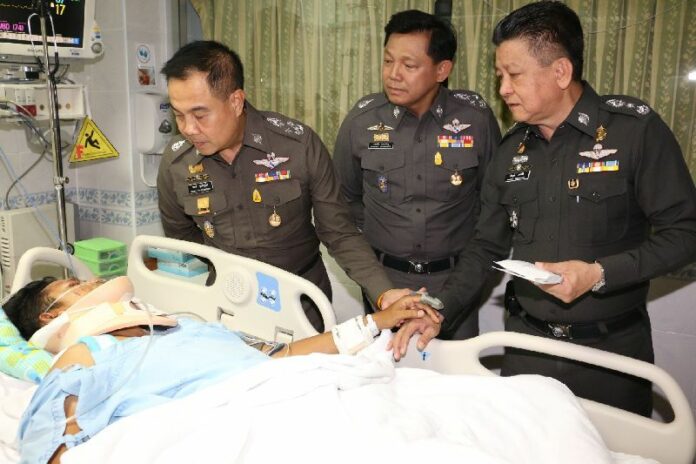
Commander of Royal Thai Police Pol.Gen. Somyot Pumpanmuang visited Pol.Sen.Sgt. Chakri Palasin in hospital, 18 April 2015

BANGKOK – A taxi driver is under arrest for crashing his car into a police officer, stealing his gun, and using the firearm to murder two people in Bangkok suburb on 17 April.

Anupong Ruengsawat, 29, surrendered himself to police at around 7 am this morning at Talingchan Police Station after two days on the run. 

Anupong identified himself as the man who crashed his taxi into Pol.Sen.Sgt. Chakri Palasin, a traffic police officer who was directing traffic in front of Soi Wat Phra Ngern on 17 April.

The officer was severely injured by the crash. Anupong then stole Chakri's handgun and drove to his apartment, where he shot and killed the apartment building owner and his wife, before fleeing the scene.

The deceased were identified as Somchai Tanchanta, 52, and Sangwal Tanchanta, 50. 

Police officers soon surrounded the area but the Anupong managed to slip away. Anupong said he ran to his taxi and drove toward Ayutthaya province, where he has family. 

Anupong said he evaded police checkpoints by listening to taxi radio during his escape. 

Anupong told reporters today that he later decided to surrender himself because he was afraid that police officers might kill him, as he was considered armed and dangerous.

Pol.Lt.Col. Sihadet Sakobkaew, deputy commander of Talingchan Police Station, said Anupong confessed to murdering the two victims because they often scolded him for playing loud music in his apartment room.

The two victims also bullied him by searching his room without permission, Anupong alleged. Pol.Lt.Col. Sihadet said Anupong alerted the police many times, but police never took any action against the apartment owner, so he plotted to murder the victims out of anger. 

Pol.Lt.Col. Sihadet added that police have recovered the firearm used that Anupong reportedly discarded after the murder. Anupong will be transferred for formal prosecution at Bang Mae Nang Police Station.

Pol.Sen.Sgt. Chakri, the injured police officer, is in stable condition and gradually improving, medical workers say. Commander of Royal Thai Police Pol.Gen. Somyot Pumpanmuang visited the wounded policeman in hospital yesterday. 


For comments, or corrections to this article please contact: [email protected]

You can also find Khaosod English on Twitter and Facebook
http://twitter.com/KhaosodEnglish
http://www.facebook.com/KhaosodEnglish
Advertisement

More Than 200 Killed in Ongoing Clashes in North-Eastern Myanmar

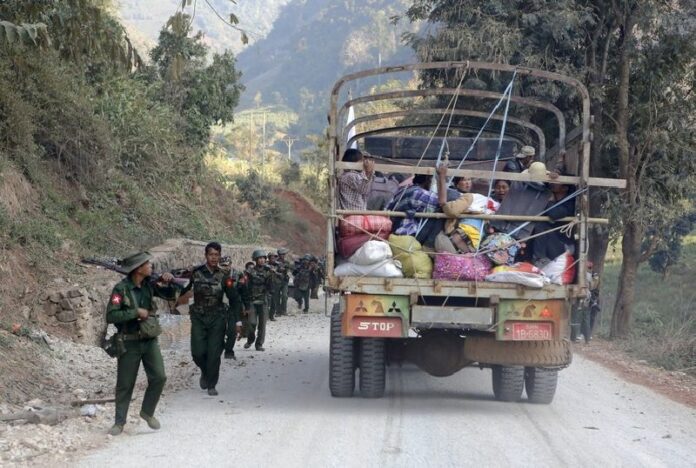
A rescue truck loaded with fleeing locals passes armed military troops near self-administered Kokang capital Laukkai, northern Shan State, Myanmar, 17 February 2015.

YANGON (DPA) – Combat between the military and ethnic rebels in north-eastern Myanmar has claimed more than 200 lives since the beginning of the year, the government said Saturday.

 State-run media claimed control of strategic hilltops in the Kokang region of Shan state, after more than 250 armed clashes with ethnic Kokang rebels of the Myanmar Nationalities Democratic Alliance Army.

 At least 126 soldiers were killed in the renewed fighting, it said.

 But a rebel spokesman claimed that his forces were still in control.

 "We also lost at least 90 members in the fighting since early January, but we can still control our region," Htut Myat Lin said.

 The government imposed a state of emergency and martial law in the Kokang region shortly after the fighting broke out.

 The United Nationalities Federal Council, an alliance of 16 ethnic armed groups, urged the government to find peaceful solutions to the conflict in the Kokang region.


For comments, or corrections to this article please contact: [email protected]

You can also find Khaosod English on Twitter and Facebook
http://twitter.com/KhaosodEnglish
http://www.facebook.com/KhaosodEnglish
Advertisement

35 Dead as Islamic State Claims First Attack Inside Afghanistan

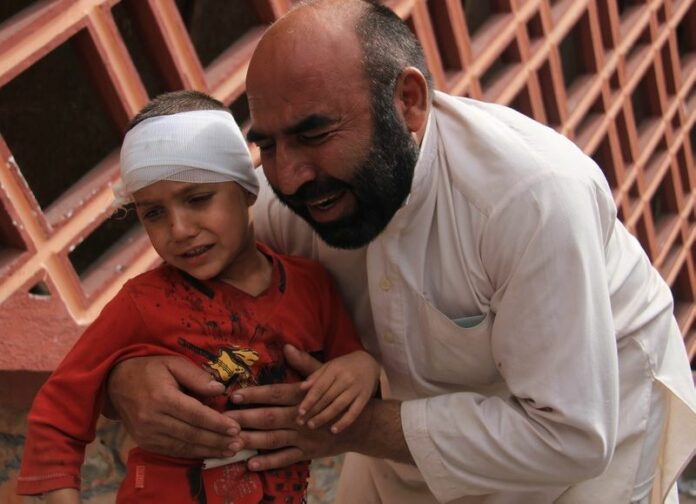
An Afghan man holds his son, who was injured in a suicide bomb attack, outside a local hospital in Jalalabad, Afghanistan, on April 18. Islamic State militants have claimed responsibility.

KABUL/ISLAMABAD (DPA) – A group aligned with the Islamic State has claimed responsibility for a suicide bombing that killed 35 people and the attacker in eastern Afghanistan on Saturday, marking the first attack by the extremist movement in the country.

"The attack was carried out by Abu Mohammed, who is our man. He targeted government workers," Shahidullah Shahid, the purported spokesman for the group, said in a message posted online.

Shahid was a former spokesman for the Pakistani Taliban.

A further 115 people were injured in the attack, which saw a suicide bomber enter a crowded area of Jalalabad – the provincial capital of Nangarhar – and blow himself up, provincial police and health department officials said.

"Thirty-four were killed and 115 injured in today's attack according to our latest figure," said Najib Kamawal, a provincial health department official.

This is the biggest attack in Afghanistan since NATO withdrew its combat troops at the end of last year.

"The bomber blew himself up at a busy time in the centre of the city where several government offices, a private bank branch and marketplaces are located," provincial governor's spokesman Ahmad Zia Abdulzai said.

"Most of the dead and injured are innocent civilians, but police might have also suffered casualties because the attack took place close to a checkpoint," Abdulzai said. Among the dead were two brothers who were the grooms in a double wedding last week, local media reported.

There were conflicting reports about whether the bomber was on foot or rode a motorbike. Two more bombs were found later in the vicinity, the police said.

Police spokesman Hazrat Hossein Mashreqiwal said a second bomb attached to a motorcycle exploded a few minutes after the suicide attack, but did not cause casualties.

One hour after the Jalalabad attack, a magnetic bomb attached to a car exploded in Nangarhar's Behsood district, killing one civilian and injuring three, Abdulzai said.

This is the first time an Islamic State-aligned group, which includes former Pakistani Taliban mid-level commanders, has claimed responsibility for an attack in Afghanistan.

The group is one of the several disenchanted factions of the Afghan and Pakistani Taliban movements that has pledged allegiance to the Islamic State group.

Political analysts say Islamic State supporters represent only a small number of people in pockets of remote areas.

However, in many parts of Afghanistan, local government officials and tribal elders have reported sighting the black flag of the Islamic State, but there is no proof that the fighters exist. Nor have there been reports of battle between them and the Afghan security forces.

Saturday's attack comes amid a spate of violence that has left more than 100 people dead across the country in the past 10 days, one Interior Ministry official said.

Members of the Afghan Taliban, which has also conducted suicide attacks in the country, condemned Saturday's bombing, calling it "an evil act."

President Ashraf Ghani also said the attack was "the most cowardly act of terrorists targeting innocent civilians."

He made the comment during his visit to the north-eastern province of Badakshan, where 33 Afghan soldiers were killed earlier this month when Taliban fighters stormed army posts in Jurm district.

"If we don't stand against these pople united, they will destroy us," local media quoted him as saying in front of hundreds of people who had gathered in Faizabad, the capital of Badakhshan.

The suicide attack coincided with the visit of a top UN human rights official to Jalalabad.

"The use of suicide bombs and other devices in such an indiscriminate way by insurgent groups clearly constitutes a war crime, and those responsible for organizing or perpetrating such attacks must be brought to justice," Ivan Simonovic, UN assistant secretary general for human rights, said in a statement.

He met with the provincial governor and security officials after the attack, according to the statement.

Last year saw the highest number of civilian casualties in recent years, the UN Assistance Mission in Afghanistan said. The trend continued into the first quarter of 2015.

Meanwhile, in the north-eastern province of Ghazni, four civilians were beheaded by unknown assailants, officials said.

The spokesman for the provincial governor, Nang Safi, said the victims, members of the Hazara Shiite minority, had been abducted a week ago.


For comments, or corrections to this article please contact: [email protected]

You can also find Khaosod English on Twitter and Facebook
http://twitter.com/KhaosodEnglish
http://www.facebook.com/KhaosodEnglish

Advertisement

Customs Agents Seize Smuggled Ivory at Bangkok Airport

BANGKOK (DPA) – Thai customs bureau confiscated 29.5 kilograms of elephant ivory at Bangkok's Suvarnabhumi International Airport, reports said Saturday.

The smuggled ivory was found in a suitcase of a Vietnamese national in transit at the airport between flights from Angola to Cambodia. 

A total of 20 items were seized, including 15 ivory tusks and five processed ivory products, according to Tada Chumchaiyo of the Customs Investigation and Suppression Bureau. 

Approximately 3,000 kilograms of various animal parts are seized from wildlife traffickers in Thailand each year, the wildlife conservation office said.


For comments, or corrections to this article please contact: [email protected]

You can also find Khaosod English on Twitter and Facebook
http://twitter.com/KhaosodEnglish
http://www.facebook.com/KhaosodEnglish

Advertisement

The Challenge of Russia’s Decline

By Joseph S. Nye, Jr.

CAMBRIDGE – As Europe debates whether to maintain its sanctions regime against Russia, the Kremlin’s policy of aggression toward Ukraine continues unabated. Russia is in long-term decline, but it still poses a very real threat to the international order in Europe and beyond. Indeed, Russia’s decline may make it even more dangerous.

Make no mistake: what is happening in Ukraine is Russian aggression. President Vladimir Putin’s pretense that Russian troops were not participating in the fighting was all but shattered recently, when a Russian fighter in Donetsk confirmed to the BBC Russian service that they are playing a decisive role in rebel advances. Russian officers, he reported, directly command large military operations in eastern Ukraine, including the siege and capture of the important transport center of Debaltseve in February.

But the threat posed by Russia extends far beyond Ukraine. After all, Russia is the one country with enough missiles and nuclear warheads to destroy the US. As its economic and geopolitical influence has waned, so has its willingness to consider renouncing its nuclear status. Indeed, not only has it revived the Cold War-era tactic of sending military aircraft unannounced into airspace over the Baltic countries and the North Sea; it has also made veiled nuclear threats against countries like Denmark.

Weapons are not Russia’s only strength. The country also benefits from its enormous size, vast natural resources, and educated population, including a multitude of skilled scientists and engineers.

But Russia faces serious challenges. It remains a “one-crop economy,” with energy accounting for two-thirds of its exports. And its population is shrinking – not least because the average man in Russia dies at age 65, a full decade earlier than in other developed countries.

Though liberalizing reforms could cure Russia’s ailments, such an agenda is unlikely to be embraced in a corruption-plagued country with an emphatically illiberal leadership. Putin, after all, has sought to promote a neo-Slavophile identity defined above all by suspicion of Western cultural and intellectual influence.

Instead of developing a strategy for Russia’s long-term recovery, Putin has adopted a reactive and opportunistic approach – one that can sometimes succeed, but only in the short term – to cope with domestic insecurity, perceived external threats, and the weakness of neighbors. He has waged unconventional war in the West, while pursuing closer ties with the East, raising the likelihood that Russia will end up acting as China’s junior partner, without access to the Western capital, technology, and contacts that it needs to reverse its decline.

But Russia’s problem is not just Putin. Though Putin has cultivated nationalism in Russia – according to Harvard University’s Timothy Colton, at a recent meeting of the Valdai Discussion Club, Putin called himself the country’s “biggest nationalist” – he found fertile ground to plow. Given that other high-level figures – for example, Dmitry Rogozin, who last October endorsed a book calling for the return of Alaska – are also highly nationalistic, a successor to Putin would probably not be liberal. The recent assassination of former Deputy Prime Minister and opposition leader Boris Nemtsov reinforces this assumption.

So Russia seems doomed to continue its decline – an outcome that should be no cause for celebration in the West. States in decline – think of the Austro-Hungarian Empire in 1914 – tend to become less risk-averse and thus much more dangerous. In any case, a thriving Russia has more to offer the international community in the long run.

In the meantime, the US and Europe face a policy dilemma. On one hand, it is important to resist Putin’s challenge to the fundamental principle that states should not use force to violate one another’s territorial integrity. Though sanctions are unlikely to change Crimea’s status or lead to withdrawal of Russian soldiers from Ukraine, they have upheld that principle, by showing that it cannot be violated with impunity.

On the other hand, it is important not to isolate Russia completely, given shared interests with the US and Europe relating to nuclear security and non-proliferation, terrorism, space, the Artic, and Iran and Afghanistan. No one will benefit from a new Cold War.

Reconciling these objectives will not be easy, especially given Ukraine’s continuing crisis. At February’s Munich Security Conference, many US senators advocated arming Ukraine – an approach that could exacerbate the situation, given Putin’s conventional military dominance there. With German leaders, including Chancellor Angela Merkel, opposed to this approach, pursuing it would also split the West, strengthening Putin’s hand further.

Others at the conference argued that the West should change the game by expelling Russia from SWIFT, the international framework for clearing bank payments. But critics point out that this would damage SWIFT and the West, whose banks would lose the hundreds of billions of dollars that Russia currently owes them. For their part, the Russians have warned informally that this would be “the real nuclear option.”

Designing and implementing a strategy that constrains Putin’s revisionist behavior, while ensuring Russia’s long-term international engagement, is one of the most important challenges facing the US and its allies today. For now, the policy consensus seems to be to maintain sanctions, help bolster Ukraine’s economy, and continue to strengthen NATO (an outcome that Putin undoubtedly did not intend). Beyond that, what happens is largely up to Putin.


Joseph S. Nye, Jr. is a professor at Harvard University, Chairman of the World Economic Forum’s Global Agenda Council on the Future of Government, and the author of Is the American Century Over?
 

Copyright: Project Syndicate, 2015.
www.project-syndicate.org


For comments, or corrections to this article please contact: [email protected]

You can also find Khaosod English on Twitter and Facebook
http://twitter.com/KhaosodEnglish
http://www.facebook.com/KhaosodEnglish
Advertisement

Invoking Emergency Power, Prayuth Transfers 6 Education Officials

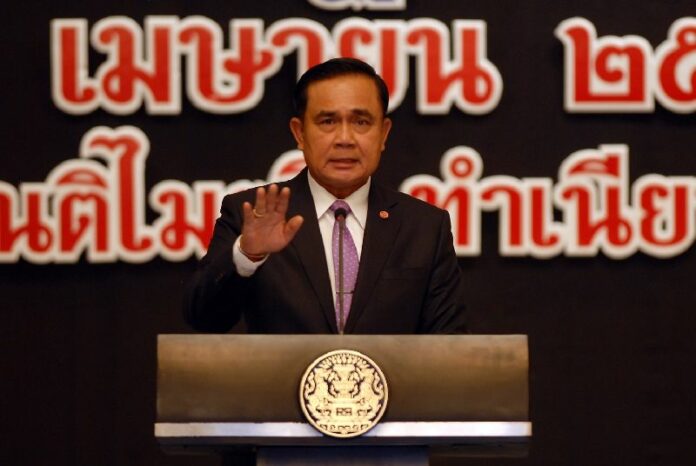
Junta chairman and Prime Minister Prayuth Chan-ocha giving a speech at the Government House, 17 April 2015

BANGKOK – Junta chairman and Prime Minister Prayuth Chan-ocha has invoked his emergency power and transferred six education officials without any explanation today.

Invoking Article 44 of the interim charter, which permits the junta leader to unilaterally intervene in the national administration as he deems fit, Gen. Prayuth issued the transfer order this afternoon. The order came with a brief explanation that the transfers were meant to "increase efficiency and appropriateness in the education reforms and bureaucratic administration within the Ministry of Education."

The following is the names of the six officials, their former posts, and their new posts, respectively:

1. Ms. Sutthasri Wongsaman / Permanent Secretary of the Ministry of Education / Secretary-General of the Office of Education Council

2. Mr. Piniti Ratananukul / Secretary-General of the Office of Education Council / Secretary-General of the Office of Higher Education Commission

3. Mr. Kamchorn Tatiyakawi / Secretary-General of the Office of Higher Education Commission /  Permanent Secretary of the Ministry of Education

4. Mr. Bundit Sriphutangkul / Secretary-General of the Office of the Private Education Commission / Ombudsman of the Ministry of Education

5. Mr. Adinand Pakbara / Ombudsman of the Ministry of Education / Secretary-General of the Office of the Private Education Commission

6. Ms. Rattana Sriheran / Deputy Secretary-General of the Office of Basic Education Commission / Secretary-General of the Office of the Education Civil Service Commission

Article 44 of the interim charter states that chairman of the junta, known formally as the National Council for Peace and Order (NCPO), can take any action to "suppress or disrupt" urgent threats to public order, the economy, and the monarchy. Any order Gen. Prayuth promulgates through Article 44 will be deemed legal and binding, the clause states.

The interim charter was enacted shortly after Gen. Prayuth seized power from an elected government in May 2014. Gen. Prayuth, who also holds the position as the Prime Minister, has previously insisted that Article 44 will only be activated to serve functions of the martial law, namely by granting security officers an authority to search properties and detain individuals without court warrants. 

The junta also told the press that Article 44 will be used "constructively" in the administration of the country. 

However, the constitutional clause has been strongly condemned by international human rights agencies and democratic governments, who say the law grants Gen. Prayuth a dangerous amount of unchecked power. 

On 7 April, Gen. Prayuth invoked Article 44 and permitted military officers to serve as law enforcement officials alongside the police in cases instructed by the Ministry of Defense. The 7 April order explains that assistance from the military is intended to “increase the efficiency in enforcement of laws that protect the interest of the public and the people," such as attempts to end public land encroachment. 

Related article: Thai Junta Chairman Downplays Article 44's Autocratic Powers 


For comments, or corrections to this article please contact: [email protected]

You can also find Khaosod English on Twitter and Facebook
http://twitter.com/KhaosodEnglish
http://www.facebook.com/KhaosodEnglish
Advertisement

School Defends Marking GPA on Student Uniforms

Kamchad Kullchoti, deputy director of Nayia Suksa School, speaking to reporters, 17 April 2015

UBON RATCHATHANI – Deputy director of a public school in Ubon Ratchathani province has defended the practice of allowing students to display their grades on the uniforms.

The practice has been widely discussed on Thai social media after a photo of the school uniform, which shows a student's name along with her GPA, went viral on the internet earlier this week. Some internet users have responded negatively to the photo, accusing the school of forcing students to compete with each other, and shaming those who had low grades.

Kamchad Kullchoti, deputy director of Nayia Suksa School in Nayia district, told reporters today that he initiated the controversial idea for students at the school, but insisted that the practice is not mandatory. Students who wish to display their high GPA can do so, and there is no effort to coerce other students to follow suit, Kamchad said.

"Students with GPA above 3 are proud of their achievement, so they want to put the grades on the shirts to show their friends. It helps their friends, who do not have good grades, to have more diligence and try to score higher as well," Kamchad explained. 

According to Kamchad, he came up with the idea when he was moved from another high school to Nayia Suksa School in 2013. At the time, he said, overall test scores of the national university entrance exams, known as ONET, were abysmal, but the scores soon improved after his idea was implemented. 

"The school was in a crisis for two consecutive years," Kamchad told reporters at Nayia Suksa School today, "But after we used the policy, in time for 2014 ONET, it turns out that we improved in the ranking of the schools with best test scores, from the poor rank of 57 to 15 in the 29th Secondary Education Area. It is because students had more enthusiasm in studies and competing with each other." 

He added, "In each year, around 30 percent of students who entered Matthayom 1 were illiterate. They could only write their first and last names. We need to use different policies to push students to have discipline, and to want to learn more than usual. We don't want students with poor grades to drop out of school in the middle of their education, because it will become a long-term problem for the society."

Other policies at the school include a bargain in which students with poor GPA can wear their hair longer than the strict hairstyle that the school permits if they manage to improve their grades, Kamchad said. 

A 15-year-old student at Nayia Suksa also identified herself to our correspondent as the student whose uniform and GPA were pictured in the photo that has gone viral over the Thai social media. The student said she requested to show her grades – 3.23 – on the uniform out of pride, and insisted that her classmates who scored poorly in exams were not forced to show their GPA. 

Parents of the student told reporters that they were upset by the publishing of the photo on the internet without her permission. The photo also drew condemnation and criticism from internet users, the students' parents said. 


Advertisement

Alleged Rapist & Murderer Arrested, Victims Urged to Come Forward

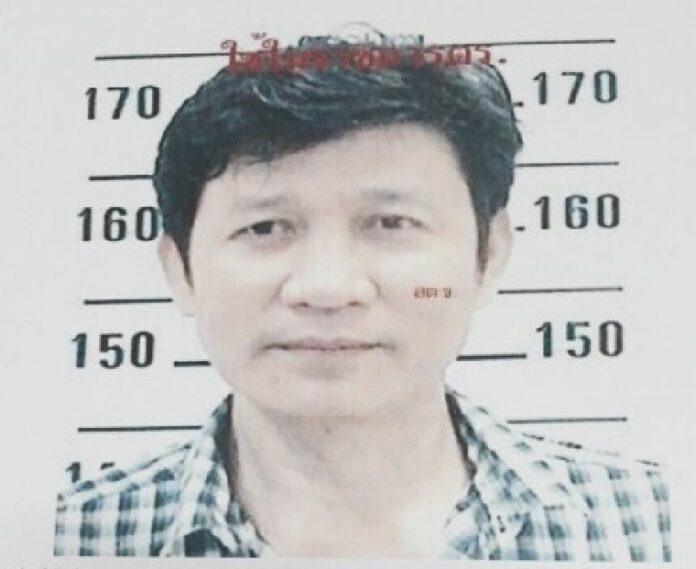
Portrait of Para Chusri (photo provided by the police)

CHIANG MAI – Police in northern Thailand are urging past victims of a self-confessed serial rapist and murder to press charges against the suspect.

Para Chusri, 53, was arrested by police in Chiang Mai province yesterday and accused of raping and murdering a bar waitress at a hotel in the province on 14 April. Police autopsy established that the victim, who was in her 20s, was sodomized with a glass bottle until she died of hemorrhage. Para reportedly fled the scene and went into hiding after the murder, until he was arrested at a guesthouse in Chiang Mai yesterday. 

Police say Para confessed to the crime, and said he had raped two other bar workers in separate occasions in Chiang Mai. According to police, Para lured his victims by pretending to be Vietnamese tourist and inviting them to visit his hotel room. Para reportedly told police that the victims were too embarrassed to report the crime to the police. He also added that he was high on drug when he sodomized the victim on 14 April, and that he had no intention to kill her. 

Pol.Maj.Gen. Pacha Rattanapan, deputy chief of the Fifth Region Police, said police records suggested that Para may have also been involved in at least two other rapes in southern Thailand. The officer said victims in the alleged cases should come forward and press charges against Para at Muang Chiang Mai Police Station. 

"We are checking the information and interrogating the suspect, asking him about in which provinces he committed those crimes, " Pol.Maj.Gen. Pacha told reporters today. 

Pol.Maj.Gen. Pacha said police tracked down Para by studying CCTV footage, collecting witnesses' testimonies, and triangulating the signal of the victim's mobile phone that Para reportedly took with him. He added that police found a variety of drugs in the hotel room where the victim was murdered, including sedative drugs.

"Judging from his behavior, the suspect is considered highly dangerous to women who visit nightclubs and bars," the officer said, "It's lucky that we managed to arrest this man." 


Advertisement

Chinese Tourist Drowns Off Koh Larn

CHONBURI – A Chinese tourist has drowned in the sea near Koh Larn island earlier today, police say.

According to police, the 71-year-old Chinese man was swimming with other tourists in his tour group at Koh Larn, which locates close to the resort town of Pattaya, when he suddenly "feinted" and drowned. The incident reportedly took place near Ta Waan Beach  at around 11.30 am today. 

"Life guards on the beach searched for him until they found him. Then they brought him ashore and tried to apply CPR, but, in the end, they cannot save his life," said Pol.Lt.Col. Possawat Siripornnoppakul, an officer at Mueang Pattaya Police Station. He said the incident is currently under police investigation.

The officer added that the Chinese Embassy in Bangkok will be contacted about the death. 


For comments, or corrections to this article please contact: [email protected]

You can also find Khaosod English on Twitter and Facebook
http://twitter.com/KhaosodEnglish
http://www.facebook.com/KhaosodEnglish
Advertisement

NRC's Week-Long Charter Debate to be Broadcast Live

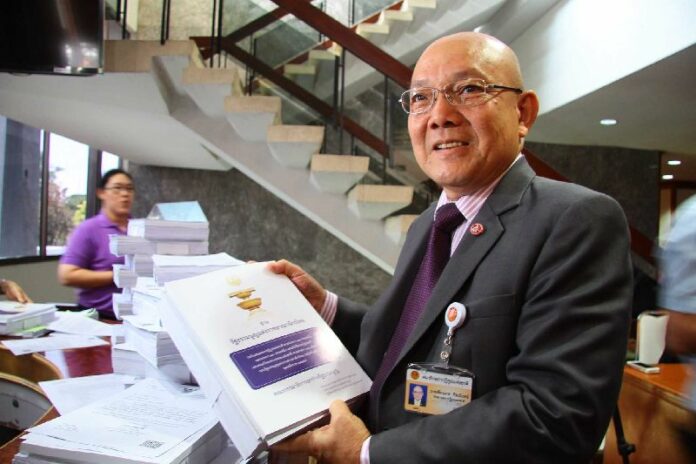
Thianchay Kiranandana, chairman of the National Reform Council (NRC), posed for photo with the draft of the new constitution, 17 April 2015

BANGKOK – The first public deliberation on the draft of Thailand's new constitution will be broadcast live throughout its entire session – which is expected to last for seven days – a government official said.

Members of the junta-appointed National Reform Council (NRC) will debate on the charter draft from 20 – 26 April at the Parliament building, said NRC secretary Alongkorn Pollabutr. Alongkorn said the session will start at around 9 am on each day and continue until 9 pm. 

"The chairman of the NRC wants the people to know about the deliberation of the constitution draft, so there will be a live broadcast via the parliament's TV and radio stations, the National Broadcasting Service of Thailand, or Channel 11, and we have also asked for cooperation from other state TV stations to broadcast it. As for private TV stations, if they are interested, they can link up with the signal and broadcast it as well." 

Thailand's previous constitution, which was enacted in 2007, was dissolved when the military staged a coup d'etat against an elected government in May 2014. The junta later imposed an interim charter and formed the Constitution Drafting Committee (CDC) to write a new "permanent" constitution for Thailand. The charter is expected to be completed in September this year.

Under the interim constitution, the NRC has the authority to suggest amendments to the constitution draft in its deliberation. Alongkorn said the NRC will discuss for 30 days whether there will be any amendment to the constitution, starting from the last day of the parliamentary deliberation. 

"Every NRC member will participate in the expression of opinion," Alongkorn told reporters today, "The people can also submit their suggestions to the NRC."

According to Alongkorn, the debate will be "constructive," devoid of any aggressive discussion or questioning about the draft, "because we are professional parliament, not a political parliament." He also expected that the debate will especially focus on issues about backgrounds of MPs, Senators, Prime Ministers, and electoral system in the new constitution. 

"This constitution is different to all the previous ones, because it is a constitution for reforms," Alongkorn explained. 

The new constitution has attracted criticism from anti-coup activists and scholars who say it is less democratic than Thailand's recent charters. According to the current draft, the Senate is an appointed body, and the Prime Minister does not need to be an elected MP. In the now-defunct 2007 constitution, a clause explicitly requires Prime Ministers to be elected MPs, and the Senate was a half-elected and half-appointed body. 

The junta, formally known as the National Council for Peace and Order (NCPO), has promised that an election will be held in early 2016 at the earliest, given that political climate is deemed stable. The NCPO has also vowed to implement national reforms and reconciliation before democracy is restored in the country. 

Asked whether recent bomb attacks will affect the NRC deliberation, Alongkorn said parliament officials have been maintaining a tight security since the twin bombing at Siam Paragon shopping mall on 1 February. 

"NRC members have to follow their mission, in order to help move our country forward," Alongkorn told reporters, "We will not waver, regardless of any violent incidents or harassment that may occur. I'd like to ask all sides to cease their violent actions, move beyond the conflict, and move forward together, because conflicts are not good for the country. We do not wish to see national reforms stumble now."  


Advertisement

Hot News

LATEST NEWS

Bangkok
overcast clouds
29.9 ° C
31.1 °
28.8 °
90 %
2.8kmh
97 %
Sat
37 °
Sun
36 °
Mon
36 °
Tue
33 °
Wed
34 °