36.1 C
Bangkok
Saturday, June 27, 2026
Home Blog Page 3029

Thailand, Russia Sign Agreements on Drug Trafficking, Energy

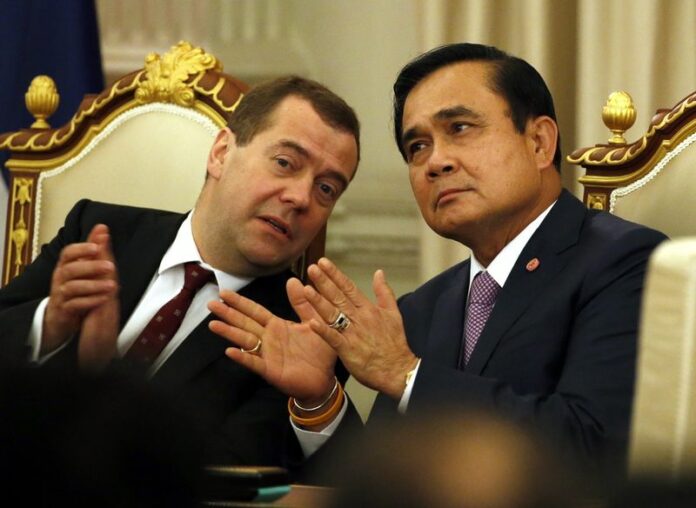
Russian Prime Minister Dmitry Medvedev (L) chats with Thailand's Prime Minister Prayut Chan-o-cha (R) during a signing ceremony prior to their joint news conference at Government House in Bangkok, Thailand, 08 April 2015. Medvedev is the first Russian Prime Minister to visit Thailand in 25 years. EPA/RUNGROJ YONGRIT

BANGKOK (DPA) — Thailand and Russia signed bilateral agreements to combat drug trafficking, boost investment and develop the Thai energy sector Wednesday.

Russian Prime Minister Dmitry Medvedev met his Thai counterpart Prayuth Chan-ocha in Bangkok to strengthen ties.

\
Thailand's Prime Minister Prayut Chan-o-cha (R) shakes hands with Russian Prime Minister Dmitry Medvedev (L) at the end of their joint news conference at Government House in Bangkok, Thailand, 08 April 2015. EPA/RUNGROJ YONGRIT

Russia will lend expertise in the military and civil aviation industries.

"Thailand is a close friend in the Asia Pacific region and we have long diplomatic relations. In two years we will mark our 120 years of relations," Medvedev said.

He said he had extended an invitation to Prayuth to visit Russia in the coming months.

"Friends prove their worth when one is in trouble. Friends will help and understand," said Prayuth, who has courted Beijing and Moscow after being spurned by Western countries for seizing power in a coup.

"I thank you Russia for understanding."


For comments, or corrections to this article please contact: [email protected]

You can also find Khaosod English on Twitter and Facebook
http://twitter.com/KhaosodEnglish
http://www.facebook.com/KhaosodEnglish

Advertisement

Junta Asks Redshirts to Cancel Buddhist Ceremony Honoring Crackdown Victims

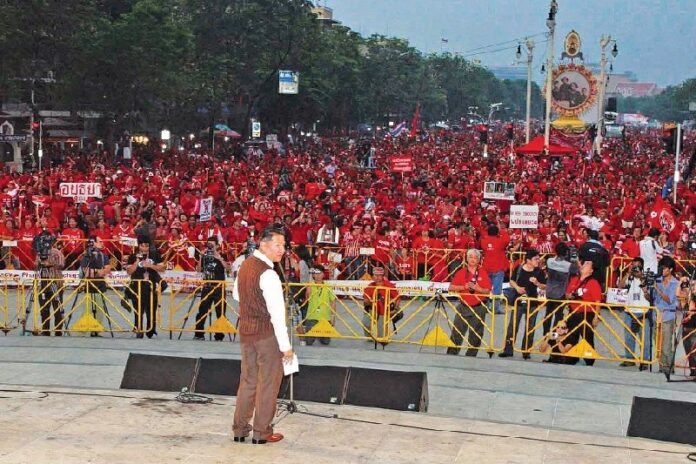
Redshirts gather for the first anniversary of the 10 April 2010 clashes, 10 April 2011.

BANGKOK — Thailand's military junta has asked Redshirts to call off a religious ceremony scheduled for 10 April that would mark the fifth anniversary of a deadly military crackdown on Redshirt protesters in 2010.

In a letter submitted to the army yesterday, Redshirt leaders asked the ruling junta to allow the ceremony at Plub Pla Chai temple, which they said would be strictly religious.

\
Redshirts gather for the first anniversary of the 10 April 2010 clashes in Bangkok on 10 April 2011.

Political gatherings are currently banned by the junta, which came to power after toppling a Redshirt-backed government last May.  

"The event will only be about making merit,” Redshirt leader Thanawut Wichaidith said yesterday after submitting the letter. “There is no hidden agenda. There will not be any speeches.”

Thanawut even encouraged the junta to dispatch military officers to oversee the event, which is dedicated to the civilians who died in clashes with soldiers on 10 April 2010. 

"I hope the NCPO will allow this, because it's only Buddhist ceremony," he said, using an acronym for the junta’s formal name, the National Council for Peace and Order.

However, deputy chairman of the junta, Gen. Prawit Wongsuwan, repeated the junta's stance against the event. 

“I am asking for cooperation: don't organize any event during this time, because I don't want it to become a conflict,” he said. “I am asking them to stage personal activities instead of a gathering.”

The event is scheduled for this Friday, the fifth anniversary of the day that then-Prime Minister Abhisit Vejjajiva ordered the military to disperse tens of thousands of Redshirts who were rallying in Bangkok to demand a new election.

At least twenty civilians and five soldiers died during clashes between soldiers and shadowy “Blackshirt” militants who were allied to the protesters.

The military later mounted another assault on the Redshirts in late May 2010, forcing the movement’s leaders to surrender and call off the protests on 19 May 2010. In total, more than 90 people, mostly civilians, were killed in the violence. 

Since 2010, Redshirt activists have gathered in Bangkok every 10 April to honor the victims.  

Speaking today, Gen. Prawit asked Redshirts to follow the example of the military, which has never memorialized the crackdown despite losing soldiers in the violence.

“Many soldiers died [in the crackdown], but we never commemorated it," he said. "If they want to make religious merit, no one will stop them. But they should not gather in large numbers. Please don't make it into a big issue. Soldiers died, too. But no one talks about them. No one asks about them."

The junta’s spokesperson, Col. Winthai Suwaree, said yesterday that the event risks taking a political turn, even if that’s not what the organizers intend.

"[Security officers] have not yet inspected details of the event, but judging from the nature of the activity, many sides see it as an activity that is related to politics," Col. Winthai said. "Individuals with ill intention may try to infiltrate the event and stage some incidents that may mislead the society." 


For comments, or corrections to this article please contact: [email protected]

You can also find Khaosod English on Twitter and Facebook
http://twitter.com/KhaosodEnglish
http://www.facebook.com/KhaosodEnglish


For comments, or corrections to this article please contact: [email protected]

You can also find Khaosod English on Twitter and Facebook
http://twitter.com/KhaosodEnglish
http://www.facebook.com/KhaosodEnglish

Advertisement

Junta Asks Redshirts to Cancel Buddhist Ceremony Honoring Crackdown Victims

Redshirt protesters gather at the spot where a demonstrator was shot dead during the 10 April crackdown in Bangkok, 11 April 2010

BANGKOK — Thailand's military junta has asked Redshirts to call off a religious ceremony scheduled for 10 April that would mark the fifth anniversary of a deadly military crackdown on Redshirt protesters in 2010.

In a letter submitted to the army yesterday, Redshirt leaders asked the ruling junta to allow the ceremony at Plub Pla Chai temple, which they said would be strictly religious.

\
Redshirts gather for the first anniversary of the 10 April 2010 clashes in Bangkok on 10 April 2011.

Political gatherings are currently banned by the junta, which came to power after toppling a Redshirt-backed government last May.  

"The event will only be about making merit,” Redshirt leader Thanawut Wichaidith said yesterday after submitting the letter. “There is no hidden agenda. There will not be any speeches.”

Thanawut even encouraged the junta to dispatch military officers to oversee the event, which is dedicated to the 20 civilians who died in clashes with soldiers on 10 April 2010. 

"I hope the NCPO will allow this, because it's only Buddhist ceremony," he said, using an acronym for the junta’s formal name, the National Council for Peace and Order.

However, deputy chairman of the junta, Gen. Prawit Wongsuwan, repeated the junta's stance against the event. 

“I am asking for cooperation: don't organize any event during this time, because I don't want it to become a conflict,” he said. “I am asking them to stage personal activities instead of a gathering.”

The event is scheduled for this Friday, the fifth anniversary of the day that then-Prime Minister Abhisit Vejjajiva ordered the military to disperse tens of thousands of Redshirts who were rallying in Bangkok to demand a new election.

Twenty civilians and five soldiers died during clashes between soldiers and shadowy “Blackshirt” militants who were allied to the protesters.

The military later mounted another assault on the Redshirts in late May 2010, forcing the movement’s leaders to surrender and call off the protests on 19 May 2010. In total, more than 90 people, mostly civilians, were killed in the violence. 

Since 2010, Redshirt activists have gathered in Bangkok every 10 April to honor the victims.  

Speaking today, Gen. Prawit asked Redshirts to follow the example of the military, which has never memorialized the crackdown despite losing soldiers in the violence.

“Many soldiers died [in the crackdown], but we never commemorated it," he said. "If they want to make religious merit, no one will stop them. But they should not gather in large numbers. Please don't make it into a big issue. Soldiers died, too. But no one talks about them. No one asks about them."

The junta’s spokesperson, Col. Winthai Suwaree, said yesterday that the event risks taking a political turn, even if that’s not what the organizers intend.

"[Security officers] have not yet inspected details of the event, but judging from the nature of the activity, many sides see it as an activity that is related to politics," Col. Winthai said. "Individuals with ill intention may try to infiltrate the event and stage some incidents that may mislead the society." 


For comments, or corrections to this article please contact: [email protected]

You can also find Khaosod English on Twitter and Facebook
http://twitter.com/KhaosodEnglish
http://www.facebook.com/KhaosodEnglish

Advertisement

Asian Values RIP

By Ian Buruma

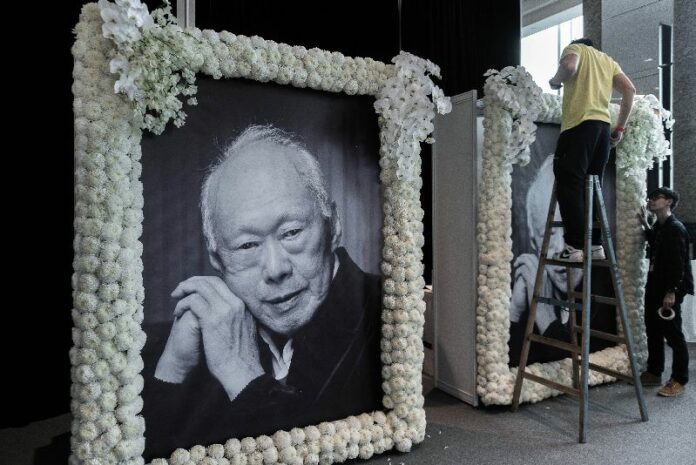
NEW YORK – Few politicians have garnered as many effusive public tributes after their death as Lee Kuan Yew, Singapore’s founder and long-serving former prime minister. A man who was treated as a sage by Henry Kissinger, regarded as a political role model by Russian President Vladimir Putin, and described as “a true giant of history” by President Barack Obama must have done something right.

One thing is indisputable: Lee’s influence was many times greater than his actual political authority, which, to his evident chagrin when Singapore and Malaysia split in 1965, never stretched beyond the narrow borders of a small city-state in Southeast Asia. Lee’s most profound influence has been in post-Mao China, where booming economic enterprise coexists with an authoritarian Leninist one-party state.

Lee was the pioneer of capitalism with an iron fist. His People’s Action Party, though far less brutal than the Chinese Communist Party, has ruled over a de facto one-party state. Like many authoritarian leaders (Mussolini, for one), Lee was once a socialist. But his thinking was influenced just as much by oddly nostalgic memories of British colonial discipline and a somewhat self-serving take on Confucianism, stressing obedience to authority, while disregarding the equally Confucian right to dissent.

Singapore’s humming economy, material comfort, and smooth efficiency seem to confirm the view of many that authoritarianism works better than democracy, at least in some parts of the world. No wonder, then, that Lee was so much admired by autocrats everywhere who dream of combining their monopoly on power with the creation of great wealth.

Yet there is something extraordinary about the adulation of Lee. Other leaders who held similar views were not treated as great sages, let alone as giants of history. The Chilean military strongman Augusto Pinochet, for example, imposed his own version of capitalism with an iron fist, and, though Margaret Thatcher and Friedrich von Hayek admired him, hardly anyone reveres him today. Why Lee, and not Pinochet?

For starters, Lee did not come to power in a military coup, and his opponents were not massacred in football stadiums. Dissidents in Singapore were often locked up and maltreated, but no one was tortured to death. Lee’s government, while still allowing elections as a token of democratic rule, preferred to crush opposition through intimidation and financial punishment: brave men and women who stood up to him were bankrupted in ruinously expensive lawsuits; Lee could generally rely on a compliant judiciary.

But Lee’s stellar reputation has to do with culture, too. He was very good at playing to that ancient Western stereotype of the Wise Man from the East. Even though “Harry” Lee, as he was known when he was a student at Cambridge, imbibed much from Western civilization, including a peculiar admiration for the hierarchy of the Catholic Church, he was always careful to stress the Asian provenance of his political ideas.

Lee never claimed that liberal democracy in the West was a mistake. All he said was that it was not suitable for “Asians.” His argument was that Asians were used to putting the collective good above individual interests. Asians were naturally obedient to higher authority. These traits were rooted in Asian history: they were deep “Asian values.”

There are good reasons to doubt this thesis. First of all, who are these “Asians”? Most Indians would surely disagree that they are culturally unsuited to democracy – as would modern Japanese, Taiwanese, or South Koreans. It makes a certain sense to speak of Asian values in Singapore, because it would be disrespectful to the Malay and Indian minorities to justify their subservience by invoking Chinese values.

But there are plenty of Chinese as well, not just in Taiwan and Hong Kong, who would take issue with Lee’s cultural defense of authoritarianism. Even Singaporeans are beginning to get a little restless.

Is it true at least to say that more democracy would have made Singapore a less efficient, prosperous, and peaceful society? Many Singaporeans might believe so. But whether they are right is by no means certain, because the question was never put to the test. South Korea and Taiwan went through democratic transformations in the 1980s, following the end of their versions of authoritarian capitalism, and are thriving more than ever. Democracy certainly did the Japanese economy no harm.

Lee’s premise, from which he never departed, was that, especially in a multi-ethnic society like Singapore, a meritocratic elite must impose social harmony from above. In this sense, he was indeed rather Chinese. By richly awarding the elite, Lee minimized the scope for corruption. It is to his credit that he made this work in Singapore, though at some cost. Singapore may be efficient, and relatively free of corruption; but it is also a rather sterile place, with little room for intellectual or artistic achievement.

What might work for a time in a small city-state can hardly be a useful model for larger, more complex societies. China’s attempt at capitalism with an iron fist has created a system of gross corruption, with huge disparities in wealth. And Putin has to resort to ever more belligerent nationalism to cover up the social and economic deficiencies of his rule.

So, by all means, let us admire the smooth highways, towering office blocks, and spotless shopping malls of Singapore. But, when assessing Lee’s legacy, we should also heed the words of Kim Dae-jung, who was jailed and almost killed for opposing South Korea’s dictatorship, before becoming the country’s democratically elected president in 1998. “Asia should lose no time in firmly establishing democracy and strengthening human rights,” he wrote in response to Lee. “The biggest obstacle is not its cultural heritage, but the resistance of authoritarian rulers and their apologists.”

Ian Buruma is Professor of Democracy, Human Rights, and Journalism at Bard College, and the author of  Year Zero: A History of 1945.

Copyright: Project Syndicate, 2015.
www.project-syndicate.org


For comments, or corrections to this article please contact: [email protected]

You can also find Khaosod English on Twitter and Facebook
http://twitter.com/KhaosodEnglish
http://www.facebook.com/KhaosodEnglish

Advertisement

Army Commander Apologizes for Victims of Deep South Raid

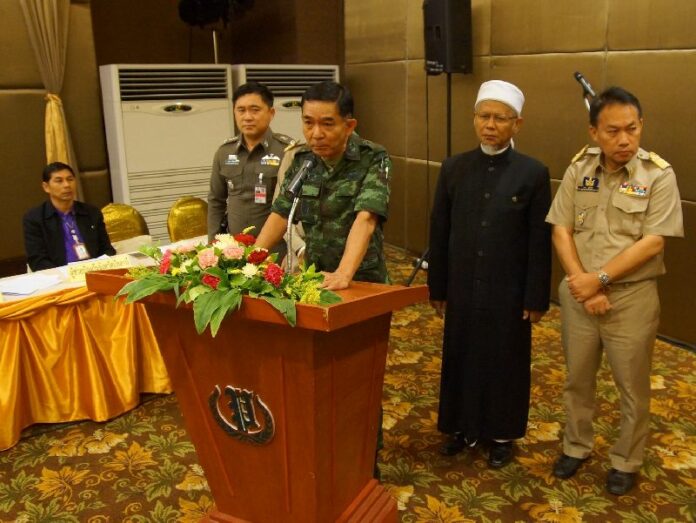
Lt.Gen. Prakarn Chollayuth, Fourth Region Army Commander, speaking to the press about the deadly raid on To Chud village, 7 April 2015.

BANGKOK — An southern army commander has formally apologized for the deadly raid that a fact-finding panel says killed four young men who had no connection to the local Islamic insurgency.

The four men, in their early twenties and thirties, were shot dead by security officers during a raid in To Chud village in Pattani province on 25 March. The military said the operation was an attempt to arrest insurgents, and initially identified two of the deceased as members of a militant group operating in the region.

The military also told reporters that three assault rifles were found next to the deceased, and that security officers only started shooting after the suspects opened fire.

However, an independent committee ruled today that the four men were not related to the insurgency, or armed when the raid took place, citing forensic evidence and witnesses' testimonies. 

The panel's members included local administrators, human rights officials, military officers, representatives from the Central Islamic Committee of Thailand, and officials from Fatoni University, where two of the victims were enrolled as students. 

Lt.Gen. Prakarn Chollayuth, the army commander who oversees Pattani and its neighboring provinces, said he accepted the panel's findings and apologized to the families of the victims. 

"Today, every side must join hands and overcome the crisis of what has happened at To Chud village, so that things will return to normalcy under the laws and human rights principles. I humbly accept the verdict that the committee read to the press today," Lt.Gen. Prakarn said. "As for what happened, I apologize to all sides." 

He promised that the army will respect legal procedures, but added that "fairness must be granted to the security officers. We have to give time for them to prove themselves. We must also understand that security officers who work under these conditions may be frightened at times, which can affect their decision-making." 

Thailand’s southern border provinces are home to a simmering Islamic insurgency that has killed more than 6,000 people in the past decade. Although most people have died in bomb attacks and shootings staged by insurgent groups, Thai authorities have also been criticized for using excessive violence and violating human rights in their efforts to combat the secessionist movement.

Police say that seven soldiers will be charged with murder for their role in the To Chud village raid.

"Those who were involved in this wrongdoing will be summoned to hear their charges and enter the justice procedure,” said commander of Pattani police Pol.Maj.Gen. Kritsakorn Pleethanyawong. "Within this week, we will proceed with it. I would like to ask all sides to have confidence in the justice procedure. My supervisor has instructed me to handle this case in a straightforward manner."

He added, "The court will decide who is wrong, who is right." 

Suraiya Samaeng, whose 24-year-old son was killed in the raid, said she was satisfied by the committee’s findings.

"I would like to thank the committee for their effort and their courage in ensuring fairness for my son. I would like this case to be a lesson, I want it to be the last case. I don't want it to happen to anyone's family. There is nothing that can compensate my loss." 

Police also announced today that a man who was shot dead near a military checkpoint in Pattani province last night was unarmed, contrary to an earlier statement provided by the military. 

According to the military’s original account, Abdullah Dao, 24, was instructed to stop his motorcycle at a security checkpoint at around 11 pm yesterday, but refused and sped away. One of the soldiers manning the checkpoint then opened fire in self-defense because he saw Abdullah reaching for a handgun. A bullet struck Abdullah in the back, killing him at the scene. 

However, a senior police officer said today that Abdullah was not carrying any firearms at the time.

The military has not publicly commented on the incident. 


For comments, or corrections to this article please contact: [email protected]
You can also find Khaosod English on Twitter and Facebook
http://twitter.com/KhaosodEnglish
http://www.facebook.com/KhaosodEnglish

Advertisement

2010 Crackdown: Army Investigators to Join Inquest Teams

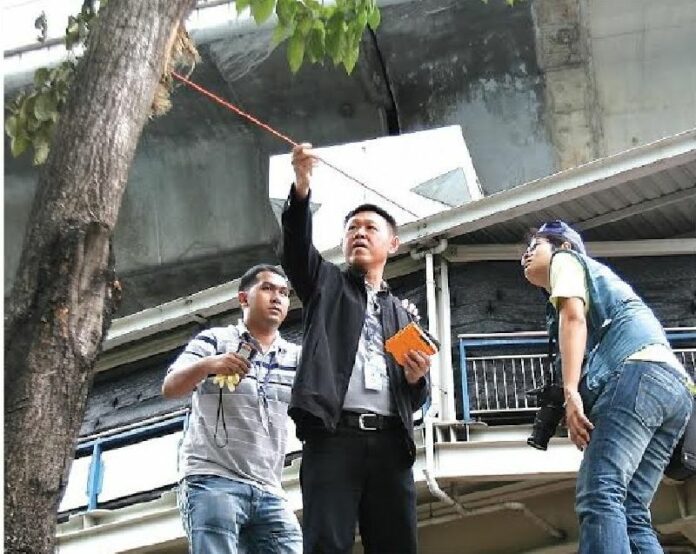
Police officer inspects the scene of the M79 grenade attack on counter-protest against the Redshirts in Silom district of Bangkok, which killed one civilian, 24 April 2010.

BANGKOK — Military representatives will assist with an investigation into the deaths that resulted from a military crackdown on Redshirt protesters in 2010, a senior official said.

Suwanna Suwanchuta, director of the Division of Special Investigation (DSI), said seven retired officers from Thailand’s military court – formally known as the Staff Judge Advocate  will serve as "coordinators" between the DSI and the army in the inquest procedures. 

"The DSI wants these investigators to coordinate with the military when it comes to interrogating soldiers because we have received complaints that soldiers had not been treated fairly," Suwanna said today.

More than 90 people, mostly civilians, died in clashes between security officers and Redshirt demonstrators between April and May 2010. Later in that year, the DSI began assisting with court inquests to determine the causes of the deaths. Then-PrimeMinister Abhisit Vejjajiva, who is facing possible impeachment for authorizing the crackdown, has blamed the violence on militants who were allied to the protesters. 

Of the 27 inquests completed so far, judges have ruled that military gunfire was responsible for the deaths of 18 victims. The other nine cases were deemed inconclusive because of insufficient evidence.

Last month, Gen. Prayuth Chan-ocha ordered the DSI to fill any positions in their 2010 inquest teams that have been left vacant by retired or transferred officers. 

Gen. Prayuth's order alarmed Redshirt activists who fear that the general may attempt to interfere with the inquiries, prompting top Redshirt leaders to meet with DSI officials today.

"The cases have seen very slow progress," said Jatuporn Prompan, chairman of the Redshirt umbrella organization, the United Front of Democracy Against Dictatorship (UDD). "The new committee will have many military men. I am afraid that it won't be transparent and fair."

He added, "I also want to know, about this new committee, are they going to restart or continue works from the older committee? And I want to know about the progress of the cases and direction of the investigators. For the cases that have been proven that their deaths were caused by security officers, how will the government proceed with it?" 

DSI Director Suwanna did not answer Jatuporn's questions directly, but insisted that the addition of the seven retired military officers to the DSI teams will not affect the inquest results.

"We want to work transparently, and we want every side to have confidence in our works," she said. "I insist that we don't have any pre-concieved verdicts in these cases." 

The next inquest verdict is scheduled for 30 April. The inquest will include the case of Hiroyuki Muramoto, a Japanese cameraman who was working for Reuters news agency and killed during clashes on 10 April 2010.


For comments, or corrections to this article please contact: [email protected]

You can also find Khaosod English on Twitter and Facebook
http://twitter.com/KhaosodEnglish
http://www.facebook.com/KhaosodEnglish

Advertisement

2010 Crackdown: Army Investigators to Join Inquest Teams

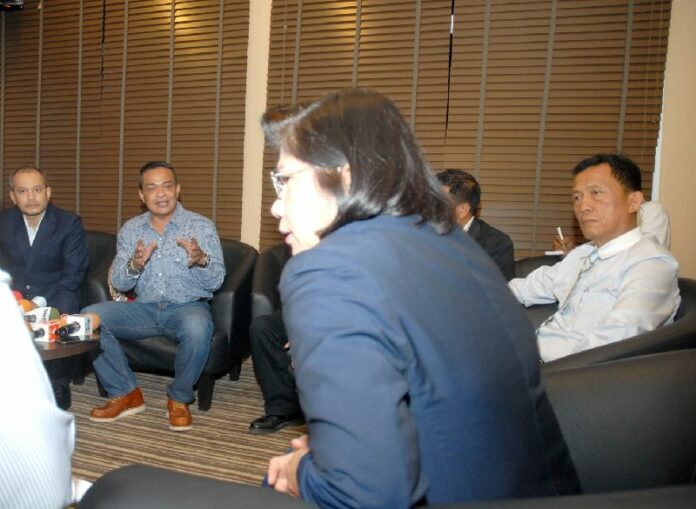
UDD chairman Jatuporn Prompan speaking to DSI officials on 7 April 2015.

BANGKOK — Military representatives will assist with an investigation into the deaths that resulted from a military crackdown on Redshirt protesters in 2010, a senior official said.

Suwanna Suwanchuta, director of the Division of Special Investigation (DSI), said seven retired officers from Thailand’s military court – formally known as the Staff Judge Advocate will serve as "coordinators" between the DSI and the army in the inquest procedures. 

\
Police officer inspects the scene of the M79 grenade attack on counter-protest against the Redshirts in Silom district of Bangkok, which killed one civilian, 24 April 2010. 

"The DSI wants these investigators to coordinate with the military when it comes to interrogating soldiers because we have received complaints that soldiers had not been treated fairly," Suwanna said today.

More than 90 people, mostly civilians, died in clashes between security officers and Redshirt demonstrators between April and May 2010. Later in that year, the DSI began assisting with court inquests to determine the causes of the deaths. Then-Prime Minister Abhisit Vejjajiva, who is facing possible impeachment for authorizing the crackdown, has blamed the violence on militants who were allied to the protesters. 

Of the 27 inquests completed so far, judges have ruled that military gunfire was responsible for the deaths of 18 victims. The other nine cases were deemed inconclusive because of insufficient evidence.

Last month, Gen. Prayuth Chan-ocha ordered the DSI to fill any positions in their 2010 inquest teams that have been left vacant by retired or transferred officers. 

Gen. Prayuth's order alarmed Redshirt activists who fear that the general may attempt to interfere with the inquiries, prompting top Redshirt leaders to meet with DSI officials today.

"The cases have seen very slow progress," said Jatuporn Prompan, chairman of the Redshirt umbrella organization, the United Front of Democracy Against Dictatorship (UDD). "The new committee will have many military men. I am afraid that it won't be transparent and fair."

He added, "I also want to know, about this new committee, are they going to restart or continue works from the older committee? And I want to know about the progress of the cases and direction of the investigators. For the cases that have been proven that their deaths were caused by security officers, how will the government proceed with it?" 

DSI Director Suwanna did not answer Jatuporn's questions directly, but insisted that the addition of the seven retired military officers to the DSI teams will not affect the inquest results.

"We want to work transparently, and we want every side to have confidence in our works," she said. "I insist that we don't have any pre-concieved verdicts in these cases." 

The next inquest verdict is scheduled for 30 April. The inquest will include the case of Hiroyuki Muramoto, a Japanese cameraman who was working for Reuters news agency and killed during clashes on 10 April 2010.


For comments, or corrections to this article please contact: [email protected]
You can also find Khaosod English on Twitter and Facebook
http://twitter.com/KhaosodEnglish
http://www.facebook.com/KhaosodEnglish

Advertisement

Samsung Profit Drops 30 Percent, Company Estimates

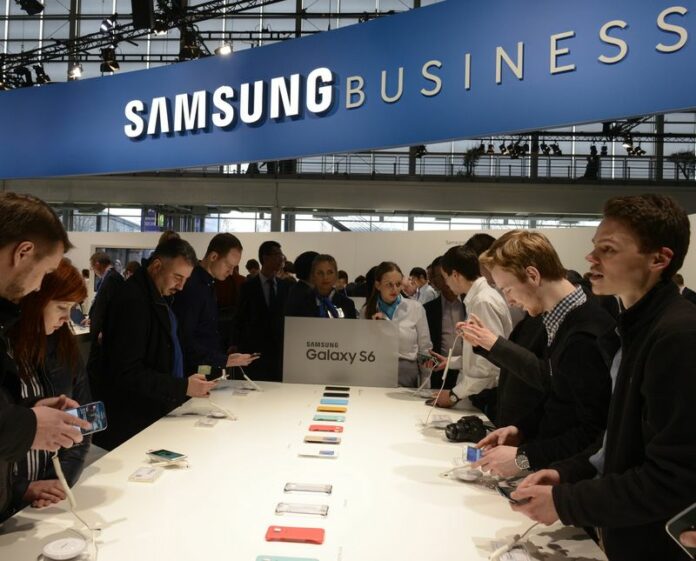
Trade fair visitors check out new Samsung S6 smartphones at the Samsung stand at CeBIT computing and IT trade fair in Hanover, Germany, 16 March 2015. Operating profits at Samsung Electronics Co fell 30.51 per cent in the first quarter of 2015 compared to the same period one year earlier, the company said in an estimate Tuesday. EPA/MAURITZ ANTIN

SEOUL (DPA) — Operating profits at Samsung Electronics Co fell 30.51 per cent in the first quarter of 2015 compared to the same period one year earlier, the company said in an estimate Tuesday.

The South Korean electronics behemoth made an operating profit of 5.9 trillion won (5.44 billion dollars) between January and March, Yonhap News Agency reported.

Samsung's estimate beat a median forecast of 5.47 trillion won compiled by the agency from among South Korea's brokerages. It also represented a rise of 11.53 per cent on the previous quarter, the company said in a regulatory filing.

Samsung estimated its sales for the first quarter at 47 trillion won, a fall of 12.44 per cent on the same quarter one year earlier.

The estimates issued by the company did not include net profit or a breakdown by business sector.

The final figures for the first quarter are due to be released later this month.


For comments, or corrections to this article please contact: [email protected]
You can also find Khaosod English on Twitter and Facebook
http://twitter.com/KhaosodEnglish
http://www.facebook.com/KhaosodEnglish

Advertisement

Samsung Profit Drops 30 Percent, Company Estimates

SEOUL (DPA) — Operating profits at Samsung Electronics Co fell 30.51 per cent in the first quarter of 2015 compared to the same period one year earlier, the company said in an estimate Tuesday.

The South Korean electronics behemoth made an operating profit of 5.9 trillion won (5.44 billion dollars) between January and March, Yonhap News Agency reported.

Samsung's estimate beat a median forecast of 5.47 trillion won compiled by the agency from among South Korea's brokerages. It also represented a rise of 11.53 per cent on the previous quarter, the company said in a regulatory filing.

Samsung estimated its sales for the first quarter at 47 trillion won, a fall of 12.44 per cent on the same quarter one year earlier.

The estimates issued by the company did not include net profit or a breakdown by business sector.

The final figures for the first quarter are due to be released later this month.


For comments, or corrections to this article please contact: [email protected]

You can also find Khaosod English on Twitter and Facebook
http://twitter.com/KhaosodEnglish
http://www.facebook.com/KhaosodEnglish

Advertisement

33-Year-Old Brit Found Dead in Phuketh Hotel Bath

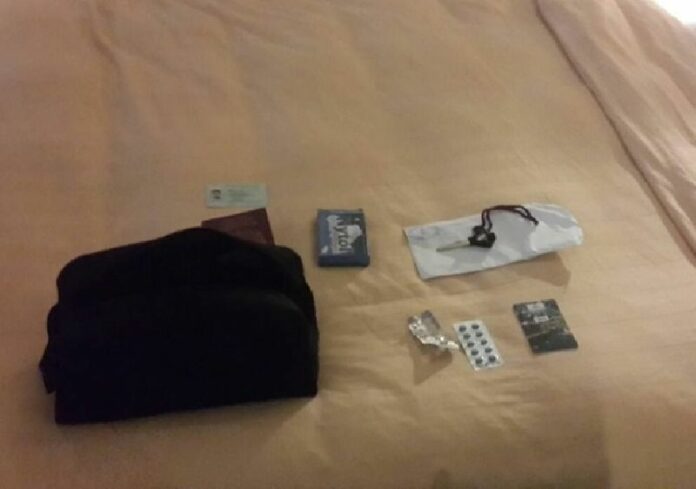
Police found two packs of Nytol on the bed, one was empty. [Phuket News]
(Phuket News)

PHUKET — A 33-year-old British man was found drowned in a bath in a hotel room in Patong last night. Staff from the hotel discovered the body after the man failed to check-out.

At 11:30pm, Lt Thawatchai Simai from Kathu police was called to investigate an incident where the body of a British man had been found inside the bathroom of a room at the Baan Yindee Hotel on Mueanngern Rd in Patong.

Upon arrival at the hotel, police were led to a room where the body of the man (name witheld until his family has been informed) was laying on his side in a bath full of water.

Inside the room police found several bottles of alcohol, and two packs of Nytol on the bed, one was empty.

Police said there appeared to be no sign of an assault or fight, or theft from the room.

Read more here

Note: Khaosod English is not responsible for content on other websites.

Advertisement

Hot News

LATEST NEWS

Bangkok
overcast clouds
36.1 ° C
36.6 °
35 °
61 %
3.6kmh
100 %
Sat
37 °
Sun
36 °
Mon
35 °
Tue
33 °
Wed
32 °