28.8 C
Bangkok
Sunday, June 28, 2026
Home Blog Page 3036

Drafting the Constitution in a Drought of Supporters

The logo of the public forums “Finding a Solution for Thailand”.

(The Isaan Record)

KHON KAEN – In late January, about 250 Northeasterners from six provinces gathered at the conference room of the Petcharat Garden Hotel in Roi Et to participate in the drafting process of Thailand’s twentieth constitution. The military government claims to be seeking citizen participation in drafting the constitution, but these public forums to gather input from Thais across the country seem to be nothing but a false front in the Northeast.

Read more here.


Note: Khaosod English is not responsible for content on other websites.

Advertisement

Economic Leaders Debate China's Rising Role in Global Finance

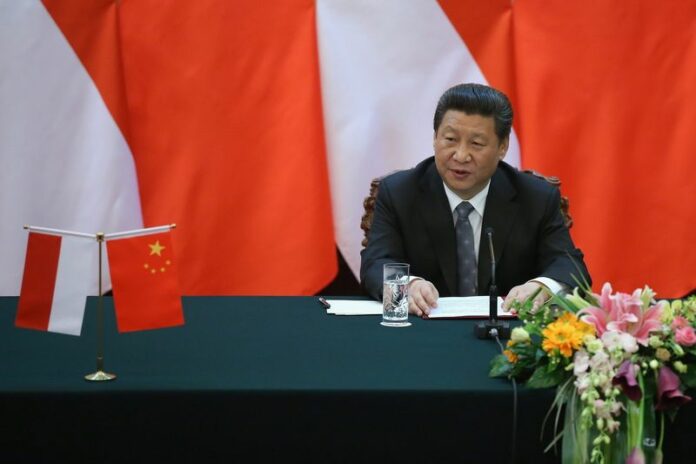
Chinese President Xi Jinping during a press conference with Indonesian President Joko Widodo (unseen) in the Great Hall of the People in Beijing, China, 26 March 2015. EPA/FENG LI / POOL

BOAO, CHINA (DPA) — Chinese President Xi Jinping urged mutual trust to replace lingering suspicions among the world's nations, as he led the annual Boao economic forum for Asia on the weekend.

"Asia still faces numerous challenges, including those old issues left over from history and new ones associated with current disputes and security threats," Xi told the delegates.

"But the Cold War mentality should be truly discarded and new security concepts be nurtured as we explore a path for Asia that ensures security for all." 

The annual forum, which China has hosted on the southern island of Hainan since 2002, is being followed closely this year as the launch of the China-backed Asian Infrastructure Investment Bank (AIIB) has gripped international observers. 

"On the one hand, countries are threatened by China's rise, and on the other they are attracted by the possible financial benefits and want to be part of China's success," independent Beijing-based analyst Zhang Lifan told dpa.

The United States opposes Beijing's plan to set up the bank by the end of the year to fund rail, road, power and other projects, citing concerns over transparency and corporate governance in China.

The US Treasury Department also said the initiative is a deliberate effort to undercut the World Bank and Asian Development Bank (ADB), institutions established in the mid-20th century that are dominated by the US and Japan. 

Washington's reported attempts to pressure allies in Europe and Australia to refrain from joining the initiative seem to have failed.

Australia intends to join the China-led bank as a founding member, Prime Minister Tony Abbott said Sunday. 

Britain, Germany, France and Italy have decided to join, while Russia signed up to the plan on Saturday. 

The initiative was also received with enthusiasm among forum delegates.

"Before, if you were in trouble you had to go either to the World Bank or ADB, but now there is an alternative," said Atul Shunglu, assistant secretary-general of the Federation of Indian Chambers of Commerce and Industry.

"The AIIB can push existing institutions to become more flexible" Atul said.

Cyril Muller, vice president of the World Bank Group, admitted Sunday the World Bank is "getting a strong push to change quickly."

"Each of the world's [major financial institutions] learn from each other, and I pretty much share the view that starting with a clean sheet of paper is a good idea," Muller told forum delegates. 

But he objected to the view that there is tension in the World Bank between the US, Japan and Europe on one side and emerging countries on the other.

"It's not totally true. There are groups that blend these sets of interests and this helps build consensus and understanding," Muller said. 

Speakers at the forum said the US could have avoided its position of isolation in resistance to the bank.

"If the US had ratified IMF reforms, then the debate over global [financial] governance architecture would be very different today," former Australian Prime Minister Kevin Rudd said Sunday. 

Rudd was referring to a 2010 agreement by the Group of 20 (G20) industrialized and emerging economies to modestly democratize the International Monetary Fund and expand its lending resources.

Xi and other leaders also promoted Beijing's vision for the "Silk Road Economic Belt," which he first proposed in 2013.

Xi said a strategy has been developed to improve trade and transport links in Asia. 

The New Silk Road Economic Belt seeks to upgrade infrastructure linking China to Europe through Central Asia, and the 21st Century Maritime Silk Road plan aims to strengthen maritime cooperation. 

China has already built joint economic zones and ports in partnership with countries including Vietnam, Laos, Kazakhstan, Myanmar, Cambodia, Greece and Sri Lanka.

Some critics have expressed concern that China would use the "silk road" model to strengthen its position in maritime territorial disputes with Japan, the Philippines, Vietnam, Malaysia and Taiwan.

In his speech, Xi did not make any direct reference to territorial disputes. 

US senators expressed alarm this month about China's construction projects to expand small islands it claims in the South China Sea.

Without naming the US, Xi urged delegates to "oppose interference in other countries' internal affairs and attempts to destabilize the region out of selfish motives." 

China has a lot to gain from a successful silk road plan, analysts told dpa. 

"The goal is no simple link between China and Europe, it's about building a China-centric, cross-regional network infrastructure," said Moritz Rudolf, of the Mercator Institute for China Studies in Berlin.

"Projects in the Silk Road initiative would fill the order books of Chinese state-owned enterprises and create new jobs in the country," Rudolf said.

"With the expansion of the Eurasian transport infrastructure, the government could also lay the foundations for new China-centered production networks, for example with Chinese companies moving production to Southeast Asia, and open up new trade routes, markets and sources of energy.

"China's position as a trading power would thus be strengthened."  

(Reporting by Joanna Chiu)

 
For comments, or corrections to this article please contact: [email protected]

You can also find Khaosod English on Twitter and Facebook
http://twitter.com/KhaosodEnglish
http://www.facebook.com/KhaosodEnglish

Advertisement

Editorial: Blackshirts No Excuse for Crackdown Deaths

Redshirt protesters on 11 April 2010 with coffins of those killed in the crackdown on the previous day.

Nearly five years later, myths about who is responsible for the more than 90 people killed in the 2010 crackdown refuse to die.

As former Prime Minister Abhisit Vejjajiva and his deputy Suthep Thaugsuban prepare to defend themselves against “abuse of power” charges for authorizing the crackdown on Redshirt protesters, both leaders have drawn upon old narratives that pin all of the violence on militants who were allied with the demonstrators.

\
Redshirt protesters confront with armed soldiers during a clash in Pathum Thani province, 9 April 2010.

The former Democrat Party politicians have held on to this version of history despite several court inquests and independent investigations by human rights groups that have determined soldiers to be responsible for the deaths of many unarmed civilians during the unrest.  

According to Abhisit and Suthep’s story, soldiers only acted in self-defense against the Redshirt-allied militants. Suthep in particular has continued to allege that the militants, commonly referred to as the Blackshirts, went as far as intentionally killing unarmed Redshirt protesters in an effort to smear the government.

While there is widespread evidence that armed elements were embedded among the Redshirts, the role of these militants has been greatly inflated by Democrat Party leaders and military commanders.

The important question is whether the military acted proportionally in the face of resistance from the militants. Based on eyewitnesses' accounts and media footage from the crackdown, military officers repeatedly acted in ways that put civilians in danger. Soldiers fired live ammunition into crowds that included unarmed demonstrators, and even into the “safe zone” that was established inside a Buddhist temple, killing six civilians. According to the National Anti-Corruption Commission (NACC), which has charged Abhisit and Suthep with abuse of power, the government leaders did not alter the scope or methods of the operation even after it was clear that unarmed protesters and bystanders were being killed and injured.

Even if Abhisit and Suthep’s claim that the crackdown was necessary to quell the Blackshirts is taken at face value, the operation should still be deemed a failure, as none of the fatalities have been proven beyond reasonable doubt to be members of the militant group. Instead, the crackdown killed demonstrators, bystanders, children, medical workers, journalists, and even soldiers.

The families of those who were killed in the crackdown are still waiting for a single member of the Abhisit government or military to publicly acknowledge that civilians were killed by security forces. Instead, the Democrat leaders have continued to paint the confrontation as a "war" that pitched security officers against "terrorists." This claim was repeated again by Suthep this week, when he told the NACC that he was forced to continue the crackdown so that "bandits" would not take over the city. This narrative ignores the fact that the majority of the Redshirt demonstrators were peaceful and had no association with the militant wing. 

Although the violence committed by the Blackshirts is unacceptable, it should not be used to whitewash the Abhisit government and military of all responsibility for their role in one of the bloodiest episodes in recent Thai history.


For comments, or corrections to this article please contact: [email protected]

You can also find Khaosod English on Twitter and Facebook
http://twitter.com/KhaosodEnglish
http://www.facebook.com/KhaosodEnglish


Advertisement

Two Foreign Tourists Hospitalized for Ayutthaya Train Crash

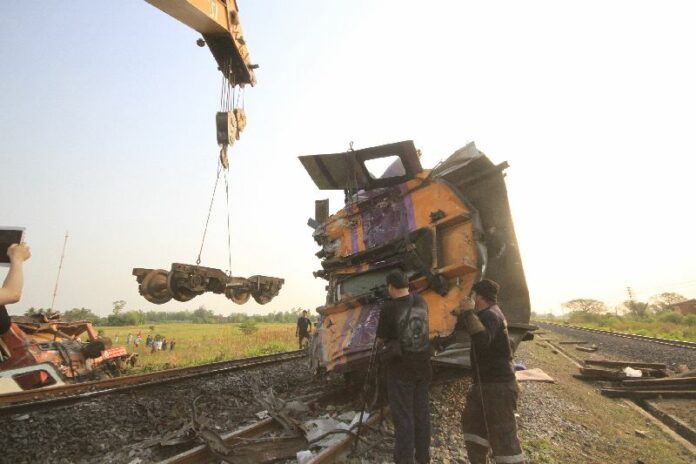
Officials inspect the scene of the crash in Ayutthaya province, 27 March 2015.

AYUTTHAYA — Two foreign tourists were among the six passengers severely injured in a train crash in Ayutthaya province yesterday, which was one of four train accidents to take place in the past week.

At least 50 people were wounded in total last night when a Bangkok – Denchai train collided into the back of a Bangkok – Nong Khai train parked approximately 10 kilometers away from Pha Chee train station. 

\
Officials inspect the scene of the crash in Ayutthaya province, 27 March 2015.

The two trains were severely damaged by the crash, and at least eight cars derailed from the track. 

As of this morning, six people were described as being in critical condition at Phra Nakhon Si Ayutthaya Hospital. The victims were identified as two train drivers, one train mechanic, one Thai passenger, and two foreign tourists from South Korea and the United States.

After inspecting the collision site, Wutthichat Kalayanamit, governor of the State Railway of Thailand, told reporters that the drivers of the Bangkok – Denchai train had ignored a stop signal.

According to Wuttichat, the Bangkok – Nong Khai train encountered a mechanical problem and stopped near Pha Chee train station for an inspection. The train then set up a signal along the train tracks, instructing oncoming trains to stop, Wuttichat said. 

"But the Bangkok – Denchai train ignored the signal and crashed into the train, leading to injuries," the SRT governor said, adding that engineers are urgently repairing the train track around the collision site, which was also damaged.  He estimated that the track could be re-opened later this afternoon.

Wutthichat said the collision caused at least 80 million baht in damages. It is not clear whether the drivers of the train have been charged of any crimes.

The governor pledged to fully compensate every victim of the crash.

The incident was the third of four train accidents to take place this week in Thailand, where all rail operations are owned by the state. In two separate incidents earlier this week, trains collided with vehicles at railway crossings in Trang province. 

\
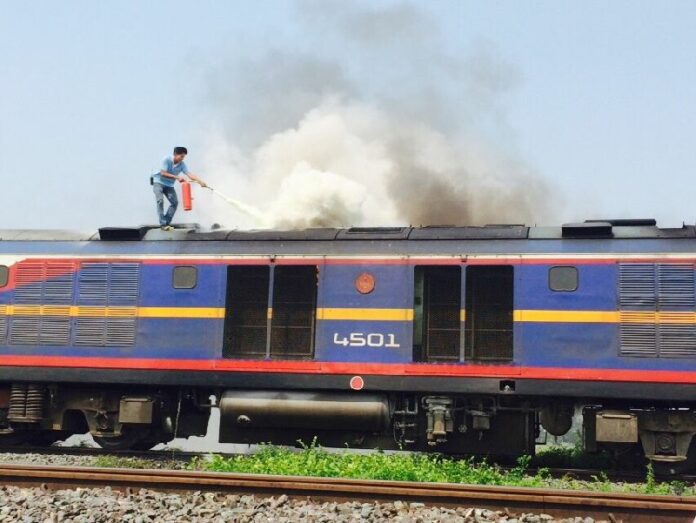
A train caught on fire in Ayutthaya province on 27 March 2015.

Today, a fourth accident took place in Ayutthaya province when a Bangkok – Denchai train suddenly caught fire near Pak Rad train station. The fire reportedly started at around 10 am, causing the driver to pull an emergency stop. More than 100 passengers fled the train, and no injuries have been reported. 

Sorapong Paengmueang, an official from the SRT, said initial inspection reveals that the engine may have overheated. He said SRT has transported all of the passengers to the nearest train station to continue their journey.  

The Thai railyway system is often criticized for frequent delays, outdated trains, and a high rate of accidents. In July 2014, the military junta expelled former SRT governor Prapat Chongsanguan from the post for allegedly failing to prevent a rape and murder of a 13-year-old girl by a SRT staff on an overnight train. 


For comments, or corrections to this article please contact: [email protected]

You can also find Khaosod English on Twitter and Facebook
http://twitter.com/KhaosodEnglish
http://www.facebook.com/KhaosodEnglish

Advertisement

Two Foreign Tourists Hospitalized for Ayutthaya Train Crash

A Bangkok - Denchai train suddenly caught fire near Pak Rad train station in Ayutthaya province, 27 March 2015.

AYUTTHAYA — Two foreign tourists were among the six passengers severely injured in a train crash in Ayutthaya province yesterday, which was one of four train accidents to take place in the past week.

At least 50 people were wounded in total last night when a Bangkok – Denchai train collided into the back of a Bangkok – Nong Khai train parked approximately 10 kilometers away from Pha Chee train station. 

\
Officials inspect the scene of the crash in Ayutthaya province, 27 March 2015.

The two trains were severely damaged by the crash, and at least eight cars derailed from the track. 

As of this morning, six people were described as being in critical condition at Phra Nakhon Si Ayutthaya Hospital. The victims were identified as two train drivers, one train mechanic, one Thai passenger, and two foreign tourists from South Korea and the United States.

After inspecting the collision site, Wutthichat Kalayanamit, governor of the State Railway of Thailand, told reporters that the drivers of the Bangkok – Denchai train had ignored a stop signal.

According to Wuttichat, the Bangkok – Nong Khai train encountered a mechanical problem and stopped near Pha Chee train station for an inspection. The train then set up a signal along the train tracks, instructing oncoming trains to stop, Wuttichat said. 

"But the Bangkok – Denchai train ignored the signal and crashed into the train, leading to injuries," the SRT governor said, adding that engineers are urgently repairing the train track around the collision site, which was also damaged.  He estimated that the track could be re-opened later this afternoon.

Wutthichat said the collision caused at least 80 million baht in damages. It is not clear whether the drivers of the train have been charged of any crimes.

The governor pledged to fully compensate every victim of the crash.

The incident was the third of four train accidents to take place this week in Thailand, where all rail operations are owned by the state. In two separate incidents earlier this week, trains collided with vehicles at railway crossings in Trang province. 

\
A train caught on fire in Ayutthaya province on 27 March 2015.

Today, a fourth accident took place in Ayutthaya province when a Bangkok – Denchai train suddenly caught fire near Pak Rad train station. The fire reportedly started at around 10 am, causing the driver to pull an emergency stop. More than 100 passengers fled the train, and no injuries have been reported. 

Sorapong Paengmueang, an official from the SRT, said initial inspection reveals that the engine may have overheated. He said SRT has transported all of the passengers to the nearest train station to continue their journey.  

The Thai railyway system is often criticized for frequent delays, outdated trains, and a high rate of accidents. In July 2014, the military junta expelled former SRT governor Prapat Chongsanguan from the post for allegedly failing to prevent a rape and murder of a 13-year-old girl by a SRT staff on an overnight train. 


For comments, or corrections to this article please contact: [email protected]

You can also find Khaosod English on Twitter and Facebook
http://twitter.com/KhaosodEnglish
http://www.facebook.com/KhaosodEnglish

Advertisement

Doubt Cast on Deep South Raid Casualties' Links to Insurgency

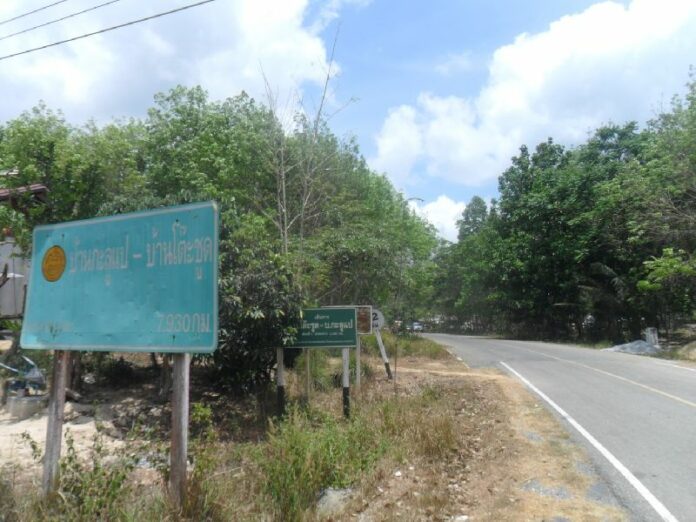
The entrance to To Chud village in Pattani province, 26 March 2015.

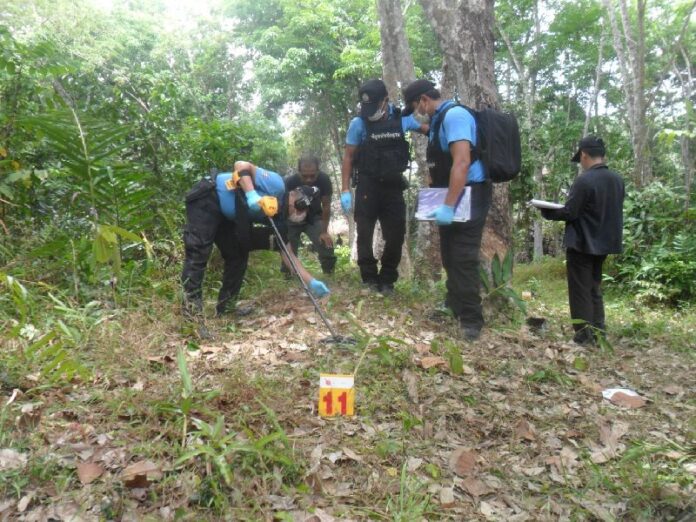
PATTANI — Community leaders and family members of the four men killed by security forces in the southern province of Pattani this week are calling for an investigation into the deadly raid, insisting the deceased had no links to the local Islamic insurgency.

The four men were shot dead during a raid carried out by police, military, and paramilitary rangers on a village in Thung Yang Daeng district on 25 March.

\
The entrance to 
To Chud village in Pattani province, 26 March 2015.

Police initially said two of the men were members of RKK, one of the militant groups behind a secessionist movement that has claimed more than 6,000 lives in the region. 

Yet Pol.Col. Mana Dechavirit, superintendent of Thung Yang Daeng Police Station, told Khaosod English today that the men's links to the RKK are still under investigation. 

"We are still inspecting evidence and waiting for forensic results from the weapons found at the crime scene in order determine whether they were members of the RKK," he said. "At the moment, there is no confirmation."

According to Pol.Col. Mana, the four men killed in the raid did not have any arrest warrants issued on them for crimes related to national security. However, two of them had records of drug charges and "personal crimes."

Twenty-two men were also detained at the scene on suspicion of planning an attack in the area. The commander of Pattani provincial police told Isra news that four of 22 suspects in custody are connected to the insurgency. 

"Four of them are members of a group that causes unrest, but they have no previous arrest warrants in national security cases," Pol.Maj.Gen. Kritsakorn Pleethanyawong was quoted as saying. 

Nasae Doko, chief of To Chud village, said he was in the neighboring Yala province when the raid took place, and immediately rushed back but he was barred from entering the scene for several hours.

After he was allowed in, Nasae said he recognized one of the deceased as Saddam Wanu, a 24-year-old man who recently completed a jail term for drug offenses. Security officers reportedly told him they found an assault rifle next to Saddam. 

"He was out of prison just last week. He managed to own a weapon of war already?" Nasae said. "I am confident that the weapon didn't belong to that young man. I don't know who the weapon belongs to. I am also confident that Saddam is just a drug addict. He had no connection to national security [incidents]."

Saddam's mother admitted her son was heavily involved in drugs, but disputed the allegation that he was a militant.

"Everyone in the village knows what Saddam was like," she said. "I believe the police also know what he was like. Why are they accusing Saddam of being a perpetrator? It's not true. The accusation is really severe." 

Pol.Col. Mana did not deny that the village was frequently visited by drug addicts, but insisted that the military operation followed a confirmed report that a group of militants were meeting in the area to plan new attacks. 

"Our in-depth information provided by our informants confirm that there has been movement of those who wish to create chaos," Pol.Col. Mana said. 

Today, Fatoni University released a statement saying two of the four men killed in the raid were fourth year students at the university, and that the pair had no record of involvement in the insurgency. 

"They didn't do anything that endangered national security and were not involved with the RKK," said the statement, which was published on Isra News site. "Furthermore, they have no previous arrest warrants on national security cases, and the university was never instructed by security forces that the two students did anything that affected  national security."

The university also called for an investigation into the deadly raid, and urged media agencies to "only report news that has been verified, and do so impartially and ethically." 

Col. Pramote Prom-in, spokesperson of the Internal Security Operations Command (ISOC), said the 22 suspects arrested at the scene are being held in three army camps for interrogation. 

He said the weapons confiscated at the raid will undergo forensic tests to determine the identity of the owners and any connections to previous attacks.

"I would like to offer my condolence to families of the four men who were killed," Col. Pramote said. 

More than 6,000 people have been killed since the insurgency broke out in the southern border provinces of Pattani, Yala, Narathiwat in early 2004. A shadowy network of militant groups has launched near-daily attacks on authorities in the region in an effort to revive the independent sultanate of Pattani, which was incorporated into modern day Thailand in the early 20th century. 

There are an estimated 60,000 security officers deployed in the Deep South, whose occasionally heavy-handed tactics have been criticized human rights groups.

Yesterday, Pattani governor Weerapong Kaewsuwan vowed to investigate the deadly raid.

"I will give fairness to all sides," he told Khaosod yesterday. "As for the facts, we are waiting for test results. I would like to ask everyone to be confident in the justice procedures."

In contrast to the predominantly Buddhist populations across most of Thailand, the Deep South is dominated by Muslims who trace their ancestry to the Malays and speak a distinct dialect called Yawi. 

To Chud village's chief, Nasae, said he was taken aback by the raid as the Buddhist and Muslim groups in his community are known for living peacefully. 

"In this area, there are around 300 households. There are 30 Buddhist households, with one Buddhist [village chief] assistant, and 288 Muslim households. We have always talked to each other all the time. We live peacefully," Nasae said. "The soldiers have been stationed at the nearby Thai Buddhist village. Sometimes they patrol our village. Whenever something is up, they will tell us: chief, please be careful, because there are incidents going on. But this time, they came without warning.

He continued, "And I was confused by the media reports that they were clashing with perpetrators who were plotting something. When the raid took place, they didn't let me enter the scene. I feel like that they were giving only one-sided information." 

 
For comments, or corrections to this article please contact: [email protected]

You can also find Khaosod English on Twitter and Facebook
http://twitter.com/KhaosodEnglish
http://www.facebook.com/KhaosodEnglish

Advertisement

Doubt Cast on Deep South Raid Casualties' Links to Insurgency

Soldiers inspect the scene of the raid in To Chud village, Pattani, 26 March 2015.

PATTANI — Community leaders and family members of the four men killed by security forces in the southern province of Pattani this week are calling for an investigation into the deadly raid, insisting the deceased had no links to the local Islamic insurgency.

The four men were shot dead during a raid carried out by police, military, and paramilitary rangers on a village in Thung Yang Daeng district on 25 March.

\
The entrance to 
To Chud village in Pattani province, 26 March 2015.

Police initially said two of the men were members of RKK, one of the militant groups behind a secessionist movement that has claimed more than 6,000 lives in the region. 

Yet Pol.Col. Mana Dechavirit, superintendent of Thung Yang Daeng Police Station, told Khaosod English today that the men's links to the RKK are still under investigation. 

"We are still inspecting evidence and waiting for forensic results from the weapons found at the crime scene in order determine whether they were members of the RKK," he said. "At the moment, there is no confirmation."

According to Pol.Col. Mana, the four men killed in the raid did not have any arrest warrants issued on them for crimes related to national security. However, two of them had records of drug charges and "personal crimes."

Twenty-two men were also detained at the scene on suspicion of planning an attack in the area. The commander of Pattani provincial police told Isra news that four of 22 suspects in custody are connected to the insurgency. 

"Four of them are members of a group that causes unrest, but they have no previous arrest warrants in national security cases," Pol.Maj.Gen. Kritsakorn Pleethanyawong was quoted as saying. 

Nasae Doko, chief of To Chud village, said he was in the neighboring Yala province when the raid took place, and immediately rushed back but he was barred from entering the scene for several hours.

After he was allowed in, Nasae said he recognized one of the deceased as Saddam Wanu, a 24-year-old man who recently completed a jail term for drug offenses. Security officers reportedly told him they found an assault rifle next to Saddam. 

"He was out of prison just last week. He managed to own a weapon of war already?" Nasae said. "I am confident that the weapon didn't belong to that young man. I don't know who the weapon belongs to. I am also confident that Saddam is just a drug addict. He had no connection to national security [incidents]."

Saddam's mother admitted her son was heavily involved in drugs, but disputed the allegation that he was a militant.

"Everyone in the village knows what Saddam was like," she said. "I believe the police also know what he was like. Why are they accusing Saddam of being a perpetrator? It's not true. The accusation is really severe." 

Pol.Col. Mana did not deny that the village was frequently visited by drug addicts, but insisted that the military operation followed a confirmed report that a group of militants were meeting in the area to plan new attacks. 

"Our in-depth information provided by our informants confirm that there has been movement of those who wish to create chaos," Pol.Col. Mana said. 

Today, Fatoni University released a statement saying two of the four men killed in the raid were fourth year students at the university, and that the pair had no record of involvement in the insurgency. 

"They didn't do anything that endangered national security and were not involved with the RKK," said the statement, which was published on Isra News site. "Furthermore, they have no previous arrest warrants on national security cases, and the university was never instructed by security forces that the two students did anything that affected  national security."

The university also called for an investigation into the deadly raid, and urged media agencies to "only report news that has been verified, and do so impartially and ethically." 

Col. Pramote Prom-in, spokesperson of the Internal Security Operations Command (ISOC), said the 22 suspects arrested at the scene are being held in three army camps for interrogation. 

He said the weapons confiscated at the raid will undergo forensic tests to determine the identity of the owners and any connections to previous attacks.

"I would like to offer my condolence to families of the four men who were killed," Col. Pramote said. 

More than 6,000 people have been killed since the insurgency broke out in the southern border provinces of Pattani, Yala, Narathiwat in early 2004. A shadowy network of militant groups has launched near-daily attacks on authorities in the region in an effort to revive the independent sultanate of Pattani, which was incorporated into modern day Thailand in the early 20th century. 

There are an estimated 60,000 security officers deployed in the Deep South, whose occasionally heavy-handed tactics have been criticized human rights groups.

Yesterday, Pattani governor Weerapong Kaewsuwan vowed to investigate the deadly raid.

"I will give fairness to all sides," he told Khaosod yesterday. "As for the facts, we are waiting for test results. I would like to ask everyone to be confident in the justice procedures."

In contrast to the predominantly Buddhist populations across most of Thailand, the Deep South is dominated by Muslims who trace their ancestry to the Malays and speak a distinct dialect called Yawi. 

To Chud village's chief, Nasae, said he was taken aback by the raid as the Buddhist and Muslim groups in his community are known for living peacefully. 

"In this area, there are around 300 households. There are 30 Buddhist households, with one Buddhist [village chief] assistant, and 288 Muslim households. We have always talked to each other all the time. We live peacefully," Nasae said. "The soldiers have been stationed at the nearby Thai Buddhist village. Sometimes they patrol our village. Whenever something is up, they will tell us: chief, please be careful, because there are incidents going on. But this time, they came without warning.

He continued, "And I was confused by the media reports that they were clashing with perpetrators who were plotting something. When the raid took place, they didn't let me enter the scene. I feel like that they were giving only one-sided information." 
 
For comments, or corrections to this article please contact: [email protected]

You can also find Khaosod English on Twitter and Facebook
http://twitter.com/KhaosodEnglish
http://www.facebook.com/KhaosodEnglish

Advertisement

Myanmar Army Chief Vows to Safeguard "Landmark" November Elections

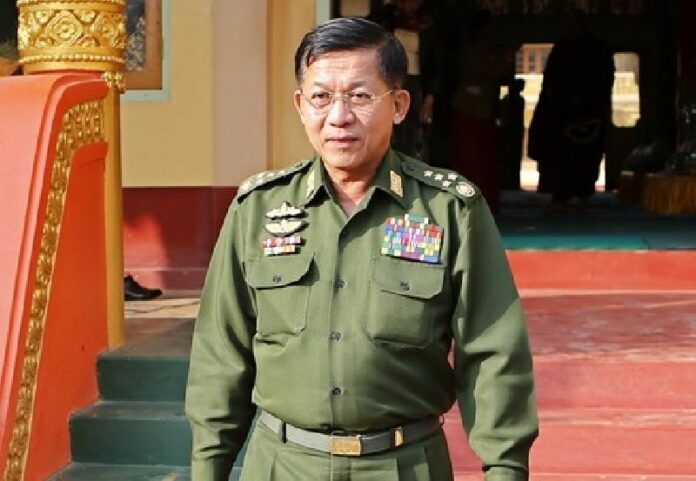
A file photo shows Myanmar military commender-in-chief Senior General Min Aung Hlaing arriving to meet war victims who fled from the conflict zone at a monastery in Lashio, northern Shan State, Myanmar, 15 February 2015. Aung Hlaing said the military will not tolerate any threat to this year's elections. EPA/LYNN BO BO

YANGON (DPA) — The Myanmar military will not tolerate any threat to this year's elections, the army chief said Friday.

"The general election scheduled in November is an important landmark of democracy implementation in our country," Senior General Min Aung Hlaing said.

"We will not tolerate at all any disturbance to stability of the state and rule of law, any pressure or any threat to voting in the general election," he was quoted as saying on state-run television MRTV, in a speech for Armed Forces Day.

But opposition leader Aung San Suu Kyi said last week that the election would not be free and fair under the current constitution, which allocates 25 per cent of parliament to the military, and effectively excludes her from running for the presidency.

The government of President Thein Sein also been trying to implement a nation-wide ceasefire with regional ethnic rebels, but a few militias have been holding out.

"The governemnt's failure to sign ceasefires with all ethnic armed groups will not harm the election," said Sithu Aung Myint, a political analyst. 

"But how it could be free and fair if the military is still holding a quarter of parliamentary seats?"

 
For comments, or corrections to this article please contact[email protected]

You can also find Khaosod English on Twitter and Facebook
http://twitter.com/KhaosodEnglish
http://www.facebook.com/KhaosodEnglish

Advertisement

Suthep Reports to NACC For 2010 Crackdown Charges

Prime Minister Suthep Thaugsuban formally reported to the National Anti-Corruption Commission (NACC) to contest charges related his role in the deadly crackdown on Redshirt protesters in 2010, 26 March 2015.

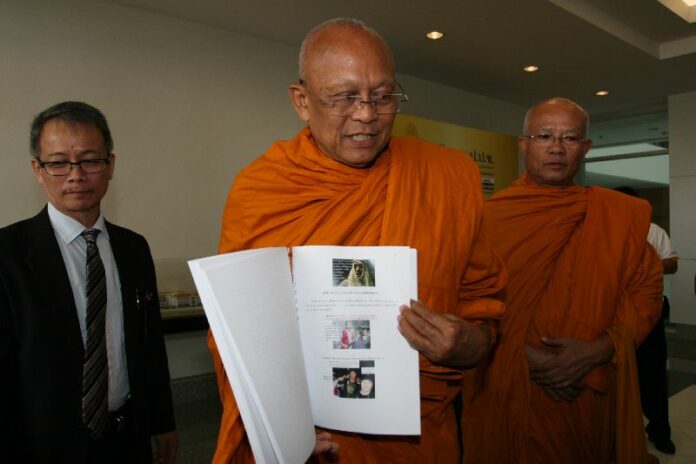
BANGKOK — Former deputy Prime Minister Suthep Thaugsuban formally reported to Thailand's national anti-graft agency to contest charges related his role in the deadly crackdown on Redshirt protesters in 2010.

Suthep, who has been living as a monk in southern Thailand since the May 2014 coup, submitted more than 150 documents to the National Anti-Corruption Commission (NACC) as a part of his defense.

\

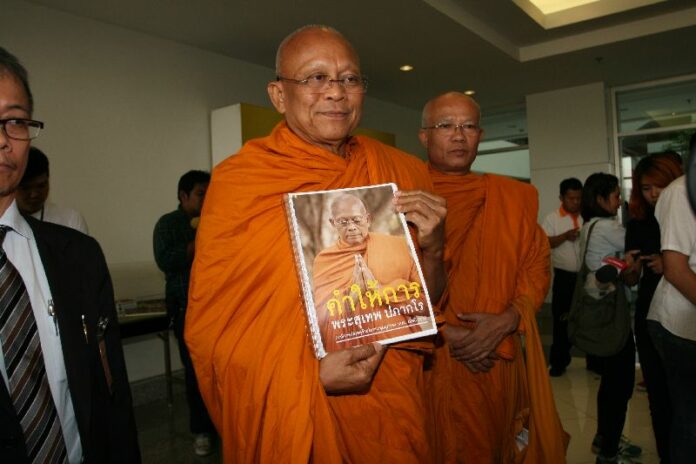
The documents were bound together with a magazine-like cover featuring his portrait, titled "Testimony, Phra Suthep Paphakaro." 

The subtitle read, "Concerning the case of terrorism during the UDD rallies in 2010," in reference to the Redshirts' official umbrella organization, the United Front of Democracy Against Dictatorship. 
Suthep and his former supervisor, Abhisit Vejjajiva, have beencharged with abuse of power by the NACC for authorizing the military operation in 2010, which left over 90 people dead, mostly civilians. If proven guilty, the two Democrat Party politicians could be retrospectively impeached and banned from politics for five years.

Speaking to reporters after a two hour meeting with the NACC, Suthep said he told officials that Thailand was nearing a state of war prior to the 2010 crackdown, with "perpetrators using war weapons to kill people, police, and soldiers in the middle of the city." 

"It was a severe crisis and an emergency situation. Therefore, the government appointed me to be director of the Center for the Resolution of Emergency Situation (CRES)," said Suthep, who is now better known as the firebrand leader of the anti-government protests that preceded the 2014 May coup.

"Let me insist that we adjusted the plan according to the situation," Suthep said in response to the accusation that he and Abhisit failed to order a change in military tactics even after unarmed civilians were killed and wounded. "But we could not simply call off operation. Because if we did, it would amount to giving up our city to the bandits. It was my duty to restore peace. I hope you understand." 

Suthep also stressed that Abhisit was not involved in the details of the military operation, except for setting a policy that strictly ordered security officers not to use violence. 

"I would like to take sole responsibility over every order I gave," Suthep said.

The 2010 crackdown was an effort to disperse the thousands of Redshirt protesters who descended on Bangkok in March to demand a fresh election. In early April, the Redshirts escalated their protest by seizing the capital city's financial district, and the government declared an emergency situation. 

On 10 April 2010, the government ordered the military to disperse the protesters, but the crackdown was called off after security officers encountered resistance from armed militants who became known as “Blackshirts.”

Another military operation was mounted in mid-May, culminating in the final assault on the protesters' camp in downtown Bangkok on 19 May 2010. More than 90 people were killed in the clashes, including protesters, soldiers, medical workers, bystanders, and two foreign journalists. 

\
Government officials show weapons that were reportedly found in Redshirt camps to reporters, 22 May 2010.

Abhisit, Suthep, and other government and military officials at the time have blamed the violence on the Redshirt-allied gunmen that soldiers were allegedly forced to confront.

When a reporter asked Suthep about court inquests that have determined soldiers to be responsible for the deaths of civilians in the crackdown, the monk suggested that the so-called Blackshirts disguised themselves and hid amongst the soldiers. 

"On the roads where the soldiers were positioned, there were people other than soldiers," Suthep said. "The bad people were there, too. A certain armed group joined in and attacked. The bad people had weapons like M16s and Tarvos that they seized from soldiers." 

Suthep, who has been ordered by the NACC to return and provide more testimony on 21 April, vowed now to flee the legal process. 

"I am not running anywhere. If the NACC submits the case to the NLA [National Legislative Assembly] to impeach me, I am willing to explain myself to parliament," Suthep said. 

The NACC has also been tasked with pursuing a separate case against Abhisit and Suthep in the Supreme Court's Division for Holders of Political Office. The pair was initially charged with murder for their role the crackdown, but the Criminal Court dropped the case in 2014 and gave the NACC authority to prosecute the pair for "abuse of power" in Supreme Court instead. 

For comments, or corrections to this article please contact[email protected]

You can also find Khaosod English on Twitter and Facebook
http://twitter.com/KhaosodEnglish
http://www.facebook.com/KhaosodEnglish

Advertisement

Suthep Reports to NACC For 2010 Crackdown Charges

Prime Minister Suthep Thaugsuban formally reported to the National Anti-Corruption Commission (NACC) to contest charges related his role in the deadly crackdown on Redshirt protesters in 2010, 26 March 2015.

BANGKOK — Former deputy Prime Minister Suthep Thaugsuban formally reported to Thailand's national anti-graft agency to contest charges related his role in the deadly crackdown on Redshirt protesters in 2010.

Suthep, who has been living as a monk in southern Thailand since the May 2014 coup, submitted more than 150 documents to the National Anti-Corruption Commission (NACC) as a part of his defense.

\
Suthep Thaugsuban reporting to the National Anti-Corruption Commission (NACC)  with testimony on 26 March 2015.

The documents were bound together with a magazine-like cover featuring his portrait, titled "Testimony, Phra Suthep Paphakaro." 

The subtitle read, "Concerning the case of terrorism during the UDD rallies in 2010," in reference to the Redshirts' official umbrella organization, the United Front of Democracy Against Dictatorship. 

Suthep and his former supervisor, Abhisit Vejjajiva, have been charged with abuse of power by the NACC for authorizing the military operation in 2010, which left over 90 people dead, mostly civilians. If proven guilty, the two Democrat Party politicians could be retrospectively impeached and banned from politics for five years.

Speaking to reporters after a two hour meeting with the NACC, Suthep said he told officials that Thailand was nearing a state of war prior to the 2010 crackdown, with "perpetrators using war weapons to kill people, police, and soldiers in the middle of the city." 

"It was a severe crisis and an emergency situation. Therefore, the government appointed me to be director of the Center for the Resolution of Emergency Situation (CRES)," said Suthep, who is now better known as the firebrand leader of the anti-government protests that preceded the 2014 May coup.

"Let me insist that we adjusted the plan according to the situation," Suthep said in response to the accusation that he and Abhisit failed to order a change in military tactics even after unarmed civilians were killed and wounded. "But we could not simply call off operation. Because if we did, it would amount to giving up our city to the bandits. It was my duty to restore peace. I hope you understand." 

Suthep also stressed that Abhisit was not involved in the details of the military operation, except for setting a policy that strictly ordered security officers not to use violence. 

"I would like to take sole responsibility over every order I gave," Suthep said.

The 2010 crackdown was an effort to disperse the thousands of Redshirt protesters who descended on Bangkok in March to demand a fresh election. In early April, the Redshirts escalated their protest by seizing the capital city's financial district, and the government declared an emergency situation. 

On 10 April 2010, the government ordered the military to disperse the protesters, but the crackdown was called off after security officers encountered resistance from armed militants who became known as “Blackshirts.”

Another military operation was mounted in mid-May, culminating in the final assault on the protesters' camp in downtown Bangkok on 19 May 2010. More than 90 people were killed in the clashes, including protesters, soldiers, medical workers, bystanders, and two foreign journalists. 

\
Government officials show weapons that were reportedly found in Redshirt camps to reporters, 22 May 2010.

Abhisit, Suthep, and other government and military officials at the time have blamed the violence on the Redshirt-allied gunmen that soldiers were allegedly forced to confront.

When a reporter asked Suthep about court inquests that have determined soldiers to be responsible for the deaths of civilians in the crackdown, the monk suggested that the so-called Blackshirts disguised themselves and hid amongst the soldiers. 

"On the roads where the soldiers were positioned, there were people other than soldiers," Suthep said. "The bad people were there, too. A certain armed group joined in and attacked. The bad people had weapons like M16s and Tarvos that they seized from soldiers." 

Suthep, who has been ordered by the NACC to return and provide more testimony on 21 April, vowed now to flee the legal process. 

"I am not running anywhere. If the NACC submits the case to the NLA [National Legislative Assembly] to impeach me, I am willing to explain myself to parliament," Suthep said. 

The NACC has also been tasked with pursuing a separate case against Abhisit and Suthep in the Supreme Court's Division for Holders of Political Office. The pair was initially charged with murder for their role the crackdown, but the Criminal Court dropped the case in 2014 and gave the NACC authority to prosecute the pair for "abuse of power" in Supreme Court instead. 

For comments, or corrections to this article please contact[email protected]

You can also find Khaosod English on Twitter and Facebook
http://twitter.com/KhaosodEnglish
http://www.facebook.com/KhaosodEnglish

Advertisement

Hot News

LATEST NEWS

Bangkok
overcast clouds
28.8 ° C
28.8 °
28.8 °
75 %
3.4kmh
100 %
Sun
34 °
Mon
34 °
Tue
33 °
Wed
33 °
Thu
33 °