31.6 C
Bangkok
Tuesday, June 30, 2026
Home Blog Page 3079

Ukrainian Arrested in 200,000 Baht Robbery

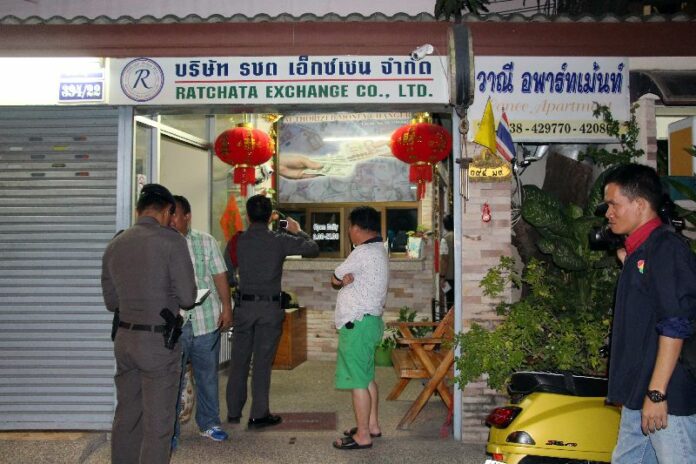
Cops investigate the crime scene on 8 Feb 2015.

CHONBURI — A Ukrainian man has been arrested on suspicion of robbing more than 200,000 baht from a currency exchange office in the resort town of Pattaya.

The robbery took place at Rachata Money Exchange on Pattaya's Sai Sam Road on 8 February. Police say the suspect held the shop's staff at gunpoint while he stole at least 200,000 baht. The man reportedly spoke English throughout the heist.

Today police officers in Pattaya arrested a 27-year-old Ukrainian man who they say matches the description of the robbery suspect. The Ukrainian was reportedly arrested at a tour company he works for in town.

Police say that the suspect's motorcycle is the same type used by the man who robbed the money exchange. A raid on the suspect's residence turned up bullets for a BB gun, though no gun was found.

The suspect denied the charges and insisted that he was drinking beer with his friends at the time of the robbery, police say.

Pol.Col. Sukthat Pumpanmuang, superintendent of Mueang Pattaya Police, told reporters that the suspect's forensic samples have been taken for testing to determine whether they match traces found around the crime scene.

For comments, or corrections to this article please contact: [email protected]

You can also find Khaosod English on Twitter and Facebook
http://twitter.com/KhaosodEnglish
http://www.facebook.com/KhaosodEnglish


Advertisement

Soldiers Stop & Search Yingluck's Convoy in Chiang Mai

Army officers stopped and searched cars traveling in former Prime Minister Yingluck Shinawatra's convoy in Chiang Mai on 10 Feb 2015. [Photo provided by Yingluck's aide]

CHIANG MAI — Army officers stopped and searched cars traveling in former Prime Minister Yingluck Shinawatra's convoy through the northern province of Chiang Mai today.

Yingluck and her aides were headed to Chiang Mai for a religious service when their convoy was stopped at a security checkpoint.

The soldiers identified themselves as officers from the Third Region Army and asked to search all of the vehicles —  except for Yingluck’s —  for "security reasons."

Yingluck complied, and her motorcade was allowed to proceed shortly afterwards. 

According to Lt.Gen. Sathit Pittarat, commander of the Third Region Army, the search was a part of his unit’s routine efforts to stem the narcotic trade and "any movements that may incite chaos."

The general insisted that soldiers at the checkpoint stop every vehicle that passes through, and did not target Yingluck specifically. He also explained that the military officers spared Yingluck's vehicle from the search because they "respected her dignity."

"We didn't touch the former Prime Minister's car at all," Lt.Gen. Sathit said. "I would like to also deny the reports that I sent soldiers to trail her. It's merely for maintaining security. When VIPs enter the area, we have to be responsible for their safety."

This week, the ruling junta denied Yingluck's request to leave the country, citing the criminal lawsuit she is currently facing for allegedly failing to stop corruption in her administration’s rice-pledging scheme.

The rejection of Yingluck’s travel request suggests fear among junta leaders that Yingluck may follow in her brother’s footsteps and flee the country to evade the lawsuit.

Yingluck’s brother, former Prime Minister Thaksin Shinawatra, was ousted in a military coup in 2006 and has lived in self-imposed exile since 2008 to avoid serving time for corruption convictions.

Last month, Yingluck was retroactively impeached for the same offense by an interim parliament appointed by the junta. The verdict, which Yingluck’s supporters say was an effort to cripple her political faction, came with an automatic five-year ban from political office.

The Office of Attorney-General announced that it would press criminal charges against Yingluck on the same day of the impeachment vote.

Yingluck was initially ousted from the premiership last May by the Constitutional Court, which found her guilty of unlawfully transferring a government official in 2011.

Two weeks later, Gen. Prayuth Chan-ocha, who was serving as army chief at the time, dissolved what was left of her government in a coup d’etat. He was later appointed Prime Minister by a rubber stamp parliament in August.  


For comments, or corrections to this article please contact: [email protected]

You can also find Khaosod English on Twitter and Facebook
http://twitter.com/KhaosodEnglish
http://www.facebook.com/KhaosodEnglish

Advertisement

Soldiers Stop & Search Yingluck's Convoy in Chiang Mai

Former PM Yingluck Shinawatra poses for a photo with vendors at a market in Chiang Mai, 10 Feb 2015.

CHIANG MAI — Army officers stopped and searched cars traveling in former Prime Minister Yingluck Shinawatra's convoy through the northern province of Chiang Mai today.

Yingluck and her aides were headed to Chiang Mai for a religious service when their convoy was stopped at a security checkpoint.

The soldiers identified themselves as officers from the Third Region Army and asked to search all of the vehicles —  except for Yingluck’s —  for "security reasons."

Yingluck complied, and her motorcade was allowed to proceed shortly afterwards. 

According to Lt.Gen. Sathit Pittarat, commander of the Third Region Army, the search was a part of his unit’s routine efforts to stem the narcotic trade and "any movements that may incite chaos."

The general insisted that soldiers at the checkpoint stop every vehicle that passes through, and did not target Yingluck specifically. He also explained that the military officers spared Yingluck's vehicle from the search because they "respected her dignity."

"We didn't touch the former Prime Minister's car at all," Lt.Gen. Sathit said. "I would like to also deny the reports that I sent soldiers to trail her. It's merely for maintaining security. When VIPs enter the area, we have to be responsible for their safety."

This week, the ruling junta denied Yingluck's request to leave the country, citing the criminal lawsuit she is currently facing for allegedly failing to stop corruption in her administration’s rice-pledging scheme.

The rejection of Yingluck’s travel request suggests fear among junta leaders that Yingluck may follow in her brother’s footsteps and flee the country to evade the lawsuit.

Yingluck’s brother, former Prime Minister Thaksin Shinawatra, was ousted in a military coup in 2006 and has lived in self-imposed exile since 2008 to avoid serving time for corruption convictions.

Last month, Yingluck was retroactively impeached for the same offense by an interim parliament appointed by the junta. The verdict, which Yingluck’s supporters say was an effort to cripple her political faction, came with an automatic five-year ban from political office.

The Office of Attorney-General announced that it would press criminal charges against Yingluck on the same day of the impeachment vote.

Yingluck was initially ousted from the premiership last May by the Constitutional Court, which found her guilty of unlawfully transferring a government official in 2011.

Two weeks later, Gen. Prayuth Chan-ocha, who was serving as army chief at the time, dissolved what was left of her government in a coup d’etat. He was later appointed Prime Minister by a rubber stamp parliament in August.  


For comments, or corrections to this article please contact: [email protected]

You can also find Khaosod English on Twitter and Facebook
http://twitter.com/KhaosodEnglish
http://www.facebook.com/KhaosodEnglish

 
Advertisement

Thai Junta's New Bill the First to Define Right/Wrong Sexual Acts

[Prachatai English]

(Prachatai English)

BANGKOK – The Inducement Suppression bill, which will ban specific kinds of pornography in a bid to increase efficiency in suppression, potentially paves way for a ban of group sex, bondage and discipline, dominance and submission, and sadomasochism (BDSM) in the name of public morals.

The bill also poses a great threat to media freedom as it not only broadly defines a wide range of media content deemed inappropriate, it also adopts the notorious article of the Computer Crime Act which indiscriminately holds internet intermediaries liable for all pornographic/violent materials without safe harbour.

Read more here.

Note: Khaosod English is not responsible for content on other websites.


Advertisement

BKK Nightclub Under Investigation for 'Banning Transgenders'

Nijshanaaj Sudlarphaar, a transgender fashion model, submitted a complaint to the NHRC after she was barred from entering a nightclub in Bangkok, 9 Feb 2015.

BANGKOK — The National Human Rights Commission (NHRC) says it is investigating a complaint that a prominent nightclub in Bangkok barred a transgender woman from entering its venue.

Nijshanaaj Sudlarphaar, a transgender fashion model, submitted the complaint to the NHRC yesterday. She was accompanied by representatives from the Thai Transgender Alliance, an NGO that advocates rights for LGBT rights in Thailand.

According to the complaint, Nijshanaaj visited Onyx nightclub in the popular nightlife district of RCA at around 11.45 pm on 1 January with four foreign friends. The club bouncers reportedly allowed the four foreigners to enter the venue, but refused entry to Nijshanaaj after they checked her ID card.

Nijshanaaj said the staff told her it was the club's "door policy" to bar transgenders from the venue.

"That answer makes me sad and embarrassed. It's like they disrespect my dignity as a human being," Nijshanaaj said. "My foreign friends also told me they were saddened by the incident. They wondered why I wasn't allowed to use a nightclub in Thailand even though I am Thai."

Ranaphoom Samakkhikarom, director of the Thai Transgender Alliance, told reporters that such a policy violates Section 4 of Thailand's interim charter, which protects the equality of all Thai people.

According to Ranaphoom, many other establishments in Thailand also discriminate against transgenders, who they fear will commit crimes such as theft and prostitution on their premises. Ranaphoom said that a hotel in Chonburi province had a sign that listed three banned objects: durian, dogs, and transgenders.

"They shouldn't generalize about all transgender individuals," Ranaphoom said. 

Although Thailand is known for being relatively accepting of LGBTs, especially compared to many other Southeast Asian nations, conservative facets of society occasionally express prejudice against the community. Transgenders, known by locals as ladyboys, are routinely mocked in slapstick comedies, and gay marriage remains unrecognized by Thai laws. 

Accepting the complaint from Nijshanaaj, NHRC member Tairjing Siripanich said he will investigate the incident and summon the owners of Onyx nightclub to provide testimony. 

"Discrimination is unacceptable," Tairjing said. "In the past we have received many complaints about [transgenders] being refused service at hotel conference centers and nightclubs. Their identity is also often used for comedy and ridiculed, even though such actions are unacceptable."

According to Tairjing, refusal of service or entry to transgenders sometimes stems from misunderstanding between the venue owners and low-ranking staff. However, in some instances staff are following orders from business owners, who later deny that they set the policy, he said.

Tairjing said he would also like to remind all business owners that the new constitution, which is currently being drafted by a junta-appointed committe, will specifically ban discrimination based on gender. 

"If the draft is approved and enforced, the situation of fairness and equality for these people will improve," the NHRC official told reporters. 

For comments, or corrections to this article please contact: [email protected]

You can also find Khaosod English on Twitter and Facebook
http://twitter.com/KhaosodEnglish
http://www.facebook.com/KhaosodEnglish

Advertisement

Thai Police Warn Parents of Valentine's Day 'Dangers'

A flower market in Bangkok on 13 Feb 2014.

BANGKOK — As a part of an annual campaign to keep young people in line on Valentine's Day, the Royal Thai Police have warned parents to inform their children of the "dangers" associated with the occasion.

Parents, guardians, and teachers should instruct children to be extra careful on Valentine's Day this Saturday, Pol.Maj.Gen. Patipat Suban na Aytthaya said in a press conference yesterday.

“They should tell the children to be careful and take care of themselves. They should also ask for cooperation from children to avoid risky behavior on that day,"Pol.Maj.Gen. Patipat said.

Valentine’s Day has become a widely-celebrated in Thailand in recent decades. According to a report compiled by Kasikorn Bank, spending around the holiday last year amounted to 1.5 billion baht.

However, authorities in Thailand – a socially conservative country despite its freewheeling sex industry – frown upon the holiday, as it is perceived to encourage premarital sex. Every year, police and state agencies launch a campaign to ensure that Thai youths refrain from "inappropriate activities."

Yesterday the Ministry of Interior Affairs issued an order to all provincial authorities to ensure that nightclubs and hotels strictly follow the laws on Valentine's Day and bar underage customers from their venues.

The national police force has issued a similar order, placing all police units in the country on alert from 11-15 February to "increase vigilance in risky areas in which sexual harassment and crimes can take place,” said Pol.Maj.Gen. Patipat.

He also urged all entertainment venues and nightclubs to report any incidents of "children being lured" or "behaving in an inappropriate way" to local police units by dialing 191 or 1599.

Related coverage:

For comments, or corrections to this article please contact: [email protected]

You can also find Khaosod English on Twitter and Facebook
http://twitter.com/KhaosodEnglish
http://www.facebook.com/KhaosodEnglish

Advertisement

Vietnam Shuts News Website for Exposing Graft

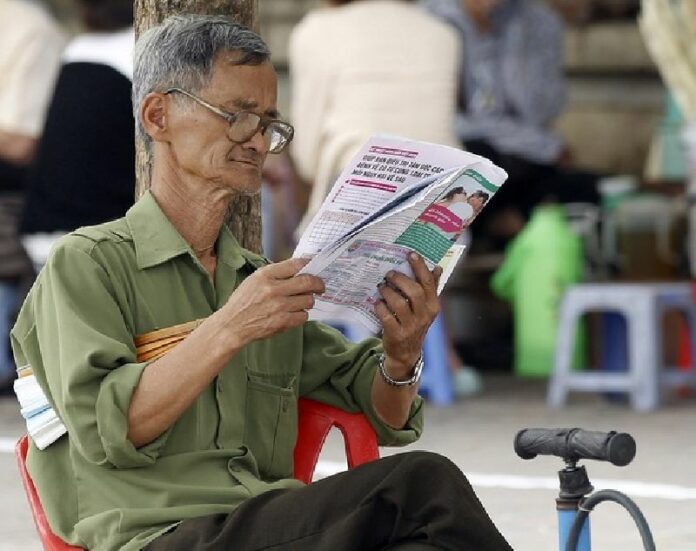
An elderly man reads a newspaper in Hanoi, Vietnam, 26 March 2013. A popular news site aimed at elderly people in Vietnam has been shut down after breaking several high-profile corruption stories, news reports said Tuesday. EPA/LUONG THAI LINH

HANOI (DPA) — A popular news site aimed at elderly people has been shut down after breaking several high-profile corruption stories, news reports said Tuesday.

Nguoi Cao Tuoi (Elderly People) was under investigation by the Ministry of Public Security and its chief editor Kim Quoc Hoa had his press card revoked, newspaper Viet Nam News said.

The news site, run by the Elderly Association of Vietnam, has broken several graft stories involving senior officials, including of a former top anti-corruption official said to have amassed a real estate portfolio worth more than 10 million dollars.

The online version was shut down from Monday but the newspaper was still being printed, news reports said.

The Ministry of Information and Communication said the newspaper published articles that "distorted the truth, aimed at insulting and making false accusations against some organisations and individuals" and revealed "confidential information related to national security."

Limited discussion of corruption is tolerated in the official media, but authorities are sensitive to criticism from independent media and bloggers.

The crackdown on media is expected to intensify as internal rivalries sharpen ahead of the Party Congress in 2016.


For comments, or corrections to this article please contact: [email protected]

You can also find Khaosod English on Twitter and Facebook
http://twitter.com/KhaosodEnglish
http://www.facebook.com/KhaosodEnglish

Advertisement

Thai Police Warn Parents of Valentine's Day 'Dangers'

A flower market in Bangkok on 13 Feb 2014.

BANGKOK — As a part of an annual campaign to keep young people in line on Valentine's Day, the Royal Thai Police have warned parents to inform their children of the "dangers" associated with the occasion.

Parents, guardians, and teachers should instruct children to be extra careful on Valentine's Day this Saturday, Pol.Maj.Gen. Patipat Suban na Aytthaya said in a press conference yesterday.

“They should tell the children to be careful and take care of themselves. They should also ask for cooperation from children to avoid risky behavior on that day,"Pol.Maj.Gen. Patipat said.

Valentine’s Day has become a widely-celebrated in Thailand in recent decades. According to the Thai Chamber of Commerce, spending in the days leading up to the holiday in 2013 amounted to 3.2 billion baht.

However, authorities in Thailand – a socially conservative country despite its freewheeling sex industry – frown upon the holiday, as it is perceived to encourage premarital sex. Every year, police and state agencies launch a campaign to ensure that Thai youths refrain from "inappropriate activities."

Yesterday the Ministry of Interior Affairs issued an order to all provincial authorities to ensure that nightclubs and hotels strictly follow the laws on Valentine's Day and bar underage customers from their venues.

The national police force has issued a similar order, placing all police units in the country on alert from 11-15 February to "increase vigilance in risky areas in which sexual harassment and crimes can take place,” said Pol.Maj.Gen. Patipat.

He also urged all entertainment venues and nightclubs to report any incidents of "children being lured" or "behaving in an inappropriate way" to local police units by dialing 191 or 1599.

Related coverage:

For comments, or corrections to this article please contact: [email protected]

You can also find Khaosod English on Twitter and Facebook
http://twitter.com/KhaosodEnglish
http://www.facebook.com/KhaosodEnglish


Advertisement

Police Arrest Suspected Anti-Royal Broadcaster

BANGKOK — Police say they have arrested the man behind a famous internet alias who regularly published audio clips that criticized the Thai Royal Family, a crime punishable by up to 15 years in prison.

The suspect, identified as Hasadin Uraipraiwan, 64, was arrested at a motel in downtown Bangkok at around 8 pm last night, police say.

Hasadin is responsible for publishing a series of anti-royal audio clips on the internet under the pseudonym "Banpodj," said police spokesperson Pol.Lt.Gen. Prawut Thawornsiri.

According to the spokesperson, police and military officers raided Hasadin's house in Bangkok’s Sukhumvit area and confiscated significant evidence that links him to Banpodj.

Pol.Lt.Gen. Prawut also told reporters that Hasadin did not work alone. 

"Banpodj is like a large production house that produced and sold anti-monarchy CDs. It receives an income of around 100,000 baht per month," the spokesperson said. "They work like a network. We will coordinate with the Anti-Money Laundering Office to trace their financial trail, freeze their assets, and prosecute other people who are involved or lend their support to the Banpodj network."

Pol.Lt.Gen. Prawut did not say how security forces tracked down Hasadin, but added that the suspect has been sent to an army camp in northern Bangkok for interrogation.

Two other alleged members of the Banpodj network were arrested on 7 February. All of the suspects have been charged with defaming the monarchy, a law known as lese majeste that carries a maximum penalty of 15 years in prison. 

According to Pol.Lt.Gen. Prawut, Hasadin is also a Redshirt activist, but did not comment any further. 

Banpodj is well known among radical Redshirts for rants that fiercely criticize the Thai monarchy. He is also notorious for espousing dizzying conspiracy theories involving the Thai Royal Family. 

Although Thailand’s lese majeste law only specifically criminalizes defamation of His Majesty the King, Her Majesty the Queen, the Heir Apparent, and the Regent, the law is interpreted to cover any negative discussion about the monarchy in general. 

The arrest of Hasadin comes during Thai authorities’ heightened crackdown on perceived "anti-monarchists." Although discussion of the monarchy remains largely taboo in public, internet forums and social media sites have opened up new spaces for dialogue in recent years. 

After seizing power in a coup d’etat on 22 May 2014, Thailand’s military junta has stepped up efforts to monitor internet users and enforce the draconian lese majeste law, granting martial courts jurisdiction over lese majeste cases and other crimes related to "national security." Appeals are not permitted under the military tribunals.

"We will use legal measures, social-psychological measures, and telecommunications and information technology to deal with those who are not mindful of their words, are arrogant at heart, or harbour ill intentions to undermine the important Institution of the nation," junta leader and Prime Minister Prayuth Chan-ocha told parliament last September. 

Another Redshirt activist, Krit Bootdeecheen, was arrested on 4 February on suspicion of circulating a fake royal statement on social media on the night of 2 February. He was held without access to lawyer at the 11th Infantry Regiment camp for five days before being handed over to police.

The Redshirt movement is regularly accused of harboring anti-monarchy elements in its ranks. Redshirt leaders have repeatedly denied the allegations, though a number of radical Redshirt activists are known for their criticism of the monarchy. 

For comments, or corrections to this article please contact: [email protected]

You can also find Khaosod English on Twitter and Facebook
http://twitter.com/KhaosodEnglish
http://www.facebook.com/KhaosodEnglish

Advertisement

Police Arrest Suspected Anti-Royal Broadcaster

Hasadin Uraipraiwan, 64, was arrested at a motel in downtown Bangkok on 9 Feb 2015.

BANGKOK — Police say they have arrested the man behind a famous internet alias who regularly published audio clips that criticized the Thai Royal Family, a crime punishable by up to 15 years in prison.

The suspect, identified as Hasadin Uraipraiwan, 64, was arrested at a hotel in downtown Bangkok at around 8 pm last night, police say.

Hasadin is responsible for publishing a series of anti-royal audio clips on the internet under the pseudonym "Banpodj," said police spokesperson Pol.Lt.Gen. Prawut Thawornsiri.

According to the spokesperson, police and military officers raided Hasadin's house in Bangkok’s Sukhumvit area and confiscated significant evidence that links him to Banpodj.

Pol.Lt.Gen. Prawut also told reporters that Hasadin did not work alone. 

"Banpodj is like a large production house that produced and sold anti-monarchy CDs. It receives an income of around 100,000 baht per month," the spokesperson said. "They work like a network. We will coordinate with the Anti-Money Laundering Office to trace their financial trail, freeze their assets, and prosecute other people who are involved or lend their support to the Banpodj network."

Pol.Lt.Gen. Prawut did not say how security forces tracked down Hasadin, but added that the suspect has been sent to an army camp in northern Bangkok for interrogation.

Two other alleged members of the Banpodj network were arrested on 7 February. All of the suspects have been charged with defaming the monarchy, a law known as lese majeste that carries a maximum penalty of 15 years in prison. 

According to Pol.Lt.Gen. Prawut, Hasadin is also a Redshirt activist, but did not comment any further. 

Banpodj is well known among radical Redshirts for rants that fiercely criticize the Thai monarchy. He is also notorious for espousing dizzying conspiracy theories involving the Thai Royal Family. 

Although Thailand’s lese majeste law only specifically criminalizes defamation of His Majesty the King, Her Majesty the Queen, the Heir Apparent, and the Regent, the law is interpreted to cover any negative discussion about the monarchy in general. 

The arrest of Hasadin comes during Thai authorities’ heightened crackdown on perceived "anti-monarchists." Although discussion of the monarchy remains largely taboo in public, internet forums and social media sites have opened up new spaces for dialogue in recent years. 

After seizing power in a coup d’etat on 22 May 2014, Thailand’s military junta has stepped up efforts to monitor internet users and enforce the draconian lese majeste law, granting martial courts jurisdiction over lese majeste cases and other crimes related to "national security." Appeals are not permitted under the military tribunals.

"We will use legal measures, social-psychological measures, and telecommunications and information technology to deal with those who are not mindful of their words, are arrogant at heart, or harbour ill intentions to undermine the important Institution of the nation," junta leader and Prime Minister Prayuth Chan-ocha told parliament last September. 

Another Redshirt activist, Krit Bootdeecheen, was arrested on 4 February on suspicion of circulating a fake royal statement on social media on the night of 2 February. He was held without access to lawyer at the 11th Infantry Regiment camp for five days before being handed over to police.

The Redshirt movement is regularly accused of harboring anti-monarchy elements in its ranks. Redshirt leaders have repeatedly denied the allegations, though a number of radical Redshirt activists are known for their criticism of the monarchy. 

For comments, or corrections to this article please contact: [email protected]

You can also find Khaosod English on Twitter and Facebook
http://twitter.com/KhaosodEnglish
http://www.facebook.com/KhaosodEnglish

Advertisement

Hot News

LATEST NEWS

Bangkok
overcast clouds
31.6 ° C
31.6 °
30 °
65 %
4.4kmh
100 %
Tue
31 °
Wed
32 °
Thu
35 °
Fri
34 °
Sat
31 °