


























32.2 C
Bangkok
Sunday, July 5, 2026
Home Blog Page 3092

Thai Musician Arrested For Allegedly Forging Royal Statement

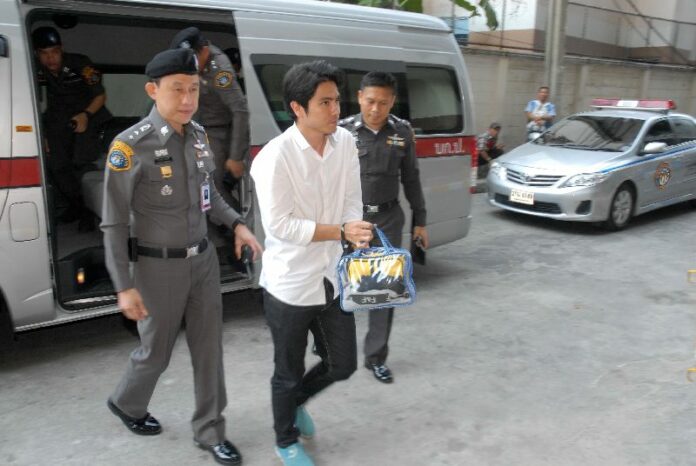
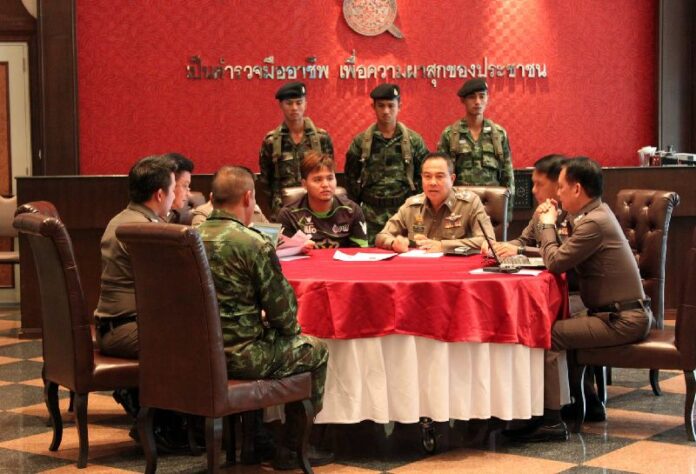
Police and military officers interrogate a 25-year-old man who was arrested for allegedly forging a statement that purported to be issued by His Majesty the King, 4 Feb 2015.

BANGKOK — Police say they have arrested a 25-year-old Thai musician who allegedly forged a statement that purported to be issued by His Majesty the King on Monday night.

According to Pol.Lt.Gen. Prawut Thawornsiri, spokesperson of the Royal Thai Police, the man has been charged with lese majeste (insulting the monarchy) and violating the Computer Crime Act, which criminalizes spreading false information using a computer system.

Pol.Lt.Gen. Prawut did not explain how police tracked down the suspect, who was reportedly living in Phetchabun province. Yesterday, Pol.Lt.Gen. Prawut said he suspected that whoever was behind  the fake document was residing in a foreign country. 

The suspect has been sent to an army camp in Bangkok for interrogation. 

The forged palace statement began circulating on the internet at 9 pm on 2 February. The notice said that King Bhumibol, 87, had decided to appoint a Regent to act on his behalf. Due to strict laws that criminalize any remarks deemed critical of the monarchy, Khaosod English is withholding other details of the document’ contents.  

The document was widely shared on social media, and reproduced on the website of a royalist newspaper, ASTV Manager. An hour after the document began circulating online, a spokesperson for Thailand’s military government announced that the order was forged. ASTV Manager then pulled the statement and published an apology. 

Falsifying a statement that purports to be issued by the Royal Palace is a radical and unprecedented act in Thailand, where the king is widely revered as a demi-god. Under Thailand's lese majeste law, insulting the monarchy is punishable by up to 15 years in prison. Quoting offensive remarks made by others is outlawed as well. 

His Majesty the King is currently residing at Sirirraj Hospital in Bangkok for treatment of several illnesses. His frail health has been a cause of anxiety for many Thais.

CORRECTION: The original article mistakenly said the suspect was from Phetchaburi province. Police say he is from Phetchabun. 

Read more:
Police Summon News Editor For Publishing Fake Royal Statement
Thai Govt Condemns Fake HM King Statement
 
Advertisement

Arrest Warrants Issued For Siam Paragon Bombers

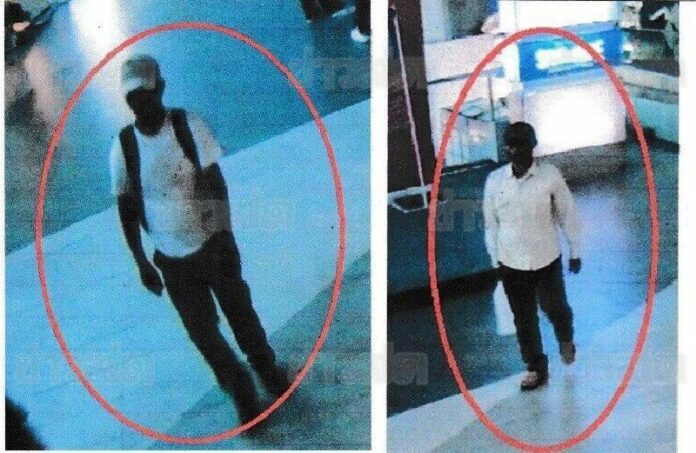
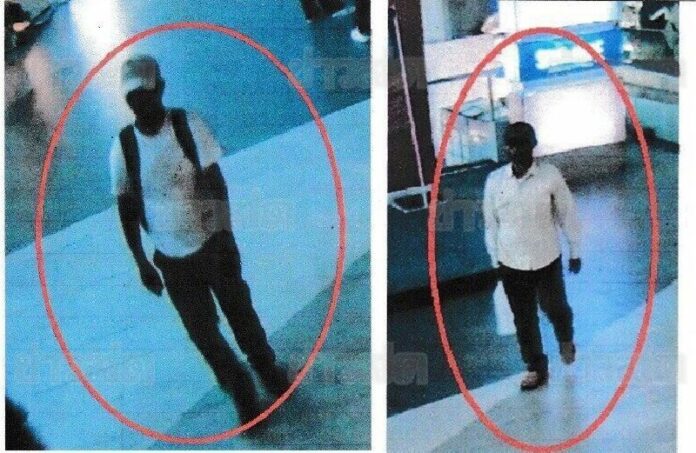
A screenshot of the suspects from CCTV footage provided by police.

BANGKOK — Police have obtained arrest warrants for two suspects in connection with the double bombing of a high-end shopping mall in downtown Bangkok on Sunday.

The bombs went off at around 8.10 pm on the walkway that connects Siam Paragon, one of the largest shopping malls in Thailand, and Siam skytrain station, the largest and busiest BTS station in the city. One person was reported injured by the blast. 

\
A screenshot of the suspects from CCTV footage provided by police.

Police say CCTV footage shows two suspects planting the bombs and walking away from the scene prior to the blast. 

However, police say they have scant information about the suspects, whose faces were concealed by baseball caps. The arrest warrants described them as "unidentified Thai men."

The two suspects are charged with premeditated murder, causing an explosion that could harm other individuals and property, and carrying weapons into a residential area without due cause.

Police have yet to determine a motive for the attack, which they say was launched as an act of harassment, and not designed to injure or kill. 

There has been widespread speculation on social media about whether a political group was behind bombing, which occured in the heart of Bangkok's financial center and while the country remains under martial law. 

Since seizing power on 22 May 2014, the ruling military junta has touted martial law as a necessary means to restore peace and order following the sporadic violence that characterized the six months of anti-government protests prior to the coup.

Underground militants believed to be affiliated with both Thailand's Redshirt and Yellowshirt factions launched numerous grenade and shooting attacks on rival groups during the protests. Most of the 28 fatalities were protesters killed by shadowy assailants who attacked rally sites. 

 
Advertisement

Plane Crashes in Taiwanese Capital, at Least 13 Dead

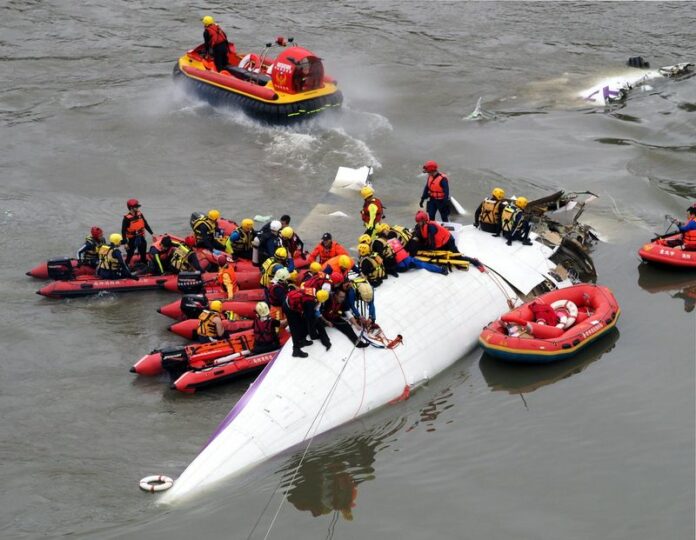
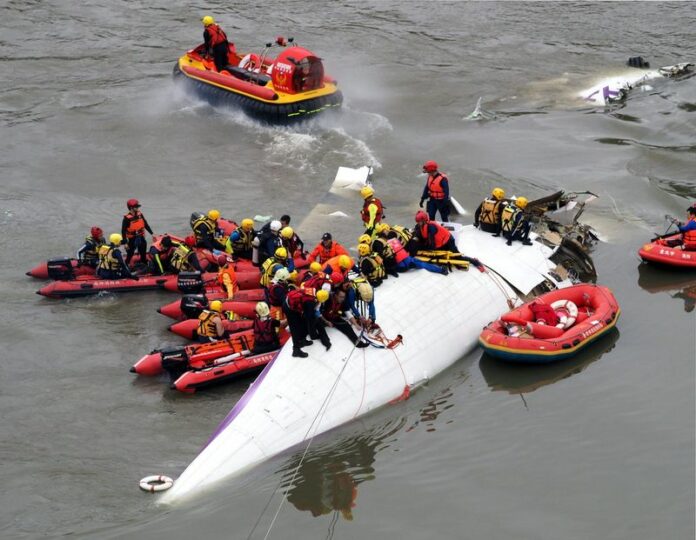
Search and rescue team members operate on a TransAsia Airways passenger plane which crashed into the Keelung River in Taipei, Taiwan, 04 February 2015. Of the 58 people on board the ATR 72 plane, at least 8 were killed, 16 injured and the rest rapped inside the plane. EPA/DAVID CHANG

By Yu-Tzu Chiu

TAIPEI (DPA) – At least 13 people were killed when a passenger plane with 58 people on board crashed into a river after hitting a bridge in the Taiwanese capital Wednesday.

Surviving passengers of TransAsia Airways flight GE235 were taken to hospital, the Taipei municipal government said, quoting the fire department.

The twin-engine ATR 72 turboprop crashed shortly after takeoff from Taipei's Songshan Airport, en route to Kinmen Island, with 53 passengers and five crew, state-run Central News Agency reported.

The plane avoided tall buildings of Taipei's Nangang district but its wing hit a bridge and it crashed into the river, an online video showed.

TransAsia Airways officials offered a public apology, and confirmed 13 deaths, 28 injured survivors and 17 people still missing.

"On the site, we are still doing our best to rescue people," chief executive officer Peter Chen said.

Chen said the flight manifest listed 31 Chinese tourists and 22 Taiwanese passengers.

Rescuers were trying to lift the front part of the wreckage with cranes Wednesday afternoon.

The cause of the crash was still unknown. Local media reported that some analysts suspected that one of engines lost power, as the plane failed to gain altitude after takeoff.

TransAsia Airways said the plane was the latest type of ATR-72-600 and the engines were new. Its latest safety check was conducted January 26.

The plane lost radio contact shortly after it took off at 10:52 am (0252 GMT), according to the Civil Aeronautics Administration.

Aviation authority director Lin Chih-ming said the plane was the same type as TransAsia Airways flight GE222 that crashed in Penghu in July 2014, killing 48 of the 59 people on board.

For comments, or corrections to this article please contact: [email protected]

You can also find Khaosod English on Twitter and Facebook
http://twitter.com/KhaosodEnglish
http://www.facebook.com/KhaosodEnglish

Advertisement

CIB Scandal: 28-Year-Old Arrested For Flaunting 'Royal Connection'

Ekkachai Ploihin, 28, arriving at court in Bangkok on 4 Feb 2015.

BANGKOK — Thai police have arrested another suspected member of the massive crime syndicate allegedly run by the former director of Thailand's Central Investigation Bureau (CIB).

Ekkachai Ploihin, 28, was arrested by an armed commando at his home in Ratchaburi province yesterday. He has been charged with lese majeste (insulting the monarchy), fraud, and bribing officials. 

Police say Ekkachai is a member of the corruption and extortion network run by Pol.Lt.Gen. Pongpat Chayaphan, the former head of the CIB, who was arrested in November 2014. Pol.Lt.Gen. Pongpat is an uncle of former Princess Srirasmi, the wife of Thailand's Crown Prince, who resigned from the Royal Thai Family several weeks after the scandal broke out.

According to police, Ekkachai told a suspected drug dealer in 2008 that he could use his royal connections to dissolve all charges against the suspect in exchange for 1.3 million baht.  

Police have also accused Ekkachai of bribing law enforcement officers in 2014 to turn a blind eye to an illegal casino owned by one of his friends. After the military raided the casino in June 2014, Ekkachai was summoned and interrogated by Pol.Lt.Gen. Pongpat himself, but no charges were filed against him. 

Ekkachai is being held at Bangkok Remand Prison and was denied bail by the criminal court today.

Speaking at a police press conference yesterday, Ekkachai confessed to "all the major charges," but insisted that the lese majeste allegation was a"misunderstanding." Insulting the monarchy is punishable by up to 15 years in jail under Section 112 of the Thai Criminal Codes.

He vowed to contest the charge in court, adding "I have confidence in the Thai legal system and justice."

At least 26 people have been arrested in connection with Pol.Lt.Gen. Pongpat's alleged crime syndicate. 

Many of the suspects are related to former princess Srirasmi, such as Sudathip Muangnuan, Pol.Col. Nattapong Akharaphongpreecha, and Pol.Lt.Gen. Pongpat, the sister, brother, and uncle of Srirasmi, respectively. 

Last Friday, Pol.Lt.Gen. Kowit and Pol.Lt.Gen. Pongpat were sentenced to six years in prison for defaming the Crown Prince and running an illegal casino, while Sudathip was found guilty of lese majeste on Monday and sentenced to two and a half years in prison. 

In response to the scandal, Crown Prince Vajiralongkorn stripped Srirasmi's entire family of the royally-bestowed surname Akharaphongpreecha, forcing them to revert back to their "commoner" surname, Suwadee, on 30 November. 

Less than two weeks later, on 12 December, the Royal Household Bureau announced that Srirasmi had resigned from her status as a member of the Thai Royal Family. She moved out of the Crown Prince's palace in Bangkok to live with her parents in Ratchaburi province and has not been seen in public since 13 December, when she applied for a new national ID card as a commoner. 

It is unclear whether Srirasmi and the Crown Prince are formally divorced. The couple married in 2001 and have one 9-year-old son. 


Advertisement

CIB Scandal: 28-Year-Old Arrested For Flaunting 'Royal Connection'

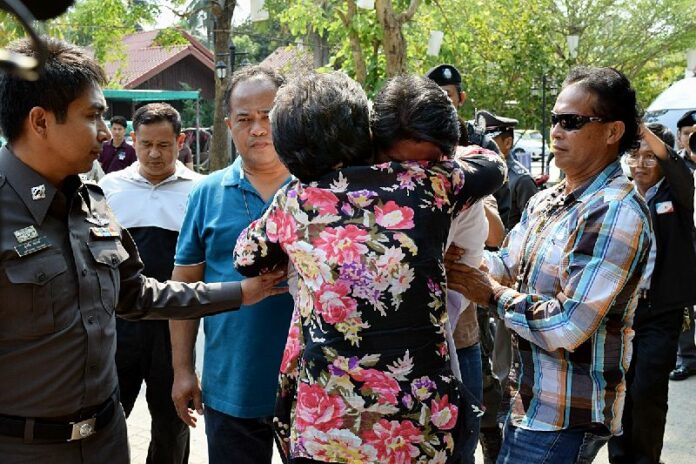
Ekkachai Ploihin, 28, gets a goodbye hug from his mother before soldiers bring him to Bangkok Remand Prison, 3 Feb 2015.

BANGKOK — Thai police have arrested another suspected member of the massive crime syndicate allegedly run by the former director of Thailand's Central Investigation Bureau (CIB).

Ekkachai Ploihin, 28, was arrested by an armed commando at his home in Ratchaburi province yesterday. He has been charged with lese majeste (insulting the monarchy), fraud, and bribing officials. 

Police say Ekkachai is a member of the corruption and extortion network run by Pol.Lt.Gen. Pongpat Chayaphan, the former head of the CIB, who was arrested in November 2014. Pol.Lt.Gen. Pongpat is an uncle of former Princess Srirasmi, the wife of Thailand's Crown Prince, who resigned from the Royal Thai Family several weeks after the scandal broke out.

According to police, Ekkachai told a suspected drug dealer in 2008 that he could use his royal connections to dissolve all charges against the suspect in exchange for 1.3 million baht.  

Police have also accused Ekkachai of bribing law enforcement officers in 2014 to turn a blind eye to an illegal casino owned by one of his friends. After the military raided the casino in June 2014, Ekkachai was summoned and interrogated by Pol.Lt.Gen. Pongpat himself, but no charges were filed against him. 

Ekkachai is being held at Bangkok Remand Prison and was denied bail by the criminal court today.

Speaking at a police press conference yesterday, Ekkachai confessed to "all the major charges," but insisted that the lese majeste allegation was a"misunderstanding." Insulting the monarchy is punishable by up to 15 years in jail under Section 112 of the Thai Criminal Codes.

He vowed to contest the charge in court, adding "I have confidence in the Thai legal system and justice."

At least 26 people have been arrested in connection with Pol.Lt.Gen. Pongpat's alleged crime syndicate. 

Many of the suspects are related to former princess Srirasmi, such as Sudathip Muangnuan, Pol.Col. Nattapong Akharaphongpreecha, and Pol.Lt.Gen. Pongpat, the sister, brother, and uncle of Srirasmi, respectively. 

Last Friday, Pol.Lt.Gen. Kowit and Pol.Lt.Gen. Pongpat were sentenced to six years in prison for defaming the Crown Prince and running an illegal casino, while Sudathip was found guilty of lese majeste on Monday and sentenced to two and a half years in prison. 

In response to the scandal, Crown Prince Vajiralongkorn stripped Srirasmi's entire family of the royally-bestowed surname Akharaphongpreecha, forcing them to revert back to their "commoner" surname, Suwadee, on 30 November. 

Less than two weeks later, on 12 December, the Royal Household Bureau announced that Srirasmi had resigned from her status as a member of the Thai Royal Family. She moved out of the Crown Prince's palace in Bangkok to live with her parents in Ratchaburi province and has not been seen in public since 13 December, when she applied for a new national ID card as a commoner. 

It is unclear whether Srirasmi and the Crown Prince are formally divorced. The couple married in 2001 and have one 9-year-old son. 


Advertisement

Plane Crashes in Taiwanese Capital, at Least 13 Dead

Search and rescue team members operate on a TransAsia Airways passenger plane which crashed into the Keelung River in Taipei, Taiwan, 04 February 2015. Of the 58 people on board the ATR 72 plane, at least 8 were killed, 16 injured and the rest rapped inside the plane. EPA/DAVID CHANG

By Yu-Tzu Chiu

TAIPEI (DPA) – At least 13 people were killed when a passenger plane with 58 people on board crashed into a river after hitting a bridge in the Taiwanese capital Wednesday.

Surviving passengers of TransAsia Airways flight GE235 were taken to hospital, the Taipei municipal government said, quoting the fire department.

The twin-engine ATR 72 turboprop crashed shortly after takeoff from Taipei's Songshan Airport, en route to Kinmen Island, with 53 passengers and five crew, state-run Central News Agency reported.

The plane avoided tall buildings of Taipei's Nangang district but its wing hit a bridge and it crashed into the river, an online video showed.

TransAsia Airways officials offered a public apology, and confirmed 13 deaths, 28 injured survivors and 17 people still missing.

"On the site, we are still doing our best to rescue people," chief executive officer Peter Chen said.

Chen said the flight manifest listed 31 Chinese tourists and 22 Taiwanese passengers.

Rescuers were trying to lift the front part of the wreckage with cranes Wednesday afternoon.

The cause of the crash was still unknown. Local media reported that some analysts suspected that one of engines lost power, as the plane failed to gain altitude after takeoff.

TransAsia Airways said the plane was the latest type of ATR-72-600 and the engines were new. Its latest safety check was conducted January 26.

The plane lost radio contact shortly after it took off at 10:52 am (0252 GMT), according to the Civil Aeronautics Administration.

Aviation authority director Lin Chih-ming said the plane was the same type as TransAsia Airways flight GE222 that crashed in Penghu in July 2014, killing 48 of the 59 people on board.

For comments, or corrections to this article please contact: [email protected]

You can also find Khaosod English on Twitter and Facebook
http://twitter.com/KhaosodEnglish
http://www.facebook.com/KhaosodEnglish

Advertisement

Activists Condemn Junta’s Dissolution of Human Rights Commission

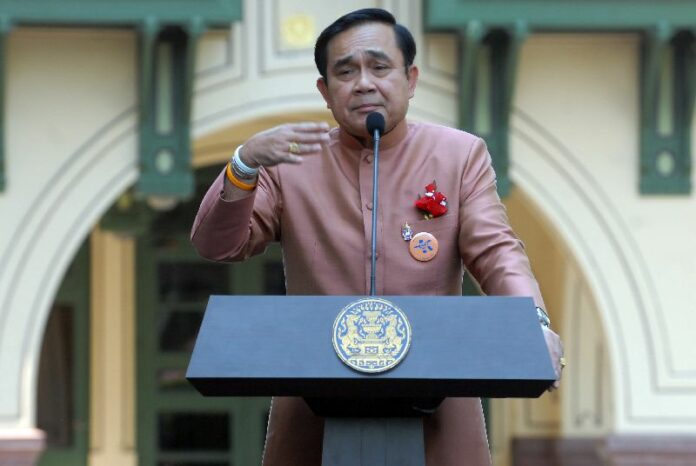
Junta chairman Gen. Prayuth Cha-ocha at the Government House on 3 Feb 2015.

BANGKOK – Human rights activists are urging Thailand’s military government to scrap a plan that would merge the National Human Rights Commission (NHRC) and the Ombudsman’s Office under the next constitution.

The move would "pave the way for further repression" at time when Thailand is already a "human rights disaster," the US-based Human Rights Watch (HRW) said in a press release.

"Thailand’s National Human Rights Commission and Ombudsman serve very different purposes and shouldn’t be merged,"said  HRW’s Asia director Brad Adams. "Instead of making a weak human rights agency even weaker, the Constitution Drafting Committee should be seeking ways to ensure a broad-based, effective, and independent membership."

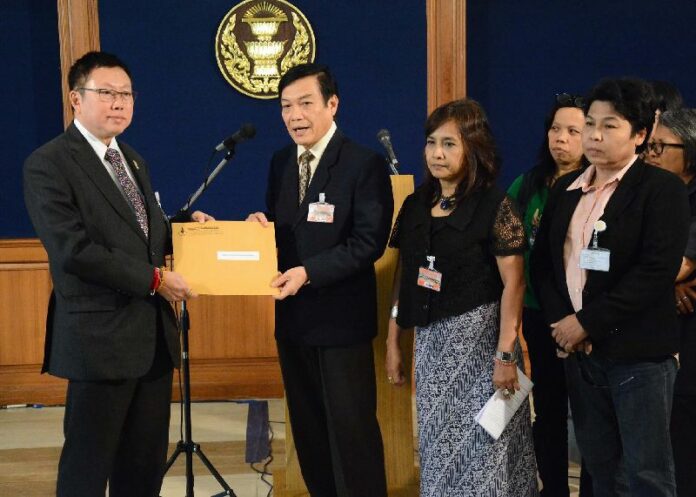
Yesterday, 30 Thailand-based rights groups submitted a petition urging the charter drafters to drop the merger proposal. The chairman of the CDC accepted the petition and promised to "deliberate" on the issue.

According to the CDC’s plan, the new agency would consist of 11 commissioners chosen by the Senate without public consultation. This closed selection process suggests that previous criticism concerning the independence of the NHRC has been ignored, Human Rights Watch said.

In a report issued on last December, the International Coordinating Committee of National Human Rights Institutions (ICC) questioned the impartiality and credibility of the NHRC, and recommended downgrading the body to a "B" status. The ICC report observed that the NHRC is composed only of "officials from a very small number of public institutions, with no clear representation, or a requirement for consultation with key stakeholder groups or civil society."

The NHRC has also been a target of criticism by anti-coup activists in Thailand, who accuse the commission of collaborating with the military junta that seized power on 22 May 2014. The NHRC’s responses to the junta’s suppression of civil liberties have paled in comparison to the strong language deployed by international human rights groups, who have described the human rights situation in post-coup Thailand as plunging into "free fall."

In a speech last December, NHRC director Amara Pongsapitchaya did not explicitly condemn the junta’s ongoing ban on political expression, only noting that anti-coup activists and the junta have different views on human rights.

"The National Council for Peace and Order (NCPO) thinks we have to sacrifice personal rights to protect the rights of all citizens, while the anti-coup faction believes personal rights and political rights cannot be infringed at all," Amara said.

Last week, the NHRC insisted on its independence and urged the charter drafters to scrap the merger plan.

"Merging the two agencies together may cause problems in the management and administration, because of their different natures," the NHRC said in a statement on 30 January. "The NHRC is an independent bureaucratic agency that is not attached to the administrative branch or any other side."

While many anti-coup activists in Thailand have also criticized the CDC’s plan to dissolve the human rights commission, others have applauded the move because of the current body’s failings.

"In its present form, it's better not to have the NHRC at all," Thanapol Eiwsakul, a long-time editor at a left-leaning magazine, posted on Facebook. "Before the 1997 Constitution, we managed to live our lives without the NHRC, too."

The CDC was appointed by the ruling junta last year to draft Thailand’s 20th charter, which is expected to be sent to the junta for approval by the end of 2015.

Sunai Phasuk, a Thailand-based coordinator at HRW, said he believes the merger proposal is an effort to reduce the accountability of state power.

"It fits with the imposition of martial law in the past eight months by the government, who refuses to be scrutinized or be held responsible for its exercises of power," Sunai told Khaosod"This is a dangerous sign for Thailand. This country may keep steering away from democratic rule in the future." 


For comments, or corrections to this article please contact: [email protected]

You can also find Khaosod English on Twitter and Facebook
http://twitter.com/KhaosodEnglish
http://www.facebook.com/KhaosodEnglish

Advertisement

Activists Condemn Junta’s Dissolution of Human Rights Commission

30 Thailand-based rights groups submitted a petition urging the CDC to drop a plan to merge the National Human Rights Commission (NHRC) and the Ombudsman’s Office under the next constitution, 3 Feb 2014.

BANGKOK – Human rights activists are urging Thailand’s military government to scrap a plan that would merge the National Human Rights Commission (NHRC) and the Ombudsman’s Office under the next constitution.

The move would "pave the way for further repression" at time when Thailand is already a "human rights disaster," the US-based Human Rights Watch (HRW) said in a press release.

"Thailand’s National Human Rights Commission and Ombudsman serve very different purposes and shouldn’t be merged," said  HRW’s Asia director Brad Adams. "Instead of making a weak human rights agency even weaker, the Constitution Drafting Committee should be seeking ways to ensure a broad-based, effective, and independent membership."

Yesterday, 30 Thailand-based rights groups submitted a petition urging the charter drafters to drop the merger proposal. The chairman of the CDC accepted the petition and promised to "deliberate" on the issue.

According to the CDC’s plan, the new agency would consist of 11 commissioners chosen by the Senate without public consultation. This closed selection process suggests that previous criticism concerning the independence of the NHRC has been ignored, Human Rights Watch said.

In a report issued on last December, the International Coordinating Committee of National Human Rights Institutions (ICC) questioned the impartiality and credibility of the NHRC, and recommended downgrading the body to a "B" status. The ICC report observed that the NHRC is composed only of "officials from a very small number of public institutions, with no clear representation, or a requirement for consultation with key stakeholder groups or civil society."

The NHRC has also been a target of criticism by anti-coup activists in Thailand, who accuse the commission of collaborating with the military junta that seized power on 22 May 2014. The NHRC’s responses to the junta’s suppression of civil liberties have paled in comparison to the strong language deployed by international human rights groups, who have described the human rights situation in post-coup Thailand as plunging into "free fall."

In a speech last December, NHRC director Amara Pongsapitchaya did not explicitly condemn the junta’s ongoing ban on political expression, only noting that anti-coup activists and the junta have different views on human rights.

"The National Council for Peace and Order (NCPO) thinks we have to sacrifice personal rights to protect the rights of all citizens, while the anti-coup faction believes personal rights and political rights cannot be infringed at all," Amara said.

Last week, the NHRC insisted on its independence and urged the charter drafters to scrap the merger plan.

"Merging the two agencies together may cause problems in the management and administration, because of their different natures," the NHRC said in a statement on 30 January. "The NHRC is an independent bureaucratic agency that is not attached to the administrative branch or any other side."

While many anti-coup activists in Thailand have also criticized the CDC’s plan to dissolve the human rights commission, others have applauded the move because of the current body’s failings.

"In its present form, it's better not to have the NHRC at all," Thanapol Eiwsakul, a long-time editor at a left-leaning magazine, posted on Facebook. "Before the 1997 Constitution, we managed to live our lives without the NHRC, too."

The CDC was appointed by the ruling junta last year to draft Thailand’s 20th charter, which is expected to be sent to the junta for approval by the end of 2015.

Sunai Phasuk, a Thailand-based coordinator at HRW, said he believes the merger proposal is an effort to reduce the accountability of state power.

"It fits with the imposition of martial law in the past eight months by the government, who refuses to be scrutinized or be held responsible for its exercises of power," Sunai told Khaosod. "This is a dangerous sign for Thailand. This country may keep steering away from democratic rule in the future." 


For comments, or corrections to this article please contact: [email protected]

You can also find Khaosod English on Twitter and Facebook
http://twitter.com/KhaosodEnglish
http://www.facebook.com/KhaosodEnglish

Advertisement

Tourist Phone Snatcher Arrested in Pitsanulok

PITSANULOK — An ex-convict was arrested minutes after he stole a smartphone from a 75-year-old foreign tourist at a prominent temple in Pitsanulok province today.

Sornchai Chaengsakul, 39,  said he tried to steal the phone because he was recently released from prison and did not have any money. 

However, the Dutch tourist, who was visiting Phra Sri Rattanamahatat Temple, promptly blew a whistle and alerted nearby police officers. Several officers gave chase and arrested Sornchai as he was trying to swim across the river. 

Police say Sornchai was previously jailed for drug charges. 

According to Pol.Maj.Gen. Pisit Tanprasert, the tourist said he was carrying a whistle because he heard that tourists in Thailand should be ready to call for help in case they become victims of a crime.

"He didn't expect that he would ever need to use the whistle for real," Pol.Maj.Gen. Pisit said. 


Advertisement

Arrest Warrants Issued For Siam Paragon Bombers

A screen shot of CCTV footage from the night of the bombing provided by police.

BANGKOK — Police have obtained arrest warrants for two suspects in connection with the double bombing of a high-end shopping mall in downtown Bangkok on Sunday.

The bombs went off at around 8.10 pm on the walkway that connects Siam Paragon, one of the largest shopping malls in Thailand, and Siam skytrain station, the largest and busiest BTS station in the city. One person was reported injured by the blast. 

\
A screenshot of the suspects from CCTV footage provided by police.

Police say CCTV footage shows two suspects planting the bombs and walking away from the scene prior to the blast. 

However, police say they have scant information about the suspects, whose faces were concealed by baseball caps. The arrest warrants described them as "unidentified Thai men."

The two suspects are charged with premeditated murder, causing an explosion that could harm other individuals and property, and carrying weapons into a residential area without due cause.

Police have yet to determine a motive for the attack, which they say was launched as an act of harassment, and not designed to injure or kill. 

There has been widespread speculation on social media about whether a political group was behind bombing, which occured in the heart of Bangkok's financial center and while the country remains under martial law. 

Since seizing power on 22 May 2014, the ruling military junta has touted martial law as a necessary means to restore peace and order following the sporadic violence that characterized the six months of anti-government protests prior to the coup.

Underground militants believed to be affiliated with both Thailand's Redshirt and Yellowshirt factions launched numerous grenade and shooting attacks on rival groups during the protests. Most of the 28 fatalities were protesters killed by shadowy assailants who attacked rally sites. 

 
Advertisement

Hot News

LATEST NEWS

Bangkok
overcast clouds
32.2 ° C
32.2 °
30.5 °
70 %
2.5kmh
100 %
Sun
34 °
Mon
32 °
Tue
27 °
Wed
26 °
Thu
31 °