30.2 C
Bangkok
Tuesday, June 9, 2026
Home Blog Page 3150

Muslim Cleric Shot Dead, Authorities Brace For 'Retaliation'

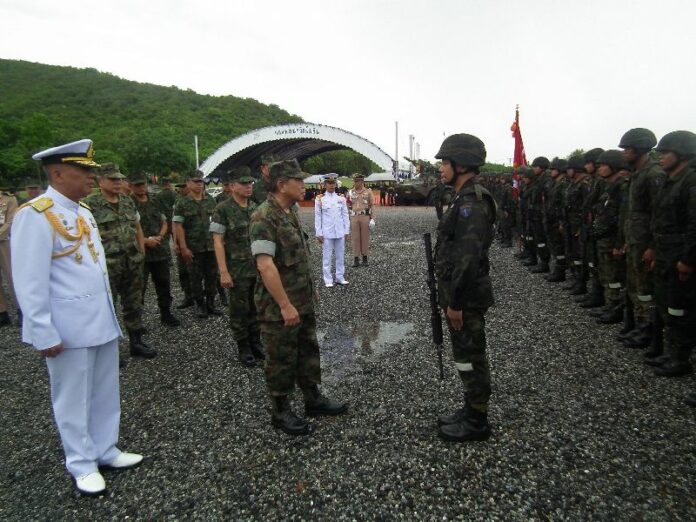
2,000 Marines attended a farewell ceremony at a military base in Chonburi province before their departure to the three southern border provinces, 29 Sept 2014.

PATTANI — Authorities in southern Thailand are seeking to distance themselves from the assassination of a Muslim cleric who was shot in the restive province of Pattani last night.

Waesuemae Suden, 67, was flanked and shot by two gunmen on a motorcycle while he was driving to his home in Panare district at around 8 pm. Onlookers rushed Mr. Waesuemae to a hospital, but he eventually succumbed to a gunshot wound to the head. 

Mr. Waesuemae was a local ustad, or a Muslim cleric, who taught religious lessons at mosque schools, officials say.

Military units in Pattani quickly eschewed responsibility for the murder of Mr. Waesuemae. A note forwarded to all military outposts in the area said that Muslim insurgents will most likely blame the Thai military for the murder in order to escalate a confrontation.

The note also instructed all military units to increase vigilance for a possible "retaliation," a Khaosod correspondent reported.

Groups of Islamic insurgents in Pattani and several neighbouring provinces have been waging a bloody separatist campaign since early 2004. Over 6,000 people have died in the violence. Although many deaths have been caused by attacks from the separatists, there has also been violence committed by security officers in the region.

Earlier this month, a southern ranger admitted to shooting and killing a 14-year-old Muslim boy and then planting a firearm in his hand to falsely frame the teenager as an insurgent.

Pol.Col. Anand Kemkam, an investigative officer at Panare Police Station, said this morning that it is too early to determine the motive behind the murder of the cleric.

"We cannot say whether it's personal vendetta, or an attempt to inflame the situation," Pol.Col. Anand explained. 


For comments, or corrections to this article please contact: [email protected]

You can also find Khaosod English on Twitter and Facebook
http://twitter.com/KhaosodEnglish
http://www.facebook.com/KhaosodEnglish

Advertisement

Muslim Cleric Shot Dead, Authorities Brace For ‘Retaliation’

PATTANI — Authorities in southern Thailand are seeking to distance themselves from the assassination of a Muslim cleric who was shot in the restive province of Pattani last night.

Waesuemae Suden, 67, was flanked and shot by two gunmen on a motorcycle while he was driving to his home in Panare district at around 8 pm. Onlookers rushed Mr. Waesuemae to a hospital, but he eventually succumbed to the gunshot wound in his head. 

Mr. Waesuemae was a local ustad, or a Muslim cleric, who taught religious lessons at mosque schools, officials say.

Military units in Pattani quickly eschewed responsibility for the murder of Mr. Waesuemae. A note forwarded to all military outposts in the area informed members of the armed forces that Muslim insurgents will most likely blame the Thai military for the murder in order to escalate a confrontation.

The note also instructed all military units to increase vigilance for a possible “retaliation,” a Khaosod correspondent reported.

Groups of Islamic insurgents in Pattani and several neighbouring provinces have been waging a bloody separatist campaign since early 2004. Over 6,000 people have died in the violence. Many deaths are believed to result from attacks by the separatists, though there has also been violence committed by security officers in the region.

Pol.Col. Anand Kemkam, an investigative officer at Panare Police Station, said it is too early to determine the motive behind the murder of the cleric.

“We cannot say whether it’s personal vendetta, or an attempt to inflame the situation,” Pol.Col. Anand explained. 

Earlier this month, a southern ranger admitted to shooting and killing a 14-year-old Muslim boy and then planting a firearm in his hand to falsely frame the teenager as an insurgent.

For comments, or corrections to this article please contact: [email protected]

You can also find Khaosod English on Twitter and Facebook
http://twitter.com/KhaosodEnglish
http://www.facebook.com/KhaosodEnglish

Advertisement

Train Rapist & Murderer Sentenced to Death

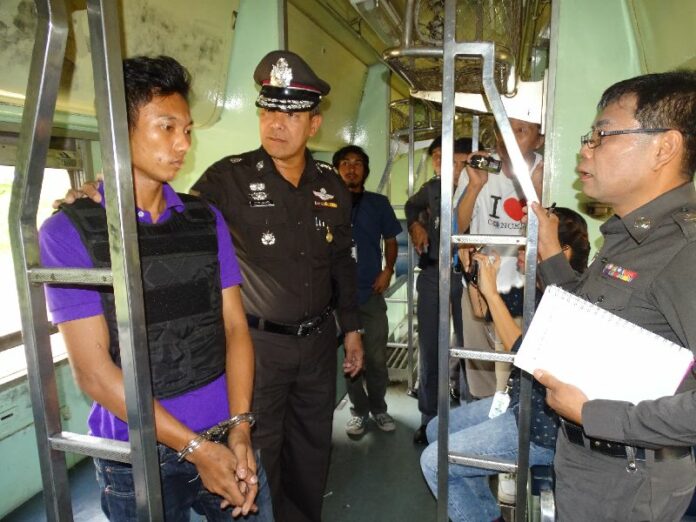
Wanchai Saengkhao reacting the crime for police on 9 July 2014.

PRACHUAP KIRI KHAN — A Thai court has sentenced to death the state railway employee found guilty of raping and murdering a 13-year-old girl on a moving train two months ago.

Wanchai Saengkhao, was accused of sexually assaulting the girl before throwing her body overboard on a night train bound for Bangkok on 5 July. Mr. Wanchai worked as a cleaner on the train.

Mr. Wanchai was charged with sexually assaulting a minor, committing premeditated murder, and concealing the body. He was also charged with nighttime theft and drug abuse, as it emerged that Mr. Wanchai stole the victim's phone and took methamphetamine pills prior to committing the crimes.

Today Hua Hin Provincial Court found Mr. Wanchai guilty of all charges and sentenced him to death. 

The court justified the verdict by noting that Mr. Wanchai's crimes were "cruel and without any shed of humanity," therefore deserving the harshest punishment available under the law.

Although Thai courts usually reduce sentences for defendants who confess, the judges said Mr. Wanchai's confession did not merit such reduction because he only confessed "when defeated by evidence."

The court also found a colleague of Mr. Wanchai guilty of assisting with the rape and murder. Nattakorn Chamnarn, who allegedly served as a look-out for Mr. Wanchai and kept silent when police investigation began, was sentenced to four years in prison.

Mr. Wanchai remained expressionless throughout the verdict reading. He was later escorted out of the courtroom without speaking to the press.

A relative of the murdered girl said his family still makes merits to her soul every day.

"I feel sorry for her mother. She misses her very much," the relative said.

Her family will continue to press for making the death sentence the highest penalty for convicted rapists, added the relative, who was wearing a black t-shirt that said "Rape = Execution."

Under Thai law, rape is punishable by up to 20 years in prison, and a rape assisted by weapons in punishable by life in prison. 

The campaign calling for the death penalty started almost immediately after Mr. Wanchai's crimes were reported in the news. Pro-execution activists gathered tens of thousands of signatures and staged rallies to voice their demands in defiance of the junta's ban on all public protests. 

Pro-death penalty supporters insist that executing rapists will decrease the number of rape incidents, though human rights activists say there is little proof that the death penalty is an effective deterrent against crimes.

The junta's National Council for Peace and Order (NCPO) has not yet publicly responded to the campaign. 

Panadda Wongphudee, former actress and a core leader of the pro-death penalty campaign, said more than 100,000 people have signed a petition that calls for punishing convicted rapists with the death penalty.

"This case is just one of many other rapes that happen every day," Ms. Panadda said. "I want the laws to be something that people can rely on, and I want to the public to step up the campaign for this issue."

Sexual abuse is considered to be widespread in Thailand. An average of 87 cases of sexual violence are reported every day – one case per every 15 minutes – according statistics from 2013 compiled by the Ministry of Social Development and Human Security.


For comments, or corrections to this article please contact: [email protected]

You can also find Khaosod English on Twitter and Facebook
http://twitter.com/KhaosodEnglish
http://www.facebook.com/KhaosodEnglish

Advertisement

Train Rapist & Murderer Sentenced to Death

The family of the 13-year-old girl who was raped and murdered on a train attended the court case that sentenced her rapist and murderer to death, Sept 30 2014. Their shirts bear slogans advocating for punishing rapists with the death penalty.

PRACHUAP KIRI KHAN — A Thai court has sentenced to death the state railway employee found guilty of raping and murdering a 13-year-old girl on a moving train two months ago.

Wanchai Saengkhao, was accused of sexually assaulting the girl before throwing her body overboard on a night train bound for Bangkok on 5 July. Mr. Wanchai worked as a cleaner on the train.

Mr. Wanchai was charged with sexually assaulting a minor, committing premeditated murder, and concealing the body. He was also charged with nighttime theft and drug abuse, as it emerged that Mr. Wanchai stole the victim's phone and took methamphetamine pills prior to committing the crimes.

Today Hua Hin Provincial Court found Mr. Wanchai guilty of all charges and sentenced him to death. 

The court justified the verdict by noting that Mr. Wanchai's crimes were "cruel and without any shed of humanity," therefore deserving the harshest punishment available under the law.

Although Thai courts usually reduce sentences for defendants who confess, the judges said Mr. Wanchai's confession did not merit such reduction because he only confessed "when defeated by evidence."

The court also found a colleague of Mr. Wanchai guilty of assisting with the rape and murder. Nattakorn Chamnarn, who allegedly served as a look-out for Mr. Wanchai and kept silent when police investigation began, was sentenced to four years in prison.

Mr. Wanchai remained expressionless throughout the verdict reading. He was later escorted out of the courtroom without speaking to the press.

A relative of the murdered girl said his family still makes merits to her soul every day.

"I feel sorry for her mother. She misses her very much," the relative said.

Her family will continue to press for making the death sentence the highest penalty for convicted rapists, added the relative, who was wearing a black t-shirt that said "Rape = Execution."

Under Thai law, rape is punishable by up to 20 years in prison, and a rape assisted by weapons in punishable by life in prison. 

The campaign calling for the death penalty started almost immediately after Mr. Wanchai's crimes were reported in the news. Pro-execution activists gathered tens of thousands of signatures and staged rallies to voice their demands in defiance of the junta's ban on all public protests. 

Pro-death penalty supporters insist that executing rapists will decrease the number of rape incidents, though human rights activists say there is little proof that the death penalty is an effective deterrent against crimes.

The junta's National Council for Peace and Order (NCPO) has not yet publicly responded to the campaign. 

Panadda Wongphudee, former actress and a core leader of the pro-death penalty campaign, said more than 100,000 people have signed a petition that calls for punishing convicted rapists with the death penalty.

"This case is just one of many other rapes that happen every day," Ms. Panadda said. "I want the laws to be something that people can rely on, and I want to the public to step up the campaign for this issue."

Sexual abuse is considered to be widespread in Thailand. An average of 87 cases of sexual violence are reported every day – one case per every 15 minutes – according statistics from 2013 compiled by the Ministry of Social Development and Human Security.


For comments, or corrections to this article please contact: [email protected]

You can also find Khaosod English on Twitter and Facebook
http://twitter.com/KhaosodEnglish
http://www.facebook.com/KhaosodEnglish


Advertisement

A Rose By Any Other Name

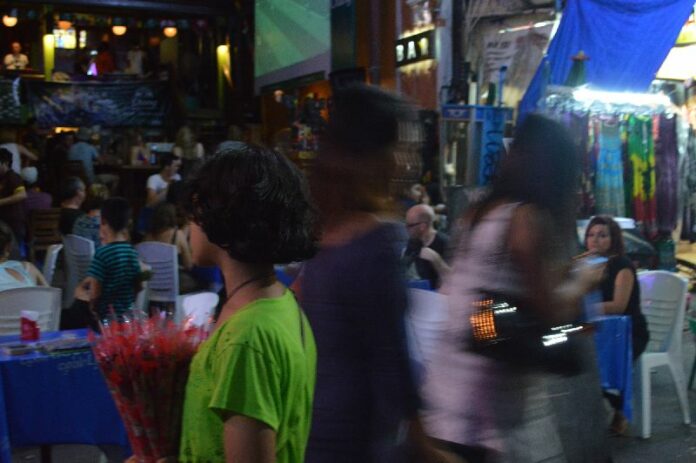
A girl selling roses on Khaosan Road in Bangkok.

A story of naive tourists, desperate parents, and negligent police

BANGKOK — Three months ago, a squad of Thai police arrived on Khaosan Road, one of Bangkok’s most popular nightlife destinations for tourists and local revelers. The police returned to their headquarters in Northern Bangkok later that night with five children, all of them Burmese and under the age of ten. The next morning, two more children were brought in with a man who one child referred to as his “boss.”

The children had been selling roses to tourists on Khaosan Road and were suspected to be victims of human trafficking. Several months later, those seven children are now living in state shelters and the “boss,” Maung Miang U, is awaiting trial in Bangkok’s Remand Prison. Maung Miang, who is 22 and also Burmese, confessed to bringing three of the children from their home in Myanmar to sell flowers in Bangkok.

“Their father was poor and didn’t have money, so I helped,” Maung Miang told Khaosod English from inside Bangkok’s Remand Prison. “The parents willingly gave the kids to me.”

Maung Miang said he sent 1,500 baht from the children’s rose sales back to their parents in Myanmar every month. However, the children who sell roses on Khaosan Road can bring in twice that amount in a single night. Maung Miang declined to answer a question about where the rest of the money went.

\
A girl selling roses on Khaosan Road in Bangkok.

Rose-selling children have become of regular feature of Bangkok’s top nightlife locales. The children, some as young as five-years-old, weave through crowds of tourists and local partiers, peddling red roses until the bars close.

But unlike the child beggars in Bangkok, most of whom are Cambodian and travel to Thailand with their mothers, the rose-selling children are almost all Burmese and have come to Bangkok without their families. Many of them are sent by their parents, who expect to receive monthly payments and see their children returned after a short time. More often than not, the money stops and the kids never come home.

“I let them go because I didn’t know anything,” said Mya Hla Tin*, a Burmese woman who gave two of her sons to a man who promised to take them to sell roses in Bangkok and send back money every month. She had no idea that she would stop receiving money after only a few months, or that her children’s “caretaker” in Bangkok would refuse to send her sons back.

“I was in complete trouble,” Mya Hla Tin recounted. “I couldn’t earn enough to pay the house rent.”

According to Vittanatpat Rattanawarepong, who runs the Stop Child Begging campaign for the Mirror Foundation in Bangkok, at least 500 children have been trafficked in this manner to sell roses in tourist destinations around Thailand. Less than a quarter of them are ever returned to their families.

Because many of the families are Burmese migrants living in Thailand illegally, they afraid to ask government officials for help, said Vittanatpat.

“Families come to us and show pictures from 10 years ago and say they haven’t seen their kids since.”

A lack of follow through  

Bangkok’s Khaosan Road, a world-famous “backpacker ghetto,” is jam-packed with bars, nightclubs, Burger Kings, and touristy trinket shops. But the first building tourists see when they enter the street’s western entrance is a police station.

“Many things happen here,” said Sanga Ruangwattanaku, the president of the Khaosan Road business association. “I won’t call them illegal, but let’s just say they are against the law.”

According to Sanga, local police are fully aware of the rose-selling children’s “situations.”

“They are not paid off, but they collect fees,” Sanga said. “They will do a certain job in a certain period, and close one eye during another period.”

Police from the Chanasongkram station on Khaosan Road declined to comment.

The most recent raid on Khaosan Road took place on 19 June, when Thailand’s military rulers were scrambling to make up for a year of bad press surrounding the country’s dismal record of combating human trafficking.

It was the day before the United States was set to release its annual Trafficking in Persons Report, which ultimately downgraded Thailand for failing to meet the minimum standards needed to eliminate trafficking.  Thailand is now a member of the “Tier 3” category, alongside countries like Iran, Syria, and North Korea.

According to the report, “local and national-level police officers established protective relationships with traffickers in trafficking hot-spot regions to which they were assigned.”

Officials and NGO workers interviewed by Khaosod English consistently reported that Thai police only stage raids on Khaosan Road and similar areas when they need to fill a quota or take advantage of a PR opportunity.

“The police in the local area don't really want to handle cases like this,” said Vittanatpat from the Mirror Foundation. “Human trafficking cases require many units to work together, but no one wants to take care of it so they throw the cases between departments.”

\
Khaosan Road in Bangkok.

Ever since the June raid, the rose-selling children on Khaosan Road have been less visible. One of the regular rose-selling girls now appears to be working at a kebab stand. The others have only been seen sporadically, unlike the consistent seven-day-a-week schedule they maintained before the raid. However, the presence of rose-selling children in other areas around Bangkok, such as Asoke and Ekkamai, remains the same.

The periodic police raids do thankfully rescue some children from this exploitation. Yet all too often they leave the trafficking infrastructure intact. As a result, it doesn't matter how many children are rescued because it’s only a matter of time before traffickers find news ones to replace them.

Before June, the last raid on rose-selling children in Bangkok was in 2008; just like the most recent raid, the only person arrested was the children’s “caretaker” in Bangkok. Again and again, the brokers who strike deals with the children’s parents and transport the kids to Bangkok are left untouched.  

“When children are rescued or able to flee back home, the agents in Bangkok will simply contact their middlemen at the original province to supply more kids,” explains Vittanatpat.

'Fun and games'

While new Burmese parents must be periodically approached to replenish the “supply,” the demand side of the rose-selling market never changes. The enterprise is funded by a steady flow of cash from the pockets of tourists in places like Khaosan Road.

The youngest of the rose-selling children stumble absently around Khaosan Road’s chaotic party scene, winning tourists over with their innocence. But the older children have devised more complicated schemes. Speaking basic English, they make jokes, play hand games, and charm customers into buying a rose or two. But their smiles are fleeting, fading as soon as the sale is made.

Many of the tourists on Khaosan Road buy roses thoughtlessly; they are drunk, the children are cute, and what’s 20 baht anyways? Furthermore, Khaosan Road —  known as the “gateway to southeast Asia” —  is a common pit-stop for backpackers setting out to travel around the region.  As a result, many of the partiers who end up on Khaosan have only been in Thailand, and perhaps Asia, for a day or two.

“For many people it’s their first Asian experience,” explained Andrew Fortnum, who leads trips for Free and Easy Traveler across Thailand. “They’re not really sure or clear of what is typical.”

Unable to tell the difference between a Thai and Burmese child, many tourists assume the rose-sellers are just local kids trying to help their families.

“It’s fun for us, and it’s money for them,” said a 20-something German tourist when asked why he bought a rose. “It’s a win-win situation.”

Though some well-intentioned tourists may genuinely believe that buying a rose will help the impoverished-looking children, in reality, their money is precisely what’s keeping them enslaved.

“It’s basic economics,” said Vittanatpat from the Mirror Foundation. “If there's no buyer, there will be no seller. What's the point of buying more kids if nobody wants to buy the flowers?”

\
A community in Mae Sot, where many of the rose-selling children are from.

Uncertain futures

Nyi Nyi, an nine year old Burmese boy, sold roses for more than a year before he was rescued by police. But the other Burmese girl he lived with wasn’t as lucky. According to Nyi Nyi, she was too scared to tell police the truth.

“She was scared that she would be beaten,” Nyi Nyi said. “When we couldn’t sell [enough flowers], we were violently beaten.”

Although dozens of rose-selling children can be seen on Khaosan Road any given night, only a couple of them make it into the shelter system every year, says Ms. Kanoknop, a social worker at the The Pakkred Reception Home for Boys.

And yet those children still face a long road home. Stage agencies and NGOs in Thailand and Myanmar must cooperate to sort through legal matters, locate and evaluate the children’s families, and facilitate the repatriation process. All together, the children may need to stay in shelters for over a year.

Social workers are currently working to locate the parents of the three children rescued in June who lived with Maung Miang and have been identified as victims of trafficking. One of the children, a seven year old boy, has already testified before state lawyers. Maung Miang has been charged with child trafficking and could face up to 15 years in prison.

But the story behind the four other children picked up in the same police raid remains unclear.

According to social workers at the shelter, the two other Burmese boys rescued that night did not live with their parents in Bangkok —  their parents live in Myanmar and Mae Sot, a town 500 km northwest of Bangkok that borders Myanmar and has been a target for human traffickers for years. Yet these children are not being treated as victims of trafficking, said Kanoknop, a social worker at shelter.

“It’s up to police,” Kanoknop explained. “The police determined that they are not victims of human trafficking.”

However, police from the Anti-Trafficking Division provided a different account.

“Since the shelter home has not contacted the police at all, we believe they have been determined to be non-victims,” said Pol.Col. Chitpop Tomuan, who was responsible for the June raid. “For [the other four children’s] situation, you should talk directly to the shelter home because it is their responsibility.”

Pol.Col. Chitpop said his department is not planning to stage another raid in the near future or investigate any other suspected traffickers.

According to Thailand’s 2008 Anti-Trafficking in Persons Act, child trafficking is defined as “procuring, buying, selling, vending, bringing from or sending to, detaining or confining, harboring, or receiving a child” for the purpose of exploitation.

With strict rules protecting the privacy of the children, it’s difficult to know the details of their stories. Yet no one involved in the case has been able to explain why only three of the children are being treated as victims of trafficking. Perhaps there is a true legal basis for the differentiation, or perhaps, like many others, their case is simply falling through the cracks.

(Reporting by Sally Mairs)


*The names of trafficking victims and their families have been changed to protect their privacy.


For comments, or corrections to this article please contact: [email protected]

You can also find Khaosod English on Twitter and Facebook
http://twitter.com/KhaosodEnglish
http://www.facebook.com/KhaosodEnglish

Advertisement

World 'Understands' Thai Coup: UN Ambassador

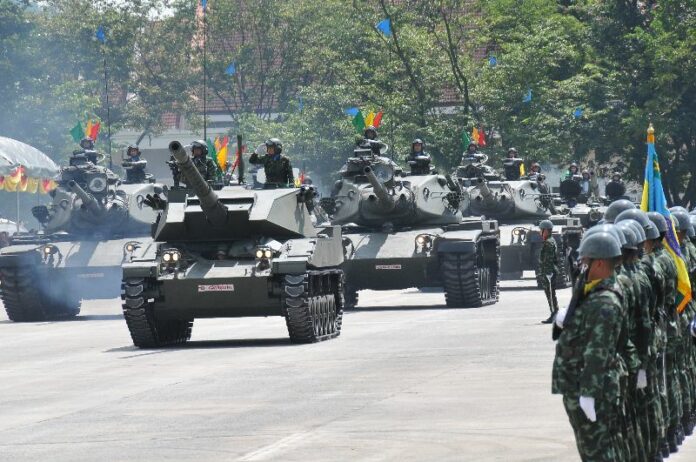
Soldiers salute NCPO chairman & Prime Minister Gen. Prayuth Chan-ocha during a military parade to honour his retirement as army chief in Nakhon Nayok, 29 September 2014

BANGKOK— According to Thailand's ambassador to the United Nations, the international community now "understands" the necessity of the 22 May military coup.

"I have explained to international delegates the need of the current administration to step in," said the diplomat, Norachit Sinhaseni. "It was for the sake of ending violence and conflicts." 

He continued, "Those who misunderstand the coup are decreasing, while many countries praise the Thai government for its effort to create peace and stability, which is clearly successful."

Mr. Norachit's comment came a day after Gen. Thanasak Patimapakorn, Deputy Prime Minister and Minister of Foreign Affairs, addressed the UN 69th General Assembly at New York City, USA. In his speech, Gen. Thanasak repeated the junta's narrative that the military was forced to prevent violence between Thailand's opposing political factions from spiraling out of control.

The general also promised the UN that the junta's National Council for Peace and Order (NCPO) will steer Thailand back toward electoral democracy in the near future. 

"Let there be no doubt that Thailand is not retreating from democracy," Gen. Thanasak said.

The NCPO staged a coup on 22 May after six months of protests against former Prime Minister Yingluck Shinawatra. The anti-government protesters wanted to replace Ms. Yingluck's administration with an unelected "People's Council" and repeatedly called on the military to intervene on their side. Opposing pro-government supporters descended on the capital in the weeks leading up to the coup to rally in favor of addressing political differences at the ballot box.

Since seizing power on 22 May, the coupmakers have largely carried out the demands of the anti-government protesters by suspending democracy to pursue widespread national reforms. 

The coup drew condemnation from a number of western countries, including the United States, Australia, and the European Union. 

But Sihasak Puangketkaew, Permanent Secretary of the Ministry of Foreign Affairs, insisted that Gen. Thanasak's visit to the UN has been "successful" in convincing western nations to understand the situation in Thailand.

"It was a good opportunity for Thailand to explain to them about the political situation in our country, in order to raise the confidence of the audience in Thailand," Mr. Sihasak said.

Gen. Thanasak's trip to the UN is the first official visit to a western nation by a member of Thailand's military junta. Meanwhile, Gen. Prayuth Chan-ocha, Prime Minister and junta leader, is said to be planning a trip to Myanmar in the near future.


For comments, or corrections to this article please contact: [email protected]

You can also find Khaosod English on Twitter and Facebook
http://twitter.com/KhaosodEnglish
http://www.facebook.com/KhaosodEnglish
Advertisement

Junta Appoints More Military Men To NLA

A member of the NLA reporting for duty, 29 Sept 2014.

BANGKOK — Thailand’s military junta has appointed 28 new members to the National Legislative Assembly (NLA), more than half of whom are military officers.

The new batch of NLA members, like the current ones, were handpicked by the junta's National Council for Peace and Order (NCPO). His Majesty the King reportedly endorsed the list yesterday. 

The NLA, which is part of the junta’s interim government, was formed in July and is expected to govern the country for at least a year.

Of the 28 new NLA lawmakers, 17 are military officers and the rest are former politicians and business executives. More than half of the original 193 members are also active or retired military or police officers.

A number of media agencies and anti-junta critics have branded the military-stacked NLA as a rubberstamp parliament for the NPCO. Last month, the lawmakers unanimously voted NCPO chairman Gen. Prayuth Chan-ocha into the premiership; he was the only candidate running. 

Under the 2014 temporary charter, Thailand’s interim government consists of the NCPO, NLA, Gen. Prayuth's Cabinet, and the yet-to-be-formed National Reform Council (NRC) and Constitutional Drafting Committee. The junta has promised a national election by late 2015 on the condition that "reforms" and "reconciliation" have been achieved.

The junta is expected to announce the list of the NRC in the coming weeks. 

For comments, or corrections to this article please contact: [email protected]

You can also find Khaosod English on Twitter and Facebook
http://twitter.com/KhaosodEnglish
http://www.facebook.com/KhaosodEnglish

Advertisement

Crimes Against Tourists in Thai Beach Towns Continue

Minister of Sports and Tourism Kobkarn Wattanavrangkul met with officials on Koh Tao island to discuss about the investigation into the murder of two Britons there, 28 Sep 2014

PHUKET — Two more crimes against foreigners in Thailand were reported over the weekend, only two weeks after the country was rocked by the grisly murder of two British tourists on the resort island of Koh Tao.

This past weekend, a Russian tourist was allegedly raped in Phuket, while a body of an unidentified foreigner was found off the coast of Koh Samet in the the Gulf of Thailand.

According to police, a Russian tourist said she was walking back to her hotel from the nightlife district of Patong on Saturday when a Thai man offered her a ride on his motorcycle. 

Instead of bringing her to the hotel, he took the tourist to his residence and sexually assaulted her, police say. He then reportedly returned her back to her hotel, where she immediately called police.

After studying CCTV footage, police identified the suspect as Somdet Srisai, 33, and arrested him. 

Police officers say Mr. Somdet confessed to the crime and said he brought the victim to his residence to help her "sober up," but then decided to rape her because "she was beautiful."

According to police, Mr. Somdet said he did not expect the victim to report the crime.

Mr. Somdet has been charged with sexual assault and is currently detained by police. 

Meanwhile on Sunday, the body of an unidentified foreigner was found off the coast of Koh Samet, a popular tourist destination in the Gulf of Thailand.

Police described the deceased as a male 170-cm-tall Caucasian wearing a black T-shirt and short black pants at the time of his death.

Police say they found a wound caused by a blunt object on the back of his head and "numerous" bruises on his body, suggesting that he was murdered before being dumped into the sea.

The incident is under investigation.

The two crimes against foreigners came amid the ongoing controversy over the murder of two British tourists on Koh Tao island in southern Thailand two weeks ago.

Police have yet to name suspect or make any arrests in connection with the murder of David Miller, 24, and Hannah Witheridge, 23. The faltering investigation has come under harsh criticism from international media after police gave a series of contradicting and confusing statements to the press.

Petty crimes against foreigners are common in Thailand, where approximately 26 million tourists travel to each year, but the murder of foreigners is relatively rare. In the past weeks Thai authorities have expressed concern that the murder of the two Britons will damage the national tourism industry. 


For comments, or corrections to this article please contact: [email protected]

You can also find Khaosod English on Twitter and Facebook
http://twitter.com/KhaosodEnglish
http://www.facebook.com/KhaosodEnglish

Advertisement

Soldiers Find Guns, Nearly 1 Mil. Baht In Temple Raid

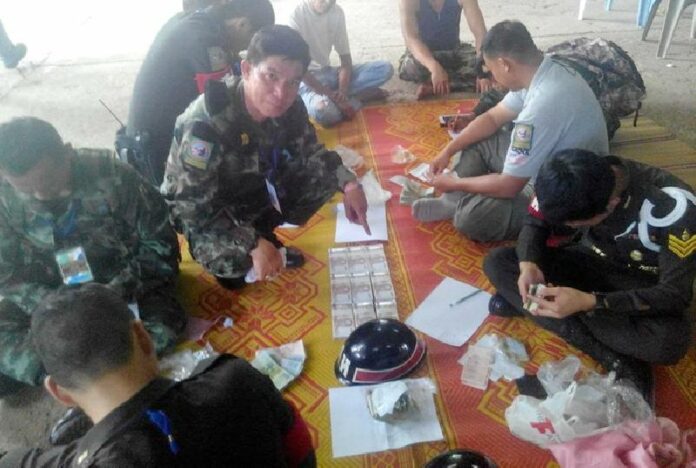
Soldiers confiscated nearly one million baht in cash and several firearms during a surprise raid on a Buddhist temple in Sukhotai province, 26 Sept 2014.

SUKHOTAI — Soldiers confiscated nearly one million baht in cash and several firearms during a surprise raid on a Buddhist temple in Sukhotai province this morning.

Maj.Gen. Padung Yingpaiboonsook, a local commander of the junta's National Council for Peace and Order (NCPO), conducted the raid of Sawang Arom Temple following complaints from local residents about the "inappropriate behaviour" of monks at the temple.

Soldiers said they found two firearms, radio equipment, pornographic materials, and approximately 966,000 baht in cash in the search. 

Cpt. Chirapat Sonsakul, deputy commander of the NCPO's intelligence unit in the province, said the abbot collected the money by soliciting donations from local residents, ostensibly to repair one of the chapels on the compound. However, the renovation never took place and the abbot and his deputy pocketed the money for themselves, Cpt. Chirapat said. 

Cpt. Chirapat said the abbot will be prosecuted for possessing unregistered firearms and conducting donation fraud.

Since the military staged a coup against the elected government on 22 May, soldiers have taken an active role as law enforcement officers. Under the authority of martial law, which the army imposed two days before the coup, soldiers are not required to obtain search warrants before staging raids. Over the past few months, soldiers have busted a handful of organised crime networks, gambling rings, and drug dealers. 


For comments, or corrections to this article please contact: [email protected]

You can also find Khaosod English on Twitter and Facebook
http://twitter.com/KhaosodEnglish
http://www.facebook.com/KhaosodEnglish

Advertisement

3 Students Charged For 2006 Coup Commemoration

(Prachatai English)

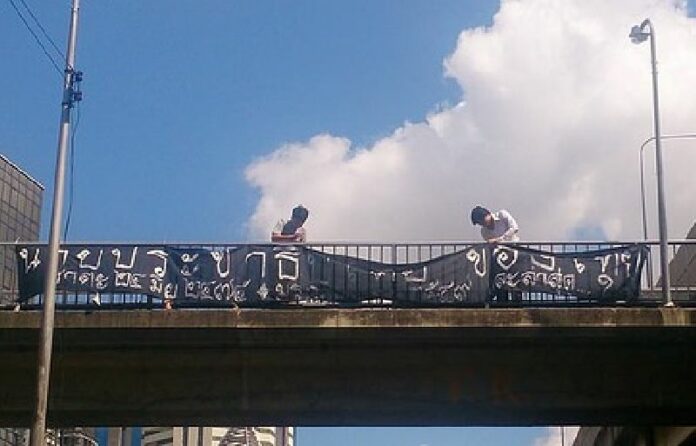
BANGKOK – In a bid to threaten anti-coup activists, the police on Thursday summoned three student activists after they commemorated the 2006 coup d’état on 19 September and charged them with littering a pedestrian bridge.  
 
On Thursday, Sirawith Sirathiwat, Seaksan Saisueb, and Thongdam Keawphanpruek, student activists from the League of Liberal Thammasat for Democracy (LLTD) were ordered to report to the police at Sutthisan Police Station. 

Read the rest of the story here.


Note: Khaosod English is not responsible for content on other websites.

Advertisement

Hot News

LATEST NEWS

Bangkok
overcast clouds
30.2 ° C
31.6 °
28.8 °
76 %
4.5kmh
100 %
Tue
34 °
Wed
34 °
Thu
35 °
Fri
31 °
Sat
31 °