




















28.8 C
Bangkok
Monday, July 6, 2026
Home Blog Page 3281

HRW: Rights in ‘Free Fall’ After Coup

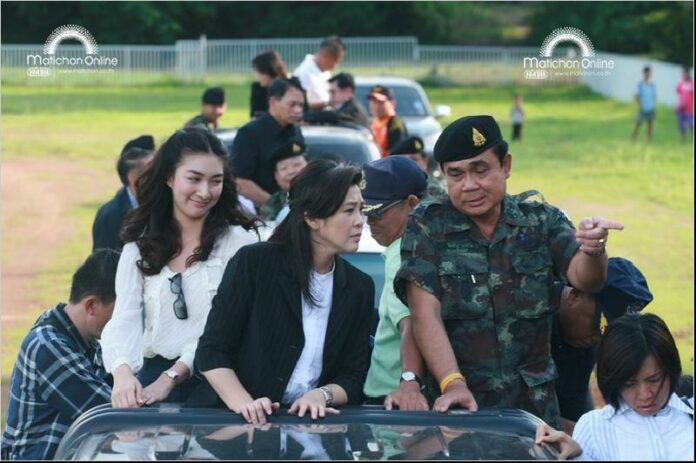
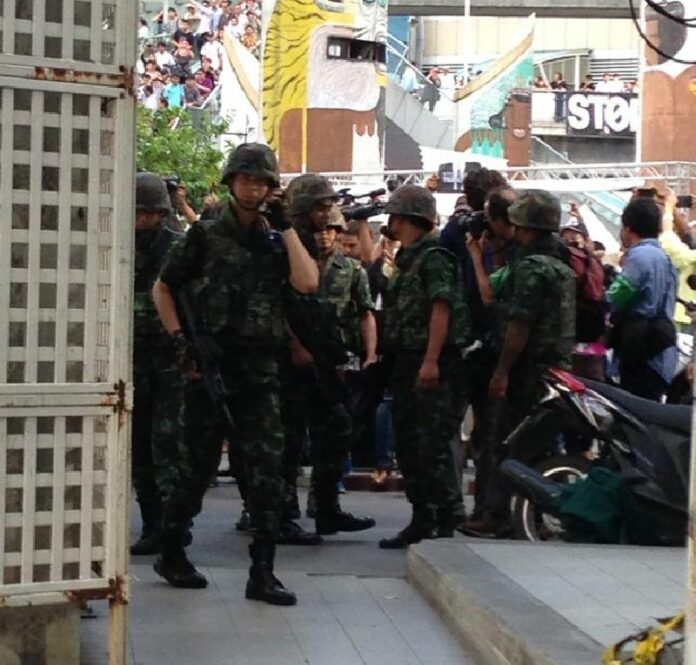
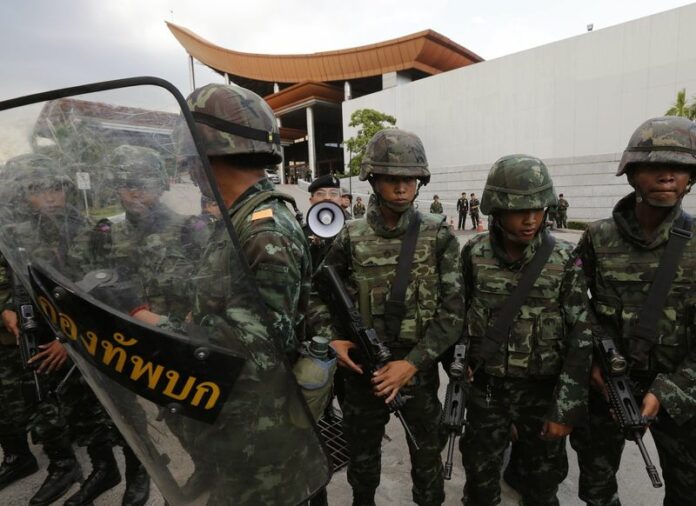
Thai armed soldiers stand guard after a meeting between the army and the main political rivals. Thai Army Chief Prayuth Chan-ocha announced a coup after his efforts to reconcile rival political factions failed (DPA).

Human Rights Watch Press Release, 24 May 2014

NEW YORK – The Thai military should immediately revoke abusive martial law powers, end censorship, and release all people who have been arbitrarily detained, Human Rights Watch said today. The military should urgently restore democratic, civilian rule.

Since the military coup was announced on May 22, 2014, the National Peace and Order Maintaining Council (NPOMC), comprised of all branches of armed forces and the police, has arrested more than 100 ruling party and opposition politicians, activists, journalists, and others accused of supporting the deposed government. While some have been released, the army has also ordered some 155 others to report, including deposed acting Prime Minister Niwattumrong Boonsongpaisan. Those summoned by the military face arrest and prosecution if they fail to report, and are prohibited from leaving Thailand.

The military has also imposed widespread censorship and other broad restrictions on broadcast, print, and electronic media across the country. The NPOMC has imposed a curfew from 10 p.m. to 5 a.m. and banned public gatherings of more than five people. Military authorities ordered rallies of both the pro-government United Front for Democracy against Dictatorship (UDD) and the anti-government People’s Democratic Reform Committee (PDRC) to disband.

“Military rule has thrown Thailand’s rights situation into a free fall,” said Brad Adams, Asia director. “The army is using draconian martial law powers to detain politicians, activists, and journalists, to censor media, and to ban all public gatherings. This rolling crackdown needs to come to an end immediately.”

The military began arresting people on May 20, after the imposition of martial law nationwide.

According to the army spokesman Col. Werachon Sukhondhadhpatipak, more than 100 people have been arrested, including former Prime Minister Yingluck Shinawatra and other politicians, leaders of political movements, and financiers of the ruling Pheu Thai Party in order to “keep them away from the situation.” The spokesman said that Yingluck would be held for two to three days because, “She is one of people involved in the conflict.” A number of Pheu Thai Party leaders reportedly remain in military custody.

Immediately following the coup, military authorities in Bangkok and across Thailand summoned officials from government agencies, professional associations, and civil society groups to report to the military, where they are being instructed not to defy regulations issued under martial law.

Soldiers have dismantled UDD and PDRC rally sites and sent protesters back home by bus. Several people protesting against military rule in downtown Bangkok, including Thanaphol Eiwsakul, the well-known editor of Fah Diew Kan magazine, were arrested by soldiers on the evening of May 23. The whereabouts of those arrested remain unknown.

Incommunicado Detention 
Reports that the military is detaining people in unofficial places of detention, such as military camps, raise grave concerns. There are unconfirmed reports that some UDD leaders and supporters last seen being arrested by soldiers at the Aksa Road rally site outside Bangkok have gone missing. UDD leaders and supporters in other provinces have also reportedly been detained in undisclosed military camps without access to their families and lawyers.

Among those detained incommunicado in secret locations are Boonlert Ruengtim, a core leader of the UDD’s militia who was arrested on May 20, and Chantana Warakornsakulkij and Chawawat Thongpuak, who were arrested on May 21 following raids on alleged UDD weapons caches. The military authorities have thus far provided no information about the names and number of detained or their current whereabouts. The risk of torture and ill-treatment significantly increases when detainees are held incommunicado in unofficial locations and under the control of the military, which lacks training and experience in law enforcement.

“The military’s mass arbitrary arrests are made all the worse by holding people in secret detention,” Adams said. “Those who have allegedly committed crimes should be properly charged and face fair trials in civilian courts.”

Military Media Blackout
Censorship and other restrictions on media and free expression that began after the coup have intensified. Immediately after the coup was declared, military authorities ordered TV and radio stations to stop their regular programs and link their broadcast to the army TV Channel 5 for almost 24 hours. Armed soldiers arrested the deputy director of Thai PBS TV, Wanchai Tantiwittayapitak, and held him for several hours after his station defied the order by broadcasting its regular programs through Internet feeds. Even though those TV stations are now allowed to resume their regular programs, they have to strictly follow the junta’s order not to air any information critical of the military intervention.

The military has directed print media not to publicize commentaries critical of the military’s actions. TV and radio programs have been instructed not to invite on their programs anyone who might make negative comments about the military or the political situation in the country. Military authorities have told journalists that failure to comply will lead to prosecution. 

The NPOMC has invoked censorship against information it considers to be “distorted” or likely to cause “public misunderstanding” in broadcasts, printed publications, on social media, and on websites. At the time of writing, the military has forced off the air 15 satellite and digital TV channels, as well as many community radio networks. Cable and satellite operators were ordered to disconnect their TV links for all international news and entertainment channels, resulting in the nationwide blocking of international stations such as CNN, BBC, Al-Jazeera, and Bloomberg. Soldiers have been placed in newsrooms to censor “negative” reports and comments. On May 23, the military summoned all Internet service providers and ordered them to strictly self-censor content related to the country’s political situation.

“Widespread censorship and threats to the media are aimed at silencing any and all critics of military rule in Thailand,” Adams said. “Thailand’s friends and allies should demand an end to this assault on the media. In a political crisis, free speech is needed more than ever.”

Constitution Suspended Under 1914 Martial Law Act
When army commander-in-chief Gen. Prayuth Chan-ocha announced the coup on May 22, the military suspended most of the 2007 constitution and took over national administration from the government. Prayuth invoked the century-old Martial Law Act of 1914, which grants the military virtually unlimited powers to restrict fundamental human rights and freedoms and provides effective immunity for abuses committed. Under the act, all civilian officials must act in strict compliance with the requirements of the military authority. Furthermore, all the provisions of any law, including human rights safeguards, that are inconsistent with martial law are suspended and replaced by martial law provisions.

Under the Martial Law Act, the military, without judicial oversight, can prohibit any activity, censor the media at will, outlaw meetings and assemblies, search and seize any item, occupy areas, and detain people without charge for up to seven days. There is no effective redress for harms caused since the law bars remedy or compensation to individuals or companies for any damage caused by military actions done in line with martial law authority.

Prayuth said the nationwide intervention will continue “as long as necessary.” He claimed the intervention was needed to prevent imminent riots and widespread disturbances arising from increasingly violent political confrontations between anti-government protesters and government supporters.

The power seizure took place immediately after the military brokered negotiations among representatives of rival factions – including the caretaker government, the ruling Pheu Thai Party, the opposition Democrat Party, the pro-government United Front for Democracy against Dictatorship, and the anti-government People's Democratic Reform Committee. The negotiations failed when the caretaker government was unwilling to resign.

The apparent target of the coup is former Prime Minister Thaksin Shinawatra, who was ousted in a 2006 coup, and his political allies in the ruling Pheu Thai Party. Thaksin, a populist leader with a poor human rights record as prime minister from 2001-2006, has been in exile since 2008, evading a corruption conviction, and has continued to finance and oversee the Pheu Thai Party, installing his sister, Yingluck, as prime minister after the Pheu Thai Party won the last national election in 2011.

“The military and others in Thailand are so desperate to rid the country of Thaksin and his allies that they are now holding the entire country hostage to their whims,” said Adams. “The Thai army needs to recognize that the government should be determined by the ballot, not the bullet.”
Advertisement

US Finally Suspends Military Aid to Thailand After Coup

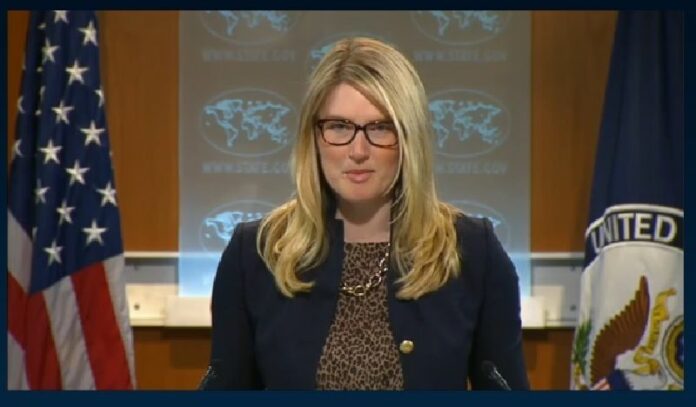
Marie Harf

Washington (AFP) —The United States Friday suspended $3.5 million in military assistance for Thailand, about one-third of its aid to the ally, and urged Americans to reconsider travel plans after the army seized power.

State Department spokeswoman Marie Harf said Washington was also reviewing the rest of US aid to Thailand — which totaled some $10.5 million in 2013 — to look for further cuts.

"We have already suspended approximately $3.5 million" in funding and training for the Thai military, Harf told reporters.

"We are reviewing all programs to determine other assistance which we may suspend."

Harf said the United States was looking through its allocated funding for international bodies, including the 10-nation ASEAN bloc, to identify money directed to Thailand.

The United States has contacted junta leaders to deliver the message, Harf said.

"We urge the immediate restoration of civilian rule, a return to democracy and, obviously, respect for human rights during this period of uncertainty."

Under domestic law, the United States is obligated to suspend assistance to foreign militaries that overthrow elected governments.

In updated travel advice, the State Department recommended that US citizens "reconsider any non-essential travel to Thailand" due to the unrest and restrictions on movements.

It said US government officials would put off all non-essential visits to the kingdom.

"US citizens are advised to stay alert, exercise caution and monitor international and Thai media," the advisory said.

Secretary of State John Kerry has strongly condemned Thursday's coup, saying there was "no justification" and that the move would have "negative implications" for relations between the two countries.

The top US diplomat urged the restoration of a civilian government, respect for press freedom and early elections.

Thailand is the oldest US ally in Asia and provided critical support in the Vietnam and Korean wars.

Advertisement

Military Junta Summons Activists, Academics

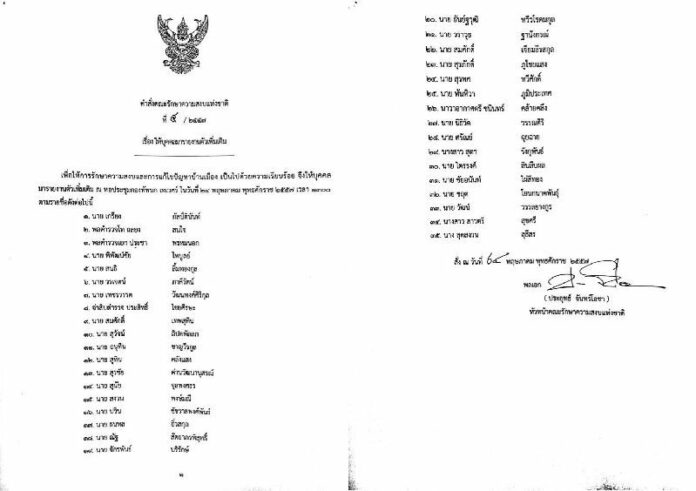
BANGKOK — The military junta summoned for 35 more people to the Army Club, among them activists and academics who spoke out against the coup.

In an announcement broadcast this morning, the National Peace and Order Maintaining Council (NPOMC) said the 35 individuals must report in person to the armed forces at the Army Club in Thevet district, Bangkok, by 4 pm today for the sake of the "peace maintaining effort."

Those who fail to report to the army by 4 pm today will be subject to a maximum penalty of 2 years in prison and 40,000 baht fine.

The list includes prominent political leaders from a cross the political spectrum, such as the firebrand pro-monarchy media mogul who founded the 'Yellowshirts' movement in 2005, Sondhi Limthongku, and former MPs of the Pheu Thai Party, Prasit Chaiyasrisa and Sunai Chulpongsathorn.

However, the list also includes activists and academics who are not officially affiliated to any political party. Among the summoned academics are Somsak Jiamteerasakul, a historian and well-known critic of the Thai monarchy; Worachet Pakeerat, a lecturer and co-founder of the progressive law activist group "Enlightened Jurists"; and Pavin Chachavalpongpun, a political scientist and critic of Thai lese majeste law. 

Activists summoned by the NPOMC include Thanapol Eiewsakul, editor of left-leaning Fah Diew Gun (Samesky) magazine, and Sarun Chuichai, transgender student activist who is also known as "Aum Neko." 

The academics and activists summoned by the military junta have recently spoken out against the coup, either on the social media or through participating in public rallies. 

Yesterday, the military summoned prominent members of the previous government, including former Prime Minister Niwatthamrong Boonsongphaisarn and his predecessor Yingluck Shinawatra. Leaders of the Redshirt movement, which is allied to the former government, were similarly summoned en masse. 

When they reported to the armed force, however, the invitees were detained and later transported to "safehouses" designated by the military.

"The military detention of senior politicians and civilians is very disturbing and I urge the NPOMC to immediately release them," said Navi Pillay, the UN High Commissioner for Human Rights in Geneva.  

Although the latest summons includes pro-establishment figures such as Mr. Sondhi, opponents of the former government have been previously released from military detention, such as former Prime Minister Abhisit Vejjajiva, who was rounded up with other pro- and anti-government politicians when the army staged a coup on Thursday.

Human rights activists argue that the NPOMC's summon orders are being used to silence the movement critical to the military takeover. Five anti-coup demonstrators were arrested yesterday by the military.

Earlier today, Amnesty International released a statement criticising the army's detention of peaceful anti-coup demonstrators. The organisation calls such behaviour "a dangerous precedent."


Advertisement

Former PM Yingluck May Be Detained For '3-7 Days'

Former Prime Minister Yingluck Shinwatra and coup-leader Gen. Prayuth in 2011.

BANGKOK — Former Prime Minister Yingluck Shinwatra may be detained by the military for at least “3-7 days,” reports say.

Ms. Yingluck, younger sister of former Prime Minister Thaksin Shinawatra who was ousted in another military coup in 2006, arrived at the Army Club this morning in compliance with orders from the military junta and has yet to be released.

Other prominent politicians of the previous government were also summoned to the Army Club, including former Prime Minister Niwatthamrong Boonsongphaisarn and former Deputy PM Pongthep Thepkanchana. 

None of these top politicians have been publicly released. Dozens of vans were seen leaving the Army Club after dark, and it is believed that the politicians were ferried away to military barracks for a prolonged detention.

A source said Ms. Yingluck was sent to a military base in Saraburi, north of Bangkok, where she might be held for at least "3-7" days.

Ms. Yingluck's aides were told in the evening to prepare personal belongings for the former leader, the source said.

A senior military officer told Reuters that they would not detain Ms. Yingluck for more than one week. "That would be too long," the officer reportedly said. "We just need to organize matters in the country first."

The source declined to say where Yingluck was being held.

The military’s National Peace and Order Maintaining Council (NPOMC), which seized power on Thursday, has also detained dozens of Redshirt activists and allies of the previous government. More than 100 have been banned from leaving the country.


For comments, or corrections to this article please contact:[email protected]

You can also find Khaosod English on Twitter and Facebook
http://twitter.com/KhaosodEnglish
http://www.facebook.com/KhaosodEnglish

Advertisement

International Scholars of Thai Studies Condemn Coup

BANGKOK — Thai studies academics from around the world have condemned the Royal Thai Army's military coup and called for an immediate return to constitutional rule.

In a letter written to coup-leader General Prayuth Chan-ocha on 23 May, 2014, twenty-six scholars of Thai studies expressed their “grave  concern” over the military takeover yesterday and its swift curtailment of human rights. 

“The coup cannot be a measure for peace because the coup itself is the use of violence,” the letter reads.

The academics condemned the trampling of human rights that has already occurred under the first 24 hours of military rule. Since announcing the coup d’etat yesterday evening, the military junta has moved to censor the media, ban political expression, and detain numerous politicians and activists.

“The rapid speed and severity with which these restrictions were put in place makes Thailand notorious worldwide for the unjust actions by the coup group,” the professors wrote. “The international community cannot tolerate such actions.”

The academics who signed the letter hail from 20 universities in eight countries around the world. They said they believe it is especially important for the international community to speak out against the coup given the restrictions being placed on freedom of expression inside Thailand at this time.  

The letter urged the military to return to constitutional rule by a civilian government immediately.

“Constitutional rule by a civilian government, including both elections and the full participation of all citizens in rule, is the only path forward for the continued development of democracy, human rights and the rule of law in Thailand.”

In the past twenty-four hours, the Thai military has been repeatedly condemned by foreign governments and international organizations for staging yesterday's coup d’état — the twelfth in modern Thai history.


The academics who signed the letter include: 

Dr. Andrew Brown, Lecturer, University of New England

Dr. Pongpisoot Busbarat, Research Affiliate, University of Sydney

Dr. Pavin Chachavalpongpun, Associate Professor, Kyoto University

Dr. Nick Cheesman, Lecturer, Australian National University

Dr. Michael Connors, Associate Professor, University of Nottingham, Malaysia campus

Dr. Eli Elinoff, Postdoctoral Fellow, National University of Singapore

Dr. Jane M, Ferguson, Research Fellow, University of Sydney

Dr. Jim Glassman, Associate Professor, University of British Columbia

Dr. Tyrell Haberkorn, Fellow, Australian National University

Dr. Kevin Hewison, Sir Walter Murdoch Professor, Murdoch University

Dr. Philip Hirsch, Professor, University of Sydney

Dr. Adadol Ingawanij, Senior Research Fellow, University of Westminster

Dr. Soren Ivarsson, Assistant Professor, University of Copenhagen

Dr. Peter Jackson, Professor, Australian National University

Dr. Andrew Johnson, Assistant Professor, Yale-NUS College

Dr. Samson Lim, Singapore University of Technology and Design

Dr. Tamara Loos, Associate Professor, Cornell University

Dr. Mary Beth Mills, Professor, Colby College

Dr. Michael Montesano, Institute of Southeast Asian Studies

Dr. Claudio Sopranzetti, Postdoctoral Fellow, Oxford University

Dr. Ben Tausig, Associate Professor, Stony Brook University

Dr. James L. Taylor, Adjunct Associate Professor, The University of Adelaide

Dr. Tubtim Tubtim, University of Sydney

Dr. Peter Vandergeest, Associate Professor, York University 

Dr. Andrew Walker, Professor and Deputy Dean, Australian National University

Dr. Thongchai Winichakul, Professor, University of Wisconsin-Madison


For comments, or corrections to this article please contact:[email protected]

You can also find Khaosod English on Twitter and Facebook
http://twitter.com/KhaosodEnglish
http://www.facebook.com/KhaosodEnglish

Advertisement

Protesters Confront Soldiers In Downtown Bangkok

BANGKOK — The army has reportedly detained four protesters who were part of a 300-strong anti-coup rally in downtown Bangkok today.

The demonstration, held in defiance of the military junta's ban on public gatherings, was held on the elevated walkway in front of the Bangkok Art and Cultural Centre this evening.

"Soldiers get out!" protesters screamed at the rows of soldiers who were silently watching the rally take place. 

Others shouted, "Prayuth get out!" in reference to army chief Gen. Prayuth Chan-ocha, who installed himself as the acting Prime Minister after seizing power yesterday.

The soldiers refrained from taking any action against the protesters until sundown, when the crowd began to dwindle. 

Four protesters were reportedly detained by the military after a minor confrontation between soldiers and demonstrators. No injuries have been reported. 

Earlier in the day, the crowd successfully forced soldiers who were initially stationed at the BACC to retreat toward Hua Chang Bridge. Many protesters chased after the troops, prompting the soldiers to form a new line and block the road in front of Sra Pathum Palace, the official residence of Princess Maha Chakri Sirindhorn.

The event was organised through a Facebook page titled "We Vote." Despite the military junta's warning of a crackdown on "disruptive" websites, social media has continued to serve as forum for political discussion and dissent. 

The rally was one of several public displays of protest against yesterday’s military coup.

Earlier today, student activists successfully forced their way into a memorial dedicated to 1973 student uprising on Ratchadamnoen Avenue, where they proceeded to hold rally condemning the army’s takeover. 


For comments, or corrections to this article please contact:[email protected]

You can also find Khaosod English on Twitter and Facebook
http://twitter.com/KhaosodEnglish
http://www.facebook.com/KhaosodEnglish

Advertisement

Editorial: A Cold War Coup

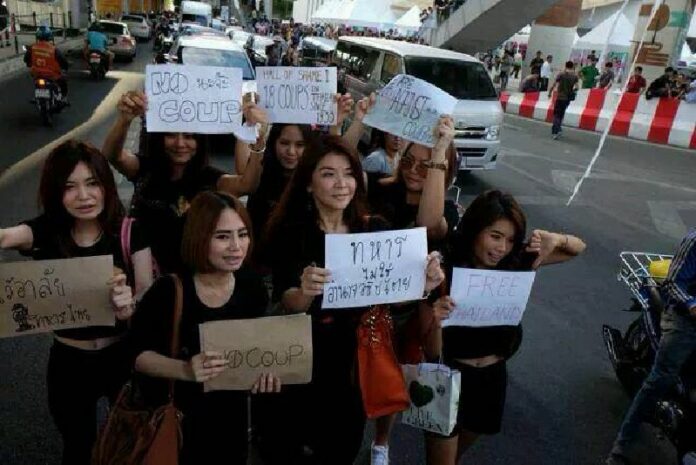
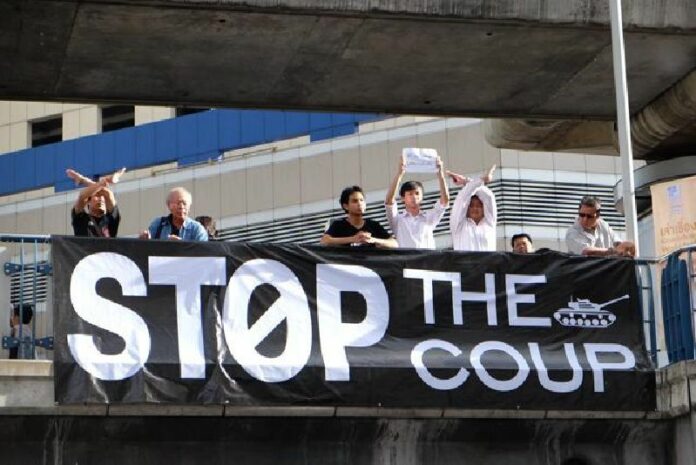
Anti-coup protesters in downtown Bangkok, 23 May 2014.

Yesterday’s military coup d’état was the latest addition to Thailand’s long history of military interventions.

Like so many other previous coupmakers, the military junta, which calls itself the National Peace and Order Maintaining Council (NPOMC), has claimed that their seizure of power was “necessary” to steer Thailand out of its political crisis.

But a look back to the most recent coup in 2006 shows that the last military intervention accomplished just the opposite.

In fact, the battle that’s been playing out on Bangkok’s streets for the past seven months was ignited precisely by the previous military coup that ousted former Prime Minister Thaksin Shinawatra eight years ago. 

Thakskin, a telecommunications tycoon with a history of corruption, won the hearts and votes of rural Thais with populist polices that supported the country’s long-neglected poor. 

When the military removed Thaksin in 2006, it was perceived by many as an attempt to eradicate the threat that Thaksin and and his electoral popularity posed to Thailand’s royalist establishment. The military’s decision to stage another coup yesterday suggests they learned a lesson from 2006: removing Thaksin wasn’t enough.

Instead of removing a challenge to Thailand’s old guard, the 2006 coup gave birth to a grass-roots, anti-establishment movement composed of rural farmers, urban poor, and progressive intelligentsia who are fed up with decades of conservative rule by elites.

The target of the 2006 coup was Thaksin. This time, it is the ascendant mass movement his ousting created.

Yesterday, the military decided to dissolve the Thaksin-backed Cabinet, but preserve the Senate, Courts, and so-called “independent” agencies that are all flagrant allies of Thailand's establishment. 

If the military's goal is to dismantle Thailand's new network of anti-establishment activists, the 2014 coup is poised to be far more authoritarian than any coup in the recent past. Silencing Thailand's "awakened" masses will require extreme suppression.

Under martial law, the military now is granted wide-spread authority to trample on a number of human rights. In its first day of rule alone, the military has already moved to censor the media, ban public demonstrations, and suspend the Constitution. A handful of Redshirt leaders have already been detained by the army, while scores of others have been summoned and banned from leaving the country.

This level of suppression in only the first 24 hours of military rule suggests that the 2014 coup will be much more oppressive than the last.

In fact, it feels like the clocks have been turned back to 1958, when Field Marshal Sarit Thanarat seized power with a military junta backed by the palace and the United States.

Back then, the military perceived itself as fighting a cosmic battle against an underground Communist movement that was attempting to “overthrow the monarchy” and “subvert the nation.”

In the decade that followed, the military relentlessly cracked down on social activists and rural leaders suspected of giving support to the Communists. Whether their connection to the Communists was real or imagined did not matter; in the eyes of the military dictators, they were all enemies of "the Nation, the Religion, and the Monarchy."

There is little evidence that Thailand’s armed forces have progressed beyond this Cold War mentality, raising concerns that the military may resurrect a sweeping crackdown on dissidents today. 

Following the 1958 coup, the military suspended all democratic institutions in Thailand for more than a decade, all on the pretext of preserving "national security" from the menace of "Red Threats."

There was no Constitution, parliament, or elections for more than ten years.

It is not clear whether the today’s coupmakers will take such a drastic step to prevent Thailand's new anti-establishment voices from speaking out as well. 

Thailand's still fragile democracy in the 21st century cannot afford to become a casualty of the 2014 coup.

In order to avoid this, the NPOMC must immediately cede power to a civilian administration that will restore Thailand's constitution and democracy by organising elections as soon as possible.  


For comments, or corrections to this article please contact:[email protected]

You can also find Khaosod English on Twitter and Facebook
http://twitter.com/KhaosodEnglish
http://www.facebook.com/KhaosodEnglish

Advertisement

Protesters Confront Soldiers In Downtown Bangkok

BANGKOK — The army has reportedly detained four protesters who were part of a 300-strong anti-coup rally in downtown Bangkok today.

The demonstration, held in defiance of the military junta's ban on public gatherings, was held on the elevated walkway in front of the Bangkok Art and Cultural Centre this evening.

"Soldiers get out!" protesters screamed at the rows of soldiers who were silently watching the rally take place. 

Others shouted, "Prayuth get out!" in reference to army chief Gen. Prayuth Chan-ocha, who installed himself as the acting Prime Minister after seizing power yesterday.

The soldiers refrained from taking any action against the protesters until sundown, when the crowd began to dwindle. 

Four protesters were reportedly detained by the military after a minor confrontation between soldiers and demonstrators. No injuries have been reported. 

Earlier in the day, the crowd successfully forced soldiers who were initially stationed at the BACC to retreat toward Hua Chang Bridge. Many protesters chased after the troops, prompting the soldiers to form a new line and block the road in front of Sra Pathum Palace, the official residence of Princess Maha Chakri Sirindhorn.

The event was organised through a Facebook page titled "We Vote." Despite the military junta's warning of a crackdown on "disruptive" websites, social media has continued to serve as forum for political discussion and dissent. 

The rally was one of several public displays of protest against yesterday’s military coup.

Earlier today, student activists successfully forced their way into a memorial dedicated to 1973 student uprising on Ratchadamnoen Avenue, where they proceeded to hold rally condemning the army’s takeover. 


For comments, or corrections to this article please contact:[email protected]

You can also find Khaosod English on Twitter and Facebook
http://twitter.com/KhaosodEnglish
http://www.facebook.com/KhaosodEnglish

Advertisement

Patong Faces Ruin if Curfew Continues, Says Entertainment Boss

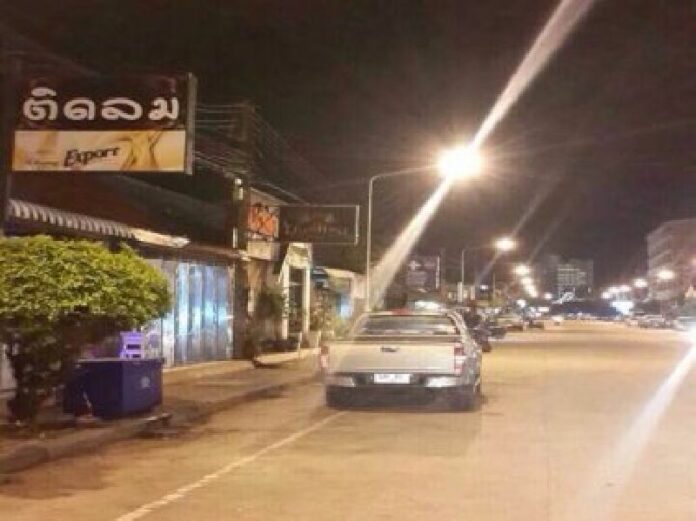
Patong at 10pm 22 May 2014 (Phuket Gazette)

(Phuket Gazette)

PHUKET — Patong, the nightlife capital of Phuket, was shuttered last night in observance of the 10pm curfew imposed by Thailand's new military junta, leading a local entertainment boss to worry about the town’s future.

“If this curfew continues, it will be even worse than the tsunami,” said Weerawit Kurasombat, president of the Patong Entertainment Business Association. “The financial losses are serious, but they are nothing compared to the loss of image.”

Read the rest of the story here.


Note: Khaosod English is not responsible for content on other websites.

Advertisement

Anti-Coup Protesters Rally At 1973 Uprising Memorial

BANGKOK – Student activists have defied the military’s ban on political gatherings of more than five people by continuing to protest the military coup in Bangkok today.

The protests were organised by Thammasat University student activists who call themselves the League of Liberal Thammasat for Democracy (LLTD). Students from other universities and members of the public also joined the demonstration as well.

At 11 a.m.  protesters began marching from Thammasat University's Tha Prachan campus down Ratchadamnoen Avenue toward the Grand Palace, passing the Ministry of Interior Affairs and the Supreme Court on the way.

Some placards held by the protesters read, "Let us find the pigeon [symbol of democracy]," "We are coup generation," "Bring me back my damn votes,” and "Anti-Coup."

Security forces kept watch on the demonstrators as they marched, but did not interfere until the group tried to enter the 14 October Uprising Memorial dedicated to the 1973 student protests that toppled the military dictatorship.

The soldiers tried to prevent demonstrators from entering the memorial site. But while some activists were arguing with the soldiers, one motorcycle taxi driver took a placard and sat down on the road in protest, prompting the rest of the group to follow suit. 

Large crowds of on lookers, Thai and foreign, started to form around the protesters, forcing the soldiers to retreat and allow the demonstrators into memorial site. Once inside, the demonstrators gave speeches condemning the military coup and sang pro-democracy songs before marching back to Thammasat University at around 1 pm.

Many vendors and motorcycle taxi drivers applauded the activists as they marched along Ratchadamnoen Avenue, while others who disagreed with the students approached the group and argued with the activists. No violence was reported.

Sirawit Serithiwat, a member of LLTD, said that the demonstration was meant to show that many students and citizens are opposed to the military coup – the 12th in Thailand's political history.

"I think everyone learned the lesson from the 2006 coup that coups don't solve any problems. In fact, it has made problems worse to this day," Mr. Sirawit said. "The soldiers did not only insult themselves by launching this coup. They also insult the people, because they chose to seize power instead of letting politics solve the problem."

"Democracy should come from the people, not from gun barrels," Mr. Sirawit added.

The activists also called on the administration of Thammasat University to publicly oppose the coup and urge the military to return power to the people without delay.

The protest occurred amid the intensifying effort by the coupmakers to crackdown on media and political freedom. Dozens of activists have been detained and media sites blacked-out in the first 24 hours of the military takeover.

Another anti-coup protest is also underway at the Bangkok Art and Cultural Centre in downtown Bangkok.


For comments, or corrections to this article please contact:[email protected]

You can also find Khaosod English on Twitter and Facebook
http://twitter.com/KhaosodEnglish
http://www.facebook.com/KhaosodEnglish

Advertisement

Hot News

LATEST NEWS

Bangkok
overcast clouds
28.8 ° C
28.8 °
25.5 °
82 %
3.7kmh
100 %
Sun
30 °
Mon
32 °
Tue
34 °
Wed
33 °
Thu
33 °