
















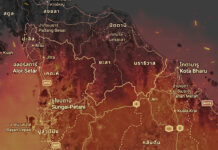










BANGKOK — 23 June 2026, Deputy Prime Minister and Foreign Minister Sihasak Phuangketkeow said authorities will investigate allegations that security agencies intercepted the phone communications of 2,000 residents in Thailand’s southern border provinces, describing the issue as one that requires further discussion.
Speaking at Government House, Sihasak, who serves as chairman of the government’s special representative committee on the southern unrest, and Defence Minister Lt. Gen. Adul Boonthamcharoen, the committee’s vice chairman, outlined efforts to address the situation in the deep south.
Sihasak said the committee had already held a meeting and established operational guidelines. A subcommittee has been tasked as the main mechanism for engaging with local communities and gathering information from the field.
Information collected by the subcommittee will be submitted to the main committee for consideration, he said. The committee will review issues from the perspectives of security, development and peace dialogue, including cooperation with Malaysia.
He added that the committee has been continuously monitoring developments in the region.
Asked about reports that security agencies had monitored the phone communications of around 2,000 people in the southern border provinces, Sihasak said authorities would first need to verify the facts.
“We have to examine what actually happened. It is another issue that will need to be discussed,” he said.
Adul said security operations in the three southern border provinces remain primarily under the responsibility of the Internal Security Operations Command Region 4 Forward Command, while the Southern Border Provinces Administrative Centre oversees development efforts.
A dialogue team also serves as part of the mechanism for addressing the conflict, with the government’s special representatives acting as the driving force behind the process, he said.
Adul said authorities are aware of the recent increase in violent incidents in the region. He added that a subcommittee chaired by Gen. Nattaphong Paokaew, Deputy Chief of Defence Forces, has already completed one field visit and is expected to report its findings to the committee soon.
The remarks came amid renewed scrutiny of security operations and ongoing efforts to restore peace and stability in Thailand’s conflict-affected southern border region.
Bangkok commuters may finally be getting closer to something they have wanted for years: multiple trains, one ticket, and cheaper transportaion.
Thailand’s Cabinet on Tuesday approved a cost-of-living measure to introduce a common fare system across urban rail transit lines, allowing passengers to travel for between 17 and 45 baht under a single-ticket scheme.
Deputy Prime Minister and Transport Minister Phiphat Ratchakitprakarn said on 23 June that the policy would cover all rail lines and colours, with passengers paying the entry fare only once when transferring between different networks.
The government aims to launch the system by 1 January 2027, framing it as a New Year’s gift to the public and part of a broader effort to reduce household expenses.
“Passengers will pay the entry fare only once,” Phiphat said. “We intend to have the system ready by the 2027 New Year.”
What changes for commuters?
At the moment, changing trains in Bangkok can feel less like one connected journey more like changing taxi cabs to pay a double fair.
Anyone who has lived or travelled in Bangkok has moved between lines operated by BTS, MRT, and other rail services. That means separate fare systems, separate payment methods and, most frustratingly, a new starting fare when transferring between networks.
The new common fare plan is trying to solve that problem.
Under the Cabinet-approved measure, passengers would pay within a 17–45 baht range when travelling across participating urban rail lines, instead of being charged a new entry fare each time they move between systems.
In simple terms, the government wants Bangkok’s rail network to behave more like one connected system, rather than several separate lines.
Why this matters: Bangkok has been waiting years for one ticket
The idea of a single ticket for Bangkok’s trains is not new. In fact, it has been one of the capital’s longest-running transport promises.
The best-known symbol of that promise is the Mangmoom card, or “spider card,” which was designed to connect different public transport systems into one payment network. The name itself suggested a web linking buses, boats and trains together.
This mockup Mangmoom Card photo is almost 10 years old. Photo via ThaiRailNews / Facebook
But for years, the dream was bigger than the reality.
The Mangmoom card was introduced in limited form, but it never became the seamless all-network solution many commuters had expected. Bangkok passengers continued using a patchwork of systems, including Rabbit cards for BTS, MRT cards or tokens, EMV contactless cards depending on the line used.
More recently, the Mass Rapid Transit Authority of Thailand and Krungthai Bank launched the Mangmoom EMV card for MRTA-supervised lines, including the MRT Blue, Purple, Yellow and Pink lines. MRTA has also moved ahead with wider EMV contactless payment upgrades across MRT services.
Photo via MRTA web posted 31 July 2025
That has made payment easier on some parts of the network, but it has not fully solved the bigger problem: different operators, different fare structures and extra charges when transferring between systems.
That is why the Cabinet’s approval matters. It moves the long-discussed “one ticket” idea from a technology issue toward a fare policy issue. The point is not only how passengers tap in and out, but how much they pay when they cross from one network to another.
The hard part: who gets the money?
The next challenge is not just installing a card reader or updating a payment app. It is deciding how money is collected and divided.
Phiphat said the Transport Ministry will now hold discussions on establishing a clearing house system to manage fare collection and revenue distribution among rail operators.
That clearing house will be central to whether the policy works.
If passengers pay one common fare while travelling across multiple lines, the government and operators need a system to calculate how much each operator receives. That could involve distance travelled, lines used, passenger volumes, concession agreements and possible state subsidies.
This is where the policy becomes complicated.
Bangkok’s rail system includes lines run under different contracts and business models. Some are state-supervised, while others involve private operators or concession arrangements. A common fare may be simple for passengers, but it requires complex negotiations behind the scenes.
When will the 17–45 baht train fare start?
The government is targeting 1 January 2027.
That gives agencies about six months to work through the practical details, including the clearing house, operator agreements, payment systems and public communication.
Further details are expected after discussions between the Transport Ministry, relevant agencies and rail operators.
For now, the main promise is clear: passengers should not have to pay a fresh starting fare every time they transfer between participating rail systems.
Part of a wider cost-of-living push
The common fare plan is being presented as part of the government’s broader effort to ease living costs.
Transport costs are a daily burden for many people in Bangkok and surrounding provinces, especially those who rely on more than one rail line to reach work, school or home.
For occasional passengers, the difference may seem small. For daily commuters, repeated transfer costs add up quickly.
If the system is implemented as planned, the biggest benefit may be felt by people whose daily journeys currently cross several transport lines.
What to watch next
The Cabinet approval is a major step, but it does not mean the new fare scheme is guaranteed.
One Bangkok resident we interviewed expressed skepticism. “Mangmoom was promised 10 years ago. Until a 45 baht ticket from Asok to Lad Phrao is in my hand, I won’t believe it.”
The key questions now are how the clearing house will work, which lines will be included from the first day, whether all major operators will be ready by 1 January 2027, and whether the 17–45 baht range will apply smoothly across complex multi-line journeys.
After years of hearing about Mangmoom cards and integrated fares, the city may finally be moving closer to a rail system that is easier to use — and less punishing when passengers need to change trains.
BANGKOK — Thailand is moving to expand its Boys’ Love (BL) and Girls’ Love (GL) content industry into global markets as part of efforts to strengthen the country’s creative economy and soft power, the Ministry of Culture said.
Culture Minister Sabida ThaiSet chaired talks on 22 June with the Thai Association of Boys Love Content on strategies to develop the sector sustainably and improve international competitiveness.
Officials said BL and GL content has strong growth potential and is already gaining international recognition, contributing to tourism, services, and related creative industries.
The ministry also proposed expanding cooperation to promote Thai Cultural Product of Thailand (CPOT) goods and community tourism through BL and GL content, including product placement in series, linking filming locations with tourism routes, and promoting Thai products at fan events and overseas roadshows.
It also called on industry networks, including actors and influencers, to support national cultural campaigns such as “Proud Thai Dress Across the Nation” and the “Way of Local, Way of Thai” festival in September 2026.
The association presented past international initiatives, including participation in FILMART in Hong Kong, events in Japan and Brazil, and global masterclass programmes aimed at promoting Thai BL and GL content abroad.
The ministry said the collaboration marks a step forward in positioning Thailand’s BL and GL industry as a key cultural export and economic driver.
BANGKOK — Thailand received more than 15.4 million foreign visitors between 1 January and 20 June 2026, generating over 745 billion baht in tourism revenue, according to the Ministry of Tourism and Sports.
Tourism and Sports Minister Surasak Phancharoenworakul said on 22 June that preliminary figures showed the country welcomed 15,447,571 international arrivals during the period, generating 745.39 billion baht from visitor spending.
The latest tourism figures were supported by the Dragon Boat Festival holidays in China, Hong Kong and Taiwan, which boosted travel to Thailand during the past week. The ministry also noted a midweek public holiday in Malaysia that contributed to a slight increase in Malaysian arrivals.
During the most recent week, Thailand recorded 508,133 foreign visitors, up 21,464 people or 4.41% from the previous week. The average number of international arrivals stood at 72,590 per day.
China remained Thailand’s largest source market, with cumulative arrivals reaching 2.54 million visitors since the start of the year. Chinese tourists also ranked first among all source markets during the latest week.
The holiday period helped lift arrivals from Taiwan, which moved up to fifth place among source markets for the week from seventh place previously.
Of the weekly total, 373,263 visitors came from short-haul markets, an increase of 3.37% from the previous week, while long-haul markets contributed 134,870 visitors, up 7.40%.
The top five source markets during the week were China with 83,796 arrivals, followed by Malaysia with 81,398, India with 43,633, Singapore with 24,225 and Taiwan with 21,043.
Arrivals from China, Malaysia and Taiwan increased by 7.82%, 0.39% and 18.23%, respectively, compared with the previous week. Meanwhile, arrivals from India and Singapore declined by 7.82% and 4.36%.
Looking ahead, the ministry expects foreign arrivals to ease slightly in the coming week as several markets enter a post-holiday slowdown. The Indian market may also face challenges from reduced flight capacity.
As of 20 June, the five largest source markets for Thailand this year were China with 2,538,498 visitors, Malaysia with 1,992,324, India with 1,188,190, Russia with 996,840 and South Korea with 576,404.
PHNOM PENH, June 22 (Xinhua) — Cambodia’s international arrivals fell nearly 48 percent to 1.54 million in the first five months of 2026, down from 2.95 million during the same period last year, according to a Ministry of Tourism’s report released Monday.
The report noted that China, Vietnam, and the United States were the top three inbound tourism markets for the Southeast Asian country from January to May this year.
Thong Mengdavid, deputy director at the China-ASEAN Studies Center of the Cambodia University of Technology and Science, said the sharp decline in international tourists to the kingdom reflected regional economic slowdowns, online scamming issues, and the impact of border disputes with Thailand.
“The significant drop was also fueled by Middle East conflicts, which sparked flight disruptions and high fuel prices,” he told Xinhua.
Tourism constitutes one of the four pillars of Cambodia’s economy, alongside agriculture, construction and real estate, and the export of garments, footwear, and travel goods.
The kingdom recorded 5.57 million international visitors in 2025, earning a gross revenue of 3.87 billion U.S. dollars, according to the Ministry of Tourism.
BANGKOK — China’s ambassador to Thailand has expressed concern over the use of the term “grey Chinese,” saying it unfairly stereotypes Chinese people and has led some in China to perceive Thailand as unfriendly, Tourism and Sports Minister Surasak Phancharoenworakul said on Tuesday.
Speaking before a Cabinet meeting at Government House on 23 June, Surasak said he recently met with the Chinese ambassador, who raised the issue during their discussion.
“The ambassador told me that if Chinese tourists break the law, we should say so, but not use the term ‘grey Chinese’ because China feels that Thailand is being unfriendly,” Surasak said.
According to the minister, the ambassador acknowledged that some Chinese nationals in Thailand have committed offences, but stressed that many others travel to Thailand and contribute significantly to the economy.
“He accepted that some Chinese people have done wrong, but many Chinese visitors spend money in Thailand. There are both good and bad people,” Surasak said.
“The term ‘grey Chinese’ labels an entire group. It is like branding or discriminating against a whole country by lumping everyone together, even though there are both good and bad people.”
The minister said Thailand would continue enforcing the law against anyone found committing offences, regardless of nationality.
“If people break the law, we must proceed according to legal procedures,” he said.
Asked about reports of Chinese nationals operating delivery service companies catering exclusively to Chinese customers, Surasak said such activities would be illegal under Thai law.
“That is already against the law. There will certainly be a crackdown,” he said.
He added that effective enforcement would require cooperation among several government agencies, including the Ministry of Commerce and the Ministry of Transport.
“If we do not work together, it will not succeed,” Surasak said.
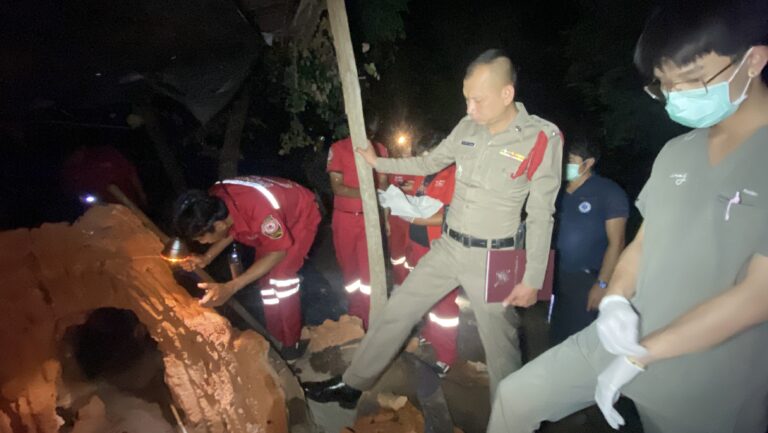
RATCHABURI — A suspected drug trafficking target was killed during a police operation in Ratchaburi on 22 June after allegedly opening fire on officers attempting to search a property, critically wounding a police volunteer.
Pol. Col. Phuchong Narong-in, superintendent of Photharam Police Station, said officers were called to a house in Chamrae subdistrict, Photharam district, at about 16:10 after reports of a shooting.
Investigators found officers from Ban Pong Police Station, led by Pol. Col. Kobchok Lektrakul, surrounding the property. The injured victim, later identified as 45-year-old police volunteer Thanakorn Phaengphon, had already been taken to Photharam Hospital with critical injuries.
Police said the suspect was identified and 38 yeard old. He remained inside a white Honda Jazz parked outside the house while officers attempted to negotiate his surrender. Relatives were brought in to call on him to exit the vehicle, but he did not respond.
After more than an hour of negotiations, officers from Provincial Police Region 7, Ratchaburi Provincial Police and the Special Operations Unit (NPA) arrived at the scene. Investigators from Region 7’s “Insee 7” unit then approached the vehicle with ballistic shields and used a hammer to break a window.
Officers found the suspect dead in the driver’s seat. The seat had been reclined and a 9 mm handgun was found resting on his chest. Three magazines and a replica firearm were also recovered inside the vehicle.
Police said the suspect had sustained multiple gunshot wounds to his right arm and torso. Numerous bullet holes were found in the vehicle’s door. Officers also discovered a large amount of cash, methamphetamine tablets and crystal methamphetamine inside the car, all of which were seized as evidence.
According to investigators, relatives had previously informed Ban Pong police that the suspect was involved in drug trafficking and wanted authorities to help persuade him to stop. Police said he was already under surveillance as a narcotics suspect.
Officers initially went to a residence in Ban Pong district to locate him but were unable to find him. They later learned he had travelled to his mother’s house in Chamrae subdistrict and followed him there.
Police said investigators believed the suspect was inside the house and moved in to conduct a search. However, he was allegedly sitting inside the parked car and opened fire, critically wounding the police volunteer assisting with the operation.
Nearby officers returned fire in self-defence, police said, though it remains unclear when the fatal shots were inflicted. Reinforcements were later called in to secure the area and continue negotiations before officers discovered that the suspect had already died inside the vehicle.
Because the case involves a fatal police shooting, forensic officers, prosecutors, medical personnel and administrative officials were called to the scene as part of the mandatory investigation process.
Police said the suspect had previously been arrested in several narcotics cases and had been released from prison about two years ago after serving a sentence in a drug-related case.
KHON KAEN — 23 June 2026, First-year students at Khon Kaen University (KKU) were left surprised and delighted when the university president took on the role of an EDM DJ during a welcome orientation event for new students.
Freshmen from all 22 faculties gathered at the Kanchanaphisek Convention Hall for the university’s annual orientation program, “Welcome KKU Freshmen 2026,” welcoming the institution’s 63rd undergraduate class.
Before entering the hall, new students walked beneath a wooden arch made from logs, a symbol associated with Khon Kaen Province, while senior students from every faculty greeted them warmly.
The event began with welcome performances by senior students before reaching its main highlight. Assoc. Prof. Dr. Chanchai Phanthongviriyakul, president of Khon Kaen University, appeared as “DJ Ploemjai,” mixing contemporary music and leading university executives in an aerobic dance session alongside the freshmen.
The atmosphere was lively and energetic, but the biggest surprise came during the introduction of the university’s executive team, presented in an EDM music and dance show. The performance quickly drew students from their seats as they sang and danced along to the music.
Later, the president congratulated the new students and shared words of encouragement centered on four key concepts they would encounter during their years at KKU: change, growth, challenge, and overcoming obstacles.
“Khon Kaen University is proud to welcome all of you as our newest members,” he said. “During the next four to six years, the university has prepared academic programs, activities, sports, and support systems to help you develop into well-rounded graduates.”
He encouraged students to use their university years to step outside their comfort zones and embrace new experiences.
According to the president, change means having the courage to face unfamiliar situations and make decisions that may once have seemed difficult. Growth comes from doing things never attempted before. Challenge involves confronting academic and extracurricular obstacles that may appear impossible. Finally, overcoming means moving beyond fear and failure.
“True ability is not talent,” he said. “It is the result of overcoming obstacles repeatedly until success is achieved.”
The orientation concluded with a performance by the renowned Isan Bantheungsilp molam troupe, providing an entertaining and culturally distinctive welcome for the university’s newest students.
Former South Korean Justice Minister Park Sung-jae arrives for his trial at the Seoul Central District Court in Seoul, South Korea, Monday, June 22, 2026. (Kim Ju-hyung/Yonhap via AP)
SEOUL, South Korea (AP) — A former South Korean justice minister was sentenced to 25 years in prison on Monday after a court found him guilty of helping ousted President Yoon Suk Yeol carry out his brief declaration of martial law in 2024.
The Seoul Central District Court said it was clear Park Sung-jae played a key role in Yoon’s attempted power grab following the declaration of martial law on Dec. 3, 2024, including ordering ministry officials to assess detention capacities at correctional facilities to prepare for arrests of politicians.
Park also instructed officials to consider sending prosecutors to Yoon’s martial law command to support possible investigations into the former conservative leader’s political opponents and his unsubstantiated claims about liberal-led election fraud. Park also ordered immigration authorities to be prepared to impose travel bans, the court said.
Yoon’s martial law, which followed a yearslong standoff with liberals controlling the legislature, lasted only about six hours before lawmakers broke through a blockade of soldiers Yoon dispatched to the National Assembly and voted to overturn it, forcing Yoon’s Cabinet to lift the measure.
Judge Lee Jin-gwan said Park abandoned his responsibility to uphold the constitution and law by taking part in Yoon’s authoritarian push. He described Yoon’s martial law decree as a “self-coup” by an incumbent leader seeking to monopolize power. He said Park’s role would have been critical had Yoon succeeded in suppressing and removing his political opponents and preventing the legislature from demanding the lifting of martial law.
Park had denied the charges, saying he was merely carrying out duties required during a national emergency. Park’s lawyers didn’t immediately say whether they would appeal.
Yoon was impeached and suspended from office on Dec. 14, 2024, before being formally removed by the Constitutional Court in April 2025. He was arrested in July 2025, and multiple criminal trials are ongoing.
The Seoul court earlier sentenced Yoon to life in prison on rebellion charges. In a separate case, Yoon received a 30-year term for allegedly ordering drone flights over Pyongyang in October 2024 to manufacture tensions with North Korea and justify declaring martial law at home. Yoon has appealed both verdicts.
Park is the latest of several members of Yoon’s Cabinet to receive prison sentences for their roles in the martial law imposition.
Former Defense Minister Kim Yong Hyun received a 30-year term for his central role in mobilizing the military to enforce martial law and seeking the arrests of Yoon’s political opponents, as well as a separate 30-year sentence for planning drone flights over Pyongyang.
Ex-Prime Minister Han Duck-soo was initially sentenced to 23 years on charges that included attempting to lend procedural legitimacy to Yoon’s decree by securing its approval through a formal Cabinet meeting, but an appeals court later reduced his sentence to 15 years.
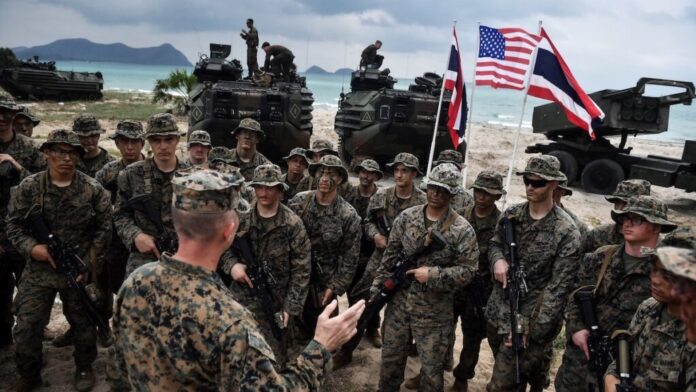
BANGKOK — Thailand’s security agencies have prepared contingency plans for all possible scenarios along the Thai-Cambodian border, a senior military official said, stressing that the armed forces remain ready to respond while adhering to international law.
Air Chief Marshal Prapas Sornchaidee, assistant commander-in-chief of the Royal Thai Air Force and director of the Joint Information Centre (JIC) on the Thai-Cambodian border situation, said on 20 June that security agencies had developed and regularly rehearsed response plans covering military operations, civilian protection and border management.
He said the Thai military remained prepared at all times in terms of personnel, equipment, intelligence, surveillance and inter-service cooperation.
Thailand remains committed to peaceful means and international law, Prapas said. However, as a sovereign state, Thailand has the legitimate right to self-defence under Article 51 of the United Nations Charter if its sovereignty, territorial integrity or public safety is threatened.
“If necessary, the Thai military is ready to carry out its duties to the fullest extent within the framework of the law, the principles of necessity and proportionality, and relevant international law,” he said.
Prapas added that security agencies were monitoring the border situation around the clock and had measures in place to address any contingency, with the primary objective of preserving peace while safeguarding national sovereignty and public safety.
Addressing questions about military readiness during the rainy season, he said both F-16 and Gripen fighter jets remain fully capable of carrying out missions in wet weather. While severe weather conditions may slightly reduce operational efficiency and impose additional flight-safety limitations, rain does not automatically render aircraft or weapons systems unusable.